PALESTINE

Mon 26 May 2025 9:25 pm - Jerusalem Time

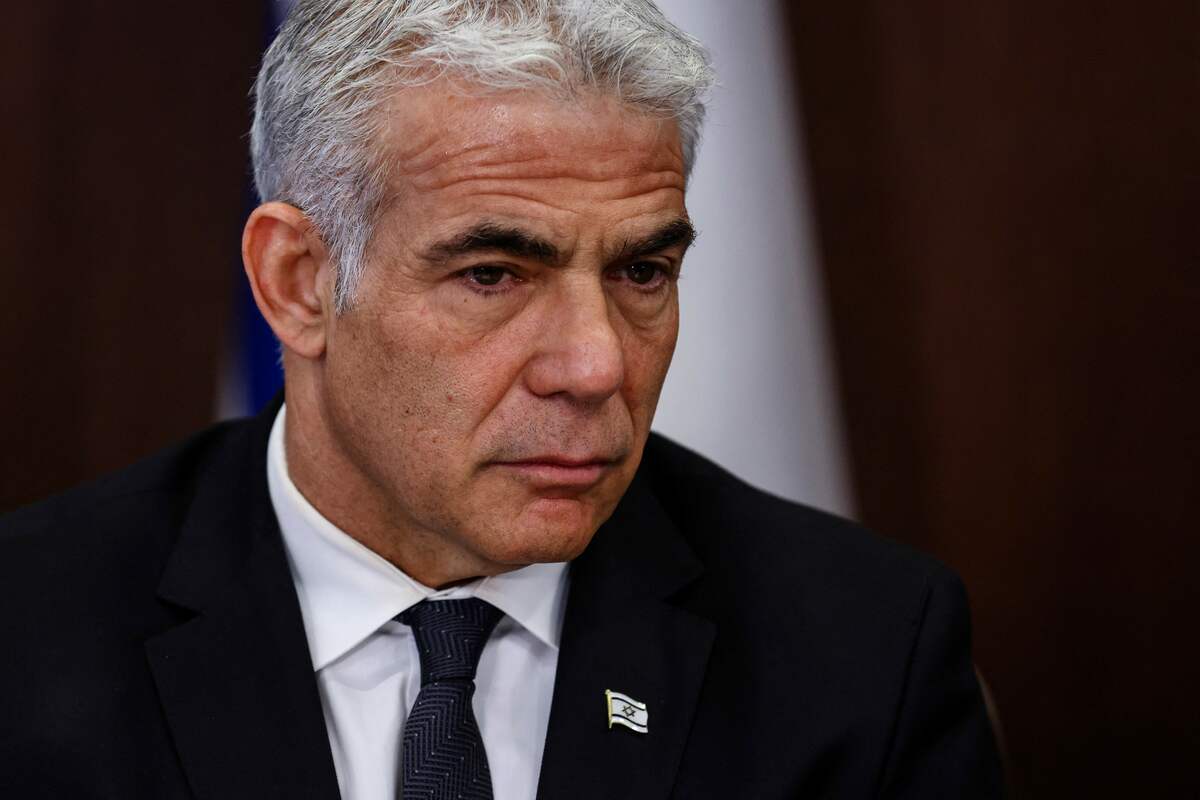
Yair Lapid: Israel hid behind a nonexistent European country in funding Gaza aid.

Israeli opposition leader Yair Lapid revealed on Monday that the "European country" that reportedly funded the food aid project for the Gaza Strip is none other than Israel itself.

“The government that made the decision, its prime minister, Benjamin Netanyahu, who fears his far-right base, Finance Minister Bezalel Smotrich, who paid $100 million from the state budget, and Minister Itamar Ben-Gvir (Minister of National Security), who turned a blind eye—they are all cowards in front of their own people, so they are hiding behind a European country that does not exist,” Lapid said in a speech to the Knesset.

He added that if a European country were funding aid to Gaza, it would not have hesitated to announce it, "because aid to Gaza today is an honorable step, because the images coming out of there are shocking and painful."

He continued, "Israel, which should have been proud of such a humanitarian step, is hiding and daring not to admit that it provided this grant, because it has filled its public with hostility and hatred. So what does it say now?"

Others saw the Israeli government's donation as evidence that it had failed to find anyone to believe in its sincere intentions, and was forced to finance the aid itself.

Some say that Israel is "sabotaging" the project by controlling it through shell or fictitious companies, established and managed by Israel but registered as American companies, headed by former American or Israeli security officers.

Analysts and experts doubt the success of these companies in distributing aid, pointing to the resignation of Jake Wood, head of the private Gaza Relief Foundation, which is supported by the United States and Israel and is tasked with distributing humanitarian aid in the Gaza Strip.

Wood, a former US Marine and Nobel laureate executive director of the World Kitchen Foundation, announced in a statement that he was resigning because the organization could not adhere to "the humanitarian principles of humanity, neutrality, impartiality, and independence, which I will not abandon."

intelligence activity

The Ministry of Interior in the Gaza Strip said that Israel is using the planned aid distribution mechanism as a cover for security and intelligence operations in the Strip, and warned that it poses a direct threat to the work of international organizations.

The Interior Ministry stated on Monday that Israel is seeking to implement its plan to displace Palestinians through the "Gaza Relief Foundation." The statement said: "The anticipated Israeli mechanism for distributing aid in Gaza is completely unacceptable, and we call on our people in the Strip not to cooperate with it. Under the cover of the Israeli-funded "Gaza Foundation," the occupation will use aid distribution as a security and intelligence framework, and attempt to access information using modern technologies."

The ministry added, "The new aid distribution mechanism requires citizens to travel long distances to receive aid, as part of the occupation's policies to redistribute the population within the Gaza Strip, in implementation of its plans to fully control the Strip, including the displacement plan, which has so far failed to materialize."

Doubts and investigation

Two investigations published simultaneously in the Israeli newspaper Haaretz and the American newspaper The New York Times on Sunday cast additional doubt on the identity of the Gaza Relief Foundation, indicating that it is of Israeli origin, not American, as its founders claim. In fact, the investigations revealed that its founders are directly linked to Netanyahu's office.

Despite statements by US Ambassador to Tel Aviv Mike Huckabee two weeks ago that "it is a complete mistake to consider the project an Israeli plan," Haaretz quoted multiple sources, including Israeli officials, as saying that "the plan is essentially the product of Israeli engineering," and that Israeli companies and individuals are behind the American companies undertaking the work.

The newspaper confirmed that these companies are run by Israeli security and business figures, some of whom are close to Netanyahu.

The journalistic investigation stated that "the outlines of the distribution plan were drawn up without regard for humanitarian considerations, adherence to international law, and aid regulations. It was devised outside the reach of Israeli security agencies, through former security figures and businessmen, amid murky funding and mounting international criticism."
PALESTINE

Mon 26 May 2025 9:08 pm - Jerusalem Time

The World Health Organization has approved the decision to raise the flag of the State of Palestine at its headquarters.

The World Health Organization's General Assembly adopted a resolution on Monday to raise the flag of the State of Palestine at the organization's headquarters, following the example of other member states.

The resolution was supported by 95 countries, while four countries opposed it: Israel, Hungary, the Czech Republic, and Germany. 27 countries abstained from voting.

In his address to the General Assembly, Ambassador Ibrahim Khraishi, Permanent Representative of the State of Palestine to the United Nations in Geneva, said, "The decision is symbolic and represents a single step, but it is evidence that we are part of the international community that contributes to supporting health issues. We hope to soon achieve full membership in the World Health Organization and all United Nations institutions."

In response to the occupying state's ambassador, who described the resolution as illogical and accused the organization of politicizing its work to include a similar draft resolution, Ambassador Khraishi said that 19 months after the genocide against the Palestinian people, the commission of war crimes, and the issuance of arrest warrants against the occupation's prime minister and former defense minister by the International Criminal Court, it is appropriate to reconsider the occupying state's membership in international organizations.

It is worth noting that the State of Palestine, which has "observer state" status in the World Health Organization, recently obtained the General Assembly's approval of its membership in the organization's International Health Regulations, a system of laws and procedures that governs the relationship between national health ministries and the World Health Organization, particularly in the areas of emergencies and response to epidemics and pandemics.

This step represents a qualitative shift in enabling Palestine to benefit from international support in health emergencies, and from international cooperation and coordination mechanisms to provide appropriate healthcare to the Palestinian population.

PALESTINE

Mon 26 May 2025 8:21 pm - Jerusalem Time

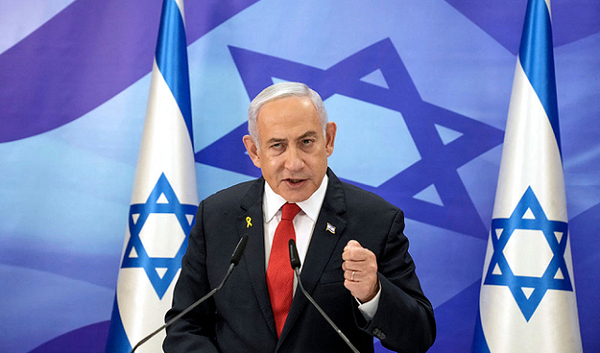
Netanyahu: I hope to make an announcement about the hostages in Gaza "today or tomorrow"

Israeli Prime Minister Benjamin Netanyahu expressed hope on Monday to make an announcement regarding the hostages held in Gaza "today or tomorrow," after Hamas announced its acceptance of a ceasefire proposal from mediators.

"I really hope we can make an announcement about the hostages, if not today, then tomorrow," Netanyahu said in a video broadcast on his Telegram channel.

A Palestinian official said Monday that Hamas had agreed to US Special Envoy Steve Witkoff's proposal for a ceasefire in Gaza. However, an Israeli official denied that the proposal came from Washington, adding that no Israeli government could accept it.

Witkov also rejected the idea that Hamas had accepted his offer for a hostage release and ceasefire in Gaza, telling Reuters that what he saw was "completely unacceptable" and that the proposal under discussion differed from the one he had put forward.

On March 18, Israel effectively ended the ceasefire agreement reached with Hamas in January and continued its military campaign in Gaza. Hamas and allied factions began firing rockets and launching attacks two days later.

PALESTINE

Mon 26 May 2025 7:37 pm - Jerusalem Time

Hamas and Witkov reach a ceasefire agreement in Gaza

Sources told Al Jazeera on Monday that the Islamic Resistance Movement (Hamas) reached a formula for a permanent ceasefire agreement in Gaza with US Middle East envoy Steven Witkoff in Doha.

According to the sources, this formula includes a 60-day ceasefire, the release of 10 prisoners in two batches, and the exchange of bodies for Palestinian prisoners. Five Israeli prisoners will be released on the first day of the agreement, and another five on the 60th day.

In exclusive statements to Al Jazeera Net, a source close to Hamas revealed details of the proposal, which includes the full entry of humanitarian aid, at a rate of 1,000 trucks per day, and the withdrawal of Israeli forces from the eastern, northern, and southern regions of the Gaza Strip on the fifth day of the ceasefire.

The Hamas source added that there is an American pledge to lead serious negotiations leading to a comprehensive ceasefire and to guarantee that military operations will not resume if negotiations falter during the truce period.

The sources told Al Jazeera that, according to the agreement, US President Donald Trump guarantees a ceasefire within 60 days and an Israeli withdrawal in accordance with the January agreement. They noted that the agreement stipulates a vision for the continuation of the ceasefire after the 60 days, with mediators ensuring its implementation.

According to the sources, the agreement includes guaranteeing the unconditional entry of humanitarian aid from day one, in accordance with the humanitarian protocol, with the guarantee of the United States and mediators. The sources added that the US envoy conveyed the agreement to the Israeli government and is awaiting its final response.

conflict

However, conflicting statements loom over the wording of the agreement. While Witkov said Israel had agreed to his proposal, an Israeli official asserted that what he called Hamas's ceasefire proposal could not be accepted.

Israel's Channel 14 reported, citing an Israeli source, that the Netanyahu government rejected Hamas' offer to release 10 prisoners in exchange for a 70-day ceasefire and American guarantees to end the war.

The Israeli Broadcasting Corporation quoted an official source as saying that Hamas had agreed to a different version of the agreement than the one Israel accepted to complete the deal.

Meanwhile, Axios quoted Witkoff as saying that Israel had agreed to his proposal, which includes the release of half of the living prisoners and half of the dead ones. He believed that the ceasefire would lead to meaningful negotiations to find a path toward a permanent ceasefire.

The US envoy added that he "agreed to lead these negotiations, and there is a deal on the table, and Hamas must accept it."

Last chance

Political analyst Ibrahim al-Madhoun told Al Jazeera Net that Hamas's acceptance of the Witkov initiative was not an easy decision, particularly after tens of thousands of martyrs and the Gaza Strip's transformation into an open theater for the Israeli killing machine.

Al-Madhoun said that the movement saw the need to act at this critical moment to halt the genocide that has been ongoing for nearly 600 days, given the inability of regional and international powers to end the war or protect the Palestinian people. Ultimately, the movement chose to accept the initiative for the sake of its people and to halt the ongoing bloodshed, and that it may be the last chance to end these ongoing massacres.

According to al-Madhoun, Hamas believes that this initiative, which was amended in coordination with the American mediator, could open the door to a comprehensive, or at least long-term, cessation of hostilities, particularly since it stipulates the entry of urgent humanitarian aid, guarantees a tangible easing of the blockade, and obligates the occupation to withdraw its forces from large areas of the Gaza Strip.

According to the political analyst, it appears the movement was keen to secure a personal pledge from US President Donald Trump, as he is the only party capable of effectively influencing and pressuring Benjamin Netanyahu's government. Moreover, the United States' direct and indirect sponsorship of this initiative gives it additional political leverage and guarantees, distinguishing it from previous initiatives that failed to survive.

In Al-Madhoun's opinion, "Given the reality of the extremist occupation, American guarantees remain the decisive element in the agreement's success," noting that if a final agreement is reached, Hamas appears to be fully committed to all its provisions and will handle it with a high degree of responsibility.

Regarding the Israeli government's position, Al-Madhoun believed that Netanyahu, who is wanted by international justice, is not truly interested in reaching this agreement. Rather, he is likely to seek to obstruct it, either through direct rejection or by attempts to modify the essence of the initiative and alter its features, making it more closely aligned with a purely Israeli vision.

According to Israeli estimates, there are 58 Israeli prisoners held in Gaza, 20 of whom are alive. More than 10,100 Palestinians are languishing in its prisons, suffering torture, starvation, and medical neglect, many of whom have died, according to Palestinian and Israeli human rights and media reports.

Hamas has repeatedly affirmed its willingness to release all Israeli prisoners in one batch, in exchange for an end to the war of extermination, the withdrawal of the Israeli army from Gaza, and the release of Palestinian prisoners.

But Netanyahu is evasive and insists on reoccupying Gaza and disarming the Palestinian factions, who refuse to do so as long as the Israeli occupation continues.

On May 18, the Israeli army launched a military operation dubbed "Gideon's Wagons," as part of its ongoing war of extermination in the Gaza Strip since October 2023. The new plans include occupying the entire Palestinian enclave, according to Netanyahu.


ARAB AND WORLD

Mon 26 May 2025 6:31 pm - Jerusalem Time

The head of a US-backed Gaza relief organization resigns, insisting he will not abandon his "principles."

The head of a US-backed private humanitarian organization tasked with distributing aid in Gaza under an Israeli plan resigned on Sunday, saying the operation had failed to fulfill its mission in accordance with "humanitarian principles."

On Sunday, Executive Director Jake Wood announced his resignation in a statement issued by the Gaza Humanitarian Foundation (GHF), further clouding the future of the operation, according to CNN.

The Geneva-based organization, which has been operating since February, pledged to distribute 300 million meals within its first 90 days of operation. However, the United Nations and traditional aid agencies have already announced that they will not cooperate with the group, fearing it would violate "basic humanitarian principles" and breach international law.

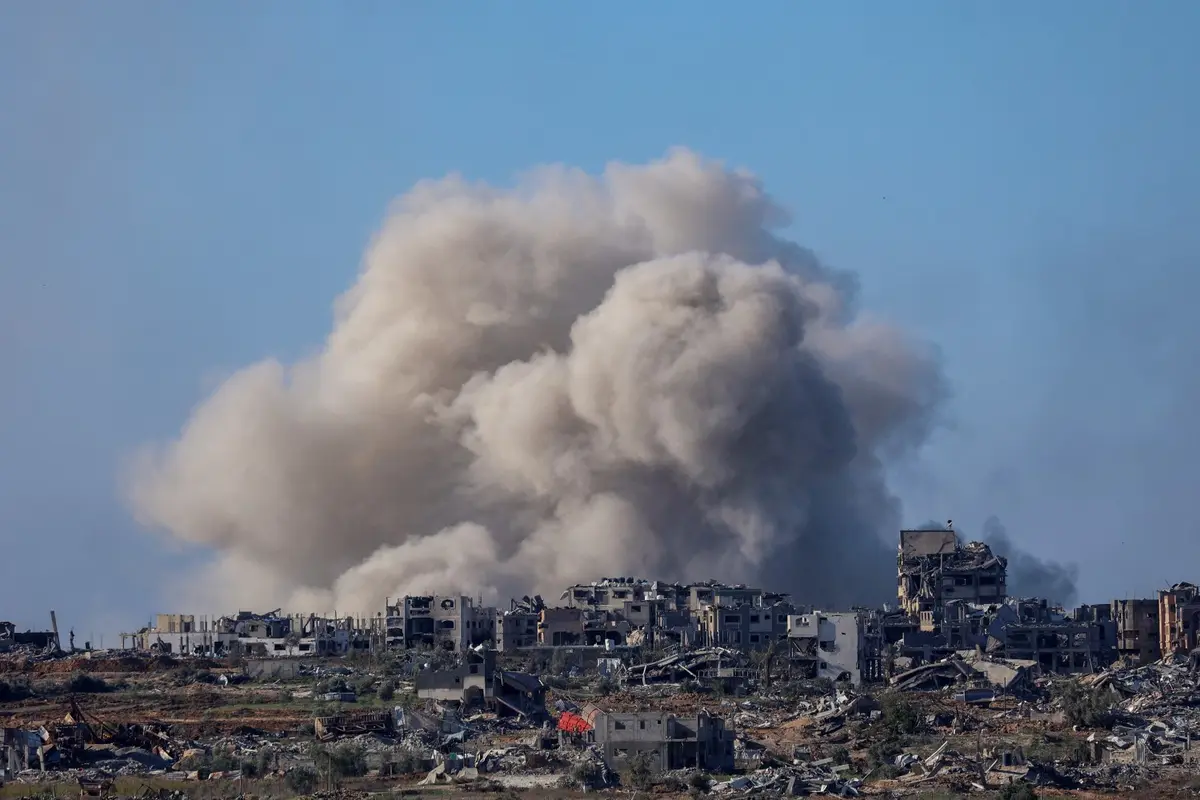
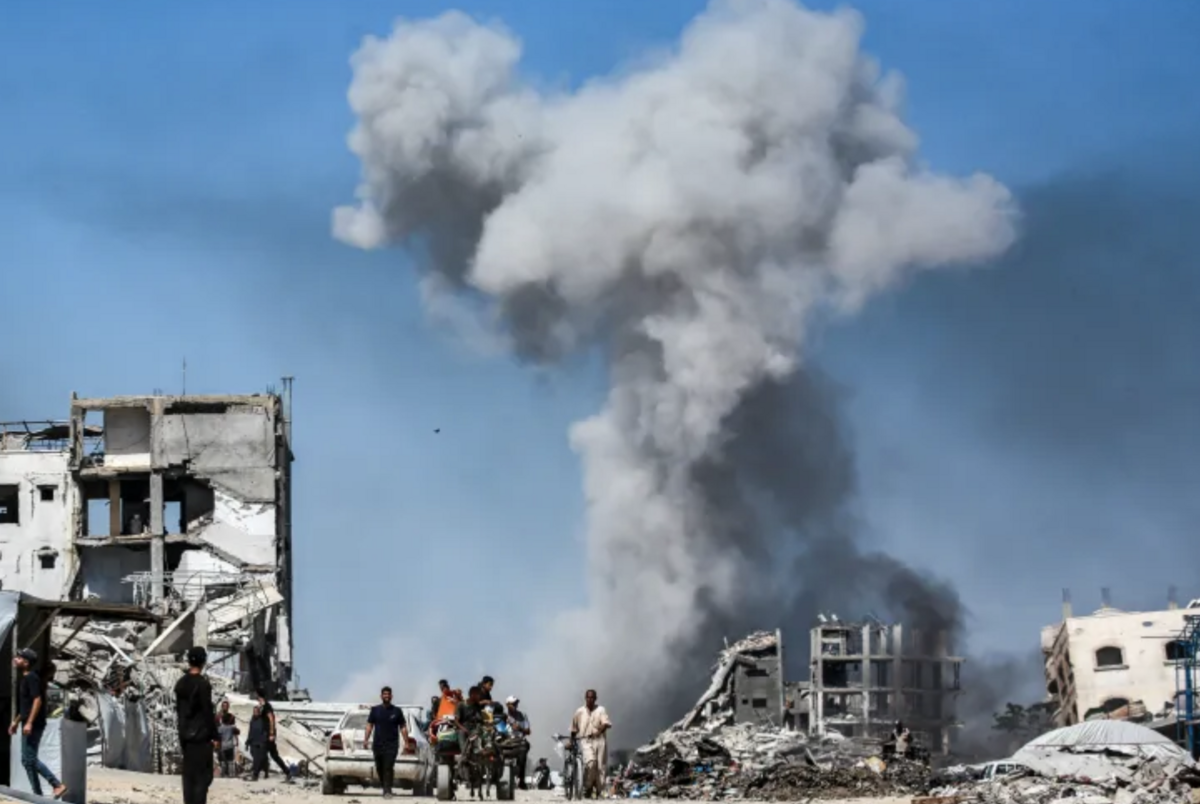
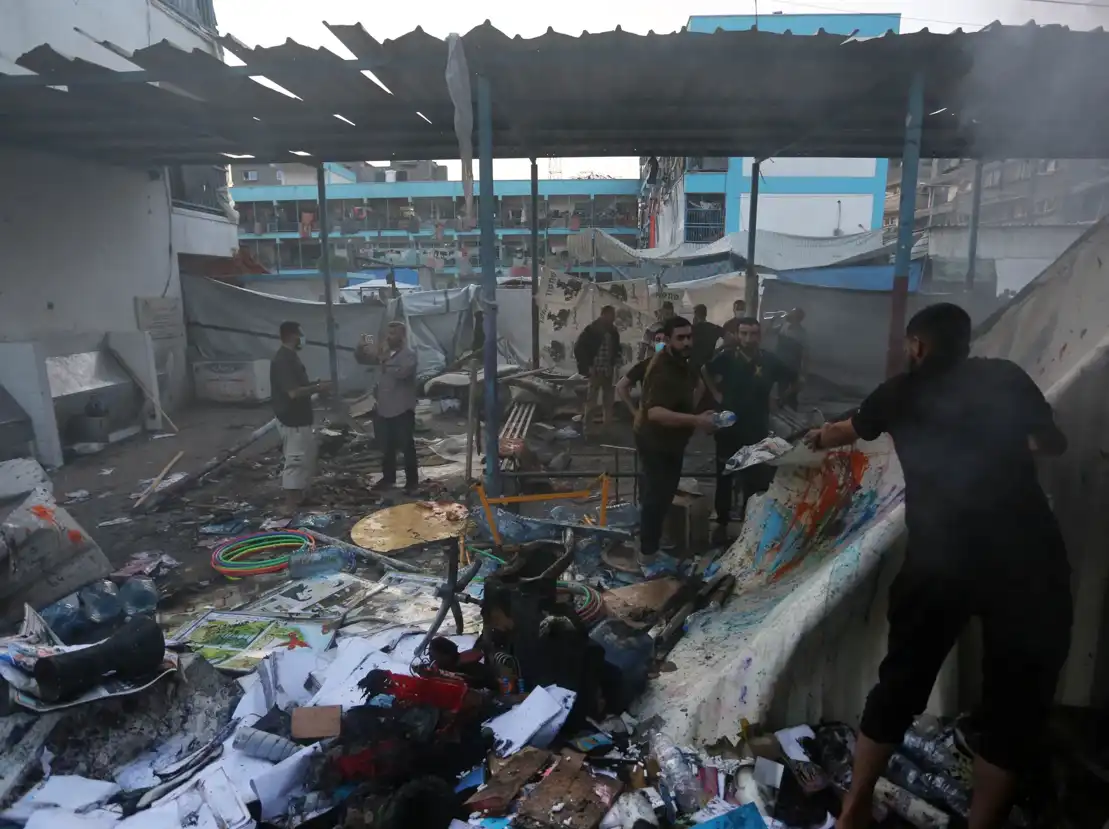
This move comes as Israel has intensified its air campaign on Gaza in recent days. Israeli airstrikes killed at least 46 people in the Gaza Strip on Monday, including 31 people in a school that had been converted into a shelter. The school was bombed while people were sleeping, setting fire to their belongings, according to local health officials.

Fahmi Awad, the ministry's director of emergency services, said the airstrike on the school in the Daraj neighborhood of Gaza City also injured more than 55 people. He added that a father and his five children were among the dead.

Awad added that the school was bombed three times while people were sleeping, setting fire to their belongings. Footage circulating online showed rescue workers struggling to extinguish the fires and recover charred remains.

The Israeli military said it targeted a militant command and control center inside the school, which Hamas and Islamic Jihad used to gather intelligence for attacks. Israel blames Hamas for the civilian deaths because it operates in residential areas, a policy the Israeli military has used since the beginning of the war as a pretext for bombing and killing Palestinian civilians.

Health officials in the Palestinian territories said Israeli attacks on Sunday killed at least 38 people, bringing the death toll to more than 100 over the weekend. Several European leaders condemned the new offensive, which comes after Israeli Prime Minister Benjamin Netanyahu ended a ceasefire with Hamas in March, accusing Israel of starving millions of civilians facing famine. Netanyahu said his plans for private American companies to provide aid, such as the Global Relief Fund, would prevent a humanitarian crisis, even though aid agencies and many governments confirm one already exists.

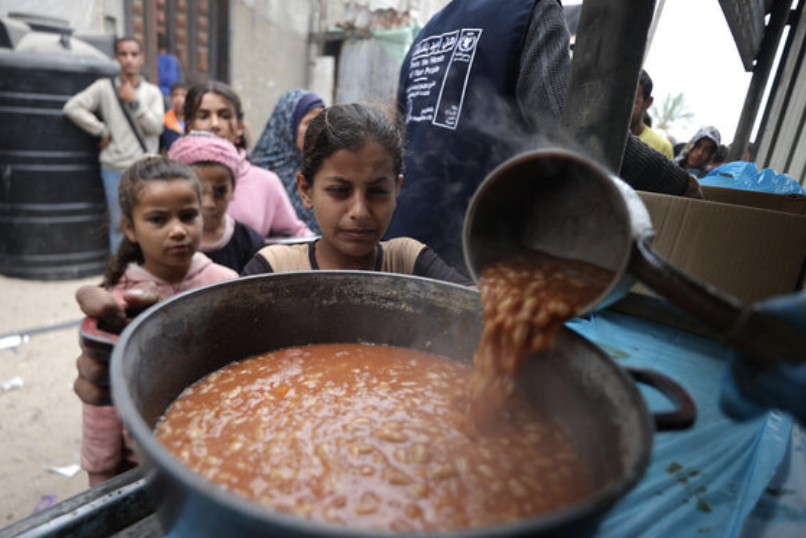
The Global Relief Fund has emerged at a time when international pressure is mounting on Israel as malnutrition spreads in Gaza, as medics and aid workers in the devastated Palestinian enclave have warned, with dozens of children dying of starvation in recent days. "Two months ago, I was asked to lead the Global Relief Fund's efforts given my experience in humanitarian operations," Wood said in the statement. "Like many others around the world, I was horrified and saddened by the hunger crisis in Gaza, and as a humanitarian leader, I felt compelled to do all I could to help alleviate the suffering."

Wood affirmed that he was "proud of the work I oversaw, including developing a practical plan to feed the hungry, addressing security concerns related to aid diversion, and complementing the work of established NGOs in Gaza."

But he said, "It has become clear that this plan cannot be implemented with strict adherence to the humanitarian principles of humanity, neutrality, impartiality, and independence, which I will not abandon."

In a statement, the foundation's board of directors expressed its disappointment at Wood's departure, but pledged not to back down from its efforts to reach all residents of the Strip in the coming weeks.

"Our trucks are loaded and ready to go," he said, adding that the Gaza Humanitarian Foundation will begin delivering aid directly into Gaza starting Monday, reaching more than one million Palestinians by the end of the week.

The network quoted a US State Department spokesperson as saying that the department continues to support the Gaza Humanitarian Foundation's plans to begin delivering aid soon. Despite mounting international pressure that prompted Israel to lift the blockade on relief supplies amid warnings of impending famine, Netanyahu declared last week that Israel would control all of Gaza.

Wood called on Israel to "significantly expand the provision of aid to Gaza through all mechanisms," and also urged "all stakeholders to continue exploring new and innovative ways to deliver aid, without delay, diversion, or discrimination."

UN officials said the organization's aid distribution plans would only lead to the forced displacement of Palestinians and increased violence.

Israel had launched this plan, which was scheduled to begin at the end of May. It involved private companies—instead of the United Nations and relief organizations that had managed Palestinian aid for decades—transferring aid to Gaza to a limited number of so-called safe distribution sites, which Israel said would be in southern Gaza.

Heads of households are expected to collect boxes weighing up to 20 kilograms containing several days' worth of food and basic hygiene items such as soap for their families. There are no measures in place to enable the sick or famine-weary to walk long distances across Gaza's devastated landscape carrying heavy loads.

"We understand the plan will increase the suffering of children and families in Gaza," Jonathan Crickx, a spokesman for the United Nations Children's Fund (UNICEF), said earlier this month.

"How can a mother of four, who lost her husband, carry 20 kilograms to her makeshift tent, which can sometimes be several kilometers away?" Crickx asked. "The most vulnerable, including the elderly, people with disabilities, the sick, the wounded, and orphans, will face enormous challenges in accessing aid."

PALESTINE

Mon 26 May 2025 5:46 pm - Jerusalem Time

WHO: Most medical equipment stocks in the Gaza Strip have run out.

The World Health Organization said on Monday that most medical supplies have run out in the Gaza Strip, along with 42% of essential medicines, including painkillers.

"We have reached zero stocks for approximately 64% of medical equipment, 43% of essential medicines, and 42% of vaccines," Hanan Balkhy, WHO Regional Director for the Eastern Mediterranean, told reporters in Geneva.

She added that 51 WHO aid trucks are waiting on the Gaza border and have not yet received permission to enter the Strip.

"Can you imagine a surgeon treating a broken bone without anesthesia? Intravenous fluids, needles, and bandages are not available in the required quantities," Balkhi said, adding that essential medications such as antibiotics, painkillers, and chronic disease medications are in short supply.

PALESTINE

Mon 26 May 2025 5:15 pm - Jerusalem Time

Hamas and Witkov reach a formula for a permanent ceasefire agreement in Gaza.

AFP quoted a Palestinian source familiar with the Gaza ceasefire negotiations on Monday as saying that the mediators' new ceasefire offer includes a partial Israeli withdrawal from the Gaza Strip.

The source, who spoke to the agency on condition of anonymity, said the new offer includes "a partial withdrawal from the Gaza Strip, particularly from Salah al-Din Road, including the Netzarim Junction south of Gaza City, the Morag axis north of Rafah, and population centers."

The agency quoted the source as saying that the mediators' offer for a ceasefire in the Gaza Strip includes the release of 10 Israeli prisoners in exchange for a 70-day truce and a partial Israeli withdrawal from the Strip.

The source said, "The new offer, which represents an evolution of the path and vision of US envoy Steve Witkoff, includes the release of 10 living Israeli prisoners held by Hamas in exchange for a 70-day truce and a partial withdrawal from the Gaza Strip... and the release of a number of Palestinian prisoners and detainees, including several hundred serving long sentences and life sentences."

A Palestinian official close to Hamas confirmed these details to Reuters, saying the movement had agreed to US Special Envoy Steve Witkoff's proposal for a ceasefire in Gaza.

The official stated that mediators had presented a new proposal over the past few days in an attempt to reach a ceasefire agreement. He said, "Indirect negotiations will begin regarding a long-term truce and its requirements, and the empowerment of the independent community support committee to govern Gaza."

This offer was presented "within the past few days," according to the source, who did not specify whether it was an American, Egyptian, or Qatari proposal. All three countries have participated in talks aimed at a ceasefire throughout the war.

The source said that the offer "includes the release of five living Israeli prisoners in the first week of the agreement's entry into force, and the release of five others before the end of the truce period."

American proposal

Meanwhile, the newspaper Israel Hayom quoted sources as saying that the United States is developing a new proposal for a prisoner exchange deal in Gaza and is considering presenting it this week.

Sources reported that US administration officials are obstructing the expansion of the military operation in Gaza, amid efforts to formulate a proposed deal.

US President Donald Trump previously revealed that his administration was in contact with Israel regarding a ceasefire in Gaza, and that he expected good news "with Hamas."

Trump said that talks are underway with Israel regarding the possibility of ending the war in Gaza as soon as possible, noting that he believes there may be good news regarding negotiations with Hamas regarding a ceasefire.

"I think we may have some good news with Hamas in Gaza," Trump said. "As for Israel, we've spoken to them, and we want to see if we can bring this whole situation to a close as quickly as possible."

Tel Aviv estimates that there are 58 Israeli prisoners in Gaza, 20 of whom are still alive. Meanwhile, more than 10,100 Palestinians are languishing in its prisons, suffering torture, starvation, and medical neglect, many of whom have died, according to Palestinian and Israeli human rights and media reports.

Hamas has repeatedly affirmed its willingness to release all Israeli prisoners in one batch, in exchange for an end to the war of extermination, the withdrawal of the Israeli army from Gaza, and the release of Palestinian prisoners.

But Netanyahu, who is wanted by international justice, is evading justice and insisting on reoccupying Gaza and disarming Palestinian factions, a demand the latter reject as long as the Israeli occupation continues.

PALESTINE

Mon 26 May 2025 5:01 pm - Jerusalem Time

Sources discuss details of a new ceasefire offer in Gaza.

AFP quoted a Palestinian source familiar with the Gaza ceasefire negotiations on Monday as saying that the mediators' new ceasefire offer includes a partial Israeli withdrawal from the Gaza Strip.

The source, who spoke to the agency on condition of anonymity, said the new offer includes "a partial withdrawal from the Gaza Strip, particularly from Salah al-Din Road, including the Netzarim Junction south of Gaza City, the Morag axis north of Rafah, and population centers."

The agency quoted the source as saying that the mediators' offer for a ceasefire in the Gaza Strip includes the release of 10 Israeli prisoners in exchange for a 70-day truce and a partial Israeli withdrawal from the Strip.

The source said, "The new offer, which represents an evolution of the path and vision of US envoy Steve Witkoff, includes the release of 10 living Israeli prisoners held by Hamas in exchange for a 70-day truce and a partial withdrawal from the Gaza Strip... and the release of a number of Palestinian prisoners and detainees, including several hundred serving long sentences and life sentences."

A Palestinian official close to Hamas confirmed these details to Reuters, saying the movement had agreed to US Special Envoy Steve Witkoff's proposal for a ceasefire in Gaza.

The official stated that mediators had presented a new proposal over the past few days in an attempt to reach a ceasefire agreement. He said, "Indirect negotiations will begin regarding a long-term truce and its requirements, and the empowerment of the independent community support committee to govern Gaza."

This offer was presented "within the past few days," according to the source, who did not specify whether it was an American, Egyptian, or Qatari proposal. All three countries have participated in talks aimed at a ceasefire throughout the war.

The source said that the offer "includes the release of five living Israeli prisoners in the first week of the agreement's entry into force, and the release of five others before the end of the truce period."

American proposal

Meanwhile, the newspaper Israel Hayom quoted sources as saying that the United States is developing a new proposal for a prisoner exchange deal in Gaza and is considering presenting it this week.

Sources reported that US administration officials are obstructing the expansion of the military operation in Gaza, amid efforts to formulate a proposed deal.

US President Donald Trump previously revealed that his administration was in contact with Israel regarding a ceasefire in Gaza, and that he expected good news "with Hamas."

Trump said that talks are underway with Israel regarding the possibility of ending the war in Gaza as soon as possible, noting that he believes there may be good news regarding negotiations with Hamas regarding a ceasefire.

"I think we may have some good news with Hamas in Gaza," Trump said. "As for Israel, we've spoken to them, and we want to see if we can bring this whole situation to a close as quickly as possible."

Tel Aviv estimates that there are 58 Israeli prisoners in Gaza, 20 of whom are still alive. Meanwhile, more than 10,100 Palestinians are languishing in its prisons, suffering torture, starvation, and medical neglect, many of whom have died, according to Palestinian and Israeli human rights and media reports.

Hamas has repeatedly affirmed its willingness to release all Israeli prisoners in one batch, in exchange for an end to the war of extermination, the withdrawal of the Israeli army from Gaza, and the release of Palestinian prisoners.

But Netanyahu, who is wanted by international justice, is evading justice and insisting on reoccupying Gaza and disarming Palestinian factions, a demand the latter reject as long as the Israeli occupation continues.

PALESTINE

Mon 26 May 2025 3:18 pm - Jerusalem Time

The death toll in the Gaza Strip rises to 53,977.

The Ministry of Health in Gaza announced on Monday that the death toll in the Gaza Strip has risen to 53,977, the majority of whom are children and women, since the start of the Israeli occupation's aggression on October 7, 2025.

She added that the death toll has risen to 122,966 since the start of the aggression, while thousands of victims remain under the rubble.

She pointed out that 38 citizens were killed and 169 others were injured during the past 24 hours.

She explained that a number of victims are still under the rubble and on the streets, and that ambulance and civil defense crews are unable to reach them.

PALESTINE

Mon 26 May 2025 2:24 pm - Jerusalem Time

The occupation forces forcibly displace citizens from areas in Khan Yunis.

The Israeli occupation army continues to forcibly displace thousands of citizens in several areas of the Gaza Strip to other areas, this time from areas in Khan Yunis, in the southern Gaza Strip.

In a social media post on Monday, the occupation called on "those in Khan Yunis, Bani Suhaila, Abasan, and Al-Qarara to evacuate and immediately move to the Al-Mawasi area to the west."

He pointed out that the evacuation order does not include Al Amal and Nasser hospitals.

PALESTINE

Mon 26 May 2025 2:08 pm - Jerusalem Time

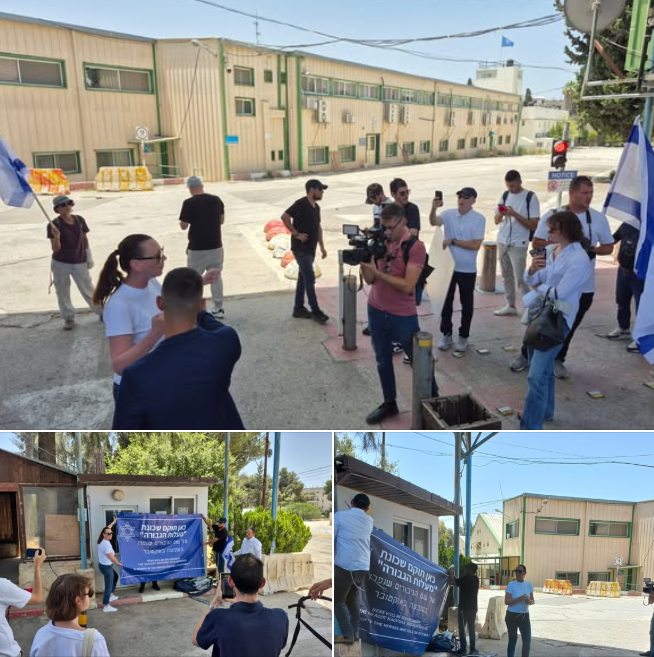
Settlers storm UNRWA headquarters in Jerusalem and demand its occupation.

Settlers stormed the headquarters of the United Nations Relief and Works Agency for Palestine Refugees (UNRWA) in the Sheikh Jarrah neighborhood of occupied Jerusalem on Monday afternoon, raising slogans calling for its "control and occupation."

The extremist intruders were led by Knesset member Julia Malinovsky from the right-wing opposition party Yisrael Beiteinu, who linked her raid to the anniversary of the occupation of East Jerusalem, according to the Hebrew calendar.

In this regard, the Jerusalem Governorate stated in a press release that this incursion constitutes an aggressive and provocative step, a serious violation of international law and UN resolutions, and a direct targeting of UN institutions operating in the occupied Palestinian territory.

The governorate added that this barbaric behavior demonstrates the extent of the colonial encroachment supported by the occupation government, which targets everything related to the Palestinian presence and international legitimacy, including United Nations institutions working to provide humanitarian services to Palestinian refugees. This constitutes a blatant challenge to international legitimacy and a consecration of the policy of displacement and ethnic cleansing in the city of Jerusalem.

She emphasized that this attack falls within a broader context of systematic attacks on UNRWA institutions, aimed at liquidating it and erasing the refugee issue, which is considered a fundamental pillar of Palestinian national rights, foremost among which is the right of return in accordance with Resolution 194.

The governorate held the Israeli occupation government fully responsible for this serious attack and its potential repercussions. It called on the United Nations and the international community, particularly the UN Secretary-General and the UNRWA Commissioner-General, to take immediate action to provide protection for UNRWA headquarters and staff and ensure its ability to carry out its duties without threat or interference.

The Jerusalem Governorate reiterated its unwavering support for the steadfastness of Palestinian refugees and its rejection of all attempts to liquidate their cause, affirming that Jerusalem will remain Palestinian and Arab, resistant to Judaization and exclusion projects. It also emphasized that the attack on UNRWA is an attack on international law, the role of the United Nations, and the inherent Palestinian right to this land.

It is noteworthy that the occupation authorities announced on October 10, 2024, the seizure of the land on which the UNRWA headquarters is located in the Sheikh Jarrah neighborhood of occupied East Jerusalem, and the transformation of the site into a colonial outpost comprising 1,440 colonial units.

UNRWA headquarters in Sheikh Jarrah is considered the agency's main headquarters.

The occupation authorities had demanded that UNRWA vacate its headquarters in the Sheikh Jarrah neighborhood of occupied East Jerusalem, on the grounds that it had "used the land without the approval of the Israel Land Authority." The authorities had also fined the agency and forced it to pay tens of millions of shekels in back rent for the years it had used the property. The occupation government's decision to ban UNRWA operations in East Jerusalem went into effect on January 30.

PALESTINE

Mon 26 May 2025 1:58 pm - Jerusalem Time

Israel rejects new prisoner exchange proposal

Israel rejected the proposals presented by the mediators on Sunday night.

A senior Israeli official told the newspaper Israel Hayom that "no responsible government in Israel would accept such a proposal, indicating that Hamas has no real desire to move forward with a deal based on US envoy Steve Witkoff's plan," according to the newspaper.

According to the Israeli source, the plan presented by Hamas includes several demands, including a public handshake between Khalil al-Hayya and envoy Witkoff as an expression of an American guarantee that the war will not resume after the truce ends, the newspaper reported.

According to the mediators, Hamas is prepared to release ten live hostages during a 60-day truce, with five of them to be released on the first day and the remaining five two months later.

In addition, Hamas is demanding a broad withdrawal of Israeli military forces from areas it has seized within the Gaza Strip, and the entry of large quantities of humanitarian supplies.

This announcement comes after Arab media reports that Hamas and Israel have reviewed a paper presented by Palestinian-American mediator Bishara Bahbah, in cooperation with US envoy Witkoff, and that a positive US response is expected soon.

A Palestinian leader explained that the document includes a 60-day ceasefire, with the release of 10 living Israeli prisoners in two batches: five on the first day, and five on the seventh day, with the entry of 1,000 aid trucks daily.

The paper also included a commitment to a complete ceasefire during the negotiations period, with a clear American guarantee from President Donald Trump.

The paper also includes negotiations to end the war during the ceasefire period, with Hamas and the other factions pledging not to pose any threat to Israel's security during this period.

This coincided with statements made by President Trump on Monday, in which he said there was "good news coming" regarding the situation in Gaza, noting that efforts were being made to halt the ongoing fighting.

In a statement to reporters, Trump explained: "We have spoken with Israel, and we want to see if we can stop this whole situation as soon as possible."

According to sources within his administration, Trump is pressuring Israeli Prime Minister Benjamin Netanyahu to halt the war and has expressed his displeasure with the ongoing military operations in the Gaza Strip.

Sources revealed that the US administration has opened an indirect channel of communication with Hamas via Palestinian-American businessman Bishara Bahbah, in an attempt to prepare the ground for new negotiations regarding a prisoner exchange and ceasefire.

An Israeli delegation travels to Cairo to formulate a ceasefire agreement in Gaza.

An Israeli security delegation is arriving in Cairo today, Monday, for talks with officials from the Egyptian General Intelligence Service and other sovereign bodies. The discussions will address consolidating the ceasefire in the Gaza Strip, coordinating border issues, operating the Rafah crossing, and mechanisms for delivering humanitarian aid, which has been piling up in North Sinai.

Informed sources told Al-Araby Al-Jadeed that the delegation includes representatives from the Israeli General Security Service (Shin Bet) and an Israeli military coordinator. Discussions will cover security and technical issues related to the next phase, should a comprehensive ceasefire agreement be reached.

A source familiar with the negotiations revealed to the newspaper that the mediators, led by the United States, are working to formulate a compromise for a ceasefire that would last for at least two months and include gradual measures from both sides. The agreement stipulates that Hamas will hand over a number of living Israeli detainees, along with the bodies of several dead, on the first day of the agreement's entry into force, in exchange for an immediate Israeli withdrawal to the pre-invasion areas after the truce finally collapsed.

PALESTINE

Mon 26 May 2025 12:30 pm - Jerusalem Time

More than 1,500 settlers and two ministers in the occupation government storm Al-Aqsa Mosque.

Hundreds of settlers stormed the Al-Aqsa Mosque compound on Monday under the protection of Israeli occupation forces. The settlers, who are known as the "Minister of National Security" in the extremist occupation government, Itamar Ben-Gvir, and his wife participated, as did the so-called "Minister of the Negev and Galilee", Yitzhak Wasserlauf, and members of the Knesset, including Knesset member from the "Jewish Power" party, Yitzhak Kroizer, on the anniversary of the occupation of the eastern part of Jerusalem.

In a video clip he filmed in the courtyards of Al-Aqsa Mosque and posted on the X platform, Ben-Gvir said, "There are actually a large number of Jews flocking here, and it's fun to see that."

He added, "Today, thank God, it has become possible to pray here and prostrate here. We thank God for that," he said.

Local sources reported that approximately 1,500 settlers stormed Al-Aqsa Mosque and performed provocative Talmudic rituals in its courtyards. Meanwhile, a settler raised the occupation flag and danced in the eastern part of the mosque. This coincided with the deployment of iron barriers by the occupation police around Damascus Gate and the Old City to restrict access to Jerusalemites amidst tight military measures.

Eyewitnesses reported that settlers attempted to bring so-called "Torah scrolls" into Al-Aqsa Mosque through the Mughrabi Gate. Hundreds of settlers also gathered in Al-Buraq Square, west of Al-Aqsa Mosque, and at the Qattanin Gate, where they performed Talmudic dances and rituals.

The Jerusalem Islamic Waqf Department said in a statement that 1,427 settlers stormed Al-Aqsa Mosque in the morning in groups, under the protection and escort of Israeli police, adding that more may storm the mosque in the afternoon.

Settlers posted video clips of Likud Knesset member Amit Halevi performing Talmudic prayers on the eastern side of the mosque during the raid.

It's worth noting that settler incursions and harassment of worshippers have increased in recent days, amid calls by extremist colonialist groups for further, more intense incursions on Monday.

The provocative "Flag March" is scheduled to begin from Al-Buraq Square, passing through Bab al-Amud and the al-Wad neighborhood within the Old City. These areas are densely populated with Palestinian residents, and since Sunday, Israeli occupation forces have deployed iron barriers around Bab al-Amud, at the entrance to the Old City of occupied Jerusalem.

Since 2003, settlers have been storming Al-Aqsa Mosque under the protection of Israeli occupation forces five days a week. Over the past ten years, they have begun performing silent public prayers during their incursions, including performing Talmudic rituals and raising the flag of the occupying state inside the mosque.

The so-called "Temple Organizations" are seeking to gradually impose the presence of Talmudic ritual tools in Al-Aqsa. In recent years, they have allowed the entry of dhikr books, prayer garments, and other items. Now, these groups are attempting to introduce more symbolic items such as Torah scrolls, menorahs, metal trumpets, and even altars and animal sacrifices. This constitutes a clear escalation aimed at changing the Islamic character of the mosque.

Since the beginning of the comprehensive Israeli aggression against our people in the Gaza Strip and the West Bank in October 2023, the colonial occupation's assault on the city of Jerusalem, its holy sites, and its Palestinian citizens has accelerated.

PALESTINE

Mon 26 May 2025 12:25 pm - Jerusalem Time

The occupation forces begin demolishing a house and a sheep farm in Bethlehem.

This Monday afternoon, Israeli bulldozers began demolishing a house and a sheep farm in the Khalayel al-Loz area, southeast of Bethlehem.

Hassan Breijieh, an expert on wall and settlement affairs, told WAFA that a force consisting of several military patrols and two bulldozers stormed Khalayel al-Loz and proceeded to demolish a 1,000-square-meter sheep farm belonging to Mohammed Ibrahim Abayat, under the pretext of lacking a permit.

Brijia added that the occupation forces had previously destroyed the foundations of a 100-square-meter building belonging to Mahmoud Ibrahim Suwais.

Later, the occupation forces began demolishing the farm owner's inhabited two-story home, each 100 square meters in size, according to his brother, Ibrahim Abayat.

PALESTINE

Mon 26 May 2025 11:47 am - Jerusalem Time

The occupation forces arrested two citizens from Hebron.

Today, Monday, the Israeli occupation forces arrested two citizens from the city of Hebron.

Local sources reported that occupation forces arrested citizens Musa Saadi Barqan and Zaid Noah Arafat Al-Rajabi last night after raiding their homes, searching them, and ransacking their contents.

The occupation forces also stormed the village of Al-Tuwana in the Masafer Yatta area, raided the home of Kamal Rabie, and ransacked its contents.

PALESTINE

Mon 26 May 2025 11:45 am - Jerusalem Time

Three prisoners in Gilboa Prison are suffering from critical health conditions.

The Palestinian Prisoners' Affairs Authority said that three prisoners in Gilboa Prison are suffering from critical health conditions.

In a statement issued Monday after her lawyer visited a number of prisoners in Gilboa prison, the organization explained that prisoner Munir Salama, 25, from Jenin camp, has not been sentenced and remains detained. He has been suffering from scabies for about four months, which causes large boils to appear on his body, and he needs immediate treatment.

Meanwhile, prisoner Samer Qambe’ (30 years old) from Jenin, who is currently detained, suffers from pain in his left ear extending to his neck, reaching the palm of his left hand, which sometimes causes him to lose feeling in his hand. He was wearing a brace that extended over his arm, and the day before the visit, a special unit stormed the room where he was being held, assaulted him, and seized the brace. He also complains of severe toothache.

Prisoner Ibrahim Ramadi (32 years old) from Sheikh Jarrah neighborhood/Jerusalem, has also been suffering from scabby skin for about two months. The disease has reached an advanced stage, with boils appearing on his knees, and especially eczema on his hands. This is due to dirty clothes, which they do not wash regularly, because using the washing machine is linked to going out for a walk and the time required for that is not enough. The washing machine is also broken. Prisoner Ramadi has also been suffering from water on the heart since he was young, and he needs to take special medication for his condition, but the prison administration does not provide it for him. In addition, he suffers from migraines that accompany him most of the time, and from severe pain in the tendons of his left hand.

PALESTINE

Mon 26 May 2025 10:57 am - Jerusalem Time

Israeli occupation forces destroyed a water pipeline in Sebastia, northwest of Nablus.

Israeli occupation forces destroyed a water pipeline in the town of Sebastia, northwest of Nablus, tonight.

Sebastia Mayor Mohammed Azem reported that Israeli occupation forces destroyed the water pipeline supplying homes west of the town overnight. The pipeline, which extends approximately 800 meters and has been in place for more than 40 years, was in place for more than 40 years.

In another context, Azem confirmed that the occupation authorities are still working at the town's archaeological site, with the aim of seizing control of the site, constructing a colonial park, and building a military center in the area.

ARAB AND WORLD

Mon 26 May 2025 10:04 am - Jerusalem Time

From Yasser Arafat to Amin Maalouf: Arabs who have won Spain's Prince of Asturias Awards

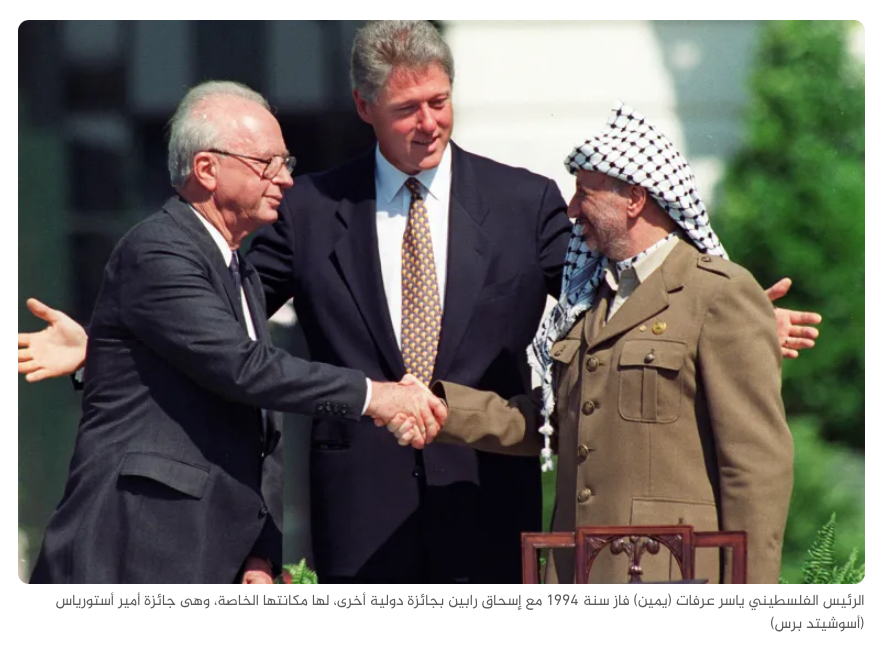
Many remember that the late leader Yasser Arafat shared the Nobel Peace Prize in 1994 with Yitzhak Rabin and Shimon Peres. However, few may remember that in the same year, he and Rabin won another prestigious international award: the Prince of Asturias Award.
Abu Ammar was thus the first Arab figure to be awarded this prestigious Spanish prize, which has been awarded since 1981 and honors prominent figures and institutions in the fields of communication, the humanities, scientific research, the arts, social sciences, literature, international cooperation, reconciliation, and sports. Arafat was honored that year in the International Cooperation category in recognition of their "decisive efforts to create conditions for peace, in accordance with the process initiated at the Madrid Conference in October 1991, which would lead to final peace in the Middle East."
The award came a year after the signing of the Oslo Accords between Israel and the Palestine Liberation Organization, which stipulated "an end to decades of confrontation and conflict, and the recognition of their mutual legitimate and political rights," and included several provisions relating to the structure and composition of the Palestinian Authority, and the establishment of a Palestinian transitional self-governing authority. The following year (1995), Arabs were present on the list of winners of the award in the "Reconciliation" category, which went to the Jordanian King Hussein in recognition of "his contribution to serving peace in the Middle East region," and in the field of sports, to the Algerian runner Hassiba Boulmerka in honor of her achievements in the middle-distance race at the World Athletics Championships in Tokyo (1991) and the Barcelona Olympic Games (1992).
King Hussein's honoring came in the same year that Jordan signed a peace agreement with Israel known as the Wadi Araba Treaty, with the aim of "achieving a just and comprehensive peace between the two countries based on Security Council Resolutions 242 and 338 within secure and recognized borders."
In 2002, the "Reconciliation Category" award was shared by Palestinian intellectual Edward Said (1935-2003) and world-renowned composer Daniel Barenboim, who "worked selflessly and competently to promote coexistence and peace" through artistic projects involving young musicians from Palestine and Israel.
Edward Said was a prominent figure in Arab and Palestinian culture, renowned for his criticism of Western Orientalism. Until his death in 2003, he remained one of the most vocal advocates of the Palestinian cause in Western media and academic circles, particularly in the United States, where he earned a doctorate from Harvard University and worked as a lecturer at Columbia University.
Edward Said's works cover a wide range of fields, encompassing disciplines such as political analysis, particularly those related to Palestinian affairs, both domestically and internationally, English literary criticism, and musicology. His writings also addressed the complex background of relations between East and West.
The last Arab winner of the award was in 2010, in the literature category. The Lebanese writer Amin Maalouf (born 1949) won because "his works, which have been translated into more than 20 languages, prove that he is one of the contemporary writers who have most deeply explored Mediterranean culture, which represents a symbolic space for coexistence and tolerance."
Maalouf previously won the Prix Goncourt, France's highest literary award, in 1993 for his novel "The Rock of Tanios." He has since received several other awards in recognition of his prolific and profound output, which combines narrative and long essays on contemporary issues such as identity and the clash of civilizations. Since 2023, Maalouf has served as Permanent Secretary-General of the Académie Française.
It is worth noting that the Prince of Asturias Award for Literature differs from the Cervantes Prize for Literature in the Spanish Language, which was established in 1976 and is considered "the most prestigious and rewarding award given to Spanish-language literature" and has been won by prominent writers from Latin American countries.
In the latest edition of this prestigious award, the Literature category was awarded to Spanish author Eduardo Mendoza, whose works have been translated into several languages and "usually set in Barcelona, are characterized by a style that combines elements of Gothic fiction, science fiction, and crime novels, as well as a deeply personal sense of humor, satire, and parody."
The award was known as the Prince of Asturias Award and is awarded by the Prince of Asturias Foundation (non-profit), headed by Felipe, Prince of Asturias, who was then Crown Prince of Spain. When he assumed power as Felipe VI in 2014, it was renamed the Princess of Asturias Award and is awarded by the Princess of Asturias Foundation, headed by Princess Leonor, daughter of King Felipe. From: Al Jazeera


ARAB AND WORLD

Mon 26 May 2025 9:33 am - Jerusalem Time

Trump optimistic about a deal with Iran and a ceasefire in Gaza.

US President Donald Trump said US negotiators made "significant progress" during "very good" nuclear talks with Iran earlier this weekend.

"I think we may have some good news on the Iran front," Trump told reporters before boarding Air Force One.

"The same is true of Hamas in Gaza," he added, clearly hinting at the possibility of a positive development in the negotiations between Israel and Hamas to cease fire in Gaza. He reiterated, "We want to see if we can stop this, and Israel. We have spoken with them (the Israelis) and we want to see if we can stop this whole situation," in what was interpreted as meaning a permanent cessation of the war.

The fifth round of US-Iranian negotiations concluded in Rome on Friday after achieving little progress, according to official US statements. Since returning to office, Trump has revived his "maximum pressure" campaign on Iran, supporting the talks but warning that a military option against Iran is on the table.

Israeli Prime Minister Benjamin Netanyahu is pushing the United States to launch successive military attacks on Iranian nuclear facilities, considering negotiations with Iran a waste of time.

Iran wants a new deal that would ease sanctions that have hurt its economy.

It's worth noting that Iranian Foreign Minister and chief negotiator Abbas Araqchi downplayed the progress made in the fifth round of talks in Rome, stressing that "the negotiations are extremely complex and cannot be resolved in two or three meetings."

Omani Foreign Minister Badr al-Busaidi said on the X platform that the fifth round concluded with "some progress, though not decisive," adding that he hoped to clarify "remaining issues" in the coming days.

Trump said the ongoing discussions were "very good."

"I think we may receive some good news on the Iranian issue," he said, adding that an announcement could come "within the next couple of days."

The talks come ahead of a meeting of the International Atomic Energy Agency (IAEA), the UN's nuclear watchdog, in June, which will review Iran's nuclear activities.

It also comes before the expiration of the 2015 agreement in October, which was intended to allay US and European Union suspicions that Iran was pursuing a nuclear weapons capability, an ambition Tehran has consistently denied.

In exchange for restrictions on its nuclear program, Iran received relief from international sanctions. However, the agreement was nullified in 2018 when Trump unilaterally withdrew and reimposed sanctions. A year later, Iran responded by intensifying its nuclear activities. It now enriches uranium to 60%, far exceeding the 3.67% limit set in the agreement, but below the 90% level needed to produce a nuclear warhead.

OPINIONS

Mon 26 May 2025 9:30 am - Jerusalem Time

Gideon's Chariots Plan

Hamada Faraana

Hamada Faraana

Opinion Writer


Netanyahu was able to change the leadership of the military and security colony: 1- Defense Minister from Yoav Galant to Israel Katz, 2- Chief of Staff from Herzi Halevi to Eyal Zamir, 3- Head of the Mossad foreign intelligence from Yossi Cohen to David Barna, 4- Head of Military Intelligence Aman from Shlomi Bender to Aharon Halevi, 5- And now he is working to change the head of the Shin Bet internal intelligence, Ronen Bar, to General David Zinni.
Netanyahu worked to change the military and security leadership of the colony, so that they would be with him, supporters, backers, and implementers of his directives, in order to achieve direct goals, which are: 1- The complete destruction of the Gaza Strip, making it a land and place uninhabitable, 2- Killing the largest number of Palestinian civilians, 3- Eliminating the Palestinian resistance, 4- Expelling, displacing, and deporting the people of the Gaza Strip outside their homeland. In doing so, he is working to achieve two desires: First, to get rid of the trial based on the negligence of his government in managing the colony, and to confront the October 7, 2023 initiative and its repercussions, and second, to satisfy the deep-rooted hatred, animosity, and hostility inherent in their culture towards Arabs, Muslims, Christians, and especially the Palestinian people, because the opposite of their expansionist Israeli colonial project is the survival, existence, and steadfastness of half of the Palestinian Arab people on their land, after the expulsion, displacement, and deportation of the other half outside their homeland, Palestine, in 1948 and 1967.
They have managed to occupy the entire map of Palestine, but have strategically failed to expel, displace, and expel the entire Palestinian people. Therefore, they are working to complete their hostile, racist expansionist program by reoccupying the Gaza Strip, or the greater part of it, after they were forced to leave it in 2005, following the dismantling of settlements and the removal of occupation army bases, as a result of the results of the Second Intifada in 2000.
The former military and security team that confronted the October 7th Initiative and its repercussions reached the following conclusion:
There is no longer any strategic objective in the Gaza Strip that can be achieved, following the devastating, devastating strikes and the systematic, indiscriminate killing of civilians. Yet, they failed in the first round of their offensive, which was halted on January 18, 2025, by a decision and direct intervention from US President Trump, even before he assumed his constitutional powers.
And here they are continuing their attack after the failure of the negotiations on March 18, 2025, after Netanyahu succeeded in replacing the military and security leadership with new leaderships that worked to respond to Netanyahu’s desires, aspirations and goals with a plan called: “Gideon’s Wagons” in three stages, aiming to regain control over the entire Gaza Strip. The name of the operation has religious and historical connotations of a military nature, which the colony had previously used in 1948, and implemented it in occupying the Beisan area in the Palestinian Jordan Valley, and controlling it after expelling its entire Palestinian population and people.
The killing and destruction being carried out by the occupation forces in the Gaza Strip has prompted and provoked the colony's friends and allies to express their denunciation, condemnation and denunciation of the shameful acts and blatant crimes being committed against Palestinian civilians by the colony's forces and apparatuses, including air, artillery and missile bombardment, by land, sea and air. Even some of the colony's political leaders, most of whom served in the army, denounce what is happening in the Gaza Strip, the deliberate killing of civilians, which has shaken the colony's standing and exposed the truth about its colonial project.
The "Gideon's Chariots" plan, the criminal military operation that began on May 19, 2025, will achieve its goals for the benefit of the colony, through deliberate killing and destruction. That is the challenge. That is the standard, the tools, and the title of the conflict between the two projects: the Palestinian national democratic project versus the Israeli colonial expansionist project.

..............

The killing and destruction perpetrated by the occupation forces in the Gaza Strip has prompted and provoked the colony's friends and allies to express their condemnation, denunciation, and denunciation of the shameful acts and blatant crimes being perpetrated against Palestinian civilians.

OPINIONS

Mon 26 May 2025 9:29 am - Jerusalem Time

Secrets of Israeli Negotiation Science


Dr. Ahmed Rafiq Awad

I confess that I have always been fascinated by the hellish capabilities and methods employed by Israeli negotiators, whether in secret or public, political, military, or commercial negotiations. Because of this, I devoted an entire chapter to Israeli negotiations in my novel "The End of the Century," which was published by Dar Al Majed and the Palestinian Writers Union exactly twenty years ago.
Today I find myself compelled to repeat, revised and expanded, the words about the Israeli negotiation. In reality, it is not negotiation, but rather taking advantage of the moment and seizing the situation, knowing opponents and enemies with precise knowledge, the great ability to deconstruct everything and redefine the terms and facts and redefine and re-define the definitions and terms, and the iron patience to exhaust the enemy, besiege him, strip him of his options and demonize his positions. Negotiation in this case means possessing power. Let us admit that. The strong is the one who manages any negotiation process. The weak does not negotiate, but rather engineers his exit from the scene, and his only virtue is to minimize his losses or preserve as much face as possible, if face remains at all.
I feel compelled to return to this topic after all we have heard and witnessed of the arduous and arduous negotiations that took place over the course of a year and seven months between Israel and the Arab and Palestinian parties. This long and provocative process witnessed many secrets of Israeli negotiation, including the following:
First, Israel determined the content and method of the negotiations according to its own agenda and interests. It did not accept Hamas's initial offer, which called for the release of all prisoners in exchange for a ceasefire, a withdrawal, and the release of Palestinian prisoners. By escalating the war, Israel sought to impose the method and content of the negotiations. The form of the negotiations serves their content, and this is a principle that must not be compromised.
Second: Demonizing the enemy by making it appear that he is being strict, refusing, or taking his decisions from other parties, and by claiming that he is adventurous and crazy, that he does not care about his people, that he is immature, or that he suffers from internal divisions and disagreements. Israel usually claims that those who engage in dialogue with it do not have a single position, but rather that there are several moderate and extremist positions. And of course, Israel usually intervenes to “adjust” the balance.
Third: Israel often suggests or dictates proposals that may seem attractive, forcing the enemy to settle in one way or another. Then, suddenly, Israel changes its position on the settlement it itself proposed. This is one of the most bizarre tactic Israel employs, and it seems to aim to push the enemy toward a free concession or the possibility of abandoning its positions. This, in turn, allows Israel to gain free negotiating positions.
Fourth: Israel is making its delegation a secondary issue that disrupts the negotiations themselves, through the delegation's mandate, composition, and scope of authority. It is prepared to cast doubt on the delegation it sent, accusing it of not managing the negotiations well, or even concealing or manipulating its positions. This is also one of the most bizarre diplomatic behaviors, as a country casts doubt on its own negotiating delegation.
Fifth: Israel is emptying mediation and mediators of meaning and substance by accusing them of inaccuracy, dishonesty, or a desire to disrupt or derail negotiations. Israel is also attempting to cast doubt on each other, buy some off, or exclude others.
Sixth: Israel tends to scrutinize procedural and detailed matters more than it tends to discuss substantive issues. Israel believes that achieving accomplishments in procedural matters will first bring it closer to its greater goals, and second, will increase the enemy's fatigue.
Seventh: For Israel, the media narrative is the most important aspect of the negotiation. Demonization, misinformation, smoke bombs, conflicting reports, contradictory positions, leaked news, and concealed sources are an integral part of the negotiation process, influencing the public to feel frustrated, hopeless, or falsely or naively optimistic, or even to influence the enemy negotiator himself.
Eighth: Using negotiations as a means of continuing the war through pressure, subjugation, managing public relations, and absorbing internal and external pressures.
Despite all of this and more, no one should believe that the Israeli negotiator is intelligent - despite his historical experience - or that he is different from the Arab or Western negotiator, at all. What allows the Israeli negotiator to appear as if he has tremendous options, many alternatives, and amazing abilities to evade or escape is his possession of power in all its types and forms: military, financial, and diplomatic. Negotiation, in the end, is not just a mental exercise, a jurisprudential or legal debate, or even acrobatic, at all. Negotiation is the language of power and imposing its conditions, which was expressed by the Japanese emperor who signed the surrender papers in front of the American admiral without reading them. When the admiral asked him why he had not read the terms of surrender, the emperor said: I will do so when I have the power.
Finally, if the Israeli negotiator has an amazing military advantage over us, we possess a force that he has never been able to break: the power of hope.

.....
The strong are the ones who manage any negotiation process. The weak do not negotiate, but rather engineer their exit from the scene. Their only virtue is to minimize their losses or preserve as much face as possible, if any remains.

OPINIONS

Mon 26 May 2025 9:26 am - Jerusalem Time

"Starvation War"... and the displacement plan

Essam Abu Bakr

Essam Abu Bakr

Opinion Writer

The United Nations has issued a dire warning about the rapidly deteriorating humanitarian situation in Gaza, saying life-saving supplies are nearing "complete depletion" due to Israel's blocking of aid.
UN Secretary-General's spokesman, Stéphane Dujarric, said in a press conference that more than two million people remain trapped in the besieged Strip, with mental health needs dramatically increasing, vital infrastructure destroyed, and basic services on the brink of collapse. He noted that nearly 90 percent of the water infrastructure—including wells, pumping stations, and sewage treatment plants—has been destroyed due to the hostilities, exacerbating the risk of disease and forcing families to rely on unsafe sources. He continued, "Stress levels are rising, particularly among children, as violence and deprivation continue," stressing that "Israel, as the occupying power, has legal obligations under international law to ensure access to food, medical care, and public health services."
Israel had launched a "starvation war" against the people of Gaza as a prelude to a war on Gaza. Israeli Prime Minister Netanyahu decided more than two weeks ago to halt the entry of all humanitarian supplies and aid into Gaza, starting Sunday morning. The move was aimed at pressuring Hamas to accept a proposal by US envoy to the region, David Witkoff. The Prime Minister's Office said the decision was made because Hamas refused to accept the US proposal to extend the first phase of the ceasefire in Gaza, which expired on Saturday.
International organizations have warned of the threat of famine and what Israel is waging, calling it a "starvation war" in Gaza if supplies to the Strip continue to be cut off. This is especially true given that the majority of Gaza's population relies on food supplies from outside the Strip after its destruction, ending all means of subsistence. The organizations warned, asking: What will happen if the people of Gaza begin to starve? Meanwhile, the media office in Gaza stated that preventing the entry of humanitarian aid into Gaza effectively means a "starvation war" against the people of Gaza, who are entirely dependent on humanitarian aid.
The Israeli occupation authorities issued a decision to ban UNRWA at the end of last January in the occupied Palestinian territories, including Jerusalem. This means depriving tens of thousands of Palestinian refugees of services, including education and healthcare, especially with the closure of UNRWA headquarters in occupied Jerusalem. The Israeli Knesset had passed legislation banning UNRWA operations, and Israel officially notified the United Nations of the cancellation of the agreement regulating its relations with the agency since 1967. The United Nations stated that the law also prohibits activity in areas under Israeli control.
The United Nations Relief and Works Agency for Palestine Refugees (UNRWA) warned that more than two million displaced people in the Gaza Strip are besieged by hunger, thirst, disease and fear, noting that obtaining meals has become an impossible task for families in the Strip, according to the Palestinian News Agency, WAFA. UNRWA explained that the flour and food supplies allowed in through the crossings by the Israeli occupation does not meet 6% of the population's needs, which has caused a severe crisis, especially in obtaining bread, which has led to the closure of most bakeries in the southern Gaza Strip.
UNRWA revealed that the Israeli occupation army has completely or partially destroyed more than 200 schools and shelters, as a result of Israeli strikes across the Gaza Strip, since the outbreak of the war on October 7. More than 730 displaced persons have been killed in UNRWA shelters, in addition to more than 200 agency staff members, so far. The Euro-Mediterranean Human Rights Monitor also announced that the Israeli occupation bombed 18 shelters in Gaza in one month.
Here comes the important question: Why did Israel prevent humanitarian aid to Gaza, ban UNRWA, and bomb its shelters in Gaza? Does Israel need to do this?
Israel certainly needs to ban UNRWA and bomb its shelters for two reasons:
The first is to force the Palestinians out of Gaza and prevent them from resettling there or attempting to repair their homes and wounds and leave Gaza permanently, and to displace them from it. This is the main goal of the Gaza war: to destroy Gaza and displace its population. Gaza will be completely emptied of its population over the course of years through forced or voluntary displacement. This will be done silently and away from the media in what is called the “silent war.” Gaza has now become an uninhabitable place. More than 80 percent of Gaza’s homes have been completely destroyed, residential neighborhoods have been completely removed, entire cities have been wiped out, and entire families have been erased from the civil registry. Gaza has become uninhabitable.
The second and most important goal of bombing the shelters in Gaza was to send a message to the Palestinians that there is no safe place for Palestinians in Gaza, and that they must either be displaced or killed, and to prevent any institution from helping the Palestinians in preparation for the displacement of the residents of Gaza and preventing them from remaining in Gaza. Therefore, Israel banned UNRWA, which helps them stay alive in the Strip, and bombed them in the shelters and tents to which they were displaced, exhausting them more and more and deciding to leave Gaza, and pushing them repeatedly to flee towards the sea, towards the borders, towards the port and towards the crossings to escape the hell of the bombing that has reached everywhere, and every place in Gaza has become unsafe.
Although the shelters are UN-approved centers housing defenseless civilians whose homes were destroyed and who fled the hell of war to a place supposedly safe according to international agreements and the United Nations, which prohibit armies from bombing these places during wars, as they are considered safe places for sheltering civilians, and there is no military activity or Hamas fighters in these places that could cause harm or mount resistance, and the Zionist entity is well aware of this, the United Nations Children's Fund (UNICEF) announced that more than half of the schools used to shelter the displaced in Gaza have been bombed. What Israel wants by bombing the shelters in Gaza is to send a bloody message to the Palestinians: There is no safe place for you in Gaza, and you must either evacuate and leave Gaza or be bombed and killed.
As for the remaining buildings in Gaza, I believe they will be demolished while they are empty, because the goal is to completely wipe out the place and its landmarks. This is a war of destruction and displacement of the entire Gaza Strip, and a war of rebuilding the Gaza Strip with new specifications and a different vision for the future, handing it over to America. Therefore, it is assumed that no Gazan or Palestinian will remain in Gaza, nor will he find a safe place in Gaza, nor will he think about rebuilding his place.
There is an American-Israeli game to delude the Palestinian people that Israel will not occupy Gaza and that it does not intend to displace the Palestinians, by restoring the Palestinian Authority to replace Hamas in ruling Gaza, but the truth is different. Gaza will be handed over to America and the Palestinians will be displaced voluntarily and in stages, and the countries have become ready to receive them, and the displacement crossings have been opened.
Since Egypt has been aware of the plan from the outset, it has no intention of opening its doors to the Palestinians to prevent their displacement. Therefore, the United States is seeking to pressure Egypt to open the Rafah crossing or to displace them through other means, such as the port, airports, or other crossings to other countries such as Indonesia and Albania, as Trump has stated.
This does not mean that there will be a Palestinian Authority in Gaza. The Palestinian Authority's political role in Gaza has ended. However, there will be Palestinian institutions and Palestinian security forces supporting the multinational force. All of this will be temporary until the transitional phase is arranged. Palestinian civil society institutions in the West Bank will operate strongly in Gaza, in addition to economic institutions. However, there will be no return to Palestinian Gaza and no Palestinian rule there.
America and Israel are planning to have Gaza emptied of Palestinians silently and after years of what is called...
The "silent war" and its preparation to become a military base for America in the Middle East. This is the most dangerous phase. There will be no Palestinian rule in Gaza, but rather a transitional phase in which the Palestinian Authority will be used to help manage the population temporarily. This is the plan. The goal of this war is to end the Palestinian presence in Gaza, end the idea of a Palestinian state, and end Israel's absolute hegemony over the West Bank.

As for the West Bank, Israel will destroy the Palestinian camps there, with the goal of ending the idea of the Palestinian right of return. Destroying and banning UNRWA will be part of this plan, as Israel considers the Palestinian camps in the West Bank to be a fertile ground for Palestinian struggle and resistance against it. Therefore, its goal will be to destroy the camps so that they become uninhabitable, to fragment this force that has penetrated the camps and is able to dominate the minds of young people and recruit them.
With over 800,000 settlers in the West Bank, the idea of eliminating Palestinian camps has become an urgent demand for the occupying state, which seeks to end the presence of Palestinians in Israel in general. Therefore, the occupation forces are inciting criminal settlers to attack Palestinian villages in the West Bank.
These settlers were raised in the pens of human terrorism, and their primary mission is to reproduce and settle in the West Bank. They pose a threat to the Palestinians residing in the West Bank. They will be allowed to move and remain in the West Bank to terrorize Palestinians in Palestinian villages, threaten their security, prevent urban expansion in Palestinian villages, and prevent the displacement of their residents to Palestinian cities, thus increasing settlement on the lands of Palestinian villages and around Palestinian cities. After that, Israel will achieve absolute hegemony over the West Bank after it has finished with Gaza.

..............
Egypt has been aware of the plan from the outset and has no intention of opening its doors to the Palestinians to prevent their displacement. Therefore, the US is seeking to pressure Egypt to open the Rafah crossing or to displace them through other means, such as ports, airports, or other crossings to other countries such as Indonesia and Albania, as Trump has stated.

OPINIONS

Mon 26 May 2025 9:26 am - Jerusalem Time

Alaa Al-Najjar looks up, vomiting up the world

Written by: Wissal Abu Alia

Written by: Wissal Abu Alia

Opinion Writer


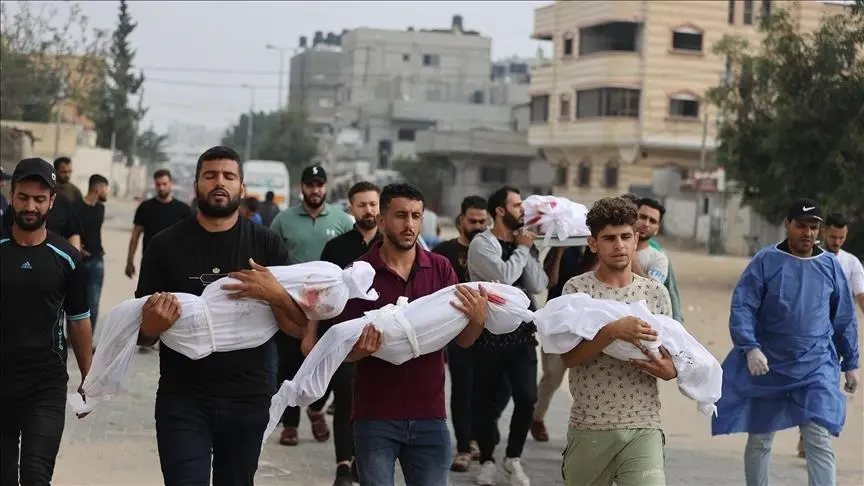
Voices rise in the place, cameras swing to the sound of quick and slow footsteps, feet collide with each other, tender bodies follow one another, the ambulance door is still open to the endless screams, the white cloth is now on the road and will cover nine fresh lilies.
In modern mythology: Yahya, Rakan, Raslan, Gibran, Eve, Rifan, Saydin, Luqman, and Sidra, all crowd into the throat of the physician, Alaa Al-Najjar, the mother, who split the light after her eyes were surprised by what squeezed the soul nine times in a row, without a single breath rising between them.
Her sobs reached for dozens of kilometers, as she gathered the picture in front of her. I could almost feel her heart breaking piece by piece, as she passed through the corridors of her consciousness to the first examination when she discovered she was pregnant with her firstborn son, to the umbilical cord, the first embrace, the birth certificate, the succession of years, the first words, the first steps, and then the dreams that were not fulfilled, to the last breaths.
Now she washes them away with her tears, after counting their ribs one last time, dividing the tremors equally between them, one tremor for this one and one for that one, in an ontological scene that is being torn apart on her arms. Can she vomit out her sadness? Is there a heart sufficient for all this pain?

The place is so narrow it's suffocating, it doesn't have room for her massacre. She runs in her white robe soaked in blood and tragedy from one wall to another, from one corridor to another, as if she were a button from a torn shirt on the sidewalk of life. She tries to revive her senses to comprehend what happened to the sleeping bodies, and the voices of the paramedics still echo in the depths of her ears: children, remains, they are brothers, and once again the arranged and distorted words rise, all of them failing to come up with a clear sentence that reformulates the meanings.
She screams hundreds of times, and here she is prevented from reaching the stretcher, and she sees the combined hands slipping from hers, and her eyes are scattered with the globe of the earth and all its creatures, remains, and fossil remains, but she sees nothing but ashes.
Now she's looking up... and vomiting up the whole world.

OPINIONS

Mon 26 May 2025 9:23 am - Jerusalem Time

The Dilemma of Using Religion to Build Jewish Nationalism

Nabhan Khreisha

Nabhan Khreisha

Opinion Writer

Since the establishment of the State of Israel in 1948, the Zionist project has faced a profound structural problem related to its attempt to transform the Jewish religion into a homogeneous national identity. This endeavor fundamentally contradicts the religious specificity of Judaism and the historical and cultural criteria that distinguish nationalism as a social and political phenomenon. While nationalism is usually associated with specific elements such as language, territory, shared history, and social customs, we find that Judaism, as a religion, lacks these components if it is to serve as the basis for political nationalism.
Since its inception in the late nineteenth century, Zionism has attempted to create a Jewish nationalism based on religion, something unprecedented in modern national history. Religions, by their very nature, are universal and inclusive, not the exclusive domain of any single ethnic or national group. In this sense, Zionism's attempt to harness religion to forge a "Jewish nationalism" can only be artificial and fundamentally contradictory.
Zionism strategically employed the Jewish religion to build a modern Jewish nation, despite its fundamentally secular roots. It did so by giving religious legitimacy to the national project by using texts such as God's promise to Abraham in the Torah to justify the Jewish right to the "Land of Israel." It employed religious concepts such as "the Diaspora" and "the return to Zion" as national justifications for the establishment of Israel. It also revived Hebrew, which had been a religious/ritual language, to make it a modern national language.
In 2018, the Israeli Knesset passed the "Nation-State Law," which states that "Israel is the national home of the Jewish people" and affirms that the right to self-determination in the state is "the exclusive right of the Jewish people." However, this law poses a fundamental challenge to the notion of "national unity" for Jews, as Jews from around the world come from diverse cultural, linguistic, and ethnic backgrounds, and what actually unites them is religious affiliation or a sense of it, not necessarily national affiliation. Thus, the Nation-State Law will not be able to integrate Jews from different backgrounds into a single national identity based solely on religion. Rather, it perpetuates ethnic and religious discrimination within the state, deepening divisions rather than healing them.
If we assume, for the sake of argument, that religions can form the basis of nationalities, then logic dictates that these nationalities establish their states in the places where their religions and sanctities originated. If Muslims wanted to establish a nationality based on Islam, their natural homeland would be the Arabian Peninsula, where the Islamic religion originated and where the two holy mosques, Mecca and Medina, are located. Similarly, if Christians wanted to form a "Christian nationality," Palestine, the land of Jesus Christ, or the Vatican as the central religious seat, would be the logical location for their state. As for Buddhists, their nationalities have historically been concentrated in South and East Asia, such as Tibet, China, India, and Sri Lanka.
But the Jews, who were gathered in Palestine through organized immigration supported politically and militarily, did not originate from a single territory, nor did they share a single language or a unified popular culture. More than 77 years after the establishment of the State of Israel, a significant proportion of Israeli Jews still retain the languages, customs, traditions, music, and cuisine of the countries from which they came: Russian Jews still speak Russian and practice Russian rituals and cultural heritage; Moroccan Jews retain prominent Moroccan customs; Ethiopian Jews live in relative social and cultural isolation; and Ashkenazi Jews impose their cultural and economic hegemony over other groups, perpetuating internal divisions rather than melting them into a unified nationality.
This deep division underscores Zionism's failure to produce a modern "Israeli nationalism." Nationalism is not simply a human community embracing a single religion; it is an integrated system of shared language, culture, collective memory, and a sense of shared destiny. Therefore, despite possessing state institutions, an army, and a political system, Israel still suffers from a weak national structure, lacking a unified cultural base or a comprehensive national sentiment, which compels it to cling to religion as a coercive unifying factor.
In this context, Israeli historian Shlomo Sand is one of the most prominent figures who has exposed the falsity of this nationalist establishment. In his book, "The Invention of the Jewish People," Sand demonstrates that the so-called "Jewish people" has never been a homogeneous ethnic unit, but rather the product of religious and geographical transformations and the dispersal of the diaspora over many centuries. Sand asserts that most current Jews are descendants of peoples who converted to Judaism at various stages of history, such as the Khazars in Eastern Europe, and are not direct descendants of the ancient Jews of Palestine. Thus, the claim of a "Jewish people" returning to its "historical land" is more of a political myth than a historical fact.
The Israeli state, in light of this understanding, is not based on natural nationalism, but rather on an ideological project that attempts to create a national identity through the tools of statehood, militarism, education, and religion. Therefore, Israel's continued reliance on religion as the basis of identity places it in a state of constant internal contradiction, rendering it an exceptional and unstable case in the global context of modern nation-states.
Ultimately, religion cannot, in and of itself, constitute a political nationalism. Even if it attempted to do so, it would not succeed in creating a stable nation-state unless it was linked to its sacred site and grew around it throughout history, as has been the case with other religious nationalisms. In the case of Israel, it remains an entity that unites the diaspora on a religious basis, without successfully fusing it into a unified nationalism. This perpetuates its fragility and renders its legitimacy a constant subject of question.

..............

Despite possessing state institutions, an army, and a political system, Israel still suffers from a weak national structure. It lacks a unified cultural base or a comprehensive national sentiment, which forces it to cling to religion as a coercive unifying factor.

OPINIONS

Mon 26 May 2025 9:17 am - Jerusalem Time

In the final judgment!

Ibrahim Melhem

Ibrahim Melhem

Opinion Writer

The earth has become too narrow for the displaced due to the repeated departures, in a series of killings, starvation, displacement, and the cramming of people, all of them, into the last corridor. It is as if the late Mahmoud Darwish was seeing with the sensitivity of a poet and the imagination of a visionary what the displaced are enduring today in Hellfire, when he said: “The earth has become too narrow for us, cramming us into the last corridor.”

The poems of poets and the eloquent sermons of orators are no longer able to encompass the pain of suffering and the bleeding of wounds open over the long term, until they overflowed and flooded the exhausted hearts burdened with the pain of loss and the pain of hunger that has become more deadly than the bombs distributed by planes and drones over their heads, as they crawl with their children on empty stomachs from the severity of the famine that has afflicted them, bitten their intestines, and stolen the fruits of their hearts from their hands, like the child Mustafa, whom his parents bid farewell yesterday in solemn silence.

Television networks broadcast footage yesterday of hundreds of tents leaning against each other, pitched along the beach, to the point of overflowing the port, which has become a shelter for nearly a million displaced people who have fled Gaza and the north, under fire.

In the final gathering place, the only refuge left for those fleeing hell is the sea, while "bubbles or cages crammed with food" are set up as traps to lure the starving to the south, walking dozens of kilometers, after which they are subjected to blackmail and given the choice between death by starvation or displacement!

PALESTINE

Mon 26 May 2025 8:48 am - Jerusalem Time

The resignation of the director of the Gaza Humanitarian Foundation deepens the mystery surrounding relief efforts in the Strip.

In a surprise move, Jake Wood, executive director of the US-backed Gaza Humanitarian Foundation, announced his resignation with immediate effect, casting doubt on the future of the relief efforts the organization was preparing to implement in the Gaza Strip.

Continuous coverage on the Arab48 website's Telegram channel.

In a statement issued by the Geneva-based foundation on Monday, Wood explained that his decision stemmed from his conviction that the organization was unable to accomplish its mission while fully adhering to "humanitarian principles," primarily neutrality, impartiality, and independence. He said, "It is clear that the relief plan we have prepared cannot be implemented without compromising these principles, which I will not compromise."

Since its launch in February, the organization has announced an ambitious plan to distribute approximately 300 million meals within its first 90 days of operation, amid the dire humanitarian crisis in the Gaza Strip. However, the United Nations and a number of international relief agencies have refused to cooperate with the organization, amid accusations that it coordinates closely with Israel, sparking widespread controversy over the credibility of its actions.

The establishment of the Gaza Humanitarian Foundation comes at a time of mounting international pressure on Israel due to the deteriorating humanitarian situation in Gaza, following the Israeli war on the Gaza Strip.

Since the outbreak of the war on October 7, 2023, 53,939 Palestinians have been killed in the Gaza Strip, most of them women and children, and more than 122,797 others have been injured, according to the Palestinian Ministry of Health.

The latest data indicates that the Israeli military exercises effective control over approximately 77% of the Gaza Strip, which is home to more than 2.4 million people, the majority of whom are refugees.

In his statement, Wood expressed his pride in the efforts he led during his tenure, noting that the relief plan developed by the foundation aimed to deliver food to those in need and address security concerns regarding aid diversion, in conjunction with long-standing organizations on the ground.

"Like many around the world, I was shaken by what was happening in Gaza, and I felt a humanitarian duty to do everything possible to alleviate the suffering of the people," he said.

Wood concluded his statement by calling on Israel to expand the delivery of humanitarian aid to Gaza through various mechanisms. He also urged all concerned parties to devise new and effective ways to ensure that relief reaches civilians without delay, discrimination, or diversion.

PALESTINE

Mon 26 May 2025 8:43 am - Jerusalem Time

Trump heralds imminent breakthrough: "Good news with Hamas" and pressure to stop the war

US President Donald Trump said on Monday that there is "good news coming" regarding the situation in Gaza, noting that efforts are being made to stop the ongoing fighting.

In a statement to reporters, Trump explained: "We have spoken with Israel, and we want to see if we can stop this whole situation as soon as possible."

According to sources within his administration, Trump is pressuring Israeli Prime Minister Benjamin Netanyahu to halt the war and has expressed his displeasure with the ongoing military operations in the Gaza Strip.

Sources revealed that the US administration has opened an indirect channel of communication with Hamas via Palestinian-American businessman Bishara Bahbah, in an attempt to prepare the ground for new negotiations regarding a prisoner exchange and ceasefire.

This step comes within the framework of an initiative led by the United States through its special envoy, Steve Witkoff.

Diplomatic sources confirmed that the US administration has asked Israel to postpone its escalation on the ground and allow expanded humanitarian aid deliveries to civilians in Gaza. This is aimed at creating a favorable environment for resuming talks, despite the ongoing daily Israeli airstrikes on the Strip.

In the same context, Israeli media reports indicated that an Israeli delegation may travel to Cairo on Monday to discuss ways to resume negotiations. However, the Israeli government has not yet issued an official confirmation of this visit.

Meanwhile, Sky News Arabia quoted its sources as saying that President Trump may announce a ceasefire in Gaza in the coming days, indicating that this announcement would be part of a deal that includes the release of a number of Israeli hostages.

In a related development, Al-Ghad TV, which broadcasts from Cairo, reported that the Doha negotiations on Gaza are witnessing rapid progress that could lead to an agreement soon.

According to informed sources quoted by the channel, the anticipated ceasefire agreement could last for sixty days and include the release of ten Israeli hostages and the return of the bodies of sixteen others.

According to the sources, the agreement will include the release of five live captives on the first day, and five more on the 60th day. The bodies of the captives will be handed over according to an agreed-upon timetable, allowing Hamas to determine their burial sites for the duration of the agreement.

Hamas also demanded the release of all Palestinian security prisoners from the Gaza Strip who were arrested by the occupation forces before or after the attack of October 7, 2023.

PALESTINE

Mon 26 May 2025 8:38 am - Jerusalem Time

A new massacre: 30 dead and dozens wounded in the bombing of a school housing displaced people in Gaza.

Thirty civilians were killed and dozens injured early Monday morning when the occupation forces bombed a school housing displaced persons in the Al-Daraj neighborhood of Gaza City.

Local sources reported that the occupation forces committed a horrific massacre against displaced people at Fahmi al-Jarjawi School in the al-Daraj neighborhood, resulting in the deaths of 30 civilians and numerous injuries resulting from fires that broke out in the tents.

She explained that charred bodies and the screams of displaced people, whose bodies were on fire, rose from the site of the bombing.

Circulating video clips of fires raging in school tents showed a large number of children killed and wounded.

ARAB AND WORLD

Sun 25 May 2025 10:35 pm - Jerusalem Time

The Israeli occupation raises the travel warning level for its citizens to Canada to Level 2.

Israel's National Security Council announced on Sunday that it had raised its travel warning for its citizens to Canada from Level 1 (no warning) to Level 2, due to what it described as "escalating threats against Israelis and Jews in Canada."

The statement, published by the Hebrew newspaper Haaretz, stated that "over the past year and a half, several attacks have been recorded in Canada on Jewish institutions and sites, including shootings, Molotov cocktails, and direct threats against Israelis and Jews, which necessitated raising the alert level."

The Council called on Israelis in or traveling to Canada to take strict precautions, specifically avoiding displaying Israeli or Jewish symbols in public and refraining from engaging in anti-Israel demonstrations.

He noted that anti-Israel demonstrations will be held on Sunday in the Canadian cities of Toronto and Waterloo.

Recently, demonstrations against the Israeli war of extermination in the Gaza Strip have escalated in the United States, Canada, and Europe.

With American support, Israel has been committing genocide in Gaza since October 7, 2023, leaving more than 176,000 Palestinians dead and wounded, most of them children and women, and more than 11,000 missing.

PALESTINE

Sun 25 May 2025 10:30 pm - Jerusalem Time

Large numbers of settlers storm Al-Buraq Square

This evening, Sunday, settlers stormed Al-Buraq Square in Al-Aqsa Mosque (the western wall of the mosque).

The Jerusalem Governorate reported that large numbers of settlers stormed Al-Buraq Square on the eve of the anniversary of the occupation of Jerusalem and raised the occupation flag.

This afternoon, the occupation forces deployed iron barriers around Damascus Gate, at the entrance to the Old City of occupied Jerusalem, in preparation for securing the "provocative flag march" of settlers scheduled for tomorrow, Monday.

The Flag March is scheduled to start from Al-Buraq Square, passing through Damascus Gate and the Al-Wad neighborhood within the Old City, areas densely populated with Palestinian residents.

The Jerusalem Governorate warned of a dangerous escalation in the occupied city, as the occupation authorities continue to organize a series of colonial and Judaization activities aimed at imposing Israeli sovereignty over the city and consolidating the status quo of occupation by force, in flagrant violation of international law and relevant United Nations resolutions.

The governorate confirmed in a statement that this annual march is part of a systematic provocative agenda, typically accompanied by attacks on Jerusalemites and the chanting of racist slogans against Muslims and Christians. The march is held under heavy protection from the occupation police, who will impose a complete closure on the area starting at 12:30 p.m. tomorrow.

It is noteworthy that the frequency of settler incursions into Al-Aqsa Mosque has escalated significantly since the start of the Israeli aggression on the Gaza Strip on October 7, 2023.