PALESTINE

Mon 02 Jun 2025 9:18 am - Jerusalem Time

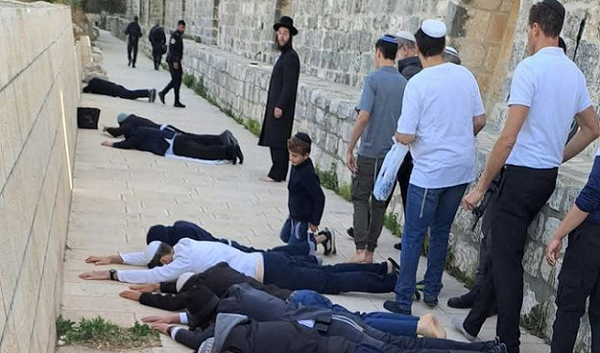
Dozens of settlers storm Al-Aqsa Mosque

Dozens of settlers stormed Al-Aqsa Mosque this Monday morning and performed Talmudic rituals at its gates, under the protection of the Israeli occupation police.

The Ministry of Islamic Endowments in Jerusalem reported that approximately 500 Israeli settlers have stormed Al-Aqsa Mosque so far.

Local sources reported that dozens of settlers performed Talmudic rituals and provocative dances at the gates of the Tribes, Hatta, and King Faisal Gates, during the so-called "Feast of Weeks."


PALESTINE

Mon 02 Jun 2025 9:13 am - Jerusalem Time

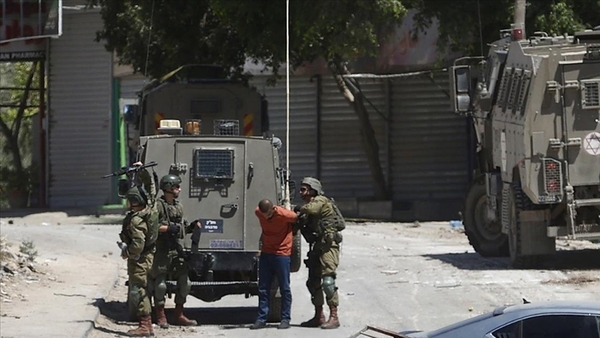
Arrests, raids, and seizure of citizens' property in the West Bank

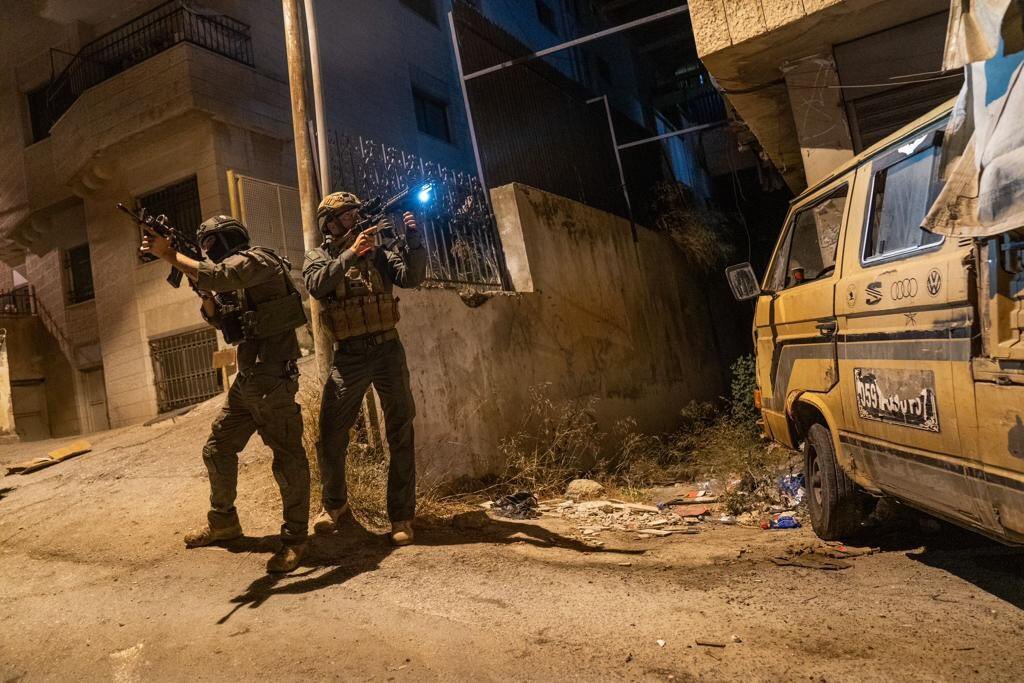
Israeli occupation forces arrested two citizens and seized two vehicles at dawn on Monday during raids in various areas of the West Bank.

In Hebron, the occupation forces stormed the town of Dura and arrested nine citizens: Ahmed Mohammed Hassan Al-Fasfous, Yazan Khaled Hamed Al-Namoura, Raafat Taleb Abu Saba’, Moataz Badr Al-Talahama, Kamel Mohammed Kamel Nassar, Hassan Ahmed Hassan Al-Darawish, Nadeem Bassam Faqousa, Saed Khaled Hamed Al-Namoura, and Abdo Munjed Qazzaz.

Other forces raided the homes of detainees, searching and vandalizing their contents. They also stormed the towns of Adh Dhahiriya, As Samu, Beit Ummar, and several neighborhoods in Hebron.

In Nablus, occupation forces seized two vehicles during a raid on the village of Al-Lubban Al-Sharqiya and transported them to one of their nearby settlements.

In Ramallah, occupation forces stormed the city of Al-Bireh and the villages of Al-Mughayyir, northeast of Ramallah, and Deir Abu Mash'al, west of it.

Local sources reported that the occupation forces carried out raids and searches of a number of citizens' homes during their raid on the Saht Marhaba neighborhood in the city of Al-Bireh, and the villages of Deir Abu Mash'al and Al-Mughayyir.

PALESTINE

Mon 02 Jun 2025 9:08 am - Jerusalem Time

Molotov cocktail attack on 'pro-Israeli hostage rally' in Colorado

The FBI announced it is investigating a "terrorist attack" in Boulder, Colorado, that the local Jewish community said targeted activists demonstrating for the release of Israeli hostages in Gaza.

Authorities said six people were hospitalized with burns and other injuries in downtown Denver on Sunday afternoon "after an attack on a group seeking to raise awareness about the Israeli hostage situation in Gaza," according to the FBI. The victims ranged in age from 67 to 88, and their injuries ranged from serious to minor, according to authorities. Two were airlifted to the burn unit of a Denver-area hospital, officials said.

Mark Michalek, Special Agent in Charge of the FBI's Denver Field Office, identified the suspect as 45-year-old Mohamed Sabri Suleiman. He said witnesses reported that the suspect used a "primitive flamethrower" and threw an incendiary device into the crowd, adding that he was "heard yelling, 'End the Zionists' and 'Freedom for Palestine'" during the attack.

A joint statement issued by Boulder Jewish community groups stated that "a firebomb was thrown at participants in a public rally for the hostages" by a group called "Run for Their Lives." The group's chapters hold weekly events across the United States to raise awareness about the hostages, according to the statements.

Jewish groups reported injuries, but details of the attack remain unclear.

The video showed at least one person lying on the ground, being helped by passersby, while a police officer approached the shirtless man and handcuffed his hands behind his back.

"We are aware of a targeted terrorist attack in Boulder, Colorado, and are fully investigating," FBI Director Kash Patel said on Channel X. "Our agents and local law enforcement are already on the scene, and we will share updates as more information becomes available."

Police confirmed they were still gathering information about three hours after the attack and were working to determine whether the pro-Israel group was specifically targeted.

For his part, US Secretary of State Marco Rubio said: "We stand united in prayer for the victims of this afternoon's targeted terrorist attack in Boulder. Terrorism has no place in our great country."

It's worth noting that the Yolder incident occurred less than two weeks after an attacker shot and killed two employees of the Israeli embassy in Washington, D.C. According to authorities, the alleged shooter shouted "Free Palestine" and "I did it for Gaza" after committing the murder.

OPINIONS

Mon 02 Jun 2025 9:02 am - Jerusalem Time

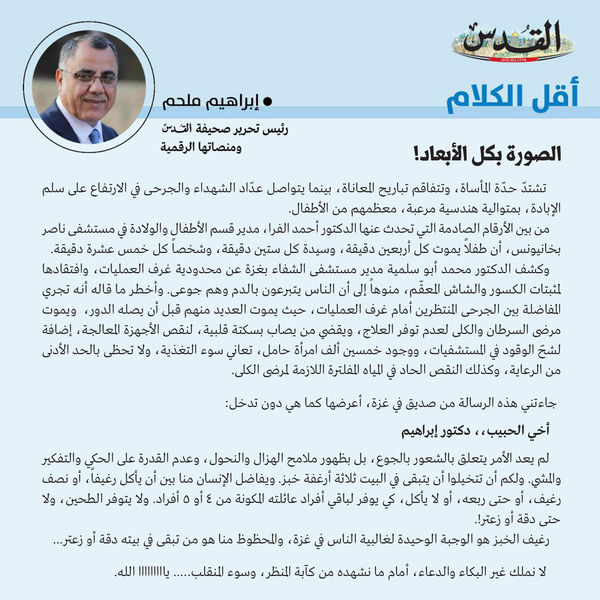
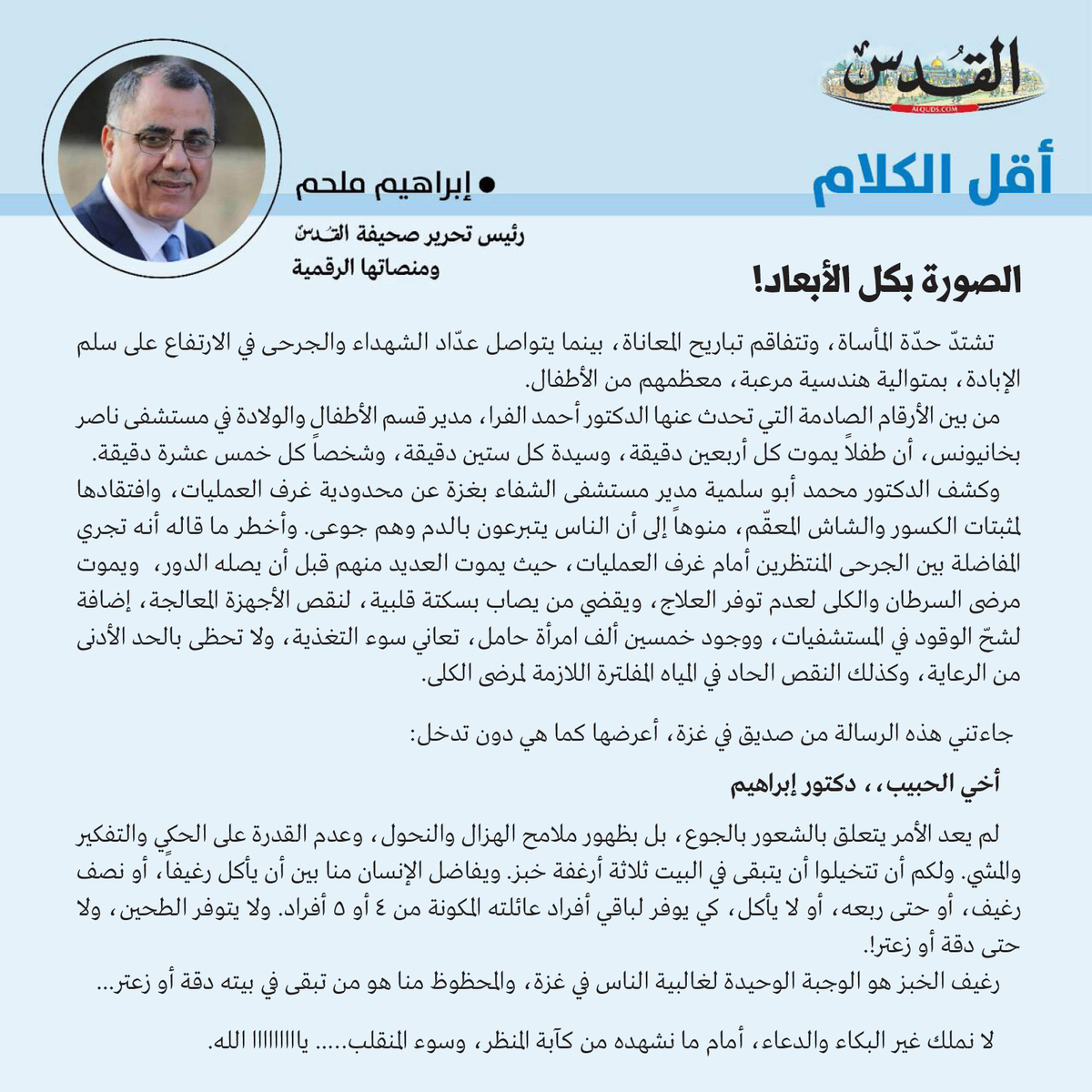
Picture in all dimensions!

Ibrahim Melhem

Ibrahim Melhem

Opinion Writer

The tragedy intensifies, and the suffering worsens, while the number of martyrs and wounded continues to rise on the scale of genocide, at a terrifying geometric rate, most of whom are children.
Among the shocking figures cited by Dr. Ahmed Al-Farra, Director of the Pediatrics and Maternity Department at Nasser Hospital in Khan Younis, is that a child dies every 40 minutes, a woman every 60 minutes, and a person every 15 minutes.
Dr. Mohammed Abu Salmiya, director of Al-Shifa Hospital in Gaza, revealed the limited capacity of operating rooms, their lack of fracture fixators and sterile gauze, noting that people are donating blood while they are hungry. The most alarming thing he said is that there is a trade-off between the wounded waiting in front of the operating rooms, with many of them dying before their turn arrives. Cancer and kidney patients die due to the lack of treatment, and those who suffer from heart attacks die due to the lack of treatment equipment. In addition, there is a fuel shortage in hospitals, and the presence of fifty thousand pregnant women who suffer from malnutrition and do not receive even the minimum level of care, as well as a severe shortage of filtered water necessary for kidney patients.

This message came to me from a friend in Gaza, and I present it as is without interference:
My dear brother
Dr. Ibrahim

It's no longer just about feeling hungry, but about the signs of emaciation and thinness appearing, and the inability to speak, think, or walk. Imagine that there are three loaves of bread left in the house. A person among us is choosing between eating one loaf, half a loaf, a quarter of a loaf, or nothing at all, in order to provide for the rest of his family of four or five. And there is no flour, not even dukkah or thyme! A loaf of bread is the only meal for most people in Gaza, and the lucky ones among us are those who have dukkah or thyme left in their house...

We can only cry and pray, in the face of what we witness of the gloom of the scene and the bad outcome... Oh God.

PALESTINE

Mon 02 Jun 2025 9:00 am - Jerusalem Time

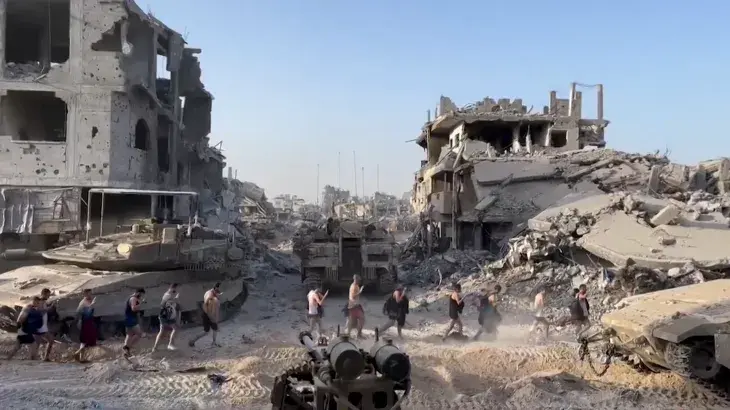
Gaza under fire: The Israeli army expands its operations and the massacres continue.

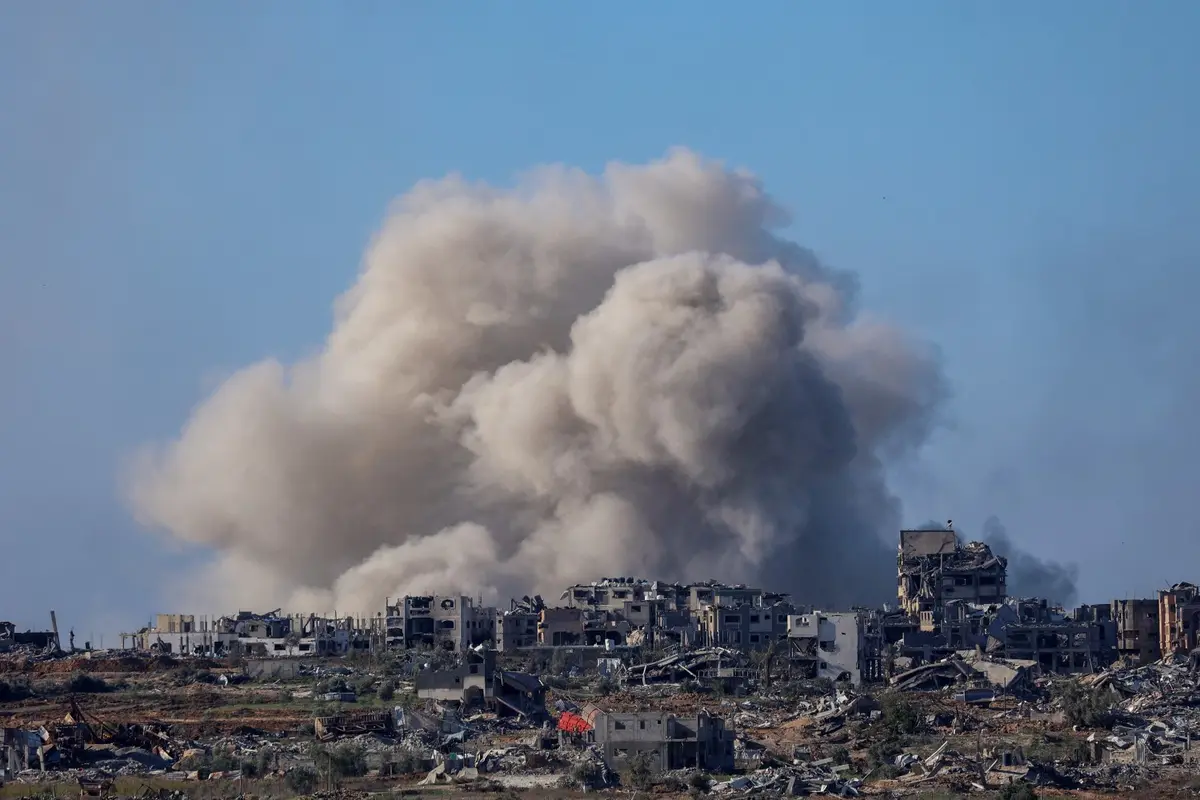
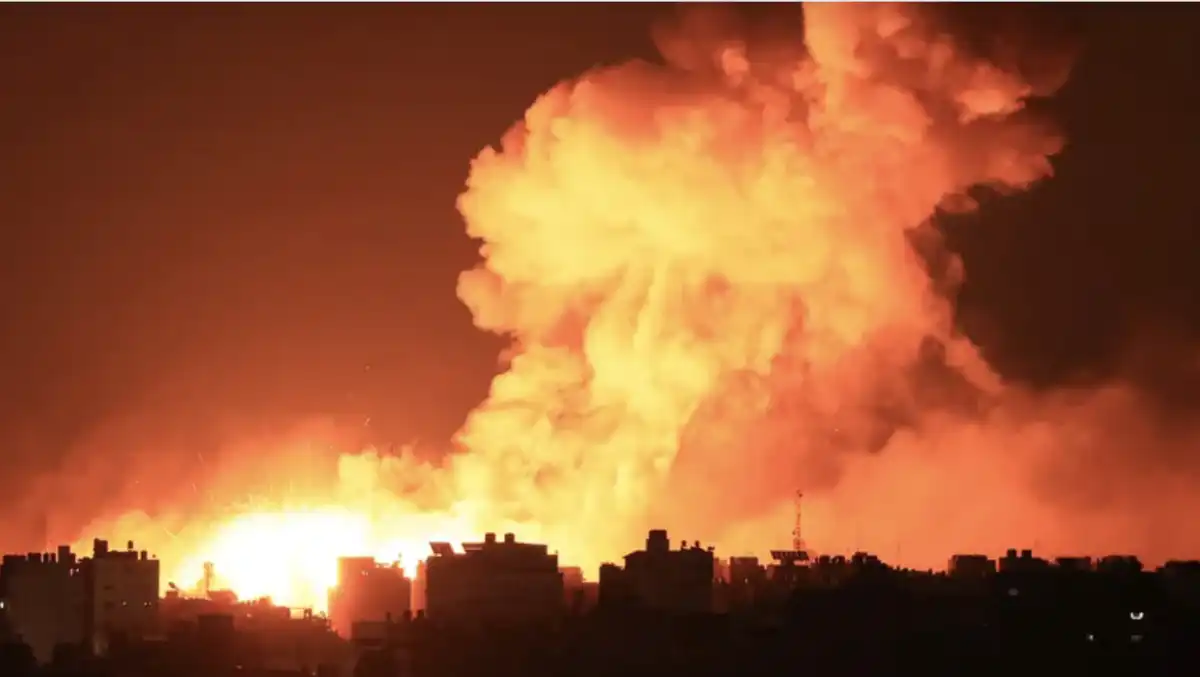
Israeli warplanes launched a series of airstrikes on various areas in the Gaza Strip on Monday morning, in a new escalation of military attacks.

In the city of Khan Yunis in the southern Gaza Strip, warplanes carried out a violent raid targeting a site, coinciding with an airstrike targeting the city of Deir al-Balah in the central Gaza Strip, where the Al-Ansar Mosque was targeted and completely destroyed by the bombing.

Israeli aircraft also launched three consecutive airstrikes on various areas in Deir al-Balah, causing widespread destruction to infrastructure and nearby buildings.

In Gaza City, warplanes renewed their raids on the eastern areas, accompanied by the firing of quadcopter drones. This sparked panic among residents, especially given the ongoing attacks and intensified aerial bombardment.

In the context of the escalation of operations, Israeli Chief of Staff Eyal Zamir, during a field tour of the Gaza Strip on Sunday, ordered the expansion of the scope of the "military maneuver" to include additional areas in the north and south, considering that Israel has entered a "decisive phase of the fighting."

Gaza City and the northern Gaza Strip witnessed a wave of violent airstrikes, carried out by warplanes believed to be used for large-scale bombing operations.

The attacks destroyed dozens of homes, including residential towers, leading to a new wave of displacement for thousands of families.

Aircraft bombed sites east of Jabalia in the northern Gaza Strip, the Al-Amal neighborhood in Khan Yunis, and the town of Al-Qarara northeast of the city, in addition to artillery shelling north of the Nuseirat camp in the central Gaza Strip.

In a significant development, Israeli forces targeted the Noura Al-Kaabi Kidney Dialysis Center in northern Gaza, completely destroying it, according to the Gaza Ministry of Health.

Amid ongoing Israeli crimes, Hamas denied the occupation's allegations regarding the Rafah massacre, which claimed the lives of 31 civilians, asserting that the Israeli army had broadcast a "fabricated" video to mislead public opinion and cover up the crime, which occurred outside an aid center.

PALESTINE

Sun 01 Jun 2025 10:23 pm - Jerusalem Time

Israeli occupation forces stormed Arraba, south of Jenin.

Israeli occupation forces stormed the town of Araba, south of Jenin, on Sunday evening.

According to local sources, an Israeli infantry force stormed the town from the Dotan military checkpoint, deployed through the streets, and raided and searched a house, while drones hovered in the air.

It is noteworthy that the occupation has intensified its raids on towns and villages in Jenin Governorate since the beginning of its aggression on the city and its camp on January 21st.

PALESTINE

Sun 01 Jun 2025 9:46 pm - Jerusalem Time

Hamas confirms its readiness to "initiate" negotiations on points of contention.

Hamas announced on Sunday its readiness to begin indirect negotiations with Israel with the aim of reaching a ceasefire in the Gaza Strip.

According to a statement from the movement, Hamas said it "welcomes the continued Qatari and Egyptian efforts to end the war waged by the occupation against our people in the Gaza Strip."

The movement affirmed its readiness to "immediately begin a round of indirect negotiations to reach an agreement on the points of contention, ensuring relief for our people and ending the humanitarian tragedy, leading to a permanent ceasefire and a complete withdrawal of the occupation forces."

Hamas leader Bassem Naim told Reuters on Saturday that the movement had not rejected a ceasefire proposal presented by Steve Witkoff, US President Donald Trump's envoy to the Middle East.

He added, "We did not reject Witkov's proposal. We agreed with Witkov on a proposal, and I consider it acceptable as a proposal for negotiation. We received the other party's response, and it did not agree with any of the items we agreed upon."

He continued, "Nevertheless, we responded positively and responsibly, responding to it in a manner that fulfilled the aspirations of our people. Why should the Israeli response be considered the only response to be negotiated? This violates the integrity and fairness of mediation and constitutes complete bias toward the other party."

Hamas said it was seeking amendments to a US-backed proposal for a temporary ceasefire between the movement and Israel in Gaza, but Steve Witkoff said Hamas's response was "completely unacceptable."

PALESTINE

Sun 01 Jun 2025 9:10 pm - Jerusalem Time

The occupation forces destroyed the "Noura Al-Kaabi Kidney Dialysis Hospital" in the northern Gaza Strip.

Israeli occupation forces bombed the Noura Al-Kaabi Kidney Dialysis Hospital in the northern Gaza Strip on Sunday evening.

The hospital is the only kidney dialysis facility in the northern Gaza Strip. It served dozens of patients in the areas of Beit Lahia, Beit Hanoun, Jabalia, and the village of Umm al-Nasr. It was damaged by Israeli attacks several times, resulting in the destruction of its dialysis machines, leaving only eight of them. Today, the hospital was completely destroyed.

In this context, the occupation forces bombed a number of residential buildings in Gaza City.

PALESTINE

Sun 01 Jun 2025 7:28 pm - Jerusalem Time

Joint Egyptian-Qatari statement on ceasefire negotiations in Gaza

Egypt and Qatar said in a joint statement on Sunday that they are continuing their "intensive efforts to bring viewpoints closer together and work to overcome points of contention to reach a ceasefire agreement in the Gaza Strip, based on the proposal of US envoy (Steve) Witkoff, and to allow for the resumption of indirect negotiations based on this proposal."

In the statement, the two countries called for "all parties to exercise responsibility and support the efforts of mediators to end the crisis in the Gaza Strip and restore stability and calm to the region."

The statement said, "The two countries look forward to quickly reaching a temporary truce for a period of 60 days, leading to a permanent ceasefire agreement in the Gaza Strip, allowing an end to the unprecedented humanitarian crisis in the Strip, allowing the opening of crossings and the entry of humanitarian and relief aid, ensuring the alleviation of the suffering facing the Palestinian people in Gaza, leading to a complete end to the war and the commencement of the reconstruction of the Strip in accordance with the plan adopted by the emergency Arab Summit in Cairo on March 4, 2025."

PALESTINE

Sun 01 Jun 2025 7:06 pm - Jerusalem Time

Katz threatens to assassinate Khalil al-Hayya and a leader in the Qassam Brigades

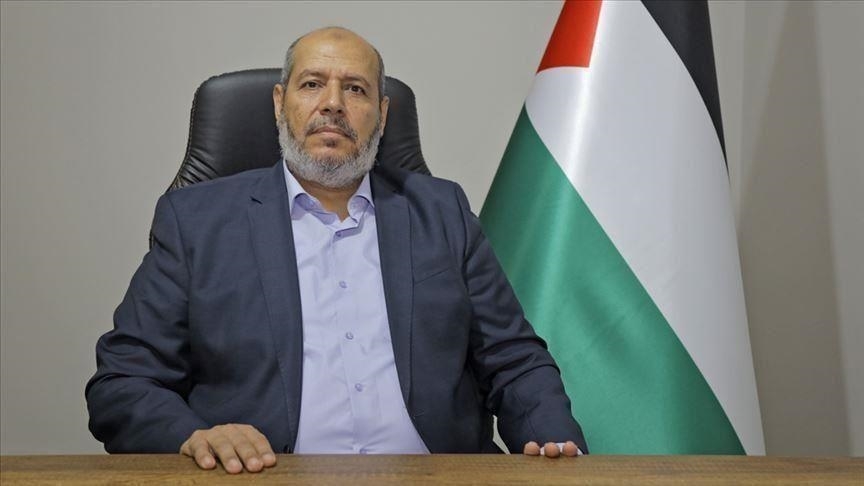
Israeli Defense Minister Yisrael Katz threatened on Saturday to assassinate Khalil al-Hayya, a member of Hamas's political bureau, and Izz al-Din al-Haddad, a leader in the Qassam Brigades, the movement's military wing.

This came in a statement issued by Katz's office following the Israeli occupation army's announcement that it had assassinated Qassam Brigades leader Mohammed Sinwar in a raid carried out on May 13 in Khan Yunis, south of the Gaza Strip.

"Izz al-Din al-Haddad is in Gaza, and Khalil al-Hayya is abroad; you're next in line," Katz said in a statement from his office, without providing further details.

Earlier on Saturday, the Israeli military announced in a statement that it had assassinated Mohammed Sinwar in a raid carried out on May 13 in Khan Yunis. Hamas has neither confirmed nor denied the assassination.

The army claimed in a statement that it "carried out a joint operation with the General Security Service (Shin Bet) on May 13, 2025, which included warplanes carrying out raids in the Khan Yunis area, resulting in the assassination of Mohammed Sinwar, the commander of Hamas's military wing."

The statement added: "This raid also resulted in the liquidation of Mohammed Shabana, commander of the Rafah (South) Brigade in Hamas, and Mahdi Kaware', commander of the organization's southern Khan Yunis Battalion."

The army statement claimed that "the three eliminated commanders were located in an underground command and control complex located beneath the European Hospital in Khan Yunis."

Al-Hayya has served as deputy head of Hamas's political bureau since August 2024. He is also a member of the movement's leadership council and currently resides outside the Palestinian territories.

Al-Haddad is a senior commander in the Qassam Brigades, serving as commander of the Gaza City Brigade and a member of the mini-military council.

On Wednesday, Israeli Prime Minister Benjamin Netanyahu claimed that the army assassinated Mohammed Sinwar in the Gaza Strip on May 13.

Since October 7, 2023, Israel has been waging a war of genocide in Gaza, including killing, starvation, destruction, and forced displacement, ignoring all international calls and orders from the International Court of Justice to halt it.

The US-backed genocide left more than 178,000 Palestinians dead or wounded, most of them children and women, and more than 11,000 missing. Hundreds of thousands were displaced, and a famine claimed the lives of many, including children.

PALESTINE

Sun 01 Jun 2025 6:39 pm - Jerusalem Time

Palestinian President meets with the Arab-Islamic Ministerial Committee

Palestinian President Mahmoud Abbas met today, Sunday, with the Arab-Islamic Ministerial Committee, chaired by Saudi Foreign Minister Prince Faisal bin Farhan, with the participation of Jordanian Foreign Minister Ayman Safadi, Egyptian Foreign Minister Badr Abdel Ati, Bahraini Foreign Minister Abdullatif Al-Zayani, and Arab League Secretary-General Ahmed Aboul Gheit, via closed-circuit television.

On the Palestinian side, the meeting was attended by Vice President of the State of Palestine Hussein Al-Sheikh and Prime Minister and Minister of Foreign Affairs Mohammed Mustafa.

His Excellency delivered a speech at the beginning of the meeting, in which he said: “We welcome our brothers, members of the Arab-Islamic Ministerial Committee in Palestine, headed by Prince Faisal bin Farhan, Chairman of the Arab Ministerial Committee, and the ministers who are members of the Committee, whom we are meeting with despite the occupation government’s refusal to allow them to visit us, and despite the rejection of every Arab and international effort that leads to ending this war that our Palestinian people are suffering from, and the prevention of our Arab brothers from joining us and receiving them on the land of the State of Palestine.”

He added, "We say to you: Thank you for this kind gesture that you have made in order to visit Palestine. The time must come, and it is very soon, for you to visit your second homeland, Palestine, God willing. We appreciate the efforts of your countries and send greetings and appreciation to our brothers, the Custodian of the Two Holy Mosques, King Salman bin Abdulaziz, and Crown Prince Mohammed bin Salman, and King Abdullah II and the Crown Prince, and King Hamad bin Isa Al Khalifa and his Crown Prince, and Egyptian President Abdel Fattah El-Sisi, and Secretary-General of the League of Arab States, Ahmed Aboul Gheit."

President Abbas continued, saying, “We express our great appreciation for the efforts of this Arab-Islamic Ministerial Committee, its members and its sister countries. This committee has traveled the world to stop the aggression in Gaza first, and then for the sake of the Palestinian cause. We tell you, it is time to focus efforts in the coming period. You have an important and necessary participation in the international peace conference that will be held in New York in the middle of this month. We hope that there will be a broad Arab and international presence to support the Palestinian cause and mobilize international recognition of the Palestinian state, especially from some European countries and others that have not yet recognized the Palestinian state.”

The President said: "In the State of Palestine, we have undertaken extensive governmental and constitutional reforms, emphasizing that our policy is based on rejecting terrorism and violence, and refusing to target civilians regardless of their nationality or affiliation."

President Abbas added, "We reiterate our call for Hamas to adhere to the PLO's commitments and policies, in accordance with the concept of one state, one law, and one legitimate weapon, if it wishes to become a member as a political faction within the PLO. Without this, we can never accept its membership."

President Abbas said that Hamas must relinquish control of the Gaza Strip, which it seized by force in a coup against Palestinian legitimacy in 2007. This coup must end, and with it, its negative effects that have harmed the Palestinian cause.

The President addressed the financial crisis facing the State of Palestine as a result of the Israeli occupation authorities' withholding of Palestinian funds, stressing the need to pressure the Israeli government to release the withheld Palestinian funds, which amount to approximately two billion dollars, and to exert Palestinian, Arab, and international efforts to provide financial and economic support in accordance with the government's program.

Regarding the ceasefire and the cessation of aggression against our Palestinian people, His Excellency said: We are in favor of an immediate ceasefire, and we have announced this since the first day of the aggression, because we want to stop the suffering of our people. Therefore, we always say: The hostages must be handed over to stop the shedding of Palestinian blood and the release of prisoners, to spare our people further suffering from the scourge of killing, destruction and genocide carried out by the occupation forces. Yesterday, about 50 citizens were martyred, and more than 150 others were wounded, because they were demanding food and medicine. Therefore, we say to everyone: The ceasefire must be reached at any cost, and relief and humanitarian aid must be provided for our Palestinian people, and the State of Palestine must assume its civil and security responsibilities in the Gaza Strip. We are ready to assume our responsibilities directly, in cooperation with our Arab brothers and relevant international parties, because it is important to us that peace and security prevail in the Gaza Strip, which is something very important, and we hope for the complete success of your efforts.

PALESTINE

Sun 01 Jun 2025 5:44 pm - Jerusalem Time

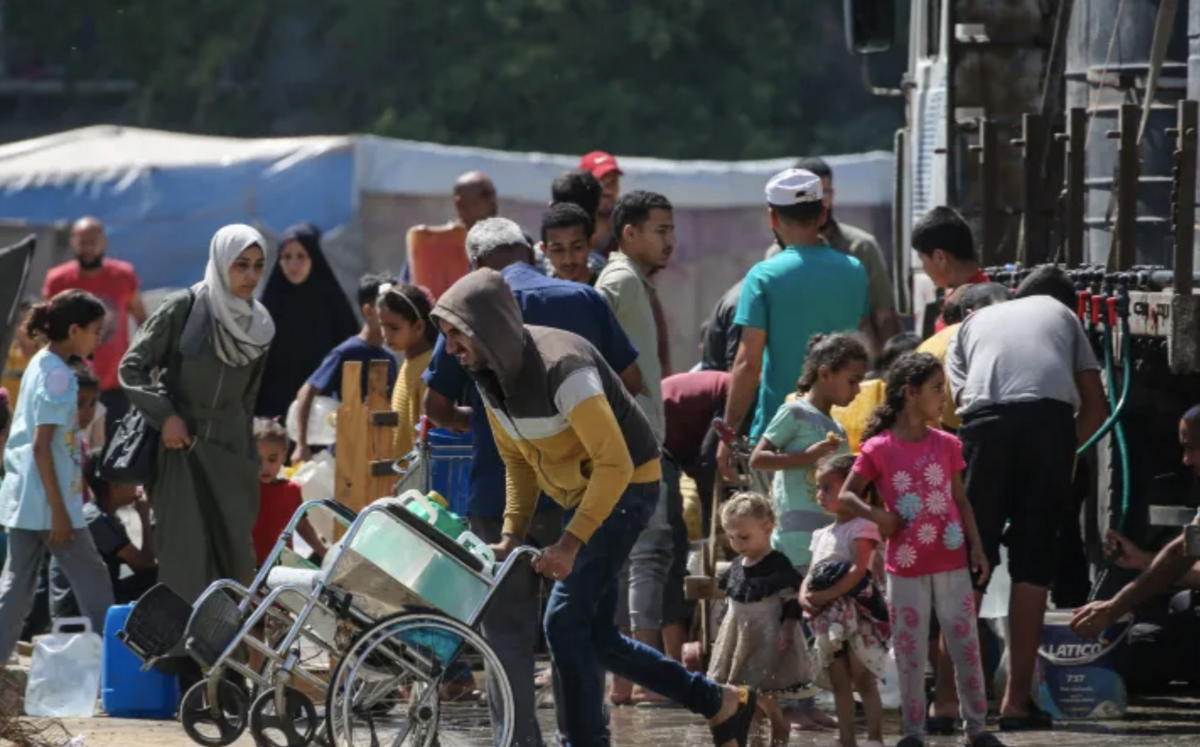
Gaza Municipality warns of a major thirst crisis and calls on the world to intervene.

The Gaza Municipality warned on Sunday of a major water crisis threatening the city as temperatures begin to rise and water demand increases. The municipality called on international organizations to intervene urgently to avert a catastrophe.

The municipality attributed this crisis to the occupation's destruction of approximately 75% of the city's water wells, the lack of fuel needed to operate the remaining wells, and the intermittent pumping of water from Mekorot (an Israeli water company), resulting in a state of severe thirst in the city.

According to the municipality, the crisis could lead to serious health and environmental disasters if international agencies and organizations do not urgently intervene to provide the necessary resources, fuel, rehabilitate and operate destroyed facilities, and provide water to citizens.

The Gaza Municipality confirmed that the current water supply does not exceed 35,000 cubic meters per day, down from the 120,000 cubic meters pumped during such periods before the aggression. This amount is considered extremely low compared to the city's actual needs.

Since March 2, Israel has pursued a policy of systematic starvation against approximately 2.4 million Palestinians in the Gaza Strip by closing the crossings to aid supplies piling up at the border, plunging the Strip into famine and claiming many lives.

With American support, Israel has been committing genocide in Gaza since October 7, 2023, leaving more than 175,000 Palestinians dead or wounded, most of them children and women, and more than 11,000 missing.

ARAB AND WORLD

Sun 01 Jun 2025 5:33 pm - Jerusalem Time

Huckabee strongly criticizes French-backed Palestinian statehood efforts at the UN

US Ambassador to Israel Mike Huckabee told Fox News Digital in an interview in Jerusalem earlier this week that the United States will not participate in a conference next month in New York City, hosted by France and Saudi Arabia, aimed at promoting recognition of a Palestinian state.

"It is absolutely inappropriate, in the middle of a war that Israel is waging, to come out and offer something that I think the Israelis are increasingly determined to reject," said Huckabee, a devout evangelical who has dedicated his life and livelihood to defending Israel and its annexation of the occupied West Bank.

Huckabee, who said last month that Israel had the right to starve Palestinians in Gaza, claimed: “October 7th (2023) changed a lot of things. If France is really determined to see a Palestinian state, I have a proposal for them: Carve out a part of the French Riviera and create a Palestinian state. We welcome them to do that, but we do not welcome them to impose that kind of pressure on a sovereign state. I find it disgusting that they think they have the right to do something like that.”

"I hope they reconsider, but the United States will not participate. It simply will not be part of this trick."

Commenting on the recently reported tensions between the two close allies, Huckabee noted that there may be disagreements between the Trump administration and Israeli Prime Minister Benjamin Netanyahu's government, but there should be no fear of a rupture in bilateral relations.

"I don't think pro-Israel Americans need to worry about any disagreement between the United States and Israel," he said. "Are there sometimes differences of opinion about the next steps in the Gaza war, returning the hostages home, or perhaps avoiding a full-scale war with Iran? Of course, that's normal."

But, the US ambassador stressed, "Regarding the relationship between Israel and the United States, it is not in any way at risk, it is not in any way torn or fractured. It is solid, and it must be. We have no choice. It is vital that the United States maintain its partnership—and I use this word deliberately—it is not a friendship, it is not an alliance, it is a partnership, which means that we are bound together in intelligence and military exchanges—in many ways our countries are closely linked."

Regarding the talks between Washington and Tehran, the ambassador described Iran as "one of the greatest, if not the greatest, threats to world peace," warning that it poses a serious and direct existential threat not only to Israel, but also to many Gulf states, and ultimately to the United States.

He said, "The Iranians have described Israel as the 'Little Satan,' but America is the 'Great Satan.' They have always treated Israel as an appetizer and the United States as the main course." It is very important, when people have told you repeatedly over the course of 46 years that they are planning to kill you, to start taking them seriously.

However, Huckabee expressed hope that the ongoing nuclear negotiations between the two countries would be successful and avoid any kind of military conflict.

"But when diplomacy fails, soldiers appear," he said.

"I find it hard to believe that the Iranians, after all these years of pushing toward a weaponized nuclear device, would suddenly come to their senses and say we've changed. We don't want that anymore, but let's hope they do. But if they don't, the president has been absolutely clear that Iran will not have a nuclear weapon."

Regarding Israel's ongoing war on the Gaza Strip, he stressed that the suffering could end immediately - if Hamas chose to behave well and lay down its weapons.

He said: "We all hope and pray that Hamas will hand over all the hostages and release them, and then leave Gaza once and for all. If you do those two things, it's over. It could have ended in October 2023; it should have ended. What they did was unbelievable, horrific, heinous, uncivilized, and barbaric behavior."

He noted that President Donald Trump has repeatedly insisted that Hamas has no future in Gaza. Huckabee said, "They can't govern it, and they can't stay."

He added, "Israel has made clear its willingness to airlift them into exile. They have a way out, but no entrance. They must leave, and all hostages must be returned, alive and dead."

He also expressed confidence in the possibility of expanding the scope of the normalization agreements between Arab and Islamic countries with Israel, the so-called "Abraham Accords," concluded during Trump's first term, which normalized relations between Israel and four Arab countries: the United Arab Emirates, Bahrain, Sudan, and Morocco.

While not naming any new countries considering joining, Huckabee said, "There are a number of countries that now realize that hostility toward Israel makes no sense." He added, "It's a delicate path for some countries; they can't move faster than their people are willing to accept... But there's a great atmosphere and the potential for radical changes and significant additions to the Abraham Accords."

PALESTINE

Sun 01 Jun 2025 5:01 pm - Jerusalem Time

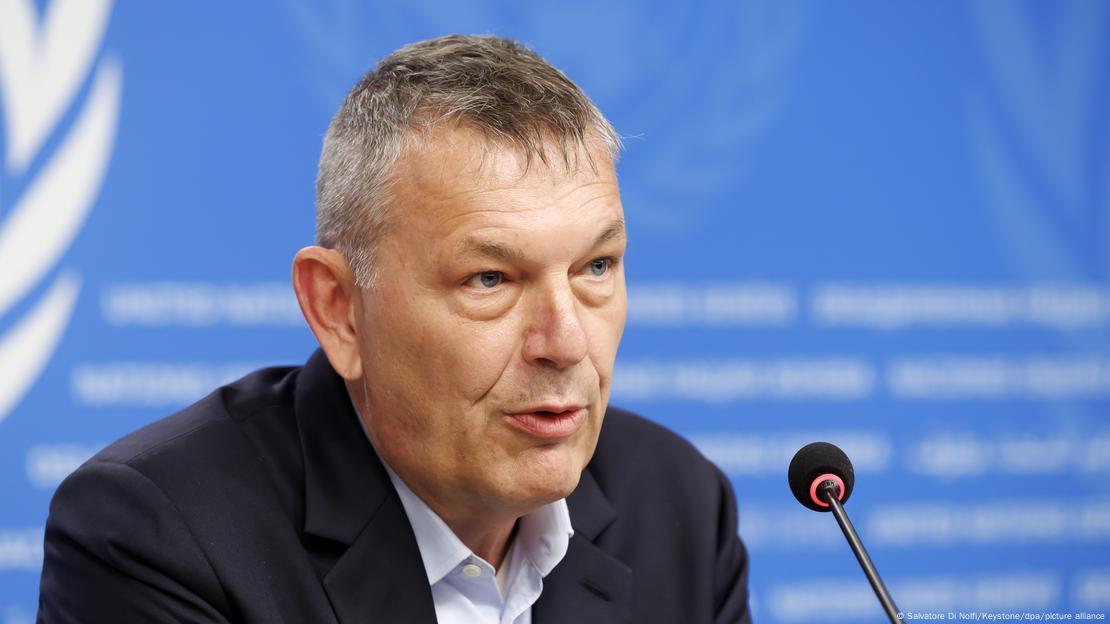
UNRWA Commissioner: Aid distribution through the new mechanism is a deadly trap in Gaza

The Commissioner-General of the United Nations Relief and Works Agency for Palestine Refugees (UNRWA) said that distributing aid in Gaza has become a deadly trap.

The Commissioner-General added that the delivery and distribution of aid must be safe and can only be done through the United Nations.

He continued, saying that Israel must lift the blockade and allow the United Nations safe and unhindered access to deliver aid.

The agency reported on Sunday that it has the capacity to safely deliver aid on a large scale in the Gaza Strip.

UNRWA said in a post on its Facebook page today, "During the ceasefire, the United Nations demonstrated that we have the capacity to safely deliver aid on a large scale to reach people where they are."

She pointed out that "current distribution methods fail to meet the urgent humanitarian needs in Gaza, especially for the sick, elderly, and wounded."

"UNRWA is running the largest uninterrupted UN food operation in the world," she added, noting that "supplies are ready - what we need is access to deliver aid directly to people in need. There is no time to waste."

The Palestinian Ministry of Health in Gaza reported that more than 200 people, including 31 martyrs, arrived at hospitals as a result of Israeli forces shelling of people gathered in the aid distribution area in Rafah Governorate at dawn today.

PALESTINE

Sun 01 Jun 2025 4:46 pm - Jerusalem Time

Hamas: Tel Aviv rejected a "consensus" truce paper, and we condemn the "retreating" US position.

Hamas leader Mahmoud al-Mardawi revealed new details on Sunday about the ongoing truce negotiations, accusing the Israeli occupation of rejecting a negotiating paper he described as "acceptable" and in line with "minimum national goals."

Al-Mardawi also strongly criticized the American position, describing it as a "backward step" and unacceptable, despite the fact that the document had been agreed upon verbatim with the American mediator over the past few weeks.

Details of the negotiations and the rejected paper

In a lengthy post on his X account, Mardawi explained that, after weeks of "serious and responsible" negotiations with the US envoy, Hamas had reached "an acceptable formula that aligns with the minimum national goals and the requirements for protecting our people."

He pointed out that the US envoy agreed to present it to the Israeli side.

However, according to Al-Mardawi, the surprise was the occupation's rejection of the paper and its request that the American side present it to Hamas as a "final, non-negotiable proposal."

"Catastrophic loopholes" in Tel Aviv's rejected proposal

Al-Mardawi revealed that the paper, which the American side later described as a "final proposal," was "laden with catastrophic loopholes" and went beyond the negatives of previous Israeli proposals, emphasizing that it:

It did not guarantee a real withdrawal from the territories.

It did not guarantee a comprehensive cessation of war at any stage.

It did not ensure a sustainable flow of humanitarian aid.

It did not guarantee the implementation of any commitment beyond the seventh day, the day on which the "Israeli detainees" were supposed to be handed over, leaving what would happen after that at the mercy of Israeli estimates and intentions without any guarantee.

Al-Mardawi summed up this position by saying: “In clearer terms: Take what we have, and we will see later whether we will fulfill our obligations.”

Hamas responded: "Yes, but..."

Despite these loopholes, Mardawi said that Hamas's position was "yes, but..." explaining: "We said 'yes' in principle, but we refused for the understandings to be a legitimacy for the continuation of genocide and starvation, and a gateway to political and security fraud."

The movement called for amending the paragraphs that "do not guarantee a halt to the killing, do not open the way for sustainable relief and return from displacement sites, and do not impose clear obligations on the occupation to withdraw and cease fire."

The irony, according to Al-Mardawi, is that these amendments "are completely identical to what was agreed upon, word for word, with the American mediator over the past weeks."

The American position is a "step backward"

The result, unfortunately, according to Mardawi, is that the American position described Hamas's response as a "step backward" and unacceptable, "even though they know it is a strict adherence to what was agreed upon with them."

Hamas's message to the world

Al-Mardawi sent a message to all relevant parties and to the entire world: "We are not the party that thwarts efforts or evades. We have provided responsible approval and made amendments that protect our people from genocide."

We demand an end to the aggression, the provision of aid, the return of the displaced, and the freedom of prisoners.

What we are asking for is not political conditions, but a minimum of human dignity.”

The Hamas leader concluded by saying, "Whoever truly wants to stop the war should pressure those who are killing, starving, and besieging, not those who are defending their people and are merely asking for guarantees of compliance."

We will continue to make every effort to reach an agreement that leads to the withdrawal of the army and ends the war, starvation and genocide."

PALESTINE

Sun 01 Jun 2025 3:59 pm - Jerusalem Time

The United Nations reveals a survival crisis in Gaza, and London calls on Israel to stop the war.

The United Nations Office for the Coordination of Humanitarian Affairs (OCHA) said that people in Gaza, half of whom are children, are facing a survival crisis. British Defense Secretary John Healy said that the targeting of Palestinians near an aid distribution center was intolerable.

According to the UN office, more than 632,000 people have been displaced again since March 18.

Earlier on Sunday, the Ministry of Health in Gaza announced that more than 200 Palestinians had arrived at hospitals, including 49 martyrs, five clinically dead, and approximately 30 in critical condition, following an Israeli airstrike targeting Palestinians heading to an aid distribution center run by an American company west of Rafah, in the southern Gaza Strip.

The government media office in Gaza said that the Israeli occupation had transformed aid distribution sites from humanitarian relief points into mass killing traps, while Doctors Without Borders considered that Israel was using aid as a tool for forced population displacement.

Denunciation and demand

For his part, the British Defense Minister considered the targeting of Palestinians near an aid distribution center intolerable and reinforced the need for Israel to halt its operation, noting that his Israeli counterpart had been informed of this position.

Haley added that Israel must open the gates for aid to reach Palestinian civilians. He stressed the need for Israel to begin negotiations to achieve long-term peace.

He explained that his country provides full support to the American, Qatari, and Egyptian efforts to restore a ceasefire in the Gaza Strip.

Israel resumed its aggression on Gaza on March 18, after reneging on the ceasefire agreement. Its airstrikes since then have killed more than 4,117 people and injured more than 12,000, according to the Ministry of Health in the Gaza Strip.

Since October 2023, the occupying army has been waging a war of extermination—according to international experts—against the residents of the Gaza Strip. During this war, more than 54,000 Palestinians have been killed, 124,000 injured, and nearly the entire population of the Strip has been displaced, amidst destruction unprecedented since World War II.


ARAB AND WORLD

Sun 01 Jun 2025 2:40 pm - Jerusalem Time

US Ambassador to Israel: France's Call for Palestinian State 'Inappropriate'

US Ambassador to Israel Mike Huckabee attacked France, describing its call for a Palestinian state as "inappropriate," suggesting it should be established on French soil.

This came during his Saturday evening interview with the American Fox News network regarding the French initiative to establish a Palestinian state.

"When I heard that the French were trying to lead this effort, to hold a discussion at the UN, supposedly with the goal of recognizing a Palestinian state, this is, first and foremost, completely inappropriate," Huckabee said.

He added: "In the midst of a war facing Israel, coming up with such a proposal - which I believe a growing number of Israelis strongly oppose - is inappropriate."

"October 7th changed a lot of things," Huckabee said.

He continued, saying: "If France is really that determined to establish a Palestinian state, I have a proposal for them: Carve out a part of the French Riviera (located in southeastern France) and establish a Palestinian state there."

He continued, "They are welcome to do so, but they are not welcome to impose this kind of pressure on a sovereign state," referring to Israel.

He considered that for him, "it is provocative that they (the French) think they have the right to do something like this," he said.

Huckabee said he hoped Paris would reconsider its efforts to establish a Palestinian state, adding, "The United States will not cooperate with this matter" and will not participate in what he called a "conspiracy."

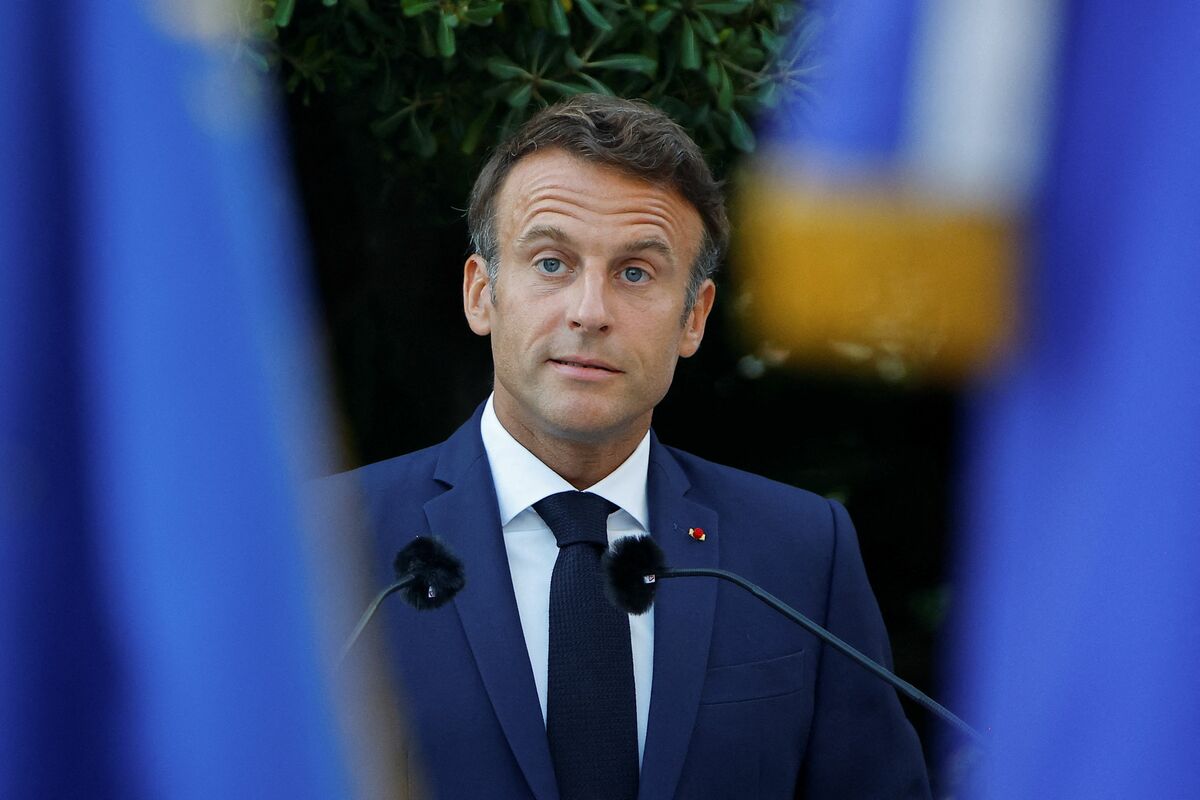
On Friday, the Israeli Foreign Ministry attacked French President Emmanuel Macron following his statements during his visit to Singapore.

"President Macron's crusade against the Jewish state continues," the Israeli Foreign Ministry said in a post on the X platform.

On Friday, Macron said that recognizing the State of Palestine is a "moral duty." He also announced last April that Paris might recognize the State of Palestine during the international conference on the "two-state solution" in New York in mid-June.

In a speech delivered at the Asia Security and Defense Summit, also known as the Shangri-La Dialogue Forum in Singapore, he added that in order for a Palestinian state to be recognized, conditions must be met, such as "recognizing Israel and its right to live in security, disarming Hamas, not participating in the Palestinian government, and releasing prisoners."

A high-level international conference on the two-state solution will be held at the United Nations headquarters in New York from June 17 to 20, co-chaired by Saudi Arabia and France.

In May 2024, the United Nations General Assembly, at its tenth special session, voted in favor of a draft resolution supporting Palestine's application for full membership in the United Nations.

149 out of 193 UN member states recognize Palestine.

PALESTINE

Sun 01 Jun 2025 2:08 pm - Jerusalem Time

Prisoners' Authority: Continued starvation and beatings of Megiddo prisoners

The Commission of Prisoners' Affairs and Ex-Prisoners reported that prisoners in Megiddo Prison are suffering terribly as a result of starvation and beatings by the prison administration, especially the young children.

The Commission's lawyer said that prisoner Fadi Ibrahim Shami (24 years old), a resident of Nablus, lost 22 kilograms due to the continuous starvation of our prisoners in all prisons. He was arrested on 5/11/2023, and has a court date on 6/22/2025.

The young prisoner Qais Nasser Muhammad Din Shahada (15 years old) was beaten several times while he was in Etzion, and was transferred to prison. He was arrested from his home on 4/20/2025.

While prisoner Hamza Omar Muhaisen (17 years old) from Al-Arroub camp, who was arrested on 4/20/2025, is being held in Section 5, Room No. 11, he was beaten several times during his arrest.

The committee's lawyer reported that the prison administration sometimes shortens the break, which is supposed to last a full hour. Cases of scabies are constantly increasing inside the facility, and even medication is ineffective due to the poor hygiene and ventilation. Food is scarce, barely enough to sustain life.

It is noteworthy that the number of sections inside the prison is 9 sections, each section containing approximately 72 prisoners.

PALESTINE

Sun 01 Jun 2025 12:00 pm - Jerusalem Time

Zaqout: The Gaza Strip has become a place of death, and the famine rate has reached 100%.

Dr. Bassam Zaqout, director of the Medical Relief Organization in southern Gaza, said that targeting and destroying hospitals is part of the Israeli occupation's ethnic cleansing policy against the citizens of the Gaza Strip, which has become a place of death. The intensity of the bombing has increased in recent days, and famine has reached 100%.

Speaking to Voice of Palestine on Sunday, Zaqout confirmed that there is no safe place in Gaza, adding that conditions inside hospitals are deteriorating, as they continue to operate with minimal resources and suffer from a severe shortage of medical supplies, fuel, oxygen generators, and equipment.

Zaqout added that treatment is unavailable to 10,000 cancer patients, while a large number of dialysis patients have died. The remainder are receiving minimal treatment, putting their lives at risk.

OPINIONS

Sun 01 Jun 2025 9:14 am - Jerusalem Time

The last shot...

Amin Al-Hajj

At the moment of its founding, and with the launch of the revolution, its leaders chose to begin with a shot, not a document. The first shot was not merely a beginning, but rather an expression of the fact that armed struggle is the only means of returning the Palestinian people to the map, after their political and historical exile.
The gun was a tool of existence, an echo of a voice that could only be heard through its muzzle. But with the passage of time, the movement began to move away from it, and with Oslo, the revolution moved into a new arena, one in which it believed that recognition of the state could be obtained through negotiation, not conflict, and that building institutions might precede sovereignty and lead to it.
Thus, the first shot became a memory, and the political track became the only or last shot, but it did not hit, rather it was lost in the air. Between repeated rounds of negotiations, without results, and painful retreats under the pressure of financial and political blackmail, the Palestinian Authority gradually transformed into an administrative entity with limited powers, functionally exhausted, and politically exposed, after it had bet that moderation would be treated fairly. However, the exact opposite happened, as this was understood as a sign of weakness, not as a strategic choice.
When Arab foreign ministers are prevented from reaching Ramallah, this is not a passing event, but rather the continuation of a long process of isolation and dismantling. What is happening today is the culmination of years of undermining the legitimacy of the Authority, starting with stripping it of its liberation dimension and transforming it into an executive body, and reaching to striking at its popular base, through withdrawing sensitive files and politicizing others, such as the salaries of prisoners and martyrs’ families, and turning them into internal pressure cards, in parallel with demonizing it externally with the rhetoric of “corruption,” which, although some of its leaders have acknowledged, the occupation did not intend to use as a gateway to reform, but rather to complete the delegitimization of it.
In contrast, the authorities have not developed tangible or real alternatives. They have not revived the popular resistance project, nor opened the way for national unity, nor have they redefined their relationship with representative institutions. Indeed, their reform initiatives have been either late, fragmented, and confused, and have not undertaken national reviews to re-arrange priorities or build internal confidence.
Thus, the remaining tools were turned inward. Security slogans were raised, but they were understood - popularly - as control tools, or as tools of subjugation - under various titles - rather than as tools of protection. The final shot was directed at critics, opponents, and the street in general, instead of being used in its battle to reposition itself.
In contrast, the occupation was escalating at various levels, from building settlements, to annexing lands, to dismembering the West Bank, through public statements by right-wing leaders, or warlords from Tarsila, south of Jenin, that a Palestinian state was no longer possible, and that recognizing it was worth nothing. This was a direct message to Paris and other Western capitals, and an expression of growing confidence that the international system, as well as international legitimacy, had become impotent or complicit, that their decisions were neither implemented nor respected, and that international justice was subject to an already unbalanced balance of power.
Even more cruel is the Authority's lackluster and confused stance on the aggression on Gaza. It seemed to be on the sidelines, watching silently, as if it were no longer part of the battle, but rather part of an increasingly gray landscape. Today, it is not only suffering from a political crisis, but also from a crisis of a project. It was not defeated in a political battle, but it was deceived when it understood that the world would move when it acted responsibly and moderately. This did not happen, and was understood as a sign of weakness. Today, it is being eroded from within, besieged from without, and exhausted, and its last shot is no longer sufficient.
What is happening today is not just a diplomatic embargo, but rather a declaration that the model has expired. The authorities have been forced to face the moment of truth. Either they redefine their role within a national resistance strategy that restores the notion of liberation, or they continue to represent themselves in a vacuum while the door is quietly closed behind them... and without regret.

............

The regime has not developed tangible or real alternatives. It has not revived the popular resistance project, nor opened the way for national unity, nor redefined its relationship with representative institutions. Even its reform initiatives have been either late, fragmented, or confused.

OPINIONS

Sun 01 Jun 2025 9:13 am - Jerusalem Time

Arab Foreign Ministers' Visit: When Symbolism Collides with the Arrogance of the Occupation

Marwan Emil Toubasi

Amid the ongoing tragedies unfolding in the Palestinian arena, and at a time shrouded in smoke and blood, the Arab initiative emerged through a scheduled visit by the foreign ministers of several Arab countries to Ramallah. This seemingly belated effort, however, carries a political significance that cannot be ignored. This visit aimed to declare that the Palestinian cause remains relevant and that the Palestine Liberation Organization, despite its sagging, continues to enjoy Arab and international recognition as the sole legitimate representative of a people bleeding on the ground and whose authority is being exhausted in the corners.

Although the initiative is Arab and Islamic in nature, its background points to two parallel paths, each with its own logic and objectives:
First, it may be a preemptive move in the context of what is known as the "day after" phase, which major capitals are looming over following the war on Gaza. Saudi Arabia, in particular, is seeking to consolidate its political foothold at this stage, having grown weary of Israel's intransigence and refusal to stop the war. It has begun mobilizing its diplomatic tools, hoping to persuade the West, and the United States in particular, to recognize the Palestinian state during the upcoming conference in New York, in partnership with France.
The second track appears to be an attempt to contain the Palestinian Authority within a evolving regional framework, one that could pave the way for a comprehensive settlement or broader normalization. This visit, or an attempt to do so if it is prevented, may have come in unannounced coordination with Washington, which has long sought to bring the Palestinian Authority back to the forefront of the political scene, albeit on its own terms and conditions. This approach has been met with rejection since the early days of the announcement of the "Deal of the Century."
However, Israel, as usual, didn't need long to thwart the initiative and remove the fig leaf from the reality of the arrogant and barbaric occupation. The response came definitively: No entry, no visits, no consideration. It was as if Israel was telling all Arabs, and above all the Palestinian National Authority, that the final word here can only be spoken in Tel Aviv, that sovereignty in the West Bank belongs only to the occupier, and that any action, whether political or symbolic, can only take place with its permission.
This Israeli response was not merely a passing security measure, but rather a clear political stance, reflecting its post-war vision and enshrining the concept of complete control in accordance with the ideology of "Jewish supremacy" and the "Greater Israel" project, which views the occupied territories as nothing more than a vital area for expanding settlements, annexation, and undermining efforts to establish a Palestinian state on the ground.
If this is the case with the Arab foreign ministers' initiative, the question that must be asked here is: Will we witness an Arab response that amounts to an insult?
Will the Palestinian Authority reconsider its strategy, now that the extent of the marginalization it is facing from both near and far has become clear?
What happened, quite simply, brings us back to square one: there will be no effective Arab or international role as long as the occupation does not pay a real political price for its crimes and practices. Furthermore, any reliance on the US administration, which seeks to market a "political horizon" tailored to Israel's needs and the New Middle East project, will only lead to further confusion, especially if the Arab role becomes merely a complementary tool to the liquidation project, rather than a resistance to it.
At best, the Israeli position may embarrass its allies in Washington, who are working to push Arab states to contribute to arrangements after what they see as the genocide and Holocaust, and are seeking regional partners to revive a faltering political process. However, what is happening on the ground, in terms of clear Israeli deterrence of any Arab move, reveals an implicit harmony in the distribution of roles: Washington is brandishing policy, while Israel is imposing facts by force.
Hence, the urgent Palestinian need for a new strategy emerges, based on liberation from the illusion of settlements with the Zionist movement, breaking away from the logic of dependency and reliance on an "external savior," and embarking on rebuilding the national liberation project, based on independent decision-making, far from attempts at containment, even by regional powers, and on the foundations of unity and political and popular resistance, within a Liberation Organization that represents the broad national front framework and the revitalization it needs, a unified and representative National Council and Central Council to the extent possible until the necessary elections are held, and a vision that combines the constants, the necessities of the stage, and international variables.
When the mask falls off the symbolic initiatives, and Arab dignity is slapped in the face at the gates of Ramallah, the only thing left for our Palestinian people is to return to themselves, to their broad unity with all the components of our people, to resist the attempts to liquidate our existence. We alone are the ones who pay the price, and we alone are the ones who hold the keys to change if the will is present, which must be present.

.....

Hence, the urgent Palestinian need for a new strategy emerges, one based on liberation from the illusion of settlements with the Zionist movement, breaking away from the logic of dependency and reliance on an "external savior," and embarking on rebuilding the national liberation project.


OPINIONS

Sun 01 Jun 2025 9:10 am - Jerusalem Time

Anticipation... Will Witkoff's proposal succeed?

Baha Rahal

This is everyone's question: Will Witkoff's proposal be accepted and approved, thus halting the war? Or will it fail, leaving us stuck in the same cycle, waiting for another proposal while the war of extermination, along with the bombing and killing, continues?
American attempts so far have not risen to the desired level. As everyone knows, America is capable of halting the genocide if it truly wanted to, but to date, it has not exerted sufficient pressure to reach an agreement. What we see from Witkoff's attempts is nothing more than dust in the eyes, and the hesitation and lack of serious and effective pressure we are witnessing is nothing more than confirmation of American bias. In light of this, the question arises: Why has the Trump administration not yet imposed a halt to the genocide by force? It is capable of doing so, but it is not.
The alignment of the US position with that of the Netanyahu government, their shared desire to implement the voluntary displacement Trump spoke of, and their hope of controlling the Gaza Strip, is what underlies Witkoff's proposals, particularly regarding the lack of real, serious, and rapid pressure to halt the genocide.
If the Trump administration wanted to stop the war, it would have done so, but it is not serious about it yet. It is playing a "game of proposals" to give the occupation enough time to continue its massacres in Gaza, which it has been perpetrating for more than 600 days.
The game of propositions to the stomachs of starving people is another form of war, a vulgar mask in light of the ongoing killing and the spread of epidemics, amidst the difficult reality of the situation amidst the rubble, destruction, and bombing.
This toying with proposals does not reflect cunning coming from a superpower like the United States, but rather an unprecedented moral decadence. Because we know that if America wanted to stop the massacre, it would have done so. But it is stalling, delaying, and giving the occupation government more time to commit massacres.
Amid this difficult reality, relying on fair and impartial American proposals in favor of the occupation seems illogical, given the Trump administration's blind bias and full support for the occupation government.
Therefore, we find Witkoff's proposals unserious, and they carry within them the ideas of an entity that refuses to end the genocide, withdraw from the Gaza Strip, open the crossings, and lift the siege. Ultimately, the biased American position is an extension of the state of complicity in the war of extermination, and relying on an American position that carries fair ideas is unattainable. Therefore, necessity alone dictates these days the cessation of the bombing, the cessation of the killing, and the entry of aid to prevent the catastrophe of mass death by starvation.

.....

The alignment of the US position with that of the Netanyahu government, their shared desire to implement the voluntary displacement of which Trump spoke, and their hope of controlling the Gaza Strip, is what underlies Witkoff's proposals.


OPINIONS

Sun 01 Jun 2025 9:06 am - Jerusalem Time

Israel targets international diplomacy

Dr. Dalal Saeb Erekat

In Jenin, the Israeli occupation forces' bullets targeting a European diplomatic delegation were not an isolated incident or an individual mistake. Rather, they were a clear and deliberate message: no one is immune, even those supposedly enjoying the privileges of international diplomatic immunity. Israel is no longer content with shedding the blood of civilians; it now views any international presence on Palestinian soil as a threat to its fabricated narrative, and works to suppress it with unjustified violence.
The message Israel sought to convey through this attack was complex and intricate: it is not only a deliberate affront to international diplomacy, but also a declaration that it is above the law and that it is continuing its colonial project regardless of the consequences or international scrutiny. Israel is well aware that the absence of serious deterrence and strict accountability is what has allowed it to transform its practices into official policy. When it targets European diplomats, it is in effect testing the limits of international patience and examining the world's willingness to defend the principles it claims to embrace: human rights, respect for international law, and the immunity of diplomatic representation. This incident is not merely an attack on a state or a diplomatic representative; it is an attack on the entire international system and a blatant challenge to all the rules governing relations between states. When a diplomatic delegation is targeted with bullets, the message is directed at everyone: there is no immunity for anyone, and there is no place for justice or law under the hegemony of military force. Israel has demonstrated, time and again, that it views every international humanitarian or political effort as a direct threat, and therefore resorts to intimidation and violence to obstruct any monitoring or documentation. It is waging an open war on the truth, seeking to monopolize the narrative and suppress evidence, in an attempt to avoid international accountability.
This week, Israel prevented the entry of an Arab diplomatic delegation—including the foreign ministers of Saudi Arabia, Egypt, Jordan, the UAE, Qatar, and Turkey—from the occupied Palestinian territory. This move represents a blatant rejection of any joint Arab action that restores the Palestinian cause and an attempt to isolate the Palestinian leadership and prevent it from receiving political and diplomatic support. This ban is not merely a security measure; it is a clear political message confirming that Israel rejects any form of Palestinian sovereignty, even symbolic ones, and fears the formation of a regional Arab axis capable of exerting pressure to revive the Palestinian political process.
The decision is considered:
• A flagrant violation of international diplomatic and legal norms.
• An indication of Israel's failure to secure real regional support despite the normalization agreements.
• A dangerous indicator of the fragility of the normalization process with Saudi Arabia, as preventing the entry of its foreign minister reflects a deep crisis of confidence between the two sides.
Preventing the delegation is part of a systematic occupation policy aimed at undermining the Arab presence in Palestine. However, it also weakens Israel's position regionally and confirms to the world that Israel does not believe in political solutions and continues to build walls of isolation and conflict. Israel is saying it clearly: There is no room for diplomacy, no sovereign state for the Palestinians, and no peaceful solutions.
What is required now is not just condemnation, but a decisive response that restores respect for international law. The countries represented by this diplomatic delegation must declare a clear position, beginning with the recall of Israeli ambassadors and the imposition of a state of diplomatic tension, and extending to a reassessment of their political and military relations with Israel. The continuation of this culture of impunity means allowing Israel to expand its terrorism under the banner of "security," targeting not only Palestinians but all those who approach the truth or attempt to support rights.
The occupation's crimes no longer threaten only the Palestinians, but also the future of the international order. When treaties and conventions are violated, immunities are targeted, and ambassadors are attacked, the foundations of the global order are crumbling before the eyes of the international community. If an attack on foreign diplomats in an occupied territory is not sufficient reason to reconsider dealings with Israel, when will the world act? Is the loss of diplomats required to achieve even the minimum level of deterrence?
We need to redefine our relationship with the Israeli occupation, not from a position of hostility, but rather from a position of respect for law and justice. Israel must be prosecuted in international courts, political and economic sanctions imposed, and cooperation with it halted until it adheres to international law and human rights. The occupying state's persistence and condescending treatment of everyone is a result of its repeated impunity granted by members of the international community!


The occupation's crimes no longer threaten only the Palestinians, but also the future of the international order. When treaties and conventions are violated, immunities are targeted, and ambassadors are attacked, this means that the foundations of the global order are crumbling before the eyes and ears of the international community.


PALESTINE

Sun 01 Jun 2025 9:00 am - Jerusalem Time

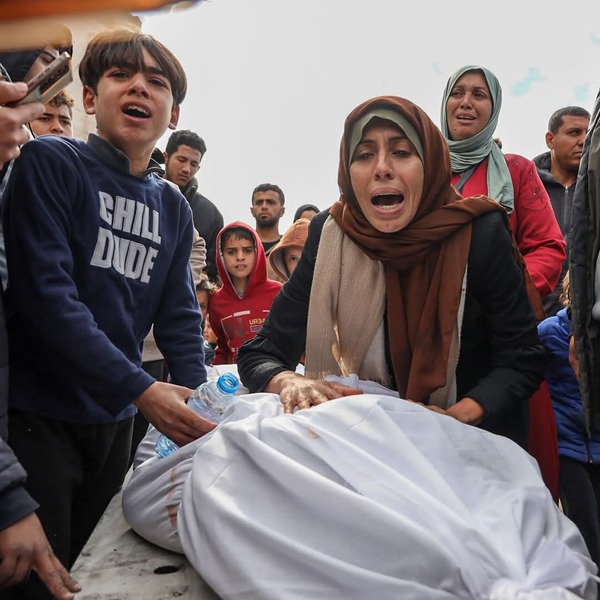
30 dead and 150 wounded in a new massacre by the occupation forces in Rafah's Mawasi area.

Thirty citizens were killed and at least 150 others injured on Sunday by Israeli occupation forces in Rafah, south of the Gaza Strip.

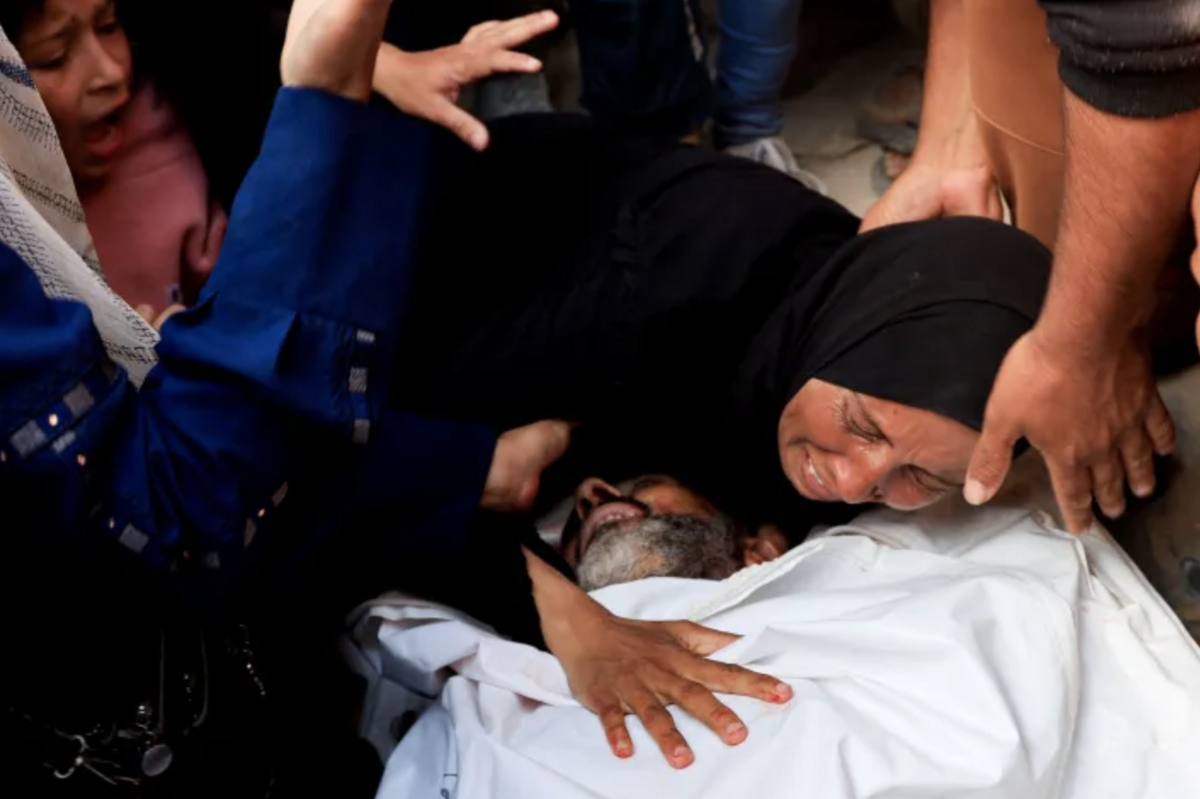
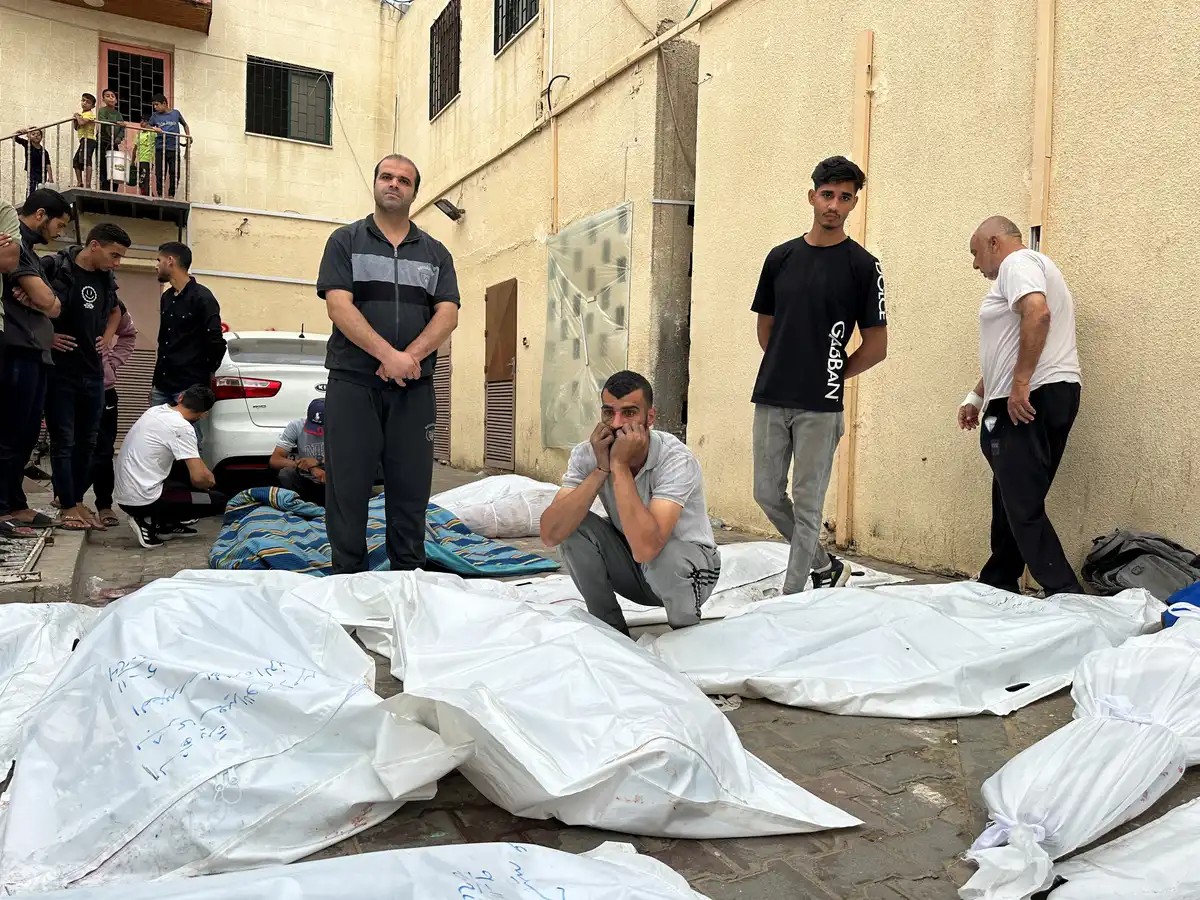
Local sources reported that Israeli occupation forces fired live ammunition directly from their vehicles and quadcopter drones at civilians as they were heading to receive humanitarian aid from the Mawasi Rafah distribution point in the southern Gaza Strip, turning aid distribution centers into mass killing traps. This resulted in the deaths of at least 30 civilians and the injury of 150 others.

He pointed out that the number of martyrs at aid sites had risen to 39 and more than 220 wounded in less than a week.

The occupation warplanes launched a raid on the eastern areas of Khan Yunis.

Local sources reported that the occupation forces launched an airstrike northwest of Khan Yunis.

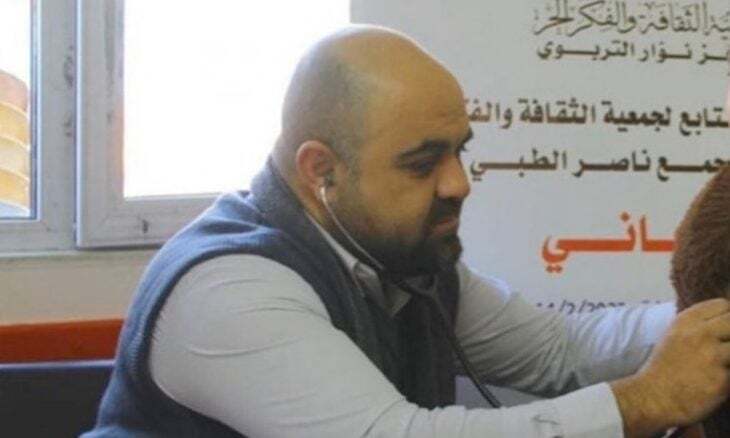
Medical sources reported that Dr. Hamdi Al-Najjar, husband of Dr. Alaa Al-Najjar, died of injuries sustained in an Israeli airstrike that targeted their home south of Khan Yunis. He was joined by his nine children.

Meanwhile, the occupation artillery shelled the vicinity of Mount Surani, east of Al-Tuffah neighborhood, east of Gaza City.

Three civilians were injured on Saturday evening when a drone bombed a house in the town of Jabalia, north of the Gaza Strip.

On Saturday evening, the occupation forces bombed the home of the Rahim family, west of the Zeitoun neighborhood in Gaza.

Local sources reported that Dr. Aya Madhat Al-Madhoun, her husband, and her unborn child were killed in an Israeli airstrike while providing medical care to displaced persons in the Gaza Strip.

Since October 7, 2023, the Israeli occupation has been committing genocidal massacres in the Gaza Strip, resulting in more than 178,000 deaths and injuries, the majority of whom are children and women, in addition to more than 11,000 missing persons and hundreds of thousands of displaced persons who have become homeless and without a source of food.

PALESTINE

Sun 01 Jun 2025 9:00 am - Jerusalem Time

NBC: Opposition to the war is growing within the ranks of the Israeli army.

NBC News reported testimonies from Israeli soldiers, which it said showed widespread opposition to the war on Gaza within the Israeli military as military operations escalated.
The network said there is a growing feeling among soldiers that what is happening in Gaza is a "war of revenge" and that "many innocent people are being killed unnecessarily."
"I refuse to commit war crimes," reserve soldier Yuval Ben Ari was quoted as saying, calling on the Israeli government to stop starving two million people in Gaza. He added that he felt ashamed and guilty because "people in Gaza are dying of hunger."
The network also quoted a retired Israeli pilot as saying that his colleagues were demanding an end to the war "not because they were tired, but because they believed the war was illegitimate and that Israel had become a hostage to Netanyahu's extremist partners, who were blackmailing him for his political survival."
In the same context, an Israeli Air Force soldier said that the behavior of ministers in Benjamin Netanyahu's government—who is wanted by the International Criminal Court on war crimes charges—and their statements regarding Gaza "do not come from moral officials."
The soldier accused Netanyahu and his coalition of abandoning Israelis held captive in the Gaza Strip in order to preserve their government.
Meanwhile, Israel's Channel 12 quoted IDF Chief of Staff Eyal Zamir as saying that if there is a chance for a prisoner exchange deal, the war must be stopped to conclude it, even if it is a partial deal.
Zamir stressed the need for "Israel not to be dragged into an eternal war" in the Gaza Strip.
On May 18, the Israeli army launched a new military operation, dubbed "Gideon's Chariots," as part of the ongoing war of extermination in the Gaza Strip since October 2023.
The new plans include occupying the entire Gaza Strip, according to Netanyahu.

OPINIONS

Sun 01 Jun 2025 8:58 am - Jerusalem Time

Al-Faisal!

Ibrahim Melhem

Ibrahim Melhem

Opinion Writer

On the 24th anniversary of the passing of the Emir of Jerusalem, Faisal al-Husseini, which fell yesterday, fans and contemporaries of the reticent man, who knew his strength and were comforted by his wisdom, recall the last line of the famous verse by Abu Firas al-Hamdani, "And in the dark night the full moon is missed."
The city's guardian, the icon of Palestinian nationalism, departed quickly and lightly, just as he lived gracefully and lightly in his shadow, stingy in his smile, stubborn in his positions, and in defending his people and their Islamic and Christian sanctities.
His penetrating eye was the window to his soul, open to the concerns of his people. His face brimming with hope, intelligence, and captivating presence was his soft power, making him a role model for those who walk the path of freedom, who believe in the inevitability of the victory of truth over falsehood, and of the homeland over occupation.
It is impossible to imagine Jerusalem, with its streets, alleys, institutions, mosques, churches, universities, and schools, without Faisal. Men like him remain alive in the hearts of the people, thanks to the legacy of struggle he inherited from his father, the courageous fighter, and passed on to his children and students. He remained present in forums, meetings, and demonstrations, a young man brimming with vitality, hope, and activity, clinging to faith and steadfastness.
The Ministry of Education would do well to add his name to the list of permanent historical landmarks in the Holy City, for Faisal was a great wall and a faithful guardian.
Days before his sudden and shocking passing in Kuwait, we agreed to meet to discuss his life and career...and while the answers remain unanswered, his memory will not be forgotten.


PALESTINE

Sun 01 Jun 2025 8:57 am - Jerusalem Time

Dr. Hamdi Al-Najjar joins his nine children as a martyr.

Dr. Hamdi al-Najjar died Saturday evening from serious injuries sustained in an Israeli airstrike that targeted his home in Khan Yunis, south of the Gaza Strip. His nine children were also killed in the same raid.
The airstrike occurred on Friday, May 23, as Dr. Hamdi returned home after dropping his wife, Dr. Alaa Al-Najjar, off at work at Nasser Hospital. Minutes after his return, Israeli warplanes targeted the family home, killing nine of their children, aged between six months and 12 years. A tenth child, Adam, survived the attack but was seriously injured, while his father was transferred to intensive care in critical condition.

Despite extensive medical efforts, including two surgeries to stop bleeding in the abdomen and chest, doctors were unable to save Dr. Hamdi's life.

PALESTINE

Sun 01 Jun 2025 8:52 am - Jerusalem Time

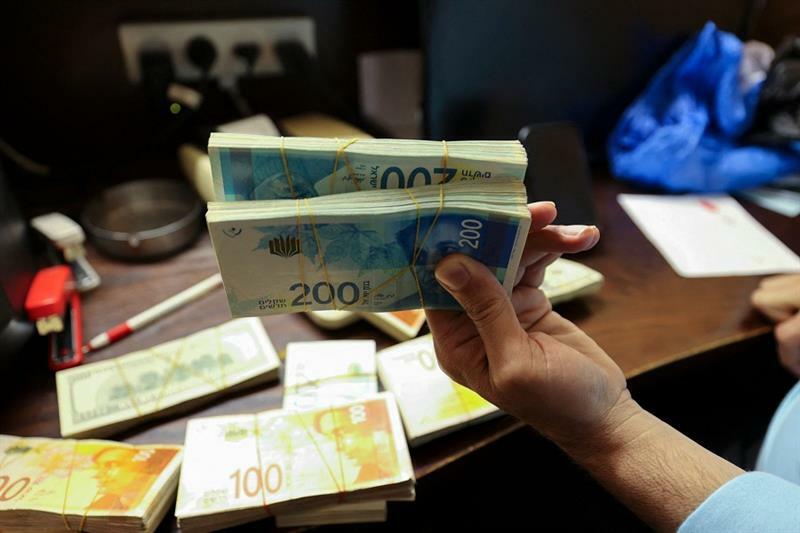
The accumulation of the shekel... a harbinger of a "cash clot" in the arteries of the national economy, and the solution is political.

The Monetary Authority: The shekel accumulation crisis has reached levels that threaten the continued financing of trade with Israel through banking channels.
Dr. Mu'ayyad Afana: The shekel surplus threatens a black market for foreign currencies in Palestine, and promoting digital financial transactions is an important part of resolving the crisis.
Ayham Abu Ghosh: The absence of a Palestinian national currency is the biggest obstacle, and the Bank of Israel refuses to increase the ceiling, creating a gap between supply and demand.
Dr. Thabet Abu Al-Rus: The continuation of this crisis may push the Palestinian economy back to manual cash transactions, which will increase tax evasion and the black market.
Talat Alawi: Successive governments have failed to formulate a clear economic policy that reduces dependence on the shekel and the Israeli economy.
Dr. Sameh Al-Atout: Resolving the crisis cannot be solely technical or technological, but rather requires decisive political intervention, and Israel is obligated to accept the shekel as its currency.


The shekel hoarding crisis in the Palestinian market is rapidly escalating, transforming from a monetary challenge into a comprehensive economic threat that threatens the stability of the banking system and undermines commercial activity. Warnings of the crisis' repercussions are emerging, with no strategic solutions yet in place.
In separate interviews with Al-Quds, experts, specialists, economic analysts, and university professors confirmed that the continued refusal of Israeli banks to accept surplus shekels, in addition to the disruption of transfer mechanisms agreed upon under the Paris Protocol, is pushing the Palestinian national economy toward worrying trends, most notably the growth of the black market for currencies and the expansion of the informal economy.
Under these circumstances, experts and university professors highlight the absence of a national currency and the slowdown in digital transformation as factors exacerbating the crisis. This necessitates urgent action and a reconsideration of existing economic policies to mitigate the repercussions of the crisis before it fully explodes.


Fears of a further decline in economic performance and activity

The Palestine Monetary Authority announced last Thursday that the shekel accumulation crisis in Palestinian banks has reached levels that threaten the continued financing of trade with Israel through banking channels.
The Palestine Monetary Authority explained in a press release that Palestinian banks are no longer able to accept additional shekels due to their inability to transfer excess shekels to Israeli banks.
The PMA stated: "The shekel has accumulated in the Palestinian market over the past years, and the loading ceilings set by the Israeli side have not responded to the natural increase in the size of the Palestinian economy during these years. The current ceilings prevent Palestinian banks from loading surplus shekels and feeding their accounts, which would contribute to financing trade operations and settling obligations between the two sides."
The Palestine Monetary Authority confirmed that Palestinian banks have incurred and continue to incur significant financial burdens due to their inability to replenish surplus shekels. Citizens are also bearing additional burdens due to their inability to conduct financial transactions through banks using shekels, and some customers have resorted to selling shekels and buying dinars and dollars, creating a black market for currency trading.
The Palestine Monetary Authority warned that the continuation of the crisis would negatively impact the liquidity needed to finance trade, both domestically and internationally, foreshadowing a further decline in economic performance and activity in the State of Palestine.
The PMA confirmed that it has contacted all relevant parties to request assistance in replenishing the surplus shekels accumulated in the Palestinian market, without achieving any positive results to date.
The PMA stressed that the situation calls for urgent international action to find a radical solution to the accumulation of shekels in the Palestinian market, urging Israel to fulfill its obligations toward its currency and allow the transfer of surplus shekels to Israeli banks.


A direct threat to the national economy

Economic expert Dr. Mu'ayyad Afana says that the shekel surplus crisis in the Palestinian economy is no longer merely a technical glitch or a temporary monetary problem. Rather, it has become a direct threat to the national economy and an additional source of risk to the stability of the banking system, given the disruption of regulatory mechanisms stipulated in economic agreements with Israel, most notably the Paris Protocol.
Afana explains that the recent statement by the Palestine Monetary Authority (PMA) provided a clear warning regarding the shekel surplus reaching unprecedented levels, threatening the continued financing of trade with Israel. This is due to Palestinian banks' inability to receive additional Israeli currency, as Israeli banks have stopped accepting Palestinian shekel surpluses. This has led to a real overcrowding crisis within the banking sector.
Afana points out that Article 27 of the Paris Economic Protocol grants the Palestinian Monetary Authority the right to transfer surplus shekels from local banks to the Bank of Israel for exchange into foreign currencies. However, this mechanism has been disrupted by the suspension of the joint economic committee between the two sides, which has gradually exacerbated the crisis until it reached its current level.
Afana points out that the roots of the crisis lie in the significant growth of the Palestinian economy since the signing of the Oslo Accords more than three decades ago, without a corresponding, effective, and proportionate increase in the amount of surplus shekels Israel receives.

The crisis deepened after October 7, 2023.

Afana adds: "Despite partially raising the ceiling in previous stages, it remained below the required level, especially with the doubling of the amount of shekels flowing into the Palestinian market from several sources, including informal trade, purchases by Palestinians inside Israel, wages of workers in Israel and the settlements, price differences, and the lack of Palestinian control over borders and crossings.
Afana explains that the crisis deepened particularly after October 7, 2023, in light of the Israeli escalation and attempts at "economic strangulation" against the Palestinian Authority. This made the surplus shekel a direct threat to commercial operations and threatened banks with several risks, such as storage, insurance, and cash freezes.
Afana warns of the most dangerous outcome of the ongoing crisis: the emergence of a black market for foreign currencies within Palestine.
Afana explains that the existence of a parallel market with exchange rates higher than the official rate will exploit citizens' and merchants' need for dinars and dollars, which will double their financial burdens, especially since salaries of public and private sector employees are often paid in shekels, while many other economic obligations are settled in foreign currencies, such as trade financing, real estate purchases, dowries, and university fees.

The need to turn to international financial institutions

Afana calls for urgent action to develop practical solutions to the crisis, beginning with unifying the efforts of the PMA with other relevant stakeholders and engaging international financial institutions to pressure Israel to fulfill its obligations under the agreements.
Afana recommends conducting a specialized study to monitor the sources of shekel flow and regulate them within a legislative framework, in a manner that serves the Palestinian economic interest.
Afana stresses the importance of digital transformation in financial transactions as a means of reducing the use of cash shekels, noting that the recent Cabinet decision to promote electronic payments in both the public and private sectors is a step in the right direction.
Afana emphasizes the need to provide a digital infrastructure and supportive legislation, along with incentives to encourage citizens to use electronic payment methods more widely.
Afana believes that if the shekel surplus crisis is not addressed with a strategic vision, it will become a permanent burden that will restrict economic growth and destabilize the Palestinian banking sector.


The ceiling needs to be raised from 16 to 22 billion shekels.

For his part, economic journalist Ayham Abu Ghosh says that the problem of the surplus of the Israeli currency (the shekel) in the Palestinian market is not new, but it has recently reached unprecedented levels, threatening serious shifts in the Palestinian economy, from undermining the banking sector to expanding the informal economy and declining tax revenues.
Abu Ghosh stresses that the lack of a Palestinian national currency is the biggest obstacle, as most transactions are conducted in shekels, a currency controlled by the Bank of Israel, which controls its flow into the Palestinian market.
Abu Ghosh points out that Israel refuses to review the Paris Economic Protocol, despite the passage of 31 years since its signing. The Protocol sets a ceiling on cash transfers to Palestine at 16 billion shekels annually, despite the subsequent growth of the Palestinian economy and its increased needs to at least 22 billion shekels.
"The Bank of Israel refuses to increase the ceiling, creating a gap between supply and demand," Abu Ghosh says. "While the shekel surplus is being pumped into the Palestinian market through unofficial channels, including the black market, fuel and tobacco smuggling, and the purchase of land and real estate with shekels."

Paralysis of trade dealings with Israel

Abu Ghosh warns that the accumulation of shekels in Palestinian banks without the possibility of transferring them to the Israeli Central Bank creates multiple risks, including paralysis in commercial transactions with Israel. The inability of banks to replenish their Israeli accounts with shekels hinders merchant transfers, potentially forcing them to resort to fraudulent money transfers through unofficial means, thus exiting the formal economy.
Among the risks, according to Abu Ghosh, is the collapse of confidence in the banking sector, as the potential withdrawal of deposits due to banks' inability to manage surplus cash could create a liquidity crisis that threatens the stability of the entire sector.
Abu Ghosh points out that another risk is the development of a black market for currency exchange, creating alternatives to disposing of the shekel and obtaining foreign currencies (such as the dollar) so they can complete their commercial transactions abroad.
Another danger, according to Abu Ghosh, is the spread of the informal economy, where companies resort to "under-the-table" transactions with certain Israeli parties, which will reduce the Palestinian Authority's tax and customs revenues.

Interim and long-term solutions

Abu Ghosh points out that the passage of laws in Israel that limit the use of cash beyond a certain ceiling has prompted groups to dispose of cash in the Palestinian market indirectly by pumping surplus shekels into the Palestinian market, either by converting shekels into dollars or purchasing assets such as land, real estate, and gold.
Abu Ghosh proposes both interim and long-term solutions, including strengthening the digital economy by accelerating the transition to electronic payments and reducing reliance on cash. He also proposes strict legislation to keep pace with developments, such as imposing limits on large cash transactions and combating money laundering. He also proposes reviewing the Paris Protocol by pressuring Israel to raise the annual cash transfer ceiling. In the long term, he proposes establishing a national currency, despite the current difficulty of achieving this due to political complexities, or at least gradually reducing the use of the shekel in certain sectors.
Abu Ghosh warns that the continuation of the crisis without a solution will deepen the Palestinian economy's dependency and threaten the Authority's ability to provide the necessary liquidity in hard currency. He calls for intensified efforts between banks and official institutions to contain the repercussions before they escalate. This is despite the fact that Palestinian banks are facing increasing pressure due to the accumulation of billions of non-convertible shekels, at a time when the public treasury is experiencing a growing deficit due to declining revenues and rising tax evasion.


A cumulative crisis emerged after the Israeli aggression on Gaza.

For his part, economic expert and analyst Dr. Thabet Abu Al-Rus asserts that the shekel hoarding crisis in Palestinian banks is not a recent development, but rather a cumulative crisis that became more pronounced following the Israeli aggression on the Gaza Strip, when the occupation authorities refused to accept surplus Israeli currency from the Palestinian market.
Abu Al-Rus explains that there have been attempts by the Israeli side over the past two years to withdraw some shekels, but these attempts were insufficient to absorb the accumulated flow. He points out that the Palestinian Monetary Authority's absorption capacity does not exceed 3.8 to 4 billion shekels, and once this amount is exceeded, the Authority is no longer able to receive any more, leading to the crisis being transferred to commercial banks.
Abu Al-Rus points out that the most prominent direct causes of the shekel's inflation in the Palestinian market are the entry of huge amounts of the currency through Palestinian workers who receive their wages from the Israeli side, in addition to informal trade operations, or what is known as the "black market," where Israeli merchants pay for their goods in cash in shekels in the Palestinian market, which prompts Palestinian merchants to deposit these sums in banks, thus exacerbating the crisis.

Areas of economic and commercial contact with the occupation

Abu Al-Rus points out that areas of economic and commercial contact with the occupation, such as Kafr Aqab, Anata, Shuafat, and Tarqumiya, are witnessing significant commercial activity, contributing to the injection of additional shekels into the local market without a channel for disbursing them to the Israeli side, especially given Israel's refusal to accept any surplus.
Abu Al-Russ believes there is another legal problem, namely the occupation's prohibition on holding or transferring more than 10,500 shekels in cash. This forces merchants to resort to the black market and avoid official banking procedures, exacerbating the crisis and complicating cash circulation.
Abu Al-Rus warns that the crisis has had a direct impact on citizens and merchants, as banks have begun refusing to accept cash amounts exceeding 5,000 shekels and have banned the issuance of checkbooks, paralyzing the economy.
Abu Al-Rus points out that banks, which are profit-making institutions by nature, have begun acting unilaterally after the PMA was held responsible and left the decision to accept or reject shekel deposits.

The role of the European Union in facilitating the transfer of cash

Abu Al-Rus asserts that the continuation of this crisis could push the Palestinian economy back to manual cash transactions, away from banking channels. This could lead to an increase in tax evasion and a strengthening of the black market. He emphasizes that the situation has become critical and requires immediate intervention.
Regarding solutions, Abu Al-Rus calls on the Palestinian Authority to implement the provisions of the Paris Economic Agreement, which stipulates that Israel is obligated to receive the surplus shekels in exchange for a specific commission. He also calls on the European Union to resume its role in facilitating the transfer of currency between the Palestinian and Israeli sides.
At the international level, Abu Al-Rus stresses the importance of raising this crisis with relevant international institutions, given that Israeli restrictions directly harm the Palestinian economy.
Abu Al-Rus recommends that Palestinian banks review their financial policies, explore new payment mechanisms, and encourage citizens to use the shekel instead of foreign currencies such as the dollar and dinar. He emphasizes that the shekel is a non-convertible currency in global markets, making it difficult to dispose of surplus cash, both domestically and internationally.

The Paris Protocol Economic Dilemma

For his part, journalist and economic commentator Talat Alawi explained that the shekel hoarding crisis in Palestinian banks is neither new nor recent, but rather dates back many years. The crisis stems from the lack of long-term strategic economic plans to mitigate its repercussions, and the absence of any real precautionary measures. This has led the country to what he describes as a "dormant shekel," while relevant authorities have consistently cited storage and transportation costs as a pretext for not actively using or addressing the shekel.
Alawi points out that the Paris Economic Protocol, signed between the Palestinian Authority and Israel, is one of the reasons for this dilemma, as it imposes restrictions on Palestinians that limit the flexibility of the national economy, particularly with regard to dealing in the shekel.
Alawi points out that the lack of a strategic vision and increasing reliance on the Israeli economy, contrary to the disengagement plans announced by successive governments, has exacerbated the crisis.
Alawi asserts that the annual volume of shekel movement in the Palestinian market amounts to approximately 22 billion shekels, of which approximately 18 billion shekels are spent through inter-trade with Israel, and for the purchase of electricity, water, and other necessities. Meanwhile, approximately 4 to 5 billion shekels remain stagnant within the banking system, a massive amount that exceeds the monetary capacity permitted in Palestinian banks.
Alawi discusses what he calls the "dormant shekel," the surplus Israeli currency stuck in bank vaults with no possibility of being cashed out or returned to its source. He asserts that this crisis is hampering bank liquidity and posing a threat to the financial system, particularly given the lack of clear control mechanisms by the Monetary Authority and the weak response of banks, which are now unable to handle this massive cash flow.

Restrictions and ceilings on deposit operations

Alawi points out that the banking sector, despite its resilience in the face of challenges and wars, cannot continue to operate properly amid this crisis. He asserts that banks have begun imposing restrictions and ceilings on deposits and have refused to accept large amounts of shekels, negatively impacting both citizens and merchants.
Alawi explains that some banks are not complying with the PMA's instructions, as there is no clear horizon for disbursing these funds, resulting from payments related to trade and workers' pensions, despite the current decline in their numbers to less than 20,000 workers.
Alawi stresses the importance of not overlooking the role played by purchases from the occupied territories and from Jerusalem, where the shekel is the only currency accepted in those areas. Payments in West Bank markets are often made in cash rather than by bank cards, exacerbating the crisis and weakening the effectiveness of solutions such as electronic payment, even though they have provided some support in the Gaza Strip.
Alawi believes that successive governments have failed to formulate a clear economic policy that reduces reliance on the shekel and the Israeli economy. He calls for strengthening financial inclusion, expanding the use of other currencies such as the Jordanian dinar and the US dollar, and supporting domestic industry as a means to gradually overcome this impasse.
Alawi asserts that the problem may not be completely resolved, but it would have been less severe and more treatable had sound policies been adopted from the outset.


A heavy burden on the Palestinian banking system

Dr. Sameh Al-Atout, a financial and economic expert and professor of accounting at An-Najah National University, confirms that the shekel hoarding crisis in Palestinian banks has reached a critical level and has become a heavy burden on the Palestinian banking system. This is due to a number of factors, most notably the failure of Israeli banks to accept surplus shekels, as stipulated in the Paris Economic Agreement.
Al-Atout points out that the volume of shekel cash in the Palestinian market has increased significantly due to several factors, including active trade between the Palestinian and Israeli sides, in addition to the entry of large quantities of shekels into the West Bank by Palestinians arriving from within Israel, as well as Palestinian workers working within the Green Line, despite their recent decline in numbers.
According to Al-Atout, these inflows contribute to the remarketing of the shekel within the Palestinian economy, doubling the size of the money supply in circulation.
Al-Atout asserts that the continuation of this situation has forced Palestinian banks to impose ceilings on the shekel they accept from individuals and companies, as they have become unable to absorb any more cash in this currency, given the high costs associated with storing and securing it.
Al-Atout asserts that resolving the crisis cannot be solely technical, but rather requires decisive political intervention. Israel, given the shekel's status as its currency, is obligated to receive it. Therefore, the only radical solution to this problem must be through a political process that enforces adherence to signed agreements and ensures the stability of the Palestinian financial system.






PALESTINE

Sat 31 May 2025 10:31 pm - Jerusalem Time

Israeli Prime Minister's Office: Hamas's response to Witkoff's Gaza truce proposal is "unacceptable"

The Israeli Prime Minister's Office announced on Saturday that Hamas continues to reject US envoy Steve Witkoff's proposal for a ceasefire in the Gaza Strip.

The Prime Minister's Office said in an official statement that "Hamas' response to Witkoff's proposal is unacceptable," referring to the movement's position on the proposed initiative to reach a ceasefire that includes a prisoner exchange and a cessation of military operations.

Over the past few days, the US envoy has held a series of meetings and consultations with officials in the region to advance efforts to broker a truce. US assurances that the proposal enjoys broad international support, while Hamas insists on conditions related to the withdrawal of Israeli forces from the Gaza Strip and ensuring reconstruction.

PALESTINE

Sat 31 May 2025 10:13 pm - Jerusalem Time

The occupation forces injured two young men east of Jericho, one of them with live bullets.

Two young men were injured on Saturday evening, one by Israeli occupation forces' gunfire and the other by physical assault, east of Jericho.

According to the Palestinian Red Crescent Society, its crews responded to two injuries, one from live ammunition and the other from a physical assault to the head, near the Al-Mashru' area, east of Jericho. Both were transported to the hospital.

The occupation forces set up a checkpoint east of Jericho, fired live bullets at citizens, and assaulted a number of them.