ARAB AND WORLD

Thu 02 Oct 2025 10:28 am - Jerusalem Time

The White House: Sensitive discussions regarding Trump's plan to end the war in Gaza

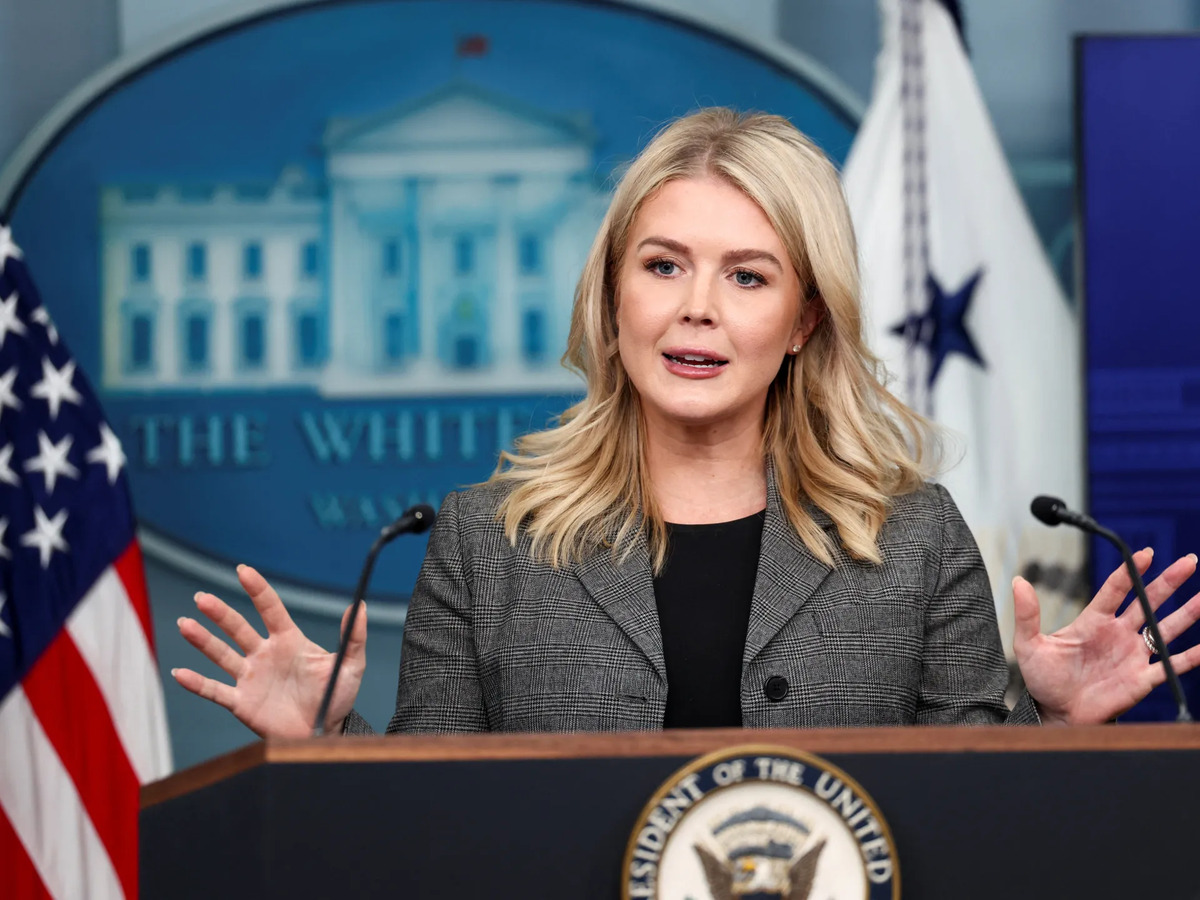
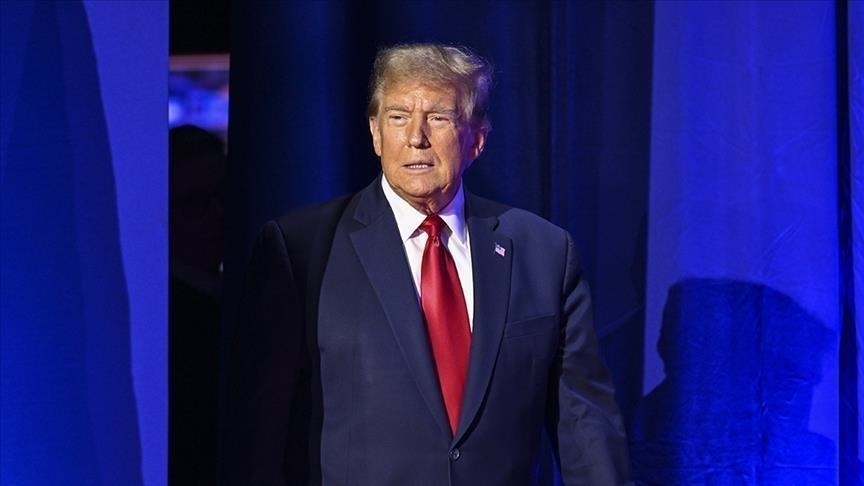
The White House confirmed yesterday, Wednesday, that sensitive discussions are currently underway regarding the U.S. proposal to end the war in the Gaza Strip, expressing hope that the Islamic Resistance Movement (Hamas) will accept the deadline set by President Donald Trump.

White House spokesperson Caroline Levitt said at a press conference, "I can assure you that there are very sensitive discussions taking place, but I do not want to rush to issue any statement from here. I will leave it to Special Envoy Steve Witkoff and the U.S. President to handle it."

She added that the estimated deadline of 3 to 4 days given by Trump to Hamas is still in effect, confirming that they are awaiting the movement's response, and expressing hope that the response will come within the timeframe set by the U.S. President last Tuesday.

In response to a question from a journalist, Levitt stated that the ceasefire plan in Gaza led by Trump has received global acceptance and will bring peace to the region.

Qatar's Emir Sheikh Tamim bin Hamad Al Thani discussed the latest developments of the ceasefire plan in the Gaza Strip with the U.S. President on Wednesday evening, expressing confidence in the ability of the countries supporting the plan to reach a fair settlement that preserves the rights of the Palestinian people.

This came during a phone call received by the Emir of Qatar from Trump, according to a statement from the Amiri Diwan.

For its part, Hamas announced that it is considering Trump's proposal after receiving it from the mediators responsibly, but it has not yet responded to the plan.

Trump's plan includes 20 points, the most notable of which are the release of Israeli prisoners in Gaza within 72 hours, a ceasefire, and the disarmament of Hamas.

The plan also calls, according to what has been leaked, for the formation of an international supervisory body headed by him, responsible for training a governing administration in Gaza, without Hamas's participation.

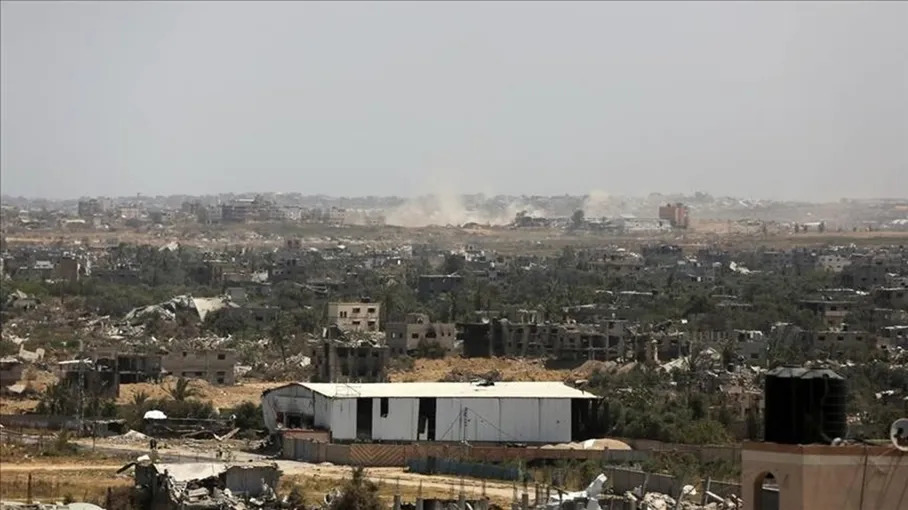
The announcement of the plan comes while the Israeli army continues its deployment in several key axes in the city of Gaza, continuing to bombard and blow up buildings and residential facilities in those areas, as part of its efforts to occupy the city and displace Palestinians from it.

LATEST NEWS

Thu 02 Oct 2025 10:14 am - Jerusalem Time

The occupation turns two houses into military barracks in Yamun, west of Jenin.

Jenin 2-10-2025 - This morning, Thursday, Israeli occupation forces turned two houses into military barracks in the town of Yamoun, west of Jenin.

Local sources reported that the occupation transformed the home of citizen Maher Abu al-Heija and his brother's home into military barracks in Yamoun.

The sources indicated that the occupation forces stormed the town early this morning, raided the homes of the Abu al-Heija family, and converted them into military barracks, and they are still present inside, preventing residents from accessing them.

Occupation soldiers also raided a residential building in Ya'bad, south of Jenin, and turned it into a military barrack since early this morning.

PALESTINE

Thu 02 Oct 2025 9:44 am - Jerusalem Time

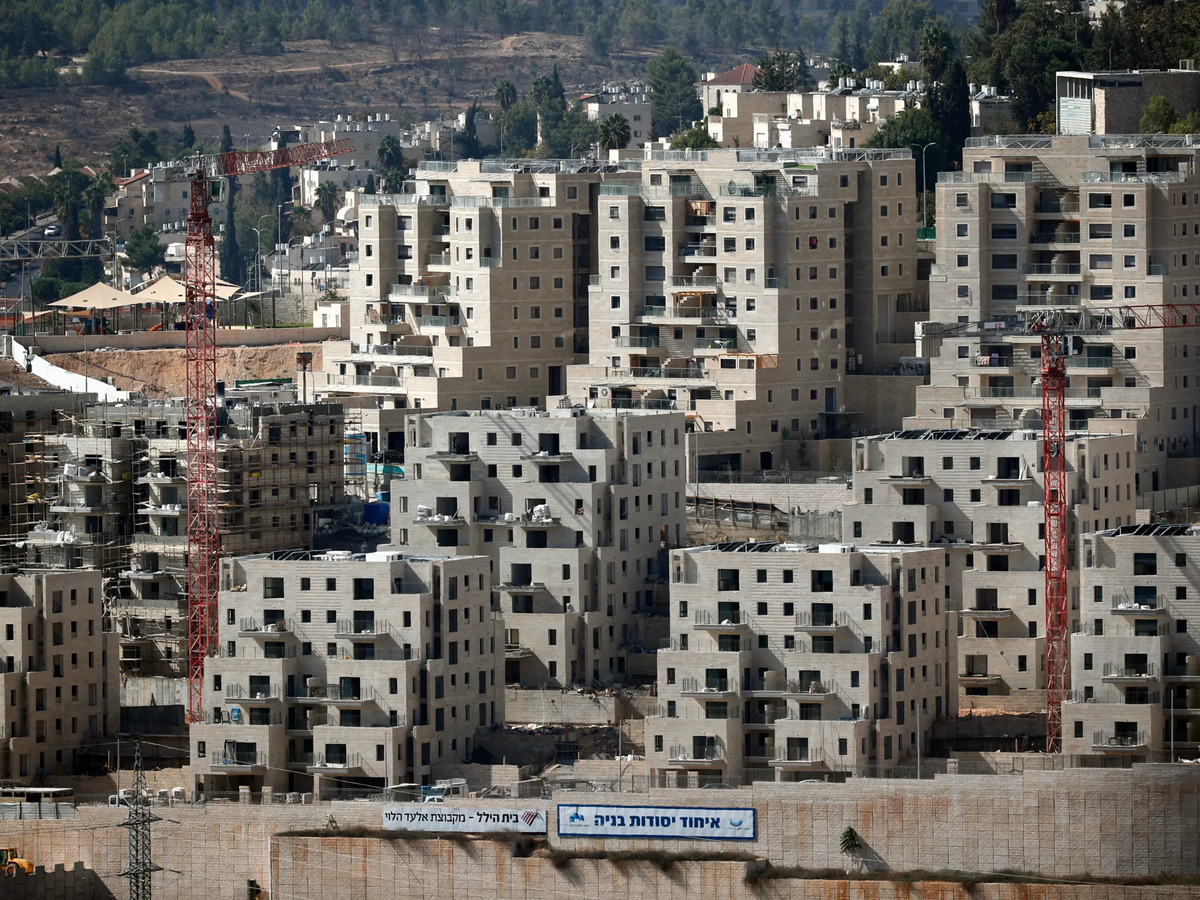
Top 10 Global Companies Supporting Israeli Settlement in Palestine

The United Nations High Commissioner for Human Rights has updated its database of companies operating in the illegal Israeli settlements in the West Bank and East Jerusalem, which support Israeli settlement in occupied Palestine, listing 158 companies, most of which are Israeli, including 20 foreign companies and 138 Israeli companies.

The High Commissioner Volker Turk confirmed that the report highlights the responsibility of companies in conflict areas, calling on the involved institutions to take steps for compensation according to a previous report.

The United Nations first published the list in 2020 in implementation of a Human Rights Council resolution issued in 2016, but a lack of resources hindered its regular updates.

Most foreign companies operate in the construction, real estate, tourism, travel, and mining sectors, and the United Nations believes that their continued operation in the settlements reinforces the Israeli occupation and constitutes a violation of international law.

This report presents the top 10 prominent international companies that support Israeli settlement in occupied Palestine through their ongoing work in the illegal settlements.

1- Booking Holdings (Booking.com) Country: Netherlands. Market Value: $179.8 billion. Company Overview: "Booking.com," a subsidiary of Booking Holdings, is a Dutch company that provides travel and online booking services, founded in 1996 in Amsterdam under the name "Bookings.nl," before merging later and adopting its current name.

Its work in Israeli settlements: The company lists a large number of properties on its booking platform, including hotels, apartments, and vacation homes within the Israeli settlements in the West Bank and East Jerusalem.

2- Motorola Solutions, Inc Country: United States. Market Value: $76 billion. Company Overview: Founded in 2011 after the split of Motorola, it operates internationally in the field of public safety solutions and enterprise security.

Its work in Israeli settlements: It is the sole supplier of the independent cellular network for the Israeli occupation army and specialized smartphones.

3- Airbnb Country: United States. Market Value: $75.7 billion. Company Overview: "Airbnb" launched in 2007 when hosts welcomed three guests into their home in San Francisco.

4- Heidelberg Materials AG Country: Germany. Market Value: €34.92 billion (approximately $40.9 billion). Company Overview: A leading German company in the production of building materials.

5- Expedia Group Inc Country: United States. Market Value: $27.57 billion. Company Overview: A global leader in travel technology.

6- ACS Actividades de Construcción y Servicios SA Country: Spain. Market Value: €17.13 billion (approximately $20 billion). Company Overview: A Spanish company that is a global leader in infrastructure.

7- Metrontario Investments Ltd Country: Canada. Market Value: CAD 20.05 billion (approximately $14.4 billion). Company Overview: An investment and real estate development group with a 70-year history.

8- Fosun International Ltd Country: China. Market Value: $5.69 billion. Company Overview: A large Chinese group that operates as a diversified investment conglomerate.

9- Egis Group Country: France. Market Value: No reliable information that the group is listed on the stock market.

10- TripAdvisor, Inc Country: United States. Market Value: $1.99 billion. Company Overview: A leading global travel platform established in 2000.

OPINIONS

Thu 02 Oct 2025 9:17 am - Jerusalem Time

Gaza between Trump's plan and Netanyahu's conditions: What possibilities are on the horizon...?

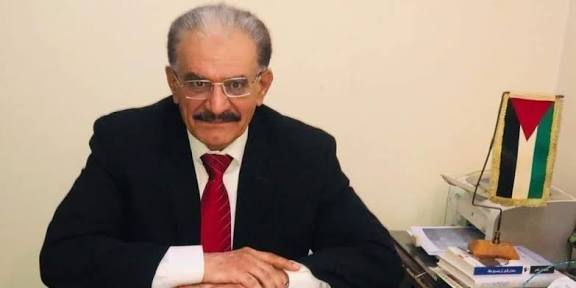
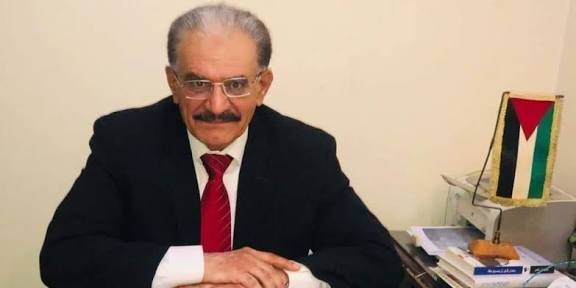
Dr. Abdul Rahim Jamous

Dr. Abdul Rahim Jamous

Opinion Writer

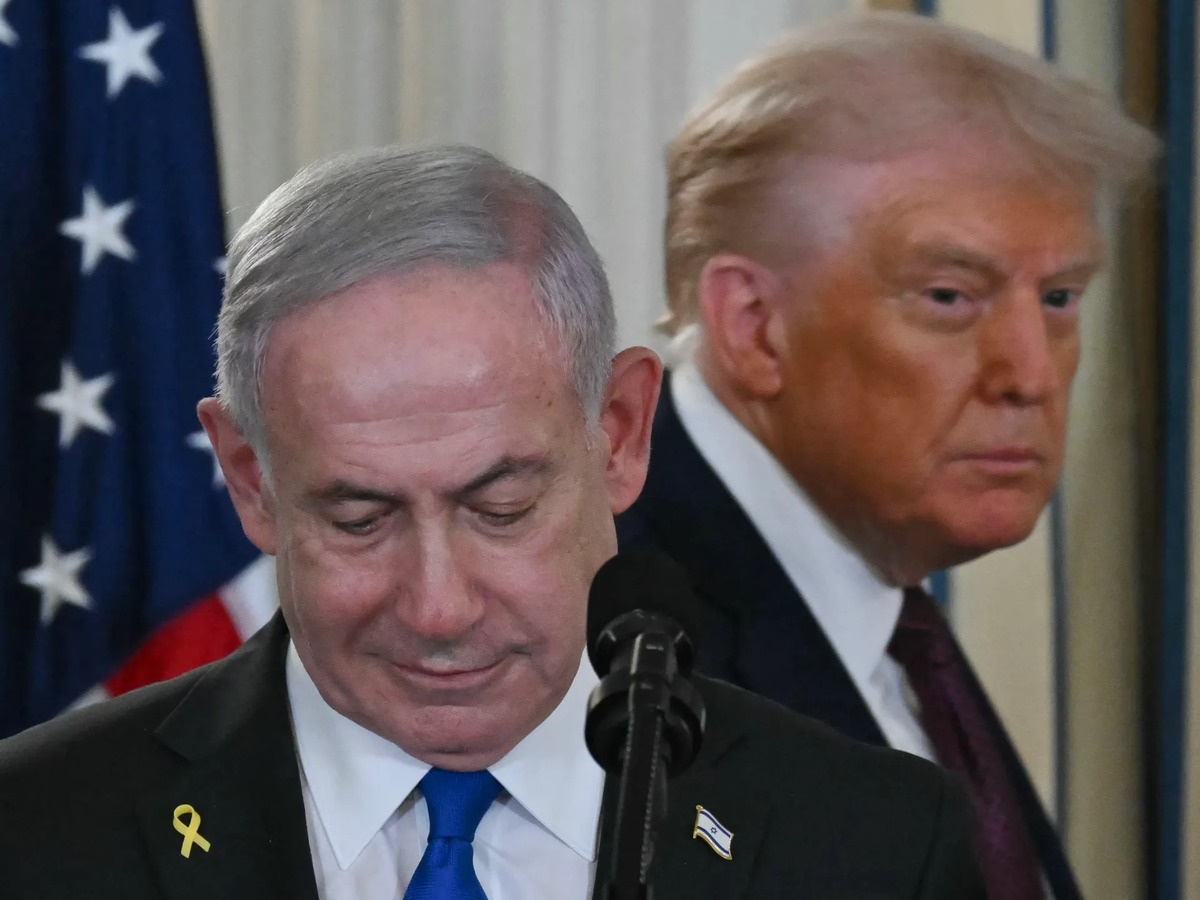
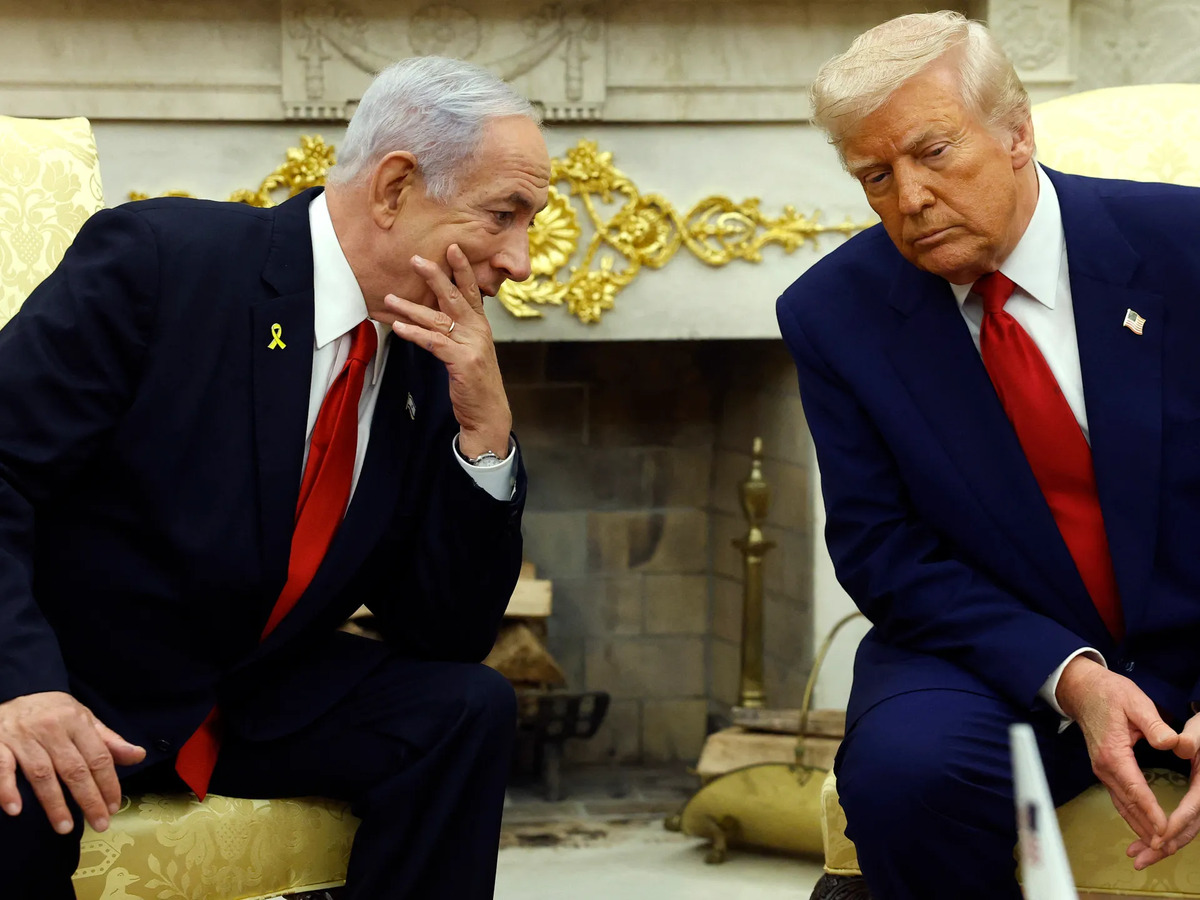
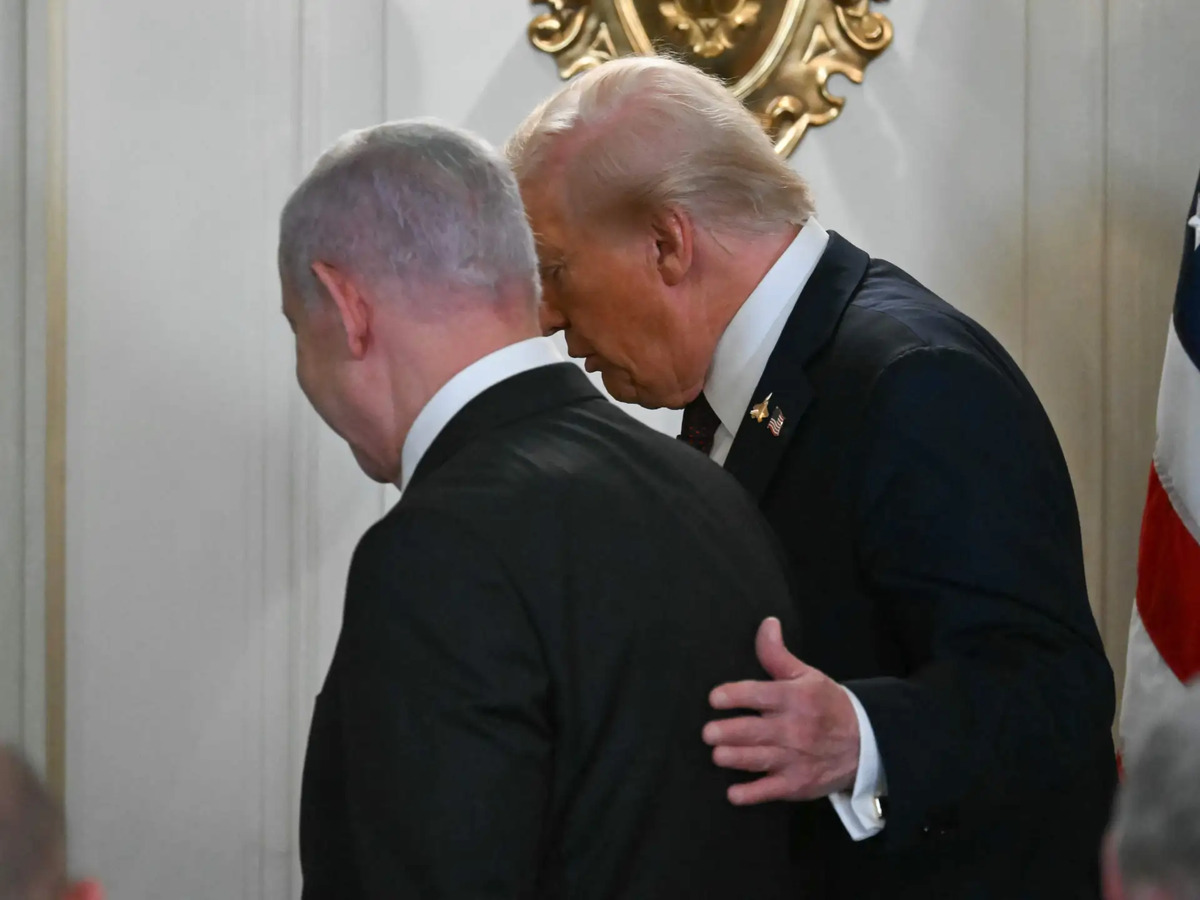
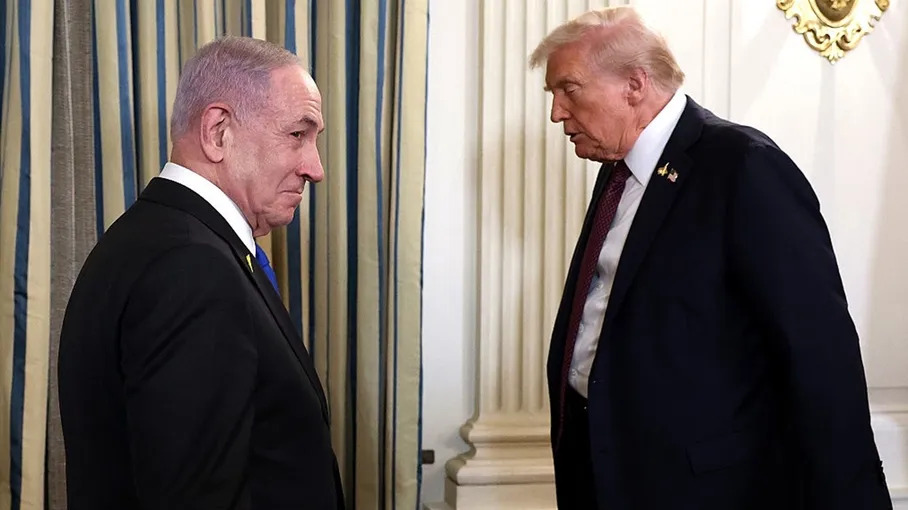
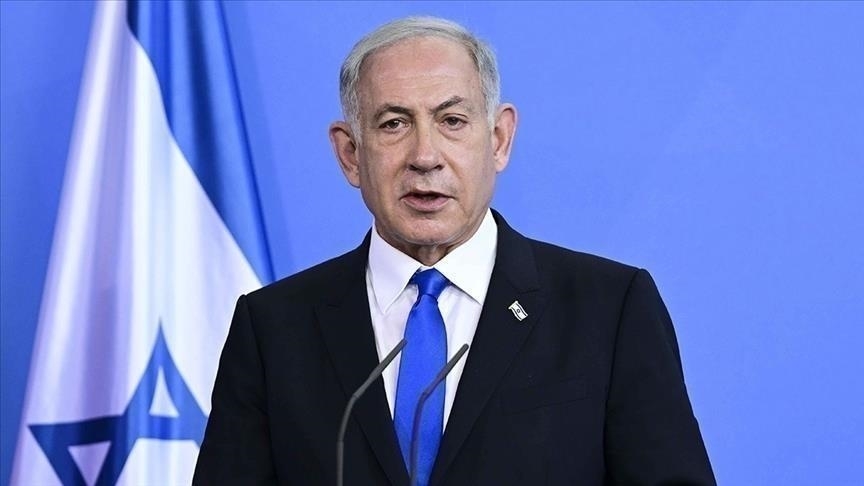
The meeting between U.S. President Donald Trump and Israeli Prime Minister Benjamin Netanyahu concluded on Monday, September 29, with a press conference that reshuffled the cards once again, sparking widespread debate about the future of the war in Gaza and the "next day" plan.

Despite Trump's efforts to project optimism, the details of the meeting revealed that Netanyahu laid out his conditions in full, placing Hamas in a difficult and strict equation: either accept, or the battlefield remains open for more bloodshed and destruction.

The plan, some details of which were leaked through Israeli Channel 12, included: a permanent ceasefire, the release of all prisoners, a gradual withdrawal of Israel from the Gaza Strip, the formation of a new administration that does not include Hamas, Arab funding for this administration, and the deployment of an Arab security force to oversee stability.

Trump also added his commitment to not allow Israel to annex parts of the West Bank, a clause that some Arab leaders considered a positive step if intentions are genuine.

However, the press conference with Netanyahu revealed the depth of the disparity. The latter confirmed that any plan cannot proceed without the complete disarmament of Hamas and ensuring its exclusion from any governance or authority framework, which makes the gap between the U.S. proposal and the Israeli stance wide, and makes the implementation of the plan contingent upon Hamas accepting its political and military self-dissolution, which is unrealistic.

Therefore, on the Palestinian side, Hamas is expected to reject this framework entirely, as it cannot politically or publicly accept handing over Gaza to a new administration under regional supervision while it considers itself the head of the resistance.

The Palestinian Authority may also find itself in an unenviable position, caught between the temptation to return to Gaza through the "next day" and the fear of falling into the trap of U.S.-Israeli arrangements that could strip it of its true and desired role, due to Netanyahu's unfeasible and illogical conditions.

In light of this increasingly complex scenario, several main possibilities emerge:

The first possibility: the plan fails due to Hamas's rejection, and the war continues at an escalating pace that serves Netanyahu's political goals.

The second possibility: Arab-American pressures are exerted to convince Hamas to accept a long-term truce in exchange for an indirect or limited role, which is a fragile option that could quickly unravel.

The third possibility: the war continues until Gaza is exhausted, then new realities are imposed by force, which seems closer to Netanyahu's approach that bets on time and weaponry to impose his conditions.

In conclusion, Trump's plan appears, at this moment, to be a loose rhetorical framework rather than a feasible project. It is an attempt to portray the United States as a serious mediator, but it collides with the reality of occupation and Netanyahu's extreme conditions, as well as complex internal Palestinian and regional balances.

No plan can succeed if it is based on excluding a key party from the equation, namely the Palestinian side, or on imposing dictates through military force that are closer to surrender by Hamas.

It is also important to note the recent meeting held in New York, which included U.S. Secretary of State Marco Rubio and envoy Witkoff with the foreign ministers of Saudi Arabia, Qatar, the UAE, Egypt, and Jordan, where the Arab ministers emphasized the need to immediately stop the aggression, prevent the annexation of the West Bank or changes to the status quo at Al-Aqsa Mosque, and ensure the flow of humanitarian aid to Gaza. This Arab stance, if solidified and developed, could be the way out of the impasse, the only brake on Netanyahu's military momentum, and the most important opportunity to restore a minimum of political balance at this critical stage.

OPINIONS

Thu 02 Oct 2025 9:14 am - Jerusalem Time

Trump's plan regarding Gaza .. between threats and opportunities

Mohsen Abu Ramadan

Mohsen Abu Ramadan

Opinion Writer

It is clear that the reasons that drove Trump to present his plan, which consists of twenty points, stem from the desire to prevent the continued isolation of Israel and to try to save it from itself, while maintaining normal and good relations with Arab and Islamic countries due to its connection to American strategic interests and his personal desire to win the Nobel Peace Prize.

Certainly, popular and international pressure played an important role in this regard, which led to the recognition of several Western countries, considered friendly to the occupying state, of the State of Palestine as a result of the joint Saudi-French campaign that produced the New York Declaration.

It is clear that one of Trump's goals lies in surrounding the two-state solution conference and working to dismantle Israel's isolation, which has become a pariah state practicing war crimes and genocide.

A look at the points presented in Trump's plan reveals serious risks that emerge from criminalizing resistance by insisting on disarming Hamas and removing it and its leadership from the scene through a safe passage mechanism, which contradicts the legitimate right to resistance enshrined in international law for a people suffering under occupation.

The danger also lies in Israel retaining the right to military intervention if it feels any threat and the absence of a timeline for the withdrawal of the occupying army, as the only timeline stipulated in the plan is the seventy-two hours during which the prisoner exchange process will be implemented, as well as Israel's continued control over the buffer security zone.

The danger also lies in the fact that the International Stability Authority, which will be headed by Trump and whose executive director will be Tony Blair, does not have international legitimacy, as the pro-Israel American administration will manage and control it, opening the door to reviving the idea of turning the Gaza Strip into the Riviera of the Middle East in the presence of both Kushner and Blair in the Gaza scene the next day, knowing that reconstruction will be funded by Arab money, which absolves Israel of its responsibility for the destruction it inflicted on the Strip.

The talk of Gaza Riviera carries within it the continuity of the risks of (voluntary) displacement.

The danger also lies in returning to the mechanism of international trusteeship and separating the Strip from the West Bank, conditioning the return of the authority to manage the affairs of the Strip on achieving reform within it, which is a difficult-to-measure issue and makes the matter of reform contingent on the Israeli vision.

Therefore, there are many mines in the path of the plan, but there are opportunities that can be exploited.

The first opportunity lies in stopping the ongoing massacre against our people in the Strip for about two years, as well as stopping the processes of displacement and ethnic cleansing. Here, I believe that these two issues are central at this stage, indicating the failure of the ruling fascist right-wing project that aimed to restore occupation and settlement to the Strip and implement the forced displacement of our people, which they falsely call voluntary.

The opportunity also lies in the presence of elements from the Palestinian Authority within the framework of the transitional technical government, which opens the door for the possibility of a unified Palestinian political system managing the affairs of the West Bank and the Strip, i.e., the territories occupied since 1967, which are the lands of the State of Palestine according to international law.

It should be noted here that the plan includes recognition of the Palestinian people's right to establish their independent state.

Thus, it is true that Netanyahu succeeded in eliminating some points, including the annexation of the West Bank and not allowing the return of the authority, in order to please the right-wing public and the ruling coalition, but it is also true that Netanyahu did not succeed in achieving the displacement plan, which is the practical interpretation of the concept of absolute victory from the perspective of the fascist right.

From here, if we realize that the current priority lies in stopping genocide and displacement, we must deal flexibly with Trump's plan despite the risks and the pain that grips us due to some unjust and oppressive points.

And because politics depends on the balance of power, rationality lies in internal Palestinian understanding as well as between Hamas and the Arab and Islamic system that met with President Trump on the sidelines of the United Nations General Assembly, which welcomed the plan.

The continued presence of our people on their land, stopping the bloodshed, and reconstruction form an important foundation for restoring the vitality and health of our people in the context of the continuity of their legitimate struggle towards achieving their goals of freedom, independence, and return.

PALESTINE

Thu 02 Oct 2025 2:22 am - Jerusalem Time

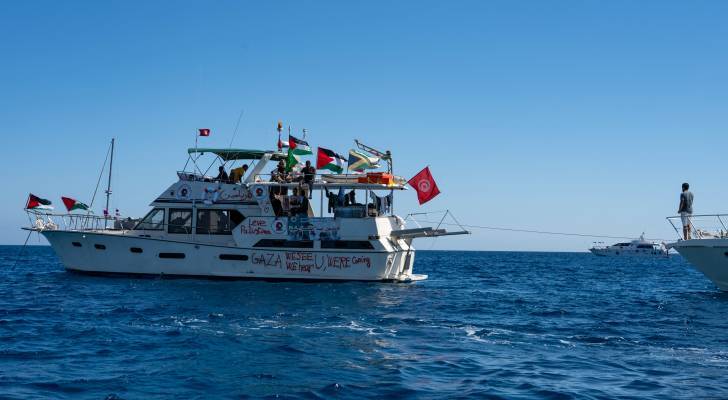
Massive protests in European capitals condemning the occupation's interception of the "Fleet of Resilience"

Mass protests erupted in several European capitals and cities early Thursday, condemning the Israeli occupation forces' interception of the 'Freedom Fleet' ships in international waters, in a widespread popular movement calling for international solidarity with the Gaza Strip.

These protests were a swift reaction to the Israeli occupation forces' interception of the aid fleet that aimed to break the blockade imposed on Gaza on Wednesday evening.

Cities such as Barcelona, Rome, Brussels, Berlin, and Istanbul witnessed large numbers of demonstrators taking to the streets early Thursday. The protesters called for international solidarity with the people of Gaza in the face of what they described as 'the famine imposed by Israel.'

PALESTINE

Wed 01 Oct 2025 8:14 pm - Jerusalem Time

International Committee to Break the Gaza Siege: More than 20 occupation ships are approaching the Resilience Fleet.

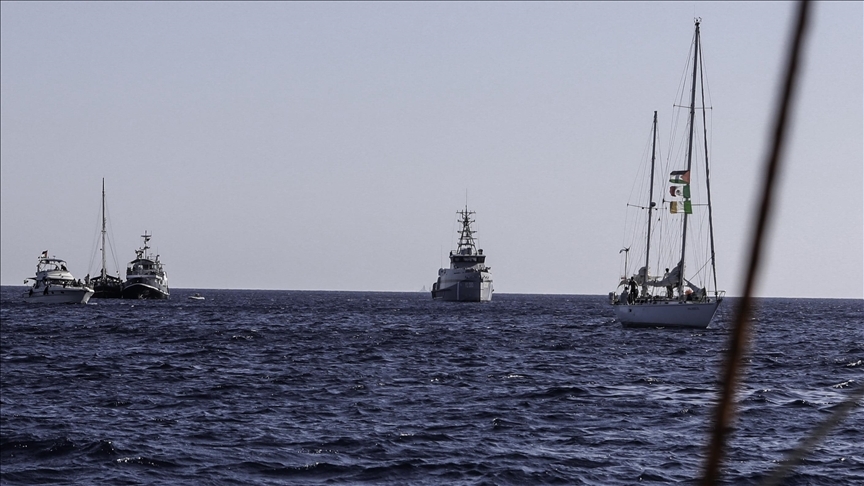
Tensions have escalated in the Mediterranean Sea as the Israeli occupation navy prepares to intercept the 'Global Solidarity Fleet,' which announced its entry into the 'high-risk zone' early Wednesday, now just less than 90 nautical miles from the shores of Gaza, on a humanitarian mission that is receiving widespread international attention.

The 'Solidarity Fleet,' which organizers assert has a 'peaceful and non-violent' mission, aims to break this blockade and deliver urgent supplies and humanitarian aid to the besieged residents of the Gaza Strip.

According to the organizers, the fleet continues to sail after a night marked by 'intimidation tactics' from the Israeli occupation, with assurances that all fleet members are safe.

PALESTINE

Wed 01 Oct 2025 8:06 pm - Jerusalem Time

Palestinian with the Resilience Fleet: 80 miles separate us from Gaza despite Israel's intimidation.

Palestinian activist Mohammed Qatish, participating in the Global Resilience Fleet, said on Wednesday that only 80 nautical miles separate them from the Gaza Strip, affirming their continued sailing despite "Israeli intimidation."

This came in an interview Qatish conducted via phone from aboard the ship Mohammed Bahar, while the fleet announced early Wednesday that it had entered the high-risk area as it approached the shores of Gaza.

Qatish confirmed that the fleet "is less than 80 nautical miles (about 148 kilometers) from the shores of Gaza, and it is moving with all its ships despite waves of intimidation and sabotage attempts by the Zionists (Israel)."

The Palestinian activist, who also holds Dutch nationality, confirmed that "the intimidation attempts began as soon as the fleet set sail from the port of Barcelona (in Spain) and reached its ships to the ports of Tunisia, where the first attack occurred, but morale increased."

Qatish, whose origins trace back to the Yarmouk camp in southern Syria, said: "After that, the fleet continued its way to Italy and then to Greece, where the fleet united and all its ships were completed to head to its final destination, which is Gaza."

Regarding last night (Tuesday/Wednesday), Qatish explained that "there were intimidation attempts through attacks on the fleet, as many Zionist naval vessels were detected heading towards us via radar."

He pointed out "the presence of Zionist ships roaming among the fleet, as well as the intensive presence of drones."

Despite this, Qatish stated that "the fleet's ships continued their way towards the Gaza Strip on a humanitarian mission, carrying an important message to our people there that we will not forget them."

He added: "On our way to Gaza to break the unjust siege on our people there since 2007, to end the famine and genocide being committed by (Israeli Prime Minister Benjamin) Netanyahu against them, and to open a humanitarian corridor."

On Tuesday, Qatish said in a video clip broadcast on his account on the American Facebook platform: "Now we need your support more than ever, as we have entered the green zone (high-risk area)."

Qatish added: "We need you to talk about us a lot and to exert pressure on governments to open a safe maritime corridor to the besieged Gaza Strip."

Israel, the occupying power in Palestine, has previously engaged in acts of piracy against ships heading to Gaza, seizing them and deporting the activists on board.

This is the first time that more than 50 ships are sailing together towards Gaza, carrying 532 civilian supporters from more than 45 countries.

Israel has besieged the Gaza Strip for 18 years, leaving about 1.5 million Palestinians out of approximately 2.4 million in the area homeless after the genocide war destroyed their homes.

On March 2, the siege was tightened by closing all crossings leading to Gaza, preventing any food, medicine, or humanitarian aid, plunging the area into famine despite relief trucks piling up at its borders.

Sometimes, Israel allows very limited aid to enter that does not meet the minimum needs of the besieged and does not end the famine, especially as most trucks are subject to looting by gangs that the Gaza government claims are protected by Israel.

Since October 7, 2023, Israel, with American support, has been committing genocide in Gaza, resulting in 66,148 dead and 168,716 injured, most of whom are children and women, and famine that has claimed the lives of 455 Palestinians, including 151 children.

PALESTINE

Wed 01 Oct 2025 7:16 pm - Jerusalem Time

The Gaza government announces that the number of journalists killed has risen to 254.

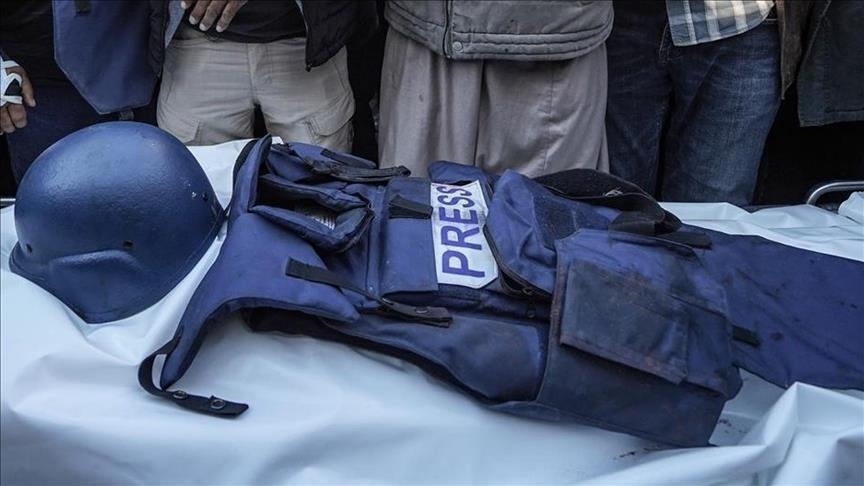
The government media office in the Gaza Strip announced on Wednesday that the death toll of journalists since October 7, 2023, has risen to 254, following the killing of two journalists in an Israeli airstrike.

The government office stated in a press release: "The number of martyrs among journalists has risen to 254 since the beginning of the genocide against Gaza, following the announcement of the martyrdom of journalists Sami Dawood and Yahya Barzaq."

It was mentioned that journalist Sami Dawood works for "Rawafed" television channel, while journalist Yahya Muhammad Barzaq works with several media outlets.

The office condemned "the systematic targeting, killing, and assassination of Palestinian journalists by the Israeli occupation," calling on Arab and international journalist unions to denounce "these systematic crimes against the journalists and media personnel of Gaza."

It held "the Israeli occupation, the American administration, and the countries participating in the genocide, such as the United Kingdom, Germany, and France; fully responsible for committing these heinous and brutal crimes."

The international community was urged to exert effective pressure "to stop the genocide and to protect journalists and media personnel in the Gaza Strip, and to halt the crime of killing and assassinating them."

Since the onset of the genocide in Gaza, the Israeli army has deliberately targeted Palestinian journalists, despite repeated international and European human rights demands to exempt them from targeting.

Since October 7, 2023, Israel, with American support, has been committing genocide in Gaza, resulting in 66,148 deaths and 168,716 injuries, most of whom are children and women, along with a famine that has claimed the lives of 455 Palestinians, including 151 children.

PALESTINE

Wed 01 Oct 2025 6:22 pm - Jerusalem Time

Less than 90 nautical miles... "The Global Resilience Fleet" defies the intimidation of the occupation and continues its journey to Gaza.

The "Global Resilience Fleet" continues its advance towards the shores of the Gaza Strip, having reached a distance of less than 90 nautical miles, in a direct challenge to what the organizers described as a "high-risk area" after facing intimidation tactics from the Israeli occupation army.

This mission comes in the context of ongoing international efforts to break the Israeli blockade imposed on the Gaza Strip for years, which has caused a suffocating humanitarian crisis.

In recent years, there have been numerous attempts by similar international fleets aimed at drawing the world's attention and delivering aid, some of which faced violent opposition from the occupation's navy.

Fleet organizers reported that participants remained calm and followed all safety procedures despite the threats.

The mission aims to achieve three main objectives: breaking the blockade, providing humanitarian aid, and demonstrating non-violent solidarity with the people of Gaza.

The organizers confirmed the safety of all participants at present, noting that the fleet has surpassed the point where the "Madelin" ship was intercepted in a previous attempt, while remaining in a state of maximum alert.

The success of the fleet in reaching or even merely approaching is considered a symbolic victory for the campaign, while its interception places Tel Aviv in a difficult position before global public opinion.

The sailing of the fleet comes at a time when international interest in the humanitarian situation in the Palestinian territories is escalating.

ANALYSIS

Wed 01 Oct 2025 6:06 pm - Jerusalem Time

Two analysts: Trump's plan for Gaza repeats the scenario after the invasion of Iraq.

Two political analysts stated that U.S. President Donald Trump's plan to stop the war in Gaza is vague and raises doubts, pointing out that there are concerns that the proposed "Peace Council" may resemble the U.S.-British strategy following the invasion of Iraq in 2003, especially with the suggestion of former British Prime Minister Tony Blair to oversee the management and reconstruction of the sector.

In statements to the Associated Press, Naomi Bar-Yacob, a researcher at the Geneva Center for Security Policy, said that it is likely that Hamas will not accept the proposed agreement. She added that the movement is also likely to request further clarifications and guarantees, as it is currently being asked to release all living and deceased prisoners (within 72 hours of both sides accepting the plan). Israel estimates the number of remaining prisoners in Gaza to be 48, of whom 20 are on life support.

Bar-Yacob pointed out that Israeli Prime Minister Benjamin Netanyahu will not present the plan for a vote in his government, but rather only for a vote on the first 72 hours of the ceasefire, indicating that this gives an idea of how difficult it is to implement the American plan.

As for Snam Vakil, the director of the Middle East and North Africa program at Chatham House, she sees that the proposal raises questions and doubts. Vakil told the Associated Press regarding the suggestion of Tony Blair's name to oversee (with Trump) what is called the "Peace Council" that Blair's reputation may have been damaged more within the United Kingdom than abroad, as he has high-level connections with policymakers from various backgrounds, especially in the Middle East.

She added that the problem with this council is that there may be little accountability for it, explaining that it seems similar to a strategy followed by the U.S. and Britain during the Iraq War.

In her comments on Trump's plan regarding Gaza, she said, "There are no details, no substance, no clarity about who will do what, when, where, and how. There are no timelines, no deadlines. And this, you know, raises questions and stirs all these doubts." She viewed that the proposed framework is vague and will be subject to interpretations, explaining that these conflicting interpretations will ultimately lead to an explosion, either quickly or gradually.

PALESTINE

Wed 01 Oct 2025 5:42 pm - Jerusalem Time

British Analysis: Trump's Plan Institutionalizes Colonialism in Gaza

Opinion pieces published in British newspapers today condemned the American-Israeli peace plan for the Gaza war, with writers describing the plan as a "colonial deception" at its core and merely a continuation of the suffering of Palestinians under a new guise.

Sam Kelly, the global affairs editor at the British newspaper The Independent, stated that Donald Trump's peace plan for Gaza appears at first glance to be a breakthrough as it paves the way for the establishment of a Palestinian state, but he emphasized that it is a "well-crafted colonial deception" aimed at perpetuating Israeli dominance over Palestinians.

The "trap," as he put it, lies in the fact that the plan obliges Israel to acknowledge the Palestinians' right to self-determination and the establishment of a Palestinian state, which is something the Israeli government is impossible to agree to.

Colonialism of the king and the ruler, and the "bitter" truth is that Gaza will remain a colony—according to the terms of the "cunning plan"—but under the leadership of "King" Trump and the "new ruler," former British Prime Minister Tony Blair, who the Middle East still "curses" for what he did in Iraq, according to the writer.

He confirmed that the king and the ruler will manage Gaza indefinitely, or until the Palestinian Authority—"which governs some areas that do not concern Israel in the West Bank," as the article puts it—proves its worthiness to govern.

The writer believes that the Authority "works with its occupiers to regulate the armed resistance of Palestinians," which undermines the people's trust in it, especially since it welcomed Trump's colonial proposal.

As for the Islamic Resistance Movement (Hamas), the writer continues, its goal is to destroy the Jewish state, and its project is both religious and political, and even "if the movement is militarily defeated in the short term, its ideas have seeped into the soil of Gaza, watered by the blood of innocents killed by Israel, and thus resistance is sure to return again."

Kelly pointed out in this regard to the West Bank, where Israeli tanks suppressed resistance during the second intifada and imprisoned Palestinians behind a "security wall," and most people in the West Bank believed that fighting Israel was futile, but here is the current generation carrying the banner of struggle once again.

Kelly concluded that any hope for long-term peace is contingent upon granting Palestinians a real promise of an independent state.

He warned that deploying Arab or international forces in Gaza according to Trump's plan is "pure madness that will lead the forces into direct confrontation with a people who see the plan as a new colonialism that could lead to the same moral nightmare that Gaza is experiencing now."

Patrick Cockburn, a correspondent for the British newspaper The i Paper, wrote in his article that the international welcome for the plan reflects "international horror" at the genocide in Gaza, but he sees that optimism is "just an illusion," as the plan is "nothing but a fragile structure" for a reality that cannot be realized.

The release of prisoners—according to what the article conveyed about the plan's provisions—does not guarantee the end of the war but is a crucial political gain for Netanyahu, who is likely to portray it as evidence of the success of his policies and army in the Gaza war and the regional conflicts that arose from it.

It is likely, according to the writer, that Palestinians will demand guarantees that prevent Netanyahu from returning to war immediately after the completion of the prisoner deal, so that he does not find— as he has in the past—a flimsy excuse to end the ceasefire and resume war.

Cockburn confirmed that Netanyahu often "picks what suits him" from agreements, and thus it is unlikely that all provisions of the plan—crafted by U.S. envoy Steve Wittekov and Trump's son-in-law Jared Kushner—will be realized, especially since its ambiguity leaves Netanyahu with ample room for maneuver if he wants to evade the agreement.

Cockburn asserted that Blair's appointment to the proposed "Peace Council" to govern the sector is ridiculous, stating that the former British Prime Minister's renewed enthusiasm in the Middle East ignores "the legacy of destruction he left in Iraq and Afghanistan."

For his part, Josh Paul— in an article published by the British newspaper The Guardian—harshly criticized the Kushner and Blair plan, describing it as "a moral crime and a political disaster," and reminded of Blair's experience in Iraq, when Washington imposed a foreign rule "lacking legitimacy" with catastrophic consequences, warning that the same thing is repeating in Gaza.

It is worth noting that the writer was a national security advisor in the Coalition Provisional Authority in Iraq, then worked as

PALESTINE

Wed 01 Oct 2025 5:41 pm - Jerusalem Time

Israeli analysts: The ambiguity of Trump's plan for Gaza threatens its failure.

Three opinion articles in the leftist Israeli newspaper Haaretz addressed U.S. President Donald Trump's new plan for a ceasefire and the reconstruction of the Gaza Strip, analyzing its dimensions and implications from various angles.

The three writers - Jack Khouri, Michael Ratney, and Jonathan Lis - discussed in their articles how the plan forces the Islamic Resistance Movement (Hamas) to make a painful choice, why it lacks credibility and feasibility, and how Israeli Prime Minister Benjamin Netanyahu - accused by the International Criminal Court of crimes in Gaza - could exploit its ambiguity to delay its implementation or completely undermine it.

In his article, the newspaper's Arab affairs editor Jack Khouri argues that Trump's proposed ceasefire plan puts Hamas in front of the toughest decision since the war began: either accept terms that practically amount to surrender, or reject them and face a harsher Israeli destruction with American support.

Acceptance means handing over Israeli prisoners - Hamas's last card of power - in exchange for a vague promise of an Israeli military withdrawal, a temporary multinational administration, and a subsequent shift towards Palestinian security control, according to the writer.

The plan also lacks clear timelines or strategies for reconstruction or a real political horizon; rejection, on the other hand, gives Israel a pretext to destroy what remains of the Gaza Strip until complete occupation is achieved, "even at the expense of the lives of Israeli prisoners."

For Hamas and the broader Palestinian leadership, acceptance may bring a ceasefire, humanitarian aid, and prisoner exchange deals, but it will not offer more than that, Khouri believes.

The writer quoted Hamas leader Mohammed Mardawi as saying that the plan - which has not yet been presented to any Palestinian faction - reflects the Israeli perspective almost entirely and aims to halt the international momentum towards establishing a Palestinian state.

He also noted that the proposed governance model relies - from his perspective - on technocrats and foreign funds while maintaining indefinite Israeli control.

Khouri places this dilemma in a familiar historical context, from the Oslo Accords to the Israeli withdrawal plan of 2005, pointing out that there is a "clear gap" between what Israel promises and what it actually implements.

However, the essence of the plan - as the writer sees it - is the choice between a "soft" foreign occupation managed by foreign parties or a "harsh" Israeli occupation that knows no compromise, without any path towards Palestinian sovereignty.

As for the former U.S. ambassador to Riyadh, Michael Ratney, he acknowledges in his article that Trump's 20-point plan includes some positive elements.

He points here to Netanyahu's public commitment not to annex Gaza or forcibly displace its residents, Palestinian autonomy, and even the possibility of eventually establishing a Palestinian state.

Although he claims that fully implementing the White House plan would be much better than the current bleak and exhausting situation, he warns against taking Trump or Netanyahu's statements as meaning that the plan will actually be implemented.

He also believes that these statements should not be viewed as a fundamental shift in the course of the Israeli-Palestinian conflict, despite Trump's confidence in them.

Furthermore, Ratney believes that some major ideas - such as establishing a peace council chaired by Trump himself - seem unrealistic.

He adds that the final version of the plan has been drained of its substance through loopholes crafted to satisfy Israeli political considerations, undermining its credibility with active regional parties.

However, one of the fundamental flaws - according to the article - is that the Israeli military withdrawal from Gaza is conditional on achieving "phases" related to disarmament, which are negotiated between the Israeli army and an international stabilization force, considering that this leaves the pace and extent of withdrawal almost under Israeli control.

Ratney estimates that any plan to revive life in Gaza will ultimately require more than U.S. leadership of the process, or disarming Hamas, or the compliance of the Palestinian Authority, or regional support.

However, he cautions that Israel's approach to anything concerning the Palestinians is characterized by caution, hesitation, numerous conditions, and ties to political calculations.

In his article, writer Jonathan Lis addresses the ambiguity surrounding Trump's plan, noting that it gives Netanyahu ample space to delay or undermine it.

Despite Netanyahu's public support for the plan, Israeli and international observers doubt his commitment to implementing it, citing his past in slowing negotiations and sabotaging prisoner exchange deals out of fear for his government, as Lis confirms.

The article's writer points out that Netanyahu threatened in statements alongside Trump to continue the war until "the elimination of Hamas" if they do not cooperate.

Lis believes that the plan itself lacks clear timelines and implementation mechanisms, which allows

PALESTINE

Wed 01 Oct 2025 5:34 pm - Jerusalem Time

Gaza government: Israeli shelling injures Palestinians and threatens the lives of 70 journalists in a hospital.

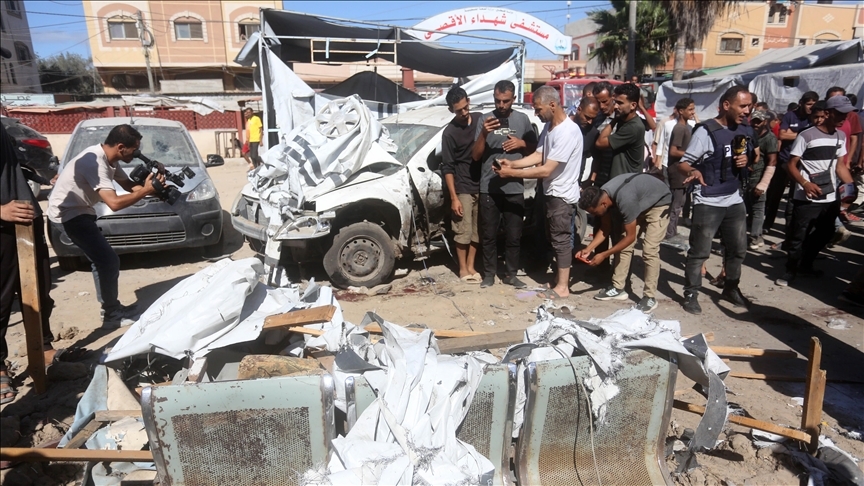
The government media office in Gaza announced on Wednesday that several Palestinians were injured due to the Israeli army's bombing of the Al-Aqsa Martyrs Hospital in the center of the Gaza Strip, endangering the lives of more than 70 journalists and media personnel.

The office clarified in a statement that "the occupation has bombed inside the walls of Al-Aqsa Martyrs Hospital 15 times since the start of the war, in a systematic crime against the health system in Gaza."

It added that "the bombing targeted displaced persons who came to receive treatment near the internal medicine department, resulting in serious injuries (the number of which was not specified) and significant material damage, along with a direct threat to the lives of dozens of patients."

It pointed out that the attack "put the lives of more than 70 journalists and media personnel at risk, as it occurred just a few meters away from their coverage sites of the events and developments of the genocide."

According to the statement, this bombing represents "a systematic assault that reflects the occupation's insistence on targeting the health system in the Gaza Strip, in a blatant violation of international laws that prohibit harming medical facilities and protecting civilians."

The office held Israel, the U.S. administration, and countries it described as complicit fully responsible for these "crimes," calling on the international community, the United Nations, and humanitarian organizations to take immediate action to stop them and provide urgent international protection for hospitals and their workers in Gaza.

Since October 7, 2023, Israel, with U.S. support, has been committing genocide in Gaza, resulting in 66,148 deaths and 168,716 injuries, most of whom are children and women, along with a famine that claimed the lives of 455 Palestinians, including 151 children.

PALESTINE

Wed 01 Oct 2025 5:26 pm - Jerusalem Time

Source: Hamas wants to amend some clauses of Trump's plan, including disarmament.

A source close to Hamas revealed that the movement is seeking to amend some provisions of the American president's plan for the Gaza Strip, including the disarmament clause and the departure of its fighters from the territory.

A Palestinian official close to Hamas stated that the movement "wants to amend some clauses of Trump's plan, such as disarmament and the removal of Hamas and faction members."

He indicated that "intensive consultations are ongoing around the clock within the leadership of the movement in Palestine and abroad, and with the mediators," clarifying that "four meetings were held on Monday in Doha with Qatari and Egyptian mediators in the presence of Turkish officials."

He mentioned that Hamas "informed the mediators of the necessity of providing international guarantees for the complete Israeli withdrawal from the Gaza Strip and for not violating the ceasefire."

Qatar had announced that talks would take place on Tuesday in Doha with Hamas, Turkey, and Egypt to discuss the American president's plan.

The plan revealed by Donald Trump on Monday and approved by the occupying Prime Minister Benjamin Netanyahu calls for an immediate cessation of hostilities in the Gaza Strip upon the agreement of both warring parties to the plan, followed by the release of all detainees in the Gaza Strip and hundreds of Palestinian prisoners.

The plan consists of twenty clauses, including the disarmament of Hamas and the relocation of its fighters to other countries, and the administration of Gaza by a Palestinian committee of technocrats and international experts, under the supervision of a council headed by Trump himself, with former British Prime Minister Tony Blair as one of its members.

According to the plan, the occupying state will gradually withdraw from the territory, but it will maintain a "security belt."

Since October 7, 2023, the occupying army, with full American support, has continued to commit genocide in the territory, resulting in the martyrdom of 66,148 Palestinians and the injury of 168,716 others, most of whom are children and women.

The siege and starvation have also caused the death of 455 civilians, including 151 children, due to famine.

PALESTINE

Wed 01 Oct 2025 4:48 pm - Jerusalem Time

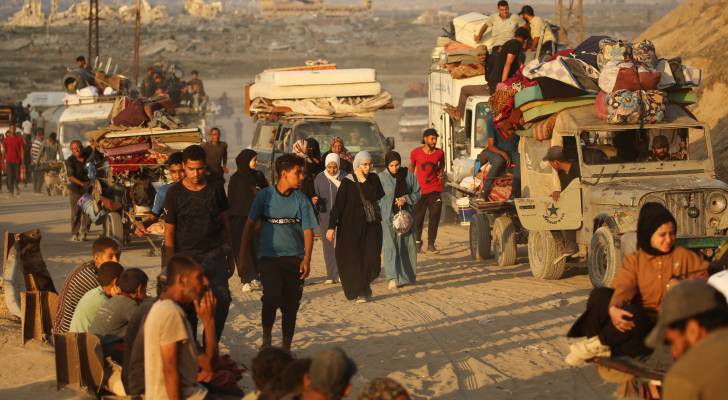
Widespread displacement from the city of Gaza as the Israeli army closes Al-Rasheed Street.

The city of Gaza, which Israel seeks to occupy, has been witnessing a large movement of displacement of hundreds of Palestinian families towards the center and south of the Gaza Strip since Wednesday morning, following the announcement by the Israeli army of its intention to close the Al-Rasheed Street, allowing its use only for displacement towards the south.

Al-Rasheed Street represents the main coastal road that connects the north of the Gaza Strip to its south, and Palestinians rely on it for their movements, especially after the Israeli army closed Salah al-Din Street in the eastern part of the Strip.

On August 8, the Israeli government approved a plan proposed by Prime Minister Benjamin Netanyahu to gradually occupy the Gaza Strip entirely, starting with the city of Gaza, which is home to about one million Palestinians.

ARAB AND WORLD

Wed 01 Oct 2025 4:40 pm - Jerusalem Time

After Israel's aggression.. Trump signs an executive order pledging to ensure Qatar's security.

U.S. President Donald Trump signed an executive order pledging to ensure Qatar's security, including the use of military force if it is attacked. This comes three weeks after an Israeli airstrike on the Qatari capital, Doha, targeting the assassination of a negotiating delegation from Hamas.

The executive order is titled 'Ensuring the Security of the State of Qatar' and was signed by Trump on September 29, according to the White House website. Trump stated at the outset that he issued it 'in recognition of the enduring alliance between the United States and the State of Qatar.'

It stipulates that 'the United States considers any armed attack on the territory of the State of Qatar, its sovereignty, or its critical infrastructure a threat to its (the United States') peace and security.' And 'in the event of such an attack, the United States will take all legal and appropriate measures, including diplomatic, economic, and military measures as necessary.'

These measures aim to 'defend the interests of the United States and the State of Qatar, and restore peace and stability.' The executive order directs the 'Secretary of Defense (U.S.) to coordinate with the Secretary of State and the Director of National Intelligence on joint emergency planning with the State of Qatar to ensure a rapid and coordinated response to any foreign aggression against it.'

Meanwhile, the Secretary of State is directed to 'affirm this commitment to the State of Qatar' and to 'coordinate with allies and partners to ensure complementary support measures.' The Secretary of State will also continue 'the partnership with Qatar, whenever appropriate, to resolve conflicts and mediate, appreciating Qatar's extensive experience in diplomatic and mediation fields.'

The executive order praised the relations with Qatar, stating, 'Over the years, the United States and the State of Qatar have been linked by close cooperation, shared interests, and a strong relationship between our armed forces.' It continued: 'The State of Qatar has hosted U.S. forces, enabling the execution of vital security operations, and has stood as a steadfast ally in the pursuit of peace, stability, and prosperity in the Middle East and beyond.'

It specifically mentioned 'its role as a mediator that has contributed to U.S. efforts to resolve important regional and global conflicts.' Qatar and the United States are linked by a 'Defense Cooperation Agreement' signed by both countries in June 1992.

On September 30, the White House announced that Israeli Prime Minister Benjamin Netanyahu expressed to his Qatari counterpart Mohammed bin Abdulrahman Al Thani his regret over the attack on Doha, pledging not to repeat it. This acknowledgment of guilt came during a three-way phone call involving the Qatari Prime Minister, Trump, and Netanyahu while the latter was hosted at the White House.

On September 9, the Israeli army launched an airstrike against Hamas leaders in Doha, which Qatar condemned and confirmed its right to respond to the aggression that resulted in the death of a Qatari security personnel. Hamas announced the survival of its negotiating delegation led by its chief in Gaza, Khalil al-Hayya, from the assassination attempt, and the killing of his office director Jihad Labed, his son Hamam al-Hayya, and three escorts.

The Israeli aggression against Qatar's sovereignty drew Arab and international condemnations, with calls for the need to deter Tel Aviv to stop the assaults that violate international law. The attack on Qatar came despite its role as a mediator, alongside Egypt and under U.S. supervision, in indirect negotiations between Hamas and Israel to reach an agreement for prisoner exchange and a ceasefire.

With its attack, Israel expanded its regional aggressions, having launched an aggression against Iran last June, committing genocide in the Gaza Strip and the occupied West Bank for two years, and carrying out airstrikes on Lebanon, Syria, and Yemen.

PALESTINE

Wed 01 Oct 2025 4:32 pm - Jerusalem Time

The occupation isolates the city of Gaza.. Tight siege after the control of "Netsarim Axis"

Israeli Minister of War Israel Katz announced on Wednesday that the occupying army is tightening its grip on the city of Gaza after completing control over the "Netsarim" coastal axis, which separates the northern Gaza Strip from the southern part, in a move he said would enhance the "complete siege" on the city that is home to about a million Palestinians.

In a previous statement, the occupying army indicated its intention to close the coastal Al-Rasheed Street, allowing only Palestinians from the city of Gaza to pass towards the center and south. Al-Rasheed Street is considered one of the vital arteries for movement between the governorates of the Strip, especially after the closure of Salah al-Din Street in eastern Gaza during the ongoing aggression.

Katz stated in an official statement: "The Israeli army is currently completing control over the Netsarim axis on the western coast of the Strip, dividing Gaza into north and south," adding that "this siege will force anyone leaving the city to pass through army checkpoints."

He continued: "This is the last opportunity for the residents of Gaza who wish to move south, leaving Hamas militants isolated in the city of Gaza facing the army's ongoing operations with full force."

The Israeli minister claimed that "those who remain in Gaza will be considered terrorists and supporters of terrorism." Katz confirmed that the army is "prepared for all scenarios and determined to continue its operations until all hostages are recovered and Hamas is disarmed, leading to the end of the war."

For its part, the government media office in Gaza described on Wednesday the decision of the occupation to close Al-Rasheed coastal street as "a new crime and an arbitrary measure within the policy of genocide" that the Israeli occupation has been practicing against the residents of the Strip for two years.

It added that the occupation continues to intensify its bloody bombardment of the city of Gaza, demolishing its residential buildings, in an attempt to force Palestinians to flee, paving the way for its complete occupation.

On August 8, the occupation government approved a plan proposed by Prime Minister Benjamin Netanyahu to gradually reoccupy the Gaza Strip, starting with the city of Gaza.

Just three days later, the army launched a wide-scale attack on the city, during which it destroyed homes and residential towers, targeted camps for the displaced and hospitals, and carried out ground incursions.

Since October 7, 2023, the occupying army, with complete American support, has continued to commit genocide in the Strip, resulting so far in the martyrdom of 66,148 Palestinians and the injury of 168,716 others, most of whom are children and women.

The siege and starvation have also caused the death of 455 civilians, including 151 children, due to famine.

PALESTINE

Wed 01 Oct 2025 4:14 pm - Jerusalem Time

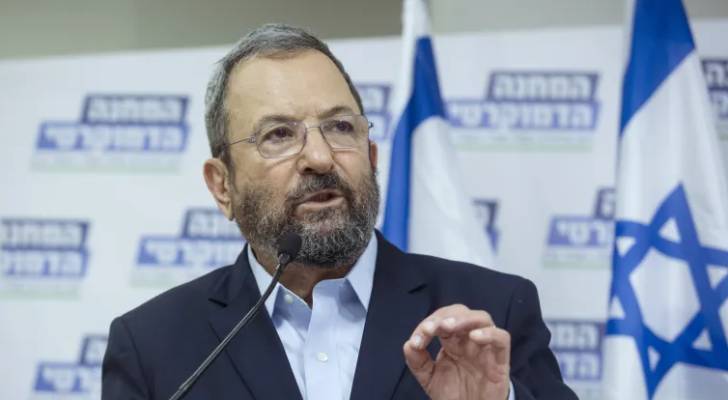
Israel.. Ehud Barak suggests Netanyahu's attempt to thwart Trump's plan for Gaza

Former Israeli Prime Minister Ehud Barak suggested on Wednesday that Prime Minister Benjamin Netanyahu might seek to sabotage the American plan to end the war that Tel Aviv has been waging against the Palestinians in the Gaza Strip for two years.

In a press conference with Netanyahu in Washington, D.C. on Monday, U.S. President Donald Trump outlined the main points of his plan to stop the war in Gaza, including the release of Israeli prisoners and the disarmament of the "Hamas" movement.

Trump added that his plan calls for the establishment of an international supervisory body headed by him, responsible for training a governing administration in the Gaza Strip, but excluding the "Hamas" movement.

Barak stated in remarks to Israeli Army Radio that the plan is an "excellent starting point, but it represents a severe defeat for Netanyahu, and I expect that he will try to sabotage the agreements."

He continued: "After the end of the war (the Israeli genocide in Gaza), there will be an opportunity to ease the conflict in the region."

Regarding the escalation of the Israeli genocide in Gaza, Barak clarified that Netanyahu "said in the Foreign Affairs Committee that buildings in Gaza should be demolished so that the residents (Palestinians) cannot return," without specifying the date of these statements, which Barak considered a "war crime."

He added: "What Israel has done in Gaza will be discussed for years."

On August 8, the Israeli government approved a plan proposed by Netanyahu to gradually occupy the Gaza Strip entirely, starting with the city of Gaza, which is home to about one million Palestinians.

Three days later, the Israeli army launched a wide-ranging attack on the city of Gaza, which included the destruction of homes, towers, and citizens' properties, as well as tents for displaced persons, bombing hospitals, and carrying out incursions.

Since October 7, 2023, Israel, with American support, has been committing genocide in Gaza, resulting in 66,148 deaths and 168,716 injuries, most of whom are children and women, and a famine that has claimed the lives of 455 Palestinians, including 151 children.

OPINIONS

Wed 01 Oct 2025 1:27 pm - Jerusalem Time

Trump's Vision: A Special Global Economic Zone for New Gaza Riviera

Christine Hanna Nasr

Christine Hanna Nasr

Opinion Writer

     After Netanyahu's approval of the terms of Trump's plan to end the war in Gaza, which began with the events of October 7, 2023, and continues to this day, President Trump’s decision to propose it came. This decision by Donald Trump also followed his meeting with several Arab and Islamic leaders in New York on the sidelines of the 80th session of the United Nations General Assembly. Before I delve into reading and analyzing the terms of the plan proposed by President Trump, it is worth noting that Trump gave Hamas a specific deadline of four or five days to respond to it.
     It is now practically evident that there is a necessity for seriousness in studying Trump's proposed plan to end the conflict in Gaza between Israel and Hamas, which has exhausted the people of Gaza and negatively affected the neighboring countries economically due to the repercussions of this ongoing war, especially since its results are also connected to the tragedy of the humanitarian situation in Gaza, alongside the destruction of vast areas in Gaza and the displacement of its people, who have lost many of their homes and residential areas, as well as institutions and service infrastructure, which have been significantly destroyed. They also suffer from the presence of mines and unexploded ordnance, which will require a long time before entering the reconstruction phase in these currently afflicted areas.
       The essence of the terms of this proposed peace plan is to stop the war, making the plan essentially a source of relief for the residents of the sector who cannot bear the continuation of this war, as their patience has run out living under the difficult conditions they currently face. The question here is, after Hamas studies the terms of Trump's proposed plan, will the movement accept these proposals to resolve the crisis? Another question is, what are the implications of Hamas not accepting the terms of Trump's proposed plan? I believe that if Hamas does not accept the proposal, according to Trump's perspective, the reaction will be harsh, as I see that he wants to completely and definitively stop this war. Of course, these terms are harsh and completely exclude Hamas and its military presence in the sector in the future, meaning a total freeze of the movement.
In conclusion, Hamas will provide a response that represents it and the Palestinian factions, as they are now in the stage of studying the proposal and holding consultations among themselves, given that President Trump has given them only four or five days to respond to the peace proposal, otherwise their fate will be hell (according to Trump's expressions and statements), who announced that the concerned Arab and Islamic countries have signed this proposal, and we are now waiting for Hamas's response. If they do not agree, the final outcome will be dire. Antonio Guterres, the Secretary-General of the United Nations, has called on all parties to agree to Trump's peace plan for Gaza and to implement its terms, with its main headline being (No place for Hamas in power in Gaza), in return for a gradual withdrawal of Israel after the complete disarmament of Hamas in Gaza, and granting amnesty to Hamas members who will surrender their weapons. The most important issue in these terms is the matter of hostages, which has hindered any previous progress in the negotiations between Hamas and Israel, as the plan includes a clause obligating Hamas to release all hostages within 72 hours of agreeing to the plan, and turning Gaza into a demilitarized zone, followed by a phase of delivering aid to the people of Gaza.
  The plan's terms also specify who will govern Gaza in the future, where the interim administration will be the responsibility of a Palestinian committee consisting of technocrats, i.e., non-political members, tasked with providing daily services to the population, who are qualified Palestinians, alongside international experts under the supervision of a new transitional international body called (The Peace Council), headed by Donald Trump and also including leaders and other international figures, including former British Prime Minister Tony Blair. Additionally, an international force will be formed to establish security and stability, which will be deployed in the Gaza Strip immediately after the announcement of approval and signing of the agreement, tasked with training and supporting (Palestinian police forces), and this will be done in consultation with the Hashemite Kingdom of Jordan and Egypt.
After that, the plan enters the economic aspect, which is of course the most important for President Trump, where (New Gaza) will be established. The plan includes a full commitment to building a prosperous economy there, which will be in a context that imposes peaceful coexistence with its neighbors. The most important point here is that Israel will not occupy or annex Gaza. Here, I refer to what I mentioned in a previous article that the people of Gaza will obtain Palestinian passports, and I believe the time has come for citizens in Gaza to travel like any citizen in this world, and they will also have the right to possess a passport. Additionally, the proposals included the complete reopening of the Rafah crossing, and I believe

OPINIONS

Wed 01 Oct 2025 1:05 pm - Jerusalem Time

From the Illusion of the State to the Horizon of Independence: Education as a Condition for Palestinian Liberation.. A Critical Reading of Dr. Bassem Al-Zubaidi's Article

By: Yasser Abubakr

By: Yasser Abubakr

Opinion Writer

Dr. Basim Al-Zubaidi wrote an article in the "Jerusalem" newspaper that touches on the essence of the Palestinian predicament: Is the struggle aimed merely at a formally sovereign state, or is it a liberation project that opens a new horizon for historical justice and human dignity? At first glance, his answer seems clear and decisive: a state, if not built on the values of liberation, becomes a political trap or a soulless entity. This idea is correct in principle, but it remains suspended in the void unless translated into a tangible political project.
Al-Zubaidi cleverly captures the predicament of reducing the Palestinian struggle to the "two-state solution" and points out its dangers: a besieged state, fragmented, without real sovereignty, and its tools inherited from the colonial control system. However, his article quickly slips into an abstract discourse that drowns in grand values (justice, freedom, dignity) without providing a cognitive or political plan to transition from analysis to action.
The problem with the article lies not in what it proposes but in what it overlooks: how do we strike a balance between the universal dream and the material reality filled with siege, division, and structural Palestinian weakness?
The importance of what Al-Zubaidi says lies in his transfer of the Palestinian cause to a universal arena, where it becomes a criterion to test the world's sincerity towards liberation issues. But here too lies the danger of universal discourse: if it is not linked to the Palestinian reality, the Palestinian becomes merely a symbol in the book of global philosophy, while remaining a prisoner of the wall, the settlement, and the military checkpoint. Universality without local rooting turns into an intellectual luxury that satisfies the intellectual but does not change reality.
From my perspective, there are two illusions that haunt the Palestinian today:
•    The illusion of the state: the belief that mere recognition or raising a flag is enough to achieve independence. This is what Al-Zubaidi warned against, and he is right.
•    The illusion of universality: the belief that the Palestinian cause, when presented as a global humanitarian issue, will be sufficient to impose justice. This is an illusion no less dangerous, as it ignores the material balance of power and the actual ability to change realities.
Liberation is not achieved by universal slogans alone, but by the Palestinian's ability to rebuild his national project on solid political and organizational foundations, balancing between the discourse of universal justice and local resilience needs.
Independence is neither an ideal dream nor a formal shell. It is a dialectical project:
•    It needs a universal discourse that exposes colonialism and places it before the world.
•    At the same time, it needs to build realistic resistance institutions, from education to the economy, capable of making the Palestinian an "actor" rather than just a "symbol."
Here, education emerges as a central condition for liberation. Education is not a secondary social service; it is the infrastructure that creates critical awareness and graduates a generation capable of resisting colonialism intellectually before being militarily or politically.
•    The experience of the prisoners' movement is a good example: prisoners turned the occupation's cells into alternative universities and wrote a global model of how education can become a strategic weapon that solidifies identity and keeps memory alive.
•    Education is also the only tool capable of connecting the universal with the local: through it, the Palestinian can address the world in a universal legal and intellectual language while maintaining his national roots and field priorities.
In other words, we cannot envision a horizon of true independence without placing education at the heart of the liberation project: education that liberates the mind from dependency and reproduces the Palestinian as a cognitive, political, and moral force.
Dr. Basim Al-Zubaidi's article succeeds in dismantling the most dangerous illusions that have lured Palestinians for decades: the illusion of the formal state. But it simultaneously opens up to another illusion: the illusion of abstract universality. Between these two illusions, the Palestinian needs a new philosophy of independence that recognizes that liberation is not achieved through romantic discourse or political deals, but by reproducing the Palestinian self as a cognitive, political, and moral force capable of asserting its existence despite all conditions of oppression.
Here, education stands out as the backbone of this project: it equips the Palestinian with tools for critique and resistance, transforming the horizon of universal justice into a practical project rooted in the land. There is no independence without awareness, and no awareness without liberating education, formulated as part of the struggle rather than as cultural luxury.
Critique, then, is not a diminishment of Al-Zubaidi's proposal, but a call to complete it: to move beyond the realm of slogans and to place the horizon of independence in a practical

PALESTINE

Wed 01 Oct 2025 12:26 pm - Jerusalem Time

Ambiguity surrounds Hamas's position.. Conflicting media reports about acceptance and rejection of the "Trump Plan" while the movement remains silent.

As the world anxiously awaits Hamas's official response to Trump's 'plan' to end the war in Gaza, and in light of the short deadline and the threats issued by the American president, a state of ambiguity and contradiction has prevailed in the media scene, with completely conflicting reports leaking about the movement's position, without any official statement to resolve the debate so far.

The Saudi newspaper 'Asharq Al-Awsat' reported that sources within Hamas said that leaders in the movement, supported by the military wing's leadership, have asked the political leadership abroad to study the proposal 'positively' with the aim of ending the war. This direction is supported by other reports, as the American network 'CBS News' quoted an informed source stating that the movement 'leans towards approval' and that it will respond today or tomorrow.

In stark contrast, other reports emerged indicating a firm rejection of key terms in the plan. The 'BBC' network quoted a source in Hamas stating that the movement completely rejects any proposal that includes disarming it, considering the idea of deploying an international force in Gaza as 'a new form of occupation.' The 'Asharq Al-Awsat' report itself also indicated the existence of another current within Hamas, including elements from the military wing, who see the plan as merely a 'trick' and strongly oppose it.

Amid this contradiction, Hamas has not issued any official and final response. Sources close to the movement confirmed that they will work on an official response as soon as possible after consultations with all Palestinian factions are completed. For his part, the Qatari Prime Minister and Minister of Foreign Affairs, Sheikh Mohammed bin Abdulrahman Al Thani, confirmed that Hamas 'has dealt responsibly and promised to study the plan,' noting that the proposal achieves a key goal of ending the war, but includes issues that need clarification and negotiation.

President Donald Trump had clarified the details of his plan regarding the Gaza Strip in agreement with the occupying Prime Minister Benjamin Netanyahu.

PALESTINE

Wed 01 Oct 2025 12:17 pm - Jerusalem Time

Jerusalem in September.. Loud violations at Al-Aqsa and collective punishments

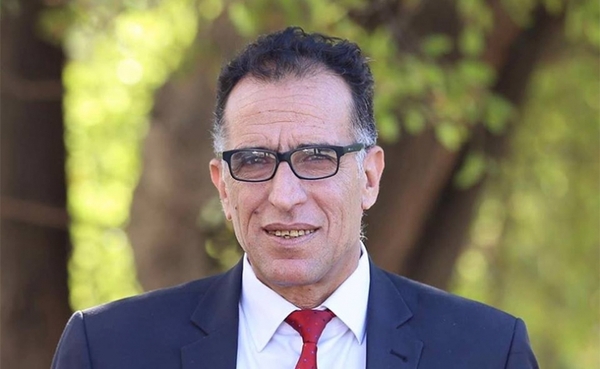
The month of September did not pass without severe violations carried out by the Israeli occupation as part of a systematic policy to empty Jerusalem of its residents. Most of the violations documented this month can be categorized under the umbrella of "collective punishment."

Collective punishments were imposed on about 70,000 Palestinians living in the villages located northwest of Jerusalem, following the martyrdom of two young men from the villages of Qabiba and Qatna, which belong to this geography, after a shooting operation they carried out on the morning of the 8th of last month in the settlement neighborhood of "Ramot."

The operation resulted in the death of 7 Israelis and injuries to more than 15 others, while the two perpetrators, Muthna Amro (20 years old) and Muhammad Taha (21 years old), were martyred, and the occupation authorities continue to hold their bodies in freezers.

Following the operation, the occupation decided to impose collective punishments on the residents of the areas northwest of Jerusalem, starting with the closure of what is known as the "Biddu Tunnel" leading to it, followed by a massive arrest campaign that coincided with the storming of most citizens' homes, especially in the villages of Qabiba and Qatna, and culminating in the demolition of the home of one of the perpetrators, Muthna Amro.

Unprecedented measures and punishments cannot be separated from the decision to classify both the villages of Nabi Samuel and Beit Iksa and the Khalayla neighborhood as contact areas, which were part of the collective punishments targeting Palestinians during the past month. The process of issuing special cards and permits for residents of these areas began, and entry will only be allowed for holders of these permits.

In Al-Aqsa Mosque, violations continued to be carried out by the occupation police on one side and leaders of the Temple groups and their supporters on the other. Throughout the month, 5,050 extremists entered the courtyards, and incursions were carried out on the occasion of the Hebrew New Year over three days, during which 1,317 settlers stormed the mosque.

During their celebration of this holiday, the extremists deliberately blew the shofar inside the courtyards of the first qibla 5 times, in addition to singing, group dancing, performing prayers, and collectively performing the epic prostration ritual. Some of the intruders were keen to wear "repentance" white clothes, which Jewish law stipulates should be worn during the first ten days of the year as they are "days of repentance."

This clothing reinforces the imposition of the biblical identity in Al-Aqsa, which is the main goal of its repeated wearing by the intruders at all times of the year, not just during these days. This white attire is also one of the outfits worn by the Temple priests throughout the year.

Thus, its imposition in Al-Aqsa serves to pave the way for the presence of the Temple priests in the mosque, as they are the class that leads Jewish prayers in the alleged temple according to the biblical myth. The impact of their presence in Al-Aqsa becomes multiplied, according to researcher on Jerusalem affairs Ziad Abu Heis.

The assaults in Al-Aqsa Mosque were not limited to the celebrations of the Hebrew New Year; violations were recorded throughout the month, including settlers deliberately celebrating the anniversary of the "Bager" operation in Lebanon through a mass incursion during which they commemorated an Israeli soldier killed there.

Extremist Yehuda Glick also led a special incursion to commemorate Charlie Kirk days after his death in America. The "Beit El" organization published a photo of dozens of intruders and wrote, "Dozens prayed yesterday on the Temple Mount in memory of the late Charlie Kirk and for the kidnapped and soldiers of the Israel Defense Forces, as well as for widows and orphans."

At the western wall of the mosque, U.S. Secretary of State Marco Rubio stormed the Buraq Square accompanied by Netanyahu, and they performed prayers there. The next day, Rubio participated in the opening of a new section of the "Pilgrims' Path" tunnel that was dug beneath the town of Silwan south of Al-Aqsa Mosque.

Before the Hebrew New Year, extremists blew the shofar inside the courtyards and performed morning and evening prayers, as well as the "Selichot" prayer, which extremists had deliberately begun to perform in Al-Aqsa weeks earlier.

Regarding arrests, 105 arrests were carried out in the Jerusalem governorate, according to Al Jazeera's documentation, affecting 9 minors and two women, with most concentrated in the villages northwest of Jerusalem. The occupation

PALESTINE

Wed 01 Oct 2025 11:56 am - Jerusalem Time

In its first response to the "Trump Plan," Hamas: We reject disarmament and the international force is a "new form of occupation."

In the first clear indication of its stance on the American peace plan, a source within Hamas revealed the movement's outright rejection of two key provisions believed to form the core of the proposal, emphasizing that the movement will not accept disarmament and considers any presence of international forces in Gaza as 'a new form of occupation.'

A source in Hamas was quoted by a network stating that the movement views its weapons as a guarantee against the recurrence of aggression and will not agree to relinquish them under any circumstances.

The source added that the idea of deploying an 'international force' in the sector, which has been mentioned in leaks about the plan, is completely rejected, as the movement sees it as an attempt to impose foreign guardianship and a cover for the continued security control over Gaza.

These statements come at a critical time, just a few days after the movement officially received 'Trump's plan' through intermediaries in Qatar and Egypt, while the world awaits its official response within the timeframe set by the American president.

These points are considered 'red lines' that could complicate the negotiation process and indicate that Hamas will demand substantial amendments to the security provisions in any final agreement.

LATEST NEWS

Wed 01 Oct 2025 11:10 am - Jerusalem Time

Colonizers cut down more than 300 ancient olive and almond trees in Sa'ir, northeast of Hebron.

Today, Wednesday, colonists cut down more than 200 ancient olive trees and over 100 fruit-bearing almond trees in the town of Sa'ir, northeast of Hebron.

Citizen Issa Muhammad Shalaldeh reported that groups from the "Asfar" and "Kedumim" settlements, established on the town's land, used electric saws to cut and chop the trees in the "Um al-Batam" area of Wadi Sa'ir, completely destroying them.

The trees belong to him and his brother Izzat. It is worth mentioning that colonists from the same settlements burned dozens of dunams planted with grapes, olives, and almonds last month, as part of a series of ongoing assaults aimed at displacing residents from their lands in favor of colonial expansion.

PALESTINE

Wed 01 Oct 2025 10:46 am - Jerusalem Time

Among them are children.. Israel kills 22 Palestinians in the Gaza Strip on Wednesday.

The Israeli army has killed 22 Palestinians in the Gaza Strip since dawn on Wednesday, including 19 in the city of Gaza, which it seeks to occupy and displace its citizens.

Dozens more have been injured due to the air and artillery bombardment carried out by the army as part of the genocide it has been committing in the Gaza Strip for two years.

According to eyewitnesses and medical sources, the Israeli airstrikes targeted a school housing displaced persons, as well as homes and civilian gatherings, resulting in dozens of casualties among the dead and injured.

In the Zeitoun neighborhood in southern Gaza City, 10 Palestinians were killed and others were injured, including 7 civil defense officers, as a result of the Israeli army's bombardment of Al-Falah School, which shelters displaced persons.

In the Al-Daraj neighborhood in the eastern part of the city, 7 Palestinians were killed and others were injured due to an Israeli airstrike on an apartment in one of the residential buildings.

In the Al-Rimal neighborhood in the western part of the city, two Palestinians were killed and others were injured after an airstrike targeted a house.

In the Al-Nuseirat camp in central Gaza, two Palestinians were killed and others were injured due to an Israeli bombardment.

Meanwhile, one Palestinian was killed and others were injured in the Al-Bureij camp as a result of a house being targeted by bombardment.

Israel continues, with American support, its genocidal war on Gaza, which has so far resulted in the deaths of 66,097 Palestinians and the injury of 168,536, most of whom are women and children.

ARAB AND WORLD

Wed 01 Oct 2025 9:41 am - Jerusalem Time

Shift in American Mood Towards Israel: Survey Reveals Decline in Support After Two Years of War in Gaza

Nearly two years after the outbreak of war in Gaza, the results of a new survey conducted by The New York Times in collaboration with Siena College (published Tuesday) reveal a radical shift in American voters' attitudes toward the Israeli-Palestinian conflict, specifically regarding U.S. support for Israel, the long-standing strategic ally.

The survey, which included 1,313 registered voters across the United States and was conducted from September 22 to 27, 2025, indicates that a significant portion of Americans, particularly among the youth and Democrats, has become more critical of Israel and more sympathetic to the Palestinians – a first since this question was posed in opinion polls in 1998.

A New Sympathy Curve: Palestinians Lead for the First Time

In October 2023, following the attacks carried out by Hamas on Israel in the Al-Aqsa Flood operation, a previous survey showed that 47% of Americans sympathized with Israel compared to only 20% with the Palestinians. However, the picture today has changed; 35% sympathized with the Palestinians compared to 34% with Israel, while 31% said they were either unsure or supported both sides equally.

This shift reflects, as observers see it, a deeper change in the general American mood toward one of the most complex issues in foreign policy, especially in light of the rising scenes of violence and destruction in Gaza and the increasing number of civilian casualties.

A Decline in Support for Military and Economic Aid

The survey also revealed that the majority of American voters now oppose sending additional military and economic aid to Israel, marking a notable shift since the October 7 attacks. Sixty percent of respondents stated that Israel should halt its military operation, even if hostages are not released or Hamas is not eliminated.

Forty percent of participants said that Israel "is deliberately killing civilians in Gaza," a figure that has nearly doubled compared to the 2023 survey. A large number of participants also expressed the belief that the Israeli army does not take sufficient precautions to avoid civilian casualties.

Testimonies from Voters Who Changed Their Stance

Austin Mogliston, a 33-year-old Democrat from Idaho, said he was previously a strong supporter of Israel, especially after the October 7 attacks. However, he added, "With the length of the war and what Israel is doing to the Palestinians, it no longer seems equitable."

Shannon Carey, a Democrat from Connecticut and a mother working as a physician's assistant, described the Israeli attacks as "unreasonable" and called for an end to U.S. military and financial support, saying, "As a mother, seeing these children is terrifying. This is not a war. It is genocide."

Clear Party Division: Democrats Shift, Republicans Retreat

The most apparent shift came from Democratic voters. While Democrats were divided two years ago (34% with Israel and 31% with the Palestinians), today 54% express greater sympathy for the Palestinians, compared to only 13% who still support Israel.

More than 80% of Democrats also expressed a desire for Israel to stop its war even if it does not achieve its objectives. About 60% of Democrats believe that Israel is deliberately killing civilians.

In contrast, Republicans still support Israel by a clear majority, with 64% saying they sympathize with it compared to 9% with the Palestinians. However, this support has declined by 12% compared to 2023.

The newspaper attributes to Republican Edward Johnson from Minneapolis, who described himself as a "Trump supporter," his statement: "Israelis can rely on themselves, but we need to make sure they are not facing this alone," which is symbolic language suggesting that support should stop.

The Young Generation at the Heart of the Shift

The survey also showed that voters under the age of thirty are the least supportive of Israel, with about 70% opposing any additional aid. This trend includes young people from both parties, indicating a decline in the traditional popular support for Israeli backing in the United States.

Notably, the largest shift came from an unexpected segment: "older, educated white Democrats," who until recently were among the strongest supporters of Israel within the Democratic Party.

Future Challenges for the U.S.-Israeli Alliance

Since its establishment in 1948, Israel has been the largest recipient of U.S. aid, receiving hundreds of billions of dollars. However, the results of this survey indicate that this reality may change, given the decline in popular support that could cast a shadow over official policies, especially if the conflict continues and the number of civilian casualties in Gaza increases.

Experts believe that the issue of U.S. support for Israel may become a central point of discussion among parties, as


ANALYSIS

Wed 01 Oct 2025 9:41 am - Jerusalem Time

Netanyahu and the Deception of Peace: Why Trump's Plan for Gaza Seems Like a Political Illusion

A close reading of Israeli Prime Minister Benjamin Netanyahu's stance on the "peace" plan proposed by U.S. President Donald Trump regarding Gaza reveals that the plan is nothing more than a political maneuver aimed at buying time and polishing Israel's image before the international community. Despite being promoted as a roadmap to end the war and achieve a "comprehensive solution to the conflict," as stated by Trump, its provisions appear blatantly biased in favor of Israeli interests, while offering the Palestinians nothing substantial regarding sovereignty, justice, or the right to self-determination.

The plan includes a gradual ceasefire, a conditional withdrawal of Israeli occupation forces, and the disarmament of Hamas and its removal from power in Gaza. However, these provisions are rendered meaningless when viewed alongside the conditions for implementation and Netanyahu's public statements, as he continues to reject the principle of establishing a Palestinian state. Despite announcing his support for the plan, he insists on maintaining full Israeli security control over Gaza and its surroundings, which practically means that any settlement will be under the guise of Israeli occupation, rather than a fair or balanced agreement.
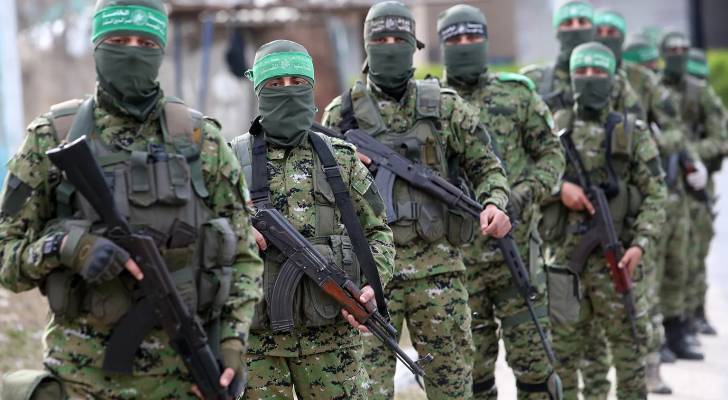
Many analysts believe that Netanyahu's acceptance of the plan does not stem from a conviction in a political solution, but rather from his need to alleviate the political pressures he faces domestically due to ongoing protests and declining popularity, in addition to rising international criticism of the Israeli aggression against Gaza. In this context, the plan gives Netanyahu the appearance of a leader open to solutions, without requiring him to make any actual concessions. It emphasizes the conditions imposed on the Palestinians while simultaneously maintaining Israeli military and political dominance.

What further undermines the fragility of this plan is the complete exclusion of Palestinians from its formulation. No official or factional Palestinian entity was consulted in its preparation, prompting Hamas and several Palestinian factions to consider it a biased initiative that does not rise to the level of a peace initiative. Additionally, the amended plan has sparked significant discontent among several Arab countries, which expressed concern over the absence of any guarantees to protect Palestinian rights or to put an end to the ongoing displacement and aggression against Gaza for the past two years.

Media reports, notably what was published by Axios, revealed that the version announced by Trump at the White House on September 29, 2025, differs significantly from the one circulated with several Arab leaders during the United Nations General Assembly in New York on September 23, on the sidelines of the General Assembly. According to leaks, the original version included guarantees against the annexation of the occupied West Bank, as well as references to the possibility of establishing a Palestinian state in the future. However, the amendments made later, at the direct request of Netanyahu and Strategic Affairs Minister Ron Dermer, completely eliminated these provisions and instead focused on issues such as ceasefire, prisoner exchanges, dismantling Hamas's rule, and disarming it.
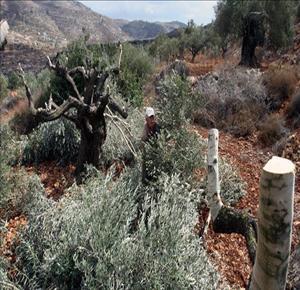
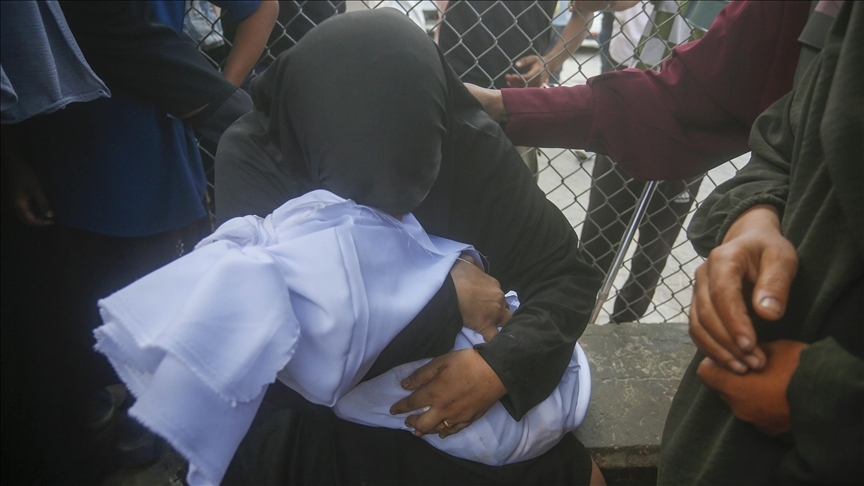

These sudden amendments provoked widespread anger among Arab allies, who viewed them as a denial of initial understandings and a serious retreat from the principles that have long formed the basis for any fair settlement, foremost among them the establishment of an independent Palestinian state. According to the North Star newspaper, Qatar warned the White House against announcing the plan in its amended form without consulting the partner countries and requested a postponement of the announcement, but the U.S. administration ignored these demands and proceeded with presenting the plan tailored to Israeli demands.

In a more controversial development, the final plan did not include any reference to the establishment of a Palestinian state, but rather gave Hamas a short period to accept its conditions, resembling an ultimatum under the threat of "severe consequences" in case of refusal. This shift in tone and content has revived old doubts about whether U.S. "peace plans" are political pressure tools aimed at rearranging the facts on the ground to serve Israeli interests, rather than serious initiatives to resolve the conflict.

In the absence of any addressing of core issues—such as ending the occupation, the right of return, and holding Israel accountable for war crimes—the Trump plan can only be viewed as a blatant attempt to reproduce the status quo. Behind the misleading diplomatic rhetoric lies an intention to perpetuate war and entrench dominance, rather than a roadmap to just peace, as it is promoted. Thus, serious questions arise about the credibility of any initiative that does not start from a clear acknowledgment of Palestinian rights and does not put an end to the conflict.

PALESTINE

Wed 01 Oct 2025 9:36 am - Jerusalem Time

Ehud Barak: Netanyahu's statement about demolishing buildings in Gaza to prevent the return of residents is a "war crime."

In a direct and explicit accusation, former Prime Minister of the occupying entity, Ehud Barak, described the current Prime Minister Benjamin Netanyahu's statement regarding the demolition of buildings in the Gaza Strip as amounting to a "war crime."

This came during Barak's talk on the occupying army's radio, where he sharply criticized what Netanyahu revealed about the aim of the destruction operations in the sector.

Barak clarified that this description arises because Netanyahu linked the demolition operations to the goal of preventing Palestinian residents from returning to their homes and areas.

OPINIONS

Wed 01 Oct 2025 9:34 am - Jerusalem Time

The American-Israeli Plan: Between Extortion and Liquidation

Mustafa Ibrahim

Mustafa Ibrahim

Opinion Writer

Just a week ago, official speeches were filled with talk of "diplomatic victories" and "recognition of the Palestinian state," as if reality had suddenly changed. Some leaders promoted the idea that victory was near and that joy was just around the corner.

But we quickly awoke to a joint announcement between Trump and Netanyahu, bringing us back to square one and revealing the fragility of our political illusions. A plan imposed without discussion, enforced by the balance of power rather than legal and just arguments, placing Palestinians before two bitter choices: either accept a systematic political liquidation or face ongoing extermination.


Despite the diplomatic language with which Trump wrapped his plan, its essence is clear: no right to self-determination, no Palestinian sovereignty, and no real prospect for a state. What is being proposed is a form of new mandate, under international management, with regional approval, while maintaining Israeli security and military dominance over the land, and stripping resistance of any capacity or legitimacy.

The most dangerous aspect is that the plan is marketed as an "opportunity for peace," while in reality it is an attempt to exploit the humanitarian catastrophe in Gaza to liquidate what remains of the Palestinian national project. There is no equality in rights, no guarantees to stop assaults, and no serious talk about ending the occupation. All that exists are promises to deliver aid and conditional reconstruction, in exchange for dismantling the identity of the Gaza Strip and its political and military resistance.


The disappointment has not only come from the terms of the plan but also from the Arab and Islamic reception of it. Some major countries in the region rushed to bless it, under the banner of "stopping the war," as if stopping the killing should come at a political price paid by the victim.

This slip in the official Arab position is not new, but at this moment it seems more blatant than ever. The Palestinian cause, which was once the central issue for Arabs, is now reduced to a humanitarian crisis that can be resolved with one-sided political concessions, while Israel is exempt from any commitment or accountability.


Internally, the Palestinian arena continues to suffer from division and fragmentation, and from the absence of a unified stance and effective leadership. The state of paralysis experienced by the Palestinian street is not a recent phenomenon, but rather the result of years of depletion and division, where the issue is managed through individualism, formal conferences, and closed rooms that do not represent the popular mood or aspirations.

People in Gaza have been bleeding for two years under a systematic extermination war, and the political scene remains trapped in a cycle of paralysis and mutual accusations. Between the leadership's impotence, the international community's inaction, and the complicity of some Arab parties, the Palestinian today seems alone in facing a battle for existence, not just a political battle.


Hamas today stands at a dangerous crossroads. Accepting the plan is read as surrender, while rejecting it translates into an escalation of war and continuation of the massacre. However, between absolute acceptance and absolute rejection, there is room for legitimate political maneuvering, provided that the goal is to protect Palestinians and preserve the dignity of the national project, not to maintain authority or party positions.


Having courage here does not mean yielding, but rather the ability to make a complex decision that balances stopping extermination and avoiding national collapse. This requires Hamas not to remain alone in confrontation but to push towards a unified Palestinian stance that rejects liquidation and proposes realistic alternatives based on protecting the Palestinian person and their political rights.


The American plan, despite all its tragedies, is not a predetermined fate; Palestinians have previously thwarted dozens of liquidation projects, from the Balfour Declaration to the Deal of the Century. But rejecting this plan will not happen through mere condemnation statements, but through rebuilding genuine national unity, a comprehensive political discourse, and activating tools of popular and international struggle. Time no longer allows for more political luxury or bickering. What is required today is a responsible stance, commensurate with the blood being shed and the magnitude of the cause we are on the verge of losing due to our divisions and dispersal.

Stopping extermination is a national and moral priority, but it should not be used as a pretext for liquidating the cause. Likewise, adherence to resistance should not turn into an excuse for passing massacres.


What we see today is not just a plan, but an attempt to impose a new reality: Gaza without resistance, without representation, under external guardianship. But just as previous plans have failed, this one can also be thwarted if Palestinians possess the courage of stance and unity of ranks. History is not written only by the strong, but by those who have the will