LATEST NEWS

Tue 28 Oct 2025 11:34 am - Jerusalem Time

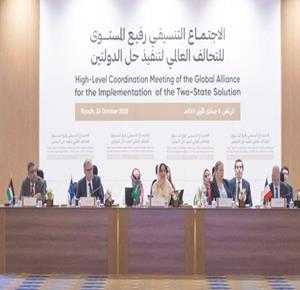
Saudi Arabia: Palestine participates in the high-level meeting of the International Coalition for the Implementation of the Two-State Solution.

The State of Palestine participated in the high-level meeting of the International Coalition for the Implementation of the Two-State Solution, which was held in the Saudi capital, Riyadh, chaired by the Kingdom of Saudi Arabia, with the participation of the European Union and Norway, alongside high-level representatives from more than 44 countries and regional and international organizations.

The meeting highlighted the urgent international coalition to support the budget of the Palestinian National Authority, launched by the Kingdom of Saudi Arabia in partnership with Norway, Spain, and France, aimed at securing urgent financial support that enables Palestinian state institutions to continue performing their civil and service tasks.

The State of Palestine was represented at the meeting by the Deputy Minister of Foreign Affairs and Expatriates for Political Affairs, Omar Awadallah, and the Deputy Permanent Observer of the State of Palestine to the United Nations, Ambassador Majed Bamya.

PALESTINE

Tue 28 Oct 2025 10:16 am - Jerusalem Time

Katz threatens with a "strong response" against the restoration of what he described as "terrorist infrastructure" in the West Bank.

Israeli Minister of War, Yoav Gallant, confirmed today, Tuesday, that the forces will continue their military operations in the West Bank with full force, emphasizing that any attempt to restore what he described as the "terrorist infrastructure" that was destroyed during recent operations will be met with a strict and immediate response.

Gallant pointed out that the occupying forces will remain present in the Jenin, Tulkarm, and Nur Shams camps to prevent any activities they classify as "terrorist" and to ensure security control in the border areas.

Gallant's statements come amid ongoing field escalation in the West Bank, where the occupation has intensified its operations against sites suspected of being linked to Palestinian resistance, including arrests, home raids, searches of strategic locations, and targeting alleged tunnels and weapon caches.

PALESTINE

Tue 28 Oct 2025 10:06 am - Jerusalem Time

Article in Haaretz: Trump opposes the annexation of the West Bank in words but ignores it in action.

The United States has warned, condemned, pressured, and repeatedly emphasized that any annexation, whether through legislation or mere declaration, would cross a red line for Washington. However, the real question is to what extent does this opposition change the reality on the ground? This issue was raised by the writer in Haaretz, Jack Khouri, in an analysis titled: "Trump's Paradox: Opposing the Annexation of the West Bank in Words While Allowing It in Reality," addressing the contradiction at the heart of the Trump administration's policy in the Middle East.

The writer highlighted that President Donald Trump and his Secretary of State Marco Rubio have repeatedly warned against any official annexation of the West Bank, noting that their statements created the impression of a balanced, principled American stance. However, Khouri believes that American policy, at its core, has allowed Israel to continue expanding its control over Palestinian territories without any real deterrent.

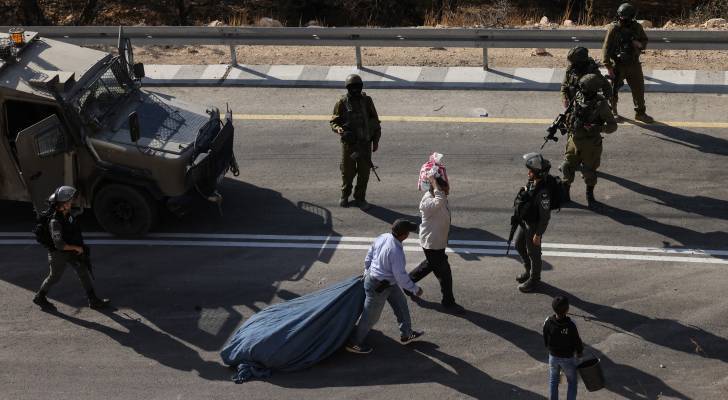
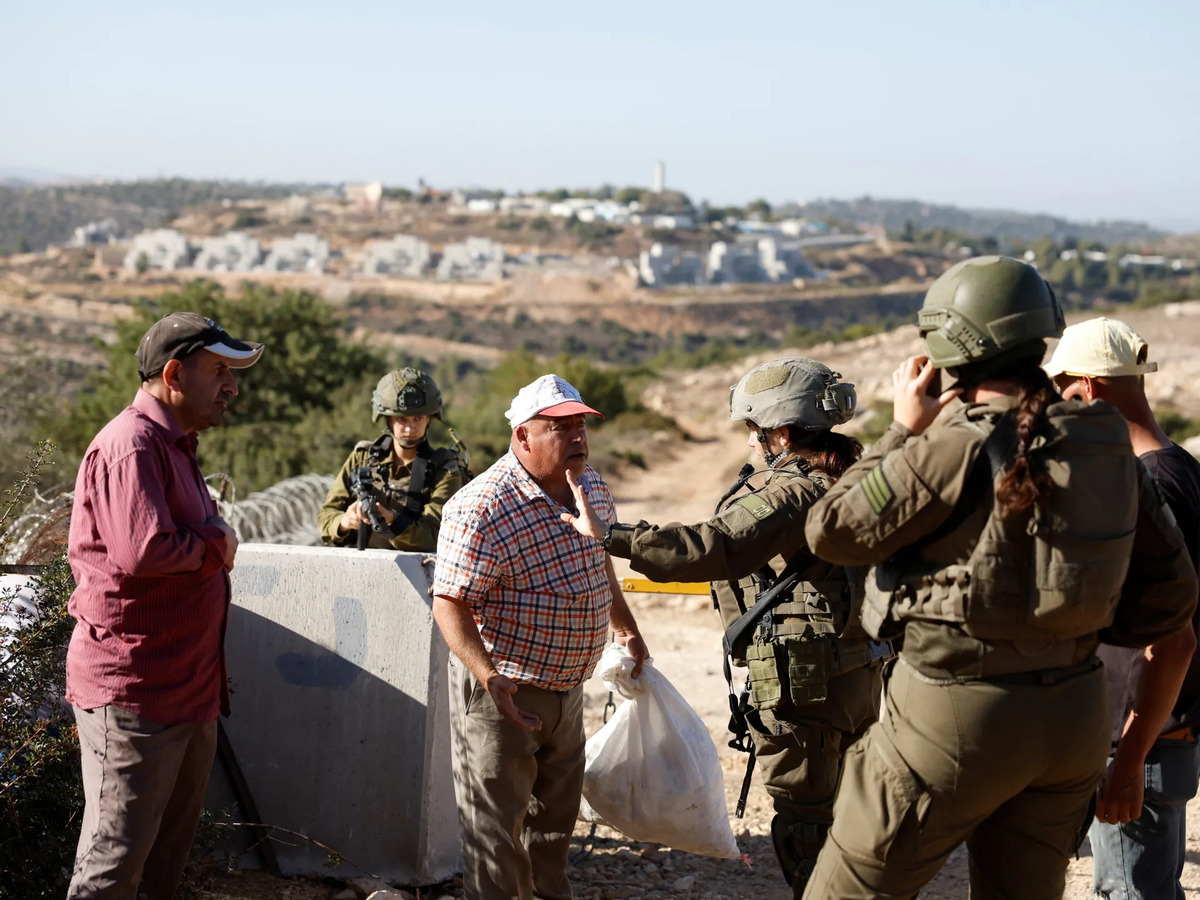
Khouri points out that the reality on the ground has long surpassed the stage of political statements; the daily lives of Palestinians are constrained by hundreds of Israeli checkpoints and gates, as well as the recurring violence of settlers. These attacks often target Palestinian villages and farmers, especially during the olive harvest season, leading to property destruction and harm to the residents.

PALESTINE

Mon 27 Oct 2025 8:45 am - Jerusalem Time

Its spokesperson: The American stance will not deter UNRWA from its work.

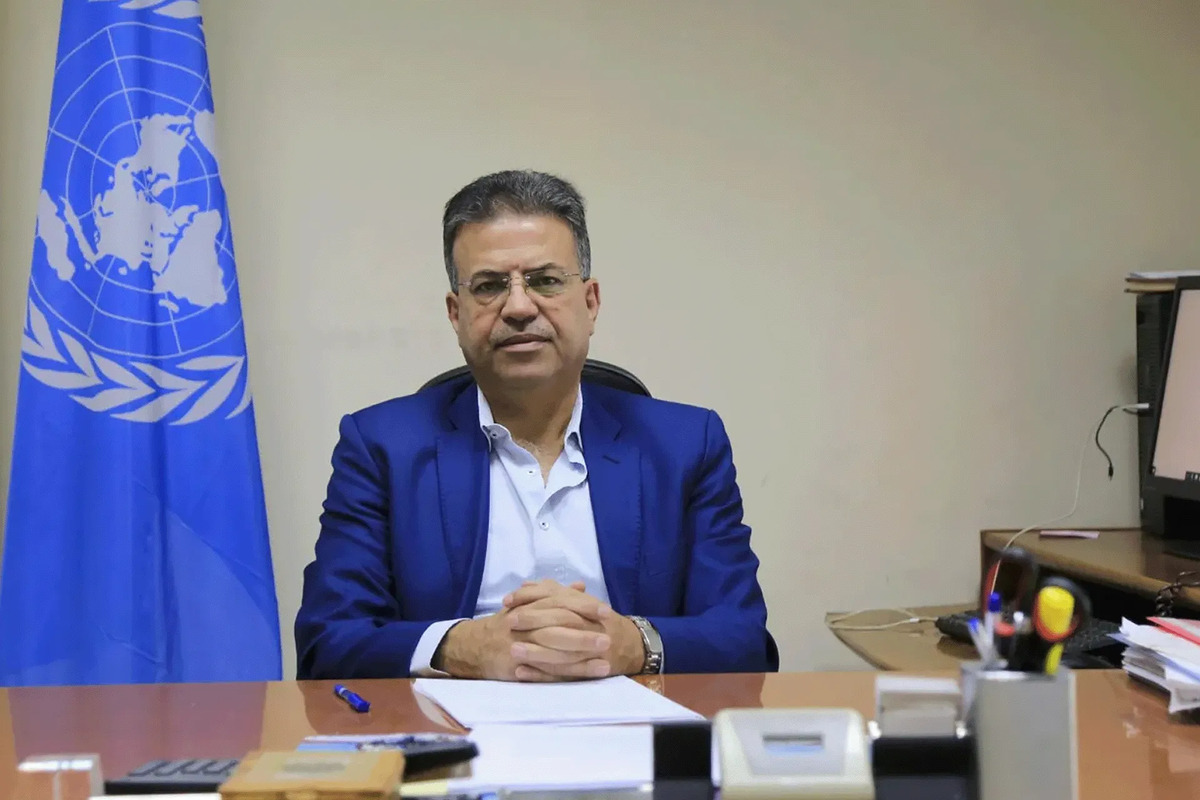
The media advisor for the United Nations Relief and Works Agency for Palestine Refugees in the Near East (UNRWA), Adnan Abu Hasna, stated that the recent remarks by U.S. Secretary of State Marco Rubio, in which he said that the international organization would not be able to play any role in the Gaza Strip, are not new and come within the framework of U.S. positions regarding the UN agency.

Abu Hasna explained in a special interview that the U.S. rejection of UNRWA's work was established after President Donald Trump's victory in his first term, which began in January 2018, when he cut U.S. funding for the international agency. This funding was later restored by President Joe Biden before Trump decided to halt it again upon entering the White House at the beginning of this year.

The U.S. contribution is estimated to be between 25% and 30% of UNRWA's total budget, and the total U.S. contribution to the international organization since its establishment exceeds $7 billion.

Abu Hasna confirmed that the recent position of the U.S. Secretary of State is practically unrelated to what UNRWA is doing or to its neutrality and transparency, especially since the International Court of Justice just affirmed two days ago that the relief agency is a neutral and transparent organization committed to the laws and regulations of the United Nations.

The court emphasized that Israel is obligated to facilitate the delivery of aid to the Gaza Strip, especially that provided by UNRWA.

Despite this ruling, the Israeli Broadcasting Authority reported a government official stating that Israel does not intend to allow the international organization to resume work in the Gaza Strip.

Abu Hasna affirmed that UNRWA is not an Israeli government association, but rather has its mandate from the United Nations General Assembly and carries out its tasks accordingly.

Although the Israeli decision to ban the activities of the United Nations Relief and Works Agency for Palestine Refugees will come into effect in January 2025, it continues its work in the Gaza Strip through 12,000 employees.

About 300,000 students are enrolled in UNRWA schools, either in-person or remotely, with the supervision of 8,000 teachers across all governorates of the Gaza Strip.

Since October 7, 2023, UNRWA has recorded more than 10 million medical visits to its health centers in the Gaza Strip, supervised by 1,300 health sector employees.

The media advisor for UNRWA emphasized that all proposals calling for the replacement of the international organization have failed.

Abu Hasna believes that all attempts to bypass UNRWA will not succeed because it possesses complete data about the refugees and the residents of the Gaza Strip.

He added that only the United Nations General Assembly is responsible for UNRWA, whether for its continued operation or for ending its mandate.

The media advisor for UNRWA warned that the cessation of UNRWA's services in the Gaza Strip would have catastrophic consequences because it provides services to Palestinians in health, education, solid waste collection, and water.

He pointed out that the relief agency is currently continuing all its services except for the distribution of humanitarian aid.

Israeli restrictions against UNRWA have reached the point of preventing international staff from entering the occupied West Bank and Gaza Strip.

Abu Hasna confirmed that there are movements, communications, and pressures being exerted by UNRWA on legal, political, and media levels.

UNRWA has developed comprehensive plans related to the educational process, and students have been reintegrated through the expansion of in-person education.

In the health sector, UNRWA is trying to restore the recovery of health centers and has opened mobile medical points that receive nearly 17,000 patients daily.

OPINIONS

Mon 27 Oct 2025 8:23 am - Jerusalem Time

Delay of Relief and Reconstruction: The Missed Opportunity and the Role of the Private Sector in Saving the Scene

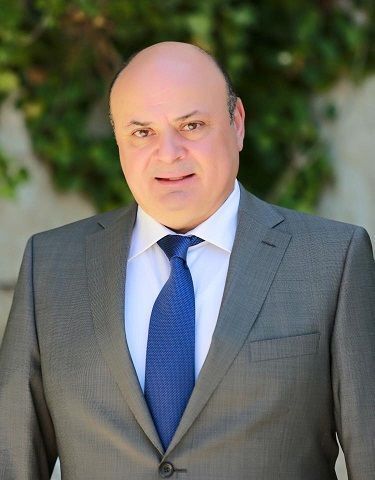
Azzam Abdul Karim Al-Shawa

Azzam Abdul Karim Al-Shawa

Opinion Writer

Since the war on Gaza has ceased, the scenes of rubble continue to haunt the daily memories of its people, while relief and reconstruction programs remain trapped in promises and statements. The hope that people carried for the return of life to their homes, schools, and hospitals still sways between international committees and successive conferences without practical translation on the ground.

The delay in implementing these programs is not only measured by the number of lost months but also by the number of lives living without shelter, the children still waiting for school seats, and the patients receiving treatment in temporary hospitals lacking the most basic facilities. This is not just a logistical crisis, but a crisis of trust, management, and coordination.
First: The Real Reasons for the Delay
The reasons for this disruption are numerous, but the most prominent can be summarized in the following points:
1. The multiplicity of references and supervising bodies in the reconstruction process, and the absence of a unified national leadership to organize the work and set priorities.
2. Delays in coordination between international institutions and the Palestinian National Authority, and the lack of a clear national plan.
3. Strict Israeli restrictions on the entry of construction materials and equipment, making implementation hostage to the will of the occupation.
4. Financial and administrative bureaucracy in donor institutions, which slows the flow of funds and increases complications.
5. Lack of transparency and accountability in some projects, which undermines donor confidence and delays funding.
Second: The Private Sector… An Indispensable Partner
Despite all these challenges, hope remains pinned on the Palestinian and Arab private sector to take the initiative in leading the reconstruction and development process. The private sector possesses what international bureaucracy lacks: speed, flexibility, experience, and the ability to implement effectively.
The private sector can play a pivotal role by:
- Direct investment in housing, energy, and infrastructure projects.
- Building partnerships with international institutions to finance and implement priority projects.
- Creating job opportunities for youth and women to empower the community economically and socially.
- Adopting social responsibility initiatives that restore trust between the citizen and the institution.
Transforming reconstruction from a “rescue operation” to a “development project” can only be achieved by involving the private sector as a genuine partner, not as a secondary executor.
Third: The Way Forward
For the reconstruction process to succeed, a clear and realistic Palestinian model must be adopted, based on the following principles:
1. Unifying national efforts under a single umbrella that manages, funds, and follows up on implementation.
2. Establishing a national reconstruction fund involving the government, the private sector, and international institutions.
3. Managing the fund with transparency and independence through a professional committee comprising experts from within and outside Palestine.
4. Setting clear priorities that begin with projects that directly affect people's lives: housing, education, health, energy, and water.
5. Adopting a comprehensive developmental vision that links emergency relief with sustainable development plans, making Gaza a model of resilience and self-building.
Conclusion
What the people of Gaza are experiencing today is not just a humanitarian tragedy, but a true test of our ability to transform pain into hope, and destruction into revival.
Throughout history, Palestinians have proven their ability to rise regardless of the wounds, and what they need today is a courageous national decision that unites the ranks and grants the private sector the space to work towards a future worthy of this great people.

ARAB AND WORLD

Mon 27 Oct 2025 7:38 am - Jerusalem Time

Trump is making deals and looking forward to an agreement with China during his Asian tour.

U.S. President Donald Trump headed to Japan today, Monday, the second stop of his Asian tour, ahead of his anticipated meeting with Chinese President Xi Jinping, from whom he hopes to put an end to the trade war between the world's two largest economies.

After arriving in Tokyo, Trump is expected to meet with Emperor Naruhito of Japan in the evening, before his meeting on Tuesday with the new Japanese Prime Minister Sanae Takaichi.

The U.S. president stated that he has heard "great things" about Takaichi and praised her for being close to former Japanese Prime Minister Shinzo Abe, who was assassinated and with whom she had close ties.

Takaichi announced that she informed Trump—in a phone call on Saturday—that "strengthening the alliance between Japan and the United States is my administration's top priority on both diplomatic and security fronts."

Japan has managed to avoid the highest tariffs imposed by Trump on countries around the world to end what he described as trade imbalances that allow for the "looting of the United States."

While Trump has already secured a commitment for $550 billion in investments from Japan in exchange for tariff relief, the Japanese Prime Minister hopes to further persuade Trump with promises to purchase American trucks, soybeans, and gas.

Trump began his Asian tour yesterday from the Malaysian capital Kuala Lumpur, where the signing of a ceasefire agreement between Thailand and Cambodia was at the top of his agenda on the sidelines of the ASEAN summit.

Trump described the truce, which he helped mediate after the most intense clashes between the two neighbors in decades, as a "big step," adding that he also reached a "big trade deal with Cambodia and a very important agreement on rare minerals with Thailand."

Trump and Malaysian Prime Minister Anwar Ibrahim signed a trade agreement that enhances U.S. access to rare minerals.

Under the agreement, Kuala Lumpur pledged "to refrain from banning or imposing quotas on exports of critical minerals to the United States," while Washington agreed to impose a 19% tariff on Malaysian goods.

Malaysia also committed to accelerating the development of the rare minerals sector in cooperation with American companies.

Trump met in Kuala Lumpur with Brazilian President Luiz Inácio Lula da Silva, amid improved relations between them recently after months of tension.

Trump told Lula, "I think we will be able to reach some good deals."

South Korea is expected to be the highlight of Trump's Asian tour, where he will meet the Chinese president for the first time since returning to the White House.

Trump is scheduled to arrive in the southern coastal city of Busan on Wednesday before the APEC summit, where he will meet South Korean President Yoon Suk-yeol.

Trump expressed great confidence in reaching an agreement to end trade tensions between the world's two largest economies, telling reporters in Kuala Lumpur, "I think we will reach an agreement," after U.S. Treasury Secretary Scott Pruitt and Chinese Vice Premier Liu He concluded two days of meetings.

For its part, China confirmed that it has reached a "preliminary consensus" with the United States to resolve their trade disputes.

Global markets are awaiting developments on Thursday to see if the meeting with Xi can halt the trade war ignited by Trump's sweeping tariffs, especially after the recent dispute over the restrictions imposed by Beijing on rare mineral exports.

On another note, the U.S. president expressed "openness" before leaving Washington to meet North Korean leader Kim Jong Un in South Korea, which would set a precedent since their last meeting in 2019.

The South Korean Minister of Unification stated that there is a "great" opportunity for a meeting between Trump and Kim.

The two leaders last met during Trump's first term in the demilitarized zone that separates the two Koreas.

Kim also expressed his openness to meeting the U.S. president if Washington retracts its demand for Pyongyang to abandon its nuclear arsenal.

PALESTINE

Mon 27 Oct 2025 6:10 am - Jerusalem Time

Reports on Hamas's approval of Amjad Al-Shawa's appointment as head of the technocrat committee in Gaza.

The Islamic Resistance Movement Hamas has agreed to appoint Amjad Al-Shawa as the head of the technocrat committee in Gaza that will manage the sector the day after the war, according to Israeli Channel Kan.

Amjad Al-Shawa is the head of the Palestinian NGO Network in Gaza, while the occupation claims he is close to Hamas but is not a member of it.

Earlier, Hamas leader Khalil Al-Hayya stated that the movement has no reservations about any national figure residing in Gaza to manage the sector, indicating that it will hand over all administrative powers in the Gaza Strip to the management committee, including security.

The Palestinian factions agreed during their meeting in Cairo to hand over the Gaza Strip to a temporary Palestinian committee made up of independents 'technocrats', calling for an agreement on a strategy to activate the Palestine Liberation Organization as the legitimate and sole representative of the Palestinian people.

Media outlets reported that a leadership source in the factions stated that they concluded their meetings in Cairo to resume them in less than a month to discuss the future management of the Gaza Strip.

He added that Cairo presented the Palestinian factions with its vision for the day after the war on Gaza, and that what the factions understood from the Egyptian vision is that the management of Gaza would be through a committee of competencies whose members remained in Gaza during the war.

He clarified that the factions informed Egypt of their initial approval of the proposed names for the administrative committee to manage Gaza, without disclosing those names.

He reported that the factions 'heard confirmation from Egypt of its movement with Washington and Tel Aviv to pass its vision regarding the management of Gaza.'

For their part, the Palestinian factions stated in an earlier statement that, as part of the efforts of mediators to stop the war on Gaza and address its repercussions, a number of Palestinian factions met in Cairo for two days to discuss the second phase of U.S. President Donald Trump's plan.

The statement added that the meeting came as part of the preparation for holding a comprehensive national dialogue to protect the national project and restore national unity.

During the meeting, the factions agreed to support and continue implementing the ceasefire agreement procedures, and to take all necessary measures to maintain security and stability throughout the sector.

The statement mentioned that the factions also agreed to hand over the management of the Gaza Strip to a technocrat committee from the residents of the sector, which will provide basic services in cooperation with Arab countries and international institutions.

The statement pointed to the agreement to establish an international committee to oversee the financing and implementation of the reconstruction of the sector, while emphasizing the unity of the Palestinian political system and the independent national decision.

The factions confirmed the importance of issuing a UN resolution regarding the temporary international forces to be formed to monitor the ceasefire.

PALESTINE

Mon 27 Oct 2025 5:09 am - Jerusalem Time

After 75 years: The occupation is still unable to protect itself.

When animosity becomes entrenched in a person or entity, human values fade away, and the worth of a human being is belittled. What is happening in the occupied territories is a testament to that.

The occupier does not merely starve people but also exerts efforts to prevent others from providing support and obstructs relief efforts as much as possible.

As soon as famine struck the Gaza Strip, some international relief organizations rushed to provide some support, in accordance with international humanitarian law and the Geneva Conventions that regulate the conduct of wars.

The occupying government fabricated fictitious issues to obstruct aid and issued accusations last year against UNRWA, claiming that some of its employees belong to Palestinian resistance movements.

The International Court of Justice examined those accusations carefully and in detail, and its staff and legal experts made efforts to uncover the truth behind those claims.

In the end, the court reached significant conclusions, the most important of which was the absence of any evidence that UNRWA violated the principle of neutrality or practiced discrimination in the distribution of aid.

Nevertheless, it is not expected that "Israel" will comply with that conclusion, which prevents it from obstructing relief efforts.

It seeks to use food as a weapon in the battle against Gaza and its people after its military machine failed to eliminate the resistance.

It is clear that it is not satisfied with turning the region into rubble and destruction unseen since World War II; it also seeks to ensure absolute dominance by breaking the will of those who insist on rejecting and resisting the occupation.

After the crisis of food and medicine worsened, the task of addressing it became an international responsibility that compels the United Nations and the Security Council to take measures to prevent catastrophe.

This requires the United States to comply with this mission instead of pouring oil on the fire and increasing its military and financial aid to "Israel."

Last week, the U.S. State Department stated in an official statement that the court's decision unfairly criticizes Israel and grants UNRWA full freedom to continue its "close relationship with the terrorism" practiced by Hamas and to provide material support to it.

What more does "Israel" want from this statement to tighten the restrictions it imposes on relief organizations?

When will Donald Trump act as a president who protects America's interests and not "Israel's"?

When images of the suffering of the people of Gaza appear on television screens, and the effects of famine are visible on the bodies of its children, feelings of respect for those responsible for that fade away.

This contradicts the simplest humanitarian principles that stir the desire to aid the distressed and feed the hungry.

What about the humanity of this planet, whose feelings fade away so that scenes of the hungry, the sick, and those living in the open do not move it?

No atrocity remains uncommitted by the Israelis against the people of Gaza, to the point that more than two million people live in the open, seeking shade from the sun and sleeping on the ground, after the occupation turned their homes into heaps of rubble.

The occupiers did not stop there; they imposed a comprehensive blockade on land, sea, and air, so that no one can break the abhorrent iron curtain.

When the consciences of people from all corners of the earth stirred and organized relief convoys by sea, the Israeli navy was waiting to confiscate their boats, arrest those on board, and mistreat them.

This happened not in secret but in front of television cameras live.

Thus, the Israeli aggression this time has become one of the most documented and clear historical events.

Despite this, many hearts remain hardened, having been tainted by vile actions.

There are clear contradictions in international positions regarding the suffering of the people of Gaza.

It seems that those closest to them are less concerned than foreigners, which calls for an objective reading of many meanings and concepts related to brotherhood, relief, assistance, and the feeling of others' suffering, as well as the responsible stance towards the oppressed.

There are humanitarian and Islamic concepts related to issues of hunger, relief, and defending the oppressed, which should push many to hasten to fulfill their moral and humanitarian duties and abandon selfish inclinations.

If that were to happen, the occupation would not be able to continue its attempts to break the will of the steadfast.

It uses starvation as an effective weapon in what it considers a "existential war," and its continuation for more than three-quarters of a century means its inability to persist in military repression alone.

After the experiences of

PALESTINE

Mon 27 Oct 2025 4:07 am - Jerusalem Time

After the Gaza war.. the "Israeli" society and army on the brink of a "psychological tsunami"

A report by the French newspaper "Le Monde" highlighted the psychological effects of the war on the Gaza Strip after 7 on the Israeli army and society, particularly the increasing psychological pressure on reserve soldiers and civil society.

After the ceasefire came into effect on October 10, attention in Israel is turning to the psychological consequences of the conflict, as Israeli reserve soldiers are showing significant signs of what resembles a widespread wave of depression.

On July 30, Roy Vaserstein, a 24-year-old nurse in a unit of the Israeli army deployed in Gaza during the war, was preparing to take electronic engineering exams two months after returning home to Netanya in northern Israel.

His older brother Tom (36 years old) was quoted saying, "He was always calm, but he seemed more withdrawn than usual. Our parents would ask him if he wanted to talk, and he would respond that he was fine."

He continued, "On that day, when his father went up to his room, he found him a lifeless body, a huge young man, 1.95 meters tall and weighing 120 kilograms, while Tom sadly says: We did not see his fragility even though he was not fighting directly, but he witnessed horrors, smelled death, and collected bodies, sometimes the bodies of his comrades in the unit, and ultimately paid the price."

The newspaper reported that the number of veterans undergoing treatment for post-traumatic stress disorder or other mental illnesses reached 18,900 people, including 65 percent of reserve soldiers and 7 percent of women in September, according to official data.

Defense Ministry forecasts, which only began to officially recognize post-traumatic stress disorder in 2018, indicate that the number could reach 50,000 cases by 2028.

For Amir Krivoy, director of the "Gihah" mental health center, the future looks extremely concerning.

Based on a database containing the mental health status of nearly five million people, or about half of Israel's population, Krivoy confirms that Israeli society is threatened by a wave of depression.

Krivoy says the country is living in a state of chronic tension, especially among soldiers, but they are not the only ones.

Diagnoses of post-traumatic stress disorder have increased by more than 70% since October 7, and collective mourning necessary to transition to recovery and healing has not yet begun, and we are still far from measuring the psychological impact of these attacks and the war in Gaza.

He adds that the mental state of society cannot be assessed solely through post-traumatic stress disorder, but must also consider the increasing prevalence of depression, anxiety, and insomnia over the past two years.

He explained, "Our studies indicate that we are on the brink of a turning point, where questions arise about the type of society and future we want.

The Israeli people, despite their history filled with crises, no longer want to suffer; we are at a crossroads that will determine what we will be in the coming years."

When asked about the moral cost of the war on Gaza, which a United Nations inquiry committee described as genocide, Krivoy emphasizes that Israeli soldiers witnessed a horrific humanitarian and material disaster, leaving a collective psychological impact that could turn into widespread depression.

Shlomi Dimari, 34 years old, says, "I knew exactly why I was in Gaza; I lost my brother on October 7, 2023, and my close friend Nir committed suicide four months after we returned from our first mission in Gaza.

Shlomi and Nir were not inside Gaza during the first weeks; their unit was tasked with collecting the dismembered bodies of Israelis on the roads.

Dimari added, "These images affected Nir, but in the army, no one complains; we have to be men.

It took a whole year for him to be recognized as a war victim.

We saw nothing, but his wife later told us that he could no longer sleep and was constantly vomiting."

Despite being a historical pillar in Israeli society, the army is not immune to doubts.

Eli Meiri, 47 years old, the second commander of a tank brigade and a reserve soldier, believes that "the Israeli army was not prepared for this war in Gaza, and the price will be high.

The newspaper added that some soldiers are suffering from a crisis of confidence in leadership choices; Eli Meiri says, "In Israel, when you lose confidence in military leaders, your confidence in life as a whole is affected."

According to him, a quarter of the men in his brigade show

PALESTINE

Mon 27 Oct 2025 2:01 am - Jerusalem Time

How did attempts to Judaize Jerusalem escalate over two years of aggression?

The past two years, coinciding with the genocide war on the Gaza Strip, have witnessed a series of developments related to the aggression against Palestinians and their sanctities, especially in the city of Jerusalem. These two years have seen rapid developments connected to the Judaization of Jerusalem and the consolidation of the Jewish presence at Al-Aqsa, as the enemy's attempts to impose more control over the occupied city have escalated, using various security, political, settlement, and other tools, in the context of imposing new realities on the ground.

Al-Aqsa Mosque and the attempt to determine its identity! The aggression against Al-Aqsa is no longer limited to its near-daily incursions by scattered groups of settlers, but has seen a frantic increase in the scale of aggression against the mosque in recent years, particularly with the public performance of Jewish rituals in various locations within the mosque and the introduction of Jewish religious items into the mosque.

Following the "Al-Aqsa Flood" operation, the behavior of the occupation was characterized by a state of revenge, insisting that resolving the battle in Gaza requires resolving it at Al-Aqsa Mosque. Just before one of the Hebrew holidays, extremist occupation organizations called on their supporters to participate in the incursion of the mosque under the slogan "Flood of the Temple Mount," which indicates a state of rage on one hand and the occupation's insistence on resolving the battle over the mosque on the other.

With the continued various restrictions at the gates of Al-Aqsa Mosque and attempts to target the Islamic human element, two years of aggression have seen an increase in the number of those who storm Al-Aqsa. The number of those who entered Al-Aqsa between October 1, 2023, and October 1, 2025, reached approximately 123,252 settlers, Jewish students, and security personnel of the occupation, a remarkable figure that indicates the scale of aggression against the mosque in the shadow of the assault.

The escalation also extended to the issuance of deportation orders; according to Palestinian sources, the occupation authorities issued about 771 deportation orders against Jerusalemites over two years, including a large number of deportation orders from Al-Aqsa.

There is no doubt that the occupation's attempts to advance its strategy of "moral establishment of the temple" have significantly increased in the past two years. With the occupation managing to reduce the capacity of the Islamic human element to access Al-Aqsa and preventing the mosque's guards from performing their roles, settlers were able to perform various rituals associated with the "temple."

Acceleration in settlement construction The occupation authorities have quickened their pace to advance the settlement of what remains of the occupied Palestinian lands, in the context of exploiting the shift of media attention and international concern away from their practices in the occupied West Bank and Jerusalem, to push their settlement projects forward.

While brutal massacres are being committed in the Gaza Strip, they are accelerating the pace of approving settlement projects in occupied Jerusalem.

A report issued by the Wall and Settlement Resistance Commission revealed that the settlement arms of the occupation studied about 355 settlement structural plans in the occupied West Bank and Jerusalem during two years of aggression. According to the commission, these projects included up to 37,415 settlement units, covering an area of 38,551 dunams.

According to the commission, the occupation authorities approved 18,801 settlement units, and based on this data, the settlement plans were significantly concentrated in occupied Jerusalem, where the occupation authorities approved about 148 structural plans in occupied Jerusalem.

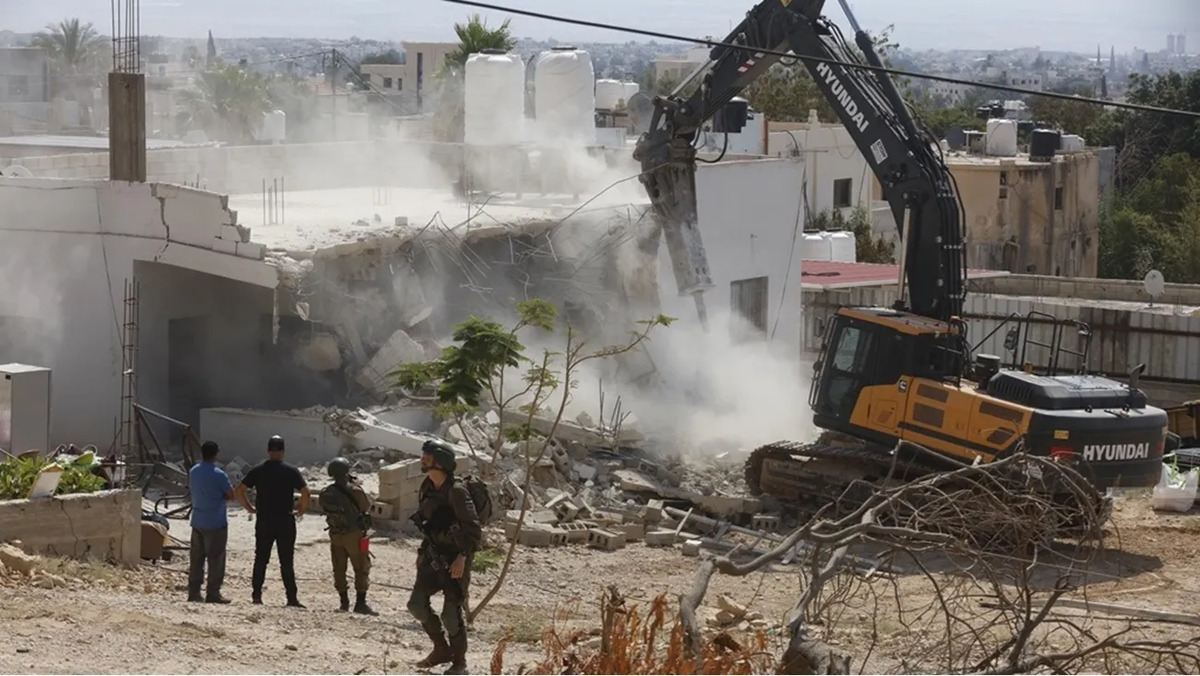
These attempts did not stop at settlement alone but extended to the demolition of Palestinian homes and facilities and attempts to expel Palestinians from their neighborhoods.

Regarding demolitions, a report issued by the Jerusalem Governorate indicated that the occupation carried out more than 654 demolition operations during two years of aggression, including 436 facilities demolished by the occupation's bulldozers, compared to 218 facilities demolished by their owners forcibly to avoid paying hefty fines and violations.

Escalating targeting of Palestinians Occupied Jerusalem has witnessed an escalation in the targeting of the Palestinian individual in various forms and ways, from obstructing their movement and tightening their work conditions, as the occupation forces killed a number of Jerusalemites.

According to the Jerusalem Governorate, about 97 Palestinian martyrs have risen in the governorate over the past two years, and the report mentioned that 491 Palestinians were injured, including injuries from live and rubber-coated metal bullets, severe beatings, and cases of suffocation from toxic gas.

Regarding arrests, the Jerusalem Governorate report documented about 2,688 cases of arrest in various neighborhoods and towns of the Jerusalem Governorate since the onset of the aggression.

The education sector in the

PALESTINE

Mon 27 Oct 2025 12:30 am - Jerusalem Time

The occupation is concerned about the United States imposing a Turkish and Qatari presence in Gaza.

The Israeli warnings regarding the United States' choice of Turkey as a pivotal factor in implementing the ceasefire in Gaza continue, claiming it poses a strategic threat to the occupying state that transcends the borders of the enclave, and because this step legitimizes Turkish ambitions for dominance in the region, placing the occupation and its partners in the region before a direct challenge.

Professor Kobi Michael, a researcher at the Israeli Institute for National Security Studies (ICGS) and an expert in security and intelligence studies, stated that "the first phase of the 21-point plan proposed by U.S. President Donald Trump is feasible after the agreements reached through Turkish-Qatari-Egyptian mediation, and it seems that within the framework of the pressure exerted by the three mediators on Hamas, Turkey played the most influential and significant role."

He added in an article published by Channel 12, translated by "Arabi21," that "this step initiated by Trump, which led to Turkey and Qatar's commitment to implement the plan, is based on forcing Hamas to agree to it, focusing on the first phase, and making the necessary efforts, which include the return of hostages alive and deploying army forces along the yellow line, which practically means the end of the war that Trump appeared determined to conclude after it lasted for two years."

He clarified that "Trump emphasized the necessity of ending the war either because he concluded that its continuation was futile, even in the face of Israeli interests, or due to the fear, exacerbated after the attack on the Qatari capital Doha, of harm to important American interests in the region due to serious deterioration, which could primarily thwart his plan to design a new regional structure based on expanding normalization agreements."

Michael pointed out that "Trump effectively imposed the principles of his plan on all parties, leaving the implementation details for later negotiations, and he recognized the importance of Turkey and Qatar for their influence over Hamas, which is why he chose to place them at the forefront and tasked them with convincing its leaders, and with this choice, he opened the door for their participation in implementing the plan, which means an active, and possibly extensive, presence in the Gaza Strip, and an important role in the reconstruction process, including ensuring the proper functioning of the upcoming system led by Tony Blair, and participating in the international stabilization force."

He affirmed that "at the same time, there are doubts that Trump has considered the grave implications of this step concerning the interests of the two mediators in the region in general, and the challenge faced by Israel and pragmatic countries, focusing on Egypt and Saudi Arabia, as Turkey and Qatar support the Muslim Brotherhood, including Hamas, and are supposed to work to protect their vital interests."

He claimed that "it should be taken into account that Doha and Ankara will make an effort to maintain Hamas's influence and status as an important and influential player on the Palestinian scene, and to prepare the conditions for its subsequent control over the entire region, as an alternative to the Palestinian Authority, not as a partner in it."

He added that "for Turkey, this is a more significant event, as President Recep Tayyip Erdoğan does not hide its ambitions for dominance, and consolidating the Turks' grip on the region and increasing their influence there poses a real threat, like clouds, to the occupation, Egypt, Saudi Arabia, and the UAE. His intervention, which will deepen in Gaza, including his actual presence there, alongside the increasing intervention in Syria and the close rapprochement with Trump, will allow him to promote several other important regional steps, which would close the door on Israel and its partners in the region, while simultaneously threatening the vital interests of Cyprus and Greece."

He indicated that "besides the potential threat arising from Turkey, one can also observe in the recent operations related to it an opportunity, as its desire to expand its intervention in the Gaza Strip requires Israel's approval and cooperation, and the special and close relationship between Tel Aviv and Washington, built on the close personal connection between Prime Minister Benjamin Netanyahu and President Donald Trump, allows for close coordination and American participation in easing tensions in relations along the Tel Aviv-Ankara axis."

He concluded by saying that "this increasing Israeli concern over the growing Turkish and Qatari influence in the Palestinian file does not hide the fact that the Israelis have a vital interest in improving relations with the Turks, and Trump's decision to involve them in the Palestinian scene could provide an opportunity for change."

One can conclude from these Israeli fears the possibility that Israel might find ways to cooperate with Saudi Arabia and Egypt to create an axis capable of curbing or mitigating Turkish and Qatari influence in the Palestinian arena, and convincing the U.S. administration in the White House to prioritize Israeli and regional interests over those of Turkey and Qatar, which is not guaranteed to happen with Trump, who has

PALESTINE

Mon 27 Oct 2025 12:06 am - Jerusalem Time

Analysts for Vision: The Gaza truce is "fragile" and Netanyahu is a "loser" provoking the resistance.. and the upcoming danger is the "piecemeal annexation" of

Experts and political analysts have confirmed that the ceasefire agreement in the Gaza Strip remains 'resilient despite its fragility', indicating that this resilience is not due to the conviction of the occupying Prime Minister Benjamin Netanyahu, but rather a result of direct American 'restraint' on his attempts to resume fighting.

Analysts warned that Netanyahu, who seeks to appease the far-right, is trying to 'provoke' the resistance to drag it into violating the truce, while secretly moving towards implementing 'piecemeal annexation' plans in the West Bank.

These analyses come at a critical time, coinciding with intense American efforts to solidify the 'Trump Plan' that ended the war.

PALESTINE

Sun 26 Oct 2025 10:49 pm - Jerusalem Time

A Palestinian dead and others injured by the occupation's fire in the West Bank, while settlers attack olive farmers.

A medical source reported the martyrdom of a Palestinian this evening, Sunday, by the bullets of the occupation forces near the Meitar checkpoint, and 6 others were injured by Israeli fire during separate incursions in the Al-Am'ari camp and the town of Qabatiya.

The Ministry of Health confirmed the martyrdom of citizen Muhammad Bassam Tiyaha Shaour (20 years old) by Israeli fire near the town of Al-Dhahiriya, where Red Crescent teams transported his body to Dura Government Hospital.

Two young men were also injured by the occupation's bullets during the incursion into the town of Qabatiya, where Red Crescent teams dealt with two serious injuries.

The occupation forces launched a wide campaign of raids and arrests in the West Bank at dawn today, where the occupation army arrested 5 Palestinians in Hebron and a child in Ramallah.

In Nablus, the occupation forces stormed the city and fired tear gas canisters at the youths, while a Palestinian worker was injured by the occupation's bullets near the separation wall in the town of Al-Ram.

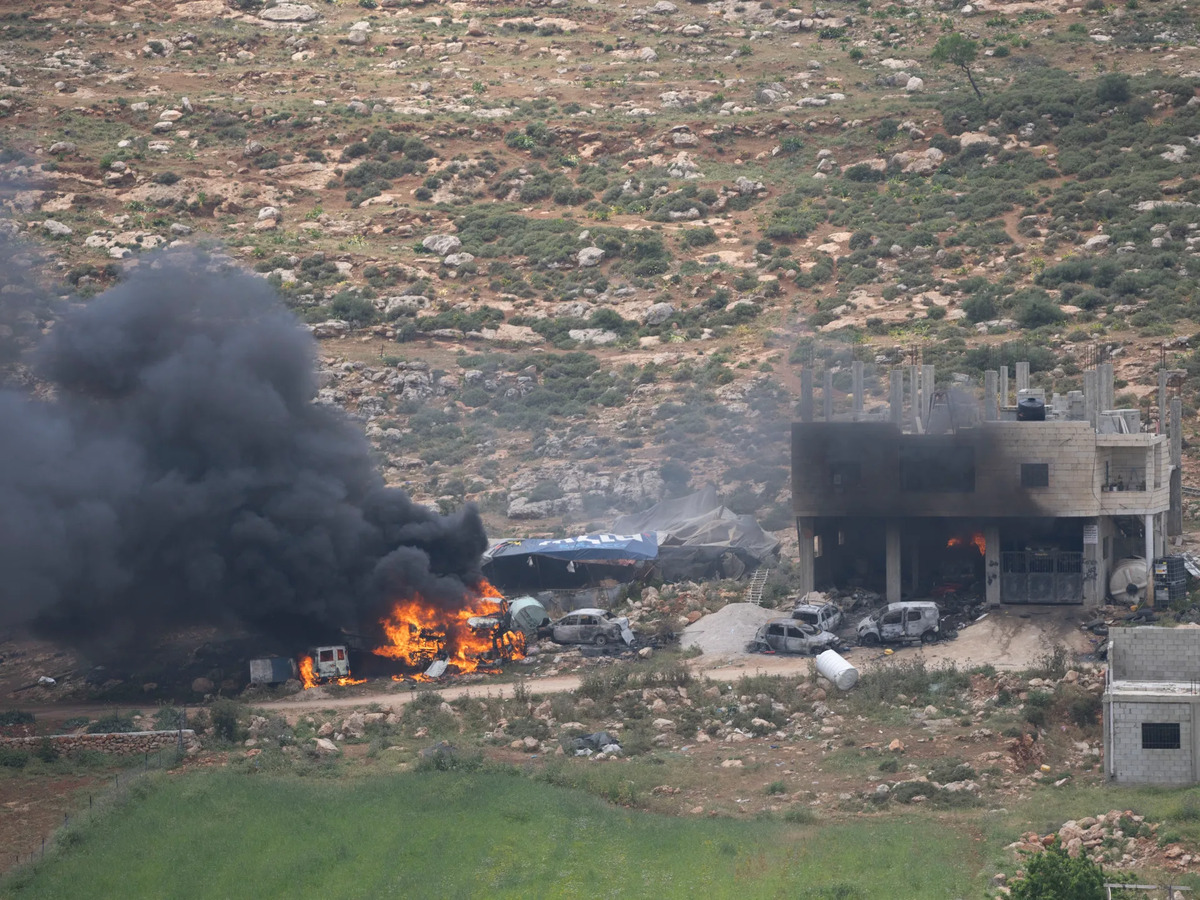
Settlers also continued their attacks against olive harvesters, as they attacked farmers in the town of Al-Mughayer and stole olives.

In the town of Al-Shuyukh, settlers uprooted about 50 olive trees, while they continued to plow agricultural lands in the town of Beit Awwa.

Data indicates a noticeable increase in settler assaults, as the Wall and Settlement Resistance Commission recorded 7,154 assaults against Palestinians and their properties over the past two years.

PALESTINE

Sun 26 Oct 2025 2:38 pm - Jerusalem Time

Netanyahu: "Israel" will not ask for permission to strike Gaza or Lebanon and will determine on its own the countries participating with international forces in the sector.

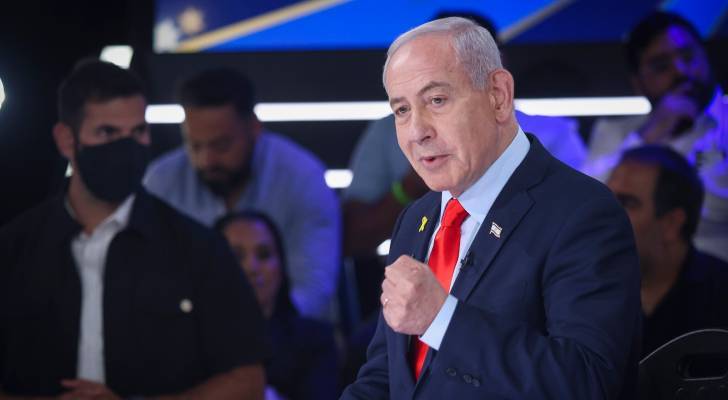
Israeli Prime Minister Benjamin Netanyahu confirmed on Sunday that Tel Aviv does not need permission from anyone to strike targets in Gaza or Lebanon, despite agreeing to the recent ceasefire reached through American mediation.

Netanyahu stated during a government meeting: "Israel is an independent state, and we are not prepared to tolerate attacks against us. We respond to attacks as we see fit... We do not seek permission from anyone to do so. We control our security."

Netanyahu's statement came after a week that saw consecutive visits from senior American officials seeking to maintain the ceasefire in Gaza amid ongoing security tensions.

He also affirmed that Tel Aviv will determine on its own which countries are allowed to participate in the international security force set to be deployed in the Gaza Strip.

Netanyahu, who opposes Turkey's participation in this force, clarified: "We have made it clear, with respect to the international forces, that Israel will determine what forces are unacceptable to us."

This international force, agreed upon as part of the ceasefire, is expected to include elements from Arab and Islamic countries with the aim of supporting security in war-torn Gaza and ensuring the stability of the ceasefire.

PALESTINE

Sun 26 Oct 2025 2:32 pm - Jerusalem Time

The unofficial narrative of what is happening in Gaza

In major events and wars, attention turns to the statements of politicians to understand the indicators of what is happening. Afterwards, journalists pick up the threads of public opinion to convey its pulse to the people. However, when events become larger than the politicians and when journalists become victims and martyrs, many aspects remain obscure in understanding what is happening, and the narrative becomes incomplete.

This is exactly what is happening in Gaza currently. Who holds the keys to this unofficial narrative? To answer this question, we find in the news hints that indicate the occupation still wants to obscure what is happening in Gaza; otherwise, why does Israel continue to prevent foreign journalists from entering Gaza even now despite the announcement of a ceasefire?

Our news from the cameras of Gazan journalists tells us that there is massive destruction and significant humanitarian suffering, and it is certain that beneath this destruction lies an infinite number of tragic stories. Journalists in Gaza struggle to convey part of these stories to us through various media and platforms, but the task is more difficult and complex and requires an army of journalists to document and convey what has happened and is happening.

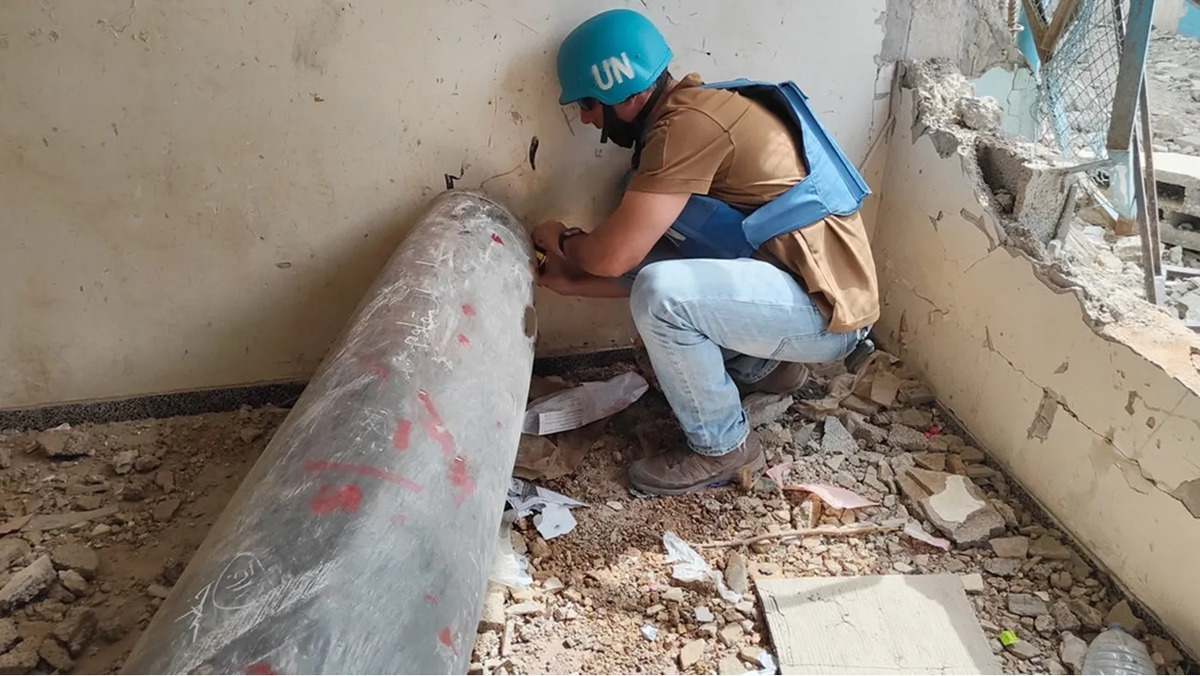
Israel is well aware of this, which is why it maneuvers to continue preventing foreign journalists from entering Gaza, as it knows the atrocities committed by its soldiers. I just read a news item stating that the sector is filled with mines planted by the occupation, in addition to unexploded bombs.

This reminded me of the mines left by British colonialism in the Alamein area in northern Egypt during its presence during World War II; about 22 million mines cover nearly 22 percent of the country's area, which is almost a quarter of Egypt's area, rendering this land unusable due to these mines, a file that has been buried by the years and days but not by the reality and the negative impact on the health of the population and the hindrance of using the land for housing and economy.

I attended a seminar years ago in the British House of Commons discussing this issue, calling on the countries involved in World War I to take responsibility for these mines, including handing over maps of these mines to Egypt. Britain provided some of these maps, but Egypt claims they are rudimentary and the mines still exist in areas that were not centers for British forces.

The issue of mines in the Gaza Strip is one of the thorny files that may be forgotten over time. The difference between the mines planted in Egypt and those in Gaza is that the mines in Egypt were and still are in areas far from the Nile Valley, where the population density is high despite their negative effects.

In Gaza, however, the geographical area does not allow the population to avoid these mines, making the demand for obtaining maps of them from Israel an urgent humanitarian necessity.

The other issue is assessing the extent of damage and human losses in property and infrastructure. Most of the published figures and statistics are based either on the use of Google Maps and open sources or on the efforts of local agencies in Gaza, which are already exhausted due to Israeli targeting and attempts to provide some basic necessities for the population during periods of relative calm after the ceasefire.

It is certain that the entry of specialized teams and journalists from various institutions will reveal more shocking figures left by the genocide over the course of two years. The unofficial narrative will also reveal the ability of Palestinian society under this war to achieve solidarity and the role of civil initiatives in relief and shelter.

The scarcity of resources and the spread of famine serve as a catalyst for civil strife in many communities built on ego and individualistic culture, unlike the Arab Muslim community in Gaza. These details may seem ordinary within Gazan society, but they are not ordinary and need documentation.

PALESTINE

Sun 26 Oct 2025 2:23 pm - Jerusalem Time

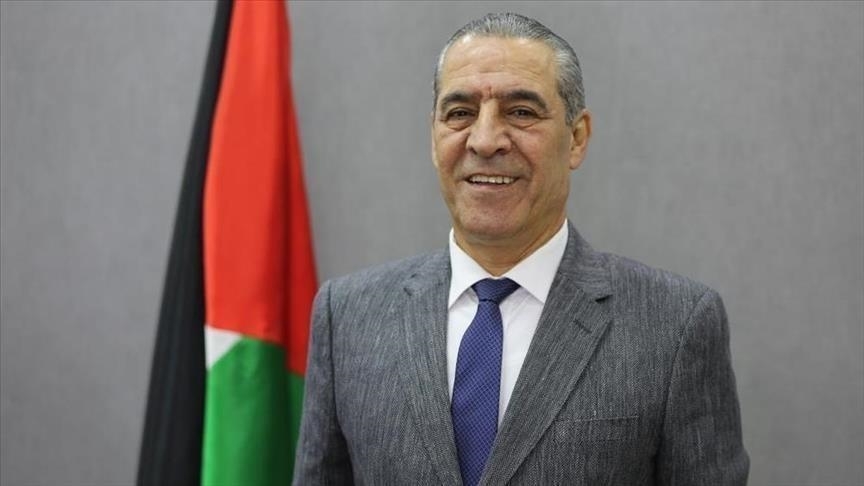
Abbas: The Sheikh temporarily heads the Palestinian Authority in case of a vacancy in the position.

Palestinian President Mahmoud Abbas (89 years old) issued a constitutional declaration on Sunday stating that his deputy, Hussein al-Sheikh, will temporarily assume the duties of the presidency of the National Authority in the event of a vacancy in the position.

The declaration, according to the Palestinian news agency (Wafa), stipulates that "if the position of President of the Palestinian National Authority becomes vacant, in the absence of the Legislative Council, the Deputy Chairman of the Executive Committee of the Palestine Liberation Organization, the Deputy President of the State of Palestine (Hussein al-Sheikh), shall temporarily assume the duties of the presidency of the National Authority for a period not exceeding ninety days, during which free and direct elections will be held to elect a new president, in accordance with Palestinian election law."

It also states that "if it is impossible to conduct the elections during that period due to a force majeure, that period may be extended by a decision of the Palestinian Central Council for another period, and only once."

According to the constitutional declaration, constitutional declaration number 1 of 2024 is canceled, "in order to preserve the national interest of our Palestinian people," according to the agency.

This declaration stipulated that the President of the Palestinian National Council would assume the presidency in the event of a vacancy in the position.

The agency quoted Abbas as saying that "the issuance of the constitutional declaration comes as a confirmation of the principle of separation of powers and the peaceful transfer of power through free and fair elections."

Abbas has been in office for 20 years, specifically since January 15, 2005, following the death of Palestinian President Yasser Arafat in November 2004.

PALESTINE

Sun 26 Oct 2025 2:20 pm - Jerusalem Time

The occupation plans to bomb main internal roads and intersections in case it faces a "new October."

The occupying army plans to use heavy bombs weighing a ton to cut off roads and main intersections within the state of occupation, as part of the lessons learned from the October 2023 attack.

The military correspondent for Maariv, Avi Ashkenazi, stated that "the air force is implementing an updated defensive plan in case the enemy penetrates deep into Israel. This plan includes, among other things, Israeli airstrikes targeting intersections and main roads in the country."

There has been widespread public criticism of the performance of the Israeli air force on October 7 in the Gaza Strip, and the army, including the air force, has benefited from the lessons of the attack and has developed updated defensive plans aimed at maximizing the air force's capabilities to disrupt the enemy's plans to penetrate deep into the Israeli home front, on all borders: northern, eastern, and southern, in the first minutes of any surprise attack.

According to Ashkenazi. The occupying army has pre-identified the axes and intersections in the border area, as well as inside, which will be targeted by air force planes after being cleared of Israelis.

An Israeli army source told Maariv's correspondent that "the goal of the plan is to create shock and confusion for the enemy and divert it from its original course of action."

The Al-Qassam Brigades surprised the occupation on October 7, 2023, with an unprecedented attack on dozens of military bases and settlements surrounding the Gaza Strip, resulting in the deaths and injuries of hundreds of occupation soldiers and the complete collapse of the Gaza Division within about two hours.

Military, security, and political officials of the occupation described the attack as a military, intelligence, and political failure.

PALESTINE

Sun 26 Oct 2025 2:18 pm - Jerusalem Time

Intercept reveals Amazon's involvement in supporting the Israeli army.

The American website Intercept revealed internal documents showing that Amazon was providing cloud computing services to several Israeli arms companies and government bodies, which used their weapons to destroy Gaza and commit crimes during Israel's war on the territory.

The site explained in a lengthy report that these documents indicate that the relationship between the company and Israel goes beyond ordinary technical supply, also including coordinated efforts to influence Israeli regulatory bodies to allow Amazon to handle 'classified' materials and information pertaining to the military and intelligence.

It added that these documents clarify that Amazon quietly pressured Israeli authorities to convince them to allow it to process classified data belonging to the Ministry of Defense and intelligence agencies.

While military entities were hesitant to transfer their sensitive data to the company's servers, Amazon sought to persuade government regulators to change this policy.

One document indicates that the company had already begun working with a large unnamed government institution to transfer some classified materials to its cloud service.

A wide range of services The financial documents, as mentioned in the Intercept report, reveal that the Israeli Ministry of Defense and state-owned arms companies, such as 'Rafael' and the 'Israeli Aerospace Industries', utilize a wide range of Amazon services, including storage and networking tools, security, in addition to the 'Amazon Rekognition' facial recognition service.

This technology had previously sparked controversy in the United States due to its poor accuracy with women and people of color, prompting the company in 2020 to temporarily suspend its use by police.

The documents, according to the site's report, indicate that the Israeli military also used Amazon technologies to test large language models, likely through Unit 9900, which specializes in geospatial intelligence and participates in planning airstrikes in Gaza using satellites.

Previous reports have mentioned that this unit also purchased cloud services from Microsoft.

Other Israeli clients Among the clients who received Amazon's cloud services is the Sorek Nuclear Research Center, a government facility operating under the Israeli atomic energy program built in the 1950s in collaboration with the United States, according to Intercept.

Although Israel does not officially acknowledge possessing nuclear weapons, a 1987 report by the U.S. Department of Defense described the Sorek Center as having all the capabilities necessary to design and manufacture nuclear weapons, as stated in the site's report.

Intercept cited a report from the Stockholm International Peace Research Institute noting in 2002 that the Sorek Center is located in a security area shared with an airbase where missiles are assembled and tested.

Services in the West Bank One document also addressed government offices in the West Bank using Amazon's cloud services, raising legal issues related to dealings with the occupying authority in Palestinian territories.

Intercept attributed to Professor Ioannis Kalpouzos from Harvard Law School his comment that Amazon's relationship with Israeli arms companies could place it in the realm of international legal accountability if it is proven that its services contributed, even indirectly, to the commission of war crimes or crimes against humanity.

Kalpouzos added that 'legal responsibility does not require intent to commit genocide; it is sufficient that support is expected to lead to the commission of crimes.'

Although Amazon may claim ignorance of how its technologies are used on the ground, a former U.S. Department of Defense official named Bryant believes this claim is unconvincing, as the nature of the companies it deals with is clear: 'They are companies that manufacture weapons, and Amazon cannot claim it is not complicit in killing, even if it does not know all the details.'
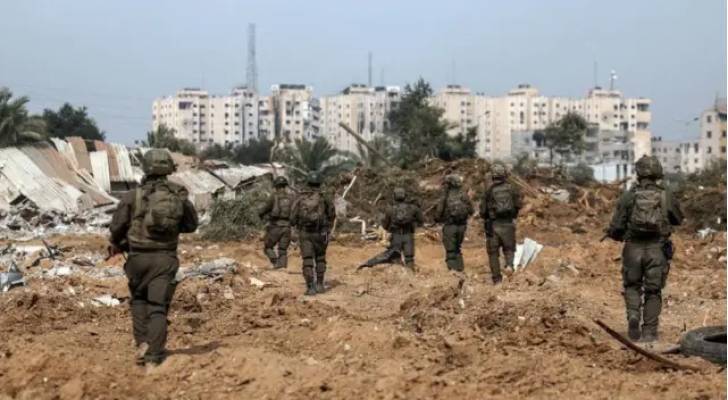
These documents, as the Intercept report confirms, indicate that the role Amazon plays in Israel goes beyond technological services to an indirect contribution to the military and security infrastructure that supports operations in Gaza.

Intercept states that its report reopens the discussion about the moral and legal responsibility of major tech companies providing their services to governments involved in armed conflicts, war crimes, and crimes against humanity, amid growing questions about the extent to which these companies adhere to human rights standards and transparency in defense contracts.

PALESTINE

Sun 26 Oct 2025 2:06 pm - Jerusalem Time

Israel prevents journalists from entering Gaza under the pretext of a "new policy in preparation."

The Israeli government informed the Supreme Court of its intention to formulate a "new policy" within a month regarding its stance on allowing journalists into the Gaza Strip, according to Hebrew media.

This step represents, according to observers, a new evasion by Benjamin Netanyahu's government amid international pressure and criticism for preventing journalists from entering Gaza.

The Hebrew newspaper "Haaretz" reported that Netanyahu's government submitted a response to the Supreme Court regarding petitions it received against the ban on journalists entering Gaza.

The government stated that it will draft a "new plan or policy" within a month and will provide a statement on this matter by November 23.

In the coming days, the possibility for journalists to enter Gaza under the protection of the Israeli army will continue up to the yellow line.

Last Thursday, the Foreign Press Association in Israel expressed its disappointment with the Supreme Court's decision allowing the government to continue preventing journalists from entering Gaza.

The association confirmed that the government has once again relied on delaying tactics to prevent journalists' entry.

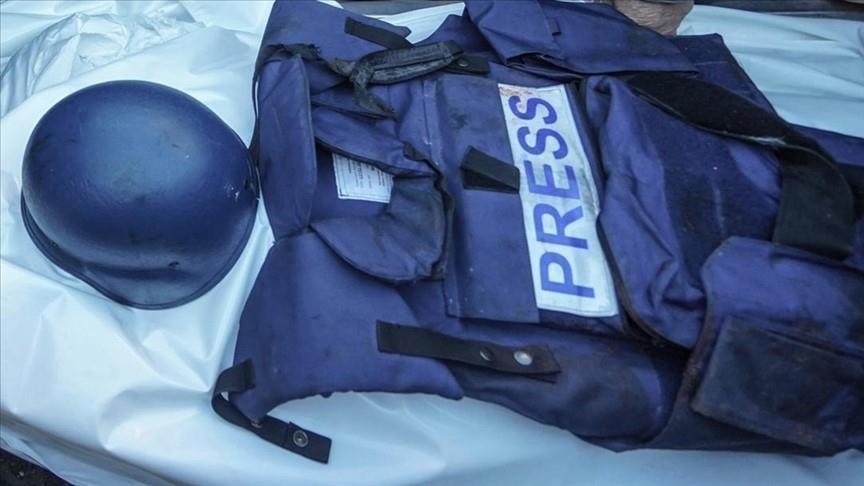
Since the beginning of the genocide on October 8, 2023, the Israeli army has killed at least 238 Palestinian journalists.

Human rights and media organizations assert that Israel's ban on international journalists aims to prevent the transmission of the atrocities of genocide to the world.

ANALYSIS

Sun 26 Oct 2025 1:29 pm - Jerusalem Time

Israeli writer: The new illusions in Israel are more dangerous than the previous ones.

Israeli expert Mikhail Milstein, head of the Palestinian Studies Forum at the Moshe Dayan Center at Tel Aviv University, warned that Israel is currently living under the influence of a "delusional perception of reality" represented by the pursuit of "imposing sovereignty" over the occupied West Bank, at a time when it remains unable to draw lessons from its resounding failure on October 7, 2023.

Milstein, a former intelligence officer, states in an article in Yedioth Ahronoth that those who led the pre-October 7 perception or the security and political vision that led to the "bloody surprise" are the same ones now leading the new annexation campaign, and they are aware of the damage being inflicted on relations with the United States and the world, yet they justify it as "minor bumps on the road to salvation."

The Israeli expert points out that the "imposition of sovereignty" law and the crude statements of Finance Minister Bezalel Smotrich against Saudi Arabia have sparked a political storm in Israel, as they embody a mix of arrogance and ignorance of the regional environment.

When Smotrich tells the Saudis, "Ride camels in the desert instead of talking about normalization," he expresses a contemptuous view towards the peoples of the region, which is the same perspective that emerged before the war in the disdain shown by intelligence officers towards Hamas's plans.

Milstein believes that the new vision is based on a set of false assumptions: that U.S. President Donald Trump will stand by Israel in all circumstances, that a "partial annexation" of the Jordan Valley or limited areas can be implemented in a way acceptable to Washington and some Arab countries, and that the Arab world has grown tired of the Palestinian issue and no longer cares about it.

However, these assumptions, he says, have completely collapsed recently when Trump and his deputy J.D. Vance announced that they do not approve of any Israeli step to annex the occupied territories, and Trump himself hinted at considering the possibility of releasing Palestinian leader Marwan Barghouti, sentenced to five life terms, to take over the governance of Gaza, which was a strong blow to the Israeli right.

The writer reminds us that this is not the first time that the projects of the religious right have collided with the wall of reality. In 2020, Israel backed away from the annexation project in favor of the Abraham Accords, but the proponents of the idea did not abandon their convictions; rather, they continued to cling to them as a divine promise that cannot be renounced.

Milstein adds that these are the same individuals who managed a series of failed projects in the Gaza Strip over the past two years, starting with the "Gaza Humanitarian Foundation" project that wasted billions of shekels, through attempts to encourage "voluntary migration" of Palestinians via a special administration within the Ministry of Defense, to the "militias and clans" idea that was promoted as an alternative to Hamas's rule and recently ended with their liquidation or arrest by Hamas.

Despite all these failures, no official investigation has been conducted into the outcomes of Israeli policies in Gaza, which has allowed, according to Milstein, the return of the same delusional mentality that sees every failure as a new opportunity to escape forward.

Moreover, new and more dangerous plans have recently emerged, according to the writer, such as the "Two Gazas" project that divides the strip into a prosperous part under international supervision and a devastated part under Hamas rule, in a desperate attempt to weaken the movement through "social engineering."

The Israeli expert believes that this idea completely repeats the mistakes that preceded the catastrophe without any self-criticism or accountability.

Milstein describes the "new illusions" as more dangerous than their predecessors because they are not merely miscalculations or analytical flaws, but an absolute ideological belief derived from the national religious thought embraced by the "religious Zionism" movement, which is based on a biblical principle that sees control over the land as a divine obligation that is not subject to political or international calculations.

The writer states that the symbols of this movement—chief among them Smotrich—are not affected by international isolation or warnings of sanctions, and they cling to biblical sayings such as the annihilation of the "Amalekites," and they see no harm in establishing a military administration in Gaza or controlling the West Bank, boasting phrases like "Arabs only understand force" and "wherever there is a settlement, there is no terrorism."

They see themselves as having a historical mission to exploit the "miraculous era" that Israel is experiencing to change the geographical, demographic, and political reality between the sea and the river.

Milstein warns

LATEST NEWS

Sun 26 Oct 2025 12:34 pm - Jerusalem Time

Prisoners' Club: 49 female prisoners are subjected to organized crimes in the occupation's prisons.

The Prisoners' Club stated that the Israeli occupation authorities continue to detain 49 Palestinian women, including two girls and a female prisoner from Gaza, who are facing organized and systematic crimes inside the occupation's prisons and interrogation centers.

It clarified in a statement issued today, Sunday, on the occasion of the Palestinian Women's National Day, that the pace of these crimes has escalated unprecedentedly since the outbreak of the genocide war, which has been the bloodiest phase in the history of the Palestinian people, and its effects continue to leave a harsh imprint on the reality of the female prisoners.

The Prisoners' Club added that the phase following the genocide war imposed radical changes on the conditions of female prisoners' detention, accompanied by a series of crimes committed by the Israeli repression system, the most prominent of which are: torture, starvation, deliberate medical neglect, and sexual assaults – the most significant of which is strip searches and harassment that the organization has documented in several cases by the female guards.

In addition to psychological terrorism, such as threats of rape, systematic repression operations, and repeated incursions that involve beatings and humiliation, forcing the female prisoners to kneel while they are bound, along with insults that undermine human dignity.

These violations also include methods of psychological torture practiced from the very first moments of detention, according to the testimonies of the female prisoners.

PALESTINE

Sun 26 Oct 2025 12:26 pm - Jerusalem Time

"Doctors Without Borders" accuses the occupation: using aid as a continuous weapon of war despite the ceasefire in Gaza.

In a statement revealing the depth of the political and humanitarian crisis in the Gaza Strip, the international organization "Doctors Without Borders" accused the occupation today, Sunday, of continuing to "use humanitarian aid as a weapon of war," considering it a "pressure tactic" against the Palestinians.

The significance of this statement, attributed to the organization's project coordinator in Gaza, Caroline Wilmen, lies in the fact that it comes from one of the most prominent neutral relief organizations operating on the ground, and amid an existing ceasefire agreement, which transforms the crisis from mere "logistical shortcomings" to a "deliberate political strategy" to impose conditions by starving the population.

This accusation is set against a complex political backdrop. Two years after what Wilmen described as the "terror of genocide" experienced by the Palestinians, a "ceasefire agreement" was reached. This agreement, sponsored by international and regional parties, was supposed to end major military operations and open the door for the flow of humanitarian aid to rehabilitate the devastated sector.

However, the reality on the ground, as "Doctors Without Borders" witnesses, paints a different picture. Instead of the ceasefire being a gateway to recovery, it seems to have turned into a new phase of conflict, using non-military tools.

The occupation has long faced accusations of imposing a suffocating blockade on Gaza, but linking aid to "political conditions" in the post-agreement phase, as Wilmen confirms, means using basic needs as hostages to achieve political gains that have not been realized through military action.

This tactic, against the will of humanitarian organizations, transforms them from relief tools into parties in complex political negotiations.

Caroline Wilmen, in her statements published on the organization's official website, provided detailed insights that outline this "covert war": rejecting "political bargaining": Wilmen firmly stated that "humanitarian aid sent to the Gaza Strip should not be linked to any political conditions."

This statement is at the heart of the political accusation, as it addresses the "intent" to obstruct rather than just its "result."

Despite acknowledging a significant decrease in "attacks on the sector," the truce is not complete. Wilmen revealed that the occupation army launched a "wide-scale attack on October 19," in addition to "continuing near-daily gunfire."

This undermines trust in the agreement and makes the provision of aid fraught with risks.

The ceasefire has failed to change the catastrophic humanitarian reality. Wilmen pointed out the ongoing "lack of water and shelter," and the existence of "hundreds of thousands still living in tents as winter approaches."

In a troubling indicator of the failure of the aid mechanism, she confirmed that the organization's teams "continue to record cases of acute malnutrition among children under five and pregnant women." Despite a "slight improvement," the "nutritional situation remains concerning."

Wilmen summarized the tragedy by stating that providing health services "remains very difficult," and that needs have not even reached "the minimum of basic humanitarian conditions."

The testimony of "Doctors Without Borders" represents a dangerous shift in the course of the crisis, as it shifts the international narrative from "post-war reconstruction efforts" to "managing the blockade under a ceasefire."

This direct accusation against the occupation of "weaponizing aid" places immense pressure on the sponsors of the ceasefire agreement and donor countries.

LATEST NEWS

Sun 26 Oct 2025 12:04 pm - Jerusalem Time

"Haaretz": The Israeli army turns the outskirts of Gaza into a "dump for waste and construction debris"

Video footage has shown Israeli trucks transporting massive amounts of waste and construction debris into the Gaza Strip through the "Kissufim" crossing, to dump it in areas devastated by the war.

Israeli officers have acknowledged that the decision was made on the ground, to turn Gaza into "mountains of garbage and debris."

According to what was reported by the newspaper "Haaretz," the Israeli trucks loaded with waste and construction debris advance between 200 and 300 meters into Gaza territory, dumping their loads at the edges of roads, not in designated sites, before returning empty to Israel.

On the Israeli side, the trucks are reloaded with waste again by bulldozers, taking the same route back to the sector to dump their cargo once more.

The report states that massive amounts of construction waste and debris left by the Israeli army during the war have accumulated in the area, due to the establishment of dozens of military bases and sites near the border area.

Haaretz quoted army officers saying that field commanders issued instructions allowing trucks belonging to private companies to enter the sector and unload their cargo "at any site they deem appropriate."

One soldier currently working inside Gaza and residing in a kibbutz near the border said, "Mountains of garbage will remain in front of our homes in the sector for the rest of our lives."

Another officer considered what is happening to be "a disgraceful act that is hard to believe the Israeli army is involved in," adding that the dumped waste "contains large amounts of iron, irrigation pipes, and concrete blocks, which Hamas may later use for its own purposes."

One source, who tried to inquire from his leaders about the reason for dumping waste inside the sector in non-designated sites, indicated that the response he received was that "countries will soon enter Gaza to oversee reconstruction, and they will handle this debris."

LATEST NEWS

Sun 26 Oct 2025 11:48 am - Jerusalem Time

"UNICEF" launches an urgent appeal: We are racing against time to save the children of Gaza from famine, and 64,000 children have become martyrs.

The United Nations Children's Fund (UNICEF) issued a shocking assessment of the humanitarian situation in the Gaza Strip today, Sunday, confirming that one million children have suffered from "daily horrors" in "the most dangerous place in the world."

The Regional Director of UNICEF for the Middle East and North Africa, Edward Peigbider, revealed the expansion of the response to combat famine, calling for the immediate opening of all crossings, amid catastrophic statistics regarding child casualties.

In a series of urgent statements, UNICEF painted a grim picture of the reality faced by children in the Gaza Strip, noting that the recent ceasefire provided a "vital opportunity" for their survival, but emphasized that current aid remains insufficient to address the scale of destruction.

UNICEF revealed devastating statistics on the impact of the conflict on children, asserting that "words and numbers alone cannot convey the magnitude of the impact" that will last for generations.

It pointed out that more than 64,000 children have been killed or injured, over 58,000 children have lost one of their parents, and one million children in Gaza have suffered from the daily horrors of survival.

The organization blamed "Israeli military operations" in the Gaza Strip, confirming that they have resulted in "widespread destruction."

The Regional Director of UNICEF confirmed that the organization is "expanding its response in Gaza and racing against time to save children's lives from threats," primarily the risk of famine.

UNICEF linked humanitarian response to the necessity of "opening" the crossings, and while the organization acknowledged a "increase in the amount of aid," it stressed that it "remains insufficient."

It issued a direct appeal: "We call on the Israeli authorities to immediately open all crossings leading to the Gaza Strip," to ensure the unobstructed flow of lifesaving aid.

The organization announced that it has successfully "returned more than 100,000 children to education during the war," confirming that it "aims to return 650,000 children to schools" as part of a long-term recovery plan.

PALESTINE

Sun 26 Oct 2025 10:48 am - Jerusalem Time

Ben Gvir: We are not under Washington's guardianship and Hamas should have been eliminated.

Israeli National Security Minister Itamar Ben Gvir stated that Israel is not under the guardianship of the United States, reiterating his criticism of former U.S. President Donald Trump's positions.

In a radio interview today, Sunday, Ben Gvir said, "I appreciate President Trump very much, but we are a sovereign independent state and we are not under Washington's guardianship," repeating a previous attack on the U.S. administration.

Last Thursday, Ben Gvir criticized Trump's remarks about the release of Palestinian prisoner Marwan Barghouti, saying, "I have great respect for President Trump; he is undoubtedly the best American president towards Israel. However, it is important to remember: Israel is a sovereign independent state, and Knesset members vote according to their judgment."

He added, "Barghouti is a killer and will not be released, nor will he rule Gaza."

This came in response to the U.S. president's statements to Time magazine, in which he said he would "make a decision" regarding the request for Israel to release Marwan Barghouti.

Trump added in the interview, "The Palestinians do not have a leader currently, and most of the previous leaders have been shot, and this position is no longer desirable at this time."

Trump noted that he faces the question of Barghouti's release directly before almost every official call, emphasizing that he will make the appropriate decision at the right time.

Ben Gvir had stormed Barghouti's cell last August, threatening him and stating, "He will wipe out anyone who messes with the people of Israel," adding, "You will not win, and you must realize that."

Ben Gvir and Hamas On another note, Ben Gvir - in his statements today - returned to discuss the goals of the war on the Gaza Strip, calling for continued efforts to "eliminate Hamas, which currently controls half of the territory."

He reiterated his opposition to the ceasefire agreement that came into effect earlier this month, stating that "eliminating Hamas should have been a priority before the return of the kidnapped."

Ben Gvir had previously confirmed that "the reasons for not continuing the war and opening the gates of hell on Gaza ended after Israel recovered its remaining living captives," noting that Prime Minister Benjamin Netanyahu had told him - more than once - that "this war will never end before eliminating Hamas."

PALESTINE

Sun 26 Oct 2025 9:50 am - Jerusalem Time

An Israeli researcher to Anadolu: Tel Aviv's goal is to make Gaza uninhabitable.

The head of the Israeli Committee Against House Demolitions (ICAHD), anthropologist Jeff Halper, stated that Tel Aviv is seeking, through its military operations since October 2023, to make the Gaza Strip uninhabitable through the systematic destruction of homes and infrastructure.

Halper explained that Israel has destroyed approximately 300,000 homes in Gaza since the outbreak of its latest aggression, as part of a policy of "ongoing ethnic cleansing" aimed at displacing Palestinians and establishing a "unified Zionist Israel."

He pointed out that since the Nakba of 1948, Israel has demolished nearly half a million buildings belonging to Palestinians, including homes, mosques, churches, and schools, emphasizing that the destruction in Gaza "exceeds military objectives to completely eliminate the foundations of civilian life."

Halper criticized the Israeli and international plans proposed for the reconstruction of the sector, indicating that Palestinians are completely excluded from these projects, and that some of them "serve the interests of foreign investors and illegal settlers."

The researcher estimated the cost of reconstructing Gaza at about $80 billion, warning that any process managed from abroad without Palestinian participation would be "a disguised new colonialism."

Halper also warned of a threat to religious sites in Gaza after the destruction of many historical mosques and churches, stating that "there is a real danger of converting mosques into synagogues if Israel continues to impose the reality of a complete Jewish state on Palestine."

PALESTINE

Sun 26 Oct 2025 8:39 am - Jerusalem Time

Raids and arrests by the occupation in the West Bank and assaults by settlers on farmers continue.

The Israeli occupation army arrested 19 Palestinians last Saturday evening, and clashes erupted during incursions carried out in various areas of the West Bank, while settlers continued their assaults on Palestinian farmers coinciding with the olive harvest season.

Palestine TV reported that the Israeli army 'arrested more than 15 workers from the Ain al-Hawiya area near the village of Husan, west of Bethlehem,' and according to eyewitnesses, the arrests occurred during the workers' attempt to enter Israel in search of work.

In northern West Bank, the Palestinian Red Crescent Society stated that its crews transported 3 injured individuals to the hospital, two children (15 years old) who were shot with live bullets in the legs, one of whom is in serious condition, and a young man (18 years old) who was shot in the foot during the Israeli occupation army's incursion into Tubas.

Al-Quds Brigades – Tubas Battalion stated that its fighters confronted the invading occupation forces on several fronts and showered them with bullets according to the conditions on the ground.

On another note, the Israeli occupation forces arrested 4 Palestinians, including a wanted person, during their pursuit near the town of Marka south of Jenin in northern West Bank.

Israeli special forces had besieged a house in the Dabba al-Attari neighborhood in Jenin city amid the hovering of drones, prompting the occupation army to send military reinforcements to the site.

A reporter stated that the occupation closed the area before storming the besieged house, and then the special forces pursued a wanted individual who managed to withdraw from the house towards the town of Marka south of the city.

Al-Quds Brigades – Jenin Battalion announced that its fighters in the Jaba' unit confronted the invading enemy forces in the town according to the conditions and data on the ground, targeting military vehicles with several explosive devices.

In Jenin as well, the official Palestinian news agency confirmed the outbreak of clashes with the occupation army in the town of Silat al-Dhahr, following an incursion by a force from the occupation army into the town, noting that several homes in the town were raided and their contents were destroyed.

For its part, Palestine Voice Radio reported that the occupation army arrested a young man during the incursion into the village of Deir Abu Da'if, east of Jenin, and also stormed the town of Kafr Dan west of the city.

In northern West Bank as well, the radio reported that the occupation army stormed the vicinity of the old Askar camp in Nablus, leading to clashes during which the occupation fired live bullets, sound bombs, and tear gas.

In central West Bank, Palestine TV mentioned that several citizens suffered from suffocation during the incursion of the Israeli occupation forces into the town of Hizma, northeast of occupied Jerusalem.

It indicated that the army forced shop owners to close their stores and spread throughout the streets of the town.

Settlers attacked the village of Al-Minya southeast of Bethlehem, assaulting Palestinian homes.

The Palestinian Red Crescent reported that the occupation forces prevented an ambulance from reaching one of the injured due to the settlers' assault.

Meanwhile, sources reported that settlers stormed the Qarinat area in the town of Surif north of Hebron, burned a Palestinian car, and set fire to one of the houses.

A reporter also stated that settlers invaded the Manatir area in the town under the protection of the occupation forces present at the scene without intervening to stop the assault.

He noted that farmers confronted the settlers who escalated their assaults in the villages and towns of the West Bank during the olive harvest season.

Photos documented the assault of a settler and Israeli soldiers on an elderly Palestinian woman and her daughter's husband while they were picking olives last night in the town of Nahalin west of Bethlehem in southern West Bank.

Palestinian sources stated that the occupation forces arrested them after the assault before releasing them this morning.

Coinciding with the genocide in Gaza, the occupation army and settlers escalated their assaults in the West Bank, resulting in the martyrdom of more than 1,058 Palestinians and the injury of about 10,000 others, in addition to the arrest of more than 20,000 people, including 1,600 children.

PALESTINE

Sat 25 Oct 2025 11:56 am - Jerusalem Time

The occupation prevents vital supplies to Gaza, and suffering continues in the health sector.

The United Nations Relief and Works Agency for Palestine Refugees in the Near East (UNRWA) confirmed that Israel is preventing the entry of vital supplies needed for shelter and heating in the Gaza Strip despite the increasing need for them. Local and international officials have also reported ongoing suffering in essential sectors and facilities due to the lack of necessary materials since the ceasefire.

UNRWA stated today, Saturday, that the need for shelter and warmth in Gaza is increasing as winter approaches, and we have the necessary materials in Jordan and Egypt, but their entry is being blocked.

The agency emphasized the need to restore its role in delivering humanitarian aid to the Gaza Strip. The Israeli occupation continues to prevent UNRWA from resuming its work in Gaza despite the International Court of Justice ruling last Wednesday, which confirmed that no organization can replace UNRWA in supporting the residents of Gaza.

On another note, Dr. Mohammed Abu Afash, director of the Medical Relief Association in Gaza City, stated that primary health services are still struggling due to the ongoing lack of resources.

Abu Afash added in an interview with Al Jazeera, "We had hoped to bring in what the health sector needs, but the suffering continues."

He pointed out that mobile clinics and field hospitals are an urgent necessity for the residents of the sector, and he called for clear policies to revive the residents of Gaza—especially children—after two years of Israeli genocide.

In a related context, Andreas Krafik, Norway's Deputy Foreign Minister, stated in an interview with Al Jazeera that Israel has systematically targeted hospitals and health workers in Gaza, emphasizing the need to work on rehabilitating medical facilities in the sector.

Krafik also urged Israel to take legal responsibility for allowing aid to enter, stressing the necessity of more trucks carrying medical and food aid and the entry of heavy machinery to remove rubble and clear debris.

Meanwhile, the Gaza Municipality has appealed to international and humanitarian organizations for urgent action to provide essential needs to alleviate the humanitarian disaster in Gaza City, as Israel continues to close vital crossings to the north of the sector.

Gaza Municipality spokesman Asim Al-Nabi said in an interview with Al Jazeera, "Everything that has been done so far in the Gaza Strip is merely emergency measures."

Al-Nabi called for the opening of all crossings and indicated that a list of needs has been prepared, along with agreements on plans and details for their entry into the sector.

On another front, the United Nations Children's Fund (UNICEF) warned that the water, sanitation, and hygiene sectors are in an extremely critical situation in Gaza.

The organization added that the basic needs of families for water, sanitation, and hygiene have not yet been met, noting that half of Gaza's families receive less than the minimum humanitarian standard of water daily.

UNICEF indicated that over the past two years, the organization and its partners have only managed to prevent the complete collapse of the water and sanitation system.

A ceasefire is currently in effect in the Gaza Strip under the agreement reached in Sharm El-Sheikh, Egypt, on October 9, mediated by Qatar, Egypt, and Turkey, with the participation of the United States, after two years of Israeli genocide.

Despite the agreement, Israel has not stopped conducting airstrikes and artillery shelling in the Gaza Strip, and it continues to close the Rafah crossing between the Palestinian sector and Egypt, with aid trucks still waiting on the Egyptian side of the crossing.

LATEST NEWS

Sat 25 Oct 2025 11:30 am - Jerusalem Time

For the second week: The occupation continues to prevent farmers in Kober, north of Ramallah, from accessing their lands.

The Israeli occupation forces continue, for the second consecutive week, to prevent farmers from accessing their lands to harvest olives in the town of Kober, northwest of Ramallah.

Local sources reported that the occupation forces continue to close the iron gate they erected during the genocide against the Gaza Strip, which leads to the citizens' lands, preventing farmers from reaching their fields.

These forces also detained the elderly man Fahd Abu Al-Haj following a verbal altercation that occurred between him and the soldiers.

Last week, the occupation forces prevented citizens from accessing their lands in Kober and fired live ammunition at them.

Olive pickers in various provinces of the homeland are subjected to repeated assaults by settlers and occupation soldiers, who prevent them from harvesting olives and accessing their lands in several areas.

According to the Wall and Settlement Resistance Commission, its teams have documented a total of 158 assaults against olive pickers since the beginning of the current season, with the occupation army carrying out 17 assaults, while settlers executed 141.

PALESTINE

Sat 25 Oct 2025 11:22 am - Jerusalem Time

"Analysis reveals": The occupying army controls areas in Gaza wider than stipulated in the ceasefire agreement.

A detailed analysis has revealed troubling evidence indicating that the Israeli occupation army is asserting control over areas within the Gaza Strip that significantly exceed what was agreed upon in the first phase of the recent ceasefire agreement.

Using satellite images and documented videos, the analysis showed that the physical markers placed by the occupation army to define the "yellow line" for withdrawal were installed hundreds of meters deeper into the territory compared to the official maps.

Under the ceasefire agreement that came into effect on October 10, the occupation forces were supposed to withdraw to a specified border line, but the "BBC" analysis uncovered a stark contradiction between the announced maps and the reality on the ground.