PALESTINE

Mon 24 Nov 2025 1:08 am - Jerusalem Time

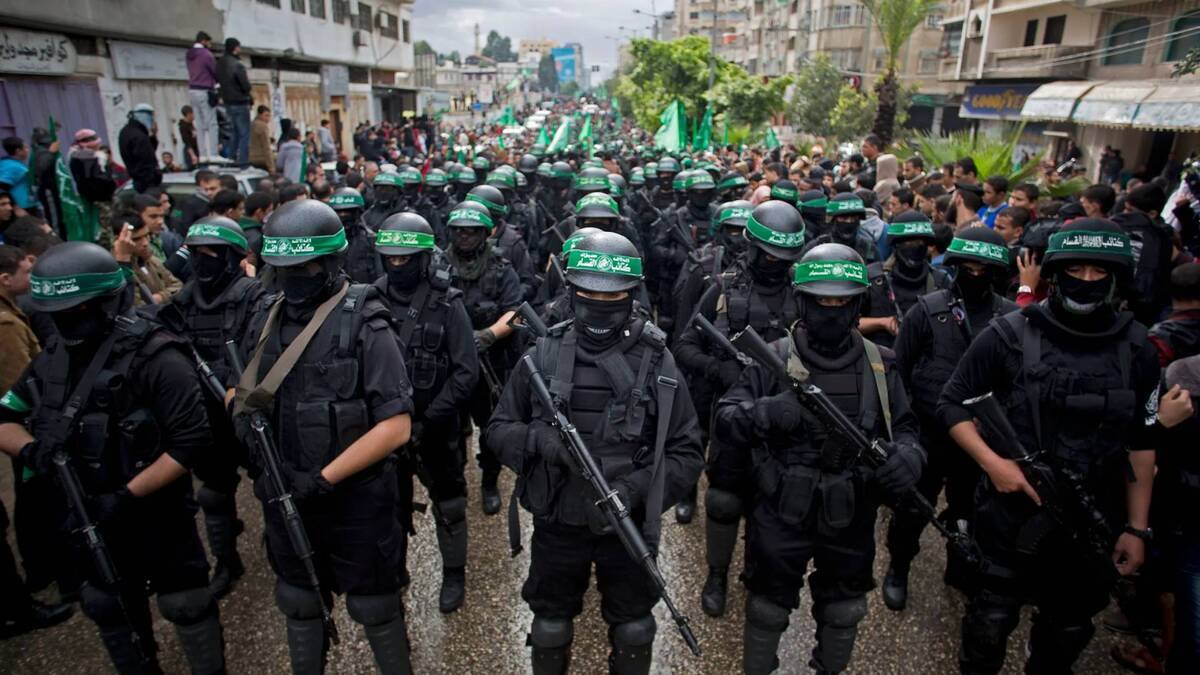
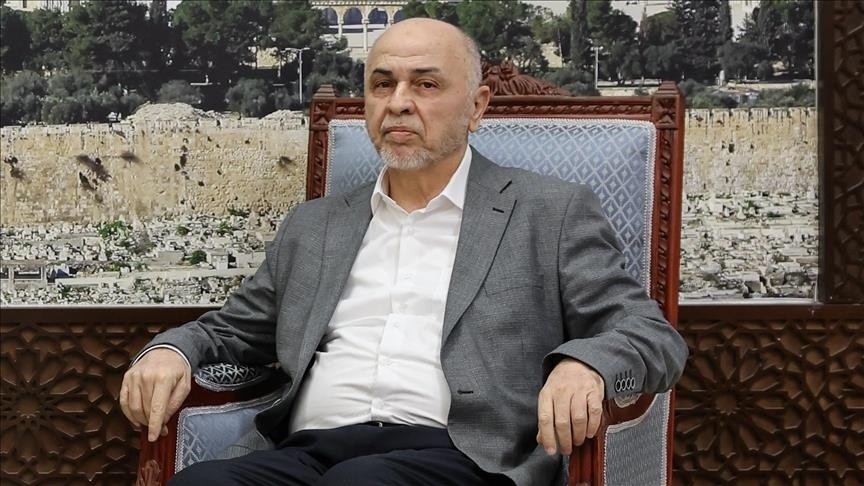
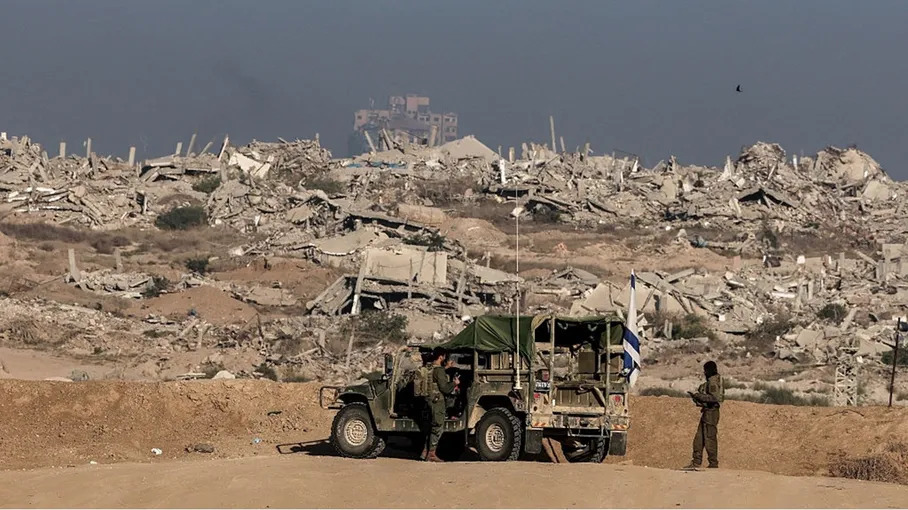
Hamas: The proposed international forces in Gaza must separate our unarmed people from the occupation army.

The spokesperson for Hamas, Hazem Qassem, confirmed that the proposed international forces entering the Gaza Strip under the ceasefire agreement should include the mission of separating our unarmed people from the occupying army that continues its ongoing aggression.

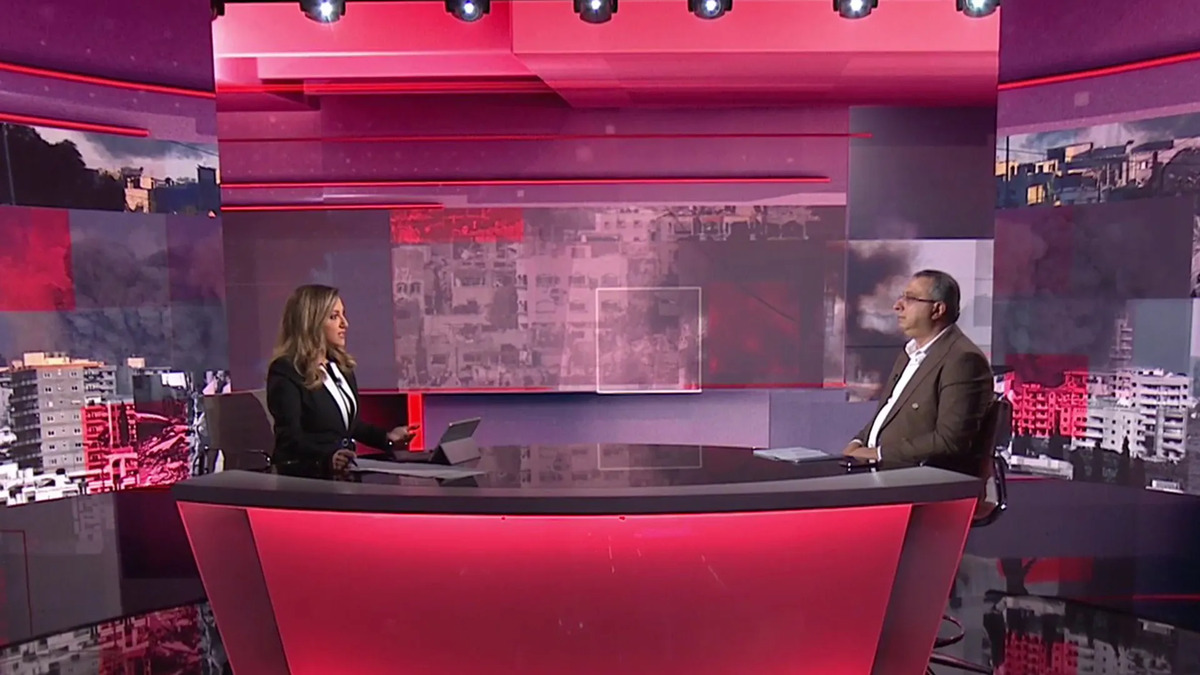
Qassem added during a television interview with an Arab channel that the presence of the movement's delegation in Cairo is evidence that Hamas is serious about cooperating with mediators to move to the second phase of the ceasefire agreement.

Qassem pointed out that the pathways of the second phase are complex, emphasizing that the movement has done what is required of it in light of the continued violations and breaches by the occupation.

PALESTINE

Mon 24 Nov 2025 12:28 am - Jerusalem Time

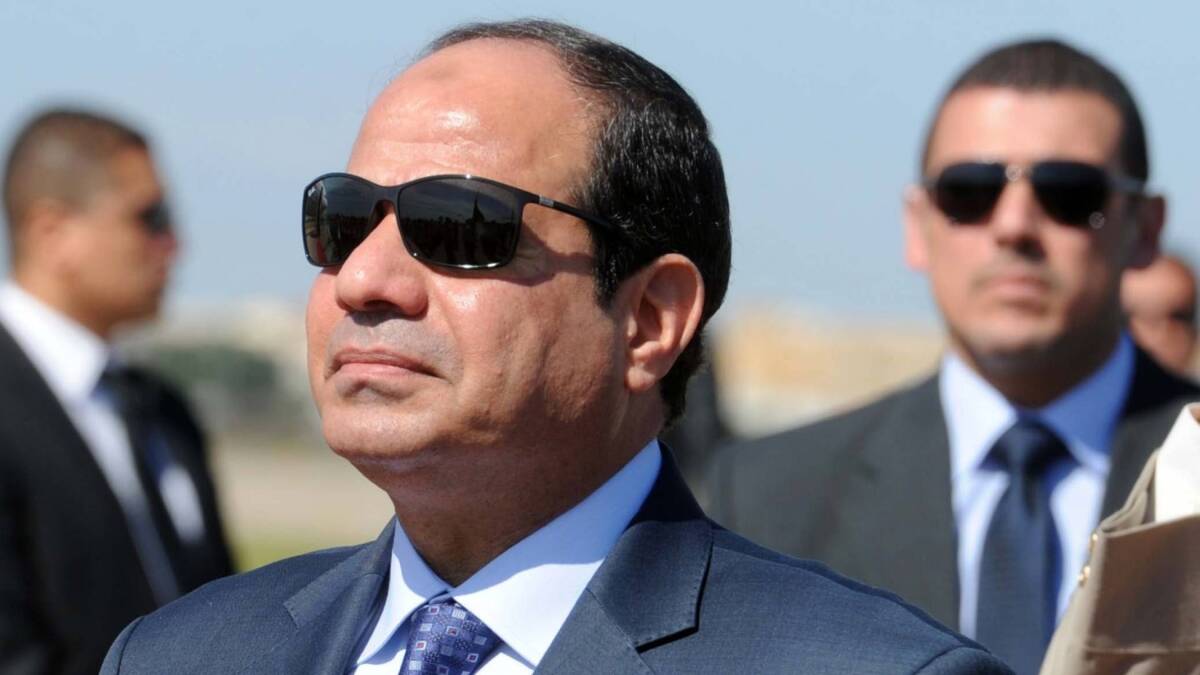
Former "Mossad" Director: Sisi has thwarted the "temporary displacement" plan for Gazans that was devised by "Israel"

Yossi Cohen, the former head of the intelligence agency (Mossad), revealed in his recently published Hebrew book titled: 'With Deceptions, You Make War for Yourself', that he is the author of a plan to evacuate Palestinians from the Gaza Strip during the current war.

Cohen claims that his idea is not about permanent displacement, but 'temporary', explaining that its goal was to reduce civilian casualties.

Cohen reveals, in the part published in an extensive reading by the newspaper 'Asharq Al-Awsat', that he was the author of a plan to relocate about one and a half million Palestinians from Gaza to the Egyptian Sinai, in response to the Hamas attack on October 7, 2023.

He states that 'the cabinet approved the plan', and tasked him with convincing Arab countries of it.

Indeed, Cohen traveled to Arab capitals, but found that Arabs feared that the 'temporary' relocation would turn into permanent displacement.

At that point, Cohen expressed his willingness to bring international guarantees that the migration would be temporary, and established contacts in this regard with the United States, Britain, Japan, China, and India.

However, Egyptian President Abdel Fattah el-Sisi decisively rejected the plan.

Despite Cohen's repeated emphasis on the necessity for occupying leaders to possess humility, he simultaneously seems to repeat the mistakes of arrogance.

Instead of criticizing the atrocities against Gazans, Cohen sees the problem as stemming from a failure of propaganda, considering that the occupying government does not devote enough effort to present the facts.

Cohen ignores in this context that the occupation has enormous influence in foreign media, as well as the fact that many Jews have joined protests against the actions of the occupation.

Cohen goes further, expressing his belief that leaders are distancing themselves from the people and lack human feelings and compassion towards the citizens of the occupation themselves, which makes them unable to present the reality of suffering to global public opinion, leaving the world susceptible to Hamas's propaganda.

Cohen discusses the methods of operation of the 'Mossad' and ways to recruit agents, noting that he played the role of an 'antiquities expert' in Baalbek, Lebanon, and a 'tea bag collector' in front of a Lebanese tea merchant in Sudan.

He reveals that the methods of the occupying intelligence to recruit agents rely on searching for human weaknesses and exploiting deviant behaviors, as well as seeking interests (financial, ideological, sexual, and others).

Cohen asserts that the 'Mossad' is the most important project for international cooperation, citing many countries that are 'indebted' to the Mossad for uncovering terrorist operations and cells in Belgium, Australia, and elsewhere, including Turkey despite the poor relations with it.

Cohen concludes by indicating his endeavor to present himself as the best candidate for leading the government, affirming: 'A strong leader is one who makes concessions', linking peace with the necessity of 'showing strength'.

PALESTINE

Sun 23 Nov 2025 11:40 pm - Jerusalem Time

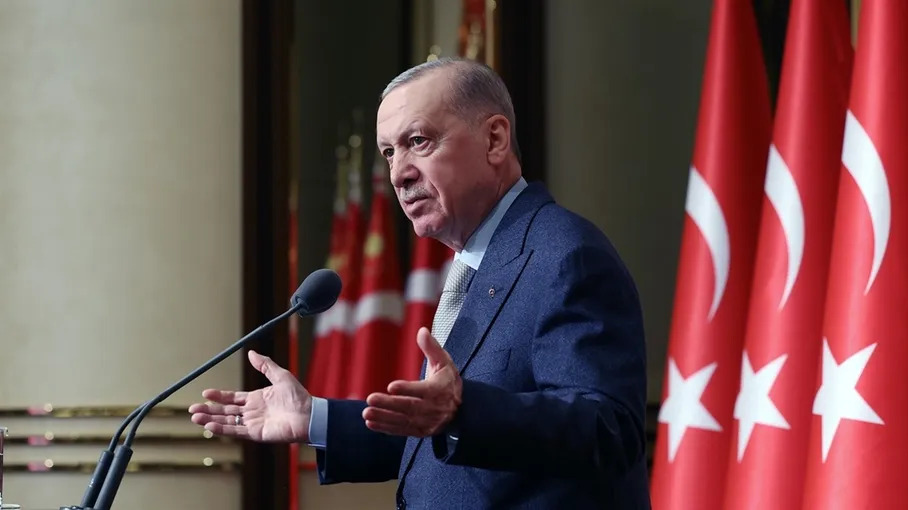
Erdogan: Stopping the war in Gaza is a global necessity and Turkey's participation is under review.

Turkish President Recep Tayyip Erdoğan said: "We will review the status and position of our forces regarding their participation in Gaza, especially at the level of our Ministry of Defense, and after this assessment, we will make our final decision."

This comment came in reference to Turkey's participation in the international stabilization force intended to be deployed in the Gaza Strip, and the objections from the occupying state.

The Turkish president clarified on Saturday that the ceasefire in Gaza does not only affect the Palestinians, but is essential for achieving peace at the global level.

Erdoğan added, during a speech at one of the sessions of the G20 summit held in Johannesburg, South Africa, that "the continuation of the ceasefire in Gaza, which was achieved through the initiatives of U.S. President Donald Trump and contributions from leading regional countries, is of utmost importance not only for the Palestinian people but for peace in the entire world."

He pointed out that "United Nations reports indicate that the destruction caused by the occupying state due to its attacks on Gaza has set back the development trajectory in the Palestinian territories by at least 70 years."

He continued by saying that "what we witnessed in Gaza was not limited to the destruction of infrastructure, but also included environmental damage, while the loss of more than 70,000 children, women, and adults is an irreplaceable loss that cannot be erased from the memory of future generations."

He emphasized that "at this stage, focus should be on accelerating humanitarian aid activities in the Gaza Strip and starting reconstruction efforts without any delay."

He added: "We are determined and ready to contribute to the sustainability of the ceasefire on the ground and to assist in the reconstruction of Gaza, standing by the Palestinian people, as we have done so far."

The Turkish president noted "the necessity for the international community to continue its efforts for the two-state solution, which is the only way to achieve lasting peace in the Israeli-Palestinian conflict."

Erdoğan congratulated South Africa's leadership and people for "the brave stance they took on the issue of genocide that they raised against the occupying state at the International Court of Justice."

PALESTINE

Sun 23 Nov 2025 10:58 pm - Jerusalem Time

What transpired between Washington and Tel Aviv prior to the targeting of Al-Tabtabai in Beirut?

The Israeli airstrike that shook the southern suburb of Beirut and targeted a prominent military leader in Hezbollah has raised questions about the nature of coordination between Washington and Tel Aviv before the strike was carried out, amid fears of a new escalation.

Walid Al-Omari, the director of Al Jazeera's office in Palestine, stated that the information being circulated indicates that Israel enjoys a "clear American cover" to proceed with escalating its military operations in Lebanon, in exchange for reducing the level of tension in the Gaza Strip.

Al-Omari confirmed during a segment on Al Jazeera that the Israeli security establishment does not expect a significant response from Hezbollah to the assassination of Al-Tabtabai.

After the airstrike, a Lebanese security source reported the assassination of Hezbollah military leader Haytham Al-Tabtabai in the Israeli strike on the suburb, which resulted in the deaths of 5 people and injuries to 28 others, according to the Lebanese Ministry of Health.

Israel described Al-Tabtabai (known as Abu Ali Al-Tabtabai) as the acting chief of staff of Hezbollah and the second person in the party.

Later, Hezbollah announced in a statement that "the great jihad leader Haytham Al-Tabtabai was martyred as a result of a treacherous Israeli aggression on the southern suburb."

For his part, former U.S. State Department official Thomas Warick confirmed that Washington was informed of the strike, but was not notified of the identity of the target.

Warick noted during his remarks that Al-Tabtabai is classified as a terrorist by the U.S., expressing his belief that Israel "will not allow its citizens in the north to be threatened amid the party's efforts to rebuild its military capabilities."

However, Axios reported a senior U.S. official saying, "Israel did not inform us in advance about the attack on the southern suburb and we were notified immediately after it occurred."

The official clarified, "We knew for days that Israel was planning to escalate in Lebanon but we did not know the timing of the strike."

In the same context, Al Jazeera's correspondent at the U.S. Department of Defense (Pentagon), Fadi Mansour, reported that a well-informed U.S. official on military communications between Washington and Tel Aviv stated that Israel had previously informed the United States about carrying out the strike.

However, this official refrained from confirming whether Washington received details about the identity of the target or granted a direct "green light" for the operation.

The source indicated that Washington considers the situation between Israel and Lebanon to be "extremely fragile," and that Israel's increase in the level of its military operations is due to two factors: the Lebanese army's ability to complete the disarmament of Hezbollah south of the Litani River, which the Americans see as insufficient due to limited capabilities and political mandate, as well as Israeli security assessments that the party is rebuilding itself and enhancing its military capabilities.

Since October of last year, the Israeli occupation army has intensified its attacks on Lebanon, amid ongoing media leaks about plans to launch a new attack on it.

Since the signing of the latest ceasefire agreement with Hezbollah on November 27, 2024, Israel has been violating the agreement daily, resulting in hundreds of casualties and injuries.

LATEST NEWS

Sun 23 Nov 2025 10:13 pm - Jerusalem Time

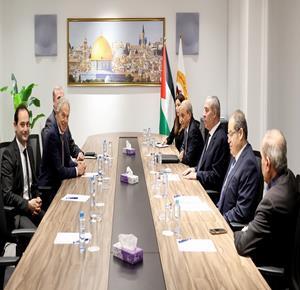
Al Sheikh discusses with Blair the latest developments following the United Nations Security Council decision.

The Vice President of the State of Palestine, Deputy Chairman of the Executive Committee of the Palestine Liberation Organization, Hussein Sheikh, discussed in his office in Ramallah with Tony Blair and a representative of the U.S. government the latest developments related to the post-today phase, following the issuance of the United Nations Security Council resolution, in addition to discussing issues related to the Gaza Strip and the West Bank, and the essential requirements for achieving the right to self-determination and statehood.

Sheikh praised the efforts of U.S. President Donald Trump and all mediators and partners including Egypt, Qatar, Turkey, the United States, Saudi Arabia, Jordan, the United Arab Emirates, Indonesia, Pakistan, and partners from the European Union and its member states, in establishing a ceasefire, delivering humanitarian aid, reconstruction, and moving towards peace, security, and stability.

The meeting was attended by Major General Majid Faraj, head of the General Intelligence Service, the President's advisor for diplomatic affairs Majdi Khaldi, and the spokesperson for the presidency Nabil Abu Rudeineh.

PALESTINE

Sun 23 Nov 2025 9:52 pm - Jerusalem Time

"Yedioth": Israel is prepared for renewed wars in Gaza, Lebanon, and Iran.

The Hebrew newspaper "Yedioth Ahronoth" reported on Sunday about Tel Aviv's readiness for what it described as "renewed wars" in Gaza, Lebanon, and Iran, noting that "Israel is not sure that the United States understands this readiness."

The newspaper stated: "Theoretically, Israel is in a ceasefire with both Hamas in Gaza and Hezbollah in Lebanon, but practically, significant attacks have occurred in both arenas, including the assassination of a senior official in Hamas's military wing and bombings in the Bekaa Valley deep in Lebanon."

It continued: "On the third front, Iran, it is clear that Tehran is preparing for the next battle, and there is concern about the outbreak of another conflict with the Islamic Republic sooner or later," pointing out that Tel Aviv recently decided to intensify attacks on Hezbollah, in light of what it considers a failure on the part of the Lebanese army and government, which are not fulfilling their duty under the ceasefire agreement and are not disarming Hezbollah.

It noted that Israeli attacks are primarily focused in northern Litani and the Bekaa, as well as southern Lebanon, while the Americans are less engaged than before, and the international community is criticizing them for not closely monitoring the implementation of the agreement.

Yedioth said: "In light of this criticism, the United States appointed a new ambassador to Lebanon, Michel Aoun, who is expected to pressure the Lebanese government to take matters seriously," adding that "the United States canceled the visit of the Lebanese army commander to Washington, following his statement that Israel is the enemy."

It continued: "The problem that Israel recognizes is that a large part of the Lebanese army is still composed of Shiites, making it difficult to confront them with Hezbollah," believing that "another issue is the low salaries of Lebanese army soldiers, which are around $200, compared to the salaries of Hezbollah members, which are three times higher."

It confirmed that the economic situation in Lebanon remains dire, and the constant fear of collapse and civil war prevents any radical actions, claiming that Hezbollah exploits this weakness to strengthen its presence and is still able to smuggle weapons into Lebanon.

PALESTINE

Sun 23 Nov 2025 9:04 pm - Jerusalem Time

A Hamas delegation discusses the ceasefire agreement in Gaza with the head of Egyptian intelligence.

A delegation from the "Hamas" movement discussed on Sunday with the head of the Egyptian General Intelligence Service, Hassan Rashad, in Cairo, the developments of the ceasefire agreement and the general situation in the Gaza Strip, including the second phase of the agreement.

The movement stated in a statement published on the "Telegram" platform that its delegation discussed with Rashad, "the developments of the ceasefire agreement, the general situation in the Gaza Strip, and the nature of the second phase of the agreement."

The Hamas delegation included the head of the leadership council, Mohammed Darwish, and council members Khaled Meshaal, Khalil Hayya, Nizar Awadallah, and Zahir Jabareen, in addition to political bureau member Ghazi Hamad.

The movement's delegation confirmed "the movement's commitment to implementing the first phase of the agreement."

It emphasized "the importance of stopping the ongoing Zionist violations that threaten to undermine the agreement, through a clear and specific mechanism under the sponsorship and follow-up of the mediators, which involves informing the mediators of any violations to take the necessary measures to stop them immediately and prevent unilateral actions that escalate matters and harm the agreement."

PALESTINE

Sun 23 Nov 2025 8:10 pm - Jerusalem Time

"Yedioth Ahronoth": The American administration is not committed to establishing a Palestinian state.

The approval of Trump's plan by the United Nations Security Council has sparked media controversy in Hebrew media, as the American announcement is described as a "path towards a Palestinian state."

According to a report published by the Hebrew newspaper Yedioth Ahronoth, some analysts, including prominent researcher at the Diane Center for Palestinian Affairs Haril Hurif, believe that the announcement presents opportunities for the Palestinian Authority and poses significant challenges in dealing with Hamas.

Hurif clarified that the current U.S. administration is not practically committed to establishing a Palestinian state, noting that the announcement does not represent a concrete step on the ground, but it could turn into a pressure tool on Israel in the future if a Democratic administration takes over the Authority.

The researcher at the Diane Center stated: "This Republican administration is not ideologically committed to the two-state solution, unlike previous Democratic administrations, so I do not see any practical progress during its term."

The report added that the American announcement focuses on supporting the two-state solution agenda, placing the Palestinian Authority in the position of the biggest beneficiary in terms of international legitimacy, and enhancing its status against Hamas. Nevertheless, Prime Minister Benjamin Netanyahu welcomed it as "a plan that will achieve peace and prosperity" and expand the scope of the Abraham Accords, stating that "Israel seeks peace."

The report indicated that the announcement imposes difficult internal commitments on the Palestinian Authority, primarily related to educational reform and stopping funding for what is claimed to be "violence," emphasizing that education still faces international criticism for not including values of peace and recognition of Israel, while the issue of paying salaries to families of terrorists represents a greater challenge.

It added that the Authority has tried over the past two years to circumvent American pressures through social welfare programs, but observers doubt the seriousness of full commitment to these measures, according to Hurif.

The report continued that the Palestinian Authority recognizes that this opportunity allows it to enhance its international standing, but it faces difficulty in asserting its control over the Gaza Strip, where Hamas remains the controlling party.

Hurif explained: "We can consider the Palestinian Authority a legitimate framework, but it is currently unable to exert security control over Gaza and does not enjoy legitimacy among the population there, making any practical implementation of the Palestinian state path a long and complicated process."

The report also points to the Saudi role in this context, as Crown Prince Mohammed bin Salman demanded American guarantees to conduct negotiations aimed at establishing a Palestinian state within five years, as part of any normalization agreement with Israel.

These Saudi demands have been viewed in Israel as a non-binding commitment, but the announcement provides legal and political legitimacy for any future steps, according to Hurif.

Hurif described the announcement as akin to an "American Balfour Declaration," as it creates a basis that can be used in the future to support any pressure on Israel, especially when a Democratic administration takes over the Authority.

The report noted that the wording of the announcement aims to gain the largest number of international partners and support international law in the region, allowing for the establishment of clear frameworks for managing Palestinian territories, which are currently not under traditional sovereignty.

The report confirmed that the success of any path towards a Palestinian state requires the Authority's commitment to internal reforms and the ability to coordinate with the international community, taking into account the internal division with Hamas, which remains the biggest obstacle to any tangible progress.

Hurif added: "Even if the Authority shows intentions for reform, the reality in Gaza makes any actual implementation of the Palestinian state path a complicated process that takes many years and may require significant political shifts at the level of the U.S. and regional administration."

ARAB AND WORLD

Sun 23 Nov 2025 6:33 pm - Jerusalem Time

Washington repositions itself: Acknowledgment of the difficulty in disarming Hamas and adopting a tougher equation towards Lebanon.


In recent weeks, a new political conviction has taken root in Washington, namely that the old Israeli goal of "completely disarming Hamas" is no longer achievable in the foreseeable future. After more than two years of war in Gaza, and despite the immense destruction and ongoing military operations, the U.S. administration is discovering that Hamas's ability to endure, rebuild, and reposition itself under harsh conditions makes discussions about "militarily dismantling it" closer to political wishes than to a viable strategy. This shift in perspective does not reflect a change in Washington's stance towards the movement as much as it reflects a deeper understanding of the nature of the military and political environment in the sector, and of the equations that arise in prolonged wars when excessive force fails to achieve definitive and conclusive results.

The American statements issued in recent months carry increasing signals of this new approach, as officials in the Trump administration have begun to speak about "moving to the next phase" as the most realistic option, and about "managing the risks" of Hamas's capabilities, rather than eradicating it. This language represents a gradual departure from the rhetoric of the early months of the war, when Washington fully adopted the Israeli narrative about the necessity of "destroying the movement." With the accumulation of data on the ground, it has become clear that Hamas's military capability, despite the strikes, has not been erased, and that its organizational and political structure remains capable of adapting to enormous and unprecedented blows. This realization drives Washington to focus on a transitional Gaza agreement, which it has been trying for months to make a permanent path based on a sustainable ceasefire, multi-party security arrangements, and conditional reconstruction processes, leading to the establishment of a new governance structure that enjoys regional and international support.

This shift in Gaza parallels another equally serious development in the U.S. administration's approach to the Lebanese front. The information circulating in Washington, and what appears in diplomatic and military statements, indicates an increasing American acceptance of the idea of the Israeli army conducting a wide operation or a "major strike" in Lebanon, whether limited in scope or broader in nature aimed at altering the rules of engagement with Hezbollah. It seems that Washington, despite its repeated assertions that it does not want a regional war, has become more willing to overlook a "calculated" wide operation, as long as it does not directly involve the United States in a confrontation with Iran and does not explode the northern front to an uncontainable extent. This acceptance is linked, in part, to both internal and external American calculations, as Washington sees that the increasing pressure on Israel in Gaza may require, from the perspective of the Israeli military establishment, a balance through the north, and it views the Lebanese file as a means of indirect pressure on Tehran and its affiliated parties when it comes to the Gaza issue.

However, this direction is not without contradictions. Trump, who fears the repercussions of the war on his domestic political situation and in the swing states, does not want a regional explosion, while at the same time does not want a confrontation with the Israeli security establishment that has been pressing for months towards a "resolution" on the northern front. Thus, Washington finds itself in a gray area, trying to prevent the regional expansion of the war on one hand, while on the other hand allowing Israel to operate militarily within certain limits, in a fragile balance that makes the American decision appear scattered between internal considerations, strategic commitments to Israel, and a desire to avoid the region slipping into a wide confrontation that is difficult to control.

The current American position reflects a clear duality: an acknowledgment of the failure of the bet on military force in Gaza, and a desire to expedite a political transition that limits Hamas's influence without attempting to erase it by force, while at the same time being prepared to give Israel greater maneuvering space in Lebanon with the aim of changing the strategic landscape on its northern borders. Between this and that, Washington appears to be moving in a narrow space between calming the south and the possibility of escalation in the north, at a time when the balance of power remains fragile, regional calculations are intertwined, and the consequences of any miscalculation could lead to an explosion that none of the parties can fully contain.

PALESTINE

Sun 23 Nov 2025 3:18 pm - Jerusalem Time

What are the main obstacles to reaching the thousands of bodies under the rubble of Gaza?

The remains of thousands of victims in the Gaza Strip are still under the rubble due to the inability of local recovery teams to work in targeted areas during the war, and because of the absence of heavy machinery and the Israeli occupation's prevention of its entry.

A report has documented the details of nearly 10,000 bodies remaining under the rubble of buildings and facilities destroyed by Israeli fighter jets during the genocide against the Gaza Strip, with families buried under the rubble along with their names, life details, and memories.

The Ministry of Health in the Gaza Strip estimates that more than 10,000 bodies are still under the rubble or are missing, whether they were alive or dead.

Amid the Israeli military operations and systematic destruction, the intervention and recovery devices in the sector have lost the logistical capacity to operate in aerial targeting areas.

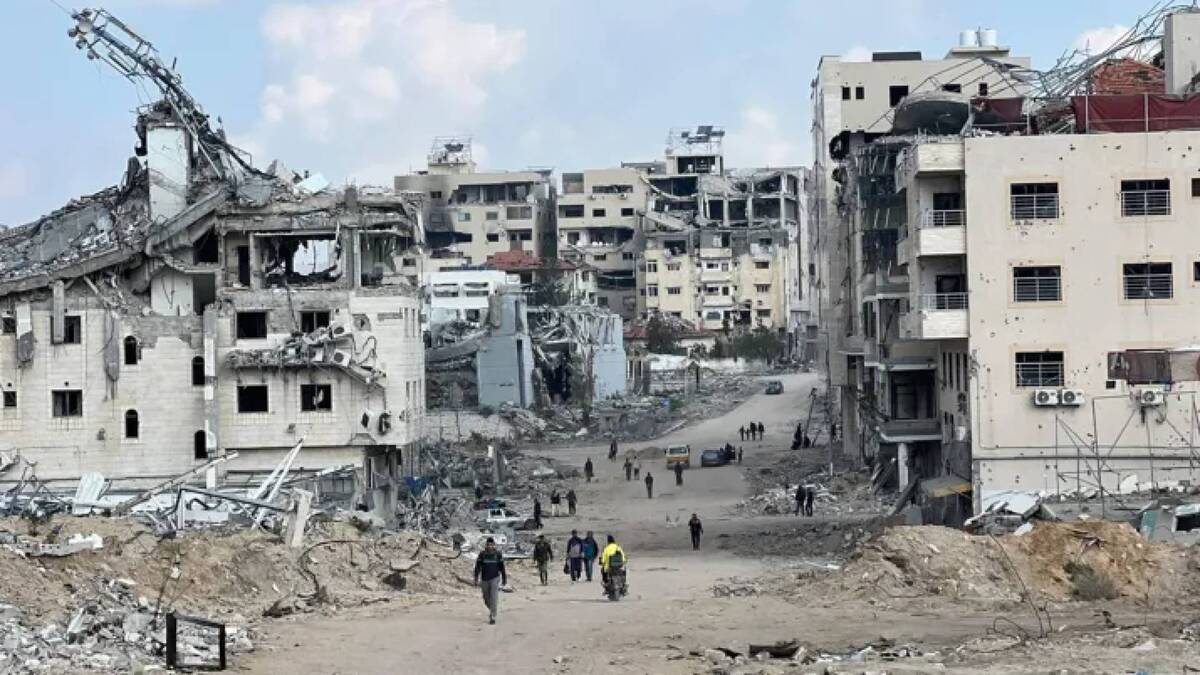
The Government Media Office in Gaza estimates the volume of rubble in the sector at more than 60 million tons, and it is likely that the areas with high destruction density have buried the majority of the victims beneath them.

Unexploded ordnance adds to the complexities of recovering bodies from under the rubble.

United Nations data estimates that nearly 7,000 tons of unexploded ordnance contaminate areas of the sector, which itself poses a direct danger to search and recovery teams and to the remains as well.

While Israel obstructs the entry of necessary machinery to recover the remains of Palestinian victims from under the rubble, the search process with primitive tools becomes futile.

Even if any remains are found, the means of identifying them through DNA testing will not be available, as this technology is not available in the forensic laboratories in the sector and Israel prevents its entry.

The report indicates that these combined factors will turn the task of recovering victims from under the rubble into a long-term nightmare with uncertain endings.

PALESTINE

Sun 23 Nov 2025 2:04 pm - Jerusalem Time

Gaza Health: The death toll from the Israeli genocide rises to 69,756.

The Palestinian Ministry of Health announced on Sunday that the death toll from the Israeli genocide in the Gaza Strip since October 2023 has risen to "69,756 martyrs and 170,946 injured."

The genocide, which lasted for two years, ended with a ceasefire agreement between Hamas and Israel that came into effect on October 10, 2025.

The ministry stated in a daily statistical report that hospitals in the sector received approximately "23 martyrs in the past 24 hours, including 21 new martyrs and 2 recovered from under the rubble, along with 83 injured."

The ministry did not clarify the circumstances of the new casualties and injuries, but Israel continues to violate the ceasefire agreement by bombing civilian areas in various parts of the sector, in addition to firing at civilians.

The ministry's statement reported that Israel has killed 339 Palestinians and injured 871 others since October 11, as part of its violations of the agreement.

It confirmed the presence of victims under the rubble of destroyed homes and in the streets, where rescue and civil defense teams are unable to reach them to recover them.

Alongside the repeated violations, Israel is evading its commitments outlined in the ceasefire agreement, including allowing the entry of hundreds of heavy machinery needed to remove tons of rubble to recover the bodies of Palestinians buried under the debris.

At the same time, Tel Aviv is hastening to recover the bodies of its remaining captives in Gaza, allowing limited equipment to enter for this purpose.

The office estimates that there are about 9,500 missing Palestinians, either under the rubble or whose fate remains unknown due to the Israeli genocide.

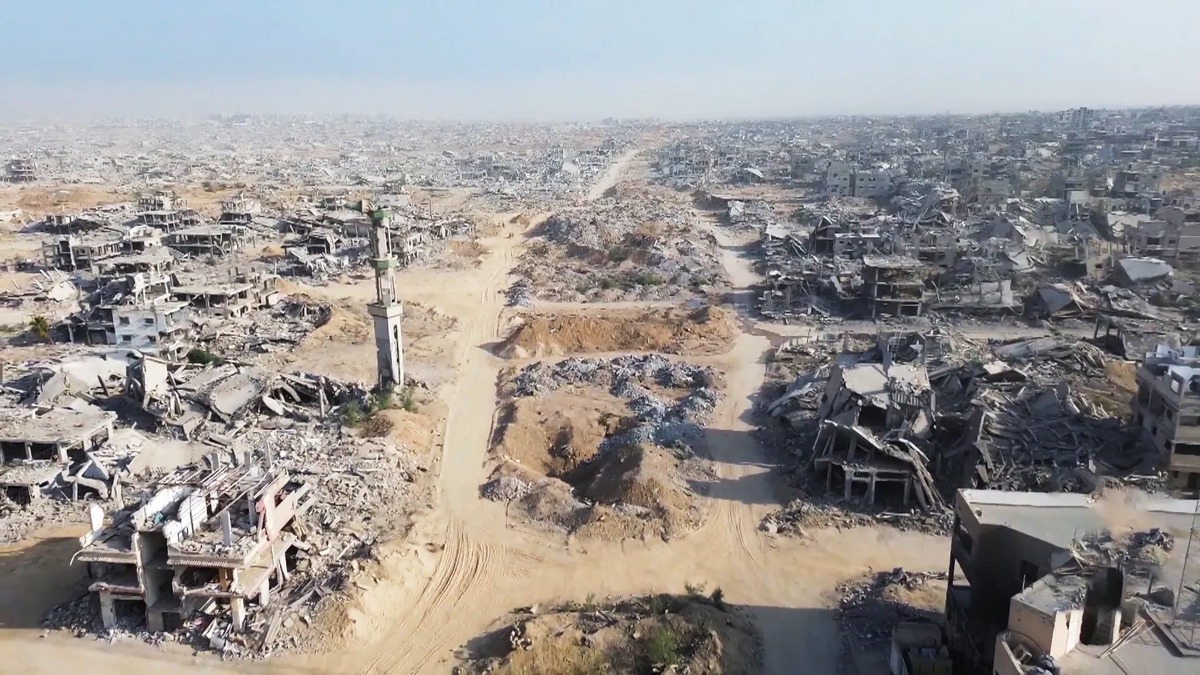
In addition to the casualties, the genocide war has caused immense destruction affecting 90 percent of the civil infrastructure in the sector, leaving 70 million tons of rubble.

PALESTINE

Sun 23 Nov 2025 1:58 pm - Jerusalem Time

Palestinian Authority: Harsh detention conditions faced by "Ofer" Israeli prisoners

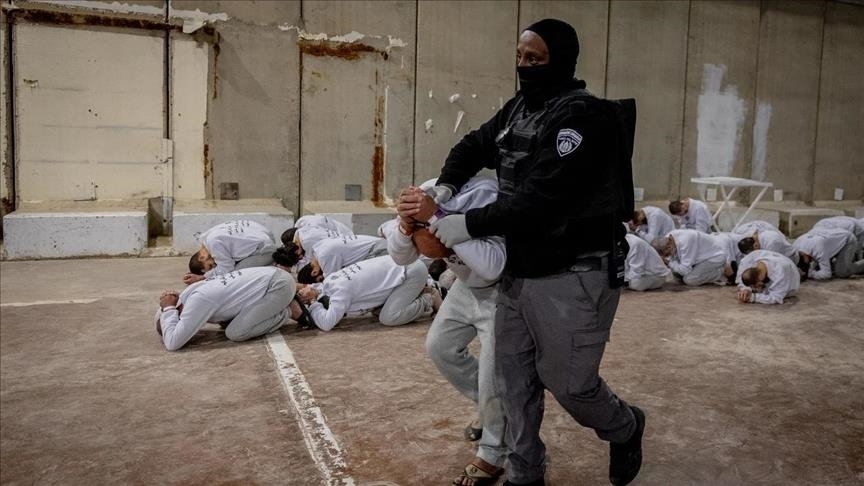
The Palestinian Authority for Prisoners and Released Prisoners stated that Palestinian detainees in the Israeli military detention center "Ofer" west of Ramallah are facing harsh and humiliating detention conditions.

The Authority's lawyer reported that prisoner Ahmad Adel Harish from the town of Beitunia, who has been detained since 31/8/2025, is suffering from severe stomach pains suspected to be caused by a germ, but he is only receiving painkillers.

The lawyer also conveyed the account of prisoner Naji Sharif Awad Allah (24 years old) from Beitunia, describing the detention conditions as extremely harsh, with continuous beatings, scarce food, and a lack of cleanliness.

PALESTINE

Sun 23 Nov 2025 12:42 pm - Jerusalem Time

In light of the ongoing Israeli violations.. Is the Gaza agreement collapsing?

As the days pass and the continuous attacks by the Israeli occupation forces on the Gaza Strip escalate, fears are growing over the possibility of the collapse of the ceasefire agreement that the Palestinian resistance in Gaza reached with Israel under the plan proposed by U.S. President Donald Trump.

Since the signing of the agreement, the Israeli occupation has been committing continuous violations, with a report broadcast by Al Jazeera documenting more than 400 Israeli violations, which varied between gunfire, incursions, shelling, and the demolition of homes. The ongoing violation of the ceasefire has resulted in more than 340 martyrs and 800 injured.

Notably, Israel always uses excuses to justify its violations of the ceasefire, prompting the Islamic Resistance Movement (Hamas) to repeatedly call on mediators for urgent intervention to stop the Israeli violations.

Hamas stated in a statement that "the escalation of the occupation's violations places the mediators and the U.S. administration before the responsibility of confronting its attempts to undermine the ceasefire in Gaza."

Hamas leader Ezzat al-Risheq denied that Hamas had informed U.S. envoy Steve Wittekov that the ceasefire agreement had ended, as claimed by Israeli sources, affirming that Israel "fabricates excuses to evade the agreement and return to the war of extermination."

He emphasized that it is Israel that systematically violates the agreement on a daily basis.

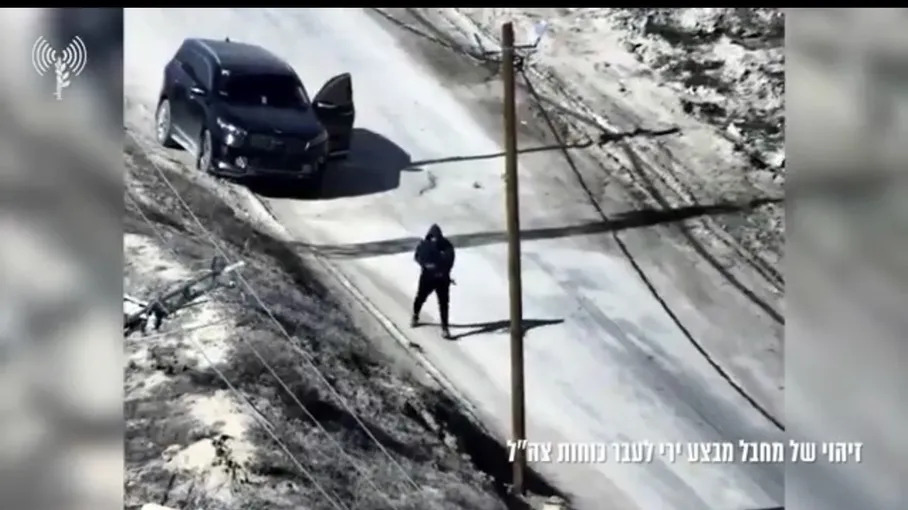
Israel claims that Hamas is the one violating the ceasefire, and the office of the Israeli Prime Minister stated in a statement yesterday that "Hamas violated the ceasefire by sending an armed individual to an area occupied by the Israeli army in Gaza to carry out an attack," which the movement denied and demanded pressure on Israel to reveal the identity of this armed individual.

In this context, Dr. Ibrahim Fraihat, a professor of international conflicts at the Doha Institute for Graduate Studies, stated in an interview with the program "Beyond the News" yesterday that Israel wants to maintain its security dominance in Gaza, and that this is done in agreement with the U.S. administration.

This is the same opinion held by senior researcher at the Al Jazeera Center for Studies, Dr. Laqaa Maki, who said in the same program that the U.S. administration is pleased with what Israel is doing in Gaza.

Israel insists on the necessity of disarming the Palestinian resistance in Gaza before anything else, even though the second phase of the Gaza agreement includes a series of interconnected points, such as the withdrawal of occupation forces, reconstruction, and the formation of a committee to manage Gaza.

For his part, the professor of international conflicts at the Doha Institute for Graduate Studies states that Israel's goal is to dismantle and completely eliminate the resistance, considering it an existential battle, noting that Israel carries out targeting and assassinations without providing evidence for its claims, meaning it throws accusations without substantiation.

Trump had stated last month that the second phase of the Gaza agreement had indeed begun, confirming that senior U.S. officials had informed Hamas that it must disarm quickly, or else it would be done violently.

Academic and Israeli affairs expert Dr. Mahmoud Yazbek believes that Israel is exploiting what he calls the "yellow zone" between the implementation of the first phase of the agreement and the second phase.

Yazbek told the program "Beyond the News" that "the mediators do not have enough power to pressure the United States to prevent Israel from what it is currently committing."

He emphasized that the main issue now is the mediators, who he said Trump has opened a direct line to, and they must utilize this line for the U.S. president to play his role in stopping the Israeli assaults on Gaza.

Yazbek added that the failure of the mediators to pressure the U.S. administration directly will allow Israeli Prime Minister Benjamin Netanyahu to exploit the new reality he is shaping in the region.

PALESTINE

Sun 23 Nov 2025 11:14 am - Jerusalem Time

Yedioth: The occupation trains foreigners to understand the formations of Hamas and the tunnels.. It pointed to two Arab countries.

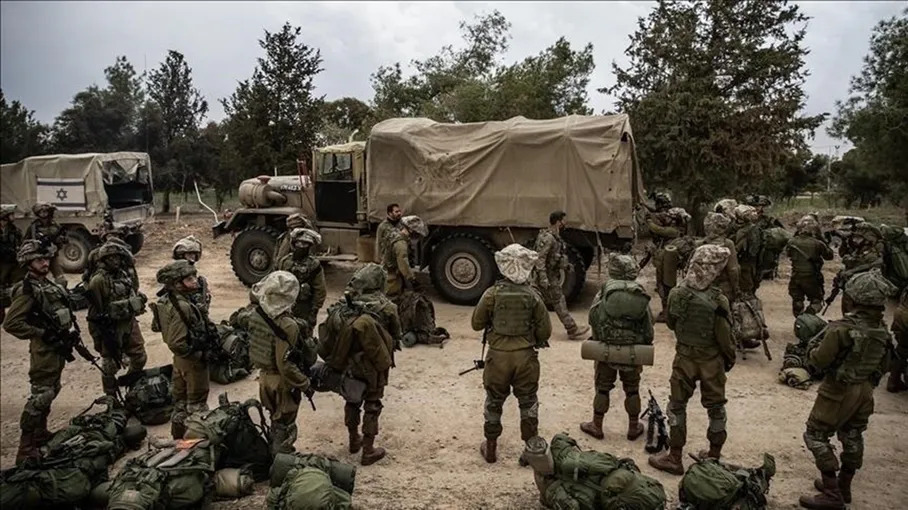
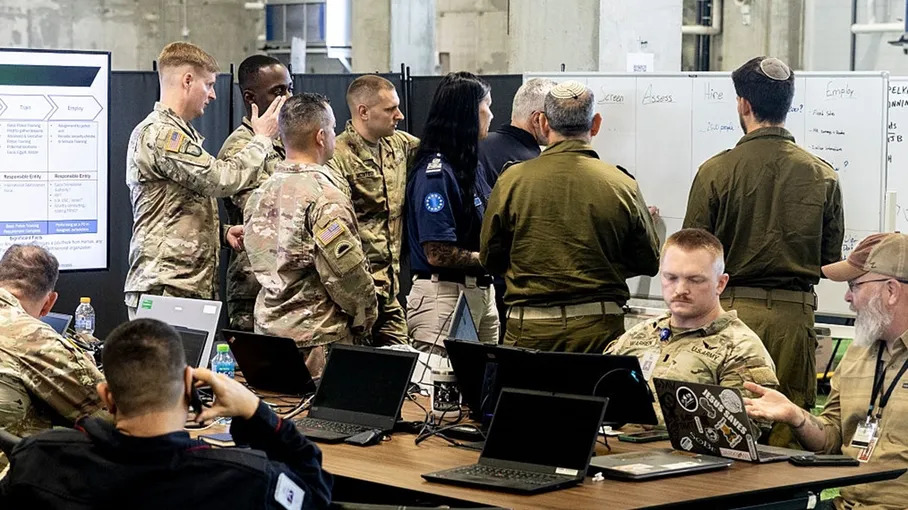
The newspaper Yedioth Ahronoth reported that the occupying army provides reports and courses for foreign officers at the American center regarding military details about the Al-Qassam Brigades, their military structure, and the tunnel network.

The newspaper revealed that it learned, contrary to previous reports, that the multinational force, if actually established and if various countries, especially Islamic ones, agree to send soldiers, will not be deployed in the Gaza envelope as previously discussed, but will be stationed at a base within the Gaza Strip itself.

The security system of the occupation insists on this positioning, while the decision of the participating countries will carry significant weight, especially if they express concerns about the risks their soldiers may face while participating in the force.

To prepare the multinational force to operate on the ground, representatives of the Israeli military intelligence branch at the American headquarters present daily reports and reviews to foreign officers, explaining to them the operational structure of Hamas as a military organization.

The training includes the interior structure of the tunnels, the time required to build or repair an entrance to a tunnel that has been bombed, in addition to the military structure of the faction and the company within Hamas, the types of weapons, and the attack methods used, particularly the dual operations employing anti-tank missiles and snipers, which the movement intensified against the occupying army over the past year.

According to the newspaper, the goal of these measures is clear: to ensure that the force landing in Gaza after the scheduled training in special bases in Jordan and Egypt, likely alongside a police force equipped for similar tasks, is not caught off guard during its first encounter with Hamas.

The New York Times reported a few days ago that both Canada and the UAE, along with Germany, represented at a preliminary course for newcomers about what Hamas is, according to three officials.

The newspaper stated that the center is located 'in a dirty industrial area, south of Israel, bustling with a huge shipping warehouse repurposed with hundreds of American and Israeli soldiers, Arab intelligence officers, international relief workers, diplomats, and military personnel from all over Europe, and even from distant places like Singapore.'

PALESTINE

Sun 23 Nov 2025 10:30 am - Jerusalem Time

"The Cabinet" estimates: A new military operation in Gaza is "inevitable".. and conditional on the ceasefire being "the disarmament of Hamas"

Security and political estimates discussed within the corridors of the "Cabinet" indicate that the return to a military option in the Gaza Strip has become strongly on the table.

The agency reported that unnamed political sources stated that ministers in the occupying government "estimate that carrying out a new military operation in the Gaza Strip may be unavoidable."

The sources attributed this aggressive trend to what they described as "the growing strength of Hamas."

PALESTINE

Sun 23 Nov 2025 9:52 am - Jerusalem Time

Doctors Without Borders: Aid to Gaza is Insufficient and Harsh Winter Threatens Displaced People

The emergency coordinator for Médecins Sans Frontières in Gaza, Frantz Lof, stated that the humanitarian aid reaching Gaza is still insufficient despite the ceasefire, warning that if there is no significant improvement, the Palestinians in Gaza will once again face harsh winter conditions.

Lof added that despite the ceasefire reached on October 10, a large number of Palestinians have lost their lives due to Israeli violations, emphasizing that the ceasefire is extremely fragile and humanitarian aid is not clearly reaching those in need.

Lof indicated that humanitarian aid has almost completely stopped since the ceasefire began, noting that there is not a single health facility operating at full capacity in the Gaza Strip.

Lof said they have recently managed to bring in only about 5 aid trucks per week to Gaza, adding, "As a humanitarian medical organization, we are still severely affected by the restrictions imposed by the Israeli authorities on dual-use materials."

He further stated, "We are suffering from a severe shortage of some medical supplies, particularly essential spare parts for generators, hospitals, and vehicles. We are not allowed to bring in filters and cannot provide basic maintenance for the infrastructure."

He warned that health facilities rely on generators, and if they are not regularly maintained, they will remain without electricity, stressing the need for a significant increase in medical and humanitarian aid to ensure the maintenance of the facilities they support and other vehicles.

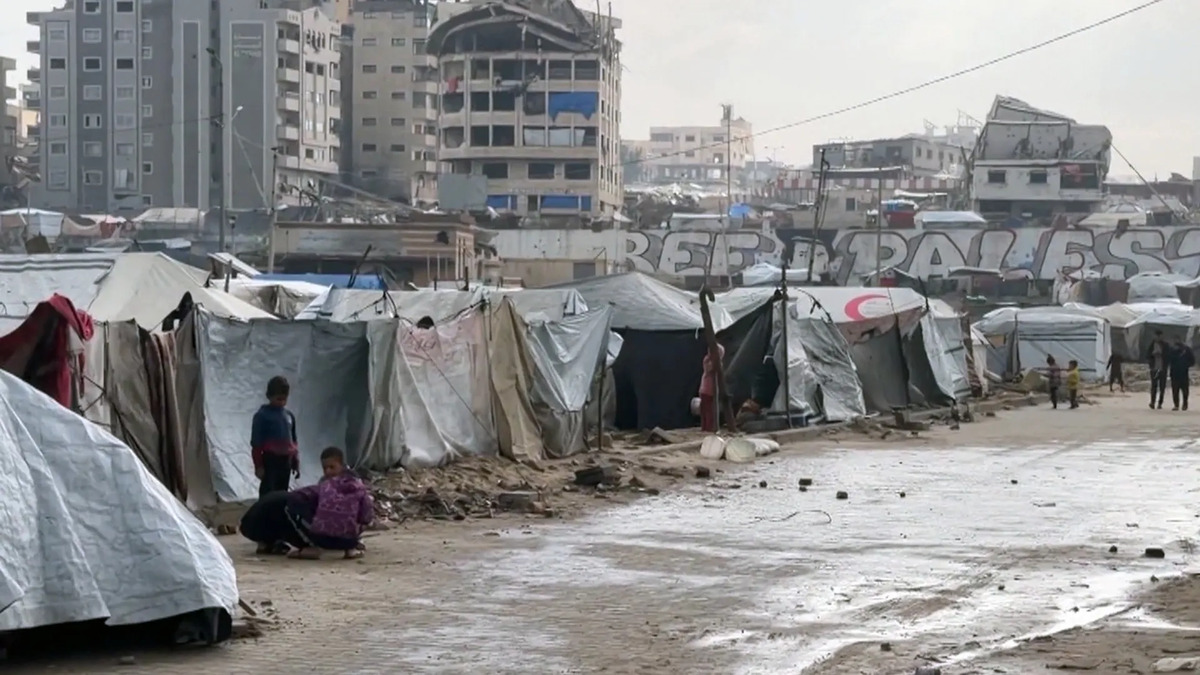
Winter is coming, and Lof highlighted the harsh winter conditions in Gaza, confirming that the drop in temperatures exacerbates the suffering of Palestinians in the region, saying, "Last weekend, we saw tents damaged by winds and rain, flooding with water due to the heavy rainfall."

He continued, "With the ceasefire, people feel anger over the insufficient number of tents that they need for protection from the rain and cold."

He called on the international community and countries that can influence Israel to pressure it to allow the entry of essential materials into Gaza.

He clarified, "The international community cannot say in January or February that it was unaware that winter was coming. We know it is coming, and we have experienced it. The people of Gaza endured a horrific winter last year, and it cannot be allowed to continue this year as well."

He concluded by saying, "This aid is insufficient in terms of quality and quantity. We have already gone through a terrible winter, and if there is no significant improvement, we expect to face the same horrific situation during December and January."

For two years since October 8, 2023, Israel, with American support, has committed genocide against the Gaza Strip, where about 2.4 million Palestinians live, resulting in more than 69,000 Palestinian martyrs and over 170,000 injured, most of whom are children and women, with reconstruction costs estimated by the United Nations at around $70 billion.

PALESTINE

Sun 23 Nov 2025 9:48 am - Jerusalem Time

Hebrew media: "Secret" American plans for an international force comprising 21 countries to disarm the Gaza Strip.

On the third floor of the American coordination headquarters in the settlement of 'Kiryat Gat', six planning teams meet daily, comprising representatives from 21 countries, to outline the future of Gaza's security and administrative sector, away from the eyes of the media.

An extensive report revealed that the Israeli occupation army estimates that the American administration will need 'weeks to a few months' to make a final decision regarding the formation of the 'multinational force', which is a necessary condition for the launch of the second phase of the 'Trump Plan' for peace.

The working teams in 'Kiryat Gat' discuss precise and sensitive details, starting from 'the name of the force and the entity granting the mandate', through to 'the nature of its armament and areas of deployment'.

LATEST NEWS

Sun 23 Nov 2025 9:00 am - Jerusalem Time

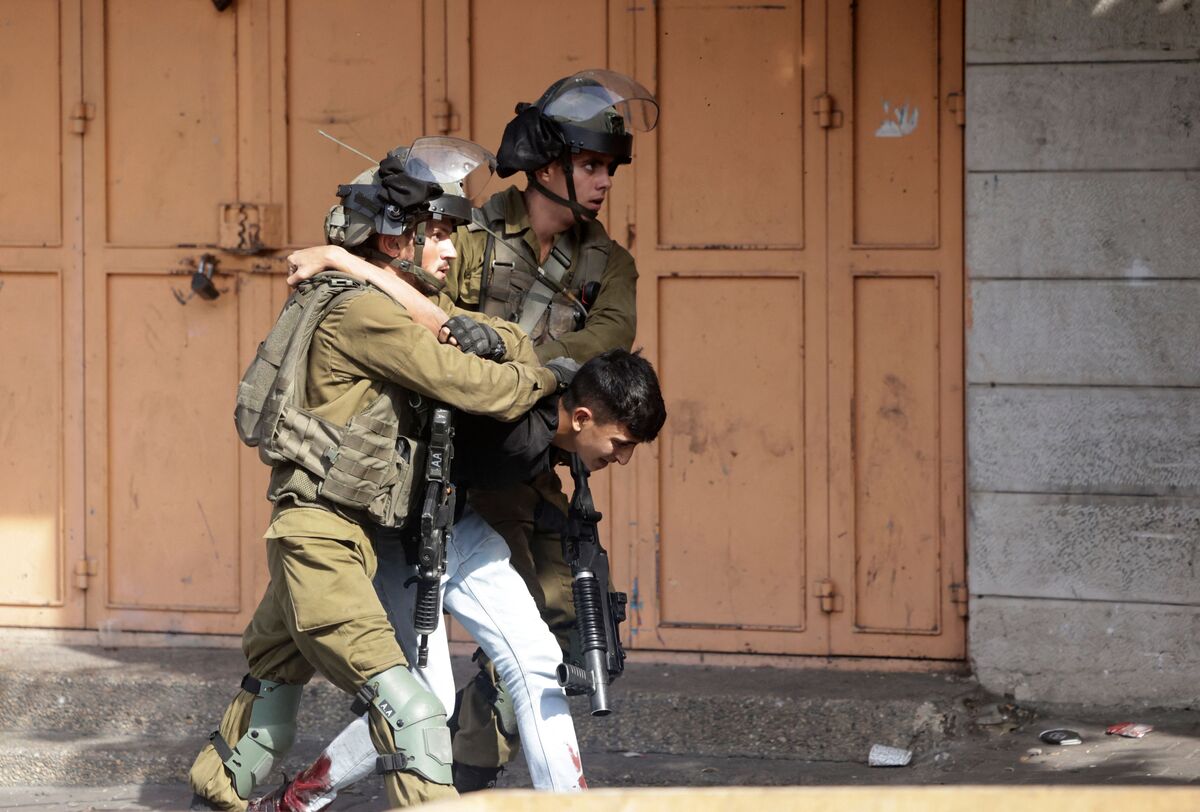
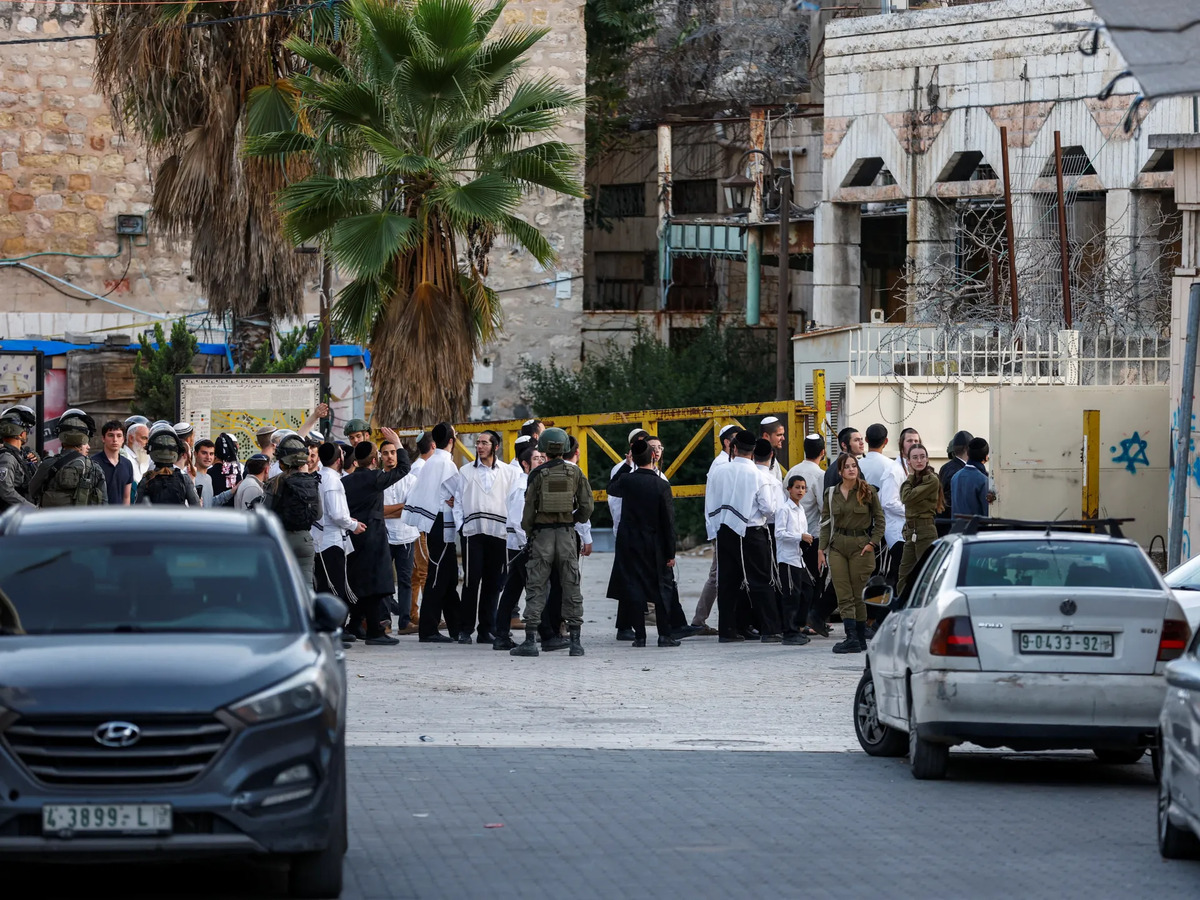
The occupation arrests 6 citizens, including a child, from Hebron.

Israeli occupation forces arrested six citizens today, Sunday, including a child from Hebron Governorate in the southern West Bank.

Security sources reported that the occupation forces stormed the town of Karma south of Hebron and arrested Ahmad al-Jabareen, Jabreen Ibrahim al-Jabareen, and from the town of Dora, Ratib Naji Amro and his son Hamza, following a raid on their homes, searching them, and tampering with their contents.

Activist Muhammad Awad from the town of Beit Ummar to the north stated that the occupation forces stormed the town and raided several citizens' homes, firing sound bombs and tear gas towards them, before arresting Musa Muhammad Bahar and his son, the child Hamza (14 years old), from their home.

PALESTINE

Sun 23 Nov 2025 8:39 am - Jerusalem Time

Why doesn't the United States rein in Israeli settlement?

Official Palestinian data indicates a significant increase in attacks by Israeli settlers in the West Bank, while the United States, despite labeling some of these crimes as "terrorism," does not exert pressure on Israel to stop them.

According to reports from the Palestinian Wall and Settlement Resistance Commission, settler attacks in the West Bank have nearly doubled during October and November of this year compared to the same period last year.

In numerical terms, settlers carried out 2,934 attacks during 2024, while they executed 4,538 attacks against Palestinians and their properties, including killings and property destruction, from the beginning of the year until mid-November.

In comparison, 360 attacks were carried out in October 2024, while settlers executed 766 attacks in October of last year.

The data also indicates that 247 attacks were recorded during the first half of November this year, compared to 156 attacks during the same period last year.

In light of this data, Palestinian concerns and fears are growing regarding what they perceive as an opening of the gates of hell in the West Bank, especially after the ceasefire agreement since October 10 of last year, which Israel continues to violate since its implementation.

Thus, the Palestinian presidency - in a statement from its spokesperson Nabil Abu Rudeineh - addressed the U.S. administration, warning of "the danger of the terrorist and brutal attacks carried out by settlers" in the West Bank, including "the burning of Palestinian homes and properties."

These attacks were considered "a blatant challenge to the efforts of the international community, especially to the efforts of U.S. President Donald Trump, and his endeavors aimed at solidifying the ceasefire in Gaza and starting political pathways that achieve security and stability for all."

Abu Rudeineh called on the U.S. administration - according to what was reported by the official Palestinian news agency on Saturday - for "immediate and firm intervention to stop this Israeli recklessness and disregard for the rights of the Palestinian people, and to stop providing support and protection to settlers to launch terrorist attacks on the Palestinian people, their land, and their sanctities."

According to Dr. Said Shaheen, head of the media department and a faculty member at Hebron University, the United States is completely biased towards Israel as an exceptional strategic ally in the region that serves all its interests.

He specifically points to the current Trump administration, considering that everything rumored about peace and reaching an end to the war is "false; rather, America supports tensions to remain the primary decision-maker in matters of peace and war in the world."

Despite the U.S. role in the Gaza agreement, Shaheen states that "the U.S. foreign policy has not changed regarding the Palestinian-Israeli conflict," and he goes further to indicate that "the current U.S. administration adopts the same religious positions held and endorsed by the current Israeli government, especially concerning the continuation of the settlement project in Palestine, not just in the West Bank, but even in Gaza."

Shaheen described the statements of U.S. Ambassador to Israel Mike Huckabee, in which he labeled the wave of violence perpetrated by settlers in the West Bank as "terrorism," as "mere words for media consumption."

Last Wednesday, the U.S. ambassador - in an interview with American news channel "Elizabeth Vargas," reported by the Times of Israel - described the wave of violence launched by settlers in the West Bank as "terrorism," but insisted that it "is limited to a few thugs (…) many of whom do not even live in Judea and Samaria (the West Bank) and come there to create chaos."

Shaheen argues that this is organized violence officially supported by the occupying government, and they are not a minority; they reside in illegal settlements in the West Bank, questioning: If the U.S. ambassador's statements are sincere, why does his country not pressure Israel to stop it? And why are terrorists not classified on U.S. blacklists?

He added that Huckabee himself purchased a house in the Israeli settlement of Efrat and made statements more extreme than those of the two extremist ministers Itamar Ben Gvir and Bezalel Smotrich, claiming that the true land of Israel is the West Bank, and that there is no such thing as the West Bank, referring to it by the Hebrew name "Judea and Samaria."

From this perspective, the media professor sees that the United States adopts Israeli policies, considering Huckabee's statements supporting settlement as a green light for the continuation of settlement and settler attacks.

For his part, political writer Muammar Al-Awiyoui states that settlers are a tool of the occupation in

PALESTINE

Sun 23 Nov 2025 8:26 am - Jerusalem Time

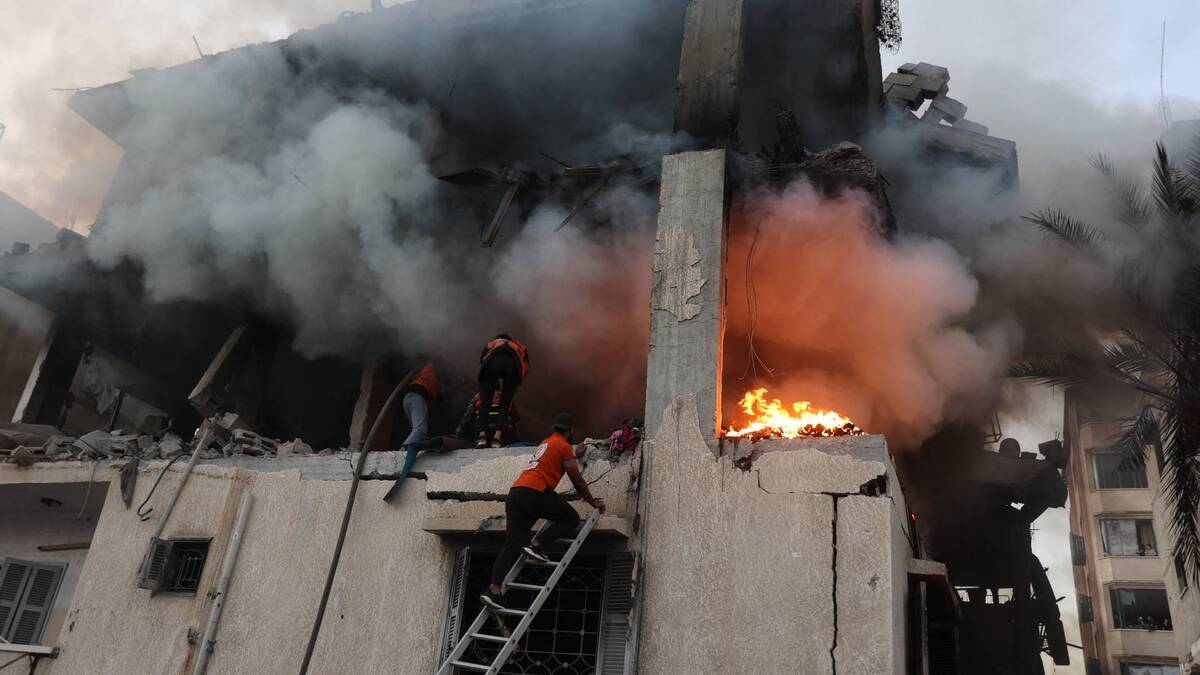
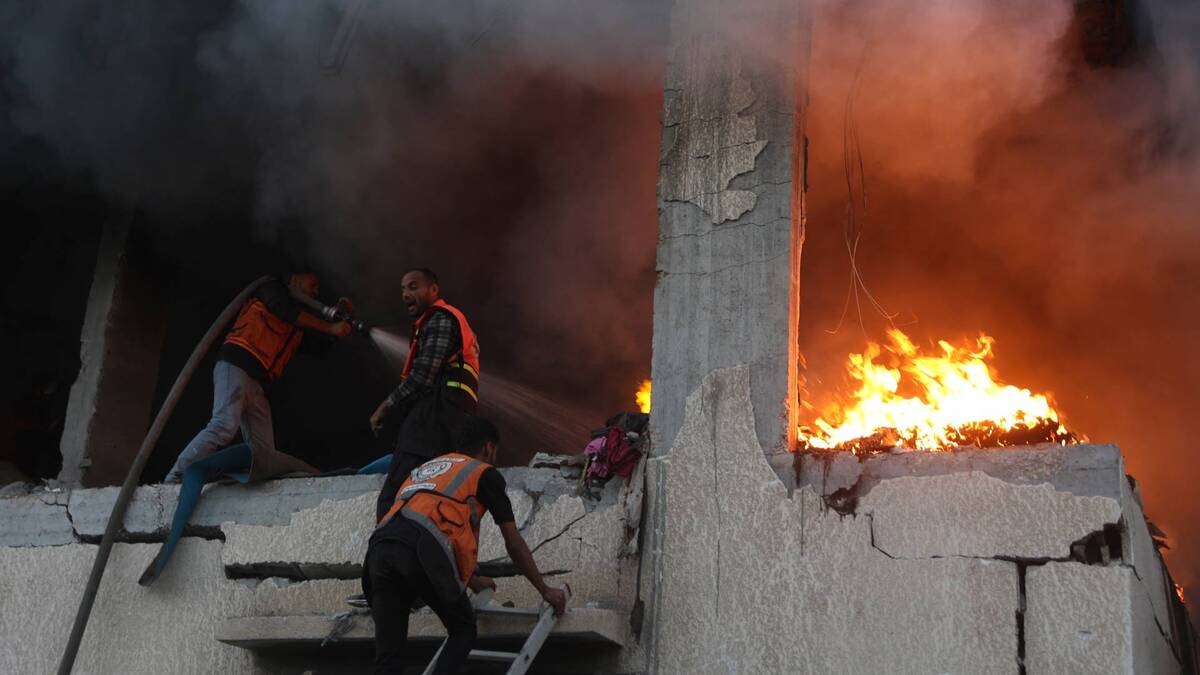
The occupation undermines the truce: 22 martyrs in a wide escalation in Gaza.. and airstrikes hit homes in Al-Nuseirat and Deir al-Balah

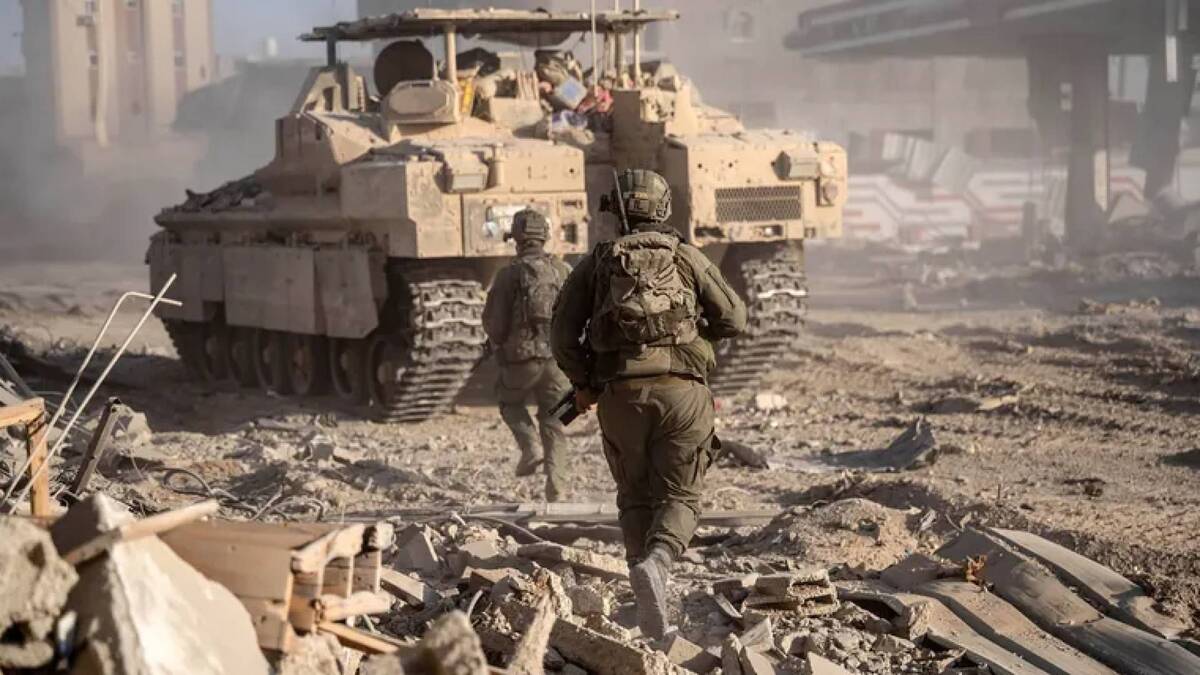
For the forty-third consecutive day, the Israeli occupation army continued to violate the commitments of the ceasefire agreement in the Gaza Strip, carrying out a new series of bloody breaches that affected innocent civilians.

The recent wave of escalation resulted in the martyrdom of 22 individuals and dozens of injuries, in a scene that deepens the humanitarian crisis and raises questions about the effectiveness of international efforts to protect civilians.

The afternoon hours of Saturday witnessed a qualitative escalation, as five citizens were martyred by drone strikes targeting a civilian vehicle near the "Al-Abbas Junction" west of Gaza City.

PALESTINE

Sun 23 Nov 2025 7:32 am - Jerusalem Time

Mahmoud Khalil files a lawsuit to compel the Trump administration to disclose its communications with anti-Palestinian organizations.

Palestinian activist and graduate student Mahmoud Khalil filed a lawsuit against the administration of U.S. President Donald Trump, demanding the disclosure of any communications that took place between it and several American organizations opposed to Palestinians, prior to his arrest on March 8, 2025. The lawsuit comes after the administration refused to respond to an official request submitted by Khalil under the "Freedom of Information Act" to obtain relevant documents.


Khalil, who holds permanent residency in the United States and is married to an American citizen, is seeking the full disclosure of correspondence between government agencies—including the Department of Homeland Security, the Department of State, the Department of Justice, and the Immigration and Customs Enforcement— and entities including: Canary Mission, Betar, Documenting Jew Hatred on Campus, Columbia Alumni for Israel, Middle East Forum, Shirion Collective, Capital Research Center, and CAMERA, which are organizations linked to Israeli intelligence agencies either directly or indirectly. Mahmoud Khalil states that "the public has the right to know the extent of cooperation between the government and these groups that target every voice criticizing the genocide in Gaza."


This lawsuit comes in a broader context that goes beyond the direct legal nature, as it reveals a complex structure of influence connecting the Trump administration with several organizations that actively monitor and target pro-Palestinian voices within the United States, especially in universities. Khalil's arrest in 2025 was not an isolated incident, but part of a wide-ranging government campaign based on accusations of "anti-Semitism" that affected students and academics who participated in anti-Israel protests at Columbia University and elsewhere.


After Khalil's arrest, organizations such as Canary Mission and Betar USA quickly announced their role in the process, reflecting the extent of influence these groups seek to exert on state agencies. Betar explicitly stated that it shared information about activists criticizing Israel with U.S. Secretary of State Marco Rubio this year, raising further questions about the possibility of undisclosed official communication channels.


Evidence of this coordination became clearer during the trial that concluded with a ruling affirming that Khalil's arrest was part of an unconstitutional "ideological deportation" policy. In a notable testimony, Peter Hatch, assistant director of intelligence at the Department of Homeland Security's Immigration and Customs Enforcement (ICE), stated that the agency formed a "Tiger Team," a group of officers summoned from various departments to gather intelligence reports on students, academics, and activists supportive of Palestine. He also revealed that the agency reviewed over 5,000 names provided by Canary Mission.


These platforms, which present themselves as "documenting hatred against the United States, Israel, and Jews," have effectively turned into blacklists targeting individuals who criticize Israeli policies, including dissenting Jewish voices. Critics argue that their primary mission is to silence pro-Palestinian discourse by deliberately conflating criticism of the Israeli government with anti-Semitism, a strategy that is increasingly effective within American academic and political institutions.


The case did not stop at the arrest; Khalil was deported to a detention center in Louisiana, far from his pregnant wife and attorney, where he spent three months under harsh conditions before a federal judge ordered his release. He became a father while in detention, without being allowed to attend the birth of his child. After his release, the Trump administration continued attempts to deport him to Syria or Algeria, claiming there was incomplete information in his green card application. However, a court in New Jersey issued a ruling preventing his deportation or detention until his case was resolved, before the government later appealed the decision.


It is noted that the current lawsuit, according to experts, is not merely a request for documents, but an attempt to uncover the nature of the relationship between state institutions and special interest groups that have long been accused of fueling anti-Palestinian rights discourse. It highlights an expanding trend within the United States, characterized by the use of legal and security tools to redefine political activism around Palestine as a security threat, rather than a legitimate democratic practice.


While Khalil seeks $20 million in damages, as presented in an administrative complaint during the summer, his case stands out as a striking example of the intersection of politics, security, and civil rights in the context of the Palestinian-Israeli conflict, and as a window that may open for a broader review of the role of private organizations in shaping federal policies directed against movements in solidarity with Palestine.

PALESTINE

Sun 23 Nov 2025 2:48 am - Jerusalem Time

The Israeli "Cabinet" discusses a military operation that may be "inevitable" in Gaza.

The Hebrew broadcasting authority stated that "Cabinet ministers estimated that a new military operation in the Gaza Strip may be inevitable."

The broadcasting authority reported, citing informed political sources, that ministers in the "Cabinet" believe that "the growing power of Hamas in Gaza may make a new military operation unavoidable."

The sources added that "this assessment was presented during a Cabinet session last week, where security agencies reviewed the situation in Gaza and provided evidence, according to the Israeli narrative, of the increased capabilities of Hamas and its refusal to relinquish its weapons."

The authority also quoted a senior Israeli official saying that "Israel will take military action if the U.S. administration fails to find a mechanism to ensure the disarmament of Hamas."

Despite the recent escalation and incidents that have put the ceasefire agreement in doubt, Israeli estimates, according to the broadcasting authority, indicate that the current ceasefire in Gaza "will not collapse soon," and that Hamas "does not seek to undermine the understandings," but rather demands that mediators intervene to pressure Israel to adhere to the agreement.

Earlier, Hamas considered the expansion of the occupation army's control areas in Gaza recently as a "blatant violation" of the ceasefire agreement, calling on mediators and the U.S. administration to confront attempts by Tel Aviv to undermine the ceasefire process in the Gaza Strip.

The ceasefire agreement in Gaza, based on U.S. President Donald Trump's plan to end the war, came into effect on the 10th of last month.

This agreement ended a genocide that began on October 8, 2023, and lasted for two years, resulting in more than 69,000 martyrs and over 170,000 injured, with massive destruction affecting 90 percent of the civilian infrastructure.

The occupation has committed numerous violations of the agreement, leading to the martyrdom and injury of hundreds of Palestinians, and it continues to impose restrictions on the entry of humanitarian aid into Gaza.

The occupying state conditions the start of negotiations to launch the second phase of the agreement on receiving the remains of the remaining Israeli prisoners, while Hamas has confirmed on several occasions that it takes time to extract them due to the massive destruction in Gaza.

In contrast, there are 9,500 missing Palestinians killed by the Israeli army, and their bodies remain under the rubble of the Israeli genocide, according to the government media office in Gaza.

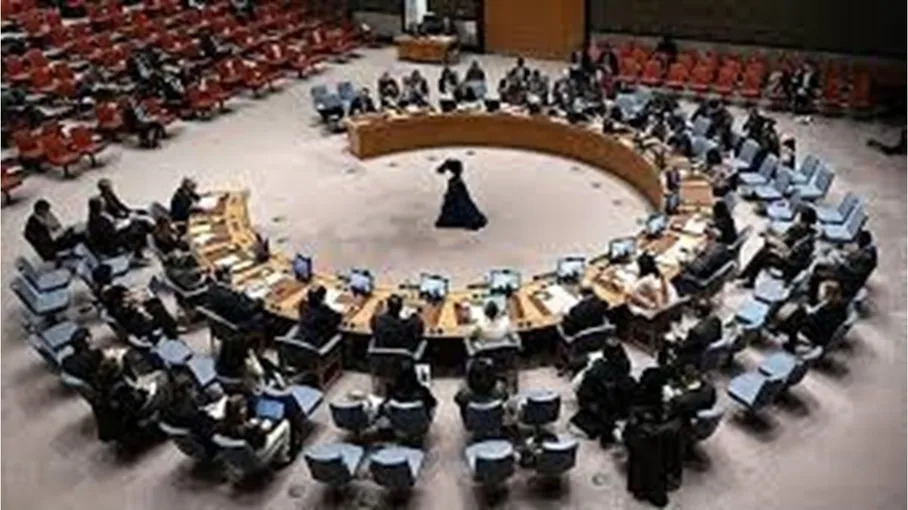
Last Tuesday, the United Nations Security Council adopted a resolution that includes the formation of international stabilization forces to be deployed in Gaza and a peace council headed by U.S. President Donald Trump to manage affairs in Gaza during a transitional period lasting until the end of 2027.

PALESTINE

Sun 23 Nov 2025 12:46 am - Jerusalem Time

Hamas demands the disclosure of the armed individual's identity and accuses the occupation of fabricating pretexts to evade the ceasefire agreement.

The Islamic Resistance Movement Hamas demanded on Saturday that mediators and the U.S. administration pressure the occupying state to reveal the identity of the armed individual that Tel Aviv claims the movement sent to open fire on its forces inside the Gaza Strip.

Aziz al-Rashq, a member of Hamas's political bureau, stated in a statement: "We demand that mediators and the U.S. administration pressure Israel to disclose the identity of the armed individual that Hamas allegedly sent."

He confirmed that "the occupying state fabricates excuses to evade the agreement and return to the genocide," emphasizing that there is no truth to what Israeli sources reported regarding Hamas informing U.S. official Steve Wietkoff that the agreement had ended.

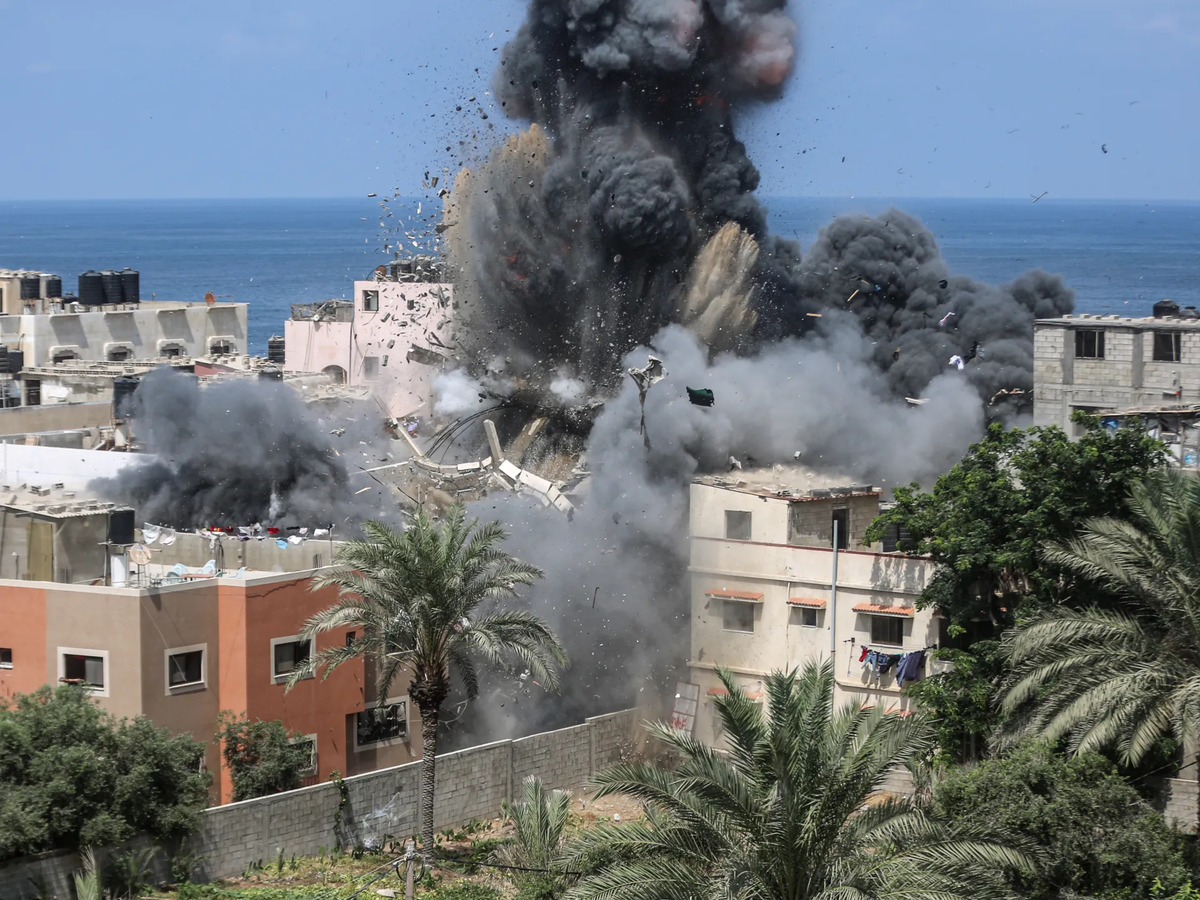
This statement came hours after the Israeli occupying army carried out a series of airstrikes targeting homes and vehicles of Palestinians in various areas of the Gaza Strip, resulting in the martyrdom of 22 individuals, including children and women, in a new violation of the ceasefire agreement in effect since October 10, according to the latest toll from the civil defense.

Earlier, the Israeli Prime Minister's office issued a statement claiming that Hamas "violated the ceasefire once again" by sending an armed individual to an area under its control in Gaza to attack its soldiers, according to their statement.

Al-Rashq clarified: "Israel fabricates excuses to evade the agreement and return to genocide, and it is the one that violates the agreement daily and systematically."

He pointed out that "there is no truth to what Israeli sources reported regarding Hamas informing (Steve) Wietkoff (the U.S. President Donald Trump's envoy to the Middle East) that the agreement had ended," calling on mediators and the U.S. administration to "intervene and compel Israel to implement the agreement."

The Israeli occupying forces repeatedly commit violations of the ceasefire agreement, including gunfire, limited incursions, and demolition operations, resulting in the deaths and injuries of hundreds of Palestinians.

The ceasefire agreement in Gaza, reached between Hamas and Israel and based on U.S. President Donald Trump's plan to end the war, came into effect on October 10.

The agreement ended the genocide that the occupying state launched on October 8, 2023, which resulted in more than 69,000 Palestinian martyrs and over 170,000 injured, along with massive destruction affecting about 90 percent of civil infrastructure.

PALESTINE

Sun 23 Nov 2025 12:40 am - Jerusalem Time

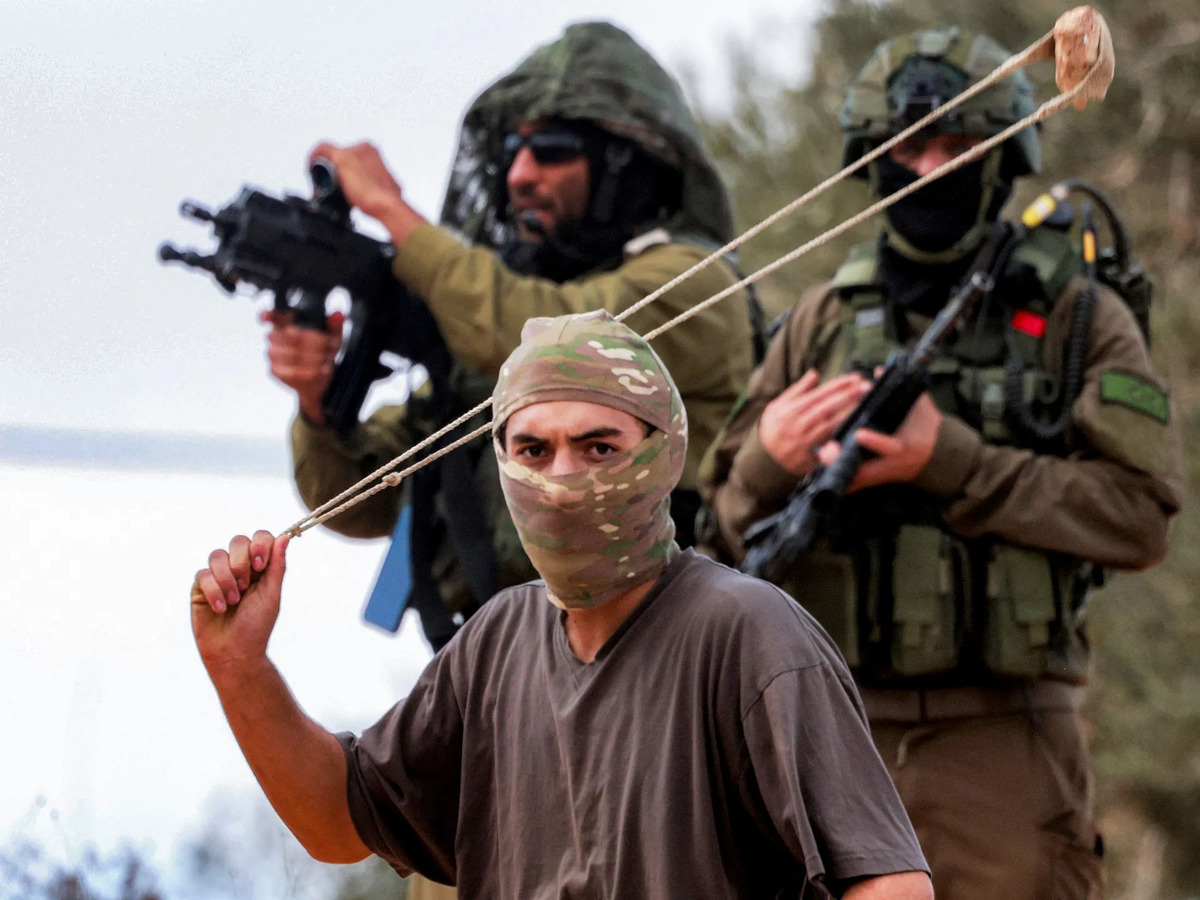
Palestinian wounded due to attacks by settlers and the occupation in the West Bank.

Local Palestinian media sources reported that Palestinians were injured due to attacks by settlers and gunfire from the occupation forces in various areas of the occupied West Bank.

Palestinian media sources stated that settlers, under the protection of the occupation army, attacked residents in the Arab al-Ma'azi gathering in Jaba' north of occupied Jerusalem.

In the town of Beit Awwar al-Tahta in central the West Bank, sources reported that 6 Palestinians were injured due to an attack by settlers.

In northern Hebron in southern the West Bank, sources said that the occupation forces stormed the town of Beit Ummar al-Gharbiya.

In Qalqilya in the northwest of the West Bank, sources reported that two Palestinians were injured by gunfire from the occupation.

The sources added that the occupation forces stormed the city from its eastern entrance, raided the Kafr Saba neighborhood, and fired live ammunition and tear gas canisters, resulting in two citizens being injured by gunfire in their lower limbs.

In southern Tubas in northern the West Bank, sources said that the occupation forces stormed the al-Far'a camp, where several Israeli vehicles entered and foot soldiers spread throughout the market.

They also fired at a worker in the Wadi al-Homs area between the village of al-Khas east of Bethlehem, resulting in an injury to his lower limbs.

These developments come amid a rise in daily attacks carried out by settlers under the protection of the Israeli army, and the continued incursions into Palestinian cities and towns in the occupied West Bank.

Since October 7, 2023, the assaults in the West Bank have resulted in the martyrdom of 1,078 Palestinians and the injury of about 11,000 others.

PALESTINE

Sat 22 Nov 2025 11:13 pm - Jerusalem Time

Netanyahu continues the war while Trump seeks investment.. Is the Gaza agreement collapsing?

The United States continues to treat the ceasefire in Gaza as a means to achieve Israeli war objectives, while Benjamin Netanyahu's government continues to revert matters to square one, analysts say.

While the occupying forces carry out continuous bombing and destruction in several areas of the sector under the pretext of destroying military infrastructure belonging to the resistance or responding to attacks from it, Washington shows no position to compel Tel Aviv to respect the agreement.

Netanyahu - wanted by the International Criminal Court - has even spoken about Israel's impatience regarding violations by the Islamic Resistance Movement (Hamas) of the agreement, stating that the delivery of the remaining bodies of prisoners and disarmament "must be done with an iron fist."

Netanyahu has also decided to form a new small security council to oversee the second phase of the agreement, which includes ministers of security Itamar Ben Gvir, finance Bezalel Smotrich, and foreign affairs Gideon Sa'ar, who are among the staunchest opponents of the ceasefire.

After this formation, Sa'ar stated that Israel had given President Donald Trump's peace plan for Gaza a real opportunity through diplomacy, and that the failure to continue implementing the agreement "would allow Israel to act militarily with much broader international legitimacy."

In contrast, Hamas has called on mediators and guarantors, especially the United States, to compel Israel to stop its violations, at a time when Israeli Minister of Strategic Affairs Ron Dermer requested the United States to "grant Israel broader freedom to operate in the sector even if the second phase of the agreement is implemented."

These moves by Israel reflect the dangerous reality in the sector and the fragility of the peace plan at present, according to former U.S. National Security Advisor Mark Feivel, who holds Hamas responsible for Israeli actions due to what he described as military skirmishes occurring between the two sides, and also due to the movement's refusal to disarm and its public insistence on that.

According to Feivel on the program "Event Path," the only solution to get out of this situation is to expedite the formation of an international peacekeeping force and work on the immediate disarmament of Hamas, as Israel's expansion of its operations poses a significant risk to the agreement.

However, Feivel believes that the Israelis are counting on Trump's ability and his son-in-law Jared Kushner to convince Netanyahu's government to reach a certain level of peace.

But Palestinian political analyst Ahmad Al-Tanani believes that this talk merely indicates the continued U.S. perspective of viewing matters through an Israeli lens, and the pursuit of achieving war objectives through a ceasefire agreement, as the Israelis seek to normalize the current reality and turn violations into a routine matter.

Washington - as Al-Tanani states - treats Israeli violations as if they are normal, while viewing all the allegations thrown by Tel Aviv at the resistance as facts, in addition to its strong desire to dismantle the resistance's weapons and the Palestinian national system and impose guardianship over the sector.

This approach is likely to lead to a return of confrontations between the two sides, as the resistance wants to continue the agreement as a Palestinian interest, but at the same time will not allow Israel to continue killing and seizing land without a political or field price, as Al-Tanani says.

The expert on Israeli affairs, Dr. Muhannad Mustafa, shares the previous opinion, stating that Netanyahu not only wants to normalize violations but is also trying to return to a policy of extremism, whether in Gaza or the West Bank, after failing to achieve what he had planned from this agreement.

Netanyahu - according to Mustafa - believed that this agreement would provide more normalization with countries in the region and achieve a comprehensive amnesty within Israel, which did not happen, prompting him to expand settlement in the West Bank and seize land in Gaza to prove that he is working independently to achieve war objectives.

Dr. Dalia Arikat, a professor of diplomacy and conflict resolution at the American University of Beirut, believes that Israel is engaging in its usual behavior of diverting attention from the basic rights of Palestinians by delving into details and buying time with fabricated excuses, emphasizing that the war has not stopped in Gaza, nor has killing and annexation in the West Bank.

The members of the new small security council speak openly about settlement and Greater Israel and do not even recognize the West Bank at all, as Arikat states, pointing out that settlement expansion "has killed every dream of a two-state solution."

At the same time, the United States remains more interested in discussing its future investments in Gaza than in stopping killing and destruction, to the extent that the new base it established to monitor the agreement has become in service of Israeli operations,

PALESTINE

Sat 22 Nov 2025 9:32 pm - Jerusalem Time

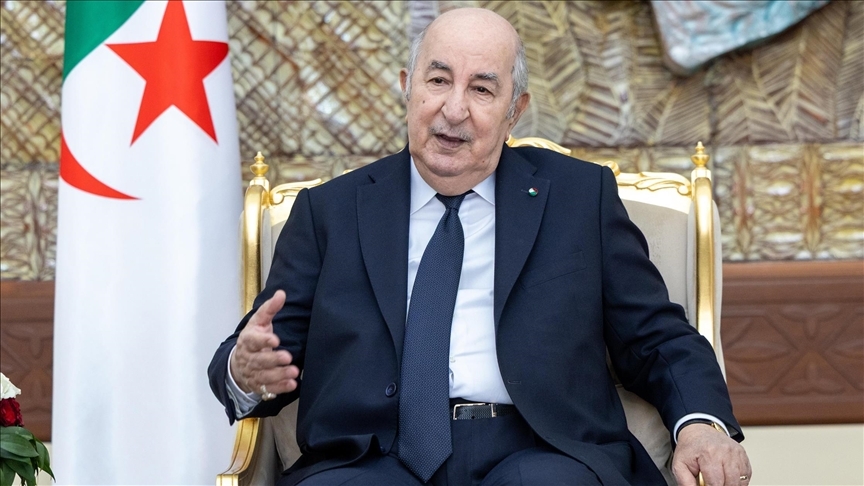
G20 Summit.. Algeria calls for mobilizing international efforts to rebuild Gaza

During a speech by Algerian President Abdelmadjid Tebboune at the G20 summit, read on his behalf by Prime Minister Aïmene Benabderrahmane, he stated that the atrocities committed against the Palestinian people are something humanity has rarely witnessed in its history.

Tebboune praised Erdogan, Trump, Emir Tamim, and Sisi for their roles in putting an end to the genocide in Gaza, and Algeria called on Saturday for international efforts to rebuild what was destroyed by the Israeli genocide in the Gaza Strip.

This was stated in a speech by the Algerian president during the G20 summit held in Johannesburg, South Africa, which takes place over Saturday and Sunday.

The G20 is a platform for the largest economies in the world, established in 1999 following the economic crises of the late 1990s.

President Tebboune said, "The massive destruction in the Gaza Strip calls for mobilizing resources at the international level to rebuild what was destroyed by the war and to restore hope to the grieving Palestinian people."

In this context, he urged G20 countries to take the lead in rebuilding a better future for the Palestinian people.

He announced that Algeria would join any steps taken by the G20 in this regard.

The Algerian president reminded of the Israeli aggression against the Palestinian people over the past two years.

He pointed out that "the world has witnessed for two consecutive years the atrocities committed against the Palestinians in Gaza and the West Bank, which can only be described as a systematic genocide against the Palestinian people."

Tebboune considered that the ceasefire agreement signed between the "Palestinian resistance" and Israel gives a glimmer of hope for a better tomorrow for the Palestinian people.

He praised the "great roles" played by the United Nations Secretary-General (Antonio Guterres) and peace-loving countries in efforts to stop the genocide in the Gaza Strip.

The Algerian president also commended the countries sponsoring the mediation.

He expressed special thanks to U.S. President Donald Trump, Emir of Qatar Sheikh Tamim bin Hamad, Egyptian President Abdel Fattah el-Sisi, and Turkish President Recep Tayyip Erdoğan for their diligent efforts that enabled putting an end to this miserable genocide against the Palestinian people.

With the mediation of Egypt, Qatar, and Turkey, and under the auspices of the United States, Hamas and Israel signed a ceasefire agreement in the Gaza Strip as part of a plan laid out by Trump, which came into effect on October 10.

The United Nations estimates the cost of rebuilding Gaza at about $70 billion, due to the repercussions of two years of Israeli genocide supported by the U.S., which, alongside the massive material destruction, resulted in the deaths of more than 69,000 Palestinians and injuries to 170,382 others.

PALESTINE

Sat 22 Nov 2025 9:21 pm - Jerusalem Time

"Hebrew Broadcasting" cites sources: If Hamas continues to strengthen its power, a new military operation in Gaza is inevitable.

Informed sources have reported strong warnings from within the political-security level of the Israeli occupation regarding the situation in the Gaza Strip.

The sources indicated that some members of the 'Security Cabinet' (the Cabinet) stated clearly that 'if Hamas continues to strengthen its power, there is no avoiding a new military operation in Gaza.'

The body confirmed that this internal stance views Hamas's continued military capability building as a red line that necessitates military intervention, reflecting growing concern within Tel Aviv about the stability of the current ceasefire and the future situation in the sector.

PALESTINE

Sat 22 Nov 2025 9:51 am - Jerusalem Time

American focus on dividing Gaza: temporary housing settlements and efforts to reduce Hamas control

The United States is pushing for the establishment of Hamas-free zones in Gaza, through a plan to divide the Gaza Strip into areas controlled by the movement and the Israeli occupation army, and to build 'temporary communities' for displaced Palestinians in the south, starting from Rafah.

The Wall Street Journal reported that the United States is quietly presenting a plan to divide the Gaza Strip into areas of control and to begin building 'temporary housing' for Palestinians in areas controlled by the Israeli occupation army.

The newspaper stated, 'This announced initiative represents a shift in expectations regarding the dismantling of Hamas, which is officially listed as a goal for the second phase of the 20-point peace plan proposed by U.S. President Donald Trump, but is not expected to happen soon.'

It added, 'The U.S. plan will designate areas under Hamas control in red, while areas controlled by the Israeli army will be marked in green. Within these green areas - defined as regions located behind the 'yellow line' that delineates Hamas's influence, Washington is reportedly promoting the construction of what are called 'alternative safe communities' for displaced Palestinians.'

U.S. officials told the newspaper that engineering teams have already been sent to Gaza to begin planning for the removal of debris and unexploded ordnance in preparation for these new sites. While construction has not yet begun, the planned communities will provide 'temporary housing and educational and healthcare facilities, including schools and hospitals, until more sustainable rebuilding is possible.'

The newspaper noted that 'the first such site is set to be in Rafah, a city in southern Gaza controlled by Israeli occupation forces, and despite ongoing fighting with Hamas terrorists who are still holed up in underground tunnel networks there, Israeli forces maintain operational control above ground.'

Reports indicated that some Hamas members emerged from the tunnels on Friday; many were killed and others captured.'

Israeli occupation army Chief of Staff Eyal Zamir stated on Friday that 'all remaining terrorists in Rafah will be eliminated or forced to surrender.'

Sources in both Israel and the United States confirmed to the newspaper that the Rafah site is viewed as a test site for the first 'temporary settlement.'

This initiative comes amid an international debate about the feasibility of reconstructing Gaza while Hamas remains in power.

The newspaper pointed out that no potential donor country has shown willingness to fund reconstruction in areas under Hamas control.

According to the report, Arab countries have expressed their objections to dividing Gaza into actual areas of control and creating housing under Israeli supervision.

Reports indicate that Egypt, in particular, is concerned about the potential for the crisis to extend from Rafah to the Sinai Peninsula and has warned against any step that might encourage displacement across the border.

The U.S.-backed plan is still in its early stages, and its implementation is likely to depend on ongoing military developments and political coordination between 'Israel', the United States, and regional actors.

The newspaper's spokesperson stated, 'There is a significant question looming about the security of the planned temporary housing communities in Gaza. It remains unclear how the U.S.-backed initiative will ensure that only innocent civilians, and not Hamas terrorists, can enter these areas.'

It added, 'One idea is to involve local groups in Gaza that have been armed by Israel. They have Israeli support, and according to Israeli and Arab sources, this was one of the proposals under discussion.'

It clarified, 'Some of these groups - such as those led by Yasser Abu Shabab - are already managing de facto communities in the areas under their control; for example, reports indicate that Abu Shabab runs a school and stores selling essential goods.'

An American official quoted in the report stated that Washington is not currently considering using these militias, noting that some of their members are viewed as criminals and are unlikely to be effective against Hamas in the event of a confrontation.

Instead, American sources expressed hope that the areas controlled by Hamas would 'shrink' over time and eventually disappear. In such a scenario, an International Stabilization Force (ISF), supported by a mandate from the United Nations Security Council, would take on security responsibilities in Gaza, working alongside a Palestinian police force.

During the transitional period, the peace council proposed by the Trump administration would oversee civilian governance and reconstruction in the sector, with long-term control ultimately handed over to a Palestinian governing body.

For its part, Hamas continues to reject the entire proposal, denouncing it as international guardianship over Gaza that separates it from the Palestinian people.

The movement rejected the United Nations Security Council's decision this week that endorsed the plan, asserting that it is an attempt to impose a new regime that serves foreign interests and infringes on the rights of


ARAB AND WORLD

Sat 22 Nov 2025 9:46 am - Jerusalem Time

Israeli anxiety and the decline of the international system established in 1948

Israel is witnessing an unprecedented moment of anxiety and confusion, which seems much deeper than the repercussions of a war or a transient political crisis. The Israeli scene today reflects the beginning of a structural transformation in the international environment that accompanied the birth of the Hebrew state in 1948 and protected it for the past seven decades. This environment—characterized by American hegemony, absolute Western support, and the absence of international balances—has begun to recede, placing Israel before existential questions it has not faced since its establishment.

From the very moment of its establishment, Israel benefited from a colonial-type international system and a Cold War that made it a strategic tool in the hands of the West. International recognition of it was not merely a political legitimacy but part of an international system that granted it a permanent superiority in weaponry, financial support, and diplomatic cover. With the collapse of the Soviet Union, this superiority doubled in a unipolar world led by Washington, which viewed Israel as a strategic extension of its interests in the Middle East.

However, this global system is currently undergoing dramatic transformations. Multipolarity is expanding, emerging countries are asserting an independent presence, and the West is no longer able to unify its positions or impose its vision on the world as it did throughout the last century. This transformation directly impacts Israel, which has found itself in recent years facing an international environment less willing to grant it unconditional privileges. Even as the United States continues its military and political support, its ability to protect Israel from political and legal pressures is diminishing, both in international institutions and at the level of global public opinion.

The most dangerous transformation is the deterioration of Israel's international legitimacy. The narrative on which it built its political presence—being the "only democracy" and the "perpetual victim"—has lost much of its influence, especially after the scenes of destruction and killing in Gaza since 2023. For the first time, Israel faces a global discourse that openly describes it as an apartheid regime, while millions have taken to the streets in major capitals in rejection of the war and in support of the Palestinians, reflecting a deep rift in the relationship between Western peoples and their governments that support Tel Aviv. This collapse in soft power is a source of deep concern for the Israeli political establishment, which has always considered itself insulated in the international moral arena.

Internally, Israel today appears governed by sharp contradictions that reveal the fragility of the settlement project itself. The army—which historically represented a symbol of strength and national consensus—has entered into an unprecedented crisis of confidence due to significant intelligence failures and the inability to decisively conclude the Gaza war despite absolute military superiority. Alongside this, the internal political crisis deepens with the rise of extreme religious right, and the society is divided over the identity of the state between those who want it to be a secular national state and those who seek to institutionalize it according to biblical visions. This structural division weakens Israel's ability to build internal consensus at a moment when it needs the highest levels of stability.

Economically, Israel is experiencing one of its toughest phases in decades, with investments fleeing the biotech sector, declining market confidence, and the rising costs of war threatening the state's ability to finance its military and social operations. This is accompanied by the erosion of the image of the "prosperous state" that Israel has carried as part of its global narrative.
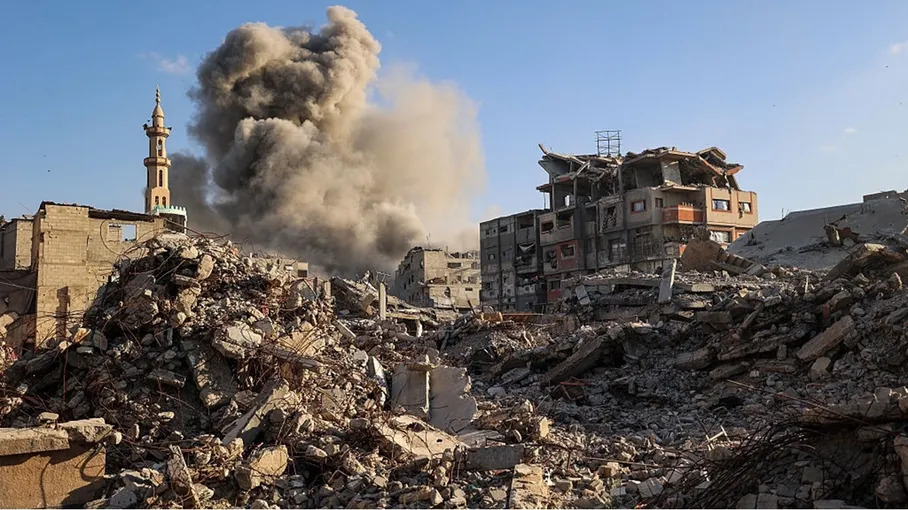
On the international front, the decline of American hegemony coincides with the rise of the Global South as an influential political actor. Countries that have been marginalized for decades now possess the ability to shape an alternative global discourse. South Africa has led legal actions against Israel before the International Court of Justice on charges of genocide, while European countries have recognized the State of Palestine despite American pressures. This has been accompanied by a growing global boycott movement that impacts the Israeli economy and weakens its industrial and academic presence.
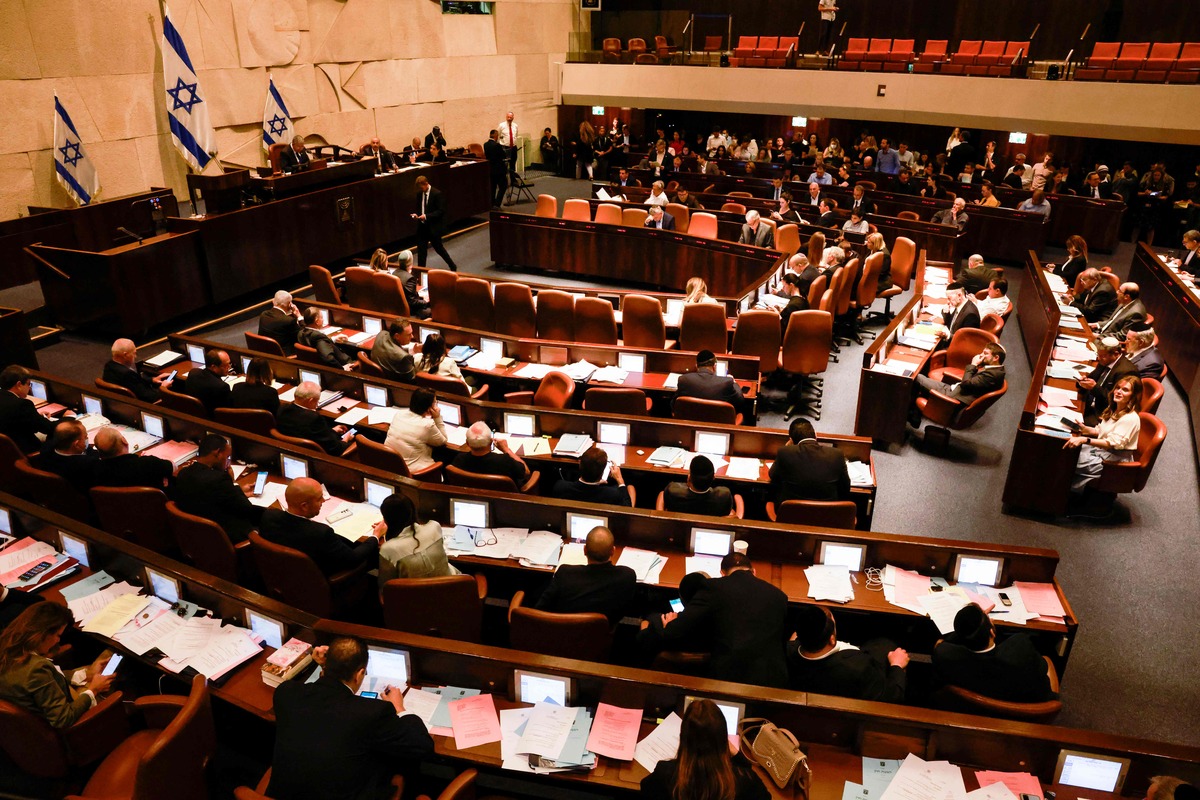
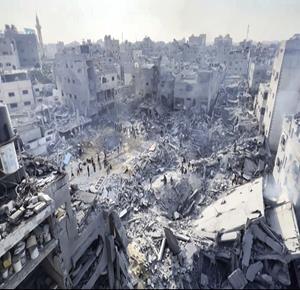
In light of these transformations, the current Israeli anxiety appears as a fear of time rather than of adversaries. The Hebrew state realizes that the project born in a colonial moment and nurtured under a unipolar international system is losing one of its most important sources of strength: the international protection network. Therefore, the Israeli political discourse seems more agitated, more inclined towards excessive violence, and more directed at attacking human rights and media institutions, in an attempt to halt the deterioration of its global legitimacy.

It can be said that Israel is experiencing a moment of historical exposure. The international environment that has supported it for decades is disintegrating, the legitimacy it once considered a given is eroding, and American capacity to provide an absolute protective umbrella is declining. Amid the rise of new international powers, the expansion of global solidarity movements with the Palestinians, and the internal Israeli tremors, it seems that the project established in 1948 is entering a phase of structural decline that cannot be concealed, no matter how much military power attempts to compensate for it.

LATEST NEWS

Sat 22 Nov 2025 9:44 am - Jerusalem Time

The occupation renews its air and artillery bombardment on various areas in the Gaza Strip.

The Israeli occupation army renewed its air and artillery bombardment on several areas in the Gaza Strip since early morning hours.

The bombardment continues in the north and east of Rafah city, coinciding with gunfire and artillery shelling towards the eastern areas of the Al-Tuffah neighborhood in Gaza City.

The toll of martyrs and injuries since the start of the ceasefire agreement on October 11 has reached 313 martyrs and more than 760 injured.