PALESTINE

Thu 12 Mar 2026 3:59 am - Jerusalem Time

Trump's Dilemma in the Middle East: Limited Options to End the War and Catastrophic Consequences for Allies

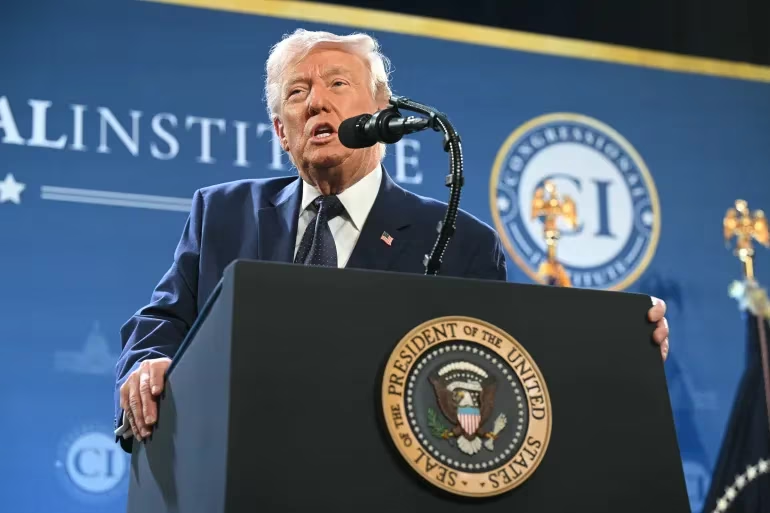
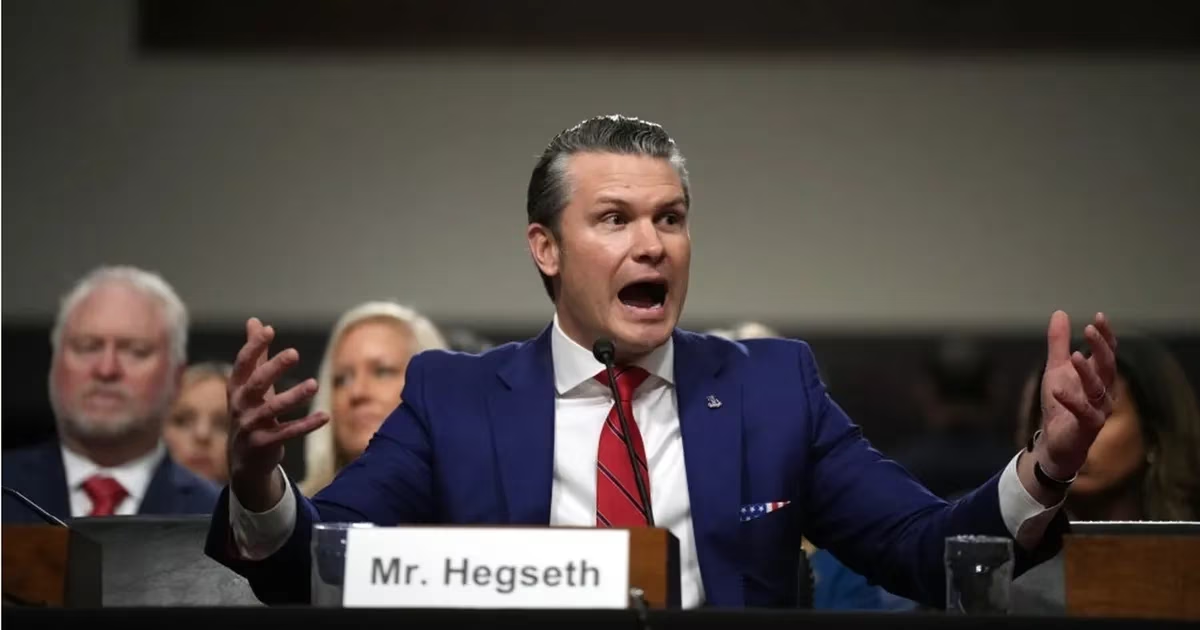
US President Donald Trump finds himself today facing a major strategic dilemma, as international and domestic pressures mount to exit the spiral of war he ignited against Iran in cooperation with Israel. Despite the optimistic statements sometimes issued by the White House, the reality on the ground indicates that the available options to end the conflict have become extremely limited and complex.

Media sources reported that Trump attempted to calm global markets by suggesting the imminent end of military operations, which led to a temporary decline in oil prices to stabilize below $90 a barrel. However, the escalatory tone quickly returned to dominate his rhetoric, emphasizing that the United States would not back down until a complete and decisive defeat of what he described as 'the enemy' was achieved.

Reports confirm that the current US administration lacks a clear post-war plan, with its stated goals focusing on destroying Iranian nuclear and ballistic capabilities and imposing a radical change in leadership. This political confusion has turned the war, which was described as a 'short mission,' into the largest US military deployment in the region since the 2003 invasion of Iraq.

On the ground, despite the assassination of Supreme Leader Ali Khamenei and a number of prominent leaders in the first strike, the Iranian regime has shown no signs of imminent surrender. On the contrary, Tehran quickly appointed Mojtaba Khamenei as his father's successor, a clear indication of the ruling establishment's continuity and its ability to absorb major shocks.

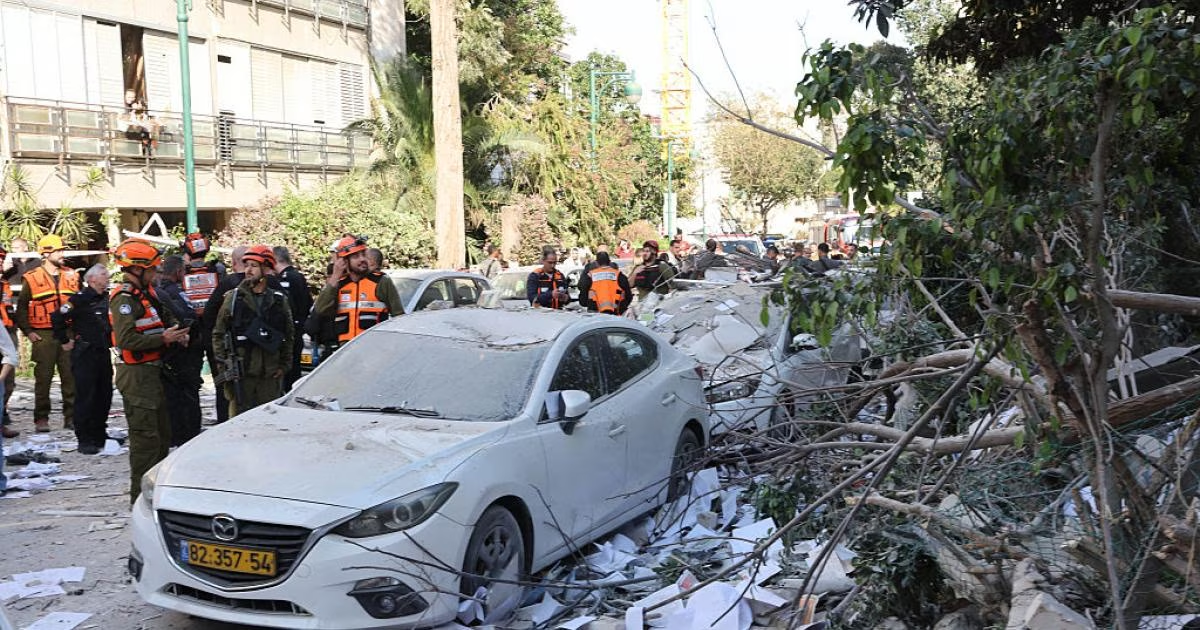
The confrontation quickly escalated into an unequal war of attrition, with Iran using its arsenal of drones and missiles to strike vital targets in Israel and US bases. These attacks have resulted in the deaths of 14 Israelis and 7 US military personnel since the offensive began on February 28, increasing the human cost of the conflict.

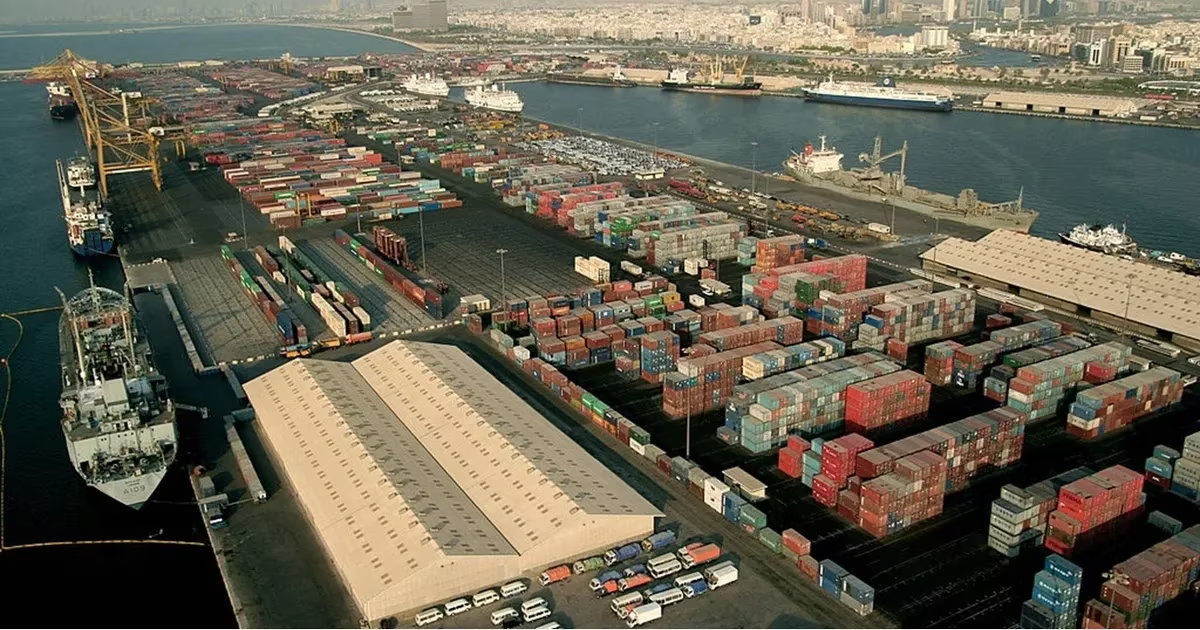
Neighboring countries have been directly and severely affected by the military operations, as Iranian counter-attacks disrupted navigation through the strategic Strait of Hormuz. Gulf countries, which had previously warned of the risks of this conflict, were forced to reduce oil and gas production, threatening to plunge the global economy into an unprecedented energy crisis.

In a significant development, Ukraine entered the crisis at Washington's official request, with Kyiv sending experts and interceptor drones to protect US bases in Jordan. This move aims to leverage Ukraine's extensive experience in dealing with Iranian-made drones, which it has heavily encountered during the ongoing Russian war.

Statistics indicate that Russia has used over 57,000 Iranian-designed drones against Ukrainian targets, making Kyiv a technical reference for countries seeking to fortify their defenses. The Ukrainian government has so far received 11 requests from European and regional countries for technical support to counter this type of aerial threat.

Domestically in Iran, the American gamble on the collapse of the regime from within due to continuous bombardment has not yet materialized, as anxiety rather than protest dominates the Iranian street. Observers believe that any sudden disintegration of the regime could turn Iran into a failed and fragmented state, a scenario whose catastrophic consequences its neighbors would bear for many years.

On the other hand, the war has frozen sensitive regional issues, most notably the American peace council project in the Gaza Strip, which has completely stalled. Washington and Tel Aviv's military and political focus has shifted to the Iranian front, leaving the situation in the Palestinian territories in a state of stagnation and continuous tension.

Concerns are growing within the Republican Party that the continuation of the war and rising fuel prices could negatively affect their chances in the upcoming midterm elections. While Trump downplays these concerns, describing them as a 'minor problem,' economic experts believe that the repercussions of the conflict could spiral out of control and lead to a global recession.

Sources reported that Israel requested additional American support to cover the vast areas of Iranian military factories that are difficult to fully neutralize through air strikes alone. This request reflects the scale of the field challenge and the difficulty of achieving a quick and decisive military victory, as promoted by political circles in Tel Aviv and Washington.

The question remains as to how the United States can exit this dilemma without declaring defeat or leaving the region in a state of complete chaos. Retreating now would be interpreted as a victory for the exhausted Iranian regime, while continued escalation threatens a comprehensive regional war whose end or final cost cannot be predicted.

In conclusion, it appears that Trump's 'maximum pressure' policy has turned into a direct military confrontation, with civilians and the global economy paying the price. With the absence of effective diplomatic channels, the region remains hostage to contradictory decisions emanating from the White House, amidst international anticipation of what the coming days will bring in this bloody conflict.

Whatever path Trump chooses to end this conflict, others in the region and the world will pay the price for this folly towards Iran.

PALESTINE

Thu 12 Mar 2026 3:58 am - Jerusalem Time

Operation 'Al-Asf Al-Ma'koul': Hezbollah Launches Widest Missile Attack on Northern Israel

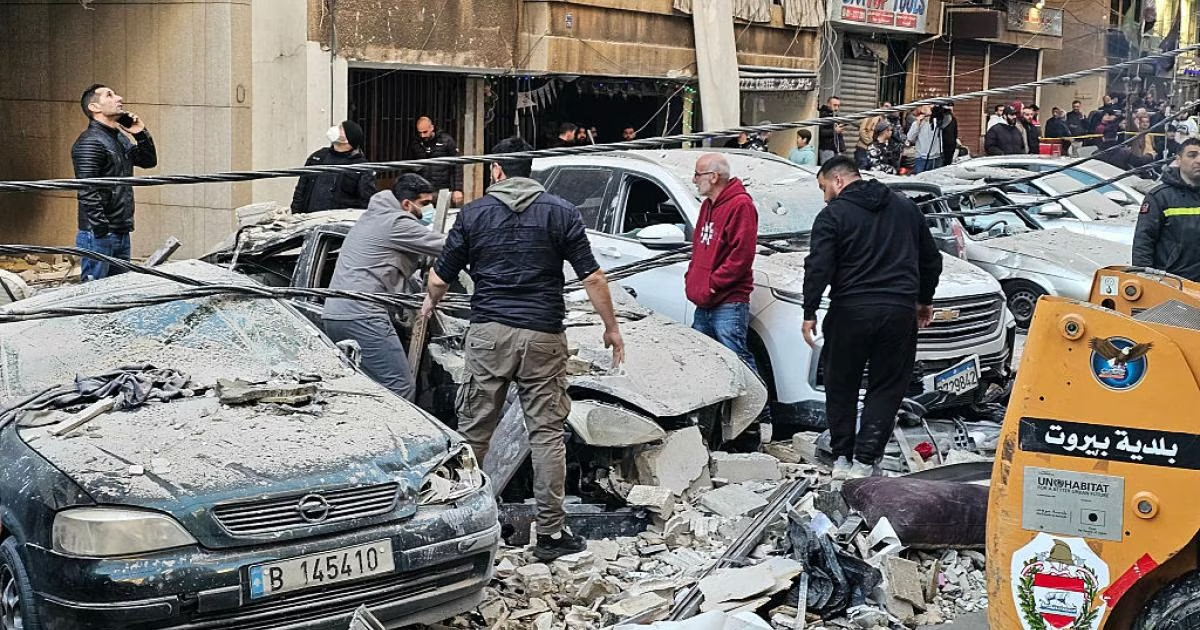
The Lebanese Hezbollah announced the launch of a large-scale military operation dubbed 'Al-Asf Al-Ma'koul' (The Eaten Straw), targeting strategic sites and Israeli settlements in the Galilee and Haifa. The past hours witnessed the launch of dozens of missiles described as the largest and most intense barrage since the start of the current escalation, leading to air raid sirens sounding in wide areas of occupied northern Palestine.\n\nField sources reported that the missile barrages directly targeted the settlements of Kiryat Shmona and Nahariya, in addition to sensitive military installations. Targets included the 'Misgav' base and the 'Yodefat' military industries company located northeast of Haifa, with the party confirming the use of specialized missile salvos in this concentrated attack.\n\nIn a simultaneous field development, missile shelling struck the 'Ammiad' base north of Lake Tiberias and the 'Shimshon' base to its west, reflecting an expansion in the geographical targeting scope. Hebrew media sources estimated the number of missiles that crossed the border at over 100, confirming that defense systems faced a significant challenge in countering this complex attack.\n\n"Al-Asf Al-Ma'koul" carries deep religious and military connotations, as the party drew the name from Surah Al-Fil (The Elephant) in the Holy Quran, which describes the destruction of Abraha's army and their transformation into scattered debris. Through this symbol, the party aims to emphasize its ability to inflict comprehensive destruction on Israeli forces and military infrastructure in response to the massacres committed against civilians in Lebanon.\n\nOn the humanitarian front, Lebanese Health Minister Rakan Nasser El Din announced a heavy toll from the ongoing Israeli aggression, with the number of martyrs rising to 634, including 91 children. The number of injured also exceeded 1586, amidst continued fierce airstrikes targeting the southern suburbs of Beirut and various areas in the South and Bekaa.\n\nOn the ground, occupation forces continue their attempts at ground incursions, which began early this March, in border points in the western and central sectors. These attempts are met with fierce resistance from Hezbollah fighters, while Israeli aircraft continue to destroy residential towers and alleged missile launch platforms in Lebanese border villages and towns.\n\nOn the Israeli side, Prime Minister Benjamin Netanyahu is holding intensive security consultations with army commanders and intelligence agencies to determine the next steps. Reports emerged that the occupation is considering striking targets belonging to Lebanese government infrastructure, in an attempt to pressure the popular base and the official Lebanese stance to halt missile attacks.\n\nMilitary analysts believe that these attacks may include the use of advanced missile models such as 'Fateh' and 'Zelzal' to deplete Israeli air defenses. These operations coincide with a state of regional anticipation, especially with reports indicating coordination in military operations aimed at dispersing the interception capabilities of the 'Iron Dome' and 'David's Sling' systems.\n\nFierce confrontations continue amidst international warnings of the region sliding into an uncontrollable comprehensive war. While Hezbollah insists on linking the cessation of its operations to the cessation of aggression against Gaza and Lebanon, Israel continues its military escalation, threatening to expand the scope of ground and air operations to include vital facilities deep within Lebanese territory.\n\nThe phrase 'Al-Asf Al-Ma'koul' comes from the Holy Quran to denote complete destruction, which is what the party intended by naming the operation this way.

ANALYSIS

Thu 12 Mar 2026 3:58 am - Jerusalem Time

From Chaos Management to Unilateral Hegemony: Geopolitical Transformations in the Middle East

Concepts of control in international politics have undergone fundamental transformations over the past centuries, shifting from direct military occupation of land to more complex methods. After World War II, colonial powers abandoned large armies in favor of a strategy of managing balances and conflicts between local powers in vital regions.

This approach relies on ensuring that no regional power capable of imposing self-stability or unilateral hegemony emerges, thereby keeping the region in a constant state of need for external intervention. In the Middle East, this has been clearly manifested through the continuous competition between multiple poles including Turkey, Iran, the Arab system, and Israel.

The state of fragmentation that the region has experienced for decades created an unstable balance, which allowed major powers to influence political trajectories from outside without the exorbitant costs of occupation. This idea is based on the principle of selective support and shifting political pressures to ensure that everyone remains in a state of mutual attrition.

While major powers previously contented themselves with the role of a 'maestro' managing chaos, current transformations indicate a desire to end this traditional model. There appears to be a new trend leaning towards favoring a single regional actor to be the exclusive agent and hegemon over the affairs of the entire region.

Israel emerges in this scene as the primary candidate for this leading role, supported by overwhelming technological and military superiority and an unwavering American political cover. This shift means moving from a stage of managing fragile balances to a stage of imposing a new regional order centered around Israeli power.

The fragmented regional environment and internal wars in several Arab countries have paved the way for this structural change in the geopolitics of the region. The requirement is no longer merely to contain adversaries, but to definitively diminish them to prevent them from obstructing the new path being drawn by major international powers.

This context explains the unprecedented military and political escalation against regional powers that reject this arrangement, foremost among them the axis led by Iran. The current confrontation is not merely a border conflict, but a war over the shape of the coming regional order and who will lead it in the coming decades.

For its part, Tehran realizes that the success of the 'single central power' project means the end of its regional influence and a direct threat to its political entity. Therefore, Iran is striving with all its might to disrupt this transformation through military strategies aimed at reproducing the state of chaos that allows it to survive.

Iranian attempts to restore the 'chaos management' model include expanding the scope of the conflict to include Gulf states and other areas, sending a message that stability will not be achieved without it. This distribution of bombardment and tension aims to prove that the cost of favoring Israel will be exorbitant for everyone.

The ongoing conflict in Gaza, Lebanon, and other arenas is but one chapter in the reshaping of geopolitics. The issue has gone beyond historical rights to become an existential struggle over who has the right to manage the Middle East and determine its strategic destiny.

Amidst this scene, Arab countries find themselves facing fateful challenges, as their traditional role recedes in favor of non-Arab regional powers. This reality necessitates a re-evaluation of alliances in light of an international system that no longer believes in multipolarity within a single region.

The transition to the 'central power' phase will necessarily lead to a change in the nature of security and economic alliances in the region. Political agreements will not merely be fleeting understandings, but will be part of a solid security structure led by the new dominant power under international supervision.

In conclusion, the Middle East stands on the threshold of a historical phase that may end a century of managing anxious balances. Whether attempts to impose a central power succeed or Iran continues to impose 'chaos management,' the only constant is that the old form of the region has irrevocably ended.

The region is moving from a stage of chaos management through multiple balances to a rearrangement of the region around a single central power.

PALESTINE

Thu 12 Mar 2026 3:58 am - Jerusalem Time

Dimensions of the American-Israeli Aggression on Iran: A New Engineering for the Region Amidst Stormy Economic and Military Repercussions

The region entered a dangerous historical turning point with the launch of joint American-Israeli military operations against Iran on February 28th. These moves, led by President Donald Trump's administration in coordination with Benjamin Netanyahu's government, aim to politically and geopolitically re-engineer the Middle East, imposing a new reality that completely ends Tehran's and its allies' influence in the region.

The attacking forces used a massive military arsenal that included strategic B1 and B2 bombers and advanced naval fleets, leading to widespread destruction of Iranian infrastructure. The initial waves of bombing resulted in over 1330 deaths, and the most prominent event was the assassination of Supreme Leader Ali Khamenei, which put the Iranian regime before an unprecedented existential test in the history of the revolution.

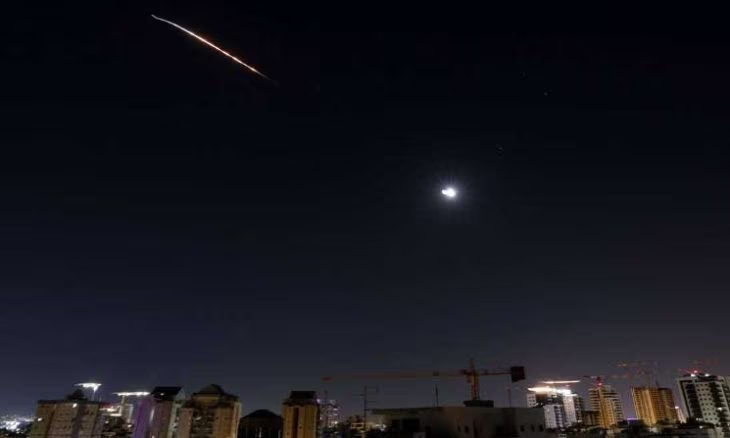
Tehran was quick to respond, launching over 2000 missiles and drones targeting American bases in the region and deep inside Israel, resulting in the deaths of 14 Israelis and 7 American soldiers. This military response revealed the use of new generations of precision and cluster missiles carrying warheads weighing over a ton, which disrupted the defensive calculations of the attacking coalition.

On the internal political front in Iran, state institutions rushed to pledge allegiance to Mojtaba Ali Khamenei as the country's new leader, in a move aimed at preventing any constitutional vacuum or internal collapse. This swift appointment is seen as a direct challenge to Washington and Tel Aviv's plans to install an alternative leadership that aligns with the Western agenda and submits to the dictates of the White House.

Economically, the war caused an earthquake in global energy markets, with oil prices soaring past the $100 per barrel mark, and navigation in the Strait of Hormuz halted for the tenth consecutive day. Control over this waterway, through which 25% of global oil exports pass, is one of the strategic objectives of the war to ensure the flow of petrodollars and control the destinies of nations.

Reports indicate that the financial cost of the conflict reached astronomical figures in its early days, with the Pentagon spending approximately $5 billion on ammunition in just 48 hours. In contrast, Israel recorded losses exceeding $6 billion in the first week, increasing pressure on the American economy, which is already suffering from a debt exceeding $33 trillion.

Given its inability to fully repel Iranian drones, Washington requested technical and military support from Ukraine, including sending experts and interceptor drones to protect American bases in Jordan. This reliance on Kyiv's expertise is due to its long experience in dealing with Iranian-made drones that Russia used extensively during the Ukrainian war.

The war cast a heavy shadow over the Palestinian issue, as settlers exploited the regional preoccupation to escalate their attacks in the West Bank, leading to the killing of 6 Palestinians and the displacement of hundreds. Peace projects and negotiations related to the Gaza Strip also faltered, as the international priority shifted to preventing the confrontation with Iran from escalating into an uncontrollable comprehensive regional war.

Internationally, a sharp division emerged in the Security Council, where European powers refused to participate in military action, warning of its catastrophic consequences for global security and peace. European capitals believe that the war threatens to destroy global supply chains and raise inflation and unemployment rates in countries already suffering from suffocating economic crises and high debt.

The American strategy also aims to tighten the trade blockade on China, which relies almost entirely on Iranian oil to secure its energy needs. By controlling oil sources in Iran, Washington seeks to undermine China's economic power and re-establish unipolar dominance over the global financial system.

Within the United States, President Trump faces growing opposition in Congress and among the American public, with polls showing that 53% oppose this military intervention. Criticism of Trump is escalating due to his exceeding constitutional powers by waging a widespread war without official authorization, which portends an internal political crisis that could worsen with increasing human losses.

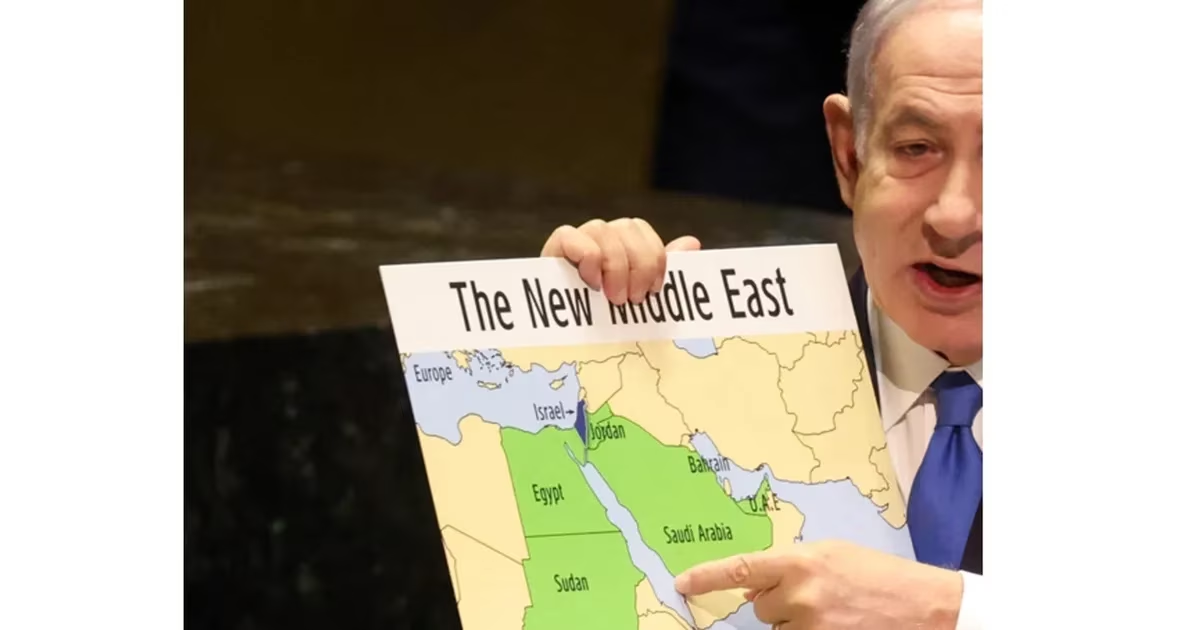
The Zionist plan, as analysts see it, aims through this war to reach the stage of 'Greater Israel' by removing the military obstacles represented by Iran and its allies. Netanyahu seeks, by striking the 'head of the snake' as he describes it, to pave the way for expanding the circle of normalization with countries in the region and ensuring Israel's qualitative military superiority for decades to come.

Informed sources confirm that the current war may draw a new map of the world that transcends the borders of the Middle East, as it redefines international alliances among major powers. With the continued mutual shelling, the option of returning to the negotiating table seems out of reach given the insistence of both sides on achieving strategic objectives that cannot be divided.

The question remains about the international community's ability to curb this escalation before it slides into a nuclear confrontation or a long-term war of attrition that drains the region's resources. Iran after the assassination of its leaders will not be the same as before, and the allegiance to the new leader indicates that Tehran has chosen the path of open confrontation instead of surrendering to American and Israeli pressures.

Our ambition is to empower the Iranian people to overthrow the rule of tyrants and expand the circle of normalization in the region.

ARAB AND WORLD

Thu 12 Mar 2026 3:58 am - Jerusalem Time

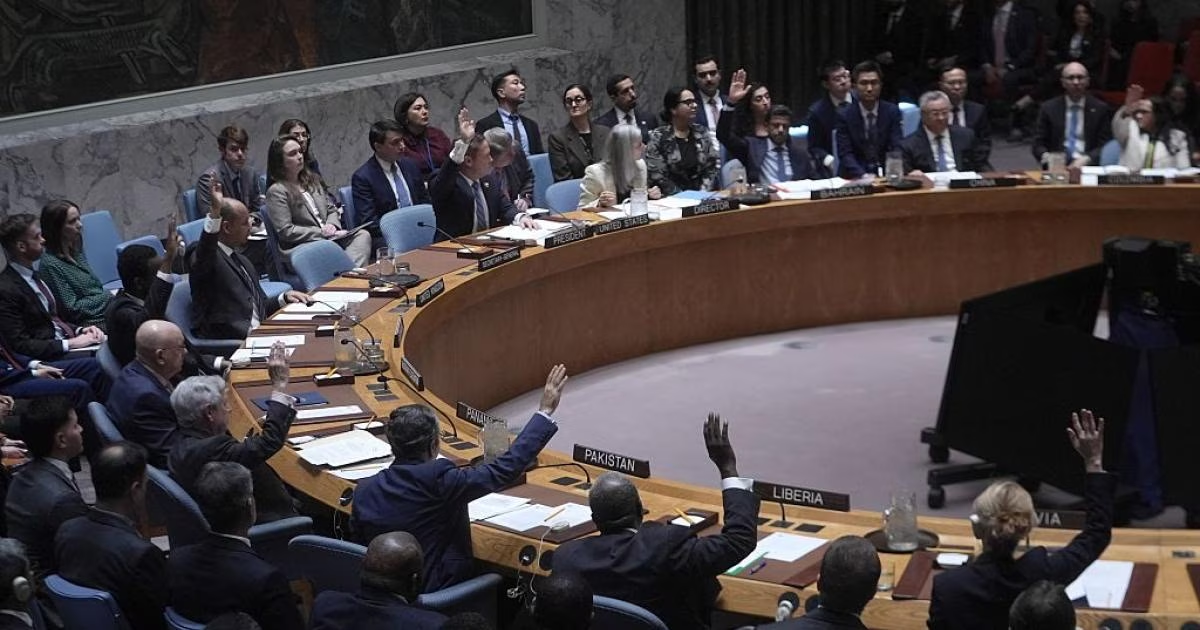
Security Council Condemns Iranian Attacks on Gulf States, Tehran Calls Decision 'Politicized'

The UN Security Council, in its session held on Wednesday, approved a draft resolution condemning the missile attacks launched by Iran, which targeted several countries in the Arabian Gulf region. This international move comes amid escalating military tensions in the region, with the Council demanding Tehran immediately cease all hostile operations that affect the security and stability of its regional neighbors.

The draft resolution, submitted by the Kingdom of Bahrain representing the Gulf Cooperation Council states and Jordan, received widespread support within the United Nations, with 13 countries voting in favor. In contrast, both Russia and China chose to abstain from voting, a step reflecting international divergence regarding how to deal with the Iranian issue, despite the text receiving support from more than 130 member states of the international organization.

For his part, Iran's ambassador to the United Nations, Amir Saeid Iravani, launched a sharp attack on the resolution, describing it as a political tool used by Washington to pressure his country. Iravani emphasized in his speech to the Council that the United States, which currently holds the rotating presidency, has distorted the tasks of the international body to serve its own agenda, stressing Tehran's rejection of the outcomes of this vote.

The Iranian mission accused the American administration of full responsibility for the raging war, indicating that Washington is pushing for direct military escalation. Tehran considered that the recent moves by the Security Council do not contribute to resolving the crisis, but rather increase the complexity of the field situation, which has witnessed mutual missile confrontations since late February.

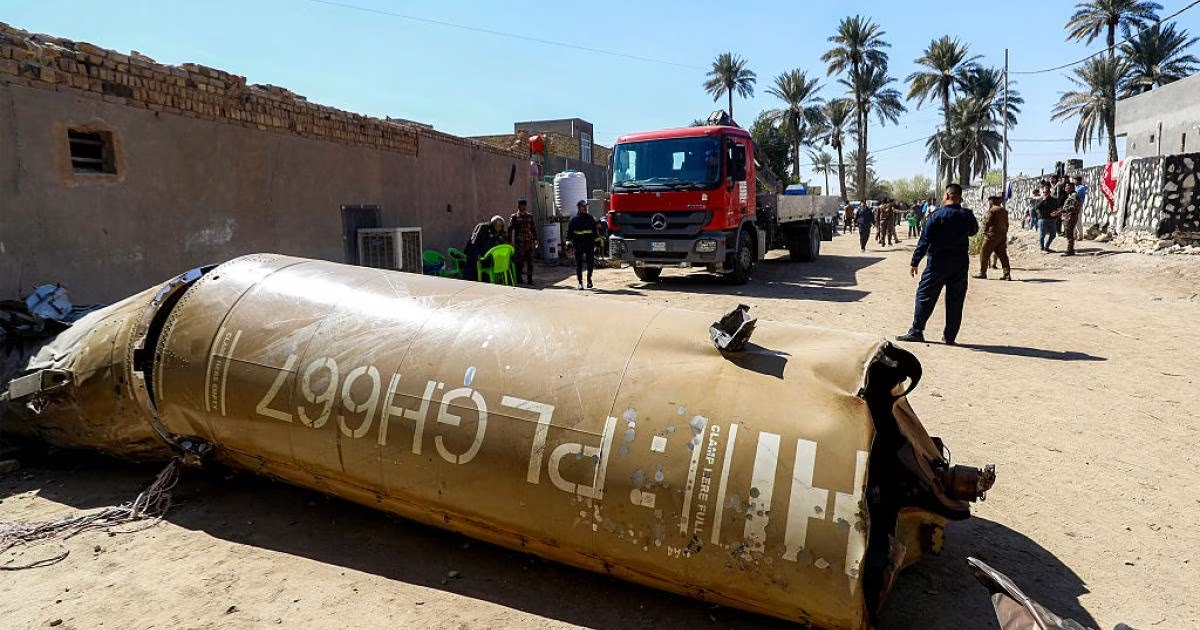
These diplomatic developments coincide with an explosive field reality, where international and regional powers are carrying out military operations against Iranian targets, resulting in significant human losses, including senior leaders in Tehran's power structure. Iran responds to these attacks by launching barrages of missiles and drones targeting what it describes as American interests in neighboring countries, including Iraq and Jordan.

The Arab countries affected by these attacks expressed their strong condemnation of the continued targeting of civilian objects and vital installations on their territories. These countries demanded the necessity of real international guarantees that oblige Iran to respect the sovereignty of states and good neighborliness, stressing that the continued missile bombardment threatens the safety of civilians and undermines de-escalation efforts in the Middle East.

The Council's decision constitutes a blatant distortion of the role of the Security Council, whose rotating presidency is held by the United States, and we hold Washington responsible for the brutal war.

PALESTINE

Thu 12 Mar 2026 3:58 am - Jerusalem Time

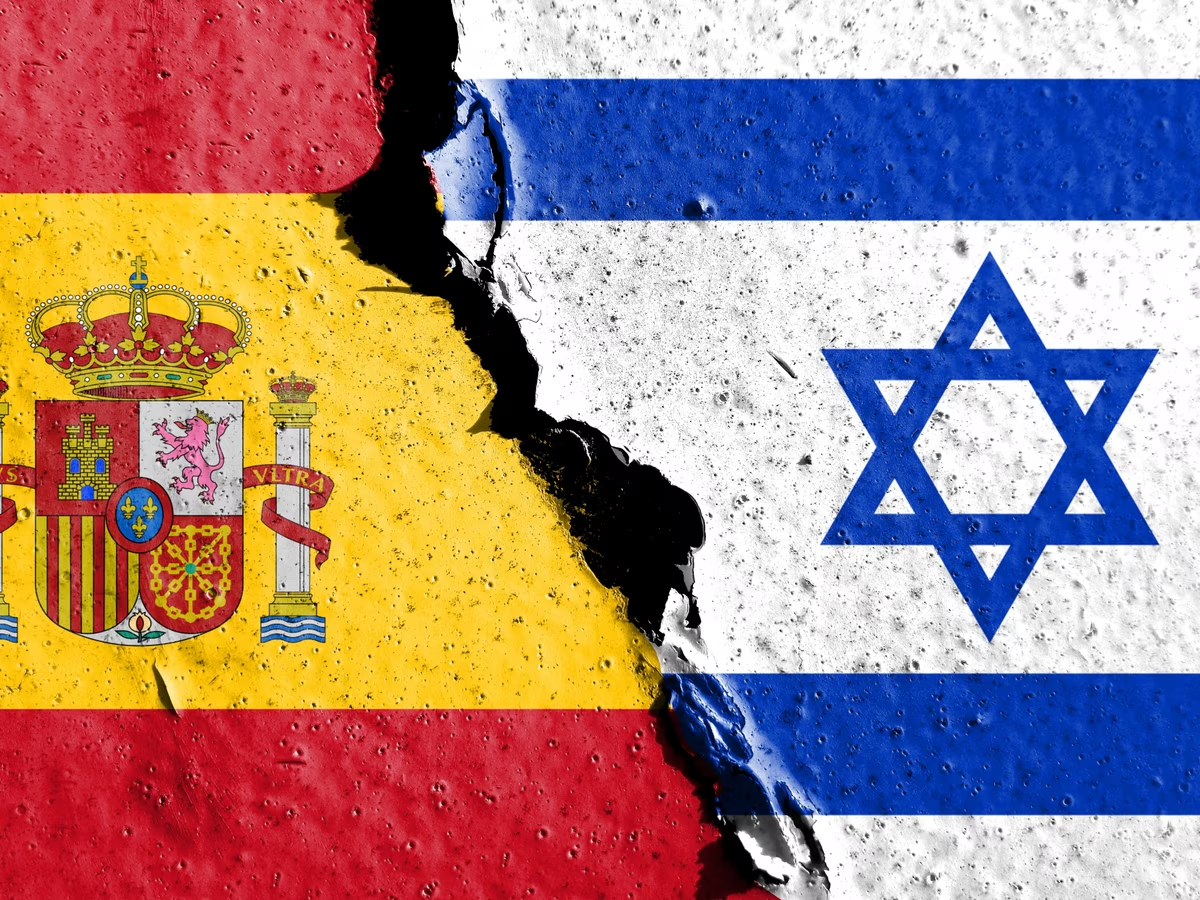
Spain escalates diplomatically and relieves its ambassador to Israel of her duties

The Spanish government officially announced the relief of its ambassador to Israel, Ana Salomon Perez, from her duties, as published in the official gazette in Madrid on Wednesday. This step reflects a new deterioration in bilateral relations, as the decision means lowering the level of Spanish diplomatic representation in Tel Aviv to the level of chargé d'affaires only.

Sources reported that Ambassador Perez had left the occupied territories last September, when Madrid recalled her for consultations in response to statements by Israeli Foreign Minister Gideon Sa'ar. Sa'ar had accused the Spanish government of 'anti-Semitism,' which Madrid considered an unacceptable transgression of diplomatic norms.

This measure is one in a series of diplomatic crises that began in May 2024, when Israel withdrew its former ambassador from Madrid in protest of Spain's recognition of the Palestinian state. Since then, relations between the two sides have been in a state of stagnation and continuous political bickering against the backdrop of Israeli policies in the region.

Media reports indicated that the resumption of full diplomatic relations would require Spain to appoint a new ambassador, which would require the approval of the Israeli authorities, something that seems unlikely at present. The Spanish embassy is currently managed by a diplomatic staff headed by a chargé d'affaires to handle essential affairs only without full representation.

This step comes amid a firm stance taken by Spanish Prime Minister Pedro Sánchez against Israeli military operations in the Gaza Strip. Sánchez has on several occasions described what is happening in the Strip as 'genocide,' calling on the international community to act to stop the blatant violations of international humanitarian law.

In a related field development, major Spanish cities such as Madrid, Barcelona, and Valencia witnessed massive demonstrations in which thousands participated, condemning the Israeli aggression. Demonstrators raised slogans demanding a complete قطع of relations with the occupation and the imposition of economic and military sanctions to stop the ongoing massacres against civilians in Gaza and Lebanon.

Additional tension also emerged after the Spanish government refused to allow the United States to use military bases on its territory to support military operations against Iran. Sánchez affirmed that his country would not be a party to a war that violates the national sovereignty of states and leads to the destabilization of the entire Middle East region.

For her part, the Second Deputy Prime Minister, Yolanda Díaz, called for taking tougher stances to confront the war waged by Washington and Tel Aviv in the region. Díaz considered that international silence regarding what is happening in Gaza and Iran gives the occupation a green light to continue its crimes without legal or moral deterrence.

Statistics from the Gaza Strip indicate a catastrophic situation, where the Israeli genocide has left more than 72,000 martyrs and about 172,000 injured since October 2023. The destruction has also affected about 90% of the Strip's infrastructure, making the lives of 2.4 million Palestinians there a daily hell lacking the most basic necessities for survival.

Observers believe that the Spanish position represents an exception in the European continent, as Madrid adopts a legal discourse that focuses on UN authority. This position has received widespread support from the Spanish people, who oppose involvement in foreign wars and demand respect for human rights in the occupied Palestinian territories.

Regionally, the repercussions of the war that began last February extended to Lebanon, Iraq, and the Gulf states, further complicating the diplomatic scene. Madrid fears that blind alignment with the occupation's policies will lead to a comprehensive regional explosion whose catastrophic consequences for global security cannot be controlled.

In the absence of any immediate official statement from Tel Aviv regarding the decision to relieve the ambassador, analysts expect Israel to respond with similar measures that will further isolate Madrid diplomatically within the Western camp. However, the Sánchez government seems determined to move forward with its policy, which it describes as balanced and consistent with democratic values.

This decision to lower diplomatic representation is not merely an administrative measure, but a strong political message expressing Madrid's exasperation with Israeli actions. All eyes remain on Brussels to see if other European countries will follow Spain's lead in taking concrete steps against the occupation government.

In conclusion, the Palestinian issue remains the primary driver of these major diplomatic shifts in Spanish foreign policy. With the continued fall of victims in Gaza, popular and political pressure on Western governments is expected to increase to fundamentally and comprehensively review their relations with Israel.

This decision effectively lowers diplomatic relations between the two countries to the level of chargé d'affaires, representing another step in the ongoing diplomatic escalation.

LATEST NEWS

Thu 12 Mar 2026 3:58 am - Jerusalem Time

Widespread Iranian Military Escalation Targets American Bases, Gulf States, and Ships in the Strait of Hormuz

The Gulf region witnessed an unprecedented military escalation on Wednesday, as Iranian armed forces carried out a series of coordinated attacks targeting strategic locations and American military bases. These developments come in the context of Tehran's direct confrontation against American and Israeli interests in the region, amidst continuous threats to close the Strait of Hormuz.

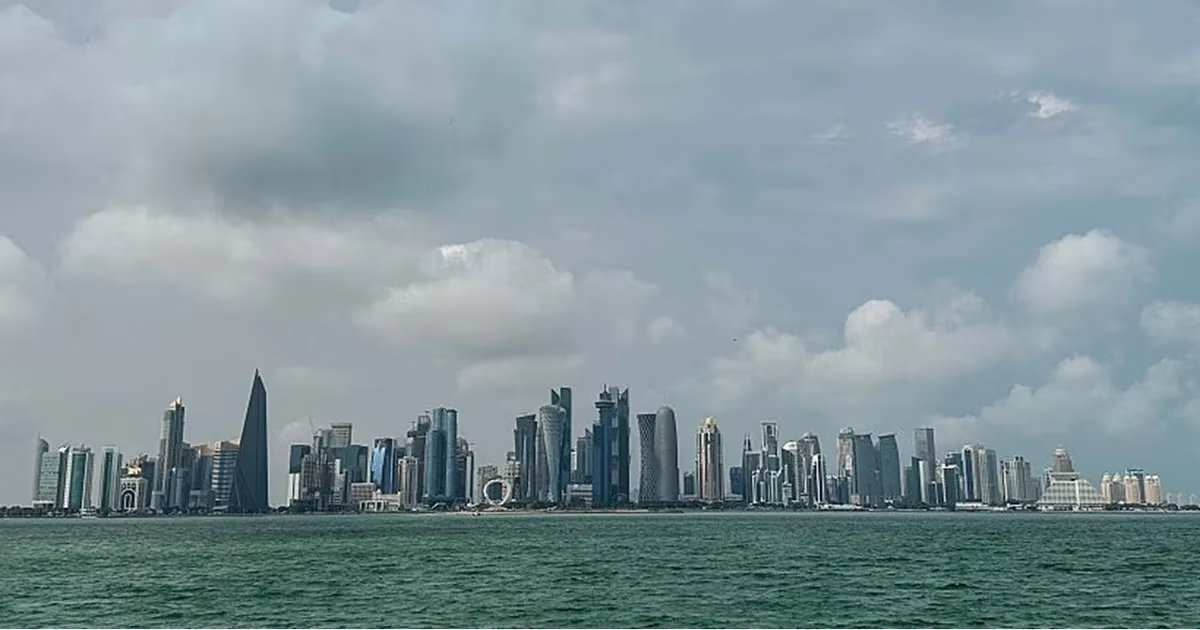
In the Qatari capital, Doha, violent explosions were heard due to a missile attack, which the Qatari Ministry of Defense confirmed was intercepted by air defense platforms. For its part, the Qatari Ministry of Interior raised the security threat level to maximum, calling on citizens and residents to stay indoors and away from windows to ensure their safety.

On the Saudi side, the Ministry of Defense announced the interception and destruction of a wave of drones that targeted the strategic Shaybah oil field located in the Empty Quarter. Sources clarified that air defenses managed to shoot down seven drones in separate incidents, confirming the protection of the facility managed by Aramco, which is a fundamental pillar of oil production.

The attacks were not limited to drones but also included the launch of seven ballistic missiles targeting the Eastern Province and Prince Sultan Air Base in Al-Kharj Governorate. Saudi defense systems successfully intercepted these missiles before they reached their targets, amid a widespread military alert at the Kingdom's air bases.

In the UAE, the Ministry of Defense announced dealing with missile attacks and drones coming from Iranian territory. The Dubai Government Media Office reported the fall of two drones in the vicinity of Dubai International Airport, resulting in injuries of varying degrees to four people of Asian and African nationalities, while confirming the regularity of air traffic.

Sultanate of Oman also entered the circle of events, as security sources reported the downing of one drone and the fall of another into the sea waters north of Duqm province. The Sultanate expressed its strong condemnation of the continuous targeting operations, affirming that it is taking all necessary measures to protect its national security and the safety of residents on its territory.

For its part, the Iranian Revolutionary Guard officially announced the implementation of the thirty-sixth wave of Operation 'True Promise 4'. The statement issued by the Guard clarified that the attacks targeted the 'operational infrastructure' of the American army in Bahrain, Qatar, Kuwait, and Iraq, using advanced 'Qader' and 'Kheibar Shekan' missiles.

Iranian reports confirmed that the missiles directly targeted the headquarters of the US Fifth Fleet in Bahrain, Al Udeid Air Base in Qatar, and Al Adairi Base in Kuwait. The attacks also included Harir Base located in northern Iraq, in an attempt to disrupt the operational capabilities of American forces stationed at those bases.

In the waters of the Strait of Hormuz, international navigation was subjected to severe blows, as maritime security agencies reported that three commercial vessels were hit by unknown projectiles. One of the attacks led to a massive fire on board a Thai cargo ship named 'Mayuree Naree' 11 nautical miles north of the Sultanate of Oman.

The Japanese container ship 'ONE Majesty' also sustained minor damage as a result of an unknown projectile while sailing northwest of Ras Al Khaimah. Security sources confirmed that the ship's crew was safe and that it headed to a safe anchorage to assess the damage, while concern continued among global shipping companies.

The third ship targeted was the cargo tanker 'Star Gwyneth', flying the flag of the Marshall Islands, whose hull was hit directly northwest of Dubai. Maritime risk management companies stated that the attack did not result in injuries among the crew, but it increased the complexity of the security situation in the vital waterway.

Navigational data indicates a sharp and rapid decline in ship traffic through the Strait of Hormuz since the start of the recent conflict in late February. This strait is a major artery for the global economy, through which about one-fifth of the world's daily oil and gas supplies flow.

Observers believe that Iran's use of 'Emad' and 'Kheibar Shekan' missiles represents a clear message of defiance to the region's defensive capabilities. Tehran claims that these operations are in response to American and Israeli movements, affirming that it will not stop targeting interests associated with them until attacks on its territory cease.

With the number of targeted ships reaching at least 14 since the outbreak of confrontations, international fears are escalating that the conflict will spiral out of control. Major capitals are cautiously monitoring the repercussions of this escalation on global energy prices and the stability of supply chains passing through the Arabian Gulf region.

The competent authorities confirmed the fall of two drones in the vicinity of Dubai International Airport, causing minor to moderate injuries to four people, with air traffic continuing normally.

PALESTINE

Thu 12 Mar 2026 3:58 am - Jerusalem Time

International Bloc of 8 Countries Condemns Occupation Restrictions at Al-Aqsa Mosque During Ramadan

Foreign ministers from eight Arab and Islamic countries expressed their strong condemnation of the practices pursued by the Israeli occupation authorities in occupied Jerusalem, especially regarding the closure of the gates of the blessed Al-Aqsa Mosque to worshippers. The joint statement included Jordan, Saudi Arabia, the UAE, Qatar, and Egypt, in addition to Turkey, Pakistan, and Indonesia, where they emphasized their categorical rejection of these measures that coincide with the holy month of Ramadan.

In their statement, the ministers affirmed that the security and arbitrary restrictions imposed on access to the Old City and places of worship constitute a blatant violation of the principles of international law and international humanitarian law. They pointed out that these practices aim to undermine the historical and legal status quo in Jerusalem, and are a direct assault on the freedom of worship guaranteed by international conventions for all peoples under occupation.

The statement reiterated the firm position that Al-Aqsa Mosque, in its entirety of 144 dunams, is a place of worship exclusively for Muslims, and the occupation has no legal sovereignty over Islamic and Christian holy sites in the holy city. The ministers also clarified that the Jerusalem Awqaf Department, affiliated with the Jordanian Ministry of Awqaf, is the sole and legally authorized body to manage the affairs of the Haram and regulate the entry of worshippers.

The signatory countries demanded that the occupation authorities, as the occupying power, immediately cease all forms of escalation and lift the restrictions imposed on the movement of worshippers, ensuring their safe access to the mosque. The ministers warned that the continuation of these provocations would lead to further tension in the region, requiring urgent intervention from active international powers to stop these ongoing violations.

In conclusion of the statement, the ministers called on the international community to bear its legal and moral responsibilities towards what is happening in occupied Jerusalem, and to work to compel the occupation to respect the sanctity of holy sites. They stressed the need for a firm international stance that puts an end to the discriminatory policies targeting the Arab and Islamic identity of the city, affirming that peace and stability cannot be achieved except by respecting legitimate Palestinian rights.

The entire area of Al-Aqsa Mosque, which is 144 dunams, is a place of worship exclusively for Muslims and the occupation has no sovereignty over it.

OPINIONS

Thu 12 Mar 2026 3:39 am - Jerusalem Time

The Board of Peace Gone Missing

March 12, 2026

News Analysis


Washington, D.C-Last week, I posed a straightforward question to a senior American official: What is the status of the administration’s “Board of Peace” initiative for Gaza? Has it been shelved?


The response came quickly and with confidence: No. The effort continues.


Yet the reality unfolding across the Middle East suggests otherwise.


Behind the reassuring language coming from Washington, the diplomatic machinery meant to advance President Donald Trump’s plan to end the war in Gaza appears largely stalled.


Informed sources say negotiations intended to move the plan forward faltered last week, just as the region entered a far more dangerous phase following the joint United States–Israeli military strike against Iran.


That escalation has ignited a broader regional confrontation and, with it, a sharp shift in priorities.


The Gaza initiative—once presented by the administration as a central pillar of its regional diplomacy—now appears increasingly overshadowed by the urgent demands of a widening conflict.


From the outset, however, the initiative struggled to gain meaningful international traction.


Even before the current escalation, the so-called Board of Peace had failed to generate broad diplomatic backing among key regional and international actors whose support would be essential for any sustainable postwar arrangement in Gaza.


Several governments privately questioned both the structure of the initiative and Washington’s ability to deliver the political conditions necessary for its success.


Analysts were skeptical from the beginning. Even as Trump unveiled the “Board of Peace” initiative during his appearance at the World Economic Forum in January, some regional experts quietly dismissed the proposal as stillborn. A plan built around the voluntary disarmament of Hamas—without a broader political settlement, credible enforcement mechanisms, or clear buy-in from major regional stakeholders—was unlikely to gain traction. The initiative, they warned at the time, risked becoming another diplomatic concept announced with fanfare but lacking the political conditions necessary to survive.


Before the current escalation, the administration had nevertheless invested considerable diplomatic energy in trying to build a political framework for Gaza around that idea.


At the core of the proposal was a controversial but pragmatic concept: persuading Hamas fighters to surrender their weapons in exchange for rebuilding Gaza and granting a broad amnesty.


Supporters argued that disarmament could unlock large-scale reconstruction and eventually allow a gradual Israeli withdrawal from the devastated enclave.


According to sources familiar with the effort, White House intermediaries had quietly facilitated indirect contacts between Israel and Hamas through regional mediators.


Those delicate discussions focused primarily on the mechanics of disarmament and the political arrangements that might follow.


But the talks came to an abrupt halt when the military confrontation with Iran began on February 28.


Publicly, the administration insists that nothing fundamental has changed.


A White House official rejected suggestions that negotiations had been suspended, maintaining that discussions on disarmament are continuing and remain constructive.


According to the official, mediators still believe resolving the weapons issue is essential to unlocking the billions of dollars pledged for Gaza’s reconstruction.


Officials associated with the administration’s so-called Peace Council also downplay the significance of the pause, portraying it as little more than a temporary logistical interruption.


They say disruptions to regional air travel prevented mediators from reaching Cairo, where several rounds of negotiations had previously taken place.


Some officials even argue that the current war could ultimately strengthen the peace effort.


If Iranian influence across the region weakens, they contend, the financial and military networks sustaining Hamas could erode as well.


In theory, that might make the question of disarmament easier to resolve.


Regional officials, however, offer a far less optimistic assessment.


A Palestinian source involved in mediation confirmed that a meeting between Hamas leaders and mediators from Egypt, Qatar, and Turkey had been scheduled for the very day the war erupted.


The meeting never happened.


It was abruptly canceled as the regional situation deteriorated, and no alternative date has been announced.


Another Hamas official confirmed that talks tied to the Trump initiative have effectively been suspended for now, though he declined to elaborate on the reasons.


The Israeli government, for its part, has provided no clear public explanation regarding the status of the negotiations.


In diplomacy, silence often speaks volumes.


Even as officials insist that some form of conversation continues, the broader diplomatic architecture supporting the initiative appears to be shrinking.


Foreign diplomats say the United States–led civil-military coordination center that had been overseeing implementation of the plan from southern Israel has sharply reduced its operations.


Staffing and activity have reportedly been scaled back to a minimum amid concerns about possible Iranian missile strikes.


The strategic reality is difficult to ignore: Washington’s attention is now overwhelmingly focused on managing the confrontation with Tehran.


In that environment, Gaza inevitably slips lower on the list of urgent policy priorities.


Yet developments on the ground continue to carry serious consequences.


Israeli officials maintain that the disarmament of armed factions in Gaza remains non-negotiable, warning that military operations could intensify if no agreement is reached.


Israeli airstrikes inside the enclave have continued intermittently, even as Israel remains engaged on other regional fronts.


Only a few months ago, the administration’s Gaza initiative appeared to be gathering tentative momentum.


A ceasefire reached last October reduced violence and allowed several border crossings to reopen.


Regional governments—particularly wealthy Gulf states—signaled their readiness to contribute billions of dollars toward reconstruction if a sustainable political arrangement could be achieved.


But that fragile diplomatic momentum now appears to have dissipated under the pressure of a widening regional war.


Peace initiatives rarely survive the shock of major military confrontation, especially in the Middle East.


Negotiations require time, political attention, and sustained diplomatic focus—resources that quickly become scarce once missiles begin crossing the region.


Which brings us back to the question I asked the American official.


Officially, the Board of Peace still exists, at least on paper. In practice, however, the initiative appears adrift—overtaken by war, regional escalation, and the strategic realities that it struggled to overcome even before the current crisis.


For now, the Gaza peace track has not been formally declared dead.


But it is unmistakably missing from view.

OPINIONS

Wed 11 Mar 2026 8:13 pm - Jerusalem Time

Trump's Statements: Between Media Storm and Strategic Decision

Dr. Ibrahim Nairat

In the world of international politics, the words of leaders have become more powerful than any traditional weapon. Donald Trump's statements are not just fleeting remarks, but a political tool that moves markets, redraws the calculations of allies and adversaries, and sometimes opens new paths to crises. Amidst the war with Iran, his contradictory statements and strategic ambiguity reveal a unique way of managing crises, while a consistent clarity appears in his stance towards Israel. This contrast presents world leaders with a practical lesson: how to distinguish between a media storm and a strategic decision, and how to deal with Trump cautiously and intelligently.

Since his arrival at the White House, Trump has adopted a different approach from traditional diplomatic methods. He has embraced a direct and confrontational rhetoric, often announcing his positions through the media, making his statements daily fodder for discussion and spreading rapidly, sometimes exceeding the boundaries of traditional politics.

However, the war with Iran exposed the limits of this approach and raised serious questions about the nature of political discourse during times of military crisis. Amidst military operations, Trump made contradictory statements within a short period: from declaring the war "completely over" to asserting that military operations would not stop before achieving a "complete defeat of the enemy." These rapid shifts created confusion among observers and contributed to global market volatility.

The problem escalates when the strategic objectives of the war are not precisely defined. Statements varied between destroying Iran's nuclear program, crippling Tehran's missile capabilities, bringing about a change in political leadership, and ultimately imposing "unconditional surrender." While these objectives seem interconnected, each requires a different level of military and political escalation, leaving the fundamental question: what is the ultimate goal of the war? Does Washington seek only to weaken Iran militarily, or to change its political regime?

Matters were further complicated by complex regional balances and economic interests related to energy corridors, especially the Strait of Hormuz, one of the most important arteries of global oil trade. The escalation of the confrontation led to disruptions in navigation and trade, which directly impacted global markets.

And the impact did not stop at the war's boundaries but extended to how other countries deal with American rhetoric. Allies and adversaries found themselves facing a dilemma: are these statements official policy or merely shifting political discourse?

In this context, many world leaders began to learn how to deal with Trump based on his contradictions. They realized that every statement does not necessarily mean official policy, but could be a means of testing reactions or a tactic for political pressure. This awareness made them more cautious, as the focus shifted to monitoring actual actions and policies rather than being drawn into every media statement.

Perhaps what distinguishes Trump's style is his use of strategic ambiguity with most countries of the world, in contrast to complete clarity in his stance towards Israel. While he creates contradictions to confuse and control reactions, his position on Israel remains constant and consistent, as demonstrated in several situations:

Close coordination with Israel in the war against Iran, where Trump indicated that any decision to end operations would be in consultation with Israeli Prime Minister Benjamin Netanyahu, reflecting a high degree of cooperation.

Rapid military support for Israel, including approving arms deals worth hundreds of millions of dollars to support military operations.

Managing policy towards Iran in partnership with Israel, an indication that US-Israeli relations are not as confused as in other files, but are managed with clear and strategic coordination.

These examples confirm that Trump's contradictions are not random or a sign of confusion, but a deliberate political tool that grants him freedom of maneuver, while showing complete clarity when his political position requires it, as is evident in dealing with Israel.

However, ambiguity with the rest of the world also carries its risks, especially during times of military crisis, as conflicting messages can confuse adversaries, allies, and global markets alike. Herein lies the challenge in international politics: the ability to distinguish between media noise and actual policies.

Between contradictory statements and actual policies, there is a dividing line. And whoever recognizes this distance can deal with political discourse with greater calm and realism. In Trump's case, perhaps the wisest response to his statements is simply not to take them completely seriously, but to observe what American policy will actually do, not just what it says.

PALESTINE

Wed 11 Mar 2026 8:12 pm - Jerusalem Time

Al-Zaytoun neighborhood in Gaza: Steadfastness amidst the rubble of destruction and a daily battle to secure a drop of water

In the dusty alleys of Al-Zaytoun neighborhood, southeast of Gaza City, thousands of Palestinians face a bitter reality beyond endurance, as the ancient neighborhood has turned into an open arena for hunger and thirst. Citizen Jawad Badwan sits in front of the rubble of his house, watching queues of residents carrying small plastic containers on a difficult search for drinking water, which has become a rare commodity.

Badwan describes the situation as bitter, emphasizing that the absence of official bodies and relief organizations has exacerbated the scale of the humanitarian tragedy in the neighborhood. He points out that the most basic citizenship rights are completely missing; no water reaches through networks, no charitable kitchens provide meals, and even a loaf of bread has become out of reach for the steadfast families.

Residents of the neighborhood, especially the youth, are forced to walk long distances to reach distant desalination stations. There, they wait for hours to fill containers that do not exceed 15 liters, a quantity residents describe as insufficient for the needs of a single family for two days in the absence of alternatives.

Despite the many individual initiatives, they remain without tangible results capable of bridging the large gap in needs. Residents confirm that UNRWA is the only entity that has been able to reach and distribute limited hygiene kits, while marginalization remains the master of the situation for the rest of the international and local institutions.

In the eastern part of the neighborhood, dozens of citizens demonstrated near the Salah al-Din al-Ayyubi Mosque intersection in protest against the deteriorating living conditions. Protesters raised banners demanding the repair of sewage networks and the removal of rubble and waste that threaten the spread of epidemics and diseases among the displaced and residents living on the ruins.

The proximity to what is known as the 'Yellow Line' poses a constant security concern for residents and relief teams alike. This sensitive geographical location has made the area vulnerable to continuous targeting, prompting many international organizations to hesitate in sending their teams, leaving residents trapped in a reality that does not resemble the declared truce.

Ibrahim Al-Shamali, a resident of the neighborhood who lost his home, appeals to international organizations to look at Al-Zaytoun neighborhood with humanity. Al-Shamali emphasizes that residents live in complete marginalization, lacking the necessities for a dignified life, demanding the establishment of field hospitals and mobile medical points to serve thousands of sick and wounded.

The demands are not limited to drinking water but extend to include water for washing and personal hygiene to prevent skin diseases. Residents stress that hygiene under these circumstances is not a luxury but a paramount health necessity in an area suffering from overflowing sewage and accumulated solid waste.

For his part, the spokesman for the Civil Defense, Mahmoud Basal, warned of a complex environmental and health catastrophe striking Al-Zaytoun neighborhood. Basal explained that initial estimates indicate that about 90% of the neighborhood's buildings have been destroyed, making it one of the most affected areas during the ongoing Israeli war of extermination on the Strip.

The spokesman revealed the presence of bodies of martyrs still under the rubble in several locations within the neighborhood, where teams are unable to retrieve them due to a lack of heavy equipment. He also warned that the remaining homes are on the verge of collapse, which has already led to recorded deaths due to sudden collapses under the weight of destruction.

Salim Daloul, 60 years old, estimates the number of residents in their damaged homes in the neighborhood at about 200,000 people. Daloul confirms that these residents refuse to leave their land despite the lack of aid, pointing out that relief convoys sometimes pass by the vicinity of the neighborhood without allocating any food rations to them.

Daloul proposed practical solutions to overcome the security concerns of international institutions by delivering aid to nearby points for residents to receive it themselves. He stressed that the people of Al-Zaytoun need urgent in-kind and financial support to strengthen their steadfastness in the face of shells that continue to fall on them intermittently.

This suffering comes at a time when statistics indicate the martyrdom of about 72,000 Palestinians and the injury of another 172,000 since the start of the aggression. Despite the ceasefire agreement in effect since October 2025, daily Israeli violations prevent sufficient aid from reaching 2.4 million people living in tragic conditions.

Al-Zaytoun neighborhood remains a stark example of Palestinian steadfastness in the face of the war machine and humanitarian marginalization. While residents await a water tanker or a medical point, they continue to write their story of survival on the ruins, demanding that the world not leave them forgotten on the margins of geography and outside the calculations of international relief.

Our suffering lies in the scarcity of water; there is no official body authorized to visit the neighborhood, even though it is considered one of the oldest and most densely populated neighborhoods in Gaza City.

ARAB AND WORLD

Wed 11 Mar 2026 8:12 pm - Jerusalem Time

Revolutionary Guard threatens to target regional ports as military escalation against Iran continues

The Iranian Revolutionary Guard escalated its warning tone, threatening to target vital ports in the region, amidst the ongoing military operations led by the United States and Israel since February 28. Sources reported that this threat comes in response to the heavy human and material losses suffered by Tehran, which included the killing of more than 1,300 people and the assassination of Supreme Leader Ali Khamenei, pushing the region to the brink of a comprehensive confrontation.

On the ground, Ukraine entered the crisis at the official request of Washington, where President Volodymyr Zelensky announced the dispatch of expert teams and interceptor drones to protect American bases in Jordan. The United States is benefiting from Ukrainian expertise gained in dealing with Iranian-made drones, at a time when reports indicate that Tehran has launched more than two thousand missiles and drones towards various targets in the region over the past ten days.

Domestically in the United States, a recent Quinnipiac University poll showed a sharp division in American public opinion, with 53% of respondents expressing their opposition to military action against Iran, while 74% expressed outright rejection of sending ground troops. In a related context, the war caused other political projects to falter, most notably the American Peace Council project in the Gaza Strip, as a result of the American administration's preoccupation with the direct conflict with Tehran and its repercussions on global energy markets.

Iranian threats to target ports come at a time when the Strait of Hormuz is facing a complete paralysis of navigation for the tenth consecutive day.

PALESTINE

Wed 11 Mar 2026 8:12 pm - Jerusalem Time

Escalation of Settler Terrorism in the West Bank: 6 Martyrs and Strict Military Restrictions Since the Start of the War on Iran

Settler groups in the occupied West Bank have escalated their deadly attacks against Palestinian citizens, exploiting the international and field preoccupation with the ongoing war against Iran. Human rights and medical sources reported that settlers intensified their attacks under the protection of the Israeli occupation army, which imposed strict movement restrictions, leading to the martyrdom of 6 Palestinians since the outbreak of the regional confrontation on February 28th.

The Palestinian Ministry of Health confirmed that at least five citizens were killed by settler gunfire in various areas of the West Bank, while the human rights organization 'B'Tselem' indicated the martyrdom of a sixth person due to tear gas inhalation during a settler attack. These developments come at a time when the United States and Israel continue their widespread aggression on Iranian territories, which has resulted in increased tension in the occupied Palestinian territories.

The occupation army imposed a strict security cordon on Palestinian villages and towns, with main roads closed by iron gates and earth mounds, making remote villages easy prey for armed settler attacks. Local sources explained that these military restrictions hindered the access of ambulances and medical teams to rescue the injured, contributing to the rise in the number of victims due to bleeding or delayed medical intervention.

In the village of Abu Falah, north of Ramallah, the area witnessed a brutal attack carried out by more than 100 armed settlers under the cover of darkness, resulting in the martyrdom of two Palestinians. Sources quoted eyewitnesses that residents tried to defend their homes with stones before the settlers indiscriminately opened fire with their machine guns at the chests of citizens who tried to repel the aggression.

One of the village defenders pointed out that the martyr Thayer was killed while trying to protect a house from burning, with traces of blood remaining as evidence of the crime in the surrounding olive groves. Following the attack, a third Palestinian died from his injuries, amid accusations against the occupation forces of firing large quantities of toxic gas to secure the withdrawal of settlers from the area after committing their crime.

For his part, the spokesperson for the Palestinian Red Crescent, Ahmed Jibril, confirmed that ambulance crews face extreme difficulties in reaching conflict areas due to attacks by both settlers and the army. Jibril stated that the northern Jordan Valley, Masafer Yatta, and villages east of Ramallah suffer from a suffocating siege that prevents medical aid from reaching patients and injured people who are subjected to daily abuse.

The human rights organization 'Yesh Din' monitored more than 109 incidents of violence committed by settlers since the start of the war on Iran, including direct physical assaults, property destruction, and live fire. The organization noted a dangerous phenomenon of settlers wearing Israeli army uniforms during their attacks, which confirms the complete alignment between the military system and extremist settlement groups.

In a related context, international reports revealed that about 700 Palestinians have been forced to flee their homes since the beginning of 2025 until early 2026 due to ongoing settler terrorism. These attacks coincide with an Israeli government plan to expand settlements, led by Finance Minister Bezalel Smotrich, with the aim of undermining any opportunity for the establishment of an independent Palestinian state in the future.

Settler leaders announced the establishment of new settlement outposts in strategic locations, including a settlement overlooking the city of Nablus, as part of a plan that includes the construction of 22 new settlements announced last year. More than 700,000 settlers currently reside in illegal settlements in the West Bank and Jerusalem, amidst an environment of full military protection provided by the right-wing occupation government.

On the ground, the occupation army justifies road closures as precautionary security measures in light of ongoing airstrikes on Iran and Lebanese Hezbollah, which continues to launch rockets in solidarity with Tehran. However, Palestinians assert that these measures are exclusively aimed at paralyzing their movement and facilitating the mission of settler militias in seizing more land and terrorizing peaceful residents.

Regionally, the American-Israeli aggression on Iran has led to the deaths of more than 1,300 people, including high-ranking leaders, igniting multiple fronts in the region. Tehran responded with missile and drone attacks targeting strategic centers inside Israel, resulting in the deaths of 14 Israelis and injuries to hundreds, amid strict military censorship that prevents the publication of the true extent of losses.

Amidst this regional explosion, peace efforts and international projects aimed at de-escalating the situation in the Gaza Strip and the West Bank have faltered, as international focus has shifted to direct confrontation with Iran. Observers warn that the continuation of the war will give a green light to settlers to implement 'silent transfer' plans against Palestinian Bedouin and rural communities in areas classified as 'C'.

Economic data indicate that global markets have been affected by the halt of navigation in the Strait of Hormuz for the tenth consecutive day, with oil prices soaring to record levels of $119 per barrel. This global turmoil casts a shadow over the international community, which appears unable to curb Israeli aggression in the West Bank amidst the involvement of major powers in the direct conflict.

In conclusion, the Palestinian citizen in the West Bank continues to face a dual Israeli war machine; represented by the occupation army with its heavy weapons, and settler militias that now operate as an unofficial military arm. With the absence of international protection, fears of wider massacres in isolated villages, which now lack the minimum means of self-defense under the complete siege, are increasing.

Armed settler militias exploit war conditions and operate with direct support from the army to attack Palestinians and force them to leave.

PALESTINE

Wed 11 Mar 2026 8:12 pm - Jerusalem Time

Palestinian Presidency warns against changing the historical status of Al-Aqsa and condemns restricting worshippers' access

The Palestinian Presidency issued a strongly worded statement condemning the occupation authorities' closure of the gates of the blessed Al-Aqsa Mosque and preventing worshippers from accessing it, coinciding with the days of the blessed month of Ramadan. The Presidency considered these steps a dangerous escalation aimed at undermining the existing historical and legal status in the Noble Sanctuary and the holy sites in occupied Jerusalem.

In its statement, the Presidency warned against the occupation's attempts to exploit the state of tension and escalation in the region as a cover to implement plans to restrict religious sites, both Islamic and Christian. It affirmed that these practices constitute a blatant violation of international conventions that guarantee freedom of worship, emphasizing the need to stop all provocations targeting worshippers inside the mosque's courtyards.

The Presidency also demanded the immediate and unconditional opening of all Al-Aqsa Mosque gates to ensure the flow of worshippers, reiterating its affirmation that the Noble Sanctuary, with its full area of 144 dunams, is an exclusive right for Muslims. It stressed the importance of international intervention to protect the religious identity of Jerusalem and to stop any Israeli attempts aimed at changing the existing reality in the holy city.

The blessed Al-Aqsa Mosque, with its full area of 144 dunams, is a place of worship exclusively for Muslims.

ANALYSIS

Wed 11 Mar 2026 7:26 pm - Jerusalem Time

War Without a Clear End: President Trump's Strategic Dilemma in the War on Iran

Said Erikat

Opinion Writer

Washington – Said Arikat – 11/3/2026

News Analysis

The war launched by the United States and Israel against Iran presents President Donald Trump's administration with a complex strategic dilemma. According to a critical reading of an article published in the "Financial Times," Washington appears to have entered a broad conflict in the Middle East without a clear vision of how to end it or manage its political and economic repercussions. This ambiguity is exacerbated by the clear contradiction in Trump's statements, which have ranged from announcing the imminent end of the war to vowing to continue fighting until the "complete defeat of the enemy."

It is worth noting that in a statement on Monday, Trump described the conflict as "completely over," a phrase that quickly reflected in global markets, as oil prices fell after a sharp rise driven by fears of supply disruption. However, this impression did not last long. Just hours later, the US president returned to a more hawkish rhetoric, emphasizing that the war would not stop before achieving a decisive victory. This fluctuation in political messages reflects, according to many observers, confusion in managing the war rather than a well-thought-out strategy to end it.

Ambiguity of Strategic Objectives

The fundamental problem in this war lies in the absence of a clear definition of its ultimate goals. Trump has spoken at different stages about destroying Iran's nuclear program, crippling its ballistic missile capabilities, bringing about a change in political leadership in Tehran, and even imposing "unconditional surrender." These objectives, while seemingly coherent on the surface, differ radically in their nature and requirements for achievement, raising a fundamental question about whether Washington has actually defined the goal it seeks.

Moreover, the war represents the largest American military deployment in the Middle East since the US invasion of Iraq in 2003, yet Trump described it as a "short mission." This contradiction between the scale of the military operation and the nature of the political rhetoric reinforces the impression that the US administration may have underestimated the complexities of the confrontation with Iran.

War and Attrition Calculations

Despite the severe blows Iran has suffered, including the assassination of Supreme Leader Ali Khamenei in the early days of the war, signs of a rapid collapse of the regime have not materialized. Tehran has shown an ability to reorganize its leadership and continue fighting, and has appointed a new figure at the top of the power hierarchy, the son of the assassinated Supreme Leader, Mojtaba Khamenei, in a move aimed at demonstrating political continuity.

Field data indicate that Iran has chosen a long war of attrition strategy, an approach it had prepared for years. Despite a decline in its ability to launch missiles compared to the early days of the war, it is still capable of carrying out missile and drone attacks against Israel and the positions of Washington's allies in the Gulf. This has disrupted trade and travel in the region, and led to significant disruptions in navigation through the Strait of Hormuz, one of the world's most important energy arteries.

Regional and International Repercussions

The repercussions of the war are clearly visible in the Gulf region, where some countries have been forced to temporarily reduce oil and gas production due to security risks. The leaders of these countries had previously warned that any widespread war with Iran could quickly turn into an uncontrollable regional conflict. Nevertheless, Trump – according to his statements – was surprised by Iran's attacks on countries that were not direct parties to the war, which again reflects a misjudgment of the nature of the regional conflict.

At the same time, the prospects for political change in Iran do not seem imminent. The protest movements that the country witnessed in recent years have almost disappeared with the outbreak of the war, as Iranians have become more concerned with their personal security amidst bombing, sanctions, and economic turmoil. Indeed, the war may give the Iranian regime an opportunity to strengthen its "resistance" rhetoric and mobilize public opinion around it.

End Dilemma

Given this reality, Washington's options appear limited. Continuing the war threatens to exacerbate the global energy crisis and endanger the international economy, and may also cast a shadow over the domestic political situation in the United States, especially with the approaching midterm elections. Ending the war quickly, however, might give Tehran an opportunity to declare "steadfastness" and claim political victory despite military losses.

In both scenarios, the Middle East remains prone to further instability, whether as a result of continued confrontation or due to the vacuum that may result from weakening the Iranian state without a clear political alternative.

The contradiction in Donald Trump's statements reveals a familiar pattern in his management of international crises, based on using strategic ambiguity as a pressure tool. However, this approach, which may sometimes succeed in commercial or political negotiations, becomes more dangerous in the context of wars. Conflicting signals may confuse adversaries, but at the same time, they confuse allies and global markets. In the case of the war with Iran, it seems that ambiguity has not become a deliberate strategy as much as it has become a reflection of the absence of a clear vision for what the end of the conflict should be.

Historical experience shows that overthrowing political leadership in countries with centralized systems does not necessarily lead to the collapse or surrender of the state. The opposite has happened in many cases, where external pressure has strengthened the regime's internal cohesion. In the Iranian case, the assassination of Ali Khamenei did not lead to the collapse of power, but rather prompted it to quickly rearrange the leadership hierarchy. This reflects the ability of Iranian state institutions, especially security and military ones, to maintain continuity even in the face of major political shocks.

The great paradox in this war is that its declared objectives may contradict its potential outcomes. Weakening Iran militarily may achieve tactical gains for Washington and its allies, but it may also open the door to more dangerous scenarios, such as the disintegration of the state or its transformation into an arena for internal and regional conflicts. Such a scenario could create a strategic vacuum in the Gulf and threaten global energy security. Therefore, the real challenge for decision-makers in Washington is not to win the war, but to manage the day after it.

ISRAELI AFFAIRS

Wed 11 Mar 2026 7:26 pm - Jerusalem Time

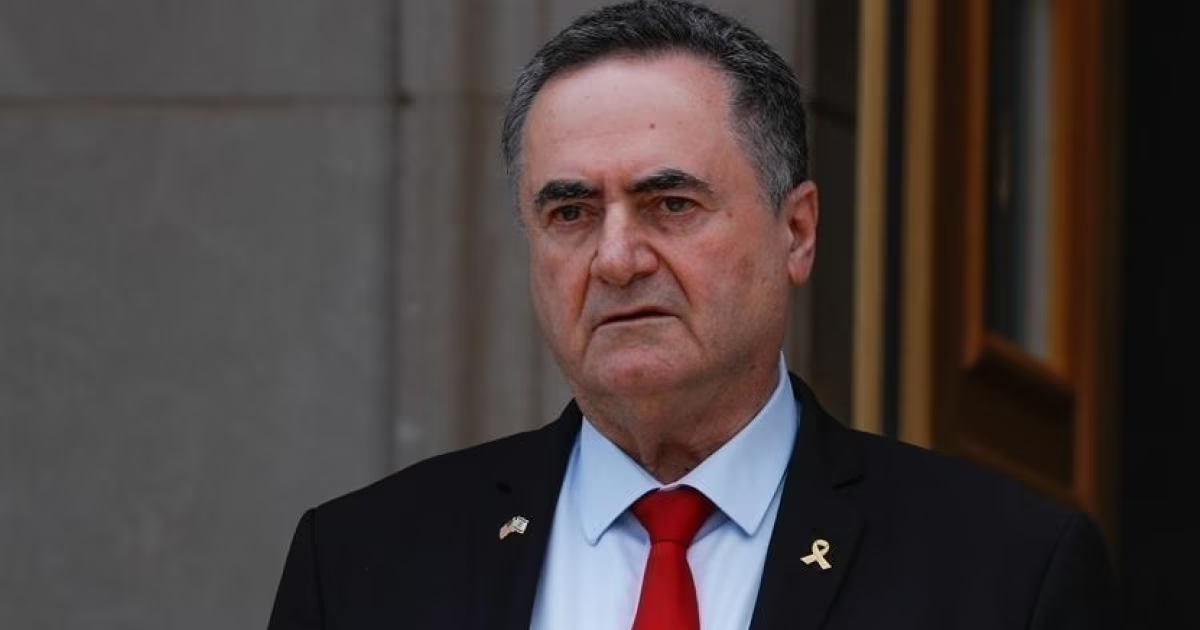
Katz vows to continue war against Iran, Israel admits difficulty of militarily overthrowing regime

Israeli Defense Minister, Israel Katz, announced the continuation of joint military operations with the United States against Iran until all outlined objectives are achieved. Katz clarified in an official statement following a security assessment that the war led by US President Donald Trump and Prime Minister Benjamin Netanyahu would not be subject to a specific timeline, indicating that military pressure would continue through all available means.\n\nThe Israeli minister claimed that the Iranian leadership is in hiding in tunnels, alleging that Iranian hospitals are experiencing a significant overcrowding of casualties from the Revolutionary Guard and Basij forces. These statements come amidst a continuous escalation on the ground since late last February, which included airstrikes and assassinations targeting senior leaders in Tehran.\n\nIn a related context, Hebrew media sources revealed a conviction within the Israeli military establishment regarding the difficulty of overthrowing the Iranian regime through direct military means at present. The sources indicated that the army understands the serious strategic consequences that could result from an attempt to change the regime by force, emphasizing that this goal is not on the table for immediate implementation.\n\nThe Israeli army believes that ending the war must be linked to achieving tangible accomplishments in other areas, most notably undermining Iran's military manufacturing capabilities. The current strategy is shifting from destroying ready-to-launch missile platforms to targeting the infrastructure of factories and facilities that produce these weapons to ensure the long-term weakening of Tehran's offensive power.\n\nIsraeli air operations face logistical obstacles due to Iran's vast geographical area and the distribution of military facilities across distant regions. These challenges have prompted Tel Aviv to request direct support from the United States to expand the scope of air and intelligence coverage, especially given the continued targeting of internal security sites and sensitive border areas.\n\nThis confrontation is the first of its kind in decades in which Israel is fighting a country with strategic depth and independent defense industries. Reports confirm that Iran's ability to produce weapons locally makes it difficult to decisively win the battle through swift strikes, requiring a long-term approach and close coordination with international allies.\n\nOn the ground, Israeli and American attacks have resulted in the deaths of more than 1,300 people in Iran, including Supreme Leader Ali Khamenei and prominent security officials. In response, Tehran continues its retaliations by launching barrages of missiles and drones that targeted sites inside Israel, leading to casualties and injuries among civilians and military personnel.\n\nIranian attacks also targeted American bases and interests in Gulf countries, Iraq, and Jordan, resulting in the deaths of American military personnel and damage to civilian assets. These attacks were met with widespread condemnation from affected Arab countries, which called for an immediate cessation of mutual aggressions and sparing the region the woes of a comprehensive war.\n\nPrevious reports indicate that the declared strategic objectives go beyond mere military response, to include an attempt to cripple the nuclear program and ballistic missile systems. Military analysts believe that Israel may prefer an unstable and weak Iranian regime over its complete overthrow, due to the uncalculated risks that a security vacuum could cause in the region.\n\nThe Israeli vision relies on the fact that the development of strategic weapons requires institutional stability, which the current strikes are trying to undermine. While countries like Turkey, Egypt, and Iran have been able to build significant military capabilities thanks to the stability of their regimes, Israel seeks to transform Iran into a model similar to countries that have lost their ability to threaten their national security due to internal chaos.\n\n"The operation led by President Trump and Prime Minister Netanyahu will continue without any time limit until we achieve all objectives."\n

OPINIONS

Wed 11 Mar 2026 7:26 pm - Jerusalem Time

Bubble Elites: When Falsity Leads the Scene of Major Transformations

Ramallah - "Al-Quds" Dot Com

Ramallah - "Al-Quds" Dot Com

Opinion Writer

The observer of the historical transformation paths of emerging societies notices a pathological phenomenon that clearly emerges whenever old pillars shake and new signs of awakening appear. This phenomenon is called 'bubble elites,' a class that excels at floating above the sacrifices of others, exploiting the prevailing state of value fluidity and intellectual turmoil.

These are not just passersby on the train of the stage; rather, they are parasites that suck the nectar of hopes to inject the body of the nation with the poisons of mediocrity and falsity. The tragedy of these elites begins with self-emptiness, as each of them lacks deep roots in the land from which a true intellectual derives their dignity and humility.

'Bubble elites' are rootless beings, made of a thin membrane of pretense filled with hot air of arrogance and moral inflation. This inflation is nothing but an intellectual tumor intended to create an illusion of greatness, while the truth lies in an internal fragility they try to protect with shields of bad character.

Due to their lack of solid intellectual substance, these individuals find themselves compelled to adopt a policy of demolition as an alternative to genuine construction and effectiveness. They cannot ascend to the top of the mountain, so they strive to lower the peak to be level with the bottom they stand on by attacking and betraying the sincere.

In physics, fragile objects float on the surface while gold and rubies sink into the depths, and so do bubble elites in times of revolutions. This class floats because it is the lightest in value and the quickest to respond to the winds of interests, forming a foam that obscures the view of the true flowing river.

These bubbles carry the seeds of their demise in the essence of their formation; the more they swell and become arrogant, the thinner their membrane becomes, and the moment of their inevitable explosion approaches. However, relying on self-explosion is a kind of intellectual fatalism that the vibrant spirit seeking real change rejects.

Religious and ethical duty necessitates the presence of 'pins of the sincere' who carry the consciousness of criticism and the honesty of confrontation to explode this false inflation in the public scene. This confrontation is necessary to preserve truths from vulgarity and protect societal movements from being reduced to hollow figures who carry no real project.

The height of tragedy manifests when these elites turn into hired mouthpieces, trading their intellectual dignity for crumbs of material and moral tables offered to them. These individuals have become parrots in cultural attire, repeating what they are indoctrinated with in backrooms to serve agendas unrelated to the nation's interests.

This subservience explains the spread of mediocrity in digital spaces and visual media, where the solid intellectual has been replaced by the trivial 'influencer' who addresses instincts. Mediocrity here is not just a weakness in performance, but a deliberate method to dilute major issues, flatten public awareness, and direct the masses.

The custodians of the bubble and those behind them aim to create a state of intellectual bewilderment that makes it easy to lead the masses towards goals that serve narrow interests. But history, as a harsh sieve, does not retain bubbles, no matter how high their status, but casts them into the abyss of oblivion over time.

The ongoing conflict between bubble elites and the sincere advocates of causes is an eternal struggle between falsity and truth, between the transient symptom and the enduring essence. No matter how much the noise of the mouthpieces increases and the paper palaces swell, one wall of sincerity is capable of demolishing those fragile entities and restoring things to their proper order.

The hope remains with the remaining few of those with insight who refuse to fall into the trap of mediocrity and insist that the word is a heavy trust. These are the ones who realize that the path to salvation begins by calling things by their real names without equivocation or embellishment of the bitter reality.

The bubble must be called a bubble no matter how much it inflates, and sincere thought must remain the only beacon that guides generations. Eradicating intellectual gangrene from the body of collective consciousness is the first step towards building a healthy society capable of facing challenges.

Ultimately, only what is right prevails, and the sacrifices of the sincere and the sweat of the revolutionaries remain the true fuel for major historical transformations. As for the bubble elites, their fate is to vanish as soon as they touch reality, leaving only the good impact and solid thought in the memory of living peoples.

The pin of the sincere is, in fact, a necessary surgical tool for excising intellectual gangrene from the body of collective consciousness.

ARAB AND WORLD

Wed 11 Mar 2026 7:25 pm - Jerusalem Time

Security escalation in Iraq: Bombing targets Popular Mobilization Forces, Washington warns of kidnappings and killings

A headquarters belonging to the Popular Mobilization Forces in the northern region of Nineveh province was subjected to an aerial bombardment on Wednesday evening, leading to a state of security alert in the area. Field sources reported that ambulances immediately rushed to the target site, with no official final toll on human or material losses issued yet.

This attack comes in the context of a noticeable security tension witnessed in the capital Baghdad since the early morning hours, where unidentified warplanes flew at low altitudes over residential neighborhoods. Iraqi security agencies have not issued any official clarifications regarding the nature of these aircraft or the missions they were carrying out in the central skies of the country.

Meanwhile, explosions resulting from aerial interceptions and missiles were heard in the vicinity of Camp Victoria, currently known as Martyr Mohammed Alaa Air Base. This base is considered one of the vital facilities used by the Iraqi Air Force, which adds a sensitive character to repeated attempts to target it.

On the political front, Iraqi Prime Minister Mohammed Shia' Al Sudani held a phone call with Iranian President Masoud Pezeshkian to discuss the latest developments. During the call, Sudani stressed that targeting Iraq undermines the diplomatic efforts Baghdad is making to calm regional tensions and end the raging war.

The Iraqi Prime Minister assured his Iranian counterpart of Iraq's full commitment to the security of the Islamic Republic, emphasizing his categorical rejection of using Iraqi territory as a launchpad for any external aggressions. Sudani considered the attacks on Iraqi sovereignty a serious violation of international norms and the country's national security.

For its part, the US Embassy in Baghdad raised its security warnings for its citizens residing in Iraq to the highest levels. The new diplomatic statement warned of serious risks related to kidnappings and killings that may target American citizens, pointing to the involvement of armed factions in these threats.

Informed sources explained that these warnings were not sudden, but rather an evolution of a series of measures that began with a travel ban and then a call for immediate departure. The latest statement reflects increasing American concern about the escalating influence of militias linked to regional parties and their ability to carry out qualitative operations against Western interests.

Media reports indicated that the US Embassy linked these threats to coordinated attacks targeting diplomatic and military facilities across Iraqi provinces. This warning comes at a time when the region is witnessing sharp polarization and unprecedented military escalation that directly affects the stability of the Iraqi state.

High-level Iraqi military sources reported alarming statistics on the extent of attacks the country has faced during the past period. More than 250 attacks using drones and guided missiles were recorded, covering various areas including the provinces of the Kurdistan Region and border areas.

These data indicate that the Iraqi arena has become an open theater for settling regional and international scores since the start of the latest military escalation in the region. The Iraqi government faces enormous challenges in balancing its foreign relations with maintaining internal security control and preventing the country from sliding into widespread chaos.

Targeting Iraqi territory represents a violation of the country's sovereignty and security, and we are keen not to allow our territory to be used as a launchpad for aggression against neighbors.

PALESTINE

Wed 11 Mar 2026 7:25 pm - Jerusalem Time

Gaza aggression death toll rises to over 72,000 dead

The Palestinian Ministry of Health in the Gaza Strip revealed a new and painful update to the statistics of victims of the ongoing Israeli aggression since October 2023, confirming that the number of martyrs has risen to 72,135 people. Medical sources clarified that the number of injured and wounded reached 171,830 cases, amidst extremely complex health conditions experienced by the residents of the besieged Strip.

According to the statistical statement issued by the ministry, hospitals received one new martyr and two injured in the past twenty-four hours, reflecting the continued fall of victims despite the declared truce. These figures confirm the scale of the humanitarian tragedy, whose chapters have not ceased, as medical teams are still trying to deal with the catastrophic consequences of the continuous attacks.

Regarding adherence to the ceasefire agreement in effect since last October 10, sources indicated that the Israeli occupation continues to commit daily and systematic violations through shelling and direct firing. These violations, since the agreement came into effect, have led to the martyrdom of 650 people and the injury of 1732 others, placing the agreement in a state of permanent fragility in the face of repeated aggressions.

In a related context, rescue and civil defense teams have been able to recover 756 bodies from under the rubble and in various areas since the cessation of major military operations, which continuously raises the cumulative death toll. Recovery operations face severe difficulties due to the lack of equipment and the widespread destruction that has affected residential neighborhoods, with many missing persons still under the rubble of their homes.

It is worth noting that this aggression, which received widespread American support, has led to the destruction of approximately 90% of the civilian infrastructure in the Gaza Strip, turning entire cities into ruins. According to estimates issued by the United Nations, the process of reconstructing what the Israeli war machine destroyed will require a huge budget estimated at about 70 billion dollars, amidst a complete collapse of vital and service facilities.

Israeli violations of the ceasefire since last October have risen to 650 martyrs and 1732 injured.

PALESTINE

Wed 11 Mar 2026 7:25 pm - Jerusalem Time

Regional War Disrupts Gaza 'Peace Council': Frozen Funding and Declining US Priorities

The 'Peace Council' initiative launched by US President Donald Trump is facing critical challenges that threaten to undermine the limited progress it has made in the Gaza Strip. The war with Iran has slowed down the project, which was proposed as part of the ceasefire understandings between Israel and Hamas last October, aiming to promote stability and reconstruction.

Despite pledges from about 24 countries totaling over $16 billion, including a $10 billion US contribution, these funds remain locked in bank accounts. Sources reported that the Council completed procedures to open accounts with the World Bank and JPMorgan Chase, but actual transfers have not yet begun due to current political and military complexities.

The initiative has seen a significant decline in the momentum provided by US envoys Steve Witkoff and Jared Kushner, who were directly overseeing post-war arrangements. With the outbreak of direct confrontation with Tehran, the envoys' attention shifted to hot regional issues and the Ukrainian crisis, leaving the Gaza file at the bottom of diplomatic priorities.

In a related context, media sources quoted the Indonesian Foreign Minister confirming the suspension of talks related to the Council due to military escalation with Iran. Jakarta hinted at a complete withdrawal from this initiative if it continues to fail to provide tangible benefits to Palestinians on the ground, reflecting a growing state of international frustration.

On the ground, the regional war caused a major setback for relief efforts, as occupation authorities re-closed the Rafah land crossing, justifying it with security conditions resulting from the conflict with Iran. This closure led to a sharp decline in the entry of humanitarian aid, making the Council's goal of 'reconstruction' unattainable for now.

The Peace Council stipulates the disarmament of Hamas as an essential step to begin major construction operations, a task that has not seen any tangible progress so far. Observers believe that the absence of implementation mechanisms for this condition, coupled with US preoccupation with the Iranian front, reinforces the state of paralysis affecting the international Council.

For her part, researcher Zaha Hassan from the Carnegie Endowment for International Peace indicated that the Council's failure to pressure Israel to fulfill its obligations raises major questions about its utility. She explained that time constraints represent additional pressure, as the mandate granted to the Council by the UN Security Council is set to expire by 2027.

Despite postponing their scheduled visit to Israel this week, President Trump affirmed his continued confidence in Witkoff and Kushner to lead these efforts. However, the reality on the ground indicates that the war that began on February 28 has changed the rules of the game, with navigation in the Strait of Hormuz remaining suspended for the tenth day and global oil prices fluctuating.

These developments coincide with reports confirming Mojtaba Khamenei's safety after recent attacks and the appointment of a new Supreme Leader in Iran, indicating deep internal shifts in Tehran. In contrast, Iran is listing US banks in the region as military targets, further complicating any international funding operations for reconstruction projects in Gaza.

Experts warn that continued marginalization of the Gaza file in favor of confrontation with Iran could lead to a renewed explosion of the situation within the Strip. With Iran launching more than 2,000 rockets and drones over the past ten days, the 'Peace Council' appears to have transformed from a reconstruction project into a new victim of comprehensive regional escalation.

The Council's inability to influence Israel to implement its commitments raises serious questions about its future, especially with the approaching end of its international mandate.

PALESTINE

Wed 11 Mar 2026 7:25 pm - Jerusalem Time

Strategic Repositioning: Occupation Transfers Golani Brigade from Gaza to Lebanon Front

The Chief of Staff of the Israeli occupation army, Eyal Zamir, issued an official decision to transfer the Golani Brigade, one of the primary elite units, from the Gaza Strip front in the south to the Northern Command adjacent to the Lebanese border. This move followed an extensive security assessment conducted by Zamir on Wednesday with the participation of senior military commanders, to discuss the rapidly developing field situation on the northern front.

This military decision aims to reinforce the combat formations deployed in the northern region, where Golani forces will join the 210th Division stationed in the occupied Golan, the 91st Division known as the Galilee Division, in addition to the 146th and 36th Armored Divisions. Military sources confirmed that the army command will continue to monitor the field situation to make additional decisions regarding sending further reinforcements if necessary.

Military observers believe that the transfer of the elite brigade from Gaza reflects an urgent need for the occupation to restore its northern front against the precise strikes directed by Hezbollah. Recent operations have successfully targeted troop concentrations and 'T-9' military bulldozers within the Blue Line areas, causing confusion among the Israeli Northern Command.

Field reports indicate that resistance operations in Lebanon have begun to extend beyond the first and second border village lines, reaching into Israeli depth up to 120 kilometers using missiles and kamikaze drones. These advanced capabilities surprised the occupation army, which had been betting on neutralizing Hezbollah's capabilities through intensive air raids and continuous breaches.

For his part, the Israeli Minister of War stated that his forces seek to control the commanding hills in the area extending from east of Ras Naqoura to the Shebaa Farms, with a depth ranging from 5 to 10 kilometers. This plan aims to secure a geographical area of approximately 1000 square kilometers to serve as an expansion base for upcoming ground operations after testing Hezbollah's defense capabilities.

In the context of military analysis, the field reality shows that Hezbollah has effectively utilized the period of relative calm since last November to rebuild its missile and human capabilities. Despite more than 10,000 Israeli violations of previous agreements, Hezbollah maintained tactical silence, which ended with the start of a series of qualitative ambushes targeting armored vehicles in Upper Galilee.

Estimates concluded that the transfer of the Golani Brigade represents an implicit acknowledgment of the difficulty of the current confrontation on the Lebanese border and the failure of the forces present there to decisively win the battle or stop the daily attrition. The question remains about the extent to which these elite reinforcements can change the balance of power in light of the development of surveillance systems and ambushes set by the resistance in the border villages.

The decision reflects Israel's need to strengthen its presence on the northern front, especially with the precise operations carried out by Hezbollah and their تجاوز (transgression) of the border village line.

ISRAELI AFFAIRS

Wed 11 Mar 2026 7:25 pm - Jerusalem Time

Yitzhak Brick warns: Preoccupation with Iran overlooks escalating Turkish threat and weakness of ground forces

Retired Major General in the Occupation Army, Yitzhak Brick, issued strong warnings against becoming engrossed in confronting Iran in a way that leads to overlooking more serious strategic threats. Brick pointed out that Turkey has gradually begun to transform into the biggest security challenge in the region, which requires a comprehensive re-evaluation of defense priorities.

In an analysis published by Hebrew media, Brick considered that decision-making circles suffer from a state he described as 'security concept blindness'. He explained that ideological positions have come to dominate realistic strategy, which hinders the ability to read the rapid geopolitical shifts in the Middle East.

The former military commander warned of scenarios of a comprehensive regional war that could erupt on several simultaneous fronts, starting from the north with Hezbollah to the existing tensions in Syria. He also pointed to the possibility of threats emerging from the Jordanian border and increasing unrest in the West Bank, leading to potential escalation with Egypt in the future.

Brick stressed that Turkey is systematically working to strengthen its regional power and consolidate its influence in the region, which places the occupation before a complex security reality. He affirmed that this Turkish expansion could put Israel in the face of an unprecedented escalation that the international arena has not witnessed before.

Regarding military readiness, Brick noted that excessive reliance on the air force represents a fatal strategic vulnerability in any large-scale confrontation. He explained that air power, despite its development, will not be sufficient alone to ensure the defense of the Israeli heartland in the event of a multi-front war.

Brick called for the necessity of building what he described as a 'steel triangle' that integrates air, land, and naval forces. He emphasized that the ground element is currently the weakest link in the defense system, which limits the army's ability to maneuver effectively.

The retired major general believes that the current weakness in the ground forces will make the army unable to protect the home front or carry out decisive attacks within enemy territory. He warned that relying solely on air strikes will leave the state in a state of 'eternal defense' that will end in inevitable collapse in the hostile Middle East environment.

Regarding the Iranian file, Brick downplayed the effectiveness of a limited air war, stressing that it would not lead to the overthrow of the regime in Tehran. He pointed out that change in Iran requires widespread internal popular movement, not just air raids that do not touch the essence of military power.

Brick also ruled out the possibility of an Israeli ground attack against Iran, considering it practically impossible due to vast distances and lack of logistical capabilities. He considered that the exclusive focus on the air option reflects a short-sighted strategy that does not meet long-term national security requirements.

Brick strongly criticized the growing 'messianic' current within Israeli society, which views existential threats as mere tests of faith. He explained that this approach ignores the realistic dangers represented by thousands of missiles falling on populated cities and simultaneous ground invasions.

Analysis indicated that ignoring military reality in favor of metaphysical interpretations weakens the home front and increases the state of unpreparedness. Brick affirmed that confronting threats requires a cold military mindset based on accurate field calculations, far from illusions.

Brick concluded by emphasizing that internal disturbances could at any moment turn into an additional battlefront that exhausts security forces. He stressed that the lack of coordination between the different military branches would lead to disaster if the country were subjected to a coordinated attack from several directions.

These statements come at a time when the region is witnessing escalating tensions, which reinforces the importance of reviewing Israeli combat doctrine. Brick demands immediate investment in ground forces to restore the lost balance in the regional balance of power.

Victory in a multi-front conflict requires a steel triangle of air, land, and naval forces, and ground capability is the missing element we have.

PALESTINE

Wed 11 Mar 2026 4:33 pm - Jerusalem Time

Bloody Israeli escalation in Lebanon: Assassination in the heart of Beirut and massacres in the South and Bekaa

Lebanese territories witnessed a violent wave of Israeli airstrikes at dawn today, Wednesday, targeting various areas, resulting in bloody massacres among civilians. Official sources reported the martyrdom of at least 16 people and the injury of 26 others in an initial toll that is likely to rise due to the widespread destruction caused by the shelling.

Air attacks during the night focused on the Tyre district in the south of the country, hitting the towns of Hannawiyah, Al-Shihabiyah, Qana, and Al-Housh, in addition to the town of Tibnin in the Bint Jbeil district. The aggression also extended to the Zallaya area in western Bekaa to the east, and the Laylaki neighborhood in the southern suburb of Beirut, which was subjected to successive strikes.

Regarding the casualties, the town of Qana recorded the largest toll with the martyrdom of five citizens and the injury of five others, while the raid on the town of Hannawiyah led to the death of three martyrs, including a paramedic who was performing his humanitarian duty. In the town of Al-Shihabiyah, local sources confirmed the martyrdom of six people and the injury of seven others as a result of a direct targeting of a building.

The capital Beirut witnessed a dangerous development with the occupation's air force launching a raid targeting a residential apartment in the densely populated Aisha Bakkar area in the city center. This is the second strike to hit the heart of the capital within a few days, causing a state of extreme panic among residents in the areas surrounding the explosion site.

Security sources reported that the person targeted in the Aisha Bakkar raid belongs to the Islamic Resistance Movement (Hamas), while other reports circulated the possibility of four deaths at the site. This operation comes within the systematic assassination policy pursued by the occupation against leading cadres in Palestinian and Lebanese factions.

For its part, the Islamic Group in Lebanon issued an urgent statement categorically denying the targeting of any of its administrative offices or cadres in the recent Beirut raid. The group expressed its surprise at the haste of some media outlets to publish inaccurate information without verifying the facts on the ground.

In the context of political statements, Israeli Security Minister Yisrael Katz stressed that Tel Aviv will not back down from its military operations in Lebanon. Katz affirmed that the army will continue to deliver harsh blows to what he described as Hezbollah's remaining military capabilities, indicating the continuation of military pressure to achieve war objectives.

On the ground, sirens did not stop blaring in the settlements of the Western Galilee in northern occupied Palestine, following the detection of drone infiltration launched from Lebanon. Sources reported that Israeli air defenses were activated several times during the dawn hours to pursue aerial targets that successfully crossed the border.

Drone weapons pose an increasing challenge to Israeli air defense systems, as several suicide drones have successfully reached their targets in recent days. The occupation army admitted that three soldiers were injured by a drone explosion near a border military site yesterday, reflecting the failure of interception attempts at times.

Israeli estimates indicate that the air force carried out more than 700 raids in the recent short period, targeting infrastructure and sites in the South, Bekaa, and Baalbek. These intensive raids coincide with ground movements through which Israel aims to impose a buffer zone along the northern border to prevent the arrival of resistance fighters.

Observers believe that Israel is pursuing a strategy of 'negotiating under fire' by escalating assassinations and indiscriminate shelling of residential areas to pressure the Lebanese position. These attacks target vital centers and civilian buildings deep within cities, raising the cost of human and material losses unprecedentedly.

In the southern suburb, warplanes continued to target the Laylaki neighborhood and surrounding areas, causing widespread destruction of property and infrastructure. These raids come amid international silence regarding the targeting of populated areas, while ambulance and civil defense teams continue search operations for missing persons under the rubble.

On the border front, intermittent clashes continue between Hezbollah fighters and occupation forces attempting to penetrate some strategic points. Field reports confirm that the Lebanese resistance still retains missile and air capabilities that enable it to strike deep into Israel and respond to the massacres committed against civilians.

In conclusion, the situation in Lebanon remains open to all possibilities with the occupation's insistence on expanding the circle of fire to include major city centers. Political circles are awaiting the results of this field escalation and its impact on diplomatic efforts aimed at a ceasefire, given each party's adherence to its field conditions.

The target of the Israeli raid on the Aisha Bakkar area in Beirut is a member of the Hamas movement.

PALESTINE

Wed 11 Mar 2026 4:33 pm - Jerusalem Time

Trump's Speech: A Display of Arrogance and Ignorance of Peoples' Natures and Civilizations

Dr. Thaer Abu Ras: It seems that the Americans have backed down from the option of overthrowing the Iranian regime, which is something Israel does not want, while Tehran will seek to change its tactics. Dr. Khaled Al-Ezzi: Clear confusion in Trump's statements, and no observer can imagine their contradictory implications and the multiple signals they carry. Moein Odeh: The impact of the first strike was significant on Trump's mood, but in the end, Iran may consider the regime's survival a victory for it, in addition to striking Israeli and American sites. Dr. Abdel Wahab Al-Qassab: Trump would not have spoken with such a high degree of confidence had he not been convinced of the decline in Iran's resilience capabilities, but the scene is still open to several possibilities. Dr. Khalil Jahshan: Trump speaks as if he is an emperor dictating to countries what they should do, and this policy has harmed America's relations even with its closest allies in Europe. Dr. Mohamed Najib Bou Taleb: Trump is known for relying on provocation, incitement, and even lies, and there is a tendency towards a dictatorship based on individual decision-making and the behavior of a chameleon-like political gang. Exclusive to "Al-Quds" dot com - US President Donald Trump's multiple and varied speeches and statements continue, carrying arrogance and contradiction, regarding the ongoing war on Iran. He sometimes escalates, as if he is an emperor who wants to dictate to Iran and other countries what to do, while at other times he delivers a more moderate speech, indicating that he is still in a state of confusion and does not yet realize what the final outcome of this war will be. Writers and observers for "Al-Quds" believe that the impact of the first strike was significant on the US President's mood, meaning that the ability of the United States and Israel to eliminate senior leaders in Iran clearly raised the pace of American statements in general, and Trump's statements in particular, noting at the same time that this clearly reveals the American position based on a fanatical and anti-Islam background and the countries of the region, in addition to a tendency towards a political dictatorship based on individual decision-making. Trump in a state of confusion and scenarios multiply. Dr. Thaer Abu Ras, a researcher at the Regional Thinking Forum and an expert on American affairs, confirms that US President Donald Trump's statements during the war on Iran were numerous, and many of them were contradictory. He points out that he sometimes escalates his rhetoric, as when he says he wants Iran to surrender, which is a clear type of escalation, and he used to say that he wanted to participate in choosing the Iranian leader, then he came back and said that he did not care much if he was a democratic figure, and even if he was a cleric, that would be acceptable to him, provided that he dealt with the United States and Israel in good faith. Abu Ras believes: Trump is still in a state of confusion and does not yet realize what the final outcome of this war will be. At every moment, and depending on whether he wants to escalate or de-escalate his rhetoric or deliver a more moderate speech, he seems to have ready statements for each of these situations. Abu Ras points to several scenarios from the perspective of the United States. The first scenario, which is the best for it, is that the intensive strikes carried out by the United States and Israel will practically push the Iranian regime to raise the white flag, whether it announces this publicly or sends a message through intermediaries to the United States stating its readiness to fully concede on the nuclear project, as well as on the ballistic missile program, and seek a quick agreement with Washington. As for the second scenario, Abu Ras says: It is based on Iran continuing the confrontation, but at the same time sending a message to the Americans that it is ready to reach an agreement on the nuclear file at least, meaning a return to the situation that existed before February 28, i.e., before the start of the Israeli-American strike. As for the third scenario, according to Abu Ras, which is an uncomfortable scenario for the United States, it is that the Iranians continue this war for several additional weeks, benefiting from the transformations taking place in the energy market, and from the growing global public opinion opposing this war, in the hope that after a week or two, pressures will practically push Donald Trump to back down from this military strike without achieving a major strategic achievement or breakthrough. Abu Ras believes that the fourth scenario will later reveal that Iran has prepared itself for a long-term war of attrition, and when we say long-term, we mean a war that may last for months, so that Iran presents a new weapon or a new military tactic every day or every few days that was not in the calculations of the United States until now. He adds: Everything remains subject to change, but current estimates indicate that the situation falls between the second and third scenarios, as no one believes that this war will extend for a very long time, and at the same time, no one sees the option of Iranian surrender as a realistic option at this moment. Abu Ras says: We are facing different Iranian and American desires; the Americans, so far, have backed down from the option of overthrowing the regime, which is something Israel does not want, while it seems that the Iranians will seek to change their tactics. Instead of relying on intensive missiles against their opponents, they may resort to other strategic steps, such as closing the Strait of Hormuz, or trying to mobilize Shiite minorities in the Arab world, in the hope that these steps will lead to counter-pressures on President Trump. He explained that the United States has lost a large part of its missile inventory in recent days, especially since it was forced to distribute it to several regions around the world, and this equipment needs a period of time to be replenished. Abu Ras points out that there are many American bases around the world that need sufficient missile stockpiles, as the United States cannot keep its bases near China without missile stockpiles. If Chinese intelligence knew about this, it might encourage China to take a step such as occupying Taiwan, especially since Taiwan is, after all, strategically more important than Iran. Margin for Iranian movement in different directions. Dr. Khaled Al-Ezzi, a Lebanese expert in international relations and foreign policy, confirms that the American attack on Iran indicates clear confusion in the statements made by the US President, whose contradictory implications and multiple signals cannot be imagined by any observer. Al-Ezzi says: These statements leave a margin for the Iranian regime to move in different directions, right and left, because the US President has not clearly stated that he wants to uproot the regime, nor has he stated that he seeks to restructure the regime or clip its claws. He explains that Trump's proposal lies between threat and negotiation; he sometimes raises his tone and advances in his political and media attack, then returns to turn around and offer certain exits or margins for movement. Therefore, when he said that he wanted to intervene in the selection of the Supreme Leader, this does not mean that Trump will be part of the Shura Council through which the Supreme Leader is chosen according to the Iranian constitution, but rather he wanted to set clear points, meaning that he does not want the new Supreme Leader to be more hardline and more influential. He explains that Trump said he wants to escalate the military and industrial production process in the United States, explaining that a large percentage of ammunition and weapons went to Ukraine, but what remains is enough for the United States to fight long battles. However, he indicated that he will meet next week with arms manufacturing companies to determine new military needs. Washington uses the "carrot and stick" policy. Al-Ezzi explains that the United States uses the "carrot and stick" policy in this context, meaning that the Iranians must bear the responsibility of choice: either continue the confrontation and the accompanying bombing and destruction, or preserve their country by adopting a moderate line that requires restructuring the regime and re-floating it internationally. He explains that the American message is based on the idea of "disciplining the regime's behavior," whether militarily or politically. In return, the new Iranian leadership must deal with these messages seriously, despite the clear contradiction in the statements issued by Iranian officials, as it has become clear that everyone is making hardline statements, even the foreign minister, whose statements are supposed to be diplomatic, as his statements sometimes seem fiery as if he were a commander in the Iranian Revolutionary Guard. He points out that there is a scenario based on military escalation, through the use of new weapons aimed at destroying Iran's military industrial infrastructure and perhaps also its infrastructure. However, this scenario will not necessarily lead to regime change, because it will not happen through an internal coup or ground intervention, especially since the United States does not yet want ground intervention. As for the other scenario, according to Al-Ezzi, it relates to an attempt to bring about internal change by pressuring centers of power within the regime, including the Revolutionary Guard, in addition to using the card of nationalities, as appears in some Kurdish movements and external support for them. This scenario is based on keeping the army in its barracks, with an internal political change in which minorities, the opposition, some clerics, and bazaar merchants participate, leading to a transitional phase during which a new constitution for Iran is prepared. Al-Ezzi points out that the battle is still in its early days, and the picture is still incomplete, especially with a clear blackout on the extent of losses, which makes it difficult to accurately determine the course of military operations. Trump's statements to gauge reactions to them. Moein Odeh, a lawyer specializing in American affairs, believes that the impact of the first strike on the US President's mood was significant, meaning that the ability of the United States and Israel to eliminate senior leaders in Iran clearly raised the pace of American statements in general, and Donald Trump's statements in particular. Odeh says: This can be interpreted in two ways. The first is that Trump is known for making statements or ideas public to gauge reactions to them, which some see as evidence of instability, while others believe it is a political method based on presenting ideas or media demands and then adjusting them later according to reactions and the situation on the ground. He believes that the message that may currently be directed to the Iranian leadership is that any leader chosen without American approval may be subject to targeting, although this remains within the framework of political messages and psychological deterrence. He points out that there are currently more than one scenario on the ground. The first is the talk about the possibility of continued American and Israeli strikes at a high level, which naturally requires large quantities of ammunition, raising questions about the ability of military depots to meet this demand, or to refill them again in a short period. On the other hand, Odeh points out that military statements, especially Israeli and American, indicate that smart munitions are currently being used, launched from long distances, and have succeeded in targeting Iranian air defenses and destroying a large part of them. There is even talk of almost complete control over Iranian airspace. If this is true, it is expected that in the next few days, conventional munitions available in large quantities will be used, in addition to non-stealth bombers and aircraft, meaning that there will be no shortage of this type of ammunition. He explains that the potential shortage may be concentrated in interceptor missiles used to counter Iranian ballistic missiles and drones targeting Israel or some countries surrounding Iran. In this context, even the Ukrainian experience has entered the fray; reports indicated that experts from Ukraine recently visited Washington and presented models of the technologies they use to shoot down Iranian drones used by Russia in the war in Ukraine. As for the Iranian side, Odeh points out that fiery statements are still continuing, along with continued shelling, albeit at a different pace, of some areas in Israel or in the Gulf. However, no casualties that can be described as very significant have been recorded so far, at least at the media level. Iran announces daily that its missiles have hit their targets accurately and deeply, but these statements often seem to be directed at the media more than reflecting a clear military reality. Odeh also points out that the issue of continued military strikes and the ability of each party to continue the confrontation remains linked to several factors, including economic impacts. Targeting oil refineries or energy storage facilities in Iran, or targeting oil facilities in Gulf countries, could lead to a significant rise in global oil prices, which will affect the global economy, including the American economy. Odeh adds: Initial estimates indicated that the war could last between two and three weeks, and perhaps up to four weeks. The first week has now ended, and it is still too early to definitively say what the developments will lead to. He says if the strikes expand inside Iran and Israel or the United States succeed in achieving the announced goals, we may see moves to end the war faster. However, if Iran is able to absorb the strikes and continue to respond, the confrontation may continue for a longer period. Odeh believes that Iran will ultimately declare that the survival of the regime itself represents a victory for it, and that it was able to strike Israeli and American bases or sites. In return, Israel will announce that it has achieved significant strikes and destroyed important Iranian military capabilities, whether in the navy or air force. The next phase will reveal the features of Iran's role in the region. Dr. Abdel Wahab Al-Qassab, a political expert and visiting fellow at the Arab Center in Washington, confirms that US President Donald Trump would not have spoken with such a high degree of confidence had he not been convinced that Iran's capabilities to resist and confront had declined to low levels. He adds: Most of Iran's neighboring countries almost agree that Tehran has exhausted a large part of its capabilities, and can no longer continue to endure for a long time, which explains the confident tone with which Trump spoke in his statements. Al-Qassab points out that a deeper analysis of the situation may lead to conclusions related to the current and future course of events in Iran, noting that the available indicators suggest that Iran in the next phase may not be in a position to interfere in the affairs of neighboring countries, especially after targeting the central authority that was guiding the regime. Political expert Al-Qassab expects that the situation in Iran will move towards a phase of change, especially if the influence of the Revolutionary Guard declines and its capabilities are weakened, stressing that Iran in the next phase will not be similar to the Iran of yesterday. Al-Qassab concludes that the scene is still open to several possibilities, and that the next phase will reveal new features of Iran's role in the region. The arrogant tendency in Trump's speeches. Dr. Khalil Jahshan, Executive Director of the Arab Center in Washington, points out that Trump's various and arrogant statements are not surprising, whether since the beginning of this crisis or even since the beginning of his second term. He confirms that this arrogant tendency, which observers have become accustomed to, contradicts diplomatic and political methods and approaches according to international law, and even some American laws and customs. Jahshan adds that Trump speaks as if he is an emperor who wants to dictate to other countries what they should do, not only to Iran, but as he did previously with Venezuela, and as he is currently threatening Cuba, and speaks in a threatening tone towards Canada and Greenland, in addition to many other countries. Jahshan points out that this policy has harmed the United States' relations even with its closest allies in Europe, and he is now threatening Spain because of its stance on the war. Jahshan believes that this arrogant rhetoric has no practical value on the ground, but it proves that Trump is not qualified to lead a superpower. Regarding the impact of these statements on the American public, Jahshan explains that American society is divided on this issue. There is a wide segment of Americans who do not sympathize with Iran for many reasons, some of which are historical, dating back to many years of tension and confrontation between the United States and Iran. He says: This segment, which usually tends to support Trump, supports his hardline positions towards Iran, including talk of regime change, or demanding Iran's complete and unconditional surrender, or disarming it, and even imposing an alternative leadership on it. In contrast, Jahshan believes that a slight majority of Americans do not want to fight new wars that they consider futile, especially those that they see as coming in the context of supporting Israeli policies or Israeli Prime Minister Benjamin Netanyahu's old plans, which he had been calling for for decades. Jahshan explains that this opposition to the war may increase over time, especially if the confrontation expands or its human and economic costs increase. However, American society is still divided on this issue so far. Arrogance... a deeply rooted tendency in upbringing. Tunisian writer and analyst in political sociology, Dr. Mohamed Najib Bou Taleb, says that Trump is a well-known figure for relying on provocation, incitement, and even lies, and he seems psychologically caught up in a street fight, in an attempt to cover up his scandals. He points out that this tendency is deeply rooted in upbringing, and represents part of the American personality, especially when it is in a position to display what it imagines to be arrogant power. Bou Taleb explains that, regardless of whether this falls within the framework of psychological warfare and attacking others without regard for any standards, the essence of American policy today is based on preemptive intervention and excessive economic selfishness. He says: If we analyze this discourse psychologically and culturally, we will find that it is built on a great deal of condescension towards others, as a result of ignorance of the nature of peoples and their civilizations. A fanatical and anti-Islam religious background. Bou Taleb adds: We also clearly discover the American position based on a fanatical and anti-Islam religious background, stemming from ignorance of the history of its peoples and its principles, in addition to a tendency towards a political dictatorship based on individual decision-making and behavior similar to that of a chameleon-like political gang. He points out that the proof of this is the insistence on joining hands with the extremist religious government in Israel. Bou Taleb confirms that Trump and his entourage do not respect any cultural, religious, or diplomatic values, noting that the most dangerous thing in this is that this type of megalomania may push them towards a scenario that is actually implemented, but with dire consequences, represented by the outbreak of a world war over oil, gas, and uranium sources. Bou Taleb continues: The only deterrent to Trump's approach may be the abandonment of Western countries around him as a result of the damage that may befall their economic interests, which is unlikely, or China's intervention when its energy funding sources from the Middle East are threatened, which is the more likely possibility. Bou Taleb believes that the biggest problem is an intellectual one, asking: How can Western revolutions that shattered the world with the principles of democracy and human rights turn today into a state of dictatorship and human destruction?


PALESTINE

Wed 11 Mar 2026 4:33 pm - Jerusalem Time

Siege and ethnic cleansing.. Settlers burn Khirbet Yarza and besiege families east of Tubas

Israeli occupation forces and groups of extremist settlers imposed a strict military siege on a Palestinian community located east of the city of Tubas in the northern occupied West Bank. The siege targeted about 30 Palestinian families, comprising more than 180 people, who were completely isolated from their external surroundings, with entry to or exit from the area prevented.

Local sources reported that the occupation army closed all roads and entrances leading to the eastern side of the village of Atouf, leading to a complete paralysis in the lives of the besieged residents. The sources explained that this military measure threatens the lives of more than 12,000 head of livestock that now lack water, in addition to exposing thousands of agricultural dunams to deliberate damage before the eyes of their owners who are unable to access them.

In a parallel escalation, settlers set fire to residential and agricultural structures in Khirbet Yarza, located east of Tubas, a few days after its residents were forced to leave. The fires included homes, tents, barracks, and mobile health units, in a step aimed at preventing residents from thinking about returning to their lands from which they were displaced under the threat of force.

Human rights reports confirmed that 11 Palestinian families began a forced evacuation of their homes in Khirbet Yarza since the beginning of this week, completing the tragedy of their displacement on Tuesday. Al-Baydar human rights organization described these practices as a practical application of the ethnic cleansing policy pursued by the occupation authorities to empty the Jordan Valley and the eastern slopes of the historical Palestinian presence.

Officials in the Tubas Governorate warned of a new Nakba in the region, noting that settler attacks are now carried out with full coordination and direct protection from the occupation army. The officials indicated that the extent of the damage in Khirbet Yarza has not yet been definitively determined due to the ongoing field tension and the difficulty for rescue teams or popular committees to reach the burned area.

These developments come amid an unprecedented escalation in the pace of settler attacks in the West Bank since October 8, 2023, with these attacks causing the martyrdom of 42 Palestinians and the destruction of hundreds of facilities. These attacks are concentrated in areas classified as 'C' with the aim of imposing a new demographic reality that serves the expansionist settlement plans at the expense of the occupied Palestinian territories.

Overall, official data indicates that the toll of the Israeli aggression in the West Bank has reached 1,125 martyrs and about 11,700 injured since the start of the war on the Gaza Strip. The occupation forces also continue systematic arrest campaigns that have affected about 22,000 Palestinians, coinciding with home demolitions and infrastructure destruction in various governorates.

What is happening in the Jordan Valley is a new Nakba aimed at emptying the area of its original inhabitants for the sake of settlement expansion.

ISRAELI AFFAIRS

Wed 11 Mar 2026 4:32 pm - Jerusalem Time

Number of injured in Israel rises to 2557 since the start of the confrontation with Iran

Official data released by the Israeli Ministry of Health today, Wednesday, revealed a significant increase in the number of injured since the start of military operations against Iran in late February. According to updated statistics, the total number of wounded admitted to Israeli hospitals has reached approximately 2557, amidst ongoing mutual attacks in the region as part of what has been dubbed 'Operation Lion's Roar'.

Medical sources clarified that 84 injured individuals are still receiving healthcare in emergency departments and specialized centers, with the condition of 10 of them described as serious. Reports also indicate 9 moderate cases and 71 minor injuries, while one injured person is undergoing a precise medical evaluation to determine the severity of their health condition due to the recent attacks.

In a related context, the Institute for National Security Studies at Tel Aviv University stated that the number of Israeli fatalities since the start of the joint Israeli-American war on Iran has reached 14. However, these figures remain widely questioned by observers, due to the strict military censorship imposed by the occupation on details of human and material losses to avoid impacting the home front.

On the ground, informed sources confirmed that the Iranian army has intensified its use of drones to target strategic units and centers deep within Israel in recent hours. Despite Israeli air defenses' claims of their ability to intercept most of these targets, secrecy surrounds the nature of the facilities hit by the bombing, especially sensitive military bases that fall outside the scope of media disclosure.

This scene brings to mind a recurring pattern followed by the Israeli military establishment in previous confrontations, where damage is initially denied and then later retracted and acknowledged. This previously occurred at the 'Nevatim' airbase, which the army denied was damaged before satellite images revealed the accuracy of the hits sustained by the strategic facility in the heart of the Negev.

On the home front, a severe crisis is emerging in protecting Arab residents within the Green Line, as their towns lack the most basic public safety requirements. Data indicates that the percentage of shelters in these areas does not exceed 0.3% of the total shelters in Israel, leaving approximately 46% of the Arab population in homes completely exposed to missile threats without any fortified rooms.

These developments coincide with increasing economic and international pressures, as navigation in the Strait of Hormuz has been halted for the tenth consecutive day, leading to severe disruptions in global energy markets. Oil prices have recorded wide fluctuations ranging between $86 and $119 per barrel, casting a shadow over the stability of the global economy, which is exhausted by the repercussions of the ongoing conflict.

In the United States, the current administration faces growing public opposition, with opinion polls showing that 53% of Americans reject military involvement against Tehran. The majority of voters also expressed their categorical rejection of sending ground troops, at a time when Congress is demanding prior authorization before expanding the scope of a war that many believe its objectives remain unclear.

There is customary Israeli secrecy regarding the nature of targets that may be hit, especially when it comes to sensitive facilities or military bases.

ARAB AND WORLD

Wed 11 Mar 2026 4:32 pm - Jerusalem Time

Revolutionary Guard announces implementation of the most severe missile wave against Israeli and American targets

The Iranian Revolutionary Guard announced today, Wednesday, the implementation of what it described as the 37th wave of missile attacks as part of Operation 'True Promise-4', confirming that it was the most severe and intense since the outbreak of the current confrontations. The statement issued by the Guard clarified that the attacks continued for more than three consecutive hours, targeting a wide array of strategic targets belonging to the Israeli occupation and the United States in the region.

This wave witnessed the use of 'Khorramshahr' missiles equipped with two-ton ballistic warheads, reflecting a qualitative escalation in the destructive power used. According to official sources, the strikes focused for the second time on the satellite communication center located south of Tel Aviv, in addition to targeting vital military facilities in the cities of Haifa and West Jerusalem.

The attacks were not limited to Israeli targets but also included sites belonging to US forces in the city of Erbil, and the Arifjan base in Kuwait, in addition to directly targeting the movements of the US Fifth Fleet. These developments come amid escalating tension since late February, following a series of reciprocal attacks that resulted in heavy human and material losses for all parties.

In a related context, field sources confirmed that Tehran has begun implementing 'smart control' measures in the Strait of Hormuz, where it prevents the passage of ships linked to Israel and the United States. This escalation coincided with massive funeral ceremonies in Tehran for prominent military leaders, including the commander of the Revolutionary Guard and the chief of staff, who were killed in previous strikes.

For his part, the commander of the Aerospace Force of the Revolutionary Guard promised upcoming military surprises, indicating that Iran's missile arsenal is sufficient to continue the confrontation for many years. Sources added that Iranian military industries have not stopped production despite repeated targeting of their factories and launch platforms, confirming their possession of precision missiles capable of hitting their targets with extreme accuracy.

On the other hand, reports revealed a joint American-Israeli plan aimed at accelerating the fall of the regime in Tehran, relying primarily on internal movements. This plan is based on forming an alternative government from the basic components of Iranian society, away from ethnic divisions or minorities, to ensure the stability of the state after the fighting subsides.

Former US President Donald Trump had sent messages to the Iranian interior calling on them to stay in their homes, in reference to political arrangements that might follow the ongoing military operations. In the same context, Israeli Prime Minister Benjamin Netanyahu stated that the 'moment of truth' is approaching, claiming that the ultimate goal is regime change, not the division of Iranian geography.

Military estimates indicate that the pace of the war is progressing faster than expected in the initial plans set by Washington and Tel Aviv. While expectations suggested that operations would need five weeks to achieve their objectives, observers believe that a decisive outcome may occur in a shorter time due to the intensity of airstrikes and mutual attrition.

Regarding human losses, American sources admitted that about 150 soldiers were injured in the recent attacks that targeted their bases and operations rooms with high precision. These figures confirm the magnitude of the challenge faced by air defenses in intercepting the intense missile barrages launched from Iranian territory towards American deployment points.

Analysts believe that Iran's concealment of the number of missiles launched in recent statements is a military tactic aimed at misleading the enemy about the size of the remaining arsenal. Instead of announcing detailed figures, statements merely describe the attacks as 'intense barrages,' leaving Western intelligence agencies in a state of constant speculation about actual capabilities.

Despite the air and technical superiority of the United States and Israel, the fighting will and the ability to deliver precise strikes to vital facilities give Tehran strong leverage. This was evident in the targeting of the military part of Ben Gurion Airport and sensitive radar stations, causing severe damage to the occupation's military infrastructure.

Reports indicate that Iranian medium-range missiles have become a direct threat to American interests in neighboring countries, placing the entire region on the brink of a volcano. The targeted countries condemn these attacks that affected civilian targets and economic facilities, warning of catastrophic repercussions on global energy security and the stability of waterways.

In light of this complex scene, the bet remains on the ability of the parties to bear the cost of an open war that has begun to transcend traditional conflict boundaries. With the continued flow of information about civilian and military casualties, international pressure to impose a ceasefire is increasing, although field indicators suggest further escalation in the coming hours.

In conclusion, Operation 'True Promise-4' remains the title of a new phase of direct confrontation that may redraw the political map in the Middle East. While Iran continues to launch its missiles, global capitals await the results of the American-Israeli plan for regime change, and whether it will succeed in achieving its goals without sliding into a comprehensive regional war.

The 37th wave of attacks was the most severe and intense since the beginning of the response to the American-Israeli aggression.

PALESTINE

Wed 11 Mar 2026 4:32 pm - Jerusalem Time

Spain officially dismisses its ambassador in Tel Aviv and lowers its diplomatic representation level

Press sources, quoting the official gazette in Spain, reported that the government in Madrid has taken an official decision to dismiss its ambassador to Tel Aviv from her duties. This move came after a meeting of the Spanish Council of Ministers, where it was decided to permanently reduce the level of diplomatic representation in Israel, to be limited to a chargé d'affaires only instead of an ambassador extraordinary.

This Spanish step comes as a reciprocal measure, as Israel had previously initiated lowering its representation in Madrid to the level of chargé d'affaires since May 2024. This diplomatic deterioration reflects the depth of the gap between the two countries, especially after Spain's official recognition of the State of Palestine, a decision that sparked widespread anger in Israeli political circles and led to the recall of ambassadors.

Historically, relations between Madrid and Tel Aviv have been characterized by extreme sensitivity, as Spanish recognition of Israel was delayed until the mid-1980s. Despite the signing of multiple cooperation agreements in subsequent decades, the Spanish position continued to criticize violations against the Palestinian people, making the relationship prone to recurring crises when field events escalated.

The tension between the two parties reached unprecedented levels as a result of Spain's strict stance rejecting what Madrid described as a 'genocidal war' in the Gaza Strip. The Spanish government did not limit itself to political statements but imposed sanctions and measures aimed at pressuring for a halt to military operations, which Tel Aviv considered a hostile stance that necessitated harsh diplomatic responses.

Madrid had recalled its ambassador from Israel last week for consultations, before the recall turned into an official dismissal from the post today. The Spanish government affirms that these measures are part of its efforts to put an end to humanitarian violations in Gaza, emphasizing the necessity of adhering to international laws that ensure the protection of civilians in conflict zones.

The decision means that Spain has officially withdrawn its head of diplomatic mission and lowered the level of representation to a chargé d'affaires, in a similar move to what Israel is doing.

ARAB AND WORLD

Wed 11 Mar 2026 4:32 pm - Jerusalem Time

Hebrew Report Highlights US War Secretary's 'Black Record': Extremism and Hostility Towards Muslims

Hebrew press reports have shed light on the controversial record of the current US Secretary of War, Pete Hegseth, describing him as lacking the professional experience necessary to lead the world's most powerful military. Sources indicated that the Secretary's history is full of administrative failures and personal behaviors that raise questions about his suitability for the sensitive position he currently holds.

According to leaked information, Hegseth was dismissed about a decade ago from the presidency of a right-wing organization concerned with veterans' affairs. The dismissal decision at the time followed an internal report that documented serious transgressions, including alcohol consumption during official working hours, in addition to accusations of sexual harassment and creating a toxic and hostile work environment towards employees.

Among the most shocking incidents reported, what happened during a business trip to Ohio, where Hegseth engaged in blatant aggressive behavior. Sources reported that the current Secretary publicly chanted inflammatory phrases, saying: 'Death to all Muslims,' which reflects the depth of the extremist tendencies he adopts in his worldview and politics.

An analytical reading of Hegseth's personality indicates that he represents a departure from the prevailing norm in selecting US Secretaries of Defense, who usually have solid military and administrative backgrounds. Instead, the current Secretary appears as a personality prone to verbal violence and arrogance, with a clear lack of capacity for empathy or making balanced strategic decisions.

Hegseth is 45 years old, making him one of the youngest and least experienced secretaries in the history of the US Department of Defense 'Pentagon'. His name has been associated with small far-right organizations that received funding from wealthy families supporting hardline political agendas within and outside the United States.

Hegseth used his previous platform as an analyst on Fox News to promote controversial ideas, including the desperate defense of American soldiers convicted of committing crimes against civilians. Observers believe that these positions reinforce the Secretary's image as a supporter of impunity in cases of human rights violations during armed conflicts.

In Senate hearings held in December 2024, Hegseth faced harsh testimonies from former colleagues who confirmed his continued crude behavior. Despite being confronted with evidence of alcohol addiction and harassment, he showed no remorse or apology, considering these criticisms merely attempts by his political opponents to undermine him.

Regarding international issues, the US Secretary of War adopts a showy rhetoric towards confrontation with Iran, describing military operations as a means to demonstrate absolute hegemony. Hegseth fiercely attacks any voice criticizing military movements, whether from within the US administration or from independent media outlets.

Religious ideology intertwines with Hegseth's political orientations, as he wears a 'Jerusalem Cross' tattoo symbolizing historical periods of conflict. The Secretary promotes the 'clash of civilizations' theory, believing in white supremacy and the necessity of purifying American institutions from what he describes as 'internal enemies' from the liberal and democratic currents.

Analysts believe that the presence of such a personality at the head of the American military hierarchy raises serious concerns in the Middle East. His inclination towards violent military solutions and lack of diplomacy could lead to an uncalculated escalation in complex regional issues, especially given his full alignment with far-right currents.

Hegseth's weak administrative record makes him constantly vulnerable to criticism regarding his ability to manage the US nuclear arsenal and make fateful decisions in times of crisis. Sources believe that his selection for this position was primarily aimed at satisfying Trump's electoral base, without considering the required professional competence or psychological balance.

Reports continue to reveal more details about the 'toxic environment' Hegseth imposes in decision-making offices, where he adopts a style of continuous attack on opponents. This administrative style has led to silent resignations within the ministry, out of fear of involvement in decisions that may legally or internationally pursue their perpetrators in the future.

Sources conclude their assessment by emphasizing that Hegseth interprets political challenges in Washington as an existential battle between the far-right and the left. This sharp division, fueled by the Secretary, directly reflects on US foreign policy, making it more aggressive and less predictable in dealing with allies and adversaries alike.

Based on the foregoing, Hegseth's continued tenure remains a subject of wide debate within American political circles, amid calls for more oversight of his actions. International parties fear that his extremist ideology could ignite new conflicts in tension areas, driven by a personal desire to demonstrate military power.

Death to all Muslims... shouts echoed by the current Secretary on a previous business trip revealed by leaked reports.

ARAB AND WORLD

Wed 11 Mar 2026 4:31 pm - Jerusalem Time

Bloody Toll of Aggression on Lebanon: 570 Martyrs and Hundreds of Thousands Displaced Amidst Intense Raids

The Lebanese Ministry of Health announced a tragic increase in the death toll from the ongoing Israeli aggression on the country, documenting the martyrdom of 570 people over the past ten days. The ministry clarified in its report issued today, Wednesday, that among the martyrs are 86 children and 45 women, in addition to 14 healthcare workers who fell while performing their duties.

The past twenty-four hours witnessed a bloody escalation, with 84 people martyred on Tuesday alone in intense airstrikes targeting various areas. Medical teams also counted approximately 1444 injured, many of whom suffer from critical injuries as a result of concentrated shelling on residential neighborhoods and civilian facilities.

In the Beqaa region of eastern Lebanon, medical sources reported the martyrdom of 7 citizens and the injury of 23 others due to a series of violent raids that targeted villages and towns there. These attacks come as part of the occupation's expansion of its targeting circle to include the Lebanese interior, far from the direct border areas.

On the ground, airstrikes continued during the dawn and night hours, hitting the towns of Hannawiyah, Al-Shihabiyah, Qana, and Al-Housh in the Tyre district, in addition to the town of Tibnin in the Bint Jbeil district. The shelling also targeted the town of Zalaya in western Beqaa, and the Al-Laylaki neighborhood in the southern suburb of Beirut, causing massive destruction to properties.

In the capital Beirut, four people were injured to varying degrees following an Israeli raid that targeted a residential apartment in the densely populated Aisha Bakkar area. This strike reflects the occupation's insistence on pursuing targets within civilian neighborhoods in the heart of the capital, creating a state of terror and anxiety among residents and displaced persons.

On the humanitarian front, the Lebanese Red Cross mourned one of its paramedics who was martyred while performing his humanitarian duties in the town of Majdal Zoun in southern Lebanon. The paramedic's martyrdom came as a result of a direct raid that targeted the area while teams were attempting to evacuate the injured and provide first aid to those affected by the shelling.

Regarding the displacement crisis, the Lebanese Ministry of Social Affairs revealed shocking figures, with the number of displaced persons reaching approximately 780,000 since the start of the aggression. About 120,000 of these are residing in official shelters that lack the most basic necessities of life due to severe overcrowding and a shortage of resources.

Field sources reported that the actual number of displaced persons might exceed one million, with almost half of them concentrated in the Beirut and Mount Lebanon areas in search of safety. Displaced families face harsh conditions, with roads and public squares in some areas turning into temporary shelters for those displaced from their homes.

Official estimates indicate that Lebanon is suffering from an undeclared international siege that exacerbates the repercussions of the current humanitarian and economic crisis. The Lebanese state has not received sufficient international support to compensate for the losses of previous wars, which exceeded 15 billion dollars, hindering any government efforts for relief or reconstruction.

Observers warned that the continued policy of systematic destruction of homes and infrastructure aims to exert direct political and popular pressure. With continued raids on the south and the suburb, experts fear that the temporary displacement crisis will turn into a permanent refugee issue requiring urgent international intervention to save the collapsing humanitarian situation.

Widespread destruction is being used as a tool of pressure by the occupation on the popular environment and the Lebanese government, threatening to turn the displaced persons crisis into a long-term refugee catastrophe.