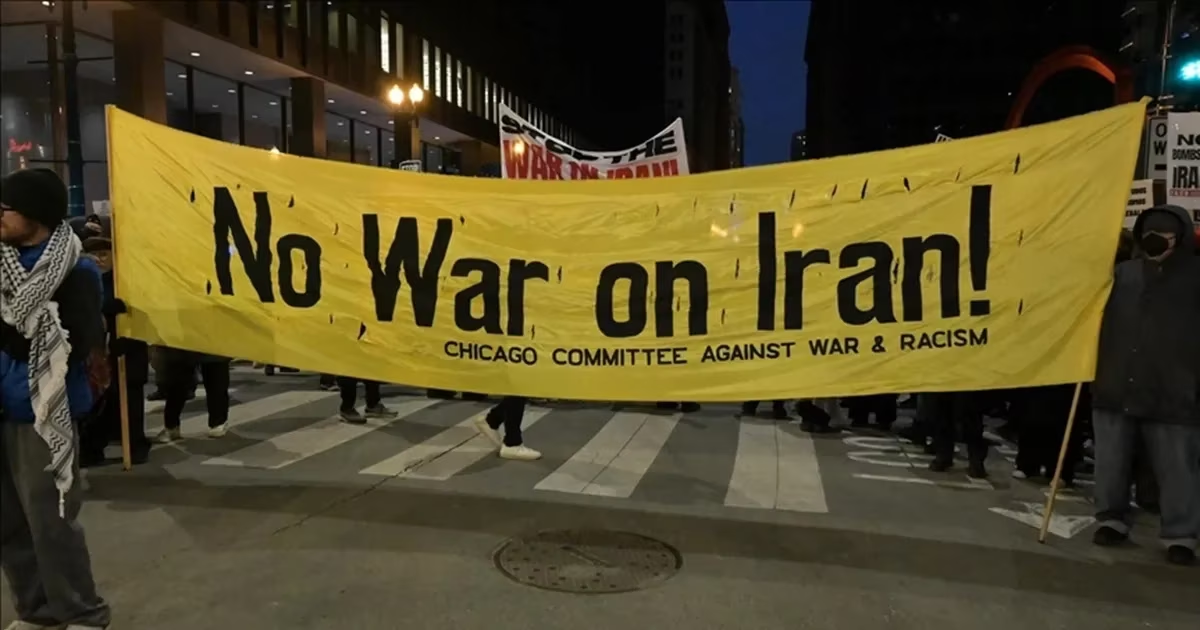
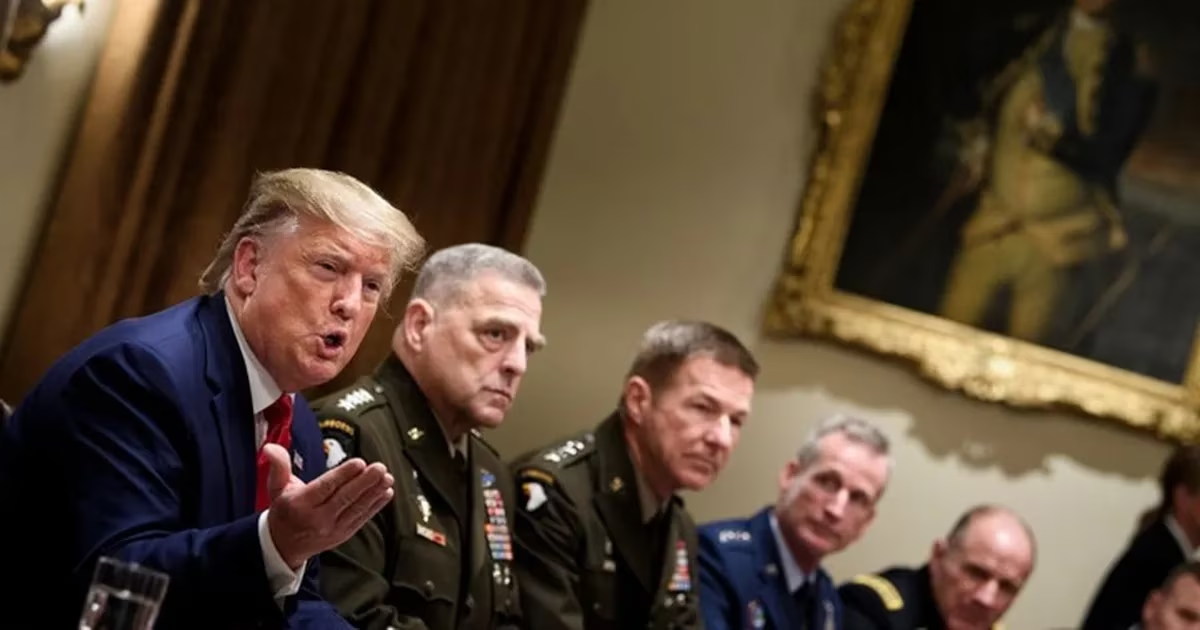
PALESTINE

Mon 16 Mar 2026 5:18 pm - Jerusalem Time

Javier Bardem renews his cry 'Free Palestine' from the Oscars red carpet

The red carpet at this year's Academy Awards ceremony witnessed a remarkable political presence from Spanish actor Javier Bardem, who chose to use the global platform to express his principled stances. Bardem appeared wearing a pin with the phrase 'No to War' in Spanish, the same symbol he became known for nearly two decades ago during artistic protests against the invasion of Iraq in 2003.

The international star did not stop at silent symbolism but made explicit statements to the global media, affirming his full solidarity with the Palestinian people with the chant 'Free Palestine'. Bardem stressed that his voice today is an extension of his long-standing rejection of armed conflicts that claim innocent lives, considering the Palestinian issue to represent the core of the struggle for human rights at present.

In a scathing critique of international policies, Bardem compared the circumstances that led to the Iraq War with what is happening today in terms of military escalation in the region, describing current wars as lacking legal legitimacy. He clearly indicated that these conflicts are managed based on misleading claims aimed at achieving narrow political gains at the expense of global stability and civilian lives.

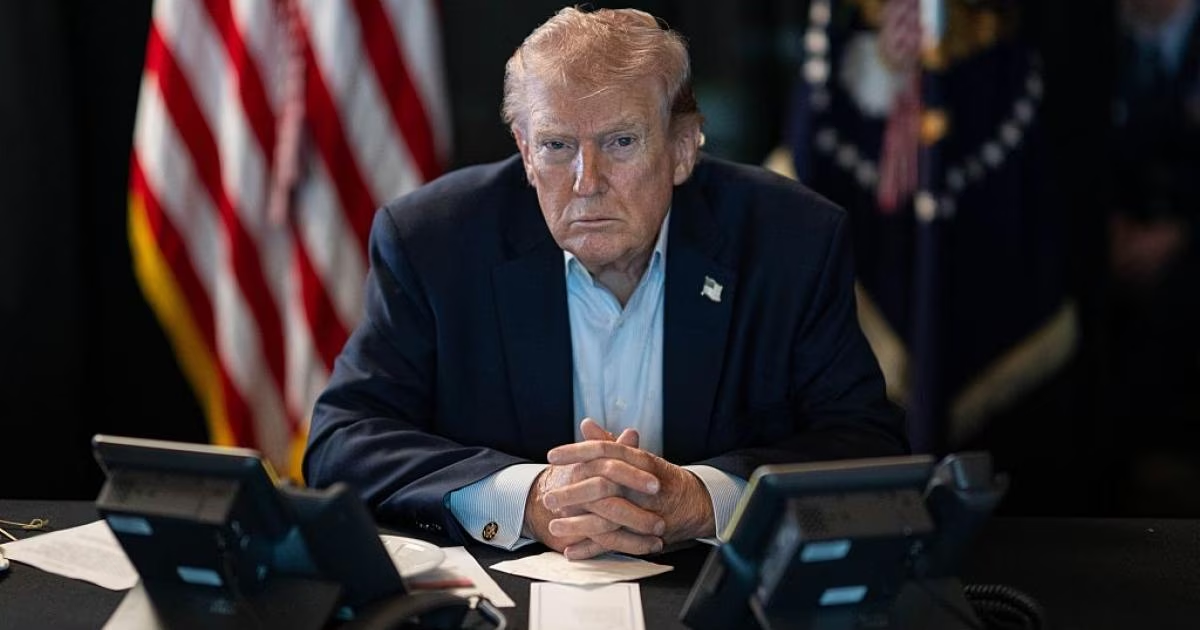
The Spanish actor held both Benjamin Netanyahu and Donald Trump responsible for fueling the situation, considering their horrific actions only lead to increased radicalization in the region instead of achieving stated goals. He explained that the return to using slogans from 2003 is a result of repeating the same historical mistakes for which victims in conflict zones, especially in the Palestinian territories, pay the price.

Bardem concluded his speech by emphasizing the moral role of artists, noting that being present at events followed by millions of people, such as the Oscars, imposes on them the responsibility to shed light on urgent political issues. Bardem believes that silence in the face of illegal wars is participation in them, which always drives him to use his artistic status to advocate for peace and international justice.

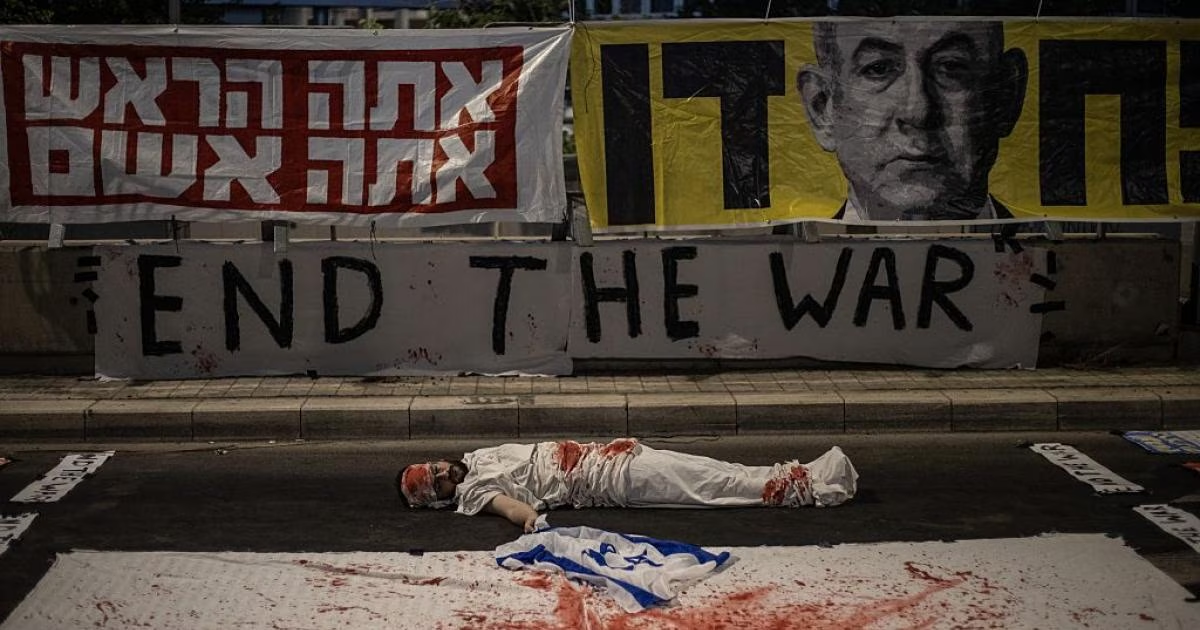
No to war... and Free Palestine; artists have a responsibility to express their positions on humanitarian and political issues.

ISRAELI AFFAIRS

Mon 16 Mar 2026 5:18 pm - Jerusalem Time

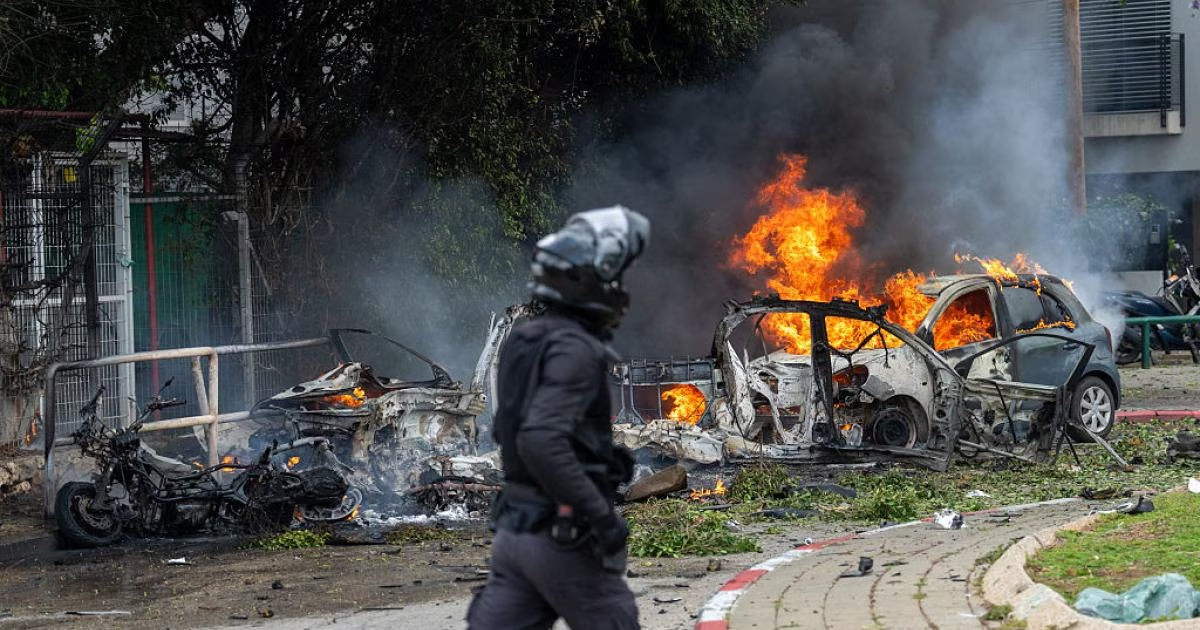
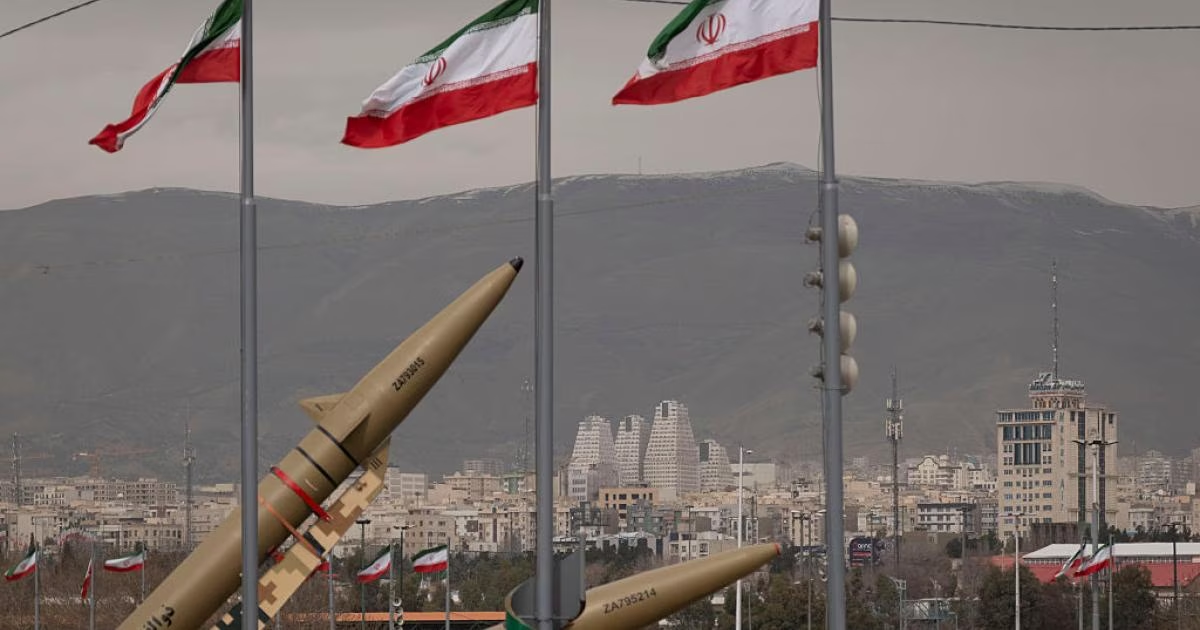
Iranian missiles target Ben Gurion Airport vicinity, hitting 10 locations in central Israel

The Israeli army announced today, Monday, that it had detected a new wave of missiles launched from Iranian territory towards targets deep inside Israel. Military sources confirmed that the attack triggered sirens in wide areas including Tel Aviv, Herzliya, and Ashdod, amidst loud explosions resulting from air defense systems attempting to intercept hostile targets.

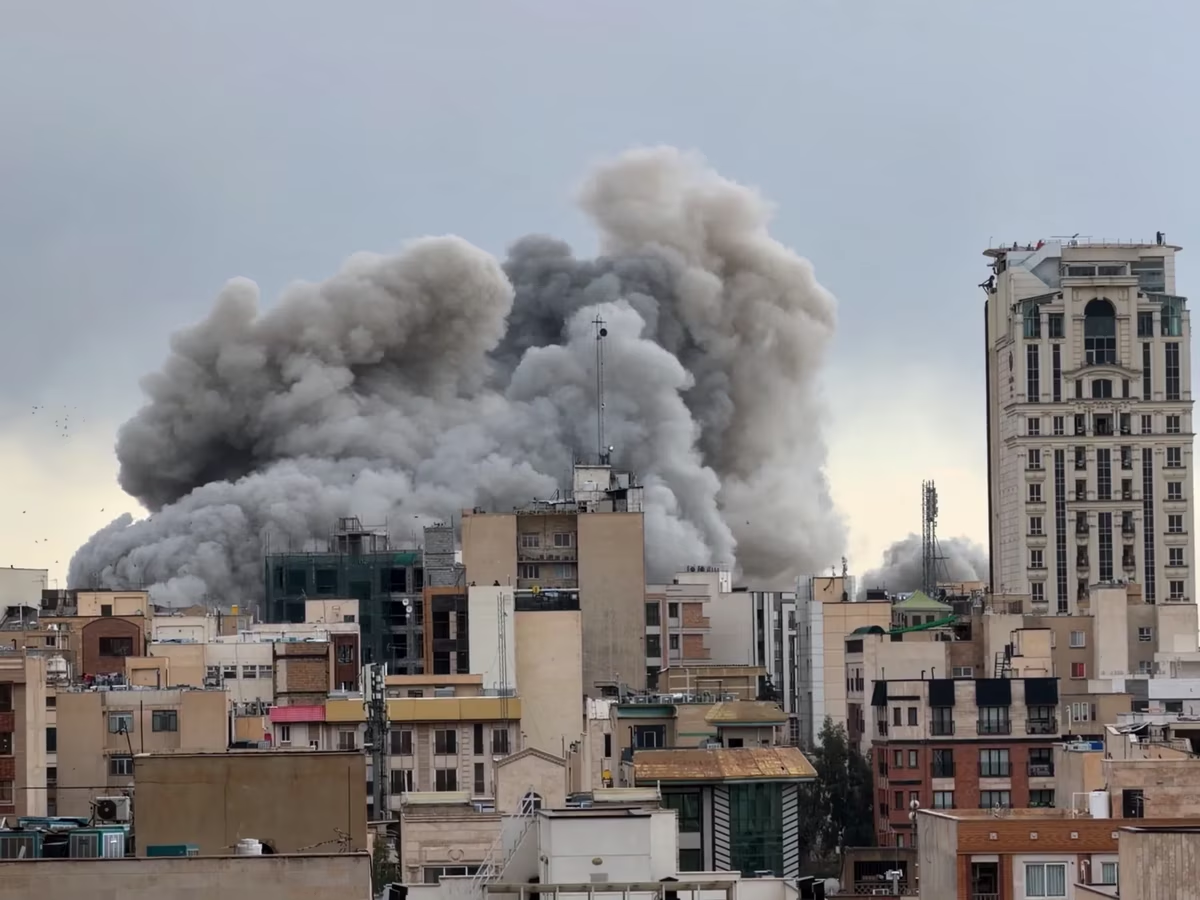
Field reports indicated that cluster munitions fell in at least 10 locations in the Central District, with some of these impacts concentrated around David Ben Gurion Airport in the city of Lod. Columns of smoke rose from several points near the vital air facility, causing a state of security and technical alert within the airport and its surrounding areas.

Regarding material damage, missile fragments struck a house in the town of Shoham, located east of Tel Aviv and near the airport. Video documentation showed partial destruction of the targeted building, but Israeli authorities have not reported any human casualties from this incident so far.

For its part, Israeli media sources reported that about 5 missiles fell in open areas in the Western Galilee, coinciding with the missile barrage that targeted the center. The sources indicated that the number of confirmed locations where cluster munitions fell significantly increased to 10 different geographical points.

Military analyses suggest that this targeting of Ben Gurion Airport is the third of its kind in the last week using cluster munitions. These attacks appear to aim at testing the efficiency of air defenses in protecting the most important air facility, as well as seeking to raise the cost of securing international flights to and from Israel.

Informed sources explained that the repeated use of cluster munitions is not necessarily intended to completely destroy the airport, but rather seeks to disrupt takeoff and landing paths and waiting lounges. This strategy comes as part of attempts to impose an indirect aerial blockade and increase economic pressure on the Israeli government by paralyzing air traffic.

This escalation coincides with the continued targeting of the eastern and southern suburbs of Tel Aviv, with projectiles repeatedly falling in the Rishon LeZion and Shoham areas. These attacks reflect a determination to keep the central region under constant threat, disrupting public life and increasing the state of confusion on the home front.

On the medical front, the Israeli Ministry of Health revealed new data regarding the extent of injuries, with 142 Israelis transferred to hospitals in the past twenty-four hours. These cases vary between direct injuries from shelling or panic attacks and injuries sustained while fleeing to shelters.

According to official statistics, the total number of Israelis admitted to hospitals since the beginning of the current confrontation has reached approximately 3369 people. 81 injured individuals are still receiving treatment in various medical centers, including cases of varying severity, amid ongoing security and military tension on various fronts.

The primary Iranian goal is to disrupt navigation at the airport, impose an aerial blockade on Israel, and expand the economic cost.

ISRAELI AFFAIRS

Mon 16 Mar 2026 5:17 pm - Jerusalem Time

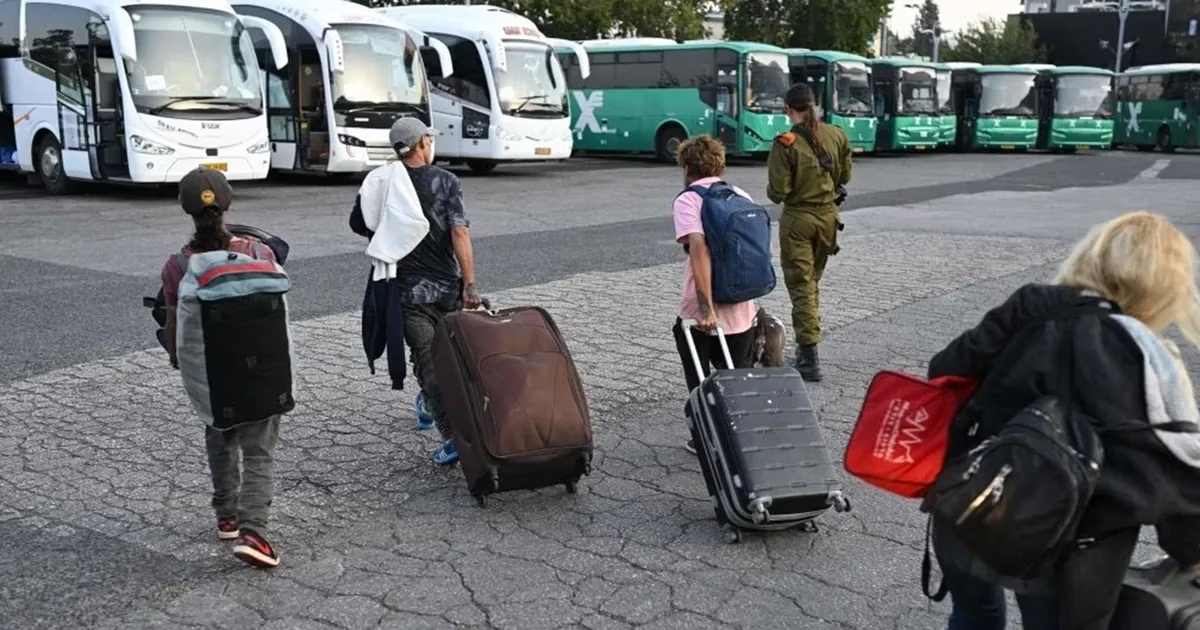
Widespread Internal Displacement Wave in Israel as Scope of Rocket Targeting Expands

Hebrew media sources reported that Israeli settlements and cities in the central and northern regions are experiencing an unprecedented state of internal displacement. These widespread movements come amid an escalation in rocket attacks launched from Lebanon and Iran, which have led to an expansion of direct threats on multiple fronts.

Reports indicated that thousands of Israelis have begun to flock to the city of Eilat in the far south, believing it offers protection far from the line of fire. However, this displacement reflects the growing anxiety and the clear collapse in the sense of personal safety, even in areas previously classified as far from the conflict.

In recent days, Eilat has witnessed a significant accumulation of those fleeing from northern and central Israel, seeking refuge from continuous rocket barrages. Nevertheless, the reality on the ground dashed the hopes of the displaced after air raid sirens blared in the city dozens of times in just one week, confirming that no safe zone exists.

Sources quoted one settler fleeing from Jerusalem as saying that resorting to fortified rooms is no longer an effective solution against the intensity of the shelling. Residents described the overall scene as catastrophic, with families repeatedly forced to run to shelters amidst a state of complete helplessness in confronting the constant threat of shelling.

Eilat is suffering from a suffocating overcrowding crisis in available hotels, at a time when nearly half of the hotel establishments have closed due to deteriorating security and economic conditions. This closure has exacerbated the suffering of the displaced, who now face extreme difficulties in finding temporary accommodation away from direct danger zones.

Displacement was not limited to residents of central cities but also included thousands of residents of the Kiryat Shmona settlement near the Lebanese border. These settlers found themselves forced to displace again after their areas were subjected to violent and continuous attacks, prompting them to search for alternative housing in deeper areas.

Some of those fleeing indicated that they returned to stay in hotels they were evacuated to at the beginning of the escalation more than a year ago, but this time at their own expense. They expressed their deep frustration at being pursued by rockets and air raid sirens even in the southern cities they fled to seeking tranquility.

This forced movement between cities reflects a state of collective terror that currently grips Israeli society. It has become clear that geography no longer poses an obstacle to the arrival of rockets, making the circle of fire encompass all areas without exception.

Eilat, which relies economically primarily on domestic tourism, has been severely affected by this deteriorating security situation. The number of visitors has begun to decline sharply, and many vital facilities have closed their doors, signaling a deep local economic crisis that may be difficult to remedy soon.

Sources spoke of three levels of negative impact from rocket strikes: first, the direct danger to lives; second, the transformation of tourist cities into confrontation zones. The third level is the complete collapse of livelihoods associated with the service sector, which was the backbone of life in the south.

For his part, Eli Lankri, the mayor of Eilat, affirmed that the city is still subject to strict defensive measures to confront aerial threats. Lankri clarified that local authorities are currently unable to reopen schools or restore the normal pace of life given the continued state of high alert.

In a related context, the Israeli Home Front Command maintained strict security restrictions as they were, without any significant easing. This decision reflects security assessments indicating that the risk of rocket attacks remains very high, and the potential for escalation remains at any moment.

Hebrew reports concluded by noting that recent developments regarding internal displacement reflect a transformation of fear from a localized phenomenon to a general and comprehensive state. The prevailing feeling has become that the war is expanding geographically and temporally without a clear horizon for its end or the achievement of real security stability.

Complete safety now seems out of reach for Israelis, even in cities historically described as fortified or far from the front lines. This new reality places immense pressure on the government and military establishment, which have so far failed to secure the home front.

Going to shelters is no longer effective; the rockets have followed us to areas we thought were safe havens.

ARAB AND WORLD

Mon 16 Mar 2026 5:17 pm - Jerusalem Time

Trump seeks to form "Hormuz Alliance" and considers military control of Iran's Kharg Island

Informed sources reported that US President Donald Trump is working intensively to form a new international alliance, dubbed the 'Hormuz Alliance,' aimed at forcibly reopening the strategic strait. These moves come amid escalating military tensions with Iran, which have disrupted a vital part of global energy supplies and led to rising oil and gas prices.

Reports from sources in Washington indicate that Trump hopes to officially announce this alliance later this week. This diplomatic and military endeavor aims to ensure the return of commercial navigation in the strait, which is considered the main lifeline for the global economy.

In a significant field development, the White House is considering the option of full military control over Iran's Kharg Island, which is the main center for Iranian crude oil exports. US officials believe that this step may be necessary if the detention of oil tankers and the disruption of navigation within Gulf waters continue.

Military estimates suggest that controlling the island may require deploying US ground forces, representing a significant escalation in direct confrontation. Washington accuses Tehran of imposing a blockade on the strait that prevents Gulf countries from exporting their oil, while allowing Iranian tankers bound for China to pass.

An informed source explained that the continuation of the current blockade puts the Trump administration in a difficult position, as the President will not be able to end regional conflicts as long as allied oil exports remain restricted. This reality has prompted the US administration to accelerate military and diplomatic mobilization to change the rules of engagement in the region.

Through his 'Truth Social' platform, Trump announced that the United States would lead an international effort to send warships to the Gulf to secure navigation. He called on major countries such as China, France, Japan, South Korea, and the United Kingdom to contribute to this force, considering energy security a shared international responsibility.

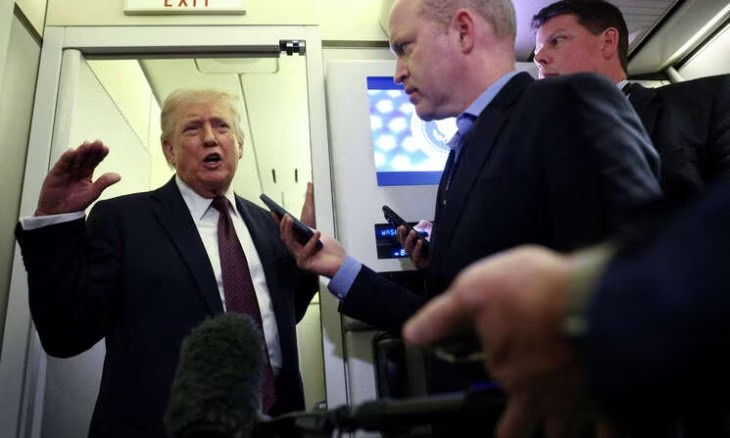
In remarks to reporters aboard Air Force One, Trump affirmed that he is demanding active participation from NATO countries and oil-importing nations. He noted that Washington has received mixed responses so far, with some countries agreeing while others expressed clear reservations about military involvement.

A US official revealed that Trump and his team spent the weekend in intensive contacts with allies to build political commitment towards the 'Hormuz Alliance.' These contacts included a phone call with British Prime Minister Keir Starmer, a reversal from Trump's previous statements in which he considered it too late for London to participate.

Through this alliance, the US administration aims to distribute the burden of protecting waterways among the countries benefiting from the oil passing through them. White House officials stressed that most of the oil crossing Hormuz goes to Asia and Europe, not to the United States, which necessitates the participation of those countries in the costs and risks.

In parallel with diplomatic efforts, US forces continue to strike strategic targets inside Iran, focusing on the coasts near Kharg Island. This island is a vital target as it processes about 90% of Iranian crude oil exports, making it a major economic vulnerability for the regime.

Trump had ordered precise strikes on military facilities on the island last Friday, while avoiding direct targeting of oil infrastructure so far. The US President stated in a television interview that these strikes might be repeated, indicating that all options remain on the table.

Despite the enthusiasm in some decision-making circles in Washington, controlling Kharg Island entails enormous geopolitical risks. Observers warn that such a move could prompt Tehran to launch widespread retaliatory attacks targeting oil facilities and pipelines in neighboring countries, especially Saudi Arabia.

For his part, Republican Senator Lindsey Graham supported Trump's approach, considering that taking the war to Kharg Island would be a decisive blow to the Iranian economy. Graham wrote that controlling this strategic oil hub would radically change the course of the conflict and deprive Tehran of its essential financial resources.

The final position on ground control of the island remains pending the developments of the crisis in the Strait of Hormuz and the extent of allies' response to the new alliance. Sources in the US administration confirm that the final decision will depend on the success of current pressures in forcing Iran to end its blockade of international navigation.

Whoever controls Kharg Island controls the fate of this war.

OPINIONS

Mon 16 Mar 2026 5:17 pm - Jerusalem Time

Tisdall: Trump 'World's Number One Enemy' and His Failure in Iran Threatens America's International Standing

Ramallah - "Al-Quds" Dot Com

Ramallah - "Al-Quds" Dot Com

Opinion Writer

Prominent British commentator Simon Tisdall stated that news from the fronts of confrontation with Iran clearly indicates that President Donald Trump is putting the United States on a path to losing wars again. Tisdall emphasized that a disastrous failure is looming in the near future, which will inflict severe symbolic damage on Washington's global standing and national dignity, similar to what happened previously in Afghanistan and Iraq.

The writer described Trump as having become 'the world's number one enemy' due to his continuous threat to international peace and security, noting that he is increasingly losing the illegitimate war he ignited with Iran and is unable to stop it. At the same time, his Israeli ally Benjamin Netanyahu is terrorizing Lebanon and exercising excessive violence, which places the peoples of the world before a hefty economic and security bill as a result of these follies.

The article pointed out that this war adds to Trump's record of violating democracy, appeasing Russia, imposing punitive tariffs, as well as denying the climate crisis and disregarding international law. Tisdall believed that this 'farce' in the White House has gone on for too long, calling on Americans to act decisively to rein in a person who endangers all humanity.

Tisdall believes that Trump completely lacks any strategic plan towards Tehran, as he deludes himself into controlling events while the Iranian regime's defiance increases with every American or Israeli raid. This policy has led to significant damage to American regional bases and Gulf partners due to retaliatory strikes, while Iran has succeeded in closing the vital Strait of Hormuz.

The writer warned of catastrophic economic repercussions, as the global energy shock and rising oil prices have damaged international trade and caused shortages of food and medicine, a crisis that poor countries will suffer from doubly. Tisdall described this situation as the new 'Trump pandemic' that is striking global economic and social stability with no horizon for a solution.

On the Lebanese front, the article noted that the war has unleashed Netanyahu's worst instincts, with continuous and disproportionate airstrikes targeting homes, public facilities, and heritage sites. Tisdall described what is happening in Lebanon as 'state terrorism' that repeats the tragedies of killing and displacement, coinciding with uncontrolled settler violations in the occupied West Bank.

The writer compared Trump to George W. Bush, considering that the latter at least had the courage of his convictions, despite their error in invading Iraq in 2003. Trump, however, lacks the audacity for ground confrontation and sought a quick and cheap victory from the air, but instead embroiled the world in an endless war of attrition that will continue by unequal means.

Tisdall revealed the extent of human and material losses, with the bodies of American soldiers returning in bags, and the financial cost of the war exceeding 11 billion dollars per week. He predicted that American voters would not forgive Trump for this negligence that returned America to the pace of defeat, especially with rising prices and deteriorating living conditions within the US.

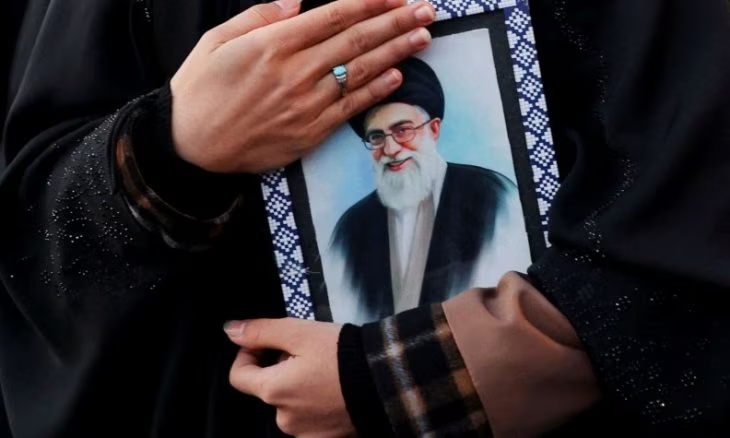
Regarding the nuclear file, the article confirmed that the issue remains unresolved despite the destruction of Iranian facilities twice, as Tehran maintains a secret uranium stockpile and scientific expertise that cannot be bombed. Tisdall held Trump responsible for sabotaging peaceful negotiations, warning that the assassination of Supreme Leader Ali Khamenei could push hardliners in Iran towards acquiring a nuclear weapon to ensure the regime's survival.

The writer strongly criticized the statements of Defense Secretary Pete Hegseth, describing them as revealing a mindset that views others as 'barbarians.' He noted that Hegseth suffers from ethical and legal problems, as he claims the ability of American forces to act with impunity, which Tisdall refuted by emphasizing the need to adhere to the Geneva Conventions and international law.

The article highlighted a war crime that occurred on February 28, where more than 100 schoolgirls were killed in an American Tomahawk missile strike on the Minab region. Tisdall considered Trump's attempts to blame others for this massacre as shameful attempts, emphasizing that those responsible for this crime must be held accountable before international justice.

Regarding geopolitical consequences, the writer explained that Washington's allies, including Britain, are resentful of Trump's refusal to consult and his lack of strategic planning. This was evident in the Strait of Hormuz disaster, where Trump escalates the war 'just for fun' by bombing the Kharg oil island, then asks allies to send warships to rescue him.

Tisdall noted that the biggest beneficiaries of this chaos are Russia and China, who are exploiting Trump's disregard for global public opinion to strengthen their influence. While sanctions on Russian oil were temporarily lifted, Trump is sinking into conflicts that weaken American dominance and lead to the erosion of traditional alliances built over decades.

In conclusion of his analysis, Tisdall called for Trump's impeachment in Congress and his prosecution, along with Israeli leaders, on charges of committing war crimes and crimes against humanity. He stressed the need to pay reparations to Iran and Lebanon for the destruction inflicted upon them, emphasizing that Trump poses a clear and direct danger to the United States and the world, and must be removed to ensure the survival of global standards.

Trump is a man without a plan, threatening the world and becoming humanity's number one enemy with his reckless follies that lack the slightest strategic idea.

ARAB AND WORLD

Mon 16 Mar 2026 10:02 am - Jerusalem Time

Division in the Trump Administration: A Struggle Between Vance and Rubio Over Military Stance Against Iran

German press reports have indicated a sharp division within the American administration, stemming from differing views on how to deal with the Iranian issue. These disagreements are centered between a faction led by Vice President JD Vance and another led by Secretary of State Marco Rubio, reflecting rifts within the presidential team despite President Donald Trump's enthusiasm for ongoing military operations.\n\nPress sources stated that the hidden confrontation between Rubio and Vance stems from a fundamental difference in strategic vision towards Tehran. While Vance adopts a position that favors diplomatic solutions and avoids comprehensive military escalation, Rubio insists on a hardline rhetoric that supports direct military actions to undermine Iranian influence in the region.\n\nLeaked information suggests that this rivalry is not limited to foreign policy but extends to future political ambitions related to the US presidential elections scheduled for 2028. Both Vance and Rubio seek to strengthen their positions within the Republican Party as potential heirs to the popular base built by Donald Trump during his two presidential terms.\n\nIn the context of this internal struggle, Secretary of State Marco Rubio appears to have the upper hand with President Trump at present. Reports indicate that Trump clearly leans towards the hardline approaches proposed by Rubio, while Vice President JD Vance's role in decision-making circles related to national security has gradually diminished due to his moderation towards Tehran.\n\nSources revealed an incident described as "bitter" for the Vice President when Trump polled a group of senior Republican donors about the most suitable person to succeed him in the White House. The results were almost unanimous in favor of Marco Rubio, which reinforced the hypothesis of Vance's marginalization within the current administration's political inner circle.\n\nThis early movement towards the 2028 elections comes amidst constitutional restrictions preventing Donald Trump from running for a third term, which opens the door wide for administration figures to compete for the trust of donors and the electoral base. The issue of the war on Iran is the real test that will define the features of the next leadership within the Republican camp.\n\nDespite Trump's pride in the military progress made in operations against Iranian targets, the divergence between his Vice President and Secretary of State presents the administration with challenges in unifying political discourse. The contradiction between the diplomacy advocated by Vance and the iron fist preferred by Rubio could affect the pace of strategic decisions made in Washington.\n\nIn conclusion, political analysts are closely monitoring this division, considering that the balance of power within the White House may witness additional shifts based on the outcomes of the confrontation with Iran. The question remains whether JD Vance can regain his influence, or whether Marco Rubio will tighten his grip on US foreign policy in preparation for the upcoming presidential race.\n\nThe rivalry between Rubio and Vance is seen as a prelude to the 2028 US presidential election, where both are considered the most likely to succeed Trump.

PALESTINE

Mon 16 Mar 2026 10:02 am - Jerusalem Time

Occupation authorities decide to partially reopen Rafah crossing next Wednesday

Israeli occupation authorities revealed today, Sunday, a plan to partially resume operations at the Rafah border crossing, which separates the Gaza Strip from the Arab Republic of Egypt. This decision is scheduled to take effect starting next Wednesday, March 18, following a period of complete closure imposed by the occupation in conjunction with the recent military escalation against Iran.

Official sources affiliated with the Coordinator of Government Activities in the Occupied Territories stated that the crossing would be designated for limited movement of individuals in both directions. The statement issued by the authority clarified that this step came after a comprehensive review of field conditions and security assessments conducted by the leadership of the occupation army, which currently controls large areas of the Strip, exceeding half of its total area.

Regarding the implementation mechanism, sources confirmed that the management of the crossing would be carried out according to prior coordination protocols with the Egyptian authorities and under direct supervision from the European Union mission. Additional inspection and screening procedures will also be imposed in areas under direct Israeli military control, to ensure what the occupation described as strict security standards during the partial operation period.

On the political front, this announcement coincides with the arrival of a leading delegation from the Islamic Resistance Movement (Hamas) in the Egyptian capital, Cairo. The delegation aims, through this visit, to hold a series of discussions with Egyptian officials, complementing previous meetings held with Peace Council Coordinator Nikolay Mladenov, to discuss truce files and the deteriorating humanitarian conditions in Gaza.

Discussions in Cairo focused on the necessity of finding sustainable mechanisms to solidify the ceasefire agreement and ensure it does not collapse in light of repeated field violations. The movement's delegation stressed the need for the occupation to fully adhere to the terms of the truce and cease all forms of aggression, warning that continued military provocations would inevitably undermine diplomatic efforts aimed at stabilizing the situation.

It is worth noting that the Rafah crossing represents the only lifeline for the residents of the Gaza Strip to the outside world, away from the crossings directly controlled by the occupation. The crossing had witnessed a long closure, interspersed with a brief partial opening in early February, before being shut down again following the joint attack launched by Israel and the United States against Iranian territory on the twenty-eighth of the same month.

The operation of the crossing will be subject to prior coordination mechanisms with the Egyptian side, and under the supervision of the European Union mission, with additional scrutiny procedures.

ARAB AND WORLD

Mon 16 Mar 2026 10:02 am - Jerusalem Time

Trump threatens NATO and conditions China to protect the Strait of Hormuz to ensure the upcoming summit

US President Donald Trump has escalated his rhetoric towards US allies in NATO and the People's Republic of China, demanding immediate action to contribute to securing global oil supplies passing through the Strait of Hormuz. These moves come amid a state of near-total paralysis affecting navigation in the strategic waterway since the recent military confrontations erupted in the region.

In statements to the 'Financial Times', Trump warned that NATO could face a bleak future if its members do not provide the necessary support to open the strait and secure the passage of tankers. The US President indicated that continued stalemate in responding to US demands would inevitably lead to a comprehensive review of the nature of the relationship with the alliance and its impact on its future stability.

Trump stressed that countries benefiting from Gulf oil, primarily European countries and China, must bear their direct responsibilities in protecting these vital interests. He clarified that the United States no longer relies heavily on the region's oil as it did in the past, which places the greater burden on international powers whose economies are entirely dependent on the continuity of flows through Hormuz.

Regarding relations with Beijing, Trump directly linked the holding of the scheduled summit with his Chinese counterpart Xi Jinping to the extent of China's cooperation on the strait issue. He hinted at the possibility of postponing the summit, which was supposed to start on March 31, emphasizing his desire to see concrete steps from the Chinese side before sitting down at the negotiating table.

The US President pointed out that China imports about 90% of its oil needs through this waterway, which makes its silence or non-participation unacceptable to the US administration. He added that Washington is awaiting a clear response before the summit, noting that the economic and political consequences would be significant if supply disruptions continue.

On the ground, Trump revealed that the US Navy is preparing to begin escort operations for oil tankers through the Strait of Hormuz very soon. He called on several countries, including France, Japan, the United Kingdom, and South Korea, to send naval warships to participate in this international mission aimed at ensuring the stability of global energy markets.

In a related context regarding diplomatic solutions, Trump expressed deep skepticism about Tehran's willingness to engage in serious negotiations to end the current conflict. Despite confirming the existence of existing communication channels between Washington and Tehran, he considered that the Iranian leadership does not yet seem ready to make the necessary concessions to reach a comprehensive agreement.

For his part, Iranian Foreign Minister Abbas Araqchi responded in a firm tone, asserting that Tehran sees no reason to talk to the Americans at the present time. Araqchi clarified in a television interview that his country is in a stable and strong position, and that it exercises its legitimate right to defend its people and interests in the face of what he described as American aggression.

Araqchi pointed out that Iran was open to dialogue before the attacks began, but the current situation on the ground dictates different priorities related to defense and deterrence. He stressed that his country will not succumb to the pressures exerted by Washington through mobilizing international forces in the region, considering that these moves increase the complexity of the regional scene.

As part of Iranian diplomatic efforts, Araqchi called on world countries, during a call with his French counterpart, to exercise restraint and refrain from any steps that could lead to an expansion of the conflict. The Iranian Foreign Ministry warned that sending additional warships to the region could be understood as an escalatory step that increases the risks of direct confrontation.

To date, none of the countries Trump called upon have officially responded to sending naval forces, with the exception of South Korea, which confirmed it is carefully considering the request. Anticipation remains the order of the day, awaiting what the coming days will bring in terms of military or diplomatic moves that could change the course of the crisis in one of the world's most important waterways.

It is entirely natural for those who benefit from this strait to ensure that no unfortunate incident occurs there, otherwise the consequences will be dire for the future of NATO.

PALESTINE

Mon 16 Mar 2026 10:02 am - Jerusalem Time

From Gaza to the halls of Washington and Oscar platforms.. Hind Rajab's case turns into a global movement for accountability

The threads of politics, cinema, and international law have intertwined in a single case that shook the global conscience, with the name of the Palestinian child Hind Rajab returning to the forefront of discussion in Washington. This intersection was not a coincidence, but rather the fruit of accumulated efforts to document a murder that occurred in the Tal al-Hawa neighborhood of Gaza City in early 2024, when the five-year-old child was trapped inside her family's car under a barrage of direct fire.

In a notable legislative step, a number of Democratic members of Congress introduced a bill named 'Hind Rajab's Justice Act,' in an attempt to break the official silence surrounding the circumstances of the crime. The bill stipulates that the US State Department prepare a detailed report to be submitted to Congress on the circumstances that led to Hind's martyrdom, and to assess whether American weapons were used in that attack.

The bill, published on Senator Peter Welch's office website, seeks to determine whether the incident constitutes a grave violation of international humanitarian law or US laws of war. The roots of the case date back to the end of January 2024, when a car carrying the child's family came under intense fire as they tried to flee from combat zones, resulting in the martyrdom of her family members and her remaining alone for a cruel period of time.

During those difficult hours, Hind managed to contact Palestinian Red Crescent paramedics in a distress call that held the world's breath before the connection was completely cut off. Recordings of that call were widely circulated in international media, and have since become a stark symbol of the suffering of civilians in the Gaza Strip and the impact of war on childhood.

In parallel with the legislative movement in Washington, the dramatic documentary film 'The Voice of Hind Rajab' by director Kaouther Ben Hania emerged as an influential soft power in international forums. The film, which succeeded in reaching the short list for the 'Best Documentary Feature' category and received an official nomination for 'Best International Feature Film' at the 2026 Oscars, re-enacted the tragedy of that night in a cinematic style that blends reality with drama.

The cinematic work provides a visual document that takes the viewer directly into the heart of the Red Crescent operations room, using the actual audio recordings of the distressed child. Since its first screening at the Venice International Film Festival and its winning of the Grand Jury Prize, the film has succeeded in transforming the crime from a mere fleeting news item into a humanitarian issue that haunts decision-makers in the West.

The film has received widespread support from international figures who joined as executive producers, emphasizing the necessity that this tragedy not be buried under the rubble without accountability. This convergence between the artistic path in Hollywood and the legislative path in parliaments creates a rare state of moral and political pressure, where the crime is documented by the victim's voice and presented before the eyes of critics and politicians alike.

Ultimately, the most important truth seems to be that Hind Rajab's story has surpassed all attempts at obfuscation and marginalization that it initially faced. The child's voice, which was stifled by fire inside a burning car, now resonates strongly in legislative halls and international award platforms, forming a barrier against oblivion and attempts to escape punishment.

The child's voice, which was cut off in a call under the wreckage of a burning car, today resonates in legislative halls and international award platforms.

ARAB AND WORLD

Mon 16 Mar 2026 10:01 am - Jerusalem Time

Bloody Escalation in Lebanon: 29 Martyrs in Intense Raids and Hezbollah Strikes Strategic Bases

The Lebanese arena witnessed a bloody military escalation on Sunday evening, as the Lebanese Ministry of Health announced the martyrdom of five citizens and the injury of seven others in Israeli airstrikes targeting the towns of Majdal Zoun and Ayta ash-Shab in the south. These attacks come in the context of a wide-ranging aerial campaign launched by the occupation, coinciding with attempts at ground incursions that began early this March.

In details of the field massacres, medical sources clarified that the raid on the town of Majdal Zoun, part of the Marjayoun district, resulted in the death of two martyrs and the injury of four others. Meanwhile, the strike that targeted the town of Ayta ash-Shab in the Tyre district led to the martyrdom of three citizens and the injury of three with varying degrees of wounds, raising the level of humanitarian tension in the border areas.

According to official data issued by the Emergency Operations Center, the toll of victims from the intense Israeli raids on Sunday alone rose to 29 martyrs and 103 injured. These injuries and deaths were distributed across various regions of the country, amidst continuous shelling that did not spare residential neighborhoods and civilian infrastructure.

In the capital Beirut, field sources reported that Israeli warplanes launched a violent raid targeting the Southern Suburb, causing widespread destruction in the targeted area. This shelling was preceded by threats issued by the occupation army via social media platforms, claiming its intention to target Hezbollah facilities in that densely populated area.

For its part, Lebanese Hezbollah announced the execution of 25 qualitative military operations in recent hours, using advanced missiles and kamikaze drones. The party affirmed in its statements that these operations targeted strategic sites and gatherings of occupation soldiers in northern occupied Palestine and deep within Lebanese territories witnessing attempted incursions.

Among the most prominent operations carried out by the party was the targeting of the 'Palmachim' airbase, located south of Tel Aviv and about 140 kilometers from the Lebanese border. Missile barrages also hit the 'Meron' observation and air operations management base, in addition to targeting the military industries complex belonging to 'Rafael' company north of the Kiryat area.

Regarding ground confrontations, the party confirmed the destruction of a Merkava tank with a guided missile in the area north of the Khiam detention center, confirming a direct hit that led to its destruction. Hezbollah fighters also observed another Merkava tank burning in the Taybeh project, in addition to targeting a D9 military bulldozer that was carrying out destructive acts in the same area.

As part of targeting air defense systems, the party announced the shelling of missile launchers and defense systems in the Ma'alot-Tarshiha area with an intense missile barrage. The attacks also included military bases in the occupied Syrian Golan, including the 'Katsavia' base and the 'Tsnobar' logistical base, in addition to the 'Kela' military barracks.

Gatherings of occupation soldiers were also a direct target of the party's fire, as military movements were targeted in the 'Avivim' barracks and Khallat al-Mahafir in the outskirts of the border town of Adayssa. Fighters used artillery shells and guided missiles to strike vehicle gathering points at Khazan Hill and the Jibiya point opposite the town of Mays al-Jabal.

The party's air force actively participated through swarms of kamikaze drones, which targeted gatherings of Israeli vehicles in Khallat al-Aqsa in the town of Adayssa. Sources clarified that these drones successfully reached their targets with precision, hindering the movements of ground forces attempting to establish positions at some border points.

These rapid field developments come after Israel expanded its aggression to include areas in eastern Lebanon and Beirut's southern suburb. Observers link this escalation to the occupation's failure to achieve significant ground breakthroughs since its limited incursion began on March 3, amidst fierce resistance from fighters on the ground.

On the Israeli side, the army spokesperson admitted to carrying out extensive attacks on what she described as 'infrastructure' in Beirut, in an attempt to justify the violent shelling of civilian areas. Sirens continue to blare in northern settlements, reaching Nahariya and Kiryat Shmona, as a result of continuous missile barrages from Lebanon.

It is worth noting that this escalation comes in response to a series of Israeli aggressions that have not ceased since the ceasefire agreement was concluded in November 2024. Field data confirms that the confrontation has entered a new phase of bone-breaking, with each side seeking to impose its field equations before any potential diplomatic moves.

Military operations come in response to Israeli aggression that has affected dozens of Lebanese cities and towns, including the southern suburb of Beirut.

ANALYSIS

Mon 16 Mar 2026 3:20 am - Jerusalem Time

An American War Without a Compass Leading the Region to Catastrophe

Said Erikat

Opinion Writer

Washington – Said Arikat – 3/16/2026

News Analysis

As the war between the United States and Israel on one side, and Iran on the other, enters its third week, indicators are growing that the conflict is heading towards a broader and more complex phase. What began as a series of limited military strikes has quickly transformed into a multi-front confrontation extending from the Gulf to Lebanon, casting heavy shadows over energy markets and the global economy. In contrast, the American strategy appears vague amidst conflicting statements and gradual escalation, raising fundamental questions about the war's objectives, its limits, and the possibility of containing it.

One of the most prominent field developments was the American strikes targeting Iran's Kharg Island, the main center for Iranian oil exports. Targeting this island represents a qualitative escalation because it is a vital economic artery through which a large percentage of Iranian oil exports pass. The implicit message in these strikes was clear and direct: pressure on Tehran will not be limited to the military sphere but will also extend to the economic sphere, attempting to reduce the state's financial resources.

In the same context, US President Donald Trump escalated his rhetoric, warning that his country might destroy the island's infrastructure if Iran continued to threaten navigation or attempted to close the Strait of Hormuz, through which a large part of global oil trade passes. He also hinted at the possibility of sending additional forces to the region, which some observers interpreted as a prelude to a potential larger military escalation in the coming period.

However, the tension did not remain confined to the Gulf. The Lebanese front entered the war more clearly after Hezbollah intensified its rocket and drone attacks against Israeli targets. Israel responded with a series of intense airstrikes inside Lebanese territory, targeting military sites, weapons depots, and logistical infrastructure associated with the party.

With the escalation of this exchange of strikes, the Israeli leadership hinted at the possibility of a ground invasion of southern Lebanon if rocket attacks continued at the same pace. Although this scenario has not yet materialized, merely raising it reflects the extent of the confrontation's scope and the possibility of it turning into an open regional war.

At the same time, the battle began to take on a broader geographical dimension. US bases and interests in several Middle Eastern countries were subjected to rocket or drone attacks carried out by groups allied with Iran. This development reinforces fears that the conflict will turn into a network of simultaneous confrontations in more than one arena.

Amidst this escalation, Iranian Foreign Minister Abbas Araghchi made controversial statements, saying that some of the strikes targeting facilities in Gulf countries might have been carried out by the United States or Israel with the aim of expanding the war and placing responsibility on Iran. Although there are no independent confirmations of these accusations, they reflect the depth of distrust between the parties to the conflict.

Economically, the repercussions of the war have begun to appear clearly. Tensions in the Gulf and repeated threats to close the Strait of Hormuz have led to a rise in oil prices in global markets, which directly reflected on fuel prices within the United States. With rising gasoline prices in several states, signs of public discontent began to emerge.

As the fighting continued, the major goals raised at the beginning of the war began to seem out of reach, foremost among them weakening or changing the Iranian regime. Despite the strikes the country has suffered, Iran still retains its basic political and military structure, and state institutions have not shown clear signs of internal collapse.

This reality has led an increasing number of analysts to question the utility of the war. Previous experiences in the region have shown that regime change through external military pressure rarely achieves declared results; in fact, it can sometimes lead to adverse outcomes that strengthen the cohesion of the targeted regime.

In parallel, efforts to push Gulf countries into direct involvement in the war have not succeeded. In the early days of the escalation, expectations prevailed that some of these countries would allow their territories to be used more widely in military operations. However, subsequent developments indicate that most Gulf governments prefer to remain outside direct confrontation and focus on protecting their internal stability and economic interests.

All these developments are taking place amidst what many observers describe as the absence of a clear American strategy for managing the war. Statements from President Donald Trump and his administration officials change from time to time between threatening to expand military operations and hinting at the possibility of containing the conflict. This disparity in political messages likely reflects the absence of a coherent vision for what the end of this war should be.

So far, it is not clear whether Washington seeks merely to deter Iran, or to weaken its military capabilities, or to push it towards new negotiations with different conditions. Amidst this ambiguity, fears are growing that the confrontation will turn into a long war of attrition, imposing increasing costs on all parties.

If the escalation continues without a clear political path, the possibility of the war expanding will remain. The longer the fighting lasts, the greater the chances of it spreading to new arenas in the region, and with it, the economic and security risks will increase. Moreover, continued tension around the Strait of Hormuz could push energy prices higher and increase pressure on the global economy. Ultimately, the Middle East faces a new phase of instability where military calculations intertwine with political balances and economic interests. With the absence of a clear diplomatic horizon, the region remains vulnerable to successive cycles of escalation whose effects could extend for many years.

Some observers believe that the most dangerous aspect of this phase is not the scale of military strikes as much as the absence of a clear vision for the end of the conflict. Wars that begin without specific political objectives often turn into open confrontations that are difficult to end quickly. If a serious negotiating path does not emerge, the region may find itself facing a long conflict that drains the resources of states and increases uncertainty. This makes the prospects for de-escalation in the short term limited and uncertain in the current complex regional circumstances.

ARAB AND WORLD

Mon 16 Mar 2026 3:20 am - Jerusalem Time

Challenging Trump.. Spain Closes Its Bases to US Aircraft and Rejects War on Iran

Amidst the accelerating pace of military escalation in the Middle East, a striking Spanish stance has emerged, breaking the traditional Western consensus regarding armed conflicts. Spanish Prime Minister Pedro Sánchez explicitly announced that his country would not engage in any military adventure targeting Iran, emphasizing the necessity of adhering to international law and UN legitimacy.

This position comes in the wake of widespread attacks launched by the United States and Israel against Iranian targets, and the subsequent retaliatory responses that affected facilities in several countries. These developments have put Madrid in direct confrontation with the administration of US President Donald Trump, which had expected full logistical and political support from its NATO allies.

During a public address in the city of Valladolid, Sánchez affirmed that Spanish memory still recalls the lessons of the 2003 invasion of Iraq, and the disasters it caused as a result of bypassing Security Council resolutions. He clarified that rejecting authoritarian regimes cannot be a justification for violating international laws or igniting devastating regional wars.

The Spanish government did not limit itself to political statements but moved to decisive procedural steps by preventing US forces from using military bases on its territory. The decision included the strategic 'Rota' and 'Morón' bases, where any logistical facilities for operations directed against Tehran were refused.

Informed sources reported that this sovereign decision forced 15 US military aircraft to change their course and immediately leave Spanish airspace. These aircraft were compelled to head towards 'Ramstein' Air Base in Germany and other bases in Europe, disrupting US logistical plans in the region.

In Washington, White House spokeswoman Karoline Leavitt tried to downplay the situation by claiming there was last-minute Spanish cooperation. However, Spanish Foreign Minister José Manuel Albares quickly denied these claims, asserting that his country's position remained steadfast and had not changed 'an inch' regarding its rejection of war.

The American reaction was angry and sharp, with President Donald Trump describing Spain as a 'terrible ally' that cannot be relied upon in major crises. Trump hinted at imposing economic sanctions and cutting trade relations with Madrid, in an attempt to pressure the Sánchez government to backtrack on its recent decisions.

For his part, Sánchez responded with a clear challenge, considering that true leadership requires protecting the interests of the people and adhering to principles, not practicing 'blind obedience'. Observers noted that Trump's threats might hit a European wall, as Spain is a member of the single market, and any targeting of it is a targeting of the European Union.

Spain's position on Iran is closely linked to its policy towards the Palestinian issue and the ongoing aggression against the Gaza Strip. Madrid has taken unprecedented diplomatic steps by withdrawing its ambassador from Tel Aviv, in protest of what it described as genocide and Israeli participation in regional escalation.

Furthermore, the Spanish Parliament approved a historic legislation imposing a permanent and comprehensive ban on the export of all types of weapons and military technology to Israel. This step reflects a Spanish desire to exert actual pressure to stop the bloodshed in the region, away from the language of traditional diplomatic statements.

Domestically, Sánchez's approach enjoys broad popular support, with opinion polls showing that about 68% of Spanish citizens oppose any external military intervention. This popular backing gives the coalition government the necessary strength to face external pressures and political blackmail that major powers might exert.

On the international interaction front, Sánchez warned of the danger of 'war economics' and the impact of military-industrial complexes in pushing the world towards the abyss. He called on major powers to stop 'playing Russian roulette' with the destinies of millions of people, emphasizing that the only option to save lives is to say 'no' to war.

These positions sparked a sharp division on social media platforms between supporters who see Sánchez as a rare 'moral leader' and opponents who accuse him of weakness. Some analysts believe that Spain is trying to chart a new course for European foreign policy, based on strategic independence and prioritizing dialogue over the language of weapons.

In conclusion, the confrontation between Madrid and Washington remains open to all possibilities, given Spain's insistence on its principled stance. With continued tension in the Middle East, it seems that Spain has decided to be a voice for de-escalation and international legitimacy, even if it means a direct clash with the most powerful country in the world.

Spain will not support a war outside the framework of international legitimacy, and true leaders do not practice blind obedience for fear of retaliation.

ISRAELI AFFAIRS

Mon 16 Mar 2026 3:20 am - Jerusalem Time

Behind the Scenes of 'The Knockout Blow': How Did Israel Assassinate Khamenei and 40 Leaders in 40 Seconds?

Hebrew press sources revealed complex details of a wide-ranging military operation that targeted the top leadership in Iran, where the attack was carried out in a record time of no more than 40 seconds. The operation, designed to be the 'opening blow' in a major confrontation, relied on golden intelligence that arrived at the last moments before the planes took off, leading to a modification of the target bank to directly include Supreme Leader Ali Khamenei.

The story began with high-level coordination between the Israeli army and the US Central Command (CENTCOM), where the attack was scheduled to take place on Saturday evening, coinciding with a meeting of the Supreme Defense Council. However, an intelligence breakthrough revealed that the meeting had been moved forward to the morning, necessitating a comprehensive mobilization to advance the take-off time of the air squadrons by about 12 hours to maintain the element of surprise and paralyze the regime's ability to respond.

In this operation, the air force used advanced 'ROCKS' ballistic missiles, secret weapons launched from F-15 aircraft from long distances to avoid Iranian air defense systems. These missiles hit their targets with extreme precision in the heavily guarded 'Pasteur' complex south of Tehran, targeting the meeting hall, the Leader's residence, and his military office simultaneously.

Intelligence information confirmed that Ali Khamenei was not in the fortified underground bunker, but rather in his above-ground home at the moment of the explosions. Analysts suggest that the Leader's stay in his home was due to a desire to avoid internal criticism that described him as 'hiding' during previous escalation rounds, which presented a historic opportunity for the attackers.

The strike was not limited to the Pasteur complex but also included the Ministry of Intelligence building, which was hosting a high-level meeting of senior security officials. This geographical and temporal synchronization between the meetings enabled the attackers to deliver a devastating blow to the Iranian leadership structure, causing widespread chaos within the regime, which lost its leadership compass in moments.

The list of assassinations revealed included prominent names, led by Ali Khamenei, Ali Shamkhani, Secretary of the Supreme National Security Council, and Mohammad Fakhrpour, commander of the Revolutionary Guard. The list also included acting Defense Minister Aziz Nasserzadeh, Armed Forces Commander Abdolrahim Mousavi, in addition to heads of intelligence departments and officials responsible for sensitive nuclear and missile projects.

Reports indicate that Israel used innovative technology to track the leaders, bypassing the strict security measures imposed by the Iranians by prohibiting the use of mobile phones. It appears that intelligence agencies succeeded in penetrating very narrow circles, enabling them to know the precise movements of officials, despite attempts at deception and the dissemination of conflicting reports about the whereabouts of the Supreme Leader.

The operation caused a muted tension between Tel Aviv and Washington, especially after statements by US President Donald Trump, who referred to the killing of figures Washington considered 'potential alternatives' to lead Iran. According to sources, the raid eliminated three candidates that the United States was counting on to manage the transitional phase in the event of the regime's collapse, complicating the political calculations after the strike.

On the technical side, sources explained that the missiles used have extraordinary fortification-piercing capabilities, but the intense presence of leaders above ground made the use of heavy seismic bombs unnecessary in the first wave. About 30 missiles were launched, completely destroying the complex, including the military offices and the Leader's secretariat, leading to the death of everyone present on the upper floors of the targeted buildings.

Initial Iranian investigations, according to leaks, indicate a 'sin of arrogance' that led to this security catastrophe, as leaders underestimated public warnings and US military movements in the region. Instead of resorting to the fortified concrete tunnels built over decades, leaders preferred to carry out their duties from traditional offices, making them easy targets for guided missiles.

Observers believe that this strike represents the culmination of an intelligence effort that lasted for more than two decades, during which technological and human capabilities were built within Iran capable of operating even if some of them were exposed. This deep penetration enabled the precise mapping of sensitive facilities and the identification of weaknesses in the Revolutionary Guard's communication, command, and control network.

On the political front, Israeli Prime Minister Benjamin Netanyahu tried to market the operation as a definitive removal of the Iranian nuclear and missile threat, despite skepticism from some security officials about these claims. These officials believe that destroying the leadership does not necessarily mean completely destroying the nuclear project, warning that the absence of the 'head of the regime' could lead to uncontrolled reactions from multiple parties.

Global markets have already begun to feel the repercussions of this strike, with oil prices recording significant increases amid fears of a comprehensive regional war. While aerial military operations continue, uncertainty remains paramount regarding the future of governance in Tehran, in the absence of any leadership capable of reuniting the collapsed military and security institutions.

In conclusion, this operation remains a model studied by military experts around the world on how to integrate human intelligence with advanced technology to achieve strategic goals in record time. As attacks continue, the region awaits the nature of the remaining Iranian response, and whether there are leadership pockets capable of organizing a counterattack or entering into negotiations to end the conflict.

Iranian arrogance enabled Israel to thwart Khamenei and about 40 high-ranking officials in just 40 seconds.

ISRAELI AFFAIRS

Mon 16 Mar 2026 3:20 am - Jerusalem Time

Unprecedented Financial Crisis Hits Israel Amid Soaring Costs of Confrontation with Iran and Lebanon

The Israeli government is struggling to cope with escalating financial challenges resulting from the exorbitant costs of ongoing military operations against Iran and the reinforcement of forces on the Lebanese front. In a late-night meeting, the government approved the allocation of approximately $900 million to the Ministry of Security under the heading of 'Emergency Security Deal,' in an attempt to cover the urgent needs of the army.

This decision coincided with the approval of harsh and comprehensive cuts in the budgets of civilian ministries, totaling $320 million. These cuts affected vital sectors such as education, which lost $61 million, health by $44 million, in addition to the social welfare sector.

The measures did not stop there; the government also approved an increase in the Ministry of Defense's budget by deducting 3% from the budgets of all other ministries, which injected an additional $8.4 billion into the army's coffers. These steps aim to compensate for the severe shortage of financial resources allocated to ongoing combat operations on multiple fronts.

International economic sources reported that Tel Aviv has allocated an initial financial package of $13 billion to fund the direct confrontation with Iran, and this amount includes the costs of replenishing depleted military stockpiles. The funding also covers the salaries of reserve soldiers after the army called up more than 100,000 additional soldiers since the latest escalation last month.

In a related context, American media reports revealed a severe shortage in Israel's ballistic missile interception systems, warning of the enormous financial cost of interception operations. Sources indicated that the cost of intercepting a single missile barrage from Iran could reach $280 million, which constitutes a rapid depletion of financial and defensive resources.

Economic experts believe that the funding for these wars relies primarily on external borrowing, which has led to a jump in Israel's public debt to exceed 12% of GDP since the end of 2023. The total value of this debt is estimated at approximately $100 billion, which places long-term pressures on future generations and the overall economy.

US aid plays a pivotal role in the continuation of military operations, with Washington covering about a third of the costs of the aggression on the Gaza Strip, up to $20 billion. Global Zionist institutions also contribute to injecting financial liquidity to support the Israeli economy, which helps maintain the stability of the currency and the Tel Aviv stock exchange despite the war conditions.

Analysts warned that the austerity policies being pursued, such as reducing public service budgets in favor of defense, will lead to social pressures and a decline in economic growth rates. Growth for 2026 is expected to decline to levels between 2% and 2.5% if military operations continue for more than an additional six weeks.

Inflation in Israel is currently at levels exceeding the central bank's targets, which complicates the possibility of lowering interest rates to stimulate markets. Israel's bet remains on the continuation of Western support, as observers believe that the absence of American financial cover would make it impossible for Tel Aviv to continue the war for a long period.

If the United States stops its financial and military support, Israel will not be able to continue the war for more than approximately six weeks.

ARAB AND WORLD

Mon 16 Mar 2026 3:20 am - Jerusalem Time

Iran announces arrest of 500 people on espionage charges since the start of military confrontation

The commander of Iran's security forces, Ahmad Reza Radan, announced today, Sunday, the implementation of a widespread arrest campaign that included 500 people across the country since the recent American and Israeli military operations began. The authorities charged those arrested with espionage for hostile parties and transmitting sensitive information to external media outlets aimed at destabilizing internal stability under the current circumstances.

Radan explained in press statements that initial investigations revealed that about half of these cases are related to serious security crimes, where some defendants provided precise coordinates of strategic sites that were subsequently targeted. The charges also included individuals monitoring and photographing the sites of air raids immediately after they occurred and sending that material to foreign intelligence agencies to assess the damage.

These developments come at a time when Iran is witnessing a direct military confrontation that began on February 28, resulting in hundreds of casualties, including Supreme Leader Ali Khamenei and a number of senior security commanders. Tehran is responding to these attacks by launching waves of missiles and drones towards Israeli targets, in addition to targeting what it describes as American interests in the region.

In details of field operations, media sources reported the arrest of 20 people in the northwestern regions of the country based on orders from the regional public prosecutor. This group faces explicit accusations of leaking precise details about the locations of sensitive Iranian military and security assets to Israeli intelligence in recent weeks.

In northeastern Iran, arrests targeted ten people on charges of collecting intelligence data on economic infrastructure and vital sites that have remained untouched by air strikes so far. Local reports confirmed that these moves aim to thwart enemy attempts to expand the circle of targets to include vital and service sectors in the country.

For its part, the intelligence agency of the Revolutionary Guard warned that external powers are working in parallel with military operations to mobilize networks of mercenaries and spies within Iranian cities. The agency indicated in a statement that the goal of these moves is to incite riots and internal chaos as a complementary step to the military invasion the country is facing.

In a related context, informed sources stated that Israel has moved to a new phase in its attack that relies heavily on information obtained from informants on the ground to target security checkpoints. This coincided with the arrest of three people in Lorestan province on charges of seeking to stir public opinion and carrying out acts of sabotage targeting national and religious symbols during the mourning period.

Half of the detainees' cases involve serious incidents, including providing accurate information to target vital sites and photographing the results of air raids.

ARAB AND WORLD

Mon 16 Mar 2026 3:19 am - Jerusalem Time

Joint Gulf-British Move to Counter Iranian Threats to International Navigation

The Gulf Cooperation Council and the United Kingdom issued a joint statement emphasizing the utmost importance of protecting regional airspace and ensuring freedom of maritime navigation. This stance comes amid escalating security challenges aimed at obstructing international trade in the Strait of Hormuz or threatening the safety of ships in the Bab al-Mandab Strait, necessitating broad international coordination.

The statement, issued after intensive discussions involving the foreign ministers of the GCC states and their British counterpart, Yvette Cooper, focused on the repercussions of attacks attributed to Iran that target regional stability. The ministers noted that any harm to Gulf security would directly impact the stability of the global economy, given the strategic location of the waterways through which global energy supplies pass.

The assembled parties affirmed the legitimate right of GCC states to take all necessary measures to defend their sovereignty and national security. The ministers clarified that this right includes individual and collective actions to deter any aggressions against Gulf territories or vital installations, considering the protection of borders and airspace a non-negotiable priority.

In a parallel track, the ministers reiterated their commitment to diplomatic solutions and opening channels for dialogue as the sole means to end current crises and restore regional stability. The statement praised the continuous efforts made by the Sultanate of Oman in bridging viewpoints and activating political mediations, emphasizing the urgent need to de-escalate military tensions that threaten international peace and security.

On another note, Iranian accusations emerged from the spokesperson for the Khatam al-Anbiya headquarters of the Revolutionary Guard, Ibrahim Dhu al-Fiqari, directed at the United States and Israel. Dhu al-Fiqari claimed that attacks were carried out against targets in the region using drones mimicking the Iranian 'Shahed-136' model, with the aim of blaming Tehran and inciting discord between it and its neighbors.

U.S. Central Command (CENTCOM) swiftly and completely denied these allegations, describing them as misleading information. American military sources affirmed that Tehran is primarily responsible for attacks using suicide drones, emphasizing Washington's commitment to protecting its partners in the Gulf from any hostile threats targeting their security.

These developments come in the context of an open military confrontation that began late last February, where international and regional powers are launching strikes targeting Iranian military infrastructure. These operations have resulted in significant human losses, including senior leaders in the Iranian political and security hierarchy, leading to waves of reciprocal missile responses.

The region is experiencing a state of maximum alert after Iran targeted what it describes as hostile interests within the territories of Arab countries, which has led to civilian casualties and severe material damage. These attacks have been met with widespread condemnation from affected countries, which considered targeting civilian objects a dangerous escalation that violates international laws and diplomatic norms.

The Gulf-British meeting concluded with the necessity of enhancing military and intelligence cooperation to monitor suspicious movements in regional waters. Participants agreed to continue close consultation to ensure that waterways remain open to global trade and to prevent any party from imposing its control or threats on international navigation, which is the lifeline of the world.

The security and stability of the Gulf region represent fundamental pillars for global economic stability and are closely linked to international security.

ARAB AND WORLD

Mon 16 Mar 2026 3:19 am - Jerusalem Time

From real estate ambitions to the White House.. How did Trump's 'obsessions' with Iran's Kharg Island turn into a military reality?

Kharg Island, which represents the lifeline of the Iranian economy, was not just a fleeting military coordinate in the current US administration's target bank. Rather, it seems to be old obsessions that settled in President Donald Trump's imagination decades before he came to power. Amidst the escalating military tension in the Middle East, Trump made striking statements that went beyond conventional military norms.

During a lengthy phone interview with NBC, Trump announced the complete destruction of the island through strikes he described as the strongest in the region's history. The president's language astonished observers when he framed these operations as 'personal pleasure,' sparking a wide wave of controversy about the mechanisms of managing major conflicts.

This debate quickly moved to digital platforms, where activists and analysts questioned whether US military strategies are built on well-thought-out foundations or if they are subject to a personal mood seeking excitement amidst the wreckage of nations. Some considered these statements to reflect an unconventional approach to dealing with complex international crises.

In a historical surprise unearthed by researchers, it became clear that Trump's interest in Kharg Island is not new or solely linked to the current conflict. Archives of the British newspaper 'The Guardian' revealed an interview with him in 1988, when he was just a young businessman working in the real estate sector.

In that old interview, Trump clearly identified Kharg Island as a strategic target that must be struck if tensions with Tehran escalated. Trump then downplayed Iranian defensive capabilities, considering that a direct confrontation with the Iranian regime would be positive for the entire world, which some today see as the fulfillment of an old prophecy.

Beyond personal aspects and provocative statements, the geopolitical importance of the island stands out as the 'major pump' for the Iranian economy. Economic data indicates that 85% to 95% of Iran's total crude oil exports pass through this vital facility overlooking the Gulf.

The island has a massive infrastructure that includes storage capacity exceeding 30 million barrels, in addition to giant berths capable of receiving ten oil tankers simultaneously. This economic weight makes targeting it a fatal blow to Iranian financial capabilities, putting global markets on high alert.

Economists warned that the paralysis of this oil artery could lead to unprecedented jumps in global fuel prices. Technical reports predicted that the price of a barrel of oil would reach the $200 mark, threatening the stability of the global economy and pushing towards an energy crisis that major countries may not be able to contain easily.

Regarding reactions, social media was abuzz with comments criticizing what they described as the American president's 'megalomania.' Bloggers reposted previous opinions of writers and analysts who described Trump's personality as self-obsessed and detached from reality, especially in his handling of sensitive war files.

Tweeters questioned the absence of alternative plans to confront the impending economic catastrophe resulting from rising fuel prices. Some bitterly pointed out that focusing on destroying oil infrastructure is not accompanied by any vision to protect consumers in the United States and the world from the consequences of this collapse.

On the other hand, supporters of the hardline approach considered the bombing of Kharg Island an integral part of a broader plan to undermine Iranian influence in the region. These believe that the destruction of Iranian naval capabilities and minesweepers paved the way for this strategic strike that targeted Tehran's 'crown jewel.'

The question remains suspended in the skies of the Middle East as to whether Trump's objectives ended with the rubble of Kharg Island. Between the obsession with entertainment and complex numerical calculations, the world awaits the coming chapters of the 'merchant president's' surprises, which may redraw the map of powers in the entire region.

The destruction of Kharg Island was carried out by the strongest strikes in the region's history, and the matter carries a kind of personal pleasure.

ISRAELI AFFAIRS

Mon 16 Mar 2026 3:19 am - Jerusalem Time

Israeli-American Coordination to Approve New Military Plans in Iran Amid Acknowledgment of Difficulty in Overthrowing the Regime

Hebrew media sources have revealed fundamental shifts in Israeli strategy towards Iran, as security circles in Tel Aviv have acknowledged that current military operations are not proceeding according to predetermined timelines or objectives. Consequently, the military leadership has begun a comprehensive re-evaluation of war objectives, in light of the Iranian regime's resilience in the face of successive strikes.

In the context of field coordination, sources reported that the United States and Israel have officially approved a package of military plans to be implemented inside Iranian territory within the next three weeks. These plans aim to carry out qualitative operations described as 'large and additional,' which are expected to bring about a tangible change in the course of direct confrontation between the two parties.

Security assessments indicate that Israel is preparing for a long-term battle with Tehran, with the intense confrontation expected to continue for at least several more weeks. At the same time, military circles anticipate that the war on the northern front with Hezbollah will extend for several months, placing significant logistical and military pressure on the occupation army.

Informed sources clarified that there are Iranian targets still on the Israeli target bank that have not yet been struck, awaiting the appropriate operational timing. However, a state of frustration prevails in Israeli and American political circles due to the failure of betting on widespread popular demonstrations against the Iranian regime, which was a fundamental pillar of the pressure strategy.

Recent Israeli strikes have focused intensively on the headquarters of the 'Basij' forces and Iranian internal security agencies, in an attempt to destabilize internal conditions and create an environment for protests to erupt. However, intelligence reports confirm the difficulty of mobilizing the Iranian people to take to the streets in large numbers, posing a significant challenge for decision-makers in Tel Aviv and Washington.

In a notable security briefing, a senior military official indicated that Israel has succeeded in striking large parts of Iran's missile capabilities, but warned of Tehran's high capacity for restoration. The official explained that the biggest surprise was the speed with which Iran restored its missile capabilities after previous rounds of escalation, which has become a direct and continuous threat to Israeli security.

Concerns are escalating in Tel Aviv about the possibility of Iran transferring vital parts of its nuclear program to fortified facilities deep within mountainous areas. Sources confirm that these underground facilities are difficult to access or destroy by the Israeli or even American air force, which could grant Tehran nuclear immunity from traditional aerial targeting.

Despite Israeli claims that the decrease in the rate of Iranian missile launches is due to the success of air raids, the Israeli army does not rule out Tehran's ability to carry out surprise attacks. The military official acknowledged that the complete elimination of launch platforms or the Iranian missile program is militarily impossible, an admission that reflects the magnitude of the field challenge.

In an implicit criticism of the political leadership, the military official warned of a state of 'arrogance' that might afflict some leaders, pointing to an internal credibility crisis. These warnings come after previous statements by Prime Minister Benjamin Netanyahu claiming a 'historic victory' and the destruction of Iranian capabilities, only for it to later become clear that Tehran had restored a large part of its strength in record time.

Israeli assessments concluded that the idea of overthrowing the Iranian regime from within is not imminent as some had promoted, and that this process could take much longer than expected. This trend confirms that Israeli bets on a rapid collapse of the Iranian regime's structure lacked realistic accuracy, imposing a new reality on the military negotiation table.

In conclusion, it appears that the next phase will witness a calculated escalation aimed at depleting Iranian capabilities without reaching the brink of an all-out war whose outcomes may not be guaranteed. Coordination with Washington remains the primary umbrella under which Israel operates, in an attempt to narrow the gap between ambitious goals and the complex field reality imposed by Iranian military power.

The complete elimination of launch platforms or the Iranian missile program is impossible, and this raises deep concern within the military establishment.

ARAB AND WORLD

Mon 16 Mar 2026 3:19 am - Jerusalem Time

Protests in front of the White House denouncing the 'Minab' school massacre and Washington's complicity

The vicinity of the White House in Washington D.C. witnessed an angry protest coinciding with Al-Quds Day march, where participants raised slogans condemning American policies supporting military operations targeting civilians. Protesters focused their activity on the massacre at 'Minab' Iranian school, which resulted in the martyrdom of more than 165 girls, considering the American administration a direct partner in this bloodshed through funding missiles and military equipment.

The demonstrators used impactful expressive methods to embody the scale of the tragedy, placing school bags and roses on the ground next to a model representing the blood-stained body of a child to simulate the crime scene at the devastated school. Participants affirmed in their speeches that American taxpayers bear a moral responsibility to stop this bleeding, noting that the missiles killing children are paid for from the American treasury under the guise of military alliances.

In a related context, the Director-General of the World Health Organization, Tedros Adhanom Ghebreyesus, issued sharp statements via the 'X' platform, emphasizing that targeting educational and medical facilities cannot be classified as technical or computational errors. Ghebreyesus clarified that international law is clear on this matter, and that bombing a school or hospital constitutes a full-fledged war crime that requires accountability for its perpetrators without equivocation.

The WHO Director also strongly criticized policies that use starvation as a means of pressure, stressing that depriving civilians of food is not a 'negotiating tactic' but a blatant violation of human values. He added that targeting medical personnel while performing their duties cannot be considered 'unintended harm,' calling on the international community to call things by their real names and acknowledge the occurrence of systematic war crimes.

These popular and international movements come at a time when pressure is escalating on Washington to review its absolute military support, especially with the documentation of massacres against children and women in educational institutions. The demonstration in front of the White House reflects the widening scope of internal rejection of American foreign policies, and increasing demands to stop complicity in targeting unarmed civilians in the region.

These are war crimes... Let's call things by their names; bombing hospitals and schools is not just a miscalculation.

OPINIONS

Mon 16 Mar 2026 3:10 am - Jerusalem Time

Beyond Elections: The Architecture of Power in America

By: Said Arikat


March 16, 2026


News Analysis


Washington, D.C - Every election cycle Americans are reminded that they live in a democracy where voters determine the direction of national policy. Yet beneath the ritual of campaigns and ballots sits a more durable structure of influence. Presidents change. Congressional majorities swing. But the central priorities of the American state often remain strikingly consistent: financial stability, global military reach, technological dominance, and protection of large concentrations of capital.


The idea that power concentrates in interconnected elites is hardly new. In 1956, sociologist C. Wright Mills described what he called the “power elite,” an overlapping circle of corporate executives, military leaders, and political figures who shared educational backgrounds, social networks, and institutional interests. Mills argued that these elites did not need to conspire in smoke-filled rooms to shape outcomes. Their common experiences, professional pathways, and institutional loyalties produced a shared worldview that often led them toward similar decisions.


One way to understand this continuity today is to look beyond formal political institutions and examine the network connecting several powerful spheres: finance, corporate capital, elite academia, the national security establishment, and corporate media. These sectors do not operate as a secret conspiracy issuing commands from hidden rooms. Instead they form an informal directorate whose shared assumptions quietly define the boundaries of acceptable policy.


Finance sits near the center of this arrangement. Modern governments depend on sophisticated financial systems to manage debt, currency, and credit. In the United States the institution commonly called the Federal Reserve plays a pivotal role. Despite its name it is neither a conventional bank nor a literal reserve. It is better understood as a hybrid monetary authority that manages liquidity, interest rates, and financial stability while working closely with the nation’s largest banking institutions.


Banks compete fiercely with one another for profits, clients, and influence. Yet this competition rarely threatens the underlying architecture of the financial system itself. Rival firms may battle for advantage, but they share a powerful collective interest in preserving the structures that protect liquidity, stabilize markets, and absorb systemic shocks. Competition therefore unfolds inside the system rather than against it. The chain of command remains largely undisturbed.


Corporate capital forms another pillar of influence. Large multinational firms shape the real economy through investment, employment, and supply chains. Their executives move easily between boardrooms, advisory panels, and government posts. Policies that threaten investor confidence or corporate profitability quickly encounter organized resistance. Even reform agendas are often redesigned until they fit comfortably within prevailing market assumptions.


Elite universities provide the intellectual infrastructure for this ecosystem. They train economists, lawyers, technologists, diplomats, and national security strategists. Research centers and policy institutes translate academic theories into governing frameworks. Because these institutions rely heavily on funding from governments, corporations, and wealthy donors, their intellectual horizons frequently align with the priorities of those same patrons.


Another pillar of this system lies in the national security establishment and what President Dwight Eisenhower famously called the military-industrial complex. In his 1961 farewell address, Eisenhower warned that the permanent fusion of military institutions, defense contractors, and political power could acquire “unwarranted influence” in American life. His warning proved prescient. The United States now maintains a vast defense ecosystem involving private contractors, research laboratories, and congressional districts economically dependent on military spending. With the Pentagon budget approaching one trillion dollars annually, the defense sector represents not merely a security policy but an enormous economic and political system whose momentum is difficult to reverse.


Completing the circle is corporate media, particularly the legacy outlets that still frame national debate. Major media organizations are themselves large corporations dependent on advertising markets, access to officials, and regulatory stability. Their coverage therefore often moves in quiet harmony with the priorities of financial markets, national security narratives, and prevailing economic orthodoxies. This alignment rarely requires explicit coordination. Institutional incentives and professional cultures do much of the work.


What emerges from these interlocking structures is not a cinematic conspiracy but something subtler and arguably more powerful: a system in which major institutions share overlapping interests and circulate personnel among themselves. Bankers become regulators. Academics become advisers. Executives become cabinet officials. Media narratives normalize the resulting policy consensus.


This arrangement does not eliminate conflict. Different sectors argue over taxes, regulation, trade, and technology. Yet these disputes usually occur within boundaries that protect the broader system itself. Proposals that might genuinely redistribute structural power rarely travel far through legislative corridors or broadcast studios.


Public frustration therefore often expresses itself through elections that promise disruption yet deliver adaptation. New leaders arrive pledging transformation, but the institutional landscape they inherit quietly narrows their choices. Financial markets demand reassurance. Security agencies warn of threats. Corporate lobbies calculate economic consequences. Editorial pages urge caution.


Over time these pressures cultivate a governing style that prizes stability above experimentation. Critics see this as quiet oligarchy. Defenders call it responsible stewardship. Both descriptions capture part of the truth.


What cannot easily be denied is that the modern American state operates inside a dense web of institutional power. Finance, corporations, elite knowledge networks, the security apparatus, and corporate media together shape the climate in which democratic politics unfolds.


Recognizing this reality does not require belief in secret meetings or hidden masters. Power is often most effective when it appears ordinary, procedural, and inevitable.


The deeper question for American democracy is whether citizens can meaningfully influence a system whose commanding heights remain clustered inside institutions largely insulated from electoral turbulence.


Until that question is confronted directly, debates about politics may continue circling personalities and parties while leaving the deeper architecture of influence largely untouched.


OPINIONS

Sun 15 Mar 2026 11:35 pm - Jerusalem Time

The War on Iran: In Defense of "Lesser Israel" Not in Pursuit of "Greater Israel"

In the heart of the volatile Middle East, major powers vie for influence and security, while much talk of "Greater Israel" falls into the trap of political myths. The truth, as recent events indicate, is that the conflict with Iran is not about distant geographical expansion projects, but rather a struggle for survival and ensuring the security of "Lesser Israel" in the face of escalating regional challenges.

Amidst the rapid transformations sweeping the Middle East, the debate over the nature of the conflict between Iran and Israel, and the true objectives of any potential confrontation between the two sides, is renewed. Among the various analyses attempting to explain this complex conflict, a significant political argument emerges, suggesting that a war on Iran – if it occurs or expands – will not be for the realization of a "Greater Israel" project, but rather will be linked to the protection of "Lesser Israel," meaning the existing state within its current borders and ensuring its strategic security.
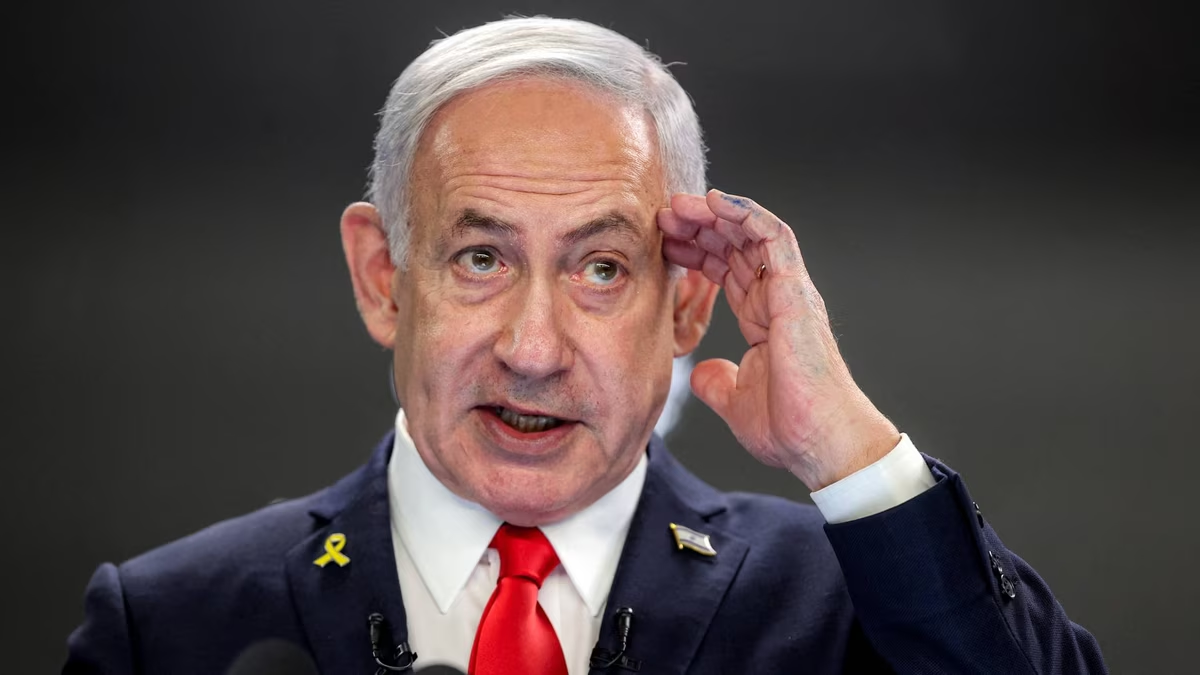
This argument stems from an interpretation that Israel, since its establishment, has primarily focused on maintaining its military superiority and solidifying its deterrent capability, thereby preventing the emergence of a regional power capable of threatening the existing balance of power. In this context, Iran stands out as one of the most prominent strategic challenges facing Israel today, especially with the development of its nuclear program and the expansion of its regional influence through a network of allies and allied forces in several countries in the region.

Over the past years, the conflict between Iran and Israel has not been limited to political statements or diplomatic tensions, but has taken multiple forms of indirect confrontation. Iran has supported allied forces in more than one regional arena, while Israel, in turn, has sought to curb this influence through military and intelligence operations targeting the military infrastructure linked to Tehran. In this sense, the conflict between the two sides is no longer merely a political dispute, but has become part of a broader competition for influence and hegemony in the Middle East.

Amidst this debate, the concept of "Greater Israel" is often invoked. However, examining the realism of this project raises serious questions about its feasibility on the ground. The project, in its theoretical form, assumes a vast geographical expansion that goes beyond Israel's current borders to include vast areas of its regional surroundings. However, the political, demographic, and military reality in the region makes the realization of such a scenario extremely complex.

Today's Middle East is not a geographical vacuum whose borders can be easily redrawn; rather, it is a space crowded with states, political entities, and peoples who possess deeply rooted national identities and intertwined – and sometimes conflicting – interests. Moreover, any attempt at large-scale geographical expansion would face significant regional and international opposition, as well as the enormous military and economic costs that such a project might entail.

For this reason, a number of researchers believe that the idea of "Greater Israel" often remains within the realm of ideological or symbolic discourse rather than a feasible political plan. Conversely, others argue that presenting such ideas may sometimes be used to raise the bar of political or negotiating discourse, so that lesser goals – such as consolidating control or expanding influence within the historical borders of Palestine – appear more realistic or acceptable compared to the maximalist proposal.

Hence, the discussion about "Greater Israel" becomes part of a broader debate concerning the nature of the conflict in the region and the limits of what is possible in politics. Between ideological ambitions and strict geopolitical constraints, the Middle East remains a complex arena where security calculations intertwine with regional balances and international interests, which makes any large-scale expansionist project face enormous challenges in its transformation from a theoretical idea to a political reality.

In this context, it may be more accurate to say that the ongoing conflict today is not about major geographical projects as much as it is about maintaining the existing balance of power. The war – if it happens – will not be for "Greater Israel," but for ensuring the survival of "Lesser Israel" and its strategic security in a highly turbulent regional environment.

Nevertheless, it cannot be ignored that much of the political and media debate in the region has long been preoccupied with the idea of "Greater Israel." Much ink has been spilled in promoting these perceptions, which carry a mythical or symbolic character more than they reflect the reality of actual policies. Often, this focus has contributed to exaggerating political narratives that may serve some parties in mobilizing public opinion or interpreting the conflict from an ideological angle, instead of reading the actual geopolitical balances that govern the behavior of states.

While these debates continue, political reality remains more complex than grand slogans. States, ultimately, act according to calculations of power, security, and interests, not according to mythical perceptions or symbolic projects. Therefore, it may be necessary to reconsider many of the assumptions that have long dominated the interpretation of the conflict in the Middle East. The essence of the ongoing confrontation between Iran and Israel is not about achieving "Greater Israel," but rather about a struggle for deterrence, balance, and the survival of the existing state in a highly volatile regional environment.

In the end, the truth may be simpler than the slogans suggest: wars in the Middle East are often fought for balances of power, not for myths.

ARAB AND WORLD

Sun 15 Mar 2026 11:35 pm - Jerusalem Time

American optimism about the imminent end of the war with Iran and warnings of a 'logistical nightmare' in the Strait of Hormuz

US Energy Secretary Chris Wright announced optimistic predictions regarding the timeline for ongoing military operations, indicating that the US-Israeli aggression against Iran might conclude within the next few weeks. Wright affirmed in media statements that this conflict is approaching its inevitable end, suggesting it might happen sooner than many anticipate.

Regarding the economic repercussions, the US Secretary stressed that the cessation of hostilities would have a direct and positive impact on the global energy market. He explained that markets would witness a significant recovery in oil supplies, which would necessarily lead to a decrease in prices that had seen record increases due to recent geopolitical tensions.

In contrast, these statements were met with skepticism by political circles in Washington. Former Congressman Jim Moran described the Secretary's view as overly optimistic. Moran believed that the facts on the ground indicate that the conflict might extend for an additional two or three months, emphasizing that complex crises are not resolved with a magic touch.

Moran warned of a real 'logistical nightmare' in the Strait of Hormuz, which is the most important artery for global energy trade, where 46 oil tankers remain stranded and unable to move. He pointed out that fears of naval mines make the task of securing commercial vessels currently almost impossible, exacerbating the crisis.

The former parliamentarian touched upon the disparity in impact from the crisis, stating that the United States and Europe face a real threat of a severe blow to their energy security. While Western capitals suffer, Russia and China appear to be in a more stable and relatively secure position from the repercussions of this conflict, which has disrupted international energy calculations.

On the domestic American front, Moran noted that the Trump administration has put itself in a political predicament that is difficult to escape, especially with the upcoming midterm elections in November. He explained that the available options for dealing with the conflict are very limited, contrary to what the administration promotes in its official speeches to the public.

He also pointed to a state of public discontent, where a large segment of Americans are unaware of the real reasons for engaging in direct war with Iran and reject its continued funding from tax money. These pressures coincide with internal livelihood crises that make the continuation of the war an unbearable burden for the average American citizen.

Observers warned that the continuation of the conflict would lead to new jumps in gas prices at American fuel stations, where the price per gallon has already exceeded four dollars. Experts believe that the energy crisis will not end merely with the cessation of hostilities, but its effects may extend to drag the global economy into a comprehensive recession due to total reliance on fuel for production.

Analyses concluded that the exorbitant economic cost of the war could represent the beginning of the end for the 'MAGA' policies associated with the Trump administration, given its direct impact on food, transportation, and heating costs for every family. With government staffing reductions, the administration appears to be facing a full-blown storm that could leave widespread structural damage in American society.

The conflict with Iran will certainly end in the next few weeks, and perhaps sooner, and we will then see a recovery in supplies.

ANALYSIS

Sun 15 Mar 2026 11:35 pm - Jerusalem Time

Fires of the Middle East and Huntington's Prophecy: Are We Living Through Chapters of the 'Clash of Civilizations'?

In the early nineties, while the world celebrated the fall of the Berlin Wall, deluded by the 'end of history', Samuel Huntington was charting a completely different course. Huntington believed that the absence of communism would not end conflicts, but rather lead to a shift in the tectonic plates of history, with confrontations becoming based on deep cultural identities and roots.

Today, with the explosion of the scene in the Middle East, it seems that the confrontation between the Iranian, American, and Israeli triangle has transcended the boundaries of traditional politics to become an existential, cross-border conflict. This shift brings back Huntington's vision, which placed the world on the brink of a major confrontation that is distinctly civilizational in nature, where different cosmic visions collide.

Currently, the region is witnessing a forced dismantling of the concept of the nation-state, imposed after World War I, in favor of what can be called 'civilizational basins'. The ongoing conflict between Tehran and Tel Aviv, and behind them Washington, is no longer governed by the geographical borders of states, but has become a clash at the 'fault lines' that separate major civilizations.

In this context, Israel represents the 'Western civilizational enclave' that interfaces with the Islamic civilization with its multiple poles, making the region the most inflamed hotbed of conflict in the world. The United States is not acting here merely as a state seeking oil, but as a leader of Western civilization seeking to protect its forward frontiers in the face of attempts to restore the Islamic basin.

Huntington's prophecy is also evident in the emergence of a strategic alliance between the 'Confucian' civilization, represented by China, and the Islamic civilization to confront the Western challenge. This axis is no longer just an academic hypothesis, but a reality translated by deep military and economic partnerships and diplomatic support in international forums to break unipolarity.

The covert war, which uses Lebanese and Yemeni arenas as battlegrounds, is essentially an attempt by the 'rest' to challenge absolute Western hegemony. China and Russia realize that the collapse of regional poles hostile to the West means the perpetuation of Western hegemony, while their steadfastness means the success of the first major breakthrough in the 'Western universalism' system.

In Huntingtonian thought, Israel is a model of a state that represents the spearhead of an alien civilization in a completely different civilizational environment. This situation makes the current conflict reshape the collective popular consciousness in the region, transcending simple political differences towards a state of deeply rooted civilizational animosity that is difficult to overcome with traditional diplomatic solutions.

The current war has ended the myth of 'regional integration' or the 'New Middle East' project based on purely economic interests. Religious geopolitics has returned to the forefront, with positions being sorted based on major identity affiliations that transcend the narrow material interests of states.

The civilizational fault lines have moved from state borders to the heart of Western cities themselves, as evidenced by the sharp divisions within Western societies over the events in Gaza and Lebanon. This intellectual and cultural clash reflects Huntington's warnings about immigrants who carry their civilizational affiliations and do not fully integrate into the Western system.

Analysts believe that World War III may not be classic armies sweeping continents, but a series of regional wars along fault lines that attract great powers. In the current conflict, Washington is drawn to protect its civilizational protégé, while Iran seeks to lead an axis extending from the Mediterranean to the Gulf to counter this influence.

The entry of poles such as China and Russia into this conflict will not only be through traditional military alliance, but to prevent a civilizational resolution in favor of the West. This scenario represents the 'great global confrontation' born from the womb of local conflicts that acquire a character of cultural and spiritual sanctity for their parties.

The West made a strategic mistake by trying to impose its values as 'universal' values valid for all times and places, ignoring the specificities of other civilizations. The current clash is an expression of the rejection by regional and international powers of this global 'system' formulated after 1945, and a demand for a system based on true civilizational pluralism.

In this conflict, Iran does not represent itself merely as a state, but offers an identity model that rejects absolute subservience to the prevailing Western model. This identity driver is what makes the conflict transcend technical issues such as nuclear weapons or militia influence, reaching the core of cultural and political existence.

In conclusion, it seems that the world is heading either towards mutual recognition of cultural vital areas or towards total chaos that spares nothing. The current reliance on hard power to impose Western values may open the gates of hell to a conflict driven not by the search for land, but by the defense of spirit, identity, and belonging.

What the West considers universal values, other civilizations consider cultural imperialism.

ARAB AND WORLD

Sun 15 Mar 2026 11:34 pm - Jerusalem Time

Massacre in Burj Qalawiyah: 12 Paramedics Martyred in Israeli Raid Targeting a Medical Center in Southern Lebanon

Field sources documented the extensive damage caused by the intense Israeli shelling of a medical center in the town of Burj Qalawiyah, located in southern Lebanon. This raid resulted in a bloody massacre against the ambulance crews of the Islamic Health Authority, with 12 paramedics immediately martyred and 9 others sustaining injuries of varying severity.

The intensity of the explosions led to the complete collapse of the medical building and damage to its internal floors, creating significant obstacles for rescue teams and journalists to reach the scene. This crime comes amid immense pressures facing the Lebanese health system due to continuous raids and forced evacuation orders imposed by the occupation army in the southern regions.

A report issued by the Lebanese Ministry of Health revealed a disturbing statistic indicating that the number of martyrs among paramedics has risen to 26 in the last two weeks alone. These figures reflect the extent of the dangers facing medical personnel who are trying to perform their humanitarian duty amidst direct and systematic targeting of health facilities.

In an attempt to justify these attacks, the Israeli occupation army claimed that some ambulances are used to transport combat equipment, allegations that observers considered a cover to legitimize the targeting of medical teams. This approach constitutes a blatant violation of international laws that grant special immunity to hospitals and relief workers during armed conflicts.

Scenes from the town of Burj Qalawiyah showed thick plumes of smoke rising and difficulty moving through the accumulated rubble and swirling dust that covered the area. Press sources in Nabatieh reported that field conditions have become almost impossible for medical teams trying to retrieve victims or provide first aid to the injured under the threat of repeated shelling.

Internationally, condemnations of this attack followed, with Spain issuing a strongly worded statement condemning the targeting of the medical facility in Burj Qalawiyah. The statement emphasized the need to neutralize health entities and strictly adhere to international conventions that guarantee the safety of paramedics and facilitate their tasks in saving lives.

Health teams in Lebanon face unprecedented challenges, as the shelling has caused a number of hospitals to go out of service, either completely or partially. Securing urgent protection for medical personnel has become a top priority to ensure the continuation of humanitarian services in affected areas suffering from a severe shortage of essential medical supplies.

The Israeli attack on the medical facility in Burj Qalawiyah is a clear violation of international agreements and humanitarian conventions that guarantee the protection of healthcare workers.

ANALYSIS

Sun 15 Mar 2026 11:34 pm - Jerusalem Time

US Warnings of Collapse of Civilian Protection Rules Due to War on Iran

American writer Nicholas Kristof affirmed that the ongoing war against Iran raises deep concerns about the decline in adherence to international rules established after World War II. He explained in an article that these laws were specifically designed to protect civilians and spare them the horrors of armed conflicts, but today they are threatened with complete collapse.

Kristof used a hypothetical scenario to illustrate the double standards, noting that if Iran were to launch missiles from the Mexican border that destroyed an American school and killed dozens, Washington's reaction would be loud and condemnatory of the attack on innocents. He considered this hypothetical American anger to reflect the gap between what Washington accepts for itself and what it rejects for others.

The article reviewed the history of brutality in wars, recalling the firebombing of Tokyo that killed thousands in a few hours. He pointed out that the United States was at the forefront of countries that led international efforts to establish the Geneva Protocols, which prohibit targeting vital infrastructure on which civilian populations depend.

The writer believes that these rules have begun to erode rapidly in recent years, citing Russian attacks on infrastructure in Ukraine. He also drew attention to reports from a United Nations committee that accused Israel of using starvation as a weapon and systematically targeting children and destroying health and educational systems in the Gaza Strip.

Kristof touched upon the American role in supplying Israel with weapons used in Gaza, considering that Washington merely declares its commitment to the laws of war without exerting actual pressure to stop the violations. He expressed his fear that a direct war with Iran would lead the American administration to definitively abandon the principles it has long claimed to defend.

The article quoted legal scholar Oona Hathaway as confirming that attacks on Iran may lack international legitimacy due to not having a mandate from the Security Council. Hathaway added that the nature of American and Israeli strikes raises serious questions about the possibility of committing war crimes, especially in the absence of an immediate self-defense justification.

In a field context, sources indicated civilian casualties in Iran, including about 175 people who died in a bombing that targeted a girls' school. Although such incidents may sometimes be attributed to technical errors, their recurrence indicates gross negligence in selecting military targets and disregard for civilian lives.

Iranian reports also monitored the targeting of vital facilities, including a desalination plant serving dozens of villages, in addition to widespread destruction of homes and medical centers. UNICEF warned that the death toll of children in multiple regional conflicts has exceeded 1,100 children, including killed and injured.

For his part, David Crane, former war crimes prosecutor, warned that targeting water stations and essential services amounts to war crimes. Crane pointed out that the world is sliding into a dangerous phase of 'lawless conflicts,' where accountability is absent and civilian lives are violated under security and military pretexts.

Kristof concluded his article by referring to condemning international positions, with European officials describing the war as illegal and reckless. He warned that the failure to protect international rules would not only lead to global energy instability but would also mean that humanity as a whole would be the biggest loser in the face of declining international efforts to curb the brutality of conflicts.

The world is entering a phase of lawless conflicts, where the rules humanity tried to establish to limit the horrors of wars have eroded.

ISRAELI AFFAIRS

Sun 15 Mar 2026 11:34 pm - Jerusalem Time

Between the Nuclear Bunker and the Operations Rooms: The Mystery of Netanyahu's Disappearance at the Peak of Escalation with Iran

The past forty-eight hours have witnessed a striking and unusual absence of the Israeli occupation Prime Minister, Benjamin Netanyahu, from media platforms and direct appearances. This disappearance has opened the door wide to interpretations, especially in light of the critical security conditions and mutual threats experienced by the region between Tel Aviv and Tehran.

Informed sources reported that Netanyahu is currently spending most of his time inside the 'secure bunker,' which is the nuclear bunker belonging to the Israeli Ministry of Defense. This step comes to directly supervise complex military operations and ensure the continuity of leadership in the event of a large-scale missile escalation targeting government centers.

Observers believe that the magnitude of mutual threats, especially after targeting secret underground facilities, has imposed a kind of instantaneous and intensive coordination with the US Central Command (CENTCOM). This constant communication has made public appearances a secondary matter compared to the necessities of the field, which require quick and decisive strategic decisions.

In parallel, Netanyahu's absence coincides with intensive diplomatic activity led by US Secretary of State Marco Rubio in the region. Estimates suggest that the Israeli Prime Minister is involved in consultations via hotlines to determine the upcoming rules of engagement, ensuring the alignment of field movements with the political orientations of the new US administration.

On the security front, the General Security Service (Shin Bet) has imposed a strict cordon of secrecy on Netanyahu's movements and actual whereabouts. These extreme precautions come in response to explicit Iranian threats to target Israeli 'leadership heads,' as part of the retaliation for assassinations that targeted prominent leaders earlier.

The matter is not limited to military aspects but extends to increasing internal pressures faced by Netanyahu in the Israeli street. Continuous demonstrations in Tel Aviv, and fears of supply chain collapse and an energy crisis after threats to close the Strait of Hormuz, put the government in a critical political and economic predicament.

In an attempt to calm rumors that spread about the deterioration of his health or an assassination attempt, Netanyahu's office issued a brief statement denying those reports. The office confirmed that the Prime Minister is 'fine' and performing his duties as usual, without providing additional details about the reasons for his seclusion from the public.

Political analysts believe that this silence may be the 'calm before the storm,' as Netanyahu seeks to strengthen his position by achieving a tangible military or political accomplishment before reappearing. Disappearing at moments of strategic target classification is part of the tactics of managing psychological and field conflict with adversaries.

Ultimately, the Israeli scene remains dependent on what the 'closed-door' contacts with Washington will yield and what the situation on the inflamed fronts will become. Netanyahu's absence, although security-justified, reflects the extent of anxiety and confusion prevailing in decision-making circles amid the open confrontation with Iran.

The disappearance here is not only political but also a precautionary measure to prevent any tracking of the Prime Minister's whereabouts in light of the use of suicide drones.

PALESTINE

Sun 15 Mar 2026 11:34 pm - Jerusalem Time

Cautious Calm in Gaza's Skies: Retreat of 'Zananat' Drones Grants Displaced a Noise-Free Suhoor

The skies over the Gaza Strip have witnessed a noticeable decrease in the frequency of Israeli drone flights, locally known as 'Zananat,' in recent days, bringing a measure of relative calm to the nights of displaced people in tents. This sudden shift in the daily 'symphony of death' was immediately noticed by the exhausted residents, reflecting in their simple daily lives with less interrupted sleep and a suhoor free from annoying buzzing sounds.

Although this aerial silence did not mean a complete cessation of aggression, the absence of the constant buzzing gave families living in canvas and nylon tents a chance to catch their breath. Field sources confirm that artillery shelling and gunfire are still ongoing, especially in areas classified by the occupation as 'yellow zones,' which consume vast areas of the Strip's land.

Gaza residents link this relative calm to the escalation of regional fronts in Lebanon and Iran, believing that the occupation's aerial resources may have been distributed to other arenas. Nevertheless, a sense of caution prevails among residents who realize that this tranquility might be just a temporary respite in a long war that has not yet ended.

Fatima Saleh, a displaced person in Gaza City, recounts how Ramadan nights have become quieter after the retreat of drone sounds that used to interrupt her children's sleep. She says that the fear that preceded sleep has relatively decreased, as children used to associate the sound of the 'Zananah' with the imminent occurrence of deadly airstrikes.

For his part, citizen Issam Al-Daour describes the change as directly touching daily details, with suhoor becoming quieter and nights less nerve-wracking. Al-Daour compares the sound of the drone to a bee buzzing directly inside the ear, making living under its constant flight a form of continuous psychological torture.

In displacement camps, mothers noticed a change in the behavior of children who used to wake up screaming in fear due to the constant buzzing. Inas Ghabayen points out that her children now move with less apprehension when going to outdoor facilities, after the 'Zananah' used to constantly hover in the sky, instilling terror in their hearts.

Ibtisam Al-Hawari, who lives in a tent lacking sound insulation, confirms that the noise penetrated the canvas walls and frayed nerves daily. She explains that the family lived in a constant state of pressure where members could not hear each other, but the current retreat has provided them with psychological comfort they had been missing for months.

Analytically, journalist Assem Al-Nabih believes that the decrease in flights is due to the distribution of Israeli capabilities across multiple fronts, which reduced Gaza's monopolization of aerial resources. He points out that this retreat, although technical, revealed the extent of the deep psychological impact these aircraft have on civilian lives.

Medically, Dr. Osama Emad, a mental health consultant, explains that drone sounds represent a form of continuous exposure to danger and threat. He confirms that this noise generates a feeling of helplessness and loss of control, keeping individuals in a constant state of nervous alert that leads to severe physical and psychological disorders.

Emad adds that the physical symptoms accompanying this noise include heart palpitations, chronic headaches, digestive disorders, and loss of appetite due to stress. As for children, the effects extend beyond that to include night terrors, enuresis, and difficulties in speech and concentration due to the constant state of anticipation.

Experts believe that this temporary retreat represents an 'opportunity for healing' and gives the nervous system a rest from the state of extreme alert. However, doctors warn that entrenched psychological symptoms require long-term medical intervention and do not disappear simply with the absence of sound for a short period, especially with the possibility of flights resuming at any moment.

Legally, lawyer Alaa Al-Skafi describes the use of drones in this manner as a collective violation of the dignity and rights of civilians in the Gaza Strip. Al-Skafi believes that drones have transformed from reconnaissance tools into direct killing and psychological terror tools, which blatantly contradicts the principles of international humanitarian law.

Technical reports indicate that the occupation has turned the Gaza Strip into an 'open laboratory' for testing the latest models of AI-powered drones. These technologies are being tested on the bodies and nerves of civilians in Gaza before being marketed globally as 'combat-proven' products, which adds a tragic commercial dimension to the suffering of the population.

Despite this temporary tranquility, Gaza residents cautiously watch the sky, aware that the occupation's planes, which have briefly disappeared, may return at any moment. They appreciate these quiet hours but demand a comprehensive cessation of aggression that ends the nightmare of the 'Zananat' once and for all, so that their nights can truly be safe, not just a respite between two raids.

The Zananah used to live with us inside the tent, nothing separated us from it, but now we feel great comfort and hope it continues.

PALESTINE

Sun 15 Mar 2026 5:44 pm - Jerusalem Time

8 Police Officers, Including a Colonel, Killed in Gaza in Israeli Strike Targeting Their Vehicle

The Ministry of Interior in the Gaza Strip announced today, Sunday, the martyrdom of eight officers and members of the Palestinian police in an aerial raid carried out by Israeli occupation aircraft. The bombing targeted a vehicle belonging to the force while it was traveling on Salah al-Din Street, specifically near the entrance to the town of Al-Zawaida, located in the central region of the Strip.

The ministry confirmed in an official statement that among the martyrs was Colonel Iyad Abu Yousef, who holds the position of director of intervention police and public order in the Central Governorate. Medical sources clarified that the bodies of the eight martyrs arrived at hospitals following the direct attack on the vehicle in an area outside the operational control of the occupation army.

Field data indicates that the occupation has deliberately and systematically targeted police and security personnel since the beginning of the aggression, with the aim of undermining public order and spreading chaos within Gazan society. According to official statistics, occupation forces have killed more than 787 members of security agencies and aid-securing police while on duty, including Major General Mahmoud Salah, the Director-General of the force.

In a related context, occupation forces continue to violate the ceasefire agreement in effect since October 10th, with these daily violations resulting in the martyrdom of 663 Palestinians and the injury of approximately 1762 others. These developments come amidst the ongoing genocide that has caused destruction to 90% of the infrastructure in the besieged Strip.

In the West Bank, Israeli special forces committed a massacre in the town of Tammun, resulting in the martyrdom of an entire family consisting of citizen Ali Bani Odeh, his wife, and their two young children. Two other children from the family, Khaled and Mustafa, survived this massacre, having been injured by bullet shrapnel during the treacherous attack on their home.

The town of Qasra also witnessed a new assault by settlers, which led to the martyrdom of young Amir Moatasem Odeh by direct gunfire. These continuous attacks in various cities and villages of the West Bank raise the total number of martyrs there since October 2023 to more than 1132, amidst an escalation in the pace of incursions and military operations.

These simultaneous crimes in Gaza and the West Bank reflect the scale of the comprehensive Israeli escalation against the Palestinian people and their service and security institutions. While air raids target police officers in Gaza, special forces and settlers continue to liquidate civilians in the West Bank, raising the total number of victims to unprecedented levels amidst a pervasive international silence.

Colonel Iyad Abu Yousef, Director of Intervention Police and Public Order in the Central Governorate, along with 7 officers and personnel, were martyred as a result of a bombing that targeted their vehicle.

PALESTINE

Sun 15 Mar 2026 5:43 pm - Jerusalem Time

Amnesty attacks acquittal of occupation soldiers involved in 'Sde Teiman' crimes: A shameful decision that perpetuates impunity

Amnesty International strongly condemned the decision by the Israeli military prosecutor to drop charges against five soldiers accused of ill-treating and sexually assaulting Palestinian prisoners in the 'Sde Teiman' military detention center. The organization described this action as an unforgivable new chapter in a long history of impunity for occupation forces for violations committed against Palestinians.

Erika Guevara-Rosas, the organization's research and policy director, affirmed that this decision reflects the deliberate inability of the Israeli judicial system to prosecute crimes falling under international law. She noted that Prime Minister Benjamin Netanyahu's welcome of this step proves that international justice is the only remaining path for Palestinians to obtain their rights and hold perpetrators accountable.

These criticisms come at a time when evidence and human rights reports documenting the widespread use of torture and ill-treatment, including systematic sexual violence, against Palestinian detainees have been increasing since the start of the widespread aggression on the Gaza Strip. The organization stressed that the 'Sde Teiman' detention center has become a symbol of egregious violations, where prisoners are held in inhumane conditions and completely isolated from the outside world.

According to data provided by Amnesty International, only one Israeli soldier has been convicted of torture, despite hundreds of testimonies and documents confirming widespread violations. The organization considered that the absence of serious prosecution encourages soldiers to continue their repressive practices without fear of legal consequences.

The organization revealed a shocking statistic indicating that at least 98 Palestinians have died while in Israeli custody since October 2023. It explained that these deaths occurred in the complete absence of independent or transparent investigations, and with continued prevention of international observers and the International Committee of the Red Cross from accessing detention centers.

Guevara-Rosas warned that the world cannot continue to turn a blind eye to the deprivation of any form of justice and fairness for Palestinians. She called on states party to the Rome Statute of the International Criminal Court to provide full support for ongoing investigations into crimes committed within Israeli detention centers to ensure that victims' rights are not lost.

For his part, the head of the Palestinian Prisoners' Club, Abdullah Al-Zaghari, described the decision to cancel the indictment against the five soldiers as a 'green light' for practicing rape and torture against prisoners. Al-Zaghari affirmed that this trend was not surprising to the prisoner movement given the clear complicity between the security apparatus and the judicial system of the occupation.

The details of the case date back to July 2025, when prisoners in the 'Sde Teiman' detention center were subjected to brutal torture, which in one case resulted in a detainee sustaining serious injuries and a rectal tear due to sexual assault. Despite the heinous nature of the crime and its medical documentation, the military prosecution decided to close the file and acquit those involved.

Data from the 'HaMoked' Center for the Defense of the Individual indicates that the occupation authorities currently hold about 9,446 Palestinians in their prisons, most of whom live in harsh conditions lacking the minimum international standards. Human rights organizations confirm that the policy of impunity has become an official policy adopted by the Israeli government to protect its soldiers from international prosecution.

Amnesty International concluded its statement by warning that dropping the charges sends a dangerous message that torture and sexual assault can go unpunished if the victim is Palestinian. It called for real international pressure to open Israeli prisons to UN oversight and to stop the physical and psychological abuses that detainees are subjected to daily.

The decision falls within the long history of the Israeli judicial system in granting impunity to perpetrators of serious crimes against Palestinians.

PALESTINE

Sun 15 Mar 2026 5:43 pm - Jerusalem Time

Gaza: 5 Dead in 24 Hours and Continued Israeli Violations of Ceasefire Agreement

The Palestinian Ministry of Health in the Gaza Strip announced today, Sunday, the martyrdom of five people and the injury of eight others due to Israeli aggressions that occurred during the past twenty-four hours. The ministry confirmed in its daily statistical report that hospitals received the new victims amid the continued intermittent military operations carried out by the occupation forces in various areas of the Strip.

Medical sources indicated that this toll raises the total number of martyrs since the outbreak of the war in October 2023 to 72,239 martyrs, while the number of injured reached 171,861. These figures reflect the scale of the ongoing humanitarian tragedy despite the ceasefire agreement coming into effect in October of last year, which has seen repeated violations.

In field details, Civil Defense spokesman Mahmoud Bassal explained that rescue teams managed to recover three martyrs from one family following an airstrike that targeted the Al-Sawarah area in the Nuseirat camp. Local sources added that the aerial bombardment hit a populated house, completely destroying it and causing severe damage to neighboring buildings in the central region of the Strip.

For its part, Al-Aqsa Martyrs Hospital in Deir al-Balah city received the bodies of the three martyrs, a man, his wife, and their young child, in addition to a number of injured people, one of whom was described as being in critical condition. Medical teams continue to provide necessary care to the injured amid a severe shortage of essential medical supplies due to the long siege and the destruction of the health system.

The Ministry of Health noted that the pace of Israeli violations of the ceasefire agreement signed in October 2025 has significantly escalated, with the toll of victims from these violations reaching 663 martyrs and 1762 injured so far. These violations vary between limited airstrikes, shootings, and artillery shelling targeting border areas and residential gatherings on an almost daily basis.

Regarding material losses, international reports indicate that the war, which lasted for nearly two years, led to the destruction of approximately 90% of the civilian infrastructure in the Gaza Strip. The destruction included water and electricity networks, roads, and educational and health facilities, making large areas of the Strip uninhabitable at present without urgent international intervention.

In a related context, the United Nations estimated the total cost required to rebuild what was destroyed by the Israeli military machine at approximately 70 billion dollars. The residents of the Strip face enormous challenges amid the slow reconstruction efforts and continued security threats, exacerbating the humanitarian crisis for thousands of families who still live in tents or temporary shelters.

The toll of victims from Israeli violations since the ceasefire agreement came into effect has risen to 663 martyrs and 1762 injured.