OPINIONS

Sun 05 Apr 2026 11:44 am - Jerusalem Time

Killing Technology... How Far Has It Come?

I am not writing this article to scare anyone, nor to belittle technology and its importance; for technology has been and continues to be a cornerstone of human development, an important tool for serving humanity and its advancement, enhancing the knowledge economy, and expanding human horizons to achieve complete human prosperity in economic, social, scientific, and other important areas.

However, the noble purpose for which technology was created in our lives was not the only path humanity took, unfortunately. Instead, some decided to employ the outputs and tools of technology to move from construction to destruction, and from a platform for salvation to a tool for devastation, serving the ambitions and financial aspirations of those in power.

Between this and that, the problem has never been with technology, but rather with the mind that transfers it from areas of good to squares of evil, in a way that has reinforced circles of destruction with the development of various technologies, as if the lords of evil are lurking for the growth of technical capabilities to implement their diabolical ambitions. With the development of artificial intelligence, successive generations of communications, mobile phones, internet technologies, autonomous systems, and advanced computing, diabolical possibilities are no longer theoretical, but have become a reality whose escalation humanity witnesses day by day.

Let's look, for example, at drones, a technology that began for civilian and humanitarian purposes, aiming to transport humans to places they could never reach to achieve the desired developmental progress in agriculture, relief, environmental quality, natural phenomena, the film industry, and many others – however, the desired human goals soon transformed in some contexts into tools for remote killing, where traditional soldiers disappear, replaced by a technical operator behind a fortified screen, possessing some technical expertise and sufficient knowledge to manage the algorithmic scene and control decisions, without the slightest consideration for the human dimension. With such an approach, killing becomes closer to a "technical decision" devoid of emotions, feelings, and values.

With such development, the concept of "algorithmic weapons" is escalating through artificial intelligence, capable of analyzing big data, identifying targets, and even predicting individual behavior and their routine association with targeted squares, ultimately achieving the desired goals of the developers of such weapons.

The important thing for the operators of death weapons is to be free from any legal deterrents, so they can act outside the framework of law and ethics, and away from monitoring and suppression tools, enabling them to execute their objectives precisely by achieving a precise blend between the worlds of mathematics, physics, chemistry, and others, and creating and harnessing a computerized combination far removed from any human context.

Such an approach is reinforced by the development witnessed in the digital space, which has led humanity towards enhancing cyberattacks that have exceeded the boundaries of digital crime and website breaches, becoming capable of controlling financial systems, banks, facilities, infrastructure, radars, military and medical equipment, hospitals, electricity grids, water systems, and an endless list of targeting areas.

Imagine, then, the ability to steal bank accounts and control nuclear power plants, and intercept ballistic missiles. Imagine if power, water, and alternative energy stations stopped, or even health systems were destroyed with hospitals subjected to digital attacks, or if electricity was cut off from entire countries, or even traffic signals and autonomous control systems for water treatment plants broke down, and an endless list of possibilities and targets.

Also, today, in short, the fear of poor control over technologically supported biological and germ warfare weapons cannot be ignored, through the employment of genetic engineering, to carry out dangerous missions capable of expanding human destruction, and modifying viruses or bacteria and injecting them into humans in a way that multiplies the threat.

All these examples are not intended to malign technology or instill fear of it, but rather to pose a crucial question: Has humanity's ethics developed as much as its scientific capabilities? And is it possible to impose the necessary legal and judicial oversight frameworks? Or is the powerful in this world the one who decides and acts as they please? And will humanity continue to chase the urgent need for innovations without reinforcing its endeavor with an ethical and legal system that cares about results and leads to the birth of a clear regulatory environment whose rhythm is controlled by signing an international code of conduct that keeps technology away from death and destruction?

Our human responsibility is enormous, starting from scientists and intersecting with decision-makers, passing through developers, and reaching the poor citizen.

Humanity must not allow technology to act as an independent entity, but rather a clear reflection of values and choices related to the human right to prosperity, not in the manufacturing of death, so as to avoid any ethical slips that may be difficult to contain later.

Finally, humanity must strive to direct technology to serve humanity, not to turn into a platform against it! The beginning is within us, not with machines. To be continued!
[email protected]

ISRAELI AFFAIRS

Sun 05 Apr 2026 11:44 am - Jerusalem Time

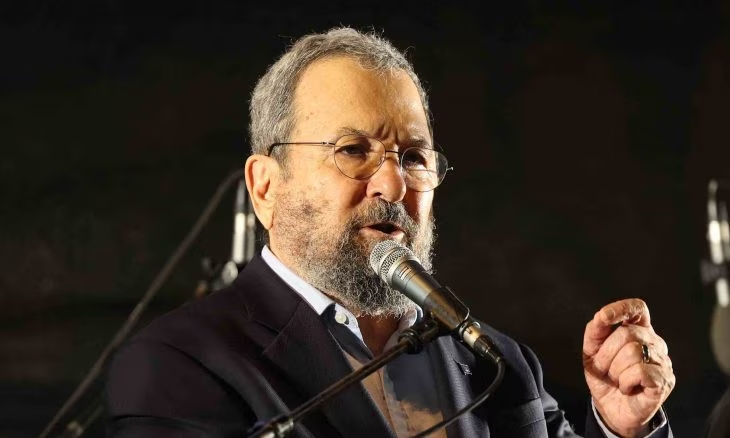
Barak attacks war management: Strategic failure in Iran and Lebanon, and Netanyahu turns Israel into a new 'Sparta'

Former Israeli Prime Minister and Minister of Defense, Ehud Barak, launched a scathing attack on the current war management, asserting that joint military operations with the United States against Iran and Hezbollah have failed to achieve their core objectives. Barak explained that this failure is primarily due to the absence of a clear strategic plan and an absolute reliance on military force alone, without considering complex political realities.

In statements to Hebrew media, Barak indicated that expectations of the Iranian regime's collapse through aerial bombardment or the complete destruction of its nuclear project are mere 'wishful thinking' not based on solid reality. He considered that attempts to incite peoples to rebellion from abroad often lead to counterproductive results, as they grant those regimes additional legitimacy to confront what they describe as external aggression.

Barak criticized what he called the 'illusions' that prevailed in decision-making circles, especially regarding reliance on internal parties or minorities such as the Kurds to bring about change in Iran. He believed that these narrow calculations prevented any real breakthrough, despite the painful blows dealt to the Iranian regime recently.

Regarding the field situation, Barak supported military assessments indicating that Israel and the United States are in a stalemate in confronting Tehran, confirming the Iranian regime's resilience despite more than a month passing since the outbreak of direct confrontation. He expressed skepticism about the existence of a viable plan to seize enriched uranium or permanently secure navigation in the Strait of Hormuz.

The former official warned against the danger of being drawn into threats to destroy infrastructure within Iran, considering that such a step would have catastrophic repercussions for the entire region. He explained that the biggest loser would not only be Israel, but also the Gulf states, which would become direct targets for precise Iranian missiles targeting water and energy facilities.

Regarding the northern front, Barak described the idea of 'security belts' in Lebanon, Syria, and Gaza as military 'nonsense' that does not achieve sustainable security. He stressed that forward defense must be coupled with a political path, which is lacking in the current approach led by Benjamin Netanyahu, whom he accused of thwarting all available opportunities for regional dialogue.

Barak emphasized that militarily dismantling Hezbollah is an unrealistic goal unless Lebanon is fully occupied, which does not seem feasible or logical under current circumstances. He called for the necessity of taking diplomatic proposals seriously instead of changing military objectives weekly without achieving tangible results on the ground.

Barak accused current Prime Minister Benjamin Netanyahu of trying to turn Israel into a new 'Sparta' that lives only by the sword, warning that this approach would lead to the state's isolation and its failure to manage its regional affairs. He called on Israelis to work to overthrow the current regime before the end of the war to save what can be saved.

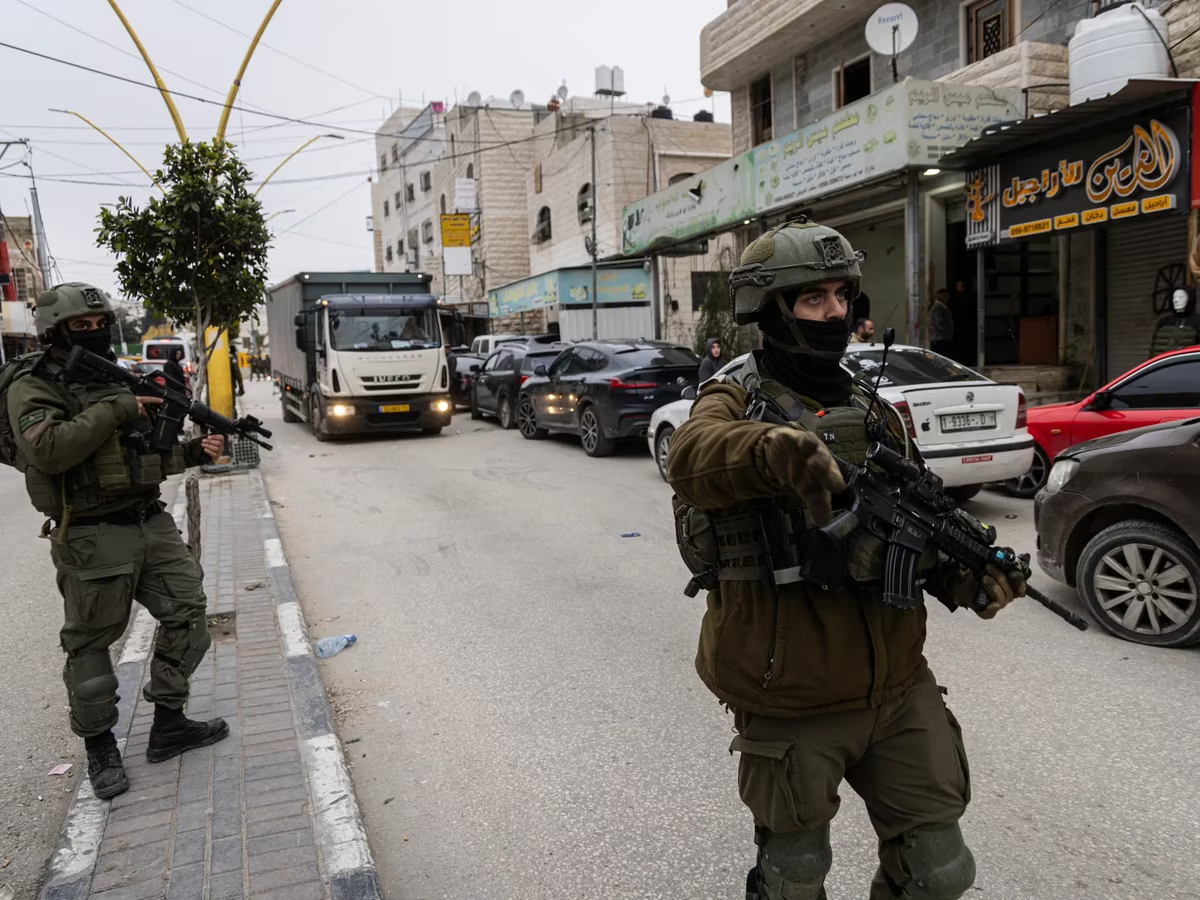
On the other hand, extremist right-wing voices emerged demanding the escalation of military operations to the maximum extent, with National Security Minister Itamar Ben Gvir affirming his rejection of the army's positions calling for calm or withdrawal. Ben Gvir demanded the continuation of the war until the achievement of what he described as 'total victory' against Hamas and Hezbollah, no matter how long the conflict lasts.

Ben Gvir considered that the only solution lies in using 'intensive fire,' assassinating leaders, and imposing strict security belts, noting that the Israeli people have enough patience to achieve these goals. He also expressed his opposition to any ceasefire agreement at present, whether in Gaza or on the northern front.

In a related context, heads of settlements in the north called for intensifying strikes against Lebanese infrastructure as a means to subdue Hezbollah and force it to retreat. These individuals considered that any retreat in military objectives represents a 'slap' to the settlers who were displaced from their homes due to continuous shelling from southern Lebanon.

These debates come at a time when internal criticism is increasing in Israel against what observers describe as the 'arrogant language' of the political leadership. Analysts believe that promises of swift victories have evaporated in the face of continuous intensive rocket barrages launched from Lebanon and Iran towards Israeli territory.

Reports from informed sources indicate that the gap is widening between the military level, which understands the limits of power, and the political level, which insists on slogans of 'absolute victory.' This disparity puts Israel before difficult choices amid increasing international pressure to reach a formula that ends regional escalation.

In conclusion, the Israeli scene remains divided between a current that sees diplomacy and military realism as the only way out, and another current led by the far-right that sees the continuation of the war as existence and destiny. Between these two, military operations continue to claim more lives and destroy infrastructure without a clear horizon for a solution.

Fascist authoritarian regimes do not fall by bombs from outside, and relying on force alone without a political horizon is an illusion that leads to failure.

ARAB AND WORLD

Sun 05 Apr 2026 11:44 am - Jerusalem Time

Commando operation and disinformation campaign.. Washington announces rescue of American pilot from heart of Iranian territory

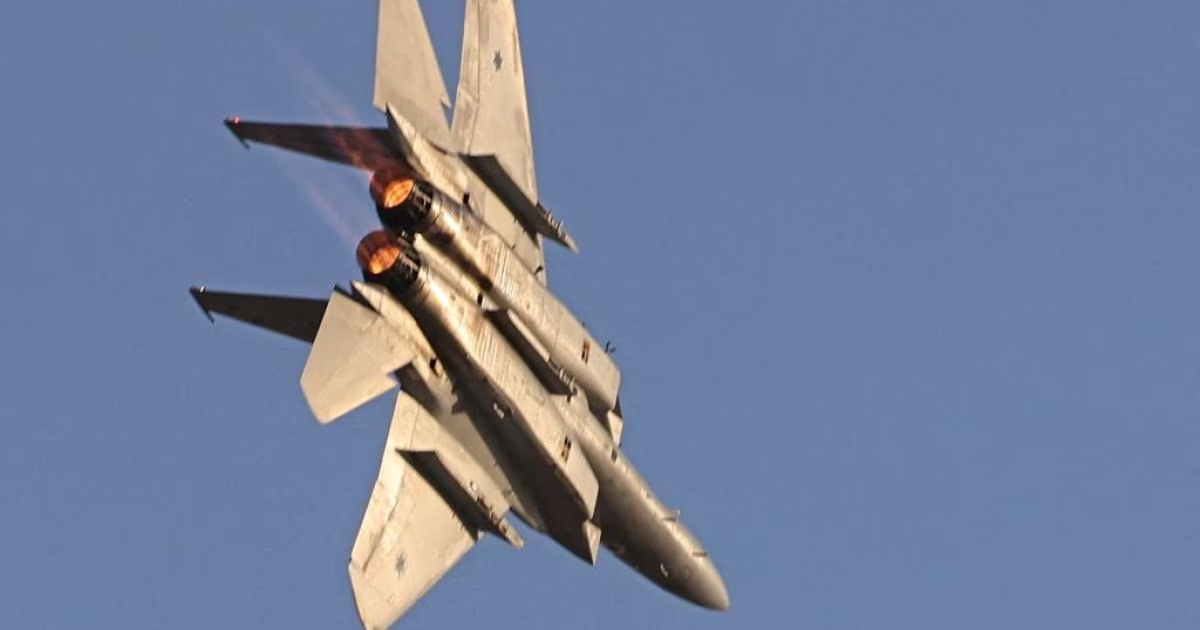
The American administration announced early Sunday that its special forces had successfully recovered a pilot who was trapped behind enemy lines deep within Iranian territory. This operation came after his F-15 fighter jet was shot down during ongoing military operations, now in their sixth week, ending a major political and military crisis facing the White House.

US President Donald Trump confirmed via the 'Truth Social' platform that the military had carried out one of the boldest and most dangerous search and rescue operations in the country's military history. Trump clarified that the officer, a highly respected colonel, was injured during the incident but is now in stable condition and receiving the necessary medical care for a full recovery.

For her part, White House spokeswoman Karoline Leavitt issued an official statement confirming that the operation was completely successful in the past few hours. Sources indicated that the pilot is the second member of the aircraft crew that Tehran announced it had shot down last Friday, with his first colleague having been rescued earlier from the incident.

Media reports revealed that the surviving officer, responsible for weapon systems, parachuted into a rugged mountainous area far from the primary crash site. The officer was able to communicate with his colleague via radio, enabling American operations rooms to accurately pinpoint his location and begin a race against time to reach him before Iranian forces.

Informed sources reported that US special forces 'commandos' launched a swift ground operation under heavy air cover to secure the officer's location. The area witnessed fierce battles between American forces and Iranian units attempting to reach the captive pilot, before American helicopters were able to evacuate him and withdraw towards Central Command bases.

In exciting intelligence details, sources mentioned that the Central Intelligence Agency (CIA) managed a widespread disinformation campaign concurrently with the field operation. The campaign aimed to spread false information within Iranian security agencies suggesting that the pilot had already been found and was being transported across land borders, to divert Iranian search efforts.

Despite his injuries, the American colonel managed to hide and evade Iranian patrols in the mountains for more than twenty-four hours. Military officials described his ability to endure and walk distances despite his wounds as a crucial factor in the success of reaching him before he was captured.

In contrast, Iranian sources confirmed that the air defenses of the Revolutionary Guard were highly active during the operation hours in the Isfahan region. Tehran claimed it had successfully countered widespread aerial infiltration attempts, using new defense systems recently put into service to confront advanced American aircraft.

Iran's 'Khatam al-Anbiya' military headquarters announced a heavy toll of losses among the US Air Force during Friday and Saturday's confrontations. Iranian sources claimed the downing of an advanced F-35 fighter jet, in addition to three strategic MQ-9 and Hermes drones.

Iranian claims also included the destruction of two Black Hawk helicopters and an A-10 close air support fighter, as well as the interception of winged cruise missiles. These statements come within the framework of an intense media war accompanying the field military operations between the two sides in the region.

This operation marks a turning point in the current confrontation, demonstrating the ability of US special forces to operate in hostile and complex environments. With US forces returning to their bases, tension remains at its peak with continued mutual airstrikes and threats of expanding the conflict.

The US military carried out one of the boldest search and rescue operations in US history to rescue one of our distinguished officers.

ARAB AND WORLD

Sun 05 Apr 2026 11:44 am - Jerusalem Time

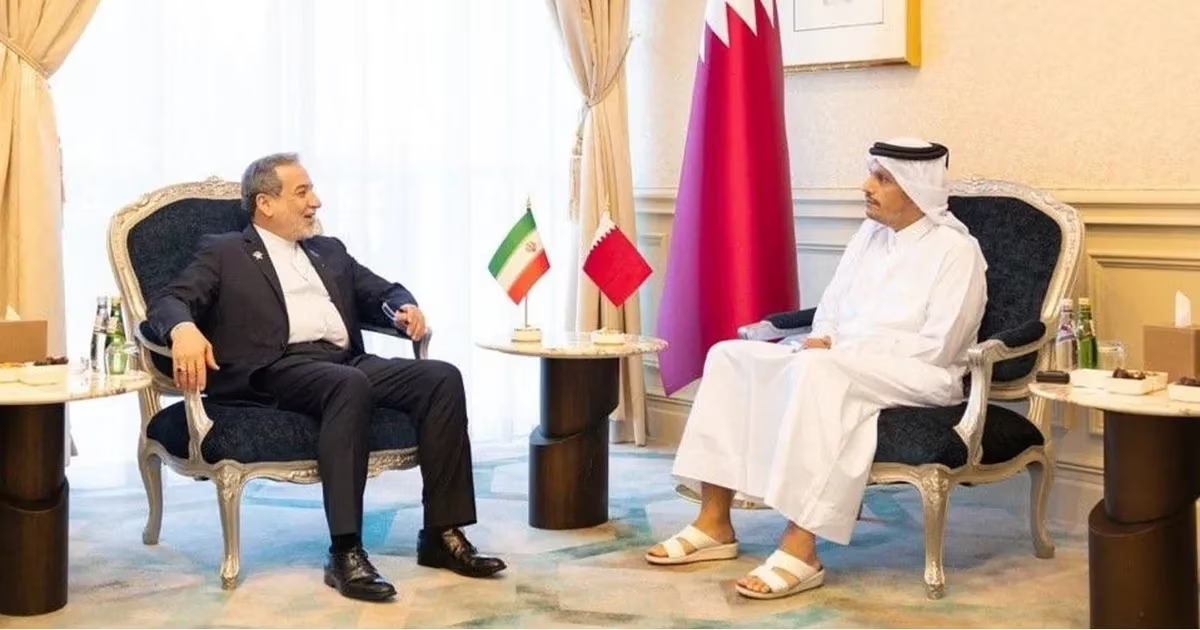
Araghchi warns: Any radioactive leak from Bushehr plant threatens life in Gulf capitals

Iranian Foreign Minister, Abbas Araghchi, issued strong warnings regarding the nuclear risks facing the region, emphasizing that any potential radioactive leak at the Bushehr nuclear power plant would extend its deadly effect to the capitals of the Arab Gulf states. Araghchi explained that the plant's geographical location makes any environmental disaster an existential threat to Iran's neighbors before its impact reaches the capital Tehran, stressing the seriousness of repeated military targeting of the facility.

The head of Iranian diplomacy criticized what he described as 'double standards' by the international community and its complete silence regarding attacks on Iranian nuclear and petrochemical facilities. Araghchi questioned, in a post on the 'X' platform, the absence of the Western outrage previously shown over clashes near the Zaporizhzhia plant in Ukraine, considering that overlooking the bombing of Bushehr represents a green light for continued escalation.

The Iranian minister revealed that American and Israeli forces have targeted the Bushehr plant four times since the outbreak of direct confrontations last February, noting that these operations go beyond military objectives to affect vital infrastructure. He affirmed that targeting the petrochemical sector clearly shows the desire to destroy the country's economic and environmental capabilities without regard for regional consequences.

On the ground, media sources reported that the latest attack on Saturday resulted in the death of a member of the plant's security protection team, which raises the level of tension at the sensitive nuclear site. These developments come amid the ongoing war waged by Israel and the United States on Iranian territory since February 28, which has left thousands of casualties, both dead and wounded.

Regarding international reactions, Russia began a large-scale evacuation of its employees from the plant, with 198 workers from 'Rosatom' company heading towards the Armenian border. Alexey Likhachev, the general director of the Russian company, described this move as the largest evacuation since the start of the conflict, while Moscow described the attack as an 'evil act' that requires an immediate cessation of hostilities.

For his part, the Director-General of the International Atomic Energy Agency, Rafael Grossi, confirmed that a building inside the Bushehr plant site had indeed been affected by shockwaves and shrapnel from the recent shelling. Despite his confirmation that no increase in radiation levels has been detected so far, international concern is growing about the possibility of damage to the reactors in future strikes, which could lead to an unprecedented disaster.

The region is experiencing a state of security and political alert, as Tehran continues its response by launching missiles and drones towards Israeli targets and American interests in the region. In contrast, Arab countries express their condemnation of attacks on civilian targets on their territories, amid fears of the conflict escalating into a comprehensive regional war that gets out of control and destroys the vital environment in the Gulf basin.

Radioactive fallout will not end life in Tehran, but in the capitals of the Gulf Cooperation Council.

OPINIONS

Sun 05 Apr 2026 8:58 am - Jerusalem Time

Generalizing the Gaza Model: Towards Reshaping the Rules of War in the Middle East

Said Erikat

Opinion Writer

Washington – Said Arikat – 5/4/2026\n\nNews Analysis\n\nThe Middle East has witnessed profound transformations in the patterns and methods of warfare, with the emergence of a new military doctrine led by the United States and Israel, based on transferring the Gaza war model to other arenas such as Iran and Lebanon. This shift is not limited to military tools but extends to redefining the boundaries of what is morally and legally acceptable in armed conflicts, threatening to undermine the system of international humanitarian law established after World War II.\n\nThe war on Gaza represented a pivotal moment, not only because of the scale of destruction and human losses but also because it revealed a deliberate trend to normalize combat patterns based on widespread targeting of civilian areas, destruction of vital infrastructure, and the use of excessive force without adequate consideration for the principles of proportionality and distinction. With this model transferring to Iran and Lebanon, what was previously seen as a shocking exception now appears to be presented as a repeatable rule.\n\nIn Iran, data indicates an intense and unprecedented bombing campaign, targeting residential neighborhoods and service facilities, including health and educational facilities, and energy and water infrastructure. This pattern reflects an increasing reliance on heavy firepower and the use of modern technologies such as artificial intelligence in targeting, raising serious questions about the accuracy of these strikes and the limits of accountability. Moreover, targeting vital facilities, including nuclear sites, carries catastrophic risks that extend beyond the direct conflict.\n\nIn Lebanon, the same scenario is repeated, through widespread displacement of populations, systematic destruction of homes and infrastructure, in addition to targeting health workers and media personnel. These practices, which were considered grave violations of international law, are now being carried out within a political and military discourse that justifies them on security grounds, sometimes relying on controversial historical comparisons, such as the bombing of cities during World War II.\n\nThis transformation reflects, in essence, a redefinition of the concept of war itself, where the gap between military and civilian targets is narrowed, and the scope of “legitimate targets” is expanded to include essential elements of community life. The discourse accompanying these operations also indicates a noticeable decline in public commitment to ethical rules, replaced by harsher language that legitimizes violence and gives it an existential character.\n\nHowever, the most dangerous aspect of this path is its long-term repercussions. Weakening the rules of international law not only affects the victims of current wars but also opens the door for other parties to adopt the same approach, leading to a spiral of mutual escalation, where violations become justifications for counter-violations. In this context, retaliatory strikes targeting civilian structures appear to be an indicator of a rapid slide towards this scenario.\n\nWhat is happening today cannot be separated from broader transformations in the international system, where the effectiveness of multilateral institutions is declining, and unilateral tendencies are increasing, weakening mechanisms of control and accountability. In light of this reality, the danger of “generalizing the Gaza model” is not just a possibility but an existing path that is reshaping the rules of engagement in contemporary wars.\n\nIn this context, there is a clear erosion of the traditional concept of deterrence, where military force is no longer used merely to contain adversaries but to reshape demographic and political environments through widespread destruction. This shift reflects a conviction among some decision-makers that rapid decisive action requires a high human cost, which contradicts the principles humanity has sought to establish since the mid-20th century. The continuation of this approach could lead to the normalization of excessive violence as a political tool, threatening international stability in the long term.\n\nAlso noteworthy is the growing role of technology, especially artificial intelligence, in managing military operations. Despite claims of accuracy and efficiency, excessive reliance on these tools may contribute to expanding the scope of errors or reducing sensitivity to human losses, due to the distance from direct human judgment. This raises complex ethical and legal issues related to responsibility and accountability and calls for a serious international discussion about the controls on the use of these technologies in armed conflicts.\n\nGeneralizing this model of warfare not only threatens the targeted countries but also impacts global security as a whole, including the countries leading it. Undermining international rules creates a more chaotic environment where all parties become vulnerable to similar violations. Hence, restoring respect for international humanitarian law and strengthening accountability mechanisms is no longer just an ethical issue but a strategic necessity to maintain a degree of stability in an increasingly fragile international system.

ARAB AND WORLD

Sun 05 Apr 2026 8:58 am - Jerusalem Time

Trump renews 'hell' threat to Iran as 48-hour deadline approaches

US President Donald Trump issued a stern warning to the Iranian leadership, reminding them that the countdown has begun for the expiration of the deadline he previously set for concluding an agreement to end the conflict that has been ongoing for more than a month. Trump affirmed in a post on his 'Truth Social' platform that Tehran has only 48 hours to avoid what he described as 'hell' that will descend upon it if it does not respond to American demands.

These threats come in the context of the ten-day deadline given by the White House to Iran to reopen the Strait of Hormuz, which is the vital artery for global energy supplies. The closure imposed by Tehran since the outbreak of military confrontations has caused widespread disruptions in international markets, prompting Washington to take tougher stances on Iranian movements in the waterways.

The US President set a final deadline ending at 8:00 PM next Monday, Washington time, corresponding to April 6th. The US administration vowed that a military response would directly target energy infrastructure, including Iranian power plants, if the strait remains closed or if a political agreement is not reached.

On the ground, high-level defense sources in Tel Aviv revealed high-level coordination with the American side regarding upcoming military steps. The sources explained that the Israeli army has developed operational plans to target energy facilities deep inside Iran, awaiting an official green light from Washington to carry out these strikes, which were described as imminent.

Observers believe that the Israeli statements are organically linked to the ultimatum issued by Trump, indicating the possibility of a joint or US-backed military operation. Political circles are awaiting the seriousness of implementing these threats, especially with the approach of the zero hour set by the US President in his latest post, which sparked widespread controversy.

Amid this escalation, the region is experiencing a state of anticipation mixed with caution about the situation sliding into a comprehensive confrontation whose repercussions could affect all countries in the region. Washington insists that opening the Strait of Hormuz is a non-negotiable condition to ensure the stability of the global economy and prevent the exacerbation of the energy crisis that has been looming since the closure of the shipping lane.

For its part, Tehran has not issued an immediate official response to the latest threats, but previous reports indicated its adherence to its positions in light of continued military and economic pressures. All eyes are now on the next few hours to see whether diplomatic efforts will succeed in defusing the crisis or if the region will witness a new round of violent military escalation.

Trump's harsh tone reflects a desire to quickly resolve the Iranian issue, using direct threats via social media platforms to pressure decision-makers in Tehran. With only two days remaining until the deadline, the likelihood of air or missile attacks targeting Iran's economic lifeline increases, which could shift the balance of power in the ongoing conflict.

Time is running out, 48 hours left before hell descends upon them!

ARAB AND WORLD

Sun 05 Apr 2026 8:58 am - Jerusalem Time

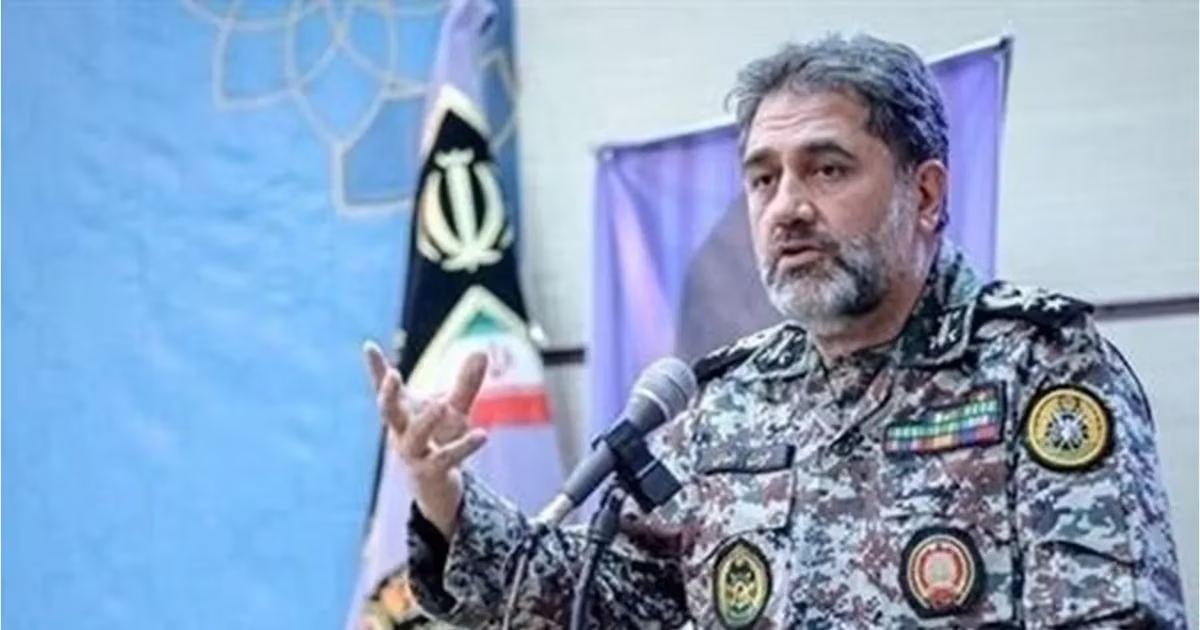
Iranian Air Defense Commander: We have the capability to shoot down American fifth-generation fighters

Brigadier General Alireza Elhami, commander of Iran's Joint Air Defense Headquarters, announced that the armed forces now possess the necessary technologies to detect and target fifth-generation fighters and the most advanced drones. During an inspection tour of military sites belonging to the army and the Revolutionary Guard, he explained that these capabilities rely entirely on innovations and modern equipment manufactured domestically to counter hostile aerial threats.

The Iranian military commander revealed the results of recent defensive operations, indicating his forces' success in shattering what he described as the 'propaganda prestige' of adversaries by destroying a number of advanced fighters. Elhami confirmed that air defenses shot down more than 160 advanced drones, including 'MQ-9', 'Hermes', and 'Lucas' models, in addition to other models belonging to the United States and the Israeli occupation.

Elhami stressed that targeting fourth and fifth-generation fighters and inflicting severe damage on them was the result of adopting entirely new field tactics. He added that these operations were carried out with high precision and in preemptive timings that prevented any hostile attacks, reflecting the qualitative development in the detection and interception systems of both the Revolutionary Guard and the Iranian Army.

In a related context, media sources reported confirmed aerial losses in the region, with the United States officially acknowledging the downing of an 'F-15E Strike Eagle' fighter in southwestern Iran. Reports from Washington indicated that search and rescue operations succeeded in recovering one crew member, while the fate of the second pilot remains unknown at the moment.

These field developments highlight the escalating military tension in the region and the technological race between Iranian air defense systems and American aerial technologies. Recent Iranian statements emphasize a self-reliance strategy in developing cruise missiles and interception systems to counter any potential violations of the country's airspace.

Hunting fifth-generation fighters and advanced drones has become possible using modern, locally manufactured methods and equipment.

PALESTINE

Sun 05 Apr 2026 8:58 am - Jerusalem Time

Gaza an Open Minefield: 20,000 Unexploded Ordnance Threaten the Lives of Thousands of Children

The world commemorates the International Day for Mine Awareness on April 4th each year, while the residents of the Gaza Strip live a tragic reality where their cities and camps have turned into open minefields. Explosive objects are no longer confined to military areas but now lie in wait for children and displaced persons among the rubble of homes and in abandoned playgrounds, leaving permanent physical injuries and psychological scars that do not heal.

Fifteen-year-old Muhammad Abu Maala embodies a chapter of this suffering after losing his right hand and sustaining a severe leg tear when he tampered with a strange object he found near his home in the Nuseirat camp. This incident, which occurred months ago, transformed the life of the academically excelling boy into complete isolation, as he now faces continuous physical pain and an urgent need for complex surgeries to install prosthetic joints.

In a similar incident in Deir al-Balah city, Nour al-Jayyar and four children from his relatives sustained varying injuries after a suspicious object, which looked like a plastic piece, exploded. Shrapnel led to the amputation of parts of Nour's fingers and injured his siblings and relatives in various parts of their bodies, necessitating their enrollment in intensive psychological support programs to cope with the violent traumas they experienced.

Official estimates issued by the Government Media Office in Gaza indicate the presence of more than 20,000 pieces of unexploded ordnance scattered throughout the Strip. This high number reflects the scale of the threat in a small geographical area not exceeding 365 square kilometers, making Gaza one of the most contaminated areas with explosives in the world relative to its population.

For its part, the Ministry of Health recorded the martyrdom of seven citizens, including five children, and the injury of about 50 others due to the explosion of war remnants during the past period. Medical sources confirm that the actual numbers may be much higher, given that many injured receive treatment in field hospitals without accurate documentation of the direct cause of injury.

Sources in the Rapid Response Unit reported that the volume of war remnants is enormous and dangerous, while specialized teams lack the minimum capabilities needed to deal with them. The sources explained that the occupation targeted warehouses and equipment designated for transporting and storing ammunition, which led to a decline in the technical teams' capabilities to less than 10% of what they were before the war.

Specialized technicians in explosive ordnance disposal face existential risks, with 17 technicians out of 65 martyred since the beginning of the aggression. These teams currently work without adequate protective equipment or advanced detection devices, making every intervention to neutralize a suspicious object a suicidal mission fraught with great dangers.

Civil Defense in Gaza, in turn, warned that the Strip has become like a large minefield, with unexploded rockets and mines scattered under the rubble of destroyed buildings. Civil Defense sources confirmed that teams are forced to work in unsafe environments while recovering victims, which could lead to sudden explosions when heavy machinery collides with invisible remnants.

The danger is not limited to residential areas but extends to agricultural lands where farmers discover explosive objects while plowing. These remnants hinder the return to normal life and prevent farmers from utilizing their lands for fear of explosions that could occur at any moment, adding a new economic burden on the shoulders of the besieged population.

Children are the most vulnerable group due to their natural curiosity, as some war remnants appear in tempting shapes resembling food cans or soft drink bottles. Reconnaissance aircraft also dropped small containers that children tampered with, thinking they were toys, leading to humanitarian disasters and multiple amputations.

The International Committee of the Red Cross, in cooperation with the Palestinian Red Crescent, is implementing intensive awareness programs to reduce these incidents. These campaigns target shelters and displaced persons' gatherings, where parents and children are taught how to identify suspicious objects, the necessity of staying away from them, and reporting them immediately to the competent authorities.

Despite awareness efforts, there remains an urgent need to introduce advanced equipment and specialized international mine clearance teams to clear residential areas. The continued presence of these munitions means that the war has not ended for the residents of Gaza, as latent death under the soil continues to threaten anyone who tries to rebuild their home or return to their normal life.

The suffering of the injured is exacerbated by the collapse of the health system and the difficulty of traveling abroad for treatment or fitting prosthetics. Many children who have lost limbs face an unknown future due to the lack of wheelchairs and specialized medical equipment that would help them adapt to their new disabilities.

The international community is called upon to act urgently to pressure for the introduction of necessary equipment to neutralize this imminent danger and provide support to mine victims. Without a comprehensive and large-scale clearance operation, Gaza will remain a scene of deferred death, claiming innocent lives even after cannons and planes cease their bombardment.

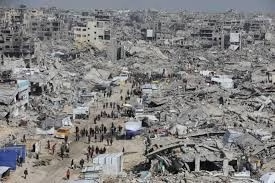
The Gaza Strip currently resembles a minefield, and the most dangerous challenge facing civil defense teams is dealing with these munitions inside targeted buildings.

PALESTINE

Sun 05 Apr 2026 8:58 am - Jerusalem Time

Shock for the family of Jerusalem martyr Wadih Alian: The occupation secretly buries him in 'cemeteries of numbers'

The family of Jerusalem martyr Wadih Alian is experiencing a severe shock after two years of bitter waiting, following their discovery that the occupation authorities had transferred their child's body from detention refrigerators to what is known as 'cemeteries of numbers'. This shocking revelation came through an official response from the Israeli Public Prosecution to a petition submitted by the legal center for the protection of the rights of the Arab minority, 'Adalah', shattering the family's hopes of burying their son in a manner befitting his betrayed childhood.\n\nLegal documents showed that the burial took place on October 29, 2025, based on a decision made a week before implementation without notifying the family or the legal team following the case. The family considered this procedure to be an escalation of psychological torment and a deliberate deprivation of the right to a final farewell and to close the circle of grief that began since Wadih's cold-blooded execution.\n\nChild Wadih Alian, 14 years old, was martyred on February 5, 2024, by occupation forces' bullets near the entrance to the town of Al-Eizariya, east of occupied Jerusalem. The occupation authorities claimed at the time that he was attempting a stabbing operation, a pretext used by the occupation to justify field killings and the detention of bodies for long periods.\n\nShadi Alian, the martyr's father, expressed his astonishment at the Public Prosecution's response, which he described as unexpected, especially since the family had hoped for the release of the body as part of recent exchange deals. The father affirmed that depriving the family of burying their child according to Islamic Sharia represents a blatant violation of the most basic human and religious rights guaranteed by international laws.\n\nAlian stressed that the family will not stop demanding the return of Wadih's body, no matter how long the detention in the cemeteries of numbers lasts, emphasizing that the goal is to achieve justice by burying him in the known family cemeteries. He described the waiting state as a bitter wish, where the dream of the Palestinian father is merely to receive the body of his beloved child to bury him with dignity.\n\nIn an interview with media sources, the father recalled the features of his child who dreamed of becoming a professional football player, noting that Wadih had a strong personality and a distinguished presence among his schoolmates. He added that Wadih's spontaneous smile still fills the corners of the house, despite the heavy absence imposed by the occupation on the family since the moment of his martyrdom.\n\nFor her part, lawyer Suhad Bishara from 'Adalah' center explained that the Public Prosecution's response confirmed the burial of the body in cemeteries designated for detainees, despite continuous correspondence demanding clarifications about his fate. Bishara indicated that the center has initiated new legal procedures to demand the release of the body from the cemeteries of numbers and to schedule an urgent hearing before the Supreme Court.\n\nBishara affirmed that what child Wadih experienced is not an exceptional case, but rather falls within a general policy adopted by the occupation army to bury the bodies of detained martyrs without informing their families. She considered this behavior a clear violation of established procedures and the rights of families to make legal decisions before any unilateral burial operation is carried out.\n\nIn a related context, Hussein Shuja'iya, coordinator of the National Campaign for the Recovery of Martyrs' Bodies, considered the transfer of martyrs from refrigerators to cemeteries of numbers to be a deterrent tool and collective punishment practiced against Palestinians. He described this policy as a 'sadistic' practice aimed at controlling the Palestinian individual even after death, and using bodies as bargaining chips in political negotiations.\n\nThe latest data from the National Campaign indicates that the number of documented detained bodies has reached 785, including 78 children under the age of eighteen. The list also includes 98 martyrs from the prisoner movement and 10 female martyrs, reflecting the magnitude of the tragedy experienced by hundreds of Palestinian families deprived of burying their children.\n\nJerusalem stands out in particular in this file, where the occupation authorities detain 52 bodies of Jerusalemite martyrs, the oldest of whom is martyr Jasser Shtat, detained since 1968. Children Khaled Al-Za'anin and Wadih Alian, both fourteen years old, are the youngest Jerusalemite martyrs whose bodies the authorities refuse to hand over to their families.\n\nThese Israeli practices explicitly violate the Fourth Geneva Convention relative to the Protection of Civilian Persons in Time of War, specifically the two articles related to the detention of bodies. Article 130 stipulates the necessity of burying the deceased with respect and according to the rites of their religion, and that their graves must be maintained in a way that allows them to be identified at all times.\n\nInternational laws also oblige the detaining state to provide lists showing the locations of graves and details of the identities of the deceased as soon as hostilities cease or conditions improve. However, the occupation continues to disregard these norms by using 'cemeteries of numbers' which lack the minimum standards of human dignity and hide the identities of martyrs behind silent metal numbers.\n\nWadih Alian's story remains a testament to the ongoing suffering experienced by Jerusalemites, where the occupation pursues them in their lives and deaths, attempting to obliterate their identity and break their will by detaining bodies. The family continues its legal and humanitarian battle, driven by a simple hope that their child will find a peaceful place under the soil of his city that he loved and dreamed of a future that was not completed.\n\n"We have the right to bid farewell to our child and kiss him goodbye, and for him to have a known grave that we can visit when we miss him, not to be buried in unknown cemeteries of numbers.

ARAB AND WORLD

Sun 05 Apr 2026 8:57 am - Jerusalem Time

Pressures of Iran War Drive Trump to Consider Extensive Cabinet Reshuffle in White House

Well-informed sources from within the White House revealed that US President Donald Trump is currently considering an extensive cabinet reshuffle, including sovereign portfolios, amid growing frustration over the political and economic repercussions of the ongoing war on Iran. These moves come after the dismissal of Attorney General Pam Bondi last week, reflecting the administration's desire to reset its political course before the anticipated midterm elections next November.

Sources reported that the war, now in its fifth week, has led to a significant jump in fuel prices and a noticeable decline in President Trump's popularity, which has caused deep concern within the Republican Party. Observers believe that any potential reshuffle would be an attempt to absorb public anger and demonstrate control over the escalating situation due to the military conflict that began in late February.

Reports indicate that the list of officials threatened with dismissal includes prominent names, most notably Director of National Intelligence Tulsi Gabbard and Secretary of Commerce Howard Lutnick. Trump has expressed dissatisfaction with Gabbard's performance in recent months, and has already begun sounding out allies about potential replacements to lead US intelligence agencies at this sensitive stage.

In contrast, Secretary of Commerce Howard Lutnick faces increasing pressure from senior Trump allies for his dismissal, not only because of his trade policies but also due to the emergence of new details about his past relationships. Recent documents have revealed meetings between Lutnick and the late businessman Jeffrey Epstein on his private island in 2012, which has put him under renewed political scrutiny despite his denial of the depth of that relationship.

Despite these leaks, White House spokesman Davis Engel affirmed that the President still places his full trust in Gabbard and Lutnick, praising their achievements in international and trade matters. Engel considered the current administration to be the most talented and influential, highlighting Gabbard's role in foreign affairs and Lutnick's role in securing major investment deals for the American people.

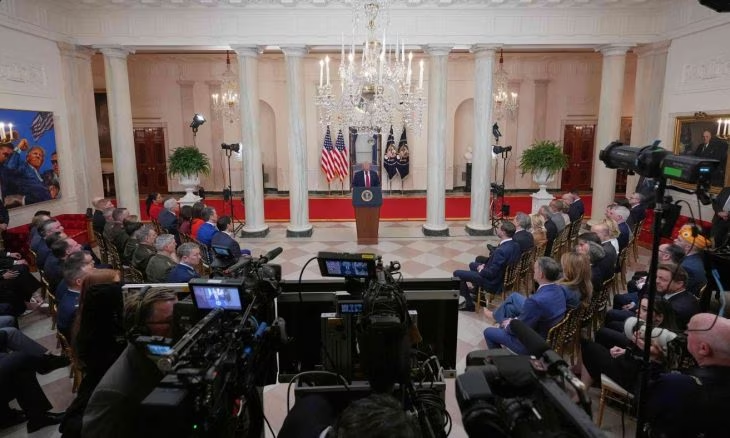
However, there is a feeling within the administration that Trump's recent address to the nation did not achieve its desired goals in calming public fears. A senior official described the speech as disappointing, as it failed to provide a clear vision for ending the war or addressing the economic crises directly affecting American citizens, especially concerning energy prices.

Recent polls showed a sharp decline in approval of Trump's performance, reaching only 36%, the lowest since he took office in the current term. The poll also revealed that 60% of Americans oppose direct military intervention against Iran, putting the White House in direct confrontation with public opinion that rejects the continuation of armed conflict and its exorbitant costs.

Sources indicate that Trump is extremely angry about what he describes as biased and unfair media coverage regarding the course of the war in the Middle East. Despite his desire to see more positive news reports, he has not yet shown any intention to change his media or military strategy, content with seeking changes in the political faces around him.

Some advisors believe that hesitation in carrying out cabinet reshuffles may carry political risks equivalent to the risks of change itself, especially since voters are more influenced by tangible results on the ground than by ideological messages. Officials confirm that the direct impact of fuel prices on people's daily lives has become the primary driver of public discontent that threatens the future of Republicans in the upcoming elections.

Tulsi Gabbard had previously angered the White House by criticizing foreign military interventions, which created a trust gap between her and the more hawkish wing of the administration. Despite her ability to hold her position for a period, current leaks suggest that her patience and the President's patience have reached a dead end amid the complexities of the current war.

As for the Department of Commerce, Lutnick has faced criticism since last year for imposing widespread tariffs that confused international allies and sparked widespread economic debate. Those calling for his departure believe that the time has come to inject new blood capable of dealing with the economic challenges resulting from sanctions and trade wars associated with the conflict with Iran.

Senior officials believe that Trump prefers to make these major changes now rather than waiting until closer to the elections, to avoid the administration appearing in a state of chaos later. Bondi's dismissal is seen as the beginning of a series of decisions aimed at reorganizing the internal house to confront what is described as the toughest political challenge Trump has faced since his election.

In the absence of a clear plan to end the conflict that began on February 28, the prevailing public impression remains that the war may be prolonged without a specific timeframe. The President's statement that economic hardship would be short-lived increased uncertainty, especially with all blame being placed on Tehran without offering practical solutions to alleviate the cost of living pressures on voters.

In conclusion, sources confirm that Bondi will not be the last on the list of departures, and that the coming days may see official announcements of changes in other high-level positions. The question remains in Washington whether these personnel changes will be followed by policy changes, or if they are merely an attempt to improve the administration's public image in the face of its sharp decline in popularity.

Making changes to show movement isn't a bad thing, is it?

PALESTINE

Sun 05 Apr 2026 8:57 am - Jerusalem Time

Protests in Germany against 'Volkswagen's' move to produce military equipment for Israel

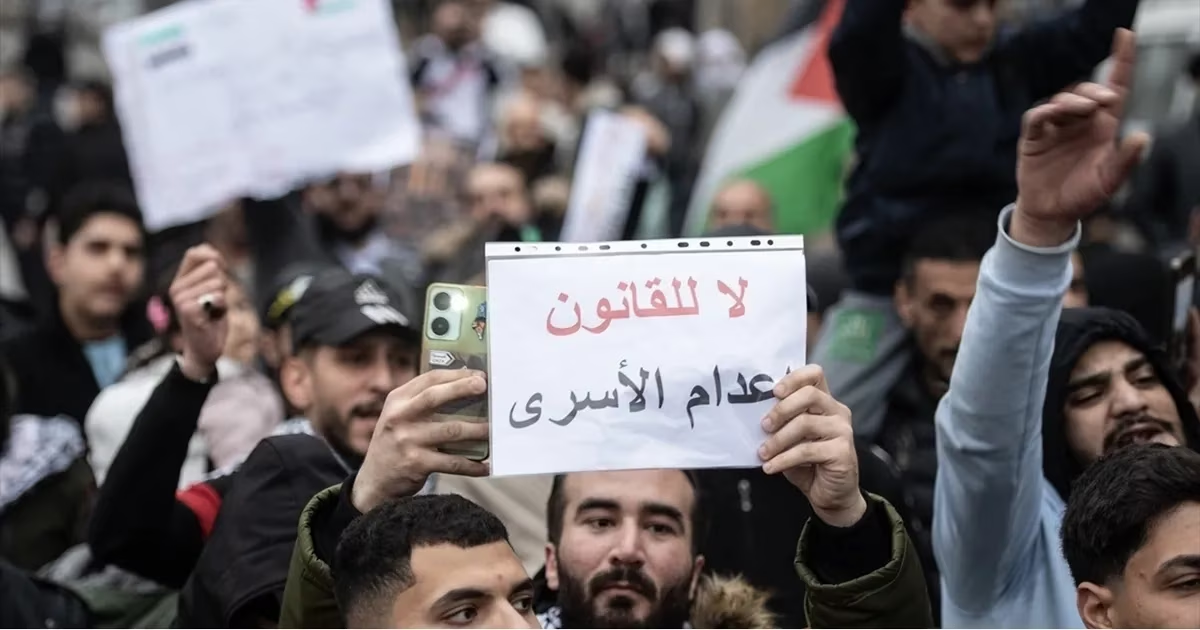
Hundreds of protesters in the city of Osnabrück, located in northwestern Germany, marched in an angry demonstration to express their categorical rejection of the giant 'Volkswagen' company's shift towards military manufacturing. These popular movements came after reports revealed the German company's intention to allocate part of its production lines in the city to manufacture military equipment specifically for the Israeli army, which sparked a wave of discontent in human rights and labor circles.

The event was organized by the 'Osnabrück Peace Initiative' in the city's theater square, where demonstrators gathered under a broad slogan calling for the rejection of wars and the achievement of global peace. Palestinian flags were raised during the demonstration to express solidarity with the Palestinian people, amidst the ongoing military operations and aggression launched by the occupation authorities, with chants condemning the transformation of German civilian industries into a tool to strengthen the Israeli military arsenal.

Participants in the march demanded the necessity of protecting workers' rights and securing their job future at the 'Volkswagen' factory by promoting sustainable civilian production, instead of resorting to arms deals. Protesters stressed that their city should remain a symbol of peace, expressing their fear that involvement in defense industries would link the region's economy to armed conflicts and foreign wars.

The demonstrators' demands extended to German defense policies in general, as they called on the government in Berlin to take a firm stance by preventing the use of the 'Ramstein' air base in any international military operations. This base is one of the largest facilities belonging to the US Air Force in Europe, and protesters believe that the continuation of its military activity contributes to fueling regional and international conflicts.

Demonstrators expressed their strong opposition to plans to expand a NATO fuel depot in the nearby town of Bramsche, considering these steps to reinforce the militarization of the region. Protesters marched through the streets of the city center to convey their message to public opinion, emphasizing that the pursuit of profit through arms trade cannot be an acceptable moral or economic justification.

These protests come against the backdrop of statements made by Oliver Blume, CEO of the 'Volkswagen' Group, in which he revealed advanced talks to transform the Osnabrück factory into a center for the production of defense components. Blume indicated that the company is seriously considering manufacturing vital parts related to air defense systems, including the 'Iron Dome' system used by Israel in its military operations.

International press reports stated that 'Volkswagen' has entered into negotiations with the Israeli defense industries company 'Rafael' with the aim of building a long-term strategic partnership. These talks include the possibility of producing missile launchers and transport vehicles for defense systems within German territory, which the company considers a way to preserve about 2,300 threatened jobs at the factory.

This project, supported by the German government, faces widespread criticism, as it comes at a sensitive time witnessing a significant military escalation in the Middle East. Observers believe that the involvement of major German industrial companies in supporting Israeli military capabilities puts Berlin in direct confrontation with legal and ethical obligations related to human rights and preventing the export of weapons to conflict zones.

Osnabrück must remain a city of peace, and we demand guaranteed job opportunities through civilian production instead of engaging in the manufacture of weapons and military equipment.

ARAB AND WORLD

Sun 05 Apr 2026 8:57 am - Jerusalem Time

Sudden Breakthrough Between Washington and Havana: Russian Oil Tankers and Prisoner Release Pave the Way for a Major Settlement

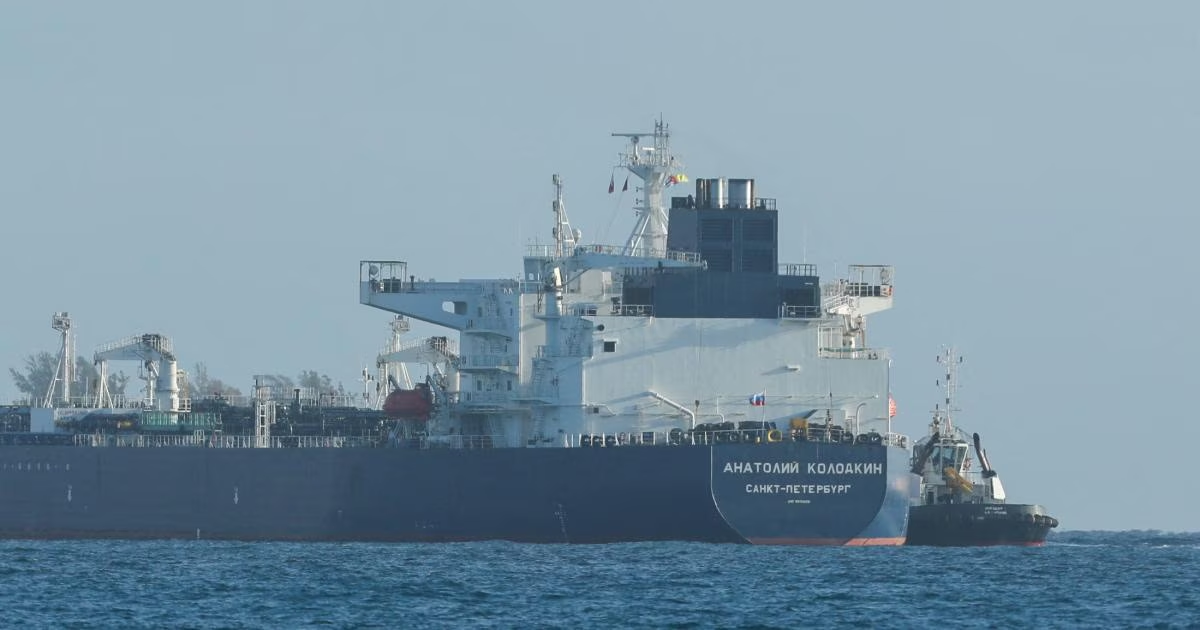
The international arena has witnessed a remarkable shift in the strained relations between the United States and Cuba, as the Russian oil tanker 'Anatoly Kolodkin' docked at the Matanzas oil port. The sanctioned vessel unloaded a massive cargo of 700,000 barrels of crude oil, a move that revealed a surprising retreat in the strict blockade policy.

This development comes after months of firm statements by US President Donald Trump, in which he affirmed preventing any energy supplies from reaching the island. However, the White House's tone has recently changed, with Trump showing unexpected flexibility to journalists, indicating his current non-objection to the passage of oil shipments bound for Havana.

Coinciding with the arrival of oil supplies, the Cuban government took a step it described as 'humanitarian,' releasing 2010 prisoners on the occasion of Easter. International observers believe that this timing is not a mere coincidence, but rather a link in a series of broader understandings taking place behind the scenes between the historical adversaries.

Diplomatic sources reported that these mutual movements reflect the desire of both parties to build bridges of trust to save the ailing Cuban economy. The oil blockade has led to a near-complete paralysis of the tourism sector and the cessation of major international airlines' flights to the island, exacerbating living crises.

Cuba is currently suffering from daily power outages and the closure of most gas stations, which has driven nearly two million people to emigrate over the past five years. Only 9.5 million people remain on the island, facing the most difficult economic conditions in decades, amid government insistence on not touching the political system.

Political analyst William LeoGrande points out that exchanging goodwill gestures is a classic strategy to advance stalled talks. He believes that allowing the Russian tanker to pass in exchange for the release of prisoners represents tangible progress in the de-escalation path sought by international and regional parties.

In a related context, satellites detected movements of another tanker called 'Sea Horse' carrying Russian fuel in the Atlantic Ocean. Instead of heading to Cuba, it changed its course towards Venezuela, in a maneuver interpreted by experts as part of complex economic incentives managed by Washington in the region.

Recently, a new economic class has emerged in Cuba, consisting of more than 10,000 small and medium-sized private companies. These companies, known as 'Mipymes,' have begun to change the face of the local economy and create a new financial elite closely linked to the interests of the influential military establishment.

Raúl Guillermo Rodríguez Castro, the former president's grandson, leads the economic negotiations with the American side. By virtue of his position in the military's economic arm, 'GAESA,' he possesses wide influence that allows him to formulate understandings that ensure the survival of the ruling elite while opening up to foreign investments.

Statements by Sandro Castro, the grandson of the late leader Fidel Castro, sparked widespread controversy after he expressed a clear desire to cooperate with American investors. Sandro, described as a successful businessman, did not hesitate to criticize the performance of the current president, Miguel Díaz-Canel, in an unprecedented move in Cuban political circles.

Havana diplomats believe that Sandro's public criticism of the presidency could be a green light for a new transitional phase. Washington has set the dismissal of Díaz-Canel as one of the unannounced conditions for the continuation of negotiations, which could pave the way for an open economic model under family control.

This path aligns with Trump's vision, which he described as a 'friendly acquisition,' aiming to transform Cuba into an American investment arena while neutralizing political adversaries. This approach resembles what happened in other regional issues, where military confrontation is replaced by soft economic dominance.

Informed sources confirm that the current Cuban elite is reaping huge profits from the limited opening, and is ready to expand this scope to include American companies. The required quid pro quo is to ensure the protection of their commercial and political interests, which Washington seems to be beginning to accept as a practical reality.

While Iran continues to defy American ambitions, Trump is looking for a quick diplomatic victory in the Caribbean to bolster his domestic standing. It appears that the 'oil for prisoners deal' is the first step on a long road that could end with the lifting of the historical blockade on Cuba in exchange for structural changes in the hierarchy of power.

If a country wants to send some oil to Cuba now, I have no objection.

ARAB AND WORLD

Sun 05 Apr 2026 8:57 am - Jerusalem Time

Iranian accusations against Washington of attempting to eliminate its missing pilot to prevent his capture

Informed military sources revealed a tendency within the US military command to carry out bombing operations targeting its missing pilot inside Iranian territory. This step comes after the failure of traditional rescue attempts and the inability to reach the pilot's location, who went missing after his fighter jet was shot down about two days ago in an incident that shook military circles.

The US Army had officially admitted that an 'F-15E' fighter jet crashed over Iranian airspace last Friday. While international reports confirmed the rescue of one crew member, doubts still surround the fate of the second pilot, who has become the focus of an intense intelligence and field struggle between Washington and Tehran.

The sources explained that US forces have already begun launching intensive airstrikes on specific areas in the city of 'Kohgiluyeh' in the province of 'Kohgiluyeh and Boyer-Ahmad'. These raids, according to the Iranian perspective, aim to eliminate the pilot at his potential location to prevent his capture by Iranian forces, which could constitute a major political and military bargaining chip.

Information received indicated that the American side had lost hope of recovering the missing 'flight crew' through commando operations or infiltration. As a result, current military efforts have focused on destroying several geographical points where the pilot is believed to be taking temporary refuge, in a strategy aimed at 'closing the file' permanently, even at a human cost.

Regarding Tehran's official position on the pilot's fate, military sources refused to disclose precise details about whether the pilot had indeed fallen into the hands of the Iranian armed forces. They merely indicated that Washington's narrative does not reflect the full truth, even questioning the details of the first pilot's rescue operation announced by America.

The sources warned that the issue of the pilots could turn into a new 'international scandal' for the United States, especially in light of the secrecy and cover-up policy pursued by the US administration. They considered that resorting to bombing the missing pilot reflects a state of confusion and panic about the political repercussions if he were to be presented to international media.

In a related context, the Khatam al-Anbiya military headquarters announced the entry of new and advanced Iranian air defense systems into field service. The statement affirmed that these systems were the ones that countered recent air incursions, emphasizing the ability of local military industries to neutralize the latest Western air technologies in the country's skies.

The toll announced by the Iranian side included heavy losses for the US Air Force, including the downing of an 'F-35' fighter jet, which is considered the crown jewel of American military industries. The list also included three drones of the 'MQ-9' and 'Hermes' types, in addition to 'Black Hawk' helicopters and an 'A-10' ground support fighter.

Military reports also confirmed that Iranian air defenses successfully intercepted and destroyed two cruise missiles of the winged type, which are difficult to detect by traditional radars. This qualitative development in direct confrontation reflects the escalating tension in the region and the defensive capabilities that Tehran now possesses to confront air threats.

The military headquarters concluded its statement by affirming that Iranian forces are continuing to impose full control over national airspace using entirely locally manufactured technology. It stressed that the unveiling of these systems is taking place successively in real confrontation arenas, sending clear deterrence messages to any future attempts to violate Iranian sovereignty.

The Americans despaired of finding the pilot, which led them to launch raids on areas where he was likely to be, instead of carrying out a traditional rescue operation.

ARAB AND WORLD

Sun 05 Apr 2026 8:57 am - Jerusalem Time

Depletion of US Arsenal: Washington Moves Stealth Missiles from Pacific to Middle East

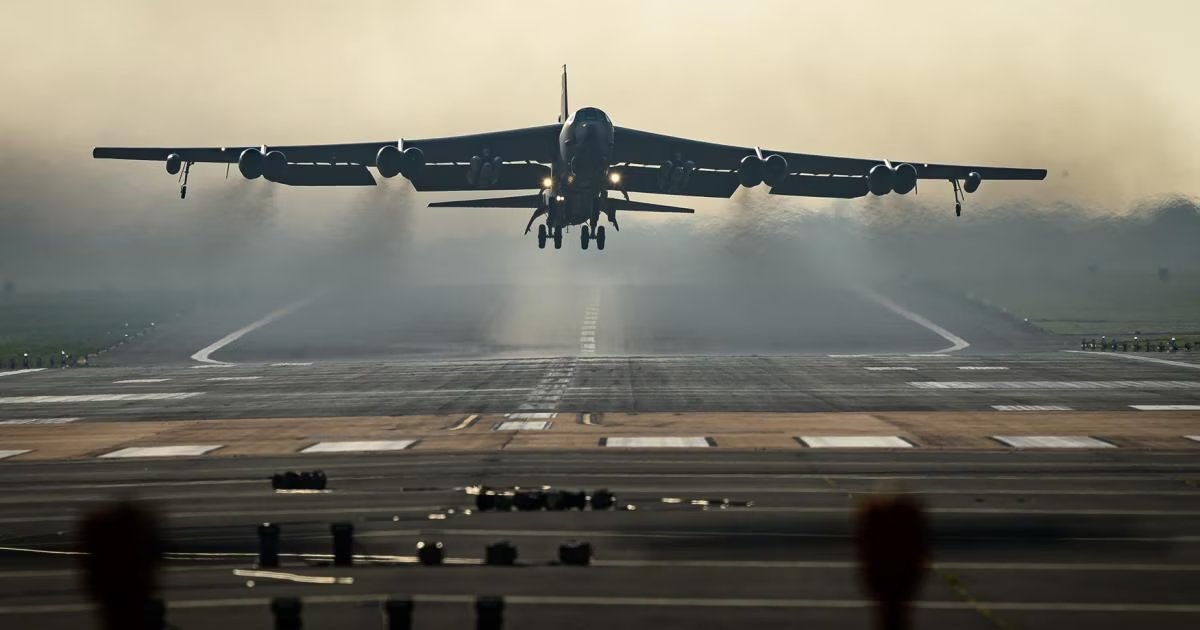
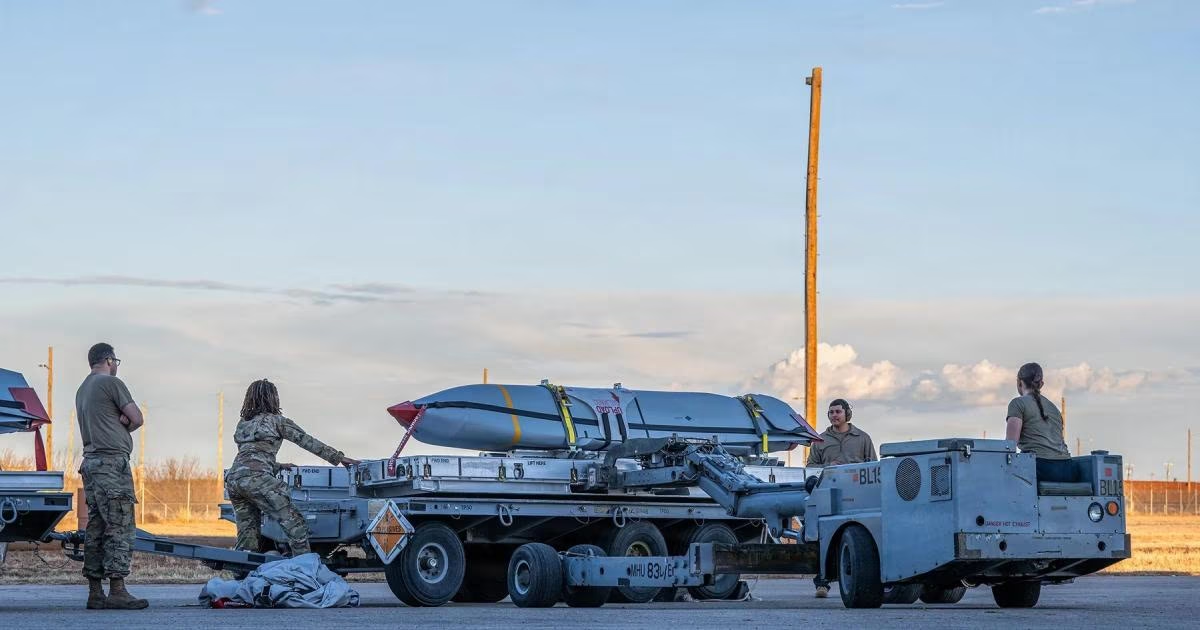
Informed sources reported that the US administration has effectively begun implementing a broad plan to withdraw the bulk of its strategic inventory of extended-range JASSM-ER stealth missiles. This move aims to reallocate these advanced weapons to support ongoing military operations in the Middle East, specifically in the context of the escalating confrontation with Iran.

Leaked information indicates that the transfers included withdrawing missiles from vital depots in the Pacific region, as well as from military sites within US territory. These shipments have been directed to bases belonging to the US Central Command, in addition to reinforcing Fairford Air Base in the United Kingdom to serve as a potential launch point for operations.

The US inventory of these precision missiles faces a real crisis, as statistics show a sharp decline in available numbers since the outbreak of confrontations. Of the 2,300 missiles Washington possessed before the war, only about 425 missiles remain suitable for direct use, while dozens of others have been decommissioned due to technical malfunctions.

Military experts believe that the remaining number of these missiles is barely enough to carry out a single combat mission for a limited number of strategic bombers. This rapid depletion places immense pressure on military planners at the Pentagon, especially with over 1,000 of these missiles consumed in just the first few weeks of operations.

JASSM-ER missiles are characterized by their superior ability to evade radar and hit targets with extreme precision at ranges exceeding 600 miles. This feature allows US aircraft to launch their missile payload from safe distances outside the range of enemy air defenses, reducing direct risks to pilots.

Military analysts believe that the transfer of these strategic capabilities from the Pacific to the Middle East is primarily aimed at strengthening deterrence against Tehran. These missiles are likely to be used to target vital facilities, including power stations, oil installations, and the remaining infrastructure associated with Iran's nuclear program.

Despite American and Israeli claims of success in destroying large parts of Iran's air defense network, serious risks remain. This situation has led Washington to consider using less expensive munitions, such as JDAM guided bombs, to conserve stealth missiles for more fortified and complex targets.

In a related context, US air defense systems such as Patriot and THAAD are facing increasing pressure due to the intensity of Iranian missile fire. Tehran has launched thousands of ballistic and cruise missiles, necessitating the consumption of huge numbers of interceptor missiles that are difficult to replace in a short time at current production rates.

The depletion is not limited to air-launched missiles but also extends to Tomahawk cruise missiles, which are launched from ships and submarines at high intensity. Concerns are emerging about the widening gap between field consumption rates and the production capacity of US military factories, which could affect readiness in other operational theaters.

This strategic shift in missile power distribution reflects the magnitude of the challenges facing the United States in balancing multiple fronts. While its military weight is currently focused on the Middle East, concerns are growing about the erosion of its deterrent capabilities in other sensitive regions, especially amid escalating military competition with major powers like China.

The US inventory of JASSM-ER missiles has seen a significant decline, with only about 425 usable missiles remaining out of 2,300.

PALESTINE

Sun 05 Apr 2026 8:57 am - Jerusalem Time

Israeli Threats to Target Al-Masnaa Border Crossing and Escalation of Clashes in Southern Lebanon

The Israeli occupation army issued an urgent warning to evacuate the Al-Masnaa border crossing area, located on the Lebanese-Syrian border, as a preparatory step for a military strike. The occupation authorities claim that the crossing is used to transport and supply combat means for Hezbollah, considering it the main remaining artery for smuggling after other border axes were targeted earlier.

Al-Masnaa crossing on the Lebanese side, and its counterpart, Jdeidet Yabous crossing on the Syrian side, is the official and most important land passage connecting the capitals Beirut and Damascus. Its strategic importance lies in being a pivotal point for the movement of travelers and cargo trucks, as it is only about 40 kilometers from the Syrian capital and 100 kilometers from the Lebanese capital.

For its part, the Syrian authorities categorically denied the Israeli allegations, affirming that the Jdeidet Yabous crossing is entirely dedicated to civilian and legal purposes. Official sources emphasized the absence of any armed presence or militias in the area, noting that the crossing witnessed a wide movement of displaced Syrian and Lebanese returnees fleeing the shelling since the start of the aggression.

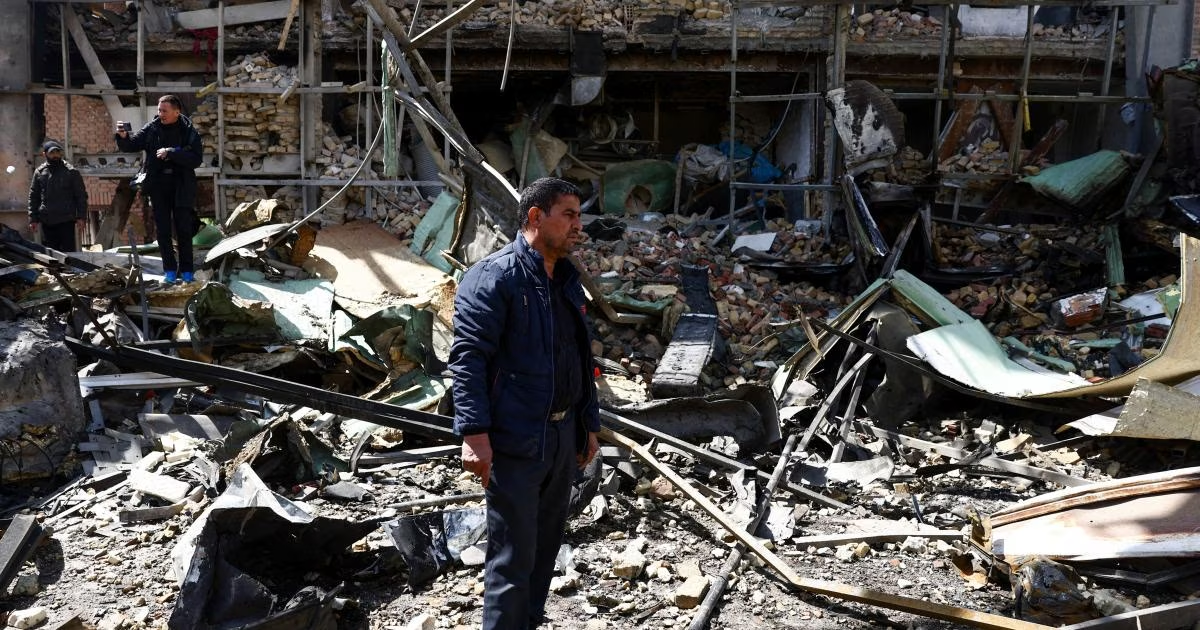
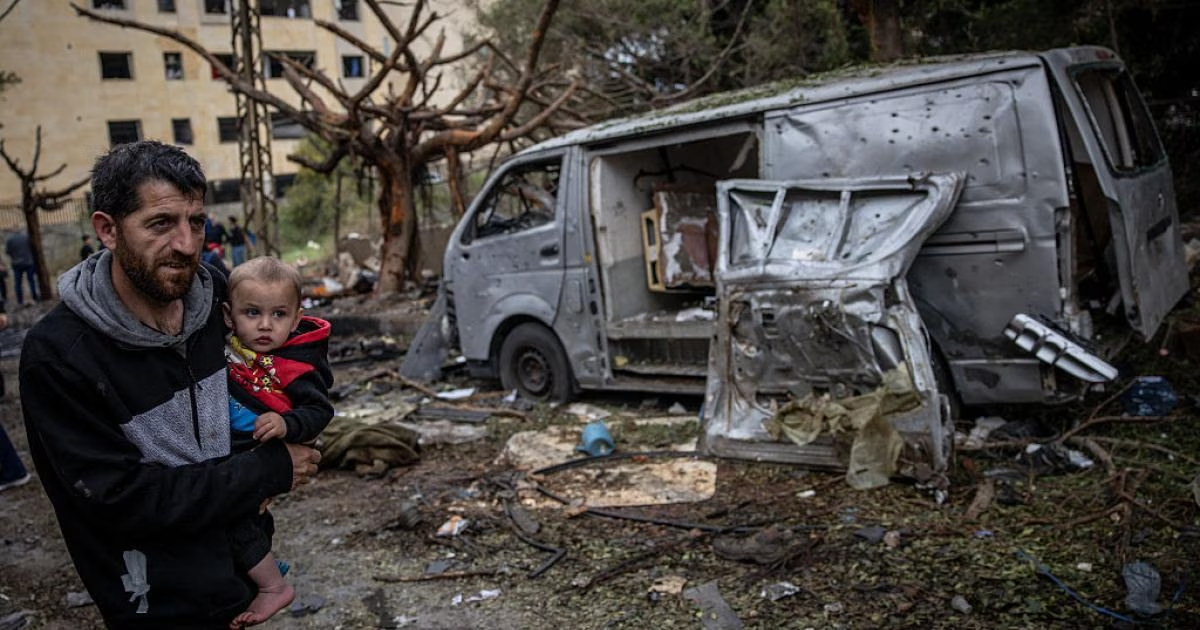
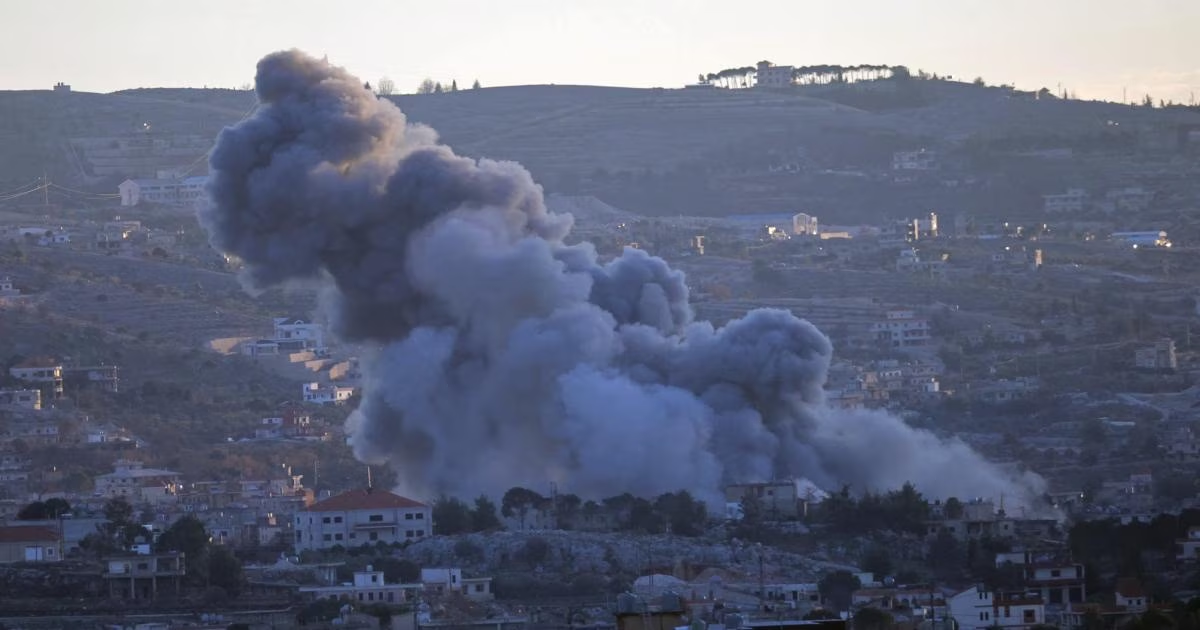
On the ground, medical sources in Lebanon reported the martyrdom of 54 people and the injury of 156 others due to intense Israeli raids in the past twenty-four hours. The aerial attacks focused on towns in western Beqaa and vital bridges in the areas of Machghara and Sahmar, exacerbating the humanitarian crisis and raising the total number of victims to 1422 martyrs.

On the other hand, the occupation army admitted the killing of a sergeant from the 'Maglan' unit and the serious injury of another soldier during the ongoing battles in the town of Shebaa in southern Lebanon. Initial investigations indicated that the soldier was killed by friendly fire during fierce clashes, bringing the number of fatalities among Israeli military personnel to 11 soldiers since the beginning of March.

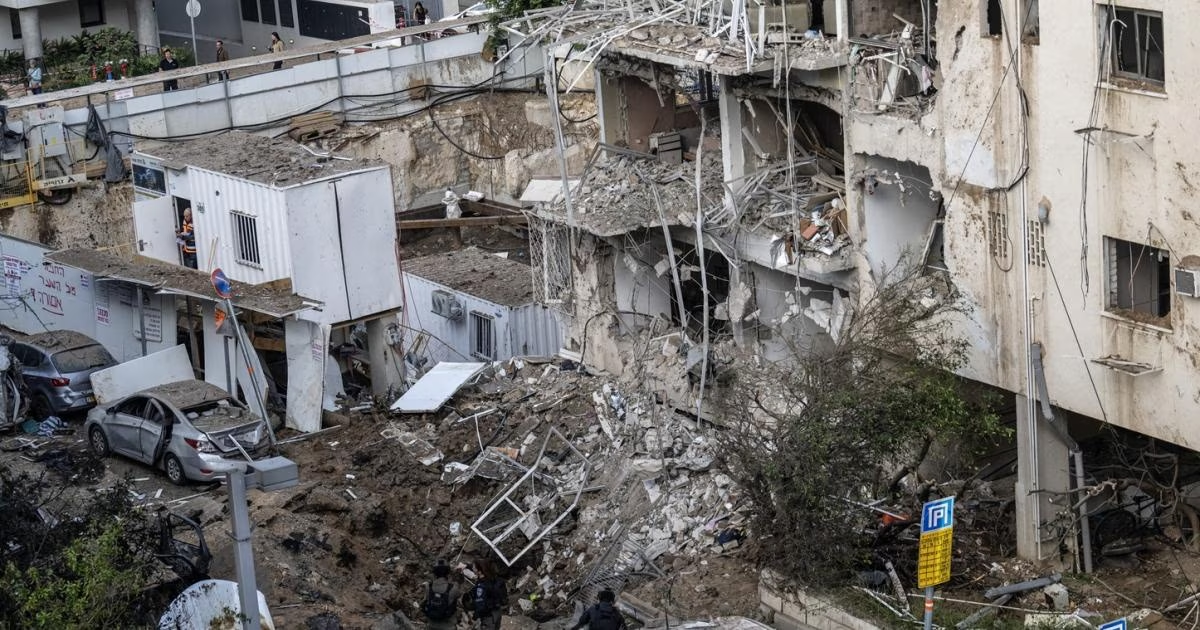
In response, Hezbollah's rocket barrages and drones targeted about 23 settlements and military areas in northern Israel. Sirens sounded in the Galilee and Carmel regions more than 13 times, while material damage was observed in the Kiryat Shmona settlement due to a missile explosion that fell in the area without prior alarm activation.

This escalation comes amid continued aerial bombardment that targeted the Al-Masnaa crossing on previous occasions in October, causing severe damage to the infrastructure of the international road. Observers warn that the complete destruction of the crossing will isolate Lebanon by land from its Arab surroundings, exacerbating the suffering of civilians and hindering the arrival of essential supplies.

The Syrian authorities confirmed that the Jdeidet Yabous crossing is exclusively for civilian passage and is not used for any military purposes or activities outside legal frameworks.

ARAB AND WORLD

Sun 05 Apr 2026 8:57 am - Jerusalem Time

Iran: 30 Universities and World Heritage Sites Targeted in US-Israeli Attacks

Iran's Minister of Science, Hossein Simaei Sarraf, announced that the country's academic institutions have faced a systematic targeting campaign since late February. During an inspection tour of Shahid Beheshti University in Tehran, the minister confirmed that at least 30 universities suffered direct strikes, resulting in severe material losses to educational infrastructure.

Media sources reported that Shahid Beheshti University, one of the most prominent academic institutions in the capital, was subjected to an attack that caused widespread destruction to its facilities. These statements come amid escalating military tensions that have affected scientific research centers and higher education institutions in various Iranian provinces in recent weeks.

For his part, the Secretary-General of the Iranian National Commission for UNESCO, Hassan Fartousi, revealed shocking figures regarding the extent of the targeting. Fartousi explained that the attacks affected approximately 160 points within university campuses across the country, noting that the destruction was not limited to administrative buildings but included entire faculties leveled to the ground.

The UNESCO official stressed that the bombing targeted specialized scientific laboratories involved in pharmaceutical manufacturing, reflecting a desire to sabotage scientific and educational capabilities. He issued an urgent appeal to the international community, scientists, and intellectuals to pay attention to what he described as a war targeting the mind and cultural infrastructure that serves humanity.

In a related context, official reports indicated that the aggression did not stop at educational institutions but extended to include global human heritage. More than 132 archaeological and historical sites were targeted, some of which are listed on UNESCO's World Heritage lists, threatening centuries of history in the region.

Among the most prominent affected landmarks is the historic Golestan Palace in Tehran, built more than two centuries ago and representing an important era of Iranian history. Strikes also hit sites in the city of Isfahan dating back to the Timurid era 600 years ago, where more than 23 cultural and archaeological buildings were damaged as a result of bombing near these sensitive areas.

The aerial targeting map included sites near the famous 'Falak al-Aflak' castle in Lorestan province, as well as tourist and heritage facilities in Kermanshah and Ahvaz. Authorities also recorded damage to the historic 'Siraf' port in Bushehr province, which observers considered a targeting of the historical and cultural identity of the region in general.

Fartousi strongly criticized the disregard for international laws that mandate military operations to maintain sufficient distances from protected archaeological sites. He affirmed that some airstrikes occurred at a distance of no more than 100 meters from invaluable historical landmarks, which constitutes a blatant violation of international agreements concerned with the protection of cultural heritage during conflicts.

The Iranian official concluded his statements by warning that the targeting of universities and historical sites in Iran represents a dangerous precedent that could extend to other regions of the world. He called on international academic and cultural institutions to take a firm stance against the destruction of facilities that represent the memory of peoples and the future of their scientific generations.

Universities and colleges do not have immunity, and human cultural heritage is now directly targeted in this war.

OPINIONS

Sun 05 Apr 2026 8:51 am - Jerusalem Time

The Petrodollar Order: Power, Oil, and the Architecture of American Dominance


By: Said Arikat

April 5, 2026

News Analysis

Washington, D.C- In the mid-1970s, as the global economic order was being rewritten after the collapse of the Bretton Woods system, a consequential arrangement took shape—one that would anchor American financial dominance for decades. Today, it is known as the “petrodollar system.” Critics, including journalist Chris Hedges, have called it a “gangster deal,” a phrase that, while provocative, captures the fusion of power, money, and coercion at its core.

In the spring of 1977, shortly after leaving office as U.S. Secretary of State, Henry Kissinger reflected on the shifting global landscape. He outlined the strategic logic that would define the petrodollar era, even if he did not use the term explicitly: in a world no longer anchored to gold, control over energy flows—and the currency used to price them—would shape geopolitical power.

This system did not emerge in a vacuum. For much of the mid-20th century, global oil was dominated by seven major companies—five American and two British—known as the “Seven Sisters.” These corporations controlled oil exploration, production, and export across the Gulf. Their dominance was intertwined with a regional political order shaped largely by British imperial influence. With the exception of Saudi Arabia, most Gulf monarchies were structured under British oversight. As Britain’s role declined after World War II, the United States assumed the position of principal external protector, ensuring stability and continued access to energy.

By the early 1970s, this order began to shift. Oil-producing states asserted greater sovereignty, and the 1973 oil embargo demonstrated their leverage. At the same time, the United States faced a structural challenge. In 1971, it ended the convertibility of the dollar into gold, dismantling the “Bretton Woods” system and raising a crucial question: what would sustain global demand for the dollar?

The answer came through a strategic alignment with key oil producers, particularly Saudi Arabia. The United States offered military protection, arms sales, and political backing. In return, oil would be priced in U.S. dollars, and surplus revenues would be reinvested into American financial markets.

This marked a transformation rather than a rupture. Direct corporate control by the Seven Sisters gave way to a state-centered system in which oil-producing countries formally controlled their resources but remained embedded in a global framework anchored in U.S. power. The underlying alignment endured: Gulf oil remained closely tied to Western—now primarily American—strategic interests.

The system created a powerful cycle. Because oil is indispensable, countries needed dollars to purchase it. Oil exporters accumulated large dollar reserves and reinvested them in U.S. Treasury bonds and financial markets. The dollars spent on oil flowed back into the United States, effectively financing its deficits.

Kissinger’s analysis made clear that this architecture was deliberate. Energy, finance, and security were fused into a single framework. By placing the dollar at the center of global energy trade, the United States secured a form of economic leverage without historical precedent.

This “petrodollar recycling” allowed the United States to sustain high levels of consumption and borrowing. Dollars circulated globally only to return as investment, reinforcing American financial dominance.

Yet the system also rested on unequal relationships. Gulf monarchies depended on U.S. protection, and their economic policies aligned closely with American interests. While these arrangements brought wealth and stability, they also constrained autonomy.

If the system aligned global energy with American financial power, its persistence has often depended on confronting those who attempt to step outside it. From the Middle East to Latin America, tensions have emerged when oil-rich states seek greater independence.

After April 9, 2003, when Baghdad fell, Iraq’s oil sector came under the authority of the U.S.-led occupation. While formally held for the Iraqi state, the restructuring of the industry and direction of energy policy were shaped under American oversight, placing vast reserves within Washington’s sphere of influence during that period.

A similar pattern followed in Libya after the 2011 NATO intervention and the fall of and assassination of Muammar Qaddafi. As the Libyan state fractured, European and Western energy firms reasserted their presence. Though no single power controlled Libya outright, influence over its oil sector shifted decisively outward.

In countries such as Venezuela and Iran, disputes over sovereignty, sanctions, and control of energy resources continue to reflect the entanglement of oil and geopolitics. U.S. policy is framed in terms of security and stability, yet the overlap with energy interests raises enduring questions.

This is where Chris Hedges’ critique resonates. To call the system a “gangster deal” is to highlight an imbalance sustained not by formal treaty, but by incentives, pressure, and the backing of military power. There is no single agreement mandating dollar-based oil trade; rather, it persists through a convergence of interests shaped by power.

At the same time, oil-producing states were not merely passive actors. They negotiated, adapted, and derived substantial benefits from the system, channeling petrodollars back into Western economies in ways that generated returns, stability, and deeper integration into global finance. Yet this arrangement came with a strategic trade-off: particularly in the case of GCC states, elements of sovereign autonomy were effectively ceded in exchange for security guarantees and the protection afforded by the United States. The relationship was thus asymmetric, but ultimately mutually reinforcing.

The consequences have been profound. The petrodollar system entrenched the dollar as the world’s reserve currency and tied global stability to energy flows. It also deepened the strategic importance of the Gulf, contributing to decades of geopolitical tension.

Today, the system shows signs of strain. Emerging powers are exploring alternatives to dollar-based trade, and shifts in global energy are reshaping markets. Yet the architecture outlined in 1977 remains resilient.

The petrodollar order was not accidental. It was built through strategy, rooted in an earlier era of corporate dominance, and sustained by geopolitical power. Whether viewed as stability or dominance, it underscores a fundamental truth: economic systems are constructed through power—and endure through it.

OPINIONS

Sun 05 Apr 2026 12:59 am - Jerusalem Time

Trump's Threats and the Escalating Crisis with Iran

Said Erikat

Opinion Writer

Washington – Said Arikat - 4/4/2026

News Analysis

US President Donald Trump reminded Iran on Saturday that it had only 48 hours to reach a deal or open the strategic Strait of Hormuz, warning that it would face “hell” if it did not comply, in a new escalation of the crisis that has lasted over a month. Trump confirmed via the Truth Social platform that the previous deadline he announced — ten days ending on April 6 — had not resulted in any agreement, warning of striking Iranian energy infrastructure if the closure continued. This comes amid escalating military actions between the United States and Iran, where American planes were shot down over Iranian airspace, resulting in the loss of one pilot, with urgent search and rescue operations underway, indicating a serious escalation on the ground.

In a speech to the nation on April 1, 2026, Trump tried to reassure Americans that military operations were “close to completion” and that his country would continue strikes “severely in the coming weeks,” but he did not provide any timeline for ending the conflict or a clear diplomatic plan. This speech, which adopted a language of force and threat, faced a real field test after the downing of American planes, revealing a gap between Trump's statements of complete control and the reality on the ground, and confirming the limited American ability to impose quick results without direct tactical confrontation with Iran.

Trump's previous threats began on April 27, when he announced an initial five-day deadline to force Iran to open the Strait of Hormuz, as part of a maximum pressure strategy on Tehran to prevent disruption of global oil supplies. During these days, Trump reiterated his threats to strike energy infrastructure, but sometimes backed down or extended deadlines, giving a contradictory impression of the stability of American policy. The extended deadline until April 6 did not lead to any tangible results, while Trump's statements and fluctuations affected global markets, with oil prices rising sharply due to a lack of confidence in the continued stability of supplies, reflecting the economic dimensions of the US administration's actions.

The critical analysis of Trump's behavior reveals three main dimensions: First, the contradiction of political messages. While he escalates his rhetoric publicly, he sometimes tries to show diplomatic flexibility, which weakens credibility among allies and gives Iran an opportunity to exploit political vacillation. Second, clear economic repercussions on global markets, where volatile statements lead to sharp jumps in oil prices and economic fluctuations that extend beyond American borders, reflecting the absence of strategic planning beyond media rhetoric. Third, the reflection of the field reality on political discourse, as the downing of American planes and the loss of the pilot revealed a gap between the rhetoric of power and the control of American forces on the ground, raising serious questions about the feasibility of continuous escalation without a real strategy to end the war.

The analysis shows that Trump relies in managing the crisis on a mixture of military threat and media display of control, while the field results remain complex and undecided. Repeated statements about “complete control” and “the success of military operations soon” contradict the real events that witnessed direct American losses, which highlights the weak coordination between political discourse and field operations. This gap between reality and rhetoric increases international tension and places allies before the choice of carefully evaluating American credibility.

Strategically, Trump's escalation shows that the US administration faces difficulty in combining military and diplomatic pressure to achieve clear goals on the ground. The policy of deadlines and repeated threats has shown limited direct impact on Iran, as these tactics have not led to any tangible response from Tehran, which weakens the American vision for resolving the crisis. At the same time, the economic repercussions on energy markets reflect that the war is not just a military confrontation, but has global strategic dimensions that affect the economy and international politics.

In short, Trump's management of the crisis reveals a mixture of political confusion, media threats, and direct field challenges. While he seeks to show strength and control over Iran, real events prove that escalation without a clear plan to end the war leads to unexpected results and increases international risks. The analysis indicates that continuing such an approach could lead to greater escalation and increase political and economic uncertainty, placing the United States and its allies before complex strategic dilemmas, while Iran remains able to exploit any fluctuation in Trump's positions to achieve field and diplomatic gains.

PALESTINE

Sat 04 Apr 2026 9:57 am - Jerusalem Time

John Cusack.. The Rebellious Star Who Confronts 'War Criminals' and Triumphs for Gaza

For over four decades, American star John Cusack has not only left a rich cinematic mark with over eighty films, but has also forged a solid political identity that has made him one of the most prominent global figures against wars. Cusack, who was born into an artistic and activist environment in Illinois in 1966, transformed from a teenage star in the 1980s into a fierce critic of imperialist policies, using his digital platforms to expose what he describes as the 'open massacre' in the Gaza Strip.

Cusack's positions are characterized by complete clarity without equivocation, as he launches an relentless attack on current Hollywood practices, describing it as a 'brothel' where people lose their minds. His criticism does not stop at art, but extends to American government affairs, where he believes that successive administrations, whether Democratic or Republican, are directly involved in funding and enabling war crimes around the world.

Following the Israeli aggression on Gaza in October 2023, Cusack's account on the 'X' platform turned into a daily battleground, where he demanded an immediate ceasefire and strongly criticized President Joe Biden's support for the occupation. The global star did not hesitate to describe what was happening as genocide, emphasizing that Palestinian blood is no less valuable than any other blood, which exposed him to fierce attacks from pro-Israel lobbies.

Cusack's history with the Palestinian cause is not new; in 2014, he reposted materials supporting Gaza during military operations at the time, and in 2018, he signed a letter supporting the Boycott, Divestment, and Sanctions (BDS) movement. He also joined global voices calling on artists to cancel their performances in the occupied territories, considering that art cannot be separated from ethics and fundamental human values.

Reactions from the Zionist lobby were not delayed, as the 'Stop Antisemitism' group included Cusack's name on its 2024 list, which the actor mocked, calling them 'crazy.' Cusack affirmed that attempts to intimidate him by destroying his professional future would be futile, stressing that humanity and standing against injustice are far more important than the glitter of fame or material gains.

Cusack spares no American president from his critical arrows; he described Donald Trump as a 'hateful Nazi' and a criminal who should be behind bars, and previously criticized Barack Obama for his drone policy. Cusack believes that the American political system has become governed by what he calls 'imperial madness,' where consciences and political decisions are bought to serve external agendas.

In recent and controversial statements, Cusack indicated that the aggressive policies of the United States and Israel in the Middle East might push countries like Iran to seek nuclear deterrence. He considered that Benjamin Netanyahu's government, whom he described as 'one of the most evil men of the century,' has succeeded in controlling American decision-making and funding the genocidal war with American taxpayers' money.

Cusack's field activism was clearly evident during the 'George Floyd' protests in Chicago in 2020, where he personally documented police assaults and was personally beaten and pepper-sprayed. These experiences reinforced his conviction that the security and political system needs a comprehensive revolution, which explains his joining the Democratic Socialists of America organization and his support for Bernie Sanders.

Professionally, Cusack admitted in press interviews that funding for his cinematic projects has declined in recent years, attributing it perhaps to his age or his 'cold' political stances towards the established system. However, he regained some of his luster in 2025 through his participation in huge international productions such as the Chinese film 'Detective Chinatown 1900,' away from the constraints of traditional American studios.

Cusack has close ties with human rights figures and whistleblowers, such as Edward Snowden, whom he met in Moscow in 2015 alongside novelist Arundhati Roy. This meeting, which culminated in a joint book, reflects Cusack's deep interest in issues of mass surveillance, civil liberties, and the authorities' attacks on the press and truth defenders.

In his latest confrontation with Elon Musk, Cusack criticized the American billionaire's role in the new Trump administration, describing him as 'insane and a monster.' Cusack believes that the alliance of savage capital with extremist political power represents an existential threat to democracy and the rights of oppressed peoples everywhere, especially in Palestine.

John Cusack remains a model of the engaged intellectual who refuses the role of a 'spectator' to the tragedies of the era, as he continues to use his 'X' account as a vigilant tiger to respond to every human rights violation. For him, silence in the face of genocide is participation in it, and therefore he always chooses the difficult path in confronting the Zionist and Western propaganda machine.

Cusack's artistic family, starting from his director father Richard to his sisters Ann and Joan, shaped the cultural and political consciousness of this star who left New York University early to make his own history. This history, in which art is intertwined with politics, proves that true stardom is measured by moral stances in pivotal historical moments, not just by the number of awards.

In conclusion, Cusack represents a rare voice in Hollywood that dares to call things by their names, describing Israel as a state of 'war criminals' and the United States as its partner in crime. Despite all the pressures, the American star insists that 'all human lives are equal,' which is the principle from which he launches all his political and humanitarian battles against the forces of colonialism and injustice.

Genocide cannot be justified, it must be stopped immediately, and all human lives have the same value.

ARAB AND WORLD

Sat 04 Apr 2026 9:56 am - Jerusalem Time

Martyrs and wounded in a wide Israeli aggression targeting a hospital and infrastructure in Lebanon

Wide areas in southern Lebanon, the Bekaa, and the southern suburbs of Beirut have witnessed intense Israeli military escalation since dawn on Saturday, as warplanes launched a series of intensive airstrikes. These attacks resulted in dozens of casualties among civilians and ambulance crews, amidst widespread destruction affecting vital facilities and residential buildings.

Lebanon's Ministry of Health announced that at least 32 people were injured, including three paramedics belonging to the Civil Defense, as a result of strikes targeting the Hosh area in the city of Tyre. Medical sources indicated that the shelling caused direct damage to the facilities of the Lebanese-Italian Hospital, but the hospital remained operational and continued to receive the wounded.

In another field development, at least two people were martyred in an airstrike that targeted a motorcycle on the Qadmus road north of Tyre, coinciding with intense shelling that hit the town of Ma'raka. These attacks come as part of the occupation's expansion of its targeting circle deep into Lebanese territory, leading to a worsening of humanitarian conditions in the southern regions.

As for the Western Bekaa region, the occupation forces committed a massacre in the town of Sahmar, where an airstrike targeted the vicinity of a mosque as worshipers were leaving, leading to the martyrdom of two and the injury of 15 others. The town center was also shelled twice in a row, causing panic and widespread destruction to public and private property.

The occupation army deliberately destroyed infrastructure in the Bekaa, as warplanes bombed a vital bridge connecting the towns of Sahmar and Mashghara, completely cutting it off and isolating the areas from each other. A second bridge in the same area was also shelled, in a clear move aimed at paralyzing movement and preventing the arrival of supplies and reinforcements.

In the capital Beirut, violent explosions rocked the southern suburbs at dawn today, with columns of smoke seen rising from the targeted sites that the occupation claimed were Hezbollah infrastructure. This aerial bombardment coincided with ongoing attempts of ground incursions by the Israeli army in several border axes in the south of the country.

Regarding international forces, the 'UNIFIL' mission announced that three of its soldiers were injured, two of whom were described as serious, following an explosion of an undetermined nature inside one of its military bases. This incident comes amidst increasing tensions and risks surrounding the work of international forces deployed in military operations areas in southern Lebanon.

For its part, the Israeli army claimed to have destroyed more than 3,500 military targets in Lebanese territory during the last month, confirming the continuation of its ground and air operations. In contrast, Hezbollah announced the execution of 1,309 various military operations, half of which targeted sites, barracks, and settlements deep inside Israeli territory in response to the ongoing aggression.

In the context of political threats, Israeli Security Minister Yisrael Katz vowed to continue military operations and make the other side pay a heavy price, stressing that military pressure will continue. These statements coincide with warnings issued by the US Embassy in Beirut regarding the possibilities of targeting educational institutions and universities in Lebanon.

Official statistics issued by the Lebanese Ministry of Health indicate that the toll of the ongoing Israeli aggression since the beginning of last March has reached 1,368 martyrs and 4,138 wounded. These figures confirm the scale of the humanitarian catastrophe that Lebanon is experiencing amidst the continued indiscriminate and systematic shelling of populated areas.

Rescue and ambulance teams continue their attempts to retrieve victims from under the rubble in the targeted areas, despite the great difficulties resulting from the continued intensive flight of drones and warplanes. The field situation remains prone to further escalation in the absence of any prospect for de-escalation or a ceasefire in the foreseeable future.

Israeli raids caused material damage to the Lebanese-Italian Hospital in Tyre, yet medical staff continued their work in providing first aid to the injured.

OPINIONS

Sat 04 Apr 2026 9:56 am - Jerusalem Time

Prisoner Execution Law: Legislating Racism and Entrenching the Fascist Identity of the Occupation

Ramallah - “Alquds ” dot com

Ramallah - “Alquds ” dot com

Opinion Writer

The Israeli Knesset recently approved the Palestinian prisoner execution law, a step that reflects the true face of the occupation's policies based on racial discrimination. This legislation is not merely a criminal procedure; rather, it is a political tool aimed at eliminating the Palestinian presence under flimsy legal pretexts claiming democracy.

Many countries around the world have the death penalty in their constitutions, but the Israeli case fundamentally differs from any other system. The new law is characterized by absolute selectivity, as it was specifically designed to apply to Palestinians only, even in cases where settlers commit more heinous crimes.

Israeli society lives in an unnatural state, where settlers carry out systematic daily attacks against Palestinians and their property without any legal accountability. These crimes often occur under the direct protection of the occupation army, confirming that the judicial system operates solely to serve the settlement project.

The assassination of journalist Shireen Abu Akleh stands as a living testament to the policy of impunity enjoyed by occupation soldiers. Despite overwhelming evidence, investigations were shelved and forgotten, paving the way for more legislation that legitimizes premeditated murder and abolishes the right to life.

The American stance on this law was, as usual, disappointing, with Washington considering its approval an internal sovereign matter. This support not only provides political protection for the occupation but also constitutes implicit legitimization of the grave violations committed against the Palestinian people under the guise of sovereign independence.

Internationally, condemnations poured in, describing the law as a blatant violation of international humanitarian law and human rights conventions. However, these condemnations remain mere verbal statements lacking real enforcement mechanisms capable of deterring the occupation or imposing economic and political sanctions on it.

The European Union suffers from a state of paralysis regarding decisive decisions due to the consensus mechanism that grants any member state veto power. This hesitation gives the occupation additional space to continue its repressive policies, crossing all red lines set by the international system after World War II.

The ongoing genocide in the Gaza Strip and the escalating violations in the West Bank prove that the occupation does not recognize any international legitimacy. The field practices of starvation, killing, and destruction are perfectly consistent with the racist laws enacted by the Knesset to strengthen the grip of the new fascism.

The current political identity of the occupation is based on an absolute hostile view towards everything non-Jewish, as confirmed by former Knesset officials. This vision transforms the conflict from a political struggle over land into an existential confrontation in which laws are used as tools for moral and physical extermination.

Far-right leaders, led by Itamar Ben-Gvir, celebrate this law as a victory for the approach of force and defiance of the international community. They believe that international laws do not pose an obstacle to the implementation of their plans as long as the field is under their direct military control.

The new law lacks clear definitions of what constitutes a 'terrorist act,' which opens the door wide to vague interpretations targeting all forms of resistance. Under this ambiguity, the occupation can turn any Palestinian national activity into an accusation warranting immediate execution.

Through these legislations, the occupation authorities are trying to test the will of the Palestinian people and break their spirit of resistance through extreme intimidation. However, history proves that policies of oppression and killing have never succeeded in forcing peoples under occupation to surrender.

It is clear to observers of the Israeli political scene that there is no longer a real difference between what was called right and left in dealing with Palestinians. The current competition within Israeli political society is confined to an extreme right and an even more extreme one, closing off prospects for political solutions.

Ultimately, the prisoner execution law remains one link in a long chain of Israeli attempts to end the Palestinian issue through brute force. But the bet always remains on the steadfastness of the Palestinian people and their ability to confront these unjust laws by adhering to their legitimate rights on their land.

Israeli law is not a general law, but rather exclusive legislation directed against Palestinians alone, which strips it of any normal judicial character.

ISRAELI AFFAIRS

Sat 04 Apr 2026 9:56 am - Jerusalem Time

Iranian missile bombardment hits Tel Aviv and Beersheba, causing damage to 17 sites

The greater Tel Aviv area witnessed a serious military escalation early this Saturday morning, as official sources reported that about 17 different sites suffered severe material damage. This damage resulted from the fall of cluster warheads from an Iranian missile targeting the area, causing a fire inside a residential apartment and damaging a number of buildings, infrastructure, and main streets.

In a related context, Magen David Adom ambulance crews confirmed that a 45-year-old man was injured in the city of Bnei Brak in the center of the country. Medical sources explained that the injury resulted from flying glass fragments due to the explosions, and he was transferred to the hospital for necessary treatment, with his condition described as minor.

The effects of the attack were not limited to the central region, as press reports stated that a fire broke out in a factory located in the Negev region in southern Israel after it was hit by a direct missile strike. Fire and rescue teams have been working since the early hours of dawn to contain the fire and prevent its spread to neighboring facilities in the industrial zone.

Field sources reported that rescue and police teams, in addition to explosives experts, are deployed in the affected sites to deal with missile remnants. The sources indicated that the use of cluster warheads in this attack doubled the area of destruction, reflecting a development in the nature of weapons used in the current confrontation.

In the Beersheba area, a missile directly hit a factory in the industrial zone located north of the Negev, causing a state of security alert. Despite the force of the explosion, technical reports confirmed that there were no concerns about the leakage of chemical or hazardous materials from the targeted facility, which reassured residents in the surrounding areas.

Media sources acknowledged the failure of air defense systems to intercept the missile, which managed to reach its target with high accuracy. Video clips documented the moment the missile split in the sky and its explosive fragments spread over residential neighborhoods and vital facilities, causing a state of panic among settlers.

The list of damaged sites included direct hits on residential buildings in the Ras al-Ain area, in addition to widespread damage recorded in Ramat Gan and Givatayim. Competent authorities also monitored the fall of fragments and missiles in the Petah Tikva area, where vehicles and public property were damaged by falling fragments.

Haifa and Nahariya in the north had been subjected to similar attacks on Friday evening, where material damage occurred as a result of simultaneous missile launches from the Iranian and Lebanese fronts. The Israeli army confirmed monitoring missile barrages launched towards Haifa, considering it the second attack in less than half an hour in an unprecedented escalation.

Media reports indicated the fall of missile fragments in various areas of Haifa, partially damaging a residential building. Meanwhile, a woman sustained minor injuries while trying to reach a shelter to take cover from the intense missile bombardment targeting the city.

These developments come amid the open military confrontation launched by Israel and the United States against Iran since late February. This war has so far resulted in hundreds of deaths, while Tehran continues to respond by launching waves of missiles and suicide drones towards Israeli targets.

Tehran accuses Israeli and American forces of targeting its interests, stressing that its strikes come in response to continuous aggressions. In contrast, Arab countries condemn the targeting of what Iran describes as 'American interests' on its territory, especially after civilian casualties and damage to non-military facilities.

A state of high alert continues in all Israeli cities with the continuous sounding of sirens and the expectation of more missile barrages. Local authorities are working to assess the extent of economic and material losses resulting from this attack, which is considered the widest in terms of the number of damaged sites in the greater Tel Aviv area.

Field sources confirmed that Israel failed to intercept the missile that directly hit its target, leading to a widespread distribution of cluster warheads in residential neighborhoods.

PALESTINE

Sat 04 Apr 2026 9:56 am - Jerusalem Time

Education Crisis in Palestine: One and a Half Million Students Face Illiteracy and a Lost Future

Approximately 1.53 million students in Palestine face severe challenges that threaten their educational future, warning of the emergence of a generation lacking basic knowledge. This student demographic constitutes nearly a quarter of the population of the West Bank and Gaza Strip, reflecting the magnitude of the societal danger resulting from the disruption of the educational process and its sharp decline in regularity in recent years.

In the Gaza Strip, the ongoing war of extermination since October 2023 has caused a complete halt to the educational process, as the occupation destroyed hundreds of schools and converted the remaining ones into shelters. This reality has deprived approximately 700,000 students of their right to education, leading to the erosion of their basic reading, writing, and arithmetic skills despite their nominal progression to higher grades.

Displaced families in Gaza recount painful stories of their children losing educational skills, with parents indicating that their once-excellent children now suffer from 'disguised illiteracy.' Students who are automatically promoted find a huge gap between their actual level and the imposed curricula, in the absence of books and a suitable learning environment within displacement tents.

The Ministry of Education, in cooperation with international organizations, resorted to establishing 'educational points' inside the tents in an attempt to salvage what could be saved. These points operate on a part-time basis for three days a week, but they do not cover all educational stages, with most being limited to the lower primary level, leaving preparatory and secondary students without options.

Educational supervisors in the shelters confirm a significant spread of illiteracy among young children, with some ten-year-olds unable to hold a pen. Psychological problems and learning difficulties resulting from successive traumas are also prominent, requiring intensive counseling interventions that go beyond merely providing brief academic lessons.

For his part, educational officials in Gaza describe the 'automatic promotion' system as a necessary evil to prevent the complete halt of education for hundreds of thousands of students. The ministry is currently working on two tracks; the first is promotion based on age, and the second is providing remedial materials to try to compensate for the enormous learning loss accumulated over two and a half years.

In the West Bank, the situation does not appear less complex, with 829,000 students suffering from irregular schooling in public schools for two years. The roots of the crisis lie in the financial distress experienced by the Palestinian Authority due to the occupation's piracy of tax revenues, which led to the government's inability to pay teachers' salaries in full.

The financial crisis led to a series of teachers' strikes demanding their rights, followed by decisions to reduce school hours to only three days a week. With the escalation of field events, the ministry shifted to a 'distance learning' system, which exacerbated the educational dilemma that had not yet recovered from the consequences of the previous COVID-19 pandemic.

Families in the West Bank complain about the heavy burden placed on them in following online classes, especially with the curricula being shortened to limited 'educational packages.' For example, the Arabic language curriculum for some basic grades was reduced from 15 lessons to only 6 lessons, which seriously weakens students' academic achievement.

Data from the Palestinian Educational Coalition indicates that the actual school days in public schools in the West Bank did not exceed 50 days during the first semester. This repeated disruption has created a state of 'educational alienation' among students, where students lose the basic concepts that the curriculum was designed to build upon in later stages.

This bitter reality has pushed some affluent families to seek costly alternatives such as private schools or private lessons and educational centers. In contrast, the vast majority of students remain dependent on struggling public schools, deepening the class and educational gap within Palestinian society.

The Undersecretary of the Ministry of Education acknowledges a significant learning loss but links the solution to the necessity of finding a way out of the government's financial crisis to secure teachers' rights. The ministry confirms that current measures such as teaching summaries and the assignment system are merely palliatives to mitigate the impact and not radical solutions to the structural crisis.

Civil society organizations and parent councils propose initiatives to seek additional resources to support teachers and ensure regular attendance, but they have not found their way to actual implementation. Experts warn that the continuation of this confusion will lead to a decline in the quality of Palestinian education, which was historically known for its excellence and strength despite the conditions of occupation.

Saving the educational process in Palestine requires urgent international and local efforts to support the dilapidated infrastructure and protect children's right to learn. Without a comprehensive national plan to compensate for learning loss, an entire generation remains threatened with ignorance and the loss of the cognitive tools necessary to build the desired Palestinian state in the future.

My children have become semi-illiterate; they have forgotten how to read, write, and the multiplication table, and almost everything else due to the long interruption from schooling.

OPINIONS

Sat 04 Apr 2026 9:56 am - Jerusalem Time

Academic dismissed from managing "Middle East Center" at University of Washington for describing Zionism as cancer

Said Erikat

Opinion Writer

Washington – Said Arikat – 4/4/2026

An associate professor at the University of Washington was dismissed from his position as director of the “Middle East Center” after publishing messages via the center’s mailing list that included criticisms of American and Israeli military operations against Iran, and describing Zionism as “cancerous,” according to the “Seattle Times” newspaper.

Arya Fani, a professor at the “Jackson School of International Studies,” explained that he received a notification last week from the school’s director, Daniel Hoffman, of the decision to relieve him of his administrative duties, while retaining his academic position. Fani is currently on sick leave during the current semester.

For its part, the university announced that Hoffman would take over the management of the center during the spring and summer semesters, without providing explanations for the reasons for the decision, citing its commitments related to protecting employee privacy. The student newspaper “The Daily” was the first to reveal the incident.

Fani had taken over the management of the center under a three-year contract starting in 2025, where he oversaw its academic programs and public activities, in addition to community outreach and fundraising efforts.

Fani is from Iran, where he was born and raised before moving to the United States at the age of eighteen. He specializes in teaching modern Persian literature and translation studies. Following the outbreak of the war in Iran, he sent a lengthy message to the center’s mailing list, in which he provided an analysis of the situation, emphasizing that it expressed his personal views.

On March 18, he sent a second message titled “Additional Notes on the War in Iran,” in which he considered that the conflict targets the Iranian state with its various components, accused Israel of committing terrorist acts, and described Zionism as a “malignant tumor.”

Following this message, a pre-supervision mechanism was imposed on the mailing list’s correspondence, which prevented him from publishing new messages. Fani stated that he was unaware of any clear rules governing the use of the list.

According to his account, Hoffman informed him that the content of his messages made some members of the center’s community feel targeted, which made him “unqualified to hold leadership positions.” Requests for comment were referred to the university’s media relations office.

The timing of the decision raised questions for Fani, especially since it came days after statements by university president Robert Jones about a seminar organized by the center on Palestine, during which he stressed the need to manage discussions in a way that does not create an unsafe environment on campus.

The university confirmed that its president was not aware of the dismissal decision in advance and did not participate in making it. In contrast, Fani expressed his disappointment, considering that the move might have a chilling effect on freedom of expression within academic circles.

This issue reflects the growing tension within American universities between freedom of expression and institutional considerations related to a safe and inclusive environment. While universities are supposed to be open spaces for free discussion, administrations face increasing pressure to control discourse that may be interpreted as exclusionary or offensive. In this context, distinguishing between legitimate academic opinion and controversial discourse becomes a complex matter, especially when it comes to sensitive political issues such as the Middle East, where identities and affiliations intertwine with intellectual discussions.

The dismissal decision raises broader questions about the limits of responsibility an academic bears when taking on an administrative position, especially in the context of what is seen as a decline in the margin of freedom of expression within American universities. This debate has escalated against the backdrop of student protests against the Israeli war in Gaza, and the accompanying measures that are sometimes seen as attempts to contain or suppress voices supporting Palestinian rights and calling for an end to the war. These dynamics have increased with Donald Trump's return to the White House in January 2025.

The incident highlights the interplay of digital and political factors in shaping university decisions, within a changing environment that is witnessing a significant decline in freedom of expression. With the escalation of student protests against the war in Gaza, and increasing media and political pressures, concerns have emerged that some institutional measures aim to limit discourse supporting Palestinian rights and calling for a halt to the war. This trend may have been reinforced by broader political shifts, especially after Donald Trump's return to power, and the accompanying tightening of dealing with student activism.

PALESTINE

Sat 04 Apr 2026 9:55 am - Jerusalem Time

Execution Law for Prisoners: Palestinian Authority's Options to Confront 'Legislation of Killing' and Internationalize the Issue

The families of Palestinian prisoners are living in a state of existential anxiety following the Israeli Knesset's final approval of the execution law for prisoners, a legislation that grants the occupation authorities legal cover to carry out death sentences against detainees. Rabia Bilal, an elderly woman from Nablus, embodies this pain, as her son Moaz and three of her grandchildren are behind bars. She considers this law to represent the peak of psychological and physical abuse against prisoners' families.

The law effectively came into force at the end of last March, after receiving parliamentary majority support within the Knesset, exclusively targeting Palestinians convicted of killing Israelis. This legislation comes at a time when the number of prisoners in jails exceeds 9,500, hundreds of whom face life sentences, putting their lives in imminent danger under the guillotine of the new laws.

Prisoners' families confirm that conditions inside prisons have severely deteriorated since October 7, with news of detainees cut off due to visitation bans and lawyers being prevented from communicating. Testimonies from released prisoners indicate that detainees have been subjected to systematic beatings and starvation, to the extent that some refuse to meet with lawyers to avoid the abuse they endure during transport.

On the official level, the Commission of Detainees and Ex-Detainees Affairs affirmed that the issue of prisoners has been placed at the top of the diplomatic priorities for action in international forums. The Commission, through the Ministry of Foreign Affairs and Palestinian embassies, seeks to leverage the global momentum rejecting the death penalty to pressure the Israeli government and halt the implementation of this unjust law.

Legal officials in the Commission explained that action is proceeding on multiple tracks, starting with submitting formal complaints to the UN Special Rapporteur on Human Rights. Work is also underway to prepare comprehensive legal files for submission to the International Criminal Court, despite the field obstacles placed by the occupation to prevent the documentation of violations.

Palestinian legal efforts face severe challenges, most notably the occupation authorities' prevention of international fact-finding teams and representatives of the International Criminal Court from entering Palestinian territories or visiting prisons. This deliberate obfuscation hinders access to facts and provides a fertile environment for the continuation of crimes against prisoners away from international oversight.

Experts in international law believe that the approval of this law represents a structural shift in Israeli policy, where execution moves from being an exception to the center of policy directed against Palestinians. Through it, the occupation aims to redefine the Palestinian fighter as a 'hostile actor' subject to legal liquidation, bypassing all rules of international humanitarian law.

The European arena is considered one of the most important pressure windows available to the Palestinian Authority, given the existence of a partnership agreement linking economic cooperation with Israel to respect for human rights. Palestinian diplomacy can activate this agreement to transform Israeli violations into tangible economic and political costs that pressure decision-makers in Tel Aviv.

Specialists emphasize the necessity of requesting an advisory opinion from the International Court of Justice and activating the role of the Human Rights Council and the UN General Assembly more effectively. Internationalizing the issue and transforming it into a file of individual accountability for Israeli leaders represents a 'raising the cost' strategy that may curb Israeli legislative overreach.

The Palestinian Authority possesses bilateral political tools that can be employed as direct pressure cards, including redefining the contractual relationship with the occupation and reducing security coordination. These steps, despite their sensitivity, fall within a comprehensive national strategy aimed at protecting prisoners from the imminent danger of execution.

Political analysts point out that the danger of the law also lies in the attempt to strip the Palestinian resistance of its national liberation character and transform it into a 'criminal act.' This legal circumvention seeks to break Palestinian will and legitimize the killing of Palestinians under misleading legal pretexts before the international community.

Observers believe that the Palestinian Authority suffers from an inability to confront these policies due to the international and financial pressures it has faced in recent years. Nevertheless, hope remains in global popular movements and international human rights pressure, which may find resonance within the hesitant Israeli judicial institution to implement the law.

Analysts warned that relying entirely on international pressure could be a 'double-edged sword,' as international powers might demand political concessions from the Authority in exchange for intervention in the prisoners' file. This complexity requires building a unified strategy that combines international law, political pressure, and comprehensive media mobilization.

Ultimately, the cry of 'Um Bakr' and the mothers of thousands of prisoners remains the primary driver of the issue, as they await international justice to save their sons from the occupation's guillotine. Confronting the execution law is not just a legal battle; it is a real test of the international system's ability to protect human rights in the face of racist legislation.

The occupation seeks to deprive prisoners of everything, even after they have spent long years, but our hope is placed in God alone in the absence of human justice.

ISRAELI AFFAIRS

Sat 04 Apr 2026 9:55 am - Jerusalem Time

A Reading in the Logic of Displacement: How Does Israel Try to Resolve the Demographic Dilemma in the West Bank?

In an analysis published by Haaretz newspaper, Israeli writer Hagai El-Ad presented a deep critical insight into the ongoing events in the West Bank, emphasizing that the escalating settler violence and systematic displacement operations are not merely isolated incidents or temporary breakdowns. El-Ad believes that these practices represent the core of the Zionist logic, which has sought since its inception to subjugate Palestinians and resolve the conflict over land through force, especially given the inability to achieve a decisive numerical superiority through political means alone.

The analysis indicates that over decades, Israel has managed to impose almost absolute dominance in military, economic, and political fields, and has tightened its control over natural resources and water. However, the demographic concern and the population balance between Palestinians and Jews in the area between the sea and the river remain the challenge that troubles the Israeli establishment, pushing all state agencies, including the army, judiciary, and legislature, to work on reducing the Palestinian presence by all available means.

The article outlines two paths, and no third, for the current Israeli predicament. The first is to recognize the reality of a binational state and the resulting full civil and political equality, an option rejected by Zionism. The second path is to continue the policies of displacement and ethnic cleansing to complete what the Zionist project began in previous stages, leading to a demographic resolution equivalent to the military resolution already achieved on the ground.

In a historical context, El-Ad recalls the Deir Yassin massacre not as an archival event, but as a continuous model linking the commission of massacres with the achievement of forced displacement of populations. He bases this on David Ben-Gurion's speeches in 1949, which revealed the impossibility of combining the idea of 'the complete Land of Israel' and a Jewish state without resorting to forced demographic changes to ensure a clear Jewish majority, which was imposed by force of arms during the Nakba of 1948.

The writer believes that the 1967 war created a new dilemma, as Israel controlled vast areas of Palestinian land without being able to achieve a demographic resolution similar to what happened in the Nakba. This failure to change the demographic balance kept the 'knot' in place, and made current regional wars, whether with Iran or on the northern fronts, mere secondary events that do not touch the essence of the conflict, which is the Palestinian presence within historical Palestine.

El-Ad describes what is happening today in the West Bank, including settler attacks, killings, and destruction of camps, as 'small massacres' aimed at practicing internal ethnic cleansing. This policy relies on uprooting Palestinians from their homes, destroying their livelihoods, and confining them to narrow enclaves, awaiting a political moment or a wartime circumstance that allows this internal displacement to be transformed into a comprehensive mass expulsion across borders, as clearly shown in the destruction policies implemented in the Gaza Strip.

The analysis concludes that Israel is currently not choosing between democracy and binationalism, but rather is engaged in continuous management of a demographic dilemma whose tools range from an apartheid system to explicit ethnic cleansing. El-Ad asserts that 'Deir Yassin' has not ended as an idea, but is the operational name for an Israeli logic that still governs the present, even if the names and technical means used in carrying out displacement operations have changed.

The issue is not a choice between a democratic Jewish state and binationalism, but rather the management of a demographic dilemma that begins with apartheid and ends with ethnic cleansing.

PALESTINE

Sat 04 Apr 2026 9:55 am - Jerusalem Time

Released prisoner Riyad Al-Amour dies in Egypt, President Abbas opens investigation into circumstances

The Commission of Detainees and Ex-Detainees Affairs and the Palestinian Prisoner's Society mourned the released prisoner Riyad Al-Amour, who was deported to the Arab Republic of Egypt and passed away on Friday after a long journey of detention and confrontation with illness. Al-Amour, 55, from the town of Tuqu' in Bethlehem, spent about 23 years in Israeli occupation prisons before being released as part of the recent prisoner exchange deal, after which his medical journey abroad began, ending with his death in an Egyptian hospital.

Palestinian human rights organizations held the occupation authorities fully responsible for Al-Amour's martyrdom, emphasizing that he was a victim of systematic medical crimes and a policy of slow killing. Sources explained that the prison administration delayed for more than a decade in replacing his pacemaker, despite repeated legal and medical warnings about the seriousness of his health condition, in addition to being subjected to severe torture during his arrest in 2002, which caused him to lose hearing in one ear.

In an official reaction, Palestinian President Mahmoud Abbas issued a decision to form an official investigation committee to ascertain the circumstances of the death and determine medical and legal responsibilities. The committee includes leaders from the Fatah movement and the Prisoners' Affairs Commission, as well as representatives from the Ministries of Foreign Affairs and Health. The presidential decision also included the temporary suspension of the medical advisor at the Embassy of the State of Palestine in Cairo until the final results of the investigation are issued.

Al-Amour's death comes at a time when the prisoners' issue is witnessing a dangerous escalation, especially after the Israeli Knesset approved a law allowing the execution of Palestinian prisoners and granting immunity to those who carry out these operations. Reports indicated that the deceased's health deteriorated sharply after undergoing surgery recently in Egypt, where he suffered from a lack of oxygen, leading to his admission to intensive care before he passed away, which necessitated a thorough review of the medical procedures that accompanied his condition since his release from prison.

It is worth noting that occupation prisons still hold more than 9,500 Palestinian prisoners, including women and children, who live in harsh detention conditions lacking the most basic human necessities. About 117 prisoners face the imminent risk of execution under the new Israeli legislation, amid international and local warnings that prisons are turning into arenas for carrying out systematic killings away from human rights oversight.

Al-Amour's death represents a model of the slow killing policies pursued by the Israeli occupation authorities against Palestinian prisoners.

ARAB AND WORLD

Sat 04 Apr 2026 9:55 am - Jerusalem Time

Widespread Escalation: Occupation Destroys Vital Bridges in Bekaa, While Lebanese and Iranian Missiles Strike Northern Israel

On Friday evening, Israeli warplanes launched a series of airstrikes targeting infrastructure in the Western Bekaa region of eastern Lebanon. The bombardment hit two vital bridges over the Litani River, connecting the towns of Sahmar and Mashghara, completely destroying them and cutting off traffic between the two banks of the river.

Local sources reported that the Israeli targeting focused on the main bridge connecting the two towns and the adjacent bridge, in a move aimed at isolating geographical areas from each other. These raids come after threats issued by the occupation army, claiming to prevent the transfer of combat equipment and military reinforcements.

These bridges are considered strategic crossings for residents in the Bekaa region, forming an essential part of the internal road network that villages rely on for their daily commutes and to secure their needs. Their destruction represents a severe blow to civilian and economic activity in those rugged mountainous areas.

This attack brings to mind the destruction of the Dalafa Bridge by the occupation army last March, which was one of the main crossings over the Litani in southern Lebanon. Israel follows a systematic policy of targeting the seven bridges connecting the two banks of the river, most notably the Qasmiyeh, Khardali, and Qa'qa'iya bridges.

In a related context, official data issued by the Lebanese Ministry of Health indicates that the widespread aggression ongoing since early March has resulted in the martyrdom of 1368 people. Medical teams also recorded injuries to more than 4138 people with varying degrees of wounds due to the intensive raids targeting cities and villages.

On the other hand, sources reported that intensive missile attacks and drones launched from Lebanese territory caused widespread destruction in northern Israel. Several shells and missiles fell in the Western Galilee region and the coastal city of Nahariya, causing significant material damage to residential buildings.

Hebrew reports confirmed that a kamikaze drone successfully penetrated air defenses and exploded inside a house in the border town of Metula. The explosion caused extensive damage to the structure of the house and surrounding properties, amid a state of security alert and continuous siren sounds.

Attacks did not stop at the Lebanese border, as monitoring systems detected the launch of three missile salvos from the Iranian side towards targets in northern Israel. These barrages directly targeted the city of Haifa and the Galilee region, prompting thousands of settlers to urgently seek refuge in fortified shelters.

Hebrew media reported that fragments of interceptor missiles and the fall of some shells in the vicinity of Haifa caused injuries among civilians as they rushed to shelters. Material damage was also recorded in several locations due to falling shrapnel and fires that broke out in some open areas.

For its part, the Israeli army claimed that the 'Iron Dome' and 'David's Sling' air defense systems managed to intercept a number of missiles targeting Haifa. The military statement indicated that some missiles fell in uninhabited areas, confirming that this was the seventh barrage recorded since Friday morning.

Despite interception claims, photos and videos circulated on social media platforms showed columns of smoke rising from different locations in the north. These simultaneous attacks caused a near-complete paralysis of public life in the northern cities, with continued warnings of additional drone infiltrations.

Meanwhile, Israeli ambulance crews declared a state of maximum alert to deal with the repercussions of the continuous shelling from multiple fronts. 'Magen David Adom' clarified that it provided treatment to a number of people who suffered from panic attacks or minor bruises during attempts to take cover from the missiles.

Observers believe that targeting bridges in Lebanon represents a new phase of escalation aimed at imposing a land blockade and facilitating infiltration operations or military pressure. In contrast, the missile barrages from Lebanon and Iran reflect an ability to bypass defense systems and strike deep into Israeli strategic depth.

Military operations continue under complex regional conditions, where fronts overlap and the pace of assassinations and mutual targeting escalates. Civilians in Lebanon and in the northern border areas remain the most affected by this escalation, which threatens a comprehensive and long-term confrontation.

Targeting bridges aims to cut off Lebanese areas and prevent the transfer of supplies, which is part of a broader aggression affecting civilian infrastructure.

OPINIONS

Sat 04 Apr 2026 9:44 am - Jerusalem Time

The Hardest Victory: Zarif’s Case for Ending War Through Diplomacy

By: Said Arikat

April 4, 2026

News Analysis

Washington, D.C- In times of war, the language of victory is often loud, emotional, and absolute. It celebrates endurance, defiance, and the ability to withstand overwhelming force. But as Mohammad Javad Zarif—Iran’s former foreign minister—argues in an essay published in Foreign Policy on Friday, April 3, 2026, the true measure of victory is not how long a nation can fight—it is whether it knows when to stop.

Zarif’s argument unfolds against the backdrop of a brutal and unresolved conflict between Iran, the United States, and Israel. His central claim is both simple and deeply counterintuitive: Iran, having endured sustained military pressure without collapsing, has already achieved its most important objective. It has survived. From this perspective, the continuation of war is not a path to greater success, but a risk to what has already been secured.

This framing challenges a powerful current within Iranian public sentiment. After weeks of bombardment, loss, and humiliation, calls for continued resistance carry emotional force. They are rooted not only in the current war but in a long history of grievances—missed diplomatic openings, broken agreements, and punitive sanctions that have shaped Iran’s worldview. Zarif does not dismiss this anger. Instead, he acknowledges it as real, justified, and politically potent. But he also warns that anger, left unchecked, can distort strategic judgment.

What makes Zarif’s essay compelling is precisely this tension between emotion and calculation. He recognizes that for many Iranians, negotiation feels like capitulation, especially when dealing with a counterpart widely perceived as unreliable. Yet he insists that diplomacy is not about trust—it is about leverage. And in his view, Iran now possesses more of it than at any point in recent years.

The war, as Zarif presents it, has exposed the limits of military power. Despite the scale of U.S. and Israeli operations, they have failed to decisively weaken Iran’s core capabilities or destabilize its political system. At the same time, Iran’s retaliatory actions have demonstrated that it can impose costs, even under sustained attack. This mutual inability to achieve decisive victory has produced a familiar but dangerous equilibrium: a stalemate sustained by escalation.

It is precisely this moment, Zarif argues, that creates an opening for diplomacy. The goal should not be a temporary cease-fire that merely pauses the violence, but a more comprehensive agreement that addresses the underlying sources of conflict. He outlines a framework that includes limits on Iran’s nuclear program, the lifting of sanctions, the reopening of critical trade routes, and a mutual commitment to nonaggression.

These proposals are not new, but their significance lies in timing. In earlier negotiations, Iran entered talks under economic pressure and political isolation. Now, Zarif suggests, it can negotiate from a position of resilience. This shift, he believes, could enable a more balanced and reciprocal agreement—one in which concessions are matched by tangible benefits.

Still, Zarif’s vision is not without its contradictions. He argues that Iran’s endurance proves the limits of coercion, yet he calls for compromises that Iran has historically resisted. This raises an important question: if resistance has worked, why change course? Zarif’s answer is subtle but important. Resistance, he suggests, can preserve sovereignty, but it cannot build prosperity. It can prevent defeat, but it cannot secure a stable and prosperous future.

In this sense, his essay is less about ending a war than about redefining national strength. He challenges the idea that security is achieved solely through military capability or ideological steadfastness. Instead, he points to economic integration, diplomatic engagement, and regional cooperation as equally essential components of long-term stability. This is a familiar theme in Zarif’s career, but it carries new urgency in the context of an ongoing conflict.

The obstacles to such a shift, however, are formidable. Trust between Iran and the United States remains deeply eroded. Domestic politics on both sides reward confrontation more than compromise. And the broader regional environment is fragmented, with multiple actors pursuing competing agendas. Zarif acknowledges these challenges, suggesting that external powers may need to play a role in guaranteeing any agreement. Yet even with such guarantees, skepticism will persist.

Perhaps the most striking aspect of Zarif’s argument is its moral dimension. Beneath the strategic calculations lies a simple but profound concern: the human cost of continued war. Infrastructure can be rebuilt, and political positions can shift, but lost lives cannot be recovered. By urging an end to hostilities, Zarif is not only making a geopolitical argument—he is making a humanitarian one.

At the same time, his appeal is pragmatic. Prolonged conflict, he warns, risks expanding beyond its current boundaries, drawing in additional states and deepening regional instability. What is now a contained—if intense—confrontation could evolve into something far more destructive. In that scenario, even a resilient Iran would face costs that no victory could justify.

Zarif’s essay ultimately asks a difficult question: what does it mean to win? If victory is defined as the total defeat of an adversary, then this war has no clear endpoint. But if it is defined as the preservation of sovereignty and the opportunity to build a better future, then Iran may already be closer to it than it appears. The challenge is to recognize that moment—and to act on it.

History shows that many nations have fought courageously in war but failed to turn their battlefield gains into lasting peace. Zarif is warning Iran not to repeat that pattern. He is not calling for surrender, but for strategic thinking—for leadership that recognizes that how a war ends can matter even more than how it begins.

Whether that message will resonate is uncertain. In the heat of conflict, restraint is rarely popular. But as Zarif suggests, the hardest victory is not defeating an enemy—it is choosing, at the right moment, to stop fighting.

OPINIONS

Sat 04 Apr 2026 1:49 am - Jerusalem Time

Decades-Long Permanent Resident Palestinian's Arrest Sparks Legal Controversy: Questions Arise About ICE's Motives and Reliance on Old Israeli Convictions

Washington – Said Arikat – 4/3/2026

The announcement by the US Department of Homeland Security regarding the arrest of Palestinian-Jordanian citizen Salah Salem Sarsour in Milwaukee, Wisconsin, has sparked widespread controversy, amid increasing questions about the timing and legal and political background of the action, especially since the man has resided in the United States for over 32 years and has held permanent residency status for more than 27 years.

According to the authorities' statement, a copy of which was received by Al-Quds newspaper, the arrest operation carried out by Immigration and Customs Enforcement (ICE) in cooperation with the US Marshals Service was based on old accusations dating back to the 1980s, when Israeli courts convicted him of throwing Molotov cocktails and attempting to possess weapons. However, these accusations, issued in the context of the Israeli occupation of the West Bank, raise legal and ethical problems regarding their neutrality and credibility, especially in light of repeated international criticism of the military justice system in the occupied territories.

Although his application for an immigration visa was initially rejected, Sarsour managed to enter the United States in 1993, before obtaining permanent residency in 1998. Authorities claim that he provided misleading information in his immigration file, but this claim comes after decades of his stable residence in the country, without any criminal record on US soil.

Experts believe that reopening a file dating back more than three decades raises questions about the motives for the arrest, especially in the absence of any recent criminal activity. They also indicate that classifying the case as a "national security risk" may reflect a political orientation rather than an action based on an actual and current threat.

In this context, the case is seen as an example of the problematic reliance of US authorities on convictions issued by a foreign military occupation force, which may weaken the legal basis for the measures taken and raise concerns about the politicization of immigration laws and their use as a tool to re-evaluate old cases according to changing standards.

Homeland Security confirmed that Sarsour will remain in detention pending the completion of his deportation procedures, a step that is likely to face legal challenges, especially given the long period he has spent in the United States and his potential ties to his social and family environment.

This case reflects a fundamental problem in how immigration authorities deal with old files that date back to complex political contexts. Reviving accusations from the 1980s, issued by courts under occupation, raises serious questions about justice and the standards used. Moreover, ignoring the person's record within the United States over decades weakens the logic of the current action. It appears that the case goes beyond the legal dimension to touch upon political considerations, raising concerns about the possibility of selectively employing immigration laws to serve changing priorities.

Reliance on convictions issued in a conflict environment, such as the West Bank under occupation, opens the door to deep legal problems related to the reliability of those judgments. Justice in such contexts is often a subject of international debate, both in terms of procedures and guarantees. Therefore, building deportation procedures in the United States on these foundations may expose the legal system itself to criticism. More importantly, this approach may create a precedent that could later be used in similar cases, necessitating a broader discussion about standards of justice.

Politically, this case reflects the escalating use of the immigration file as a tool within a tough security discourse, especially when it comes to people of Middle Eastern origin. While protecting national security is important, expanding this concept to include old cases without indicators of recent threats may lead to counterproductive results. Such measures could undermine trust in institutions and raise concerns within immigrant communities. The real challenge lies in achieving a balance that preserves security without sacrificing the principles of justice and fairness.