ANALYSIS

Tue 24 Feb 2026 12:09 am - Jerusalem Time

Analysis: Levels of Regional Support for Iran in the Face of the American-Israeli Alliance

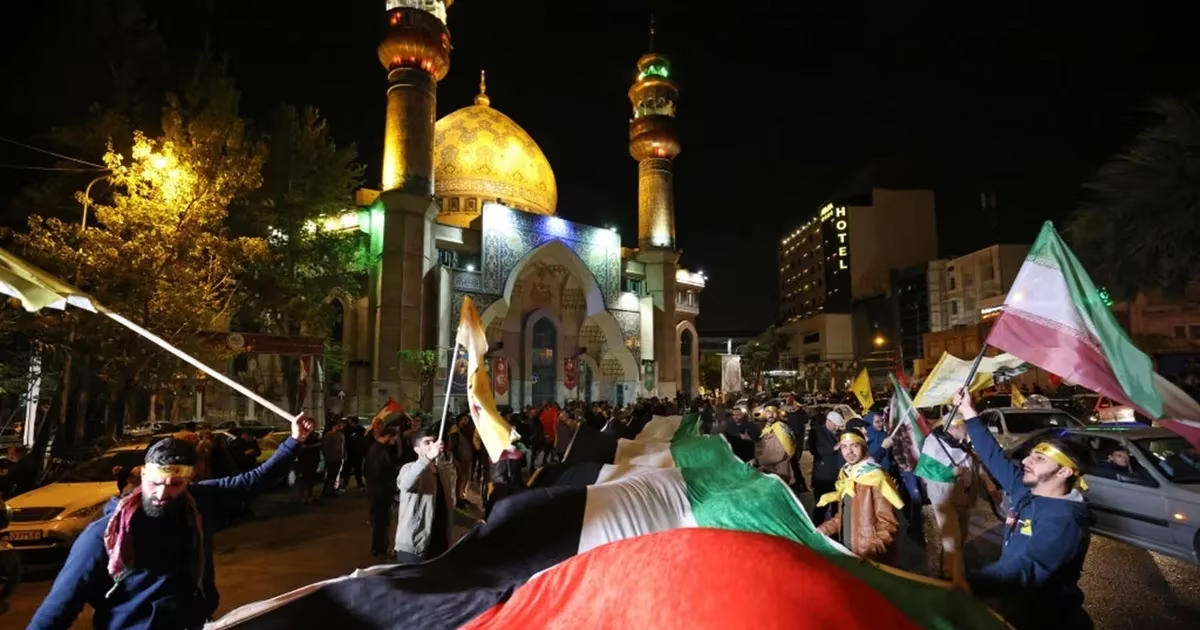
The positions of support for the Islamic Republic of Iran in its current conflict with the American-Israeli alliance are distributed on two main levels. The first stems from a practical, principled stance adopted by the resistance forces in the region. These forces consider themselves an integral part of an axis that raises the slogans of liberating Jerusalem and confronting American influence, which is described in their literature as the 'Great Satan'.

Field sources confirmed that resistance forces in Lebanon, Yemen, and Iraq have clearly announced that any direct military aggression against Iran will be met with a widespread field response. This commitment stems from a doctrinal connection and high-level coordination that goes beyond mere circumstantial solidarity to a state of harmony in objectives and combat methods.

In contrast, Palestinian resistance factions emerge as a vital part of this axis, but they maintain a specificity imposed by geography and the complex history of the Palestinian issue. These factions, through the 'Al-Aqsa Flood', managed to create a global earthquake that shifted power balances and political awareness, and they are now cautiously monitoring American diplomatic moves in the region.

On the international level, Russian and Chinese support for Iran falls under the category of practical interests rather than doctrinal principles. Both countries seek to prevent the expansion of American hegemony in their vital spheres of influence, and they realize that weakening Iran could open the door to directly targeting them or destabilizing their internal security.

The second level of support is the principled moral level represented by the masses and unorganized forces that reject global injustice. Although these positions may not have a direct military impact, they contribute to shaping a global mood that pressures against the military and aggressive options pursued by major powers.

Observers believe that American military decisions historically have not been governed by ethics, but rather by interests and hard power balances. Analysts cite the wars in Afghanistan and Iraq, where popular marches or international condemnation statements failed to disrupt the American military machine when it decided to pursue its objectives.

Nevertheless, the moral stance remains firm among its adherents who do not act based on calculations of material profit and loss. In their view, truth does not die merely with military defeat, but remains alive, passed down through generations, as martyrs immortalize their just causes from which new generations of resistors who refuse to surrender are born.

Those who support Iran on principle do so not only based on military power assessments, but also from a firm belief that the Zionist-American alliance threatens global peace. They see this alliance as an imminent danger targeting the wealth, cultures, and beliefs of peoples, making confrontation a moral necessity before it is a political one.

The Israeli-American alliance has become more audacious in targeting Arab states, even reaching the point of harassing major regional countries like Turkey. Statements from occupation leaders reveal clear expansionist intentions based on misleading and historical claims aimed at seizing more Arab lands.

In a notable development, 14 Arab and Islamic countries announced in a joint statement their condemnation of statements by American officials who supported imposing Israeli control over Arab lands. The list of signatories included influential countries such as Saudi Arabia, Qatar, Egypt, Turkey, and Jordan, reflecting growing regional concern over expansionist schemes.

This collective stance came after a period of complacency during which some regimes thought they were safe from direct targeting. However, recent developments have proven that silence or paying money did not provide the required protection against ambitions that do not stop at specific geographical boundaries.

The joint condemnation, which also included the Gulf Cooperation Council, the Arab League, and the Organization of Islamic Cooperation, represents a cry against biased American policy. These countries express their categorical rejection of any attempts to legitimize the occupation in the West Bank or any other Arab lands under any pretext.

The current reality raises bitter questions about the reasons for the continuous superiority and humiliation the region experiences in the face of colonial powers. Some compare the current shock to the shock of Napoleon's campaign in Egypt, wondering when Arabs and Muslims will rearrange their cards to face existential challenges.

Ultimately, the conflict in the region remains a struggle between the wills of peoples and the interests of major powers. While Iran continues to strengthen its axis, Arab states find themselves facing difficult choices that require moving beyond paper condemnations towards more effective positions to protect their national security and sovereignty.

Truth is not nullified by the results of military confrontations, and those with principles support just causes out of their belief that injustice is a crime that cannot be tolerated.

ARAB AND WORLD

Tue 24 Feb 2026 12:09 am - Jerusalem Time

British Apology for Broadcasting "Racist Remark" at BAFTA Ceremony Renews Debate on Gaza Censorship

The British Broadcasting Corporation admitted to a serious editorial error during its coverage of the British Academy Film Awards (BAFTA) ceremony, where it broadcast an offensive racist remark without editing it out. This apology came after a wave of criticism directed at the venerable media institution for allowing such content to pass through its official screen.

The details of the incident trace back to a shout from a guest named Jon Davidson, who suffers from Tourette's syndrome, as he uttered a derogatory racist word while Black stars Michael B. Jordan and Delroy Lindo were on stage to present an award. Although the ceremony was broadcast on a two-hour delay, the censorship scissors failed to remove this moment.

A BBC spokesperson explained that the institution deeply apologizes for not addressing this situation before it went public, confirming that the clip would be deleted from all digital platforms and future re-broadcasts. The statement emphasized that what happened was not intentional, but rather a result of health symptoms related to the medical condition of the guest participating in the ceremony.

For her part, Kemi Badenoch, leader of the Conservative Party, entered the crisis, describing what happened as a "grave error" that cannot be easily overlooked. Badenoch called for an internal investigation to clarify the reasons that prevented the technical team from deleting the clip, especially since there was sufficient time to make the necessary adjustments before the television broadcast.

In contrast, actor Robert Aramayo defended Davidson, pointing out that society needs a deeper understanding of Tourette's syndrome, which causes involuntary movements and sounds. Aramayo affirmed that the matter should not be interpreted as deliberate abuse, but rather as part of health challenges that require shared responsibility in dealing with and understanding them.

However, this quick apology brought back to mind the BBC's controversial policies regarding the Palestinian issue, as the institution has repeatedly been accused of practicing political censorship. Observers recall how last year the BBC removed explicit calls for a ceasefire in the Gaza Strip from its coverage of the Scottish BAFTA ceremony.

Director Eilidh Munro launched a scathing attack on the BBC after discovering the deletion of her acceptance speech in which she called for an end to the Israeli war on Gaza. Munro considered this action to be a suppression of voices trying to shed light on the humanitarian suffering in the occupied Palestinian territories under the pretext of media neutrality.

Munro was not alone; her colleague Finlay Pretsell shared this stance, raising a poster in front of the cameras calling for an immediate ceasefire. Although these shots appeared in the initial live broadcast, the final version that was archived and broadcast later completely lacked any reference to these political and humanitarian demands.

This paradox raises serious questions about the standards followed by international media organizations in dealing with sensitive content. While apologies are made for blunders related to a medical syndrome, political stances supporting Palestinian rights are systematically excluded from the official recorded versions of major festivals.

Analysts believe that the BBC faces increasing pressure to balance its coverage, especially with growing public awareness of social and political justice issues. They point out that selectivity in content deletion weakens the institution's credibility with its global audience, which demands transparency and equality in dealing with various issues.

The recurrence of censorship incidents regarding speeches related to Gaza in British artistic forums reflects a general trend that fears the politicization of art, but at the same time falls into the trap of bias. Activists affirm that deleting expressions of solidarity with Gaza is no less serious than broadcasting racist remarks, as it contributes to obscuring the truth from the viewer.

In conclusion, the debate continues about the limits of editorial intervention in cultural events, with creators demanding a free space to express their humanitarian positions. With the ongoing war in Gaza, these clashes between artists committed to their causes and media institutions trying to maintain a specific framework for their discourse are expected to intensify.

An apology is necessary, and the BBC must clarify why the racist clip was not deleted despite the broadcast delay.

PALESTINE

Tue 24 Feb 2026 12:09 am - Jerusalem Time

Palestinian Authority Expresses Readiness to Assume Governance and Security in Gaza, Calls for International Intervention

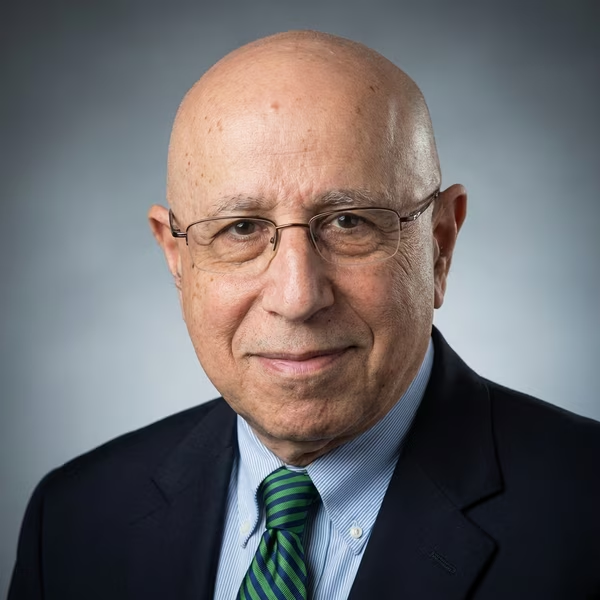
The Palestinian Minister of Foreign Affairs and Expatriates, Ajabikian Barsin, called on the international community for urgent and effective intervention to enable the Palestinian people to exercise their inherent right to self-determination. Barsin affirmed during her speech at the United Nations Human Rights Council in Geneva that the Palestinian Authority is fully prepared to assume governance and security responsibilities in the Gaza Strip, provided that the necessary Arab and international support is available to ensure the success of this mission.

The Minister explained that the occupying power continues to disregard all international resolutions, including the advisory opinion of the International Court of Justice and resolutions of the United Nations General Assembly. She noted that the continued impunity has encouraged the occupation to persist in committing war crimes and crimes against humanity, amidst a continuous erosion of Palestinian lands and a lack of genuine accountability for systematic violations that have continued for decades.

Regarding the catastrophic humanitarian situation in the Gaza Strip, Barsin stressed that the suffocating blockade and closure of crossings aim to starve the population and prevent the delivery of essential aid. She condemned the targeting of UNRWA and relief organizations, noting that the decision to ban 37 humanitarian organizations from operating represents a clear attempt to conceal witnesses to crimes and dry up sources of protection and services provided to millions of displaced persons and refugees.

In the West Bank and occupied Jerusalem, the Minister warned of the accelerating steps of de facto annexation through the expansion of settlements, confiscation of lands, and transfer of civilian powers to the occupation authorities. She reported that the occupation has established more than 1200 checkpoints and electronic gates to fragment Palestinian cities, coinciding with an escalation of settler attacks, including burning crops and forced displacement of families under the protection of army forces.

The Palestinian Foreign Ministry reiterated that occupied Jerusalem is the historical and eternal capital of the State of Palestine, warning against any attempts to change its legal or demographic reality. She stressed that a just and comprehensive solution to the conflict cannot be reached without ensuring full Palestinian sovereignty over Jerusalem and stopping repeated attacks on Islamic and Christian holy sites in the city.

Regarding the issue of prisoners, Barsin revealed harsh conditions faced by detainees, including torture, solitary confinement, deliberate medical neglect, in addition to the policy of administrative detention. She expressed grave concern about the occupation's intention to legislate a law to execute prisoners, considering it a blatant violation of the Geneva Conventions and the Convention Against Torture, and called for international pressure to stop these arbitrary measures.

The Minister concluded her speech by referring to the financial and political war waged against the Palestinian Authority, affirming that the occupation has pirated more than 4.4 billion dollars from Palestinian tax revenues. Despite these pressures, she stressed that the national strategy will remain committed to the unity of the land and the steadfastness of citizens, based on the recognition of more than 160 countries around the world of legitimate Palestinian rights.

The State of Palestine is ready to assume full responsibility for governance and security in the Gaza Strip with Arab and international support, and urgent intervention is necessary to enable our people to determine their destiny.

PALESTINE

Tue 24 Feb 2026 12:09 am - Jerusalem Time

Israeli officer injured in truck collision near Nablus, Palestinians arrested

Hebrew sources announced that an Israeli police officer, approximately fifty years old, sustained minor injuries after a police vehicle was hit by a truck. The incident occurred near the 'Tafouh' intersection, known to Palestinians as the Za'atara checkpoint intersection south of Nablus. Additional army and police forces rushed to the scene immediately after the incident.

The sources explained that the truck driver attempted to flee the scene immediately after the collision, but forces stationed in the area pursued the vehicle and managed to stop it. The operation resulted in the arrest of the driver and another person who was with him inside the truck. They were transferred for investigation by Israeli security agencies to determine the circumstances and motives of the incident.

The Za'atara checkpoint intersection is considered one of the most sensitive military points in the West Bank, as it forms a main link connecting the northern, central, and southern governorates. Permanent forces from the occupation army and border guards are stationed at this point, making it a constant scene of friction and escalating security tensions amid strict military measures.

This incident comes at a time when West Bank cities are experiencing a state of continuous security unrest since October 2023, with an increasing pace of raids and attacks. Israeli authorities are currently examining all possibilities related to the incident, including the hypothesis of a deliberate commando operation or the possibility of it being merely an accidental traffic accident that occurred due to congestion in the area.

An investigation is underway to determine whether the incident was deliberate or an accidental traffic accident.

PALESTINE

Tue 24 Feb 2026 12:08 am - Jerusalem Time

Peace Council Explores Launch of Stablecoin to Revitalize Gaza's Economy

Informed sources have revealed ongoing efforts by officials in the Gaza Strip's Peace Council, established by US President Donald Trump, to explore the possibility of issuing a stablecoin. This initiative, still in its preliminary stages, aims to rebuild the economic structure in the Strip after the widespread devastation caused by the Israeli war and to provide secure financial alternatives for the residents.

The sources indicated that the shift towards digital currencies came as a result of the severe damage inflicted upon the traditional banking system and conventional payment networks within Gaza. The value of this currency is planned to be pegged to the US dollar to ensure its stability, with Palestinian and Gulf companies possessing extensive technical expertise providing the necessary technical and logistical support for the operation of this ambitious project.

These technical efforts are led by Israeli businessman and former reserve officer Liran Tankman, who serves as a volunteer advisor to the Peace Council, in coordination with the 14-member National Committee for Gaza Strip Management. The office of the High Representative for Gaza, Nikolay Mladenov, is also participating in drafting the executive vision for this currency, which aims to facilitate daily commercial exchanges without the need for physical cash.

These economic developments come at a time when the Gaza Strip faces severe humanitarian and field challenges, with human rights reports documenting approximately 1808 violations committed by the Israeli occupation since the ceasefire declaration last October. These breaches have led to the martyrdom of 641 individuals and the injury of over 1600 Palestinians, placing economic stabilization efforts at the mercy of ongoing security tensions.

On the political front, the Peace Council held an extensive meeting in Washington in mid-February, where international powers pledged a funding package of up to $17 billion for reconstruction. This coincides with the start of training a new police force affiliated with the National Committee for the management of the Strip, in implementation of Security Council Resolution 2803, which regulates the Council's tasks in monitoring de-escalation and managing the transitional phase.

Despite these ambitious plans, field obstacles continue to hinder the flow of aid, with only 259 trucks entering daily out of 600 agreed-upon trucks. The issue of movement through the Rafah crossing also suffers from extreme slowness, as only 40% of expected travelers have been able to leave the Strip since early February, amidst Palestinian demands for a complete Israeli withdrawal from vital areas to enable economic recovery plans.

This cryptocurrency will not be a new national currency, but rather a technical means allowing Gaza residents to conduct their financial transactions digitally in light of the disruption of traditional systems.

ISRAELI AFFAIRS

Tue 24 Feb 2026 12:08 am - Jerusalem Time

Netanyahu warns of 'complex' days and Israeli consensus on military strike against Iran

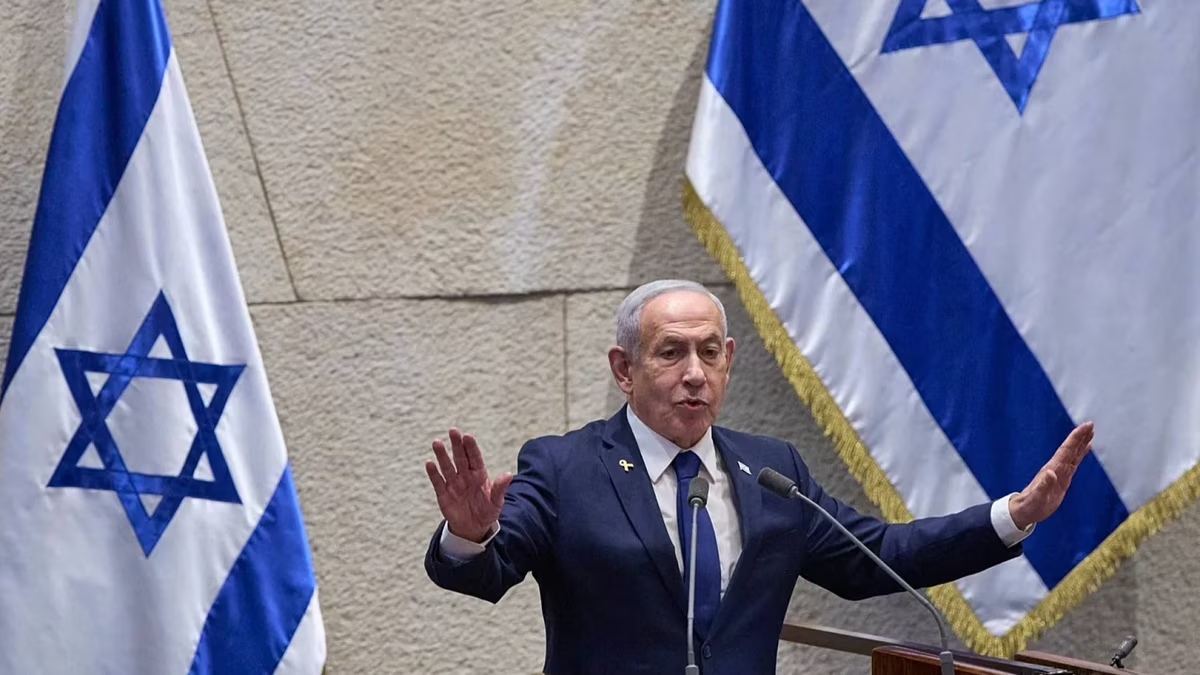
The Prime Minister of the Israeli occupation, Benjamin Netanyahu, issued strong warnings about the nature of the current security phase, describing the coming days as "complex and full of challenges." Netanyahu indicated in his statements that the region is facing unknown developments, while affirming that all military and security agencies are on high alert to deal with any emergency.

Netanyahu stressed that the occupation has completed its preparations for all possible scenarios, including direct and widespread confrontation. He clarified that coordination with the United States of America has reached advanced levels to implement major military plans, aimed at responding to any regional threats that may arise in the coming hours or days.

In a direct threat message addressed to the Iranian regime, Netanyahu warned against committing what he described as "the mistake" of targeting any areas under the occupation's control. He affirmed that the Israeli response, in the event of an attack, would be violent and in a way that Tehran would find difficult to imagine, indicating that the military force to be used would be unprecedented in its impact and results.

For his part, opposition leader Yair Lapid announced a striking political stance by offering absolute support to the government in this sensitive phase. Lapid affirmed that there is a high probability of an imminent confrontation with Iran, stressing the need to freeze all political and internal differences and focus on the common military goal of delivering a decisive blow to the Iranian regime.

Lapid called for the necessity of striking Iran with all possible force, considering that the strategic goal must go beyond deterrence to overthrow the "Ayatollah" regime. This rare consensus between the two poles of the government and the opposition reflects a state of agreement within the occupation institutions on the option of military escalation, which gives Netanyahu broad political cover to make fateful decisions.

On the domestic front, Netanyahu called on the settlers to close ranks and stand shoulder to shoulder to face what he described as a "fateful confrontation." He clarified that the current time does not allow for partisan debates or societal divisions, but rather requires complete unity behind the military establishment to ensure overcoming the complex security challenges looming on the horizon.

Field reports indicate that the occupation army has already begun to strengthen its defensive and offensive systems on various fronts, coinciding with these political statements. Regional and international circles are cautiously awaiting the outcomes of this escalation, in light of the mutual warnings that place the region on the brink of a comprehensive military explosion that could change the existing balance of power.

We are facing very complex days, and no one knows what awaits us, but we are ready for all scenarios and our response will be devastating.

ISRAELI AFFAIRS

Tue 24 Feb 2026 12:08 am - Jerusalem Time

Netanyahu and Modi celebrate 'alliance of global powers' ahead of historic visit to Israel

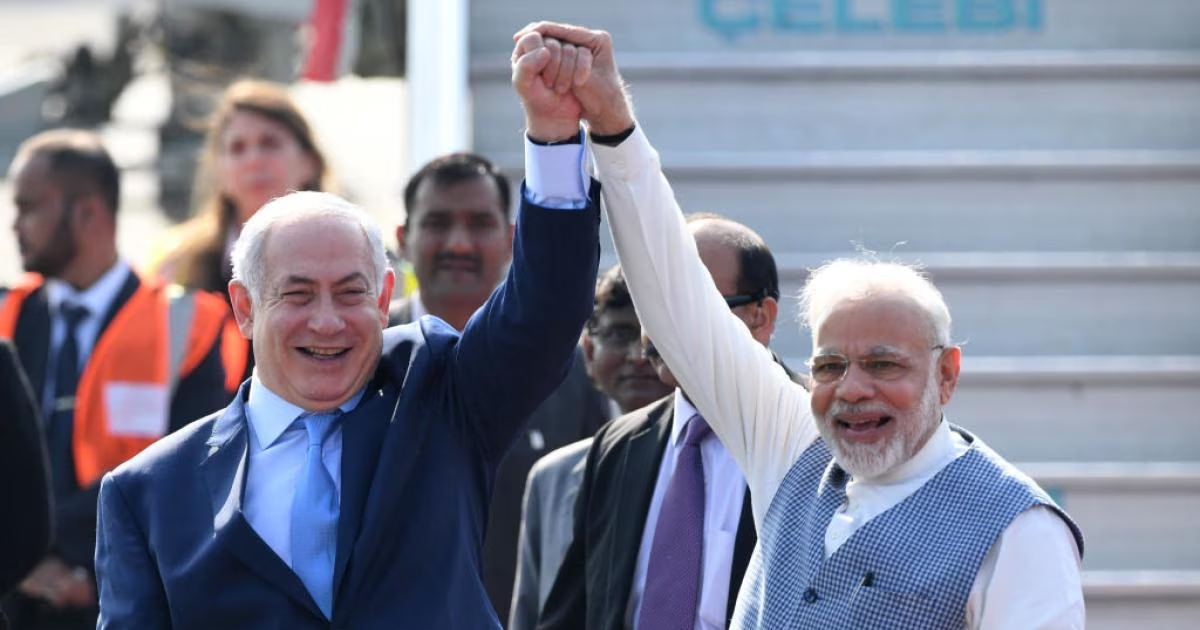
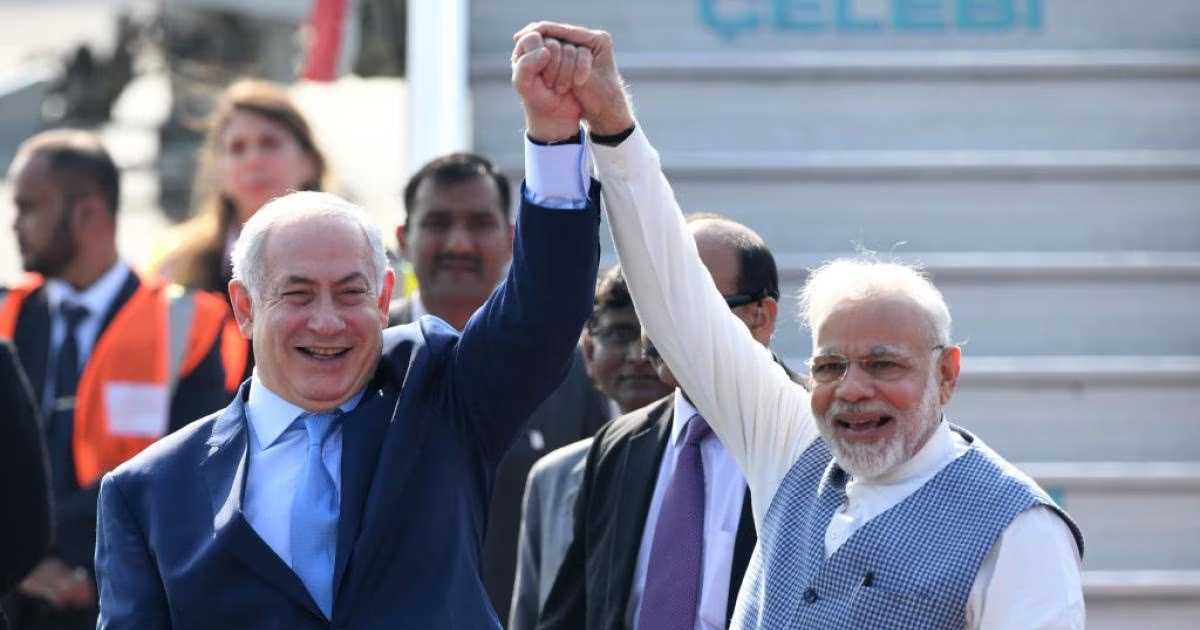
The social media platform 'X' witnessed an exchange of cordial messages and celebrations between Israeli Prime Minister Benjamin Netanyahu and his Indian counterpart, Narendra Modi. The two leaders affirmed the depth of the ties that bind them, describing the relationship between Tel Aviv and New Delhi as a 'strong friendship' and a strategic alliance that transcends traditional frameworks.

Netanyahu, during his speech at the opening of the Israeli cabinet meeting, revealed arrangements for an upcoming visit by Modi to Israel, describing it as a 'historic' step. He explained that this visit comes to consecrate what he called the 'alliance of leading global powers,' stressing that the partnership between the two sides is based on a long-term strategic vision.

The Israeli Prime Minister touched upon areas of technical cooperation, indicating that the partnership extends to include advanced technology sectors, artificial intelligence, and quantum computing. He also noted the existence of high-level security coordination and regional cooperation aimed at enhancing the influence of both countries on the international stage and confronting common challenges.

In the context of his regional ambitions, Netanyahu spoke about building a 'hexagonal alliance' that includes countries from the Middle East, Europe, Africa, and Asia. This axis, according to him, aims to stand against what he described as 'extremist axes,' emphasizing that Israel and India are working together to shape the current reality instead of waiting for future transformations.

Netanyahu linked the anticipated diplomatic visit with a package of vital internal projects in the Negev region, where he announced the acceleration of the construction of an airport in the Saqlag area and the development of Ramat David Airport. These steps come concurrently with the Israeli government's approval for the establishment of a new settlement in the Negev as part of what he described as comprehensive development plans.

For his part, Indian Prime Minister Narendra Modi expressed his thanks and appreciation for Netanyahu's messages, affirming his country's pride in the 'firm friendship' with Israel. Modi indicated that this bilateral relationship is built on solid foundations of mutual trust, innovation, and a shared commitment to achieving peace and technological progress in the region and the world.

Modi expressed his anticipation for in-depth discussions during his upcoming visit, aimed at advancing bilateral cooperation on various levels. These statements come at a time when India is seeking to strengthen its geopolitical presence through extensive technical and military partnerships with the Israeli side, which has attracted the attention of international observers.

In contrast, the announcement of the visit was met with a wave of widespread criticism on social media platforms, where activists considered that deepening the alliance at this time ignores the ongoing genocide in the Gaza Strip. Critics believed that this rapprochement might harm India's historical image as a supporter of national liberation causes and international justice.

The relationship between Israel and India represents a strong alliance between two leading global powers, and we do not wait for the future but build it in the present.

ANALYSIS

Tue 24 Feb 2026 12:08 am - Jerusalem Time

Wars Are Not Only Military: Why Is Washington Lacking Elements of Power in Confronting Iran?

Throughout history, wars have not merely been pure military confrontations; rather, they are the product of temporal contexts, precise timings, and political legitimacy that grants them continuity. Today, the United States faces a real crisis in providing these elements in its potential conflict with Iran, as American steps lack the international and internal consensus required to engage in a confrontation of this magnitude.

Observers believe that the upcoming war, if it occurs, will not be a war of necessity for the American people, but is essentially a war sought by Israeli Prime Minister Benjamin Netanyahu. Opinion polls show a lack of internal consensus in Washington, amidst sharp political polarization that is afflicting American society and weakening the administration's ability to make fateful decisions.

On the European front, the scene appears more complex, as the old continent is experiencing a state of disintegration and a search for lost security between the hammer of Russian policies and the anvil of American trends during the Trump era. Europe currently lacks a clear vision for the future of the international system, making it unable to effectively engage in new military adventures.

In contrast, China and Russia emerge as international powers that sense an imminent danger to their influence if Washington manages to resolve the conflict in its favor. For Beijing and Moscow, Tehran represents the key to future balances, which has prompted both countries to change their approach towards providing clear logistical, technical, and political support to the Iranian side.

For China, the region represents an economic lung and a vital corridor for the 'Silk Road' project, making Iran's stability or resilience a supreme strategic interest. This intersection of interests has pushed major powers to stand against American unilateral hegemony over the Middle East's resources, which strengthens Tehran's negotiating and field position.

Regionally, Arab and international stances are witnessing a remarkable shift, as most countries in the region refuse overt cooperation with American plans to strike Iran. With limited exceptions, regional cover is absent for any military action, placing Washington in a political isolation it has not experienced in its previous wars in the region.

The positions of Pakistan and Afghanistan emerge as additional pressure factors, as both countries have shown readiness to support Tehran in the event of direct aggression. This regional alignment gives Iran a strategic depth that extends beyond its geographical borders, complicating the mission of any military alliance led by the United States and Britain.

In Iraq, the position appears more cohesive with the Iranian side at official, popular, and religious levels, where the confrontation is viewed as a war on an Islamic and jurisprudential model. Iraqi resistance forces consider themselves an integral part of this battle, directly threatening American interests in the region.

Regarding non-state actors, Iran's allies in the region still possess qualitative influence capabilities despite the blows they have received in recent years. Israel seriously fears the opening of multiple fronts, especially as the justifications for resistance in Lebanon and Palestine grow stronger with the continuation of occupation and aggression.

Internally, the Islamic Republic is experiencing a state of national cohesion and unity of political and military stance, a phase described as the best in decades. Failed intelligence attempts have contributed to revealing vulnerabilities and strengthening the internal front, making Iran more prepared to face any escalatory scenarios.

Tehran's defensive strategy relies on 'long breath' and dragging adversaries into a war of attrition whose cost the global economy cannot bear. The Iranian leadership knows that the current American administration is incapable of resolving a swift military conflict, or even developing a safe exit plan that ensures it does not sink into the sands of the Middle East.

The threat of a nuclear option by Washington or Tel Aviv may push other countries to declare a nuclear umbrella for Iran, completely changing the rules of engagement. This deterrent balance makes military adventure fraught with risks that could permanently end the era of American hegemony over the international system.

The United States has lost the element of surprise, which represents half the strength of war, after its plans, prepared for many years, were exposed. In contrast, recent missile tests have proven that Iran possesses military surprises capable of shaking the security of major cities in the Israeli entity and undermining its strategic superiority.

In conclusion, the upcoming confrontation will not be with a weak or fragmented state, as happened in previous American experiences, but with a fully-fledged state with a solid fighting doctrine. If Iran succeeds in thwarting American objectives, history may record that this confrontation was the major turning point in bringing Washington down from the throne of unipolarity.

Iran today is the international fulcrum and the key to its future balances, and its steadfastness may lead to the fall of American global hegemony from its throne.

ARAB AND WORLD

Tue 24 Feb 2026 12:08 am - Jerusalem Time

Trump hints at targeting Iranian Supreme Leader, and the option of overthrowing the regime returns to the table

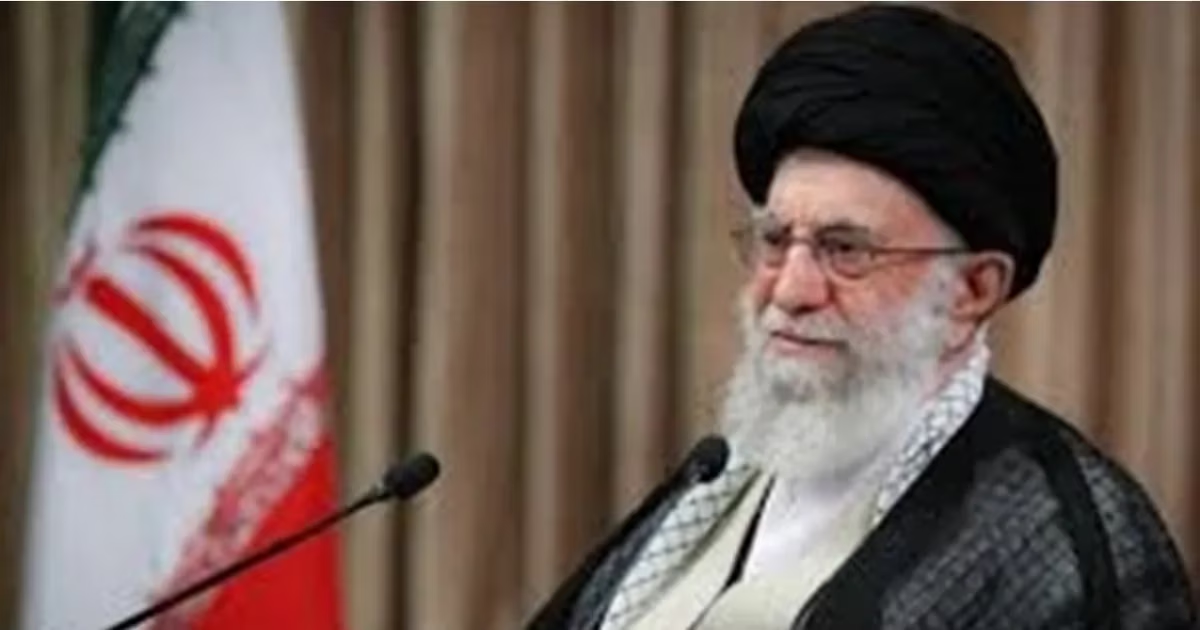
Informed press sources revealed that US President Donald Trump has informed his advisors of exploring advanced military options against Iran, including the possibility of overthrowing Supreme Leader Ali Khamenei if diplomatic efforts falter. These threats come at a sensitive time when Washington is seeking to impose its conditions regarding Iran's nuclear file and missile program, amidst international anticipation of the outcomes of the current escalation.

The targets under scrutiny by the US administration vary between Iranian Revolutionary Guard headquarters and vital nuclear facilities, extending to ballistic missile development sites. Reports indicated that Trump has left the door open for a large-scale military attack later this year, directly aimed at destabilizing the regime and changing the top leadership in Tehran.

Despite the escalatory tone, doubts have emerged within the US administration regarding the effectiveness of isolated airstrikes in achieving the goal of regime change. Observers believe that relying on air power alone may not be sufficient to bring about radical political change, which places decision-makers in Washington before complex strategic choices that require precise calculations of field and political outcomes.

In an attempt to avoid armed conflict, a new proposal is on the table for discussion, which includes allowing Tehran a very limited nuclear enrichment program. This proposal stipulates that enrichment operations would be restricted to medical purposes and research treatments only, which could provide a technical solution that satisfies both parties and prevents the region from sliding into an all-out war with unpredictable consequences.

The Swiss city of Geneva is scheduled to host a round of negotiations next Thursday, described as a 'last-minute opportunity' between senior negotiators from the American and Iranian sides. This meeting aims to discuss new proposals and create a political path that spares the region an imminent military conflict, especially with increasing international pressure to de-escalate.

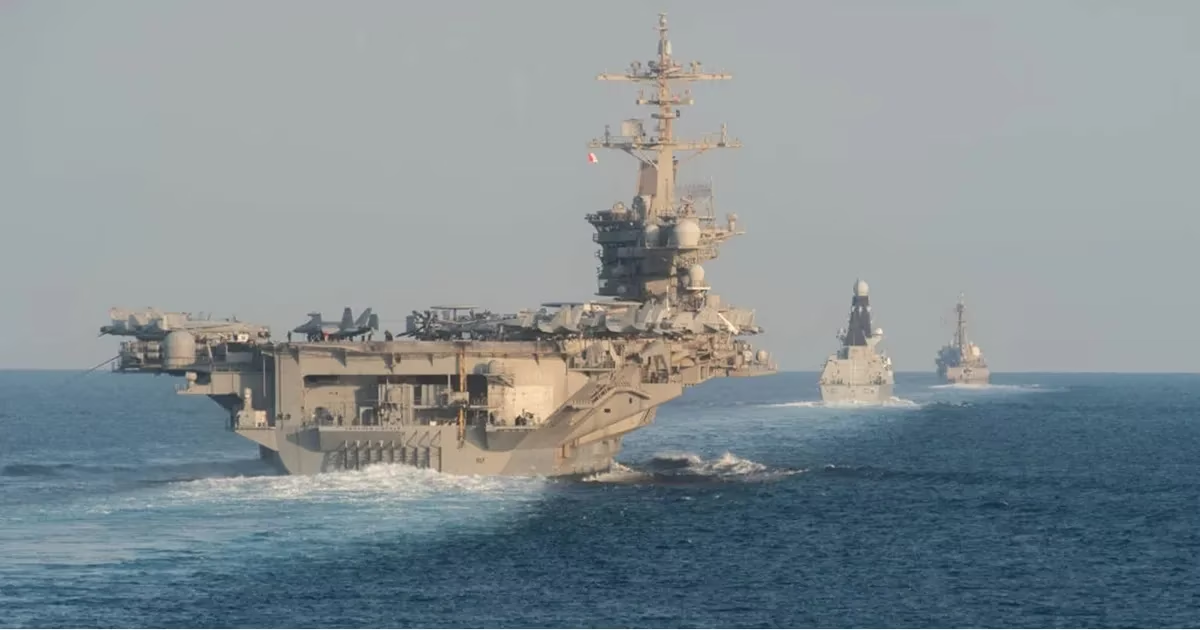
In parallel with the diplomatic track, the United States continues to strengthen its military presence in the region by mobilizing two aircraft carrier groups within targeting range of Iranian territory. Washington considers this military move a means of pressuring Tehran to accept American conditions, while Iran views it as an unjustified escalation that complicates opportunities for reaching peaceful understandings.

For his part, Iranian Foreign Minister Abbas Araghchi affirmed that his country is ready for the upcoming round of talks in Geneva, considering it a real opportunity to reach a comprehensive diplomatic solution. Araghchi stressed that the principle of 'mutual gain' is the only basis upon which any sustainable agreement can be built, noting that diplomatic solutions have proven effective in previous experiences.

In response to American threats of military attack, Araghchi downplayed the importance of military buildups in the region, asserting that they will not contribute to advancing the negotiation process or exerting pressure on his country. He clarified that Iran's nuclear program is peaceful in nature, and any attempt to impose political will through military force will be met with Iranian steadfastness based on legitimate international rights.

If they want to find a solution for a peaceful nuclear program, the only way is diplomacy, and we have proven that in the past.

PALESTINE

Tue 24 Feb 2026 12:07 am - Jerusalem Time

Disappointment in Tel Aviv: Washington Resumes Talks with Tehran, Israel Fears 'Strategic Deception'

A state of shock prevailed within political and security circles in the occupation state following the announcement of the resumption of indirect nuclear talks between the United States and Iran. Hebrew media sources considered this step to reflect signs of weakness on the American side, at a time when Tel Aviv was anticipating a military escalation that would resolve the Iranian nuclear file.

Journalistic sources quoted Israeli officials as saying that President Donald Trump's administration's decision to hold a third round of talks in Geneva next Thursday was surprising and unexpected. The sources indicated that this shift came at the insistence of Trump's envoy, Steve Witkoff, who adopts an approach that calls for giving diplomacy a last chance before resorting to harsher options.

US envoy Witkoff admitted that Tehran shows no signs of backing down or surrendering, despite the intensive US military presence in the region. These statements caused great displeasure in Israel, where officials believed that this approach grants Iran free concessions and does not push it to change its nuclear or regional behavior.

In a related context, an Israeli diplomat expressed his disappointment with current US policy, accusing Washington of allowing Tehran to buy time and relieve pressure on it. The Israeli side believes that resuming dialogue at this critical time could delay any US decision to carry out a military strike that seemed imminent against Iranian facilities.

Despite the declared dissatisfaction, security sources did not rule out close coordination between Tel Aviv and Washington that might involve a kind of 'strategic deception'. Reports indicated that this scenario has been repeated before, where dates for diplomatic meetings were set as a cover for sudden military operations, which keeps all possibilities open on the ground.

Leaked information indicates that US negotiators agreed to an Iranian demand to exclude regional issues that Israel considers an existential threat from the talks agenda. This development comes despite previous statements by Secretary of State Marco Rubio and President Trump that emphasized the necessity of any new agreement to include all Iranian activities.

US Secretary of State Marco Rubio is scheduled to arrive in Israel next Saturday for closed-door talks with Prime Minister Benjamin Netanyahu. This visit comes just two days after the Geneva talks, reflecting Washington's desire to contain Israeli anger and coordinate the next steps.

On the other hand, Netanyahu held a meeting of the mini-security cabinet to discuss preparations for multiple fronts in the event of a comprehensive confrontation. Israeli estimates assume that Iran may respond to any pressure by dragging the region into a wide conflict involving its proxies in Lebanon, Yemen, and Iraq to pressure the occupation.

US President Trump set a deadline of March 3rd for reaching a final agreement, threatening to strike the ruling establishment in Iran in case of failure. The US administration is currently discussing military options ranging from limited surgical strikes to a widespread bombing campaign targeting nuclear and military infrastructure.

In contrast, Iranian Foreign Minister Abbas Araghchi sharply responded to Witkoff's statements, emphasizing that his country will not surrender to military threats. Araghchi stressed that diplomacy is the only way to resolve the crisis, noting that Tehran is working on drafting proposals to be included in a potential agreement that would end the state of tension.

International reports indicated that Iran has shown willingness to 'seriously consider' reducing uranium enrichment levels or transferring highly enriched stockpiles out of its territory. This offer comes as part of an Iranian attempt to alleviate the economic sanctions imposed on it, with a pledge to submit a comprehensive draft agreement in the coming days.

Attention is now focused on Thursday's round in Geneva, where Iran is expected to present a counter-proposal to US demands within 48 hours. While Washington hopes for a diplomatic breakthrough, Israel continues to mobilize its military capabilities in anticipation of the failure of negotiations and the region's transition to a phase of direct confrontation.

Iran is not ready to surrender despite the large US military buildup in the Middle East.

PALESTINE

Tue 24 Feb 2026 12:07 am - Jerusalem Time

Graham: Mohammed bin Zayed is the 'key' to reshaping Gaza, and the future requires a Gulf role

US Republican Senator Lindsey Graham made controversial statements through Israeli media, in which he affirmed that the Israeli occupation army would not be able to successfully manage the Gaza Strip alone in the long term. Graham explained that changing the existing reality in the Strip requires direct intervention from influential regional powers, specifically mentioning the United Arab Emirates and Saudi Arabia for their political weight and economic resources.

Graham considered that building what he called 'the new Gaza' depends primarily on the contribution of Arab countries to reconstruction and administration operations. He stressed the necessity for this stage to include radical changes in the educational system within the Strip, aimed at replacing what he described as 'the culture of hatred' with values of tolerance and coexistence, considering that this cultural transformation is the only guarantee for the stability of the region.

In the context of his vision for a solution, the American senator described the President of the UAE, Sheikh Mohammed bin Zayed Al Nahyan, as a 'tremendous ally' of Israel and a key player in the region. Graham proposed a model that emulates the Emirati development experience to be applied in Gaza, emphasizing that bin Zayed represents the true 'key' to transforming the Strip into a stable and economically prosperous environment away from current ideologies.

Graham revealed details of his recent meeting with the President of the UAE, describing the ninety-minute meeting as very fruitful and addressing regional security and stability issues. The senator strongly defended the Emirati leadership against what he described as false narratives, indicating that coordination between Washington and Abu Dhabi is in advanced stages to confront common challenges in the Middle East.

Regarding the Iranian file, Graham sent a firm message to US President Donald Trump, urging him to move forward with the policy of maximum pressure against Tehran. He warned that any American retreat on this file would represent a strategic catastrophe extending for generations, describing the potential repercussions of any withdrawal or complacency as harsher and worse than the scenario of withdrawal from Afghanistan.

The Republican senator predicted that the Iranian nuclear file and the associated escalation would see a swift resolution, suggesting that this issue would be resolved within a few weeks rather than months. Graham believes that the region is currently on the cusp of major transformations, the largest in a thousand years, which requires firmness in dealing with the threats posed by Iran and its proxies in the region to ensure the success of the new arrangements.

Regarding the field situation in Gaza, Graham asserted that the Hamas movement would not accept disarmament through negotiations or voluntarily. He affirmed that Israel is the only party capable of imposing a military reality that leads to disarming Palestinian factions of their combat capabilities, considering this a step preceding any talk of permanent political or civilian administration of the Strip in the post-war phase.

These statements come at a sensitive time when international discussions about the 'day after' the war in Gaza are increasing, amidst ongoing Israeli military operations. Graham's vision reflects a widespread desire in Washington to integrate Arab powers into security and political arrangements that ensure an end to the influence of armed factions and establish a new administrative system consistent with the Israeli and American vision for the region.

Mohammed bin Zayed is a tremendous ally of Israel, and he is the key to making Gaza resemble the UAE in the future.

PALESTINE

Tue 24 Feb 2026 12:07 am - Jerusalem Time

The 'Pot and Frog' Deception: How Israel Swallows the West Bank Without Official Declaration?

The Israeli government is accelerating its steps to impose its dominance over vast areas of the West Bank, exceeding the divisions approved by the Oslo Accords. These measures are not limited to areas classified as 'C', but extend to include areas under the control of the Palestinian Authority in classifications 'A' and 'B'.

The Israeli mini-cabinet, 'the security cabinet', recently approved a package of decisions aimed at enforcing Israeli law within Palestinian Authority areas. These steps include what is called 'land settlement', a procedure aimed at converting vast areas into state lands in preparation for transferring their ownership to settlers.

Legal experts believe that Israel avoids using the term 'annexation' officially to avoid confrontation with international law, which considers the annexation of occupied territories a war crime. Tel Aviv adopts a strategy of 'having its cake and eating it too' by imposing de facto sovereignty without an explicit political declaration.

Historically, Israel applied this model in East Jerusalem after the 1967 occupation, where it imposed its laws and municipal influence over vast areas. Although the reality represents a complete annexation, official Israeli documents completely omitted the word 'annexation' for fear of international legal repercussions.

Currently, Knesset laws are applied in settlements through military orders issued by the commander of the Central Command of the occupation army. This circumventing method allows settlements to become Israeli enclaves subject to income taxes, national insurance, and Israeli election laws indirectly.

The International Court of Justice affirmed in its advisory opinion issued in July 2024 that Israeli practices in the West Bank and Jerusalem amount to de facto annexation. Nevertheless, Israel continues to maneuver by engaging the international community in complex procedural details to distract attention from the strategic goal.

Finance Minister Bezalel Smotrich, from his position in the Ministry of Defense, is leading a systematic plan to strengthen settlements and legitimize pastoral outposts. This policy aims to create an irreversible reality on the ground, regardless of the international legal descriptions of what is happening.

Analysts liken Israeli policy to the 'pot and frog' deception, where water is heated very slowly until the victim loses the ability to resist. This gradual nibbling aims to impose Israeli presence 'dunam after dunam' without provoking major international protests that might result from a sudden announcement.

The 'land settlement' step is more dangerous than traditional annexation, because it gives the occupation legal cover to claim ownership of the land and reclaim it. This transformation turns West Bank lands into properties belonging to the Israeli Ministry of Justice, ending any legal possibility of recovering them in the future.

Observers indicate that Israel seeks to create a new cosmic system that empties Palestinian citizenship of its actual content on the ground. The goal is to transform the Palestinian Authority into an entity that issues passports and symbolic gestures, while Israel controls resources and movements.

Statements by Israeli officials and their supporters, such as US Ambassador Mike Huckabee, reinforce the right-wing vision that considers the West Bank an integral part of the 'Land of Israel'. These speeches provide political cover for implementing silent displacement schemes for Palestinians by stripping away hope for statehood.

The commander of the Central Command was granted broad emergency powers that enabled him to bypass the usual legal system and prevent Palestinian construction and confiscate equipment. These powers aim to paralyze any Palestinian urban growth in the targeted settlement areas and facilitate rapid demolition operations.

Property registration in Israeli records is an irreversible measure, and it comes as a completion of the Knesset's decision to reject the establishment of a Palestinian state. This legislative and field path aims to definitively bury the two-state solution and transform the West Bank into isolated cantons under full Israeli sovereignty.

Ultimately, Israel is betting on the factor of time and imposing a fait accompli to change the demography and geography in the West Bank. The strategy of 'creeping annexation' remains the most effective tool for the occupation to achieve its expansionist goals while minimizing the political and diplomatic cost in international forums.

Israel practices the 'pot and frog' policy by gradually nibbling at the West Bank and slowly applying laws to it to avoid international objections.

ISRAELI AFFAIRS

Mon 23 Feb 2026 4:04 pm - Jerusalem Time

Netanyahu and Modi Exchange Messages of Affection: Announcement of an Upcoming Visit and a New Strategic Alliance

The social media platform 'X' witnessed an exchange of affectionate messages and celebrations between Israeli Prime Minister Benjamin Netanyahu and his Indian counterpart, Narendra Modi. During these communications, both parties affirmed the depth of the ties that unite them, describing the relationship as a strong strategic alliance that transcends traditional cooperation into a comprehensive partnership.

Netanyahu officially announced during the opening of a cabinet meeting an upcoming visit by Modi to Israel, describing it as a historic step. He clarified that this visit comes to consecrate the alliance between what he called 'two leading global powers,' emphasizing that the partnership is based on a shared strategic vision that serves the interests of both parties.

The Israeli Prime Minister touched upon areas of technical cooperation, indicating that joint work extends to include advanced technology, artificial intelligence, and quantum computing. He also noted the existence of high-level security coordination and regional cooperation aimed at enhancing the influence of both countries on the international stage and confronting common challenges.

Netanyahu revealed his ambition to build a 'hexagonal alliance' that includes countries from Asia, Europe, and Africa, in addition to the Middle East. This axis, according to him, aims to stand against what he described as extremist axes, emphasizing that Tel Aviv and New Delhi are working together to shape the current reality instead of waiting for future transformations.

In a related context, Netanyahu linked the upcoming visit to a package of vital internal projects, especially in the Negev region, which is witnessing an acceleration in infrastructure plans. These plans include proceeding with the establishment of a new airport in the Sde Teiman area, concurrently with extensive development operations for Ramat David Airbase to enhance logistical capabilities.

Recent government decisions also included approving the establishment of a new settlement in the Negev region, as part of a broader development plan aimed at changing the demographic and construction map of the area. These steps come within the framework of the Israeli government's endeavor to link strategic projects with international alliances it concludes with major powers such as India.

For his part, Indian Prime Minister Narendra Modi expressed his thanks and appreciation for Netanyahu's messages, affirming his country's pride in the strong friendship with Israel. Modi indicated that bilateral relations are built on solid foundations of mutual trust and innovation, expressing his anticipation for in-depth discussions during his upcoming visit to promote peace and progress.

On the popular and digital level, this announcement sparked a wide wave of controversy and criticism across various social media platforms. Observers and critics considered that deepening the partnership with Israel amidst the ongoing genocide in the Gaza Strip represents a moral and political downfall for India, which has historically been known for its support for the rights of peoples and liberation causes.

The relationship between Israel and India represents a strong alliance between two leading global powers, and we do not wait for the future but build it in the present.

ARAB AND WORLD

Mon 23 Feb 2026 4:04 pm - Jerusalem Time

Democrats working on secret report revealing Gaza cost Harris many votes

Said Erikat

Opinion Writer

A report by "Axios" revealed that senior Democratic officials who prepared a secret internal study on the results of the 2024 elections concluded that the position of former President Joe Biden's administration on the war in Gaza significantly harmed Vice President Kamala Harris's electoral chances, and contributed to her loss to Republican candidate Donald Trump in the November 2024 elections. According to the website, the study remained confidential by decision of the party leadership, raising questions within Democratic circles about the motives and timing of its concealment.

This study is particularly important because it represents the most comprehensive internal party assessment of the reasons for failure in the 2024 elections. Officials from the Democratic National Committee had announced last year that they would not publish the audit results, justifying this by the desire to avoid distracting efforts before upcoming elections. However, the report's continued secrecy, despite the end of the elections, increased internal debate, especially in light of the escalating division between the progressive and moderate currents regarding US policy towards Israel.

The Democratic Party is experiencing a sharp division over the war in Gaza; the progressive wing strongly criticizes unconditional US support for Israel and demands that military aid be linked to human rights conditions. In contrast, moderates adhere to the traditional line of support for Israel while calling for humanitarian solutions and de-escalation. This division was clearly reflected during Harris's short election campaign, as she tried to walk a tightrope between showing strong support for Israel, calling for a ceasefire, and expressing sympathy for both Palestinian civilians and Israeli hostages.

However, informed sources, according to the website, indicated that this balance came too late and was not decisive enough to restore the confidence of segments of young and progressive voters who were disappointed by the administration's stance. Reports stated that Democratic National Committee aides held a closed meeting with a pro-Palestinian group to discuss the war's impact on voter trends.

During the meeting, activists from the Institute for Middle East Understanding (IMEU) informed party officials that the Biden-Harris administration's support for Israel was a key factor in the decline of enthusiasm among young and progressive voters, which was reflected in participation and voting rates in crucial states. The website quoted a spokesperson for the organization as saying that committee officials acknowledged that their data showed a negative impact of this policy on the 2024 results, which was confirmed by two other sources familiar with the meeting.

In contrast, the spokesperson for the Democratic National Committee denied any attempt to conceal results related to Israel, stressing that the party had contacted hundreds of entities as part of the evaluation process, and that it was integrating research findings into its discussions with candidates in preparation for the upcoming midterm elections. However, the debate did not stop, as activist groups accused the party leadership of hiding the results to avoid deepening internal divisions.

For her part, Harris hinted in a promotional tour for her memoirs that she would have preferred a more frank approach in criticizing the war's management. She said at an event: "We should have done more as an administration," adding that criticism of the Israeli Prime Minister's handling of the war should have been expressed publicly. She stated in her book that Biden's declining popularity, which she attributed partly to his giving Netanyahu a "blank check," negatively impacted her campaign, noting that she secretly urged the President to show more empathy for civilians in Gaza, but did not publicly oppose him during the election race.

It seems that the repercussions of this debate will not be limited to reading the past, but will extend to shaping the party's strategy for the next phase, especially in light of indications that foreign policy issues are directly affecting the mobilization of young and ethnically diverse electoral bases.

These data reveal a qualitative shift in the behavior of Democratic voters, especially among young people. After years of considering foreign policy a secondary issue compared to economic and social issues, the 2024 elections showed that images of the war in Gaza and its humanitarian consequences have become an influential mobilizing or frustrating factor. This shift reflects the growing human rights awareness among a new generation that views moral consistency as a criterion for judging policies, even if it conflicts with traditional geopolitical calculations.

Although keeping the report secret may be understandable from the perspective of managing internal disagreements, it carries strategic risks. However, the lack of transparency opens the door to leaks and interpretations, and fuels distrust between leadership and the base. In the aftermath of defeat, parties usually need an organizational frankness that redefines priorities. If the debate over the place of the Gaza issue in Democratic discourse is not resolved, the same erosion may recur in future elections.

Harris's experience reflects a broader dilemma in American politics: the limits of a vice president's ability to differentiate themselves from the president on sensitive issues. Her attempt to balance institutional loyalty with meeting the demands of the progressive base placed her in a gray area that weakened her electoral message. The lesson learned is that calculated ambiguity may not be enough in moments of sharp polarization, and that clarity of position—even if it sparks controversy—may be less politically costly than hesitation.

ARAB AND WORLD

Mon 23 Feb 2026 4:04 pm - Jerusalem Time

Washington begins evacuating its last military bases in Syria, heading towards Iraq

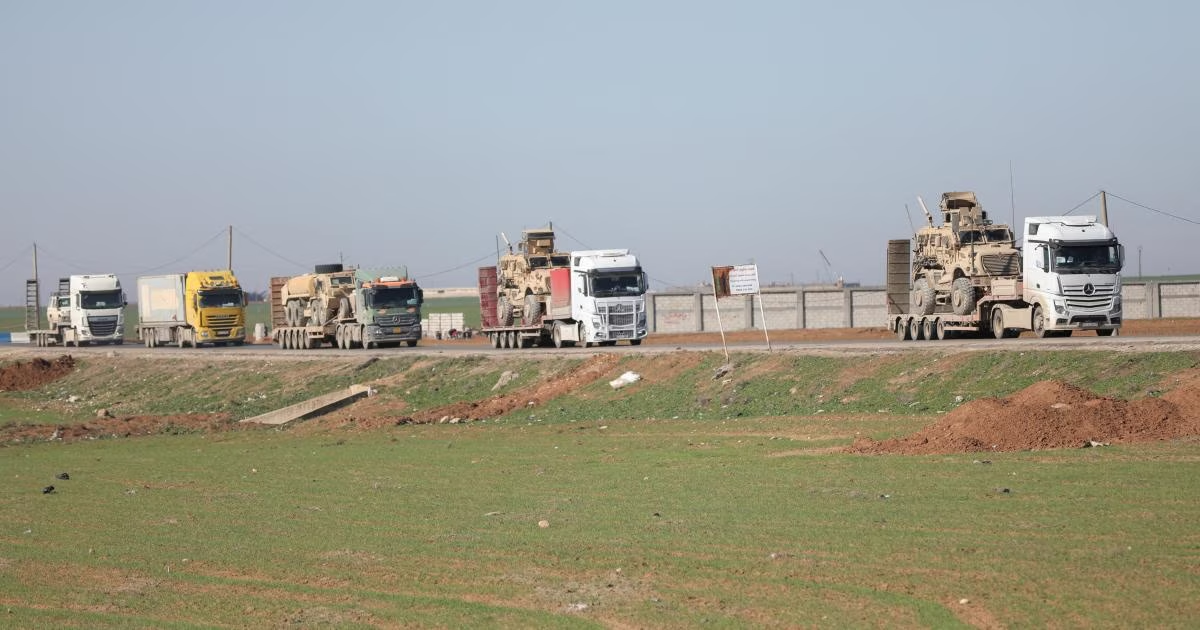
US forces began field withdrawal procedures at dawn today, Monday, from the "Qasrok" base located in the Hasakah countryside, northeastern Syria. This base is classified as the last major military stronghold of the United States in the country, making this move a strategic shift in the course of foreign military presence on Syrian territory.

Field sources monitored the movement of dozens of logistical trucks loaded with equipment and military vehicles from inside the base, heading in organized convoys towards the Syrian-Iraqi border. These movements complete an evacuation process whose features began to appear partially since last Saturday in the area near the town of Tal Tamer.

Informed sources reported that the withdrawal from Qasrok base was not surprising, but rather preceded by logistical preparations in recent days, including the transfer of sensitive equipment. This base was an important focal point that oversaw coordination and support operations in northeastern Syria before the final evacuation decision was issued.

Despite this major withdrawal, sources confirmed the continued presence of some small American sites in Hasakah province, in addition to an airfield that remains under control. The remaining points are currently concentrated in the Rmeilan, Kharab al-Jir, and Live Stone areas, awaiting the completion of the timelines for the comprehensive withdrawal process.

Current data indicate a serious American intention to completely end the military presence and hand over the bases and sites it occupied to the competent authorities. This trend comes after a series of previous withdrawals that included the border triangle area at the "Al-Tanf" base and the "Al-Shaddadi" base, which were handed over to the Syrian Ministry of Defense.

In the same context, US forces had previously completed their withdrawal from the "Al-Omar oil field" and "Conoco" bases in the Deir ez-Zor countryside, which reduced the American deployment area to its lowest levels. These rapid movements reflect Washington's desire to reposition its forces permanently outside Syrian geography.

These developments coincide with American press reports indicating that the US Army is preparing to withdraw its remaining approximately one thousand soldiers within a period not exceeding two months. This timeline is linked to the completion of operations to transfer elements associated with ISIS to Iraqi territory and secure the borders.

It is worth noting that the US military presence in Syria officially began in 2015, as part of the international coalition to fight ISIS. Since then, Washington has maintained multiple bases and deployment points, before gradually reducing them, leading to the widespread evacuation operations witnessed in the region today.

The American withdrawal from Qasrok base represents a crucial stage in ending the military presence that began in 2015.

ISRAELI AFFAIRS

Mon 23 Feb 2026 4:03 pm - Jerusalem Time

Netanyahu's New Axes: A Reading of the Strategy of Besieging and Dismantling the Region

The Prime Minister of the occupation state, Benjamin Netanyahu, revealed new strategic directions aimed at forming a broad international and regional alliance, through which he seeks to confront what he called the 'extremist Shiite axis' and the 'extremist Sunni axis' that has recently emerged. These statements coincide with preparations for the visit of Indian Prime Minister Narendra Modi to Tel Aviv, reflecting an Israeli desire to build a bloc that shares the same security and political vision towards the region's challenges.

Netanyahu's vision goes beyond mere local media consumption, as he identified the parties of the supposed axis to include, in addition to Israel and India, Arab and African countries and countries from the Mediterranean basin such as Greece and Cyprus. The essential goal appears to be to create a security and political cordon surrounding regional powers that Israel considers a direct or future threat to its interests and expansion in the Middle East.

While the implications of the 'Shiite axis' are clear in referring to Iran and its allies in Lebanon, Yemen, and Iraq, the term 'extremist Sunni axis' remains vague and alarming in political circles. Israeli leaks sometimes refer to Turkey and Syria, and at other times extend to include major countries such as Egypt, Saudi Arabia, and Pakistan, reflecting a comprehensive suspicious view towards the Arab and Islamic surroundings.

These moves confirm a radical shift in Israeli security doctrine after the events of October 7, as it moved from a policy of containing threats to a strategy of 'early suppression'. This theory relies on launching preemptive wars and expanding buffer zones within the borders of neighboring countries, which explains the continuous escalation in the Syrian arena despite the absence of an imminent military threat from it.

The true essence of this strategy represents a return to the early roots of the Zionist project laid down by Ben-Gurion and Jabotinsky, which is based on the idea of 'correcting the errors of establishment'. This includes attempts to eliminate the Palestinian presence in the occupied territories of 1948, the West Bank, and Gaza through forced displacement plans and direct re-occupation under flimsy security pretexts.

Through the new 'Periphery Alliance', Netanyahu seeks to revive an old doctrine that relied on building relations with non-Arab countries to besiege the confrontation states. Today, this doctrine is being updated to include India to the east, and Greece and Cyprus to the west, with attempts to penetrate the Horn of Africa and the South Caucasus, to ensure the isolation of central powers in the region and weaken their geopolitical influence.

These alliances are accompanied by a hidden strategy aimed at inciting internal conflicts within major countries in the region on ethnic and sectarian grounds. Through the fragmentation of these countries, Israel aspires to transform into a natural entity within a group of sectarian 'mini-states', instead of being an alien body rejected by the unified Arab and Islamic fabric.

Netanyahu's statements send a clear message that there are no true allies for Israel in the region, even those who signed peace or normalization agreements. The only criterion for Israeli acceptance is complete submission to the Zionist vision and Tel Aviv's security objectives, which places all signatory countries in the circle of future targeting.

Reports indicate that the planned war against Iran is merely one link in a long chain aimed at subjugating the entire region to absolute Israeli influence. Sources have monitored hostile statements by Israeli officials targeting the Egyptian army and the Saudi leadership, confirming that Israeli ambitions do not stop at one front but extend to include all regional powers.

This Israeli vision is not separate from current American trends, especially with the emergence of the features of the 'Deal of the Century' in its new version that supports the annexation of the West Bank. Statements by US Ambassador Mike Huckabee support this trend, as he openly adopts the vision of 'Greater Israel' based on biblical myths that transcend internationally recognized borders.

The American approach supporting Netanyahu is based on the principle of 'peace through strength', which means imposing stability through excessive military subjugation and economic intimidation. This logic ultimately aims to transform the region into a shared sphere of influence dominated by Israeli technology and military machinery with full logistical and political support from Washington.

What Netanyahu is proposing is not just a passing political discourse, but an expression of a strategic doctrine that has come to govern the joints of decision-making in the occupation state. The danger of this vision lies in its treatment of the geopolitical landscape of the region as an arena for forced reshaping to serve long-term Zionist interests at the expense of national sovereignty.

Despite the condemnations and denunciations issued by Arab capitals regarding these statements, reality necessitates moving beyond the language of diplomatic condemnation. The declared Israeli project represents an existential threat that requires building self-defense capabilities and strengthening genuine inter-alliances among the countries of the region to confront this expansion.

Supporting Palestinian resistance in the front line remains the primary guarantee for disrupting these expansionist plans that target everyone without exception. Defending the Palestinian right is no longer merely a duty of solidarity, but has become a strategic necessity to defend the security and stability of all Arab capitals in the face of the ambitions of 'Greater Israel'.

Netanyahu seeks to create an axis of countries that share the same vision of reality, challenges, and goals in confronting what he described as extremist axes.

PALESTINE

Mon 23 Feb 2026 4:03 pm - Jerusalem Time

Settlers set fire to a mosque west of Nablus and spray racist slogans

A mosque located between the villages of Surra and Tal, southwest of Nablus city, was subjected to a terrorist attack at dawn today, Monday, when a group of settlers set fire to its main entrance. The fire caused clear material damage to the outer gate and facade before local residents were able to intervene quickly, control the flames, and prevent them from reaching the inner prayer hall.

Field sources reported that the attackers spray-painted inciting and racist slogans on the mosque's walls, including vengeful phrases associated with the extremist 'Price Tag' group. Initial inspections showed that the settlers poured flammable materials after breaking the outer door, in a deliberate attempt to cause the greatest possible destruction to the house of God.

Surveillance cameras in the vicinity of the site documented two settlers infiltrating from the direction of the 'Havat Gilad' settlement, established on citizens' lands west of Nablus, where they carried out their crime under the cover of darkness before withdrawing from the scene. Evidence suggests that the attackers tried to penetrate further into the mosque, had the fire not been extinguished early in the dawn, which prevented a larger catastrophe.

This attack comes amid a frenzied escalation of settler attacks targeting Palestinian villages and towns in various governorates of the West Bank. These attacks coincide with intensive military operations carried out by the Israeli army, which recently included widespread incursions into the town of Ya'bad, southwest of Jenin, reflecting a state of increasing security tension in the region.

For its part, the Ministry of Endowments and Religious Affairs revealed alarming statistics indicating that more than 45 mosques in the West Bank have been targeted since last year. The ministry considered these attacks not spontaneous, but rather part of a systematic retaliatory policy led by extremist settler groups such as 'Hilltop Youth' and 'Price Tag' under the cover of an inciting political climate.

In a related context, the Palestinian Prisoners' Club indicated that the pace of arrests in the West Bank has reached unprecedented levels since October 7, 2023, with the number of detainees exceeding 23,000 Palestinians. These arrests are accompanied by systematic destruction of infrastructure and repeated attacks by settlers on Palestinian property and holy sites.

The Ministry of Endowments confirmed that more than 45 mosques have been subjected to attacks in the West Bank since last year, in the context of organized retaliatory operations.

ARAB AND WORLD

Mon 23 Feb 2026 4:03 pm - Jerusalem Time

Iran warns Washington against 'limited strike': Surrender is not our custom

The Islamic Republic of Iran has issued a strong warning to the United States, asserting that any military action targeting its territory, even if described as 'limited,' will be treated as full-scale aggression. Tehran clarified that this stance comes in response to recent threats made by President Donald Trump's administration regarding the possibility of direct military intervention.

During his weekly press conference, Iranian Foreign Ministry spokesman, Ismail Baqaei, emphasized that international laws grant his country the full right to legitimate defense of its sovereignty. Baqaei noted that any country facing similar threats would adopt the same firm stance to protect its national security and supreme interests.

These developments follow statements by US President Donald Trump, in which he hinted at considering the option of limited military strikes if the current diplomatic path falters. Observers believe that these statements aim to pressure the Iranian side into making concessions on outstanding issues, especially with crucial negotiation rounds approaching.

On the diplomatic front, sources revealed the continuation of efforts led by the Sultanate of Oman to bridge the views between the two parties through indirect channels. The third round of these talks is scheduled to begin next Thursday, after two previous rounds held in Muscat and Geneva to discuss de-escalation and the nuclear agreement.

For his part, Iranian Foreign Minister, Abbas Araqchi, expressed cautious optimism about the possibility of reaching a comprehensive political settlement that would end the current state of tension. Araqchi affirmed in media statements that technical teams are currently working on drafting a text that includes elements of a potential agreement, noting that there is a 'good opportunity' for success if Washington shows the will.

Despite openness to dialogue, Araqchi reiterated Tehran's strict adherence to its right to enrich uranium for peaceful purposes, describing it as a sovereign right that cannot be negotiated. This point is considered one of the most complex issues facing negotiators, as Washington insists on imposing strict restrictions on Iran's nuclear program.

In contrast, the United States continues to bolster its military arsenal in the Middle East, having sent additional aircraft carriers and squadrons of advanced fighter jets. This buildup, according to statements by US envoy Steve Witkoff, aims to demonstrate strength and push Tehran to review its political and military positions.

Iran's Foreign Ministry responded to American inquiries about Tehran's failure to 'surrender' in the face of this military buildup by asserting that the policy of maximum pressure will not succeed. The Foreign Ministry spokesman emphasized that the history of the Iranian people demonstrates their rejection of submission to external dictates, stressing that surrender is not an option in his country's political lexicon.

There is no such thing as a limited strike, and any aggression against our territory will be treated as full aggression requiring a response based on the right of legitimate defense.

PALESTINE

Mon 23 Feb 2026 4:03 pm - Jerusalem Time

Gaza Children Chase Rubble Trucks: A Daily Struggle for Survival Amidst the Wreckage of War

The humanitarian tragedy in the Gaza Strip is escalating with the ongoing Israeli war, which has turned the lives of children into a daily hell. Youngsters have become direct victims of systematic destruction and the loss of basic necessities. Amidst the tight siege and the absence of any horizon for reconstruction, thousands of children find themselves forced to abandon their schooling and head to the destroyed streets in search of a livelihood.

Field sources observed a grim scene of dozens of children lining the roads, waiting for trucks loaded with the rubble of destroyed homes to pass. These children chase the flying debris in search of metal scraps or materials that can be sold, risking their lives amidst the high speed of the trucks and the accumulation of unstable rubble that could collapse on them at any moment.

This deterioration comes at a time when the destruction of most educational facilities in the Strip has led to children being absent from their schools, shifting the focus entirely to survival rather than academic achievement. The remaining schools have been converted into overcrowded shelters for displaced persons, depriving the younger generation of their right to formal education for the third consecutive year.

Field estimates indicate that the child labor rate in Gaza has jumped to record levels exceeding 80%, a massive increase compared to the pre-war period. These young children are forced to perform arduous tasks beyond their physical capabilities, such as collecting firewood and plastic materials from landfills, to secure the minimum needs of their displaced families.

On the health front, children in the Strip live in a contaminated environment lacking hygiene and safe drinking water, leading to hospitals being filled with cases of skin and intestinal diseases. Medical reports confirm that severe malnutrition has begun to ravage the bodies of young children, amidst a severe shortage of nutritional supplements and essential medicines to treat the epidemics spreading in displacement camps.

United Nations data reveals shocking figures, with approximately 660,000 children currently completely out of the education system, threatening the future of an entire generation. Statistics also recorded the martyrdom and injury of more than 50,000 children since the outbreak of confrontations until mid-2025, a toll that reflects the extent of direct targeting of civilians.

In a related context, about 1,500 children with serious injuries or chronic diseases are awaiting the opportunity to travel abroad for treatment, but the closure of crossings and the lack of medical resources prevent this. These children face the risk of slow death inside hospitals suffering from dilapidated equipment, continuous power outages, and a shortage of specialized staff.

For his part, Amjad Al-Shawa, head of the Palestinian NGO Network, explained that the phenomenon of child labor has become prevalent in all areas of the Strip without exception as a result of the comprehensive economic collapse. Al-Shawa affirmed in statements to media sources that children are the weakest link in this catastrophe, as a series of illnesses and deep psychological crises begin with them.

Children constitute about 47% of the total population of the Gaza Strip, making them the most affected group by the war of extermination that has left massive destruction in infrastructure and homes. Approximately 1.9 million displaced persons currently live in dilapidated tents lacking the simplest standards of human dignity, where children face the cold of winter and the heat of summer without cover or shelter to protect them.

In addition to physical suffering, the psychological crisis stands out as one of the most dangerous consequences of the war, with a UN report issued in November 2025 indicating that 93% of Gaza children suffer from behavioral and aggressive disorders. These psychological traumas resulting from scenes of death and destruction require urgent international intervention to save what remains of Palestinian childhood before it is too late.

Gaza's children have paid the highest price for the war; they have been deprived of education for the third consecutive year and live in an environment lacking the most basic health requirements.

PALESTINE

Mon 23 Feb 2026 4:03 pm - Jerusalem Time

Palestinian Prisoners in Occupation Prisons: Policies of Systematic Abuse and the Dangers of Execution Laws

The Israeli occupation government has opened a new front targeting the bodies of Palestinian prisoners, as abuse has transformed from isolated practices behind walls into a spectacle broadcast by Hebrew channels. This inflammatory media pumping coincides with urgent efforts to adopt laws for the execution of prisoners and exceptional trials for elite Qassam Brigades fighters.

Current data indicates that the number of Palestinian prisoners in occupation prisons has reached approximately 10,000, the majority of whom are from the West Bank and Jerusalem. In contrast, the occupation authorities continue to classify Gaza Strip prisoners as 'unlawful combatants,' holding them in ambiguous detention pathways that lack the minimum international standards of transparency.

Israel officially lists 1249 prisoners under the classification of unlawful combatants according to February 2026 statistics, but this number does not reflect the actual reality. There are hundreds of missing persons from the Gaza Strip whose fate the occupation authorities refuse to disclose, amid fears of their exposure to field executions or enforced disappearance in military detention centers.

Human rights reports issued by the 'HaMoked' organization confirmed the disappearance of hundreds of Gazans after their arrest by the occupation army, where judicial appeals were met with denials of the existence of arrest records for them. This ambiguity surrounds the fate of detainees in facilities such as 'Sde Teiman,' which witnessed deaths resulting from severe torture and harsh detention conditions.

The prisoner movement recorded the martyrdom of 88 individuals inside prisons and detention centers from October 7, 2023, until mid-February 2026. Among these martyrs, 52 prisoners from the Gaza Strip died as a result of systematic torture, deprivation of medical care, and the policy of extreme starvation pursued by the prison administration.

National Security Minister Itamar Ben-Gvir is leading a fierce campaign to approve the law for the execution of Palestinian prisoners, using scenes of repression as a tool for political propaganda. Leaked clips show repression units forcing prisoners to kneel and be humiliated under threat of death, in an attempt to restore the image of Israeli deterrence that was shattered in October.

The death penalty law is no longer just a demand of the far-right; it now enjoys broad consensus within the Israeli Knesset, having passed its preliminary reading last November. This law aims to transform the judiciary into a vengeful arm that legitimizes the killing of Palestinians under a legal cover that bypasses all usual procedures and evidence.

In parallel, the occupation approved the 'Qassam Elite' trial law, which represents a dangerous judicial shift that establishes an exceptional system combining security and political ideology. These trials will take place before special courts with public broadcast sessions, transforming the judicial process into part of the psychological warfare against the Palestinian people.

Observers believe that electoral competition within the Israeli entity is now fueled by the abuse of prisoners, as the coalition and opposition compete to prove who is more resolute and extreme. Ben-Gvir uses the prisoner file to compensate for his failure in internal security matters, achieving quick populist gains in opinion polls at the expense of the detainees' suffering.

The Palestinian prisoner has become, in Israeli consciousness, a symbol of the process of restoring 'national prestige' that was shattered on October 7. The Israeli leadership seeks, through the pumping of cruelty scenes, to fuel collective revenge and divert public attention away from the military and political failures suffered by the Hebrew state.

After the announcement of a ceasefire in October 2025 as part of an international plan, hopes for the release of prisoners in upcoming exchange deals became complicated. The fate of thousands of detainees, especially from the Gaza Strip, has become subject to unilateral Israeli measures that are moving towards tightening penalties and actually implementing death sentences.

The Israeli judicial system has abandoned the minimum procedural integrity, as the Supreme Court rejected dozens of appeals to improve living conditions inside prisons. Lawyers and human rights organizations have become unable to extract any basic rights for prisoners amid the spirit of revenge dominating the entire judicial institution.

UN reports describe what is happening in prisons as 'systematic abuse that requires immediate cessation,' warning of the repercussions of the lack of transparency in military detention centers. Turning the martyrs of the prisoner movement into numbers in enforced disappearance records complicates international accountability efforts and obscures the features of the crimes committed against them.

Palestinian human rights organizations warn that the continuation of repression and starvation policies may push conditions inside prisons to an imminent explosion. With detention centers turning into 'silent execution centers,' prisoners find themselves facing zero options to defend their dignity and lives in the face of the escalating Israeli repression machine.

The combination of execution and special trials redefines the prisoner as sovereign material through which the right tests its ability to impose its definition of deterrence.

PALESTINE

Mon 23 Feb 2026 4:03 pm - Jerusalem Time

Smotrich threatens 'ultimatum' to disarm resistance in Gaza in coordination with Washington

Israeli Finance Minister Bezalel Smotrich reiterated his threats to launch a large-scale military operation in the Gaza Strip, aimed at completely dismantling the military capabilities of the Hamas movement. Smotrich indicated in press statements that the Israeli government is currently giving the US administration, led by Donald Trump, an opportunity to address this issue according to its vision, stressing that the goal of destroying the movement remains and has not been abandoned.

The extremist minister expected that the coming days would witness a 'final ultimatum' to the movement, requiring it to surrender its weapons and completely dismantle its military structure. Although he did not disclose the mechanism through which this ultimatum would be delivered, he stressed that failure to respond to these demands would give the Israeli army 'international legitimacy' and American cover for direct military action to achieve this goal.

The leader of the 'Religious Zionism' party revealed that intensive military preparations are underway behind the scenes, as the army is developing updated operational plans to deal with the next phase. He explained that the political level in Tel Aviv held a series of in-depth deliberations to improve these plans and ensure their effectiveness, while expressing his doubts about Hamas's response, as he believes that the chances of its voluntary disintegration are almost non-existent.

In contrast, the Hamas movement continues to cling to its military arsenal as part of its right to resist the occupation, proposing alternative formulas that include freezing or storing weapons within a long-term truce agreement. The United Nations classifies Israel as an occupying power in the Palestinian territories, which strengthens the legal position of the resistance in maintaining its defensive tools in the face of continuous violations.

These threats come at a time when the Gaza Strip is suffering from the effects of a two-year genocide, which resulted in the martyrdom of more than 72,000 Palestinians and the injury of about 171,000 others. The destruction has affected nearly 90% of vital facilities and infrastructure, amid UN estimates indicating that rebuilding what the war machine destroyed requires a huge budget exceeding 70 billion dollars.

On the ground, sources reported that the occupation forces continue to violate the ceasefire agreement, which came into effect on October 11, on a daily basis. These continuous violations have led to the martyrdom of 615 people since the signing of the agreement, which puts the current calm on the verge of collapse in light of the continuation of limited military operations and assassinations.

In addition to the military escalation, the occupation authorities impose strict restrictions on the entry of humanitarian aid and agreed-upon basic needs, which exacerbates the catastrophic conditions for about 2.4 million Palestinians living in the Strip. The Israeli government links the start of reconstruction operations to the condition of disarmament, which Palestinian forces reject and consider political blackmail in light of the escalating humanitarian crisis.

In my estimation, a final ultimatum will be issued to Hamas in the coming days to completely dismantle and disarm in Gaza.

PALESTINE

Mon 23 Feb 2026 4:02 pm - Jerusalem Time

Gaza After Washington Meeting: Reconstruction Promises and Complex Field Challenges

The Peace Council meeting, hosted by the US capital Washington on the nineteenth of this month, concluded, leaving behind a state of cautious anticipation among the residents of the Gaza Strip. While Palestinians await tangible results to end the suffering of displacement and destruction, the land still lacks the most basic necessities of life despite major international promises.

Participants in the meeting prepared to allocate a massive budget of up to 17 billion dollars as part of a comprehensive plan to rebuild what the war destroyed in the Strip. The announcement also included the start of rehabilitating a new police force, but these steps did not adequately address the outstanding issues that directly affect the daily lives of the residents.

Political analysts believe that the Peace Council's agenda focused heavily on the issue of disarming the resistance, overlooking the requirements for ending the war and the steps required from the Israeli side. This approach raised concerns about marginalizing fundamental humanitarian and political issues in favor of focusing on security arrangements that serve a specific vision.

Sources reported that Palestine was a "present absentee" at the meeting, as direct references to the Palestinian state were absent, and representation was limited to the administrative aspects of the Strip. The Palestinian street demands the necessity of transforming these meetings into real pressure that prevents repeated ceasefire violations by the occupation army.

Urgent popular demands include forcing the occupation to withdraw from about 56% of the Gaza Strip's area, to enable displaced persons to return to their areas. Observers also stress the need for immediate commencement of reconstruction operations away from political conditions that may hinder saving the deteriorating humanitarian situation.

Followers point out that the Peace Council, formed under Security Council Resolution (2803), faces criticism regarding the legitimacy of the membership of parties accused of committing genocide crimes. Palestinians believe that the primary mission of the Council should be to stop genocide in its comprehensive sense, including ending the starvation and siege imposed on the population.

In a related context, sources confirmed that the Council's decisions did not address fundamental issues such as the humiliation of travelers through crossings and the continuation of field violations. The question remains about how to deal with the security file in the presence of thousands of former security personnel who are still on duty in Gaza.

Official reports monitoring violations since the start of the ceasefire agreement last October indicate that the occupation committed more than 1800 various violations. These aggressions, which included shelling and incursions, resulted in the martyrdom of hundreds and the injury of thousands, putting the credibility of international agreements at stake.

As for humanitarian aid, the occupation authorities continue to obstruct the entry of trucks, with the daily average entry not exceeding 259 trucks. This quantity represents only about 43% of the agreed-upon needs, exacerbating the food and medicine crisis within displacement centers and destroyed neighborhoods.

Regarding the movement of individuals, the Rafah crossing recorded low numbers of travelers since its reopening in February, with a compliance rate not exceeding 40%. This systematic restriction on the movement of Palestinians increases popular frustration with the outcomes of international meetings that do not reflect an improvement in their living reality.

Writers and analysts warn against attempts to obscure Palestinian identity through the formation of administrative committees that do not possess real political powers. Also, the failure to disclose the dates of the Israeli army's withdrawal from the "Yellow Line" raises doubts about the occupation's intentions to remain for longer periods within the Strip's territories.

The coming days represent a real test for implementing what was announced regarding the deployment of the international "stabilization force" and the actual start of reconstruction. Some believe that linking reconstruction to disarmament places Palestinians in a difficult equation aimed at trading basic needs for political and security positions.

Experts propose three possible paths to deal with these pressures, ranging from rejection and confrontation that may restart military operations, or calculated political bargaining. The third path is waiting, which may lead to the exhaustion of internal forces and the rise of non-national parties to manage the scene.

Ultimately, the residents of Gaza remain the weakest link in these international tug-of-wars, as they aspire to real independence and a sovereign state. The recognition that the Palestinian issue is a matter of self-determination, not just a humanitarian crisis, remains the fundamental demand that transcends all promises of funding and reconstruction.

Data indicates a shift in the management of the conflict in Gaza to a hybrid warfare model based on reconstruction and international security legitimacy as tools of pressure.

PALESTINE

Mon 23 Feb 2026 4:02 pm - Jerusalem Time

Minister of Finance to "Al-Quds": Our steadfastness is a miracle, and tax compliance is a lever for the continuation of basic services

• What we are experiencing is not a fleeting crisis but a real existential threat to the economy and institutions • Targeting Palestinian banks is playing with fire and crossing all red lines • Budget support in 2025 is a political message before it is a financial figure • Clearance is a political battle, not a technical one, and Israel uses money as a weapon • We only own 30% of our revenues • Tax compliance is not just a legal duty but a lever for the continued provision of services • International partnerships are temporary support without compromising national decision-making • Employees' rights are preserved and will not be canceled no matter how severe the crisis. In one of the most complex political and economic stages, where financial pressures intersect with direct political targeting of the components of national existence, "Al-Quds" conducted a lengthy interview with the Minister of Finance, Dr. Estephan Salameh, prepared and conducted by journalist Muhannad Yassin, to ascertain the reality of the financial situation, the limits of the current crisis, and the government's approaches to dealing with it, away from embellishment or rhetorical discourse. Minister Salameh placed the figures in their political context, speaking frankly about an "existential crisis" and about steadfastness managed by the logic of daily miracles, reviewing the features of the clearance piracy crisis, public debt, the role of the banking sector, and the relationship with the international community, emphasizing that what is happening is not a fleeting financial crisis, but a historical test for the survival of Palestinian institutions and economy. A financial crisis representing existential risks Q- Is there a frank discussion with the people about the financial crisis? The Palestinian economy has experienced complex crises for decades, but it has managed to adapt to them in one way or another despite their cumulative effects. However, the withholding of clearance funds for the tenth month has significantly disrupted economic activity in the country and limited our ability to maintain a stable economic situation and provide sufficient employment within Palestinian society. Frankness exists, and communication with the people is ongoing through relevant institutions, but frankly, we must speak more clearly. We face a real existential crisis. This existential crisis means that Israel is besieging us from all fronts, and the financial and economic dimension is an essential part of it. Israel seeks to influence the existence of Palestinian institutions and their ability to provide basic services, and aims to destroy the Palestinian economy and make it completely dependent. Recently, the targeting has been clearly directed at the Palestinian banking system, which is practically the backbone of the Palestinian economy. When Palestinian banks are targeted, they are practically, in popular terms, "playing with fire," meaning they have crossed all red lines and taboos. This targeting is clear in its objectives, which is to destroy Palestinian institutions, including the Palestinian economy, and foremost among them, Palestinian banks. Therefore, the crisis we are experiencing is not a fleeting crisis, nor merely a temporary emergency we are going through, but it is, in my opinion, an existential crisis. And the existential threat we face is a reality, not a matter of imagination or exaggeration. Q- What are the features of your crisis management? We are working on several fronts to confront these challenges and this existential crisis I spoke about. The lines of work we are engaged in can be summarized as follows: First: Through our relations with the international community, we seek to achieve two goals. The first is political, but at the same time, it aims to support the Palestinian economy and the Palestinian financial system, including treasury support, which constitutes a kind of protection and stability for political decision-making. "Frankly, we have many friends in the world, and there are those who try to downplay the importance of this path, and I believe that this underestimation not only affects the efforts made but also diminishes the importance and impact of international relations, which have become a fundamental supporter for us today at the popular level, and at the level of governments and decision-makers (...) This path helped us, for example, last year, to achieve a tangible increase in international support for the budget and treasury. International support is divided into three parts: a part for relief, a part for development and project support, and a part for budget support." Relief support and project support are generally stable, despite the decline in American and some other countries' support in the development field, but the overall situation is stable and has not significantly affected us. As for budget support, it has seen a real breakthrough. It rose from about 200 to 250 million dollars previously, to reach more than 800 million dollars in 2025. It is true that this amount is not enough, but it covers about two months of operational needs, including salary payments and others, and it is very important, and the political message behind it is more important than its financial value. Clearance is a political battle, not a technical one. Second, everything we do does not negate the recovery of our rights. Our primary goal is to pressure Israel to release clearance funds and adhere to international and bilateral agreements, whether related to the shekel crisis, mutual banking relations, or our revenues, of which clearance constitutes the largest part. This path is primarily political, not technical, as the technical aspects exist and are resolved, but the crisis is purely political. The current Israeli government wants us to collapse and is closing in on us politically, financially, and economically by drying up resources, with the aim of bringing down institutions. That is why I say that the importance of the Palestinian National Authority today is greater than ever before, because Israel has realized that the Authority is the tool, or the vehicle, that leads to the Palestinian state. This realization came as a result of the international achievements that have been made, including the recognition of 159 countries of the State of Palestine. Despite attempts to downplay the importance of this recognition, it is very important and has a direct impact on us. Some may ask: Has this recognition changed the reality? And I say that it has increased pressure on Israel, changed our international status, and changed the nature of our developmental, financial, and economic relations with these countries. Steadfastness with the equation of daily miracles Third, internal measures to enhance steadfastness. In light of resource scarcity, we try to manage them better. We focus on sectors with an existential dimension, such as education, health, and security, because they are sectors that no state or society can live without. We also give special importance to Jerusalem, and provide the minimum for other institutions, while rationalizing expenditures, and working intensively to increase revenues. Israel asks how the Authority is still standing despite all the siege and pressures on banks, government, and the private sector. The answer is that all components of Palestinian society stand shoulder to shoulder. And we, as the Ministry of Finance, are entrusted with public money, working to reform systems, reduce corruption, enhance revenues, reduce expenditures, and put money in the right place. Every month is suffering, and every month is a miracle, made by the collective effort of all parties of Palestinian society. Here I say frankly, and it is a sensitive but important issue: there is massive tax evasion. In light of the existential crisis we are experiencing, leniency in this matter is no longer acceptable. Whoever does not fulfill their tax duty does not fulfill their national duty, because this duty has become part of the battle for steadfastness. Non-compliance with taxes negatively contributes to the collapse of the institutions we need to continue providing hundreds of services to citizens. In numbers, clearance constitutes between 68% and 70% of our revenues, and no country in the world can live without 70% of its revenues. The normal situation is for the Authority to collapse, but what we are experiencing today is an abnormal situation. The steadfastness of this people and its institutions is a true miracle. Our local revenues constitute about 30%, or about 400 million shekels, a large part of which, an average of about 300 million shekels, goes to service loans. In contrast, we need approximately one billion shekels monthly to maintain the minimum operation of institutions, of which about 720 to 750 million shekels are for salaries and quasi-salaries at only 60%, in addition to about 200 million shekels for operational needs, especially the health sector, where we have large debts to hospitals and for medicines. We do not have 100% of the resources and we pay 60%, but we have much less than that, and yet we continue. And this is the miracle I am talking about, and it is not only the result of financial management, but the result of the solidarity of all components of Palestinian society. Banks are playing their national role, Palestinian companies are playing their role, public sector employees with their patience and endurance, the private sector, civil society, mothers, families, and government institutions, including the Ministry of Finance and the Monetary Authority, all are working in harmony, under the guidance of His Excellency the President and the Prime Minister, to achieve this miracle month after month. Q- There is a complete withholding of clearance funds, but in return, there is an increase in external grants. What is your explanation for this? In short, our financial situation began to deteriorate a long time ago. We witnessed clear attempts to punish us after we turned to the United Nations General Assembly and obtained observer state status. Since then, international support, especially budget support, began to decline, because this file is directly linked to politics. Nevertheless, we are moving according to our national priorities and national rights, and we are proceeding on this path under the guidance of His Excellency the President, despite the consequences, including the financial consequences that we knew would come. This support gradually declined until it practically stopped in 2017, and no longer exceeded about 200 million dollars, limited to a small number of countries. Last year, we were able to break this ban on budget support, by proposing the idea of emergency treasury support, which was announced by His Excellency Saudi Foreign Minister Faisal bin Farhan in partnership with Spain, Norway, and France. And we have indeed started receiving support in this framework, although this path still requires additional efforts to ensure its continuity. This announcement constituted a clear break of the ban imposed on budget support, and was in its essence also a message of political support for the Palestinian National Authority. In light of the Israeli aggression aimed at destroying the Authority, the international community became more aware of the importance of providing direct financial support and simultaneous political support, to maintain the continuity of the Authority and its role. Grants between reality and alternatives Q- Can we expect more foreign aid, especially Arab aid? First, it is important to emphasize a crucial point: budget support figures vary from year to year, and each year has its own specificities. Therefore, it is important to be precise when discussing them. Last year, budget support amounted to approximately 800 million dollars, noting that part of this support has not yet been disbursed, and the full amount was not disbursed during 2025. This is for clarification and accuracy. To be frank, direct Arab aid to the treasury is currently limited to two main countries: Saudi Arabia and Algeria. This is the current reality, with an emphasis that there is room to develop and increase this support in the coming period. As for support for development projects, it usually ranges annually between 300 and 400 million dollars. If we combine last year's figures, between budget support and project support, the total support reaches about 1.2 billion dollars. In contrast, there is significant support allocated for relief, especially in light of the humanitarian catastrophe and genocide in the Gaza Strip. This support may reach billions of dollars, but it is not included in our figures because it is humanitarian relief support that does not enter the general budget, but is considered a separate international responsibility. Therefore, when discussing the international support we rely on in our calculations, we are specifically referring to budget support and developmental project support only, which can be estimated at about 1.2 billion dollars annually. With an emphasis that these figures are not fixed, as developmental support may increase in one year and budget support may decrease in another, depending on political and economic circumstances. Consequently, support levels fluctuate and do not follow a single pattern. Q- Are foreign grants conditional? For us, we do not treat foreign relations as a relationship of orders or dictates. With all humility, we deal with them from a partnership perspective. Palestine seeks to build bridges with everyone; we are not looking for enemies, but rather working to build bridges with all friendly and sisterly countries. Therefore, I always make sure to use the term "partnerships" rather than "aid." We are not a people incapable of relying on ourselves, nor are we an uneducated people. We are an educated people, and we have real capabilities that enable us to rely on ourselves. What compels us to receive external support is the reality of the occupation, which controls our resources, money, and capabilities. Ending the occupation is enough to make us independent of this aid. Hence, the primary goal of the partnerships we build is political, which is to contribute to ending the occupation, and temporarily support us financially and economically to strengthen our steadfastness. It is true that these partnerships sometimes have consequences and obligations, but we are keen to manage them in a way that does not affect our national policies and does not detract from our legitimate rights. Public Debt: A Product of Political Siege Q- How much is the public debt, and what are your expectations for the current year? Data indicates that Palestine's public debt reached an unprecedented level of approximately 15 billion dollars by the end of 2025, equivalent to about 54-55 billion shekels. This figure cannot be separated from the coercive political context imposed by Israeli occupation measures. A large part of this debt does not reflect internal spending imbalances but rather stems from the withholding of clearance funds, which constitute between 68% and 70% of public revenues, and from the Israeli legal offensive, which involved approximately 430 lawsuits totaling about 45 billion shekels, used as a systematic tool of pressure to paralyze public finances and push the Authority towards internal borrowing. In contrast, the Palestinian banking sector formed the last line of defense to prevent financial collapse, by continuing to lend to secure salaries and minimum operations, despite high risks and escalating targeting. As for 2026, forecasts do not indicate a fundamental decline in the size of the debt, but rather its management within the logic of steadfastness, not recovery. Any improvement remains conditional on the full release of clearance funds, the cessation of Israeli lawsuits, and a pressing international political shift that translates into sustainable financial support. Without that, public debt will remain part of the tools of political conflict rather than a traditional financial indicator. Entitlements are preserved and will not be canceled Q- Are there any assumptions indicating the cancellation of public employees' entitlements from the government? And how much were the entitlements until the end of January 2026? No, absolutely not. This is not on the table at all. We emphasize this monthly when salaries are disbursed. We clearly announce that the accumulated entitlements of public employees are fully preserved financial liabilities, and will not be canceled or waived under any circumstances. These entitlements are a fixed right for employees, and they are recorded and recognized, and they will be fulfilled as soon as financial capabilities are available. What is currently happening is a forced postponement resulting from the financial crisis, not a cancellation or write-off of rights.


ISRAELI AFFAIRS

Mon 23 Feb 2026 4:02 pm - Jerusalem Time

Former Israeli National Security Advisor: Palestinians Did Not Raise the White Flag Despite American Support

Former Israeli National Security Advisor, Tzachi Hanegbi, warned against underestimating the combat capabilities and spiritual resilience of enemies, noting that the next surprise might be closer than decision-makers in Tel Aviv imagine. In an extensive analytical article, Hanegbi pointed out that the scene in Gaza resembles the ambiguity surrounding the Iranian file, where questions remain about the effectiveness of international agreements and their ability to stop support for regional proxies, or the possibilities of an American strike and its repercussions.

The former official explained that the ongoing war, despite Israel's field gains, has produced tactical successes for the Palestinian side, some of which have turned into long-term strategic achievements. Hanegbi believed that there are four major shifts that have harmed Israeli interests: first, the dissipation of normalization opportunities with Saudi Arabia in the foreseeable future; and second, the strong return of the Palestinian issue and the two-state solution to the international forefront after years of marginalization.

Regarding supporting fronts, Hanegbi noted that the war created an unexpected enemy in Yemen in the form of the Houthi group, which has caused various damages to the occupation and continues to show no retreat from continuing attacks. He also considered that the legal prosecutions by the International Criminal Court against Benjamin Netanyahu and Yoav Gallant constitute a strategic constraint that affects the freedom of movement of the Israeli leadership and places it under unprecedented international pressure.

Hanegbi, who recently left his post following disagreements with Netanyahu, concluded that Israel's enemies believe that victory is their ally as long as they maintain their existence and resistance. He affirmed that the Palestinian side has shown exceptional resilience for two full years without surrender, considering that absolute American support for Israel failed to break their will or push them to raise the white flag as was hoped in initial assessments.

The article touched upon the achievements made by Palestinians from their perspective, as they succeeded in freeing hundreds of high-sentence prisoners and managed to impose international isolation on Israel. According to Hanegbi, this Palestinian reading of events will push them to rise from the rubble with renewed energy, meaning that the conflict has not ended with the destruction of military infrastructure but may take more complex forms in the near future.

Hanegbi stressed the need not to repeat the intelligence and political errors that preceded the events of October 7, recalling that Israeli assessments after Operation 'Guardian of the Walls' indicated Hamas's deterrence and weakening. He explained that reality proved that Yahya Sinwar's reading of the conflict was completely different from Israeli assessments, as he was preparing for a strategic attack at a time when Tel Aviv believed it had contained the threat.

In conclusion of his analysis, the former advisor predicted that plans to destroy Israel would return to form the basis of enemy movements in a phase that might be earlier than expected. He called on the Israeli leadership to remain in a state of constant vigilance and continuous skepticism, with the necessity of maintaining internal unity to face the existential challenges produced by the current war and its regional and international repercussions.

Even the full alignment of the United States with our side did not push the Palestinians to raise a white flag, as they consider survival and existence a victory.

PALESTINE

Mon 23 Feb 2026 11:36 am - Jerusalem Time

Smotrich issues an ultimatum to Hamas: Surrender or full occupation and re-settlement

Bezalel Smotrich, the Israeli occupation government's finance minister, has launched a new wave of escalating threats targeting the Palestinian presence in the Gaza Strip. These threats revolve around imposing a full military occupation of the Strip, with efforts to displace residents and rebuild settlements that were evacuated in 2005.

Smotrich claimed in statements made on Monday that Tel Aviv is about to issue what he described as a 'final ultimatum' to the Hamas movement in the near future. This ultimatum includes explicit demands for all the movement's leaders to leave the Strip, and for the complete and unconditional surrender of weapons, headquarters, and tunnels.

The far-right minister threatened to resort to direct and large-scale military action if the movement rejects these demands, claiming that this step would grant Israel 'international legitimacy' for the action. These statements come amidst ongoing field tensions and attempts to impose a new political reality in the region.

Smotrich linked the fate of upcoming military operations to the success or failure of efforts by US President Donald Trump to eliminate Hamas. He affirmed that Israel has not abandoned its declared goal of completely destroying the military and political capabilities of the movement in the Gaza Strip.

The minister revealed the existence of executive plans being developed by the Israeli army aimed at occupying the Strip for long periods and establishing a 'Jewish settlement' in its heart. Observers considered these plans a blatant violation of all international understandings and UN resolutions that reject changing the geographical and demographic status of the Strip.

These threats come at a sensitive time, as Smotrich's rhetoric contradicts the terms of the ceasefire agreement concluded last October. That agreement explicitly stipulated the necessity of the withdrawal of Israeli forces from all territories of the Gaza Strip and the start of reconstruction operations.

Despite a long time passing since the agreement, field sources confirm that the occupation forces have not withdrawn from their vital positions in the Strip to date. In contrast, the Hamas movement adheres to its position of refusing to surrender weapons, considering this issue an internal Palestinian matter that the occupation has no right to interfere with.

Smotrich's statements were not limited to the Gaza Strip but extended to include the occupied West Bank through renewing his calls to encourage 'voluntary emigration'. This approach, according to his statements, aims to reduce the Palestinian presence and prevent the establishment of any independent Palestinian state in the future.

These extremist positions reflect the extent of influence enjoyed by the right-wing current within Benjamin Netanyahu's ruling coalition. This government is racing against time to expand the settlement project in all Palestinian territories since the outbreak of the widespread confrontation on October 7, 2023.

Analysts believe that Smotrich's statements aim to embarrass international parties and pressure the US administration to adopt the vision of the Israeli right. They also exacerbate the state of tension in the Palestinian street, which rejects plans for forced displacement and permanent occupation.

Amidst these threats, the scene in Gaza remains open to all possibilities, especially with the occupation government's insistence on proceeding with its settlement policy. Fears are growing that these policies will further ignite the situation in the region, threatening any future opportunities for calm or stability.

We will soon issue a final ultimatum to the Hamas movement, which includes the departure of its leaders and the surrender of all weapons, headquarters, and tunnels.

ARAB AND WORLD

Mon 23 Feb 2026 11:28 am - Jerusalem Time

Iran Accuses Israel of Diplomatic Sabotage, Prepares for Geneva Talks with Comprehensive Draft

The spokesperson for the Iranian Ministry of Foreign Affairs, Esmail Baghaei, affirmed that his country is monitoring continuous Israeli attempts to play a destructive role aimed at undermining existing diplomatic paths. Baghaei explained in press statements that Tehran is moving forward with arrangements for discussions with the United States, while maintaining full vigilance regarding Israeli movements in the region.

The Iranian Foreign Ministry categorically denied Western media reports about reaching an interim agreement with the US administration, describing those reports as baseless. The ministry's spokesperson stressed that any round of discussions must be based on a common understanding and serious work to ensure positive and optimistic outcomes.

As part of logistical and political preparations, diplomatic sources revealed that Iranian Foreign Minister Abbas Araghchi held a series of intensive contacts with the foreign ministers of Iraq and Oman. These moves aim to coordinate arrangements for the upcoming round of negotiations, given Oman's continued active role as a key mediator between Tehran and Washington.

A new round of negotiations concerning the nuclear file is scheduled to begin next Thursday in Geneva, Switzerland. This step comes within the context of accelerated Iranian efforts to return to direct and indirect dialogue, with the aim of addressing outstanding issues and avoiding further escalation in the region.

Minister Abbas Araghchi is currently working on drafting a comprehensive and coherent proposal that includes Iran's vision for a solution, in preparation for its presentation during the Geneva meetings. This draft is expected to be delivered to the American side through Omani mediation, in an attempt to bridge viewpoints and accelerate the pace of technical and legal understandings.

Informed sources indicated that intensive Iranian diplomatic efforts are primarily aimed at avoiding any potential military confrontation with the United States. Tehran seeks to utilize open communication channels with the International Atomic Energy Agency (IAEA) and its Director-General Rafael Grossi to strengthen its negotiating position and prove the peaceful nature of its program.

In statements to international media, Araghchi expressed his country's realism regarding the negotiation process, noting that it is not possible to absolutely guarantee the prevention of any military action by the US administration under Donald Trump. Nevertheless, the Iranian minister considered the current military buildup unjustified, especially since the issue can be resolved through the legal frameworks of the IAEA.

Tehran proposed the possibility of reaching a comprehensive and strict monitoring mechanism for its nuclear program in close cooperation with the IAEA. The Iranian side believes that this mechanism can dispel international concerns if Washington has the political will to deal with the issue as a technical matter, away from politicization.

Araghchi revealed that his country received several proposals after the second round of Geneva, explaining that the new draft will take into account some American proposals related to the economic aspect. These proposals include the possibility of opening the door for investments in vital sectors such as oil and gas, in addition to development projects in selected Iranian cities.

Despite openness to economic proposals, sources close to the Foreign Ministry affirmed that Tehran does not intend to make sovereign concessions or grant 100% full privileges. Iran's position remains contingent on the seriousness of the other party in building a balanced strategic partnership that ensures the lifting of sanctions and the establishment of Iran's peaceful nuclear rights.
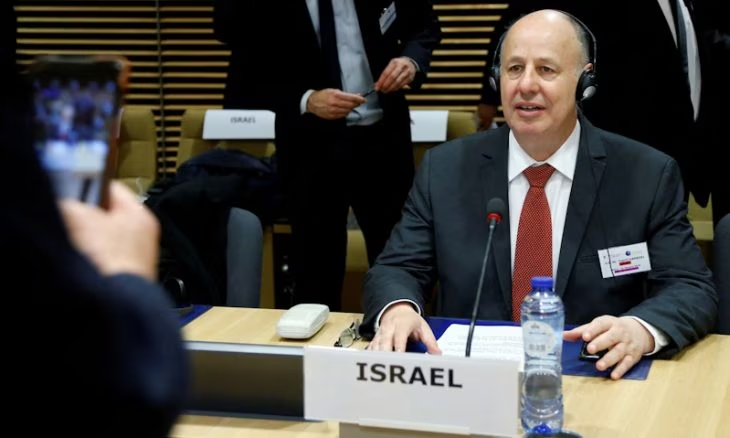
Israel plays a destructive role in every diplomatic path, and Tehran is monitoring discussions with Washington without overlooking Israeli movements.
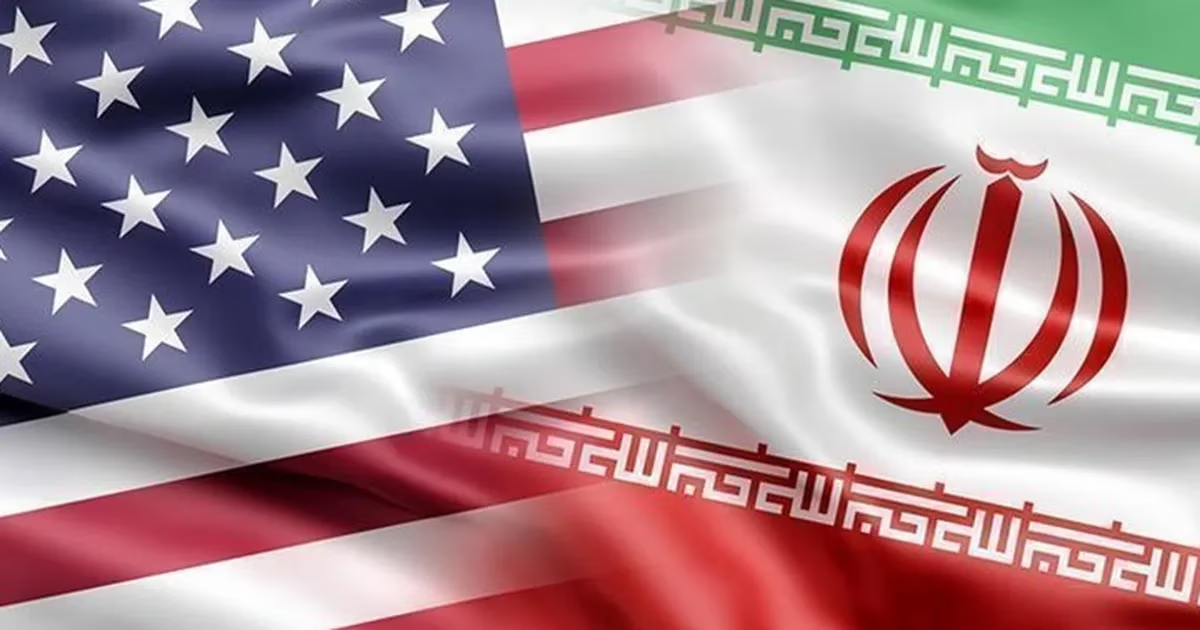
OPINIONS

Mon 23 Feb 2026 11:28 am - Jerusalem Time

The Year of the Armada

Dr. Ibrahim Melhem

Editor-in-Chief

The least that can be said is that while the United States pushes its naval assets in the largest military campaign in the region, in parallel with granting deadlines for what are called "last chance" negotiations to avoid the use of those assets, which cannot be withdrawn without achieving results commensurate with the justifications for their raging presence in the Arabian Sea, the probabilities of war are equal to the chances of avoiding it, and no one can predict the outcomes and destinies if the spark ignites in a region where everything is flammable.Between deterrence and containment, and between the stick and the carrot, the tense American-Iranian relationship has remained stagnant for decades, until the time came to resolve it, after the ideological state approached placing its feet on the nuclear threshold, which ignited more than one red light in Washington, Tel Aviv, and European capitals, which see Tehran's pursuit of reaching the nuclear threshold as a blow to the regional and international balances that are forming today in a world without rules.On the lines of oil, gas, and mineral resources, the current battle rages between the United States and Israel on one hand, and Iran on the other, to which Netanyahu adds the Sunni and Shiite axis, as he likes to call it, to justify the wolf's religious war that he wages with support from the United States, as became clear from Huckabee's statements, who believes that Israel has a biblical right to control from the Nile to the Euphrates.The war on Iran is nothing but an attempt to strike under the "Belt and Road," as Tehran is considered a strategic partner for China in the energy war, which Trump seeks to assert his control over, and dictate his prices to everyone, as he did with Europe, which he demanded to stop buying Russian oil and replace it with American oil, at the price he determines, which pushed both London and Paris towards Beijing, to free themselves from the dictatorship of prices imposed by the businessman of deals.Trump, who pushed his "Armada" to the brink of the abyss, finds himself today caught in the trap of surplus power and the impulses of arrogance that possess him; his withdrawal is political suicide, and his stay is financial depletion, and if war breaks out, it will be a leap into the unknown.From annihilation to the "Armada," the features of American-Israeli policy emerge, aimed at extending control and imposing hegemony over the region's and the world's resources with "peace through strength."Fleets, no matter how great, remain alien to the seas inhabited by the rightful owners, and the "Year of the Armada" may end in a way that neither Trump's ships nor Netanyahu's dreams desire.

ARAB AND WORLD

Mon 23 Feb 2026 9:37 am - Jerusalem Time

Satellite images reveal accelerated nuclear fortifications and reconstruction of Iranian missile capabilities

Recent satellite images have shown a significant acceleration in the fortification of Iranian nuclear facilities, coinciding with the reconstruction of missile sites that were damaged during recent military confrontations. These developments come at a time when international indicators are escalating regarding the possibility of an imminent US military strike against strategic targets deep within Iran.\n\nInformed sources reported that the US administration has received reports indicating the military's readiness to carry out a potential attack by the end of this week. This has been accompanied by the detection of extensive military reinforcements, including naval vessels and air squadrons, that have arrived in the Middle East in recent days to raise the level of alert.\n\nAccording to technical analyses by the Institute for Science and International Security in Washington, Tehran is deliberately using massive quantities of reinforced concrete to strengthen its sensitive facilities. The images also showed operations to cover vital sites with thick layers of soil to reduce the impact of any air raids that might target these vital centers in the near future.\n\nImages taken on February 10 documented continued work at the entrances of tunnels belonging to a massive underground complex near the Natanz area. The footage clearly shows new concrete blocks being poured at the eastern and western entrances of the complex, with a widespread presence of construction machinery and heavy equipment around the site targeted for fortification.\n\nAt the Parchin military complex, located southeast of the capital Tehran, specifically at the 'Talaghan 2' facility, the construction of a massive concrete structure completely surrounding the site has been completed. Technical teams have begun burying the structure with soil, a step that, according to expert estimates, aims to enhance the facility's resilience against bunker-buster bombs.\n\nRegarding missile capabilities, analyses revealed intensive activity to reconstruct facilities destroyed during Israeli strikes last June. This work is concentrated in strategic bases that had been partially out of service due to direct targeting of launch platforms and solid fuel storage facilities.\n\nAt the Imam Ali missile base in Khorramabad, images from early January showed the reconstruction of three vital facilities out of 12 that were completely destroyed. Renovation work is also underway on a fourth facility, while three other facilities are still under construction amidst excavation and expansion operations for ballistic missile launch platforms.\n\nAs for the 'Tir 7' industrial complex near Isfahan, satellite images detected the reconstruction of facilities related to the production of centrifuge parts. This challenge comes despite international sanctions imposed on this complex since October 2025, reflecting Tehran's determination to restore its nuclear manufacturing capabilities.\n\nDiplomatically, indirect negotiations are taking place in Geneva, Switzerland, between Iranian and American officials in an attempt to defuse the escalating crisis. Iranian Foreign Minister Abbas Araghchi confirmed that "guiding principles" had been reached, but the general atmosphere still indicates a wide gap between the two sides.\n\nIn contrast, US Vice President J.D. Vance stated that Tehran had not adhered to the red lines set by President Donald Trump. Vance indicated that the US administration is closely monitoring Iranian movements on the ground, considering the continued construction at nuclear sites an unacceptable escalation.\n\nThese developments come after a violent 12-day military confrontation between Iran and the Israeli occupation, which saw an intense exchange of missiles and drones. Washington had announced at the time that air strikes had completely destroyed nuclear and missile sites, which is refuted by the new satellite images showing a return to activity.\n\nObservers believe that the accelerated pace of construction at Iranian military sites reflects a "race against time" strategy before any potential confrontation. Iran seeks to secure its facilities under layers of concrete and soil to make the cost of militarily targeting them prohibitive and with uncertain results for the United States and its allies.\n\nTechnical reports indicate that the 'Tir 7' complex is a key link in the nuclear program, and its reconstruction means the resumption of production of precise components for centrifuges. This development places negotiators in Geneva before a complex reality on the ground, where Iran is imposing new facts on the ground that precede any potential political agreement.\n\nIn conclusion, anticipation remains the dominant sentiment in the region as the end of the week approaches and the presumed date for US military readiness. While Iranian mechanisms continue to pour concrete over their facilities, US forces continue to strengthen their presence in nearby bases, portending a new round of escalation that could change the regional balance of power.\n\nIran is working to enhance the protection of its sensitive facilities by pouring large quantities of concrete and covering key sites with thick layers of soil.
OPINIONS

Mon 23 Feb 2026 9:37 am - Jerusalem Time

Huckabee's statements: Political cover for the occupation

It is absurd to try to falsify the crystal-clear truth, illogical to argue with a fool suffering from complete bias, and unreasonable to distort facts in the manner presented by US Ambassador Mike Huckabee. Instead of being a diplomat who weighs his words before speaking, he came out like a fool uttering nonsense, in an attempt to appease the far-right and the occupation government. Perhaps the saddest thing is these timid stances, both international and Arab, which, as usual, have wavered between condemnation, denunciation, and statements of disapproval.A clear and blatant American behavior, and if American policy were different, the US State Department should have come out to denounce what its ambassador in Tel Aviv said. However, this matter proves once again the involvement of American foreign policy in all that has happened and is happening, and that it agrees with the occupation's policies, disregards all condemning voices, and gives no weight to anyone.What is striking about these statements is that they give the occupation more green light to continue its settlement, annexation, and Judaization operations, and to proceed with its racist policies that contradict international law, UN resolutions, and its charters. The occupation will also use such statements as a cover for all its practices, and a shield to protect itself from international and UN bodies, even though what Mike Huckabee said is nothing more than a flood of lies, and an excerpting of a religious narrative pushed into political contexts, which is extremely dangerous and an advanced step in American support for a racist narrative based on ethnic cleansing and occupation.A false claim presented by the American ambassador, clear and blatant, but the level of the Arab and international response is below the required level, and this gives the occupation one opportunity after another to persist and transgress and violate international resolutions, which pushes the West Bank towards explosion, and this is what the occupation seeks through the series of policies and operations it carries out, to provoke the anger of the West Bank and Jerusalem, and thus be able to escalate its operations aimed at displacement and extermination.Mike Huckabee's statements at this time represent a high degree of bias and a major lie attempting to falsify the land and the rights of the people. Perhaps in the last two years, we have not been surprised by such lies and bias, and we have witnessed what is greater than that during the war of extermination in Gaza, and what is happening these days through the imaginary illusions of mandate and guardianship and the claims of the Peace Council, under the pretexts of spreading stability and reconstruction.In his famous poem written after the siege of Beirut in 1982, titled "In Praise of the High Shadow," Mahmoud Darwish says:Hiroshima, HiroshimaOnly we listen to the thunder of stones; HiroshimaOnly we listen to the absurdity and usefulness in the soulAnd America on the walls gives every child a cluster bomb toyO Hiroshima, the Arab lover, America is the plague and the plague is AmericaWe slept, the planes woke us up and the voice of AmericaAnd America for America..

ARAB AND WORLD

Mon 23 Feb 2026 9:35 am - Jerusalem Time

On the Brink: Between Last-Minute Diplomacy and a Show of Force in the US-Iran Confrontation

News Analysis

Developments are accelerating in the US-Iranian scene in a way that reflects a pivotal moment that could redraw the balances of the entire region. On February 22, 2026, "Axios" quoted a senior American official as saying that Washington is ready to hold a new round of negotiations in Geneva if it receives a detailed Iranian proposal for a nuclear deal within 48 hours. This conditional offer does not seem to be merely a procedural step, but rather a dual political message: the door to diplomacy is not yet closed, but it will not remain open for long. The Donald Trump administration is putting the ball in Iran's court, linking any meeting to Tehran demonstrating written seriousness, indicating that the time for general statements is over.

Notably, the American official did not rule out discussing an interim agreement before reaching a comprehensive deal, which reflects an understanding of the complexity of the gap between Washington's demand for "no enrichment" and Tehran's insistence on retaining its right to enrichment, even symbolically. This interim proposal reveals tactical pragmatism, but it also carries the risks of consecrating temporary solutions that could turn into deferred crises. Previous experience with interim agreements has shown that the absence of structural trust makes every understanding vulnerable to collapse at the first political test.

In contrast, Trump escalated his rhetoric on February 20, brandishing the military option if negotiations fail, and indicating that "bad things" could happen, even hinting that regime change in Tehran might be "the best thing that could happen." This language goes beyond the framework of nuclear non-proliferation to reshaping the Iranian political environment, raising questions about the ultimate goal: is it a technically controlled nuclear deal, or a re-engineering of Iran's internal balance? This overlap between security and politics weakens reassuring messages and reinforces Iranian suspicions that the issue is deeper than mere centrifuges.

The rhetorical escalation coincided with the largest US naval buildup in the region since 2003. The USS Abraham Lincoln aircraft carrier was deployed, accompanied by guided-missile destroyers, in addition to the USS Gerald Ford, the world's largest carrier, with extensive air reinforcements including advanced fighters and early warning and refueling aircraft. This deployment gives Washington high deterrence capability and operational flexibility, but at the same time raises expectations and reduces the margin for retreat without political cost. When two aircraft carriers are amassed, retreating without a tangible gain is closer to a symbolic loss.

However, the absence of significant ground forces is noted, suggesting that Washington is not preparing for an invasion or occupation, but rather for limited air and missile options. However, the concept of a "limited strike" itself remains problematic. According to experts, Iran has accumulated unconventional response tools over the past years, from precision missiles to drones, as well as a network of regional allies capable of expanding the theater of operations. Any direct targeting of the leadership, especially if it affects Supreme Leader Ali Khamenei, could lead to a response that goes beyond tactical calculations towards an open confrontation that would be difficult to contain.

In this context, Iranian Foreign Minister Abbas Araqchi's statements reflected a mixture of defiance and openness. He affirmed that Iran does not seek war but will not accept threats, and that the window for a deal is still open if Washington commits to an actual lifting of sanctions, considering the military buildup more a message of political pressure than a prelude to war. This approach reveals a delicate Iranian attempt to balance containing escalation and maintaining an image of steadfastness internally, as the leadership in Tehran realizes that retreating under threat may be interpreted as weakness affecting its legitimacy, but at the same time, it is aware that sliding into a comprehensive confrontation will carry a heavy economic and security cost.

Hence, internal calculations intersect with regional and international equations at a sensitive point: every American military step, even if described as limited or surgical, could open multiple response paths that go beyond the limits of the strike itself, whether through conventional or unconventional tools, or by expanding the geographical scope of engagement. Any widespread disturbance will also affect Gulf security, energy prices, and navigation in the Strait of Hormuz, putting European allies and major powers before difficult choices between supporting deterrence and preventing an explosion.

Thus, according to experts, diplomacy, despite its narrow window, becomes less costly than testing power assumptions. However, its success requires strict verification mechanisms, a clear timeline for lifting sanctions, and a political will capable of transforming fiery messages into written understandings. Between a show of force and the exchange of proposals, the region remains dependent on the ability of both parties to realize that any miscalculation could turn tactical pressure into a strategic shift whose outcomes no one has complete control over.