








News Analysis
Developments are accelerating in the US-Iranian scene in a way that reflects a pivotal moment that could redraw the balances of the entire region. On February 22, 2026, "Axios" quoted a senior American official as saying that Washington is ready to hold a new round of negotiations in Geneva if it receives a detailed Iranian proposal for a nuclear deal within 48 hours. This conditional offer does not seem to be merely a procedural step, but rather a dual political message: the door to diplomacy is not yet closed, but it will not remain open for long. The Donald Trump administration is putting the ball in Iran's court, linking any meeting to Tehran demonstrating written seriousness, indicating that the time for general statements is over.
Notably, the American official did not rule out discussing an interim agreement before reaching a comprehensive deal, which reflects an understanding of the complexity of the gap between Washington's demand for "no enrichment" and Tehran's insistence on retaining its right to enrichment, even symbolically. This interim proposal reveals tactical pragmatism, but it also carries the risks of consecrating temporary solutions that could turn into deferred crises. Previous experience with interim agreements has shown that the absence of structural trust makes every understanding vulnerable to collapse at the first political test.
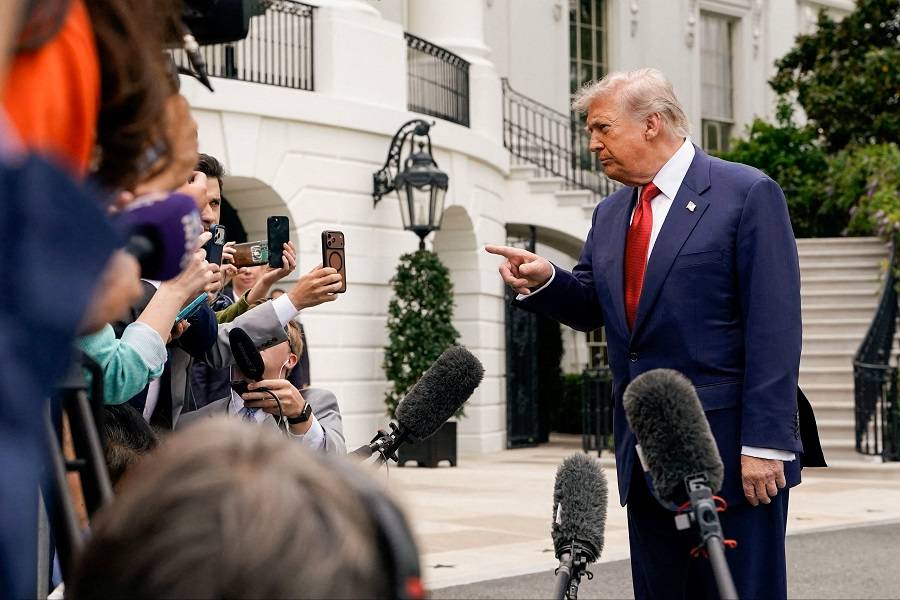
In contrast, Trump escalated his rhetoric on February 20, brandishing the military option if negotiations fail, and indicating that "bad things" could happen, even hinting that regime change in Tehran might be "the best thing that could happen." This language goes beyond the framework of nuclear non-proliferation to reshaping the Iranian political environment, raising questions about the ultimate goal: is it a technically controlled nuclear deal, or a re-engineering of Iran's internal balance? This overlap between security and politics weakens reassuring messages and reinforces Iranian suspicions that the issue is deeper than mere centrifuges.
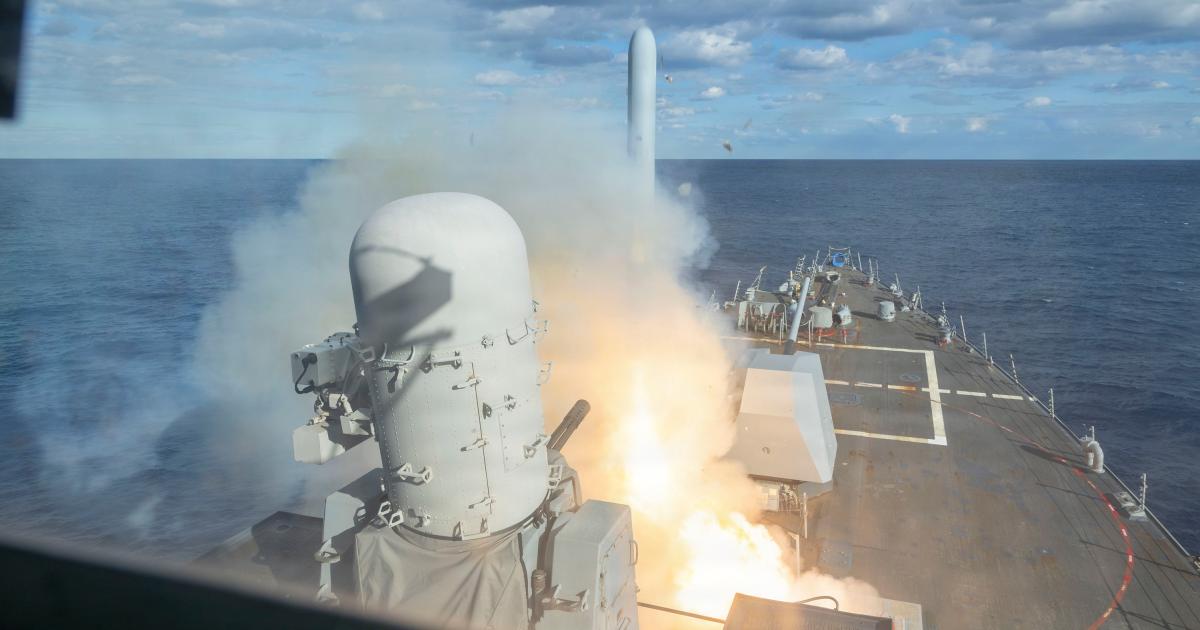
The rhetorical escalation coincided with the largest US naval buildup in the region since 2003. The USS Abraham Lincoln aircraft carrier was deployed, accompanied by guided-missile destroyers, in addition to the USS Gerald Ford, the world's largest carrier, with extensive air reinforcements including advanced fighters and early warning and refueling aircraft. This deployment gives Washington high deterrence capability and operational flexibility, but at the same time raises expectations and reduces the margin for retreat without political cost. When two aircraft carriers are amassed, retreating without a tangible gain is closer to a symbolic loss.
However, the absence of significant ground forces is noted, suggesting that Washington is not preparing for an invasion or occupation, but rather for limited air and missile options. However, the concept of a "limited strike" itself remains problematic. According to experts, Iran has accumulated unconventional response tools over the past years, from precision missiles to drones, as well as a network of regional allies capable of expanding the theater of operations. Any direct targeting of the leadership, especially if it affects Supreme Leader Ali Khamenei, could lead to a response that goes beyond tactical calculations towards an open confrontation that would be difficult to contain.
In this context, Iranian Foreign Minister Abbas Araqchi's statements reflected a mixture of defiance and openness. He affirmed that Iran does not seek war but will not accept threats, and that the window for a deal is still open if Washington commits to an actual lifting of sanctions, considering the military buildup more a message of political pressure than a prelude to war. This approach reveals a delicate Iranian attempt to balance containing escalation and maintaining an image of steadfastness internally, as the leadership in Tehran realizes that retreating under threat may be interpreted as weakness affecting its legitimacy, but at the same time, it is aware that sliding into a comprehensive confrontation will carry a heavy economic and security cost.
Hence, internal calculations intersect with regional and international equations at a sensitive point: every American military step, even if described as limited or surgical, could open multiple response paths that go beyond the limits of the strike itself, whether through conventional or unconventional tools, or by expanding the geographical scope of engagement. Any widespread disturbance will also affect Gulf security, energy prices, and navigation in the Strait of Hormuz, putting European allies and major powers before difficult choices between supporting deterrence and preventing an explosion.
Thus, according to experts, diplomacy, despite its narrow window, becomes less costly than testing power assumptions. However, its success requires strict verification mechanisms, a clear timeline for lifting sanctions, and a political will capable of transforming fiery messages into written understandings. Between a show of force and the exchange of proposals, the region remains dependent on the ability of both parties to realize that any miscalculation could turn tactical pressure into a strategic shift whose outcomes no one has complete control over.
Share your opinion
On the Brink: Between Last-Minute Diplomacy and a Show of Force in the US-Iran Confrontation