OPINIONS

Mon 02 Mar 2026 9:42 pm - Jerusalem Time

Between the discourse of “Greater Israel” and the normalization of annexation in Arab consciousness

In every wave of tension in the region, the discourse of “Greater Israel” returns to the forefront, not as a political analysis, but as a semi-sacred truth in some forums. It is presented as an inevitable project to swallow the region from the Nile to the Euphrates, and every extremist statement is invoked to be included as conclusive evidence that expansion is the ultimate goal. But the question rarely seriously asked is: Are we facing a viable strategic plan, or an ideological ceiling used in a political negotiating context?

Critical reading compels us to distinguish between grand slogans and negotiation ceilings, between mobilization discourse and implementation policies, between the highest ambition and the highest possible.

Historically, the concept of “Greater Israel” has been associated with nationalist and religious currents within Israel, especially after the 1967 war and the occupation of the West Bank, Gaza, Sinai, and the Golan. At that time, the discussion was not theoretical, but directly related to redefining geography and identity. Figures like Menachem Begin clearly expressed a vision that considered the West Bank part of “the historical land of Israel.” With the rise of the right in recent decades, this discourse has been reinforced by leaders such as Benjamin Netanyahu, who has not hidden his positions on expanding settlements and imposing sovereignty over the Jordan Valley, and explicitly proposed scenarios for annexing large parts of the West Bank. Furthermore, statements by some American officials, such as Mike Huckabee, which downplayed the idea of a Palestinian state or redefined the conflict politically and legally, added fuel to this expansionist perception.

However, transforming every extremist statement into a comprehensive regional war map poses a serious methodological problem. In political science, raising the negotiating ceiling is not a new discovery, but a classic tool: you declare the maximum you want, to eventually achieve what you can establish. When there is talk of “full sovereignty” or denial of Palestine's political existence, the goal may not be to redraw the maps of the entire region, but to establish gradual facts on the ground in the West Bank — facts that over time become irreversible.

The most painful irony is that the continuous exaggeration of the idea of “total engulfment” may — unintentionally — serve gradual annexation policies. When the danger is inflated to the level of swallowing the entire region, the hierarchy of priorities in collective consciousness is reshaped. With the repetition of extreme scenarios, the Arab street absorbs the image of the great catastrophe until it becomes familiar, imaginable, and even expected. And then, if the annexation of the West Bank or the greater part of it is proposed, it may seem — by comparison — like a “lesser” loss, a bitter reality but not the end.

Here lies the real danger: normalizing shock through comparison. When the worst is presented as the likely possibility, anything less becomes relatively acceptable. Comparison turns into a psychological adaptation tool, and decline turns into a logical progression. Instead of the annexation of Palestine being a major political, moral, and legal shock, it becomes a station within a path previously depicted as darker and wider.

This does not mean denying the existence of ideological currents that truly believe in the idea of expansion, nor downplaying the danger of settlement and partial annexation; these are realistic and implementable policies, with far-reaching strategic implications. Any unilateral change in the status of the occupied territories undermines the foundations of international law and deepens the conflict's dilemma. But there is a vast difference between annexing parts of the West Bank — a scenario clearly proposed politically — and an expansionist project extending to neighboring Arab countries, a proposal that lacks the elements of realistic power in the contemporary international system and its complex balances.

The problem is that exaggerating the portrayal of the Zionist project as a comprehensive plan to swallow the region may obscure the more important discussion: how do we confront the actual policies being implemented daily? How do we counter the maps being redrawn through settlement, administrative decisions, laws, and facts on the ground? Preoccupation with imagined maps may — without our knowing it — be the best service that can be rendered to real maps.

The intellectual and media responsibility today is not to recycle the maximum ceiling of discourse, but to dismantle it. It is not to exaggerate the catastrophic scenario, but to protect the very standard of rejection from erosion. For when we convince ourselves that the worst is inevitably coming, we become more prepared to accept what is less than it. And when the great catastrophe becomes familiar in the imagination, the smaller catastrophe becomes a reasonable compromise.

Then, the loss is not only in the land, but in the moral and political sense that defines what is acceptable and what is rejected. For the most dangerous forms of retreat do not happen all at once, but through a series of comparisons that lower the ceiling a little each time — until we find ourselves defending the minimum that we rejected yesterday.

ARAB AND WORLD

Mon 02 Mar 2026 9:41 pm - Jerusalem Time

Intense Russian diplomatic moves with Gulf leaders to contain regional escalation

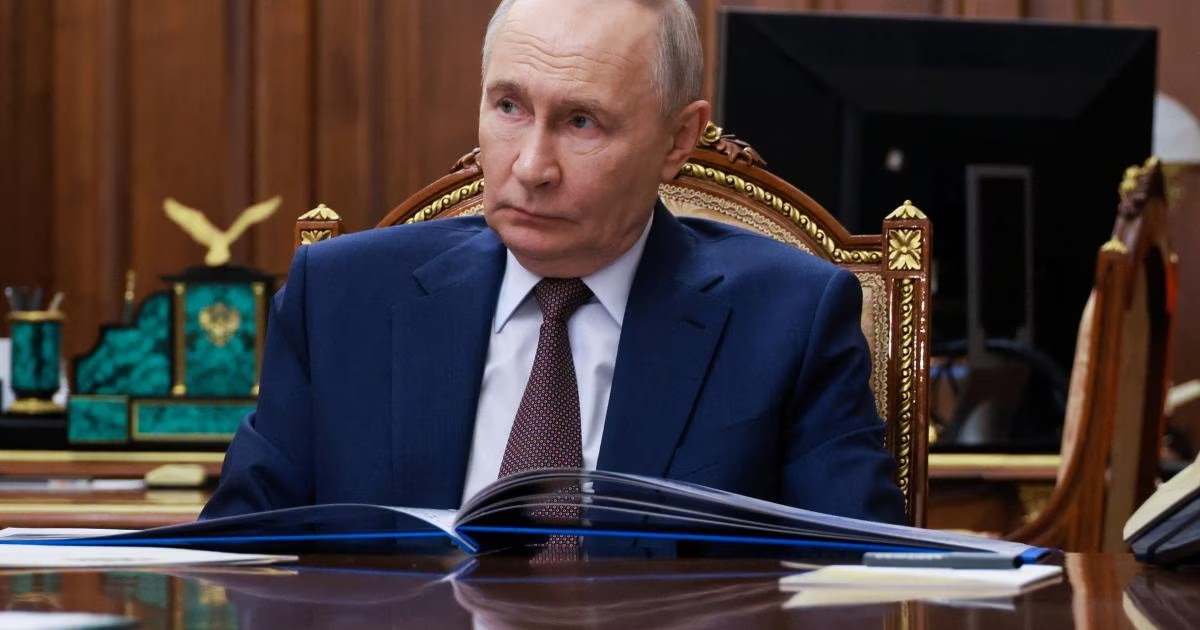
Russian President Vladimir Putin has intensified his diplomatic efforts towards the Middle East, conducting a series of phone calls with leaders of Gulf countries including Qatar, the UAE, Bahrain, and Saudi Arabia. These moves come amid escalating military tensions and ongoing aggression targeting Iranian territory, which has raised international concerns about the conflict spiraling out of control and turning into a comprehensive regional confrontation.

During his talks with Saudi Crown Prince Mohammed bin Salman, Putin stressed the need to find urgent political solutions to the current crisis, which he described as extremely dangerous. Sources reported that both sides reviewed the potential repercussions of the expanding scope of confrontations, expressing deep concern about the conflict's spark reaching the territories of other Arab countries, which could lead to dire consequences for international peace and security.

In a related context, the Russian President, during his call with his Emirati counterpart Sheikh Mohammed bin Zayed, affirmed the imperative of an immediate ceasefire and a return to the negotiating table. The Kremlin expressed its readiness to play a mediating role by conveying Emirati concerns to the leadership in Tehran, in an attempt to defuse the crisis and re-establish stability in the region, which is experiencing unprecedented turmoil.

As for the discussions held with the Emir of Qatar, Sheikh Tamim bin Hamad Al Thani, the focus was on the threats of third parties being drawn into the cycle of violence. The two leaders warned that continued military escalation would necessarily complicate the political landscape, making it difficult to contain the side effects of the combat operations that have begun to directly affect air navigation and trade movement.

For its part, the Russian Ministry of Foreign Affairs issued a strongly worded statement condemning the targeting of civilian facilities and targets, both inside Iran and in neighboring Arab countries. Sources indicated that Moscow is following developments on the ground with great concern, and considers that harming civilian infrastructure represents a dangerous escalation that disregards all international laws and norms applicable in armed conflicts.

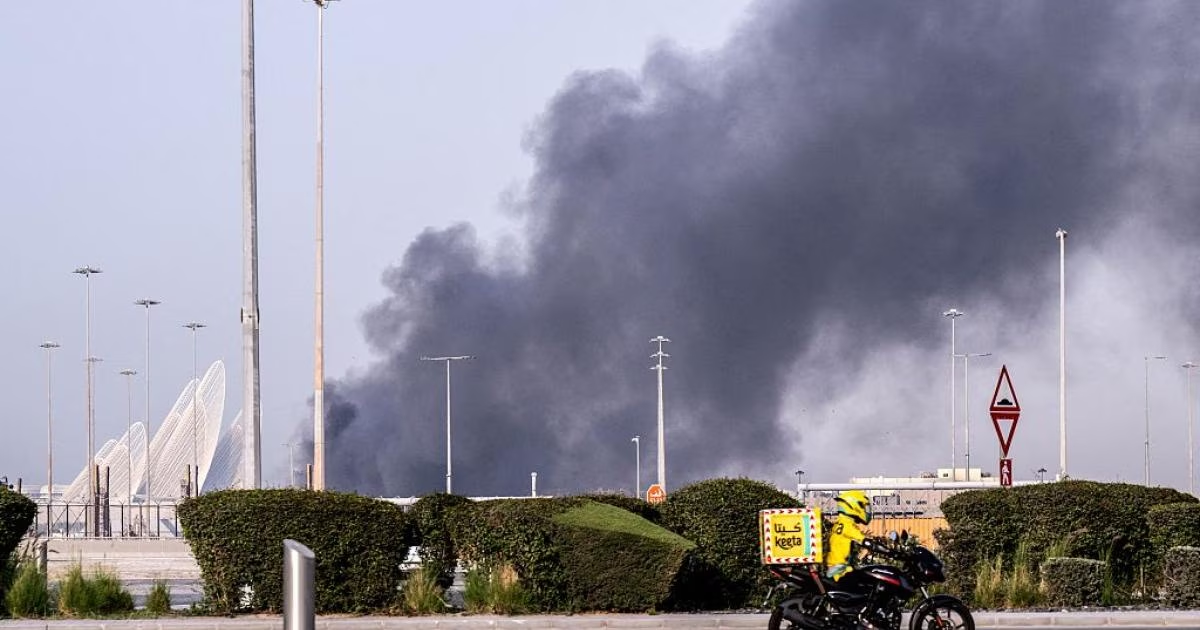
On the ground, the region witnessed widespread disruptions in air navigation after Tehran launched strikes on targets in Arab countries hosting American military bases. These developments led to the closure of airspace in several areas, causing partial paralysis of air traffic at major international airports such as Dubai and Abu Dhabi, amid a state of maximum security alert throughout the region.

Through these intensive contacts, Russia seeks to establish a de-escalation that ensures the complete collapse of the security system in the Middle East is avoided. Observers believe that direct Russian intervention with Gulf leaders reflects Moscow's desire to balance powers and prevent American unilateralism in managing the crisis, especially with the increasing risks threatening energy sources and global supply routes as a result of mutual military operations.

There is an urgent need to resolve this extremely dangerous situation through political and diplomatic means.

PALESTINE

Mon 02 Mar 2026 9:41 pm - Jerusalem Time

Jerusalem Under Settlement Siege: 20 New Plans and Bloody Attacks During February

The Jerusalem Governorate issued a comprehensive human rights report monitoring Israeli violations in the Holy City during the past February, confirming that the occupation authorities continue to accelerate their settlement projects at an unprecedented pace. The report clarified that the occupation announced 20 new colonial plans aimed at tightening control over the city and changing its demographic and geographical features, through systematic policies including land confiscation and the expansion of existing settlements.

According to official data based on monitoring the occupation municipality's announcements, 7 of these plans reached the deposit stage, which is the final legal step before final approval. These plans aim to build 613 new settlement units, which will be established on a total area estimated at about 960 dunams of confiscated Palestinian land, threatening further fragmentation of the surrounding Arab neighborhoods.

In a related context, the occupation authorities finally approved 5 other settlement plans that include the construction of 51 housing units on an area of 40 dunams, in addition to issuing an official tender for the construction of 231 additional units. These figures reflect the extremist right-wing government's insistence on imposing a settlement reality that is difficult to reverse, exploiting the current political circumstances to implement previously postponed projects.

Regarding field attacks, sources documented 47 attacks carried out by settler gangs against Jerusalemite citizens and their properties during the same month. These attacks were characterized by excessive violence, with 9 cases of direct physical harm recorded, the most serious of which was the attack that led to the martyrdom of the young man Nasrallah Abu Siyam from the town of Mikhmas, north of Jerusalem, in a new crime added to the record of daily violations.

Settler crimes varied between live fire, setting fire to citizens' property, closing vital roads to traffic, and pursuing shepherds in open areas. The attacks also targeted places of worship and churches, as settlers stormed citizens' homes and wreaked havoc in them under direct protection and military reinforcements from the occupation forces, which provide legal and security cover for these practices.

In its report, the Governorate indicated that this harmony between settler attacks and Israeli government decisions proves the existence of an integrated plan to undermine the status quo in Jerusalem. It considered that the international community's silence regarding these practices encourages the occupation to proceed with the policy of silent ethnic cleansing and to try to completely isolate the Holy City from its Palestinian surroundings in the West Bank.

For its part, the Wall and Settlement Resistance Commission revealed that the occupation's planning committees studied 107 structural plans in Jerusalem last year, indicating a long-term strategy. These plans were distributed between 41 projects outside the alleged municipality boundaries and 66 within them, a clear indication of the occupation's endeavor to connect major settlement blocs to each other and encircle the Palestinian presence in the city.

The protection of settlers by the occupation forces reflects the integration of roles between colonial groups and the right-wing government to impose new realities on the ground.

PALESTINE

Mon 02 Mar 2026 9:41 pm - Jerusalem Time

Two dead by settlers' bullets in Nablus and a campaign of arrests targeting dozens in the West Bank

Two Palestinian brothers were martyred and three others were injured today, Monday, as a result of an attack carried out by Israeli settlers on the town of Qaryut, located south of Nablus city in the northern occupied West Bank. The Palestinian Ministry of Health confirmed that citizen Muhammad Taha Maamar (52 years old) was martyred after being shot in the head, while his brother Fahim Taha Maamar (48 years old) was martyred due to a gunshot wound to the pelvic area.

Medical sources in the Palestinian Red Crescent reported that their teams dealt with at least three other injuries resulting from direct gunfire by settlers. Among the injured was a 15-year-old child who was shot in the shoulder. The injured were transferred to nearby hospitals to receive necessary treatment amidst a state of extreme tension that prevailed in the area.

Field sources quoted eyewitnesses that a group of settlers stormed the outskirts of Qaryut town and began bulldozing large areas of agricultural land belonging to citizens. This assault led to violent confrontations, during which settlers fired live ammunition heavily at the residents under tight protection provided by Israeli army forces present at the scene.

In a related context, Israeli occupation forces launched a widespread arrest campaign at dawn today, Monday, covering various areas of the West Bank, resulting in the arrest of 44 Palestinians. Official sources clarified that the campaign targeted 9 children, a girl, and former prisoners, in an escalation that coincided with the holy month of Ramadan and a complete disregard for the sanctity of religious occasions for Palestinians.

Raids and arrests focused on the northern West Bank governorates, where a number of homes and residential sites were converted into field interrogation points and detention centers for citizens. In Nablus governorate, Israeli forces stormed the old and new Askar camps and several villages in the eastern and southern parts, carrying out thorough searches that ended with the arrest of 8 citizens.

In Qalqilya governorate, occupation forces arrested 4 Palestinians, including a girl and released prisoners, after raiding their homes in Habla town and the city center. Tulkarm governorate witnessed similar incursions targeting various villages and suburbs, where 7 citizens were arrested after their homes were ransacked and their families terrorized in the early hours of dawn.

In Ramallah and Al-Bireh governorate, incursions focused on villages and towns located north and east of the city, resulting in the arrest of 12 Palestinians, including 9 children. These raids involved heavy firing of live ammunition and sound bombs, while the campaign extended to Hebron governorate, which recorded the highest number of arrests with 13 citizens from its various towns.

Official Palestinian data indicates that the number of prisoners in occupation prisons has exceeded 9,300, including 66 women and 350 children living in harsh conditions. These arrests are accompanied by an escalation in night raids aimed at destroying infrastructure and terrorizing civilian populations in various cities and towns of the West Bank.

These field developments in the West Bank coincide with the ongoing comprehensive Israeli aggression that began in October 2023, which has so far resulted in more than 72,000 martyrs. Despite the ceasefire agreement coming into effect in October 2025, continuous Israeli violations have led to the martyrdom of 629 Palestinians since that date.

On the regional level, today, Monday, witnessed widespread Israeli raids targeting various areas in Lebanon and the southern suburbs of Beirut, further complicating the security situation. These raids came at a time when Hezbollah announced targeting the 'Mishmar HaCarmel' site south of Haifa, in response to the assassination of Iranian leader Ali Khamenei, which sparked a wave of widespread anger.

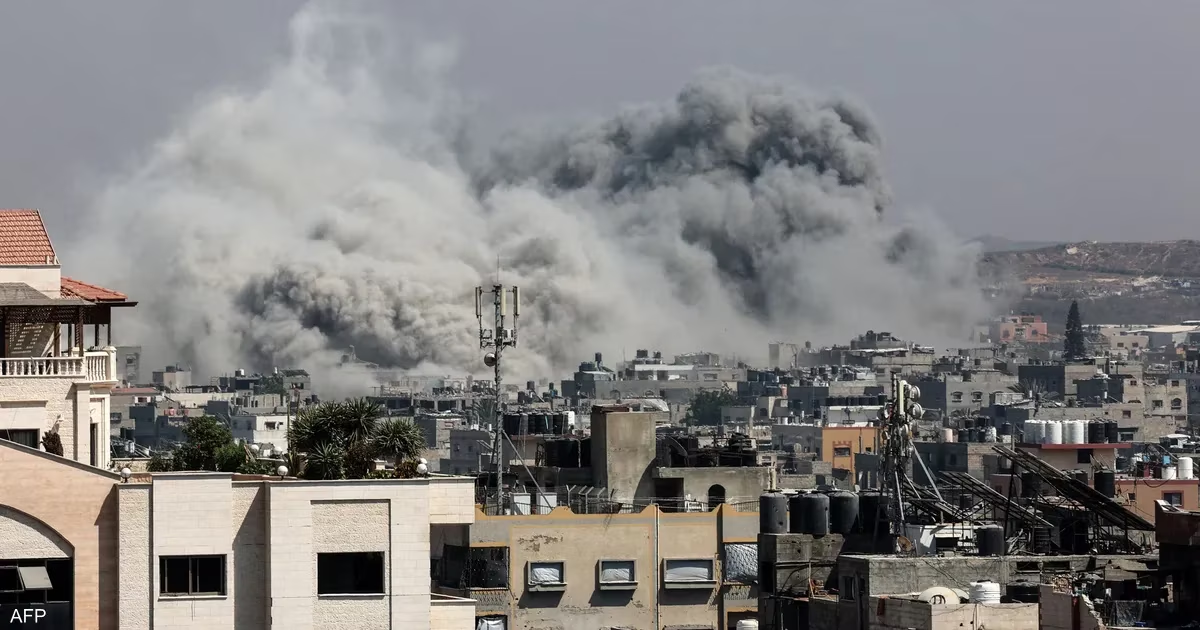
In the Gaza Strip, the occupation army continued its artillery and aerial bombardment of areas east of Khan Yunis and Deir al-Balah, in addition to targeting the Al-Zaytoun, Al-Shuja'iya, and Al-Tuffah neighborhoods. Reports confirm that the occupation still controls about 53% of the Strip's area, with about 90% of civilian and service infrastructure continuing to be destroyed.

The escalation of settler attacks in the West Bank, as happened in Qaryut today, reflects a policy of imposing facts on the ground through killing, displacement, and settlement expansion. These attacks continue amidst international silence, with the death toll in the West Bank since the start of the war exceeding 1,118 martyrs and about 22,000 detainees in occupation prisons.

Settlers fired live ammunition at citizens in Qaryut town under direct protection from the Israeli occupation army.

ARAB AND WORLD

Mon 02 Mar 2026 9:41 pm - Jerusalem Time

Trump Vows 'Major Wave' Against Iran, Occupation Announces Raid Toll

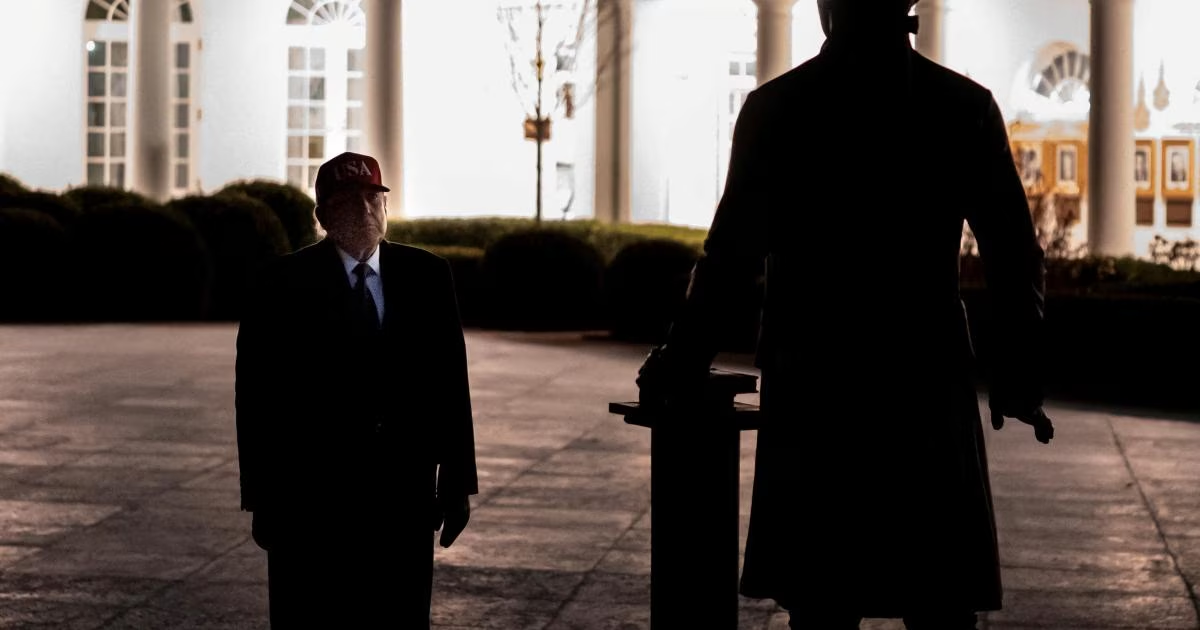
US President Donald Trump launched a series of strongly worded threats against the Islamic Republic of Iran, affirming his readiness to take unprecedented military steps. Trump clarified in a press interview that he does not fear the option of sending ground troops to Iranian territory if necessary, criticizing presidents who rule out this option in advance.

In simultaneous statements, the US President indicated that the ongoing military operations are only the beginning, describing what has happened so far as not having reached the peak of the required force. Trump vowed a 'major wave' of attacks that will target the Iranian interior soon, emphasizing that military pressure will escalate dramatically.

On the ground, the Israeli occupation army revealed statistical data reflecting the extent of the widespread aggression on Iranian territory since the beginning of this week. Military sources reported that Israeli forces used approximately 2,500 missiles and shells to target strategic and vital sites inside Iran in less than three days.

According to official data issued by the occupation, the airstrikes resulted in the destruction of nearly 600 infrastructure facilities belonging to the Iranian regime, including military and industrial installations. The statement also claimed the success of preemptive defenses and attacks in destroying 150 Iranian ballistic missiles before they could be launched towards their targets.

Targeting was not limited to ballistic missiles but also included the destruction of 200 air defense systems and missile launchers, in an attempt to undermine Iran's deterrent capabilities. These developments come amid active American participation through 'B-2' strategic bombers that targeted fortified sites and facilities associated with the missile and nuclear programs.

Regarding the internal political situation in Tehran, Trump acknowledged the ambiguity surrounding the identity of the new leadership after the assassination of Supreme Leader Ali Khamenei. He indicated that Washington is closely monitoring succession plans, affirming that the US administration does not have accurate information about the person who will take the reins in the next phase.

Despite the significant military escalation, international reports quoted American officials expressing doubts about the ability of these operations to bring about immediate change in the Iranian regime. These officials believe that the current goal focuses on destroying qualitative military capabilities, while regime change remains a complex issue that does not appear imminent in the foreseeable future.

In a related context, the Lebanese front witnessed a parallel escalation, as Hezbollah carried out missile attacks targeting the 'Mishmar HaCarmel' site south of the occupied city of Haifa. This targeting, according to the party's statements, came as an initial response to the assassination of the Iranian leader, portending an expansion of the regional confrontation to include multiple fronts.

As for the Gaza Strip, occupation forces continued their violations of the ceasefire agreement by launching airstrikes and artillery shelling that targeted various areas in Khan Yunis and Deir al-Balah. Local sources reported the martyrdom of hundreds of Palestinians since the agreement came into effect last October, amid massive destruction affecting 90% of the Strip's infrastructure.

Recent statistics indicate that the total number of victims of the ongoing aggression on Gaza since October 2023 has exceeded 72,000 martyrs, amid the continued siege and Israeli control over large areas. This humanitarian tragedy coincides with the escalation on the Iranian and Lebanese fronts, placing the entire region on the brink of open confrontations.

The major wave has not yet happened, and it is coming soon, and I will not hesitate to send ground troops if necessary.

ARAB AND WORLD

Mon 02 Mar 2026 9:40 pm - Jerusalem Time

War Without Evidence: How Washington Rushed into a Dangerous Conflict with Iran to Satisfy Netanyahu's Obsessions

Said Erikat

Opinion Writer

Washington – Said Arikat – 3/2/2026

News Analysis

President Donald Trump's administration continues to justify the escalating war against Iran with broad rhetoric about security and deterrence. However, the data presented so far reveals a troubling reality: the United States appears to have entered a major military conflict in the Middle East without proving the existence of an imminent threat, formulating a clear strategy, or even having a realistic vision for how to end the war it initiated.

On Monday, Secretary of Defense Pete Hegseth defended the joint US-Israeli attack, describing it as a necessary response to Iran's nuclear ambitions and alleged terrorist threats. During the Pentagon's first comprehensive briefing since the start of operations, he stressed that Washington was acting defensively, stating: "We did not start this war, but under President Trump, we will end it," presenting the campaign as an act of retaliation against the Iranian leadership.

However, the strong statements were not accompanied by new intelligence evidence showing that Iran was preparing for an imminent attack against the United States or its allies, which is the traditional condition Washington has historically relied on to justify preventive wars. Instead, the administration's justifications relied on old accusations related to Iran's future intentions, not on an urgent, demonstrable threat.

This gap between justification and action brought back painful American precedents, when wars were launched based on extreme assumptions rather than confirmed facts, with military operations preceding political planning, and the results proving far more complex than decision-makers anticipated.

Hegseth affirmed that US forces were carrying out "surgical, overwhelming, and unapologetic" strikes aimed at destroying Iran's missile capabilities and preventing any path to acquiring nuclear weapons. But Chairman of the Joint Chiefs of Staff General Dan Kaine presented a much broader goal: preventing Iran from projecting its influence beyond its borders, a vague definition that transforms the war from a limited deterrence operation into an open-ended regional project with no clear measure of success.

Kaine said that "the work is still in its early stages," a statement that dispelled any impression that the confrontation would be short, and reinforced fears of Washington sliding into a long conflict governed more by the dynamics of military escalation than by achievable political objectives.

President Trump went further by explicitly declaring that the war aimed to overthrow the Iranian regime, which has been in power since 1979. However, neither the White House nor the Pentagon explained how regime change could be achieved without a massive ground invasion, an option the United States seems unprepared for after the costly experiences in Iraq and Afghanistan.

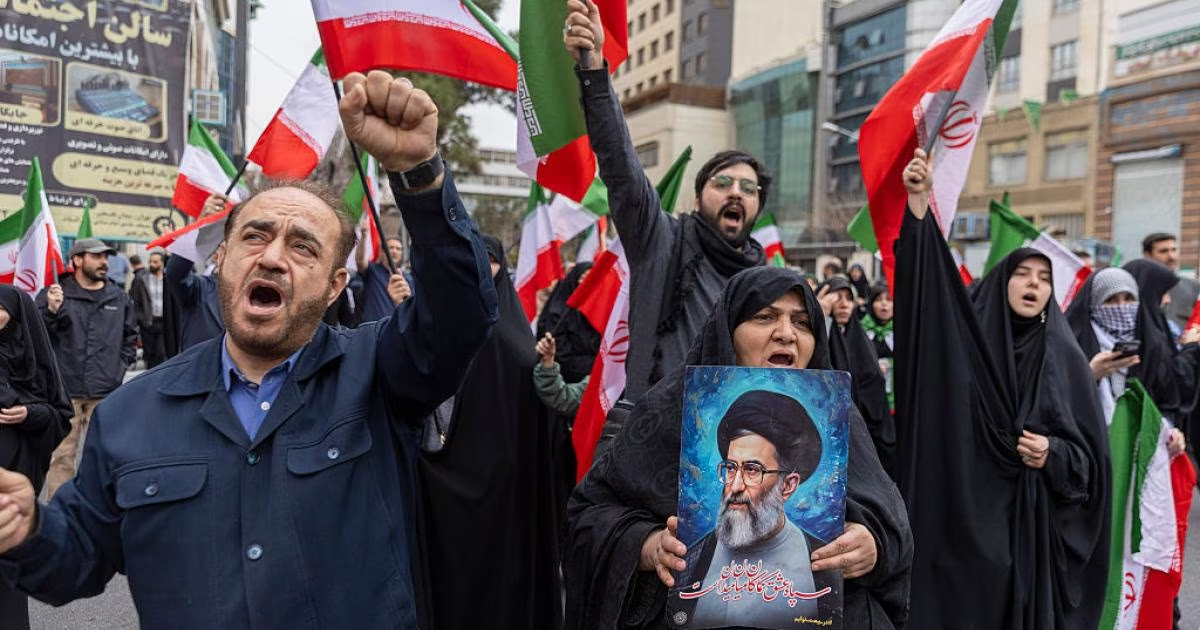
Military history indicates that air campaigns alone rarely overthrow entrenched regimes; in fact, they often strengthen internal nationalism. The assassination of Iran's Supreme Leader Ali Khamenei, rather than weakening the state, is likely to unite the Iranian interior around a narrative of resistance and revenge.

Despite Hegseth denying that the campaign was a war for regime change, he simultaneously acknowledged that "the regime has already changed," a contradiction reflecting the confusion characterizing the US administration's messages regarding the true objectives of the war.

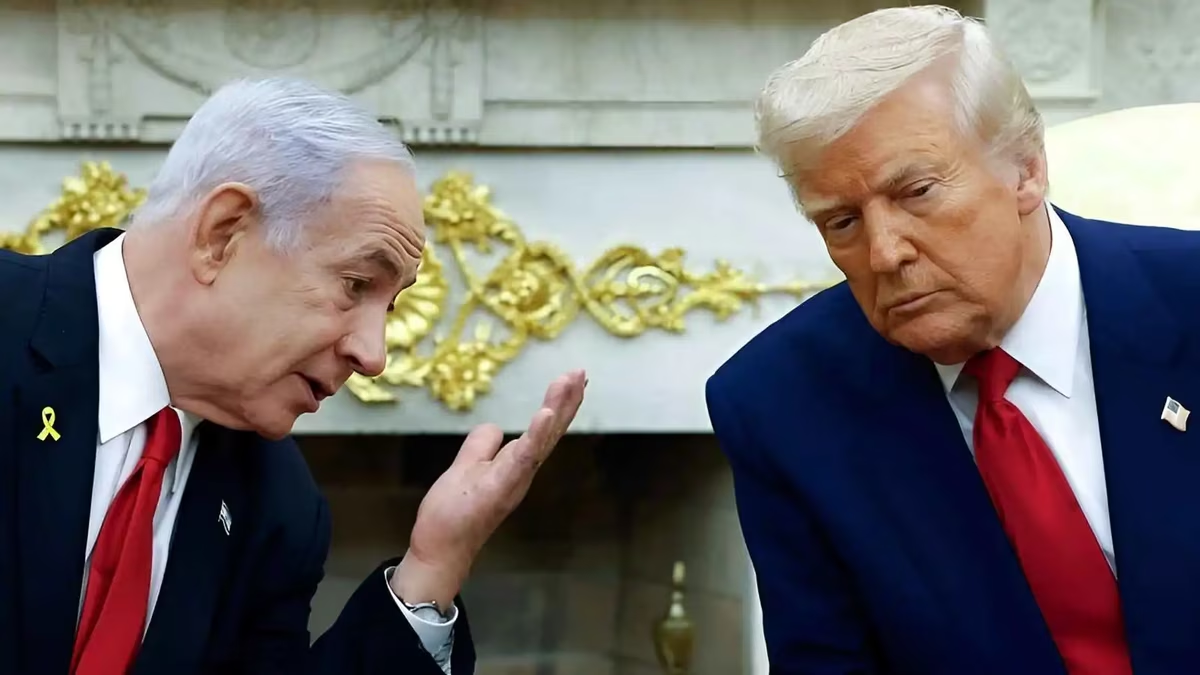
An increasing number of critics believe that the strategic rationale for the war is not directly related to US national security as much as it reflects alignment with the vision of Israeli Prime Minister Benjamin Netanyahu, who for decades has called for striking Iran. Previous US administrations refrained from adopting this option for fear of a widespread regional explosion, but Trump, since taking office on January 20, 2025, has shown enthusiasm in embracing Netanyahu's ideas in Gaza and Iran.

Today, Washington appears to have adopted that approach without fully appreciating its implications. No official has provided a clear explanation for why Iran became an immediate threat to Americans the moment the strikes began, raising questions about whether US policy is being formulated out of genuine security necessities or due to pressures from political alliances.

Domestic repercussions, in turn, reflect this ambiguity. House Democratic Minority Leader Hakeem Jeffries questioned why American soldiers were falling in a war that Congress had not formally authorized, demanding the activation of the War Powers Act to ensure constitutional oversight of the decision to use force.

Jeffries said the administration was "starting a war that we all know will not end well," expressing concerns quietly echoed within both parties.

On the ground, the risks of escalation quickly began to appear. At least four American soldiers were killed, while Kuwait accidentally shot down three American planes, an indication of operational chaos and the potential for error in a complex combat environment. Iran and its allies responded by launching missiles at Israel, US bases, and regional countries, opening multiple fronts simultaneously.

Even cities that were considered economically safe havens were not spared the repercussions, as areas near Dubai were subjected to attacks that disrupted air traffic and rattled global markets. Oil prices also rose and stock markets declined amid fears of a threat to energy supplies through the Gulf, the vital artery of the global economy.

Iran had repeatedly warned that any direct attack would lead to a comprehensive regional war, a scenario that today seems closer to realization than mere propaganda threat.

Most notably, the administration's public explanation of its long-term vision has been limited. Trump has avoided extensive media appearances since issuing the strike orders, leaving other officials to provide shifting explanations ranging from deterrence and punishment to regime change.

Traditionally, US presidents enjoy public support at the beginning of wars, but public opinion this time appears divided, reflecting deep fatigue after decades of foreign conflicts. In the absence of decisive evidence, specific objectives, or a clear political exit, this conflict faces the risk of turning into a new open-ended war whose repercussions extend beyond Iran's borders, reshaping the region's balances for many years to come.

ANALYSIS

Mon 02 Mar 2026 9:40 pm - Jerusalem Time

Between Strategic Constraints and Media Hype: A Reading of the Challenges to Egyptian National Security

The Arab region is witnessing a state of military turmoil that began in specific points, but its fragments now threaten the overall stability of the region's countries. Amidst this raging conflict, a fundamental question arises about the ability of active parties to control the course of a war whose end is no longer in the hands of those who started it.

Domestically in Egypt, a media discourse prevails that tends towards superficiality in addressing major crises, focusing on the absence of American military bases as proof of escaping involvement in conflicts. However, this perception overlooks the structural complexities that link the military establishment to long-term international obligations and security agreements.

The peace treaty signed in 1979 remains the cornerstone in defining the shape of Egyptian military deployment in Sinai, having placed clear legal restrictions on the type of weapons and the size of forces. These restrictions, while maintaining a state of stability for decades, have created a framework that limits absolute sovereignty in field operations.

The Egyptian military force, despite its size and development, finds itself constrained by precise political and strategic calculations that make the option of direct confrontation an unpredictable risk. This constraint is closely linked to the heavy reliance on technologies, weapons, and military aid coming from the United States of America.

On the media front, a striking preoccupation with producing dramatic narratives is observed, such as the series 'Ras al-Af'a' (Head of the Serpent), which portrays the Muslim Brotherhood as the sole existential threat to the state's entity. This approach contributes to directing public opinion towards internal battles, while real regional threats move in the shadows, away from the spotlight.

Observers believe that the Egyptian public may be more aware than the media platforms that try to simplify the conflict, as citizens realize that the real dangers lie in changing alliances. Preoccupation with an internal enemy may lead to strategic oversight of the real 'serpents' lurking for the country's national security in international forums.

The features of Egyptian realpolitik are evident in recent diplomatic stances towards the Iranian-American conflict, where Cairo refrained from condemning strikes against Iranian targets. In contrast, the Egyptian Foreign Ministry was quick to criticize any targeting of American bases, reflecting a critical balance that leans towards preserving interests with Washington.

This diplomatic bias is not merely a fleeting political choice, but a reflection of the limited strategic freedom imposed by international obligations and economic realities. The Egyptian decision is governed by the necessity of maintaining regional stability and avoiding clashes that could lead to uncontrollable economic or military repercussions.

Building a strong internal front requires a unifying political discourse that transcends the policies of exclusion promoted by some media figures, with the aim of strengthening the national fabric to confront external challenges. Military power alone is not enough to protect homelands if it is not supported by public awareness that understands the extent of international pressures imposed.

Today's real battle is taking place in secret, away from television screens and the headlines of dramatic series, where new alliances are forming that may change the map of influence in the Middle East. This reality requires a precise reading of rapidly changing variables instead of getting lost in media illusions that do not serve the state's supreme interests.

The Egyptian army possesses human and material capabilities, but activating this force in the face of American or Israeli interests remains fraught with major strategic risks. The link to the Western defense system makes any independent move an adventure that could threaten the flow of vital military and logistical supplies.

Decision-makers and the media alike must separate political propaganda from the field realities imposed by geopolitics, as the challenges facing Egypt transcend narrow partisan conflicts. Strategic awareness requires acknowledging limitations and working to expand the margin of political maneuver in a turbulent international system.

Ultimately, the ability to make free decisions remains the true measure of power, and this ability is only achieved by a delicate balance between international obligations and national aspirations. The real 'serpent' is not in the series, but in those alliances and interests that may change the fate of peoples without prior warning or preparation.

Restoring strategic initiative requires a comprehensive re-evaluation of media and political discourse, so that it can immunize society against actual risks. True stability stems from a deep understanding of reality, not from escaping into side battles that drain national energies away from existential threats.

Politics is not just military power or the number of tanks, but the ability to make free decisions within complex strategic and economic constraints.

ANALYSIS

Mon 02 Mar 2026 9:40 pm - Jerusalem Time

Initial Estimates of the Israeli-American War on Iran: A Shift in Assassination Strategy and All-Out Confrontation

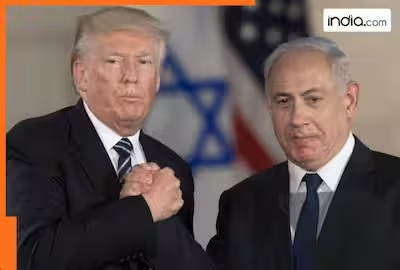
The Israeli-American partnership in the current war on Iran has become unprecedentedly clear, with Israeli Prime Minister Benjamin Netanyahu successfully imposing the Israeli vision and making it the cornerstone of American strategy in the region. This shift ended the previous hesitation within President Donald Trump's administration, tipping the scales in favor of the current advocating for direct confrontation and targeting political and military elites, as embodied in the assassination of the Supreme Leader of the Islamic Republic, Ayatollah Ali Khamenei, a move reflecting the triumph of absolute power over traditional political calculations.

Sources reported that military operations effectively began with an Israeli operation dubbed 'Rising Lion,' targeting nuclear and military facilities and technical crews. The Iranian side responded with 'True Promise 3' through ballistic missile and drone attacks. This escalation prompted the American President, who had long called for an end to wars, to engage directly through 'Midnight Hammer,' which targeted vital sites in Fordow, Natanz, and Isfahan in full coordination with Tel Aviv, representing a strategic development that made Israel the 'brain' of military and security operations in the region.

The assassinations of Khamenei and his family, in addition to President Masoud Pezeshkian and former President Ahmadinejad, revealed a massive security and political breach within the structure of the Iranian regime. Field data shows a complete reliance on modern warfare technologies, where data is collected via phones and financial transfers and processed by artificial intelligence linked to intelligence agencies. In response, the Iranian retaliation escalated to igniting the region by targeting energy corridors in the Strait of Hormuz and the Gulf region, a tactic aimed at raising the cost of war to include everyone without red lines.

Israel and America no longer need field spies; instead, artificial intelligence platforms and digital data now play the role of informant on humanity in the most precise details of its life and death.

PALESTINE

Mon 02 Mar 2026 9:40 pm - Jerusalem Time

Occupation Imposes Comprehensive Siege on West Bank, Turning Its Towns into Isolated Prisons

Palestinian sources confirmed that the Israeli occupation army has tightened its military grip on the West Bank, transforming its cities and villages into what resembles closed prisons by deploying hundreds of checkpoints, crossings, and iron gates. The Secretary-General of the Palestinian National Initiative, Mustafa Barghouti, explained that this systematic closure has led to a severe paralysis in vital facilities, especially the health and education sectors, in addition to the severe damage inflicted on the national economy and social interaction.

These repressive measures coincide with the widespread military aggression launched by the occupation army, in cooperation with US forces, against the Islamic Republic of Iran under the name of 'Operation Lion's Roar'. Israeli decisions included closing all crossings in the occupied Palestinian territories until further notice, with very limited exceptions for so-called 'vital workers' under strict restrictions whose mechanisms have not yet been detailed.

In a related context, field sources reported that the occupation army continues its military escalation on various fronts, launching intensive airstrikes and artillery shelling targeting various areas in the Gaza Strip, including Khan Yunis, Deir al-Balah, and the Shuja'iyya and Tuffah neighborhoods. Despite the ceasefire agreement coming into effect last October, continuous Israeli violations have resulted in the martyrdom of hundreds of Palestinians and the destruction of what remained of the infrastructure.

Official statistics indicate that occupation attacks in the West Bank since October 2023 have led to the martyrdom of more than 1,118 Palestinians and the injury of approximately 11,700 others, while arrests have exceeded 22,000 detainees. These policies, according to observers, aim to impose new geographical and demographic realities on the ground, exploiting the regional preoccupation with widespread military operations.

Regionally, the aggression did not stop at the borders of Palestine but extended to include widespread raids on Lebanon and the southern suburbs of Beirut, exacerbating tensions in the region. These developments came at a time when the White House announced the United States' involvement in large-scale combat operations, reflecting high-level military coordination aimed at reshaping the balance of power in the Middle East through military force.

In the Gaza Strip, the occupation still controls about 53% of the Strip's area, with continued targeting of civilians in the eastern areas of Gaza City and the town of Beit Lahia. The total death toll from the ongoing aggression for two years has exceeded 72,000 martyrs and approximately 171,000 injured, amid destruction affecting 90% of civilian and service facilities, making daily life for residents almost impossible.

Experts believe that turning the West Bank into human enclaves represents the culmination of the collective punishment policy pursued by the occupation to break the will of Palestinians and prevent any popular movement supporting other fronts. The continued closure of crossings and the geographical division of governorates threaten an imminent humanitarian catastrophe, given the depletion of essential medical supplies and the difficulty for students and employees to reach their workplaces and educational institutions.

Cutting off the West Bank through checkpoints and closures practically represents imposing a curfew between Palestinian areas and governorates.

ARAB AND WORLD

Mon 02 Mar 2026 9:40 pm - Jerusalem Time

Trump expects a four-week war with Iran amid growing questions about goals and strategy

Said Erikat

Opinion Writer

Washington – Said Arikat – 2/3/2026

US President Donald Trump predicted that the war he launched against Iran would last "about four weeks," at a time when US and Israeli military operations are escalating and regional losses and risks are increasing, while the US administration remains unable to provide a clear vision for the end of the conflict or a verifiable definition of what it considers a "victory."

In an interview with the "Daily Mail" published on Sunday, Trump said that the timeline for the war was known from the beginning, adding: "The operation has always taken four weeks… Iran is a big country, and no matter how strong it is, it will take four weeks — or less." However, this time estimate, according to military analysts, reflects political confidence more than a solid field assessment, especially given the nature of modern wars, which rarely adhere to pre-announced timelines.

The United States and Israel continue to carry out intensive strikes targeting Iranian military sites and infrastructure, while Tehran responds by launching ballistic missiles and drones that have proven their ability to bypass some defense systems and cause direct impact inside Israel and target American bases in the region, indicating that the balance of deterrence has not yet been decided despite US military superiority.

The "Wall Street Journal" reported that Washington is rushing to deplete Iran's missile capability before facing an inverse challenge of declining interceptor missile stockpiles. US forces have used massive numbers of "THAAD," "Patriot," and "SM-" systems to defend Israel and its regional bases, in a financially and militarily costly defensive battle.

Experts point out that this equation reveals a recurring strategic imbalance in asymmetric wars: the world's greatest power finds itself forced to use expensive defense systems to intercept much cheaper offensive means. Over time, the attrition factor may turn into an element of internal political pressure, especially if no decisive progress is made to justify the continuation of operations to the American public.

In a development reflecting escalating risks, Trump acknowledged the killing of three American soldiers in an Iranian attack targeting a US base in Kuwait, the first human losses acknowledged by US Central Command since the start of the war. The President said: "They are great soldiers… We expect this to happen, unfortunately, and it may happen again," a statement critics considered an attempt to prepare public opinion for the possibility of a rising death toll.

In a later video statement, Trump explicitly acknowledged that more Americans might be killed before the war ends, saying: "This is the reality." This rhetoric reflects a significant shift from promises of quick decisive action to managing expectations of losses, a shift that often accompanies the early stages of wars when human costs begin to emerge.

Observers note that the US administration has not yet provided a coherent narrative explaining the urgency of starting the war or its ultimate goals. The President has not delivered a lengthy address to the nation, nor has he held a comprehensive press conference, while senior officials have been absent from major political programs, which reinforced the impression that the administration is seeking to avoid intense media scrutiny regarding the intelligence justifications that preceded the attack.

Critics say that this absence recalls previous patterns in US foreign policy, where military operations begin with urgent threat narratives before those narratives are later challenged or revised. With the absence of transparency, public debate is confined between supporting the armed forces and questioning the decisions of the political leadership, a delicate balance that often collapses as the war continues and its cost rises.

In the broader context, analysts believe that setting a timeline for the war may be primarily aimed at domestic political consumption, rather than being an accurate military estimate. Successive US administrations have often sought to reassure the public that interventions would be "short and limited," before turning into longer and more complex commitments as a result of escalation dynamics and mutual reactions.

Amid continued strikes and counterattacks, the current war appears closer to a gradual war of attrition than a swift campaign. Iran does not need to achieve direct military superiority as much as it needs to prolong the confrontation to raise its political and economic cost, while Washington bets that intense military pressure will force Tehran to back down before the conflict expands.

Between these two conflicting bets, Trump's estimate that the war will end in four weeks remains an early test of the administration's credibility, as the gap between political expectations and field reality has historically been one of the most prominent factors that reshaped American attitudes towards foreign wars — often too late.

ARAB AND WORLD

Mon 02 Mar 2026 9:39 pm - Jerusalem Time

Conflicting Reports on Targeting of Natanz Nuclear Facility and International Warnings of a Radiation Catastrophe

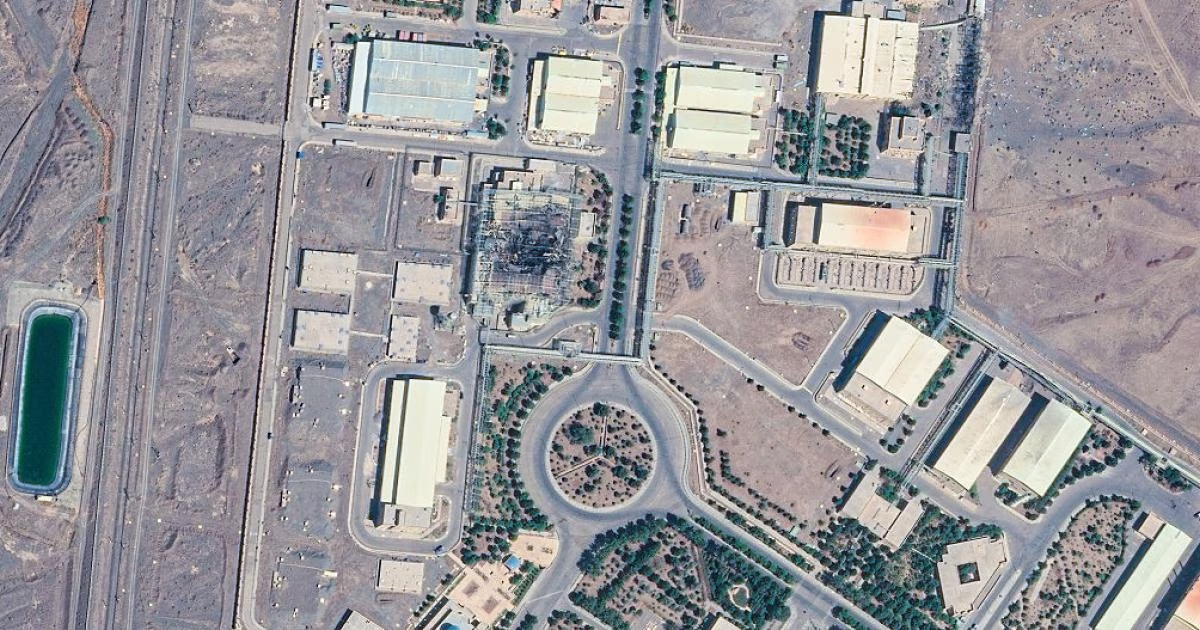
The Director-General of the International Atomic Energy Agency (IAEA), Rafael Grossi, announced that the agency has not yet observed any concrete evidence indicating damage to Iran's nuclear infrastructure as a result of recent attacks. These statements were made during the opening of an extraordinary session of the IAEA Board of Governors in Vienna, dedicated to discussing escalating tensions and threats facing Iran's nuclear program amidst ongoing military operations.

In contrast, the Iranian Ambassador to the IAEA, Reza Najafi, presented a different account confirming a direct targeting of the vital Natanz uranium enrichment facility. Najafi clarified that Tehran officially informed the Director-General via a message from the head of the Atomic Energy Organization of Iran, stating that the facility, which is subject to international safeguards, had been subjected to military aggression during the latest wave of Israeli and American attacks.

Grossi, in his address to member states, emphasized the necessity of exercising maximum restraint to avoid the region sliding into an unprecedented nuclear catastrophe. He indicated that initial assessments included the Bushehr power plant and the Tehran research reactor, confirming that technical communication channels with the Iranian side still face difficulties in rapid response, expressing hope for full coordination to be restored as soon as possible.

The Director-General of the agency warned that the continuation of military operations in the vicinity of nuclear facilities raises the risk to critical levels that could lead to widespread radioactive leakage. He added that the repercussions of such a scenario would not be limited to the targeted sites but could necessitate forced evacuations of residents from major cities, posing an existential threat to regional and international security.

The international warning was not limited to inside Iran but extended to include nuclear facilities in neighboring countries that could be affected by the armed conflict. Grossi pointed to the presence of four civilian nuclear reactors in the UAE, in addition to research reactors in both Jordan and Syria, considering all these sites to be within the circle of security concern as a result of the continuous military escalation.

These developments follow a request by Russia and Iran to hold an emergency meeting of the Board of Governors, which includes 35 member states, to discuss the repercussions of attacks on sensitive facilities. This extraordinary meeting precedes a regular session of the Board, reflecting the state of diplomatic alert to confront the possibilities of the conflict getting out of control in the nuclear file.

Reports indicate that the Natanz site, which is the backbone of Iran's enrichment operations, has been a repeated target of military and cyber operations in recent years. The latest Iranian accusations further complicate the scene, especially since Tehran considers the targeting of its internationally protected facilities a grave violation of conventions and norms that exempt nuclear sites from armed conflicts.

In a related context, sources reported that international concern is growing about retaliatory actions that could affect vital energy facilities in the region, potentially igniting a comprehensive regional war. The IAEA is closely monitoring any field movements or changes in radiation levels through monitoring stations, in an attempt to ensure that nuclear facilities do not become tools in the ongoing military conflict.

The possibility of a radioactive leak with serious consequences cannot be ruled out, which means the need to evacuate areas the size of major cities or larger.

ARAB AND WORLD

Mon 02 Mar 2026 2:28 pm - Jerusalem Time

After Khamenei's Assassination: A War Without a Clear Plan Reveals Washington and Tel Aviv's Failed Bets

Said Erikat

Opinion Writer

Washington – Said Arikat – 3/2/2026

News Analysis

As the war enters its third day, the image that accompanied the initial strike is rapidly fading. What was presented as a decisive military operation to prevent an imminent threat is turning into an open conflict, raising fundamental questions about the war's motives and whether the United States and Israel rushed into confrontation without a precise calculation of its long-term political and military repercussions.

The assassination of Iranian Supreme Leader Ali Khamenei in the opening strike is the most dramatic event in the war so far. However, eliminating the head of the regime does not necessarily mean its collapse, as some interpretations in Washington and Tel Aviv assume. Historical experiences indicate that targeting the supreme leadership often leads to a re-formation of power rather than its disintegration. Younger and more hardline leaders, perhaps from the ranks of the Revolutionary Guard, are likely to advance to the decision-making center, which could strengthen the security character of the Iranian regime and give the military establishment greater influence at the expense of traditional political and religious institutions. Thus, the assassination might turn into a factor of national mobilization, giving the regime new momentum instead of quickly overthrowing it.

Domestically in the US, the killing of three American soldiers immediately shifted the war from the external theater of operations to the internal political arena. Human casualties, even in early stages, change the nature of public debate and raise questions about the war's utility and ultimate goals. With no direct and immediate threat to American soil, some critics began to question whether the administration had entered a war of choice rather than strategic necessity.

President Donald Trump tried to contain concerns with statements saying that operations could end within "four weeks or less," asserting that the campaign was "ahead of schedule." Atlantic magazine also quoted him as saying that the Iranians were seeking negotiations and that Iranian military leaders wished to surrender. However, such statements reflect a political optimism familiar at the beginning of wars, where risk assessments are often downplayed to solidify domestic support. American history, from Iraq to Afghanistan, shows that wars that begin with short-term expectations rarely end according to announced schedules.

Israel, for its part, announced its intention to expand strikes, a move reflecting a firm conviction that military force can reshape the strategic environment in the region. But critics argue that this approach ignores decades of conflict lessons, where preemptive strikes have proven capable of postponing threats, not ending them. Indeed, continuous escalation increases the likelihood of additional regional parties becoming involved, which could turn a limited confrontation into a multi-front war difficult to contain.

Trump chose to frame the war in moral language, presenting it as a necessity to protect Americans from a "dangerous" regime. However, this rhetoric, according to analysts, conceals a more complex reality of intense political pressure exerted by Benjamin Netanyahu to push Washington towards military confrontation. Turning the war into a moral issue gives it immediate political legitimacy, but it reduces the margin for diplomacy, as any subsequent retreat might appear as an abandonment of a moral principle rather than merely a strategic reassessment.

Here emerges the biggest dilemma: the absence of a clear vision for the day after. Wars aimed at changing or overthrowing regimes rarely achieve rapid stability. In the Iranian case, dismantling the traditional leadership might lead to the rise of more hardline and organized forces, creating a more hostile regime instead of a more moderate one. This possibility raises questions about whether Washington and Tel Aviv focused more on the moment of the strike than on considering its political outcomes.

The war also reveals that the decision for confrontation was not solely the product of American calculations, but rather the result of complex regional pressures converging. The strategic rapprochement between Israel and some Gulf powers concerned about Iranian influence contributed to creating a political climate that pushed towards the military option after years of hesitation. Critics point out that this pattern reflects a shift in American decision-making, where Washington sometimes becomes part of regional security agendas instead of being the party that defines them.

Militarily, officials expect the exchange of missile strikes to continue in the coming days, meaning that decisiveness will not be determined by the first strike but by each party's ability to withstand attrition. If Iran retains its ability to retaliate, the war could turn into a long confrontation that drains resources, destabilizes energy markets, and increases political pressures within the United States itself.

Just two days into the fighting, the question no longer seems to be how the war started, but why it started so quickly, and without extensive public debate about its alternatives. While Washington and Tel Aviv assert that the goal is to prevent nuclear proliferation, critics believe that the early resort to force may have accelerated the crisis instead of containing it. Between these two interpretations, the region enters a new phase that may reshape its balances for many years — a war that began with high confidence in decisiveness, but quickly reveals the limits of military power when used without a clear political vision for the end.

PALESTINE

Mon 02 Mar 2026 2:27 pm - Jerusalem Time

Widespread Israeli Escalation: Raids on Beirut's Dahiyeh and Threat to Assassinate Naim Qassem

The Lebanese arena witnessed a dangerous military escalation today, Monday, as the Israeli occupation army carried out a precise airstrike targeting what it described as a 'prominent commander' within Hezbollah ranks in Beirut's southern Dahiyeh. This attack coincided with a wave of violent explosions that rocked the Lebanese capital, indicating an expansion of Israeli air operations to include the party's command and control centers.

In a significant political and field development, Israeli Defense Minister Yisrael Katz announced via the 'X' platform that Hezbollah's Secretary-General, Sheikh Naim Qassem, has become a direct target for physical elimination. This public threat comes at a sensitive time following the assassination of Iranian Supreme Leader Ali Khamenei, raising the level of tension to unprecedented levels in the region and opening the door to broader confrontations.

On the ground, the occupation army command issued immediate evacuation orders for residents of more than 50 villages in southern and eastern Lebanon, in a preemptive move to launch intensive airstrikes. Local sources reported more than ten explosions in Beirut and its surroundings, while Tel Aviv confirmed that it is targeting military infrastructure and high-ranking figures it claims are linked to planning attacks against the occupied territories.

For its part, Hezbollah responded by launching rocket barrages and kamikaze drones targeting military sites in northern occupied Palestine, including the 'Mishmar HaCarmel' site south of Haifa. The party clarified in its statements that these operations come as an initial response to Khamenei's assassination, emphasizing the continuation of the resistance option in the face of ongoing Israeli aggression against Lebanon and Palestine.

Regarding the possibilities of a ground invasion, there was a state of contradiction in the statements of the occupation army spokesmen, as Nadav Shoshani denied the existence of justifications for launching a ground attack in the 'near future'. However, the other spokesman, Avi Defrin, affirmed that all military options remain on the table, indicating that Hezbollah will pay a heavy price for its recent attacks.

On the Palestinian front, Israeli aggression did not stop despite the ceasefire agreements in effect since last October, as occupation aircraft and artillery launched intensive raids on the Gaza Strip. The attacks targeted areas east of Khan Yunis and Deir al-Balah, in addition to the Zeitoun, Shuja'iyya, and Tuffah neighborhoods in Gaza City, leading to new civilian casualties.

Medical sources reported the martyrdom and injury of a number of citizens, including children, as a result of gunfire and artillery shelling targeting the town of Beit Lahia north of the Strip and the Abu al-Ajeen area east of Deir al-Balah. These violations come amid the occupation's control over about 53% of the Gaza Strip's area, and the destruction of nearly 90% of civilian infrastructure since the start of the aggression in October 2023.

Official statistics indicate that the number of martyrs since the last ceasefire agreement came into effect on October 10, 2025, has reached 629 martyrs, while about 1693 others have been injured. This continuous escalation raises the total number of victims of the comprehensive Israeli aggression to more than 72,000 martyrs and over 171,000 injured, amid catastrophic humanitarian conditions experienced by the residents of the Strip.

In a related context, sirens sounded across the occupied territories, including Tel Aviv and Jerusalem, warning of a new Iranian missile attack. Media sources said that a wave of missiles was launched from central Iran towards Israeli military targets, leading to widespread disruption in air traffic and a significant rise in global oil prices.

Lebanese presidency had previously received assurances from the American ambassador that Israel would not escalate militarily unless Lebanese parties initiated hostile actions. However, these understandings seem to have completely collapsed with the occupation army's insistence on holding Hezbollah fully responsible for any field escalation, and continuing to target Lebanese depth with devastating raids.

Rescue and civil defense teams in Gaza and Lebanon are suffering from extreme difficulties in recovering victims from under the rubble due to the lack of heavy equipment and the continuation of air and artillery shelling. Thousands of missing persons remain under the rubble in the streets and targeted areas, amid international warnings of a worsening humanitarian crisis if military operations continue and expand.

The latest escalation reflects the failure of diplomatic efforts to contain the conflict, which has begun to extend to include multiple regional parties, especially after the mutual attacks between Washington and Tel Aviv on one hand and Tehran on the other. Military circles in Tel Aviv expect the current offensive battle to continue for several days, with a focus on weakening Hezbollah's missile and leadership capabilities.

In conclusion, the field scene remains open to all possibilities, with continued Israeli military buildup on the northern and southern borders. In the absence of a clear political horizon, civilians in Lebanon and the Gaza Strip face the repercussions of a devastating war that does not differentiate between military targets and civilian facilities, placing the international community before its responsibilities to stop the bloodshed.

Hezbollah Secretary-General Sheikh Naim Qassem has now become a target for elimination.

PALESTINE

Mon 02 Mar 2026 2:27 pm - Jerusalem Time

Occupation violates truce with intense raids on Gaza, death toll rises since October

Israeli occupation aircraft and artillery renewed their targeting of wide areas in the Gaza Strip today, Monday, in a continuation of a series of systematic violations of the ceasefire agreement in effect since October 10, 2025. Local sources reported that the aerial and artillery bombardment focused on the eastern areas of Khan Yunis in the south and Deir al-Balah in the central Strip, accompanied by intense gunfire from military vehicles stationed behind the so-called 'Yellow Line'.

In Gaza City and the northern Strip, heavy artillery shelling targeted the neighborhoods of Zeitoun, Shuja'iyya, and Tuffah, in addition to targeting the northern and eastern areas of Beit Lahia. These military movements come amidst the deployment of occupation forces over an area estimated at about 53% of the Strip's territory, which are areas designated by the agreement as temporary deployment rights for the Israeli army, while it is prohibited from targeting civilians in the western areas.

Regarding human casualties, medical sources confirmed the martyrdom of two young men, Omar Sufyan Manoun and Mustafa Ahmed Zaghloul, as a result of artillery shelling that targeted the Jabalia البلد area, noting that the two martyrs fell in an area outside the agreed-upon Israeli control. These new aggressions raise the death toll since the signing of the last truce agreement to 629 martyrs and more than 1600 injured, putting the agreement on the verge of total collapse.

These field developments in Gaza coincide with a widespread military escalation on the Lebanese front, where the occupation launched violent raids on the southern suburbs of Beirut and issued evacuation orders for dozens of villages. Field sources linked the escalation in Gaza to the military operations in Lebanon, especially after Hezbollah announced targeting strategic sites south of Haifa in response to the assassination of Iranian leader Ali Khamenei in a joint American-Israeli attack.

It is worth noting that the Gaza Strip is suffering from massive destruction affecting about 90% of its infrastructure as a result of the war of extermination that began in October 2023 with direct American support. According to the latest official statistics, the total number of martyrs in the Strip since the beginning of the aggression has exceeded 72,000 martyrs, while the number of injured has exceeded 171,000, amidst catastrophic humanitarian and health conditions experienced by the besieged population.

Since the start of the ceasefire, the Israeli army has killed 629 Palestinians and injured about 1693 others through shelling and gunfire.

PALESTINE

Mon 02 Mar 2026 2:27 pm - Jerusalem Time

Settlers desecrate the West Bank: (639) attacks against Palestinian citizens and demolition of (215) homes and structures during last February

The Department of Palestinian Affairs and Planning in the Palestine Liberation Organization issued its monthly report on settler attacks and the demolition of homes and structures in the West Bank and occupied Jerusalem, and the most prominent points were:

First: Attacks by settler gangs

During last January, settler gangs carried out (639) attacks against Palestinian citizens and their properties, an increase of 181% compared to the same period last year 2025.

These criminal attacks resulted in the martyrdom of two young men, Nasrallah Muhammad Abu Siam (19 years old) from the village of Mikhmas, northeast of Jerusalem Governorate, and Tamer Ismail Qaisiya (19 years old) from the town of Al-Dhahiriya, south of Hebron Governorate, as a result of direct shooting at them. Also, (102) citizens were injured with various wounds as a result of being beaten, shot, pelted with stones, and sprayed with gas, including (11) women and (4) children.

The attacks included (25) shooting incidents, while criminal settler gangs destroyed and uprooted (1051) fruitful trees, and stole and killed (755) head of livestock belonging to Palestinian farmers with the aim of restricting them and increasing the cost of their stay on the land. Damage was inflicted on (57) vehicles as a result of burning or stoning them, while settler gangs destroyed and burned (50) homes and agricultural, animal, and service facilities in villages and towns of the West Bank, concentrated in the governorates of Jericho, Jerusalem, Hebron, Ramallah, and Al-Bireh.

In the context of pastoral settlement expansion, the Department of Affairs and Planning monitored during the past month attempts to establish two pastoral settlement outposts in the Al-Rahwa area near the town of Al-Dhahiriya, south of Hebron, and an outpost between the villages of Jalud and Talfit.

The criminal attacks were concentrated in Nablus Governorate (145) attacks, Ramallah and Al-Bireh Governorate (145) attacks, then Hebron Governorate (129) attacks, Tubas and Northern Valleys Governorate (64) attacks, Jerusalem Governorate (46) attacks, Bethlehem Governorate (35) attacks, Salfit Governorate (24) attacks, Jericho Governorate (24) attacks, Qalqilya Governorate (14) attacks, Jenin Governorate (8) attacks, Tulkarm Governorate (6) attacks.

Second: Demolition of homes and structures

During last February, the Israeli occupation authorities demolished (215) homes and structures in the West Bank and occupied Jerusalem, including the demolition of (88) homes and (127) structures, among them (17) self-demolition operations in the towns of Jabal Al-Mukaber, Silwan, Beit Hanina, Sur Baher, and Al-Issawiya in occupied Jerusalem, carried out by their owners to avoid paying exorbitant fines. The demolition operations included all governorates of the West Bank.

In the framework of the collective punishment policy, the Zionist occupation army forces demolished three homes belonging to the families of martyrs: the home of martyr Mahmoud Abed in the town of Halhul, the home of martyr Walid Sabarneh in the town of Beit Ummar in Hebron Governorate, and the home of martyr Raafat Dawas in the town of Silat al-Harithiya in Jenin Governorate.

Settler gangs continued to sabotage and destroy citizens' facilities in the villages and cities of the West Bank, where the department documented settlers burning and destroying (50) homes and service, agricultural, and animal facilities, the largest of which was the demolition of (22) homes in the Al-Duyuk cluster north of Jericho city.

The occupation authorities notified (251) homes and structures of demolition and cessation of construction and work, and the notifications included the governorates of Hebron, Bethlehem, Jerusalem, Nablus, Tubas and the Northern Valleys, Ramallah and Al-Bireh, Qalqilya, Salfit, and Tulkarm.

PALESTINE

Mon 02 Mar 2026 2:27 pm - Jerusalem Time

Occupation announces start of 'offensive battle' against Hezbollah and Israeli calls to destroy Lebanese infrastructure

The commander of the Israeli occupation army, Eyal Zamir, announced the transition of military forces from a defensive state to launching a comprehensive offensive battle against Hezbollah in Lebanon. Zamir confirmed in official statements that the army has already begun implementing waves of airstrikes, calling on the home front and the military establishment to prepare for a long period of continuous fighting and to exploit all available operational opportunities.

These field developments come after Hezbollah launched three rocket projectiles towards the city of Haifa, in addition to other barrages targeting the center of the country and drones that were intercepted over the Upper Galilee. Despite initial official silence, Hebrew media sources indicated that the security establishment sees this escalation as a pretext to complete the destruction of the party's military arsenal and disarm it permanently.

In the context of political incitement, heads of local authorities in Galilee settlements called on the Israeli government to seize what they described as 'Hezbollah's mistake' to dismantle its organizational structure in cooperation with international parties. Former National Security Advisor, Uzi Dayan, also called for the complete displacement of residents of southern Lebanon and turning the area into a 'death zone' devoid of life, emphasizing the necessity of striking the vital infrastructure of the Lebanese state.

Operationally, the occupation army initiated the call-up of thousands of reserve soldiers to reinforce various fronts, while military intelligence units began recruiting additional personnel. These moves reflect Israeli fears of the confrontation expanding to include additional fronts, especially with the continued escalating regional tension and the intertwining of issues between Lebanon and Iran.

Regarding the Iranian file, former National Security Advisor, Yaakov Nagel, revealed that the current Israeli approach is now openly focused on seeking to overthrow the ruling regime in Tehran. Nagel explained that the previous abstention from declaring this goal was due to political and diplomatic considerations, but the current phase requires harsh strikes targeting military and intelligence leaders to destabilize the regime.

Hebrew reports indicated that recent airstrikes focused intensively on the capital Tehran and vital facilities in Isfahan, where Iran is believed to be hiding quantities of enriched uranium. These raids, according to sources, aim to undermine the Iranian nuclear project concurrently with attempts to assassinate high-ranking figures in the Revolutionary Guard and sensitive security agencies.

Despite ambitious Israeli aspirations, sources in the 'Cabinet' acknowledged that there are assessments indicating that military effort alone may not be enough to overthrow the Iranian regime, but rather aims to weaken it to the maximum extent. Tel Aviv is betting that these successive strikes will encourage the Iranian street to revolt, exploiting the vacuum created after the assassination of influential leading figures in the political and military structure.

For his part, US President Donald Trump entered the crisis with statements that raised questions in Tel Aviv, where he predicted that military operations against Iran would continue for four weeks or less. Trump indicated that there were contacts with Iranian parties that requested to speak with the US administration, which raised concerns among some Israeli officials about the possibility of Washington seeking an early diplomatic solution.

Domestically in Israel, political analysts warned of the heavy price Israel might pay if the war prolongs, especially with continued economic losses in the north and disruption of life in border settlements. The diplomatic affairs editor at Hebrew Radio indicated that the capture of any Israeli pilot could turn the tables and impose new rules of engagement that the government does not desire.

Anticipation remains the master of the situation on the northern front, where intelligence estimates indicate that Hezbollah has used only a small fraction of its missile capabilities so far. Security sources fear that the latest attack is merely a 'symbolic operation' preceding a wider escalation, which puts the Israeli army on maximum alert awaiting what the coming days will bring in terms of field confrontations.

We have launched an offensive battle against Hezbollah, and we are not only on the defensive lines, but we are moving to the offensive and must prepare for many days of fighting.

PALESTINE

Mon 02 Mar 2026 2:26 pm - Jerusalem Time

The War on Iran... The Middle East on the Threshold of a Pivotal Stage

Dr. Hussein Al-Deek: The ongoing confrontation represents an existential struggle related to the survival of the Iranian regime itself and may last longer than expected by Israel and America. Akram Atallah: It is unlikely that diplomacy will defuse the war because it has been largely exhausted during the past period without achieving tangible results. Dr. Raed Abu Badawiya: The possibility of concluding a "deal under fire" using military strikes as a means of pressure to impose a new agreement with stricter conditions than the 2015 agreement. Dr. Suhail Diab: The assassination may lead to the selection of a new leadership more hardline than Khamenei and adopting a less pragmatic approach regarding nuclear negotiations, which may increase the intensity of the confrontation. Adnan Al-Sabah: US attempts to activate internal movements against the Iranian regime failed after any movement was branded as treason and serving America and Israel. Abdul Majeed Suwailem: The current conflict is a historic opportunity for Washington and Tel Aviv to strengthen their influence, and the results of the war will be pivotal in redrawing the map of the Middle East. Ramallah - Exclusive to "Al-Quds" - The region is entering a very sensitive stage with the escalation of military confrontation against Iran and the reciprocal response, amid estimations that the current conflict goes beyond being a limited confrontation to take on an existential character that may reshape the balances of the Middle East. Writers, political analysts, specialists, and university professors, in separate interviews with "Al-Quds", believe that the war is likely to continue for longer than expected, in light of the assassination of prominent leaders, most notably the Supreme Leader of the Iranian Revolution Ali Khamenei, and the targeting of strategic facilities and sensitive military infrastructure inside Iran, while Tehran seeks to maintain the cohesion of its political system and its ability to respond. Estimates vary regarding the outcomes of the confrontation, between the possibilities of reaching a settlement imposed by military pressures, or sliding into a long war of attrition that may extend to multiple regional arenas. Scenarios also emerge ranging from Iran's retreat and acceptance of new conditions that change its political and regional behavior, or continued escalation that may lead to widespread losses and deep security and economic repercussions that may affect the entire region. According to writers, political analysts, specialists, and university professors, in light of the continued military confrontation, the chances of diplomatic solutions appear limited in the short term, with the widening trust gap between the parties and conflicting strategic objectives. They agree that the results of the confrontation are still undecided, and that the current stage represents a real test of the ability of the warring parties to withstand, at a time when developments on the ground may determine the shape of the regional order and the future of the balance of power in the Middle East for many years to come. A decisive moment that may reshape the region. Dr. Hussein Al-Deek, Professor of Political Science and International Relations and specialist in American affairs, believes that the region, after the war with Iran, is going through a decisive moment that may reshape the Middle East and leave deep impacts on Iran and the structure of its political system, pointing out that the outcomes of the current confrontation depend on the ability of the Iranian people to bear the consequences of the war, against the ability of Israel and the United States to continue targeting sensitive strategic sites inside Iran. Al-Deek explains that the ongoing confrontation cannot be described as a short or limited war, but rather represents an existential struggle related to the survival of the Iranian regime itself, expecting it to last longer than expected by Israel and America. Al-Deek points out that US President Donald Trump, despite previously criticizing policies of regime change by force, presents the current conflict as the culmination of decades of hostility between Washington and Tehran, going beyond mere political pressure to an attempt to dismantle the Iranian regime itself. The collapse of the new regime is not ruled out. However, Al-Deek does not rule out the collapse of the Iranian regime, but he stresses that countries after the fall of regimes usually go through a turbulent transitional phase that may witness chaos, divisions, and negative repercussions for Iran and the region. He indicates that relying on air power alone will not be enough to overthrow the Iranian regime, because air strikes do not overthrow the political system and do not alone lead to radical change, explaining that overthrowing the regime requires the presence of forces on the ground, weakness in the regime's structure, and a collapse in popular support, which has not yet been achieved, as the Iranian regime still enjoys a considerable part of popular support. Al-Deek explains that the United States' goals include ending Iran's nuclear program, destroying its missile and drone capabilities, reducing Iran's regional influence, and supporting protesters, but Washington avoids announcing clear war goals, which creates a state of ambiguity and prevents measuring its success or failure. Two scenarios for the Iranian regime. Al-Deek presents two main scenarios for the confrontation; the first is the retreat of the Iranian regime and its acceptance of American conditions, which means changing its political and regional behavior and abandoning the approach of "exporting the revolution", with the regime remaining in a new form more amenable to the United States, Israel, and neighboring countries. The second scenario, according to Al-Deek, is the continuation of confrontation and escalation, which may lead to a long war of attrition in light of the significant military superiority of Washington and Tel Aviv, which may lead to widespread losses inside Iran and economic, security, and institutional deterioration, and perhaps its transformation into a fragile or failed state and the emergence of militias within it, similar to previous experiences in the region. The war is likely to expand. Al-Deek confirms that the war is likely to expand through the parties of the Iranian camp and its allies in the region, the indicators of which have begun to appear in Iraq, pointing out that the results of the confrontation are still undecided and the scene is still confused in light of the short time that has passed since the outbreak of military operations. Al-Deek believes that diplomatic solutions are still far off at present, with the absence of effective mediations, expecting Iran to try to raise the economic and security cost of the war for the United States and its allies to push international powers such as Europe or China to intervene, and perhaps create internal pressure within the United States towards a political settlement. Al-Deek believes that initial developments indicate that Washington and Tel Aviv have achieved strategic goals by targeting prominent Iranian military and political leaders, led by Supreme Leader Ali Khamenei, and weakening Iranian deterrence elements, without that meaning the overthrow of the regime in the short term. Israel and the quest to remove the Iranian regime. Writer and political analyst Akram Atallah explains that the ongoing military developments in the war on Iran and the subsequent escalation indicate that the region is heading towards a complex and long-term war, pointing out that the nature of the current confrontation does not allow it to be described as an easy or quickly decisive war, in light of the conflicting goals between the parties to the conflict and the absence of clear indications of the possibility of containing it in the short term. Atallah believes that all proposed scenarios involve great difficulties, expecting the confrontation to extend for a long period, given the nature of the existing equation between Israel and Iran, which he described as a "zero-sum equation" based on an existential conflict between two parties with great capabilities. Atallah explains that Israel seeks to remove the Iranian regime and puts all its capabilities to achieve this goal, while the Iranian regime, in turn, works to harness all its capabilities to preserve its survival and prevent its fall, which makes the conflict open to high levels of escalation without a clear space for retreat. Exhaustion of the diplomatic path. Regarding the possibility of diplomatic efforts succeeding in containing the escalation, Atallah rules out that diplomacy can defuse the war, considering that the diplomatic path has been largely exhausted during the past period without achieving tangible results. According to Atallah, diplomacy was used at some stages as a means of political maneuvering, pointing out that the United States played this role during the previous period, which contributed to deepening the lack of trust between the parties. Atallah believes that what is currently happening does not represent the climax of the confrontation but its actual beginning, expecting the parties to move towards the highest levels of escalation, without indications of their willingness to leave lines of retreat or seek quick settlements, which makes it likely that the region will enter a stage of open conflict that may extend in time and become more complex. Attempting to re-engineer the rules of engagement. Dr. Raed Abu Badawiya, Professor of International Law and International Relations at the Arab American University, believes that the recent military developments in the region and the war on Iran constitute a double test; of the ability of military force to impose political conditions, against the ability of diplomacy to contain the escalation and prevent its transformation into an open regional war, in light of the escalating mutual strikes and the widening circle of tension. Abu Badawiya explains that the recent strikes indicate a shift in the conflict from the stage of traditional mutual deterrence to an attempt to re-engineer the rules of engagement, but the potential outcomes do not necessarily lead to a comprehensive war, but rather are distributed among three main scenarios. Controlled escalation. The first scenario, according to Abu Badawiya, is a "controlled escalation" based on calculated exchanges of strikes without sliding into a wide confrontation, while keeping negotiation channels open, which is the most likely possibility in the short term given the high cost of a comprehensive war for all parties in light of the fragility of the region's conditions. Regional proxy war. Abu Badawiya indicates that the second scenario is a "regional proxy war", by expanding the scope of the confrontation in arenas such as Iraq, Syria, Lebanon, and the Red Sea, leading to long-term attrition without reaching a wide direct confrontation, a pattern consistent with the complex nature of the conflict between Iran and its regional and international adversaries. A deal under fire. Abu Badawiya addresses a third possibility, which is a "deal under fire", whereby military strikes are used as a means of pressure to impose a new agreement with stricter conditions than the 2015 agreement, especially after the US withdrawal from it. Abu Badawiya believes that talk of regime change in Iran, which is raised in some Israeli circles, remains closer to political ambition than to realistic probability, as historical experiences show that air strikes alone rarely lead to the overthrow of regimes that possess cohesive security apparatuses, and any wide ground intervention would be costly and unlikely for the US. Diplomacy exists but moves slowly. Regarding diplomacy, Abu Badawiya believes that it still exists but is moving slowly behind the military escalation, expecting Tehran to show tactical flexibility in the nuclear file, such as accepting to freeze certain enrichment levels in exchange for lifting sanctions and providing security guarantees, but it will not abandon the right to enrichment or its basic nuclear infrastructure without clear strategic compensation. Abu Badawiya indicates that making fundamental concessions in the ballistic missile file seems unlikely, given that they represent a fundamental pillar in the Iranian deterrence system, and Iran may accept a tactical calm in some regional arenas without a complete withdrawal from its regional influence, at a time when Washington and Tel Aviv seek a tougher agreement that includes the nuclear program, missiles, and regional influence, which keeps the negotiating gap wide and makes military strikes a tool of pressure more than a prelude to a final settlement. Abu Badawiya indicates that the region stands before two main possibilities, either reaching a forced settlement born out of military escalation, or entering a long, low-intensity conflict that redraws the maps of influence and alliances in the Middle East. Far-reaching effects on the future of Iran and the region. Dr. Suhail Diab, Professor of Political Science and specialist in Israeli affairs, believes that the American-Israeli war on Iran, especially the assassination of the Supreme Leader of the Iranian Revolution Ali Khamenei, has produced a series of strategic changes that constitute a crucial turning point in the regional conflict, stressing that the recent developments will have far-reaching effects on the future of Iran and the entire region. Diab explains that the first direct effect of the assassination is the erosion of trust between the American and Iranian parties, which makes a quick return to the negotiating table unlikely, postpones any possibility of a political settlement in the near future, and rearranges the balance of power according to new data. The second effect, according to Diab, is the extension of the state of war beyond Israeli and American expectations about the speed of resolution, as Iran is forced to pay the political and military price, which will prolong the confrontation and increase the cost of the war for the aggressor parties. Diab points to another important effect, which is the incitement of Iranian public opinion against the regime after the assassination of the Leader, which has gradually begun to appear, and represents an internal pressure factor on the current leadership, which may reshape Iranian internal politics. Towards less Iranian pragmatism. Diab points out that this development, with the assassination of Iranian leaders, may lead to the selection of a new Iranian leadership more hardline than Khamenei, as it is likely to adopt a less pragmatic approach regarding nuclear negotiations, which may increase the intensity of the confrontation with Israel and the United States. Diab believes that the current confrontation is a pivotal war on which the future of the Middle East and perhaps beyond the region depends, pointing to two main scenarios: First, the success of Israel and Washington with excessive brutality leading to the overthrow of the Iranian regime, and paving the way for the implementation of Israeli and American hegemony programs, including Greater Israel. The second scenario, according to Diab, is the steadfastness of the Iranian regime and its paying heavy prices, which forces the United States and Israel to retreat and request a ceasefire, and establishes a new balance of power that recognizes the legitimacy of the Iranian axis, and paves the way for regional and strategic pluralism that parallels the growing international pluralism after crises such as Ukraine and Taiwan. Diab points out that the opportunities for Israel and America to bring about radical change in the Iranian regime may be the last opportunity for decades to come, stressing that the final results will depend on the steadfastness of the Iranian people, leadership, and Iranian military forces, considering that the upcoming scenarios are open and decisive for the entire Middle East, and that the current stage represents a test of regional and international balances of power alike. The most accurate probability of a limited war. Writer and political analyst Adnan Al-Sabah explains that the anticipated scenarios for the American-Israeli war on Iran depend primarily on the strategy and plans set by Washington and Tel Aviv, expecting that the most accurate probability is that the war will remain limited in duration and objective, given the limitations of the United States and its previous strategy in international conflicts. Al-Sabah indicates that the United States has no interest or ability to engage in a long-term war on Iranian soil, as any deep involvement could turn into a disaster for the United States similar to what happened in Vietnam and Afghanistan. Al-Sabah explains that the options for Washington are limited to a limited strike, which may last from four days to a week at most, through which it achieves specific strategic goals, before announcing a cessation of operations. Finding a third party and replacing the American role. Al-Sabah points out that the second possible scenario is to find a third party capable of replacing the American role on Iranian soil to become the one who carries out the war for America, and in this case, the war may extend to become open and limitless, given the size of Iran and its capabilities and revolutionary doctrine, in addition to the spontaneous popular masses that appeared after the assassination of the Supreme Leader of the Iranian Revolution Ali Khamenei, which included millions of Iranians in the streets of Iran and abroad in Pakistan, Yemen, and Lebanon, which reflects the magnitude of the challenge facing any external force trying to impose control. Failure of internal movement against the Iranian regime. Al-Sabah indicates that US attempts to activate internal movements against the Iranian regime have failed, after any internal movement was branded as treason and serving American and Israeli interests, which frustrated this possibility, leaving the only option as external intervention as a potential alternative to achieving goals on the ground. Regarding the role of diplomacy, Al-Sabah believes that stopping the war or defusing it depends on only two hands: the United States, which can stop immediately, and the Islamic Republic of Iran, which can accept a cessation of operations without expanding the scope of the confrontation. Al-Sabah indicates that external mediations and international diplomacy, in light of the major American-Israeli attack, will not have an effective role before the cessation of operations, given the magnitude of the strikes and the depth of the military and political strategy adopted by both parties. The current battle has open outcomes. Al-Sabah confirms that the current battle has open outcomes, and that its duration and nature will depend on the ability of the United States to control operations on the one hand, and the steadfastness of Iran, its people, and the Iranian leadership on the other. Al-Sabah believes that any miscalculation could expand the scope of the conflict and prolong it unexpectedly, with possibilities of wide regional impacts extending to neighboring countries and the region as a whole. The upcoming battle may witness greater escalation. Writer and political analyst Dr. Abdul Majeed Suwailem explains that the ongoing war against Iran represents a complex conflict that is difficult to read, pointing out that the Iranian reaction so far shows greater strength and importance than is rumored, compared to previous wars such as the 12-day war last year, where the qualitative Iranian strikes were delayed until only the seventh day, which reflects that the upcoming battle may witness greater escalation according to the plans of the Iranian leadership, especially after the assassination of the top leaders, including the Supreme Leader of the Islamic Revolution Ali Khamenei, who played a pivotal role in guiding the strategy. Suwailem indicates that there is a "dangerous variable" related to how Iran will respond to the strikes, and whether it will resort to partial de-escalation or comprehensive escalation, noting that the Iranian leadership is currently studying the possibilities of responding to the maximum extent, while the American and Israeli plan will not stop at any limits, which puts great pressure on Iranian leaders such as Ali Larijani to escalate and resort to qualitative strikes, while the final answer about Iran's direction in the next stage remains open and undecided. Failure of diplomacy to defuse the war. Regarding the role of diplomacy, Suwailem stresses that it will not be able to defuse the war, considering that the American and Israeli plan aims to eradicate or radically change the regime, and therefore any possibility of Iranian retreat or negotiated solutions is considered unlikely, because Washington and Tel Aviv consider this stage an unprecedented historical opportunity to strengthen their strategic positions in the Middle East. Suwailem indicates that the nature of the Israeli and American leadership, as well as the internal situations of both Trump and Netanyahu, make military success a necessary goal to prove capability, which reduces the chances of diplomacy even before the field features of the war stabilize. The battle on the ground is still open. Suwailem indicates that the battle on the ground is still open, and that the Iranian regime, despite the great moral shock, its confrontation features have not yet been decided, with possibilities of negative or positive surprises on the ground, which makes talking about diplomatic solutions at this stage extremely difficult. Suwailem explains that the Iranian regime's continued confrontation and steadfastness can lead to a conflict that lasts for months, while the collapse or fracture of its political structure will allow the United States and Israel to achieve a "stunning and historic victory", paving the way for reshaping the Middle East according to the American and Israeli concept, which is a long-term strategic goal. Suwailem believes that the current conflict represents a historic opportunity for both Washington and Tel Aviv to strengthen their influence in the region, and that the results of the war will be pivotal in redrawing the map of regional powers and rearranging the political and military balances in the Middle East.


OPINIONS

Mon 02 Mar 2026 2:26 pm - Jerusalem Time

The Aggression on Iran: Between a Comprehensive Regional War and Improving Negotiating Terms

As expected, Israel, in full partnership with the United States, launched a wide-ranging aggression on the morning of 28-2-2026, targeting sensitive strategic centers and sites inside Iran. These raids struck prominent figures in the Iranian leadership, most notably the Supreme Leader, Sayyed Ali Khamenei. In turn, Iran responded by shelling Israel and a number of American bases in Gulf countries. This aggression came at a pivotal moment that will have repercussions on the balances of the entire Middle East, not only due to Tehran's extended network of alliances on both international and regional levels, but also due to the interconnectedness of arenas from the Gulf to the entire Eastern Mediterranean.Here, the fundamental question arises, not concerning the strike itself, but its consequences: Are we facing a slide towards a comprehensive regional war, or a calculated escalation aimed at improving negotiating terms? Especially since the aggression occurred while negotiations between Washington and Tehran are still ongoing.The United States understands that any open military confrontation with Iran will not be short or low-cost. Iran's vast geography, missile capabilities, and networks of allies in more than one arena make the option of a comprehensive regional war an adventure with uncertain outcomes. Conversely, Iran realizes that engaging in a major confrontation could expose its infrastructure to severe strikes and lead to a long-term economic and security drain that would be difficult to compensate for in the foreseeable future.Considering the events of the first day of the escalation, which is still ongoing at the same pace, the possibility emerges that what is happening is merely part of a "finger-biting" game; that is, using limited force to redraw the rules of engagement and impose new deterrence equations. Calculated strikes, whether direct or through other arenas, are used as political messages as much as they are military operations. In this context, Iranian calculations cannot be separated from Israel's position in the equation, as any expansion of the confrontation could push Tel Aviv into a wider intervention, raising the level of risk to a dangerous regional level.The most dangerous scenario is the multiplicity of fronts: continued targeting of military bases in the Gulf with concentrated hits, disruption of navigation in maritime passages, and the closure of the Strait of Hormuz, in addition to activating Tehran's allied arenas. Then, the escalation transforms from a limited confrontation into a cross-border war that is difficult to contain quickly. However, this path remains subject to precise calculations, as most parties do not seem willing to bear the cost of a comprehensive regional explosion.Conversely, the most likely goal of the escalation may be to improve the negotiating position. Demonstrating the ability to respond and expanding the margin of pressure gives Tehran cards of strength at the table of any upcoming negotiations, whether related to the nuclear file or regional security arrangements. Washington, in turn, may resort to limited military pressure to reset the rhythm without engaging in an open war, thereby keeping the door to negotiation ajar without losing deterrence cards, and at the same time preventing the region from sliding into a confrontation whose outcomes cannot be controlled.In conclusion, the aggression on Iran at this moment stands at the intersection of two paths: either an uncalculated slide towards a comprehensive regional war, which is a possibility but costly for everyone, or a controlled escalation aimed at improving negotiating terms and redrawing deterrence lines. Between these two paths, the region remains hanging by a delicate thread of mutual calculations, where an error in judgment or an overestimation of power display could lead to a wider explosion that no one desires.As for the Palestinian context, the most dangerous consequence of sliding into a cross-border war is giving Benjamin Netanyahu's government an additional pretext to expand its aggression and complete the ongoing genocide against our people. Hence, the importance of accurately reading the moment emerges, and avoiding any adventure of being dragged into squares that serve the expansionist and military decisive strategies planned by the occupation, at the expense of Palestinian national priorities and our people's right to stop the aggression and end the ongoing humanitarian catastrophe for two years.

OPINIONS

Mon 02 Mar 2026 2:25 pm - Jerusalem Time

Unity of the Palestinian People, Land, and Political System

The seriousness of Israeli policies aimed at implementing annexation and racist expansion plans is escalating through intensified settlement in the occupied Palestinian territory in the West Bank, especially in East Jerusalem, and acts of terrorism by settlers against citizens in Palestinian cities, villages, and refugee camps, in addition to arbitrary measures to prevent worshippers from reaching the blessed Al-Aqsa Mosque, especially during the holy month of Ramadan, with an increase in settler incursions into Al-Aqsa Mosque under the protection of occupation forces, which is considered a serious infringement on the legal and historical status of Islamic and Christian holy sites in East Jerusalem. In parallel, illegal Israeli measures continue in the West Bank aimed at annexing the occupied Palestinian territory, in addition to the seriousness of recent illegal Israeli government decisions aimed at annexing the West Bank by seizing its lands under the name of "state lands" and imposing its authority on building and demolition permits in areas administratively subject to the Palestinian National Authority and other decisions that constitute a violation of international law requiring international action to confront it, especially given the continued undermining by the Israeli occupation government of all opportunities for achieving peace by killing opportunities for achieving a two-state solution. Regional and international efforts must be made to support the United Nations Relief and Works Agency for Palestine Refugees (UNRWA) and provide it with the necessary support to enable it to continue providing its vital services to Palestinian refugees, and the necessity of redoubling the humanitarian role played by United Nations organizations and preserving their role in delivering aid to Gaza, and in efforts to meet the needs of refugees. International efforts aimed at implementing the resolutions of the "Peace Council" chaired by US President Trump must continue, especially regarding securing the needs of the residents of the Gaza Strip and ending their suffering, and emphasizing the implementation of the second phase of Security Council Resolution No. 2803, which calls for a complete Israeli withdrawal from the Gaza Strip and the surrender of weapons by armed factions to achieve the principle of one state, one law, and one legitimate weapon, in order to begin the reconstruction of the Gaza Strip in coordination with the Palestinian government. Cooperation must continue to deliver aid to Gaza and assist refugees, and the necessity of adhering to the ceasefire agreement and implementing its provisions in full, and the importance of all efforts to bring sufficient, sustainable, and unimpeded aid into the Strip, and linking stability to a clear political horizon for achieving a just and comprehensive peace based on the two-state solution. It is now required of all Palestinian national parties to continue dialogue within the framework of ongoing national consultations between the factions of the Palestine Liberation Organization, in order to arrange the affairs of the Palestinian house, strengthen the role of the organization's institutions, consolidate the ceasefire in the Gaza Strip, and ways to enhance the steadfastness of citizens in the West Bank, Jerusalem, and the Gaza Strip, and confront displacement and settlement expansion plans and the annexation of the West Bank to the occupying state, and emphasize the preservation of the geographical, political, and legal unity of the State of Palestine, and the necessity of continuing dialogue and coordination with various Palestinian forces within a unified national vision within the framework of the Liberation Organization that responds to current challenges and enhances the steadfastness of the Palestinian people, and the importance of continuing dialogue with the rest of the Palestinian factions to strengthen the unity of the Palestinian people and land. Work must be done to move from the stage of common understandings to strengthening national unity within the framework of the organization, the sole legitimate representative of our Palestinian people, and preserving the independent national decision, and emphasizing the unity of the territories of the Palestinian state occupied since 1967 and the unity of its political and legal system in the West Bank and Gaza Strip and its capital Jerusalem.

OPINIONS

Mon 02 Mar 2026 2:25 pm - Jerusalem Time

Open Scenarios After the Disappearance of the Leader: The War is Not Yet Decided and the Region is on the Brink of a Major Transformation

The hypothesis of the disappearance of Iranian Supreme Leader Ali Khamenei cannot be treated as a moment of automatic collapse of the regime, as some adversaries promote or others wish. The political system in Iran is not based on an individual as much as it relies on a cohesive institutional structure, where power is distributed among the government, the Assembly of Experts, and supreme councils that regulate the transition process according to clear constitutional mechanisms. In the event of the Leader's absence for any reason, these mechanisms are activated to ensure continuity, making talk of a political vacuum or immediate disintegration closer to propaganda simplification than to realistic analysis based on understanding the nature of the deep state in Iran.In this context, the disappearance of the head of the pyramid does not necessarily mean the resolution of the ongoing conflict or the end of the confrontation. Experience has shown that air power, no matter its intensity and technical superiority, does not bring down a deeply rooted regime unless it is coupled with an organized internal force capable of overturning the balance of power from within, an element whose conditions do not seem to be met yet. This suggests that any future military confrontation will be long-term, different in nature and scope from previous limited rounds, and will have broader regional and international repercussions, especially if it moves towards a pattern of total war. The expansion of the targeting circle to include Israel, the Gulf states, and American bases in the region aims to send a deterrent message that harming Iran or its leadership will ignite the entire region, with the possibility of intervention by Tehran's allies and the use of strategic cards that have not yet been exhausted, foremost among them the threat to navigation in the Strait of Hormuz.On the other hand, another scenario emerges that is not based on the fall of the regime but on its continuation with a change at its head, meaning the arrival of a successor who possesses greater political and psychological flexibility, allowing him to engage in a major settlement or deal that puts an end to a long and costly war. For the current Leader, any settlement understood as submission to American and Israeli conditions was like drinking the “cup of poison,” while the historical burden will be less heavy on a new successor, whether he comes from within the conservative current, the center, or even the reformist current, making the passage of the deal more feasible at the political, media, and popular levels. However, the danger of this path lies in the fact that its price will not only be internal, but will be paid from the balance of Arab and Islamic causes, as any slide towards strategic understandings with the United States, whether through an announced alliance or through responding to imposed conditions, will practically facilitate projects to liquidate the Palestinian cause and accelerate the process of Zionization of the region, making the confrontation with this reality more complex and dangerous in the long run.The worst-case scenario is a comprehensive internal explosion led by opposition forces that capitalize on a moment of weakness, confusion, or potential despair within the social base supporting the regime, leading to its complete overthrow and replacement by an authority with Zionist orientations or, at a minimum, aligned with American interests. This would be a complete strategic shift in Iran's position and regional function, whose cost to the nation's causes, especially Palestine, would be exorbitant to an extent that would be difficult to compensate or contain in the foreseeable future.In contrast to these grim scenarios, the hoped-for possibility remains the regime's ability to withstand and exhaust its adversaries, thereby imposing a cessation of the war, to be followed by a path of new understandings with the Arab and Islamic surroundings, not based on the logic of dependency or adaptation to the Zionist project, but on the basis of common interests and confronting existential dangers targeting the entire region.Ultimately, the region is experiencing a deep labor where power calculations intersect with illusions of superiority, and the arrogance of power that possesses the Zionist project pushes it into open clashes with everyone without exception, in parallel with an international labor that is reshaping the balance of power and alliances. In light of this complex entanglement, it is difficult to definitively state which scenarios will materialize, but the only constant is that projects based on oppression and aggression, no matter how long they last and how many sacrifices they entail, cannot triumph over the will of peoples forever.

OPINIONS

Mon 02 Mar 2026 2:01 pm - Jerusalem Time

How Washington and Tel Aviv Turned Deterrence Failure Into Strategic Overreach

News Analysis

Great powers rarely announce that they are choosing war unnecessarily. Instead, conflicts begin wrapped in urgency, moral clarity, and claims of inevitability. The U.S.–Israeli strike that killed Iran’s Supreme Leader, Ayatollah Ali Khamenei, was presented as a decisive act to eliminate an emerging danger. Yet within days, the operation revealed a deeper truth: the war was less the product of imminent threat than of accumulated anxiety, alliance pressure, and enduring faith in military solutions to political problems. Rather than preventing instability, Washington and Tel Aviv may have triggered a confrontation whose risks were widely understood but insufficiently weighed—a war launched with tactical confidence but without a credible political destination.


The central assumption behind the opening attack was straightforward. Removing the apex of Iran’s political system, its planners believed, could disrupt decision-making, fracture elite cohesion, and possibly accelerate internal change. Leadership decapitation has long appealed to policymakers seeking rapid strategic effects without prolonged occupation. Yet historical experience offers limited support for such expectations. Ideological regimes rarely collapse when leaders are removed; instead, they reorganize under pressure, often emerging more unified and more radicalized.


Iran is unlikely to prove an exception. Rather than dismantling the regime, Khamenei’s assassination may hasten an internal transition already underway: the rise of younger, more hardline figures closely tied to the Islamic Revolutionary Guard Corps. Such actors derive legitimacy not from clerical authority alone but from resistance and security credentials forged through confrontation. The likely outcome is not institutional paralysis but consolidation under leadership less invested in restraint and more willing to embrace long-term confrontation with the United States and its allies.


Equally striking is the absence of publicly demonstrated urgency. Before the strike, Iran represented a persistent strategic rival but not a clearly imminent threat to U.S. territory. The decision to attack therefore marked a shift from deterrence toward preventive war—a doctrine historically associated with miscalculation. Preventive wars promise control over future risks but frequently generate new and unpredictable dangers.


Domestic political dynamics reinforced this shift. President Donald Trump sought to reassure Americans by declaring that the conflict might conclude within “four weeks or less,” while telling The Atlantic that Iranian officials were eager to negotiate and that elements of Iran’s military wanted to surrender. Such optimism echoes familiar patterns in American wartime rhetoric. Short timelines stabilize public opinion but rarely survive operational realities. From Iraq to Afghanistan, early expectations of swift victory repeatedly gave way to prolonged engagement once adversaries adapted.


Israel’s influence on the trajectory toward confrontation is central to understanding how the war emerged. Israeli leaders long argued that Iran’s capabilities constituted an existential threat requiring decisive military action. While these fears are rooted in genuine security concerns, their convergence with U.S. policy narrowed Washington’s strategic debate. Preventive force gradually appeared not as one option among many but as the logical culmination of failed diplomacy.


This alignment blurred a critical distinction between allied priorities and national interests. Israel faces immediate regional threats; the United States must balance global commitments, economic stability, and domestic political tolerance for extended war. By embracing Israel’s urgency, Washington risked allowing alliance politics to accelerate escalation rather than constrain it.


The administration’s moral framing of the war further reduced flexibility. Trump cast military action as an ethical duty to protect Americans from a dangerous regime. Such rhetoric strengthens domestic cohesion but complicates diplomacy. When wars are justified morally, compromise risks appearing as betrayal rather than prudence, limiting policymakers’ ability to recalibrate strategy as circumstances evolve.


Yet the most profound strategic gap lies in the absence of a clear political end state. Military power can destroy facilities and weaken command structures, but it cannot independently reshape political order inside a large and resilient nation. Iran’s demographic scale, institutional depth, and strong nationalist identity make externally driven transformation implausible absent massive occupation—an option far beyond American political tolerance.


Instead, the conflict’s most plausible trajectory is prolonged confrontation marked by asymmetric retaliation and regional escalation. Iran retains extensive networks and capabilities capable of extending conflict across multiple arenas, from maritime routes to allied militias. The war therefore risks expanding horizontally even if direct battlefield exchanges remain limited.


The deeper lesson concerns how major powers drift into wars they never fully intend to fight. The present conflict emerged not from a single reckless decision but from incremental escalation, technological confidence, and fear of strategic delay. Each step appeared manageable in isolation; together they produced irreversible rupture.


Two days into the war, the essential question is no longer whether the opening strike succeeded tactically but whether the war itself serves a coherent strategic purpose. Washington and Tel Aviv argue that force was necessary to prevent nuclear proliferation. Yet the conflict may ultimately strengthen Iran’s incentives to pursue precisely the deterrent capabilities the war sought to prevent.


History judges wars not by initial dominance but by their political aftermath. By choosing force without a clearly defined end state, the United States and Israel may have transformed a containable rivalry into an enduring confrontation—one that radicalizes Iran, destabilizes the region, and entangles America in another conflict whose necessity will remain contested long after the fighting ends.


The greatest danger is not military failure but strategic success without political foresight: a war won in battles yet lost in consequences, proving once again that overwhelming power cannot substitute for restraint

ARAB AND WORLD

Sun 01 Mar 2026 7:20 pm - Jerusalem Time

Injuries among Israelis and an Iranian drone attack targets a naval base in Abu Dhabi

Media sources reported that two Israelis sustained varying injuries after shrapnel from an Iranian drone attack targeting a building in the UAE capital, Abu Dhabi, fell. Reports clarified that the injured were a woman and her son, with the attack occurring in an area containing diplomatic and residential headquarters, causing a state of alert in the region.

For its part, Hebrew sources confirmed that a suicide drone directly hit an apartment inhabited by Israelis in the heart of the UAE capital, leading to significant material damage at the site. The attacks were not limited to residential buildings but extended to official and vital headquarters in the city, which is experiencing unprecedented security tension.

In a related context, press reports revealed that the Israeli Embassy headquarters in Abu Dhabi suffered material damage due to the same attack, as the headquarters is located within a complex that includes other diplomatic missions. This targeting comes amidst a wave of aerial attacks carried out by Tehran against targets it describes as linked to the Israeli and American presence in the region.

On the military front, the UAE Ministry of Defense announced a fire at Al Salam Naval Base in Abu Dhabi, resulting from a direct targeting by two Iranian drones. The ministry clarified that the fire ignited in two containers designated for storing general materials, confirming that specialized teams successfully controlled the fire without recording human casualties inside the base.

The UAE Ministry of Defense officially condemned this attack in a statement, describing it as a blatant aggression that flagrantly violates national sovereignty and international laws. The statement emphasized that the UAE reserves its full right to respond to this military escalation at the appropriate time and place, ensuring the protection of its territories, citizens, and residents.

Defense authorities affirmed that they are on high alert and fully prepared to deal with any future threats targeting the security and stability of the state. They indicated that all necessary measures are being taken to firmly confront all attempts to destabilize national security or harm the country's vital capabilities, given the current regional circumstances.

In a deadly toll for Sunday, the Ministry of Defense revealed that three people were killed and 58 others injured as a result of a series of Iranian targetings that affected various areas. These attacks come as part of a wide-ranging military operation launched by Tehran, claiming it is a response to what it described as ongoing Israeli-American aggression against its interests.

According to official data, 165 ballistic missiles were detected launched from Iranian territory towards the UAE since the escalation began last Saturday. Air defense systems successfully intercepted and destroyed 152 of them, while 13 projectiles fell into the sea without causing direct injuries at those locations.

Iranian attacks were not limited to the UAE but also included eight Arab countries, including Saudi Arabia, Kuwait, Qatar, Jordan, and Iraq, over the past two days. This widespread wave of aerial and missile bombardment reflects a dangerous deterioration in the regional security landscape, with the expansion of direct confrontation between the warring parties.

Tehran claims that through these operations, it is targeting approximately 27 US military bases in several Arab countries. These attacks have resulted in casualties and severe damage to civilian objects, ports, and residential buildings, placing the region before open scenarios of continuous military escalation.

This military targeting is a blatant aggression and a flagrant violation of national sovereignty and international law, and the state reserves its full right to respond.

ARAB AND WORLD

Sun 01 Mar 2026 7:20 pm - Jerusalem Time

Trump reveals Iranian desire for dialogue, Washington awaits post-Khamenei era

US President Donald Trump revealed radical shifts in the Iranian scene following recent developments, indicating in press statements that the new leadership in Tehran has shown a clear desire to open channels of dialogue with Washington. Trump affirmed that he agreed to this approach, describing the military and political successes achieved as unprecedented, especially with the departure of 48 prominent leaders from the Iranian regime's structure simultaneously.

In a related context, informed sources clarified that the US administration is currently focusing on paralyzing Iranian military capabilities without resorting to a widespread ground intervention. Senator Tom Cotton, close to decision-making circles, indicated that the current strategy primarily aims to target the massive missile system to ensure that Tehran cannot rebuild its military arsenal in the near future.

Despite the military momentum, the problem of the absence of a political vision for the post-current regime era emerges, as Washington still lacks a clear conception of leadership alternatives. Political circles recalled previous statements by Secretary of State Marco Rubio before Congress, in which he affirmed the absence of an alternative plan or specific names that could take the reins in the event of the collapse of the existing political structure in Iran.

For his part, President Trump adopts a discourse in which he urges the Iranian people to take direct action and seize government headquarters after the end of joint military operations with Israel. Observers believe that these calls may open the door to widespread chaos, in light of the absence of transitional institutions capable of managing the country and preventing its slide into destructive internal conflicts.

On the American domestic front, criticism escalated from the Democratic Party, which described the recent military moves as aggressive and lacking the necessary legal cover. Democratic leaders warned that engaging in an open war with Iran could endanger the lives of thousands of American soldiers and citizens, without guarantees of achieving long-term stability in the region.

On the ground, media sources reported that prominent Iranian leader Ali Larijani survived an assassination attempt targeting him as part of the ongoing purges against the ruling elite. Following his survival, Larijani issued strong threats, affirming that the 27 US military bases spread across the Middle East would be legitimate targets for the anticipated Iranian response.

In Washington, the Federal Bureau of Investigation (FBI) raised the security alert to its highest levels to confront any potential threats on American soil. This step comes after intelligence reports indicating the possibility of pro-Tehran cells carrying out retaliatory operations in response to the assassination of the Supreme Leader, which put security agencies on constant alert.

Events in the region are accelerating in a way that places the international community before complex scenarios, where the desire for political change intertwines with the risks of a comprehensive military explosion. While Trump talks about an imminent dialogue, field threats and the absence of a comprehensive political plan remain major obstacles to drawing clear features for the future of Iran and the Middle East.

New Iranian leaders want dialogue and I have agreed to it, and things are moving forward at a pace no one can believe.

PALESTINE

Sun 01 Mar 2026 7:20 pm - Jerusalem Time

Hard Labor: The Aggression Against Iran and the Harbingers of a New International Order

The region and the world have entered a pivotal historical phase with the launch of the widespread Israeli-American aggression against the Islamic Republic of Iran, which carries declared objectives that go beyond traditional military action to overthrowing the regime and dismantling the Revolutionary Guard. This escalation prompted Tehran to respond in an unprecedented manner by targeting American bases in the region, which puts us before the reality of the end of yesterday's world order with all its institutions and legal rules.

Political analysis of the scene indicates that we are experiencing a difficult labor that will result in a new international order, where maps will change and states will disappear for other entities to emerge based on power dynamics and struggles. The old system's impotence was evident in the failure of the UN Security Council to keep pace with world issues, after successive American administrations emptied it of its content in favor of Washington's unilateral dominance.

The ongoing genocide in the Gaza Strip for two years is the greatest witness to the brutality of international imbalance, as the world has completely failed to stop ethnic cleansing and systematic starvation. US President Trump's step to establish a 'Peace Council' put the final nail in the coffin of the Security Council, ending any effective role for international organizations that have lost their will and ability to influence.

Economically, the outbreak of war caused a violent shock to global energy markets, especially with four major oil companies announcing the suspension of their passage through the strategic Strait of Hormuz. This strait, through which one-fifth of the world's oil production passes, has become an open arena of conflict after reports of Iranian messages to close it, threatening Chinese interests that rely on Tehran for 90% of their oil needs.

The assassination of Iranian Supreme Leader Ali Khamenei represents a strategic turning point in this conflict, as Israeli Prime Minister Benjamin Netanyahu seeks to repair the failures of October 7 by targeting the head of the regime. This step was not merely a military operation, but an attempt to reshape regional balances with excessive force, ignoring the catastrophic consequences for the stability of the entire region.

Current American trends appear with unprecedented clarity and crudeness, as members of the Trump administration express racist views towards the Arab and Islamic region. The ideologically charged statements of the US Secretary of Defense complement Ambassador Mike Huckabee's wishes to annex Arab lands to establish what is called 'Greater Israel,' which confirms that the current battle is an existential battle par excellence.

In light of this complex scene, the Arab position appears absent from having a real impact on determining the fate of nations that have become hostage to the ambitions of warring powers. While resistance forces chose early confrontation to ensure survival, some governments are still mired in artificial disputes and sectarian alignments that distract efforts from confronting the real enemy that lies in wait for everyone without exception.

The Zionist-American arrogance has not retreated in the face of international condemnations, but has gone far towards trying to impose a supposed Talmudic reality at the expense of Arab sovereignty. Historical reality confirms that those who lean towards silence or inaction in moments of great confrontation are not granted life, especially since current plans aim to fragment Arab geography in favor of settler expansion.

The strategy for preserving Arab and Islamic national security at present depends on the steadfastness of the Iranian front and its ability to turn aggression into a long and costly war of attrition. Breaking the will of resistance in Tehran will necessarily mean opening the door to unprecedented desecration of the rest of the Arab capitals, turning them into mere appendages in the new regional order that Washington seeks to impose.

The events in Gaza have proven that betting on 'international legitimacy' is a losing bet, after the Americans abolished UNRWA and withdrew from dozens of international organizations to ensure the occupation's superiority. This behavior confirms that force is the only recognized language in the new international jungle, and that the unity of destiny among the peoples of the region is the only way to thwart the 'Greater Israel' project.

Economic and geopolitical interests will be the main factor in sorting future alignments, as countries that stood by as spectators will find no place at the upcoming negotiating table. The challenge facing the peoples is to overcome the sectarian and doctrinal divisions fueled by the enemy, and to focus on the fact that shells and raids do not differentiate between one doctrine and another when targeting the unity of nations.

What is happening today in the skies of Tehran and Washington's bases in the region is the first chapter of a new history book written in blood and fire. It is impossible to predict with certainty how far this war will go, but what is certain is that military theaters will not stop at specific geographical boundaries as long as expansionist ambitions remain the primary driver of American and Israeli policy.

Arab decision-makers must realize that neutrality in a battle for existence is political suicide, as the Zionist plan does not recognize borders or peace agreements when an opportunity for expansion arises. The statements of Zionist officials about 'historical right' are merely a prelude to annexation and displacement operations that may affect countries that thought they were far from the furnace of conflict, which requires a comprehensive mobilization of popular and official capabilities.

Finally, hope remains tied to the awareness of peoples and their ability to impose a new equation that rejects dependency and adheres to the right to defend land and holy sites. The victory of the resistance axis in this confrontation is not just a military victory for a specific state, but a safety valve to prevent the collapse of what remains of the Arab order, and to thwart the plans of hegemony that seek to turn the region into a backyard for imperialist interests.

The victory of the Zionist-American alliance over Iran is a declaration of defeat for everyone and a prelude to unprecedented desecration of Arab homelands.

ARAB AND WORLD

Sun 01 Mar 2026 7:20 pm - Jerusalem Time

Unprecedented Military Escalation: 3 US Soldiers Killed, Iran Targets Aircraft Carrier 'Lincoln'

The US Central Command (CENTCOM) announced today, Sunday, the killing of three of its soldiers, in the first official acknowledgment of American casualties since the start of the current military operations against Iran. The statement issued by the Command also clarified that the attack resulted in serious injuries to five other soldiers, which raises the pace of field tension.

US military sources did not disclose additional details regarding the identities of the killed soldiers or the exact locations where they fell. The command responsible for operations in the region merely indicated ongoing field follow-up of the incident, which is considered a significant turning point in the course of direct confrontation.

In contrast, the Iranian Revolutionary Guard issued a statement confirming the execution of a military operation targeting the US aircraft carrier 'Abraham Lincoln'. The statement clarified that the missile force launched four ballistic missiles towards the carrier, which is stationed relatively close to the Iranian coasts in the region.

For its part, the US Central Command quickly denied any casualties on the aircraft carrier, confirming that the Iranian missiles did not succeed in hitting their target. The 'Abraham Lincoln' is one of the most prominent naval vessels that Washington has deployed to strengthen its military presence in the region's waters in recent weeks.

Regarding aerial confrontations, Iranian media broadcast footage documenting the destruction of a US 'MQ-9' drone using advanced air defense systems. The video clips showed the moment the aircraft caught fire and fell to the ground after being directly hit.

The 'MQ-9' aircraft, produced by 'General Atomics', is considered one of the most advanced drones in the US arsenal, used for reconnaissance and intelligence gathering missions. This aircraft also possesses high offensive capabilities that enable it to carry out precise aerial strikes against specific targets.

As part of showcasing defensive capabilities, the Iranian army announced that the total number of 'hostile' drones shot down since the beginning of the conflict has reached 22 aircraft. Tehran affirms that its defensive systems are capable of neutralizing the increasing aerial threats to Iranian airspace.

In another field development, US military sources announced the sinking of the Iranian frigate 'Jamaran' belonging to the Iranian Navy in the Gulf of Oman. The incident occurred at the Chabahar port dock, in a move described by Washington as a firm response within the ongoing military operations.

US Central Command issued an explicit call to Iranian forces and Revolutionary Guard elements to immediately lay down their weapons and evacuate their military positions. This call was based on previous statements by US President Donald Trump, who demanded that Iranian forces stop fighting.

This accelerating escalation comes amidst complex regional circumstances, where parties are exchanging qualitative strikes that included naval vessels and advanced drones. International circles are watching with concern the repercussions of the killing of US soldiers, due to the potential for broader military reactions in the coming hours.

As the President said, members of the Iranian armed forces, the Revolutionary Guard, and the police must lay down their weapons. Leave the ship.

LATEST NEWS

Sun 01 Mar 2026 6:26 pm - Jerusalem Time

Comprehensive Regional Escalation: Intense Raids on Tehran and Iranian Retaliation Targeting the Gulf and Israel

The intensity of the military confrontation in the Middle East is escalating with the continued widespread American-Israeli aggression on Iranian territories, as warplanes launched successive waves of airstrikes that began last night and continued until daylight hours. The attacks focused intensely on the capital, Tehran, targeting sensitive sovereign sites including the Revolutionary Court and the vicinity of the Red Crescent headquarters, in addition to destroying air defense systems, missile launch platforms, and command infrastructure.

Field reports indicated that the bombing affected 24 out of 31 Iranian provinces, reflecting the comprehensiveness of the military operation aimed at paralyzing the defensive capabilities of the Islamic Republic. In response, the Iranian Revolutionary Guard announced the success of its air defenses in shooting down an advanced American 'MQ-9' drone, emphasizing that the armed forces are on high alert to repel any new breaches of Iranian airspace.

In a dangerous naval development, the Revolutionary Guard announced targeting the American aircraft carrier 'Abraham Lincoln' with four ballistic missiles in the region's waters, despite Washington's denial of direct hits. This coincided with strict Iranian measures to impose an effective closure of the Strait of Hormuz, where Tehran issued stern warnings to all commercial vessels and oil tankers about the consequences of crossing the strategic waterway through which one-fifth of the world's oil production passes.

On the ground, Iranian television confirmed the targeting of an oil tanker north of the Sultanate of Oman after it ignored repeated warnings and attempted to cross the strait, which resulted in four injuries and the evacuation of twenty others, according to the Omani Security Center. This escalation led to a near-total paralysis of navigation, with press sources reporting that at least 150 oil tankers halted their movement in the open waters of the Gulf to avoid increasing security risks.

Regarding extended military operations, the Iranian army announced the start of the seventh and eighth waves of Operation 'True Promise 4', which included bombing American military bases in Gulf countries and the Kurdistan region of Iraq. The military statement clarified that these strikes come in response to the facilities provided to hostile aircraft, stressing that all bases from which the attacks were launched would be legitimate targets for Iranian missiles.

Gulf countries experienced a harsh night of bombing, with the UAE subjected to what were described as the most severe strikes, hitting Dubai and Abu Dhabi airports and Zayed Port, leading to rising columns of thick smoke in the sky of the Emirati capital. The UAE Ministry of Defense announced three deaths and 58 injuries as a result of these attacks, while media sources confirmed that an apartment inhabited by Israelis in Abu Dhabi was hit by a suicide drone, resulting in two injuries.

In the Sultanate of Oman, drones targeted the commercial port of Duqm, while violent explosions were heard in the Saudi capital Riyadh and Doha, Qatar, as a result of attempts to intercept ballistic missiles. Sources in Qatar reported missile fragments falling in the industrial area after air defense operations, amid regional and international concern that the conflict is spiraling out of control and turning into a comprehensive regional war that spares no one.

Moving to the Israeli front, Iran launched a widespread missile attack targeting the cities of Tel Aviv, Jerusalem, Haifa, Galilee, and areas in the Negev. The Tel Aviv municipality announced that about 200 buildings were damaged to varying degrees due to direct shelling and fragments from interceptions, while the Israeli Ministry of Health recorded 456 injured people transferred to hospitals in the past twenty-four hours as a result of the intense missile barrages.

The deadliest strike was in the Beit Shemesh area of Jerusalem, where an Iranian missile hit a residential area causing massive destruction and the immediate death of nine people, while the search is still ongoing for twenty missing persons under the rubble. This strike is considered one of the most violent attacks on the occupied territories since the beginning of the current escalation, prompting Israeli authorities to tighten home front measures and open shelters in all cities.

Political data indicates that the assassination of Iranian Supreme Leader Ali Khamenei was the major turning point that pushed towards this comprehensive confrontation, as Israeli Prime Minister Benjamin Netanyahu seeks to compensate for the failures of October 7 by targeting the head of the Iranian regime. This strategic shift has put the region before open scenarios, especially with Iran possessing long coastlines along the Arabian Gulf, making securing navigation by force extremely difficult.

Economically, global markets immediately began to be affected by the closure of the Strait of Hormuz, especially China, which relies heavily on navigation in this passage and consumes about 90% of Iranian oil exports. Four major oil companies announced the suspension of all their voyages through the strait, in response to notifications from the British Maritime Trade Operations Authority, which received official Iranian messages stating the closure of the waterway to international navigation until further notice.

In this complex scenario, international powers continue to monitor the situation with extreme caution, amid Qatari calls for de-escalation and a Saudi summons of the Iranian ambassador, in an attempt to contain the repercussions of the strikes that reached deep into the Gulf. With the continued exchange of missile waves, it appears that the region has indeed entered a phase of comprehensive war that many international parties have warned about over the past months, with no horizon for diplomatic solutions at present.

In conclusion, the field remains the judge in light of all parties' insistence on continuing military operations, as Tehran confirms that its response will not stop at the current borders, while Washington and Tel Aviv continue to mobilize their capabilities to launch more raids. The intertwining of international oil interests with political and military conflicts in the Strait of Hormuz and the Gulf puts the global economy at stake, awaiting what the coming hours will bring in developments in Operation 'True Promise 4'.

The Iranian army announces the start of the seventh and eighth waves of Operation 'True Promise 4' in response to the targeting of sovereign sites in the country.

LATEST NEWS

Sun 01 Mar 2026 6:26 pm - Jerusalem Time

Iran's Military Capabilities in 2026: A Huge Missile Arsenal and Advanced Global Ranking

The Islamic Republic of Iran continues to strengthen its position among the major military powers in the world, as the 2026 Global Firepower Index ranked it sixteenth out of 145 countries included in the careful review. Tehran achieved a power index of 0.3199, which reflects a remarkable development in its defensive and offensive capabilities compared to previous years, despite the continuation of international sanctions imposed on it.

Data from the International Institute for Strategic Studies indicates that the Iranian armed forces are among the largest in the West Asia region in terms of human power. The military formations include at least 580,000 active-duty soldiers, supported by about 200,000 trained reservists, distributed between the regular army and the Islamic Revolutionary Guard Corps, which represents a fundamental pillar in the country's military doctrine.

In addition to the regular forces, the "Basij" stands out as a voluntary paramilitary force directly affiliated with the Revolutionary Guard, with analysts estimating that the number of volunteers could reach millions. The Revolutionary Guard also manages the "Quds Force," an elite unit tasked with external missions, including coordination with allied forces within what is known as the "Axis of Resistance" in the region.

Regarding missile capabilities, Tehran possesses one of the largest and most diverse arsenals in the region, including more than 20 types of ballistic and cruise missiles. These missiles are characterized by varying ranges and high destructive capabilities, specifically designed to provide a strategic deterrent capability capable of reaching long-range targets exceeding 2,000 kilometers.

"Sejjil" and "Khorramshahr" missiles top the list of the most dangerous weapons with a range of 2,000 to 3,000 kilometers, capable of carrying heavy warheads weighing between 750 and 1,500 kilograms. The arsenal also includes "Ghadr," "Emad," and "Fattah 2" missiles, in addition to the "Paveh" cruise missile with a range of up to 1,650 kilometers, which places all regional bases within targeting range.

Iranian missile technology has witnessed a qualitative shift from reliance on liquid fuel in early generations such as "Shahab" missiles, to the use of solid fuel in newer models. This shift has significantly contributed to increasing thrust and reducing preparation time for launch, which enhances the effectiveness of missiles in rapid combat operations and defensive maneuvers.

In the skies of the region, Iran has emerged as a leading power in the field of drones, possessing, according to specialized sources, about 3,894 drones. These drones vary between reconnaissance missions, which constitute 82% of the total, and offensive missions, which represent 18%, and these drones have proven high tactical efficiency as a low-cost and high-impact weapon.

The "Shahed 129" drone is one of the most prominent offensive pieces in the Iranian arsenal, a drone capable of long-duration flight and carrying anti-armor missiles. The "Arash-2" drone also stands out with a range of up to 2,000 kilometers, and the "Mohajer 6" drone, which is used for surveillance and precise attack operations, giving Tehran flexible air capabilities away from traditional fighters.

As for the air force, it still relies mainly on a mix of old American fighters such as the "F-4 Phantom" and "F-14 Tomcat," along with Russian and Chinese aircraft. Despite the age of these aircraft, Iran has succeeded in developing domestically produced fighters such as "Saeqeh," "Kowsar," and "Azarakhsh," in an attempt to bridge the technological gap and modernize its aging air fleet.

On the ground force front, the Iranian army possesses a huge arsenal of approximately 1,500 main battle tanks, varying between Soviet "T-54/55" models and their developed Iranian versions. The ground force also includes hundreds of infantry fighting vehicles and armored personnel carriers, providing high mobility and troop protection in various operational theaters.

Regarding artillery, sources reported that Iran possesses approximately 7,000 artillery systems, including self-propelled howitzers of various models. These systems include domestically produced "Raad" cannons, and North Korean and American-made cannons, making it one of the strongest artillery forces in the region in terms of firepower density and variety of options.

Despite this significant conventional strength, defense experts indicate that Iran still faces technological challenges that make it lag behind the military development of the United States and Israel. However, reliance on local manufacturing and innovation in the fields of missiles and drones has enabled it to create a deterrent balance that compensates for the lack of some advanced technical aspects.

The nuclear file remains the most controversial issue, as international reports confirm that Iran possesses the knowledge and infrastructure necessary to produce a nuclear weapon if the political decision is made. Despite Tehran's continuous denial of any military intentions for its nuclear program, analysts believe in its ability to produce enough fissile material to make a bomb within a few months.

In conclusion, the 2026 military ranking shows that Iran has managed to build an integrated defense system based on self-sufficiency in many vital sectors. This development positions it as a regional player that cannot be overlooked, and represents a continuous challenge to security balances in the Middle East, especially with the continued development of the ranges and accuracy of its strategic weapons.

Tehran possesses one of the largest arsenals of ballistic missiles and drones in the West Asia region, with capabilities capable of striking targets up to 3,000 kilometers away.

ARAB AND WORLD

Sun 01 Mar 2026 6:26 pm - Jerusalem Time

Iran Enters Transitional Phase After Khamenei's Assassination: Ali Reza Arafi Leads Succession Scene

Iranian authorities officially announced the country's entry into a transitional phase following the assassination of the Supreme Leader of the Islamic Republic, Ali Khamenei, in an incident that shook the foundations of the political system in Tehran. The Secretary of the Supreme National Security Council, Ali Larijani, confirmed that arrangements for the transfer of power are underway in accordance with established constitutional frameworks to ensure the stability of state institutions.

In a swift move to address the leadership vacuum, the formation of a provisional leadership council was announced to urgently manage the country's affairs. This council includes Iranian President Masoud Pezeshkian, Head of the Judiciary Gholam-Hossein Mohseni Eje'i, and the jurist from the Guardian Council, Ali Reza Arafi.

Mohsen Dehnavi, spokesman for the Expediency Discernment Council, revealed that the council chose Ayatollah Ali Reza Arafi to be the third member of the provisional leadership council. This selection comes due to his religious and political weight, as he is a member of both the Assembly of Experts and the Guardian Council, making him a formidable figure in the current governing equation.

Attention is now focused on the Assembly of Experts, which is constitutionally mandated to elect the new Supreme Leader of the Republic as soon as possible. This council consists of 88 Shia clerics and 5 Sunni members. For an election session to be held, two-thirds of the members must be present, and the proposed name must be approved by a two-thirds majority.

Article 111 of the Iranian Constitution stipulates that in the event of the leader's death or removal, a temporary body assumes leadership duties to ensure there is no vacuum at the top. The article clearly states that diagnosing the leader's incapacity or loss of required qualifications falls within the powers of the Assembly of Experts, which must act immediately to announce a replacement.

Ali Reza Arafi, born in 1959 in Meybod, is considered one of the most prominent candidates to assume the position of the third Supreme Leader in the history of the Republic. Arafi comes from an ancient religious family that opposed the Shah's regime, and his father, Mohammad Ibrahim Arafi, was close to the founder of the Republic, Ayatollah Khomeini, which gives him historical and religious legitimacy.

Arafi currently holds sensitive positions, including the management of the Qom Seminary and the presidency of Al-Mustafa International University, which has enabled him to build a wide network of relationships within the religious establishment. He is also known for his conservative and hardline rhetoric and his close ties to the Iranian Revolutionary Guard Corps, a crucial factor in his favor within decision-making circles.

In addition to Arafi, other names stand out on the list of potential candidates, including Mojtaba Khamenei, the son of the late leader, who enjoys wide influence within the security apparatus and the Basij. Despite his field strength, his lack of high jurisprudential standing among senior clerics may hinder his ambitions to reach the position of Vali-e Faqih.

Also appearing on the scene is Mohammad Mehdi Mir Bagheri, a hardline cleric who heads the Islamic Sciences Academy in Qom and is a member of the Assembly of Experts. Mir Bagheri represents the most radical current in the religious establishment and enjoys the support of sectors that believe in the necessity of tightening ideological control in the coming phase.

Among the proposed figures is also Hassan Khomeini, the grandson of the founder of the Republic, who holds the position of custodian of his grandfather's shrine. Despite his great symbolism, he is classified within the less hardline current, which may make consensus on him difficult given the conservative wing's control over key positions in the Assembly of Experts and the Revolutionary Guard.

Hashem Hosseini Bushehri, the First Deputy Chairman of the Assembly of Experts, is also a prominent name in the nominations. Bushehri was very close to Khamenei and has long experience in managing the affairs of the religious establishment, making him a consensual candidate in case of a split over other names.

Article 109 of the Constitution sets strict conditions for those who assume the position of leader, including scientific competence for jurisprudential ijtihad, justice, and piety. The article also emphasizes the necessity of having correct political and social vision, and the ability to manage and sufficient courage to lead the nation in complex circumstances.

Informed sources indicate that a special committee within the Assembly of Experts had already begun some time ago to study the files of potential candidates and verify their eligibility. With the assassination, the pace of this committee's work accelerated to submit its final report to the council, which will hold a historic session to determine the future of leadership in Iran.

The biggest challenge facing the new leadership remains maintaining internal cohesion and confronting the regional repercussions of the assassination. Under the system based on the Guardianship of the Islamic Jurist, the personality of the next leader will largely determine the course of Iranian foreign policy and its relationship with international powers in the coming phase.

The transitional phase after Khamenei's assassination has begun, and a provisional leadership council will be formed to take responsibility until the next leader is elected.

ISRAELI AFFAIRS

Sun 01 Mar 2026 6:26 pm - Jerusalem Time

Ignatius: Is Trump giving the Iranian regime a 'kiss of life' through a martyrdom strategy?

Writer David Ignatius considered the military operation launched by US President Donald Trump against Iran to be a major gamble that might not end as quickly as the White House imagines. He pointed out that targeting the Supreme Leader of the Islamic Republic, Ali Khamenei, might technically succeed in 'decapitating the regime,' but it does not necessarily guarantee its political or ideological collapse.

The article explained that for 45 years, American presidents avoided entering into a comprehensive confrontation with Tehran due to grave risks, but Trump broke this custom by launching a wide-ranging attack. Ignatius believes that killing an elderly and frail leader like Khamenei, who was born in 1939 and suffered the consequences of a previous assassination attempt, may not represent the desired radical change.

The writer warned of the absence of a clear plan for the aftermath of the first strike, emphasizing that he had not heard from any American or Israeli official an accurate vision for the next phase. He mentioned that recent history proves the failure of wars aimed at regime change, citing the Russian models in Ukraine and the Israeli models in Gaza, where the conflict dragged on contrary to initial expectations.

According to the analysis, Trump, who urged Iranians to rise up and risk their lives, now finds himself obliged to end this war with overwhelming success. American generals believe that entering a war with a 'hated' regime requires a long breath, and there is no easy way out once the fuse of direct confrontation is lit.

Ignatius described Trump's approach as the 'Viking method,' which relies on quick entry and exit using the element of surprise to force the opponent to surrender. However, the confrontation quickly escalated with Iran carrying out counter-attacks that targeted vital facilities in Bahrain, Dubai, and Abu Dhabi, in addition to Israeli territory.

The military developments led to the closure of the Strait of Hormuz, causing severe disruption in global oil supplies, which prompted warnings that Iran is not a weak country that can be easily subdued. Sources quoted a security advisor in Bahrain that 14 Iranian drones successfully targeted the headquarters of the US Fifth Fleet with remarkable success.

The Bahraini security advisor expressed his astonishment at the inability of American defenses to intercept 'Shahed' drones, whose moments of impact with their targets were documented by video clips. These incidents reflect the Iranian regime's ability to inflict painful damage on the American military presence in the region despite the intensity of fire directed against it.

In an extreme speech, Trump called on elements of the Revolutionary Guard and the Iranian armed forces to immediately lay down their weapons in exchange for full immunity. The American president threatened those who refuse to comply with 'certain death,' asserting that the United States supports the Iranian people with overwhelming destructive power to achieve the moment of change.

Despite the writer's hatred for the Iranian regime, he warned against underestimating its ability to survive, recalling his visit to Tehran in 2008 where he noted strict security and administrative discipline. He pointed out that the regime, which spreads chaos abroad, simultaneously possesses precise internal control tools that make its rapid collapse difficult to predict.

The article revealed a division among allies, as Britain refused to use its facilities at Diego Garcia base to support the attack, while anxiety prevailed in the UAE and Saudi Arabia. In contrast, Israel emerged as the sole and enthusiastic supporter of this military operation, while the rest of the allies hope for a quick settlement that avoids a comprehensive regional war.

The greatest concern, according to Ignatius, is that the conflict could lead to the rehabilitation of the hardline current in Iran by granting the Supreme Leader the status of 'martyr.' While the regime was suffering from declining popularity and succession struggles, the American strike might contribute to unifying ranks behind the idea of historical oppression and martyrdom.

Western security sources reported that the strikes targeting Iranian intelligence headquarters led to the killing of four senior leaders, indicating a crack in the repression apparatus. Although this collapse might seem like good news, the writer believes that Iranian culture is capable of absorbing suffering and transforming it into a strong motive for resistance and perseverance.

Ignatius recalled the image of Imam Hussein he saw at the CIA's Iran operations center decades ago, as a symbol of the opponent's strong commitment to the doctrine of sacrifice. He quoted a retired CIA officer on the necessity of formulating a smart post-war strategy, instead of relying on illusions of a short and swift war.

The writer concluded his analysis by emphasizing that Trump bears a special responsibility to explain the dimensions of this conflict to the American people, given the grave and unknown risks involved. The current battle is not just a 'one-time intervention,' but the beginning of a long-term conflict that may be arduous and full of dangerous and unexpected turns.

Starting wars is always easier than ending them, especially when the goal is political, represented by regime change, rather than a clear military objective.

OPINIONS

Sun 01 Mar 2026 6:18 pm - Jerusalem Time

AIPAC’s Campaign Against Dissent Is Redrawing — and Constraining — Democratic Politics

News Analysis


Washington, D.C. — As the American Israel Public Affairs Committee (AIPAC) convenes its annual conference in Washington from March 1 to March 3, it does so amid an atmosphere of confident triumphalism, buoyed by what supporters portray as successful advocacy for a U.S. war on Iran. Yet beneath the celebratory tone lies a profound transformation in AIPAC’s political role. No longer operating chiefly as a traditional Capitol Hill lobbying organization, it has evolved into one of the most aggressive and best-funded actors in Democratic primary elections, sending an increasingly explicit message to lawmakers: forceful criticism of Israeli government policy may carry political consequences.


Over recent election cycles, AIPAC and its affiliated super PACs have poured tens of millions of dollars into congressional contests, frequently targeting safe Democratic districts where primaries effectively determine the winner. The organization argues it is defending the U.S.–Israel alliance. In practice, however, its spending has often focused on candidates who advocate conditioning military aid, emphasize Palestinian human rights, or sharply criticize the policies of Prime Minister Benjamin Netanyahu. This is not merely advocacy; it functions as political enforcement.


Missouri offered one of the clearest illustrations. Representative Cori Bush, a vocal critic of Israeli military operations in Gaza, faced a torrent of outside expenditures backing her challenger. Advertising saturated the district, largely centered on crime and local concerns rather than foreign policy. The scale of spending far exceeded what Bush’s campaign could match, and her defeat was celebrated by pro-Israel groups as proof that outspoken criticism carries electoral risk. The race demonstrated how decisively super PAC money can shape low-turnout primaries.


New York soon followed with an even more expensive contest. Representative Jamal Bowman became the focus of unprecedented outside spending in one of the costliest House primaries in modern history. AIPAC-aligned groups invested heavily after Bowman criticized Israeli government actions and called for reassessing U.S. aid. His eventual loss marked another high-profile victory for AIPAC — and, for critics, further evidence that ideological disputes within the Democratic Party were increasingly settled by financial power rather than persuasion.
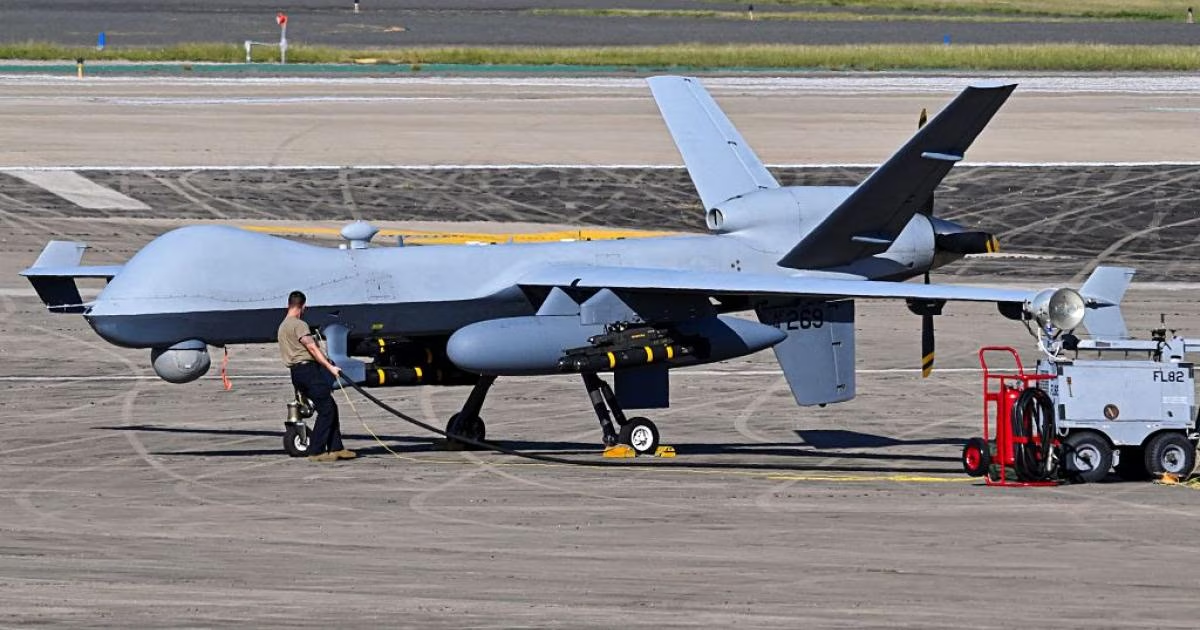


Yet the strategy has not always produced the intended outcome. In Michigan, Representative Rashida Tlaib — among Congress’s most outspoken defenders of Palestinian rights — survived intense opposition efforts and won her primary decisively. Despite being a top target of pro-Israel advocacy networks, her strong grassroots base and deep ties to her district proved resilient. In Minnesota, Representative Ilhan Omar has likewise withstood repeated, well-funded attempts to unseat her, continuing to win reelection despite sustained outside pressure.
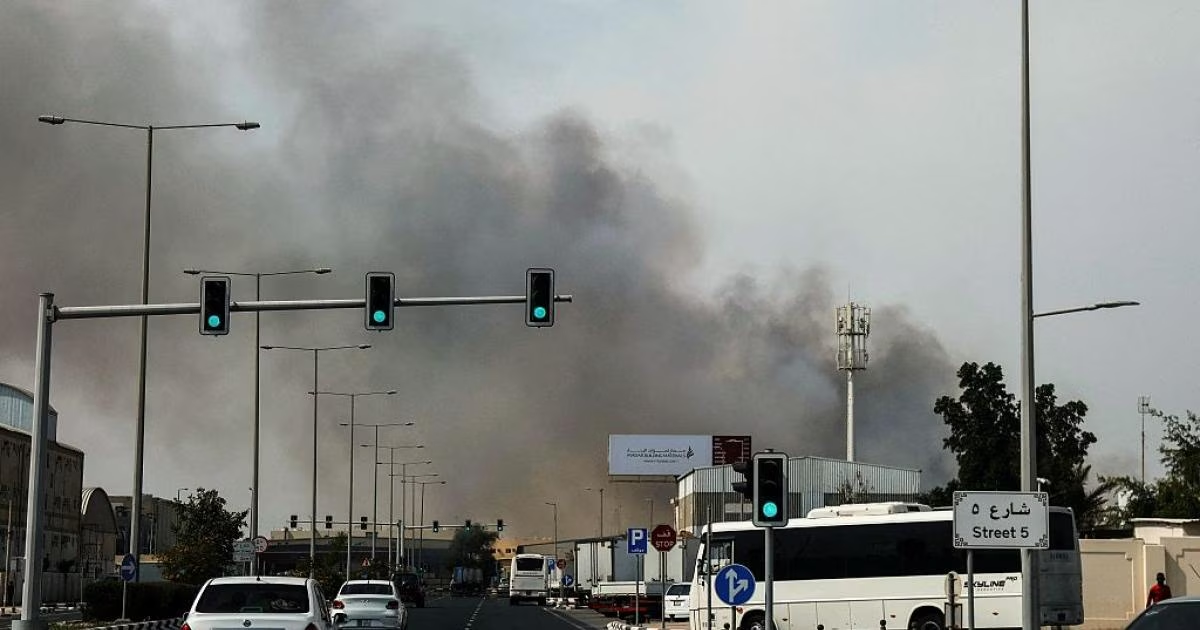
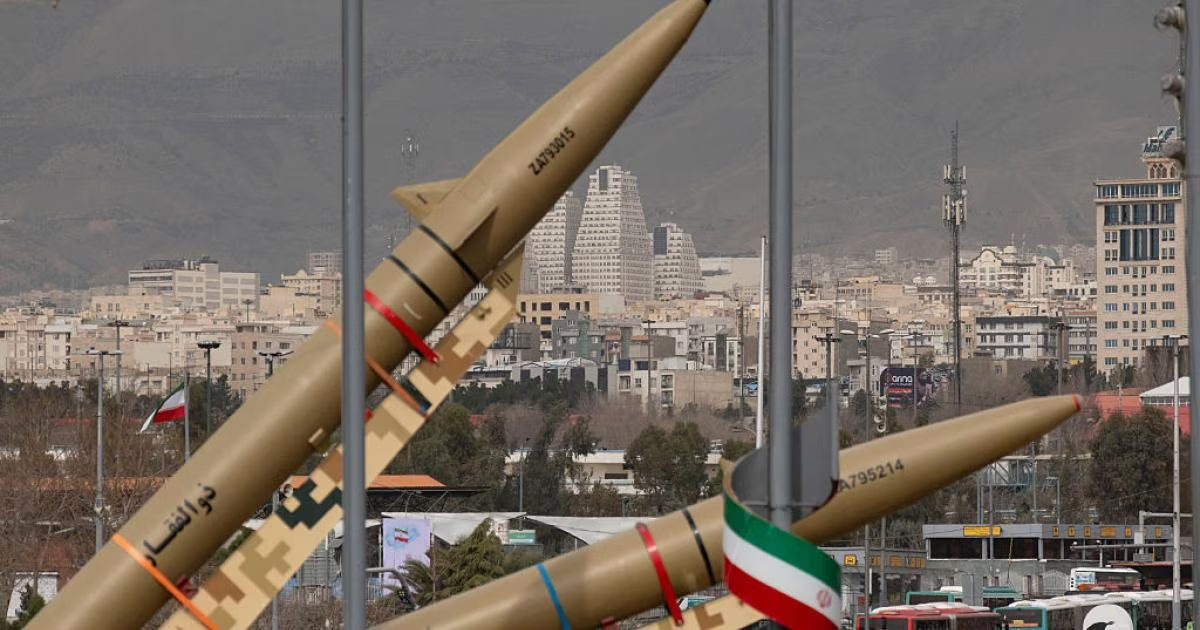

These contrasting outcomes underscore a central reality: money is powerful but not omnipotent. Where incumbents possess entrenched local support and ideological alignment with their voters, multimillion-dollar interventions can falter. Where margins are narrower, however, outside spending can decisively tilt the political field.


The broader concern extends beyond individual races to the chilling effect such interventions create. Democratic lawmakers increasingly operate with the understanding that strong criticism of Israeli government policy may trigger a deluge of negative advertising financed by national donors. Even those who ultimately prevail must divert time, energy, and resources toward political survival. The implicit warning is unmistakable: dissent is costly.


This dynamic unfolds amid a generational transformation within the Democratic electorate. Younger voters, in particular, are markedly more skeptical of Israeli government policies than previous generations, with growing support for conditioning military aid and prioritizing Palestinian human rights. Rather than engage this shift primarily through debate and persuasion, AIPAC’s approach has frequently relied on overwhelming financial intervention — a strategy that may secure short-term victories while deepening long-term political fractures.


Evidence of this changing public mood emerged starkly in a Gallup poll published on February 27, 2026, which found that, for the first time in the survey’s history, more Americans sympathize with Palestinians than with Israel, by 41 percent to 36 percent. The result signals a historic erosion of what was once a durable advantage in American public opinion and represents a potentially devastating development for AIPAC, whose influence has long rested on the assumption of broad pro-Israel consensus among U.S. voters. The finding suggests that while AIPAC may continue winning expensive primaries, it may be doing so against the direction of broader societal change.


The paradox is striking. By aggressively targeting progressive incumbents, AIPAC has demonstrated formidable tactical strength. Yet in districts represented by figures such as Tlaib and Omar, voters have resisted what they perceive as outside interference. In some instances, heavy spending has galvanized grassroots fundraising and intensified local loyalty to embattled incumbents rather than weakening them.


None of this diminishes AIPAC’s right to participate in the political process. Like labor unions, environmental organizations, and business associations, it operates within the legal framework governing super PACs and independent expenditures. The deeper question is whether the scale and strategic intent of its spending are narrowing the boundaries of legitimate debate within one of America’s two major political parties.


For decades, bipartisan support for Israel rested on a broad strategic and moral consensus. Today that consensus is under visible strain — not solely because of activists or progressive lawmakers, but because developments on the ground have forced difficult questions about occupation, settlement expansion, and civilian suffering. Attempting to suppress those debates through financial dominance does not resolve them; it postpones and intensifies them.


As AIPAC convenes its conference, it can point to victories in Missouri and New York as evidence of enduring clout. Yet the persistence of lawmakers such as Tlaib and Omar — alongside shifting national public opinion — illustrates the limits of that power. Democracy functions best when policy disagreements are decided through persuasion and voter deliberation, not overwhelming financial force.


If the price of questioning Israeli government policy becomes a multimillion-dollar campaign aimed at ending a political career, then the stakes extend far beyond any single election. The issue is whether robust foreign-policy debate can endure in an era when money increasingly speaks louder than democratic deliberation.