OPINIONS

Mon 09 Mar 2026 11:26 pm - Jerusalem Time

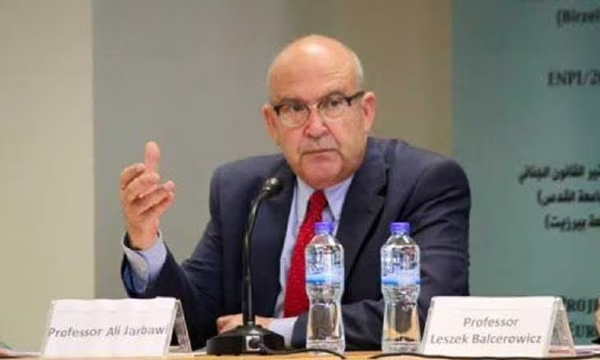
Ali Jarbawi: The Forgotten Conflict and How the Regional War Overshadowed the Palestinian Cause

Ramallah - "Al-Quds" Dot Com

Ramallah - "Al-Quds" Dot Com

Opinion Writer

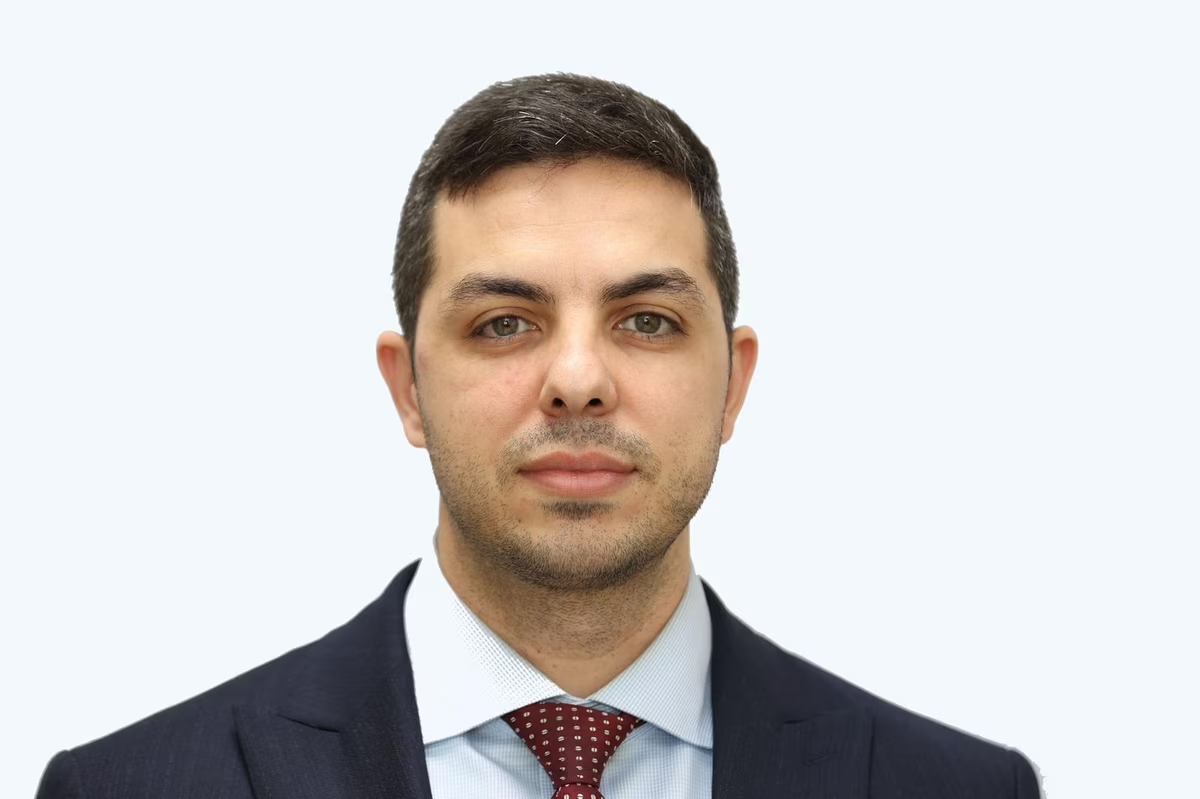
As the American-Israeli war on Iran enters its eleventh day, widespread repercussions are unfolding, not limited to the boundaries of military confrontation, but extending to affect other regional issues, foremost among them the Palestinian cause. According to Dr. Ali Jarbawi, Professor of Political Science at Birzeit University and former Palestinian Minister, the Palestinian cause has, in the shadow of this war, transformed into what can be described as a "forgotten conflict."

Jarbawi believes that what is happening in the region is no longer just a limited confrontation, but has become a regional war since its first day, due to the involvement of many parties. Although the apparent scene suggests that the conflict is between Israel and the United States on one side and Iran on the other, the reality reveals the direct or indirect involvement of major regional powers. Furthermore, the repercussions of the war have extended beyond the region to affect the global economy, especially amidst the disruption of energy markets and the possibility of closing the Strait of Hormuz, which has impacted global oil and gas trade.

The Palestinian Cause in the Shadow of a Larger War

Within this turbulent scene, Jarbawi believes that the Palestinian cause has fallen to a lower priority on the international agenda. Major conflicts, he says, often overshadow smaller ones, which applies to the current Palestinian situation. The regional war has overshadowed what is happening in the Gaza Strip, the West Bank, and Jerusalem, where international monitoring of events there has declined.

He points out that field developments clearly reflect this; international discussions about the political stages related to the war on Gaza have ceased, and the Rafah crossing has been re-closed after having been partially opened previously. At the same time, settler attacks in the West Bank have escalated and become more violent, while global attention to what is happening on the ground is absent.

From his perspective, Israel is exploiting the world's preoccupation with the war to accelerate its policies on the ground, especially in the area of settlement expansion and imposing new realities in the West Bank. Thus, Palestinians are paying the price for a conflict larger than themselves, a clear embodiment of the saying that "small conflicts pay the price for large conflicts."

Post-War Scenarios

In the long term, Jarbawi links the future of the Palestinian cause to the outcomes of the ongoing war. If Israel emerges victorious and is able to significantly weaken or change the Iranian regime, the regional balance of power may shift in a way that could increase pressure on Palestinians. Also, Gulf states, in this scenario, may become preoccupied with arranging their security and political affairs, which could reduce the Palestinian cause's presence in their priorities.

Limited Palestinian Options

In light of this reality, Jarbawi does not believe that Palestinians have wide options at the international or regional level at present, as most powers are preoccupied with the war and its repercussions. Therefore, he believes that the priority should be to arrange the internal Palestinian house, especially in light of the suffocating financial crisis suffered by the Palestinian Authority and the deteriorating economy in the West Bank due to Israeli policies and the withholding of Palestinian tax revenues.

He emphasizes that this economic crisis directly impacts the ability to manage the internal situation, increasing public frustration and weakening trust between society and the political leadership. Therefore, he believes that strengthening national cohesion and building a unified political discourse has become an urgent necessity, even if it is not sufficient to fully resolve the problem.

Escalation Probabilities in the West Bank

With the deterioration of the economic situation and the escalation of settler attacks, Jarbawi believes that the probabilities of escalation in the West Bank have increased. The lack of financial liquidity and the paralysis of economic activity create a tense social environment, accompanied by a growing state of insecurity in some areas.

In this context, he believes that strengthening the relationship between the official level and Palestinian society may help alleviate tensions and restore some degree of trust, even if partially.

End of the Two-State Solution?

Among the issues Jarbawi also addresses is the two-state solution, where he asserts that this solution has practically ended years ago, and what remains of it is merely a political slogan used in international discourse without real translation on the ground. Settlement expansion and the fragmentation of Palestinian lands have made the establishment of a viable Palestinian state almost impossible.

He believes that continued adherence to this slogan primarily aims to manage the conflict rather than resolve it, which buys time for the continuation of facts imposed on the ground. Therefore, he calls for posing new strategic questions about the future of the Palestinian national project and searching for realistic alternatives.

The Religious Dimension of the Conflict

Jarbawi also points to the escalation of the religious dimension in Israeli political discourse, especially with the rise of religious right-wing currents within the government. These currents, in his opinion, are based on a religious ideology that pushes towards controlling all of historical Palestine and perhaps expanding beyond it, as seen in Israeli policies towards neighboring countries such as Syria and Lebanon.

In this context, he draws attention to what is happening at Al-Aqsa Mosque, including incursions and restrictions on prayer, considering that reactions in the Islamic world are still below the level of the challenge posed by these policies.

Conclusion

In conclusion, Jarbawi believes that the Palestinian cause is going through a highly sensitive phase, as its internal crisis intersects with major regional transformations that may redraw the map of the region. While the world is preoccupied with a wide regional war, Palestinians find themselves in the position of a "forgotten conflict," making the arrangement of the internal house and the building of a new political strategy more urgent than ever.
ARAB AND WORLD

Mon 09 Mar 2026 11:10 pm - Jerusalem Time

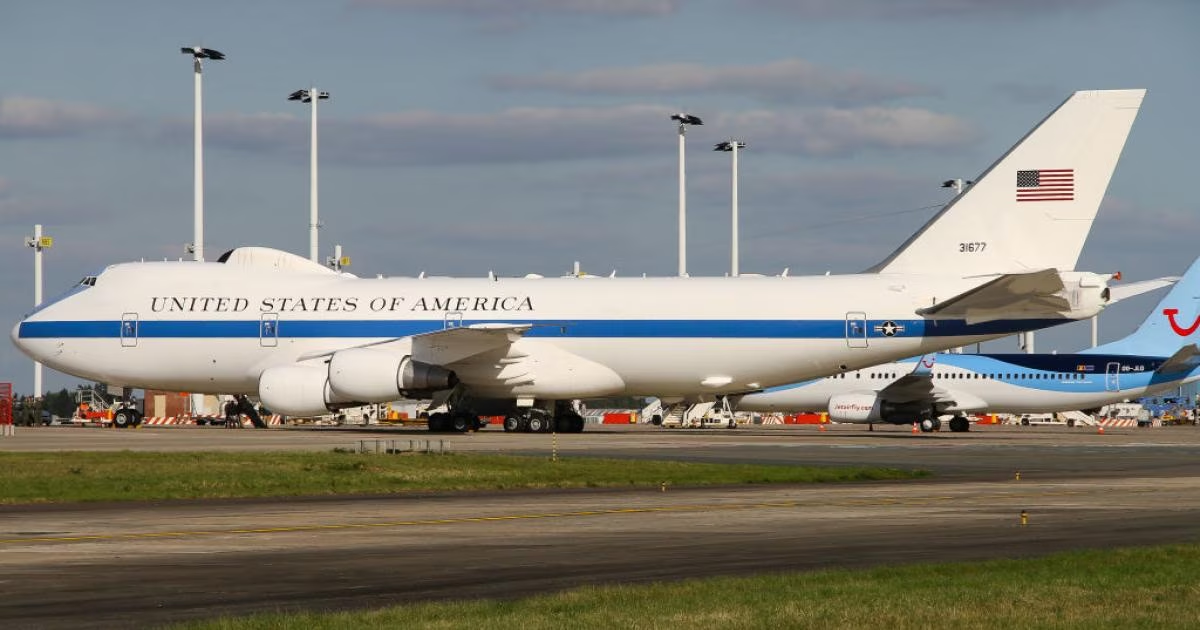
US \"Doomsday Plane\" in Middle East Skies: Nuclear Messages Amid Escalating Tensions

The skies of the Middle East region have witnessed an exceptional US military movement that has attracted the attention of international observers and military analysts, as the airborne command post aircraft, the \"E-6B Mercury,\" was spotted flying. This aircraft is known in media circles as the \"Doomsday Plane,\" due to its pivotal role in managing major military operations and controlling the nuclear arsenal.\n\nThis aircraft is considered a mobile command and control center, specifically designed to connect the high command with strategic nuclear forces, including missile-carrying submarines and heavy bombers. Its utmost importance lies in its ability to issue direct orders to launch intercontinental ballistic missiles equipped with nuclear warheads in extreme emergencies.\n\nSources reported that the deployment of this aircraft in the region comes at a sensitive time, reinforcing speculation about its potential role amid ongoing confrontations and tensions between regional parties. This move serves as a strategic deterrent message, ensuring the continuity of command and control even in the most difficult field and political circumstances.\n\n"The Doomsday Plane" is characterized by superior technical capabilities that allow it to remain airborne for up to a full week without needing to land, thanks to aerial refueling technologies. This exceptional endurance transforms it into a floating military base in the sky, capable of managing global crises from high altitudes away from ground threats.\n\nThe aircraft's structure and internal systems are designed to be resistant to nuclear explosions and electromagnetic pulses that could disrupt traditional electronic devices. It is also equipped with advanced protection systems against nuclear radiation and complex electronic jamming, ensuring that communication channels remain open with all combat units.\n\nThe aircraft can accommodate about 112 people and is equipped to host the US President, the Secretary of Defense, and senior military leaders in cases of all-out wars. The aircraft's internal environment provides all the technical means that allow these leaders to manage state affairs and direct military strikes from anywhere in the world.\n\nThe history of this model's entry into military service dates back to 1974, but it has undergone a series of deep updates during the 1980s and beyond to maintain its technical superiority. The latest of these updates was in June 2023, when Northrop Grumman developed its communication systems and internal equipment to keep pace with modern cyber threats.\n\nThe US fleet possesses only four aircraft of this type, and the Department of Defense is committed to keeping at least one of them on constant 24-hour alert. This system ensures the aircraft's readiness for immediate takeoff at any moment to become the beating heart of US command in the event of any sudden attack on ground centers.\n\nAnalysts linked the current appearance of the aircraft to previous events, as it was spotted last year coinciding with the escalation of confrontation between Israel and Iran. Its repeated appearance in the region's skies raises serious questions about the nature of the missions it performs, and whether it is linked to contingency plans to confront a potential military escalation in the regional nuclear file.\n\nUltimately, the \"E-6B Mercury\" aircraft remains the most terrifying non-combat tool in the US arsenal, as its flight indicates that crises have reached critical levels. With continued military movements in the Middle East, eyes remain on what the coming days will bring in terms of field developments reflected by these strategic flights.\n\nThe Doomsday Plane ensures that US military forces receive confirmed orders to launch nuclear missiles even if ground infrastructure is destroyed.

ARAB AND WORLD

Mon 09 Mar 2026 11:10 pm - Jerusalem Time

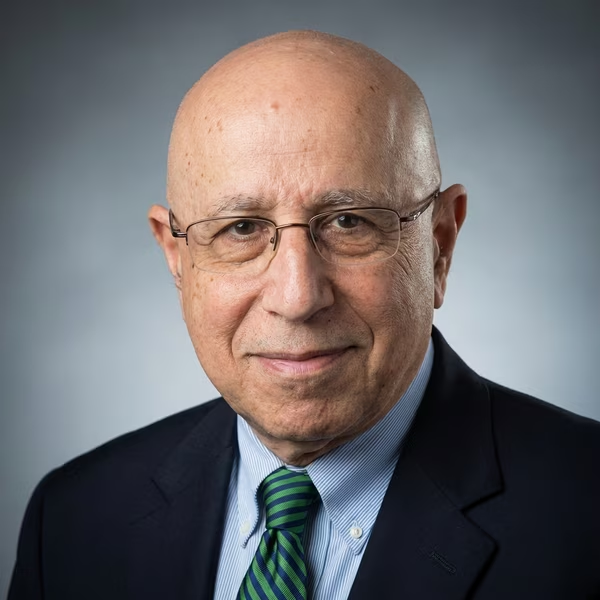
Trump: War on Iran Nearing End… Tehran Prepares for Long Conflict with US

Said Erikat

Opinion Writer

Washington – Said Arikat

10/3/2026

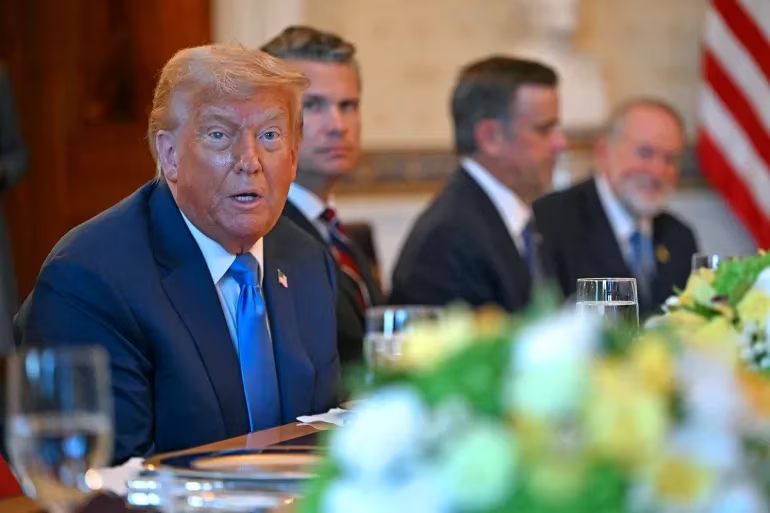
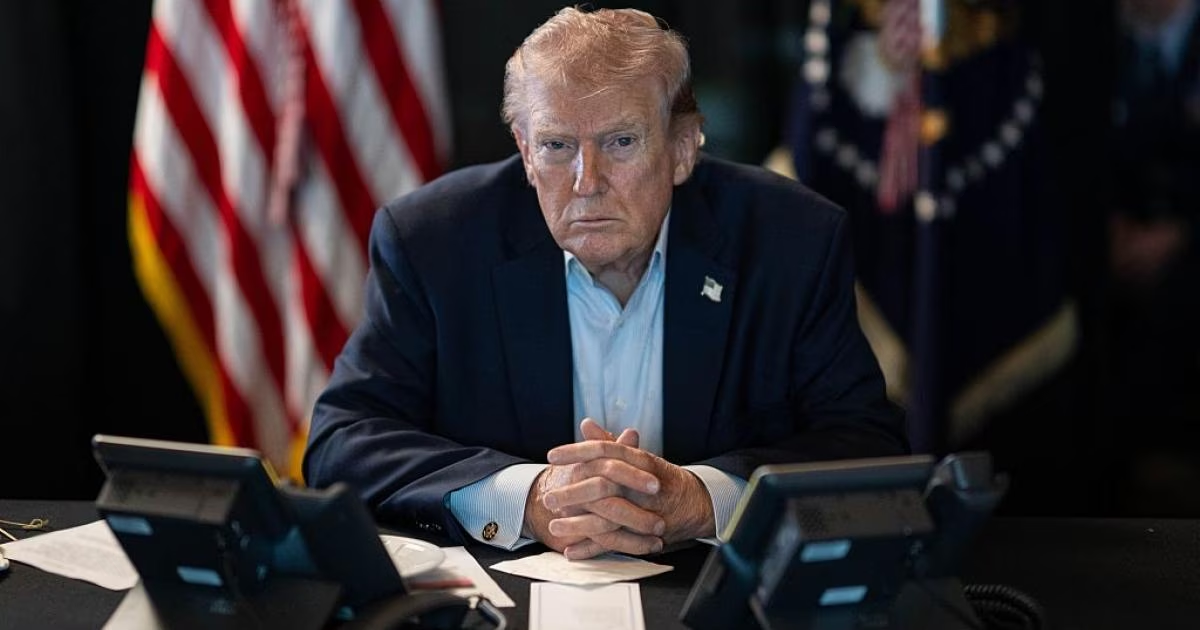
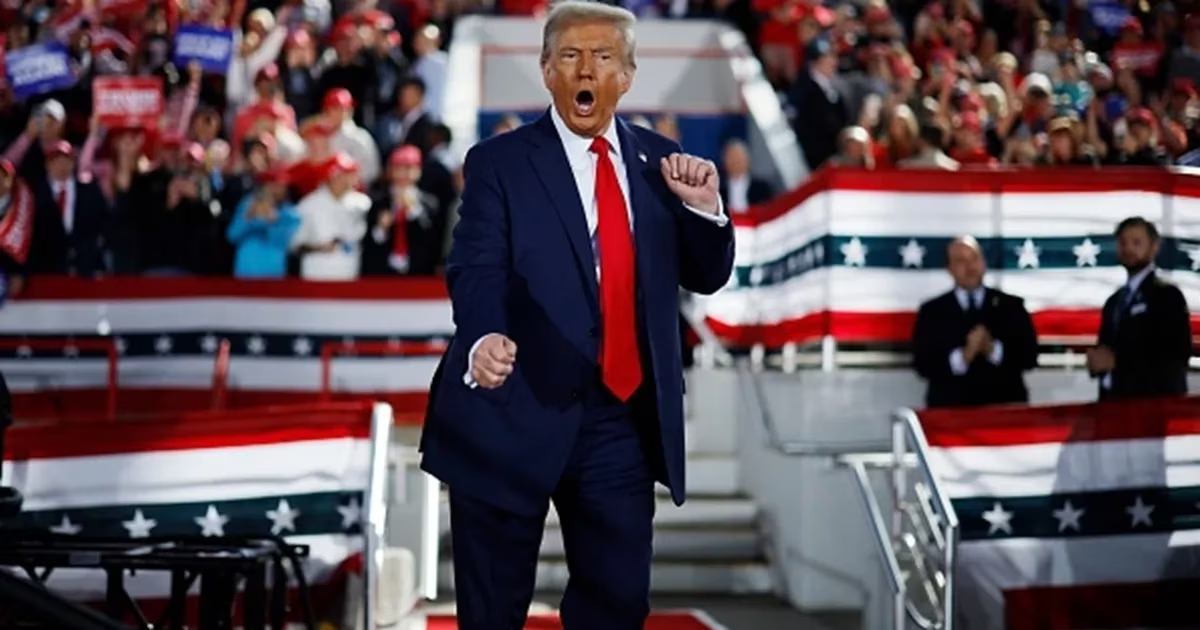
US President Donald Trump said on Monday afternoon that the war with Iran was “largely complete,” asserting that the United States was “far ahead” of the timeline he had initially estimated, which ranged between four and five weeks. Trump’s remarks came in an interview with CBS News.

Trump added that Iranian military capabilities had suffered significant blows, stating: “I believe the war is largely complete. They have no navy, no communications, no air force.”

When asked about navigation in the Strait of Hormuz, he indicated that ships were still crossing the strait, but said he was “considering taking control of it.”

In contrast, statements from Tehran suggest that the Iranian leadership is preparing for a long conflict with the United States, given its adherence to escalation and its refusal to return to the diplomatic path at the current stage. Kamal Kharrazi, foreign policy advisor to the office of the Supreme Leader, affirmed in an interview with CNN that his country is ready for a “long war,” considering that ending the conflict will only be achieved through widespread economic pressure that pushes international parties to intervene to stop what he described as “American and Israeli aggression” against Iran.

Kharrazi explained that Tehran no longer sees room for diplomacy at present, noting that his country had engaged in two rounds of negotiations with Washington, but attacks occurred at the same time those talks were ongoing, which – according to him – led to a complete loss of trust in the possibility of reaching a political settlement.

These statements reflect a clear hardening of the Iranian position after about ten days of the war’s outbreak. The leadership in Tehran is betting that the continuation of the conflict will lead to increased economic pressure on countries in the region and the world, as a result of disrupted energy markets, rising inflation rates, and supply shortages. Iranian officials believe that these pressures may push affected countries, especially in the Gulf, to pressure Washington to end the war.

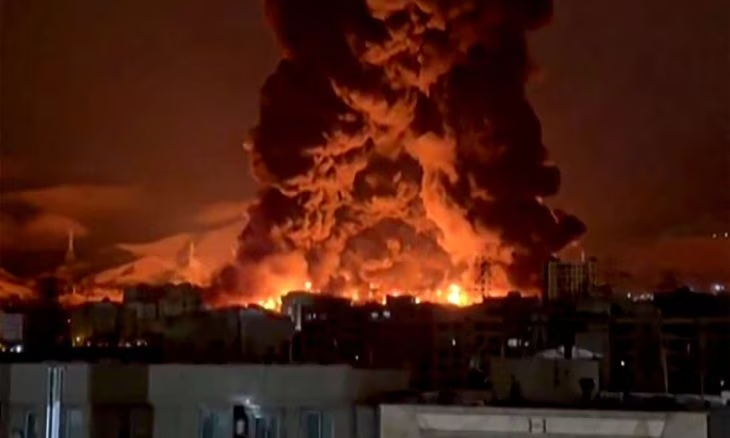
On the ground, Iran expanded the scope of its attacks to include several countries in the Middle East, asserting that it targets American military interests in the Gulf states. However, multiple reports indicate that civilian facilities, including residential buildings and airports, have been subjected to repeated attacks, which increases regional tension and raises fears of the conflict’s expansion.

Iranian strikes have also affected global energy trade. Tehran exploited the fragility of the oil sector’s infrastructure and maritime transport routes, leading to a sharp decline in navigation through the Strait of Hormuz. At the same time, oil prices exceeded one hundred dollars per barrel, causing disruptions in global financial markets.

According to estimates by the “Rapidan Energy Group,” the conflict has disrupted about 20 percent of global oil supplies, a level far exceeding the impact seen in markets during the Suez Canal crisis in the 1950s. The conflict has also depleted what is known as the oil market’s spare production capacity, which is the ability that producing countries rely on to quickly increase production during crises.

Politically, Iran witnessed a notable development over the weekend with a shift in the power hierarchy, as Mojtaba Khamenei, son of former Supreme Leader Ali Khamenei, was appointed to the highest leadership position in the country. Observers believe this step may indicate the possibility of continued escalation. Kharrazi affirmed that the military and political leadership in Iran is fully united behind this approach.

For his part, Trump expressed his rejection of this appointment, considering it unacceptable, but Kharrazi responded by saying that it was “none of his business.”

Iranian statements indicate a clear shift in Tehran’s strategy for managing the conflict. Instead of relying on direct negotiations, Iran appears to be seeking to expand the economic cost of the war. Recognizing its limited ability to confront the United States militarily in a traditional way, Tehran relies on asymmetric tools, such as disrupting energy supply routes and stirring regional tensions.

This strategy aims to shift pressure from the battlefield to the global economy, which may push international powers, especially in Europe and Asia, to pressure Washington to contain the escalation.

Domestically, Mojtaba Khamenei’s rise to leadership reflects an attempt to maintain the regime’s continuity at a moment of decisive conflict. In wartime, strengthening the cohesion of the political and military leadership becomes a top priority, especially with the expectation of increasing economic and social pressures within Iran itself. However, Iran’s bet on exhausting the global economy may entail significant risks, as it could push the United States and its allies to intensify military strikes and sanctions, which could open the door to a broader regional conflict that would be difficult to contain in the short term.

PALESTINE

Mon 09 Mar 2026 11:10 pm - Jerusalem Time

Widespread raid campaign in the West Bank.. The occupation arrests 24 Palestinians and tightens the siege on holy sites

Israeli occupation forces launched, at dawn on Monday, a widespread campaign of raids and arrests in several cities and towns in the occupied West Bank. Human rights sources reported that Israeli forces stormed citizens' homes and wreaked havoc in them, leaving a state of terror among the residents, before arresting 24 Palestinians on the pretext that they were wanted by their security agencies.

The Palestinian Prisoner's Club clarified in a statement that the incursions were accompanied by heavy gunfire and confrontations in several areas, noting that the occupation deliberately abused the detainees and their families during the raids. These field escalations come within the framework of the continuous policy of restriction pursued by the occupation authorities against Palestinians in various governorates of the West Bank.

On the religious front, the occupation authorities continue to impose a strict siege on the blessed Al-Aqsa Mosque and the Ibrahimi Mosque in Hebron, which prevented thousands of worshipers from reaching to perform night prayers and i'tikaf in the last ten days of the month of Ramadan. Jerusalemite researchers warned that these measures aim to impose a new temporal and spatial reality that reduces the Islamic presence in the holy sites, amidst demands for international intervention to stop these violations.

Occupation forces stormed various areas of the West Bank amidst heavy gunfire, and carried out search operations and assaults against citizens.

OPINIONS

Mon 09 Mar 2026 11:09 pm - Jerusalem Time

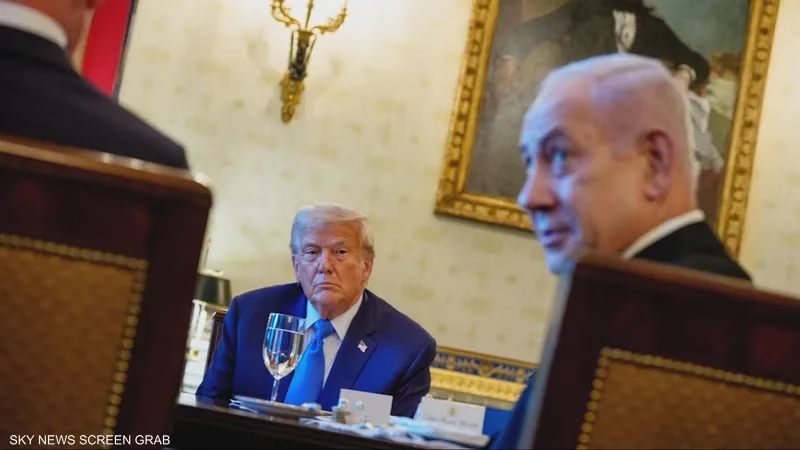
Netanyahu, Trump, and the 'Decapitation' Gamble: How Washington Slipped Towards Confrontation with Tehran?

Ramallah - "Al-Quds" Dot Com

Ramallah - "Al-Quds" Dot Com

Opinion Writer

Analytical readings of the reasons for the American-Israeli military escalation against Iran point to a pivotal role played by Israeli Prime Minister Benjamin Netanyahu in solidifying President Donald Trump's decision. In a phone call on February 23, intelligence sources presented a hypothesis that an imminent meeting of the Iranian Supreme Leader and his senior advisors represented a golden opportunity to assassinate the entire leadership. This Israeli move linked Trump's ambitions for a quick victory with the 'decapitation' strategy, marketed as a final solution to the Iranian crisis.

Netanyahu's persuasion of Trump relied on what was called the 'Venezuelan example,' where the Iranian regime was portrayed as a fragile structure that would collapse once its top leadership was eliminated, much like how President Nicolas Maduro was dealt with. This analysis intersected with Trump's public statements, in which he announced the death of the Supreme Leader, describing the event as the greatest opportunity for the Iranian people to reclaim their country. It seemed Washington was betting that a military strike would force the remaining Iranian leadership to negotiate from a position of extreme weakness.

This scenario was accompanied by Netanyahu's exploitation of Trump's political need for an 'escape' from internal crises and thorny issues plaguing him in the United States. Observers believe that the decision was not merely a personal whim but was linked to a broader American strategy aimed at controlling global energy reserves and securing oil markets. However, the supposed success in Venezuela was the primary driver Netanyahu used to market the idea of eliminating the Iranian leadership as a low-cost strategic solution.

In contrast, Tehran did not remain silent, announcing the election of a new leader and initiating a series of intense retaliatory attacks that targeted Israeli depth and American bases in the region. Despite President Masoud Pezeshkian's attempts to de-escalate through diplomatic 'apologies' for some attacks, the reality on the ground indicates an unprecedented escalation. Iranian responses included targeting vital economic facilities, placing the entire region on the brink of a military and economic volcano.

A major problem emerged in Trump's handling of sensitive intelligence information, with security sources criticizing his statements that revealed secret details related to the major strike. These precedents in disclosing operational secrets, such as referring to Israeli agents visiting the Fordow nuclear facility, further complicated the security landscape. It appears that the overlap between the desire for political showmanship and the requirements of secret military operations led to counterproductive results that were not anticipated by planners in Washington and Tel Aviv.

Whether the war was a pre-planned strategic decision or a result of Netanyahu's success in exploiting Trump's weaknesses, the outcome is the United States entering a new 'earthquake zone.' Israel is striving to leverage this conflict to radically and permanently change regional power balances. However, the failure to achieve the 'rapid collapse' scenario of the Iranian regime opens the door to catastrophic possibilities that may not stop at the borders of the Middle East but extend to include major powers such as Russia and China.

The Arab region today suffers from the repercussions of this military gamble, as countries find themselves facing economic and security losses whose end cannot be predicted. The bet that 'decapitation' would end the war proved naive in the face of the complexities of Iranian institutions and their history of confrontation. Instead of the promised stability, these strikes have opened the floodgates of chaos, threatening to turn the conflict into a long-term war of attrition that drains everyone's resources.

Ultimately, the current scene shows that political arrogance can lead to historical catastrophes when the realities of geography and history are ignored in favor of quick deals. The Middle East, boiling on a hot plate, needs a vision that transcends the language of missiles and assassinations, especially as 'doomsday scenarios' are now on the table. If the hawkish mood in Washington does not change, the region is heading for major transformations that will redraw the political map with unprecedented destruction.

Netanyahu succeeded in exploiting the American president's weaknesses to push Washington back into the Middle Eastern earthquake zone.

ARAB AND WORLD

Mon 09 Mar 2026 11:09 pm - Jerusalem Time

Trump announces the approaching end of the war in Iran and hints at control over the Strait of Hormuz

US President Donald Trump confirmed that the military confrontation in Iran has reached its final stages, indicating that Tehran has almost completely lost its defensive and offensive capabilities. Trump clarified in media statements that Iranian forces no longer possess an effective naval or air force, and their communication systems have been disrupted, putting them in a critical military situation.

The US President pointed out that Washington has made significant progress in implementing its military and political plans, exceeding the previously set timeline of four to five weeks. He added that the US administration is currently evaluating the next phase of the conflict, considering that the strategic objectives of the United States are being achieved on the ground faster than expected.

Regarding the new Iranian leadership, Trump sent a firm message to Supreme Leader Mojtaba Khamenei, affirming that he has no messages for him at the moment. The US President went further by revealing his consideration of choosing an alternative figure to take the reins in Tehran, without disclosing the identity of potential candidates or the nature of this anticipated political change.

On the international navigation front, Trump addressed the situation in the Strait of Hormuz, stating that commercial vessels are currently passing through it without significant obstacles. However, the US President hinted at the possibility of imposing full control over the strategic strait in the near future, a step that could redraw the map of naval influence in the Arabian Gulf region and secure global energy supplies.

Diplomatically, the Kremlin revealed a phone call between Russian President Vladimir Putin and his American counterpart, during which Putin presented proposals aimed at reaching a quick and comprehensive settlement to the war in Iran. During the conversation, the two leaders discussed other thorny international issues, including the conflict in Ukraine and the deteriorating situation in Venezuela, amid reports indicating Washington's intention to ease oil sanctions on Moscow.

Economically, global energy markets experienced a severe shock immediately after these announcements, with futures prices for Brent and US crude oil falling by more than 5%. These losses are driven by expectations of increased oil supply if the Trump administration eases restrictions on Russian exports, reflecting a significant overlap between military issues in the Middle East and global economic balances.

The war in Iran is nearing its end, and they no longer have naval, air, or even communication capabilities.

PALESTINE

Mon 09 Mar 2026 11:09 pm - Jerusalem Time

Palestinian warnings of 'organized terrorism' after decision to arm hundreds of thousands of settlers in Jerusalem

Palestinian authorities and institutions have issued strong warnings about the catastrophic consequences of the announcement by Israeli National Security Minister Itamar Ben-Gvir regarding the expansion of arming settlers in occupied Jerusalem. Palestinian sources confirmed that the inclusion of hundreds of thousands of settlers on the list of those eligible to carry weapons represents a green light for committing more crimes against unarmed citizens.

The Jerusalem Governorate, in an official statement, considered this step part of systematic racist incitement, aiming to open the door for new bloody attacks in an already volatile situation. The Governorate explained that the decision includes settlers residing in settlement outposts located in the heart of densely populated Palestinian neighborhoods, which increases the pace of security risks for the indigenous population.

The Governorate stressed that the policy pursued by the current occupation government represents an open call for extrajudicial killings, and grants extremists official cover to practice violence. It pointed out that these trends are fully consistent with the extremist right-wing ideology adopted by the Israeli government, which is based on the exclusion of Palestinians and targeting their existence by all means.

Statistics issued by the Jerusalem Governorate revealed a bitter reality, where 140 martyrs have fallen in the city over the past five years, including about 70 children. Sources attributed this heavy toll to official incitement policies and systematic violence practiced by both occupation forces and settlers, especially in the absence of international accountability.

Reports confirmed that the incitement discourse led by extremist ministers in the occupation government, foremost among them Ben-Gvir, has directly contributed to fueling waves of violence against Palestinians. Since October 7, 2023, the pace of these attacks has seen an unprecedented escalation, with weapons being used as a tool to impose intimidation and forced displacement in various neighborhoods of Jerusalem.

Palestinian institutions believe that settler crimes are no longer mere individual or random incidents, but rather express a clear pattern of 'organized state terrorism'. The Governorate held the occupation government fully responsible for any security deterioration resulting from arming settlers and providing them with legal and security cover to carry out their attacks under army protection.

In a related context, the Palestinian side called on the international community, the Security Council, and the European Union to intervene immediately to stop these dangerous policies that violate the Geneva Conventions. Palestinian demands called for the necessity of disarming settlers and providing urgent international protection for the Palestinian people who face the Israeli killing and incitement machine daily.

Itamar Ben-Gvir had announced via social media platforms the qualification of 41 neighborhoods in occupied Jerusalem as areas whose residents are entitled to obtain firearm licenses. The extremist minister claimed that this measure aims to enhance what he described as 'personal security' for Israelis, ignoring the direct threats that these armed individuals pose to the lives of Palestinians.

Under this new decision, more than 300,000 additional settlers in Jerusalem will be able to apply for official weapon permits, which raises the number of armed individuals in the city to record levels. The targeted areas include very sensitive settlement outposts, among them those in the Sheikh Jarrah neighborhood, whose residents suffer from continuous attempts at displacement.

Israeli data indicated that Ben-Gvir's era has witnessed a boom in civilian armament, with more than 240,000 Israelis obtaining weapon licenses since the end of 2022. These figures reflect the systematic policy pursued by the Ministry of National Security in transforming the settler community into armed militias working alongside regular forces.

For his part, the head of the Palestinian National Council, Rawhi Fattouh, described this expansion of armament as a dangerous escalation and an open invitation to commit massacres. Fattouh explained that this political doctrine aims to unleash the settlers in Jerusalem and the holy sites, which poses a direct threat to Al-Aqsa Mosque and Palestinian properties that are constantly targeted.

Fattouh concluded his statements by warning that these policies undermine any remaining opportunities for achieving stability or reaching a just political solution, and push the region towards a comprehensive explosion. He affirmed that the occupation seeks, through force and racism, to entrench a new colonial reality aimed at changing Jerusalem's identity and displacing its indigenous residents through armed intimidation.

The policy of arming settlers grants extreme extremists a license to take the law into their own hands in line with their ideology based on hatred and racism.

OPINIONS

Mon 09 Mar 2026 11:09 pm - Jerusalem Time

Preventing Collapse: The Palestinian Authority's Financial Survival Equation

Ramallah - "Al-Quds" Dot Com

Ramallah - "Al-Quds" Dot Com

Opinion Writer

In a time when public debt levels are rising and pressures on government budgets are increasing worldwide, dealing with financial crises has become a familiar reality for many countries. However, managing public finances for the Palestinian Authority goes beyond traditional economic policies to become a more complex equation related to maintaining institutional survival under exceptional political and economic conditions.

The Palestinian Authority operates in an environment that, in other contexts, would have led to complete financial and economic collapse. Yet, at the same time, it lacks the traditional tools that governments usually resort to in times of crisis; there is no national currency that can be devalued, no full control over the most important sources of revenue, and no ability to access international capital markets. In such a context, fiscal policy transforms into a delicate balancing act between limited resources and the primary goal of preventing the erosion of public institutions.

While governments in sovereign states are measured by their ability to ensure financial stability, the Palestinian Authority is measured by its ability to pay parts of its employees' salaries on time, maintain essential services such as health and education, and preserve a fragile social contract with citizens.

Even before the outbreak of the war in Gaza in October 2023, the Palestinian Authority faced significant difficulties in meeting its financial obligations. The war exacerbated these challenges due to a severe economic contraction and a decline in local revenues, in addition to increasing restrictions on the movement of individuals, goods, and capital.

However, the fundamental cause of the Palestinian financial crisis is not technical as much as it is political. Israel has continued to withhold an estimated $4.5 billion in accumulated Palestinian clearance funds, which are taxes and customs collected by Israel on behalf of the Palestinian Authority according to the Paris Economic Protocol. These revenues constitute about two-thirds of the Authority's monthly income, making any disruption to them a direct blow to financial stability. Israel has completely stopped transferring clearance funds since May 2025, leading the Palestinian Minister of Finance to recently describe this situation as an “existential threat” to the Palestinian Authority.

The risks are further complicated by repeated threats to sever correspondent banking relations between Israeli and Palestinian banks, which could expose the entire Palestinian financial system to the risk of paralysis and disruption of essential commercial activities.

As a result, over the past two years, the Palestinian Authority has only been able to cover about 60 percent of its monthly salary bill. Public debt has also risen to unprecedented levels, with arrears accumulating for public employees and private sector suppliers. This has led to a weakening of domestic consumption, a decline in private sector liquidity, and increased pressure on the banking sector.

If these dynamics continue without swift intervention, they could lead to a vicious cycle of economic deterioration and institutional disintegration. Nevertheless, practical steps can still be taken to reduce the risks of collapse.

First, regional and international diplomatic efforts must focus on the immediate release of the withheld clearance funds. The primary problem in Palestinian public finance is not a lack of technical solutions as much as it is the politicization of revenue flows. Even a partial release of these funds, along with an extension of correspondent banking relations, could significantly alleviate the severity of the financial crisis and reduce the risks of institutional collapse.

Second, emergency funding from international donors and multilateral financial institutions should be expanded to provide short-term liquidity support that ensures the continued provision of essential services and gives the Palestinian government time to implement necessary financial and economic reforms.

In the medium term, there is a need to deepen Palestine's integration into the international financial system, by enhancing cooperation with institutions such as the World Bank, the International Monetary Fund, and the European Bank for Reconstruction and Development. Even in the absence of full sovereignty, important international precedents exist. A country like Kosovo, despite the specificity of its political situation, managed to become a member of key international financial institutions, which allowed it access to innovative financing tools and contributed to strengthening its economic resilience.

Restructuring part of the domestic debt could also help alleviate the burden of high debt service that drains a significant portion of limited monthly revenues. By converting part of these debts into long-term bonds supported by appropriate guarantee mechanisms, liquidity pressures can be eased, and resources redirected towards essential expenditures.

However, the most important question remains whether the Palestinian Authority is capable of transforming this crisis from mere survival management into an opportunity to launch structural reforms that enhance financial sustainability. Crisis management alone is not enough. Long-term financial stability requires reforms in public financial management, including expanding the tax base, rationalizing expenditures, and encouraging the growth of private sector investments to reduce reliance on politically volatile funding sources.

In the Palestinian case, preventing collapse becomes an end in itself. But it is also a prerequisite for any future path towards economic recovery and building resilient institutions in a highly complex political and economic environment.

PALESTINE

Mon 09 Mar 2026 11:09 pm - Jerusalem Time

Dead and wounded in an Israeli drone raid on Al-Zaytoun neighborhood and escalating violations in Gaza

Medical sources reported the martyrdom of 30-year-old young man Imad Falfal, and the injury of several citizens with varying degrees of wounds, following an attack carried out by an Israeli 'quadcopter' drone in the Al-Zaytoun neighborhood, southeast of Gaza City. The sources explained that the drone targeted a gathering of civilians near Kashko Street by directly dropping a bomb, leading to casualties amidst continued field tensions.

In a related context, the Ministry of Health in the Gaza Strip recorded the arrival of 7 martyrs and 17 injuries to hospitals during the past twenty-four hours, as a result of a series of scattered targeting. The ministry indicated that ambulance and rescue teams are still facing extreme difficulties in reaching other victims who are still under the rubble of destroyed homes and in rugged roads blocked by debris.

Dawn hours of this Monday witnessed another escalation, as three Palestinians were martyred, including a child and journalist Amal Mohammed Shamali, following an Israeli shelling that targeted displacement tents in central areas of the Strip. These attacks come as part of a series of daily violations committed by the occupation army of the ceasefire agreement that came into effect on October 10, 2025.

Regarding official statistics, the total number of martyrs in the Gaza Strip since the signing of the ceasefire agreement has risen to 648 martyrs, while the number of injuries has exceeded 17,700. Specialized teams have also been able to recover 755 bodies from under the rubble since that date, at a time when the World Health Organization warns of the depletion of essential medicines and medical supplies in the remaining hospitals.

Since the start of the comprehensive aggression on October 7, 2023, the total number of casualties has reached 72,133 martyrs and 171,826 injured, in an unprecedented humanitarian catastrophe. International reports confirm that about 90% of the civilian infrastructure in the Strip has been destroyed, with the United Nations estimating the cost of reconstruction at about 70 billion US dollars to repair what the Israeli war machine has destroyed.

The total documented martyrs since the ceasefire agreement came into effect last October reached 648 martyrs, amidst continued field violations.

PALESTINE

Mon 09 Mar 2026 11:08 pm - Jerusalem Time

For the tenth day.. The occupation continues to close Al-Aqsa and tightens the siege on the Old City of Jerusalem

The Israeli occupation authorities continue to impose a comprehensive closure on the blessed Al-Aqsa Mosque for the tenth consecutive day, preventing worshippers from accessing its courtyards and performing prayers. The occupation's security apparatuses cite the declared state of emergency following the ongoing Israeli-American attack on Iran, which began on February 28th, leading to a complete disruption of religious life in the mosque.

In parallel with the closure of the mosque, occupation forces continue their tight siege on the Old City in occupied Jerusalem, preventing anyone who does not hold a residential address within its walls from entering. This measure has isolated the holy city from its surroundings and deprived tens of thousands of Palestinians of their right to access their holy sites during the days of the blessed month of Ramadan.

For its part, the Islamic-Christian Commission for Supporting Jerusalem and Holy Sites affirmed that this closure represents a dangerous and unprecedented escalation in the city's history. The commission clarified in a statement that the occupation seeks, through these measures, to impose a new spatial and temporal reality, exploiting regional circumstances to pass Judaization schemes targeting the identity of Al-Aqsa Mosque.

The commission pointed out that preventing Tarawih prayers and the five daily prayers directly affects the sanctity of the mosque and its religious status among Muslims worldwide. It considered that this systematic policy aims to restrict freedom of worship and a blatant assault on internationally guaranteed religious rights, especially in light of the spiritual atmosphere of the holy month.

Jerusalemite activities rejected the security pretexts put forward by the occupation to justify the closure of the mosque, describing them as repeated excuses aimed at covering up the violations. Sources indicated that the closure coincided with a wide-ranging campaign of expulsions targeting Al-Aqsa Mosque guards and those stationed there to empty it of its protectors and facilitate control over it.

The commission warned of what it described as dangerous objectives behind this closure, foremost among them undermining the powers of the Islamic Endowments Department, which has legal and administrative authority over the mosque. It also warned that these steps aim to undermine the historical and legal Hashemite custodianship that Jordan holds over the Noble Sanctuary.

In a related context, the Jerusalem Affairs Department of the Palestine Liberation Organization warned of moves led by extremist settler groups to promote the rituals of sacrificing the 'Passover offering' inside Al-Aqsa. The department confirmed that these groups exploit government support to spread incitement materials and imaginative images simulating the performance of Talmudic rituals in the heart of the blessed mosque next month.

On the economic front, merchants in the Old City are suffering heavy losses as a result of the imposed siege and the prevention of shoppers from reaching their stores. The occupation police only allow stores specializing in selling foodstuffs to open, while the majority of shops remain forcibly closed due to restrictions on the movement of merchants themselves.

Local sources reported that many merchants failed to reach their stores because their registered residential addresses in their identity cards are outside the Old City's boundaries. Even those who manage to open their shops face a complete absence of purchasing movement due to the absence of worshippers and visitors who represent the main artery of Jerusalem's economy.

In a field testimony, Jerusalemite merchant Riyad Ad'eis said that the markets in the Khan al-Zeit area appear completely empty of passersby despite some food stores being allowed to operate. He explained that merchants open their doors symbolically without any sales, stressing that the current conditions have exceeded the ability of Jerusalemites to withstand taxes and accumulated debts.

Ad'eis concluded by pointing out that the Old City's economy relies entirely on visitors to Al-Aqsa Mosque and the Church of the Holy Sepulchre, and with the continued closure, the markets have become ghosts. He affirmed that the continuation of this situation threatens the permanent closure of many commercial establishments that are no longer able to cover their operating expenses or pay their rents.

The closure of Al-Aqsa Mosque for the tenth consecutive day constitutes an unprecedented escalation that reflects the occupation's insistence on imposing a new reality and disrupting religious rituals during Ramadan.

PALESTINE

Mon 09 Mar 2026 11:08 pm - Jerusalem Time

Between overthrowing the regime and changing its behavior.. The divergence of Israeli and American goals in the aggression against Iran

Research sources at the Arab Center for Research and Policy Studies reported that Israel is striving to prolong the military confrontation with Iran, with the aim of achieving an undeclared strategic goal of undermining the pillars of the Iranian regime and overthrowing it. This vision is based on a firm Israeli conviction that Tehran will not abandon its nuclear ambitions as long as the current regime is in power, which makes a radical change in the structure of power a security necessity from Tel Aviv's perspective.

A recent position paper considered that Israeli Prime Minister Benjamin Netanyahu exploited major political shifts, starting from the repercussions of the 'Al-Aqsa Flood' operation to Donald Trump's return to the White House, to implement plans that had been prepared for decades. Through this escalation, Netanyahu aims to ensure Israel's monopoly on nuclear power in the region and prevent the emergence of any regional competitor capable of threatening its military superiority.

The sources indicate that Israeli incitement against Iran is not new, but rather an extension of a historical policy that began with the destruction of the Iraqi 'Tammuz' reactor in 1981 and the Syrian 'Al-Kibar' reactor in 2007. Israel is currently acting as a key driver of international efforts aimed at isolating Tehran and imposing maximum sanctions on it, in an attempt to exhaust it internally before delivering devastating blows to its infrastructure.

Israeli ambitions go beyond merely weakening military capabilities, reaching the point of desiring to plunge Iran into a state of comprehensive chaos or civil war. Tel Aviv is betting on stirring separatist tendencies among ethnic minorities, who constitute about half of the population, with the aim of dismantling the Iranian state into small states or warring cantons, thereby ending its role as a unified regional power.

For its part, the Israeli military establishment adopts an approach that supports the use of excessive force to weaken Iran, but at the same time recognizes the complexities of overthrowing the regime. Military sources believe that achieving this goal requires a large-scale air campaign targeting the country's economic nerve, including oil and gas facilities and electricity grids, which faces clear reservations from the current US administration.

The divergence between Washington and Tel Aviv is evident in the energy file; the Trump administration fears that intensive strikes on Iranian oil facilities could lead to Tehran's production being removed from global markets. This scenario could cause sharp jumps in international energy prices, which Washington seeks to avoid at all costs to maintain global economic stability and its internal interests.

Furthermore, Trump's political vision differs from Netanyahu's orientations regarding the future of governance in Tehran. While Israel pushes for the complete collapse of the regime, the US administration prefers to bring about a change in the regime's behavior and policies while keeping state institutions intact, in order to avoid a security vacuum that could lead to uncontrolled chaos in a strategic region.

In a parallel context, the Iranian regime faces these plans amid an imbalance of power not in its favor, especially with the absence of an international ally from the great powers capable of providing sufficient protection or logistical support to withstand. These developments come at a time when political memory recalls Iran's previous positions, such as its support for the US invasion of Iraq in 2003, and its direct intervention in the Syrian crisis.

On the popular and media level, the military escalation has led to the emergence of intellectual battles and sharp sectarian alignments that have transcended the political dimensions of the event. Observers warn that the transformation of the conflict into a 'Sunni-Shiite' polarization serves Israeli goals in fragmenting the region, calling on elites and intellectuals to reorient the compass towards what they describe as the 'real existential enemy'.

In conclusion, analysts believe that the results of this conflict will redraw the map of the Middle East for decades to come. While Israel seeks to definitively resolve its conflict with the 'Iranian project', American calculations and field complexities remain an obstacle to achieving full Israeli ambitions, which places the region before open scenarios ranging from comprehensive explosion to forced settlements.

Israel has developed a conviction that the Iranian regime will not abandon its nuclear project, and that the only way to put an end to it is to overthrow the regime itself.

OPINIONS

Mon 09 Mar 2026 5:10 pm - Jerusalem Time

Iran and the Arab Region: A Reading of the Complexities of Positions Between Sectarianism and National Interests

Ramallah - "Al-Quds" Dot Com

Ramallah - "Al-Quds" Dot Com

Opinion Writer

The relationship with Iran is one of the most complex issues in the Arab political consciousness, having begun with the Islamic Revolution in 1979 as a state of popular fascination with the fall of a tyrannical ruler protected by American will. A whole generation's awareness of this revolution was shaped by the writings of prominent thinkers such as Fahmy Howeidy and Mohamed Hassanein Heikal, who provided early readings of what was happening in Tehran.

Despite initial popular sympathy, official Arab positions, especially in Egypt during the eras of Sadat and Mubarak, were characterized by hostility and estrangement. This orientation was driven by security and political calculations aimed at rapprochement with Western powers and Gulf states, as rapprochement with Tehran was considered a red line in American policy.

The Iran-Iraq War revealed deep divisions, but the most prominent shift occurred during the American invasion of Iraq in 2003. At that time, political sectarianism appeared in its clearest form through Iranian support for the invasion to overthrow Saddam Hussein's regime, which enabled Tehran to control key aspects of the Iraqi state.

The scene of the execution of the former Iraqi President on the morning of Eid al-Adha represented the peak of sectarian provocation, as many considered it a transgression of all norms and international laws. This sectarian behavior weakened the argument of those defending the Iranian Revolution as a model for national liberation, and revealed another face of the regional conflict.

In the aftermath of the Egyptian Revolution, there were calls to open a new chapter with Tehran to break regional isolation and protect the gains of the revolution. However, the partisan and emotional calculations of some political forces, in addition to regional pressures, prevented the achievement of a real rapprochement that would serve Egyptian national interests.

The scene became more complicated with the outbreak of the Syrian Revolution, where Tehran and Hezbollah fully sided with the Syrian regime against the will of the people. This direct military intervention led to the depletion of the Iranian axis's capabilities in side battles, weakening its position in the face of direct external threats.

Observers believe that Iranian policy fell into the trap of 'exporting the revolution,' a slogan that caused long wars of attrition that destroyed the region's armies. This continuous threat pushed Gulf states to seek external protection, which legitimized the presence of American bases that became part of the regional security landscape.

Despite the sharp criticisms of Tehran's policies in Arab capitals, the supreme political interest dictates distinguishing between internal disputes and external aggression. Israeli expansion in the region represents the greatest danger, and any setback for Iran in confronting Tel Aviv will necessarily lead to an imbalance of power in favor of the occupation.

The stance on Iran should not be taken as a monolithic block, but rather should be disaggregated according to positions and circumstances. It is possible to reject Iranian intervention in Arab affairs, and at the same time reject any American or Israeli aggression targeting Iranian territory, without falling into the trap of contradiction.

The ethical and political challenge arises when trying to convince peoples who have suffered from Iranian interventions, such as Syrians and Iraqis, to align with Tehran. It is difficult to ask the victim to stand with those who contributed to the destruction of their country, even if the common enemy is the Israeli occupation.

American bases in the Gulf, which came as a justification for protection from the 'Iranian threat,' have proven through experience that they do not provide real protection during crises. This reality forces the countries of the region to search for new formulas for regional security based on good neighborliness instead of relying on external powers.

Strategically, the defeat of Iran is considered a direct weakening of the Palestinian resistance front, which finds in Tehran important military and logistical support. Therefore, maintaining the balance of power requires a vision that transcends narrow sectarian differences in favor of the central issues of the nation.

Dealing with Iran 'piecemeal' rather than 'wholesale' allows the Arab decision-maker to maneuver and protect national interests. Agreement on issues such as confronting the occupation does not necessarily mean overlooking crimes committed in other issues such as the Syrian or Iraqi files.

In conclusion, matters in the Middle East appear more complex and intricate than simple media propaganda suggests. Iran remains a major regional player that cannot be ignored, and dealing with it requires political wisdom that combines the rejection of sectarianism and the preservation of Arab national security.

The defeat of Iran is a deduction from the Palestinian resistance's balance, and gives the enemies of Arabs the opportunity to rise twice in the land.

ARAB AND WORLD

Mon 09 Mar 2026 5:10 pm - Jerusalem Time

Sharp Jump in European Gas Prices as War on Iran Continues and Strait of Hormuz Closes

European energy markets experienced severe disruptions on Monday, with natural gas prices soaring by up to 30% at the benchmark Dutch TTF hub. The price per megawatt-hour reached 69.5 euros, equivalent to about 80 dollars, amid growing fears of a collapse in global supply chains due to ongoing military operations against Iran.

Economic sources reported that this insane surge will inevitably lead to immense inflationary pressures on consumers in the Old Continent, especially with the heavy reliance on gas for electricity generation. Despite a slight decline in evening trading, concern still dominates major industrial sectors that fear a long-term interruption of supplies.

In the oil market, prices exceeded the 117 dollar per barrel mark for the first time since the summer of 2022, driven by the near-total halt of navigation through the strategic Strait of Hormuz. Field reports indicate hundreds of ships and oil tankers piling up on both sides of the strait, fearing direct military targeting amidst unprecedented security tensions.

Ibrahim Jabari, an advisor to the Commander-in-Chief of the Iranian Revolutionary Guard Corps, explicitly announced that the strait has become a military exclusion zone, warning that any attempt to cross would be met with a decisive response. This threat is a devastating blow to the global economy, as approximately 20 million barrels of oil per day passed through this waterway before the outbreak of hostilities.

These economic developments come on the tenth day of the military aggression launched by the United States and Israel under the names 'Epic Fury' and 'Lion's Roar' operations. Intensive airstrikes, involving B-2 and F-35 stealth bombers, have resulted in the deaths of over 1332 people in Iran, including Supreme Leader Ali Khamenei.

For its part, Tehran continues its military responses by launching hundreds of ballistic missiles and drones towards Israeli territory and American bases in the region. These attacks have led to the deaths of 13 Israelis and injuries to over two thousand others, in addition to the deaths of 6 American soldiers and injuries to 18 in attacks targeting Washington's interests in neighboring countries.

On the ground, Iranian attacks targeted vital facilities in the Arabian Gulf states, Iraq, and Jordan, sparking a widespread international condemnation demanding a halt to the escalation. Previous reports confirm that Iran used more than 1600 drones and 500 missiles to target civilian objects and energy facilities around Dubai Airport and other Gulf cities.

Domestically in Israel, economic reports revealed a severe budget deficit, with weekly losses reaching approximately 9.4 billion shekels due to the disruption of productive sectors and the call-up of 100,000 reserve soldiers. Washington also faces criticism in Congress over the exorbitant cost of the war, reaching one billion dollars per day, amidst accusations of exceeding war powers legislation.

Observers believe that this military explosion came at a time when nuclear negotiations were making tangible progress, recalling scenarios of overturning negotiation tables. Global markets are preparing for further price shocks if the closure of the Strait of Hormuz continues and diplomatic efforts fail to contain the conflict, which has begun to expand to include multiple fronts.

The Strait of Hormuz is completely closed, and any ships attempting to cross it will be subject to direct attack.

ARAB AND WORLD

Mon 09 Mar 2026 5:10 pm - Jerusalem Time

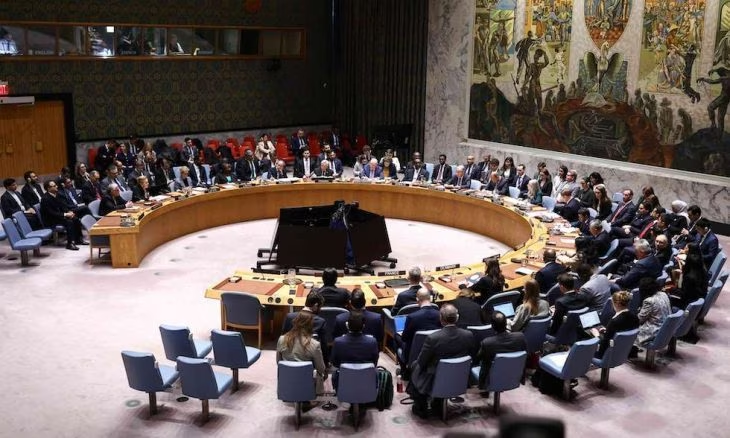
Russian move in the Security Council to impose a comprehensive cessation of military activities in the Middle East

Diplomatic sources at the United Nations revealed a new Russian move within the corridors of the Security Council, aimed at curbing the accelerating military escalation in the Middle East region. The Russian mission has distributed a draft resolution to member states, explicitly calling for a halt to all combat activities and armed operations that currently threaten regional and international stability.

This Russian step comes amid growing concern over the expansion of the conflict, with the draft emphasizing the necessity of adhering to the purposes and principles of the United Nations Charter. The document specifically referred to Article Two, which prohibits the use or threat of force against the territorial integrity or political independence of states, reflecting Moscow's desire to establish the rules of international law in dealing with current crises.

The Russian draft resolution includes a strong condemnation of all attacks targeting civilians or civilian facilities and infrastructure in the region. The text demands the necessity of providing full protection for populations not involved in hostilities, stressing that all parties are obligated to comply with international humanitarian law and the relevant Geneva Conventions on the protection of civilians during armed conflicts.

The diplomatic proposal also focuses on the importance of ensuring the security of all states in the Middle East without exception, warning of the catastrophic consequences of continued military operations. The draft calls on the concerned parties to exercise maximum restraint and refrain from any additional escalatory steps that could lead the region into a comprehensive confrontation whose outcomes cannot be controlled.

On the political side, the Russian draft resolution encourages all warring parties to return to the negotiating table without any delay or preconditions. The text emphasizes the necessity of activating diplomatic and political means as the sole way to resolve existing differences, considering that military solutions will only lead to further destruction and tragic human losses that the region has recently witnessed.

Procedurally, the draft resolution is scheduled to undergo a series of deliberations and technical discussions among Security Council members before being officially put to a vote. These sessions are expected to witness sharp tug-of-war, as some countries seek to introduce amendments to the wording to align with their political vision of current events in the region, especially regarding the determination of responsibilities for the escalation.

Diplomatic estimates indicate that the draft resolution may face a veto by the United States of America, which often opposes Russian moves on this issue. Observers also believe that the draft may fail to obtain the minimum required votes, which is nine votes, if Washington pressures member states to abstain from voting or reject the proposal.

The Russian move in the Security Council remains a new test of international will in confronting the explosive crises in the Middle East. If the resolution is passed or even widely discussed, it will re-highlight the role of the United Nations in maintaining international peace and security, at a time when criticism of the international organization's inability to stop the bloodshed on several inflamed fronts is increasing.

The draft resolution urges all parties to immediately cease their military activities and refrain from any further escalation in the Middle East and beyond.

PALESTINE

Mon 09 Mar 2026 5:10 pm - Jerusalem Time

7 Dead in Gaza within 24 Hours and Worsening Humanitarian Crisis with Continued Closure of Rafah Crossing

Medical sources in the Gaza Strip announced the martyrdom of 7 citizens and the injury of 17 others during the past twenty-four hours, as a result of a series of raids launched by occupation aircraft on various areas. This new toll comes amid ongoing military operations targeting residential areas and shelters in various governorates of the Strip.

In field details, three Palestinians, including two young girls, were martyred at dawn today, Monday, after an Israeli shelling targeted displaced persons' tents in the Al-Sawarah area, west of the Nuseirat camp in the central Strip. Sources reported that the shelling caused a large fire and damaged a number of tents, prompting residents to try to rescue the injured from under the rubble amid difficult conditions.

In Gaza City, an occupation drone targeted a group of civilians in the Ansar area, west of the city, resulting in the immediate martyrdom of three citizens. The bodies of the martyrs were transferred to nearby hospitals, while drones continued to fly intensively over the city and its surroundings.

According to the daily statistical report issued by the Ministry of Health, the total number of victims of the ongoing aggression since October 2023 has risen to 72,133 martyrs. Medical examinations also recorded that the number of injured reached 171,826, suffering from a severe shortage of medical supplies and essential medicines.

On the humanitarian front, the suffering of the Strip's residents is worsening with the continued closure of the Rafah land crossing for the tenth consecutive day, shortly after it was partially opened for humanitarian cases. This sudden closure has dashed the hopes of thousands of injured people and students who were waiting to leave the Strip to receive treatment or continue their education.

The decision to close the crossing is linked to recent military developments in the region, specifically after the outbreak of confrontation between the occupation and Iran, which negatively affected the movement of individuals and aid. The Rafah crossing is the only lifeline connecting more than two million Palestinians to the outside world, especially given the tight siege on other crossings.

Student Fadi Emad expressed his shock at the closure of the crossing, pointing out that he was preparing to travel to continue his university studies abroad after a long wait. Fadi confirmed that this closure destroyed his academic future and his psyche, as he believed he was close to achieving his dream before hopes were dashed again.

In the southern Strip, specifically in the Al-Mawasi area of Khan Yunis, there is a feeling of frustration among the displaced who had hoped for a gradual improvement in living conditions. Citizen Ali Shanti said that the outbreak of the regional war brought the situation in Gaza back to square one, which increased the complexities of daily life for the displaced in tents.

Shanti pointed out that the closure of the crossings immediately led to a crazy rise in the prices of basic goods and a severe shortage of essential products in local markets. Displaced families face extreme difficulties in securing their daily needs of food and fuel necessary to operate simple generators or cook.

Kidney failure patients, on the other hand, face a real threat to their lives, as patient Mohammed Shamia confirmed that opening the crossing has become an urgent necessity for survival. Shamia explained that he urgently needs to travel to Egypt to receive treatment, given the dilapidated health system in Gaza and its inability to provide the necessary service.

There are widespread fears that the occupation authorities will exploit regional tensions as a pretext to tighten the noose on the Gaza Strip and evade ceasefire commitments. Observers warn that the continued closure of the crossings will lead to an unprecedented humanitarian catastrophe, exceeding in severity the past months of the war.

Opening the crossing has become a matter of life or death for us given the limited medical services for dialysis patients.

ARAB AND WORLD

Mon 09 Mar 2026 5:09 pm - Jerusalem Time

Bloody Israeli escalation in Lebanon and parliament extends its term by two years amid the war

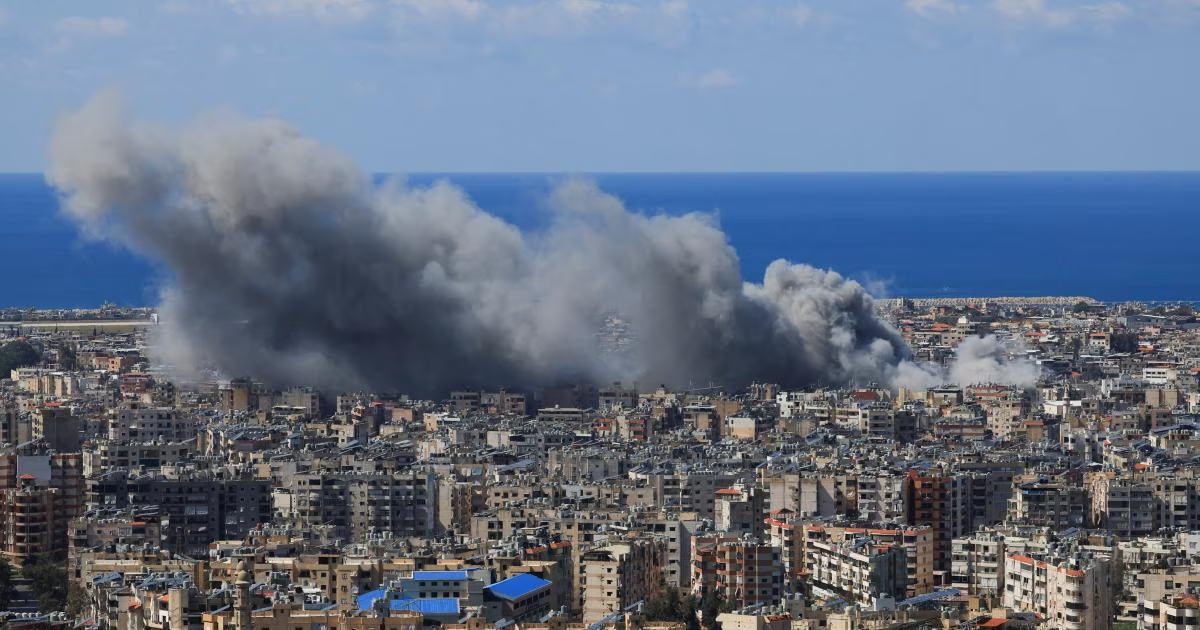
Israeli occupation aircraft intensified their violent raids today, Monday, on the southern suburbs of Beirut and several areas in southern Lebanon, targeting what they described as financial headquarters belonging to the Al-Qard Al-Hasan institution. These aerial attacks resulted in the martyrdom of one person and the injury of 12 others with varying degrees of injuries, amidst intensive and continuous low-altitude drone flights over the capital Beirut.

In the south, the raids targeted the towns of Tyre and Jouya, leading to the martyrdom of two paramedics while performing their humanitarian duty, while a Lebanese citizen was martyred and another seriously injured after their home was destroyed in the town of Shukin. Local sources also reported the martyrdom of a municipal police officer in the town of Shebaa due to being directly targeted by a missile from an Israeli drone.

On the ground, the occupation army announced that forces from Division 36 began implementing what it described as 'precise raids' targeting Hezbollah's military infrastructure in border villages. These ground movements coincide with the aerial and artillery bombardment that has not stopped since the early morning hours along the front lines and residential areas.

In response, Hezbollah retaliated with a series of rocket operations, announcing that it had targeted the Kiryat Shmona settlement with an intensive rocket barrage. The party also confirmed shelling the 'Za'eef' air defense base in the occupied city of Haifa, emphasizing that these operations come in response to the targeting of civilians and vital installations in Lebanon.

On the domestic political front, the Lebanese Parliament took an exceptional decision to extend its legislative term for an additional two years, which means postponing the elections that were scheduled for next May. The decision was made by a majority of 76 votes against 41 opposing deputies, and the Parliament's presidency justified this step by the compelling security circumstances and the ongoing aggression against the country.

The parliamentary session witnessed a remarkable presence of deputies from the Loyalty to the Resistance bloc, headed by Mohammed Raad, at a time when Lebanon is suffering from sharp political divisions over how to deal with the war. This extension is the fourth of its kind since 2013, as the council had previously extended its term several times due to successive political and security crises.

For his part, President Joseph Aoun expressed the Lebanese state's readiness to resume indirect negotiations to discuss the necessary security arrangements to stop the escalation. Aoun affirmed that he conveyed this position to influential international capitals, stressing that the decision to confine weapons to the state will be implemented according to the army command's plan once security conditions improve.

President Aoun warned against attempts to target the army institution or its leadership at this critical time, describing such attempts as 'suspicious' and serving external goals aimed at undermining state authority. He pointed out that questioning the army's capabilities is consistent with attempts to drag Lebanon into broader regional conflicts that do not serve the national interest.

In striking statements, Prime Minister Nawaf Salam said that Lebanon has no interest in being drawn into the ongoing conflict between the United States and Israel on one hand, and Iran on the other. Salam stressed that the top priority currently is an immediate cessation of fighting, considering that the process of handing over Hezbollah's weapons is a separate process that must follow de-escalation.

Salam clarified that the Lebanese government has not yet received integrated initiatives to stop the war, but merely ideas put forward for discussion at the international table. He revealed that the only guarantees Beirut has received relate only to neutralizing the airport and the roads leading to it from Israeli shelling to ensure the continued movement of supplies.

Regarding the legal status of the resistance's weapons, the Prime Minister affirmed that Hezbollah's military and security activities have become 'illegal' from the perspective of the current government. He added that this position represents the official orientation of the state and must be implemented, while at the same time emphasizing that Lebanon will not accept a peace that imposes Israeli conditions on it.

Moving to the Gaza Strip, Israeli violations of the fragile ceasefire agreement continued, with 3 Palestinians, including two children, martyred in shelling that targeted displaced persons' tents in the Al-Sawarah area. Medical sources reported that the number of victims of violations since last October has risen to 641 martyrs, threatening the collapse of existing security understandings.

Reports from Gaza indicate massive destruction affecting about 90% of civilian infrastructure since the start of the war of extermination in October 2023. The United Nations estimates the cost of rebuilding what the occupation destroyed at about $70 billion, amidst the continued siege and intermittent military operations targeting civilians and paramedics.

In conclusion, Lebanon and the Gaza Strip are living in a state of cautious anticipation with the escalation of aerial raids and ground operations. While political parties in Beirut are trying to arrange the internal house by extending the parliament's term, the field remains the primary driver of events amidst the absence of a clear horizon for a diplomatic solution that ends the suffering of the displaced and civilians.

Hezbollah's military and security activities have become illegal, and this is the government's position and must be implemented.

ARAB AND WORLD

Mon 09 Mar 2026 5:09 pm - Jerusalem Time

Survey Reveals Deep Shifts: 45% of Young Republicans See Jews as a Threat to the American Way of Life

A recent study conducted by the Jerusalem Center for Public Affairs has revealed fundamental and alarming shifts within the Republican Party's electoral base in the United States. Researcher Irwin J. Itzhak Mansdorf confirmed that these changes are particularly evident among younger generations, who have begun to adopt positions contrary to the party's traditional tenets.

The report, published in international media, indicated that the rising influence of conservative media personality Tucker Carlson plays a pivotal role in shaping these new trends. Despite concerns about his stances on Israel, Carlson enjoys strong support that transcends traditional reservations among younger voters.

Mansdorf explained that contemporary democracies are witnessing a paradoxical phenomenon where candidates with extreme positions can rally widespread support. This occurs when these candidates' messages resonate with deep emotions or urgent concerns among the voter base, which explains the rise of some controversial figures.

The survey, on which the study was based, included a sample of 561 Republicans and was designed to be balanced in terms of age and gender to ensure the accuracy of the results. Interviews were conducted in late January, with a statistical margin of error not exceeding 4 percent, giving the results high credibility in interpreting the landscape.

The results showed a sharp generational divide, with over 55 percent of Republicans under the age of 44 considering Tucker Carlson a potential presidential candidate. The percentage went even further, with 58 percent of this group expressing full readiness to vote for him should he decide to run.

In contrast, older age groups appeared more cautious about this populist phenomenon, with only 38 percent of Republicans over the age of 45 believing in his potential candidacy. The willingness to vote for him among this group did not exceed 41 percent, reflecting a gap in political vision between generations.

Although the report noted continued general support for Israel across different groups, there was a relative decline in the intensity of this commitment among young people. 55 percent of younger Republicans considered supporting Israel a very important issue, compared to about 69 percent among the older generation.

The most controversial indicator in the study concerned the perception of Jews as a threat to the American way of life, with 45 percent of young people expressing high concern about this. This percentage is shocking compared to only 23 percent among Republicans over the age of forty-five.

Mansdorf believes that these numbers indicate a growing readiness among young voters to adopt narratives that portray Jews as a societal problem. This shift occurs even if these voters do not explicitly identify themselves as antisemitic, reflecting a change in political and social consciousness.

The researcher attributed this phenomenon to mechanisms of political psychology, where voters tend to focus on the candidate's personal charisma rather than the details of their political positions. Concepts such as the 'halo effect' make controversial stances on sensitive issues less impactful on the final voter decision.

The report warned that the real danger facing Israel and the Jewish community in America is not just a decline in direct support. Rather, the greater challenge is Israel losing its status as a crucial issue in electoral behavior amidst the rise of extremist populist rhetoric that attracts the younger generation.

The study emphasized the need to confront candidates with controversial agendas through strategies that clearly and objectively highlight their negatives. The researcher suggested using what is known as the 'horn effect' to expose inconsistencies in their rhetoric without falling into unproductive media squabbles.

In conclusion, Mansdorf affirmed that traditional Republican support for Israel has not completely collapsed yet, but it faces a real test. The psychological mechanisms that allow for ignoring alarming positions have begun to take root in the minds of young people, which could lead to strategic shifts in American foreign policy in the future.

The biggest challenge for political institutions remains how to deal with this generation, which appears more open to alternative narratives. The continuation of these trends could mean a redefinition of traditional alliances within the United States, requiring careful monitoring of public opinion trends in the coming years.

The real danger is not the direct loss of support, but the decline of Israel's role as a crucial political issue in the face of extremist populist narratives.

OPINIONS

Mon 09 Mar 2026 12:04 pm - Jerusalem Time

The Struggle of Great Powers and the Ongoing War on Iran

Since the outbreak of the current war on Iran, questions and speculations have multiplied – not to mention wishes and complaints – about the potential role of both China and Russia, and whether either of them would intervene directly, especially since Iran is considered an ally of both great powers, and the war has American objectives that affect them. It is expected that, given the ongoing struggle between great powers to reshape the international system, they would seriously and directly confront America's attempts to solidify its sole hegemony over the world.

With the absence of indicators suggesting the possibility of direct intervention by China or Russia to support their ally Iran, a tone of frustration is rising here and there regarding what critics consider a dereliction of duty by these two countries, and a questioning not only of their intentions but also of their actual ability to confront America. To contribute to the current discussion about the expected role of China and Russia in this war, based on the history of international relations and the struggle between great powers, one can conclude that both countries will most likely refrain from direct confrontation with America, and will limit their participation to providing specific support to Iran. This is not due to a lack of desire or an admission of actual inability, but rather a conscious and informed result of serious calculations in the struggle of great powers. In short, what China and Russia are currently doing does not deviate from the traditional pattern of the history of great power struggles.***For a brief elaboration, the following points are worth noting: First, the stability of the international system is based on the principle of the balance of power. Until World War I, this stability was achieved in the form of multipolarity among European great powers, then it collapsed and transformed after World War II into stability based on bipolarity between America and the Soviet Union. The principle was disrupted by the collapse of the Soviet Union, and the international system shifted to unipolarity, with America at its apex as a sole superpower dominating international affairs. Although power is concentrated in the superpower in a unipolar system, the system loses its stability due to the growing conflict between this state, which tries to maintain its sole hegemony and exclude other powers from participation, and the great powers that seek to enhance their status and role and change the power equation that is wasted in favor of the superpower.

In short, these countries, each in its own way, seek to establish a new balance of power that transforms the international system from unipolarity to bipolarity or multipolarity. Second, since the collapse of international bipolarity in the early 1990s, two great powers, Russia and China, have emerged alongside the superpower, America, as candidates to challenge its influence and control on the international stage. Russia was a great power due to its nuclear arsenal, which was equivalent to America's. However, it is worth noting that it remained weak in its relative economic power compared to America and China, and it has strived since the beginning of the third millennium to consolidate its regional position, trying to repel the expansion of NATO in its vital sphere, until it began confronting it militarily in Ukraine. As for China, after adopting the principle of "socialism with Chinese characteristics" in the late 1970s, it liberalized its economy, which led to the beginning of its rise as a major economic power in the world, becoming currently the second-largest economy in the world, competing with the United States for the top position. Third, a great power cannot launch a serious competition with the superpower to end its monopoly on power and global hegemony until it can achieve hegemony over its region. Only major regional powers are capable of posing a threat to the continued hegemony of the superpower. Control over the region is achieved by a great power when it can achieve a continuous economic surplus that smoothly translates into building its military capability superior to its regional neighbors.

Among the currently existing great powers, such as China, Russia, India, Germany, Britain, Japan, France, and Brazil, there are only two countries that possess the characteristic of major regional powers: China and Russia. China is strengthening its control over the South and East China Seas, while Russia is consolidating its position in Eurasia. Control over the region and hegemony over its neighbors is the cornerstone for a major regional power to expand its influence and global control. This is what America did in the past when it established absolute hegemony over its western sphere in the Americas, and then proceeded to expand its global influence and control.

This is what China is currently doing by transitioning through the "Belt and Road Initiative" to expand its regional influence and control to include various regions in the world. Russia, however, remains the weakest among the three powers due to its weaker economic capabilities compared to them, which explains its limited ability to expand its influence beyond its region. Fourth, during its regional and international ascent, and in order not to suffer an early loss, major regional powers avoid direct confrontation, specifically military confrontation, with the superpower. Instead, they resort to indirect confrontation, using diplomatic, political, and soft means, in addition to providing veiled support to other forces opposing the superpower, in an effort to drain the superpower's energy and gradually weaken it.

To achieve this, these countries, especially China currently in its confrontation with America, resort to a policy of entangling the superpower. This policy places the full responsibility for international affairs on the superpower, so that this country, in order to maintain its unique position, becomes caught in the midst of monitoring all tensions and disputes that arise in the world, and actively engaging in trying to control their contexts to ensure the continued hegemony of its influence and control, which is steadily eroding.

This requires it to extend the reach of its power and expand the spread of its military presence around the world (America currently has about 800 military bases spread around the world). The external expansion of the superpower's power leads to three things that benefit the regional great powers struggling with it. On the one hand, it drains its surplus economic power to continue providing support for the expansion of its power externally, and in return reduces its ability to finance its internal requirements, which results in damage to its economy, weakening of its productivity, increase in its public debt, and a rise in the level of discontent, conflict, and fragmentation in the internal social fabric as a result. On the other hand, the escalation of challenges facing the superpower externally leads to a gradual shift in its foreign policy from following a path based on attracting other countries through persuasion with diplomatic and soft means, to adopting a harsh path represented by imposing the necessity of compliance. This leads the superpower to become involved in costly external conflicts and wars, both financially and morally draining, and makes it prone to committing more mistakes (the war in Afghanistan, the war in Iraq, the war on Gaza, the war on Iran). On a third hand, the superpower's harsh policy and its commission of errors increase the level of resentment and hostility towards it from an increasing number of parties in the world, leading to its increasing international isolation over time. All of this happens while the regional great powers carefully monitor the curve of the superpower's eroding power and the continuous decline in its global influence and hegemony, and calmly and deliberately work to invest this in the confident development of their alternative ascent.***In the struggle between great powers, and specifically when there is a clear imbalance of power, major regional powers avoid direct confrontation with the superpower.

This does not mean at all that they surrender to that country's hegemony, but rather they work hard to undermine its position by adopting indirect means. These countries know that direct confrontation with the superpower, before they can consolidate the foundations of their regional and international power, may lead to a loss that could be significant in limiting their ascent. Achieving victory in the struggle with the superpower, for them, is not achieved by a knockout blow, but by accumulating points. China, since the beginning of its rise, and especially since the beginning of the current millennium, has been accumulating points, and it is not in a hurry, as it announced years ago that by 2049 (the centenary of the Chinese Communist Party's rise to power) it would be the leading power at the top of the international system. While Russia struggles to secure a decent position for itself in the currently transforming international system, the United States is becoming more arrogant and haughty and committing more mistakes as it tries as much as possible to delay, if not prevent, collapse.

ARAB AND WORLD

Mon 09 Mar 2026 12:00 pm - Jerusalem Time

Regional Escalation and Power Transition in Tehran: Trump Links Ending War with Iran to Coordination with Netanyahu

Said Erikat

Opinion Writer

Washington – Said Arikat – 3/9/2026

Amidst an unprecedented escalation of tension in the Middle East, US President Donald Trump announced that the decision to end the ongoing war with Iran would not be a unilateral American decision, but would be coordinated "to some extent" with Israeli Prime Minister Benjamin Netanyahu. This statement reflects the extent of military and political entanglement between Washington and Tel Aviv in managing the conflict, at a time when the region is witnessing a series of rapid military and political developments that could redraw regional power balances.

Trump's statement came at a time when Tehran announced a sensitive transition in the religious and political hierarchy, with the appointment of Mojtaba Khamenei as the new Supreme Leader, succeeding his father Ali Khamenei. This development is considered one of the most dangerous political shifts in Iran in decades, as the position of Supreme Leader represents the ultimate authority in the state and controls major military and strategic decisions, including managing the confrontation with the United States and Israel.

In parallel with these political developments, the region witnessed a significant military escalation. Iran launched a number of missiles towards Israel, while strong explosions were heard in the Qatari capital, Doha, amidst reports of aerial interceptions targeting drones and missiles. Both Saudi Arabia and Kuwait also announced that their air defenses intercepted aerial targets believed to be drones or missiles that crossed the region's airspace during the escalation.

This geographical expansion of confrontations indicates that the war is no longer confined to one arena, but has transformed into a multi-front regional conflict extending across the Gulf and the Middle East. It also reflects the extent of concerns among neighboring countries about the confrontation spreading to their territories, especially given the presence of US military bases and strategic energy corridors in the region.

In another development that increases the tension, the US military announced the death of a seventh American soldier in the ongoing war in the Middle East. This number is an indicator of the deepening US military involvement in the conflict, which could open the door to internal discussions in the United States about the cost of the war and its political and military limits.

The US President escalated his rhetoric towards the new Iranian leadership, warning that the next Supreme Leader would not be able to remain in his position "for long" without the acceptance or approval of the United States. This statement reflects a clear pressure message directed at the new Iranian leadership, in an attempt to impose a political and military deterrence equation during the power transition phase.

Observers believe that these statements come within a broader American strategy aimed at weakening Iran's ability to quickly reorganize its political leadership after the power transition. Washington also seeks, according to several estimates, to use military and political pressure to push Tehran to reconsider its calculations in the regional confrontation.

In contrast, field indicators suggest that Iran is trying to demonstrate its ability to respond and establish its own deterrence equation, whether through launching missiles or by expanding the scope of indirect operations in the region. It appears that both sides are on a path of calculated escalation, with each trying to achieve strategic gains without sliding into a full-scale open war.

Amidst this complex scene, the issue of ending the war remains linked to several intertwined factors, including the military balance of power, developments in political leadership within Iran, and the extent of the United States' and Israel's ability to achieve their strategic goals. Until then, it seems that the Middle East is heading for a period of uncertainty, the outcomes of which may determine the shape of the regional order for many years to come.

Trump's statement about a "joint decision" with Israel shows the extent of the organic alliance between Washington and Tel Aviv in managing the war. Military coordination between the two countries is not new, but it has become more evident in this crisis. This also reflects the US administration's understanding that any settlement of the conflict cannot be imposed without considering Israeli security calculations. However, this approach may also raise regional concerns about marginalizing the role of other powers, and further complicate any potential diplomatic path to end the war.

Mojtaba Khamenei's appointment as Supreme Leader represents a pivotal moment in Iranian politics. The transfer of power within the ruling religious family may spark internal debate about the legitimacy of this arrangement, but at the same time, it provides continuity in the state's political and military approach. Amidst the war, the new leadership may use the rhetoric of steadfastness and resistance to bolster its internal legitimacy. Therefore, the coming period is likely to witness greater rigidity in Iranian positions, rather than openness to quick settlements.

The widening scope of strikes to include the Gulf airspace highlights the danger of the war turning into a wide-ranging regional conflict. Gulf states, despite their attempts to avoid direct involvement, find themselves at the heart of the tension due to their geographical location and the presence of foreign military bases on their territories. Any further escalation could threaten global energy routes and affect the international economy. Therefore, the importance of international diplomatic efforts to contain the crisis before it develops into a comprehensive regional confrontation that is difficult to control is increasing.

ISRAELI AFFAIRS

Mon 09 Mar 2026 12:00 pm - Jerusalem Time

Israeli Warnings Against 'Intoxication of Power' and Fears of a Long War of Attrition with Iran

The direct military confrontation between the Israeli-American alliance and the Islamic Republic of Iran has entered its tenth day, amidst sharp differences in Israeli assessments between rushing to destroy the Iranian regime and warning against sinking into an endless quagmire of attrition. Israeli cabinet member Avi Dichter affirmed that the current air operations primarily aim to completely dismantle the Iranian nuclear project, considering that the United States has the capability and responsibility to overthrow the regime in Tehran through intensified aerial bombardment.

In a related context, occupation army commander Eyal Zamir indicated that the current war is not bound by a specific timeline, while sources in the General Staff revealed military preparations to continue fighting for at least another month. These leaders are pushing for continued intense military pressure until the threat of Iranian ballistic missiles is neutralized, as military reports claim the destruction of a large part of Iran's missile capabilities, with only about 150 active launch platforms remaining.

For his part, US President Donald Trump stated that any decision regarding a ceasefire or ending military operations would be made in full coordination with Israeli Prime Minister Benjamin Netanyahu. Trump clarified that the conditions set for ending the war would be firm, while his defense secretary, Pete Hegseth, hinted that Washington does not rule out the option of future ground intervention despite its current focus on overwhelming air strikes.

On the other hand, Israeli voices emerged warning against the consequences of 'intoxication of power,' with reserve general Yisrael Ziv criticizing the absence of a clear exit strategy from the confrontation. Ziv expressed concerns that calls for continued military pressure could lead to Israel's involvement in a long war of attrition, recalling the Iranian regime's ability to withstand for many years, as happened in its previous war with Iraq.

Political analyst Nahum Barnea agreed with this view, noting that the military operations, which began with great momentum, lack a political vision for the next phase. Barnea warned of the effectiveness of 'Iranian patience' and Tehran's ability to disrupt daily life in Israel through sporadic and continuous missile attacks, which could turn initial military achievements into a strategic burden.

In an analysis of the field situation, military analyst Amos Harel pointed out that the war has not yet succeeded in addressing the fundamental nuclear threat represented by the enriched uranium stockpile. Harel warned that the Iranian regime's survival from this wave might push it to accelerate its steps towards acquiring nuclear weapons, criticizing what he described as the government's 'dullness of feeling' towards the suffering of the Israeli home front and the deterioration of economic conditions.

Economic reports indicate that Israel is incurring huge losses amounting to 9.4 billion shekels weekly as a result of the partial paralysis in production sectors and the call-up of 100,000 reserve soldiers. This economic pressure coincides with a sharp rise in global oil prices, posing increasing internal and international challenges for the Trump administration, especially with escalating criticism in Congress regarding the constitutionality of engaging in this war.

On the ground, air raids carried out by F-35 and B2 stealth fighters caused severe damage to a radiation facility in Isfahan, in addition to significant human losses in the capital Tehran. These strikes came after the assassination of Supreme Leader Ali Khamenei and a number of senior military commanders in the opening strike of the operation, causing confusion in the Iranian leadership structure.

In response to the attacks, Iran launched widespread attacks targeting countries in the Gulf Cooperation Council and vital facilities in Saudi Arabia, Qatar, and Bahrain, as well as the vicinity of Dubai airport. Tehran used hundreds of drones and ballistic missiles in these attacks, in an attempt to raise the cost of the war at the regional and international levels and pressure for a halt to military operations.

Regarding the northern front, Minister Dichter called for not relying on the Lebanese government to dismantle Hezbollah's weapons, affirming that Israel is about to establish a 'wider security belt' in southern Lebanon. These statements come at a time when the Lebanese border is witnessing ground confrontations that have resulted in the deaths of Israeli soldiers, amidst calls to expand the scope of operations to include Lebanese infrastructure.

At the level of the Israeli opposition, Yair Lapid took a hardline stance by calling for the complete destruction of Iranian oil facilities, considering that striking the lifeline of the Iranian economy is the fastest way to overthrow the regime. These statements reflect a state of political consensus within Israel on the need to capitalize on the current momentum to achieve a radical change in regional power balances, despite the looming dangers.

In conclusion, the question remains about Israel's and the United States' ability to decisively win the battle without sliding into a widespread ground confrontation or a war of attrition that drains economic and human resources. With continued mutual bombardment and escalating threats, the region awaits what the coming days will bring, given Washington's and Tel Aviv's insistence on imposing full surrender terms on Tehran.

It is unreasonable for Israel to turn into a hammer looking for every nail to hit; we must be careful not to be dragged into an endless war of attrition.

PALESTINE

Mon 09 Mar 2026 12:00 pm - Jerusalem Time

Warnings of organized "Jewish terrorism" aimed at forcibly displacing Palestinians from the West Bank

Hebrew press sources reported that global attention, preoccupied with tensions with Iran, is overlooking a dangerous escalation of what it described as "Jewish terrorism" in the occupied West Bank. The sources indicated that this violence is not random but part of a strategy aimed at pushing Palestinians to leave their lands and depopulating the area of its indigenous inhabitants.

Reports stated that the current practices carried out by settlers, with the support or silence of security agencies, put Israel in the face of international accusations of committing war crimes and crimes against humanity. This scene reflects an escalation in organized violence that has resulted in deaths and injuries among unarmed Palestinian civilians in recent days.

In details of the field attacks, masked settlers stormed the outskirts of Khirbet Abu Falah village, northeast of Ramallah, leading to violent stone clashes. These clashes resulted in serious head injuries to Palestinians, while Israeli army forces intervened by firing live ammunition and tear gas, causing the death of an elderly Palestinian due to a severe heart attack.

In the southern Hebron hills region, Palestinian territories witnessed a bloody shooting incident carried out by a settler against two Palestinian brothers, resulting in the death of one and critical injuries to the other. Security sources confirmed that the shooter is a reserve soldier serving in regional defense units, which raises questions about arming settlers and using their military powers to liquidate civilians.

Similar bloody scenes were repeated near Nablus city, where two Palestinians were killed by settler gunfire while trying to defend an olive grove from illegal bulldozing operations. The decision to transfer the investigation from military police to civilian police sparked widespread indignation, as this step is seen as a prelude to closing the case without holding the perpetrators accountable, as is customary in similar incidents.

Data indicates that these attacks have already led to harsh demographic consequences, with entire communities in the east of Duma village and the Aqaba area being forced to leave. This displacement comes after months of continuous harassment and direct threats that made daily life in those areas impossible under the weight of intimidation.

Observers believe that the Israeli policy relies on creating a state of permanent and painful friction for Palestinians to force them to leave their lands voluntarily in appearance and forcibly in reality. This recurring pattern of attacks is classified under "gradual displacement" policies aimed at changing the geographical and demographic reality deep within the occupied West Bank.

Sources held a group of senior Israeli officials directly responsible for these violations, led by Benjamin Netanyahu, Bezalel Smotrich, and Itamar Ben-Gvir. The indictment also included high-ranking military leaders such as Chief of Staff Eyal Zamir and Central Command Commander Avi Bluth, for their role in providing security and political cover for the attackers.

In conclusion, reports stressed that Israel, as an occupying power, is legally obligated to protect civilian populations under international conventions, yet it deliberately fails to do so. With the continued escalation of violence, international pressure is increasing to demand accountability for Israeli officials before international courts to ensure impunity is not granted.

Israel, through the acquiescence of its institutions or the support of its officials for Jewish terrorism, may bear responsibility for serious violations of international law, including war crimes.

OPINIONS

Mon 09 Mar 2026 11:59 am - Jerusalem Time

This Desecration of the West Bank

The occupation army and Israeli rulers are exploiting the world's preoccupation with the repercussions of the explosion in the region, which resulted from the Israeli-American aggression against Iran, to escalate their oppression of the Palestinian people in the West Bank and Jerusalem... Since Israel began its aggression on the morning of the 28th of last month (February), the occupation forces have closed approximately one thousand one hundred military checkpoints and more than two hundred gates, turning the villages, towns, and cities of the West Bank into isolated prisons. More than a week after the aggression began, the majority of checkpoints and gates remained closed. For example, all entrances and gates to the city of Jericho were closed, making it completely isolated from the outside world, and this is the situation for dozens of villages and towns.The occupation army is not content with closures; its forces raid dozens of towns, villages, and refugee camps daily and nightly, wreaking havoc, abuse, and arresting their residents in unprecedented campaigns in terms of their scale. As for Al-Aqsa Mosque and the Ibrahimi Mosque in Hebron, they have never been closed during Ramadan throughout history. During this aggression, the occupation continued not only to prevent all West Bank residents from reaching Jerusalem and Al-Aqsa Mosque but also deliberately prevented residents of Jerusalem and the interior from reaching the mosque and prevented worshippers from entering and performing prayers there, a dangerous precedent that portends many plans. As for the Ibrahimi Mosque in Hebron, Muslims were denied entry and prevented from performing prayers there, making it completely monopolized by Jewish worshippers.The closure of checkpoints and crossings has deepened the escalating economic crisis in the West Bank, paralyzing health and educational services, as well as commercial operations and most economic activities. These are severely suffering due to Israel's dismissal of approximately 220,000 workers who entered the unemployment market since "October 7" (2023), and due to the piracy of Finance Minister Smotrich, who confiscated most of the Palestinian tax revenues, which constitute more than 55% of the Palestinian Authority's income. The amount of money withheld by the Israeli government has exceeded three billion dollars, rendering the Palestinian Authority (whose powers have been largely confiscated) unable to pay its employees' full salaries or to fulfill its health, educational, and social obligations towards the Palestinian population.The general economic deterioration is leading to severe hardship and bankruptcies in many private sector projects and institutions. Residents of Jerusalem are subjected to further pressure, suffering from excessive taxes imposed by Israel, the scarcity of exorbitantly priced building permits, and a sharp increase in the cost of living. Due to exorbitant taxes, a large portion of shops in Jerusalem and the Old City of Hebron are forced to close their doors.However, the most dangerous phenomena are the unrestrained settler terrorist gangs that pursue residents of Palestinian villages and the desert, continuing their terrorist attacks under the protection and patronage of the occupation army. Many villages and towns, such as Qasra, Beita, Al-Mughayyir, Abu Falah, Sinjil, Turmus Ayya, Masafer Yatta, and many others, are subjected to repeated attacks, reaching the point of killing by gunfire, beating and abuse, and forced displacement of residents, as happened to more than 70 communities, most of which are Bedouin communities in the Jordan Valley, Hebron, and Ramallah. The audacity reached a point, days ago, where the occupation army stopped citizens at the checkpoint leading to the town of Al-Mughayyir, then allowed terrorist settlers to attack them, including the village doctor.It is the duty of all sympathizers and supporters of the Palestinian people to escalate their solidarity movement with them, and expose the ongoing crime of desecration.There is no real distinction between the settler terrorists who carry weapons provided by the Israeli government and the army itself, as a large number of them serve in the army, which recently made a decision to allow soldiers to keep their weapons when they are discharged from the army, or go on leave, or when they are not on official duty.Some communities, such as the Bedouin community in the Ein Samiya area, have been displaced several times from one place to another. The occupation understands that the heroic steadfastness of the Palestinian people, despite all forms of terrorism, abuse, and unjust oppression, is what thwarts the ethnic cleansing plan, and therefore it exploits events such as the ongoing aggression to escalate attacks and abuse against Palestinians. There is no doubt that the inaction of most of what is called the international community in imposing sanctions on Israel for committing the crime of genocide in Gaza encourages settlers to commit more crimes in the West Bank.What is happening in the West Bank, including Jerusalem, is nothing less than a brutal desecration of its civilian population, without deterrence, and without any respect for any local or international law. While Palestinians bravely endure and perform feats in the face of oppression, it is the duty of all sympathizers and supporters of the Palestinian people to escalate their solidarity movement with them, expose and uncover the ongoing crime of desecration, and not allow media preoccupation with the ongoing war in Iran and the Gulf region to cast a dark and gloomy veil over the suffering, struggle, and steadfastness of the Palestinian people, whether in the West Bank or the Gaza Strip, especially since silence on the ongoing desecration carries within it the risks of serious crimes whose consequences and repercussions no one will be able to escape.

OPINIONS

Mon 09 Mar 2026 3:38 am - Jerusalem Time

Pentagon Prepares for War That Could Extend Until September Amid US Escalation Against Iran

Said Erikat

Opinion Writer

Washington – Said Arikat – 3/9/2026

News Analysis

Increasing indicators within the US military establishment suggest that the ongoing war against Iran could last months longer than initially announced by the White House. According to a report published by Politico magazine, the Pentagon is currently developing scenarios for military operations that could extend until next September, far exceeding the initial estimates mentioned by President Donald Trump when he set an approximate duration for the campaign not exceeding four weeks.

The report indicates that the US military command has already begun taking practical steps in preparation for the possibility of a prolonged confrontation. The United States Central Command (CENTCOM) has requested the Department of Defense to send an additional number of intelligence officers to its headquarters in Tampa, Florida, with the aim of supporting operational planning and battle management for a period that could last at least one hundred days.

This step, according to military observers, reflects a shift from a perception of a "quick, limited operation" to preparing for a longer and more complex campaign. Continuous air operations, the expansion of the confrontation area, and Iranian reactions are all factors pushing military planners to adopt more conservative time estimates.

In the same context, US Secretary of War Pete Hegseth announced that the United States would continue to strengthen its military presence in the Middle East, in parallel with expanding the scope of the air campaign against Iranian targets.

Hegseth stated that additional military reinforcements have already arrived in the region, explaining: "More bombers and fighters are arriving today. With our complete control of the skies, we will continue to use GPS and laser-guided precision bombs, weighing 500, 1000, and 2000 pounds, and we have a large stock of them."

Despite political and media pressure to set a time horizon for the war, the Secretary of Defense avoided giving a clear date for the end of operations. He said that estimates might change depending on battle developments, adding that the campaign duration could be "four weeks, or six, or eight, and perhaps more," emphasizing that the United States would determine the "pace and speed" in managing the war.

This ambiguity in defining the timeframe reflects the dynamic nature of the conflict, as Washington tries to maintain military pressure on Tehran while avoiding being drawn into a large-scale ground war, a challenge that US administrations have faced in most regional conflicts over the past decades.

On the ground, initial estimates indicate that the war has so far resulted in the deaths of more than a thousand Iranian civilians due to US and Israeli airstrikes, while at least six US soldiers have been killed in Iranian drone attacks targeting military sites in the region.

The Pentagon is also working to bolster its stockpiles of missiles and air defense munitions in the Middle East, after they significantly decreased during the first days of military operations. Military sources indicate that the high consumption of munitions during the first five days of the war prompted the military command to accelerate the transfer of supplies from US bases in Europe and the United States.

In addition to the military dimension, developments also revealed logistical and diplomatic challenges faced by the US administration. The Politico report indicated that the US State Department had to intensify its efforts to evacuate American citizens stranded in a number of Middle Eastern countries as tensions expanded.

According to the report, the administration did not have a ready-made large-scale evacuation plan, despite months of military buildup in the region and escalating threats from Washington to strike Iran. This led to a state of confusion in the early days of the war, prompting US diplomats to work urgently to organize departures for US nationals via commercial flights and land routes.

These developments reflect the gap that can sometimes appear between military planning and the civilian preparations accompanying wars, especially when political threats turn into actual military operations faster than various government institutions anticipate.

As Washington continues to strengthen its military presence, the main question within political and military circles remains whether the air campaign can achieve its strategic objectives without sliding into a broader confrontation that could involve other regional parties.

The Pentagon's preparation for operations that could extend until next September reveals a clear gap between initial political rhetoric and realistic military estimates. In many conflicts, political leaders tend to present short timelines to reassure public opinion, while military planners develop longer and more complex scenarios. The request to send additional intelligence officers to CENTCOM headquarters indicates that Washington is preparing to manage an aerial war of attrition that could last months, not weeks.

Despite Washington's assertion of having "complete control of the skies," recent military experiences show that air superiority alone does not guarantee the achievement of rapid strategic objectives. Iran is increasingly relying on drones, missiles, and unconventional networks in its response, tools that allow it to prolong the conflict and raise its cost without a direct conventional confrontation with US forces.

With the rising number of civilian casualties in Iran and increasing risks to US forces in the region, the US administration may face growing political pressure domestically and internationally. The longer the war lasts, the more questions will arise about its ultimate goals and strategic cost. Furthermore, the absence of a clear evacuation plan from the outset highlights gaps in coordination between military preparedness and the management of the

ISRAELI AFFAIRS

Mon 09 Mar 2026 3:38 am - Jerusalem Time

Turkey in Israel's Crosshairs: A Reading of Post-Iran Scenarios

Fierce discussions are escalating in political and security circles about the features of the phase that will follow the Israeli-American confrontation with Iran, with a fundamental question emerging about which party will fill the regional vacuum. Data indicates that the Israeli occupation is placing Turkey at the forefront of its future targets, seeking to impose complete hegemony over the region and prevent any regional power from obstructing its expansionist projects.

Ankara formulated its position on the recent escalation with extreme caution, expressing concern about the mutual attacks without sliding into direct condemnations that might close the doors to mediation. Despite Turkey remaining unaffected by direct military impact so far, the Turkish leadership realizes that long-term repercussions could directly and unprecedentedly affect its national security.

The hypothesis of targeting Turkey is based on a series of official statements issued by occupation leaders, foremost among them Isaac Herzog, who affirmed that the goal goes beyond changing the Iranian regime to include a complete reshaping of the Middle East. Benjamin Netanyahu further reinforced these fears by speaking of forming new axes targeting active powers in the region, of which Turkey is an essential part.

In a related context, former Israeli Defense Minister Yoav Gallant considered Turkey a strategic challenge that surpasses the Iranian threat, calling for the necessity of preparing to confront it. This vision aligns with Israel's inclusion of Turkey in its list of threats since 2021, and the recommendations of security committees to prepare for a potential military clash in the coming years.

Israel does not appear to be alone in this trend, as statements by former US Ambassador Mike Huckabee about supporting complete Israeli control over the region reflect aspects of the Trump administration's policy. These trends are supported by Western press reports explicitly calling for preventing Turkey from filling any vacuum that might result from a decline in Iranian influence in the region.

On the ground, Israel has begun to modify its security doctrine by returning to the 'Periphery Doctrine' which aims to encircle major countries in the region and weaken them from within. This is clearly evident in attempts to fuel ethnic and sectarian conflicts, target the Turkish presence in Syria, and seek to impose buffer zones that serve Israeli interests.

Israeli incitement has taken an institutional character through the formation of alliances in the Eastern Mediterranean including Greece and Cyprus, primarily aimed at encircling Ankara and forming a joint rapid intervention force. Netanyahu has sought to expand this axis to include Asian powers and Arab countries, in an attempt to isolate Turkey and deprive it of its maritime and geographical influence.

Observers believe that any imbalance in the balance of power resulting from the weakening of Iran will serve the interests of the 'Greater Israel' project, which does not recognize existing international borders. Ankara fears that the division of Iran or a change in its regime could reignite the Kurdish issue on its southern and eastern borders, threatening the 'Turkey without Terrorism' project, which has made significant strides.

The Turkish leadership realized the magnitude of this threat early on, with President Erdogan openly stating that Israeli ambitions could reach Turkish borders in a short time. The Turkish Parliament held closed sessions to discuss Israeli threats, while Foreign Minister Hakan Fidan warned against the occupation's attempts to drag the region into an extended war that would exhaust its powers.

Ankara has effectively begun implementing a comprehensive defensive plan that included building shelters, fortifying the home front, and developing advanced missile and defense systems to confront any potential aggression. It also deployed F16 fighters in Northern Cyprus, sending a clear deterrent message to the tripartite alliance led by Israel in the Mediterranean basin.

Despite Turkey's inherent strength and its membership in NATO, analysts warn against relying on this immunity amidst the fluctuations of American politics and the instability of successive administrations' positions. Betting on international protection could be a losing gamble in the face of an American administration that might sacrifice its allies for geopolitical gains or major deals.

Experts indicate that targeting Turkey may not initially take the form of traditional military confrontation, but may rely on hybrid means including economic blockade and inciting internal chaos. The weapon of refugees and economic pressure also emerge as potential tools to weaken the Turkish state from within before moving to more aggressive stages.

The project to weaken Turkey is not just media 'propaganda,' but a plan that is crystallizing through military alliances and intelligence plans that are constantly updated to suit changing circumstances. Historical facts confirm that countries that believed they were immune to targeting were the next victims as soon as the international balance of power shifted.

In conclusion, Turkey finds itself today facing an existential challenge that requires internal cohesion and broad regional coordination to thwart the Israeli 'Periphery Doctrine' plans. The lesson lies in taking threats with utmost seriousness and working to build a self-deterrent force capable of protecting national sovereignty, away from reliance on volatile international alliances.

Israel is playing the semi-final with Iran, and the final will be with Turkey.

ARAB AND WORLD

Mon 09 Mar 2026 3:38 am - Jerusalem Time

Iranian Consensus on Khamenei's Successor and Occupation Threatens to Target Assembly of Experts

Official Iranian sources revealed crucial developments regarding the succession of the Supreme Leader of the Islamic Revolution. Mohammad Mehdi Mirbagheri, a member of the Assembly of Experts from Semnan province, confirmed that a near-final consensus has emerged within the Assembly regarding the person who will succeed Ali Khamenei. Mirbagheri indicated that intensive consultations have led to the formation of a clear majority around a specific name, despite some procedural details that require addressing before the official announcement.

In statements made via a local communication platform, the Iranian official clarified that choosing the new leader represents a historic decision that cannot be rushed, despite the sensitivity of the timing. He emphasized the necessity of carefully scrutinizing all opinions to ensure a smooth transition of power. He added that the Assembly of Experts is making strenuous efforts to complete the necessary procedures, expressing hope that the results will be revealed soon after all existing obstacles are removed.

In a related context, Mirbagheri stressed that the responsibility entrusted to the Assembly of Experts is one of the most critical political and religious tasks in the country, which drives members to work with utmost seriousness to ensure the selection of a leader characterized by precision and steadfastness. He affirmed that the primary goal is to reach a personality that enjoys national consensus and is not a subject of dispute, especially given the complex regional and international circumstances facing the Islamic Republic.

For its part, the Israeli occupation army entered the crisis by issuing direct and unprecedented threats. The army spokesperson in Farsi announced that its forces would pursue anyone chosen to assume the position of Supreme Leader. The Israeli spokesperson claimed that Tel Aviv would not hesitate to use its military force to obstruct the transition process, in a clear indication of the occupation's intention to carry out political assassinations targeting senior leaders.

Israeli threats did not stop at the Supreme Leader's successor but extended to include the members of the Assembly of Experts themselves. Military sources threatened to target the Assembly's meeting if it convenes to choose the new leader. The sources claimed to have information indicating the Assembly's intention to meet soon in the holy city of Qom, warning that this meeting would be within the direct targeting circle of Israeli aircraft.

1The occupation's military spokesperson indicated that what he described as "Israel's long arm" is capable of reaching any point within Iranian territory to pursue those who attempt to appoint the next leader. These statements come at a time of escalating tension in the region, as Israel seeks through these threats to exert psychological and political pressure on decision-making centers in Tehran during this sensitive transitional phase.

It is worth noting that the Assembly of Experts is the constitutional body responsible for selecting, monitoring, and, if necessary, dismissing the Supreme Leader. It consists of clerics who are popularly elected. Global intelligence circles are closely monitoring the movements of this Assembly, especially with increasing talk about the current leader's health condition and the ongoing arrangements to ensure the stability of the Iranian political system in the post-Khamenei era.

Israel's long arm will continue to pursue the successor and anyone who attempts to appoint him to the position of Supreme Leader.

PALESTINE

Mon 09 Mar 2026 3:38 am - Jerusalem Time

6 Dead in Israeli Raids on Gaza and Nuseirat and Continuous Violation of Ceasefire Agreement

Medical sources in the Gaza Strip reported today, Monday, the martyrdom of six Palestinian citizens as a result of a series of attacks carried out by Israeli occupation forces, targeting various areas in Gaza City and Nuseirat camp. The sources explained that intense artillery shelling targeted tents of displaced persons in the Al-Sawarah area, located southwest of Nuseirat camp in the central sector, resulting in the martyrdom of three and the injury of about twenty others with varying degrees of injuries.

In another field development in Gaza City, a drone belonging to the occupation army targeted a group of civilians in the Ansar area west of the city, leading to the immediate martyrdom of three citizens. For its part, the occupation army claimed in a statement that it carried out an attack targeting two Hamas elements, alleging that they were planning to carry out sniping operations against its forces stationed in the northern sector, without providing concrete evidence for these claims.

These aggressions come at a time when daily statistical reports indicate an escalation in the death toll since the ceasefire agreement came into effect on October 10, 2025, with the total documented martyrs reaching 641 people. The data shows that among the victims are 199 children, 83 women, and 22 elderly people, which confirms that vulnerable civilian groups constitute about 46% of the total victims of ongoing Israeli violations.

Despite reaching a truce agreement last year after a two-year genocidal war, the occupation continues its daily violations through aerial and artillery bombardment and direct firing. The war, which began on October 7, 2023, has left massive destruction affecting about 90% of the civilian infrastructure in the sector, amidst UN estimates indicating that the cost of reconstruction could reach 70 billion dollars.

In a related regional context, other fronts are witnessing similar escalation, with more than half a million people displaced in Lebanon due to intense Israeli raids exceeding one hundred raids in a single day. The repercussions of the Israeli aggression on Iran, which began last February, also continue, leaving hundreds dead, amid the ongoing limited ground incursion into southern Lebanon and the targeting of vital facilities and residential buildings in Beirut and the southern suburb.

The total documented martyrs reached 641 people, with children, women, and the elderly representing about 46% of the victims of ongoing violations.

PALESTINE

Mon 09 Mar 2026 3:37 am - Jerusalem Time

Palestinian Women on Their International Day: A Heavy Toll of Blood and Displacement Under Siege

March 8th, International Women's Day, arrives while Palestinian women are enduring the harshest humanitarian conditions in modern history, due to the ongoing Israeli aggression and suffocating siege. Women in the Gaza Strip are at the forefront of the groups most affected by the systematic starvation policies imposed by the occupation, turning their lives into a daily battle for survival.

The latest data issued by the Ministry of Health revealed the extent of the tragedy that has befallen the Strip since October 7, 2023, with 72,117 martyrs by early March 2026. Women have suffered a painful share of this bloodshed, with over 12,500 women martyred, and hospitals recording the arrival of approximately 11,000 female martyrs by the end of last year.

The direct targeting of the Palestinian family fabric was evident in the martyrdom of over 9,000 mothers, leaving thousands of children without care or protection. Professional cadres were also not spared from this targeting, as 34 Palestinian female journalists were martyred while performing their duty to convey the truth, a dangerous indicator of the persecution of women in all fields of work.

Regarding injuries, statistics indicate that women and children account for more than 40% of the total injured, whose number exceeded 171,000. Approximately 23,769 women suffer from direct injuries, which in many cases led to permanent disabilities and deep psychological trauma that are difficult to overcome due to the absence of specialized rehabilitation centers.

The tragedy of the missing continues to cast a shadow over grieving families, with approximately 9,500 missing persons under the rubble, the vast majority of whom are women and children. This bitter reality is accompanied by repeated displacement journeys for over two million people, where women are forced to bear the burden of caring for their families in tents lacking the most basic necessities of life.

In the West Bank, the scene is no less bleak, with 1,121 martyrs, including 23 women, as a result of attacks by occupation forces and settlers. These figures confirm that the Israeli targeting of Palestinian women is not limited by geography but extends to all their locations in the face of policies of erasure and displacement.

The issue of female prisoners reveals grave violations, with human rights organizations documenting over 7,000 arrests in the West Bank in 2025 alone. Currently, 70 female prisoners are held in occupation prisons, including two children, where they are subjected to harsh detention conditions that lack international standards, amidst systematic practices of abuse and torture.

In the Gaza Strip, the issue of female detainees remains shrouded in extreme ambiguity due to the crime of enforced disappearance practiced by the occupation army. Sources indicate that the occupation refuses to disclose the places of detention or the number of women arrested from the Strip, which increases the concern of families and human rights organizations about their fate.

The social impacts of the aggression have caused an earthquake in the structure of Gazan society, with 22,057 women finding themselves widowed after losing their husbands. This forced transformation has led to an increase in the percentage of female-headed households to 18%, placing them before enormous economic and social responsibilities in the absence of income and the collapse of markets.

The health system in Gaza has suffered a near-complete collapse after 94% of its facilities were destroyed, directly affecting maternal and child health services. This collapse has led to an alarming increase in maternal mortality rates, which jumped from 17.4 cases in 2022 to 145 cases per 100,000 births during 2024.

Pregnant and breastfeeding women face an existential threat, with approximately 37,000 women suffering from severe malnutrition that threatens their lives and the lives of their children. This severe shortage of food and medicine has led to an increase in miscarriages and low birth weights, portending a health catastrophe whose effects will extend to future generations.

Cancer patients in Gaza face a slow death sentence, especially those with breast cancer, which accounts for 30% of cancer cases among women. For more than two years, these women have lacked early detection services or radiation and chemotherapy, due to the destruction of specialized centers and the prevention of necessary medical equipment from entering.

In the West Bank, women suffer from increasing economic pressures due to the weakness of the social protection system and wage justice. Women find themselves between the hammer of unemployment among graduates and the anvil of precarious and exploitative work, which weakens their ability to withstand the successive economic crises imposed by the occupation.

The reality of Palestinian women on their International Day in 2026 represents a cry in the face of the silent international community regarding these crimes. Between killing, arrest, and displacement, Palestinian women continue to write an exceptional epic of steadfastness, demanding their fundamental right to life, dignity, and freedom on their land.

Palestinian women remain at the heart of the targeting, paying a heavy price in the battle for survival and existence amidst a comprehensive system of systematic abuse and torture.

ARAB AND WORLD

Mon 09 Mar 2026 3:37 am - Jerusalem Time

Military Escalation in the Region: Israel Targets Iranian Oil Refineries, Tehran Vows Retaliation

The Speaker of the Iranian Parliament, Mohammad Bagher Ghalibaf, affirmed that Tehran will not hesitate to respond to any military aggression targeting its territory, emphasizing that the response will include any area or base from which attacks are launched. Ghalibaf indicated that Iran is keen on friendly relations with neighboring countries, stressing his country's positive role in regional negotiation tracks despite current tensions.

In a rapidly developing field situation, media sources reported that an oil tanker was attacked off the Omani coast using a suicide drone boat, raising concerns about the security of international navigation. This attack coincided with reports of scattered explosions in the cities of Dezful and Tabriz, in addition to strong explosions heard across wide areas of the capital, Tehran.

Israeli military operations have moved to a phase of targeting the vital infrastructure of the Iranian regime, with recent strikes focusing on fuel tanks in major oil refineries. This step raises strategic questions about Tel Aviv's endeavor to weaken Iran's economic and service capabilities as part of a comprehensive escalation plan in the region.

For his part, the Governor of Iran stated in press remarks that the facilities and stockpiles that were bombed are used exclusively for civilian purposes and to provide public services to citizens. He considered that targeting these facilities directly affects the lives of civilians and aims to create an internal fuel crisis that impacts essential service sectors in the country.

Military experts believe that Israel has begun to apply what is known as 'John Warden's theory,' which focuses on paralyzing a state's capabilities by targeting five vital rings, including infrastructure and leadership. Sources indicated that the aerial attacks carried out by Israeli and American aircraft included areas in the northwest and west, reaching targets in the south via maritime routes.

Despite the intensity of the airstrikes, military readings indicate an Iranian resilience that surprised Western intelligence circles, as the attacks did not lead to the collapse of defensive or administrative systems. Analysts believe that the ultimate goal of this escalation is to bring about a radical change in the structure of the Iranian political system through continuous military and economic pressure.

On the political front, international affairs professor Abdullah Al-Otaibi believes that the mutual threats between Tehran, Tel Aviv, and Washington have reached a 'brink of the abyss' stage. He explained that this confrontation could slide into an open and comprehensive conflict, or remain within the framework of maximum political pressure to achieve gains in unresolved regional and international issues.

Regarding Gulf relations, Al-Otaibi affirmed that the partnership between Gulf countries and the United States has been continuously developing for years, with the signing of strategic agreements that enhance regional security. He stressed the need to separate the complex American-Iranian file from the good neighborly relations that the countries of the region are trying to maintain with Tehran despite the challenges.

Observers warned that any Iranian transgression of the national sovereignty of Gulf countries will inevitably lead to a comprehensive review of diplomatic and security relations with Tehran. However, geography remains a crucial factor that necessitates a kind of coexistence and the search for diplomatic solutions to avoid an uncontrollable explosion of the situation in the Gulf waters.

In conclusion, it appears that the region has entered a dark tunnel of direct confrontation, with each side seeking to impose a new deterrence equation and declare victory from its own perspective. While Israel continues to target leaders and infrastructure, Iran is banking on internal popular support and the ability to respond militarily to repel attempts to undermine its regime.

Any attack on our country will be met with a decisive Iranian response targeting the region or base from which the aggression is launched.

ANALYSIS

Mon 09 Mar 2026 3:37 am - Jerusalem Time

Repercussions of Khamenei's Assassination: Has Washington Burned the Bridges of Return with Tehran?

Traditional rules of warfare suggest the necessity of maintaining room for maneuver and negotiation, yet the recent American step of assassinating Iranian Supreme Leader Ali Khamenei has burned all bridges of return with Tehran. This dramatic development transcends the concept of changing political regimes, entering into a conflict of identity and religious symbols that constitute the essence of the Iranian state.

Khamenei is not merely the head of the power pyramid who can be replaced in 'day after' arrangements; rather, he is the highest religious and moral authority who holds a special sanctity among followers of the Shiite doctrine. His shrine and his status in the Iranian consciousness make targeting him an act that touches national and religious dignity, which fundamentally differs from other political models the world has witnessed.

America's interpretation, which attempted to apply the Venezuelan model to the Iranian situation, is a form of excessive political naivety, given the fundamental differences in culture and social structure. Iran possesses a human depth three times the population of Venezuela, in addition to a military arsenal and defensive capabilities that make direct confrontation an unsafe gamble with unpredictable consequences.

Iran's response was swift and violent, targeting American interests in several Gulf capitals simultaneously, reflecting Tehran's desire to expand the conflict. This field escalation sends a clear message that the Iranian leadership has nothing left to lose after targeting its primary symbol, which places the region on the brink of a volcano.

The decision to close the Strait of Hormuz represented the peak of Iranian escalation, aiming to strike the vital arteries of the global economy and pressure the international powers standing by. This step means transforming theoretical threats into a tangible reality that threatens global energy supplies and confronts the international community with serious and unprecedented economic and security challenges.

In contrast, the American administration is suffering from clear confusion in managing the crisis, as domestic support for President Trump's decisions has begun to decline due to fears of sliding into an all-out war. This confusion in Washington fuels a state of uncertainty among international allies who are watching the scene with great concern for their strategic interests.

The Gulf states find themselves in a critical situation, as trust in the American security umbrella has vanished, which did not prevent the sparks of conflict from reaching their territories despite the presence of military bases. The targeting of vital interests in the region proves that no party is immune from the repercussions of the major military explosion caused by the American move.

Observers raise urgent questions about the real motives behind Trump's decision, and whether he realized the size of the fireball he unleashed in the region. Some believe that the recklessness in making such fateful decisions may be an attempt to escape internal pressures or thorny personal issues plaguing the president in Washington.

Exhausting the Gulf states and plunging Europe into a dark economic tunnel seems an inevitable consequence of the continued military escalation without a horizon for a solution. Nevertheless, the White House insists on showing strength to avoid admitting falling into the trap of a long-term war of attrition whose end or human and material cost cannot be predicted.

History teaches us that wars, no matter how fierce, always end at the negotiating table, but the price paid by peoples in blood and destruction cannot be compensated. Decisions that prioritize individual and power interests over human security always lead the world to humanitarian disasters that could have been avoided by adopting the language of reason and diplomacy.

Millions today live under the weight of terror and imminent danger as a result of the absence of political wisdom and the triumph of the logic of force over the logic of international law. Turning the region into an arena for settling personal and political scores reflects a decline in the diplomatic values that once governed relations between major powers and regional powers.

The question remains about the ability of the international community to intervene to curb this accelerating deterioration before the conflict reaches a point of no return. The current American confusion may push other parties to intervene, transforming the conflict from a bilateral confrontation into a widespread regional war that consumes everything in its path.

Comparing what is happening today with previous wars that Trump criticized and described their presidents as 'stupid' puts the American president's credibility to the test before his voters. Involvement in a conflict with a country the size of Iran and its capabilities requires a clear strategy, which seems completely absent from the current scene full of recklessness.

Ultimately, the cannons will one day fall silent, and everyone will sit down to find a way out, but the wounds left by the assassination of a religious and political symbol will remain deeply etched in Iranian memory. The cost of peace after this escalation will be very high, and may require concessions that Washington could not have imagined making before taking this suicidal step.

Khamenei's assassination is not merely the end of a political authority, but an affront to a religious symbolism and dignity that is non-negotiable in Iranian custom.

LATEST NEWS

Mon 09 Mar 2026 3:37 am - Jerusalem Time

Iran chooses Mojtaba Khamenei as Supreme Leader to succeed his assassinated father

Tehran has settled the succession issue at the top of the Iranian power hierarchy, as the Assembly of Experts announced today, Sunday, the election of Mojtaba Khamenei as the new Supreme Leader of the Islamic Republic. This appointment comes after the death of his father, Ayatollah Ali Khamenei, who was killed at the beginning of the aerial attack launched by American and Israeli forces on the capital, Tehran, on February 28th.

The statement issued by the Council, which includes 88 members, confirmed that the selection of Mojtaba Khamenei came during an extraordinary session and based on a decisive vote from the representatives, making him the third leader of the country since its establishment in 1979. This step is an attempt to consolidate political stability at a time when the country is witnessing widespread security and military unrest.

For his part, the Secretary of the Supreme National Security Council, Ali Larijani, emphasized the new leader's competence in managing state affairs during this critical phase. Larijani indicated that Mojtaba Khamenei possesses the necessary vision to lead the country amidst the sensitive circumstances and external threats currently facing Iran.

In the context of international reactions, US President Donald Trump preempted the announcement with controversial statements, considering that any leader chosen by Tehran would not enjoy continuity unless approved by Washington. These statements reflect the extent of the existing tension and the American desire to exert maximum possible pressure on the new Iranian leadership.

The threats were not limited to the American side, as Israel hinted that any figure succeeding Khamenei would be a direct target for assassination operations. These threats come at a time when Tel Aviv continues its military operations that previously targeted senior security and political officials in Tehran.

Reports indicate that the leader's election process took place via a secret ballot, where victory requires obtaining an absolute majority of the votes of the attending members of the Assembly of Experts. This transition is the first of its kind since 1989, when Ali Khamenei assumed power after the death of the revolution's founder, Ruhollah Khomeini.

On the ground, military confrontations have continued since late February, with the Israeli-American aggression resulting in hundreds of casualties. In response, Tehran continues to retaliate by launching missile barrages and drones targeting Israeli sites and American interests in several countries in the region.

Mojtaba Khamenei, born in the city of Mashhad in 1969, grew up in a complex political and religious environment that coincided with his father's opposition to the Shah's regime. He progressed in religious studies in the city of Qom until he attained the rank of 'Hujjat al-Islam,' a rank that allows him to teach and exercise ijtihad in the Shiite seminary.

According to official sources, the new leader lost his wife, Zahra Haddad Adel, daughter of the former Parliament Speaker, who was killed in the same airstrikes that targeted his father. These developments place Mojtaba Khamenei before immense challenges, both in terms of healing internal wounds and confronting external military escalation.

His Eminence Ayatollah Sayyid Mojtaba al-Husseini Khamenei was elected as the third leader of the Islamic Republic based on a decisive vote from the representatives of the Assembly of Experts.