OPINIONS

Tue 10 Mar 2026 7:55 pm - Jerusalem Time

Cancellation of Witkoff and Kushner's Visit to Israel: What Does the Move Reveal About Washington's Calculations and Alliance Discrepancies?

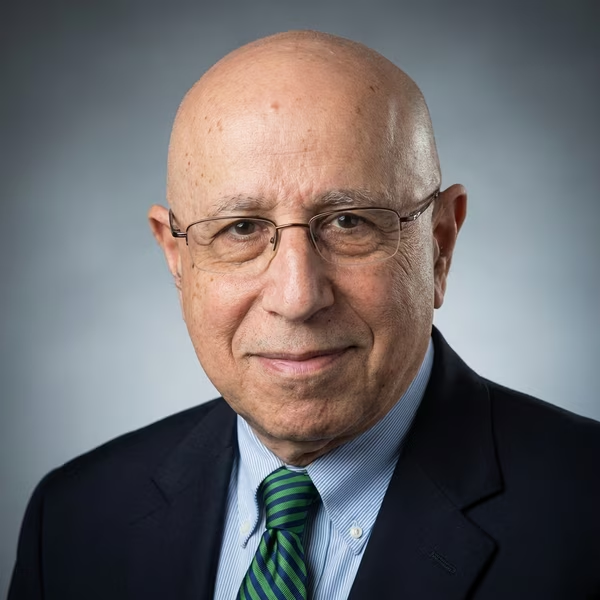
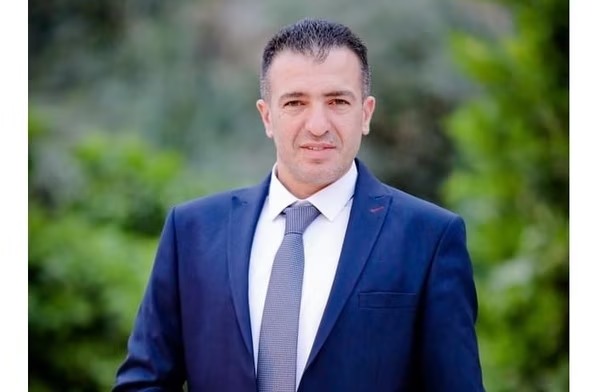
Said Erikat

Opinion Writer

Washington – Said Arikat - 10/3/2026

News Analysis

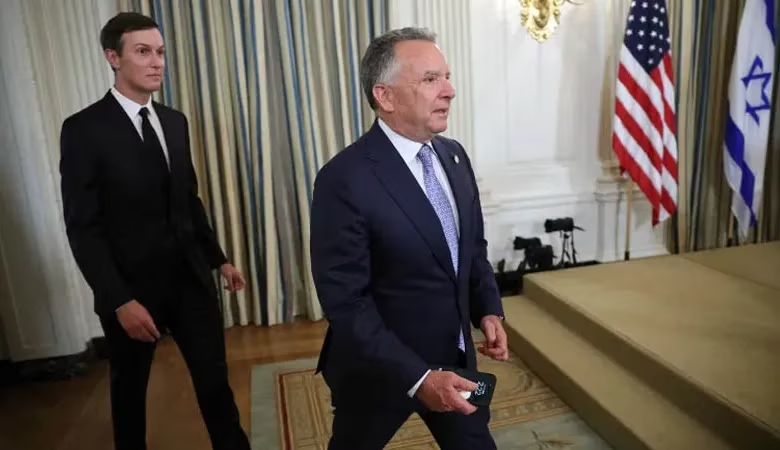
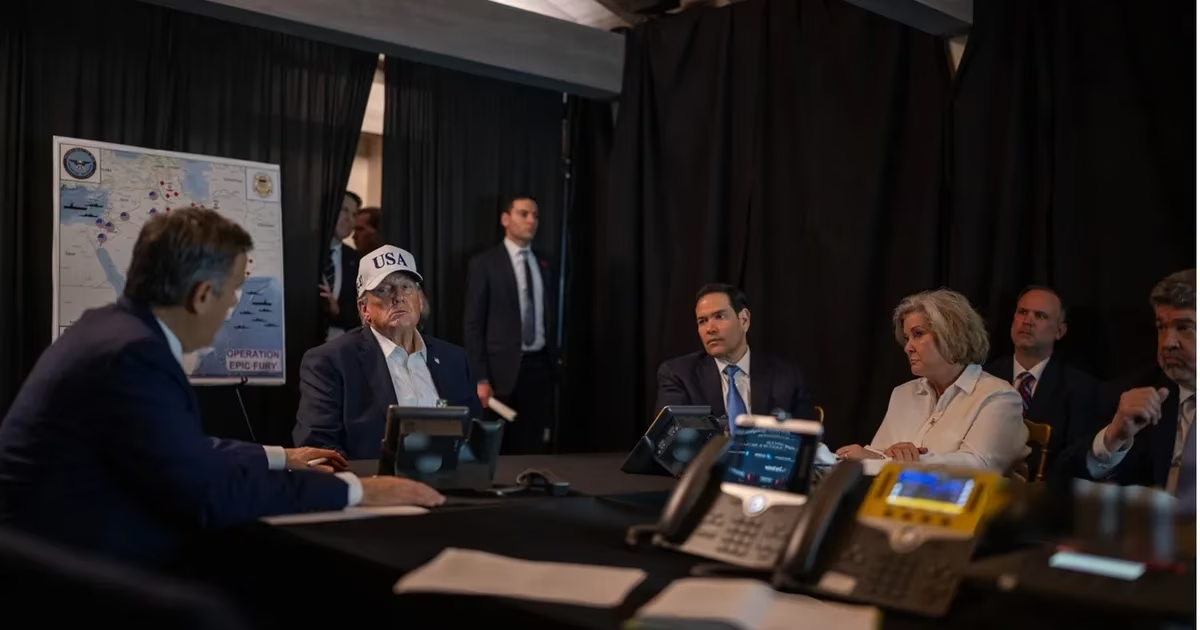
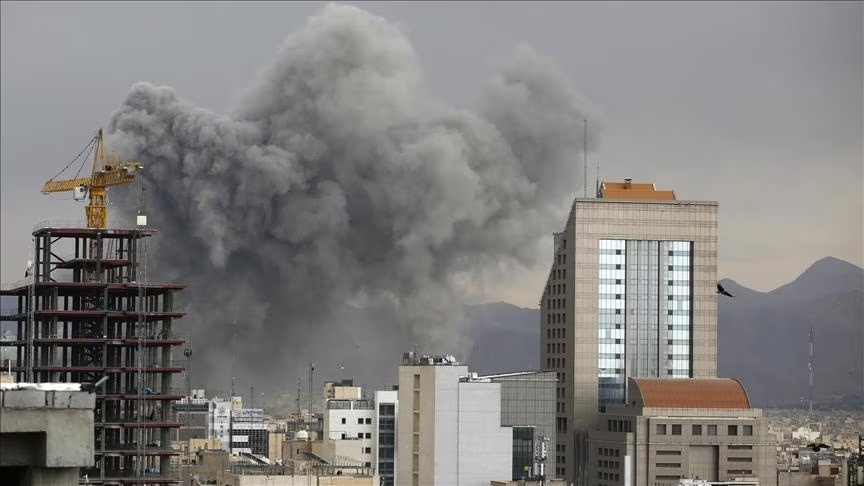
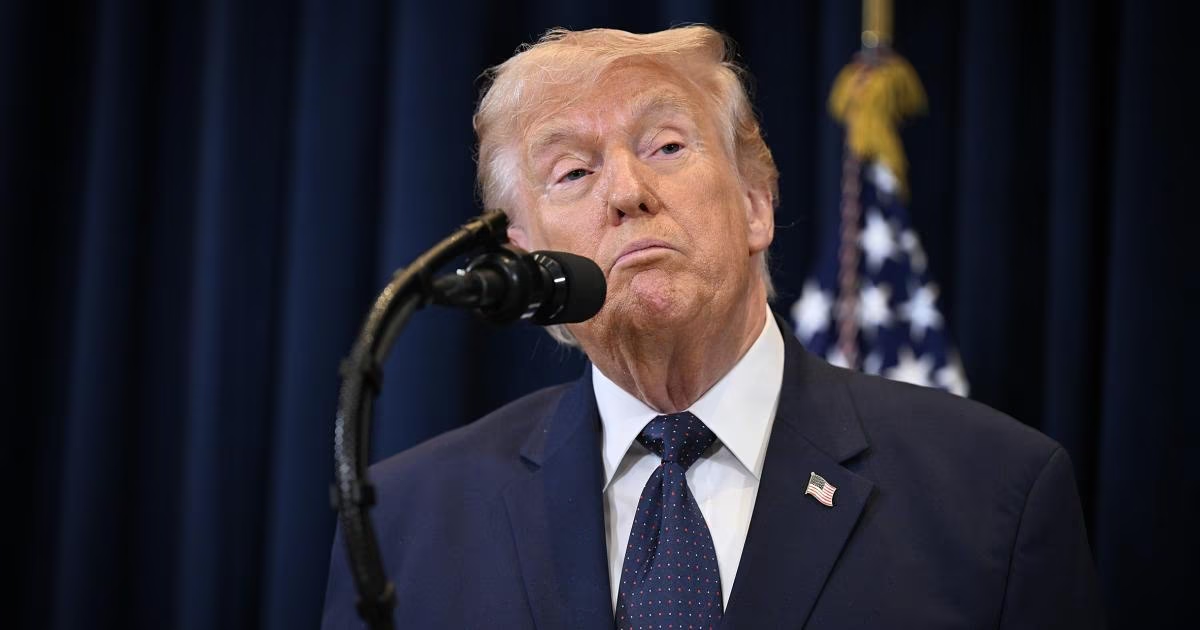
The cancellation of the planned visit by US envoy Steve Witkoff and the President's son-in-law and former White House advisor Jared Kushner to Israel has raised widespread questions in political and media circles, especially in light of the accelerating escalation in the region and the increasing tension associated with the confrontation with Iran. Israeli media reported that the visit, which was supposed to include meetings with Israeli officials to discuss security and political developments, was suddenly canceled without an official explanation from Washington or Tel Aviv.

Normally, such decisions are not viewed as mere ordinary logistical arrangements, especially when it comes to high-level diplomatic visits at a politically and security-sensitive time. Visits of this kind often carry political and strategic messages that go beyond the protocol framework, and are used to demonstrate the level of coordination between allies or to affirm political positions at critical regional moments. Therefore, the cancellation of a visit at this level opens the door to multiple interpretations regarding what might be happening behind the scenes at this stage.

One possible explanation for this decision is related to increasing security considerations. In light of current tensions and mutual threats in the region, US and Israeli security agencies may have concluded that a visit by prominent American figures could entail unforeseen security risks. With the escalation of potential retaliatory responses or mutual military operations, the concerned parties may see that reducing the public appearance of prominent political figures represents a precautionary step to avoid any unexpected developments that could embarrass both sides or raise the level of tension.

However, the security dimension is not the only possible explanation. The cancellation of the visit may also reflect a state of reassessment within the US administration regarding how to deal with the next phase of the crisis. Normally, public political visits reflect a degree of clarity in the adopted strategy, while their cancellation may indicate that discussions within Washington are still ongoing about the nature of the next steps and the limits of possible escalation.

The US administration may be reviewing its options between continuing to support military escalation or seeking diplomatic paths that could contribute to containing the crisis. In such cases, Washington may prefer to postpone public moves until the strategic picture becomes clearer, especially if there are considerations related to international or regional reactions that may result from any further escalation.

The timing of the decision may also reflect an American tendency to prioritize broader consultations with other regional partners. Current tensions are not limited to Israel and Iran alone, but their effects extend to a number of countries in the region, especially those that host US military bases or are part of regional security arrangements. From this perspective, Washington may be seeking to conduct a series of quiet consultations with its allies in the region before making a public political visit to Israel.

However, a deeper reading of the visit's cancellation may also lead to questions about the nature of the relationship between Washington and Tel Aviv during moments of sharp escalation. Despite the strength of the strategic alliance between the two parties, this alliance is often not without discrepancies in assessment or in the prioritization of issues. These discrepancies often emerge during major crises when security calculations intertwine with broader political and economic interests.

In this context, it may be simplistic to assume that the United States always plays the role of a "balancer" that seeks to de-escalate in contrast to a greater Israeli impetus towards confrontation. The political reality over the past years shows that Washington has not always been a restraining force for escalation, but has often been a direct partner in policies of pressure and confrontation, whether through extensive military support or by providing political and diplomatic cover for Israel in international forums.

Moreover, the talk about the United States' constant endeavor to maintain regional stability faces increasing criticism in the region, where many observers believe that US policies often combine rhetoric calling for stability with practices on the ground that may lead to opposite results. The almost unconditional support for Israel in a number of sensitive issues, along with punitive policies towards its regional adversaries, has sometimes contributed to deepening regional polarization instead of containing it.

From this perspective, any potential discrepancy between Washington and Tel Aviv at this stage may not necessarily relate to the principle of escalation itself, but perhaps to its degree, timing, and potential repercussions on broader American interests. The United States, as a global power with multiple commitments and partnerships in the Middle East, is compelled to take into account the calculations of other countries, whether concerning energy security, the stability of regional allies, or its balances with other international powers.

In the event of differences in views regarding the limits or timing of military operations, postponing such a visit could give both sides additional time to coordinate positions and narrow the gap of discrepancies before moving to the stage of public political moves. Postponing the visit could also help avoid sending contradictory signals at a sensitive political moment where any diplomatic step might be interpreted as unconditional support for a specific path of escalation.

Ultimately, the cancellation of Witkoff and Kushner's visit may not be merely a fleeting protocol decision, but may reflect an indication that the regional scene is still in a state of great fluidity and that many important decisions related to the course of the crisis have not yet been settled. In such circumstances, diplomacy often moves in invisible paths, where crucial decisions are made away from the spotlight until the features of the next phase become clear.

While the real reason behind the cancellation of the visit remains undisclosed so far, this step most likely reflects the magnitude of the complexities surrounding the current crisis, and indicates that the calculations of major powers in the region may be more intricate and cautious than public political statements suggest.

OPINIONS

Tue 10 Mar 2026 7:54 pm - Jerusalem Time

Between the Hammer of 'Sykes-Picot' and the Anvil of Byzantine Debate: A Reading of the Division in Arab Consciousness Towards the Regional Conflict

Ramallah - "Al-Quds" Dot Com

Ramallah - "Al-Quds" Dot Com

Opinion Writer

In moments of major transformation witnessed by the region, political questions emerge as a mirror reflecting the depth of division in our way of thinking and forming our stances. The ongoing war today between Iran on one hand, and Israel and the United States on the other, has brought to the forefront an old debate characterized by intensity and fragmentation in Arab and Islamic positions. This debate reminds us of the symbolic stories of 'Byzantine debate' where people were preoccupied with marginal details while the walls of their cities were collapsing before invaders.

The current situation is not just a fleeting military confrontation, but a real test of political, religious, and social consciousness. The division we see today reflects a disconnect between thought and reality, where elites and the general public are immersed in sterile debates while the real danger surrounds everyone. These traditional stories characterize the state of civilizational weakness that recurs when words become isolated from action and field reality.

Politicians often resort to mixing religion with politics to produce rigid positions that are difficult to retract, which is clearly seen in the current conflict. The confrontation between Iran and the American-Israeli axis is not purely religious or nationalistic, but a complex struggle for power and influence. Religious identities are used here as effective mobilization tools to galvanize spirits and legitimize military actions under a guise of sanctity.

The United States and Israel frame the conflict as a confrontation with the 'Shiite Iranian threat' to divert attention from the Palestinian issue. In contrast, Iran presents itself as the patron of the 'Axis of Resistance' in confronting 'global arrogance,' a discourse aimed at legitimizing its regional influence. Between these two discourses, the Arab individual finds himself torn between contradictory readings of political and doctrinal reality.

The Arab street is divided into three main factions regarding this conflict, each with its own premises. The first faction views Iran as a doctrinal enemy whose danger surpasses the Israeli threat, stemming from a narrow identity-based perspective. The second faction aligns politically with Iran to confront the Zionist project, which it sees as an existential threat targeting the entire nation regardless of sectarian differences.

The third faction adopts the position of the 'gloating spectator,' seeing any harm inflicted upon Iran as punishment for its policies in Arab countries such as Syria, Iraq, and Yemen. This position ignores the high human cost of war and disregards the flames that may strike civilians. These three positions are not just fleeting opinions, but an expression of psychological and social identities struggling within the collective consciousness.

The jurisprudential rule 'no denial in what is differed upon' is absent from the reality of Muslims today, which turns differences of opinion into deep religious animosity. Reality indicates that disagreements do not die but are renewed on every occasion, whether simple jurisprudential or major political. This inability to manage differences turns issues into existential crises that increase the state of fragmentation and general weakness.

The disagreements among Muslims are no longer just differences in viewpoints, but have transformed into psychological identities that give their adherents a sense of moral superiority. They are also linked to a social memory formed through bitter experiences and diverse nationalities, affected by the artificial 'Sykes-Picot' borders. Each party tries to clothe its political position in a religious garment to give it symbolic power capable of mobilizing followers.

To understand this division, one must return to the historical roots of the Sunni-Shiite conflict, which began as a political struggle for power after the death of the Prophet (peace be upon him). Over time, this political dispute transformed into a doctrinal gap, then into political borders between major empires like the Ottomans and Safavids. Today, these symbolic wounds, such as the events of Karbala and the Great Fitna, are invoked to fuel contemporary conflicts.

International powers exploit this historical division to fragment the region and achieve geopolitical goals cloaked in religion. While Iran issues the discourse of the 'oppressed,' its adversaries focus on contentious issues such as 'insulting the companions' despite fatwas prohibiting it. This mutual instrumentalization of history makes peoples fuel for wars that serve only the interests of major powers and external hegemony.

The fundamental question we must ask today is not with whom we stand, but how we understand the conflict without becoming tools in the hands of others. The true measure of protecting consciousness lies in realizing that states do not necessarily represent religion, but rather their political interests. It must also be emphasized that Palestine remains the central issue that should not be lost in the crowd of sectarian disputes.

Our preoccupation with 'Byzantine' debate over doctrinal and historical details gives colonial powers a golden opportunity to reshape the region according to their interests. The Sunni-Shiite conflict should not be used to obscure the more important question about the causes of the nation's weakness and civilizational decline. We need a conscious reading that distinguishes between religious constants and political maneuvers that use the sacred to achieve worldly goals.

The current war is a test of our maturity and our ability to overcome the open wounds that are reopened in every new conflict. History is being written before our eyes today, and our ability to understand is the dividing line between being active on our land or merely marginal observers. Continuing to be divided means remaining in the role of 'boys' who collect stray balls on the fields of adults, taking blows without the ability to respond.

In conclusion, consciousness remains the most powerful weapon in confronting attempts at fragmentation and political domestication. Overcoming the psychological and political 'Sykes-Picot' requires courage in reviewing positions and freeing oneself from the captivity of historical conflicts that no longer serve anyone but the enemies of the nation. The path to the future begins with understanding the present, away from the convulsions of the past and the alignments of powers that see us only as tools for their own projects.

The current war is not just a military confrontation, but a test of our political consciousness and our ability to read the conflict without becoming tools used by one side or another.

PALESTINE

Tue 10 Mar 2026 7:54 pm - Jerusalem Time

Israeli escalation in Gaza: Martyrs and targeting of displaced persons' tents amid continuous truce violations

Israeli attacks on the Gaza Strip continued today, Tuesday, as aerial and artillery bombardment resulted in the martyrdom of three people and injuries to a number of citizens. These aggressions come in the context of continuous violations by the occupation army of the ceasefire agreement signed last October 10, exacerbating the already deteriorating humanitarian situation in the Strip.

Field sources reported that the occupation army launched two raids targeting a house and a tent for displaced persons after issuing evacuation warnings, a tactic that has become a daily occurrence to terrorize civilians. In a related context, the spokesperson for the occupation army announced the liquidation of three Palestinians, claiming they attempted to cross the so-called 'Yellow Line,' which increases the intensity of field tension in border areas.

The eastern areas of Gaza City witnessed a renewal of intense artillery shelling, coinciding with air raids that targeted neighborhoods in the central governorate and northeast of Al-Bureij refugee camp. These military operations were not limited to fixed targets but extended to affect the simple infrastructure that displaced persons rely on for their daily lives under siege.

In the Sheikh Ajlin area, southwest of Gaza City, occupation aircraft targeted a tent designated for charging mobile phones and providing internet services to displaced persons. This raid caused severe material damage to nearby shelters, depriving hundreds of families of their only means of communication with the outside world.

In the southern part of the Strip, warplanes launched a raid on a house belonging to the Al-Qudra family in the vicinity of Hamad Residential City in Khan Yunis, an area crowded with displaced persons' tents. Although the raid did not result in immediate human casualties thanks to prior warnings, it caused widespread destruction that increased the suffering of the displaced who are living on the ground in that area.

Local sources confirmed that Israeli warships participated in the escalation by intermittently firing shells and machine guns towards the Gaza coast. This coincided with shooting and artillery shelling targeting the movements of citizens in various areas east of the Strip, leading to injuries among displaced persons who tried to move to meet their needs.

On the ground, video clips documented the continued extensive clearing and bulldozing operations by occupation bulldozers in the destroyed areas east of Gaza City. These military movements come at a time when residents are trying to restore their daily lives amidst the rubble, despite continuous security threats and intense drone flights.

In an update to its official data, the Ministry of Health in Gaza revealed that the number of victims since the ceasefire began on October 11 has reached 648 martyrs. The ministry explained that medical teams dealt with more than 1,700 injured, in addition to recovering hundreds of bodies from under the rubble in various governorates of the Strip.

The ministry concluded its report by indicating that the total toll of the Israeli aggression since October 7, 2023, has risen to 72,133 martyrs and 171,826 injured. These horrific figures reflect the magnitude of the humanitarian catastrophe experienced by the Palestinian people amid the continued systematic targeting of civilians and infrastructure.

The total number of victims of operations since the start of the ceasefire is 648 martyrs and 1,728 injured, indicating the continued escalation and its significant impact on displaced persons.

PALESTINE

Tue 10 Mar 2026 5:24 pm - Jerusalem Time

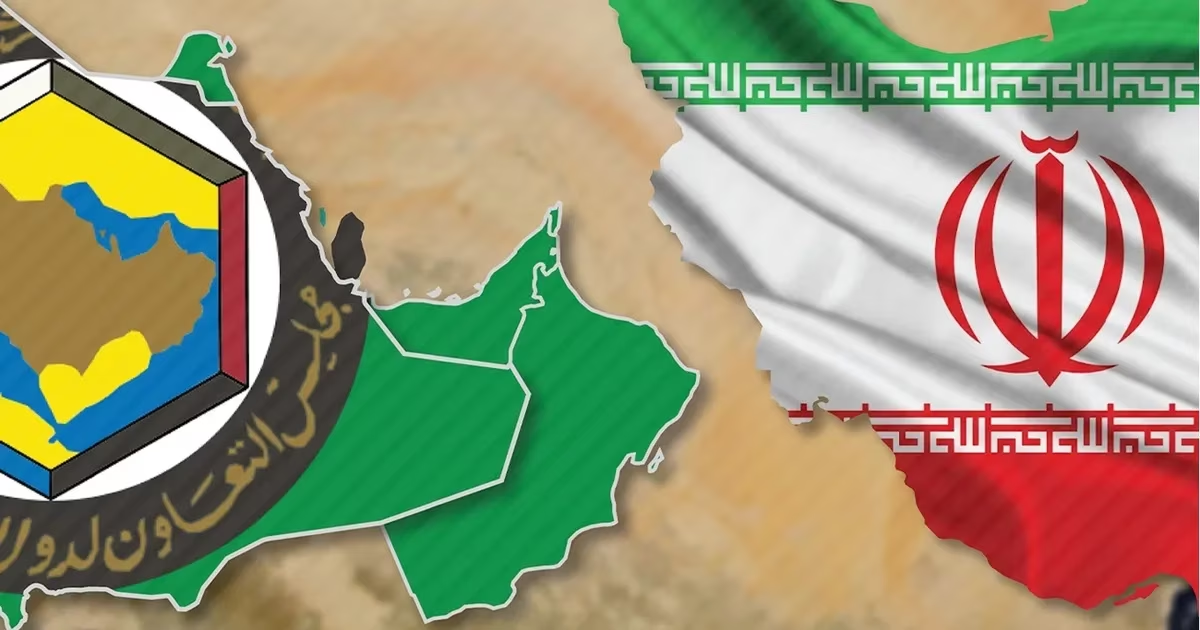
Challenges of Deterrence and Neutrality: Gulf States Facing the Fires of the American-Iranian Conflict

The six Gulf Cooperation Council (GCC) states are facing their toughest test in decades, finding themselves in the direct line of fire of the escalating conflict between the United States and Israel on one side, and Iran on the other. Despite attempts at joint coordination, disparities in foreign policies and fears of the repercussions of military involvement continue to hinder the achievement of a unified stance towards attacks targeting their territories.

Since the launch of the American-Israeli attack on Iran on February 28, the region has entered an unprecedented spiral of violence, with Tehran launching more than two thousand missiles and drones towards the Gulf states. This escalation has placed Gulf capitals before a painful reality, where the conflict is no longer far from their borders, but now threatens vital infrastructure and global energy sources.

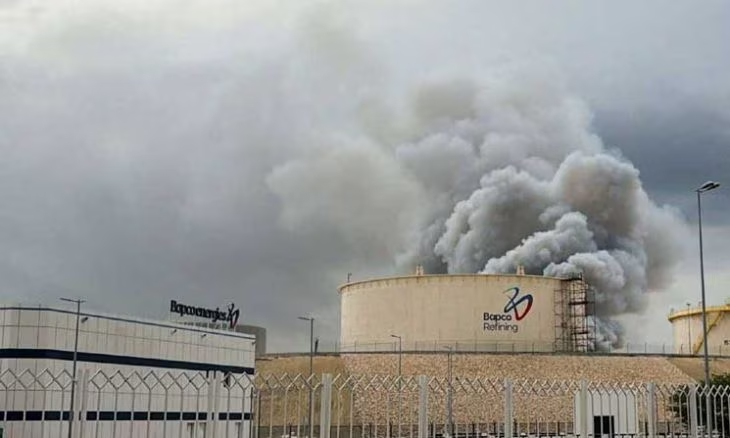
Field data indicates that the pain has not been evenly distributed among the region's countries, as more than half of the Iranian attacks were concentrated on the United Arab Emirates. In a dangerous development, drones targeted Bahrain's only oil refinery on March 9, injuring dozens and prompting the state oil company to declare 'force majeure' in its contracts.

In Kuwait, sources reported that air defenses managed to intercept three ballistic missiles and drones targeting Kuwait International Airport. Despite the successful interception, missile fragments caused limited fires at the Subiya power station and the explosion of fuel tanks, leading to a temporary suspension of air navigation before its gradual resumption.

In Saudi Arabia, defensive forces destroyed a drone in the Empty Quarter region that was en route to target the Shaybah oil field. Official sources confirmed the registration of the first two fatalities in the Kingdom as a result of falling interceptor missile fragments, increasing popular and political pressure to take a firmer stance against continuous Iranian threats.

There is a state of paralysis in decision-making within the GCC, where officials are divided between a faction urging restraint to avoid an all-out war, and a faction demanding military deterrence against Iran. This division is essentially due to a loss of trust in the current US administration led by Donald Trump, who faces declining popularity and widespread internal opposition to the continuation of the war.

Gulf capitals bitterly recall Washington's inaction after the attacks on Saudi oil facilities in 2019, which reinforces doubts about the seriousness of American security commitments. Gulf leaders fear that Washington might succeed in dragging them into a destructive conflict, then suddenly withdraw, leaving them in direct confrontation with a wounded and motivated Iranian neighbor.

In a related context, Israeli attempts to draw regional countries into the conflict emerged through media leaks claiming the participation of Emirati and Qatari aircraft in striking targets inside Iran. Abu Dhabi and Doha quickly denied these reports entirely, with Gulf officials describing these leaks as a 'dirty game' aimed at imposing a fait accompli and embarrassing Arab states before their people.

These Israeli leaks provoke unspoken anger in Abu Dhabi, which has sought since the signing of diplomatic agreements in 2020 to build a close partnership that endured even during the war on Gaza. Observers believe that leaking information that may be secret or false represents a stab in the back of security understandings, and may sometimes amount to incitement to war crimes.

Domestically, Gulf rulers cannot ignore public opinion, which is overly sensitive to involvement in a regional war. In Bahrain, Iranian attacks raise fears of new social unrest, especially with old grievances among some groups, where videos recorded voices chanting support for the attacks as they occurred.

In the UAE, there is a divergence of views between the political capital, Abu Dhabi, which tends to adopt a firm foreign policy towards Iranian threats, and Dubai, which represents the commercial center and prefers complete neutrality. Prominent businessmen have expressed concern that the war could destroy the economic model based on stability and attracting global investments.

Advocates of restraint believe that joining the US military alliance represents an unacceptable risk, especially with a president who does not believe in international multilateralism. In contrast, the hardline faction believes that the conciliatory messages sent by Iranian President Masoud Pezeshkian have not prevented missiles from falling on Gulf cities, making deterrence an inescapable necessity.

The biggest concern remains related to the post-war phase; assuming the Iranian regime remains, it will face severe sanctions and billions of dollars in economic losses. Officials in the Gulf fear that Tehran may resort to blackmailing neighboring countries through intermittent drone attacks or harassing ships in vital waterways to compensate for its losses or to alleviate pressure on it.

Ultimately, it seems that the advocates of restraint currently hold the upper hand in Gulf ruling circles, awaiting what the coming days will bring. However, a major Iranian attack causing widespread human casualties could completely tip the scales, pushing the region towards an all-out confrontation that no one desires but everyone is preparing for.

It's a dirty game; Israel is trying to impose a fait accompli by leaking reports of alleged military action by GCC states.

ARAB AND WORLD

Tue 10 Mar 2026 5:24 pm - Jerusalem Time

Horizontal Escalation: How Iran Uses Lessons from Vietnam and Kosovo to Exhaust Washington?

In an analysis published by 'Foreign Affairs' magazine, academic Robert E. Pape argues that the recent military escalation against Iran has put the United States and Israel in a predicament beyond their endurance. He explained that Operation 'Epic Rage', despite its precision in targeting the leadership hierarchy in Tehran, proved that modern air power alone is not enough to resolve complex political conflicts.

Washington and Tel Aviv thought that the elimination of the Supreme Leader and senior IRGC commanders would paralyze the leadership structure and destabilize the Iranian regime. However, the Iranian response was swift and organized, with hundreds of missiles and drones launched to target a wide geographical area that included most of the Gulf states and the American military bases deployed there.

Sources reported that sirens did not stop in the occupied cities, while American forces in the Al Udeid, Al Dhafra, and Ali Al Salem bases sought shelter from Iranian projectiles. This response was not just random retaliation, but rather the beginning of a 'horizontal escalation' strategy aimed at expanding the scope of the war and prolonging it to confuse the calculations of the stronger adversary.

Iranian strikes caused enormous economic repercussions, with fires breaking out in commercial facilities in Dubai and damage to installations near Kuwait International Airport. These events led to a sharp jump in global oil prices, with traders expecting continued disruptions in the Strait of Hormuz, through which a fifth of the world's energy supplies pass.

Pape points out that Iran has drawn lessons from previous wars fought by the United States, specifically in Vietnam and Serbia. In those conflicts, the militarily weaker party succeeded in thwarting American objectives by shifting the battle to political, economic, and social levels that made the cost of continuing the war prohibitively high.

Tehran's strategy relies on demonstrating flexibility and the ability to operate even after losing top leadership, which was embodied in launching widespread attacks just hours after the assassinations. This message is directed internally and externally, confirming that the regime possesses institutions capable of managing the conflict under the harshest conditions.

By targeting sites in nine countries hosting American forces, Iran seeks to impose what experts call 'multiple exposure'. This move aims to embarrass Washington's allied governments and show that hosting American bases brings destruction rather than security, thereby creating popular and political pressure within those countries.

Analyses confirm that Iran does not seek to defeat America in a traditional face-to-face battle, but rather aims to gain political influence and change regional power balances. Politicizing the conflict by disrupting navigation and striking the insurance and shipping sectors puts the American administration under immense pressure from Congress and the international community.

Time plays a crucial role in Iranian calculations, as the longer the conflict lasts, the greater the likelihood of disagreements between Washington and its European allies. European capitals fear energy price fluctuations and potential migration waves, which may push them to distance themselves from escalatory American policies.

On the ground, friendly fire incidents, such as American planes crashing over Kuwait, revealed the extent of logistical complexities in managing a wide front. These errors reinforce the Iranian narrative that external military intervention leads to uncontrollable chaos even by great powers.

Tehran is also trying to create a rift between the ruling regimes in the region and their peoples by portraying itself as a force resisting foreign hegemony. Iran exploits negative sentiments towards Israeli policies in the region to rally popular sympathy that transcends ideological and sectarian differences with the Iranian regime.

The American president faces a real dilemma between two difficult choices; either to redouble military efforts and impose permanent containment that may last for years without tangible political results. Or to declare 'objectives achieved' and withdraw, which would expose the administration to sharp internal criticism for failing to complete the mission.

The NATO experience in Kosovo in 1999 shows that precise air strikes can have counterproductive results, such as inciting waves of ethnic cleansing or mass displacement. In the Iranian case, military pressure could push Tehran to a greater escalation that threatens the stability of the entire global system, not just Gulf security.

In conclusion, the article concludes that 'horizontal escalation' is the most effective weapon in the hands of regional powers to counter Western technological superiority. If Washington does not realize the dimensions of this shift, it may find itself mired in a long-term war of attrition in which it loses control over the course of events it ignited.

Iran does not need to defeat the United States militarily in a traditional conflict, but rather aims to gain political influence by dragging a stronger adversary into a spiral of multiple risks.

ANALYSIS

Tue 10 Mar 2026 5:24 pm - Jerusalem Time

Iran from Within: Rising Regional Influence and Arab Fears of Hegemonic Projects

The book 'Iran from Within' by Dr. Nabil Al-Haidari, published by Dar Al-Arabia for Science Publishers, addresses the dimensions of Iran's rise in the region and how it has become a growing source of concern in Arab political discourse. In its concluding parts, the book reviews Tehran's growing influence in several Arab countries, and the historical and political claims it promotes regarding some Arab lands and islands.

The analytical reading of the book indicates that American imperialism linked its failure in Iraq to the growing Iranian hegemony, which prompted it to rally its allied regimes. According to the book, the Arab political map is divided between a majority affiliated with the West and a minority forming the 'axis of resistance' which includes Palestinian, Lebanese, and Syrian factions supported by Tehran.

The official Arab viewpoint adopts serious concerns about Iran transforming into a dominant regional power that exploited American troubles in Iraq and Afghanistan. Tehran has succeeded in building strategic alliances that enabled it to bring about a radical shift in the regional balance of power in favor of its political and sectarian project.

Iran has been able to employ its foreign policy to plant 'advanced centers of influence' in Arab countries to serve as leverage in its conflicts with the United States. This policy began with the Iranian Revolution through the slogan 'exporting the revolution,' then shifted to supporting minorities who share its religious and sectarian authority.

Analysts believe that the Iranian nuclear program has reinforced Arab fears about the imbalance of power and existential threats to national identity. This was evident in public statements by Arab leaders, such as the Jordanian monarch's warning of the 'Shiite crescent' and the former Egyptian president's questioning of the loyalty of Shiite communities to their countries.

The book touched upon the dispute over the three UAE islands (Greater Tunb, Lesser Tunb, and Abu Musa), confirming that their history is linked to the Arab coast for thousands of years. It noted that the occupation of these islands took place in November 1971 with British complicity prior to the declaration of independence of the United Arab Emirates.

Regarding Bahrain, Al-Haidari clarifies that Iranian claims lack historical basis, as the 'Dilmun' civilization predates the existence of the Persian state by more than two thousand years. Sumerian texts and archaeological evidence confirm that the peoples who inhabited this region were Semitic Arabs belonging to the Arabian Peninsula.

The book also addresses the issue of the Arab region of Ahwaz, which fell under Iranian control in 1925 after the Shah allied with the British occupation to abduct Prince Khaz'al al-Kaabi. Since then, Tehran has pursued extensive demographic change policies to erase the Arab roots of the region and change the names of its historical cities.

Ahwaz is considered the economic 'lung of Iran,' as former President Mohammad Khatami stated that it feeds the budget with 80% of oil revenues. Despite this importance, the Arab population suffers from marginalization and deprivation of their cultural and political rights, including the prohibition of wearing traditional Arab attire.

Ancient historians, including the Roman Pliny, confirmed the name 'Arabian Gulf' since the first century AD, noting that Arab tribes surrounded it from all sides. The Persians had no significant role in the trade or habitation of the Gulf; rather, Arab tribes such as Tamim and Bakr dominated its coasts.

In its conclusion, the book calls for the necessity of overcoming the Sunni-Shiite sectarian polarization fueled by external powers to tear apart the region. It believes that the continuation of this conflict serves only imperialist and Zionist interests that seek to weaken all major regional poles in the Middle East.

The critical vision of the book raises the region's need for a new Arab-Islamic regional project based on cooperation between Egypt, Turkey, Iran, and Saudi Arabia. This project aims to build a system of balance and stability that limits the costly arms race and stimulates joint development in the Gulf and the Fertile Crescent.

The analysis emphasizes the importance of building peace treaties and good neighborliness that end proxy wars and civil confrontations in countries like Libya and Yemen. It also calls for resolving border and water disputes, such as the Grand Ethiopian Renaissance Dam crisis, through fair agreements that ensure water and food security for the peoples of the region.

In conclusion, the book highlights that the only way to thwart external hegemonic projects is to formulate strong economic and political cooperation relations. Building a new anti-hegemonic regional system requires political will to overcome the legacy of the past and focus on the common interests of Arab peoples and their neighbors.

Iran has been able to plant advanced centers of influence in several Arab countries to be a strong supporter in any conflict with major powers.

PALESTINE

Tue 10 Mar 2026 5:24 pm - Jerusalem Time

Injuries among Palestinian prisoners following a simultaneous crackdown in occupation prisons

Last week, Israeli occupation prisons witnessed an unprecedented wave of repression targeting Palestinian prisoners in all detention centers, resulting in varying degrees of injuries among them. Media sources specializing in prisoner affairs reported that repression units affiliated with the prison administration carried out widespread raids affecting all sections, amidst a state of extreme tension prevailing in the detention centers.

The sources confirmed that the occupation forces used excessive force against unarmed prisoners, as sound bombs were fired, pepper gas was sprayed, and batons were used extensively. These assaults resulted in a number of prisoners sustaining injuries and bruises, requiring some of them to be transferred to hospitals and medical centers affiliated with the prisons for treatment, amid a blackout by the prison administration on the true extent of the injuries.

According to field data, these raids were carried out simultaneously last Thursday, which indicates a prior political and security decision to brutalize the prisoner movement during the holy month of Ramadan. Observers considered that the simultaneous attacks at one time aim to disperse the prisoners' ability to protest or respond to these blatant violations of their fundamental rights.

For their part, Palestinian national forces described what happened as a new war crime added to the series of crimes committed by the occupation against the Palestinian people inside and outside prisons. Statements indicated that targeting specific prisons such as 'Naqab Desert' and 'Gilboa' reflects the occupation's desire to break the will of prisoners who already face harsh detention conditions.

Palestinian factions held the occupation prison administration fully responsible for the lives and safety of all prisoners, warning that the continuation of this repressive policy would lead to an explosion of the situation inside and outside prisons. They called on the Palestinian masses to escalate solidarity activities with prisoners in city centers and friction points to pressure the occupation to stop its aggression against detainees.

On the human rights front, humanitarian organizations issued urgent appeals to the international community and UN organizations for immediate intervention to stop these violations and provide international protection for prisoners. These organizations affirmed that the silence of the international community encourages the occupation authorities to continue violating international humanitarian law and the Fourth Geneva Convention concerning the treatment of prisoners.

In conclusion of the issued statements, the Prisoners' Information Office stressed that the door is now open for all human rights bodies to document these crimes and refer them to international courts. The office called for the necessity of sending international investigation committees to ascertain the extent of the brutalization suffered by prisoners, especially in light of the deliberate medical negligence policy that accompanied the recent crackdown.

What happened in the occupation prisons reflects a systematic policy aimed at breaking the will of prisoners and brutalizing them, especially with the deliberate execution of raids at one time during the month of Ramadan.

ARAB AND WORLD

Tue 10 Mar 2026 12:39 pm - Jerusalem Time

International investigation reveals US 'Tomahawk' missile involvement in Minab school massacre in Iran

International press reports have indicated an accumulation of evidence proving the involvement of a US missile in the horrific massacre that targeted an elementary school in the Iranian city of Minab. Sources indicated that the attack resulted in the martyrdom of 175 children who were inside their classrooms at the moment of the violent explosion.

The investigations were based on video clips published by Iranian agencies clearly showing the moment a 'Tomahawk' cruise missile fell on the area. The footage documented the missile hitting a naval base located in the vicinity of the 'Shajarat Tayyibah' elementary school, leading to massive destruction in the school building, which was crowded with students.

Sources confirmed that the US Army is the only force in the region that possesses and uses long-range 'Tomahawk' missiles. Satellite images and field analyses show that the school was directly and fatally damaged as a result of the explosive pressure and shrapnel emanating from the missile that targeted the adjacent base.

In a previous comment on the incident, former US President Donald Trump denied his country's involvement in killing Iranian children. Trump claimed, in response to journalists' questions, that Iran was responsible for the incident due to what he described as 'inaccuracy' in the use of its military munitions, which was refuted by subsequent technical evidence.

For its part, the independent research team 'Bellingcat' verified the authenticity of the video documenting the airstrike with extreme precision. The analysis showed that the filming was done from a construction site located opposite the targeted base, where the missile was seen falling directly on a medical clinic inside a facility belonging to the Revolutionary Guard.

Reports clarified that the damage was not limited to the medical clinic, but also strongly affected the school adjacent to the naval base wall. Several other buildings within the military facility also suffered precise strikes coinciding with the attack on the school, indicating a widespread and organized military operation.

Technical analyses emphasized that this type of missile is not available in the arsenal of the Israeli occupation army or the Iranian army itself. The massacre coincided with the launch of dozens of missiles of the same type by US Navy warships towards targets inside Iranian territory on February 28th.

'Tomahawk' missiles are characterized by superior technological capabilities, as they can fly up to 1000 miles and hit their targets with extreme precision. These missiles are programmed with complex flight plans before launch, raising questions about how a site next to an elementary school was included in the target bank.

The missile used in the attack is about 20 feet long and carries a warhead with a massive destructive capability equivalent to 300 pounds of 'TNT'. These specifications confirm that the extent of the destruction inflicted on the 'Shajarat Tayyibah' school is entirely consistent with the destructive effects of this strategic American weapon.

Iran did that, as you know they are very inaccurate in using munitions.

OPINIONS

Tue 10 Mar 2026 12:38 pm - Jerusalem Time

"Maduro" Syndrome!

Dr. Ibrahim Melhem

Editor-in-Chief

The least that can be said is that after the American special forces carried out their "sterilized" operation in Venezuela, and arrested President "Maduro" and his wife from their bed in the presidential palace, Trump is afflicted with a condition that can be called "Maduro Syndrome," which is a narcissistic urge that possesses the owner of an inflated ego, believing that he can repeat the experience in a different geography and achieve dazzling successes. A wise man says: "You cannot swim in the same river twice," so Trump's success in the "Caracas invasion" does not necessarily mean his success in the "Tehran invasion," where the "turban" rules and controls all aspects of life in the theocratic state, because repeating the experience in the style of "reality television," which Trump masters, ignores the profound differences between the "presidential resort" and the "golf course" and the "doctrinal seminary." In his war on Iran, Trump does not stop saying one thing and its opposite, sometimes calling on the regime for complete surrender, and at other times leaving the door ajar with the "positives" within the regime, without specifying for us the criterion of positivity, which is synonymous with "surrender" in the creed of the man aspiring to win the Nobel Peace Prize, while the selection of the new leader did not come according to his "catalogue," as he was chosen without consulting him. In the labyrinth of the syndrome, Trump finds himself caught in the trap of his "strategic arrogance," which Netanyahu stroked, and he went on to hunt his prey, taking advantage of the violation of Tehran's airspace and the fragility of the regime's structure. In an attempt to climb down from the high tree he took the world with him to, Trump yesterday made statements similar to his volatility, in which he announced that his war is nearing its end after he managed to achieve many of its goals.

PALESTINE

Tue 10 Mar 2026 12:38 pm - Jerusalem Time

Jerusalem Governorate warns of plans to slaughter sacrifices inside Al-Aqsa and considers its closure a dangerous precedent

The Jerusalem Governorate issued a strongly worded statement warning of the escalation of calls from extremist Jewish groups aiming to slaughter sacrifices inside the courtyards of the blessed Al-Aqsa Mosque. The Governorate clarified that these movements coincide with the Hebrew Passover holiday scheduled for next April, indicating systematic plans to change the status quo in the Noble Sanctuary.

The Governorate affirmed that the so-called 'Temple organizations' have already begun to intensify their propaganda campaigns using artificial intelligence techniques to produce inciting videos and images. These campaigns aim to mobilize settlers and push them to forcibly impose the rituals of slaughtering the 'Passover sacrifice' inside the Mosque, which represents a blatant violation of the sanctity of the place.

The statement considered these calls a dangerous and unprecedented escalation in the incitement discourse led by extremist institutions against Islamic holy sites. The Governorate pointed out that the 'Temple organization' openly seeks to establish their alleged temple on the ruins of Al-Aqsa Mosque, exploiting the current political and security conditions to pass their agendas.

In a related context, the Governorate noted that the occupation authorities continue to impose a comprehensive closure on Al-Aqsa Mosque since February 28th. The authorities cite the state of emergency resulting from the ongoing military confrontation, which has deprived thousands of worshippers from performing their religious rituals in the Mosque.

The Governorate stressed that preventing the performance of Taraweeh prayers during the last ten days of the blessed month of Ramadan is a dangerous historical precedent that has not occurred since the occupation of the city in 1967. This measure reflects the extent of the restrictions imposed on Palestinians and their prevention from accessing their first Qibla during their holiest times.

Local sources also revealed that extremist groups are promoting flimsy justifications for the continued closure of the Mosque, including the claim of a lack of safe shelters inside the Sanctuary. These groups aim to keep the Mosque closed to Muslims until the end of the war, to ensure their absence during Jewish holidays.

The Governorate clarified that the Islamic Endowments Department in Jerusalem is the sole and legitimate authority responsible for managing the affairs of Al-Aqsa Mosque and opening or closing its doors. It affirmed that any intervention by the occupation authorities in these powers is a violation of the internationally recognized historical and legal status in occupied Jerusalem.

The statement mentioned that the 'Temple Institute' recently published provocative images showing a banquet for an animal sacrifice with a religious altar placed virtually in front of the Dome of the Rock. The publications included inciting phrases indicating the possibility of building the altar and renewing the sacrifice rituals in a very short time, which reinforces fears of a field explosion.

Reports indicated that dangerous precedents occurred during the past year 2025, where three actual attempts were detected to smuggle animals or parts of them into Al-Aqsa Mosque. These attempts reflect the determination of extremist groups to break the established rules and impose a new reality inside the Mosque by force and intimidation.

This escalation comes at a time when Palestinians are suffering from severe military restrictions and checkpoints preventing their access from various areas of the West Bank to Jerusalem and Hebron. These measures have led to the emptying of Al-Aqsa Mosque and the Ibrahimi Mosque of worshippers at the peak of the religious season, which sparked a wide wave of anger.

Experts in Jerusalem affairs concluded by warning that the continuation of these policies represents a blatant violation of freedom of worship guaranteed by international laws. They warned that continued incitement to slaughter sacrifices could lead to uncontrollable repercussions in the entire region, given the status of Al-Aqsa in the hearts of Muslims.

What is happening in Al-Aqsa Mosque is part of a political and ideological path that seeks to change the religious, historical, and legal reality in the Noble Sanctuary of Jerusalem.

OPINIONS

Tue 10 Mar 2026 12:38 pm - Jerusalem Time

Between the Sacrifices of the Street and the Silence of the Leadership: A Nation's Crisis Searching for a Compass

In times of great storms, nations are measured by the ability of their leaders to live up to the sacrifices made by their people. In the Palestinian case today, the scene appears troubling; while the Palestinian citizen fights the battle for survival and dignity in Gaza, the West Bank, and Jerusalem, the trust gap between the street and its political leadership is widening to an unprecedented degree. The Palestinian citizen, who faces bombing, incursions, arrest, and displacement, is no longer just asking about the fate of the battle with the occupation, but has also begun to ask about the position of their leadership in this battle. Where is the leadership that leads? Where is the unifying national project? And where is the decision capable of transforming people's sacrifices into real political achievement? These questions did not come from a vacuum, but are the result of many years of political accumulations that have led to the erosion of popular trust in the leadership of parties and organizations and in official institutions, and a decline in satisfaction with leadership performance. With each new crisis, this gap becomes more apparent, and the citizen's feeling that the distance between them and the decision-making center has become further than it should be increases. Today, Palestinians are presenting one of the greatest examples of steadfastness in their modern history. In Gaza, a people face a fierce war machine, and in the West Bank, a people face daily incursions, settlements, and attempts at displacement, and in Jerusalem, an open battle over identity and existence. Nevertheless, many feel that official political performance is still revolving within the orbit of traditional statements and limited diplomatic stances, without a real ability to transform these sacrifices into effective political power. From this, a dangerous feeling arises that can be described as “political orphanhood.” The Palestinian citizen sometimes feels that they are standing alone in the field, while political frameworks are unable to produce a unified leadership capable of guiding the national compass or protecting the internal front. This feeling intensifies with the continuation of the Palestinian division, which is no longer just a political dispute between factions, but has turned into a continuous drain on the national project. The division has not only weakened institutions but has also weakened people's trust in the idea of political action itself, and has made many see that the struggle for power has come to overshadow the struggle with the occupation. In light of this picture, a widespread impression is forming among the street that a part of the political elites has become preoccupied with managing the balances of survival more than being preoccupied with managing the project of liberation. And when people feel that politics is turning into the management of interests and privileges, the first thing that erodes is trust. And with the decline of trust, participation declines. A society that loses its faith in the usefulness of the political process becomes less willing to engage in it. This explains the state of popular apathy towards many political issues, as well as the widespread doubts surrounding any talk of upcoming elections, as many fear that they will turn into a mere formality rather than a real station for change. The danger of this crisis lies not only in its political dimension but also in its direct impact on the Palestinian national project. Every liberation project needs a cohesive internal front, a leadership that enjoys the trust of its people, and a popular base that believes that its sacrifices are moving in a clear direction. When this trust erodes, political legitimacy erodes with it, and the leadership becomes weaker in the face of external pressures, and society becomes more susceptible to frustration and disintegration. This is precisely what the occupation seeks to deepen, because it realizes that the true strength of Palestinians lies in their internal unity. But despite the bleak picture, the crisis can turn into an opportunity if handled well. Rebuilding trust is not impossible, but it requires courageous decisions that restore consideration to the national project and place the interest of the people above all else. The first of these steps is to end the state of division and restore national unity on the basis of real partnership in decision and responsibility. A people who stand united in the field deserve a unified leadership in politics. The second is to restore consideration to the values of transparency and accountability within national institutions, because trust is not built on slogans but on practice. The citizen wants to see institutions that serve them, protect them, and work in their name, not above them. As for the most important step, it is to reorient the compass towards the central goal: the Palestinian national project. For when the citizen feels that politics is returning to be a tool for liberation, not just a management of reality, trust can gradually begin to return. Palestinians have proven throughout their history that they are a people capable of steadfastness in the harshest circumstances. But this steadfastness needs a leadership that parallels it, is worthy of its sacrifices, and translates its will into a unifying national project. The Palestinian street is not looking for miracles… but for a leadership that resembles it, feels its pain, and walks with it on the same path towards freedom. The most dangerous thing any people face in their battle is not only the strength of their adversary, but their feeling that they stand alone. A sincere word from the leadership is not just a political speech, but reassurance for a fighting people, and a compass for a public searching for direction. And when this message is absent, a vacuum takes its place, and anxiety and doubt creep into the collective consciousness, a vacuum that serves only the occupation.

OPINIONS

Tue 10 Mar 2026 12:38 pm - Jerusalem Time

The Economy of Barriers: The Invisible Cost of the Palestinian Economy

In traditional economic discussions, the strength of economies is measured by production volume, investment levels, and trade movement. However, the Palestinian situation imposes an additional variable that does not usually appear in classical economic calculations: the economy of barriers. The military barriers spread across the West Bank are no longer merely a security or political reality; they have transformed into an influential economic factor that reshapes daily market movement, production, and trade.At first glance, barriers may seem like mere checkpoints that disrupt the movement of individuals, but their real impact is much deeper. Every minute of delay on the road means an additional cost to production, every hour of waiting means a decrease in productivity, and every disruption to the movement of goods ultimately means an increase in the cost of goods.Small Geography, Fragmented EconomyThe area of the West Bank is only about 5,655 square kilometers, a relatively limited geographical area. For example, the distance between the northernmost point of the West Bank in Jenin and its southernmost point in Hebron is no more than about 150 kilometers.Under normal circumstances, this distance could be covered in about an hour and a half to two hours. However, the reality on the ground is completely different, as the same journey can take three to five hours or more due to barriers and sudden closures.Thus, the small geography transforms into a temporally fragmented economy, where the problem is not so much the distance as it is the time wasted on the road. In most economies, distances are measured in kilometers, but in the Palestinian case, economic distance is measured in hours lost at barriers.Barrier NetworkData from the United Nations Office for the Coordination of Humanitarian Affairs (OCHA) indicates the presence of approximately 800 to 850 barriers and obstacles to movement in the West Bank, including permanent military checkpoints, road gates, earth mounds, and various closure points. This number has increased in recent years, after being around 645 obstacles to movement in 2023.These figures do not include flying checkpoints that appear suddenly on main roads, which add an additional element of uncertainty to transportation and trade movement.The Cost of Wasted TimeIn economics, time is one of the basic elements of production. Every delay in the movement of workers or goods directly affects productivity and cost.A worker who is late in reaching their workplace loses part of their production hours, a merchant whose goods are delayed loses sales opportunities, and a factory whose raw materials are delayed in reaching it may be forced to halt production lines.With these situations recurring daily, small delays turn into accumulated economic losses. The Palestinian economy does not only lose in terms of production volume, but also in productivity, as working hours lost on the roads turn into a hidden cost that reduces the efficiency of the economy as a whole.Supply Chain DisruptionModern economies rely on what are known as supply chains that connect production with transportation and distribution all the way to the consumer. In the Palestinian economy, these chains are subject to constant disruptions due to restrictions on movement.Trucks transporting goods between cities or to external markets may be delayed for long hours, which increases transportation costs and raises the risk of damage to some goods, especially agricultural products.The inability to predict arrival times also makes business planning more difficult and increases the operational costs for small and medium-sized enterprises.With continued restrictions on movement, the Palestinian market is exposed to an indirect economic fragmentation process, where cities turn into semi-separate markets, and companies lose the ability to operate within an integrated national market.Invisible Economic LossIt is difficult to accurately measure the economic cost of barriers, but it is undoubtedly significant. Economic estimates indicate that restrictions on movement may cost the Palestinian economy between 2% and 4% of its GDP annually.Given that Palestinian GDP is close to $14 billion, this loss could amount to between $280 million and $560 million annually.However, this loss does not appear as a direct item in economic accounts; rather, it infiltrates the economy through reduced productivity, increased transportation costs, disrupted supply chains, and declining investment. In other words, the Palestinian economy does not pay this cost all at once, but rather pays it in daily installments through thousands of small delays.Government Debt to the Private SectorThe challenges are not limited to movement restrictions; they extend to internal financial bottlenecks. Estimates indicate that the Palestinian government's arrears to the private sector range between $2.5 and $3 billion.These arrears include dues for contracting companies, suppliers of medicines and services, and companies that have implemented projects for the government. However, delayed payments turn these dues into a significant economic burden, as companies are forced to freeze new projects or resort to borrowing to cover their operational commitments.Thus, the government's financial crisis transfers to the heart of the real economy, directly affecting investment and growth.Investment in an Unstable EnvironmentInvestors do not only rely on market size or labor availability, but also on the stability of the operating environment. In an environment where the movement of individuals and goods is constantly disrupted, investment decision-making becomes more difficult.Capital by nature seeks stability and predictability. When the movement of goods and workers becomes uncertain, logistical risks become a deterrent to investment.Thus, barriers transform from a daily obstacle into a structural factor that limits the expansion of the Palestinian economy.ConclusionThe economy of barriers reminds us that an economy is not built solely on financial policies or major investments, but also on freedom of movement and the smooth flow of economic activity. When roads are blocked, not only cars are disrupted, but also job opportunities, supply chains, and growth potential.With the accumulation of movement restrictions and increasing government arrears to the private sector, the Palestinian economy faces a dual challenge: a restricted geography and a strained public finance.The true cost of barriers is not just in lost time, but in economic opportunities that were never created. * International Economic Advisor, and Board Member of International Digital Transformation.

PALESTINE

Tue 10 Mar 2026 12:38 pm - Jerusalem Time

Right-wing rabbi condemns settler attacks amid escalating killings and displacement in the West Bank

The influential Israeli Rabbi Eliakim Levanon, known for his close ties to far-right currents, issued a remarkable statement condemning the escalation of settler attacks against Palestinians in the occupied West Bank. In an open letter, Levanon affirmed that harming property or inflicting physical injury on any human being, regardless of their religion, constitutes unethical behavior. This statement comes amidst a peak in settler violence.

This condemnation comes at a time when Palestinians mourned the bodies of four martyrs who died in recent hours from settler bullets in various areas. Three young men were killed in a bloody attack targeting the village of Abu Falah, northeast of Ramallah, while the fourth was martyred in the Wadi al-Rakheem area, south of the West Bank, reflecting the widening scope of direct targeting of civilians.

In successive field developments, medical and local sources reported that a number of citizens were injured and bruised as a result of attacks carried out by groups of settlers on towns and villages in the northern and southern West Bank. These attacks focused on the towns of Beita, Jama'in, and Aqraba around Nablus, where the assailants used severe beatings and sprayed toxic pepper gas at unarmed citizens.

Attacks were not limited to the northern West Bank but extended to Khirbet Hamroush, affiliated with the town of Sa'ir, north of Hebron, where settlers attacked residents and assaulted them. These attacks are part of a series of continuous attempts to terrorize Palestinian residents in areas classified as 'C' to impose a new geographical and demographic reality that serves settlement expansion.

For its part, Hebrew press reports indicated that these attacks cannot be described as isolated or spontaneous incidents, but rather are part of an organized strategy falling under the name of 'Jewish terrorism.' This systematic policy aims to create a state of permanent friction and psychological and material pressure on Palestinians to make their daily lives impossible in their historical lands.

Observers and analysts believe that the ultimate goal of this escalation is to push Palestinian residents to leave their villages voluntarily or by force, in what is described as 'gradual displacement.' These operations take place under a cover of silence or sometimes implicit support, which encourages extremist groups to continue destroying agricultural facilities and demolishing homes to undermine the elements of Palestinian survival.

Official data issued by the Wall and Settlement Resistance Commission indicates that settler attacks alone have resulted in the martyrdom of 42 Palestinians since the outbreak of the war on October 8, 2023. These figures reflect a dangerous shift in the role of settlers, who have become a parallel military force targeting remote and marginalized Palestinian communities in particular.

Regarding the total toll, attacks by occupation forces and settlers in the West Bank since the same date have led to the martyrdom of 1,125 people and the injury of approximately 11,700 others with varying degrees of wounds. These statistics show the extent of excessive force used against Palestinians in various governorates, coinciding with the continuation of widespread military operations in the Gaza Strip.

In a related context, the occupation authorities continue their frantic arrest campaigns, which have targeted about 22,000 Palestinians since the beginning of the recent escalation, in an attempt to break the will of popular resistance. These arrests are accompanied by widespread destruction of private property and infrastructure in camps and cities, exacerbating the economic and social suffering of citizens.

The scene in the West Bank remains open to further escalation in light of the continued policy of settlement expansion and the demolition of vital facilities. With increasing international warnings of a complete explosion of the situation, Palestinians continue their steadfastness in the face of displacement attempts, despite the heavy human and material cost imposed by the reality of occupation and settlers.

Damaging property, let alone harming anyone, Jewish or non-Jewish, is an immoral act.

ARAB AND WORLD

Tue 10 Mar 2026 12:37 pm - Jerusalem Time

Mojtaba Khamenei's Selection... Iranian Messages of Continued Confrontation Without Concessions

Dr. Abdul Majeed Sweilem: The selection of the new leader is a message in response to Netanyahu and Trump, who spoke about the necessity of an "moderate" Iranian leadership. Akram Attallah: His selection indicates that the Iranian regime is unwilling to make concessions and insists on continuing political and military confrontation. Daoud Kuttab: The selection of the new leader reflects the Iranian regime's ability to maintain continuity despite the pressures exerted on it during the past period. Dr. Hussein Al-Deek: The option of assassinating the new leader is unlikely until his orientations and the messages he may send to Washington through intermediaries become clear. Nizar Nazzal: The selection of Mojtaba as the new leader is a clear victory for the security current within the regime due to his strong relationship with the Revolutionary Guard. Areeb Al-Rantawi: The biggest challenge for the new leader is managing the war, controlling internal disputes, and overseeing the reconstruction of Iran after the war. Ramallah – Exclusive to "Al-Quds" – The selection of Mojtaba Khamenei, son of the former Supreme Leader Ali Khamenei, as the new Supreme Leader of the Islamic Republic of Iran, represents a pivotal moment in the political system's trajectory, amidst a highly complex regional and international stage. The decision is seen as carrying messages of defiance to Washington and Tel Aviv, and a consolidation of the previous approach led by the former leader for decades. Writers, political analysts, specialists, and university professors, in separate interviews with "Al-Quds", believe that Mojtaba Khamenei's selection confirms the ability of Iranian state institutions to manage the transfer of power and maintain the cohesion of the regime despite the escalating political and military pressures facing Tehran. According to writers, analysts, specialists, and university professors, this selection carries political implications that extend beyond the internal framework, as it is understood as a direct message to the United States and Israel that the Iranian regime is continuing its political and military approach, and is unwilling to make fundamental concessions under pressure, despite threats from US President Donald Trump to assassinate any leader who does not come without his participation. They point out that Mojtaba's selection reflects the rise of the hardline current within Iran's ruling institutions and the strengthening of the security and military establishment's role in shaping internal and regional policies. Most Capable of Managing the Current Stage Political writer and analyst Dr. Abdul Majeed Sweilem believes that the selection of a Supreme Leader for Iran did not come within the framework of what is being promoted about political inheritance within the regime, but rather as a result of a political and intellectual conviction among the Iranian leadership that Mojtaba Khamenei is the most capable of managing the current stage with its complexities and regional and international conflicts. He explains that Mojtaba Khamenei, during the past years, stood by his father, the former Supreme Leader Ali Khamenei, and played a pivotal role in managing many sensitive files within the Iranian state, which made him a well-known figure within decision-making circles. Sweilem points out that Mojtaba Khamenei is known for his political hardline stance and his close relationship with the Iranian Revolutionary Guard, which reinforced the Iranian leadership's conviction that he is the most capable of following up on conflict files and managing the next stage. Concerns Related to the Possibility of Targeting Him Sweilem clarifies that discussions within the Iranian leadership did not focus on Mojtaba Khamenei's capabilities or his eligibility for the position, as there were no serious disagreements about his personality or experience. Rather, the discussions primarily revolved around concerns related to the possibility of him being targeted by the United States or Israel. He indicates that the time it took to announce Mojtaba Khamenei's selection is largely due to security arrangements related to ways of protecting and concealing him, and ensuring his ability to oversee the course of the conflict from his new position. Sweilem explains that the position of Supreme Leader in Iran still retains its great political and religious importance, although his father's experience in this position was exceptional in terms of its depth and impact. Clear Political Messages to the Outside However, Sweilem points out that Mojtaba Khamenei possesses high organizational capabilities and extensive knowledge of various internal and external files, which made him the most qualified candidate for this position in the eyes of the Iranian leadership. Sweilem believes that the selection of the new leader also carries clear political messages to the outside, especially to Israeli Prime Minister Benjamin Netanyahu and US President Donald Trump, who have spoken on more than one occasion about the necessity of an "moderate" Iranian leadership. According to Sweilem, this selection came in response to those statements, to confirm that the Iranian regime makes its decisions independently and that it remains cohesive despite the pressures and losses it has suffered during the current confrontation. Sweilem indicates that the Iranian leadership, through this decision, wanted to send a message confirming the strength of the regime's cohesion and its ability to manage the most dangerous conflict since World War II, explaining that the continuation of the battle with such breadth and precision reflects the ability of Iranian state institutions to deal with major challenges. Assassination of the New Leader is Less Politically Viable Regarding the possibilities of targeting the new leader, Sweilem believes that this possibility is present and declared, but he points out that the Iranians took this matter into consideration during the selection process, and perhaps made prior arrangements related to his succession in the event of his assassination or if his ability to manage files was disrupted. Sweilem believes that the United States and Israel today realize that the structure of the Iranian regime enjoys a high degree of cohesion, which makes the option of assassinating the new leader less politically and morally viable than previously thought, and such an escalation may lead to counterproductive results that reduce the ability of Iran's opponents to appear strong or achieve strategic gains. Transition Towards More Hardline Political writer and analyst Akram Attallah explains that the appointment of Mojtaba Khamenei to the position of Supreme Leader in Iran carries deep political implications related to the nature of the next stage within the Iranian regime, pointing out that the step reflects a clear transition towards more hardline management of the state and regional policies. He indicates that Mojtaba Khamenei is known for his more hardline positions compared to his father Ali Khamenei, and that during the past years he played an influential role in managing state affairs from behind the scenes, in addition to his close relationship with the Iranian Revolutionary Guard, which indicates that the Iranian regime is unwilling to make concessions in the current stage and insists on continuing political and military confrontation. Attallah confirms that this development reflects a near-complete control of the hardline current over the joints of the Iranian state, in contrast to a noticeable decline of the reformist current within the regime. Attallah points out that this decline appeared in the positions and statements of Iranian President Masoud Pezeshkian during his visit to the Gulf states, where the limited influence of the reformist current was evident in light of the influence of the Revolutionary Guard and hardline forces within state institutions. Attallah indicates that the selection of Mojtaba Khamenei as the new leader can also be read as a continuation of his father's political and intellectual approach, and perhaps even a reinforcement of it, especially since the son is seen as an integral part of the hardline current within the regime, which means that Iran may remain linked to a stricter political line in the next stage. Attallah believes that former US President Donald Trump's threats regarding the assassination of the new leader if he did not participate in it, perhaps reflected an early awareness by Trump of the personality that might assume the position of leader. Attallah indicates that the new leader may become a primary target for the United States and Israel, especially since his selection reflects the Iranian regime's adherence to survival and continuity, which conflicts with Washington and Tel Aviv's desire to weaken or change it. The Iranian Regime's Ability to Maintain its Continuity Political writer and analyst Daoud Kuttab believes that the selection of a new Supreme Leader for the Islamic Republic of Iran reflects the Iranian regime's ability to maintain its continuity despite the political and military pressures exerted on it during the past period, pointing out that the selection process took place according to the institutional system adopted within the regime, ensuring the continuity of the state, the ruling structure, and the Shiite community, whose members constitute more than 150 million Shiite Muslims around the world. Kuttab explains that this step shows that the attempts by both Israel and the United States of America to destabilize the Iranian regime have not achieved their goals, as the Iranian leadership was able to proceed with the transfer of power according to its internal mechanisms. In contrast, Kuttab believes that US President Donald Trump's statements regarding his desire to influence the selection of the Supreme Leader to succeed Ali Khamenei represent an explicit form of colonial intervention in the internal affairs of states. Kuttab confirms that what used to happen historically through undeclared messages is now being openly discussed, which reflects an unprecedented level of intervention in the management of a state with an ancient civilization, believing that Washington's failure to impose this approach may turn into the beginning of a series of political failures for the Trump administration. The De Facto Ruler of Iran Professor of Political Science and International Relations and specialist in American affairs, Dr. Hussein Al-Deek, explains that the selection of Mojtaba Khamenei as Supreme Leader may open the door to dangerous scenarios that may lead to the overthrow of the regime or even the division of the country if the confrontation with the United States and Israel expands. Al-Deek indicates that Mojtaba Khamenei's selection was not entirely surprising, as many indications suggest that he was the de facto ruler of Iran during the past years in the presence of his father Ali Khamenei, and that he had long been seen as the potential successor to the leader. He points out that the position of Supreme Leader in Iran enjoys very broad powers, especially in light of the great influence he has, controlling the political, economic, and social joints of the state, in addition to natural resources. Assassination of the Former Leader Maintained the Approach Al-Deek indicates that Mojtaba Khamenei's selection carries clear political messages to the United States and Israel, as it reflects the continued control of the radical hardline current over power in Iran despite assassinations and military escalation, and also represents a message of defiance that the assassination of the former leader did not lead to a change in approach, but rather brought a more hardline leader. He explains that international experiences indicate different paths that countries may take after wars or the fall of regimes. Al-Deek cites the case of Japan, which transformed after World War II into a major economic power after the fall of its regime, in contrast to other models such as Syria, where the fall of the regime led to the international prosecution and flight of its symbols, as well as the model of Venezuela, which witnessed a transformation in its relations with Washington after the arrest of its president and the regime's alignment with a more stable relationship with the United States. Al-Deek indicates that attention is currently focused on Iran to know the path that the new leadership will take, believing that the continuation of the confrontation approach with the United States and Israel may lead to more war and destruction within Iran and perhaps the expansion of the conflict to other arenas in the region. Al-Deek cites the nature of the division within the Iranian regime with the statements of the Iranian President, which included an apology to Arab countries with talk of stopping their bombing, which was met with rejection by the head of the Expediency Discernment Council and former Parliament Speaker Ali Larijani, who affirmed the continuation of attacking Arab countries, which reflects the strength of the hardline current within ruling institutions. Al-Deek believes that the option of targeting the new leader with assassination will remain a possibility, but he rules out that US President Donald Trump will take this step before the orientations of the new leader and the messages he may send to Washington through intermediaries in the coming days become clear. Al-Deek confirms that the nature of the future relationship between Iran and the United States will be determined according to the orientations of the new leader; either the continuation of the militarization of the state and society and the control of the Revolutionary Guard, or a transition to a more open policy based on improving regional and international relations and focusing on development and internal stability, which the near future will reveal. Undeclared Inheritance of the System Researcher specializing in Israeli affairs and conflict issues, Nizar Nazzal, believes that the selection of Mojtaba Khamenei as the new Supreme Leader of Iran may indicate an undeclared shift towards a form of political inheritance within the Iranian regime, although the system that emerged after the Iranian Revolution against the Shah's regime was fundamentally based on rejecting the model of monarchical rule. Nazzal explains that the ascension of the son of the former leader Ali Khamenei to this position may make the regime appear closer to the model of ruling families, which may spark a debate within state institutions and religious circles in Iran. Nazzal indicates that Mojtaba Khamenei's appointment also represents a clear victory for the security current within the regime in Tehran, due to his strong relationship with the Iranian Revolutionary Guard, which means that the security and military establishment played a decisive role in favoring this option. Ensuring the Continuity of the Existing Political Line Nazzal explains that one of the goals of this decision is to ensure the continuity of the existing political line, both at the level of regional policies and the nuclear program, and to avoid entering a transitional phase that may open the door to fundamental changes in the state's orientations. Nazzal believes that the selection of a figure from the leader's inner circle may be an attempt to avoid a potential conflict between centers of power within the regime, whether between senior clerics or between different state institutions. Excluding Political Vacuum Nazzal indicates that the rapid transfer of power sends a clear message to the outside that the Iranian regime is still cohesive and that the state has not entered a state of political vacuum. Nazzal believes that US President Donald Trump's non-participation in the selection of the new leader does not necessarily mean that he will proceed to target him as he threatened, pointing out that these statements may fall within the framework of psychological warfare and an attempt to send deterrent messages to Tehran and pressure its ruling institutions. Targeting Mojtaba is a Declaration of Total War Nazzal indicates that targeting the new Supreme Leader Mojtaba Khamenei is considered a declaration of total war on Iran, especially since the leader represents the head of state and a central religious authority in the Shiite world, which may lead to the involvement of other regional parties in the conflict. Nazzal points out that the previous American experience in assassinating Supreme Leader Ali Khamenei showed that targeting military figures does not necessarily lead to the overthrow of the regime. Nazzal explains that the usual American strategy often relies on sanctions, pressure, and limited military strikes to target specific military structures, noting that some recent moves came in the context of pressures exerted by the Israeli government led by Benjamin Netanyahu on Washington. The Most Prominent Candidate Without Competition Areeb Al-Rantawi, director of the Jerusalem Center for Political Studies, believes that the election of Mojtaba Khamenei as Supreme Leader of the Islamic Republic of Iran represents a decisive political turning point in the history of the Republic, stressing that the exceptional circumstances preceding the selection and the assassination of his father Ali Khamenei and the subsequent American-Israeli threats to target the new leader made the son the most prominent candidate without competition and increased his chances of selection, despite the presence of a constellation of more experienced and knowledgeable clerics and politicians, with only one member out of 88 in the Assembly of Experts abstaining from voting. He points out that the selection of Mojtaba, who is the third leader, represents a "youthification" of the revolutionary system, and consecrates the continuation of the conservative revolutionary current according to his father's vision, and redefines the system's line in the foreseeable future, ensuring the continuity of the same regional and nuclear policies without entering a transitional phase that may open the door to change. Al-Rantawi points out that the success of the Assembly of Experts and Iranian institutions in smoothly transferring power indicates the regime's ability to face pressures and threats, but at the same time it will increase Washington and Tel Aviv's attempts to target the new leader, which reflects their realization that the successful transfer of power increases the regime's resilience and makes any assassination attempt more dangerous and complex. Extensive Relations Within Iran Al-Rantawi explains that the third leader, despite belonging to the conservative current, has extensive relations with other political factions, and is characterized by a moderate stance on some internal issues such as reform, fighting corruption, and the hijab issue, relying on "persuasion with kind words and good counsel" instead of enforcing laws by force. He points out that Mojtaba Khamenei's long experience in managing his father's office's relationship with various state institutions, including the Revolutionary Guard and the Basij, gives him tools to control the pace of power institutions and decision-making centers, and ensure the stability of the regime internally. Al-Rantawi explains that the biggest challenge facing the new leader lies in managing the war with Washington and Tel Aviv, controlling internal disputes related to the nuclear and missile program, and dealing with regional and international pressures, while taking into account the reconstruction of Iran after the war, which makes his internal and external tasks intertwined and complex at the same time. Iran Continues its Revolutionary Approach Al-Rantawi confirms that Mojtaba Khamenei's selection came as a clear message to the United States, Israel, and the "first generation" of revolutionary leaders, stating that Iran is continuing its revolutionary approach, and that any attempts to impose "moderate" leaders will clash with the resilience of the revolutionary current, while providing young people capable of leadership with space to interact with internal and external challenges, ensuring the survival of Iran, its system, and its Islamic Republic. Al-Rantawi believes that the new leader has great opportunities, but he will need to be cautious in navigating regional and international pressures, managing power institutions wisely, and seizing windows of opportunity to preserve the system and its continuity, while avoiding direct provocation of the United States and Israel, and dealing intelligently with the complexities of internal and external politics. Al-Rantawi believes that Mojtaba Khamenei's selection represents a dual message: the continuity of the Iranian regime and a strict challenge to external pressures, which reflects Iran's ability to withstand and deter in the face of the threats surrounding it, internally and externally. The Possibility of His Assassination is a Direct Threat to the Iranian Regime Al-Rantawi points out that Trump's statements rejecting Mojtaba Khamenei's selection and his vow to eliminate him represent a direct threat to the Iranian regime, but at the same time they may be a factor in strengthening the new leader's internal position, as "American rejection" has turned into a factor of internal unity and strengthening the legitimacy of the transfer of power. Al-Rantawi believes that Trump's attempts to target the new leader, if they materialize, may increase risks for the United States itself and exacerbate regional tensions, especially since any hostile action against the leader will be considered an aggression against Iranian state institutions and will trigger a series of Iranian responses that may affect both internal and external affairs.


ARAB AND WORLD

Tue 10 Mar 2026 12:36 pm - Jerusalem Time

Military Earthquake in the Gulf: Iranian Attacks Reshape Alliances and Expose Regional Security Dilemma

The Arabian Gulf region witnessed a dramatic shift in the early hours of last Saturday, as chronic tensions escalated into a bloody confrontation following the launch of large-scale American and Israeli military operations against targets within Iranian territory. This military explosion was not a surprise to observers, but it placed the Gulf neighboring countries before a new security reality that brings back memories of the turmoil after 1979.

In a direct military response, Tehran directed its arsenal of missiles and drones towards vital installations in the region's countries, disregarding neighborly relations and diplomatic mediations led by capitals such as Doha and Muscat. These attacks generated a deep sense of betrayal among Gulf leaders, especially since the bombing targeted civilian and sensitive economic targets at a time when these countries were seeking to de-escalate.

The most prominent diplomatic move came from Riyadh, where Saudi Crown Prince Mohammed bin Salman initiated intensive contacts with the leaders of the UAE, Qatar, Bahrain, Kuwait, and Jordan. Official sources confirmed that these moves aim to build a united front and mobilize all capabilities to support the countries that were subjected to Iranian aggressions, which contributed to thawing the ice of previous internal disputes.

On the ground, 'Bapco Energies' in Bahrain declared a force majeure after its state oil refinery was targeted, a measure that was repeated in Qatar, which suspended liquefied natural gas production at its Ras Laffan facilities. These developments reflect the extent of economic damage inflicted on global energy lifelines as a result of Iran's insistence on moving the battle to the territories of neighboring countries.

For his part, Qatari Prime Minister Sheikh Mohammed bin Abdulrahman Al Thani described the attacks as a 'grave mistake,' noting that targeting civilian installations cannot be justified. He explained in press statements that his country will not be a party to wars against its neighbors, but what happened in the Gulf represents a threat that will not remain confined to the narrow geographical region.

The Saudi Ministry of Defense, for its part, announced the thwarting of multiple attacks targeting the Shaybah oil field and the Ras Tanura complex, affirming that the Kingdom reserves its full right to respond and protect its sovereignty. Riyadh stressed that targeting civilian objects constitutes a blatant violation of international conventions and reflects Tehran's desire to destabilize the entire region.

Tehran justifies these attacks by claiming to target American bases in the region, with Iranian officials considering these bases as legitimate 'American territory' for targeting. This logic places Gulf countries in a sovereign dilemma, as they find themselves paying the price for an international conflict in which they have no stake, despite their continuous assurances that their territories are not used as a launching pad for raids.

Historically, the specter of 'exporting the revolution' adopted by Khomeini in 1979 was the primary driver for the establishment of the Gulf Cooperation Council in 1981. Today, current events reaffirm that Iranian expansionist ambitions still represent the primary security challenge for the Gulf system, necessitating a comprehensive review of joint defense mechanisms.

The historical irony is that Iran, which was the cause of previous Gulf tensions that reached the point of blockade in 2017, has today become the unifying factor for these countries. Gulf capitals have realized that the common danger transcends side disputes over regional issues such as Yemen, which has prompted them to rapidly restore political cohesion.

Despite defense agreements with Washington, there is a growing feeling in Gulf capitals that relying entirely on American protection is futile. While oil installations are subjected to daily bombardment, international forces merely defend their direct interests, leaving the region's countries to face missile threats alone.

The 'Peninsula Shield Force,' established in the 1980s to protect collective security, today faces difficult questions about its effectiveness in the face of modern warfare and drones. The current challenges exceed the traditional capabilities of these forces, necessitating the development of integrated air defense systems capable of repelling thousands of simultaneous attacks.

The security dilemma in the Gulf is closely linked to the enormous oil wealth that has made the region a coveted prize for regional and international powers. Amidst the 'surplus of conflicts' in the Middle East, the wealthy club of nations finds itself compelled to invest heavily in military technology to compensate for the numerical shortage in its armies compared to Iran's human density.

Qatari diplomacy described the Iranian neighborhood as 'destiny,' an expression that summarizes the geopolitical reality that cannot be changed. But this destiny requires a delicate balance between maintaining open channels of dialogue and building a real deterrent force to prevent the recurrence of 'stab in the back' scenarios witnessed in recent days.

In conclusion, the current war remains a true test of the will of the GCC countries to transition from political coordination to actual defensive unity. The near future will reveal whether these countries will succeed in innovating a self-reliant security umbrella to protect their assets, or if they will remain hostage to the struggle of major powers on their territories.

Iranian attacks on Qatar and Gulf countries are a grave mistake, and they have made us feel a great betrayal from a neighbor we considered an inescapable destiny.

OPINIONS

Tue 10 Mar 2026 12:36 pm - Jerusalem Time

"Pentagon" Prepares for War That Could Extend Until September Amid US Escalation Against Iran

News Analysis: Growing indicators within the US military establishment suggest that the ongoing conflict against Iran could last months longer than initially announced by the White House. According to a report published by "Politico" magazine, the Pentagon is currently developing scenarios for military operations that could extend until next September, far exceeding the initial estimates discussed by President Donald Trump when he set an approximate campaign duration of no more than four weeks. The report indicates that the US military command has already begun taking practical steps in preparation for a potentially prolonged confrontation. The United States Central Command (CENTCOM) has requested the Department of Defense to send additional intelligence officers to its headquarters in Tampa, Florida, to support operational planning and battle management during a period that could last at least one hundred days. This move, according to military observers, reflects a shift from a "quick, limited operation" concept to preparing for a longer, more complex campaign. Continuous air operations, the expanding scope of the confrontation, and Iranian reactions are all factors pushing military planners to adopt more conservative timelines. In the same context, US Secretary of War Pete Hegseth announced that the United States would continue to strengthen its military presence in the Middle East, in parallel with expanding the scope of the air campaign against Iranian targets. Hegseth stated that additional military reinforcements have already arrived in the region, explaining: "More bombers and fighters are arriving today. With our complete control of the skies, we will continue to use GPS and laser-guided precision bombs, weighing 500, 1000, and 2000 pounds, and we have a large stock of them." Despite political and media pressure to set a timeline for the war, the Secretary of Defense avoided giving a clear date for the end of operations. He said that estimates might change depending on battle developments, adding that the campaign duration could be "four weeks, or six, or eight, and perhaps more," emphasizing that the United States would determine the "pace and speed" in managing the war. This ambiguity in defining the timeframe reflects the dynamic nature of the conflict, as Washington tries to maintain military pressure on Tehran while avoiding being drawn into a large-scale ground war, a challenge that US administrations have faced in most regional conflicts over the past decades. On the ground, initial estimates indicate that the war has so far resulted in the deaths of more than a thousand Iranian civilians due to US and Israeli airstrikes, while at least six US soldiers have been killed in Iranian drone attacks targeting military sites in the region. The Pentagon is also working to replenish its stocks of missiles and air defense munitions in the Middle East, after they significantly declined during the first days of military operations. Military sources indicate that the high consumption of munitions during the first five days of the war prompted the military command to accelerate the transfer of supplies from US bases in Europe and the United States. In addition to the military dimension, developments have also revealed logistical and diplomatic challenges faced by the US administration. The Politico report indicated that the US State Department was forced to intensify its efforts to evacuate American citizens stranded in a number of Middle Eastern countries as tensions expanded. According to the report, the administration did not have a ready-made large-scale evacuation plan, despite months of military buildup in the region and escalating threats from Washington to strike Iran. This led to a state of confusion in the early days of the war, prompting US diplomats to work urgently to organize departures for US nationals via commercial flights and land routes. These developments reflect the gap that can sometimes appear between military planning and the accompanying civilian preparations for wars, especially when political threats turn into actual military operations at a faster pace than various government institutions anticipate. As Washington continues to strengthen its military presence, the main question within political and military circles remains whether the air campaign can achieve its strategic objectives without sliding into a broader confrontation that could involve other regional parties. The Pentagon's preparation for operations that could extend until next September reveals a clear gap between initial political rhetoric and realistic military estimates. In many conflicts, political leaders tend to present short timelines to reassure public opinion, while military planners develop longer and more complex scenarios. The request to send additional intelligence officers to CENTCOM headquarters indicates that Washington is preparing to manage an aerial war of attrition that could last months, not weeks. Despite Washington's assertion of having "complete control of the skies," recent military experiences show that air superiority alone does not guarantee the achievement of quick strategic objectives. Iran is increasingly relying on drones, missiles, and unconventional networks in its response, tools that allow it to prolong the conflict and raise its cost without a direct conventional confrontation with US forces. With the rising number of civilian casualties in Iran and increasing risks to US forces in the region, the US administration may face growing political pressure domestically and internationally. The longer the war lasts, the more questions will arise about its ultimate goals and strategic cost. Furthermore, the absence of a clear evacuation plan from the outset highlights gaps in coordination between military preparedness and war management.

ARAB AND WORLD

Tue 10 Mar 2026 12:35 pm - Jerusalem Time

Washington Considers Seizing Iran's Kharg Island to Undermine Tehran's Oil Influence

Decision-making circles in Washington are witnessing intense discussions about military and strategic options aimed at crippling Iran's economic capabilities, with a particular focus on the vital Kharg Island. These moves come amid an escalation in direct confrontation between the United States and Iran, leading to widespread disruptions in global energy markets and a near-complete halt to shipping traffic through the Strait of Hormuz.

Kharg Island, located 16 miles off the Iranian coast, is the nerve center for the country's energy exports, with approximately 90% of Iranian oil passing through it. Geopolitical experts believe that controlling this island could give Washington a decisive leverage to subdue the regime in Tehran without the need for a full-scale ground war deep inside Iran.

Informed sources in President Donald Trump's administration reported that the proposal to seize the island has already been put on the table as a serious option for dealing with Iranian threats. This coincides with explicit calls from Israeli leaders, most notably Yair Lapid, for the destruction of Kharg's oil infrastructure to end the regime's ability to fund its regional activities.

Observers believe that the current American military doctrine leans towards swift and decisive operations, citing Trump's rapid military action against Venezuela two months ago, which ended with the arrest of its president. This approach reflects Washington's desire to avoid a prolonged attrition similar to what happened in Afghanistan, where the United States lost thousands of soldiers and trillions of dollars.

From a military perspective, reports indicate that the Iranian navy has suffered severe blows, leading to its near-complete destruction as a result of joint US-Israeli operations. However, controlling Kharg Island requires landing ground forces, a decision fraught with political and military risks, especially with the possibility of forces being subjected to continuous drone attacks.

Economic pressures on the US administration are increasing, with oil prices reaching record levels exceeding $84 per barrel, negatively impacting fuel prices domestically. Gasoline prices in the United States have seen a significant rise, putting the White House in an awkward position with voters who are directly affected by the repercussions of the conflict in the Middle East.

Iran relies in its defensive strategy on its widespread influence in four Arab capitals: Beirut, Damascus, Baghdad, and Sana'a, through its regional proxies. The recent period has witnessed a qualitative technical escalation, represented by attacks targeting communication devices belonging to Iran's proxies in Lebanon, reflecting a shift in intelligence confrontation methods.

Experts indicate that Trump seeks through these moves to enhance American oil dominance on the international stage and redraw the map of powers in the region. There is also an American desire to return to strategic bases such as Bagram Airfield in Afghanistan, not only to confront Iran but as part of a broader strategy to contain growing Chinese influence.

Historically, Iran has fought long and bitter wars, most notably the eight-year war with Iraq, which gave its regime the ability to withstand external pressures. However, targeting the 'economic lung' represented by Kharg Island poses an existential challenge that the Iranian regime has not faced with such directness in decades.

Media sources confirm that controlling oil flows is the real key to controlling the course of the conflict in the long term, as Ian Bremmer believes that whoever holds the keys to export holds the decision. Iran uses the island as a base to service its giant tankers, making any disruption to it tantamount to cutting the state's only remaining financial artery.

Despite the strategic temptations, former military leaders warn that a permanent American presence on an Iranian island could turn it into an easy target for attrition. US forces could find themselves facing endless drone campaigns, which could drag Washington into a new cycle of violence that the current administration is trying to avoid by all possible means.

The scene remains open to all possibilities, as economic interests intersect with military ambitions in the world's most volatile region. While Washington considers its options, global financial markets await any signal of the start of a military operation that could change the face of the Middle East and completely end the era of Iranian oil influence.

If you can control oil exports, you have much greater leverage over the Iranian regime in the long run.

ARAB AND WORLD

Tue 10 Mar 2026 12:35 pm - Jerusalem Time

Trump's Contradictions Spark Controversy: Is the Military Confrontation with Iran Nearing Its End?

Recent statements by US President Donald Trump regarding the military confrontation with Iran have caused confusion and political controversy, due to the clear contradiction in his rhetoric within a short period. His positions have ranged from asserting the imminent end of military operations and describing them as a short-term journey, to indicating that the final victory has not yet been achieved as desired.

In a phone interview with media sources, Trump expressed his belief that the war was almost over, noting that US forces had made significant progress in implementing the timeline he had previously set. According to his estimates, operations that were supposed to take between four and five weeks had reached their final stages.

In contrast to the President's optimism, the US Department of Defense, through its official platforms, issued brief messages indicating that the fighting had just begun, reflecting a gap in the official narrative between the White House and the Pentagon. This discrepancy was reinforced by Defense Secretary Pete Hegseth's statement, who confirmed in a recorded interview that the current military operations against Tehran were only the beginning.

During a speech to Republican Party members in Florida, Trump tried to balance the achievements made with the need for continuity, emphasizing that the United States had achieved several victories but they were not enough to ensure lasting security. He stressed the need to move forward with greater determination to achieve what he described as a 'crushing defeat' of the enemy to ensure that threats do not return in the future.

The contradiction was not limited to the timeline of the war but also included the assessment of Iranian military capabilities, where Trump initially claimed that Tehran had lost all its air and naval power and communication networks. The US President claimed that Iran had launched everything in its arsenal and had nothing left to offer militarily in the face of the American war machine.

However, in a subsequent press conference, Trump partially retracted these absolute estimates, explaining that Iranian capabilities had not completely disappeared but had significantly diminished. This retraction was evident when he spoke about the naval fleet, where he modified his statement from 'no fleet' to 'most of it sunk,' with continuous changes in the number of targeted ships.

Reports indicate that Trump provided varying figures for Iranian naval losses, raising the number from 46 to 51 ships in a short time, according to press sources that followed the conference. This numerical discrepancy raised questions about the accuracy of the intelligence information on which the President bases his public statements.

Regarding the missile arsenal, Trump estimated that Iran's offensive capability had decreased to only about 10% of its original strength, considering that most missiles had been expended or destroyed in storage. He also noted a 75% decline in drone capabilities, expecting this threat to completely disappear in the near future.

The political and leadership file in Iran also received its share of contradiction, as Trump first declared the complete demise of the Iranian leadership and the absence of anyone in charge there. However, he later clarified that the leadership had been eliminated at only two levels, noting that the current figures are not internationally known.

In a related context, the US President expressed his concern and disappointment with the selection of Mojtaba Khamenei as the new guide for the Islamic Republic, considering that this step would exacerbate the crises facing the country. This statement reflects an implicit acknowledgment of an existing leadership structure, contrary to his previous claims of a complete collapse of the regime.

The most controversial issue was his direct accusation of Iran being responsible for bombing a girls' elementary school in Minab, an attack that killed more than 150 people. Trump initially and firmly asserted that Tehran carried out the attack based on preliminary reports he reviewed while on Air Force One.

But by Monday, the President appeared less confident in his accusations, telling reporters that investigations were still ongoing and that he would await the final report to accept the results. This retraction indicates pressure or new data that may have cast doubt on the initial narrative adopted by the White House regarding the tragic incident.

It is surprising that Trump hinted at the possibility of Iran using a 'Tomahawk' missile in the aforementioned attack, a type of cruise missile that the United States is famous for manufacturing and Iran does not possess. This technical error increased the intensity of criticism directed at his statements, and observers considered it evidence of the inaccuracy of the information circulated in press conferences.

In conclusion, the American vision towards the conflict with Iran remains oscillating between the desire to declare a quick victory and the reality on the ground indicated by the Department of Defense. While the world awaits more clarity in the American strategy, Trump's statements remain rich material for analysis about the future of the region in light of this open confrontation.

We will move forward with greater determination than ever before to achieve a final victory that will end this danger forever.

OPINIONS

Tue 10 Mar 2026 4:57 am - Jerusalem Time

Iran War Reveals Limits of AIPAC's Influence, Opens Wider American Debate on Role of Lobbies in Foreign Policy

Said Erikat

Opinion Writer

Washington – Said Arikat – 3/10/2026

News Analysis

The ongoing war with Iran is no longer a military or geopolitical event whose impact is limited to the Middle East. Instead, it has gradually transformed into a pressure factor within American politics itself, beginning to expose the limits of influence of traditional lobbies in Washington, foremost among them: the American Israel Public Affairs Committee (AIPAC), the powerful Israeli lobby. It has also reopened a broader debate about the role of pressure groups in shaping U.S. foreign policy.

These shifts are clearly evident in the House races in Illinois, according to a report prepared by journalist Alex Kane, where it appears that a number of candidates who previously received support from AIPAC-affiliated networks have begun to adopt more cautious stances on the war with Iran. This move reflects a growing awareness of public sensitivity towards any prolonged military involvement in the Middle East.

For many years, AIPAC managed to establish widespread influence in Congress through an effective political funding network and bipartisan alliances, which contributed to solidifying a political discourse strongly supportive of Israel and hawkish towards Iran. However, the current war seems to be putting this model to an unprecedented test.

In electoral districts with a growing youth and progressive base, the political discourse has become more cautious towards the war. Some candidates have begun to speak about the necessity of parliamentary oversight over military operations, and about the risks of involvement in a wide regional conflict. Some even hint at the importance of prioritizing diplomatic channels over military escalation.

This shift does not necessarily mean a direct break with the pro-Israel lobby, but it reveals a decline in the ability of the traditional discourse based on confrontation with Iran to rally the same political consensus that existed in the past.

Observers point out that this change reflects a deeper transformation within the Democratic Party, where new political generations are more inclined to question military intervention policies, and more willing to criticize the role of pressure groups in influencing U.S. strategic decisions.

In this context, news director Josh Nathan-Kazis raises critical questions about the role played by American Jewish institutions in the public debate about the war. According to his analysis, some of these institutions have adopted a discourse strongly supportive of the military campaign against Iran, and this position has often been presented as an expression of consensus within the American Jewish community.

However, this argument ignores the great diversity of opinions within this community, and could place Jewish communities in a sensitive position if the war becomes widely unpopular within the United States.

The analysis warns that conflating the positions of political institutions with a collective identity can create misleading impressions in public debate, and fuel simplistic or anti-Jewish narratives, especially in times of major political crises.

These developments reflect a noticeable shift in the balance of power within the American political debate about the Middle East. After decades in which the pro-Israel lobby enjoyed significant ability to shape political discourse in Washington, today larger spaces for criticism and accountability are beginning to emerge, especially within progressive circles. This shift does not mean a collapse of the influence of these networks, but it indicates a gradual erosion of their ability to impose a broad political consensus, which may open the door to a more diverse discussion about U.S. policy priorities in the region.

In a broader discussion about the implications of the war, an episode of the podcast "On The Nose" addressed this issue from the perspective of the international system, where writer and analyst Peter Beinart discussed with Professor of International Law Aslı Ü. Bâli from Yale University the repercussions of the war on the image of American power in the world.

Bâli (who also participates in the activities of the Quincy Institute) believes that the pattern of wars in which the United States is engaged today reflects a shift in the method of using force. Instead of large-scale ground invasions, Washington is increasingly relying on airstrikes, regional partners, and military technological superiority.

But Beinart points out that this strategy may conceal a fundamental contradiction: while the United States still possesses immense military capability, its ability to rally domestic political support for long wars has become much weaker than it once was.

The discussion is not limited to politics, as the newsletter also touches on the reflections of the political climate on culture. It published a new literary work by writer and critic Wayne Koestenbaum that addresses the political and belonging anxiety that characterizes the current phase.

In light of recent Israeli airstrikes on Beirut, the newsletter re-published a previous investigation prepared by editor Maya Rosen about the ambitions of some Israeli right-wing currents to expand settlement activity towards southern Lebanon.

The investigation documents ideological discussions within some Israeli nationalist circles that adopt a broader geographical vision that transcends internationally recognized borders for Israel, raising concerns that military escalation could revive political projects that were, until recently, on the margins of discussion.

One of the most striking aspects of the repercussions of the Iran war is the relative exposure of the limits of AIPAC's influence within the American political landscape. While the organization succeeded for decades in building a strong network of influence within Congress and both parties, the changing public mood after long Middle East wars has made this influence less capable of controlling public debate. Candidates today are more sensitive to local public opinion, and less willing to unconditionally defend costly foreign policies. This does not mean an immediate sharp decline in AIPAC's influence, but it indicates the beginning of a phase in which its impact becomes a subject of public controversy and broader political discussion.

Ultimately, the war with Iran reveals that American foreign policy is no longer formulated solely in traditional elite circles in Washington, but has become more linked to the balance of public opinion and electoral considerations. With increasing internal polarization and declining trust in institutions, any foreign military adventure now carries significant domestic political risks. Therefore, the current debate about the war is not only about Iran, but reflects a deeper question about the United States' place in the world and the limits of military power in an era of increasing political and economic constraints.

PALESTINE

Tue 10 Mar 2026 4:57 am - Jerusalem Time

Heavy toll of casualties as military confrontation between Iran and the American-Israeli alliance expands

The Middle East region has witnessed an unprecedented military escalation since the direct confrontation erupted between Iran on one hand, and the United States and Israel on the other, on February 28th. The combat operations have resulted in hundreds of deaths and injuries, in a conflict whose sparks quickly spread to include Gulf states, Lebanon, Syria, and Iraq, amidst a state of comprehensive security and military alert.

Inside Iran, humanitarian sources announced a tragic toll of at least 1,230 dead, with the city of Minab in the south of the country recording a major tragedy with the killing of 175 female students and workers after a missile strike targeted an elementary school. These developments coincide with major political shifts in Tehran following the election of Mojtaba Khamenei as the country's Supreme Leader, succeeding his father Ali Khamenei, who was killed in an airstrike at the beginning of the war.

On the military front, Iranian sources confirmed the killing of 104 navy personnel after a warship sank off the coast of Sri Lanka due to an attack by an American submarine. In return, Tehran continues to carry out 'True Promise 4' operation, launching batches of Khorramshahr and Fattah ballistic missiles, targeting Israeli sites and American bases in the region.

On the Israeli side, the army admitted the killing of two soldiers during ongoing confrontations in southern Lebanon with Hezbollah, which engaged in fighting in support of Iran. Israeli medical sources also reported the killing of 11 civilians, most of whom died in an Iranian missile strike that targeted the Beit Shemesh area near occupied Jerusalem, while sirens blared in Haifa and the Galilee.

In Lebanon, the Ministry of Health announced 394 deaths, including a large number of children, due to intense Israeli airstrikes that targeted various areas. These figures reflect the extent of destruction and the heavy human cost paid by civilians amidst the expansion of air operations and mutual shelling on the northern borders of occupied Palestine.

Gulf states were not immune from the conflict, with Saudi Arabia, Bahrain, Kuwait, and the UAE recording casualties due to falling shells or intercepted ballistic missiles. Official sources in these countries reported human and material losses, including military personnel and civilians, as a result of Iran targeting what it describes as American interests and military bases hosting foreign forces.

In Iraq and Syria, missile and air strikes caused dozens of deaths, including a prominent leader of Iraqi resistance factions supported by Tehran. Local sources stated that the attacks targeted residential buildings and civilian vehicles, further complicating the security situation in countries that have become an arena for regional and international score-settling.

In parallel with the Iranian front, settler leaders in the West Bank are seeking to exploit global preoccupation with the war to implement strategic plans aimed at changing the reality on the ground. David Ben Zion, an official in the Settlement Council, called for the necessity of eradicating the infrastructure of Palestinian organizations and smuggling networks, considering the current moment a rare and unrepeatable opportunity.

The Israeli occupation army is currently operating under the command of General Avi Balut, commander of the Central Region, intensifying military operations in Palestinian cities around the clock. These operations include widespread arrest campaigns and confiscation of weapons, in an attempt to impose a new security reality consistent with escalating settler demands under the cover of absolute American support.

In the field context within the occupied territories, military sources monitored the launch of batches of cluster rockets that reached the Rishon LeZion area, resulting in injuries and significant material damage. Israeli police confirm that Iranian attacks have become more accurate and intense, as Tehran uses advanced missile technology to bypass air defense systems.

The regional scene remains open to all possibilities as American military reinforcements continue to flow into the region and the war enters its second week. With the increasing number of casualties in various capitals, fears are rising of the region sliding into a comprehensive war whose political and economic repercussions cannot be controlled globally.

Iran currently represents the main threat, but the 'broken windows' in the West Bank, which require strategic action to eradicate the infrastructure of Palestinian organizations, should not be neglected.

ARAB AND WORLD

Tue 10 Mar 2026 4:57 am - Jerusalem Time

Earthquake in Energy Markets: 5 Arab Nations Declare Emergency as War Against Iran Escalates

Global energy supplies have entered a critical phase as major producers in Bahrain, Kuwait, Qatar, Iraq, and Saudi Arabia face a series of emergency measures. These steps include a sharp reduction in production and the declaration of 'force majeure' due to reciprocal attacks and damage to vital export routes in the region.

These developments come under the weight of military operations that began at dawn on February 28, with international forces launching a widespread aggression against Iran, resulting in the deaths of over 1,300 people, including senior leaders. Tehran responded by closing the strategic Strait of Hormuz, causing a near-total paralysis of shipping traffic that previously transported about 20 million barrels of oil daily.

Oil prices surged wildly, breaking the $100 per barrel barrier and touching $120 for the first time in years. Military sources warned that continued targeting of Iranian infrastructure would push Tehran to strike energy facilities across the region, threatening a global economic collapse.

In Bahrain, 'Bapco Energies' declared a state of force majeure on its operations affected by ongoing attacks targeting its refining units. Sources explained that this legal measure exempts the company from its contractual obligations to international customers due to circumstances beyond its control.

Kuwait, meanwhile, decided to implement a precautionary reduction in oil production and refining operations to counter increasing security threats in the Gulf. The Kuwait Petroleum Corporation affirmed its readiness to return to normal production levels once security conditions stabilize and the safety of vessels transiting waterways is ensured.

In Qatar, 'Qatar Energy' announced a halt to liquefied natural gas exports after its facilities were targeted by suicide drone attacks. This halt is a severe blow to global gas markets, as Doha officially notified its customers of the activation of force majeure clauses due to the impossibility of safe shipping.

Iraq witnessed a sharp decline in its oil production, reaching 60%, with production stabilizing at only 1.3 million barrels per day. The Ministry of Oil in Baghdad attributed this collapse to the closure of the Strait of Hormuz and the cessation of exports from both northern and southern fields.

For its part, Saudi Aramco began diverting its oil shipments towards the Yanbu port on the Red Sea via the 'East-West' pipeline. This strategic move aims to reduce reliance on the Strait of Hormuz and shorten distances to Western markets and the Suez Canal, away from the direct conflict zone.

Saudi Arabia's 'Ras Tanura' refinery suffered material damage after drones were intercepted, with their shrapnel falling inside the vital facility. Saudi authorities are intensifying efforts to secure oil installations in the Eastern Province, which has faced continuous missile threats since the outbreak of the military confrontation.

Internationally, gas prices in Europe jumped by 30%, reaching record levels at the Dutch TTF hub. This increase reflects the panic in global markets over a long-term disruption of energy supplies from the Middle East.

Economic reports indicate that the cost of US military operations has reached approximately one billion dollars daily, while the Israeli economy is incurring losses of billions of shekels weekly. Concerns are growing that the price of a barrel of oil could reach $150 if the war continues for additional weeks.

Qatar's Energy Minister warned that returning to a normal supply cycle could take months, even if the war stops immediately. He stressed that the current disruptions could lead to the collapse of major economies that are entirely dependent on energy flows from the Arabian Gulf region.

Statistics indicate that Iran has targeted the region with hundreds of missiles and drones since the start of the 'Lion's Roar' operation against them. These attacks have caused severe damage to civilian infrastructure and fuel facilities, prompting international companies to halt their operations in the region as a precautionary measure.

The situation remains open to all possibilities with continued military escalation and the absence of any immediate diplomatic solution. Global capitals are anxiously awaiting developments in the Strait of Hormuz, which represents the main lifeline of the global economy, now threatened with complete blockage.

All exporters in the Gulf region will have to activate force majeure, and if this war continues for a few weeks, global GDP growth will be affected.

ARAB AND WORLD

Tue 10 Mar 2026 4:57 am - Jerusalem Time

Trump: War with Iran a 'short trip' and final victory not yet complete

US President Donald Trump announced that the current military confrontation against Iran would be a 'short-term trip,' while emphasizing that the United States has not yet achieved a complete and final victory over Tehran. These statements were made during a gathering of Republican members of Congress held at his private golf club in Florida.

Trump explained that military operations were launched with the aim of eliminating certain individuals described by the US administration as dangerous, noting that the conflict's timeline is rapid. He added that the current American vision is based on radically ending Iranian threats to prevent them from returning to threaten international interests in the region.

The US President addressed the extent of the damage inflicted on Iranian military capabilities, confirming that Tehran's navy and air force had suffered devastating blows. He also indicated that the Iranian missile program is now in a state that prevents it from threatening the United States or its allies, including Israel, for a long period.

Despite military progress on the ground, Trump called for more joint efforts between Washington and Tel Aviv to achieve what he described as 'final victory.' He affirmed that US forces would not retreat from their missions until what he called 'the enemy' is decisively and comprehensively defeated, ensuring long-term stability in the region.

In the context of political changes within Tehran, Trump expressed his disappointment over the selection of Mojtaba Khamenei as the new Supreme Leader, succeeding his late father. The US President considered that this appointment could exacerbate the crises Iran is suffering from, refusing to disclose whether the new leader represents a potential military target.

Trump warned the Iranian regime against contemplating obstructing global oil supplies, threatening 'much harsher' military strikes if any threat to energy corridors occurs. He affirmed that he would not allow any party to hold the global economy hostage by attempting to stop the flow of oil, which has seen price fluctuations as a result of the conflict.

Coinciding with these threats, the US President revealed a move to lift some oil-related sanctions to ease market disruptions. This step comes amid reports indicating that the US administration is considering easing oil pressures on other countries such as Russia to ensure supply stability.

Regarding the tragic incident that targeted a girls' elementary school in the Iranian city of Minab, Trump explained that investigations are still ongoing to determine the circumstances of the attack. He expressed his willingness to accept the results of the final report, despite noting the lack of available information regarding the strike that killed dozens.

Trump raised a controversial hypothesis about the incident, hinting at the possibility of Iran using a 'Tomahawk' missile to bomb the school, even though Tehran does not possess this type of weapon. Observers considered that these statements further complicate the field situation and the mutual accusations between the two parties.

On the diplomatic front, sources reported a phone call between Trump and Russian President Vladimir Putin to discuss ways to reach a quick settlement to the war. The call also addressed other thorny international issues, including the Ukrainian and Venezuelan crises, in an attempt to de-escalate rising global tensions.

Previous statements by Trump about the imminent end of the war contributed to a more than 5% drop in Brent and US crude oil prices. These economic movements reflect market sensitivity to any statements issued by the White House regarding the timeline of military operations in the Middle East.

It is worth noting that the US administration had previously set a timeline of four to five weeks to achieve its military objectives in Iran. As the conflict enters advanced stages, attention remains focused on the Strait of Hormuz and the possibility of imposing full American control over it, despite the continued movement of ships currently.

We embarked on a small journey because we felt we had to do it to get rid of some people, and I think you will see that it will be a short-term journey.

ARAB AND WORLD

Tue 10 Mar 2026 4:57 am - Jerusalem Time

Lindsey Graham attacks Saudi Arabia, threatens 'consequences' for refusing military participation against Iran

Prominent Republican Senator Lindsey Graham launched scathing criticism at the Kingdom of Saudi Arabia, accusing it of failing to use its military capabilities to confront what he described as the 'brutal and terrorist' Iranian regime. Graham stated that Tehran has caused a state of terror in the region and its practices have led to the deaths of seven American citizens, which necessitates decisive action from regional allies.

Through his account on the 'X' platform, the American senator questioned the strategic utility of the United States seeking to conclude a joint defense agreement with Riyadh, at a time when the latter refuses direct involvement in a battle that affects the common interests of both countries. Graham considered that military alliances must be based on the principle of actual solidarity on the ground, not just on paper, especially in light of the existential threats posed by Iran.

Graham explained that the United States continues to spend billions of dollars and sacrifice the lives of its soldiers to curb Iranian influence, which threatens the stability of the entire Middle East. In contrast, the senator believes that current Saudi actions are nothing more than diplomatic statements and behind-the-scenes moves that offer very limited benefits and do not rise to the level of current security challenges imposed by Tehran.

Graham's criticisms were not limited to Saudi Arabia alone; he also issued a direct call to the Gulf Cooperation Council (GCC) countries to seriously engage in military confrontation. The senator warned that the continuation of the current situation would inevitably lead to 'consequences' whose nature he did not specify, but which hint at the possibility of re-evaluating the defense and security relations linking Washington with the capitals of the region.

These sharp statements come shortly after a meeting between Saudi Crown Prince Mohammed bin Salman and Senator Graham at Al-Yamamah Palace in the capital, Riyadh, last month. According to official sources at the time, the meeting discussed the historical friendly relations between the two countries and reviewed developments in regional and international situations in a way that serves common interests.

That meeting was attended by high-level Saudi officials, including Minister of Defense Prince Khalid bin Salman and Foreign Minister Prince Faisal bin Farhan. Despite the protocol atmosphere reflected in the official news of the meeting, Graham's recent statements indicate a deep divergence in views on how to deal with the Iranian file and the distribution of military burdens.

It is worth noting that Graham had previously criticized Saudi positions due to differences in views with the United Arab Emirates, particularly regarding the Yemeni file. This new wave of attack reflects increasing pressure within decision-making circles in Washington to push Gulf allies towards playing a more offensive military role in confronting Iranian activities in the region.

Why would America conclude a defense agreement with a country like Saudi Arabia that refuses to participate in a battle of common interest?

PALESTINE

Tue 10 Mar 2026 4:56 am - Jerusalem Time

Suffocation injuries in the West Bank as occupation forces uproot hundreds of ancient trees near Jerusalem

A number of Palestinian citizens suffered severe suffocation injuries on Monday evening, as a result of a series of incursions carried out by Israeli occupation forces in various areas of the occupied West Bank. Clashes focused in the town of Al-Dhahiriya, south of Hebron city, where military forces fired a barrage of toxic gas bombs and live ammunition at worshippers as they left mosques after performing Tarawih prayers.

In occupied Jerusalem, occupation machinery uprooted hundreds of trees in the lands of Sur Baher town, specifically in the Wadi al-Hummus area adjacent to the separation wall. Local sources confirmed that the bulldozing operations targeted vast areas of agricultural land located a short distance from the wall's security path, leading to the destruction of vegetation cover that dates back decades.

Field reports indicated that the area of land affected by the bulldozing is estimated at about 50 dunams, which included ancient trees, some of which were over 60 years old. The ownership of these lands belongs to citizens from Bethlehem city and Sur Baher town, who found themselves facing heavy losses as a result of the destruction of their agricultural properties, which constitute a source of livelihood and a history linked to the land.

Concurrently, the occupation army expanded its incursions to include the villages of Beitillu, Saffa, and Beit Ur al-Tahta in Ramallah governorate, in addition to the town of Tammun, south of Tubas city. Despite the heavy military presence in these areas, no arrests or house raids were reported, as military activity focused on intimidating residents and obstructing their nighttime movement.

These attacks come amid a continuous escalation of settler and army attacks on Palestinian villages and towns since the start of the aggression on the Gaza Strip in October 2023. Official data indicate that the West Bank is experiencing a state of permanent tension due to systematic policies that target both land and people in all governorates.

According to data from the Wall and Settlement Resistance Commission, occupation authorities carried out more than 1,454 attacks in the West Bank during last February alone. These attacks varied between demolishing structures, confiscating lands, uprooting trees, and providing protection for settlers while carrying out their attacks on isolated Palestinian communities.

Regarding human losses, Palestinian statistics indicate the martyrdom of 1,125 Palestinians and the injury of about 11,700 others in the West Bank since October 7. The number of arrests has also risen to about 22,000 cases, reflecting the scale of the comprehensive military campaign launched by Israel in the occupied territories.

Occupation forces stormed Al-Dhahiriya town amid firing live ammunition, sound bombs, and toxic gas at citizens as they exited mosques.

PALESTINE

Tue 10 Mar 2026 4:56 am - Jerusalem Time

Settler Calls to Exploit Confrontation with Iran to Impose New Military Reality in West Bank

Calls have escalated within Israeli settler circles for the necessity of exploiting the momentum from the military confrontation with Iran to impose a new security and political reality in the West Bank. Settler leaders believe that the strategic focus on Tehran should not divert attention from the need to resolve security issues in Palestinian cities and villages near Israeli population centers.

David Ben Zion, assistant head of the West Bank Settlement Council, claimed that the current phase requires moving beyond limited tactical operations to a phase of radical change. In an analysis published by Hebrew media, he pointed out that Israel made a historical mistake by adopting a containment policy towards Gaza and Lebanon, which should not be repeated in the West Bank.

Ben Zion considered Iran to undoubtedly represent the greatest existential threat through its nuclear program and ballistic missiles, but local Palestinian organizations could turn into a similar strategic threat if given the opportunity and time. He stressed that exploiting the current international pressure on Tehran represents a golden opportunity to dismantle what he described as the 'ring of fire' surrounding Israel.

Informed sources clarified that the Israeli army is currently intensifying its night operations deep within Palestinian territory, with special units carrying out continuous raids to confiscate weapons and arrest organizational cadres. However, settlers believe that these efforts remain within the framework of 'firefighting' and do not address the roots of what they describe as continuous incitement by the Palestinian Authority.

Settler leaders criticized current policies, claiming that the continued payment of salaries to the families of prisoners and martyrs fuels the motives for resistance among Palestinians. They demanded the adoption of a comprehensive offensive approach aimed at eradicating military infrastructure and smuggling networks active in various areas of the West Bank, warning of an imminent explosion if the status quo remains.

Analysts believe that clear American support for Israel in its regional war provides political cover for expanding military operations in the occupied territories. The Israeli right is exploiting this support to push for unprecedented measures aimed at undermining any military capability of the Palestinians, benefiting from the world's preoccupation with major conflict arenas.

In a related context, the name of General Avi Balut, commander of the Central Region, emerged as a pivotal figure in implementing this settler vision due to his extensive experience in the West Bank's terrain. Settlers are banking on Balut's leadership capabilities to transform military operations from localized raids into a comprehensive strategic campaign that will change the face of the region for years to come.

Reports indicate that the danger is no longer limited to isolated settlements in the heart of the West Bank but now threatens Israeli cities within the Green Line such as Netanya and Kfar Saba. This security perception is being marketed to the Israeli public to justify the upcoming military escalation and legitimize widespread attacks on Palestinian camps and cities.

For its part, political circles warned that exploiting the regional war to settle scores in the West Bank could lead to counterproductive results and ignite the situation uncontrollably. Despite this, it appears that the settler movement has strong influence within the current government to push towards this escalatory path under the pretext of 'national security'.

These moves coincide with reports indicating that the regional system is undergoing a restructuring phase, making the Palestinian arena a testing ground for more aggressive Israeli policies. The occupation seeks to impose facts on the ground that will be difficult to reverse in the future, exploiting the current state of international polarization.

The focus on 'eradicating' combat means and smuggling networks reflects an Israeli desire to strip the West Bank of any means of defense or resistance. These steps, in the view of observers, are part of a broader plan to annex large parts of the West Bank and liquidate the Palestinian issue politically and on the ground.

Despite the relative calm that may appear on the surface, Israeli military operations do not stop, indicating preparations for a broader operation. Sources confirm that coordination between the political level and the settlers has reached advanced stages to determine the strategic objectives for the next phase.

The question remains about the international community's ability to curb these settler ambitions that feed on regional wars. While attention is focused on Tehran and Beirut, the West Bank remains a silent conflict arena that the occupation plans to turn into an open confrontation front to achieve its expansionist goals.

In conclusion, it is clear that the upcoming Israeli strategy relies on the principle of 'multiple fronts' not only for defense but for offense and geopolitical change. The West Bank remains at the heart of this plan, where settlers seek to transform it into an area completely subject to absolute military control without any regard for international agreements.

We must not forget the broken windows closest to us; neglecting nearby arenas, as happened in Gaza and Lebanon, cost us heavy bloodshed on October 7th.

PALESTINE

Tue 10 Mar 2026 4:56 am - Jerusalem Time

Death toll of journalist martyrs in Gaza rises to 261 after the martyrdom of Qatar Radio correspondent

Official sources in the Gaza Strip reported an increase in the death toll of journalistic and media personnel to 261 martyrs since October 8, 2023. This announcement came after the martyrdom of journalist Amal Mohammed Shamali, 46 years old, who was working as a correspondent for Qatar Radio, following an Israeli airstrike that targeted her displacement location at dawn on Monday.

Local sources stated that the Israeli shelling directly targeted tents housing displaced people in the Al-Sawarah area, west of Al-Zawaida in the central Gaza Strip. This raid resulted in the martyrdom of journalist Shamali, along with Ms. Nour Saleh Al-Shallalfa and child Salsabil Anwar Faraj, in addition to the injury of about ten other citizens with varying degrees of injuries, who were subsequently transferred to nearby hospitals.

For its part, the Government Media Office in Gaza condemned what it described as the systematic and continuous targeting of Palestinian journalists by the occupation forces. The office called on human rights organizations and international and Arab journalistic unions to urgently intervene to condemn these crimes and prosecute the occupation leaders in international courts to pressure for an end to the genocide and to provide the necessary protection for media crews.

This crime comes amidst the continued Israeli violations of the ceasefire agreement concluded on October 10, 2025, with statistics indicating the martyrdom of 648 Palestinians and the injury of 1728 others due to daily breaches since the agreement was signed. Children, women, and the elderly represent about 46% of the total victims of these ongoing breaches in various areas of the Strip.

Regarding the total losses, the American-backed genocide war has resulted in more than 72,000 martyrs and about 172,000 injured, with massive destruction affecting 90% of civilian infrastructure. UN reports estimate the cost of rebuilding what the occupation destroyed at about 70 billion dollars, amidst a catastrophic humanitarian situation experienced by the residents of the besieged Strip.

The number of journalist martyrs has risen to 261 journalist martyrs since the beginning of the genocide war on the Gaza Strip.

PALESTINE

Tue 10 Mar 2026 4:56 am - Jerusalem Time

Ben Gvir Legitimizes Arming 300,000 Additional Settlers in Jerusalem, Germany Calls West Bank Attacks 'Shocking'

Israeli National Security Minister Itamar Ben Gvir announced a new expansion plan aimed at increasing the number of armed settlers in the occupied city of Jerusalem. This step includes granting personal firearm licenses to over 300,000 additional Israelis, as part of a systematic policy led by the leader of the 'Jewish Strength' party since he took office.

Ben Gvir clarified via social media platforms that the decision includes adding 41 new neighborhoods and 1,600 streets in Jerusalem to the list of areas eligible for carrying weapons. The extremist minister claimed that this measure aims to enhance what he described as 'personal security' and increase the ability to confront operations, despite human rights warnings that this step encourages targeting Palestinians.

Official statistics issued by Ben Gvir's office indicate that approximately 240,000 Israelis have already obtained weapon licenses since the end of 2022. This figure reflects a significant jump in the arming of Israeli civilians, a policy that has accelerated markedly since the outbreak of comprehensive confrontations in October 2023.

In contrast, the German government expressed its strong condemnation of the escalating violence perpetrated by settlers against Palestinian civilians in the occupied West Bank. A spokesperson for the German Foreign Ministry described these incidents as 'extremely shocking,' emphasizing that they are part of a long series of systematic attacks targeting unarmed residents.

Berlin stressed the need to hold those responsible for these crimes accountable, noting that the killing of five Palestinian civilians by settler gunfire within one week represents a 'tragic culmination' of the escalation on the ground. Diplomatic sources confirmed that serious discussions are currently underway within the European Union to impose strict sanctions on settlers involved in the violence.

On the ground, the West Bank and occupied Jerusalem are witnessing an unprecedented escalation in the pace of attacks carried out by both the occupation army and settlers. According to official Palestinian data, the number of martyrs since October 8, 2023, has reached approximately 1,125, in addition to nearly 11,700 others who sustained various injuries.

The violations were not limited to killing and injury but also included widespread arrest campaigns targeting approximately 22,000 Palestinians in various West Bank governorates. These campaigns are accompanied by extensive property destruction and the demolition of homes and vital facilities, in an attempt to displace the indigenous population and expand illegal settlement areas.

Israeli press reports, including those published by Haaretz newspaper, confirm that settler attacks recorded a record increase of 25% during the last year. These attacks often occur under the direct protection of occupation forces, providing cover for settlers to continue their aggressive practices against Palestinian villages and towns.

Observers and human rights activists believe that Ben Gvir's policy of facilitating weapon licenses turns the streets of Jerusalem and the West Bank into open arenas for cold-blooded killing. These measures are considered a blatant violation of international laws that consider Jerusalem and the West Bank occupied territories, obliging the occupying power to protect civilians, not to arm settlers against them.

In light of this escalation, the international community demands immediate intervention to stop the policy of indiscriminate arming and curb settler attacks. However, the Israeli government continues to ignore international warnings, proceeding with its plans aimed at changing the demographic and security reality in the holy city through the force of arms.

Citizens owning weapons is an important element in enhancing personal security and the ability to respond to incidents.

ARAB AND WORLD

Tue 10 Mar 2026 4:56 am - Jerusalem Time

Israeli escalation in Bekaa: Military landings and questions about field objectives

The Bekaa Valley region in eastern Lebanon is witnessing a rapid military escalation, as Israeli warplanes have intensified their airstrikes on a series of villages and towns. This bombing coincided with repeated attempts by the Israeli army to carry out ground landings deep in the region, indicating a shift in the military tactics used in the current confrontation.

According to field information, Israeli forces carried out two landing operations in less than two days targeting the Nabi Sheet area in the Baalbek district. Sources reported that these movements come in the context of infiltration attempts through which the occupation seeks to reach strategic points far from the traditional confrontation lines in southern Lebanon.

For its part, Hezbollah announced in an official statement that it confronted an Israeli infiltration attempt at dawn on Monday, after monitoring intense flights of about 15 military helicopters in the skies of the eastern mountain range coming from the Syrian side. Sources confirmed that clashes erupted after an Israeli unit was spotted advancing in the Sarghaya plain area, forcing it to retreat under fire.

These operations raise deep questions about the actual goals of the occupation, especially after the Israeli army claimed that the purpose of the first landing was to search for the remains of the missing pilot Ron Arad. However, the Israeli force remaining inside Lebanese territory for nine hours raised widespread doubts about the nature of the activity the force carried out during that long period.

Security estimates indicate that the occupation may have used the pretext of searching for remains as a cover for complex intelligence operations or as a diversion to carry out other tasks in the region. Israeli reports claimed that the operations also targeted facilities dedicated to manufacturing and storing drones used by Hezbollah in its cross-border attacks.

Observers believe that the repeated landings in the Bekaa aim to test the level of combat readiness of Hezbollah units in those areas, and to collect updated field information about the target bank. The Israeli narrative considers the Bekaa region to be a strategic weight no less important than the southern suburbs of Beirut or the border villages in the south.

Amid the continued intense flights of Israeli drones and warplanes, tension remains dominant in the Bekaa Valley, which has become an open arena for qualitative operations. Data confirms that the Israeli army places this region among its operational priorities, in an attempt to undermine the logistical and military capabilities emanating from deep within Lebanon.

Recent Israeli movements in the Bekaa open the door to major questions about the nature of the missions carried out and whether the search for the pilot's remains was a cover for deeper intelligence objectives.

PALESTINE

Tue 10 Mar 2026 4:56 am - Jerusalem Time

Field Escalation in Lebanon: Hezbollah Adheres to Resistance, Israel Anticipates Strikes on Vital Facilities

The head of the Loyalty to the Resistance bloc in the Lebanese Parliament, Mohammed Raad, stressed that Hezbollah no longer has any option but military confrontation to defend its entity and existence in light of the continued violent Israeli airstrikes. Raad clarified in a televised speech that the party's objectives are primarily focused on expelling the occupation forces from Lebanese territories and stopping the continuous violations of national sovereignty by land, sea, and air.

In a tense internal political context, Lebanese President Joseph Aoun sharply criticized Hezbollah, accusing it of undermining the pillars of the Lebanese state to serve regional agendas affiliated with the Iranian regime. Aoun announced a political initiative aimed at reaching a comprehensive truce with Israel, noting that the government had made a definitive decision to prevent any military or security activities outside the state framework.

On the ground, Israeli security reports revealed serious concerns within the military establishment about the possibility of Hezbollah expanding its targeting scope to include vital and strategic facilities deep inside Israel in the coming days. Prime Minister Benjamin Netanyahu and Security Minister Yoav Gallant were informed of these assessments, which indicate a new phase of military escalation.

Regarding human casualties, the Lebanese Ministry of Health announced a grim toll from the continuous Israeli airstrikes over the past week, with 486 martyrs and over 1,300 injured. These figures coincide with a worsening humanitarian crisis, as the governmental disaster risk management unit confirmed that the number of displaced people fleeing the shelling exceeded 660,000.

In a notable development, Hezbollah announced the execution of a missile strike targeting a satellite communications station located in central Israel, confirming a precise hit. Despite official obfuscation by the occupation authorities, circulated video clips showed plumes of smoke rising from the targeted site before their dissemination was restricted by military censorship.

For its part, Hebrew media sources, including Maariv newspaper, reported that at least 15 people were injured as a result of interceptor missile shrapnel falling in various areas of central Israel following an intense missile barrage launched from southern Lebanon. These injuries reflect the extent of the missile pressure now reaching areas far from the direct border, disrupting air defense systems.

Israeli military operations, which began on March 2nd, continue at an escalating pace, with the occupation army focusing its raids on Lebanese villages and towns. In contrast, the Lebanese resistance continues its defensive operations, asserting that reliance on God and adherence to the land are the only way to confront attempts to liquidate Lebanese existence and impose political conditions under fire.

We have no other option to preserve honor, pride, and dignity but the option of resistance and defending our existence, whatever the cost.

OPINIONS

Tue 10 Mar 2026 4:47 am - Jerusalem Time

The Wars Washington Was Pushed to Fight — and the Leverage It Refuses to Use

March 10, 2026


News Analysis


Washington, D.C- Recent remarks by former U.S. Secretary of State Antony Blinken offer a revealing look at how close the United States has repeatedly come to being pulled into a major Middle East war. His recollections highlight moments when regional tensions nearly spiraled into broader conflict—and they raise an uncomfortable question about why Washington rarely uses the immense leverage it holds over its closest regional ally.


In an interview with Bloomberg, Blinken recalled that during the presidency of Barack Obama, Israel strongly urged the United States to launch military strikes against Iran’s nuclear facilities. Israeli leaders warned that Iran’s program posed an existential threat and suggested that if Washington refused to act, Israel might strike alone. The implication was clear: a unilateral Israeli attack would almost certainly trigger a regional conflict that could quickly draw the United States into the fighting.


Obama resisted the pressure. Instead of military action, his administration pursued what he described as “very muscular diplomacy,” combining tough international sanctions with negotiations. That strategy eventually produced the Joint Comprehensive Plan of Action in 2015, an agreement designed to curb Iran’s nuclear activities in exchange for sanctions relief.


The decision was controversial, both in Washington and abroad. Critics argued the agreement did not go far enough in restricting Iran’s long-term capabilities. Supporters countered that it prevented a near-term nuclear crisis and avoided a potentially devastating regional war. Whatever one’s view of the deal, the episode underscored a critical reality: American strategic interests do not always perfectly align with Israel’s threat perceptions.


Blinken described another moment when events nearly escalated dramatically. In the aftermath of the October 7 attacks in 2023, Israeli officials warned Washington that Hezbollah might soon launch an attack from Lebanon. They urged a preemptive strike to neutralize the threat before it materialized.


According to Blinken, U.S. officials took a step back and carefully reviewed the intelligence. Their conclusion was that the warning was either mistaken or exaggerated. The region, he said, came within roughly thirty minutes of a major escalation before the situation was defused.


Such episodes reveal a recurring pattern. Israeli threat assessments and calls for decisive military action have at times placed Washington at the edge of a broader conflict. Yet while American leaders occasionally step in to slow events during moments of crisis, the United States rarely uses its broader political leverage to shape Israeli decisions before tensions reach that point.


This reluctance is striking given the nature of the relationship between the two countries. The United States is Israel’s most important strategic partner, providing billions of dollars in military aid, advanced weapons systems, diplomatic protection in international forums, and consistent political support. That backing has helped ensure Israel’s military dominance in the region and reinforced a close alliance that spans decades.


But the relationship also produces an imbalance. Because Israel can rely on strong American support, it can pursue aggressive security policies with the expectation that Washington will ultimately stand behind it. This dynamic can encourage risk-taking at moments when caution might better serve regional stability.


The United States has significant leverage it could employ to moderate these risks. Its military assistance, diplomatic backing, and political support give Washington considerable influence. In theory, these tools could be used to encourage restraint, discourage preemptive action, or promote strategies that reduce the likelihood of wider war.


In practice, however, that leverage is rarely applied. American support for Israel has often been treated as unconditional, even when U.S. officials privately express concern about escalation. As a result, Washington frequently finds itself managing crises after they erupt rather than shaping the conditions that might prevent them.


The consequences of this pattern extend beyond bilateral relations. Conflicts in the Middle East have repeatedly expanded beyond their initial spark—from wars in Lebanon to the U.S. invasion of Iraq and recurring cycles of violence between Israel and Palestinian armed groups. Once these confrontations escalate, they often draw in additional regional actors and complicate American strategic interests.


Blinken’s recollections highlight how narrow the margin for miscalculation can be. Intelligence warnings, political pressure, and the urgency of military decision-making can combine to push events toward confrontation in a matter of minutes. When such moments occur, even a small error in judgment could trigger a conflict involving multiple states—and potentially the United States itself.


Acknowledging these risks does not mean dismissing Israel’s security concerns. The country faces genuine threats from armed groups and hostile actors in the region. But strong alliances require more than solidarity. They also require candid assessment and, at times, the willingness to use influence to prevent dangerous escalation.


Blinken’s reflections now carry an added layer of irony. On February 28, 2026, the United States entered direct military confrontation with Iran alongside Israel, turning the very scenario he once warned about into reality. Israeli Prime Minister Benjamin Netanyahu described the joint attack (still going) as the culmination of a long-held objective. In statements following the strikes, he said the partnership with Washington had finally enabled him to do what he had “hoped to do for 40 years”—to strike Iran decisively. Reports also indicated that Netanyahu viewed the administration of U.S. President Donald Trump as a crucial partner in achieving that goal.


Seen in this light, Blinken’s earlier warnings sound less like speculation and more like foreshadowing. The United States had previously stepped back from the brink of war in the Middle East. This time, it crossed the threshold.