






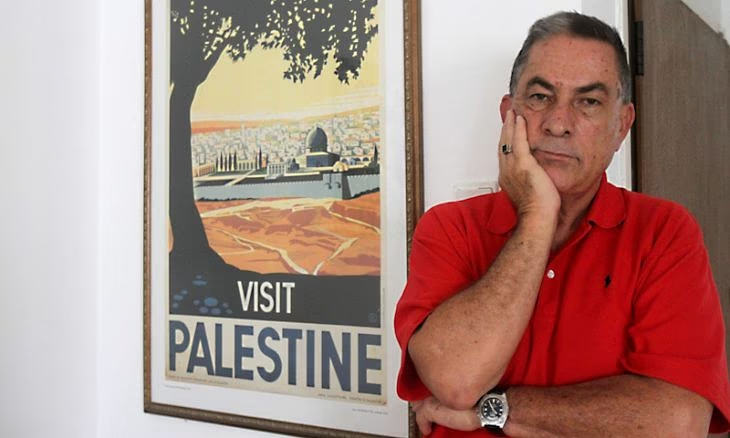
Media and political circles in Egypt witnessed widespread controversy after presenter Ihab Qassem hosted Israeli journalist Gideon Levy in a phone intervention. During the interview, which was broadcast on Al-Qahera Wal Nas channel, Levy made provocative statements regarding Egyptian sovereignty over the Sinai Peninsula, which sparked angry reactions at both popular and official levels.
The Israeli journalist claimed in his speech that the general view in Israel does not treat Sinai as a territory belonging to the Egyptian state, but rather views it as mere beach areas not subject to specific sovereignty. Levy indicated that this perception prevails among many who see it as a tourist destination without considering its political or geographical identity linked to Egypt.
In the context of his personal experiences, Levy revealed that he visited Egypt about 12 times, in addition to dozens of trips he made to Sinai over many years. However, he confirmed that he stopped these visits a long time ago, justifying this by the change in the general atmosphere that made the presence of Israelis in cities such as Cairo and Alexandria uncomfortable.
In response to these developments, the Egyptian Syndicate of Journalists issued an urgent decision to ban presenter Ihab Qassem from appearing on any media outlet until further notice. This punitive action came after monitoring serious violations of the media code of honor and the professional code of conduct that govern journalistic and broadcasting work in the country.
The Syndicate clarified in its official statement that the presenter allowed the Israeli guest to narrate egregious historical and political fallacies without showing any objection or professional review of those claims. The Syndicate considered that the management of the dialogue lacked national and professional responsibility, especially with regard to issues affecting Egyptian national sovereignty.
For its part, the Al-Qahera Wal Nas channel management quickly took precautionary measures by deleting the recorded segment with the Israeli journalist from all its digital platforms and its main screen. The channel confirmed that this decision comes in response to the observations it received and out of keenness to adhere to the professional standards adopted by the institution.
The channel stressed in an explanatory statement that a comprehensive review will be conducted of all aspects related to the preparation of this segment and its display mechanisms to ensure that such transgressions are not repeated. It indicated that its media message will always remain biased towards the conscience of Egyptian society and its deeply rooted national values, expressing its appreciation for the audience's interaction with the content provided.
This incident reflects the sensitivity of media dealings with Israeli figures within Egypt, especially in light of current regional tensions. It also highlights the role of professional syndicates in monitoring media performance and ensuring that national constants are not compromised under the pretext of freedom of expression or journalistic scoop.
Israelis do not view the Sinai Peninsula as part of Egypt, but merely beaches somewhere, as if it were land belonging to no one.

Share your opinion
Controversy in Egypt after statements by an Israeli journalist about Sinai and a decision to ban a presenter from appearing