






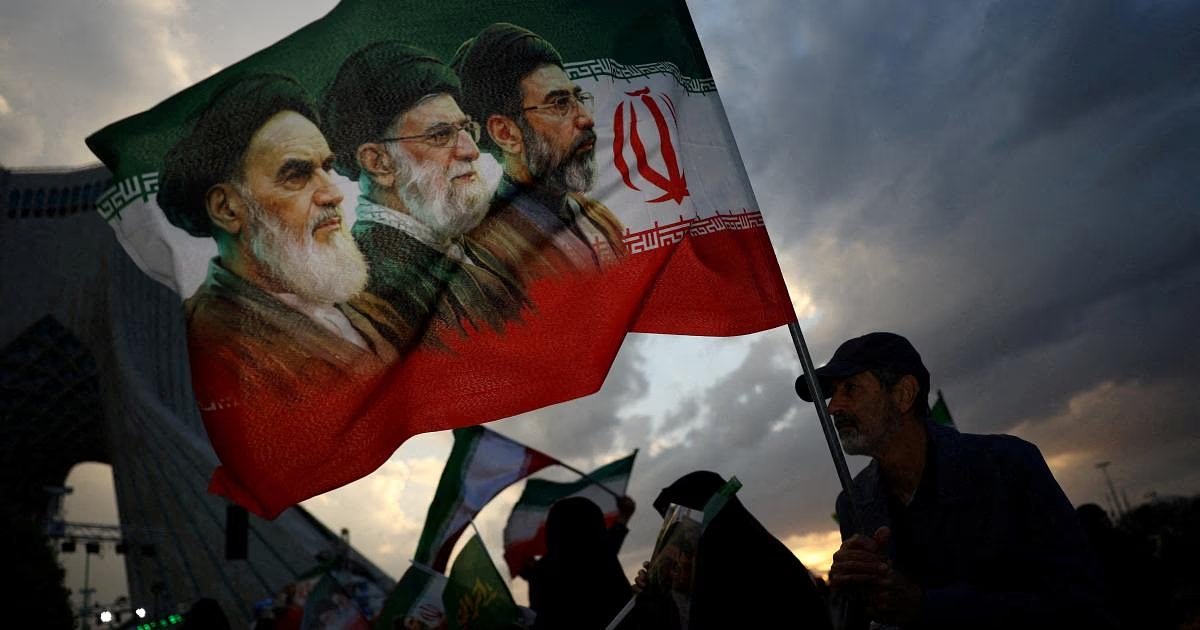
The Iranian Revolutionary Guard announced today, Sunday, the launch of the third phase of its military operations against what it described as 'American aggression,' with simultaneous strikes targeting US military facilities and bases in Qatar, Kuwait, Bahrain, and the Sultanate of Oman. Tehran affirmed that these attacks are a legitimate defense in response to the targeting of its territory, noting that its target bank included command and control centers and logistical support.
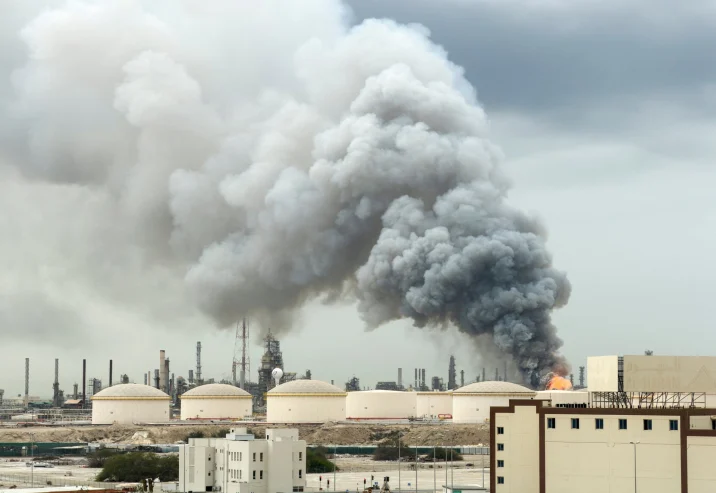
In detail of the attacks, the Iranian military statement revealed that Al Udeid Air Base in Qatar was targeted with a barrage of ballistic missiles, leading to the destruction of a fighter jet maintenance center and vital command facilities. Sources indicated that Qatari air defenses managed to intercept two waves of air attacks, while the Ministry of Interior raised the country's security alert level to the maximum in anticipation of new missile waves.
In the Sultanate of Oman, Iranian strikes hit the strategic Duqm Port, where the Revolutionary Guard's air force targeted fuel supply platforms and logistical support centers belonging to US aircraft carriers. Tehran considered these Omani facilities to be an essential part of the US military support system facilitating operations against Iranian territory, making them a legitimate target in this round of conflict.
On the Kuwaiti side, the General Staff of the Army announced that air defense systems intercepted hostile targets that penetrated national airspace, affirming full readiness to protect the state's sovereignty. This coincided with the Iranian army's announcement of using drones to attack 'Patriot' systems, ammunition depots, and radar sites belonging to the US army stationed in Kuwait, in an unprecedented field escalation.
As for Bahrain, the Ministry of Interior called on citizens and residents to remain calm and head to shelters and safe places immediately upon the sounding of sirens. Field reports indicated the targeting of radar sites and communication systems belonging to the US Fifth Fleet stationed in Manama, while a state of cautious anticipation prevails in the Bahraini street awaiting official statements regarding the extent of the damage caused by the attack.
In parallel with the ground shelling, the Revolutionary Guard announced the closure of the Strait of Hormuz 'until further notice,' confirming the targeting of a second commercial vessel on the pretext of violating navigation regulations. This decision puts global trade and energy supplies at risk, especially after Iranian assurances that any American attempt to forcibly open the waterway will be met with a decisive and comprehensive military response throughout the region.
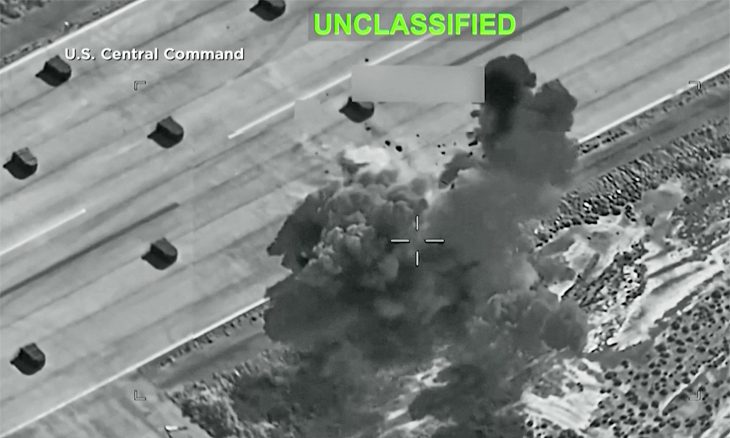
For its part, the US Central Command 'CENTCOM' had earlier announced the execution of one of its largest military operations, targeting approximately 140 sites inside Iran. The airstrikes included missile and drone storage facilities, complex communication networks, and coastal surveillance radars in the Bushehr, Bandar Abbas, and Qeshm Island areas, in response to a previous Iranian attack on a Cypriot container ship.
Sources reported that the third wave of US strikes raised the total number of targets hit inside Iran to over 300 targets in just one week. The US Secretary of Defense stated that Tehran made a 'bad choice' by targeting international navigation, emphasizing that the United States will continue to work to protect its interests and allies in the region, regardless of the cost of military escalation.
Observers believe that this military explosion nullifies the memorandum of understanding signed between Washington and Tehran last June through Qatari and Pakistani mediation. It appears that the region has slipped into an open confrontation that transcends traditional rules of engagement, with US bases in Gulf states becoming direct targets for Iranian missiles, putting regional security and global stability at stake.
Amidst this escalating tension, relevant authorities in the region continue to assess the damage caused by the missile and drone barrages, while international concerns grow about these mutual strikes turning into a comprehensive regional war. World capitals are awaiting the outcome of the coming hours, amidst timid international calls for de-escalation at a time when the language of weapons seems to prevail between Tehran and Washington.
US interventions to open an illegal passage in the Strait of Hormuz are the main reason for insecurity in the region.
Share your opinion
Comprehensive Regional Escalation: Iran Bombs American Bases in Gulf States in Response to 'CENTCOM' Strikes