







Washington's Message
Washington – Said Arikat – 7/13/2026
The confrontation between the United States and Iran entered a new phase of escalation after US President Donald Trump announced on Monday the re-imposition of what he described as an "Iranian blockade," preventing Iranian ships from entering or leaving the Arabian Gulf, while keeping the Strait of Hormuz open to other commercial and international vessels.
Trump said in a post on the "Truth Social" platform that the Strait of Hormuz "is open and will remain open, whether Iran agrees or not," stressing that all countries will enjoy the right to "fair and open use" of the strait, with the exception of Iran.
The US President announced that the United States will, from now on, become the "guardian of the Strait of Hormuz," indicating that his administration will impose a 20 percent fee on shipments crossing the strait, as compensation for the costs incurred by Washington to provide security and protect navigation in this vital maritime passage.
In a phone interview with "Fox News," Trump went further, announcing that the United States "is managing the Strait of Hormuz," and that US forces will protect and perhaps operate it, adding that his country "should receive financial compensation" for this mission.
These American statements came hours after military tension escalated in the Gulf, where Iran reiterated that it had closed the Strait of Hormuz following a new wave of American strikes targeting Iranian military sites, leading to increased fears about the security of one of the world's most important maritime passages, through which about a fifth of global oil trade passes.
The Central Command of Khatam al-Anbiya Headquarters, the highest joint military command body in Iran, responded by rejecting any American role in managing the strait, stressing that any attempt by US forces to cross without Iran's approval "will be met with a strong response." It also warned regional countries against cooperating with the United States, considering any support for Washington as an "act of war against Iran," and threatening that any expansion of the war would affect all countries in the region.
In contrast, Germany called for an immediate return to negotiations and a resumption of the ceasefire, expressing concern about Iranian attacks on commercial vessels and emphasizing the need to ensure freedom of navigation and the resumption of international shipping traffic through the Strait of Hormuz.
This escalation comes at a time when the interim agreement signed by Washington and Tehran last month faces an unprecedented crisis. The agreement aimed to reopen the strait and halt military operations, in exchange for resuming negotiations for sixty days to reach a broader understanding on the nuclear file and security issues. However, the renewed military strikes and mutual escalation practically threaten the collapse of the agreement and a return to the logic of open confrontation.
Trump's statements reflect a remarkable shift in the American approach, as the discussion is no longer limited to protecting international navigation but has extended to declaring a direct American role in managing one of the world's most sensitive maritime passages, which Tehran views as an infringement on its sovereignty and the security balances in the Gulf.
While Washington insists on its right to protect international trade, Iran considers the Strait of Hormuz to be within its immediate security environment, and that any attempt to impose external management on it represents a crossing of red lines, which portends further military and political escalation in a region considered a major artery for global energy markets.
Trump's statements reveal a shift in American policy from protecting freedom of navigation to attempting to impose a new strategic reality in the Gulf, granting Washington a permanent role in managing the Strait of Hormuz. If these statements are translated into practical measures, they will raise broad legal and political questions about the legitimacy of one country managing an international waterway, and will also increase the likelihood of military friction with Iran, which considers the strait part of its national security. This means that any miscalculation could turn the current crisis into a regional confrontation that is difficult to contain.
The imposition of American fees on ships crossing the Strait of Hormuz also represents an unprecedented precedent in the management of international maritime passages, as it links the provision of security with the imposition of a financial charge on global trade. This step, if implemented, could provoke objections from major trading powers and energy-importing countries, which may see it as an infringement on the principle of freedom of navigation. It could also push many countries to seek alternative security arrangements or enhance multilateral maritime cooperation away from the unilateral dominance of any international power.
Perhaps the most dangerous aspect of the current escalation is that it comes at a time when the interim agreement between Washington and Tehran provided a window, however limited, for resuming the diplomatic path. Today, however, the exchange of military strikes, the re-closure of the Strait of Hormuz, and mutual threats are all indications that the logic of military deterrence has once again taken precedence over the logic of negotiation. If this path continues, the region may enter a long phase of crisis management instead of resolution, with direct implications for energy markets, the global economy, and Gulf security.
Share your opinion
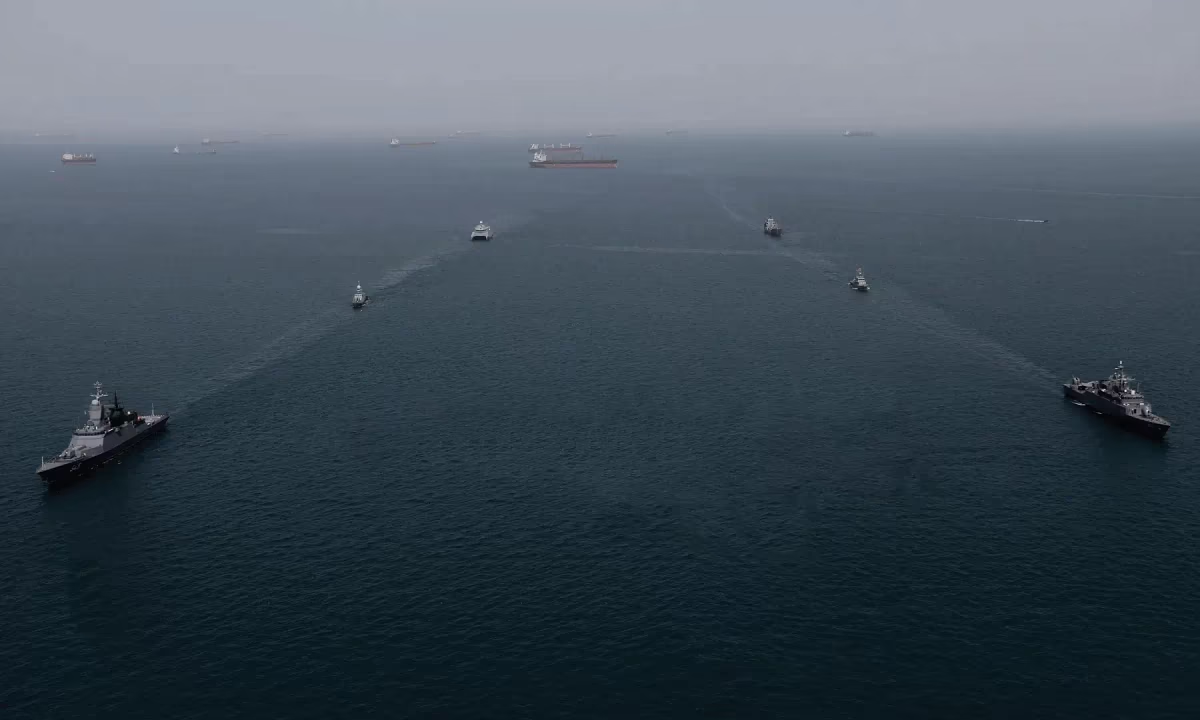
Trump announces naval blockade on Iran, vows to manage Strait of Hormuz, Tehran threatens decisive response