






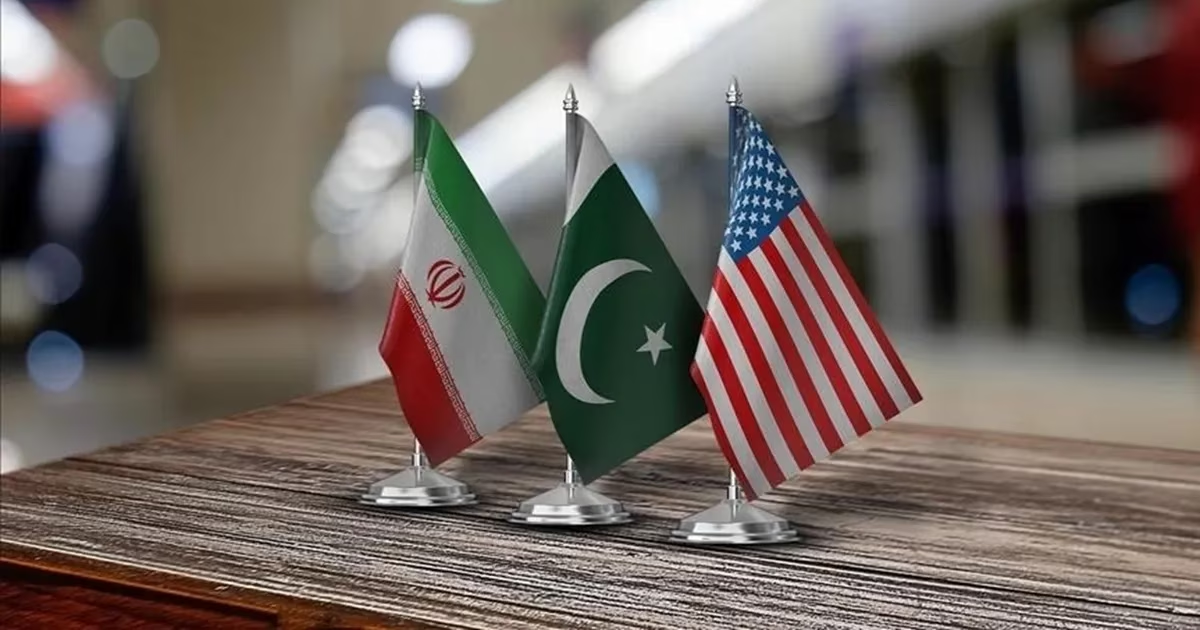
US President Donald Trump announced that the long confrontation with Iran has come to an end, confirming that Washington has succeeded in extracting a pledge from Tehran not to seek to acquire a nuclear weapon. This surprising announcement came just hours after Trump backed down from a decision to launch widespread military strikes against Iranian targets on Thursday night, indicating a dramatic shift in the course of the crisis.
Trump clarified that the anticipated agreement achieves the primary demand of the United States, which is to ensure that Iran does not develop military nuclear capabilities, considering this clause to be the cornerstone of the new understanding. The US President indicated that intensive diplomatic efforts have led to the drafting of a comprehensive memorandum of understanding that will be signed very soon.
In a related context, media sources revealed American military and logistical movements indicating the seriousness of the arrangements, as four military transport aircraft departed for Europe. These movements are believed to be related to the potential participation of Vice President J.D. Vance in an official signing ceremony that may be hosted in Geneva, Switzerland, in the coming days.
Informed diplomatic sources reported that the final text of the memorandum has been agreed upon between Washington and Tehran, awaiting final ratification by the supreme leaders in both countries. While the American side expressed great optimism, reports indicate that the final decision in Tehran still requires the approval of Supreme Leader Mojtaba Khamenei to enter into official effect.
The agreement, dubbed the 'Islamabad Agreement' in appreciation of the mediating role played by Pakistan alongside Qatar, includes provisions for the immediate reopening of the Strait of Hormuz to international navigation. The agreement also stipulates the cancellation of any additional transit fees and the restoration of normal shipping levels that prevailed before the recent tensions within one month.
In exchange for these navigation facilities, Iran will receive a gradual easing of the harsh US sanctions imposed on it for years. These facilities include granting Tehran temporary exemptions for 60 days, allowing it to resume oil exports to global markets, providing immediate economic relief for the Iranian treasury.
On the ground, the memorandum of understanding stipulates an extension of the current ceasefire for an additional 60 days, with its scope expanded to fully include the Lebanese front. This period aims to provide a calm atmosphere for in-depth and detailed negotiations on Iran's nuclear program and the outstanding regional issues between the two parties.
Regarding the nuclear file, the initial agreement includes a clause to address Iran's enriched uranium stockpile, with the implementation of major practical steps conditional on reaching a second, more detailed agreement. Trump has approved a proposal to reduce high enrichment levels within Iranian facilities, provided that the process takes place under strict supervision by UN inspectors.
As for financial sanctions, diplomats clarified that the easing of restrictions will not be linked to an automatic timeline, but will depend on Iran's commitment to implementing its pledges. Washington will monitor what it described as Iranian 'good faith' during subsequent rounds of negotiations to determine the pace of lifting remaining sanctions on vital sectors.
The fate of billions of frozen Iranian funds abroad remains a point of contention, with Tehran insisting on recovering a portion of them immediately upon initial signing. In contrast, the US administration prefers to link the release of these funds to successive payments reflecting the level of progress made in implementing the provisions of the 'Islamabad Agreement'.
For its part, the Iranian Foreign Ministry maintained caution, with its spokesperson, Esmaeil Baghaei, describing circulating news of a final agreement as media 'speculation'. Baghaei affirmed that his country has not yet finalized its position, noting that continuous adjustments in American positions have hindered reaching a stable formula throughout the negotiation stages.
Despite this Iranian caution, Qatari and Pakistani mediation continues to finalize the draft, a large part of which has already been completed. International circles are awaiting this weekend to see if the signing ceremony will actually take place, which could mark the beginning of a new era in the complex international relations in the Middle East.
The confrontation with Iran has come to an end, and we have received a clear pledge not to seek to acquire a nuclear weapon.
Share your opinion
Trump declares 'end of war' with Iran: Details of the anticipated 'Islamabad Agreement' and the fate of sanctions