






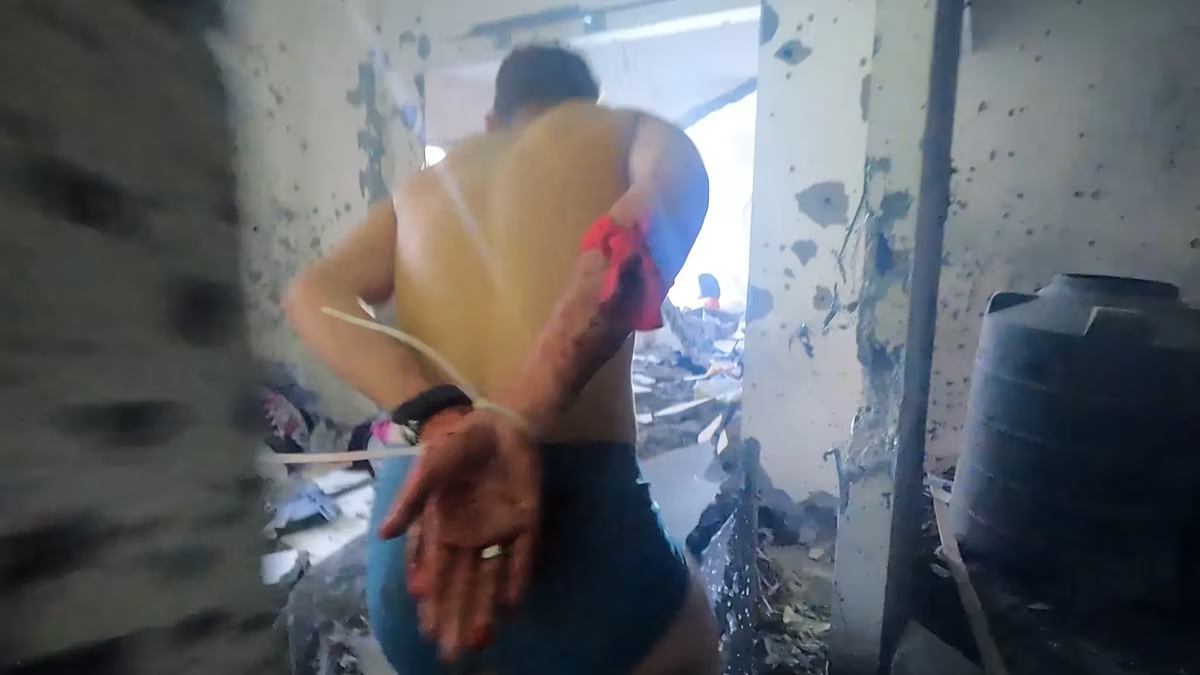
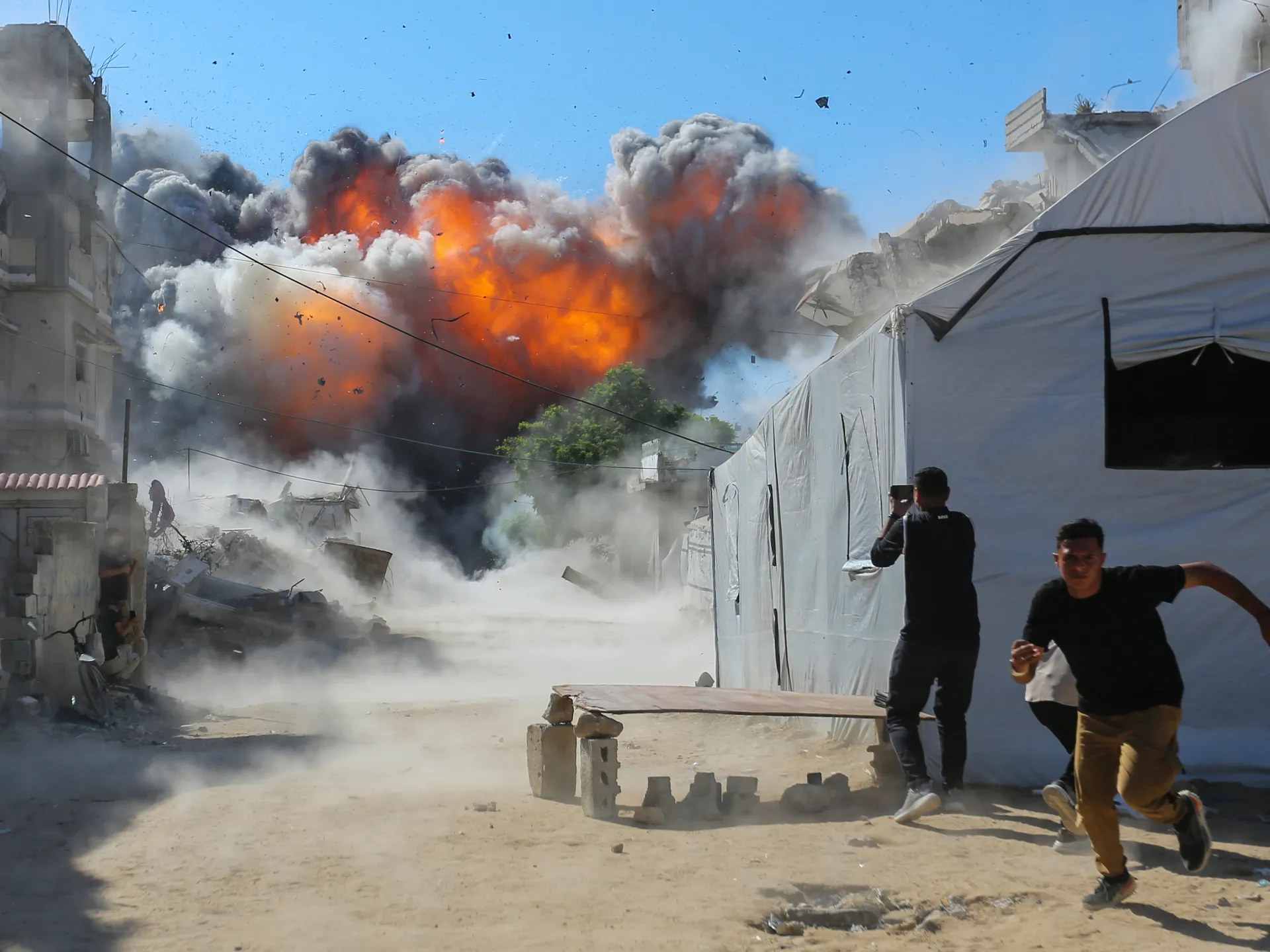
Recently, terms such as 'Mosquito Protocol' and 'Wasp Protocol' have emerged in Israeli military circles, describing a systematic policy based on using Palestinian civilians and prisoners as human shields. These practices, which have escalated during the ongoing war on the Gaza Strip, aim to reduce the risks faced by soldiers when storming buildings and sites suspected of containing explosive devices or ambushes.
The 'Mosquito Protocol' primarily relies on forcing Palestinian detainees to enter facilities and homes before the invading forces to verify that they are free of dangers. Human rights reports have documented that this practice has become common among military factions, where civilians are pushed into potential death zones to avoid casualties among Israeli soldiers.
The 'Wasp Protocol,' on the other hand, refers to a more complex operation involving the transfer of prisoners from the West Bank to the Gaza Strip specifically to carry out dangerous reconnaissance missions. These prisoners are forced to wear Israeli military uniforms and have cameras attached to their heads, in an attempt to camouflage and use them as field intelligence tools under threat of arms.
The Israeli organization 'Breaking the Silence' revealed that resorting to these methods came as a 'practical' alternative after the increasing losses among dogs trained to detect explosives. Former soldiers reported that military leaders did not consider any ethical implications for these practices, but rather considered them an effective means of preserving the lives of soldiers at the expense of Palestinian lives.
In a painful testimony, Palestinian Ayman Abu Hamdan recounted details of his detention in the summer of 2024, where he was forced to wear military clothes and search booby-trapped houses in the northern Gaza Strip. Abu Hamdan confirmed that the soldiers threatened him with direct killing if he refused to comply with orders, highlighting the extent of psychological and physical terror practiced against detainees.
For its part, journalistic sources quoted Israeli officers' confessions confirming that orders to use human shields were sometimes issued by high-level military commanders. These sources indicated that some units would assign at least one Palestinian to each military squad to ensure 'clearing' paths before the troops advanced.
The Hebrew newspaper 'Haaretz' documented the incident of a Palestinian prisoner's death in the southern Gaza Strip after a commander in the 'Nahal' Brigade used him to search a building. Investigations reveal that soldiers call these victims 'Shawish,' a derogatory term reflecting the cheapening of their lives in exchange for the safety of the attacking forces.
International media platforms also circulated photos and videos showing Palestinian prisoners, some injured, tied with ropes and forcibly pushed towards destroyed homes. These scenes clearly show surveillance cameras mounted on their bodies to transmit live and direct footage of what is happening inside the buildings to the army's control devices.
In a related context, the head of the Prisoners' Affairs and Ex-Prisoners' Commission affirmed that these practices often aim to eliminate prisoners after their missions are completed to bury the facts with them. He described this policy as an unprecedented moral decline and a full-fledged war crime that requires urgent international intervention to hold those responsible accountable.
Reports indicate that the use of children and adolescents was not excluded from these protocols, with sources quoting Israeli soldiers using teenagers as young as 16 as human shields. These youths are placed in direct confrontation with death without any regard for international laws protecting minors in armed conflicts.
Legally, the use of civilians as human shields constitutes a blatant violation of the Fourth Geneva Convention and the Rome Statute of the International Criminal Court. These actions are considered war crimes that do not expire, as international laws prohibit endangering the lives of civilians or prisoners for military objectives.
In conclusion, the testimonies of survivors and investigative reports leaked from within the Israeli army remain conclusive evidence of the 'Mosquito and Wasp' methodology. As the war continues, human rights demands are escalating for an independent international investigation into these violations, which redefine the concept of crimes against humanity in the modern era.
You have no other choice, do it or we will kill you.

Share your opinion
'Mosquito and Hornet' Protocols: How the Occupation Turns Palestinians into Human Shields in Gaza?