







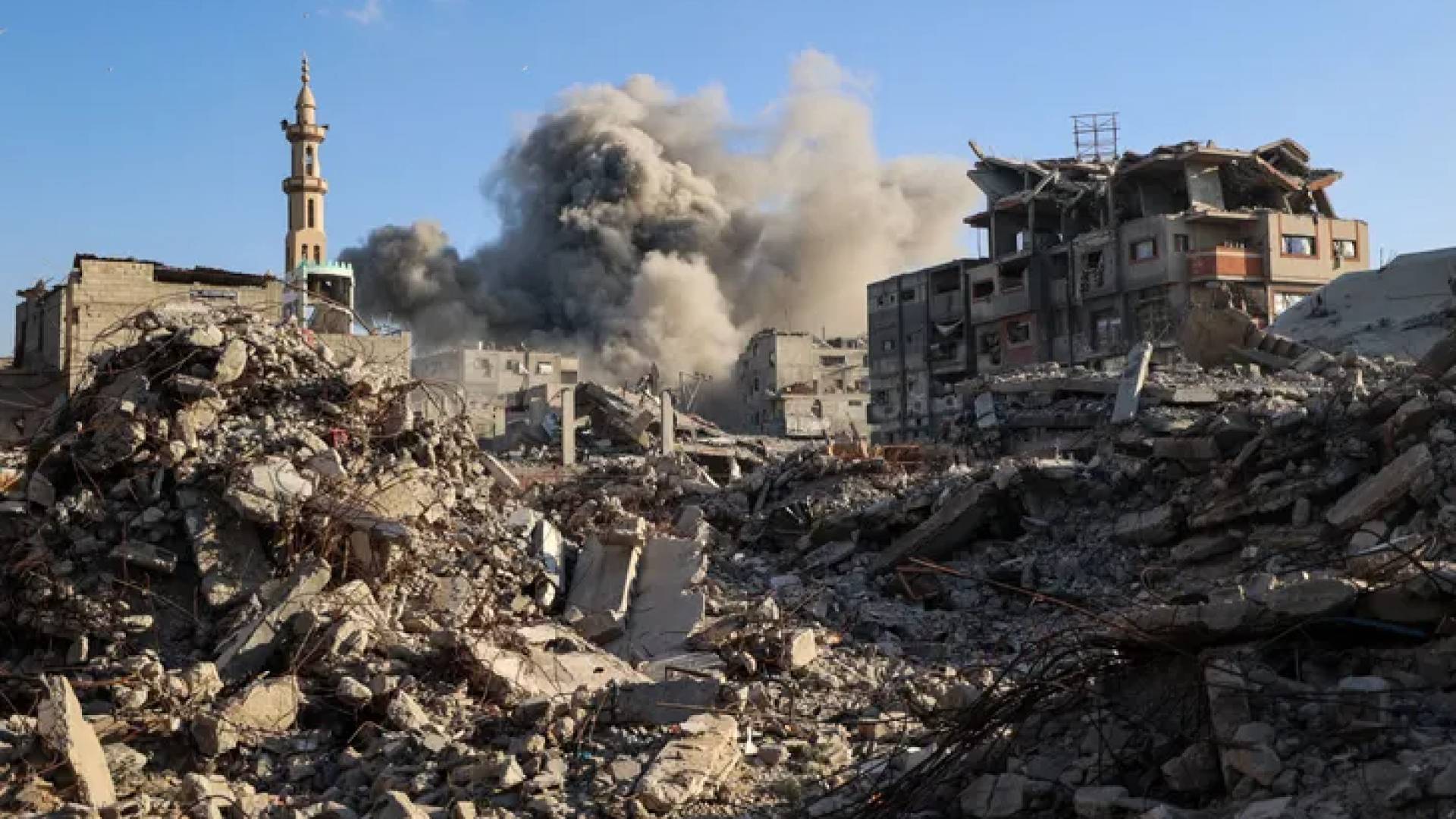
The media and political arena in Israel is witnessing an escalating wave of incitement against European countries, against the backdrop of stances condemning the Israeli attack on Freedom Flotilla activists. These tensions come at a time when international accusations against Tel Aviv of committing war crimes are increasing, coinciding with the continuation of the genocidal war that has entered its second year in the besieged Gaza Strip.
Israeli writer Sharon Luxemburg, in an article published in 'Maariv' newspaper, criticized the European view of the occupation army's behavior towards international solidarity activists. She considered that large parts of Europe adopt double standards and evaluate events completely differently when it comes to Israel, ignoring other humanitarian disasters in the world.
Sources indicated that European media coverage of the Freedom Flotilla event took long hours of live broadcasting and intensive political discussions. The writer believes that this attention reflects an unjustified focus on Israel, as if global crises of wars, refugees, and famines have ended, and only the pursuit of Israeli actions remains.
Luxemburg mentioned that this phenomenon is not new, but rather a continuous approach adopted by major international media institutions in their daily coverage. Despite Israel's population not exceeding ten million, it receives extensive news coverage not even granted to the most powerful superpowers in the current international system.
Sources explained that every Israeli move, whether military, political, or even cultural, is placed under the microscope of intense European scrutiny. This constant spotlight creates continuous international pressure on decision-makers in Tel Aviv and contributes to shaping a global public opinion hostile to Israeli policies in the occupied Palestinian territories.
The matter was not limited to political and military aspects but extended to cultural and entertainment events that are supposed to be far from conflicts. The European Song Contest 'Eurovision' has, in recent years, turned into a sharp political confrontation arena, witnessing widespread calls for boycott and massive popular protests against Israeli participation.
The writer spoke about the absurdity of a singing competition turning into a complex geopolitical discussion merely because of the presence of an Israeli representative. She considered that this reflects the extremely complex relationship between Europe, Jews, and the Middle East, making any media content related to Israel provoke waves of global anger and controversy.
Sources confirmed that videos coming from Gaza or occupied Jerusalem turn within minutes into digital battlegrounds for opinions and accusations. This rapid spread of information contributes to strengthening the Palestinian narrative and exposes the practices of the occupation to the European public, which has become more sensitive to human rights issues.
Israeli circles believe that Israel is no longer treated as an ordinary state but has become a global symbol used by political parties to define their identity and agendas. Among the radical European left, taking an anti-Israel stance has become an integral part of the political identity and principles promoted by these activists.
In contrast, the European right tries to portray Israel as a symbol of the struggle against what they describe as 'radical Islam,' placing the Hebrew state at the heart of internal European tug-of-war. In both cases, the preoccupation with Israel remains dominant in public discussions, exceeding its geographical size or demographic impact in the Middle East region.
This Israeli incitement reflects a state of internal anxiety regarding the erosion of international legitimacy and increasing isolation in the old continent. The accusations directed at Europe of bias are primarily aimed at diverting attention from the essence of the conflict, which is the continuous occupation and the siege of the Gaza Strip, which has led to an unprecedented humanitarian catastrophe.
Reports indicate that Israeli elites fear that European popular sympathy with the Palestinian cause will turn into political decisions and economic sanctions. Therefore, media discourse is employed to attack European journalistic institutions and accuse them of exaggerating events related to the Palestinian-Israeli conflict at the expense of other global issues.
It seems that Israel's attempts to escape international responsibility clash with the reality of media coverage that transmits the details of the genocidal war moment by moment. The scenes coming from Gaza leave no room for doubt about the extent of human suffering, making it difficult for European governments to ignore the pressures of their peoples demanding justice.
In conclusion, the Freedom Flotilla and the international reactions that followed remain a testament to the depth of the gap between the Israeli narrative and the reality seen by the world. While Tel Aviv tries to portray itself as a victim of media coverage, the international community sees its actions as a blatant violation of international laws and norms that require accountability.
Israel is no longer just a state; it is a global symbol used by all political parties in the world to define themselves, far exceeding the size of a small state in the Middle East.
Share your opinion
Escalating Israeli Incitement Against European Stances Following the Targeting of the Freedom Flotilla