






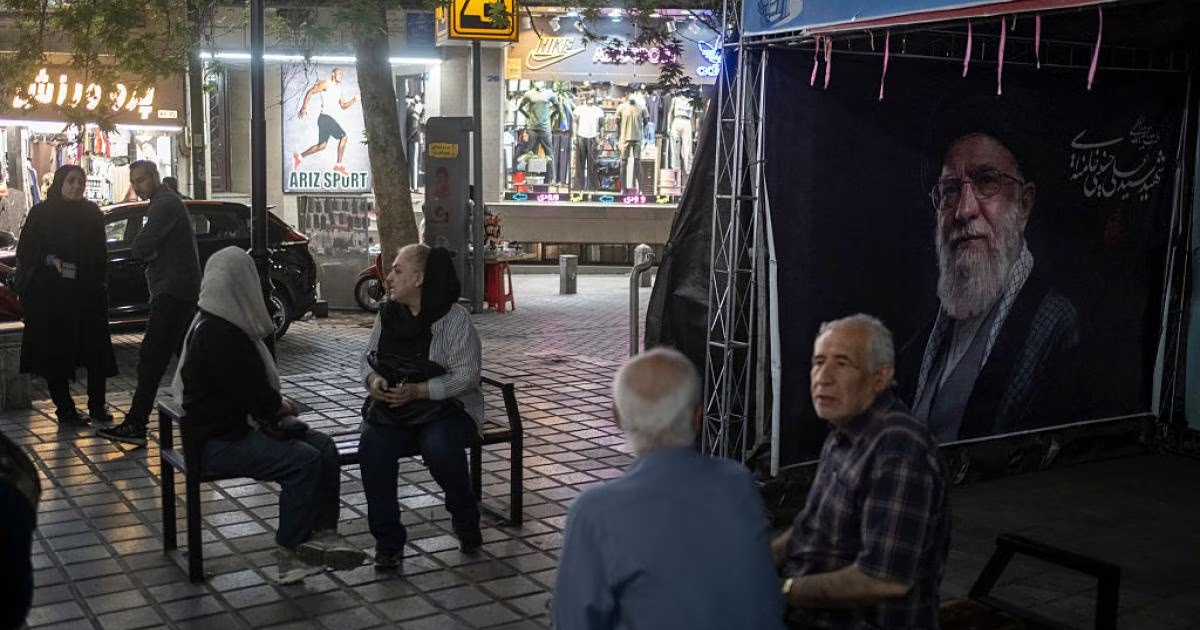
International diplomatic efforts are accelerating to reach a final draft agreement between the United States and Iran, aimed at ending the state of military tension in the Middle East region. Official sources reported significant progress in the ongoing talks, amidst cautious optimism about the possibility of reaching understandings that would end the outstanding crises between the two parties.
In statements made from the Indian capital, New Delhi, US Secretary of State Marco Rubio revealed the possibility of an official announcement regarding the agreement later today, Sunday. Rubio indicated that the next few hours might bring positive news to the world, especially concerning the safety of navigation in the strategic Strait of Hormuz.
Diplomatic sources confirmed that the negotiations, sponsored by Pakistan, primarily focus on technical issues related to Iran's nuclear file and securing waterways. The American side clarified that its objectives at this stage were clear, centered on ensuring global trade freedom and stopping maritime threats.
The US administration accused Tehran of hostile behavior in the region, including planting naval mines and detaining civilian ships as political hostages. Washington considered that any upcoming agreement must ensure a complete cessation of these practices to guarantee the stability of global energy markets.
In contrast, press sources quoted a high-ranking Iranian official confirming that Tehran has not yet agreed to hand over its stockpile of highly enriched uranium. The source clarified that the nuclear file, with its complex details, is not part of the preliminary agreement currently being worked on, but will be deferred to later stages.
The Iranian side stressed that the issue of shipping the uranium stockpile out of the country has not yet been resolved, and that current negotiations are focused on de-escalation on the ground. Observers believe that this stance reflects Tehran's desire to retain strong leverage before entering into negotiations for a comprehensive final agreement.
Reports from Washington indicate that the proposed agreement will allow commercial vessels to pass freely through the Strait of Hormuz without paying any additional transit fees. The proposal also includes a 60-day extension of the ceasefire, giving the parties an opportunity to catch their breath and build mutual trust.
Under these understandings, Iran will be able to resume selling its oil in global markets more freely, in exchange for a gradual easing of economic sanctions imposed on it. This clause aims to alleviate living pressures within Iran and prevent an economic collapse that could lead to widespread social unrest.
US President Donald Trump had previously stated that a large part of a memorandum of understanding aimed at achieving peace with Iran had been negotiated. Trump affirmed that his administration seeks to avoid involvement in open military conflicts that do not achieve clear strategic objectives for the United States.
Political analysts believe that both parties, American and Iranian, are currently looking for political exits that save face and spare them the high cost of war. Washington does not wish to deplete its resources in a long-term military deployment, while Tehran seeks to lift the economic blockade that has stifled its budget.
Experts believe that the continuation of the conflict without a political horizon will lead to a decline in the image of the United States as a power capable of resolving disputes in the region. At the same time, Iran realizes that the devastation of war could cost it hundreds of billions of dollars for reconstruction, which it cannot afford given the freezing of its assets.
Analytical readings indicate that most of the provisions put forward in the current agreement are not entirely new, but rather a repetition of points discussed in the previous nuclear agreement. The main debate now revolves around the permissible enrichment ratios and the mechanisms of international oversight over sensitive Iranian nuclear facilities.
President Trump seeks to market this agreement as a major 'political victory' for his administration, even if the amendments to the old agreement are limited and not fundamental. Resuming navigation in the Strait of Hormuz and opening diplomatic channels serve the electoral and political agenda of the White House at this stage.
Despite optimism about the imminent signing, there are still fears of negotiations faltering at the last minute due to outstanding technical issues. The world remains in anticipation of the official announcement that could change the shape of political and economic balances throughout the Middle East region.
I believe there is a possibility that the world may receive good news in the next few hours regarding the Strait of Hormuz.

Share your opinion
Washington announces agreement with Tehran approaching to open Strait of Hormuz and ease sanctions