





Abdullah Al-Zaghari: What the flotilla activists were subjected to is a limited part of the violations that Palestinian prisoners are subjected to daily inside Israeli prisons. Hilmi Al-Araj: This behavior expresses unprecedented public sadism that challenges humanity and public opinion and amounts to a war crime that calls for international prosecution and accountability. Dr. Hussein Al-Deek: The way the solidarity activists were dealt with and what accompanied it constitutes a blow to Israel's image and reveals an exclusionary tendency that does not distinguish between Palestinians and foreigners. Yasser Manna: These practices summarize the nature of what Israel is going through in the aftermath of its war on Gaza, revealing the image of a state that relies on the logic of force and violence. Nizar Nazzal: The media and psychological dimensions are present in the scene, as Israel realizes the importance of its image among global public opinion to market "strength and decisiveness." Dr. Tamara Haddad: What happened with the "Fleet of Steadfastness" activists reveals Israel's endeavor to establish a new equation based on "psychological and media deterrence" for solidarity activists. Ramallah - Exclusive to "Al-Quds" - The repercussions of the abuse of the "Fleet of Steadfastness" activists, who were in solidarity with the Gaza Strip, continue, after their ships were intercepted days ago in international waters and they were detained by Israeli occupation forces, in a scene documented in the presence of Israeli National Security Minister Itamar Ben Gvir, which brought renewed attention to the nature of Israeli policy towards international solidarity activists with the Gaza Strip, and to the underlying motives behind this behavior, which observers link to an attempt to impose a new deterrence equation that goes beyond the security dimension to the media and political dimensions. Officials, human rights activists, specialists, writers, political analysts, and university professors explain in separate interviews with "Al-Quds" that this Israeli behavior is based on multi-directional messages, most notably deterring any future attempts to break the siege imposed on Gaza, strengthening the internal Israeli discourse based on showing strength and rigidity, in addition to employing scenes of humiliation as a tool to influence public opinion, in the context of a escalating conflict over image and narrative before the international community. According to officials, human rights activists, specialists, writers, analysts, and university professors, these scenes, published by Ben Gvir on his "X" account, contributed to expanding the wave of official and popular criticism of Israel, and prompted a number of countries to take protest stances, including summoning ambassadors, in addition to increasing pressure within human rights and academic circles. They confirm that the continuation of these policies may lead to counterproductive results, represented by strengthening solidarity campaigns with Palestinians, expanding the scope of boycott and political pressure, as well as opening the door to potential legal avenues at the international level, which deepens Israel's isolation and increases the cost of its political and security practices. Challenging Human, Ethical, and Legal Values The head of the Prisoners' Club, Abdullah Al-Zaghari, explains that what the "Fleet of Steadfastness" activists were subjected to, including arrest and control of their ships in international waters, and then their abuse in the presence and participation of Israeli National Security Minister Itamar Ben Gvir, reflects the nature of the policies pursued by the Israeli occupation system towards anyone who supports the Palestinian cause or seeks to break the siege imposed on the Gaza Strip, considering that what happened represents a continuation of the occupation's challenge to all human, ethical, and legal values. Al-Zaghari believes that targeting international solidarity activists cannot be read as individual behavior or an isolated transgression, but rather comes within the framework of a political approach adopted by an extremist right-wing government that seeks to break the will of anyone who raises their voice in solidarity with Palestinians or demands an end to the war on Gaza. Al-Zaghari considers that Ben Gvir's presence and direct supervision of scenes of humiliation and abuse of solidarity activists carry clear political implications, and reflect the level of degradation that the Israeli system has reached in its dealings with voices supporting Palestinian rights. A Limited Part of What Palestinian Prisoners Are Subjected To Al-Zaghari confirms that what the "Fleet of Steadfastness" activists were subjected to represents only a limited part of the violations that Palestinian prisoners are subjected to daily inside Israeli prisons, pointing out that detainees live tragic conditions, including physical assaults, severe beatings, electric shocks, starvation policies, and deprivation of treatment, in addition to solitary confinement, sexual violence, and continuous violations against prisoners. Al-Zaghari points out that these policies have resulted in the martyrdom of more than 100 Palestinian detainees over more than two and a half years, considering that the absence of effective international measures has encouraged the occupation to continue its policies against detainees, and given it wider scope to challenge international laws and the global human rights system without real accountability. Issuing Statements Is No Longer Enough Al-Zaghari believes that the wave of protests against Ben Gvir's actions expresses an important moral stance and a growing rejection of Israeli practices, but it does not rise to the level of the required political action. Al-Zaghari stresses that merely summoning Israeli ambassadors or issuing condemnation statements is no longer enough, calling on countries that believe in international law, justice, and human rights to take practical steps on the ground, including withdrawing ambassadors, halting trade and military relations, and imposing various forms of boycott and political pressure. Al-Zaghari confirms that continuing to rely on verbal rejection will keep international positions "ink on paper," and will give the occupation more ability to continue its policies towards Palestinians and those in solidarity with them, as well as prisoners who face some of the harshest forms of suffering inside Israeli detention centers, amid international silence that is still below the required level of responsibility. Violation of International Law and the Law of the Sea Hilmi Al-Araj, Director General of the Freedoms and Civil Rights Defense Center "Hurriyat," considers that what the "Fleet of Steadfastness" activists, in solidarity with the Gaza Strip, were subjected to, including detention and abuse by Israeli occupation forces, and in the presence of Israeli National Security Minister Itamar Ben Gvir, constitutes a complex violation of international law, starting from a "piracy operation" in international waters, leading to arbitrary detention and cruel and degrading treatment that the solidarity activists were subjected to after their ships were seized. Al-Araj explains that intercepting ships in international waters and kidnapping activists who were on a solidarity mission to break the siege on the Gaza Strip represents, from a legal point of view, a blatant violation of international law and the law of the sea, pointing out that the Israeli occupation forces did not only detain them, but also subjected them to humiliating treatment characterized by cruelty and degradation, by painfully tying them up and publishing group photos of them handcuffed, their hands behind their backs and their heads bowed, in scenes that carry clear indications of intentional psychological and physical harm. Systematic Torture as a War Crime That Does Not Prescribe Al-Araj points out that this behavior, according to his legal interpretation, amounts to systematic torture classified as a war crime that does not prescribe, explaining that those who were subjected to these violations have the legal right to prosecute those responsible for them before international justice. Al-Araj stresses that this behavior expresses unprecedented public sadism that challenges humanity and public opinion, and elevates the act of torture to a war crime that calls for prosecution and accountability before international justice. Arrogance and Sadism within the Occupation System Al-Araj considers that what happened reflects "arrogance and sadism" within the occupation system, and a disregard for international humanitarian law, human rights, or even the positions of the countries whose nationalities the activists hold, especially European countries. Al-Araj points out that documenting scenes of abuse and publishing them publicly, including Ben Gvir appearing holding the Israeli flag during the "humiliation party" that took place to the tune of the official Israeli anthem, and then publishing video clips via the "X" platform accompanied by the phrase "Welcome to Israel," reflects a mentality based on challenging the international community and global public opinion, and sending a direct message to all those in solidarity with Palestinians that any attempt to break the siege will be met with humiliation and repression. Shedding Light on What Is Happening to Palestinian Prisoners Al-Araj believes that what foreign activists were subjected to sheds light on the extent of violations that Palestinian prisoners are subjected to daily inside Israeli prisons, asking: If this is the fate of solidarity activists who hold the nationalities of major countries capable of influencing, then what does the suffering of Palestinian prisoners inside detention centers look like? In his comment on international reactions, Al-Araj describes the condemnation statements and the summoning of Israeli ambassadors by some countries, as happened in a number of Western countries, as an important but insufficient step, warning that the absence of deterrent measures will encourage Israel to repeat these practices. Al-Araj calls for more decisive stances that include real pressure measures to ensure the protection of foreign citizens and human rights, and put an end to sadistic behavior and continuous encroachment on human dignity and international law. Accumulated Strategic Loss for Israel Dr. Hussein Al-Deek, Professor of Political Science and specialist in American affairs and international relations, explains that what happened to the "Fleet of Steadfastness" activists constitutes, in its essence, an accumulated strategic loss for Israel at the near, medium, and long levels, pointing out that the scenes published through social media, especially those in which Israeli National Security Minister Itamar Ben Gvir appeared, reflect a fascist mind and sadistic behavior in dealing with unarmed civilian solidarity activists. Al-Deek points out that the way the activists were dealt with, and the accompanying publication and documentation of scenes of humiliation, do not limit their repercussions to the humanitarian or human rights dimension, but extend to constitute a blow to Israel's international image, and reveal an exclusionary tendency that does not distinguish between Palestinians and foreign solidarity activists, even if they are from allied Western countries. Triggering Angry International Reactions Al-Deek points out that the widespread global spread of these videos triggered popular and official reactions, represented by the summoning of Israeli ambassadors in a number of European countries, including Belgium, Portugal, Spain, and Italy, in addition to protest stances that also emerged in European political circles. Al-Deek believes that these developments reflect a diplomatic explosion in Israel's foreign relations, especially with Western Europe and Canada, which historically formed essential pillars of its political and diplomatic support since 1948. Al-Deek considers that what is happening today represents a gradual shift in the European political mood, placing Israel before a new stage of redefining its position in the international system, after it had presented itself as a "liberal democratic oasis" in the Middle East. Al-Deek explains that these practices reinforce the image of a state that practices violence and racial discrimination against unarmed civilian activists, some of whom hold European nationalities, which means that the attacks extend to their countries as well. Al-Deek believes that the attempts of the Israeli Ministry of Foreign Affairs and Israeli political leaders to contain the repercussions of the crisis will not achieve tangible results, in light of the escalating international anger and the widening scope of criticism. The Crisis of Division within Israeli Society Al-Deek points out that what is happening reflects the depth of division within Israeli society about the nature and identity of the state, between a nationalist religious right-wing current that seeks to transform Israel into a theocratic state based on discrimination and separation, led by Itamar Ben Gvir and Bezalel Smotrich, and other currents that still adhere to the secular liberal model established by David Ben-Gurion. Al-Deek confirms that recent developments may push towards more escalating international positions than mere condemnation or summoning ambassadors, to include broader legal possibilities, such as international arrest warrants, and filing cases before the International Criminal Court and the European Court of Human Rights, based on the European nationalities of the affected parties, which may open the door to an unprecedented stage of international pressure on Israel, far exceeding the limits of traditional symbolic measures. Repression as a Public and Intentional Political Message Writer and researcher specializing in Israeli affairs, Yasser Manna, confirms that the scenes of abuse that the "Fleet of Steadfastness" activists were subjected to in the presence of Israeli National Security Minister Itamar Ben Gvir reflect a rapid transformation within the Israeli establishment, represented by the transition from using repression as a security measure to employing it as a public and intentional political message, targeting both the Israeli interior and abroad. Manna explains that Ben Gvir's presence during the abuse operations was not a protocol detail or a fleeting measure, but rather carried clear political implications, as it gave the scene a "showy and vengeful" character aimed at addressing extremist right-wing circles within Israel, by conveying a message that any attempt to show solidarity with the Gaza Strip or break the siege will be met with humiliation and punishment, and not merely detention or traditional security measures. Israel's Reliance on the Logic of Force and Violence Manna points out that these practices summarize, in an intensive way, the nature of the stage Israel is going through in the aftermath of the war on Gaza, which has become more clearly revealing the image of a state that relies on the logic of force and violence in dealing with civilians and solidarity activists, and seeks to prosecute anyone who tries to expose violations or challenge the siege imposed on the Strip. Manna believes that the escalating global wave of protests against Israel expresses the widening gap between the official Israeli narrative and what the world sees directly through images and scenes coming from Gaza, stressing that dealing with the "Fleet of Steadfastness" activists was not the only cause of global anger, but rather added a new link to an accumulated scene of killing, starvation, siege, and destruction. Manna points out that this is reflected in the erosion of Israel's moral and political image, the escalation of pressure on Western governments, and the expansion of boycott campaigns and protests within universities, unions, and the international community. Consolidating Internal and External Israeli Messages Nizar Nazzal, a researcher specializing in Israeli affairs and conflict issues, believes that the scenes of abuse that the "Fleet of Steadfastness" activists were subjected to by Israeli occupation forces, in the presence of Israeli National Security Minister Itamar Ben Gvir, reflect multiple political and media dimensions, going beyond direct security dealings with civilian solidarity activists, to reveal internal and external messages that the current Israeli government seeks to consolidate, but which have clashed with counterproductive repercussions that may deepen Israel's isolation and increase international pressure on it. Nazzal points out that reading the scene begins with the internal Israeli dimension, where Ben Gvir seeks to establish his image before his extremist right-wing audience as the person most capable of imposing what he wants and showing firmness inside and outside Israeli prisons, in light of the ongoing competition within the right-wing camp. Ben Gvir Tries to Strengthen His Image on the Right Nazzal believes that Itamar Ben Gvir's public appearance and his support for such scenes are inseparable from attempts to strengthen his position as one of the symbols of the far-right, especially with the shifts that have occurred in the nature of Israeli discourse and policies towards Palestinians and prisoners. An Israeli Deterrent Message Not to Allow the Breaking of the Siege on Gaza At the Palestinian, Arab, and international levels, Nazzal points out that the violent treatment of activists who have a solidarity and humanitarian character aims to send a clear deterrent message that Israel will not allow any attempt to break the siege or challenge its policies, even if it is within a symbolic or media framework. Nazzal believes that these policies may have counterproductive results, as the activists, due to the scenes of abuse, have become a humanitarian and media issue that attracts increasing international sympathy, thus exacerbating criticism directed at Israel. The Image of "Strength and Decisiveness" Nazzal confirms that the media and psychological dimensions are strongly present in the scene, as Israel realizes the importance of its image in the battle for global public opinion, which explains Ben Gvir's presence in such contexts with the aim of marketing an image of "strength and decisiveness." However, the harsh scenes, according to Nazzal, especially those that include insults or violence, place Israel in the face of increasing accusations of violating human rights and democratic values, which accelerates the erosion of its image, especially among Western youth, union, and academic sectors. Nazzal points out that these developments may lead to the expansion of boycott campaigns and the escalation of European and Western popular pressure, as well as strengthening the global movement in support of Palestinians, and opening the door to more legal claims in international forums, including before the International Criminal Court. Despite this, Nazzal believes that the Israeli government is betting that waves of popular protest in countries around the world, despite their expansion, will not quickly turn into actual political sanctions from major powers, which drives it to continue its hardline approach. Clear Political Dimensions Political writer and researcher Dr. Tamara Haddad believes that the scenes of abuse that the "Fleet of Steadfastness" activists were subjected to by Israeli occupation forces, and in the presence of Israeli National Security Minister Itamar Ben Gvir, not only caused a wave of international anger due to the nature of the violence used against civilian solidarity activists, but also revealed political and security messages that the current Israeli government seeks to convey in the context of its dealings with any international movement in solidarity with Palestinians or seeking to break the siege imposed on the Gaza Strip. According to Haddad, Ben Gvir's presence in the scene of abuse was not a protocol measure or a fleeting presence, but rather carried clear political dimensions, as he sought to show rigidity and strengthen his image before his extremist right-wing base, especially in light of internal political calculations and preparations related to the upcoming electoral competition within Israel. Haddad confirms that this step came within Ben Gvir's attempts to consolidate his influence within the Israeli political scene, by openly boasting about policies of strength and rigidity, alongside other right-wing figures such as Israeli Finance Minister Bezalel Smotrich and Israeli Prime Minister Benjamin Netanyahu. The Equation of Psychological and Media Deterrence for Solidarity Activists Haddad explains that what happened with the "Fleet of Steadfastness" activists reveals an Israeli endeavor to establish a new equation based on "psychological and media deterrence" for solidarity activists, aimed at sending a direct message to international solidarity movements that any attempt to reach Gaza or break the siege will come at a high cost, whether through detention, abuse, or media defamation. The Stage of Boasting about Violations Haddad considers that this shift reflects the transition of official Israeli discourse from the stage of justifying violations to the stage of openly boasting about them. Haddad points out that these practices, in turn, express increasing Israeli concern about the growing global popular solidarity with Palestinians, especially in light of the escalation of boycott campaigns, protests in Western universities, and growing criticism of the Israeli government within European and American societies. Haddad points out that international reactions, whether through demonstrations or condemnations issued by human rights and political institutions, reflected a remarkable shift in the international mood, as the Israeli narrative no longer enjoys the same acceptance it previously enjoyed in a number of Western capitals. Israel Faces Increasing Moral and Political Pressure Haddad believes that these developments place Israel before increasing moral and political pressure, especially with the escalation of criticism of figures such as Ben Gvir, who have begun to be presented in international media as a symbol of extremism and racism within the Israeli government, which may negatively affect Israel's political and economic relations with some Western countries, and open the door to demands for reviewing cooperation with it or imposing sanctions on it. Haddad believes that the "Fleet of Steadfastness" incident went beyond being a limited field confrontation, and turned into a battle over Israel's image in the world, suggesting that these scenes may lead to counterproductive results for the Israeli government, by expanding the circle of sympathy with Palestinians, and giving solidarity movements greater momentum, especially among youth, universities, and human rights organizations, which may lead to the repetition of similar experiences to break the siege in the future, even from countries that were traditionally classified as friendly to Israel.

PALESTINE
Sun 24 May 2026 5:16 pm - Jerusalem Time
Abuse of Flotilla Activists.. A New Deterrent Policy to Market "Strength and Decisiveness"

Tags
MORE FROM PALESTINE
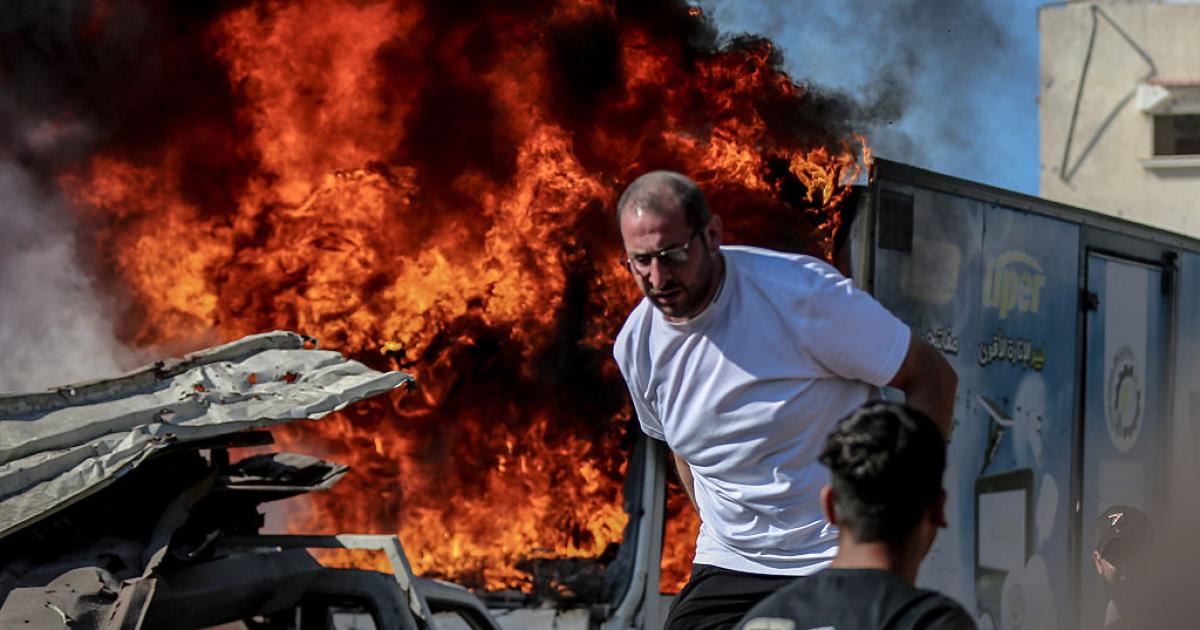
Five martyrs, including a child, in a series of Israeli raids and demolition operations in the Gaza Strip

Washington and Tehran... mutual threats and accelerating developments bring back the specter of confrontation

The Passing of the Father Emir Sheikh Hamad bin Khalifa Al Thani: The Journey of a Leader Who Laid the Foundations of Modern Qatar's Renaissance

Share your opinion
Abuse of Flotilla Activists.. A New Deterrent Policy to Market "Strength and Decisiveness"