







Displaced families in the Gaza Strip are living a tragic reality beyond endurance, as makeshift landfills have become forced neighbors to their dilapidated tents. Hajjah Ni'ma, one of the displaced, recounts her daily suffering in examining the bodies of her grandchildren, which have been ravaged by skin diseases due to insects and foul odors emanating from accumulated garbage, affirming that life under these conditions has become harder than death itself.
The crisis is exacerbated by the continued Israeli occupation preventing waste disposal trucks from reaching the main landfills located in border areas, such as the 'Sofa', 'Al-Fakhari', and 'Juhur al-Dik' landfills. This prohibition has crammed nearly two million people into very narrow spaces lacking the most basic public hygiene requirements, turning shelters into hotbeds of epidemics.
Local estimates indicate that the volume of accumulated waste in various governorates has reached approximately one million tons, distributed among more than 23 makeshift landfills amidst the displaced persons' tents. Mohammed Musleh, head of the Al-Maghazi municipality, confirmed that the occupation deliberately obstructs the transfer of these massive quantities, making environmental control almost impossible given the available resources.
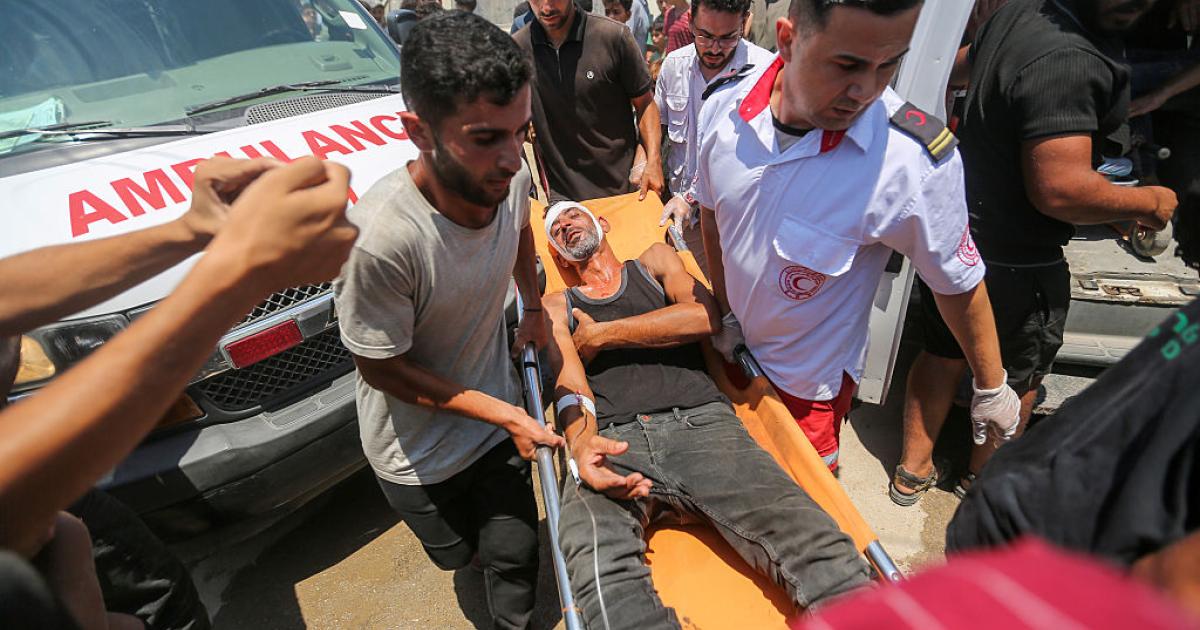
On the medical front, field clinics are sounding the alarm with an unprecedented increase in the number of people infected with contagious skin diseases. Dr. Halima Abu Sharbin reported that she receives at least 150 cases daily suffering from skin inflammations and sores, noting that overcrowding and garbage accumulation are the main reasons behind this rapid outbreak.
The suffering is not limited to skin diseases but also extends to digestive system diseases and acute gastroenteritis due to widespread environmental pollution. Displaced persons complain of the spread of lice, scabies, and rashes, in the absence of clean water and necessary cleaning materials to limit the transmission of infection among family members and adjacent tents.
Local sources confirm that governmental and municipal services have been almost completely paralyzed since the beginning of the aggression, and despite attempts at a partial return to work, the extent of the destruction remains an obstacle to any comprehensive cleaning operation. The occupation strictly prohibits the entry of heavy equipment and spare parts needed to repair dilapidated waste collection trucks.
For its part, the Union of Municipalities of the Gaza Strip warned that the sector produces approximately 2,000 tons of solid waste daily that does not find a way for proper treatment. This daily accumulation complicates the environmental scene and turns makeshift landfills into ticking time bombs threatening the public health of the besieged population in confined spaces.
In a related context, Saeed Al-Aklouk, an official in the Ministry of Health, warned of the danger of these makeshift landfills becoming a permanent reality, due to the direct threat they pose to the groundwater reservoir. He explained that toxic leachate has already begun to seep into the ground, threatening to contaminate the only remaining water source for the sector's residents.
On the international level, Alessandro Marakic, an official with the United Nations Development Programme, described the waste problem in Gaza as 'enormous and beyond local capabilities.' He pointed out that the three main landfill sites are located in areas that the occupation prohibits access to, making dealing with two million tons of untreated waste an international challenge.
The United Nations is working to develop emergency plans to deal with this disaster, including proposals to establish advanced treatment plants that can convert waste into electrical energy. However, these plans remain contingent on Israeli approval for the entry of necessary machinery and equipment to begin work on the ground, which the occupation has so far refused.
The continued accumulation of garbage among the displaced persons' tents is not just a visual disaster, but an existential threat that directly affects the lives of children, women, and the elderly. Flies and insects now cover everything, and foul odors penetrate the tents amidst high temperatures that accelerate the organic decomposition of waste.
Observers believe that the occupation's intransigence in preventing the entry of sanitation and waste collection equipment comes within the framework of a systematic policy of restriction on the sector's residents. This policy has led to the complete collapse of the environmental system, making the most basic human right, which is living in a clean environment, an elusive matter for Palestinians in Gaza.
In light of this bitter reality, the residents of the sector and municipal authorities demand the necessity of real international pressure to open corridors for environmental and humanitarian equipment. Delaying the treatment of the waste crisis means a slow death sentence for thousands of families ravaged by epidemics away from direct war machines.
In conclusion, the scene of accumulated waste remains a testament to the magnitude of the tragedy experienced by the Gaza Strip, where political and military crises intertwine with environmental and health disasters. While the world awaits political solutions, the children of Gaza continue their daily struggle with diseases and insects in an environment no longer suitable for human life.
Death has become easier than this life where waste and insects besiege us from all sides inside the displacement tents.

Share your opinion
Environmental Disaster in Gaza: A Million Tons of Waste Besieges Displaced Persons, Skin Diseases Ravage Children