







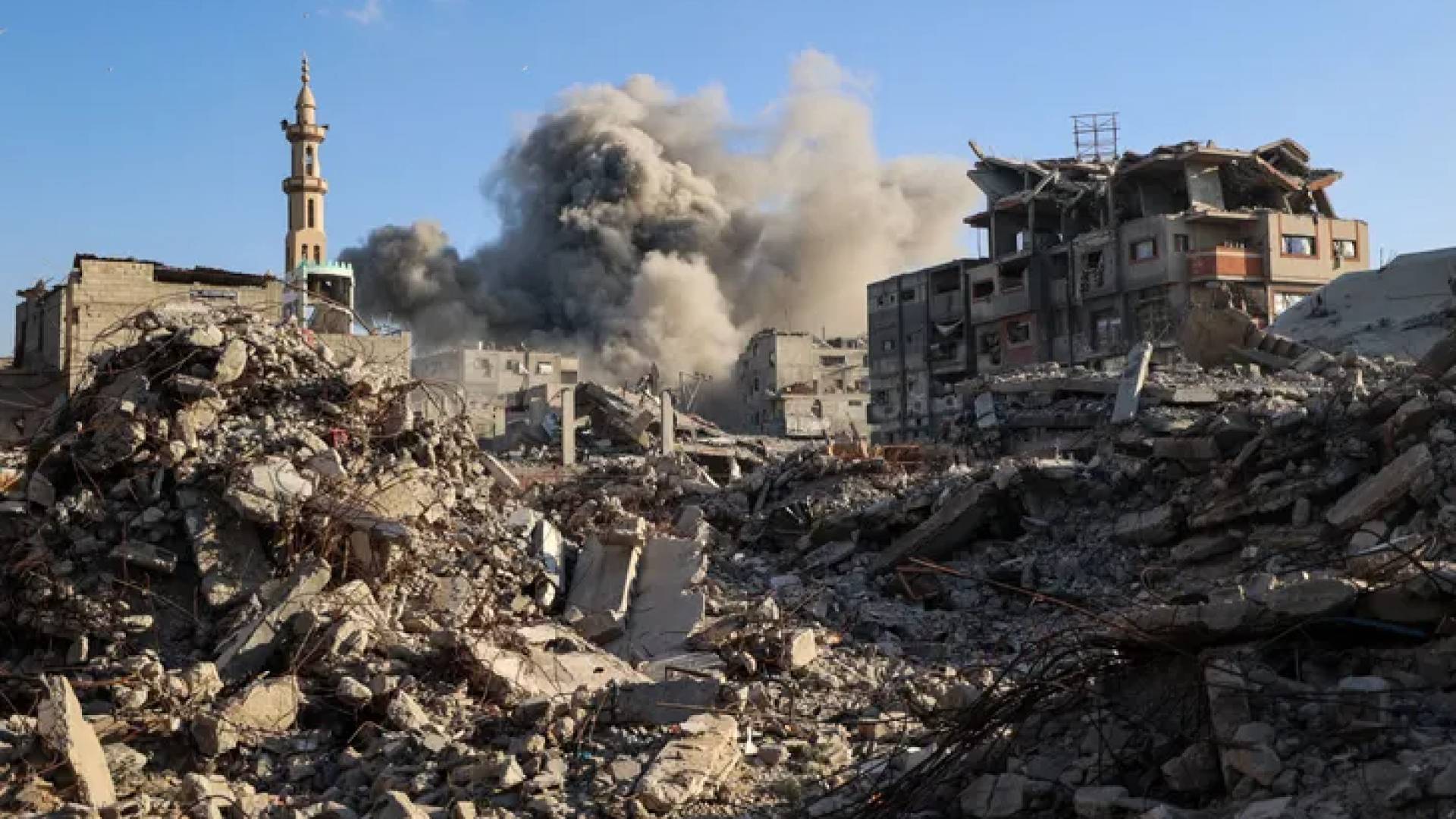
The tragedy of war in the Gaza Strip is no longer limited to the loss of lives or the destruction of homes; it has extended to leave deep scars on the faces and bodies of survivors. Sundus, a young woman not yet twenty years old, represents a stark example of this suffering, as missile shrapnel tore through her body and transformed her features into permanent scars. Today, Sundus lives in a displacement tent in Gaza City, relying on her crutch and remnants of hope to reclaim the life that the explosion stole from her.
Sundus's injuries go beyond visible wounds; she has lost her hearing and one of her eyes has been severely damaged, making communication with the outside world a heavy burden. Her mother bitterly recounts how her daughter spends her nights struggling with pain and severe itching from burns, sometimes reaching a point where she forcefully removes her bandages until her body bleeds again, escaping an unceasing agony.
In addition to physical pain, psychological suffering emerges as a threat to the remaining spirit of the wounded, as Sundus is haunted by harsh words from those around her, describing her as 'disfigured.' This cruel societal view drives her to cry alone inside her tent, preferring isolation to facing a society that shows no mercy for war scars that were never her choice.
In a related context, journalists who dedicated their lives to documenting the truth have not escaped this tragedy. Photographer Mohammed Al-Qahwaji found himself a victim of the very missiles whose effects he was photographing. Al-Qahwaji suffered multiple fractures in his upper and lower jaws, in addition to explosive wounds that covered his face and deprived him of his former features, making him afraid to look in the mirror and avoid seeing his new image.
Al-Qahwaji asserts that the scars left by the war are not just marks on the skin, but deep psychological wounds that make it difficult to return to a normal or professional life. For the injured in Gaza, losing their features means losing their personal identity and the ability to reintegrate into society, especially in the absence of specialized psychological rehabilitation centers.
Medically, health workers in the Gaza Strip are issuing repeated cries for help due to the increasing number of injured people who require complex and long-term reconstructive surgeries. Hospitals suffer from a severe and chronic shortage of surgical instruments and essential medical consumables needed to perform these operations, leaving hundreds of wounded on endless waiting lists, while their health conditions worsen day by day.
The bitter reality in Gaza indicates that the pain does not end when the shelling stops; rather, a new chapter begins with attempts to heal wounds and live with permanent disabilities. The stories of Sundus, Al-Qahwaji, and thousands of other injured individuals remain a testament to the brutality of war, which not only kills bodies but also seeks to disfigure souls and deprive victims of their right to live with dignity and peace.
I wish I could return to my normal life before the war... I can no longer bear people's stares and their harsh words.
Share your opinion
Scars That Years Cannot Erase.. Gaza's Injured Face the Tragedy of Disfigurement and Lack of Medical Resources