







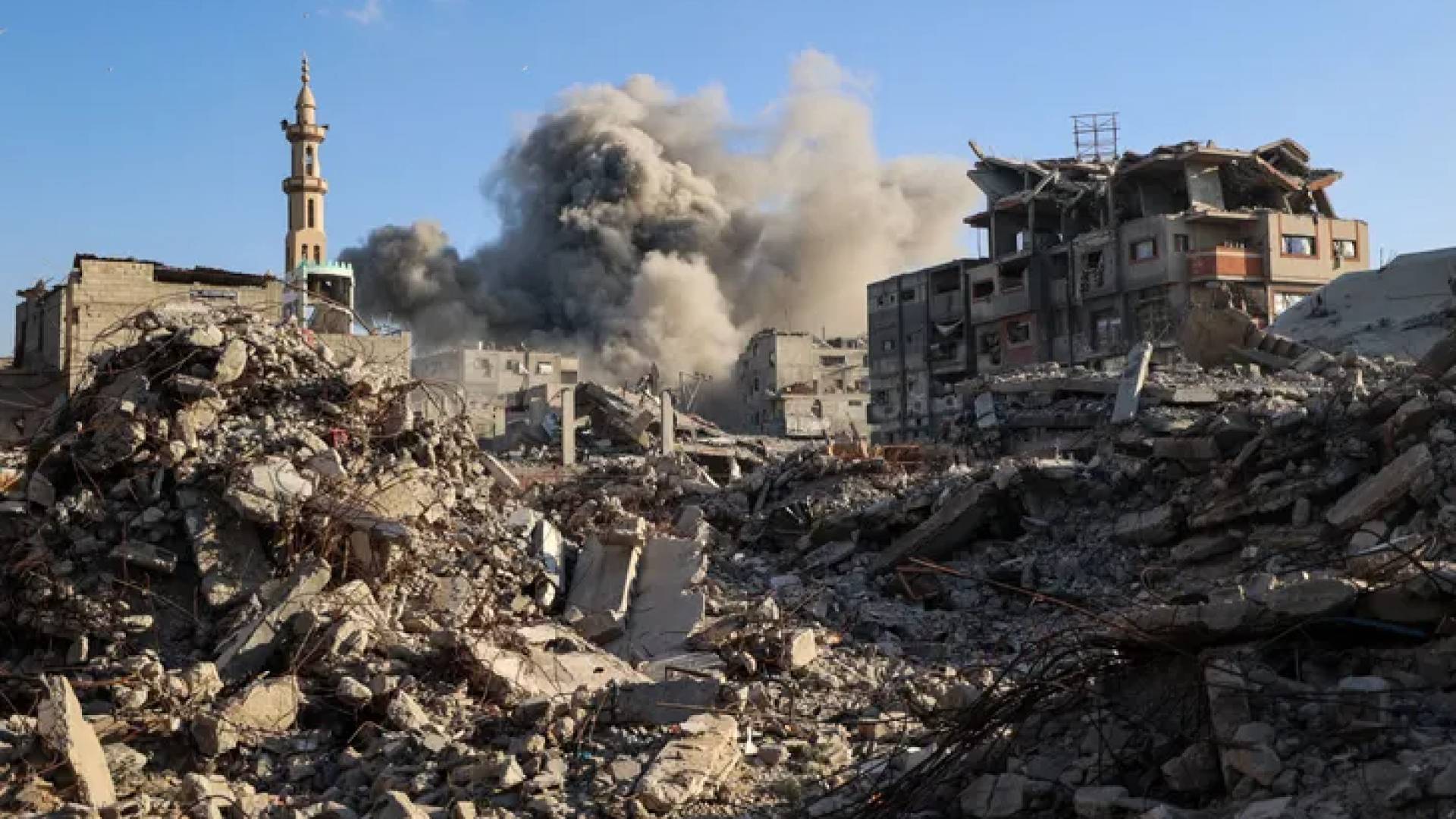
The memory of the painful Palestinian Nakba comes upon us, reopening the wounds of displacement and the uprooting of a people from their land. At the same time, it evokes the great moral legacy left by the world's great liberation leaders. Palestine has never been merely a border dispute or a contested geography; rather, it has become a moral compass and a criterion for the humanity of free people everywhere and at all times.
Great world figures formulated their positions on Palestine based on the principles of universal justice, affirming that Palestinian steadfastness represents the essence of human struggle against oppression. These historical testimonies serve as a beacon supporting the Palestinian right and confirming that this people is not alone in confronting the occupation machine, but rather relies on a global moral backing.
A decade before the great catastrophe occurred, the Indian leader Mahatma Gandhi laid the cornerstone for the moral vision rejecting settler colonialism in Palestine. In 1938, Gandhi issued his famous statement in which he affirmed that Palestine belongs to the Arabs just as England belongs to the English, rejecting any falsification of history.
Gandhi did not merely define historical ownership; he also expressed his strong opposition to imposing a Jewish presence on Arab land under the protection of arms or with the support of mandatory powers. He believed that rights are not acquired through political ambitions or brute force, but rather stem from the natural and historical presence of peoples on their land.
From the heart of the long suffering against the apartheid regime in South Africa, the voice of the international activist Nelson Mandela emerged as one of the strongest defenders of the Palestinian right. Mandela considered the Palestinian cause to be the central issue in the global struggle for dignity, and closely linked the fate of his people to that of the Palestinians.
Mandela's immortal quote, which still resonates in international forums today, declared that the freedom of his people in South Africa remains incomplete and unfinished as long as the Palestinians have not achieved their freedom. This connection was not merely a political slogan, but a deep conviction that justice is a single unit that cannot be divided under any circumstances.
Mandela believed that the walls of apartheid that fell in Pretoria must fall in Jerusalem, and that the struggle against racism is a unified global battle. Thanks to this stance, Palestine became a symbol of resistance against all forms of discrimination and oppression practiced by colonial powers in the modern era.
In the realm of sports and soft power, the global boxing legend Muhammad Ali Clay recorded a courageous historical stance from the heart of the United States of America. Clay did not fear the political consequences of his position; rather, he clearly and unequivocally declared his full support for the Palestinian struggle to reclaim the land and expel the Zionist invaders.
Clay spoke on behalf of minorities and Muslims in the West, considering that supporting Palestine is an integral part of his identity and creed, which rejects injustice in all its forms. He saw Palestinian resistance as a model to be emulated by all peoples seeking to wrest their freedom from the clutches of imperialist powers and settler occupation.
The convergence of figures of the stature of Gandhi, Mandela, and Clay in support of the Palestinian people reflects an undeniable truth that cannot be erased, no matter how long the occupation lasts. These testimonies confirm that the Nakba, despite its bitterness, did not succeed in isolating Palestine from the conscience of the free world, which sees it as the primary cause of justice.
Ultimately, Palestine remains the unerring compass in identifying the free, where its people derive their legitimacy from the justice of heaven and the support of honorable people in all parts of the earth. The legacy of these great figures remains alive in the memory of generations, to confirm that the dawn of freedom is inevitable, no matter the sacrifices.
Our freedom is incomplete without the freedom of the Palestinians.

Share your opinion
From Gandhi to Mandela and Clay.. How did the consciences of the world's free people unite around Palestine?