







The Israeli political arena is witnessing a flood of opinion polls as the presumed election date in October approaches, with these numbers transforming from mere statistical indicators into tools in the heated political battle. The divergent readings between research institutions and media outlets reveal a deep division in assessing the strength of the ruling coalition led by Benjamin Netanyahu versus the opposition camp.
In the latest data released by Maariv newspaper, the Likud party appears stable at 25 seats, while Naftali Bennett's alliance emerges as a parallel force with 24 seats. These figures indicate a tangible decline for the current coalition, which may not exceed 49 seats, giving the opposition an opportunity to form a government with a majority of 61 seats even without relying on Arab parties.
In contrast, Israel's Channel 14 presented a more optimistic picture for the right, granting Likud 35 seats and raising Netanyahu's camp's share to 65 seats. This stark disparity reflects the ideological gap between media platforms, as Channel 14 is known for its close ties to decision-making circles on the right and the settler community.
As for Channel 12, it charted a middle course, giving the opposition a numerical advantage of 69 seats if Arab parties are included, but it confirmed that this advantage dissipates when they are excluded. The biggest obstacle facing the opposition remains the refusal of its leaders to form a government that relies on Arab lists, which keeps the political crisis ongoing without a clear resolution.
In the context of searching for alternatives, the 'Zman Israel' website reviewed a scenario of a merger between Naftali Bennett, Gadi Eisenkot, and Yair Lapid, which could produce a massive parliamentary bloc of up to 38 seats. However, analysts believe that this merger changes the balance of power within the opposition itself more than it changes the overall ability to overthrow the right-wing coalition.
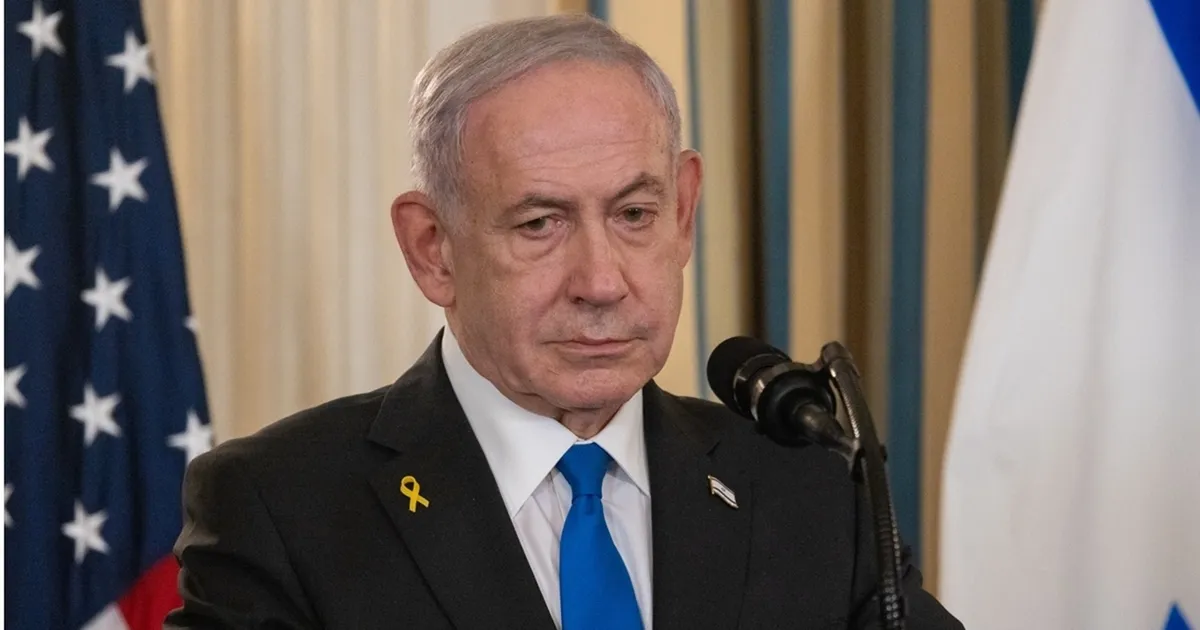
Despite the Likud's party decline in some polls, Benjamin Netanyahu still leads the 'suitability for prime minister' scene with comfortable margins over his rivals. In Channel 12's poll, Netanyahu surpassed Yair Lapid by 42% to 27%, indicating a real leadership crisis suffered by the opposition in finding a convincing alternative for the public.
Gadi Eisenkot's name stands out as one of the consistent winners in recent polls, showing continuous growth in his popularity, surpassing historical opposition leaders. This rise puts additional pressure on Yair Lapid, whose results have shown a decline to critical levels that could threaten his political future as an opposition leader.
The polls also reflect a clear tendency among the Israeli public towards security hawkishness, especially regarding the northern front with Lebanon. Sources reported that the vast majority of Israelis oppose a ceasefire with Hezbollah before strict security conditions are met, which reinforces the right's discourse in the current phase.
The identity of the polling agency directly affects the announced results, with institutions like 'Midgam' and 'Kantar' standing out as entities trying to maintain a professional commercial character. In contrast, Channel 14's polls, supervised by Shlomo Filber, raise widespread controversy due to his previous association with Netanyahu's inner circle before becoming a state witness.
The general mood in Israel is still affected by the repercussions of the ongoing war, with voters linking their political choices to the ability to achieve security. Results show that 62% of respondents in Maariv expect a direct confrontation with Iran soon, which enhances the presence of existential issues at the expense of economic and social files.
For religious parties, 'Shas' and 'United Torah Judaism' maintain relative stability in their voting power, making them the kingmakers in any future coalition. In contrast, religious Zionist parties face the risk of not crossing the electoral threshold in several polls, which could scatter the cards of the far-right in the upcoming elections.
Arab parties, represented by the Front, Arab for Change, and the United List, maintain representation ranging from 5 to 10 seats in various scenarios. Despite their numerical importance, these parties remain politically isolated due to the 'veto' imposed by centrist and right-wing opposition parties on partnering with them in government.
The discrepancy in poll results confirms that there is no single face for Israeli society at the moment, but rather visions shaped according to the screen the voter watches. This contradiction makes it difficult to predict the results of the upcoming elections, turning every new poll into fuel that ignites the conflict between competing camps.
In conclusion, it seems that Netanyahu is banking on time and his image as a 'security man' to overcome internal crises and the disintegration of his coalition in the polls. As the decisive months approach, these numbers will remain the primary driver for alliances and mergers that could completely reshape the Israeli political map before the ballot boxes open.
The Israeli opposition is searching for its leader as much as it is searching for a majority that enables it to govern, given Netanyahu's superiority in personal suitability indicators.




Share your opinion
The Battle of Numbers in Israel: Polls Draw Conflicting Maps for the Future of Netanyahu's Coalition