






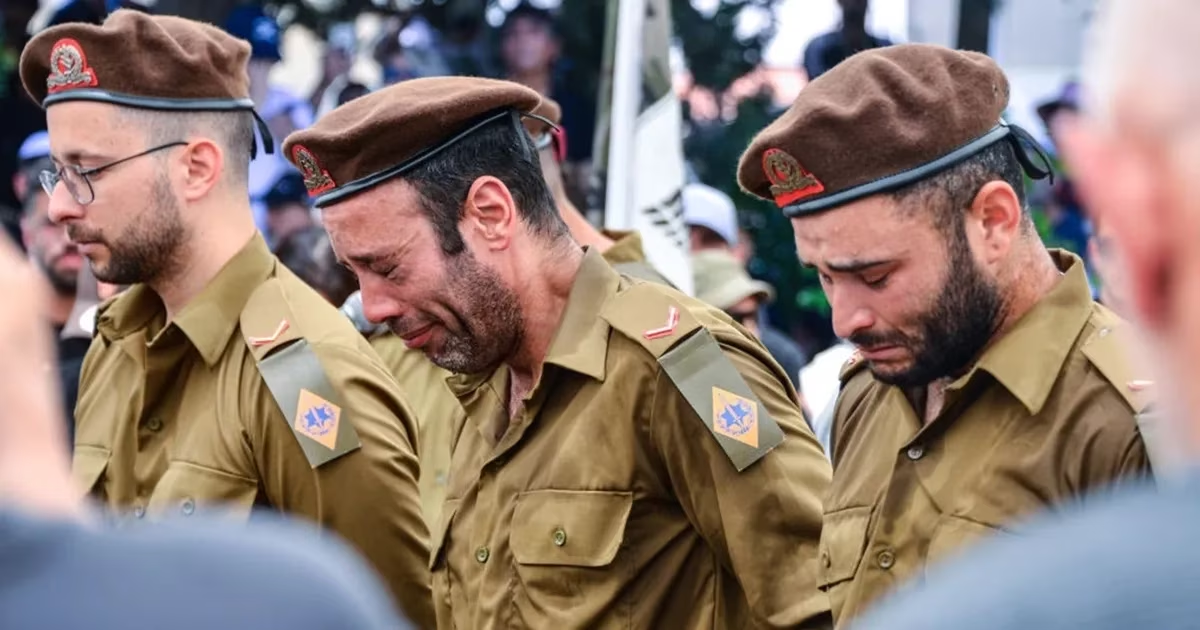
Day after day, the harsh repercussions of the ongoing wars waged by the Israeli occupation army are revealed, with the recent emergence of a crisis of deep psychological and neurological casualties affecting military ranks. Hebrew press sources reported an increasing number of soldiers, both in regular service and reserves, suffering from severe brain injuries that led to permanent disabilities that changed the course of their lives.
According to the reports, these soldiers face severe challenges in understanding social situations and making simple daily decisions, as well as severe sleep disturbances and memory loss. Specialists indicate that a large number of those injured do not initially realize the nature of their injuries, or are unable to link the deterioration of their health to the explosions they were exposed to on the battlefronts.
Professional estimates indicate that the scale of the phenomenon has become unprecedentedly widespread since October 7, 2023, with about 400 soldiers officially diagnosed with brain injuries. However, sources confirm that the actual number may reach about 24,000 injured, as many refrain from seeking treatment centers for fear of stigma or due to a lack of understanding of the symptoms.
Diagnosing these cases is a very complex process due to the overlap of symptoms of organic brain injuries with post-traumatic stress disorder. Sources quoted psychological expert Professor Alon Friedman as saying that a wide sector of soldiers suffered from a 'double trauma' combining organic brain damage and psychological collapse, which makes treatment and rehabilitation a major medical challenge.
In live testimonies reflecting the magnitude of the tragedy, families of injured soldiers recounted painful details about their sons turning into strangers after returning from Gaza. In the case of soldier Oz Okampo, who was injured in Khan Yunis, his mother described the situation as the family receiving a completely different person from the one they bid farewell before going to military service, noting his complete loss of independence.
As for soldier Udi Reches, 20 years old, he lost the ability to speak for many weeks after being injured in the Gaza battles at the end of last year. His family had to teach him basic skills again, starting from forming simple sentences to how to manage his daily affairs, after the left side of his face was shattered and his brain was damaged by a violent explosion.
Reports indicate that Reches's injury occurred during combing operations inside residential buildings in the Gaza Strip, where an explosion of a booby-trapped door caused him cut wounds and a violent concussion. His mother confirms that the rehabilitation journey seems 'arduous and endless', as her eldest son has turned into something like a small child who needs constant accompaniment even in the simplest movements.
For his part, Dr. Yaron Sahar, an official in the Israeli Ministry of Health, explained that brain injuries in the field often result from blast waves or shrapnel. These waves cause the brain to violently shake inside the skull, leading to the tearing of nerve fibers and damage to functional abilities, concentration, and the ability for social initiative.
In the same context, Dr. Gili Givati from the Rehabilitation Department of the Ministry of Defense warned of the profound change in the personality of the injured, describing it as a real shock for families. She confirmed that soldiers with brain injuries exhibit aggressive or withdrawn behaviors that were not previously present, making it almost impossible for their loved ones, who hope for their return as they were, to accept the new reality.
Despite this enormous number of injuries, sources indicate the absence of a comprehensive and unified national policy for dealing with the rehabilitation of brain-injured individuals. Experts warn that the medical and military establishment is unprepared to absorb this 'exceptional and unprecedented' number of permanent disabilities that will cast a shadow over Israeli society for many years.
These data complete a grim picture revealed by previous reports, which spoke of more than 20,000 soldiers suffering varying injuries during the aggression on Gaza. These numbers are added to tens of thousands of cases suffering from severe psychological disorders, reflecting a significant depletion of the human resources of the occupation army as a result of fierce resistance in the field.
This silent crisis within the Israeli military establishment reveals a heavy price paid by soldiers away from the announced casualty statistics. With the continuation of military operations, observers expect these numbers to worsen, placing enormous pressure on the rehabilitation system and social services, which have begun to show their inability to contain the repercussions of the long war.
To receive an injured son with a brain injury means you are receiving a completely different person from what he was when you sent him to the army.



Share your opinion
Hebrew estimates: 24,000 Israeli soldiers suffer brain and psychological injuries due to the war