






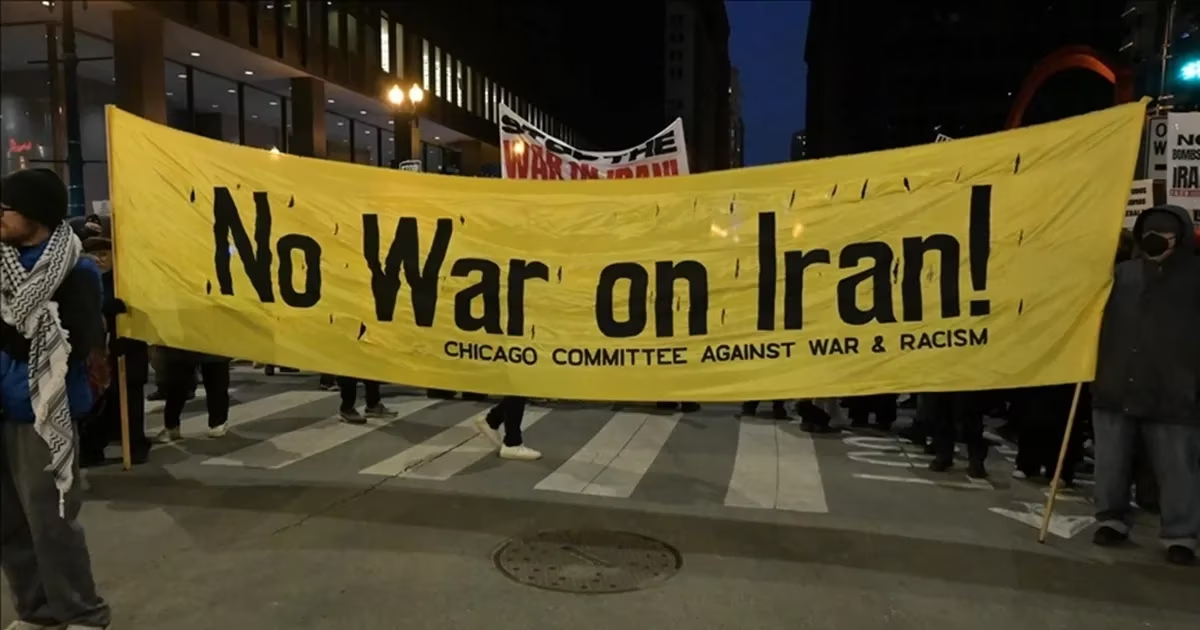
In the early nineties, while the world celebrated the fall of the Berlin Wall, deluded by the 'end of history', Samuel Huntington was charting a completely different course. Huntington believed that the absence of communism would not end conflicts, but rather lead to a shift in the tectonic plates of history, with confrontations becoming based on deep cultural identities and roots.
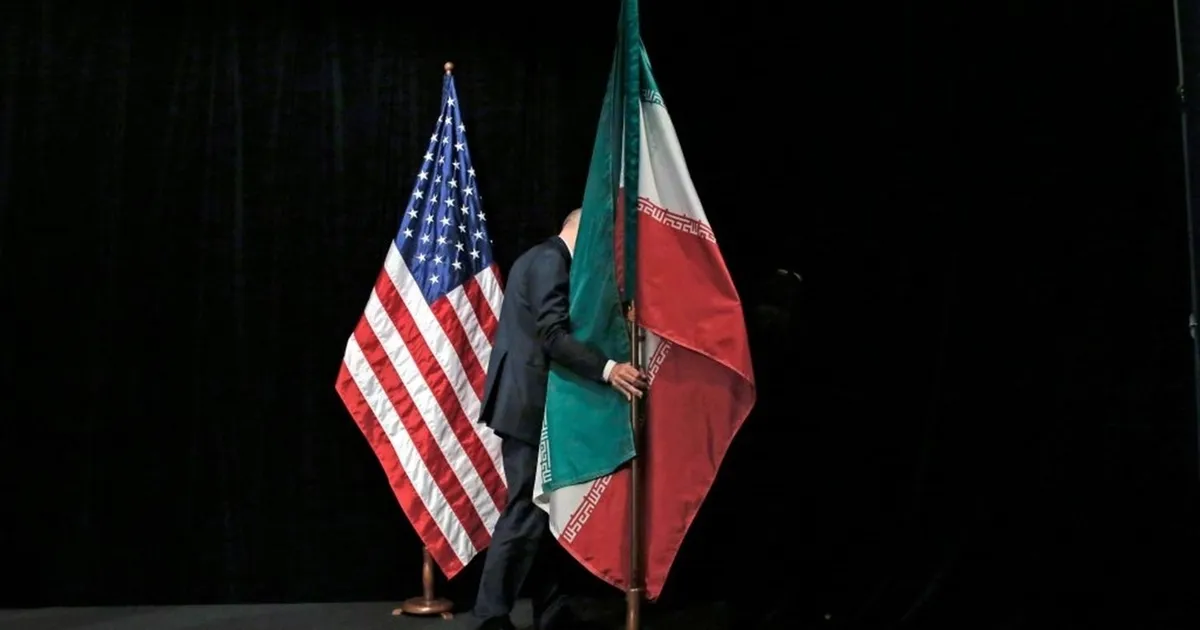
Today, with the explosion of the scene in the Middle East, it seems that the confrontation between the Iranian, American, and Israeli triangle has transcended the boundaries of traditional politics to become an existential, cross-border conflict. This shift brings back Huntington's vision, which placed the world on the brink of a major confrontation that is distinctly civilizational in nature, where different cosmic visions collide.
Currently, the region is witnessing a forced dismantling of the concept of the nation-state, imposed after World War I, in favor of what can be called 'civilizational basins'. The ongoing conflict between Tehran and Tel Aviv, and behind them Washington, is no longer governed by the geographical borders of states, but has become a clash at the 'fault lines' that separate major civilizations.
In this context, Israel represents the 'Western civilizational enclave' that interfaces with the Islamic civilization with its multiple poles, making the region the most inflamed hotbed of conflict in the world. The United States is not acting here merely as a state seeking oil, but as a leader of Western civilization seeking to protect its forward frontiers in the face of attempts to restore the Islamic basin.
Huntington's prophecy is also evident in the emergence of a strategic alliance between the 'Confucian' civilization, represented by China, and the Islamic civilization to confront the Western challenge. This axis is no longer just an academic hypothesis, but a reality translated by deep military and economic partnerships and diplomatic support in international forums to break unipolarity.
The covert war, which uses Lebanese and Yemeni arenas as battlegrounds, is essentially an attempt by the 'rest' to challenge absolute Western hegemony. China and Russia realize that the collapse of regional poles hostile to the West means the perpetuation of Western hegemony, while their steadfastness means the success of the first major breakthrough in the 'Western universalism' system.
In Huntingtonian thought, Israel is a model of a state that represents the spearhead of an alien civilization in a completely different civilizational environment. This situation makes the current conflict reshape the collective popular consciousness in the region, transcending simple political differences towards a state of deeply rooted civilizational animosity that is difficult to overcome with traditional diplomatic solutions.
The current war has ended the myth of 'regional integration' or the 'New Middle East' project based on purely economic interests. Religious geopolitics has returned to the forefront, with positions being sorted based on major identity affiliations that transcend the narrow material interests of states.
The civilizational fault lines have moved from state borders to the heart of Western cities themselves, as evidenced by the sharp divisions within Western societies over the events in Gaza and Lebanon. This intellectual and cultural clash reflects Huntington's warnings about immigrants who carry their civilizational affiliations and do not fully integrate into the Western system.
Analysts believe that World War III may not be classic armies sweeping continents, but a series of regional wars along fault lines that attract great powers. In the current conflict, Washington is drawn to protect its civilizational protégé, while Iran seeks to lead an axis extending from the Mediterranean to the Gulf to counter this influence.
The entry of poles such as China and Russia into this conflict will not only be through traditional military alliance, but to prevent a civilizational resolution in favor of the West. This scenario represents the 'great global confrontation' born from the womb of local conflicts that acquire a character of cultural and spiritual sanctity for their parties.
The West made a strategic mistake by trying to impose its values as 'universal' values valid for all times and places, ignoring the specificities of other civilizations. The current clash is an expression of the rejection by regional and international powers of this global 'system' formulated after 1945, and a demand for a system based on true civilizational pluralism.
In this conflict, Iran does not represent itself merely as a state, but offers an identity model that rejects absolute subservience to the prevailing Western model. This identity driver is what makes the conflict transcend technical issues such as nuclear weapons or militia influence, reaching the core of cultural and political existence.
In conclusion, it seems that the world is heading either towards mutual recognition of cultural vital areas or towards total chaos that spares nothing. The current reliance on hard power to impose Western values may open the gates of hell to a conflict driven not by the search for land, but by the defense of spirit, identity, and belonging.
What the West considers universal values, other civilizations consider cultural imperialism.
Share your opinion
Fires of the Middle East and Huntington's Prophecy: Are We Living Through Chapters of the 'Clash of Civilizations'?