







February 24, 2026
News Analysis
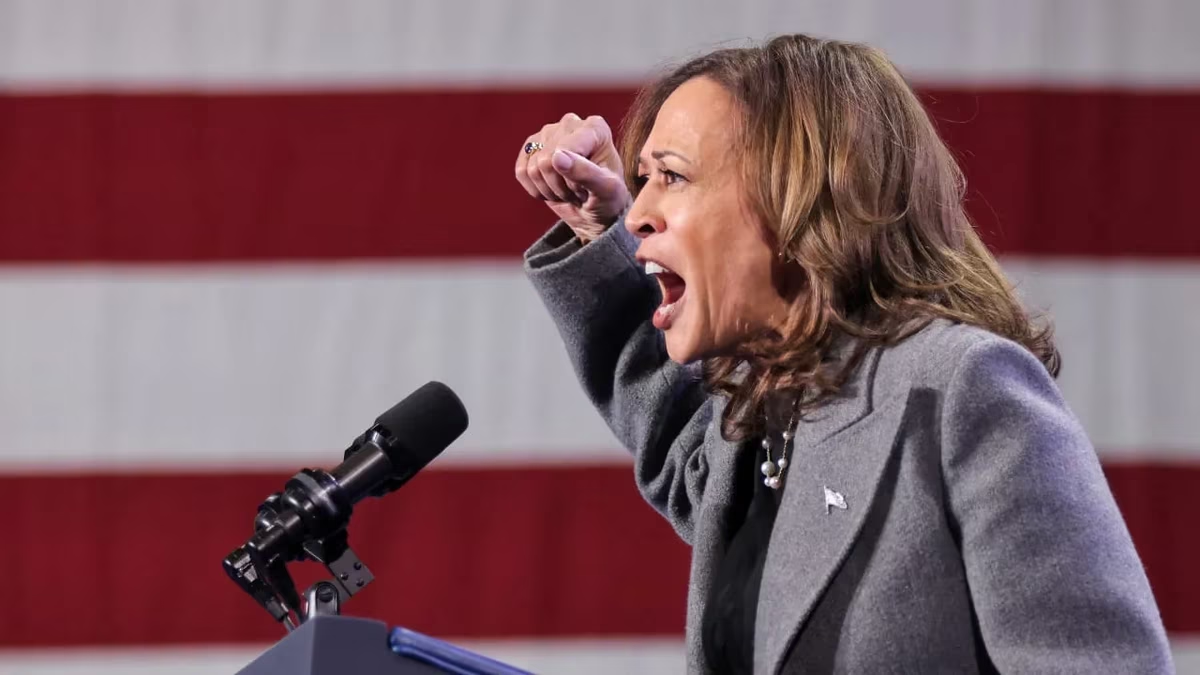
Washington, D.C – A confidential internal review by senior Democrats has concluded that the Biden administration’s handling of the Gaza war materially damaged Vice President Kamala Harris and contributed to her defeat by Donald Trump in the November 2024 election, according to a report by Axios. The study, described as the party’s most comprehensive assessment of the loss, has been kept under wraps by Democratic leadership—an unusual decision that is fueling fresh tensions inside a party already divided over U.S. policy toward Israel.
The existence of the study is politically explosive not only because of its findings but because of the effort to suppress them. Officials at the Democratic National Committee had indicated last year that the audit’s conclusions would not be made public, arguing that disclosure could distract from preparations for upcoming elections. Yet the continued secrecy, long after ballots were counted, has deepened suspicion among activists and intensified an ideological struggle between progressive and moderate Democrats.
At the heart of the dispute lies the Gaza war and Washington’s unwavering support for Israel during the conflict. Progressive lawmakers and grassroots organizers have sharply criticized what they describe as unconditional U.S. backing for Israel, demanding that military assistance be tied to human rights benchmarks. Moderates, by contrast, have largely defended the traditional pro-Israel posture while urging humanitarian relief and de-escalation. Harris, thrust into a compressed campaign after President Joe Biden stepped aside, attempted to straddle this divide—affirming Israel’s right to defend itself while calling for a ceasefire and expressing sympathy for both Palestinian civilians and Israeli hostages.
According to sources cited in the report, that balancing act came too late and lacked the clarity needed to reenergize younger voters and progressives disillusioned with the administration. Democratic aides reportedly met behind closed doors with pro-Palestinian advocates to discuss the war’s electoral impact. Activists from the Institute for Middle East Understanding Policy Project told party officials that the Biden-Harris stance had depressed youth enthusiasm and turnout in key battleground states. Two individuals familiar with the meeting said party data corroborated that assessment.
The DNC has denied any attempt to conceal findings related specifically to Israel, saying it consulted hundreds of stakeholders and is incorporating lessons learned into its strategy for the 2026 midterms. But the controversy persists, with critics accusing party leaders of shielding politically sensitive conclusions to avoid widening internal fractures.
Harris herself has hinted at regrets. During promotional events for her memoir, she suggested that the administration should have voiced stronger public criticism of Israeli Prime Minister Benjamin Netanyahu’s prosecution of the war. She wrote that Biden’s declining approval ratings—partly linked, in her telling, to perceptions that he gave Netanyahu a “blank check”—hampered her campaign. Privately, she urged greater empathy toward civilians in Gaza, she said, but stopped short of openly breaking with the president during the race.
The episode underscores a broader evolution in Democratic politics. For decades, foreign policy rarely determined electoral outcomes compared with economic concerns. Yet 2024 suggested that images from Gaza and debates over U.S. complicity resonated deeply with younger and more diverse voters. For many in Generation Z, moral consistency has become a litmus test; geopolitical pragmatism alone no longer suffices.
Keeping the report secret may reflect a tactical calculation to contain factional conflict. Strategically, however, the risks are considerable. In the aftermath of defeat, parties typically engage in candid self-assessment to rebuild trust and sharpen priorities. Prolonged opacity invites leaks, conjecture, and alienation. If Democrats fail to clarify where Gaza fits within their broader foreign policy narrative, they may confront recurring enthusiasm gaps in future cycles.
Harris’s predicament also illuminates the structural limits of vice-presidential power. Efforts to differentiate herself from Biden without appearing disloyal placed her in a gray zone that muddied her message. In polarized times, calibrated ambiguity can appear evasive. A clearer stance—even at the cost of internal controversy—might have proven less damaging than perceived hesitation.
Whether Democrats ultimately release the full findings or continue to manage them internally will shape not only the party’s strategic recalibration but also its credibility with a generation that demands transparency. The Gaza debate is no longer a distant foreign policy dispute; it has become a domestic political fault line. How Democrats address that reality may determine whether 2024 was an aberration—or a warning.
Share your opinion
Washington Democrats Confront a Buried Reckoning: Did Gaza Cost Harris the White House?