






Iranian Foreign Minister Abbas Araghchi announced that his country has stipulated to the International Atomic Energy Agency (IAEA) the formulation of a specific technical and security protocol before allowing its inspectors to visit the nuclear facilities targeted by Israeli bombing. Araghchi clarified that this stance comes in the wake of the 12-day military confrontation between Tehran and Tel Aviv last June, emphasizing that the current priority is to secure the sites before any international delegations enter.
The Iranian Foreign Ministry attributed this strictness in inspection procedures to on-the-ground security risks, as official sources revealed the presence of unexploded shells and bombs within sensitive sites, particularly in the strategic Natanz and Fordow facilities. Tehran affirmed that coordination with the IAEA must go beyond traditional frameworks to account for the exceptional circumstances imposed by recent air attacks and to ensure the safety of international inspectors.
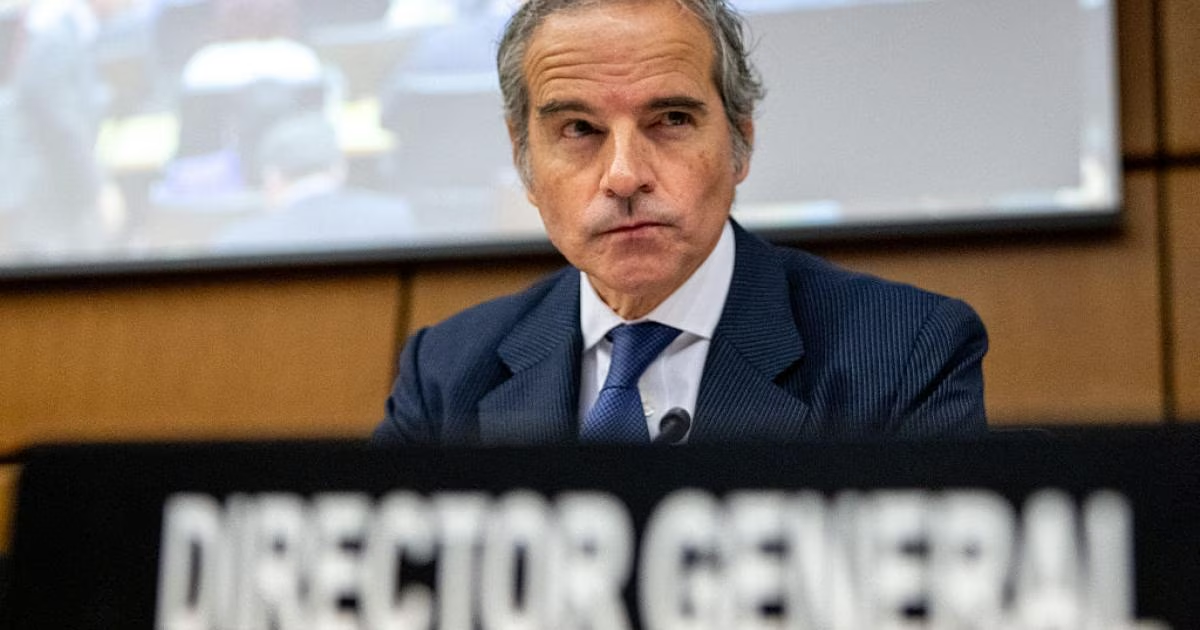
For his part, the Director-General of the International Atomic Energy Agency, Rafael Grossi, expressed reservations about the Iranian proposal, describing the demand for a special protocol as an unprecedented event in the history of the Agency's work with member states. Grossi indicated in diplomatic deliberations that the international organization had not previously encountered technical obstacles related to the presence of unexploded ordnance within supervised nuclear facilities, which places verification efforts in a legal and technical dilemma.
Political interpretations of this development suggest the possibility of an Iranian strategy to use the security file as leverage in upcoming negotiations, or that the Israeli strikes were not solely aimed at immediate destruction. Observers believe that the presence of unexploded or delayed-action bombs could be part of a military tactic to disrupt work at the facilities for long periods, or a means to push Tehran towards political concessions under the weight of continuous security threats.
In a related context, diplomatic circles are awaiting the start of a new round of indirect negotiations between Tehran and Washington in the Omani capital, Muscat, next week. These movements come at a very sensitive time, as international parties seek to contain nuclear escalation and prevent the region from sliding into a comprehensive confrontation, amidst field complexities imposed by the results of the recent war and its repercussions on the ground.
Despite increasing international pressure, Minister Araghchi reiterated his country's affirmation of the continuation of its uranium enrichment program in accordance with declared national plans, considering this right non-negotiable. He stressed that Iran is prepared to deal with all scenarios, including the possibility of war, emphasizing that the diplomatic path remains contingent on respect for Iranian sovereignty and recognition of the new security reality of the affected facilities.
This measure is related to safety and security issues, especially with the presence of unexploded bombs in the targeted areas.
Share your opinion
Iran stipulates security protocol for Grossi's visit to targeted nuclear facilities