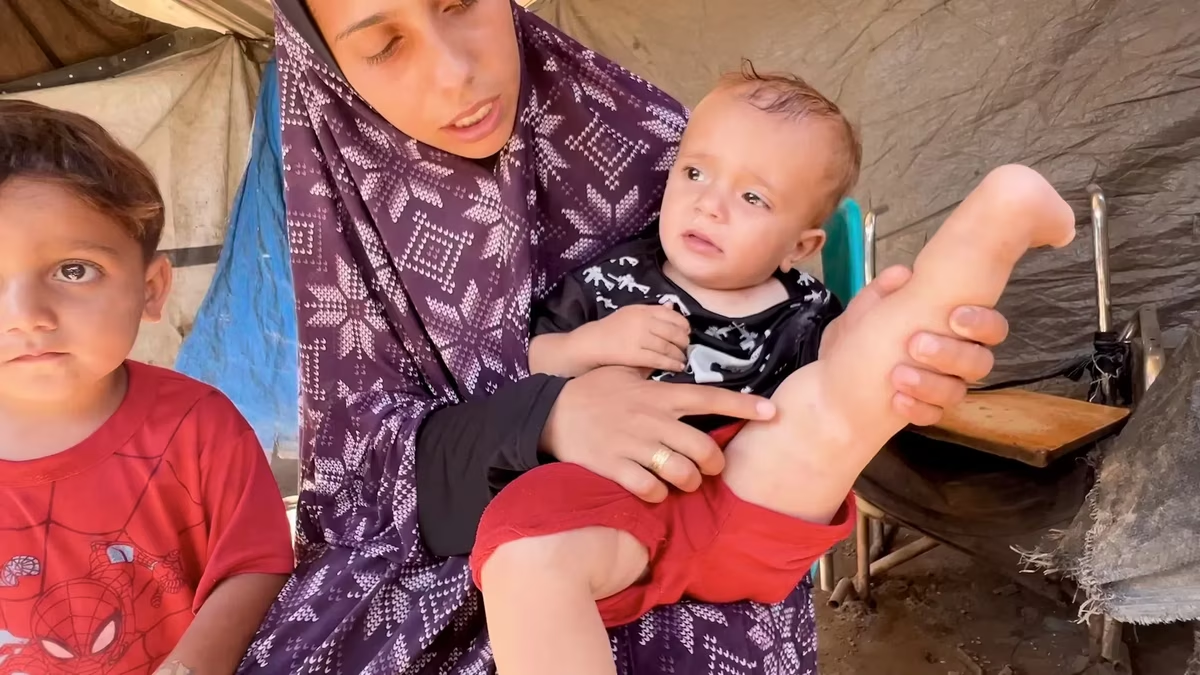







Before Palestinian child Naim Sobh took his first steps, he had already been forcibly acquainted with the meaning of displacement and living under siege. Naim was born in the heart of the war about 13 months ago, finding himself and his slightly older brother, Saddam, witnessing a conflict that has lasted a thousand days, its details shaping their early memories amidst the sounds of explosions and the bitterness of hunger.
Their mother, Dima Sobh, recounts chapters of suffering that began during her pregnancy, where she faced severe shortages of food and healthcare. When the moment of birth arrived, she found no means of transport other than the displacement tent, which witnessed Naim's first cry, before he was later transported by an animal-drawn cart to the hospital to be placed in an incubator due to his severe low weight.
Birth was not the end of the crisis, but the beginning of a battle for survival in an environment lacking the most basic hygiene. Naim suffered a rat bite inside the tent, requiring urgent medical intervention, in addition to contracting skin diseases such as scabies and chickenpox due to overcrowding and environmental pollution in the shelters.
As for his brother Saddam, he miraculously survived a bombing that targeted their shelter, leaving deep psychological scars on his personality. The child now trembles and cries at any loud sound, whether it's the buzzing of planes or gunfire, a clear reflection of the constant state of terror experienced by children in the Strip.
In another corner of the tragedies of displacement, Alaa Attallah, born in December 2023 by emergency C-section, is growing up. His mother, Heba, had to walk 5 kilometers while in labor to reach the hospital, as ambulances were busy transporting victims of the continuous bombing.
Alaa and his family endured harsh periods of famine, to the extent that they were forced to eat animal feed and barley to stave off hunger. This food deprivation led to the child suffering from severe malnutrition, which made his rib cage clearly prominent and directly affected his physical development and his ability to speak and communicate.
Alaa's mother indicates that her child, who is approaching his third year, speaks only simple words and tends to be isolated and fearful of his surroundings. The repeated bombing has turned the sounds of explosions into a nightmare that haunts him, as he throws himself into his mother's arms seeking a lost sense of security in a world where he knows nothing but rubble.
Ghassan Hassanein's story is not much different; he was born in Rafah amidst dire circumstances and severe famine that affected his mother's health during pregnancy. Ghassan was born without his family finding clothes to cover his small body, due to the scarcity of basic necessities and the collapse of the commercial and medical systems in the Strip.
Ghassan's mother confirms that she had to delay his weaning for fear of not having alternative foods available in the famine-stricken markets. Today, Ghassan suffers from constant anxiety, automatically associating the sound of aircraft with the scenes of destruction he has witnessed, keeping him in a state of constant alert and fear.
For his part, mental health consultant Dr. Osama Emad warns of the serious repercussions of these conditions on an entire generation. He believes that children born during war are deprived of their basic rights to play, education, and safety, leading to distortions in their psychological and social development.
Emad explains that malnutrition in the early stages of development leaves lasting effects on children's physical structure, such as weak bones and hair loss. Moreover, successive psychological traumas can lead to a loss of self-confidence and difficulty integrating into normal societies in the future.
Lack of safe spaces and recreational facilities prevents these children from acquiring necessary life skills. Many of them do not know simple concepts like a stable home or electricity, and their knowledge of the world is limited to the confines of the canvas tent and the sounds of drones that never leave the sky.
Delayed speech and linguistic development emerge as one of the most significant challenges facing Gaza's children currently, which specialists link to collective trauma. Deprivation of a stimulating environment and healthy social interaction hinders the ability of newborns to form sentences and understand their surroundings naturally.
These stories remain miniature examples of the reality of thousands of children facing an unknown future after 1000 days of war. These little ones, who have known nothing of life but the tent and hunger, represent the deepest wound in the Palestinian people's memory, burdened with pain.
The war did not just steal my children's childhood; it accompanied them from the very first moment inside a tent unfit for human life.
شارك برأيك
The 1000-Day Generation in Gaza: Tent-Born Babies Face Hunger and Rat Bites