






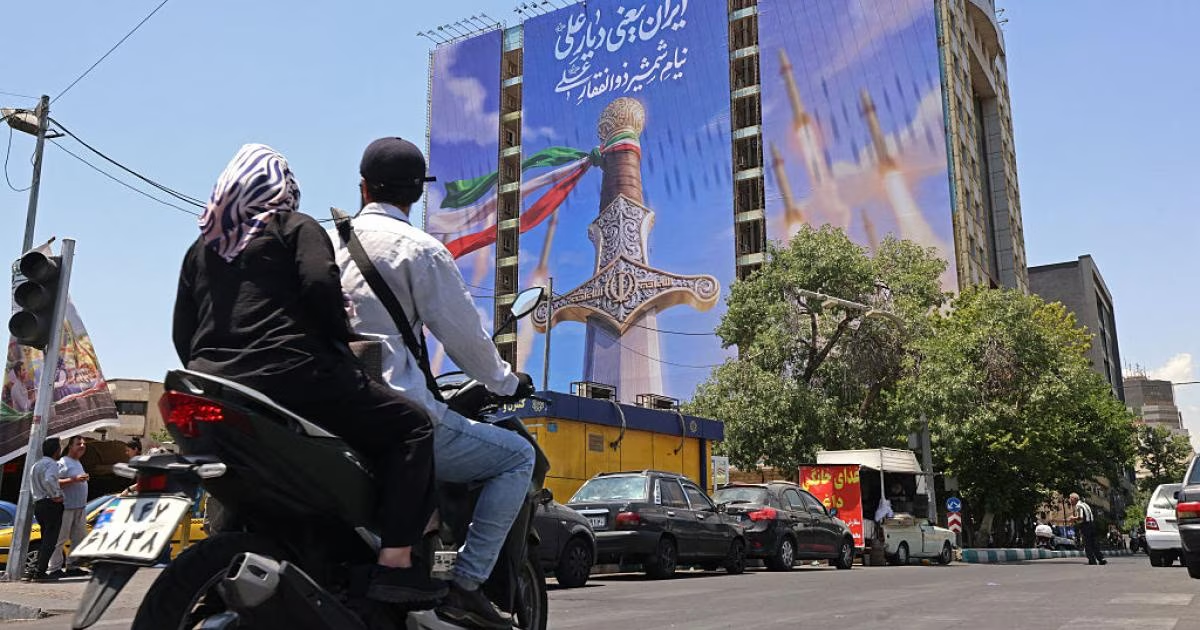
US President Donald Trump announced today, Saturday, that the United States intends to sign a formal agreement with Iran tomorrow, Sunday, in a move aimed at ending escalating military tensions. Trump confirmed via his 'Truth Social' platform that this agreement will be directly followed by the reopening of the Strait of Hormuz to international navigation, describing the step as necessary to restore global stability.
For its part, Pakistan expressed great optimism about the imminent resolution, with Pakistani Prime Minister Muhammad Shehbaz Sharif expecting the signing of the initial draft of the agreement within the next 24 hours. Sharif indicated that Islamabad, which led the mediation efforts, is currently preparing to complete the electronic signing procedures for the final text agreed upon between Washington and Tehran.
In contrast, a state of caution prevailed in official Iranian statements, as media sources quoted the Ministry of Foreign Affairs in Tehran as emphasizing the need for deliberation before confirming the final signing date. The Iranian Foreign Ministry clarified that talking about completing the procedures on Sunday might be premature, stressing the importance of completing all technical details to ensure the agreement's durability.
On the Arab diplomatic front, the Prime Minister and Minister of Foreign Affairs of Qatar, Sheikh Mohammed bin Abdulrahman bin Jassim Al Thani, held a phone call with his Pakistani counterpart to discuss the latest developments in the mediation. Doha expressed its great satisfaction with the progress made in the negotiations, affirming its full support for all efforts that lead to ending the crisis through peaceful means and achieving sustainable peace in the region.
During the call, the Qatari Prime Minister stressed the need for all concerned parties to respond to the Pakistani initiative, considering that reaching a final text represents a major achievement for international diplomacy. He also expressed his country's aspiration to see the American and Iranian sides sign the agreement as soon as possible to create suitable conditions for regional stability.
In Washington, press sources quoted an official in the US administration describing the anticipated agreement as a 'strong agreement' that meets strategic interests and ensures the security of waterways. The official revealed that the United States, in cooperation with the G7 countries, may participate in extensive technical operations to clear mines from the Strait of Hormuz once the agreement comes into effect.
Pakistani Prime Minister Shehbaz Sharif explained that the general framework of the agreement puts an end to the war that erupted in the Middle East more than three months ago, which directly affected global energy supplies. He added that the coming days will witness the start of technical-level talks to address the remaining precise details and ensure the accurate implementation of the agreed-upon provisions.
Indications of an imminent breakthrough began to appear on Friday, when Washington and Tehran hinted at reaching an agreement on the final draft text. Responsible sources confirmed that both parties made intensive efforts to overcome the last obstacles that were hindering the announcement of a comprehensive de-escalation and the opening of vital maritime passages.
It is worth noting that these developments come at a sensitive time when the region is witnessing widespread international anticipation for the results of Pakistani mediation, amid hopes that the opening of the Strait of Hormuz will lead to lower energy prices and ease political tensions. Global capitals are awaiting what the coming hours will bring to confirm the date of the official ceremonies for signing this historic agreement.
The agreement is scheduled to be signed tomorrow, and immediately after the signing, the Strait of Hormuz will be open to everyone.
شارك برأيك
Trump announces signing of historic agreement with Iran tomorrow and immediate opening of Strait of Hormuz