






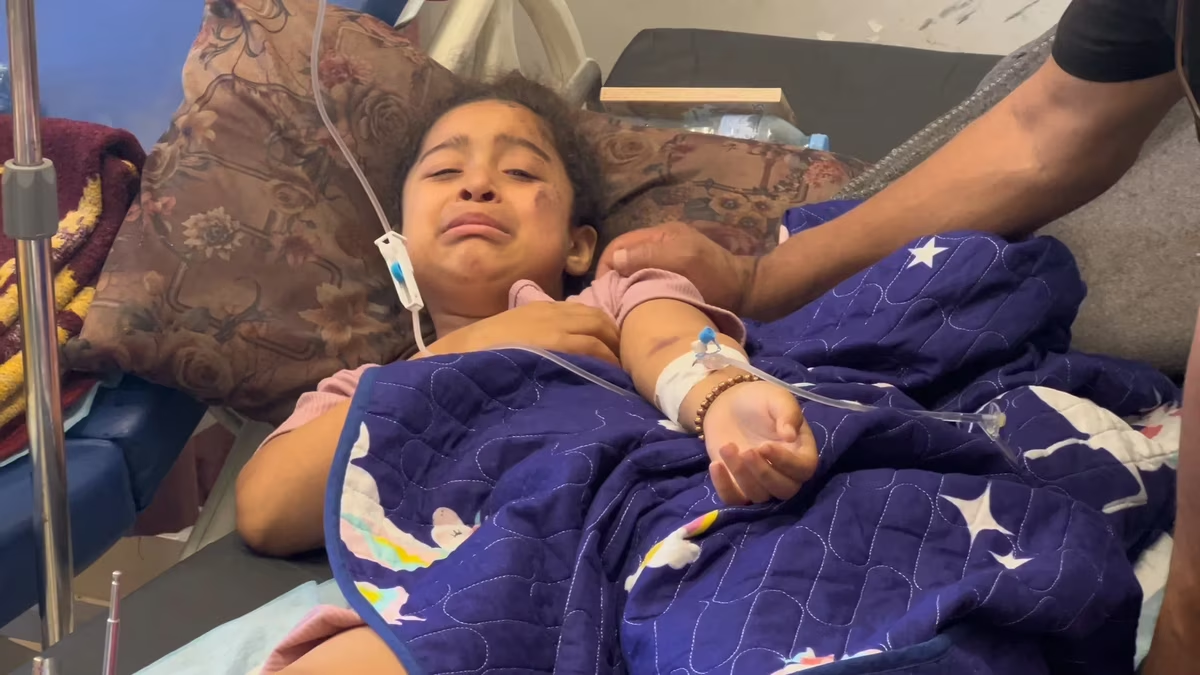
While the international community commemorates the International Day of Innocent Children Victims of Aggression on June 4th each year, the Gaza Strip is drowning in a flood of horrific testimonies that redefine childhood as a period burdened by loss and pain instead of play and growth. This tragedy is embodied in hospital rooms and shelters, where an entire generation faces the consequences of a war that not only destroyed stones but also disfigured the bodies of children and left deep scars on their souls.
Sham Iyad Azzam, an 11-year-old girl, represents this pain; she woke up on the first day of Eid al-Adha to fires engulfing her home, losing her sister Sidra and her leg, which was amputated from the knee. Sham is currently undergoing intensive treatment at Al-Shifa Hospital, struggling with her fears of a future where simple movement requires the help of others, amidst constant anxiety about not being able to reintegrate into her social environment.
In another scene of suffering, the entire Aliwa family lies in one hospital room after an Israeli bombing caught them sleeping on the third day of Eid. The father, Musa, the mother, Nermin, and their four children, including twins, suffer from complex fractures in their pelvises and feet, in an incident that turned the joy of Eid into a difficult treatment journey under the rubble and then on hospital beds.
As for seven-year-old Ghada Dababesh, the aggression took her right arm while she was playing on a swing in a school sheltering displaced people in the Al-Tuffah neighborhood. Ghada recounts in brief words how play turned into a nightmare of smoke and explosions, finding herself today suffering from what is medically known as 'phantom limb pain,' where her brain continues to send pain signals to an arm that is no longer there.
Ghada's psychological suffering goes beyond physical pain, as the little girl faces a feeling of being different from her peers and clear introversion for fear of bullying, while her family tries to support her through alternative educational centers. Her story confirms that injury is not just an organic amputation, but a forced قطع from practicing the simplest daily life details such as eating, writing, and playing.
In another corner of the Strip, the tragedy of complete orphanhood emerges in the story of the two children, Jana and Hazem Al-Ajal, who lost their parents and all their family members in a single bombing that killed 19 people. Jana, the only survivor of her immediate family, today suffers from behavioral disorders and severe emotional outbursts, and avoids talking about her parents in a desperate attempt to escape the bitter reality of loss.
Psychological specialists indicate that what Gaza's children are experiencing goes beyond traditional patterns of trauma, with Dr. Osama Emad describing the situation as 'complex and cumulative traumas.' These effects appear in the form of persistent nightmares, social phobia, and physical manifestations such as enuresis and stuttering, as well as a noticeable delay in linguistic and cognitive development due to deprivation of education.
Mental health experts warned that continuous exposure to scenes of violence and destruction generates aggressive and impulsive behaviors in children, especially in the absence of regular family and school support. The continuation of this reality without relief and systematic interventions may lead to the emergence of a generation suffering from long-term behavioral and cognitive disorders, threatening the social fabric of Palestinian society in the future.
Turning to numbers, medical sources in the Ministry of Health revealed shocking statistics reflecting the systematic targeting of childhood, with 21,638 children martyred since the beginning of the aggression. This toll represents about 30% of the total martyrs, indicating that children are the most affected group by the ongoing military operations in residential areas.
The data details that among the child martyrs, there are 6,410 children under the age of five, and 1,073 infants who were martyred before the age of one. Medical sources also recorded the deaths of 162 children due to hunger and severe malnutrition, a dangerous indicator of the deterioration of food security and the collapse of the health system in the besieged Strip.
As for the injured, more than 45,000 children have suffered varying injuries, including about 1,000 children who underwent amputations of their limbs, which represents 20% of the total recorded amputation cases. This group faces enormous challenges due to the lack of prosthetics and specialized rehabilitation centers, in addition to the need for 5,000 injured to travel urgently to receive treatment abroad.
The phenomenon of orphanhood has become a major social crisis, with estimates indicating that approximately 60,000 children have lost one or both parents during the months of war. These children today lack not only material care, but also the psychological and emotional protection provided by the family, placing a heavy burden on society and relief organizations with limited resources.
The stories coming from Gaza on the International Day of Innocent Children Victims of Aggression confirm that the war has not left a single home without affecting a child, whether by killing, injury, or orphanhood. The live testimonies of Sham, Ghada, and Jana remain a cry in the face of a global conscience that contents itself with commemorating annual events while the war machine continues to harvest the lives and futures of innocent children.
In conclusion, hope remains dependent on real international interventions that go beyond verbal condemnation to provide protection and treatment for thousands of children facing disability and psychological trauma. The current generation of Gaza needs a comprehensive national and international rehabilitation strategy to ensure that these physical and psychological scars do not turn into a permanent obstacle that deprives them of their natural right to life.
I was playing on the swing, then I heard an explosion and saw smoke, then they cut off my hand.
شارك برأيك
On their International Day.. Gaza's Children Pay the Price of Aggression Amidst Loss, Disability, and Psychological Trauma