







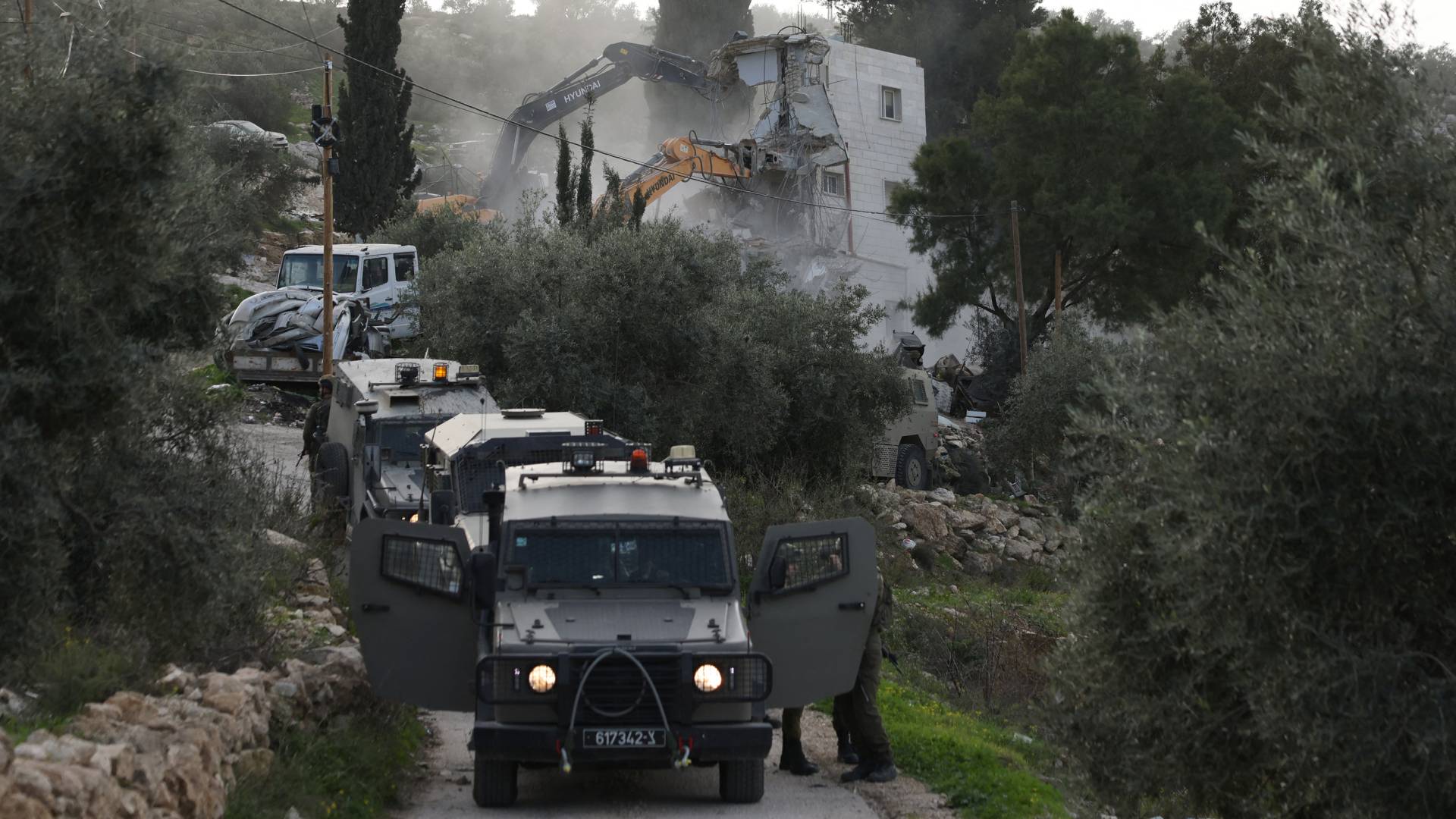
Local sources and Palestinian media reported on Monday that groups of settlers began carrying out extensive bulldozing operations in preparation for establishing a new settlement outpost in the Al-Auja area north of Jericho. These field movements come in the context of escalating intensive settlement activity witnessed in the Jordan Valley areas of the occupied West Bank, with the aim of tightening control over natural resources and open spaces.
Human rights sources quoted Hassan Malihat, the general supervisor of the 'Al-Baydar' organization for the defense of Bedouin rights, as saying that large numbers of settlers stormed the area, reinforced by heavy equipment and bulldozers. Malihat explained that this step aims directly to impose a new colonial reality on the ground and to restrict Palestinian communities that depend on these lands for grazing their livestock and securing their livelihoods.
Malihat pointed out that the Al-Auja area already suffers from the presence of seven previous colonial pastoral outposts, which are used as strategic tools to control vast areas of Palestinian land. He warned that the intensification of these outposts threatens the historical Palestinian presence in the Jordan Valley areas and pushes towards isolating villages and towns from their natural and geographical surroundings as part of a systematic policy of settlement expansion.
The Al-Auja area has special strategic and environmental importance, as its name is linked to a historical water spring located within an area classified as a nature reserve, which has made it a constant target for settlement projects. The area has faced repeated attacks for years aimed at seizing water sources and encircling the Bedouin population, in an attempt to entrench the policies of de facto annexation and forced displacement pursued by the occupation authorities.
For his part, Hamas leader Mahmoud Mardawi stated that the establishment of this new outpost represents a dangerous escalation in settlement activity and a blatant challenge to all international laws and warnings. Mardawi affirmed in a press statement that these repressive measures will not succeed in changing the identity of the Palestinian land or granting legitimacy to the settlement presence, but will rather lead to an increase in popular anger and adherence to national rights.
Mardawi called on the Palestinian people to strengthen their presence in the areas targeted by settlement and to remain there to protect them from confiscation, demanding that international and human rights institutions move from condemnation to action. He stressed the need to take practical steps to hold the occupation accountable for its continuous violations that disregard all international conventions that consider settlement a war crime.
It is worth noting that the West Bank is witnessing an unprecedented acceleration in the pace of settlement construction and the legalization of random outposts, despite widespread international criticism from the United Nations and most countries of the world. These parties consider all settlement activities in the territories occupied in 1967 to be illegal and to impede any future opportunities for achieving stability or establishing a geographically contiguous Palestinian state.
The establishment of the new settlement outpost represents a dangerous escalation and is part of the occupation's attempts to impose facts by force in defiance of international warnings.

شارك برأيك
Settlement movements to establish a new outpost north of Jericho and widespread Palestinian condemnation