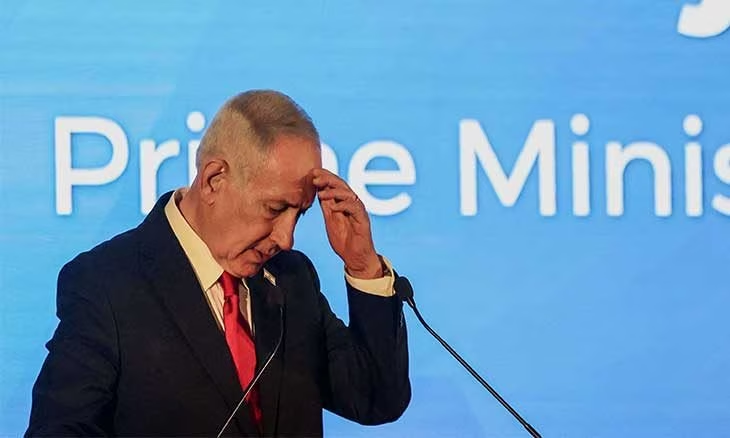







The ongoing military confrontation against Iran is considered the culmination of Israeli Prime Minister Benjamin Netanyahu's ambitions, as he seeks to solidify the concept of 'Greater Israel' as a global superpower. By leveraging his close relationship with the American president, Netanyahu has succeeded in linking the political fate of the American administration to his military decisions, with reports revealing daily communication between the two parties and high-level coordination to implement the Israeli right-wing agenda in the region.
Field and political data indicate that one of the main goals of the current escalation is to divert attention from the crimes committed in the Gaza Strip, and to replace peaceful normalization paths with a logic of military 'subjugation'. This influence within the United States was evident in the resignation of the Director of the National Counterterrorism Center, Joe Kent, who confirmed that Washington was dragged into the war by direct pressure from the Israeli lobby, at a time when Trump faces criticism from internal factions that reject involvement in proxy wars.
On the regional level, there are persistent attempts to drag Arab capitals into the conflict; sources have hinted at pressure being exerted on Damascus to participate in operations against Hezbollah, coinciding with an Emirati announcement about the possibility of joining efforts to protect navigation in the Strait of Hormuz. Observers believe that Israel's targeting of Iranian gas fields is primarily aimed at luring Tehran into a reaction that would affect Arab oil installations, thereby forcing the countries of the region into involuntary involvement in the Israeli plan to reshape the Middle East.
Netanyahu dreams and America executes; the ongoing war represents a personal triumph for his political line based on extermination, displacement, and shaping the region by force.
شارك برأيك
Netanyahu's 'New Middle East' Plan: Will Attempts to Lure Arabs into War Succeed?