






Dr. Basem Abu Jrayy: The decision reflects a pre-prepared plan aimed at dismantling the structures supporting the steadfastness of the Palestinian people in the context of genocide..
Akram Attallah: The central goal of the step is to "kill life" and turn the Strip into an uninhabitable area, pushing towards a comprehensive displacement project..
Amjad Al-Shawa: The timing of the decision precedes the second phase, which portends further humanitarian complexity and a tendency to pressure residents and push them towards displacement..
Dr. Ahmed Awad: The closure of these institutions is to prevent the internationalization of the Palestinian issue, weaken Palestinian society, and cut off its communication with the outside world..
Sari Sammour: Israel may seek to monopolize the "management of suffering" in the Strip through institutions linked to it with international facades to achieve financial and security gains..
Dr. Tamara Haddad: The cessation of institutions' work negatively affects civil peace and turns aid into a pressure tool in the absence of "day after" arrangements..
Suleiman Basharat: Israel seeks to create a real humanitarian institutional vacuum in the Strip, which opens the door for it to propose "alternatives" that are completely subject to it...
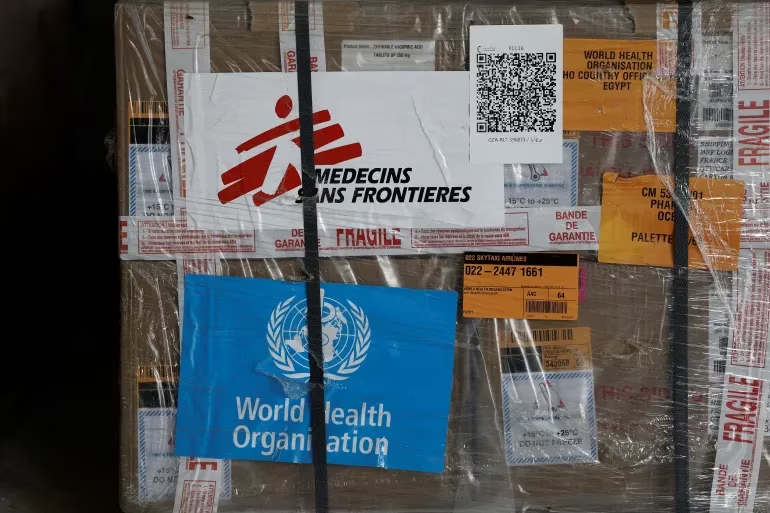
The Gaza Strip is preparing to face serious repercussions due to the Israeli occupation's decision to halt the work of humanitarian institutions by the end of this month, which directly threatens the lives of residents and exacerbates crises of food, medicine, and basic services, in the context of escalating pressures leading to a displacement plan.
Officials, specialists, writers, and political analysts explain in separate conversations with "Al-Quds" that this decision comes within a sequential context of systematic targeting of local and international organizations, which began with attempts to undermine the United Nations Relief and Works Agency for Palestine Refugees (UNRWA) and then included human rights institutions and relief organizations, as part of a policy aimed at dismantling the humanitarian structure supporting the steadfastness of the population and controlling it to serve the occupation's agenda.
Officials, specialists, writers, and analysts point out that the step practically aims to turn the Strip into an uninhabitable area, as a political pressure tool to push Palestinians towards forced migration.
They believe that the decision aims to cut off international oversight channels and the absence of documentation of Israeli violations, which isolates residents from the outside world and weakens civil society, in addition to creating an institutional vacuum, allowing it to fully control the management of suffering, and provide alternatives affiliated with the occupation, thereby strengthening control over the Strip.
Violation of the principles of international humanitarian law..
Dr. Basem Abu Jrayy, a researcher in development and human rights from the Gaza Strip, warns of the serious repercussions of the Israeli occupation's decision to halt the work of humanitarian institutions in the Strip by the end of this month, describing the decision as arbitrary and dangerous, and constituting a clear violation of the principles of international humanitarian law, particularly the principle of facilitating the work of neutral humanitarian organizations.
Abu Jrayy explains that this decision directly contradicts the obligations of the occupying power under the Geneva Conventions, which oblige it to ensure the unimpeded and good-faith access of humanitarian aid to civilian populations under occupation.
Tools to restrict humanitarian work..
Abu Jrayy clarifies that the conditions imposed by the occupation, related to requesting extensive security information about workers in humanitarian organizations, are merely tools to restrict humanitarian work and undermine its independence, and a pretext to exclude a large number of organizations, including effective international organizations.
Abu Jrayy points out that the exclusion of this wide number of institutions will inevitably lead to a serious decline in access to basic services, foremost among them healthcare, water, food, and protection, at a time when the Gaza Strip is experiencing a catastrophic and unprecedented humanitarian situation.
Abu Jrayy emphasizes that civilians, especially children, women, and the elderly, face increasing risks that threaten their lives and dignity in light of this accelerating deterioration.
Escalating systematic targeting..
Abu Jrayy explains that the decision comes within an escalating context of systematic targeting, which began with attempts to undermine the role of the United Nations Relief and Works Agency for Palestine Refugees (UNRWA), then expanded to include Palestinian human rights institutions that were subjected to organized smear and criminalization campaigns, reaching the point of imposing sanctions on them by the US Treasury, before extending today to dozens of humanitarian and relief organizations.
Abu Jrayy stresses that this sequence in targeting local and international organizations cannot be separated from each other, but rather reflects the existence of a pre-prepared plan aimed at dismantling the structures supporting the steadfastness of the Palestinian people in the context of ongoing genocide, emptying Palestinian land of any humanitarian or human rights protection, and isolating civilian populations and obliterating their cause.
Abu Jrayy affirms that the protection of humanitarian work is not a procedural or technical matter, but a legal and moral obligation that should not be subjected to political considerations or manipulated under any pretext.
Serious repercussions on the overall humanitarian situation..
Writer and political analyst Akram Attallah confirms that the cessation of humanitarian institutions' work in the Gaza Strip by the end of this month will have serious repercussions on the overall humanitarian and living situation, pointing out that the Strip has become almost entirely dependent on humanitarian work, in the absence of any service or economic infrastructure capable of meeting the needs of the population.
Attallah explains that Israel has succeeded, during the past period, in diverting the compass of dealing with the Gaza Strip from the essence of the conflict and its political and historical dimensions, to reducing the Strip to a purely "humanitarian case," for which no services are provided except through international institutions.
Attallah points out that the continuous tightening of restrictions on the United Nations Relief and Works Agency for Palestine Refugees (UNRWA), and the withdrawal of recognition from it, have led to a reduction in its role, making other international humanitarian institutions almost the sole provider of minimal services to the residents of the Strip.
Attallah notes that halting the work of these institutions practically means depriving Gaza of basic services, or keeping them at their lowest levels, as part of a policy aimed at maintaining the state of suffering and daily torture of residents within the Strip.
Killing life for the sake of displacement..
Attallah considers that this policy tightens the noose on citizens to push them to consider leaving Gaza, citing statements by US President Donald Trump in which he spoke about the readiness of a large part of the Strip's residents to leave if they had the opportunity.
Attallah believes that the central goal of this step is to "kill life" in the Gaza Strip, and turn it into an uninhabitable area, which pushes residents to search for other more livable places, not within the Strip nor even in areas that Israel describes as "safe," but completely outside Gaza, in the context of a comprehensive displacement project.
Attallah points to the existence of more than one scenario related to halting the work of these institutions, but all of them point in one direction, which is the continued tightening of restrictions on parts of the Strip, especially what is known as western Gaza, by preventing humanitarian aid, stopping reconstruction, and disrupting any means of life, to force residents to leave.
Attallah notes that talking about temporary solutions, such as caravans or transitional residential areas, does not mean providing a stable humanitarian environment, but rather constitutes a transitional phase until residents are pushed to search for an alternative homeland outside the Gaza Strip.
Preventing the entry of international institutions' aid..
Amjad Al-Shawa, head of the Palestinian NGO Network in the Gaza Strip, warns of serious consequences resulting from the Israeli decision to halt the work of international humanitarian institutions in the Strip by the end of this month, stressing that this decision comes in the context of systematic targeting of the already deteriorating humanitarian situation, and represents a dangerous escalation that directly threatens the lives of residents.
Al-Shawa explains that one of the most dangerous indicators of this decision is the Israeli occupation forces' prevention of the entry of humanitarian aid belonging to international institutions, pointing out that thousands of trucks loaded with aid are still prevented from reaching the Gaza Strip, including essential medicines and medical supplies, shelter supplies, water sector needs, in addition to supplies for dealing with escalating malnutrition cases, especially among children and patients.
Al-Shawa affirms that humanitarian institutions operating in the Strip play a pivotal role that is not limited to hospitals, but also includes operating a large number of malnutrition treatment centers, and working in vital sectors such as water and sanitation, in addition to shelter.
Al-Shawa points out that the occupation began, as of Tuesday, preventing the arrival of international staff working in these institutions, whether administrative, technical, or medical, which practically means paralyzing the ability of these organizations to respond to increasing humanitarian needs, at a time when the Strip is witnessing a near-complete collapse in various service sectors.
Al-Shawa notes that this decision coincides with the Israeli occupation's ban on the work of the United Nations Relief and Works Agency for Palestine Refugees (UNRWA), and preventing the entry of its aid into the Gaza Strip, explaining that about 6,000 trucks belonging to the agency are not allowed to reach the Strip, despite the widespread reliance of residents on its basic services.
Al-Shawa clarifies that the impact of this decision will be extremely serious in light of a tragic humanitarian reality, where about one and a half million citizens have lost their homes, and nearly 900,000 of them live in dilapidated tents that do not meet the minimum requirements for a decent life, and do not represent a real or sustainable solution to the ongoing displacement crisis.
Silencing the voice of international institutions..
Al-Shawa affirms that the occupation aims through this decision to achieve several goals, most notably the complete isolation of the Gaza Strip, and silencing the voice of international institutions that have worked for decades in the Strip and the Palestinian territories, in addition to disrupting the provision of basic services, especially in the health sector, where these institutions contribute to providing more than a third of health services through civilian hospitals and medical centers.
Al-Shawa stresses that the presence of international staff and teams constitutes a form of international oversight over what is happening in the Gaza Strip, pointing out that among the goals of the Israeli occupation in disrupting the work of these institutions is to silence their voice, and prevent the issuance of reports that document Israeli violations and reveal the deterioration of humanitarian conditions in the Strip.
Timing of the decision with the start of the second phase..
Al-Shawa stresses that halting the work of these organizations will deepen the humanitarian crisis at all levels, and poses a real threat to the lives of residents, noting that the timing of the decision precedes the start of the second phase of the ceasefire, which portends further humanitarian complexity and escalation, and reflects a tendency to increase pressure on residents and push them towards displacement plans.
Al-Shawa affirms that this decision constitutes a blatant violation of the principles of humanitarian action and international humanitarian law, and of the ceasefire agreement and the humanitarian protocol, as well as the advisory opinion of the International Court of Justice which stressed the need to ensure the access of aid through humanitarian institutions and "UNRWA."
Al-Shawa points to ongoing efforts and pressures to find solutions that ensure the continued work of these institutions, and prevent the expansion of the decision's repercussions on Gaza and the West Bank, including Jerusalem.
Closing the Palestinians' window to the outside world..
Writer and political analyst Dr. Ahmed Rafiq Awad warns of the serious repercussions of the Israeli occupation's decision to halt the work of humanitarian institutions in the Gaza Strip by the end of this month, stressing that the direct impact of this decision is a comprehensive and severe shortage of aid in all its forms, foremost among them medical and humanitarian aid, in addition to closing the "only remaining window" that connects Palestinians to the outside world.
Awad explains that halting the work of these institutions will lead to a widespread deterioration in societal conditions, rising unemployment rates, and the dismissal of large numbers of workers, employees, and beneficiaries of these organizations' programs, which will negatively affect the overall economic and social life in the Gaza Strip.
Awad considers that this closure practically means a shortage of everything, from food, medicine, services, and training and rehabilitation opportunities, which leads to the systematic impoverishment of the Palestinian people.
Cutting off the lifeline of international oversight..
Awad points out that the closure of international and UN institutions is not limited to stopping the flow of aid, but also means cutting off the lifeline of international oversight, as these institutions play a fundamental role in documenting the damages resulting from the siege, military operations, overcrowding, and the spread of diseases, and submit reliable reports to the international community.
Awad notes that the absence of these reports will deprive the world of knowing the true extent of the violations suffered by Palestinians, which is what Israel seeks by removing any international presence witnessing what is happening in the occupied Palestinian territories.
Awad clarifies that among the main goals of closing these institutions are preventing the internationalization of the Palestinian issue, weakening civil society, and cutting off communication between Palestinians and the outside world, in addition to bypassing international bodies and organizations, foremost among them the United Nations.
Awad considers that targeting UNRWA constituted the beginning of this path, which amounts to a direct assault on the United Nations system, and on European civil society, and even an insult to the European Union, given that most of these institutions have European roots and enjoy widespread official and popular support in Europe.
Awad affirms that Israel seeks through this policy to monopolize the narrative and media discourse, and prevent any independent and credible party from conveying what is happening on the ground, which allows it to control news and information, and monopolize the Palestinian people without international oversight or accountability.
Awad points to the possibility of an attempt by the European Union and humanitarian and social forces in Europe to exert political pressure to reopen the field for the work of these institutions, considering that this path is possible but not guaranteed.
Awad warns of a more severe scenario in which Israel may continue to prevent these institutions, and perhaps expand the targeting to include other organizations.
Awad points to the possibility of some institutions submitting to Israeli conditions and oversight in exchange for being allowed to work, even if that involves a great deal of concession.
Awad affirms that the worst-case scenario is the direct harm to Palestinians from the absence of these institutions, which not only provide aid but also constitute international communication channels, training and employment sources, and oversight and protection tools, warning that the price of their absence will be high at both the humanitarian and political levels.
Another form of "slow killing"..
Writer and political analyst Sari Sammour believes that halting the work of humanitarian institutions in the Gaza Strip by the end of this month will lead to an unprecedented exacerbation of the suffering of residents, stressing that the Strip needs an increase in the number of operating institutions and enhanced intervention, not the disruption of what remains of them or the partial restriction of their work, in light of an extremely harsh humanitarian reality.
Sammour explains that the humanitarian impact of this decision will be direct and profound, as it will increase the levels of poverty, destitution, and misery already experienced by citizens, and will affect the lives of displaced and non-displaced persons in various areas of the Strip, stressing that all residents of the Gaza Strip need the services and aid of these institutions, which makes halting them a step with dire consequences at both the humanitarian and service levels.
Sammour considers that Israel clearly seeks to increase the suffering of the residents of the Gaza Strip, and to move from direct military warfare to another form of "slow killing," through starvation and systematic tightening of restrictions on people, as part of a continuous policy of collective punishment.
Sammour believes that this policy aims to push Palestinians to despair and search for alternatives outside Gaza, in line with attempts to displace the Strip that are managed through frameworks or entities bearing fictitious or borrowed names.
Sammour affirms that this step reflects Israel's disregard for international law and humanitarian treaties and protocols, based on its feeling of impunity, pointing out that Israel has committed widespread crimes including killing tens of thousands, injuring hundreds of thousands, and displacing about two million Palestinians, without facing actual accountability, which encourages it to proceed with disrupting the work of humanitarian institutions without fear of consequences.
Israeli attempt to monopolize "management of suffering"..
Sammour points out that some institutions may resort to adapting to the decision by making concessions to Israel in exchange for continuing to work, warning of the danger of this path, which may forcibly turn these institutions into tools to serve the security objectives of the occupation, by leaking sensitive data or information about beneficiaries, or exploiting this data in monitoring or recruitment operations.
Sammour rules out serious American pressure to freeze the decision, considering it unlikely at the present stage, although he does not rule out sudden developments.
Sammour affirms that action from within Israel through the remaining legal system or by lawyers and human rights activists remains a scenario with limited impact, given the dominance of extremist currents.
Sammour warns that the most likely outcome is the closure of humanitarian institutions and increased suffering for Gazans, with the possibility of Israel seeking to monopolize the "management of suffering" through institutions linked to it with international facades, thereby achieving financial and security gains at the expense of the urgent humanitarian needs of the Strip's residents.
Escalating rates of malnutrition and food insecurity..
Writer and political researcher Dr. Tamara Haddad warns that the cessation of humanitarian institutions' work inside the Gaza Strip will lead to an unprecedented deepening of the state of starvation, in light of the collapse of basic services and the absence of the relief dimension, which constitutes the main pillar for providing food, medicine, and humanitarian supplies to the population, stressing that the expected repercussions will be extremely serious humanitarian, social, and health consequences.
Haddad explains that the cessation of humanitarian organizations' work will lead to an exacerbation of the severe crisis in the Gaza Strip, with escalating rates of malnutrition and food insecurity, as a result of the halt in the entry and distribution of food, medicine, and essential supplies, pointing out that the health situation has become extremely fragile, in the absence of the components of normal healthcare, which directly affects patients and the most vulnerable groups.
Haddad clarifies that the most affected segments by this deterioration are children, women, the elderly, and the sick, who already suffer from a severe shortage of health and nutritional services, noting that the exacerbation of the crisis coincides with winter, when disease rates increase, which portends widespread health complications, in addition to the serious psychological effects resulting from the decline in services, including frustration, social pressure, family disintegration, and deepening the feeling of a lack of horizon and future.
Enhancing the risks of forced displacement..
Haddad points out that the state of frustration is exacerbated by the absence of any indicators of reconstruction or regular entry of aid, in addition to the Israeli occupation linking the opening of crossings to political and security conditions, which reinforces in the minds of citizens the idea that any potential opening of crossings may be linked to pushing them out of the Gaza Strip, in a context that enhances the risks of forced or involuntary displacement.
Haddad considers that the continued cessation of humanitarian work, in parallel with the opening of the Rafah crossing for entry and exit without guaranteeing the flow of aid, will entrench the idea of displacement in the citizen's mind, and create a negative humanitarian reality that pressures residents to remain in a state of permanent waiting for aid.
Encouraging monopoly and raising prices..
Haddad points out that the scarcity of aid, if it enters, may open the door for its exploitation by armed groups or Israeli-backed entities, which infiltrate securely through non-neutral humanitarian facades, leading to control over the distribution process.
Haddad affirms that the halt in the entry of aid through UN institutions will encourage its monopolization and price increases, and prevent its fair distribution, which may negatively affect civil peace, and turn aid into a tool of pressure and influence in the absence of clear arrangements for the "day after" and the failure of any official body capable of managing the scene.
Haddad considers that the worst-case scenario is the complete withdrawal of international organizations and the dismantling of the relief and humanitarian recovery system, which means exacerbating famine, spreading diseases, and undermining the ability of residents to withstand.
Haddad believes that the best-case scenario lies in a pressing international intervention, led by the United Nations and major powers, to restore banned humanitarian institutions and ensure the entry of aid without restrictions or conditions, with the participation of neutral international and Arab organizations, thereby ensuring fair and transparent distribution that protects Palestinian society from complete collapse.
A systematic process to empty the institutional concept..
Writer and political analyst Suleiman Basharat believes that what Israel is doing in the Gaza Strip amounts to a systematic process to empty the institutional concept, at both local and international levels, within a comprehensive vision to reshape the humanitarian and political reality in the Strip to serve Israeli long-term goals.
Basharat explains that this trend has been embodied, over the past two years, in the widespread targeting of local institutions in the Gaza Strip, then moved to a more dangerous level by disrupting the work of international institutions, foremost among them the United Nations Relief and Works Agency for Palestine Refugees (UNRWA), reaching what remains of humanitarian institutions that can form a relief safety net for the population.
Basharat considers that these steps are not to be read as separate measures, but as an integrated path aimed at emptying Gaza of any independent institutional presence.
Basharat points out that the first fundamental result of this path is the creation of a real humanitarian institutional vacuum within the Strip, which opens the door for Israel to propose "alternatives" that are completely subject to its policies and agenda.
Basharat refers to previous experiences, such as the model of the "Gaza Humanitarian" institution that was promoted with American support and Israeli coordination, as a preliminary attempt to create alternative frameworks for the traditional international humanitarian system, but within a ceiling that serves Israeli interests.
Tightening comprehensive control over the Strip..
Basharat believes that the second goal of this policy is to tighten comprehensive control over the Gaza Strip, so that Israel becomes the primary reference in everything related to the future of the Strip, starting from the humanitarian file, through the economic and social reality, to the security and political dimensions.
Basharat considers that this clearly reflects that any talk of an actual Israeli withdrawal from Gaza is not consistent with the Israeli vision, which seeks to manage the Strip directly or indirectly.
Basharat clarifies that Israel is working, in this context, to create a "dependent shadow" for itself within Gaza, whether through the humanitarian, security, military, or even political gateway, which allows it to remotely control all aspects of life in the absence of direct military presence.
Basharat cites the example of the crossings, which Israel controls completely, where it controls their opening and closing, and what enters or is prevented from entering the Strip, as a practical example of this pattern of control.
Basharat believes that among the goals of this policy is to empty the international dimension of the Gaza issue, and turn it into a bilateral Palestinian-Israeli conflict file, which justifies, from the Israeli point of view, excluding international intervention, and imposing policies that stem from security pretexts that may later develop into clear political goals.
Re-engineering the humanitarian and institutional structure..
Basharat warns of the possibility of the Strip entering a dangerous stage in the process of re-engineering its humanitarian and institutional structure, to become a structure completely subordinate to the Israeli vision, whether in terms of management, decision-making, or priorities.
Basharat suggests that Israel may allow a limited presence of some international institutions, but within a strict ceiling that ensures its complete control and keeps Gaza in a state of permanent humanitarian depletion, making it in continuous need of aid.
Basharat did not rule out a scenario of effective international or regional action that restores the role of humanitarian institutions, but it is unlikely at the present stage, given the absolute American support for Israel, and the complexity of the humanitarian crisis that requires comprehensive international intervention beyond merely the presence of a number of relief institutions.
Dr. Basem Abu Jrayy: The decision reflects a pre-prepared plan aimed at dismantling the structures supporting the steadfastness of the Palestinian people in the context of genocide..
Akram Attallah: The central goal of the step is to "kill life" and turn the Strip into an uninhabitable area, pushing towards a comprehensive displacement project..
Amjad Al-Shawa: The timing of the decision precedes the second phase, which portends further humanitarian complexity and a tendency to pressure residents and push them towards displacement..
Dr. Ahmed Awad: The closure of these institutions is to prevent the internationalization of the Palestinian issue, weaken Palestinian society, and cut off its communication with the outside world..
Sari Sammour: Israel may seek to monopolize the "management of suffering" in the Strip through institutions linked to it with international facades to achieve financial and security gains..
Dr. Tamara Haddad: The cessation of institutions' work negatively affects civil peace and turns aid into a pressure tool in the absence of "day after" arrangements..
Suleiman Basharat: Israel seeks to create a real humanitarian institutional vacuum in the Strip, which opens the door for it to propose "alternatives" that are completely subject to it...
Ramallah - Exclusive to "Al-Quds" - The Gaza Strip is preparing to face serious repercussions due to the Israeli occupation's decision to halt the work of humanitarian institutions by the end of this month, which directly threatens the lives of residents and exacerbates crises of food, medicine, and basic services, in the context of escalating pressures leading to a displacement plan.
Officials, specialists, writers, and political analysts explain in separate conversations with "Al-Quds" that this decision comes within a sequential context of systematic targeting of local and international organizations, which began with attempts to undermine the United Nations Relief and Works Agency for Palestine Refugees (UNRWA) and then included human rights institutions and relief organizations, as part of a policy aimed at dismantling the humanitarian structure supporting the steadfastness of the population and controlling it to serve the occupation's agenda.
Officials, specialists, writers, and analysts point out that the step practically aims to turn the Strip into an uninhabitable area, as a political pressure tool to push Palestinians towards forced migration.
They believe that the decision aims to cut off international oversight channels and the absence of documentation of Israeli violations, which isolates residents from the outside world and weakens civil society, in addition to creating an institutional vacuum, allowing it to fully control the management of suffering, and provide alternatives affiliated with the occupation, thereby strengthening control over the Strip.
Violation of the principles of international humanitarian law..
Dr. Basem Abu Jrayy, a researcher in development and human rights from the Gaza Strip, warns of the serious repercussions of the Israeli occupation's decision to halt the work of humanitarian institutions in the Strip by the end of this month, describing the decision as arbitrary and dangerous, and constituting a clear violation of the principles of international humanitarian law, particularly the principle of facilitating the work of neutral humanitarian organizations.
Abu Jrayy explains that this decision directly contradicts the obligations of the occupying power under the Geneva Conventions, which oblige it to ensure the unimpeded and good-faith access of humanitarian aid to civilian populations under occupation.
Tools to restrict humanitarian work..
Abu Jrayy clarifies that the conditions imposed by the occupation, related to requesting extensive security information about workers in humanitarian organizations, are merely tools to restrict humanitarian work and undermine its independence, and a pretext to exclude a large number of organizations, including effective international organizations.
Abu Jrayy points out that the exclusion of this wide number of institutions will inevitably lead to a serious decline in access to basic services, foremost among them healthcare, water, food, and protection, at a time when the Gaza Strip is experiencing a catastrophic and unprecedented humanitarian situation.
Abu Jrayy emphasizes that civilians, especially children, women, and the elderly, face increasing risks that threaten their lives and dignity in light of this accelerating deterioration.
Escalating systematic targeting..
Abu Jrayy explains that the decision comes within an escalating context of systematic targeting, which began with attempts to undermine the role of the United Nations Relief and Works Agency for Palestine Refugees (UNRWA), then expanded to include Palestinian human rights institutions that were subjected to organized smear and criminalization campaigns, reaching the point of imposing sanctions on them by the US Treasury, before extending today to dozens of humanitarian and relief organizations.
Abu Jrayy stresses that this sequence in targeting local and international organizations cannot be separated from each other, but rather reflects the existence of a pre-prepared plan aimed at dismantling the structures supporting the steadfastness of the Palestinian people in the context of ongoing genocide, emptying Palestinian land of any humanitarian or human rights protection, and isolating civilian populations and obliterating their cause.
Abu Jrayy affirms that the protection of humanitarian work is not a procedural or technical matter, but a legal and moral obligation that should not be subjected to political considerations or manipulated under any pretext.
Serious repercussions on the overall humanitarian situation..
Writer and political analyst Akram Attallah confirms that the cessation of humanitarian institutions' work in the Gaza Strip by the end of this month will have serious repercussions on the overall humanitarian and living situation, pointing out that the Strip has become almost entirely dependent on humanitarian work, in the absence of any service or economic infrastructure capable of meeting the needs of the population.
Attallah explains that Israel has succeeded, during the past period, in diverting the compass of dealing with the Gaza Strip from the essence of the conflict and its political and historical dimensions, to reducing the Strip to a purely "humanitarian case," for which no services are provided except through international institutions.
Attallah points out that the continuous tightening of restrictions on the United Nations Relief and Works Agency for Palestine Refugees (UNRWA), and the withdrawal of recognition from it, have led to a reduction in its role, making other international humanitarian institutions almost the sole provider of minimal services to the residents of the Strip.
Attallah notes that halting the work of these institutions practically means depriving Gaza of basic services, or keeping them at their lowest levels, as part of a policy aimed at maintaining the state of suffering and daily torture of residents within the Strip.
Killing life for the sake of displacement..
Attallah considers that this policy tightens the noose on citizens to push them to consider leaving Gaza, citing statements by US President Donald Trump in which he spoke about the readiness of a large part of the Strip's residents to leave if they had the opportunity.
Attallah believes that the central goal of this step is to "kill life" in the Gaza Strip, and turn it into an uninhabitable area, which pushes residents to search for other more livable places, not within the Strip nor even in areas that Israel describes as "safe," but completely outside Gaza, in the context of a comprehensive displacement project.
Attallah points to the existence of more than one scenario related to halting the work of these institutions, but all of them point in one direction, which is the continued tightening of restrictions on parts of the Strip, especially what is known as western Gaza, by preventing humanitarian aid, stopping reconstruction, and disrupting any means of life, to force residents to leave.
Attallah notes that talking about temporary solutions, such as caravans or transitional residential areas, does not mean providing a stable humanitarian environment, but rather constitutes a transitional phase until residents are pushed to search for an alternative homeland outside the Gaza Strip.
Preventing the entry of international institutions' aid..
Amjad Al-Shawa, head of the Palestinian NGO Network in the Gaza Strip, warns of serious consequences resulting from the Israeli decision to halt the work of international humanitarian institutions in the Strip by the end of this month, stressing that this decision comes in the context of systematic targeting of the already deteriorating humanitarian situation, and represents a dangerous escalation that directly threatens the lives of residents.
Al-Shawa explains that one of the most dangerous indicators of this decision is the Israeli occupation forces' prevention of the entry of humanitarian aid belonging to international institutions, pointing out that thousands of trucks loaded with aid are still prevented from reaching the Gaza Strip, including essential medicines and medical supplies, shelter supplies, water sector needs, in addition to supplies for dealing with escalating malnutrition cases, especially among children and patients.
Al-Shawa affirms that humanitarian institutions operating in the Strip play a pivotal role that is not limited to hospitals, but also includes operating a large number of malnutrition treatment centers, and working in vital sectors such as water and sanitation, in addition to shelter.
Al-Shawa points out that the occupation began, as of Tuesday, preventing the arrival of international staff working in these institutions, whether administrative, technical, or medical, which practically means paralyzing the ability of these organizations to respond to increasing humanitarian needs, at a time when the Strip is witnessing a near-complete collapse in various service sectors.
Al-Shawa notes that this decision coincides with the Israeli occupation's ban on the work of the United Nations Relief and Works Agency for Palestine Refugees (UNRWA), and preventing the entry of its aid into the Gaza Strip, explaining that about 6,000 trucks belonging to the agency are not allowed to reach the Strip, despite the widespread reliance of residents on its basic services.
Al-Shawa clarifies that the impact of this decision will be extremely serious in light of a tragic humanitarian reality, where about one and a half million citizens have lost their homes, and nearly 900,000 of them live in dilapidated tents that do not meet the minimum requirements for a decent life, and do not represent a real or sustainable solution to the ongoing displacement crisis.
Silencing the voice of international institutions..
Al-Shawa affirms that the occupation aims through this decision to achieve several goals, most notably the complete isolation of the Gaza Strip, and silencing the voice of international institutions that have worked for decades in the Strip and the Palestinian territories, in addition to disrupting the provision of basic services, especially in the health sector, where these institutions contribute to providing more than a third of health services through civilian hospitals and medical centers.
Al-Shawa stresses that the presence of international staff and teams constitutes a form of international oversight over what is happening in the Gaza Strip, pointing out that among the goals of the Israeli occupation in disrupting the work of these institutions is to silence their voice, and prevent the issuance of reports that document Israeli violations and reveal the deterioration of humanitarian conditions in the Strip.
Timing of the decision with the start of the second phase..
Al-Shawa stresses that halting the work of these organizations will deepen the humanitarian crisis at all levels, and poses a real threat to the lives of residents, noting that the timing of the decision precedes the start of the second phase of the ceasefire, which portends further humanitarian complexity and escalation, and reflects a tendency to increase pressure on residents and push them towards displacement plans.
Al-Shawa affirms that this decision constitutes a blatant violation of the principles of humanitarian action and international humanitarian law, and of the ceasefire agreement and the humanitarian protocol, as well as the advisory opinion of the International Court of Justice which stressed the need to ensure the access of aid through humanitarian institutions and "UNRWA."
Al-Shawa points to ongoing efforts and pressures to find solutions that ensure the continued work of these institutions, and prevent the expansion of the decision's repercussions on Gaza and the West Bank, including Jerusalem.
Closing the Palestinians' window to the outside world..
Writer and political analyst Dr. Ahmed Rafiq Awad warns of the serious repercussions of the Israeli occupation's decision to halt the work of humanitarian institutions in the Gaza Strip by the end of this month, stressing that the direct impact of this decision is a comprehensive and severe shortage of aid in all its forms, foremost among them medical and humanitarian aid, in addition to closing the "only remaining window" that connects Palestinians to the outside world.
Awad explains that halting the work of these institutions will lead to a widespread deterioration in societal conditions, rising unemployment rates, and the dismissal of large numbers of workers, employees, and beneficiaries of these organizations' programs, which will negatively affect the overall economic and social life in the Gaza Strip.
Awad considers that this closure practically means a shortage of everything, from food, medicine, services, and training and rehabilitation opportunities, which leads to the systematic impoverishment of the Palestinian people.
Cutting off the lifeline of international oversight..
Awad points out that the closure of international and UN institutions is not limited to stopping the flow of aid, but also means cutting off the lifeline of international oversight, as these institutions play a fundamental role in documenting the damages resulting from the siege, military operations, overcrowding, and the spread of diseases, and submit reliable reports to the international community.
Awad notes that the absence of these reports will deprive the world of knowing the true extent of the violations suffered by Palestinians, which is what Israel seeks by removing any international presence witnessing what is happening in the occupied Palestinian territories.
Awad clarifies that among the main goals of closing these institutions are preventing the internationalization of the Palestinian issue, weakening civil society, and cutting off communication between Palestinians and the outside world, in addition to bypassing international bodies and organizations, foremost among them the United Nations.
Awad considers that targeting UNRWA constituted the beginning of this path, which amounts to a direct assault on the United Nations system, and on European civil society, and even an insult to the European Union, given that most of these institutions have European roots and enjoy widespread official and popular support in Europe.
Awad affirms that Israel seeks through this policy to monopolize the narrative and media discourse, and prevent any independent and credible party from conveying what is happening on the ground, which allows it to control news and information, and monopolize the Palestinian people without international oversight or accountability.
Awad points to the possibility of an attempt by the European Union and humanitarian and social forces in Europe to exert political pressure to reopen the field for the work of these institutions, considering that this path is possible but not guaranteed.
Awad warns of a more severe scenario in which Israel may continue to prevent these institutions, and perhaps expand the targeting to include other organizations.
Awad points to the possibility of some institutions submitting to Israeli conditions and oversight in exchange for being allowed to work, even if that involves a great deal of concession.
Awad affirms that the worst-case scenario is the direct harm to Palestinians from the absence of these institutions, which not only provide aid but also constitute international communication channels, training and employment sources, and oversight and protection tools, warning that the price of their absence will be high at both the humanitarian and political levels.
Another form of "slow killing"..
Writer and political analyst Sari Sammour believes that halting the work of humanitarian institutions in the Gaza Strip by the end of this month will lead to an unprecedented exacerbation of the suffering of residents, stressing that the Strip needs an increase in the number of operating institutions and enhanced intervention, not the disruption of what remains of them or the partial restriction of their work, in light of an extremely harsh humanitarian reality.
Sammour explains that the humanitarian impact of this decision will be direct and profound, as it will increase the levels of poverty, destitution, and misery already experienced by citizens, and will affect the lives of displaced and non-displaced persons in various areas of the Strip, stressing that all residents of the Gaza Strip need the services and aid of these institutions, which makes halting them a step with dire consequences at both the humanitarian and service levels.
Sammour considers that Israel clearly seeks to increase the suffering of the residents of the Gaza Strip, and to move from direct military warfare to another form of "slow killing," through starvation and systematic tightening of restrictions on people, as part of a continuous policy of collective punishment.
Sammour believes that this policy aims to push Palestinians to despair and search for alternatives outside Gaza, in line with attempts to displace the Strip that are managed through frameworks or entities bearing fictitious or borrowed names.
Sammour affirms that this step reflects Israel's disregard for international law and humanitarian treaties and protocols, based on its feeling of impunity, pointing out that Israel has committed widespread crimes including killing tens of thousands, injuring hundreds of thousands, and displacing about two million Palestinians, without facing actual accountability, which encourages it to proceed with disrupting the work of humanitarian institutions without fear of consequences.
Israeli attempt to monopolize "management of suffering"..
Sammour points out that some institutions may resort to adapting to the decision by making concessions to Israel in exchange for continuing to work, warning of the danger of this path, which may forcibly turn these institutions into tools to serve the security objectives of the occupation, by leaking sensitive data or information about beneficiaries, or exploiting this data in monitoring or recruitment operations.
Sammour rules out serious American pressure to freeze the decision, considering it unlikely at the present stage, although he does not rule out sudden developments.
Sammour affirms that action from within Israel through the remaining legal system or by lawyers and human rights activists remains a scenario with limited impact, given the dominance of extremist currents.
Sammour warns that the most likely outcome is the closure of humanitarian institutions and increased suffering for Gazans, with the possibility of Israel seeking to monopolize the "management of suffering" through institutions linked to it with international facades, thereby achieving financial and security gains at the expense of the urgent humanitarian needs of the Strip's residents.
Escalating rates of malnutrition and food insecurity..
Writer and political researcher Dr. Tamara Haddad warns that the cessation of humanitarian institutions' work inside the Gaza Strip will lead to an unprecedented deepening of the state of starvation, in light of the collapse of basic services and the absence of the relief dimension, which constitutes the main pillar for providing food, medicine, and humanitarian supplies to the population, stressing that the expected repercussions will be extremely serious humanitarian, social, and health consequences.
Haddad explains that the cessation of humanitarian organizations' work will lead to an exacerbation of the severe crisis in the Gaza Strip, with escalating rates of malnutrition and food insecurity, as a result of the halt in the entry and distribution of food, medicine, and essential supplies, pointing out that the health situation has become extremely fragile, in the absence of the components of normal healthcare, which directly affects patients and the most vulnerable groups.
Haddad clarifies that the most affected segments by this deterioration are children, women, the elderly, and the sick, who already suffer from a severe shortage of health and nutritional services, noting that the exacerbation of the crisis coincides with winter, when disease rates increase, which portends widespread health complications, in addition to the serious psychological effects resulting from the decline in services, including frustration, social pressure, family disintegration, and deepening the feeling of a lack of horizon and future.
Enhancing the risks of forced displacement..
Haddad points out that the state of frustration is exacerbated by the absence of any indicators of reconstruction or regular entry of aid, in addition to the Israeli occupation linking the opening of crossings to political and security conditions, which reinforces in the minds of citizens the idea that any potential opening of crossings may be linked to pushing them out of the Gaza Strip, in a context that enhances the risks of forced or involuntary displacement.
Haddad considers that the continued cessation of humanitarian work, in parallel with the opening of the Rafah crossing for entry and exit without guaranteeing the flow of aid, will entrench the idea of displacement in the citizen's mind, and create a negative humanitarian reality that pressures residents to remain in a state of permanent waiting for aid.
Encouraging monopoly and raising prices..
Haddad points out that the scarcity of aid, if it enters, may open the door for its exploitation by armed groups or Israeli-backed entities, which infiltrate securely through non-neutral humanitarian facades, leading to control over the distribution process.
Haddad affirms that the halt in the entry of aid through UN institutions will encourage its monopolization and price increases, and prevent its fair distribution, which may negatively affect civil peace, and turn aid into a tool of pressure and influence in the absence of clear arrangements for the "day after" and the failure of any official body capable of managing the scene.
Haddad considers that the worst-case scenario is the complete withdrawal of international organizations and the dismantling of the relief and humanitarian recovery system, which means exacerbating famine, spreading diseases, and undermining the ability of residents to withstand.
Haddad believes that the best-case scenario lies in a pressing international intervention, led by the United Nations and major powers, to restore banned humanitarian institutions and ensure the entry of aid without restrictions or conditions, with the participation of neutral international and Arab organizations, thereby ensuring fair and transparent distribution that protects Palestinian society from complete collapse.
A systematic process to empty the institutional concept..
Writer and political analyst Suleiman Basharat believes that what Israel is doing in the Gaza Strip amounts to a systematic process to empty the institutional concept, at both local and international levels, within a comprehensive vision to reshape the humanitarian and political reality in the Strip to serve Israeli long-term goals.
Basharat explains that this trend has been embodied, over the past two years, in the widespread targeting of local institutions in the Gaza Strip, then moved to a more dangerous level by disrupting the work of international institutions, foremost among them the United Nations Relief and Works Agency for Palestine Refugees (UNRWA), reaching what remains of humanitarian institutions that can form a relief safety net for the population.
Basharat considers that these steps are not to be read as separate measures, but as an integrated path aimed at emptying Gaza of any independent institutional presence.
Basharat points out that the first fundamental result of this path is the creation of a real humanitarian institutional vacuum within the Strip, which opens the door for Israel to propose "alternatives" that are completely subject to its policies and agenda.
Basharat refers to previous experiences, such as the model of the "Gaza Humanitarian" institution that was promoted with American support and Israeli coordination, as a preliminary attempt to create alternative frameworks for the traditional international humanitarian system, but within a ceiling that serves Israeli interests.
Tightening comprehensive control over the Strip..
Basharat believes that the second goal of this policy is to tighten comprehensive control over the Gaza Strip, so that Israel becomes the primary reference in everything related to the future of the Strip, starting from the humanitarian file, through the economic and social reality, to the security and political dimensions.
Basharat considers that this clearly reflects that any talk of an actual Israeli withdrawal from Gaza is not consistent with the Israeli vision, which seeks to manage the Strip directly or indirectly.
Basharat clarifies that Israel is working, in this context, to create a "dependent shadow" for itself within Gaza, whether through the humanitarian, security, military, or even political gateway, which allows it to remotely control all aspects of life in the absence of direct military presence.
Basharat cites the example of the crossings, which Israel controls completely, where it controls their opening and closing, and what enters or is prevented from entering the Strip, as a practical example of this pattern of control.
Basharat believes that among the goals of this policy is to empty the international dimension of the Gaza issue, and turn it into a bilateral Palestinian-Israeli conflict file, which justifies, from the Israeli point of view, excluding international intervention, and imposing policies that stem from security pretexts that may later develop into clear political goals.
Re-engineering the humanitarian and institutional structure..
Basharat warns of the possibility of the Strip entering a dangerous stage in the process of re-engineering its humanitarian and institutional structure, to become a structure completely subordinate to the Israeli vision, whether in terms of management, decision-making, or priorities.
Basharat suggests that Israel may allow a limited presence of some international institutions, but within a strict ceiling that ensures its complete control and keeps Gaza in a state of permanent humanitarian depletion, making it in continuous need of aid.
Basharat did not rule out a scenario of effective international or regional action that restores the role of humanitarian institutions, but it is unlikely at the present stage, given the absolute American support for Israel, and the complexity of the humanitarian crisis that requires comprehensive international intervention beyond merely the presence of a number of relief institutions.
شارك برأيك
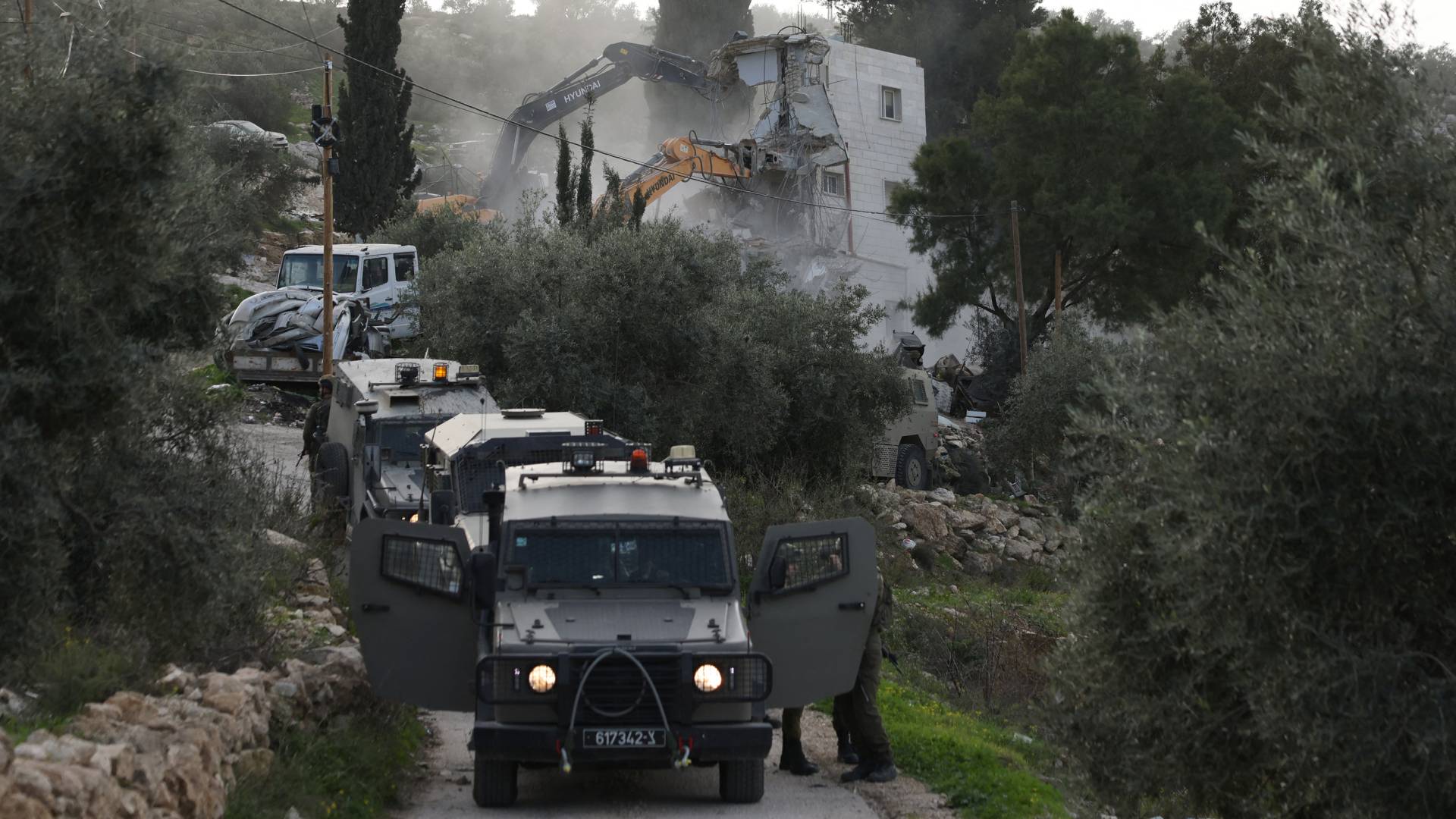
Another genocide... International institutions stop turning Gaza into an uninhabitable area, leading to displacement