






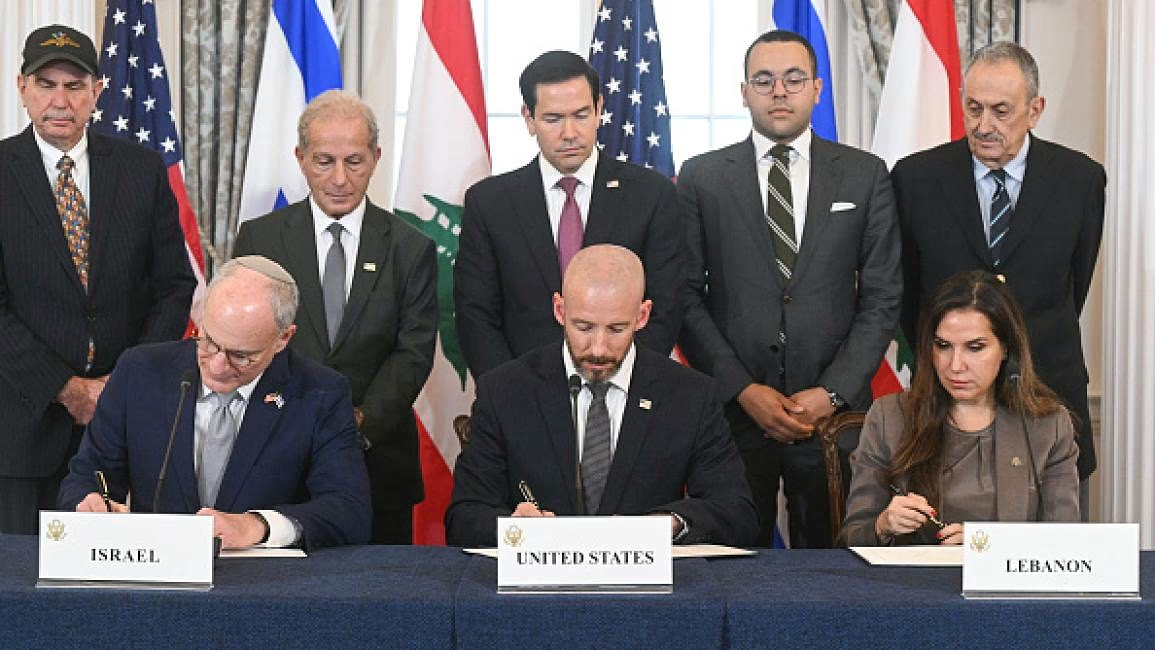
The Italian capital, Rome, is preparing to host a new round of technical talks between Lebanon and Israel from the fourth to the sixth of next August. These meetings are held under the direct patronage of the United States of America, with the aim of moving forward with the implementation of the provisions of the framework agreement reached last month.
Diplomatic sources confirmed that the participating delegations will primarily focus on establishing and expanding what are known as 'pilot areas' in southern Lebanon. This step aims to enhance the presence of the Lebanese Army in these areas in cooperation with the relevant international parties to ensure field stability.
For its part, the Lebanese Army expressed its condemnation of the continued Israeli military operations in the southern areas, considering them an obstacle to the completion of its deployment plans. The army clarified in a statement that these movements contradict the spirit of the framework agreement recently signed by the two countries in Washington.
A US State Department official indicated that the upcoming talks in Rome will seek to settle all outstanding land border issues between the two sides. He added that the ultimate goal is to draft a comprehensive agreement that ensures sustainable security and peace along the common border.
The American vision relies on utilizing the experiences gained from the 'initial areas' to improve implementation mechanisms in the new pilot areas. It is expected that the scope of these areas will be gradually expanded to allow the Lebanese state's authority to be imposed over its entire territory.
According to reports cited by media sources, the meetings will also address the possibility of repositioning Israeli forces in specific areas of southern Lebanon. This diplomatic movement comes amid 'significant momentum' following the meeting between Lebanese President Joseph Aoun and US President Donald Trump.
Washington considers the first pilot area currently being worked on a real opportunity to achieve tangible progress on the ground. This phase aims to disarm armed groups in a transparent and verifiable manner by international bodies.
The tripartite framework agreement seeks to build mutual trust between the parties to move to more advanced stages in the border demarcation file. The Trump administration affirms its full commitment to the success of this path, considering it the only way to achieve long-term stability in the region.
Despite American optimism, no detailed official comment has yet been issued by the Lebanese or Israeli governments regarding the technical agenda of the Rome meetings. It appears that both parties prefer to keep the deliberations within their technical framework, away from sharp political tensions.
Italian Foreign Minister Antonio Tajani had paved the way for these talks by announcing them days ago, emphasizing his country's role in supporting stability efforts. Italy plays a pivotal role in hosting these meetings due to its balanced relations and its participation in international peacekeeping forces.
Under the understandings signed last June, the Lebanese Army is responsible for prohibiting any unofficial military presence in the pilot areas. This includes working to end the armed manifestations of Hezbollah in those specific points as a first step towards a comprehensive Israeli withdrawal.
Despite the relative calm prevailing on the southern front, field violations still pose a significant challenge to mediators. Sources indicate that the intermittent strikes launched by the Israeli army further complicate the tasks of the technical teams assigned to survey the border.
Observers believe that the success of the Rome experiment will largely depend on the parties' commitment to ceasing hostilities and facilitating the movement of Lebanese government forces. This round is considered a real test of the seriousness of both sides in ending the decades-long border dispute.
In conclusion, all eyes remain on the outcomes of the meetings of the technical delegations in the Italian capital, amid international hopes that this step will form a fundamental pillar for a lasting peace agreement. The United States continues to exert pressure to ensure that the negotiation process does not deviate from its intended course.
The technical delegations in Rome will focus on accelerating the full implementation of the framework agreement and expanding the scope of the pilot areas process.
שתף את דעתך
Rome to Host Lebanese-Israeli Negotiation Round to Enhance 'Pilot Areas' in the South