






Media reports have revealed a new direction for the US military leadership to reduce the interception of missiles and drones launched by Iran in the region. This step comes as part of Washington's efforts to preserve its remaining strategic ammunition reserves, especially with increasing pressure on air defense systems on multiple fronts.
Military commanders have issued clear instructions on the need to conserve ammunition as much as possible, and to refrain from intercepting any projectiles that are determined not to hit US forces' positions or damage key vital installations. These criteria also include protecting Washington's allies in the Middle East, where each threat is evaluated based on its actual severity before a launch decision is made.
In a related context, sources reported that air defense system crews in some locations have actually refrained from acting against potential strikes after confirming that those locations were free of American military personnel. This field behavior reflects the extent of concern about the depletion of interceptor missiles, which are now classified as rare assets that must be managed with extreme caution amid ongoing escalation.
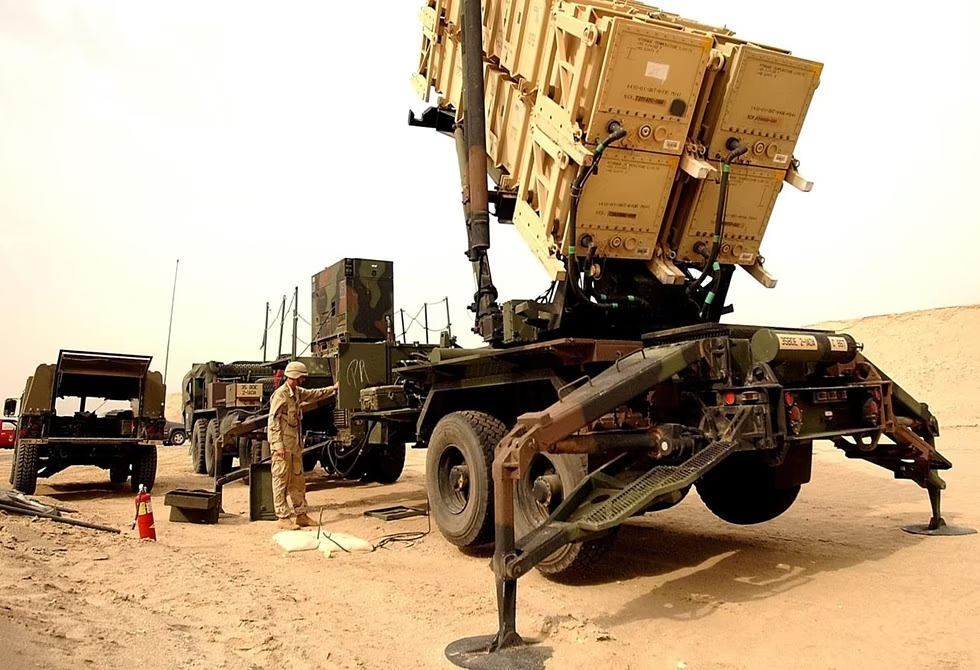
For his part, US President Donald Trump decided to postpone intensifying military operations against Tehran, according to press reports from informed sources on July 25. This decision aims to prevent further erosion of the 'Patriot' missile arsenal and other air defense systems that have been significantly depleted during the past period.
The Chairman of the Joint Chiefs of Staff, Dan Kaine, issued a strong warning during a high-level military meeting, emphasizing that a return to a full-scale confrontation with Iran could put the military in a real predicament. Kaine explained that interceptor missile stockpiles have reached critical levels, which could limit the United States' ability to manage a long-term conflict.
Despite these warnings, President Trump denied any shortage of equipment, telling media outlets that the military possesses far more ammunition than needed. However, this statement contradicts technical reports issued by the Pentagon, which clearly indicated that intensive military support for Ukraine and operations in the Middle East have unprecedentedly weakened strategic reserves.
Military estimates indicate that rebuilding this arsenal requires huge financial investments and timelines that could extend for many years. Amid continued reciprocal strikes, concerns are growing that the depletion of defensive capabilities could expose US positions to future threats, while Washington tries to balance its international commitments between Europe and the Middle East.
Interceptor missile stockpiles could reach dangerously low levels if large-scale combat operations resume.
שתף את דעתך
US reduces interception of Iranian missiles to protect strategic ammunition reserves