






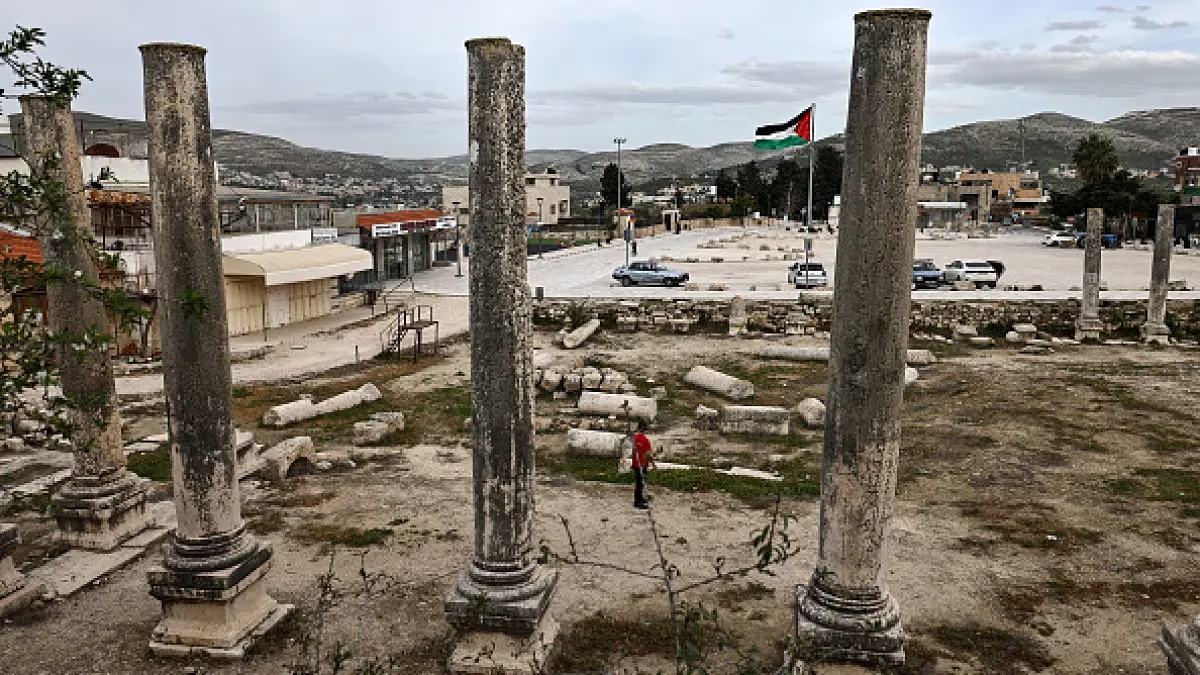
The United Nations Educational, Scientific and Cultural Organization (UNESCO) officially announced the inclusion of the village of Sebastia, located in the occupied West Bank, on the World Heritage List, placing it under the category of sites in danger. This international step aims to activate protection mechanisms for the archaeological site, which faces increasing threats due to Israeli policies aimed at controlling Palestinian historical landmarks.
The decision was widely welcomed by Palestinian officials, who considered it a legal and cultural victory that prevents the implementation of occupation plans aimed at obliterating the Arab identity of the region. In contrast, the occupation authorities expressed their strong dissatisfaction with this step, describing the international organization's decision as politicized, in an attempt to downplay the legal protection provided by this inclusion.
Nizar Kayed, Deputy Mayor of Sebastia, explained that this decision represents a glimmer of hope for preserving the archaeological sites that are subject to systematic destruction attempts. He pointed out in press statements that the occupation seeks, through confiscation decisions, to strike at the cultural depth of the region and destroy the livelihoods of residents who primarily depend on archaeological tourism.
The Palestinian village faces an imminent danger represented by the occupation authorities' announcement of their intention to seize about 445 acres of the archaeological site's land and its surrounding areas. The occupation authorities claim that the purpose of this confiscation is to develop the area, while residents and experts confirm that it is a preliminary step to expand the settlements surrounding the historic village.
A state of concern prevails in Palestinian circles due to a new Israeli bill aimed at extending full control over archaeological sites throughout the West Bank. If approved, this legislation would withdraw historical oversight powers from the Palestinian Authority, which is a clear violation of international agreements signed since the 1990s.
Sebastia is considered one of the most important archaeological treasures in Palestine, with its historical roots extending back more than three thousand years, and it witnessed periods of prosperity during the Roman era. The city includes prominent landmarks such as the colonnaded street and the ancient amphitheater, in addition to the remains of royal palaces dating back to the Iron and Hellenistic ages, making it an open museum of successive civilizations.
The village acquires special religious significance due to the presence of the shrine of Prophet Yahya (John the Baptist), making it a sacred destination for Muslims and Christians alike. Byzantine landmarks intertwine with Crusader and Ottoman ruins in its alleys, painting a complete picture of human history that has inhabited this land for thousands of years without interruption.
For his part, Palestinian Minister of Tourism and Antiquities Hani Al-Hayek confirmed that the World Heritage Committee adopted Sebastia's file based on an 'emergency procedure' due to the seriousness of the situation on the ground. He explained that the site met international criteria as a unique witness to urban, political, and religious development in the region, which imposes an international obligation to protect it from any change in its authentic character.
Al-Hayek pointed out that Sebastia's inclusion on the list of sites in danger is directly due to the threats resulting from occupation practices and plans to change landmarks. He stressed that the ministry will intensify its cooperation with international partners to update management and conservation plans, and ensure monitoring of any Israeli violations that may affect the site after this UN decision.
This Palestinian diplomatic achievement is added to a series of sites that Palestine has successfully registered on the World Heritage List, affirming the authenticity of the Palestinian presence. These steps are part of the battle to consolidate identity in the face of continuous Judaization attempts affecting both stone and people in the occupied territories since 1967.
The Palestinian authorities continue to warn against Israeli field escalation targeting historical sites by imposing military measures that restrict Palestinian access to them. Observers confirm that international protection for Sebastia may constitute a legal obstacle to the ambitions of the extreme Israeli right, which seeks to permanently annex archaeological sites in the West Bank.
This decision came after the confiscation decision issued by the occupation authorities, which destroys the area culturally and historically, and is part of the settlement expansion project.
שתף את דעתך
UNESCO Lists 'Sebastia' on World Heritage in Danger List to Counter Settlement Expansion