






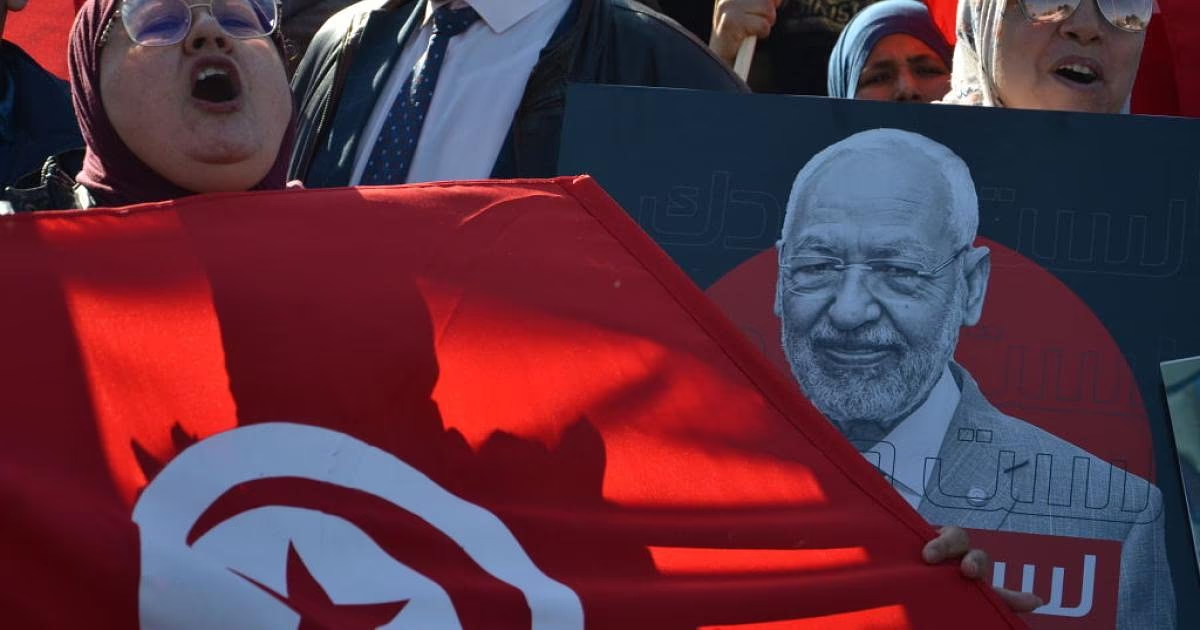
The National Salvation Front in Tunisia expressed widespread concern regarding what it described as conflicting reports related to the health status of the head of the Ennahda Movement, Rached Ghannouchi, and the head of the Front, Ahmed Najib Chebbi. In an official statement issued on Sunday evening, the Front demanded that the Tunisian authorities issue an urgent clarification to end the confusion surrounding the safety of political detainees.
The Front indicated that the absence of official transparency and the continued prevention of Ghannouchi's family and legal team from visiting him have exacerbated fears and led to the alarming spread of rumors. It considered that this blackout places the authorities under direct legal and ethical responsibility for the lives of the detainees who are suffering from difficult detention conditions.
Opposition forces held the Tunisian authorities fully responsible for any repercussions that might affect the health of the detainees, stressing that restricting visits constitutes a blatant violation of human rights. It called for enabling families and lawyers to exercise their legal right to check on their loved ones without any further delay.
In a related context, the Ennahda Movement reiterated its warnings of a severe and dangerous deterioration in the health of its leader, Rached Ghannouchi, noting that information has been received indicating a decline in his vital signs inside prison. The movement stressed the need to provide him with the necessary and immediate medical care, warning against the consequences of concealing his current health status.
Reports had indicated that Ghannouchi suffered a fainting spell inside his cell in Mornaguia prison due to the severe heatwave that has recently hit the country. Legal sources confirmed that this incident occurred last Friday, which sparked a wave of condemnation and demands for the need to improve detention conditions, especially for the elderly.
For her part, lawyer Haifa Chebbi conveyed testimonies about the difficult conditions inside the prison, especially for her 82-year-old father, Ahmed Najib Chebbi. She explained that the harsh climatic conditions increase the suffering of political detainees who face what they describe as malicious charges, demanding their immediate release for health and humanitarian reasons.
On the international level, Amnesty International entered the crisis, calling on the Tunisian authorities to take urgent measures to protect prisoners from high heatwaves. The organization specifically mentioned people with chronic diseases and disabilities, stressing that the state is obligated to provide a detention environment that respects human dignity.
Despite these pressures, no official comment has yet been issued by the Ministry of Justice or the Prisons Administration regarding the specific health status of Ghannouchi and Chebbi. Official sources usually content themselves with affirming their commitment to international standards and human rights within prison institutions, without addressing the details of controversial individual cases.
The National Salvation Front concludes its demands by calling on national and international human rights organizations to closely monitor the file of political detainees in Tunisia. Opposition political forces affirm their adherence to the demand for the comprehensive release of all detainees on the background of their political activity, considering that their continued detention represents an obstacle to any future political stability.
The continued prevention of Ghannouchi's family and his defense team from visiting him and checking on his condition has contributed to increasing ambiguity and the spread of rumors.
שתף את דעתך
Tunisia: Human rights and political demands to reveal the health status of Ghannouchi and Chebbi amid official ambiguity