





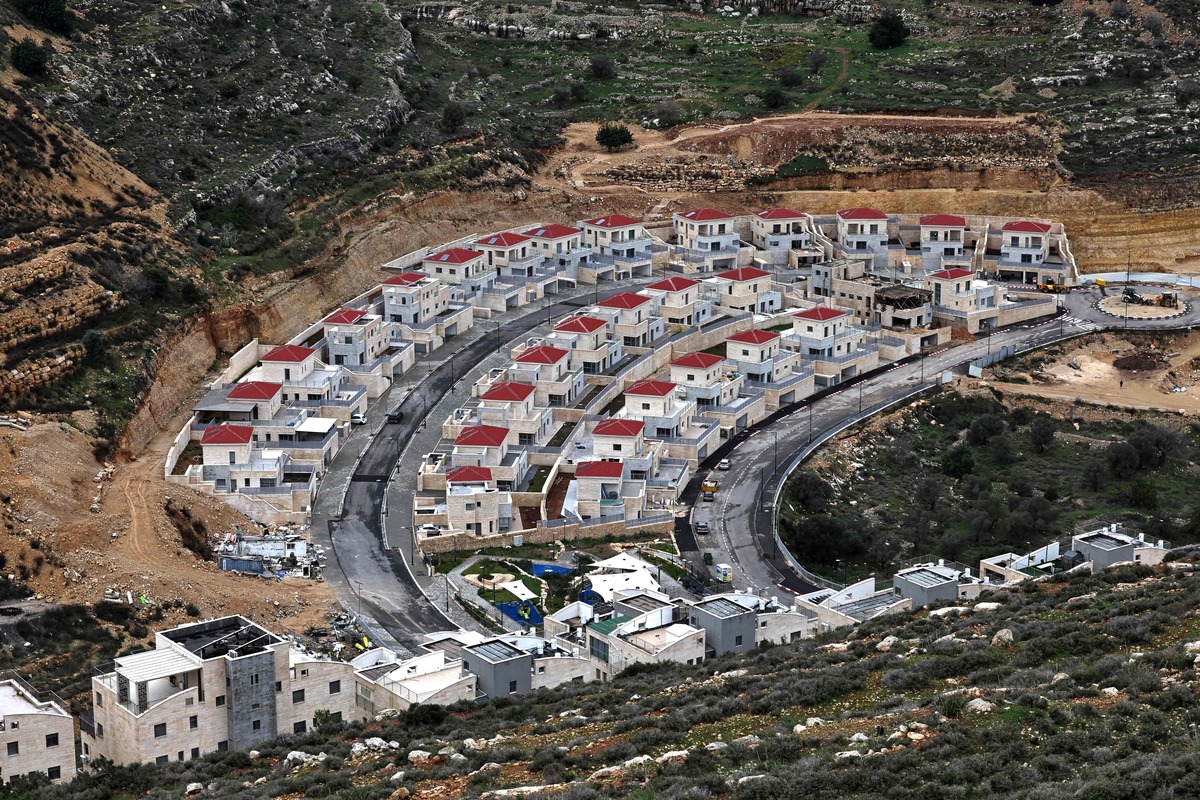
"Peace Now": Establishment of 21 New Outposts in Area "B" Within Two and a Half Years • The Netanyahu-Smotrich-Ben Gvir government implemented a broader policy aimed at blurring the distinction between Area "B" and Area "C", destroying key provisions of the Oslo Accords, liquidating the two-state solution, and imposing a new settlement fait accompli. • Smotrich promotes his "decisive" plan to "flood" the West Bank with a million settlers and impose Israeli sovereignty over it. • Robinson: The policies of the Netanyahu government and Ministers Smotrich and Ben Gvir aim to make Palestine disappear physically, economically, culturally, and politically... • Settler terrorism has created settlement pastures, built new roads, seized water sources, and displaced Palestinian pastoral communities. • Settlers have isolated and controlled about 14% of the West Bank's area within two years. • The "Amana" settlement organization in Sheikh Jarrah, nominally banned in the United States and Britain for its role in supporting outposts linked to settler terrorism, has invested millions of dollars in establishing, expanding, and protecting these outposts. • Israel cancels the "two-state solution" and allows the expansion and strengthening of settlement outposts in the area. Jerusalem - Muhammad Abu Khdeir In an unprecedented development since the signing of the Oslo Accords, the Israeli occupation government, led by Benjamin Netanyahu, his Finance Minister Bezalel Smotrich, and National Security Minister Itamar Ben Gvir, has embarked on a systematic settlement policy that far exceeds the limits of the signed agreements, aiming to overturn the political and legal classifications of the West Bank. Settlements are no longer isolated outposts in Area "C"; rather, they have become a tool to blur the distinction between the areas classified under the Second Oslo Accord (1995), creating a new fait accompli that undermines any possibility of a contiguous and viable Palestinian state. What international and Israeli human rights reports document is not merely settlement violations, but a link in a comprehensive strategy aimed at "canceling the two-state solution" leading to "canceling the Palestinian Authority," in preparation for the full occupation of the West Bank and the displacement of its residents, in a clear colonial settlement project led by extremists in the Israeli government. Qualitative Shift in Settlement Policy: Area "B" a New Arena for Expansion 2024 marked a radical turning point in Israeli settlement policy, as the Settlement Watch team of the "Peace Now" movement documented the establishment of seven new settlement outposts deep in Area "B" for the first time since the signing of the Oslo Accords. By 2026, the total number rose to 21 outposts, distributed across multiple areas including the "Agreed Nature Reserve" east and south of Bethlehem, Ramallah areas, the southern Hebron hills, and Nablus. The danger of this development lies in its fundamental difference from previous cases that saw the extension of some existing settlements to the edges of Area "B". The new outposts were established deep in lands over which the Palestinian Authority had full civil jurisdiction, including planning and construction authority, in a grave violation of the Oslo Accord which grants Israel only security control over these areas. Former New Zealand Prime Minister Helen Clark and former Irish President Mary Robinson, in a statement by "The Elders" after a visit to the West Bank, affirmed that "the policies of the Netanyahu government, especially Ministers Smotrich and Ben Gvir, aim to make Palestine disappear physically, economically, culturally, and politically," noting that settlement expansion "constitutes annexation of land and undermines the chances of a two-state solution." Blurring Borders and Engineering a New Fait Accompli The objectives of this policy go beyond establishing the outposts themselves, to include a radical change in the legal and administrative structure of the West Bank, manifested in: Expanding the powers of the (Civil Administration/Israeli Military Rule of the West Bank): In July 2024, the Civil Administration was granted the authority to demolish Palestinian buildings within the "Agreed Nature Reserve," an authority previously held by the Palestinian Authority. Later, the Israeli Security Cabinet decided that enforcement authorities of the (Civil Administration/Israeli Military Rule of the West Bank) would operate in Areas "A" and "B" on issues of environmental protection, antiquities, and water resources. These decisions, according to "Peace Now" analysis, show a broader policy aimed at blurring the distinction between Area "B" and Area "C", and undermining key provisions of the Oslo Accords. Legislative Normalization of Annexation: Smotrich and Ben Gvir are working to translate this settlement project into legislation and laws. In July 2024, the Knesset overwhelmingly voted in favor of a resolution rejecting the establishment of a Palestinian state, which academic researchers described as a "major success for the government in setting the tone in the Knesset regarding Palestinian rights." Smotrich continues to promote his "decisive" plan aimed at "flooding" the West Bank with a million settlers and imposing full Israeli sovereignty over it. Organized Government Funding Mechanisms Investigations reveal complex funding mechanisms managed by the Israeli government to support these outposts, including: Budget for "Security Needs of Settlement Points": Approximately 54 million shekels are allocated annually to fund the construction of roads, solar panels, electric gates, vehicles, drones, cameras, and generators. Budget for "Monitoring Units": 30 million shekels are allocated annually to cover salaries and equipment for monitoring teams, including road construction, fence installation, cameras, and electric gates. Ministry of Agriculture Support: The Israeli Ministry of Agriculture granted approximately 3 million shekels between 2017 and 2024 as grazing grants for settlement outposts. "Amana" Foundation Investments: The Israeli settlement organization "Amana," which has been sanctioned by the United States and Britain for its role in supporting outposts linked to violence against Palestinians, has invested millions of shekels in establishing and maintaining these outposts. A report by "Peace Now" and "Kerem Navot" indicates that settlers use multiple methods to consolidate their control, including establishing settlement pastures, building new access roads totaling 116.4 kilometers, seizing water sources, and displacing Palestinian pastoral communities. These methods have enabled settlers to control about 14% of the West Bank's area, equivalent to 786,000 dunams. Forced Displacement and Property Seizure Palestinian villages and towns adjacent to these outposts have faced escalating pressures, including the displacement of families, the seizure of Palestinian family homes by settlers, as happened near the village of Beitillu northwest of Ramallah, and preventing Palestinians from accessing their agricultural lands and pastures in preparation for their theft and seizure, causing severe damage to the Palestinian agricultural economy. These activities constitute a clear violation of international law, specifically Article 49 of the Fourth Geneva Convention which prohibits the occupying power from transferring parts of its own civilian population into the territory it occupies, Security Council Resolution 2334, and the International Court of Justice's opinion (July 2024) which declared the illegality of the prolonged Israeli occupation and called for the immediate evacuation of all settlements. Geopolitical and Strategic Repercussions 1. Liquidation of the Two-State Solution These settlement outposts pose a major obstacle to achieving the two-state solution, as they work to: Fragment geographical contiguity: The new outposts lead to the fragmentation of Palestinian lands and prevent communication between cities and villages. Change demographic composition: Settlement policies aim to change the demographics of targeted areas and forcibly displace Palestinians, weakening the chances of a contiguous and viable Palestinian state. Weaken the Palestinian Authority: Settlement expansion in Area "B" undermines Palestinian planning and construction authority, and weakens the national authority's standing in the eyes of its citizens. Risks of Escalation and Violence The commander of the Central Command in the Israeli army, Major General Avi Blot, warned that illegal settlement and settler violence represent a "dangerous phenomenon that threatens everyone's security," noting that "Jewish terrorism threatens everyone's security," and warned that this phenomenon harms Israel's international legitimacy and consumes the time and effort of army forces. Towards a Comprehensive Strategic Confrontation Field data and human rights analyses show that the phenomenon of establishing settlement outposts in Area "B" is not merely individual incidents, but part of a systematic Israeli government strategy led by Netanyahu, Smotrich, and Ben Gvir, aimed at undermining the Oslo Accord, liquidating the two-state solution, and imposing a new settlement fait accompli that erases the distinction between Palestinian areas in the West Bank. This policy, according to "Peace Now" estimates, has exceeded all limits that existed since 1993, and has taken control of lands that were under full Palestinian civil jurisdiction. Reports indicate that the Israeli government is investing hundreds of millions of dollars in supporting these outposts through complex funding mechanisms, with direct involvement of the Israeli army (Civil Administration/Israeli Military Rule of the West Bank) in facilitating these illegal activities. At the same time, these policies are accompanied by escalating settler terrorism campaigns, forced displacement of Palestinian families, and seizure of water sources and agricultural lands. The continuation of this phenomenon without effective deterrence threatens not only the future of the political solution based on the two-state principle, but also portends waves of violent escalation that could affect everyone, as senior Israeli military officials themselves have warned. The warnings of the United Nations and the international community, and the resolutions of the International Court of Justice, confirm that these policies constitute a clear violation of international law and an undermining of the Palestinian people's right to self-determination. Accordingly, human rights organizations call for: Effective international action: To stop Israeli government funding for settlement outposts, and exert real pressure on the occupation government to dismantle them and comply with international legitimacy resolutions. Strengthening Palestinian steadfastness: By supporting Palestinian communities threatened with displacement, providing international protection, and enabling them to remain on their lands. Reviving the political track: By setting a clear timetable for ending the occupation and establishing a Palestinian state, and restoring the Oslo Accord as a binding reference framework. Documentation and prosecution: By documenting violations and submitting them to international judicial bodies, and holding accountable those responsible for funding and supporting illegal settlement activities.

ד 22 יול 2026 5:43 pm - שעון ירושלים
"Peace Now": Establishment of 21 New Outposts in Area "B" Within Two and a Half Years
שתף את דעתך
"Peace Now": Establishment of 21 New Outposts in Area "B" Within Two and a Half Years