






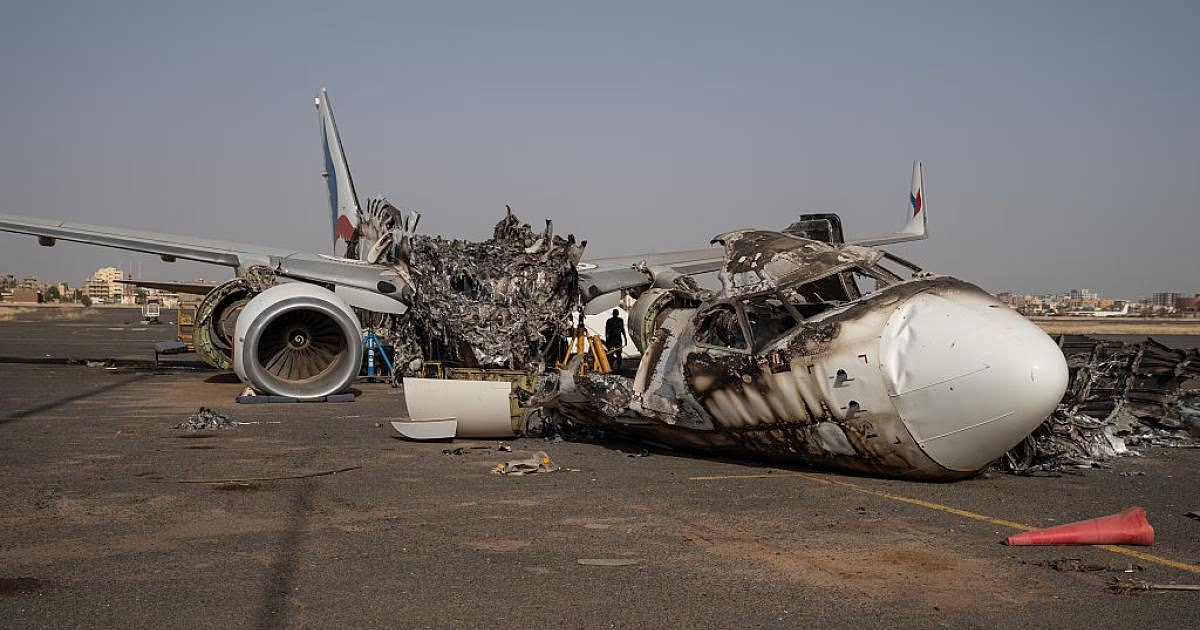
An extensive investigative report has revealed the involvement of companies managed by Stephen Shaulis, a former US Army Special Forces soldier, in operating a fleet of old cargo planes to support the logistical operations of the Rapid Support Forces (RSF) in Sudan. The findings were based on a meticulous analysis of flight records and satellite data, in addition to interviews with dozens of intelligence officials, diplomats, and weapons experts.
The threads of this case began to unravel after the Sudanese army destroyed a Boeing 737 aircraft in May 2025, while it was at Nyala Airport in Darfur, which is the main stronghold of the Rapid Support Forces. Informed sources reported that the airstrike resulted in the deaths of 54 people, including a pilot and an engineer working for Occidental Sport Services, a company owned by Shaulis and registered in the UAE.
Flight tracking operations monitored two additional Boeing 727 aircraft linked to the same network, which were transferred from the United States and Brazil to the African continent. These aircraft conducted frequent flights to sensitive logistical centers in Chad, Libya, and Somalia, areas classified as essential supply bases for the military movements of the Rapid Support Forces.
Technical data showed that the three aircraft landed at least 16 times at Bossaso, Kufra, and Nyala airports, locations that UN experts confirmed form the backbone of the supply network relied upon by the forces during the siege of El Fasher. These aircraft were suspiciously stationed within the military section of N'Djamena Airport in Chad, away from the oversight of local civil aviation authorities.
Stephen Shaulis, 63, is a pivotal figure in the military contracting sector, having founded C.A.D.G. in Singapore in 2002. According to official records, his companies have secured massive contracts exceeding $400 million from the US government, in addition to deals worth $160 million with UN agencies over the past two decades.
Shaulis's companies' activities varied between establishing facilities for US forces in Afghanistan and Iraq, and providing logistical services at military airports in African countries such as Kenya, the Central African Republic, and Mozambique. Despite this extensive record of cooperation with international entities, the involvement of his aircraft in the Sudanese conflict has raised deep questions about the nature of the missions they were performing out of sight.
For his part, UN spokesperson Stéphane Dujarric stated that the organization had contracted with Shaulis's companies on previous projects, but he categorically denied the organization's knowledge of the recent air operations in Sudan. Dujarric affirmed that the UN had not entered into any contracts with these companies to operate within Sudanese territory during the current conflict.
Observers considered the destruction of the aircraft in Nyala a significant political and military turning point in the course of the war, as the Sudanese government accused regional parties of using these flights to transport military equipment. This incident was followed by a series of diplomatic tensions, including the severance of relations with countries accused of supporting the Rapid Support Forces, which those countries have repeatedly denied.
In contrast, Craig Munro, Shaulis's business partner, denied any connection of their companies to the Rapid Support Forces, claiming that the aircraft were used to transport medical and humanitarian equipment for a client. Munro alleged that the information regarding landings at Kufra and Nyala airports was inaccurate, despite visual evidence and tracking data proving the exact opposite.
Although the investigation could not determine the funding source for these flights or the nature of the cargo with absolute precision, the material evidence closely links the aircraft to the RSF's air supply network. Military experts confirm that this network has a complex international character, relying on intermediaries and cross-border logistics companies to circumvent international oversight imposed on the conflict.
The destruction of the Boeing aircraft at Nyala Airport revealed the threads of a complex international logistical network supporting the military operations of the Rapid Support Forces.
שתף את דעתך
Investigation reveals former US soldier's involvement in managing an air supply network for the Rapid Support Forces