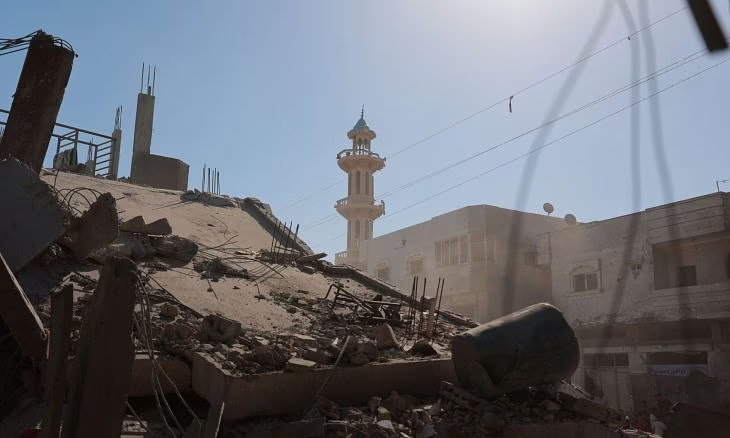







The Israeli occupation forces have escalated their field measures in the Gaza Strip by expanding the scope of what is known as the 'Yellow Line,' which has created a bitter reality for the besieged population. The engineering units of the occupation army carried out extensive demolition operations of residential buildings in the areas located behind this line, leading to the destruction of entire neighborhoods and the displacement of thousands of additional families.
Local sources reported that the occupation recently expanded the area of this security zone to engulf about 70% of the total land of the Gaza Strip, after it constituted 53% in previous stages. This systematic expansion has crammed more than two million Palestinians into very narrow spaces lacking the minimum necessities of life and basic services, exacerbating the humanitarian crisis unprecedentedly.
On the ground, the occupation army announced the assassination of Yahya Saeed Mohammed Hamdan in the southern part of the Strip, claiming he was a cell leader in the elite unit of the Hamas movement. The army statement alleged that Hamdan was among those who participated in the events of October 7, specifically in the storming of the Re'im military camp adjacent to the Strip, as part of the ongoing direct targeting operations of field cadres.
In the context of ongoing violations, a Palestinian woman was injured by the bullets of the occupation forces while she was in the Faluja area west of Jabalia refugee camp in the northern Strip. This coincided with intense artillery shelling targeting the eastern and northern areas, reflecting the continued breach of field understandings and the targeting of civilians in their presumed displacement areas.
Gaza City also witnessed massive explosions resulting from the demolition of residential blocks located behind the Yellow Line, as the occupation seeks to change the geographical features of the area. Injuries were also recorded among citizens east of Al-Bureij refugee camp and in the Al-Amal neighborhood in Khan Yunis city, due to direct firing from invading military vehicles.
On the human rights front, Al-Dameer Association for Human Rights issued a position paper warning against turning the eastern part of the Strip into a permanent buffer zone. The paper affirmed that what is happening is 'evacuation engineering' aimed at the forced displacement of Palestinian residents and creating an environment that makes continued life in those areas practically and legally impossible.
The human rights organization clarified that these practices constitute a grave violation of the occupation's obligations under international humanitarian law and fall within a systematic policy of long-term occupation. The paper called on the international community to act immediately to stop the crime of genocide and ensure that occupation leaders do not escape punishment before international courts.
As part of relief efforts, the Qatari Committee for the Reconstruction of Gaza continued to provide urgent humanitarian aid to the most affected groups in various governorates. The aid included providing assistive devices to hundreds of people with physical disabilities, including wheelchairs and walkers, to alleviate their suffering under harsh displacement conditions.
For its part, the United Nations warned that the severe shortage of fuel and specialized equipment hinders efforts to retrieve the bodies of martyrs from under the rubble. The international organization indicated that thousands of people are still missing, prolonging the suffering of families waiting to know the fate of their children amidst the decomposition of bodies and the difficulty of conducting DNA tests.
UN reports confirmed that the absence of explosive hazard assessment operations significantly delays the return of residents to their destroyed neighborhoods and slows down the pace of any future reconstruction operations. The accumulated rubble in the streets remains a major obstacle to the movement of rescue and ambulance teams, further complicating the already deteriorating humanitarian situation in all areas of the Strip.
Israeli warships continue to target the beach and sea area with heavy gunfire, depriving fishermen of their sole source of livelihood and threatening the lives of displaced people on the coast. The northeastern areas of Rafah city were also subjected to intermittent artillery shelling, indicating that there is no truly safe area throughout the Gaza Strip.
Observers believe that the occupation's insistence on expanding the 'Yellow Line' aims to impose new geographical realities that prevent the return of displaced people to their homes in the near future. This policy puts the international community to a real test of its ability to compel the occupation to abide by the decisions of the International Court of Justice and stop settlement and security expansion within the Strip's borders.
Human rights organizations called for immediate investigations into the crimes committed within the 'security zone,' considering that international silence gives the green light for the occupation to continue destroying infrastructure. They affirmed that accountability is the only way to stop the bloodshed and ensure the protection of civilians who are now without shelter or legal protection.
In conclusion of developments, the humanitarian situation in Gaza remains caught between the hammer of continuous shelling and the anvil of siege and the expansion of buffer zones. With continued restrictions on the entry of humanitarian aid, fears of a new famine disaster are increasing in the areas isolated by the occupation behind the newly established Yellow Lines.
The Yellow Line has become an engineering of evacuation and the transformation of areas into a security buffer zone under Israeli control, indicating a trend towards long-term occupation.
שתף את דעתך
'Yellow Line' Expansion Devours 70% of Gaza's Area as Occupation Continues Demolition and Displacement Operations