






The Gaza Strip has completed its thousandth day under the weight of one of the most brutal wars in modern history, with no real signs of a breakthrough on the horizon to end the escalating humanitarian suffering. Despite eight months passing since the ceasefire agreement came into effect, the living reality continues to deteriorate amidst the closure of crossings and the complete halt of reconstruction projects.
Field sources in Khan Yunis camp and the displacement areas in Al-Mawasi have observed the continued features of widespread destruction and the absence of any actual steps to remove rubble or open closed roads. Residents there face a truce described as fragile, with repeated military violations making return to original areas a distant dream fraught with constant dangers.
In live testimonies from the heart of suffering, a displaced citizen confirmed that the hopes placed on the truce have faded with the continued absence of clean water and basic services, and even the arrival of shells at tent gatherings. This bitter reality has left residents in a state of constant anticipation and anxiety, amidst the lack of security that international understandings were supposed to provide.
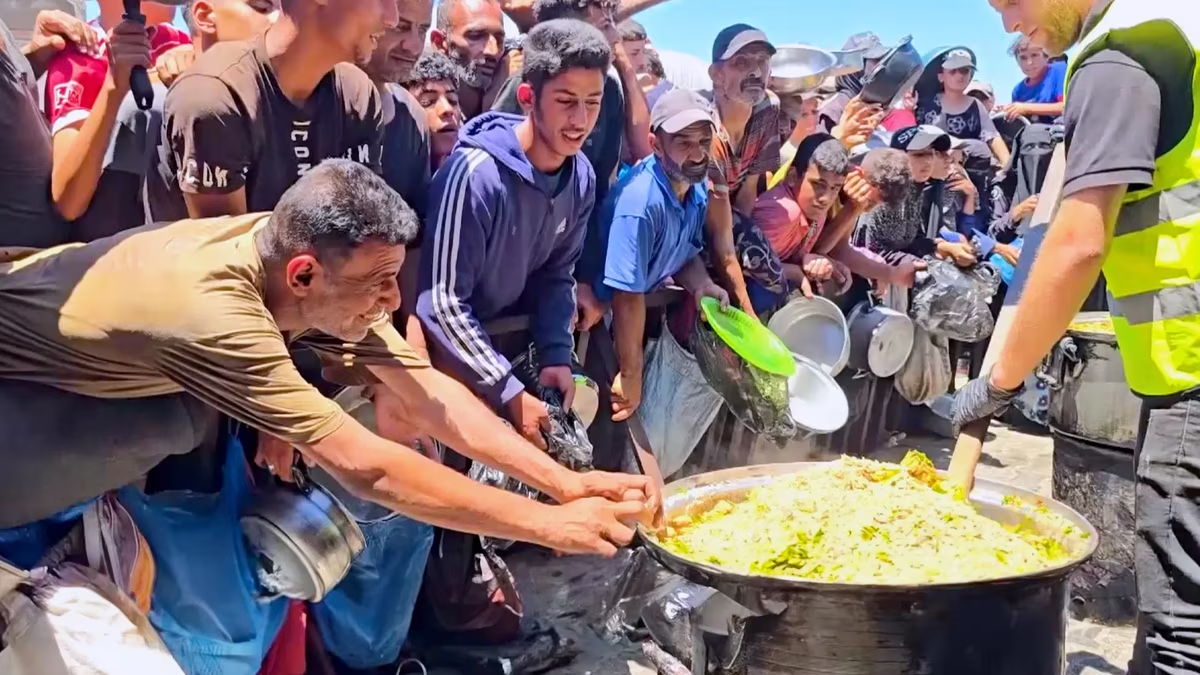
Regarding food security, "food kitchens" have become the only refuge for thousands of families suffering from a severe shortage of supplies due to restrictions imposed on crossings. Citizens, including children and women, queue for long hours under the scorching sun awaiting a meal that may not be enough for family members, and often quantities run out before their turn comes.
Citizens in aid queues reported that they are forced to wait from early morning hours to secure their only livelihood, as their tents are completely devoid of any basic foodstuffs. These scenes illustrate the scale of the humanitarian catastrophe experienced by nearly two million people whose fate is linked to what the Israeli authorities allow to enter through partially closed crossings.
According to official data issued by the Ministry of Health, the human toll has reached terrifying figures, with over 73,000 Palestinians martyred, the vast majority of whom are women and children. The number of injured has also risen to over 173,000 people, many of whom suffer from permanent disabilities amidst a dilapidated and besieged health system.
The issue of missing persons continues to break the hearts of Gazan families, as estimates indicate that there are about 11,000 people under the rubble of destroyed homes without the ability to retrieve their bodies. Reports from international food security organizations confirm that 1.6 million people in the Strip, especially in the northern areas, face real hunger and a severe shortage of medicines and fuel.
As for infrastructure, the Union of Municipalities revealed an unprecedented scale of destruction affecting vital facilities, with over 4 million linear meters of main and secondary roads being bulldozed and destroyed. This systematic destruction has made movement between cities and camps a difficult and dangerous process, and has isolated entire population centers from their surroundings.
The water sector was not spared from targeting, as about one million linear meters of distribution networks went out of service, in addition to the destruction of one million linear meters of sewage networks. Military operations also targeted 725 water wells, leading to a severe water crisis and environmental pollution that threatens the spread of epidemics and diseases among the displaced.
Losses were not limited to infrastructure but also extended to human resources working in the field, with 300 employees and engineers from municipal staff martyred while performing their duties in an attempt to repair what the occupation destroyed. Municipalities also lost more than 500 heavy vehicles and bulldozers, paralyzing their ability to deal with waste accumulation or open vital roads.
Amidst this bleak scene, the coastal area of Al-Mawasi stands out as a major displacement center lacking the most basic infrastructure, where hundreds of thousands live in dilapidated tents on the sand. Health and environmental problems are exacerbated in these areas due to groundwater contamination and the absence of sewage networks, placing the international community before a historical responsibility to end this siege.
After 8 months of truce, we expected rubble to be removed and roads to be widened, but we find no clean drinking water, and shells still pursue our tents.
שתף את דעתך
A Thousand Days of Aggression on Gaza: A Heavy Toll of Destruction and Hunger Queues Haunting the Displaced