






A high-level delegation from the Hamas movement, led by leader Zaher Jabarin, arrived in the Egyptian capital, Cairo, on Tuesday for pivotal discussions with Egyptian officials and international mediators. These diplomatic moves aim to complete the implementation of the ceasefire agreement and discuss arrangements related to shaping the future of the Gaza Strip in light of current field developments.
Taher Al-Nono, political advisor to the head of the Hamas movement, stated that the visit primarily focuses on discussing the 'roadmap' drafted by Nikolay Mladenov, the High Representative for the Peace Council, in coordination with mediators. This plan aims for a smooth transition to the second phase of the agreement, which includes complex administrative and security arrangements to ensure stability in the Strip.
The proposed second phase includes the entry of a specialized administrative committee and international protection forces into the Gaza Strip, as a preparatory step before a full Israeli withdrawal from all areas of the Strip. Through these discussions, the movement seeks to ensure the implementation of provisions that guarantee Palestinian sovereignty and protect civilians from any future aggressions.
Informed sources confirmed that the movement's delegation will deliver the official and unified response of the Palestinian factions to the 'amended paper' that the leadership received about two weeks ago from international mediators. The past week witnessed intensive consultations to bridge viewpoints, including new ideas proposed in coordination with the American side to overcome obstacles hindering the negotiation process.
Regarding the arms file, which is considered one of the most sensitive and complex issues, sources stressed the firm Palestinian position rejecting any Israeli occupation interference in this matter. The movement insists that the 'National Committee for the Administration of Gaza' be the sole authority authorized to inventory and address the arms file, considering it an internal matter subject to national consensus.
This new round of negotiations comes at a time when parties are exchanging accusations of violating the ceasefire understandings signed last October. Medical and field reports have monitored the continued fall of casualties, with more than 1050 Palestinians killed by occupation forces since the presumed truce began, putting previous agreements to the test.
On the other hand, sources recorded the killing of 5 Israeli soldiers during the same period, reflecting the fragility of the field security situation and the continuation of tensions despite diplomatic efforts. Palestinian factions demand an end to the daily assassinations carried out by occupation forces and full adherence to what was agreed upon in previous Sharm El Sheikh understandings.
1. The movement places the activation of the 'Humanitarian Protocol' as a fundamental and essential condition for moving to any future political or security steps in the negotiation process. This protocol includes ensuring the entry of all basic needs for the population, providing necessary materials for restoring dilapidated infrastructure, and supporting hospitals and bakeries suffering from severe resource shortages.
Intensive meetings held by the Hamas leadership with mediators from Egypt, Qatar, and Turkey have resulted in the crystallization of a unified national position representing all active Palestinian forces. This consensus aims to present a comprehensive vision to mediators that guarantees the rights of the Palestinian people and puts a definitive end to the military aggression and siege imposed on the Gaza Strip for years.
The current meetings in Cairo revolve around transforming the war cessation agreement from mere paper understandings into a tangible reality on the ground. The Palestinian negotiator focuses on the necessity of a comprehensive cessation of all aerial and artillery bombardment operations, and an end to the policy of field assassinations targeting cadres and activists in various areas of the Strip.
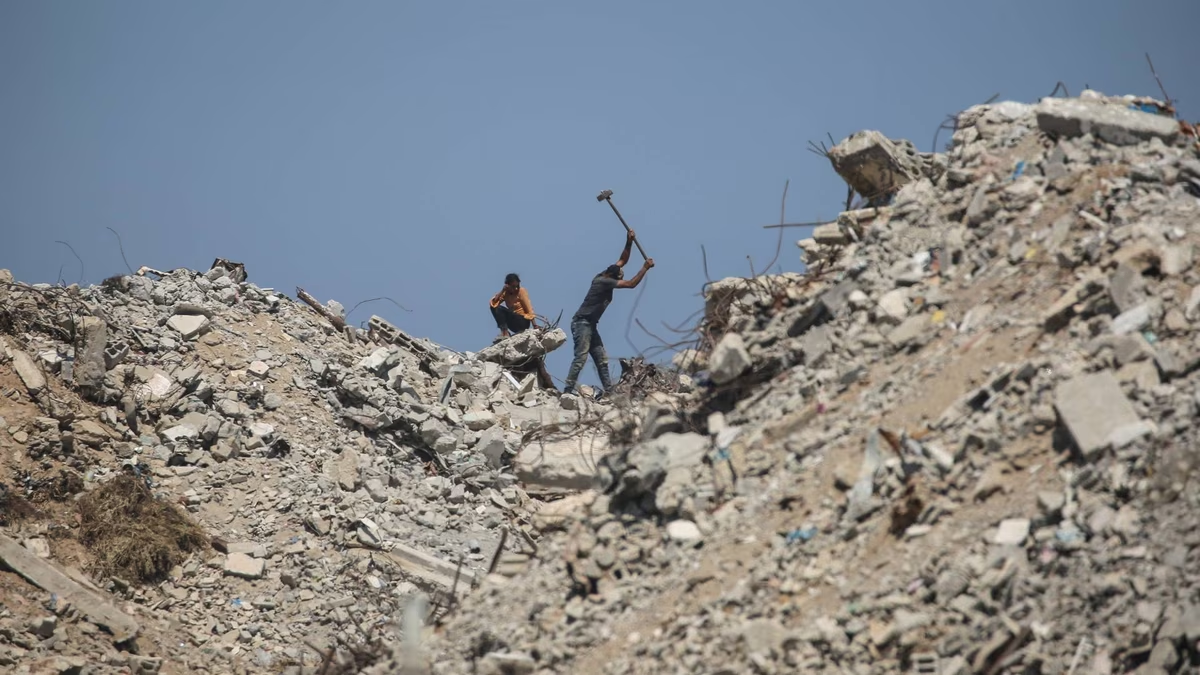
In the relief dimension, the factions demand the permanent opening of all border crossings and the facilitation of humanitarian and medical aid flow without Israeli restrictions or obstacles. This step is considered a fundamental pillar for alleviating the escalating humanitarian suffering and enabling international and local institutions to play their role in assisting displaced persons and rebuilding what the occupation has destroyed.
The discussions also seek to enable the 'National Committee' to assume its official duties in managing the affairs of the Gaza Strip, ensuring the unity of the administrative and political position. The Palestinian side affirms that the success of any agreement depends on the extent of the occupation's commitment to the strict implementation of the first phase's provisions and the cessation of all forms of military aggression as a gesture of goodwill towards international efforts.
Hamas insists that the National Committee for the Administration of Gaza exclusively handle the process of inventorying and addressing arms, with an absolute rejection of any role for the occupation in this sovereign file.
שתף את דעתך
Hamas Delivers Unified Faction Response to Mediators in Cairo, Adheres to Humanitarian Protocol