






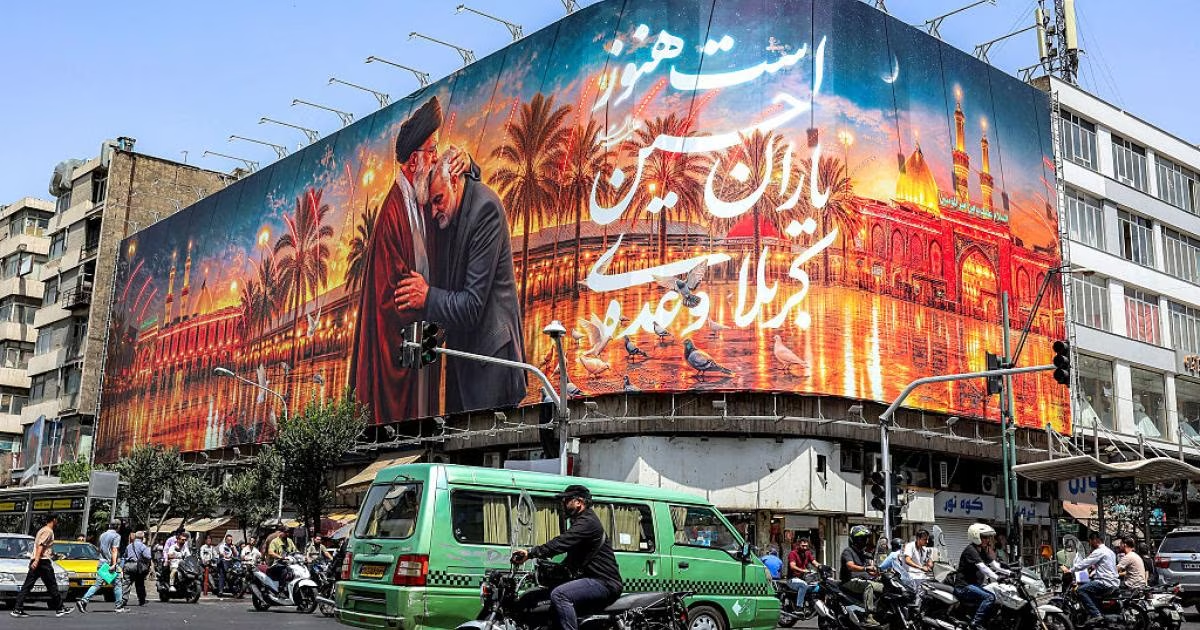
The Qatari capital, Doha, is preparing to host a high-level meeting tomorrow, Tuesday, bringing together American and Iranian officials in a new attempt to de-escalate the growing tensions between the two sides. The American administration announced that President Donald Trump's special envoys, Steve Witkoff and Jared Kushner, will lead the American delegation in these sensitive talks.
US President Donald Trump confirmed via social media platforms that the Iranian side requested this meeting in Qatar, without revealing additional details about the agenda. This announcement comes just hours after the Iranian Foreign Ministry denied reports of arrangements for a direct meeting with the American side.
For her part, White House spokeswoman Caroline Leavitt clarified that Witkoff and Kushner will travel to Doha to discuss the terms of the recently signed memorandum of understanding. Leavitt indicated that technical discussions will take place on the sidelines of the high-level meetings to ensure that the precise details related to the existing agreements are addressed.
Leavitt emphasized Washington's commitment to the terms of the ceasefire agreement but warned at the same time that any acts of violence would be met with a similar response. She added that the United States has already responded to attacks targeting commercial vessels, affirming President Trump's desire to see tangible progress in the regional peace process.
In a related context, the Sultanate of Oman entered the crisis with statements by its Foreign Minister, Badr Al Busaidi, who affirmed his country's rejection of imposing any fees on ships passing through the Strait of Hormuz. Al Busaidi stressed the necessity of adhering to international law in any arrangements concerning the strategic shipping lane, noting that there is ongoing dialogue with Tehran on this matter.
Omani Minister clarified that there is a clear difference between the rejected transit fees and the costs of maritime and environmental services that can be discussed voluntarily. These statements come at a sensitive time as the Strait of Hormuz represents a focal point in the ongoing negotiations between international powers and Iran to ensure the safety of global navigation.
Talks in Doha are based on the memorandum of understanding signed on June 17, which consists of 14 clauses aimed at ending a four-month conflict. Under it, the two parties agreed to cease hostilities and reopen the Strait of Hormuz to global trade, but field violations have threatened this path.
Informed sources reported that the technical teams tasked with implementing the memorandum will meet in Doha in the coming days to strengthen direct communication channels. Through these channels, mediators aim to contain any field incidents that could lead to the collapse of the fragile understandings that were reached with difficulty.
An Iranian official source revealed that the focus of Tuesday's meeting will primarily be on managing the Strait of Hormuz and avoiding military escalation. This round differs from previous talks hosted by Switzerland, as the parties seek to establish practical mechanisms to prevent maritime and aerial friction in the Gulf region.
On the financial front, sources confirmed that Tehran and Doha are in the final stages of agreeing on technical procedures for the release of $6 billion in Iranian assets. These funds are expected to be transferred in two packages, as part of confidence-building measures preceding deeper negotiations on the nuclear file.
Iranian President Masoud Pezeshkian described the release of these funds as a major victory for the Iranian people, noting that the agreement also included lifting sanctions on the oil sectors. Pezeshkian affirmed that the recovery of frozen assets in Qatar is an essential step towards alleviating the economic pressures his country is suffering from as a result of international sanctions.
On the ground, tension remains high after an exchange of missile strikes between the two sides, with Iran targeting American military sites in Kuwait and Bahrain early Sunday. This escalation came in response to threats made by President Trump, putting the Doha talks to a real test of diplomacy's ability to curb the military option.
In Lebanon, Parliament Speaker Nabih Berri expressed pessimism about the agreement brokered by Washington between Lebanon and Israel to cease hostilities. Berri warned that the terms of the agreement might aim to stir internal divisions, ruling out its implementation on the ground given the current circumstances and Israeli intransigence.
Tehran closely links regional issues, asserting that the withdrawal of Israeli forces from southern Lebanon is an integral part of any comprehensive agreement with Washington. Iran believes that ending the war that began last February requires a package of regional understandings that guarantee the interests of all parties involved in the conflict.
The President wants to see the peace process move forward and reach a conclusion, but violence will be met with violence.
שתף את דעתך
Anticipated Summit in Doha to De-escalate Tensions Between Washington and Tehran with Kushner and Witkoff Participating