






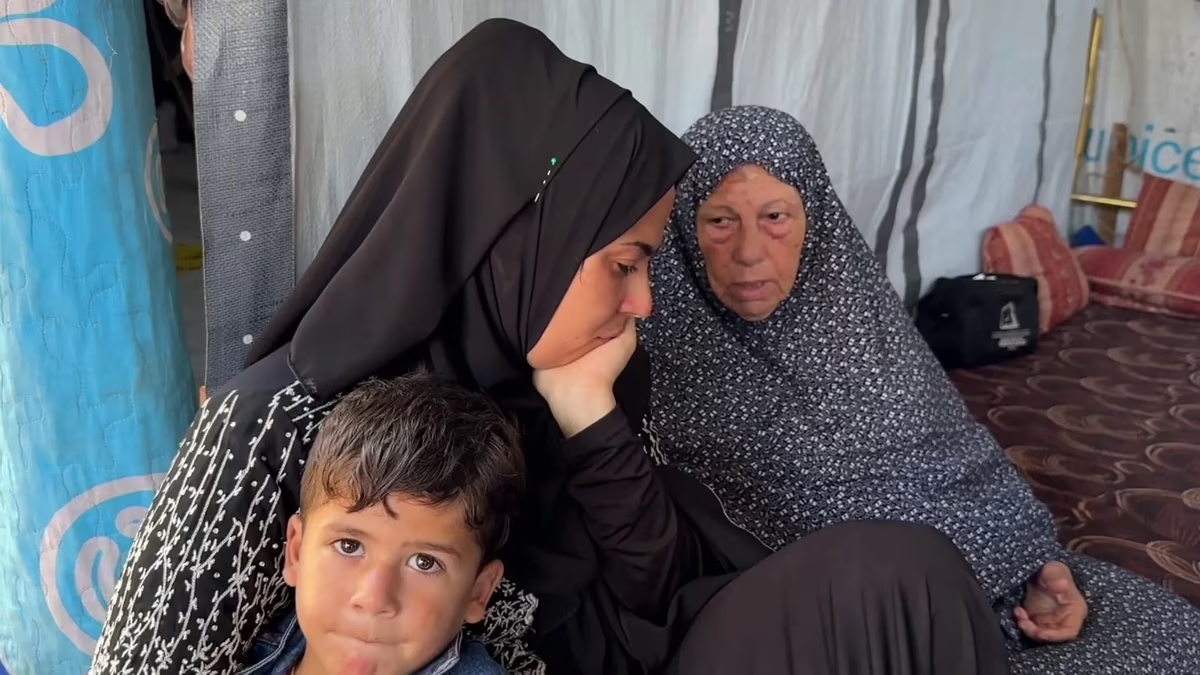
Amidst a tragic health reality sweeping across the Gaza Strip, the dreams of Palestinian families to provide the minimum level of care for their children are fading, as death lurks for the young due to a lack of treatment and malnutrition. The child Zeina Abu Eid was the latest victim of this bitter reality; she was not killed by the incurable disease alone, but by the long wait on medical referral lists that never opened the doors to salvation for her.
Zeina suffered from a rare autoimmune hepatitis, a condition that requires urgent surgical intervention for a liver transplant and precise examinations that exceed the capabilities of the exhausted health system in the Strip. Dr. Ahmed Al-Farra, director of the children's building at Nasser Medical Complex, explained that her condition required immediate travel to save her life from rapid deterioration.
Despite the issuance of an urgent medical referral, complex coordination procedures and the closure of crossings prevented her departure in time. Medical sources confirmed that death was faster than official papers, as the child passed away last Friday after a harsh journey of suffering with illness and waiting.
Zeina's mother bitterly recounts the details of the last days, noting that her daughter initially underwent a misdiagnosis that led to taking treatments that weakened her immunity instead of strengthening it. Within a few days, the child's health deteriorated dramatically, as she lost her sight and hearing and fell into a complete coma before her death on June 26th.
Zeina's story is not just an individual case, but a reflection of a major tragedy experienced by thousands of patients in Gaza; official statistics indicate that there are more than 22,000 patients awaiting their turn for medical referral abroad. Among these, there are about 5,000 children facing real risks to their lives due to the lack of surgical and medicinal capabilities.
Doctors warn of 500 critical cases among children suffering from diseases similar to Zeina's condition, including congenital heart defects, cancer, and kidney failure. Medical staff in Gaza describe this situation as a 'death sentence' written next to the medical diagnosis for every patient who cannot leave.
Zeina's father, who hoped to see his daughter grow up before his eyes, stood before her grave, appealing to the world to intervene to save the rest of Gaza's children. He stressed that his family's dream was shattered in an instant due to the absence of essential medical supplies that could have given his daughter a second chance at life.
For his part, Dr. Muhammad Zaqout, Director General of Hospitals, confirmed that the number of injured and sick people who actually need urgent travel reached 17,730 cases. Medical sources accused the occupation authorities of deliberate and unjustified intransigence in dealing with the humanitarian medical file, which exacerbates the daily death toll.
Reports indicate that the occupation follows a systematic policy to reduce the number of patients allowed to leave through the remaining crossings, in addition to reducing the working days allocated for humanitarian cases. This restriction is not limited to the movement of individuals, but extends to preventing the entry of essential drug shipments and specialized surgical equipment.
Strict restrictions on the entry of medicines have led to the vital departments in hospitals going out of service, making major operations impossible within the Strip. Patients remaining in the exhausted hospitals face a severe shortage of painkillers and antibiotics, making their treatment journey fraught with continuous pain.
Thousands of injured and sick people in Gaza share the same unknown fate, as they line up in long queues awaiting security approvals that may never come. The closed crossings remain the biggest obstacle to their ambition for healing, amidst international silence regarding the humanitarian catastrophe ravaging the health system.
In conclusion of the medical appeals, the Ministry of Health demanded the necessity of opening safe and sustainable humanitarian corridors to ensure the departure of critical cases and the entry of medical aid. Hope remains pinned on international action to end the policy of 'death while awaiting coordination' that has been claiming the lives of children and women in the Gaza Strip without stopping.
Our family's dream was shattered in one minute due to the lack of medicine and essential medical supplies that could have saved our daughter.
שתף את דעתך
Zeina Abu Eid.. A new victim of waiting for medical 'death lists' in Gaza