






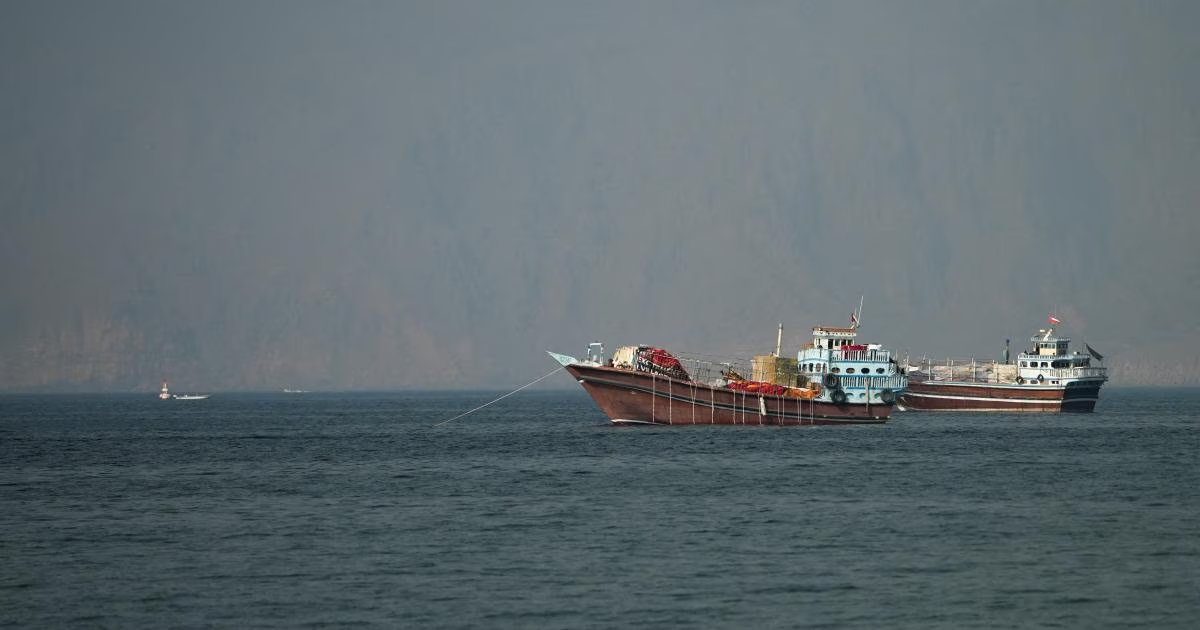
The intensity of military tensions in the Arabian Gulf region has rapidly escalated, with US President Donald Trump threatening to continue military operations against Iranian targets. Trump announced concentrated attacks on Tehran's positions around the Strait of Hormuz, considering it a necessary response to the targeting of oil tankers in the international waterway.
In an immediate reaction, the Iranian Revolutionary Guard announced widespread shelling operations targeting US military positions in both Kuwait and Bahrain. Iranian forces used ballistic missiles and drones in their attack, representing a dangerous shift in the direct confrontation between the two sides, moving beyond traditional engagement boundaries.
For its part, the US Central Command confirmed that it carried out precise strikes targeting ten strategic locations around the Strait of Hormuz. Military sources clarified that these raids came as a 'direct response' to what it described as repeated Iranian aggressions targeting freedom of commercial navigation and maritime security in the region.
US targets hit by the shelling included Iranian military surveillance infrastructure, in addition to communication systems and air defense sites. The raids also focused on destroying drone storage facilities and capabilities dedicated to laying naval mines, in an attempt to curb Tehran's ability to threaten ships passing through the strait.
These field developments come after the oil tanker 'Kiko', flying the Panamanian flag, sustained damage while passing near the Strait of Hormuz carrying approximately two million barrels of crude oil. Despite the damage, the tanker was able to continue its journey, but the incident was the spark that ignited the current round of conflict.
Observers believe that this military escalation, which continues for the second consecutive night, puts the recently signed memorandum of understanding between Washington and Tehran to the test. It appears that both sides are seeking, through military force, to impose new rules of engagement and solidify their political and field positions amidst the ongoing clash of wills.
Analyses from informed sources indicate that the United States has set a sixty-day timeline to remove the Strait of Hormuz from the sphere of absolute Iranian control. Washington seeks to ensure the passage of commercial vessels without being subject to the procedures or fees that Tehran attempts to impose on navigation in this strategic passage.
In contrast, Tehran insists on asserting its sovereignty and control over the navigation routes within the strait, making a direct confrontation likely to continue. While diplomatic communication channels remain indirectly open, the field remains the primary arena where each party attempts to impose its vision for the future of navigation in the region.
There may come a time when we are no longer able to act rationally, and we will be forced to complete the mission militarily after having started it with great success.
שתף את דעתך
Widespread Military Escalation in Hormuz: US Raids Met by Iranian Strikes on Bases in Kuwait and Bahrain