






The issue of displacing Palestinians from the Gaza Strip has once again taken center stage in the political and security landscape within Israel, as media sources revealed intensive moves led by the new head of the National Security Council, Shmuel Ben Ezra. These moves have caused a state of astonishment within security circles due to their sensitive timing, especially after the call for an urgent meeting to discuss what is called 'encouraging voluntary migration'.
The meeting, chaired by Ben Ezra, saw wide participation from representatives of the Ministry of Defense and the Israeli army, in addition to leaders from the Mossad and the Shin Bet (General Security Service). This step comes just two weeks after Ben Ezra assumed his position, succeeding Tzachi Hanegbi, who was dismissed last October, indicating new directions in managing this file.
During the deliberations, Mossad representatives acknowledged the existence of fundamental obstacles preventing the implementation of these plans on the ground. Sources confirmed that the agency has not yet succeeded in finding any country in the world that shows actual willingness to receive hundreds of thousands of residents of the Strip, which puts the plan in a major logistical and political dilemma.
Security circles expressed their surprise at the speed with which the file was brought up again, as discussions about 'voluntary migration' had ceased for many months. Observers believe that summoning security agency leaders in this manner suggests high-level political pressure to revive a project that was previously described as unfeasible.
In the context of searching for the motives behind this move, sources quoted security officials as ruling out any international change that would allow this step without complex coordination. However, a hypothesis emerged suggesting that the revival of the program might be linked to secret understandings recently held between Prime Minister Benjamin Netanyahu and US President Donald Trump.
Estimates indicate that Washington may have given implicit approval for these moves as a form of 'compensation' to Israel for concessions it made in other regional files, specifically regarding the agreement with Iran. This link between the two files reflects the complexity of the political calculations that govern the fate of the Gaza Strip in international decision-making circles.
For his part, a political source in the Knesset downplayed the practical feasibility of these moves, describing them as lacking the necessary international and political cover. The source affirmed that the categorical Arab rejection and the unified international stance against displacement make these plans merely a tool used by Netanyahu for domestic consumption or political maneuvering.
Defense Minister Yisrael Katz had previously made statements vowing to implement the displacement plan, asserting that 'everything will happen in its own time'. Despite the formation of the 'Directorate for Voluntary Transition of Gaza Residents' earlier in 2025, this body has not recorded any tangible practical steps on the ground since its establishment, remaining merely an administrative structure without results.
In previous attempts, reports revealed that Caroline Glick, Netanyahu's international affairs advisor, had made contacts with African parties such as 'Somaliland' and the Democratic Republic of Congo. These contacts aimed to find a foothold for displaced Palestinians, but these efforts failed and did not result in any formal agreements.
These moves intersect with the 'Gaza Riviera' proposal promoted by Donald Trump, which envisions transforming the Strip into a luxury tourist area after its evacuation of residents. This vision relies primarily on the idea of transferring Palestinians to third countries, with the United States taking full oversight of the administration and reconstruction of the area.
In parallel, extremist right-wing organizations such as 'Ad Kan' are active in organizing secret trips to transfer limited numbers of Palestinians to countries such as South Africa and Indonesia. These organizations use intermediary associations to conceal their direct connection to the occupation, in an attempt to create a new demographic reality, even if its impact remains limited.
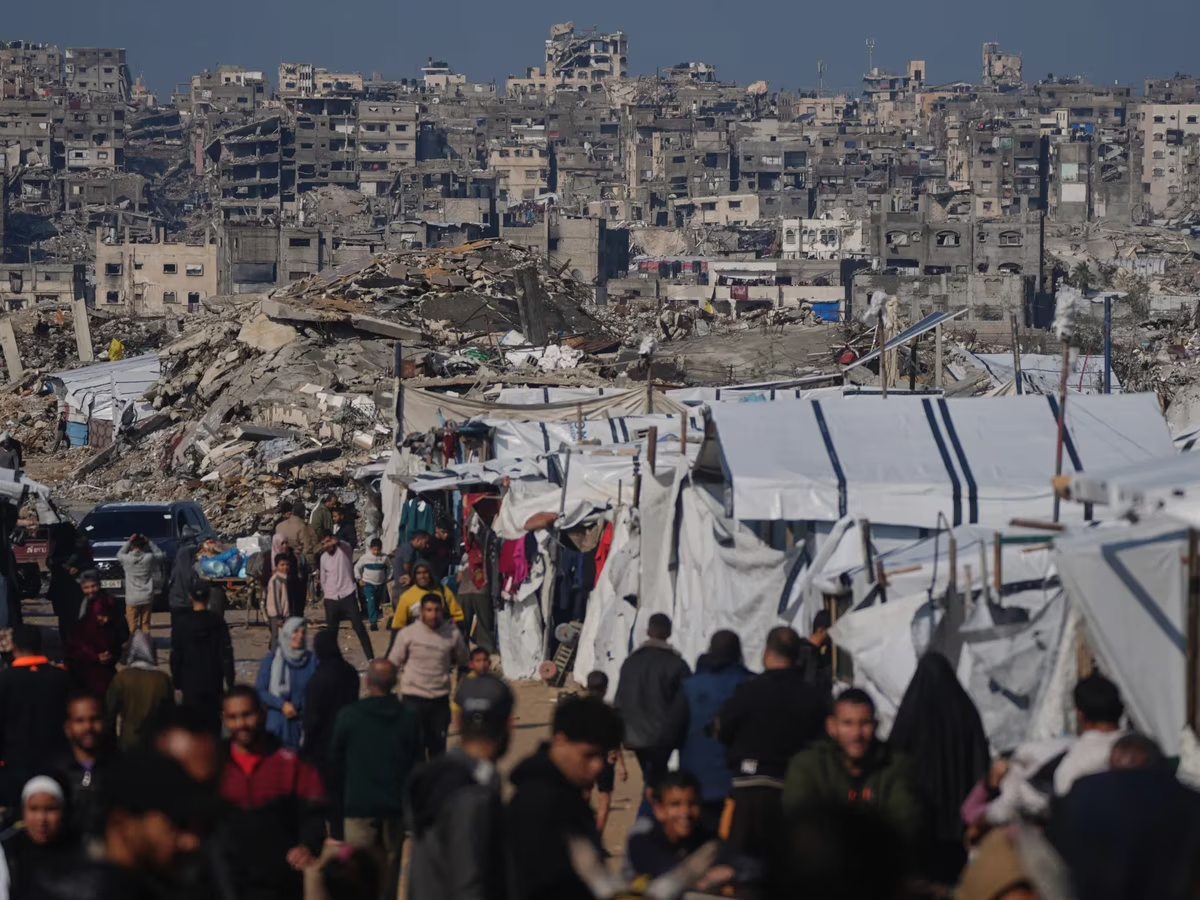
This activity comes at a time when the Gaza Strip is suffering from an unprecedented humanitarian catastrophe, as the ongoing aggression since October 2023 has left more than 73,000 martyrs and massive destruction of infrastructure. The occupation authorities are betting that the 'scorched earth' policy and daily hell might push residents to seek a forced exit under the name of migration.
Despite all these pressures, Palestinians in the Gaza Strip continue to demonstrate their attachment to their land and their categorical rejection of all displacement projects, whether forced or under 'voluntary' pretexts. Gazans affirm that staying in camps and destroyed homes remains the only option in the face of ethnic cleansing plans that Israel seeks to impose.
In conclusion, the Israeli displacement project continues to collide with a solid wall of Palestinian, Arab, and international rejection, despite repeated attempts to revive it. The recent moves by the Israeli National Security Council remain an indicator of the continued security mindset in searching for radical demographic solutions that transcend human rights and international laws.
This step lacks political and international feasibility, especially with the categorical rejection from Arab countries and the international community, but Netanyahu finds in it a convincing justification.
שתף את דעתך
Surprise Israeli Moves to Revive Plans for Displacing Gaza Residents Under the Guise of 'Voluntary Migration'