






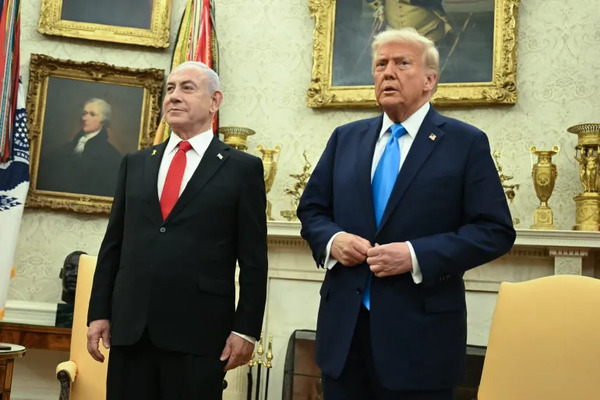
Nihad Abu Ghosh: The fundamental American message is to affirm that Israel is an important partner, but it is not the decision-maker in defining American interests or directing its regional policies.Yasser Manna: The escalation of disputes between Trump and Netanyahu reflects a clear divergence in defining interests and political goals, but it does not undermine the foundations of the strategic relationship.Nizar Nazzal: Talk of the American administration seeking political alternatives to Netanyahu reflects a decline in the level of personal and political trust in the current Israeli leadership.Fayez Abbas: Trump has become more skeptical of Netanyahu's policies, and repeated calls and Israeli attempts at justification no longer receive the same response within the White House.Suleiman Bisharat: The American administration realizes that continued conflicts threaten its traditional influence in the Middle East and give rival powers, primarily China, wider opportunities.Mohammed Abu Allan Dragmeh: The tension may negatively impact Netanyahu's future and his chances of forming a new government, but it will not affect the core of strategic relations between Washington and Tel Aviv.
Ramallah - Exclusive to "Al-Quds" -
US-Israeli relations are witnessing an unprecedented phase of political tension with the escalation of public disputes between US President Donald Trump and Israeli Prime Minister Benjamin Netanyahu, a development that indicates increasing divergences in defining interests and regional priorities, especially regarding the Iranian file and the future of political and security arrangements in the Middle East.These disputes, according to writers, political analysts, and specialists in separate conversations with "Al-Quds," go beyond the personal dimension between Trump and Netanyahu to touch upon strategic issues related to managing regional conflicts and the limits of Israeli influence on American decision-making, amidst indications that Washington is seeking to readjust its relationship with Tel Aviv in line with its direct interests and internal and external calculations, without this meaning undermining the foundations of the historical alliance between the two parties.In light of the ongoing wars and tensions in the region, questions are increasing about the repercussions of this divergence on Netanyahu's political future and on Israel's ability to influence the American administration's orientations, while Washington appears more inclined to contain crises through political and diplomatic channels, at a time when it is trying to protect its regional influence and confront escalating international challenges, making the current phase an important test for the nature of the relationship between the two allies and the limits of the interests that govern it.A different phase from previous disputesWriter and political analyst Nihad Abu Ghosh believes that the escalating disputes between US President Donald Trump and Israeli Prime Minister Benjamin Netanyahu represent a different phase from previous disputes witnessed in US-Israeli relations, not only because of their nature and intensity, but also because they are taking place between Netanyahu and the person he has always considered the closest and most supportive ally of Israel in US history.Abu Ghosh points out that Netanyahu largely built his political bets on Trump and declared his alignment with him in various American election stages, whether during his competition with Joe Biden or later with Kamala Harris.Abu Ghosh confirms that the current causes of the dispute combine personal, political, and strategic factors; on a personal level, accusations emerged within American circles that Netanyahu provided Trump with misleading assessments regarding the war on Iran, convincing him that achieving the war's objectives would be guaranteed by targeting Iranian leaders and mobilizing opposition forces against the regime.Abu Ghosh indicates that American military and intelligence circles opposed this approach, but the Israeli government pushed for the option of confrontation based on intelligence reports and pressure from influential figures within the American administration.According to Abu Ghosh, the United States had multiple political and diplomatic alternatives, and a number of its European and regional allies did not support the option of war, which later contributed to deepening the gap between the American administration and the Israeli government when the war did not achieve the results that were being promoted.Abu Ghosh explains that the dispute widened further with the approach of reaching political understandings, as Washington accused Netanyahu's government of seeking to obstruct any negotiation path and return the region to an atmosphere of military confrontation.Resorting to reducing Netanyahu's roleAccording to Abu Ghosh, the American administration resorted to reducing Netanyahu's role in some sensitive contacts and negotiations, while the Israeli government tried to influence American decision-making through pressure groups and its supportive lobbies within the United States.Abu Ghosh points out that American media reports spoke of organized Israeli moves to influence the course of proposed agreements through pressure groups and influential figures within Congress, which caused increasing resentment within the American administration, which considered interference in the American internal political arena a crossing of red lines.Disputes do not affect the core of the strategic relationshipDespite this, Abu Ghosh confirms that these disputes do not affect the core of the strategic relationship between the United States and Israel, explaining that the relationship between the two parties is deeper than individuals and governments, and is linked to established strategic interests and roles. Abu Ghosh believes that the fundamental American message to Netanyahu is to affirm that Israel is an important partner, but it is not the decision-maker in defining American interests or directing its regional policies.Abu Ghosh points out that Netanyahu, despite his objections to any American-Iranian understanding, does not have a wide margin to confront American will, and therefore will continue his attempts to influence the course of negotiations and the drafting of final agreements through political and media means and pro-Israel lobbies, while seeking to exploit any loopholes or different interpretations of the agreed texts.More hardline behavior from NetanyahuAbu Ghosh notes that the next phase may witness more hardline behavior from Netanyahu as Israeli election deadlines approach, in light of his declining political chances according to opinion polls.Abu Ghosh indicates that some Israeli circles fear that Netanyahu may resort to escalatory options in Gaza or Lebanon, or push for unilateral measures in the West Bank, in an attempt to strengthen his political position.Abu Ghosh believes that Netanyahu will remain compelled to adapt to the new American ceiling, while Washington continues to readjust the relationship to ensure the protection of its strategic interests and prevent any party from imposing its own agenda on American decision-making.Clear divergence in defining interestsWriter and researcher specializing in Israeli affairs Yasser Manna believes that the escalating disputes between US President Donald Trump and Israeli Prime Minister Benjamin Netanyahu reflect a clear divergence in defining interests and political goals between the two sides, but it does not rise to the level of undermining the foundations of the strategic relationship or American support for Israel.Manna explains that Netanyahu continues to bet on a policy of military pressure and prolonging the confrontation, considering it part of his political survival equation and strengthening his internal image as a leader who leads a continuous state of conflict, while the Trump administration tends to invest military results in formulating political and security arrangements aimed at stabilizing regional conditions and preventing a slide into wider confrontations.Manna indicates that what is being circulated about searching for an alternative to Netanyahu carries a political pressure message more than a strategic shift, meaning that Washington may disagree with the Israeli prime minister and pressure him, but it distinguishes between its position on him personally and its firm commitment to Israel.Scenario of containing the disputeManna suggests that the scenario of containing the dispute and continuing coordination between the two parties is the most likely, with the possibility of escalating American pressure if Washington considers that Netanyahu is obstructing paths of de-escalation or regional understandings.Manna believes that the success of these pressures may open the way for limited settlements and reduce the chances of escalation, while their failure may lead to new rounds of tension in Gaza, Lebanon, and Iran, emphasizing that the importance of this dispute goes beyond the bilateral framework due to its repercussions on energy security, navigation, and regional and international stability.A shift in the nature of the relationship between Washington and Tel AvivResearcher specializing in Israeli affairs and conflict issues Nizar Nazzal explains that the increasing indicators of escalating dispute between US President Donald Trump and Israeli Prime Minister Benjamin Netanyahu reflect an important shift in the nature of the relationship between Washington and Tel Aviv, although these disputes have not yet reached the level of strategic rupture between the two parties.Nazzal points out that US-Israeli relations have witnessed in previous stages divergences and tensions with different American presidents, but what distinguishes the current phase is that the disputes have become public and personal, and are directly related to the management of the war, the Iranian file, and a number of other regional issues, which gives them broader political and strategic dimensions.Nazzal notes that talk of the American administration searching for political alternatives to Netanyahu reflects a decline in the level of personal and political trust in the current Israeli leadership, indicating that Washington has come to view Netanyahu as a burden on its regional project, at a time when the United States is seeking to end open wars and devote itself to confronting major international challenges, primarily competition with China, in addition to advancing regional normalization paths.The dispute over how to deal with the Iranian fileAccording to Nazzal, the most prominent dispute revolves around how to deal with the Iranian file, as Netanyahu continues to push for continued pressure and military confrontation, while Trump appears more inclined towards reaching understandings or political deals that prevent the conflict from widening.Nazzal points out that military confrontation with Iran did not achieve the desired results, but rather led to widespread economic and security repercussions that affected American interests, which reinforced the American administration's desire to avoid returning to the path of war.Nazzal believes that electoral calculations play an important role in this divergence, as continued escalation may serve Netanyahu domestically, while it does not serve Trump's interests as American political deadlines approach, amidst fears of growing Democratic influence in Congress.Nazzal indicates that the most likely scenario is to contain the disputes and maintain military and intelligence cooperation between the two countries, given the depth of the US-Israeli alliance and its connection to American state institutions, not just individuals.Rise of alternative Israeli figuresNazzal points to the possibility of weakening Netanyahu's position and the rise of alternative Israeli figures, while the scenario of the dispute turning into a comprehensive strategic crisis remains the least likely, despite being the most dangerous.Nazzal believes that the region is entering a phase of political and regional repositioning that reflects Netanyahu's declining ability to fully impose his agenda on Washington, and indicates the beginning of a clearer American discussion about the future of the Israeli leadership and the shape of future regional arrangements.Netanyahu's contribution to the confrontation with IranWriter specializing in Israeli affairs Fayez Abbas believes that the relationship between US President Donald Trump and Israeli Prime Minister Benjamin Netanyahu is undergoing a remarkable transformation, in light of the growing conviction within the American administration that Netanyahu contributed to pushing Washington towards a confrontation with Iran without being able to achieve the goals he announced for that war, which was reflected in the nature of the relationship between the two sides during the recent period.Abbas points out that Netanyahu, who entered the war on Iran betting on continued full American support, is now looking for a way out of its repercussions after failing to achieve decisive results. Abbas indicates that Netanyahu tried, during the past period, to obstruct any American-Iranian understanding that could lead to an end to the state of hostility between the two countries, benefiting from various regional files, primarily the Lebanese arena.According to Abbas, Netanyahu believed that his close relationship with Trump would give him the ability to convince the American administration to continue pressure and confrontation with Iran, but the positions of influential figures within the White House, along with growing popular opposition to continued escalation, pushed Washington towards adopting a more serious negotiating path, leading to the signing of understandings and the start of direct talks between the two sides.Abbas notes that the Israeli escalation in Lebanon and the subsequent Iranian threats related to regional navigation and energy raised the concern of the American administration, which prompted it to demand that Israel stop military operations, which the Israeli government ultimately responded to.Trump more skeptical of Netanyahu's policiesAbbas confirms that Trump has become more skeptical of Netanyahu's policies, indicating that repeated calls and Israeli attempts at justification no longer receive the same response within the White House.Abbas believes that the coming weeks may be decisive for Netanyahu's political future, especially if American efforts succeed in reaching a comprehensive peace agreement with Iran or developing relations between the two parties, considering that such a development could be a harsh political blow to Netanyahu and place him before unprecedented challenges on the domestic scene.Public disputes reflect deeper transformationsWriter and political analyst Suleiman Bisharat believes that the escalating disputes between US President Donald Trump and Israeli Prime Minister Benjamin Netanyahu are no longer just fleeting differences in positions, but have turned into public disputes that reflect deeper transformations in the nature of the relationship between the two parties, indicating that the transfer of these disputes to the media and mutual statements reflects the existence of internal political and electoral calculations on both sides.Bisharat explains that Trump and the Republican Party are preparing for the upcoming midterm elections in the United States, while Netanyahu and his partners in the Israeli right are preparing for any potential election, which pushes both parties to try to deny the accusations leveled against them regarding dependence on the other party.Bisharat notes that Trump faces internal criticism accusing him of succumbing to Netanyahu's influence, while the latter is accused within Israel of becoming a captive of American orientations, which is reflected in the nature of their mutual political discourse.Bisharat indicates that the war on the Gaza Strip and the subsequent widening of the conflict in the region contributed to deepening the gap within American society regarding Israeli policies, especially with the growing criticism of American support for Israel during the war.Israeli skepticism about the effectiveness of Netanyahu's policiesBisharat believes that Israeli society, in turn, is witnessing a state of skepticism about the effectiveness of the policies pursued by Netanyahu, in light of Israel's inability to achieve a complete resolution in the wars it has fought, which reinforced the belief among Israeli sectors that these wars are linked to Netanyahu's personal and political interests more than to long-term strategic goals.Bisharat believes that the United States and Israel have faced failures in dealing with the Iranian file, explaining that Trump believed that escalation towards Iran would add to his political capital and give him a new achievement, and that Israel was capable of creating conditions that would push Tehran towards retreat or collapse, but subsequent developments showed that the American administration made inaccurate assessments, which put Trump in a political dilemma and made him seek to hold Netanyahu partly responsible for the failure to avoid bearing its political cost alone.America and bringing about change in the Israeli political sceneBisharat believes that part of the American political establishment is now inclined to bring about a change in the Israeli political scene, considering that the signals emanating from Trump during the recent period suggest a desire to push towards a post-Netanyahu phase.Bisharat indicates that some American decision-making circles view Netanyahu's continuation as an obstacle to reshaping American strategy in the Middle East in line with direct American interests.Bisharat believes that the region is witnessing what he described as a "labor" in US-Israeli relations, represented by the transition from a phase of complete identification between the two parties to a phase that focuses more on interest calculations.Bisharat confirms that the question now being raised within the United States is whether the priority should be American interests or Israeli interests, especially in light of Washington's declining ability to fulfill its promises regarding calming the region and improving its internal economic conditions.Bisharat explains that the American administration also realizes that the continuation of regional conflicts threatens its traditional influence in the Middle East and gives rival powers, primarily China, wider opportunities to strengthen their presence, in addition to the growing regional roles of other powers.Criticism of Israel does not mean abandoning strategic supportAccording to Bisharat, from this perspective, recent American criticism of Israel does not mean abandoning its strategic support, as much as it reflects an attempt to reshape tools and policies to preserve American interests.Bisharat confirms that the future of the relationship between Trump and Netanyahu will remain linked to the American administration's ability to protect its interests and achieve its regional goals. If Washington succeeds in containing the repercussions of the current phase, the disputes may remain within their temporary limits, but if it sees that Netanyahu is obstructing its future vision, it may move towards supporting new political arrangements within Israel that lead to his removal from the political scene.The dispute and consistency with Trump's personalityWriter specializing in Israeli affairs Mohammed Abu Allan Dragmeh believes that the escalating disputes between US President Donald Trump and Israeli Prime Minister Benjamin Netanyahu reflect a special nature in the American president's personality, whose positions are difficult to predict or whose political orientations are difficult to read accurately.Dragmeh points out that Trump has shown, over the past years, a willingness to make decisions that contradict prevailing expectations, which was embodied in a series of contradictory statements and positions, especially during the war with Iran and the subsequent political and security arrangements.Dragmeh explains that the core of the current dispute is not limited to the personal dimension, but is also linked to a clear divergence in American and Israeli goals towards Iran.According to Dragmeh, while the American administration primarily focuses on the Iranian nuclear file and ensuring regional stability and preventing the conflict from widening, the Israeli government seeks to achieve broader goals that include curbing Iranian missile capabilities, weakening Tehran's regional influence, and ending the role of its allies in the region, in addition to betting on bringing about a radical change in the structure of the Iranian regime.Military options are no longer capable of achieving goalsDragmeh indicates that the American administration has become more convinced that military options are no longer capable of achieving the desired goals in dealing with Iran, which has pushed it to search for alternative political and diplomatic paths.According to Dragmeh, on the other hand, Netanyahu still adheres to the option of military pressure as the only way to deal with Tehran, which has led to a widening gap in the dispute between the two parties, especially in light of Israel's failure to achieve the goals it set during the recent confrontation.Political messages to weaken Netanyahu's imageRegarding the talk of Washington seeking an alternative to Netanyahu, Dragmeh believes that it is too early to definitively state that there is a clear American trend in this direction, but recent American statements carried political messages aimed at weakening Netanyahu's image within Israeli society and pressuring him to modify his political behavior, more than being an explicit declaration of a desire to replace him.He confirms that the existing tension may negatively affect Netanyahu's political future and his chances of forming the next Israeli government, but it will not affect the core of strategic relations between the United States and Israel, as Washington will continue its commitment to Israel's security, military superiority, and political and economic support.Dragmeh believes that any potential impact will remain linked to Netanyahu personally more than to the nature of the existing alliance between Washington and Tel Aviv, expecting that relations will return to their traditional course, whether through a new Israeli government or even if Netanyahu continues, but within the ceiling and vision determined by the American administration.
שתף את דעתך
Trump and Netanyahu's Disputes: Interests Reshape the Alliance's Path