






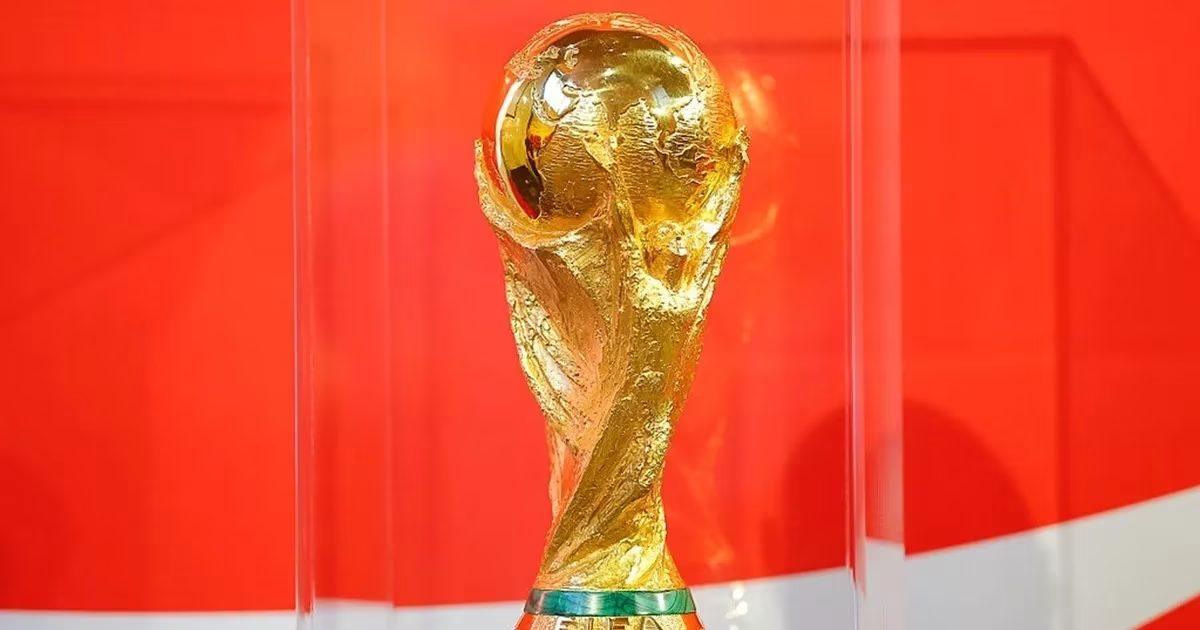
Attention is currently focused on the 2026 World Cup, hosted by Canada, Mexico, and the United States, amidst widespread controversy that has not centered on athletic performance, but rather on organizational challenges and racist practices. Fears have grown since 2025 that the troubled political climate in the United States and the rise of right-wing currents would negatively affect fans coming from countries in the Global South, which has indeed begun to materialize with the start of the competitions.
Despite promises made by FIFA President Gianni Infantino that the tournament would be a global celebration uniting peoples, the reality on the ground has revealed a wide gap between slogans and implementation. Infantino's decision to award the FIFA Peace Prize to US President Donald Trump late last year sparked widespread indignation, especially in light of the strict policies pursued by the current US administration towards immigrants and minorities.
These policies were embodied in the prevention of Somali referee Omar Abdiqadir Artan, winner of the award for best referee in Africa, from entering US territory via Miami Airport despite holding a valid visa. Responsible sources in the White House justified this measure by the necessity of preventing what they described as 'malicious entities' from exploiting the tournament's cover to enter, a reference that reflects racist tendencies towards those coming from certain African countries.
These measures were not limited to referees but also affected participating teams, as players from Senegal and Uzbekistan were subjected to humiliating security checks at airport terminals. The Iraqi delegation also faced harassment, including preventing its photographer from entering and subjecting star Ayman Hussein to a lengthy eight-hour interrogation, while the Iranian team was forced to leave the country immediately after their matches without being allowed to stay.
As for fans, the audience from the Democratic Republic of Congo was denied the right to attend and support their team on the pretext of health concerns regarding the Ebola epidemic, despite meeting all medical requirements and spending a quarantine period in Europe. This ban deprived the World Cup of iconic figures such as the fan 'Lumumba,' reflecting double standards in dealing with citizens of poor countries compared to their counterparts from Western countries.
In contrast to these restrictions, double standards towards Israel stand out, as FIFA previously withdrew the hosting of the Youth World Cup from Indonesia for its refusal to host the Israeli team. In the current tournament, Jake Perkunz, an Israeli-American soldier who participated in military operations in Gaza, was allowed to enter, despite reports against him for documented war crimes, raising questions about the absence of legal accountability within US territory.
These events come at a time when US detention centers are witnessing tragic conditions, with reports indicating the death of more than 44 migrants since early 2025 due to mistreatment and medical neglect. As the tournament continues, it appears that media and sports focus ignores these human rights violations, putting the slogans of 'sportsmanship' and 'world unity' promoted by FIFA to the test.
There is a vast difference between how participants and fans from Europe and the Global North are treated, and how those from Africa and Asia are treated.
שתף את דעתך
World Cup 2026: Racism fears turn into reality in the United States